Sunday, December 14, 2025

‘No racist is going to make me feel I don’t belong’: Shabana Mahmood on resilience, faith and public service
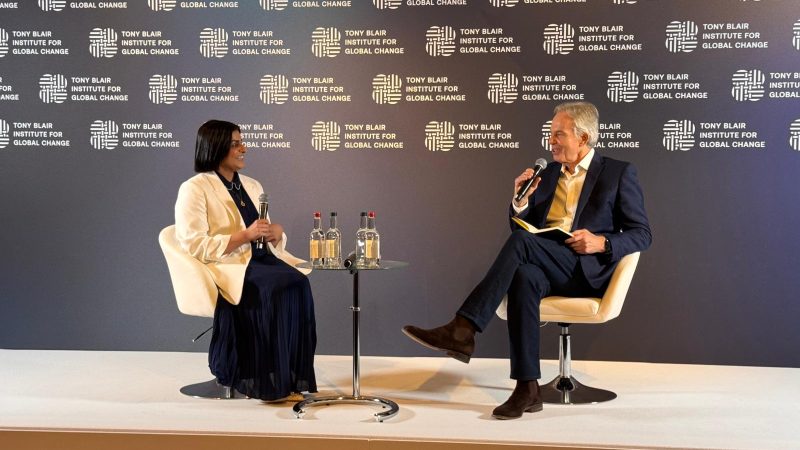

Home Secretary Shabana Mahmood has opened up about the importance of her faith in coming to politics – and how her belief in the policies she is pursuing helps her see off abuse online.

At an in conversation event with former Prime Minister Tony Blair, organised by the Tony Blair Institute, Mahmood reflected on how she made the decision to enter politics.

While politically active, Mahmood’s initial ambition had been to become a barrister.

“Like you [Blair], I am a recovering lawyer. That was, as a child, the thing that motivated me. Sometimes I miss the law, although I do quite enjoy trying to change the law – I have a high appetite for reshaping the legal landscape if I can.

“I’d been a loyal foot soldier for the Labour Party for many years, and I would have carried on like that quite happily, but I think it’s quite rare in politics to get the chance to represent the people you grew up with yourself – and your home turf is a special place to represent in the Commons.”

‘My faith has called me into public service’

Mahmood talked about how her faith had encouraged her to enter politics, not before jokingly asking the audience if Alastair Campbell was in the room and proclaiming “you and I can do God”.

“My faith very much has called me to public service, so it is less about the party and that point in my life.

“I do have a very strong faith. It is the reason I feel like I’ve been called to public service. I genuinely believe life is a test and you are accountable to God for how you use the privileges you were gifted at birth by God, and that really motivates me.

“I feel like I am a very privileged individual in my own right. I was born in this amazing country. I’ve had an incredible education. I have a lot to account for, and the best way you can do that is to try and change lives for the better for millions of people in your own country, so I’m very motivated by that.”

‘It’s the Home Office – a hundred landmines are discovered everyday’

This week marks Mahmood’s 100th day since taking on the reins at the Home Office. While she welcomes being tasked with a department with such great responsibility, she also said that it also comes with a range of challenges.

“It’s an incredible department to walk into. The range of things that you’re responsible for is huge and some of the most challenging questions that any government’s going to face. There’s part of me that feels really honoured but there’s always trepidation because it’s the Home Office and a hundred landmines are discovered everyday. 

“Sometimes in the Home Office, you feel like your main job is not to get blown up by one of those landmines, because it’s such a tough gig and there’s so many different things that could go wrong at any moment.”

‘There’s no point just trying to save the system in crisis’

In such circumstances, Blair asked how she manages time for longer-term strategic thinking, as well as how she makes sure the best ideas are being drawn upon.

Mahmood explained that, both in her current role and when she served as Justice Secretary, she was forced to make difficult decisions right away.

“You can get overawed by it or you can actually find it really clarifies your thinking.

“There’s no point just trying to save the system in crisis. You’ve got to build something new, which means you’re not in crisis again. That does give you the chance to think from first principles. You do have to step back and think ‘if I was building today from scratch, or the nearest thing I could get to that, what would I actually base this new system on?’.”

‘This is a very progressive approach to dealing with migration issues’

Blair said he was impressed by the political philosophy behind the government’s shift on immigration and how Mahmood has conveyed it as a progressive issue, rather than a regressive one.

Mahmood said that prejudice can flourish in an environment where rules are flouted and reflected on how both from white and immigrant working class communities in her constituency have expressed concern around legal and illegal migration.

“The first choice I made was to conceive it as a whole system. A lot of people when I was first appointed said ‘you don’t need to worry about legal migration, because the country is fine with that’. I know that’s not right, actually, and I know that our legal rules are subject to huge amounts of abuse and I know when people discover that, they feel pretty hacked off about it.

“Others have told me ‘just worry about the boats, don’t worry about anything else’ – because they’ll say that’s the visible sign of this illegal migration crisis, and as long as you can do something about that, everybody will be fine about the rest of the system. I know that’s also not true, and because I know rules are abused everywhere, I’ve decided it’s actually a whole policy approach.

“In this country, two of the things we prize above all else are fairness and contribution. We’re very willing to give people a chance in our country and to become one of us if people feel you came in in a proper a way and if they feel you’re contributing, To my mind, that is a very progressive approach to dealing with migration issues, but it’s also the best of British, and I do think our nation is one of very decent people – but there are conditions to unlocking that openness, tolerance and generosity.”

‘Look at track record for what will be in policing white paper’

Mahmood hinted at what is set to be included in the policing white paper, expected to be unveiled in January – with media reports touting it as the biggest reform of policing since the 1960s.

“My general approach on reform to any of the systems I’ve been responsible for as a Cabinet minister is they are a go big or go home moment.

“I will be doing a policing white paper and setting out my vision for reform in that space, but if you want to have a sense of the direction of travel, then just look at my current track record.”

‘It’s a numbers game, is politics’

After almost 20 years since he left as Labour leader and Prime Minister, Blair asked Mahmood, rumoured to be a potential leadership candidate should the moment arise, about how best to navigate the different elements within the party – and crucially what is the most important thing for Labour to do right now.

Mahmood said: “The point of policy is to make an argument and try to persuade people of your position, and I think that modern politics is in this 24/7 world – it drives you to almost become a commentator, not feeling in control of events.

“We have an agenda, so going out and making the argument is in and of itself almost a fresh thing to do, because at the moment our political system doesn’t necessarily push you in that direction.

“There will always be different views and I won’t necessarily persuade everybody in the current Parliamentary Labour Party or in the wider membership of every part of the asylum reforms – and I think that’s okay on one level. It’s a numbers game, is politics – and sometimes you have to accept there’s people within your own tribe that have a different view on a particular issue. I’m pretty comfortable with that, because I think parties are coalitions of people itself.”

‘I’ve plenty of stories to tell one day about my time on NEC’

As Blair talked about his experience fighting Militant in the 1980s, Mahmood said she was part of the “resistance” during Jeremy Corbyn’s time as Labour leader and, specifically, her time serving as a member on the party’s National Executive Committee.

“I have plenty of stories to tell one day about what that period was like. It’s probably the same stories [as Blair in the 1980s], and maybe even with some of the same characters.

“In a funny way, it was easier to unite in the Parliamentary Labour Party [under Corbyn], because it was obvious many of us did not think it was the right direction for the party to take. You’re forced to think what is the point of a centre-left party in our modern politics – you have to reassess how you make your argument, how you try and win that argument, what is the change you really want to bring in the country.”

‘No racist is going to make me feel like I don’t belong in my own country’

With politics proving particularly bruising, with attacks on social media from all sides, Mahmood said there were two things to understand about her.

“Firstly, I really believe in what I’m doing, so when people come along to knock you off course, if you really believe that what you’re doing is the right thing for the country – and I truly believe I’m trying to do that for the right reasons – then actually, I feel like I’m in quite a strong position.

“It almost doesn’t matter what barrage of noise you might get from whichever quarter because it’s the right thing for the country. It gives you a resilience, and there’s a strength that comes from that.

“Secondly, I do have a very strong faith. It is the reason I feel like I’ve been called to public service. I genuinely believe life is a test and you are accountable to God for how you use the privileges you were gifted at birth by God, and that really motivates me.

“I feel like I am a very privileged individual in my own right. I was born in this amazing country. I’ve had an incredible education. I have a lot to account for, and the best way you can do that is to try and change lives for the better for millions of people in your own country, so I’m very motivated by that.

“People have been trying to knock me down for a long time, because being a brown Muslim woman in politics is not an easy thing. I have seen off every attempt to deflect me, to shut me up, to knock me down. I refuse to lose, I’ve sacrificed a lot to be here – and there is no racist in this land or anywhere in the world that is going to make me feel like I don’t belong in my own country. No one, no party member, no commentator, anybody else is ever going to make me feel like I’m not really Labour either.”

British Library “money-saving” tips leave bitter taste for PCS members

Featured image: PCS British Library Strike. Photo credit: PCS Union on Twitter/X on 7 November 2025.


“Tell the British Library not to be a Scrooge this Christmas and give its workers the pay rise they deserve.”

By the Public and Commercial Services Union (PCS)

Festive shopping tips sent by the British Library ahead of the latest round of strike action were about as welcome as a lump of coal from Santa.

Our low-paid members at the London institution are set to strike from 8 to 12 December in their ongoing dispute over pay.

In meeting with the British Library, PCS has repeatedly highlighted the impact of the cost-of-living crisis on workers. Despite this, BL management has refused to increase its offer beyond the 3.8% minimum – refusing to account for the 2% restoration from last year’s shortfall, whereby BL workers were paid 3% compared to other public sector workers who received 5%. 

In a health and wellbeing newsletter circulated with British Library staff this month, the employer suggested “a few money-saving ideas” for workers, which included the following festive tips:

  • “Consider having a conversation with loved ones about the cost-of-living crisis and propose mutually skipping presents this year,”
  • Offering handmade gifts such as “a voucher for a home-cooked meal, a walk in the park, chores”, and
  • Buying second-hand gifts.

It appears the Ghost of Christmas Present skipped the British Library during his rounds this year.

PCS members, who are demanding an RPI-linked pay rise with restoration, found the tips as appetising as 3-day-old Christmas turkey, with some members describing its content “tasteless” and “condescending”. Perhaps the British Library could consider giving its workers a better pay award so workers can afford to celebrate Christmas this year – just a suggestion, of course.

The first period of strike action in October and November was well supported by members, the public, MPs and also by authors and artists who refused to cross the picket lines, leading to the cancellation of events.

Support the strikers

Go and show your support to the strikers on the picket line outside the library’s Euston Road entrance from 9am to 1pm, Monday to Friday this week! You can also demonstrate your solidarity with cultural workers by:

  • Sharing messages of solidarity on social media using the hashtag #BritishLibraryOnStrike.
  • Completing our e-action to ask MPs to call for increased grant in aid funding for the library.
  • Asking your MP to support our early day motion on pay at the library.
  • Following us on social media: X: @BritLibrary; Instagram: BritishLibraryPCS
  • Donating to our strike fund so workers can continue to strike with no loss of pay.
  • Encouraging guests to withdraw from all BL events until they meet PCS’ demands.

Tell the British Library not to be a Scrooge this Christmas and give its workers the pay rise they deserve.


British Library staff announce further strikes – PCS


Featured image: PCS British Library Strike. Photo credit: PCS Union on Twitter/X on 7 November 2025.

“Members are demanding an inflation-proof pay rise and restoration for last year’s below-inflation pay award.”

From the Public and Commercial Services Union (PCS)

Over 300 PCS members working at the British Library will strike from Monday 8 to Friday 12 December 2025 in their ongoing dispute over pay.

The members took two weeks of strike action in October and November.

During the strike, the Library’s CEO, Rebecca Lawrence, unexpectedly left only ten months into her tenure. The absence of stable leadership has undermined staff confidence and the Library’s reputation as a world-class cultural institution. Alongside low pay and the change in management, members also face the ongoing aftermath of a cyber-attack in 2023 in which personal details were published on the dark web.

Members’ workloads have more than doubled through additional responsibilities and are made harder through increased abuse from service users, with inadequate support from management.

Since the previous strike, PCS has met with the interim CEO, Jeremy Silver, and received a revised pay offer, which was unanimously rejected by members as inadequate. Members are demanding an inflation-proof pay rise and restoration for last year’s below-inflation pay award.

The first period of strike action in October and November was well supported by members, the public, MPs and also by authors and artists who refused to cross the picket lines, leading to the cancellation of events.

PCS general secretary Fran Heathcote said: “By meeting our members’ simple and fair demands, leadership at British Library can restore trust from its staff and send a clear message to government about the need to properly fund the UK’s vibrant but imperilled culture sector.

“We call on managers to rally and protect the institution they believe in. They must acknowledge the hard work and dedication of its staff. And they must focus budgets accordingly – on the poorest paid who are least rewarded.”


Tate strikers show strength and creativity

“The strike action was a fantastic display of creativity, which reminded bosses everywhere why you should never upset art workers.”

By the Public and Commercial Services Union (PCS)

Solidarity and creativity were all to the fore from over 150 PCS members engaged in 7 days of strike action across all 5 Tate Gallery sites over the employer’s refusal to offer workers an inflation-proof pay award for a second consecutive year

PCS organised 6 days of picketing in total, from 26 November to 2 December, allowing a day’s rest on Sunday, 30 November. The strike action was a fantastic display of creativity, which reminded bosses everywhere why you should never upset art workers. Our favour placards from the pickets included:

  • “Tate hasn’t got Auerbach”
  • “Want minimalism? Look at our pay!”
  • “Kapoor in the Gallery, Ka-POOR in our salary!”

Otherwise, the days consisted of home-made vegan treats, an evening picket to coincide with Tate Modern lates, and a strike playlist consisting of a whopping 551 songs.

Great public support

But that’s not all, PCS members were met with a fantastic display of public solidarity. For example:

  • Strike a Pose in Liverpool raised over £1,800 for striking Tate workers.
  • MP Zarah Sultana expressed solidarity with striking Tate workers during her first address at Your Party Conference.
  • Taring Padi art collective made a beautiful lino print highlighting the importance of cross-border solidarity.

An ever-growing list of creatives also expressed statements of solidarity with striking Tate workers, including:

  • Travis Alabanza
  • Ed Atkins
  • Jeremy Deller
  • Jasleen Kaur
  • Zarina Muhammed
  • Christelle Oyiri
  • Zeinab Saleh
  • Linsey Young, and
  • Abbas Zahedi.

Further, PCS was delighted to welcome over 20 speakers on the picket line, which included:

  • Former Turner Prize winners Helen Cammock, Jesse Darling, Mark Leckey, Elizabeth Price, Mark Wallinger and Tai Shani
  • Politicians Kim Johnson and John McDonnell, and
  • Representatives from Artists Union England, Orgreave Truth and Justice Campaign, and Artists and Cultural Workers LDN.

The picketing concluded on 2 December with more than 175 people attending the picket line. This was followed by a trip to The Lord Nelson in Southwark where workers gathered to celebrate the end of seven days of strike action.

PCS is currently engaged in intensive talks with Tate Galleries to resolve the dispute. Both parties last met on Thursday (4 December). For further information, contact PCS Culture Group Secretary Hareem Ghani: hareemg@pcs.org.uk


Why are broadcasters still legitimising Farage as a voice on immigrants?


By Positive Action in Housing

In recent days, Nigel Farage has used national platforms to target Glasgow’s multilingual children and to stoke fears about immigrant communities.

Scotland’s First Minister has already described Farage’s remarks about Glasgow’s children as “quite simply racist”. The Prime Minister has called him “a toxic, divisive disgrace” who is trying to tear communities apart.

At the same time, a growing number of former pupils and a teacher from his old school, Dulwich College, have come forward with detailed accounts of racist and antisemitic behaviour. They describe a pattern of harassment of Black and Jewish children. They include Yinka Bankole who says he felt compelled to speak out.

These are not anonymous social media rumours, they are named testimonies, published after careful investigation by national media, and they are deeply concerning.

Recent national polling shows that almost half of respondents believe Nigel Farage is racist, and that a similar proportion view his party as generally racist. The concern is no longer confined to anti-racism campaigners. Taken together, these deeply concerning investigations and polls form a serious public record about Farage’s conduct and views on race.

Given this, a simple question now faces mainstream broadcasters. Why is a figure with this publicly reported, deeply concerning track record on race and antisemitism still being presented as a neutral voice on immigration and on the children of migrant and refugee families?

When radio and television stations invite him to discuss “culture”, “integration” or “English as a second language”, they are not hosting a balanced debate. They are offering a powerful platform to a man who is under serious, detailed and deeply concerning allegations of racism and antisemitism, whose political project depends on inflaming fear of immigrants.

Schools, minority communities and the children of refugees and asylum seekers are left to absorb the consequences. They are the ones who deal with the racist bullying, the playground taunts, the graffiti and the harassment that follow when attacks like these are normalised as just another opinion. Have no doubt that Nigel Farage’s racially charged attacks on children of colour and on those from refugee and immigrant families will be felt mentally and physically in school playgrounds across the city by many Glasgow schoolchildren.

It is telling that more than 1400 Glaswegian schoolchildren speak Gaelic as a first language, yet they are not the target of his outrage. Gaelic–peaking children are overwhelmingly white. This exposes that his attack is not about language, it is about race.

For Scotland’s First Minister, John Swinney, publicly naming this for what it is, “quite simply racist” carries essential weight. His intervention signals that children cannot be dehumanised for political gain and that the state has a duty to safeguard them from racially charged hostility.

Racially coded phrases and words that pretend at neutrality but clearly are designed to portray people of colour, refugees and migrants as a negative in our society have to be exposed and called out. We have to hold the line. Migration is what Scotland is made of going back hundreds of years.

Responding to Nigel Farage’s claim that Glasgow’s multilingual pupils are “not diversity” and instead represent the “cultural smashing” of the city, Robina Qureshi, CEO, said: “To every multilingual child in Glasgow and beyond, we say bravo. The evidence is clear that growing up with more than one language is linked with cognitive strengths in attention, flexibility and problem solving. We need more multilingual children, not less. And don’t take notice of the bigotry and prejudice of grown adults who should know better but clearly do not.

“No child should be used as a political punching bag. Farage’s attack on Glasgow’s multilingual pupils is a coded attack on the children of people of colour and of refugee or immigrant backgrounds. It is harmful and dangerous.

“Speaking more than one language is a huge advantage. Targeting migrant children, in a climate where racist abuse is already a daily reality for many, is another deliberate dog whistle and a disgrace.

“Farage is also mired in fresh controversy over detailed allegations from former classmates and a teacher that he used racist and antisemitic language throughout his school years.

“Farage played this game with Brexit by stoking fear of immigrants and he is doing it again. His racially coded attacks on Glasgow schoolchildren follow a well-worn pattern. He is not getting away with it this time: it is time for decent people of all colours to unite and push back on his racially coded and dangerous rhetoric.”

Broadcasters and regulators cannot treat this as a private matter between Farage and his accusers. They have duties of care. They have obligations not to promote hatred. They need to explain, publicly, why a figure with this track record is still treated as a go-to pundit on immigrants, rather than as a political actor whose record on race is in serious question.

Positive Action in Housing is an independent anti-racist homelessness and human rights charity based in Glasgow. Each year we support over 4,300 refugee, migrant and minority ethnic families facing destitution, homelessness and racist harassment.

We see directly how hostile rhetoric against immigrants and their children turns into bullying, fear and exclusion in classrooms, workplaces and neighbourhoods.

As a charity, we have a legitimate role in speaking out when public discourse harms, or risks harming, the people we exist to support.

We will be writing to senior editors and to Ofcom to ask how these decisions are being made, and what safeguards are in place for the communities and children who have to live with the fallout. We urge our supporters to raise these concerns too.

Positive Action in Housing is a Scottish refugee homelessness and human rights charity based in Glasgow. Through our Room for Refugees programme—the UK’s longest-running refugee hosting scheme—we provide safe shelter for refugees and asylum seekers in crisis, including Palestinians.  https://www.paih.org

Image: Nigel Farage .https://commons.wikimedia.org/wiki/File:Nigel_Farage_(32766369000).jpg Source: Nigel Farage . Author: Gage Skidmore from Peoria, AZ, United States of America, licensed under the Creative Commons Attribution-Share Alike 2.0 Generic license.

Trump–Putin axis betrays Ukraine – Occupation is not peace


A Declaration of the Ukraine Solidarity Campaign Conference, which held its Annual General Meeting on December 6th in London.

The Ukraine Solidarity Campaign reaffirms its unwavering support for the Ukrainian people in their courageous resistance to Russian aggression, which began in 2014 and escalated into a full-scale invasion in February 2022. Against formidable odds, and despite being denied the full international assistance they deserve, Ukraine has prevented Russia from achieving its objective: the complete subjugation and destruction of the Ukrainian nation, state, and sovereignty.

At a time when Ukraine, despite the immense pressures of nearly four years of all-out war, continues to mount robust resistance and has launched a remarkable air campaign against Russian production, we unequivocally condemn attempts to betray Ukraine by imposing a plan approved by Trump.

We reject the notion that the so-called 28-point plan—drafted in part by the Russian regime and presented by the United States—can serve as any basis for a just and lasting peace in Ukraine or Europe.

Most Ukrainians rightly condemned these schemes as acts of capitulation and betrayal. Trump’s proposed plan would see Russia—backed by its silent partner China—and the United States treating Ukraine as assets to be divided. This amounts to neo-colonial plunder disguised as sovereignty: it entrenches Russian occupation, excludes the occupied from governance, and blocks any possibility of reversing Russia’s conquests.

The danger of a Washington–Moscow rapprochement goes beyond profiteering by American and Russian oligarchs. The US reactionary right shares key ideas and goals with Putin’s Russia, forming an axis that extends across Europe supporting fascist and authoritarian forces.

Washington’s scheming, led by nepotistically picked investor vultures—i.e, Kushner and Witkoff—has faltered for now, confronted by the reality that Moscow seeks not peace but victory, and is prepared to wage a prolonged war, confident it can outlast international support for Ukraine.

The threat to Ukraine and global democracy is deepened by the failure of European states to face the reality of Trump’s deception. Many have accepted the sham that Trump had pivoted against Putin and would act in Ukraine’s interests. In doing so, European leaders have offered excuses and accommodations to Trump’s plans—attempting, like alchemists, to transform them into something they can never be: measures in support of a free Ukraine.

By accommodating Trump, factions of both capital and labour within European governments have weakened democracy in the face of growing internal threats from fascist and authoritarian forces. They have legitimised a strategy that undermines Ukraine’s sovereignty, emboldens Russia, and delayed autonomous European action that could effectively help Ukraine resist aggression and secure a just peace.

The Trump–Putin Axis of Reaction

Since February 2025, Washington has sought to coerce Ukraine into accepting terms that reward the invader, partition the country, and consolidate Russian occupation.

  1. U.S. aid to Ukraine was halted, replaced by profiteering weapons sales to NATO that provide only a fraction of Ukraine’s needs.
  2. Intelligence sharing crucial for early warnings of Russian missile attacks was suspended in early March for two months, then restored with restricted access—resulting in significant casualties and emboldening Russia.
  3. Promised “ruinous sanctions” never materialised; the Sanctioning Russia Act lies dormant.
  4. The Alaska summit in August handed the Kremlin a victory, replaying the appeasement script of the 1930s.
  5. This strategic realignment with Russia has normalised an indicted war criminal and dismantled pressure against the regime.
  6. New sanctions to punish Russia’s war of conquest have vanished, justice for war crimes has been abandoned, and the burden of ending the war has been shifted from the perpetrator to the victim.

We reject Trump and Putin’s lie of inevitable Ukrainian defeat or imminent frontline collapse. The difficulties Ukraine faces are manufactured by the failure of others to provide necessary aid. These narratives are intended to demoralise resistance and camouflage betrayal.

The Stakes Are High

If a ‘peace’ is imposed that rewards invasion, it will strengthen fascist and authoritarian forces globally, accelerate the drive to future wars, and fuel nuclear proliferation. Putin has already unleashed four wars during his rule; the same imperialist and counter-revolutionary factors that drove Russia to war will remain, with reaction strengthened within Russia. Against this, we express solidarity with those persecuted in Russia who oppose the invasion of Ukraine.

The British and European labour movement must not be passive observers of this Trump–Putin axis. We must provide an alternative, not accept a false choice manufactured by Trump.

The alternative to betrayal is to change the balance of forces with Russia and restore freedom of choice and self-determination to Ukraine.

Our Demands

As the official campaign of labour movement solidarity with Ukraine, we demand:

  1. Opposition to Trumpist Reaction
    Recognise Trump’s alignment with Putin as a threat to progress and democracy. The European labour movement must campaign for stronger international cooperation, rallying all working-class and progressive forces to call for the urgent provision of military and financial support to ensure Ukraine can act freely, without coercion or reliance on the USA.
  2. Aid to Ukraine
    Launch an urgent programme to re-arm Ukraine with all necessary weapons, prioritising Ukraine over pre-existing commitments with foreign entities, and mobilise and facilitate volunteers to assist the Armed Forces of Ukraine. To fundamentally shift the balance of power against Russian imperialism, restore frontline confidence, strengthen military capabilities, and reject any loss of sovereignty.
  3. Economic Measures
    Frozen Russian assets should be transferred to Ukraine, its international debt cancelled, and full sanctions imposed on Putin’s regime and his oligarchs. UK companies must be barred from operating in Russia, trading with Russian firms, or purchasing Russian-made goods, with public contracts ended for those operating in Russia. Where governments fail, the labour movement must lead campaigns to boycott the Russian regime.
  4. Justice for War Crimes
    Establish international mechanisms for accountability for Russia’s war crimes, including the crime of aggression, genocide, and ecocide—justice must be served. Abducted Ukrainian children must be returned, and perpetrators brought to justice. Any amnesty for war crimes is a betrayal.
  5. Reconstruction of Ukraine
    Support a progressive, socially just reconstruction of Ukraine with full democratic participation, empowering trade unions and civil society. Withdraw the proposed Labour Code that curtails workers’ rights and end any British Labour Party or Government assistance to those pursuing regressive reforms. All human rights enshrined in Ukraine’s constitution must be guaranteed by appropriate and adequately financed policies: housing, education, healthcare, labour, safe environment, and beyond.
  6. Reverse Foreign Aid Cuts
    Ukraine’s defence should be financed by seizing Russian assets, taxing billionaires and corporations, and reversing cuts to foreign aid. Full support must also be provided to victims of Russian aggression, including the rescue and rehabilitation of children from occupation.

We condemn those sections of the labour movement who promote the false image of Trump as a credible peacemaker, who betray the left by refusing to stand with Ukraine, and who, by opposing aid, assist Kremlin objectives.

The Ukraine Solidarity Campaign declares: Occupation is not peace. With or without a deal manufactured by Putin and Trump, we will continue to campaign for Russian Troops Out and for a Free and United Ukraine—free from oligarchs and occupiers.

Emergency online rally: No to Trump’s war on Venezuela

An emergency online rally will take place on Monday 15th December at 6.30pm in response to growing fears of a US-led military intervention in Venezuela.

The rally—No to Trump’s War on Venezuela—will bring together MPs, trade unionists, and peace and Latin America solidarity campaigners.

Richard Burgon MP, who will address the rally, said: “Donald Trump is openly threatening war on Venezuela – deploying warships off its coast and even saying land operations could begin very soon. Such a reckless intervention would bring huge civilian suffering and a wider regional destabilisation. Whatever excuses Trump gives, this is about grabbing Venezuela’s vast oil reserves. Now is the time to speak out — for peace, for sovereignty, and against yet another disastrous US-led war.”

Latin American expert and Venezuela Solidarity C Secretary Francisco Dominguez added: “There are deep fears that US military intervention in Venezuela would be the first step in a wider military escalation by Trump in Latin America. The US has a long history of interference in the continent, where so-called ‘regime change’ has caused widespread suffering and lasting harm. Leaders across the region have opposed this military build-up and any use of force or foreign intervention. We too need to speak out, reject this military escalation and call on all who stand for peace to say clearly: No to Trump’s war on Venezuela.”

The rally will bring together supporters of the No to Trump’s War on Venezuela statement, which has now been signed by more than 30 Parliamentarians including MPs Jeremy Corbyn, Richard Burgon, Diane Abbott, Zarah Sultana, John McDonnell, Sian Berry and Liz Saville Roberts; trade union general secretaries Daniel Kebede (NEU), Steve Gillian (POA), Maryam Eslamdoust (TSSA), Sarah Woolley (BFAWU) and Gawain Little (GFTU); writers Tariq Ali and Victoria Brittain; and Britain’s leading anti-war organisations, the Campaign for Nuclear Disarmament and the Stop the War Coalition.

Event details:

  • Online on Monday 15 December | 6.30pm- tickets here.
  • Speakers include:
    • Jeremy Corbyn MP
    • Richard Burgon MP
    • Francesca Emanuele, Center for Economic and Policy Research (USA)
    • Lindsey German, Stop the War
    • Sophie Bolt, CND
    • Gawain Little, GFTU General Secretary
    • Maryam Eslamdoust, TSSA General Secretary
    • Francisco Dominguez, VSC
    • Bernard Regan, CSC
  • Called by: Venezuela Solidarity Campaign Supported by: Stop the War Coalition & CND and Arise – a Festival of Left ideas.