Friday, February 13, 2026

Argentina to debate easing glacier protections to unlock Andean mining
Argentina to debate easing glacier protections to unlock Andean mining

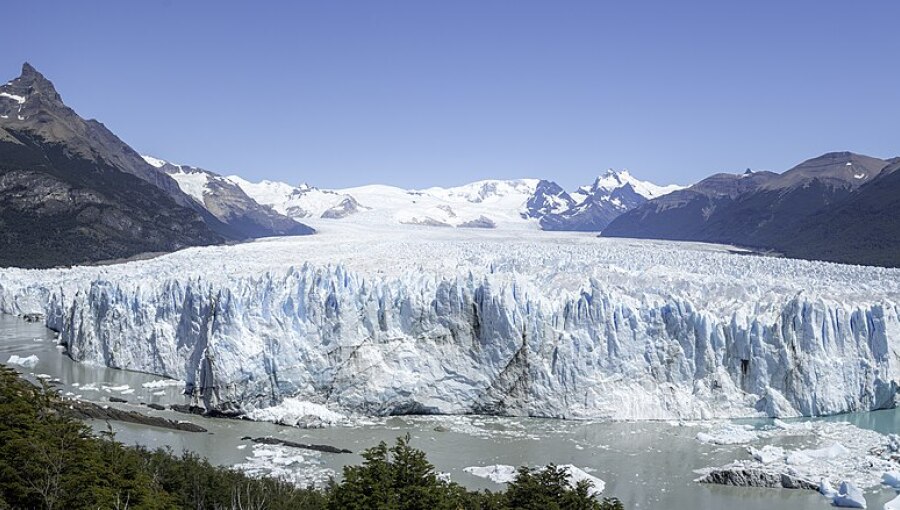
The Senate debate, set to unfold next week, will test the balance between Milei's push for economic development and long-standing environmental safeguards in one of the world's most glacier-rich nations. / CC/ Fernando
By bnl editorial staff February 11, 2026

Argentina's Senate is set to debate a government-backed reform of the 2010 Glacier Law that would shift authority to provinces to determine which glaciers and periglacial areas merit protection, as President Javier Milei's administration moves to ease restrictions on large-scale mining projects in the Andes.

The proposed amendment comes as environmental groups, scientists and residents in the western province of San Juan sound the alarm that loosening protections could jeopardise strategic freshwater reserves in an already arid region. The government argues that regulatory changes would unlock billion-dollar investments in copper and gold, key minerals for the global energy transition.

Argentina has nearly 17,000 inventoried glaciers across 12 provinces, feeding 36 river basins over more than one million square kilometres. The current law establishes minimum national standards to preserve glaciers and periglacial environments as “strategic reserves of water resources for human consumption; for agriculture and as providers of water for the recharge of hydrographic basins; for the protection of biodiversity; as a source of scientific information and as a tourist attraction”.

The Senate debate takes place amid a broader controversy over whether the reform would weaken existing safeguards. Critics view the initiative as a step backwards that could compromise water security by removing protection for significant portions of glacier and periglacial ecosystems, El País reported.

Over the past 30 years, the country has lost 42% of its glacier surface area due to global warming, according to scientists. In San Juan, provincial authorities declared a water emergency three years ago as communities reported increasing shortages.

If the reform passes, provinces would define which glaciers and periglacial zones have "relevant hydric function" and therefore require protection. Critics say this would weaken uniform national standards and allow political or economic considerations to override scientific criteria, potentially opening zones currently off-limits to mining.

Juan Pablo Milana, a geophysicist and Conicet researcher, warned that the change could allow glaciers to be reclassified to facilitate mining. “That modification leaves it up to the provinces to declassify glaciers. And the problem is that the criteria are for sale,” he said, as quoted by RFI. “If there is a lot of interest from the government in a mining operation going ahead, within the university you will always find someone who says: ‘this glacier is not useful because it has little ice, contributes little, or whatever’.”

Silvio Pastore, a glaciologist at the University of San Juan and coordinator of its Cabinet of Studies in Glaciology, Nivology and Climate Change, said some periglacial areas contain little or no ice and have minimal hydrological significance compared with white glaciers or debris-covered glaciers, RFI reported. “There are sectors in which no activity of any kind will be possible, but there are sectors that can be released,” he said, adding that he sought to contribute scientific data rather than engage in politics.

Mining companies including Canada’s Lundin Mining and Australia’s BHP are advancing the Vicuña project in San Juan, one of the largest copper and gold initiatives globally, with estimated reserves of 35mn ounces of gold and 12mn tonnes of copper. But industry representatives say more regulatory certainty is needed for such projects to proceed.

Iván Grgic, institutional relations manager for Vicuña and head of the San Juan Mining Chamber, said several copper projects were at advanced exploration stages. “When the world says ‘copper, please!’, San Juan is almost ready to start selling copper,” he said, arguing that investments have remained pending because companies cannot advance in areas where inventoried ice formations are present.

Local residents in the town of Jáchal, however, oppose any weakening of protections.

Farmers say water scarcity is already affecting livelihoods. Omar Aciar, an agricultural producer in Jáchal, said mining concessions were increasing pressure on freshwater supplies. “How are we going to sacrifice the glaciers? It is very clear that water is life,” he told RFI, adding that he had planted only 60 of his 100 hectares this year due to lack of irrigation.

Environmental organisations argue that reforming the law would undermine constitutional protections and the precautionary principle enshrined in environmental legislation and the Escazú Agreement. They say the 2010 law, upheld by the Supreme Court in 2019, reflects a societal choice to preserve finite freshwater resources.

The Senate debate, set to unfold next week, will test the balance between Milei's push for economic development and long-standing environmental safeguards in one of the world's most glacier-rich nations.

 

Argentine Senate backs Milei labour overhaul amid protests and political rift

Argentine Senate backs Milei labour overhaul amid protests and political rift
The legislation, which now moves to the lower house of Congress, contains more than 200 articles and introduces changes to hiring and dismissal rules, collective bargaining arrangements and severance pay conditions.
By bne IntelliNews February 12, 2026

Argentina’s Senate approved President Javier Milei’s labour reform bill in the early hours of February 12 after a lengthy debate marked by last-minute amendments, political bargaining and clashes between protesters and police outside Congress.

The bill passed with 42 votes in favour and 30 against, securing support from the ruling libertarian La Libertad Avanza coalition, the centre-right PRO party, the UCR and senators aligned with several provincial governors. The Peronist bloc voted uniformly against the proposal, while two senators from Santa Cruz who had previously backed the government opposed it this time, Clarín reported.

The legislation, which now moves to the lower house of Congress, contains more than 200 articles and introduces changes to hiring and dismissal rules, collective bargaining arrangements and severance pay conditions. The government aims to have the bill approved by the Chamber of Deputies before the opening of the ordinary legislative period on March 1.

Among the key provisions are measures making it easier for companies to dismiss employees and reducing severance costs, as well as restrictions on trade unions’ participation in collective bargaining. The reform also establishes that company-level agreements may prevail over broader sectoral accords and allows court-ordered payments to be made in instalments — six for large firms and 12 for small and medium-sized enterprises, Tiempo Argentino reported.

During the debate, Senator Patricia Bullrich, head of the ruling bloc in the Senate, defended the reform as necessary to modernise the labour market. She argued that Argentina’s system had become “unbalanced” and excessively litigious, hampering competitiveness and private-sector job creation.

Peronist Senator José Mayans rejected the bill, comparing it to failed economic models of the past and warning that it violated constitutional protections for workers. He said the reform would not generate employment and accused the government of targeting labour rights.

Outside Congress in Buenos Aires, thousands of demonstrators took to the street to protest the reforms, which unions describe as an attack on workers’ rights. Security forces used water cannon, rubber bullets and tear gas after clashes erupted, while some protesters threw stones and Molotov cocktails.

The General Confederation of Labour (CGT), which helped organise the protest, said in a statement: “It’s not modernisation. It’s austerity for the workers.” The government has argued the changes are essential to attract investment and advance Milei’s free-market agenda.

Additional amendments were introduced shortly before the vote, including adjustments to a proposed Labour Assistance Fund financed partly through social security resources and modifications to union contribution rules. The reform also incorporated, as an annex, an agreement to transfer national labour courts to the jurisdiction of the city of Buenos Aires.

The debate unfolded during extraordinary sessions of Congress, reflecting Milei’s broader push to overhaul economic regulation after winning the 2023 presidential election amid high inflation and economic stagnation. The lower house is expected to take up the bill in the coming weeks.


Wild fires are burning forest carbon sinks, but China bucking the trend with a massive desert forestation project

Wild fires are burning forests carbon sinks, but China bucking the trend with a massive desert forestation project
Forests used to be carbon sinks, but as wildfires expand due to global warming they are becoming a new source of CO2 emissions. China is bucking the trend with a massive desert forestation project. / bne IntelliNews
By Ben Aris in Berlin February 13, 2026

Extreme weather has led to an explosion of deadly wildfires around the world that are turning forests that should be a CO₂ sink into major sources of additional emissions as the area that burns each year expands.

Europe saw a record million hectares of forest burn in 2025, the largest area ever, that turns wood that has been storing CO₂ for decades into gas again. The expansion of wildfires has become so acute that investors have been rushing to buy catastrophe bonds to cash in on the escalating costs caused by fires that can burn down cities and entire regions.

The problems are even worse in Latin America where land clearing for agriculture has been reducing the forested area. One of the few places where the trend is going in the opposite direction is China where the government has planted a massive “green belt” of new trees in the Taklamakan desert, turning the barren belt into a new carbon sink.

Already this year 23 people were left dead in Chile and devastated forests in Argentina burning some of the world’s oldest trees that have been storing carbon for centuries. Global warming causing extreme conditions have made fires about three times more likely, scientists have found.

Researchers from the World Weather Attribution (WWA) consortium concluded that the hot, dry and windy weather that allowed fires to spread across vast areas in January was significantly intensified by human-caused climate change, The Guardian reported on February 13. The study found that parts of Chile and Argentina are now experiencing markedly drier summers, with rainfall 25% lower in early summer in Chile and 20% lower in the affected region of Patagonia.

Severe wildfires placed Chile’s Biobío and Ñuble regions in a “state of catastrophe” in mid-January as blazes destroyed more than 1,000 homes and forced 52,000 residents to flee as temperatures exceeded 37°C and strong winds fanned the flames.

In Argentina, fires broke out in early January in the UNESCO-listed Los Alerces national park in Patagonia, home to ancient alerce trees that can live for more than 3,000 years. Scientists warned that such ecosystems are increasingly vulnerable to prolonged drought and heat linked to rising greenhouse gas emissions.

Dr Clair Barnes of Imperial College London, part of the WWA team, told the Guardian: “Our analysis shows a clear and dangerous fingerprint of climate change on these fires. By burning fossil fuels, we have essentially loaded the dice, making the conditions for these devastating blazes more likely.”

The situation in Chile was exacerbated by non-native tree plantations, which are more flammable than native forests and often located near populated areas. “These plantations are located directly next to settlements, as was seen in Valparaíso in 2024,” said Mauricio Santos-Vega of the Red Cross Red Crescent Climate Centre. Wildfires in Valparaíso and surrounding regions in 2024 left at least 131 people dead.

China tree-planting turns the Taklamakan desert into carbon sink

Mass tree planting around the fringes of China’s Taklamakan Desert has transformed parts of what was long considered a “biological void” into a net carbon sink, with vegetation now absorbing more carbon dioxide than the desert emits, according to new research.

The findings, reported by Live Science on February 11, suggest that decades of ecological engineering under Beijing’s Three-North Shelterbelt Programme — also known as the “Great Green Wall” — are beginning to alter the carbon balance of one of the world’s largest and driest deserts.

The Taklamakan Desert spans about 337,000 square kilometres, slightly larger than Montana, and is encircled by high mountain ranges that block moist air for most of the year. Over 95% of its surface is shifting sand. Since 1978, however, China has planted billions of trees along the margins of the Taklamakan and Gobi deserts in an effort to curb desertification. More than 66bn trees have been planted across northern China to date, and forest cover nationwide has risen from 10% in 1949 to more than 25% today. In 2024, China completed a vegetative belt encircling the Taklamakan.

Researchers analysed 25 years of ground observations and satellite data on vegetation cover, precipitation, photosynthesis and CO₂ fluxes, alongside modelling from the US National Oceanic and Atmospheric Administration’s Carbon Tracker. The results, published on January 19 in PNAS, show expanding vegetation and rising CO₂ uptake along the desert’s edges, coinciding in time and location with the afforestation programme.

“We found, for the first time, that human-led intervention can effectively enhance carbon sequestration in even the most extreme arid landscapes, demonstrating the potential to transform a desert into a carbon sink and halt desertification,” said Yuk Yung, professor of planetary science at the California Institute of Technology and senior research scientist at NASA’s Jet Propulsion Laboratory.

During the wet season from July to September, precipitation averages about 16 millimetres per month — 2.5 times higher than in the dry season — boosting vegetation growth and photosynthesis. Atmospheric CO₂ concentrations over the desert fall from 416 parts per million in the dry season to 413 ppm in the wet season.

“Based on the results of this study, the Taklamakan Desert, although only around its rim, represents the first successful model demonstrating the possibility of transforming a desert into a carbon sink,” Yung said, adding that its role “may serve as a valuable model for other desert regions.”

Poland Europe’s largest methane super-emitter from coal mines

By Ben Aris in Berlin February 13, 2026

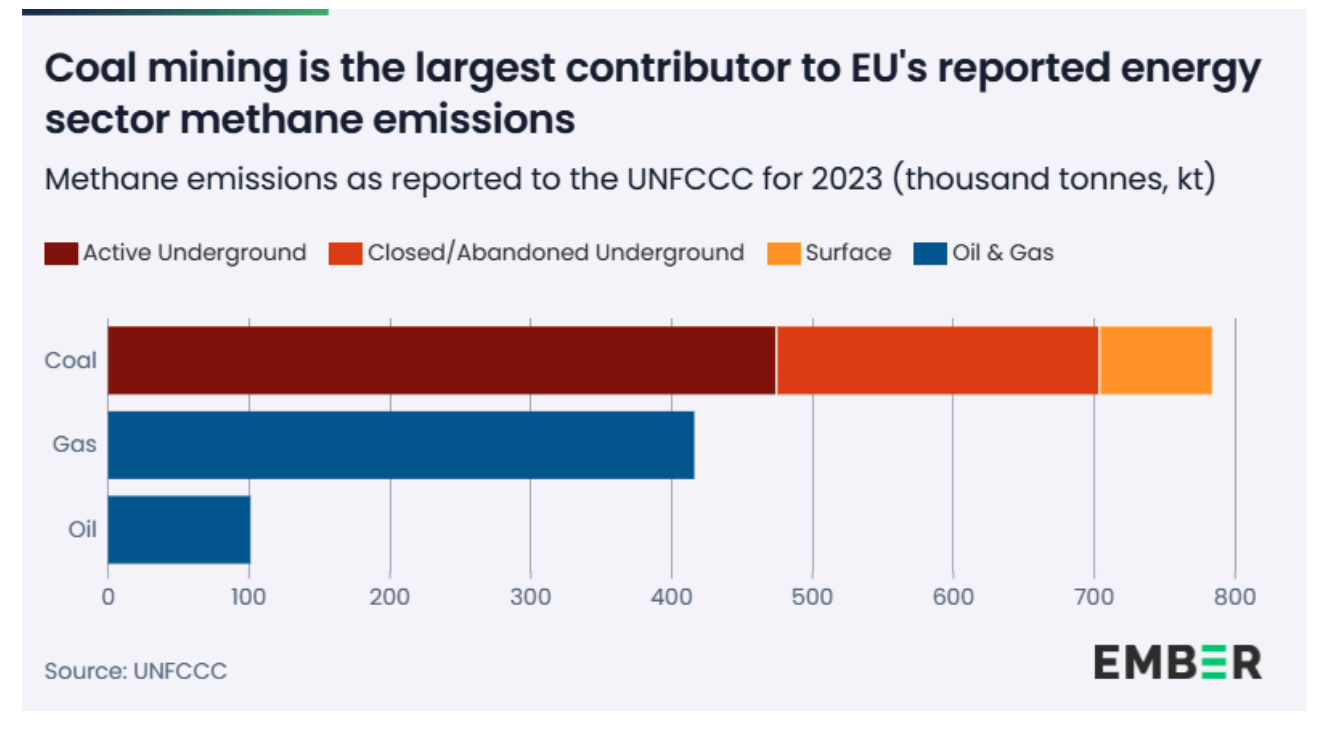
Poland has been identified as Europe’s largest “super-emitter” of methane from coal mining operations, according to a new report by energy think-tank Ember, which warns that vast quantities of the potent greenhouse gas continue to be vented illegally across the EU.

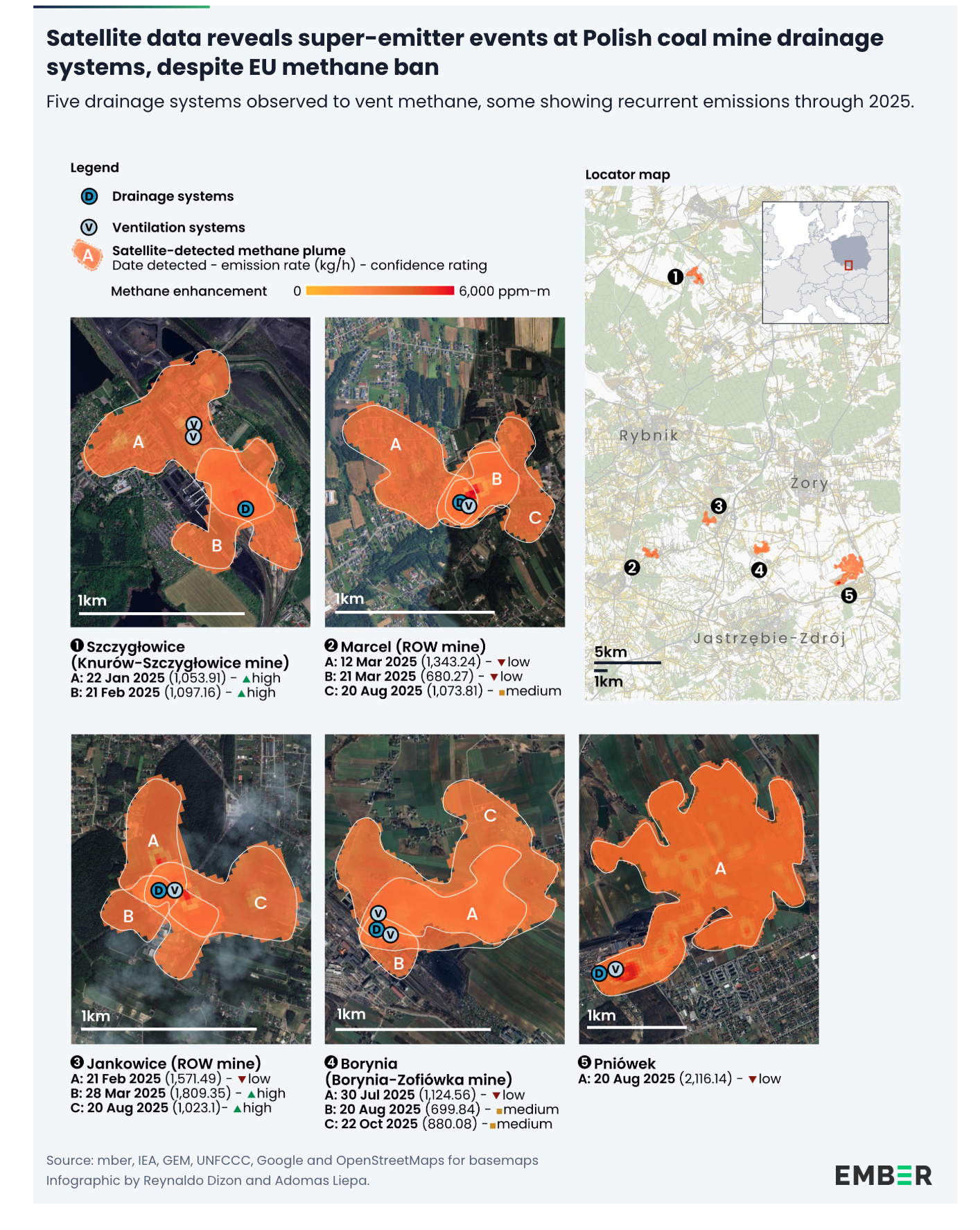
“In 2025, Polish coal mines were identified as the most frequent methane super-emitter observed in the EU energy sector. Despite the EU Methane Regulation prohibiting the venting of methane from drainage systems, new satellite evidence shows that methane venting continues across several sites in Poland,” the report said.

The study examined methane releases from EU coal mines using satellite data,. Ember reported on February 13 that Poland accounts for the largest share of so-called super-emitting sites — facilities that release exceptionally high levels of methane into the atmosphere. The effect on global warming of methane is more than 80 times more powerful than carbon dioxide over a 20-year period, making it a critical target for short-term Climate Crisis mitigation.

The report found that despite the EU’s tightening climate framework and commitments to cut greenhouse gas emissions by at least 55% by 2030, methane from coal mining remains one of Europe’s biggest climate problems. Poland, the bloc’s largest coal producer, is highlighted in the report and a standout emitter due to the scale and intensity of emissions linked to its underground mining operations.

"These direct observations of potential non-compliance underscore a critical gap between policy and practice. They demonstrate that, without independent verification and dissuasive penalties, the Regulation will fail to deliver the significant emission cuts that are technically feasible and urgently needed for climate goals," EMber found. 

Ember said that many coal mines across the EU continue to vent methane directly into the atmosphere rather than capturing or flaring it. Venting is often used for safety reasons in gassy underground mines, but the practice results in significant climate impacts when mitigation technologies are not deployed. Since January 2025, routine methane venting has been banned in the EU but at least five Polish coal mines have ignored the order and continue to vent methane illegally, Ember reports. Ember analysis finds that coking coal mines accounted for 90 out of 109 of the observed methane releases in 2025, despite representing only 25% of total hard coal production in Poland.

In 2025, 96% of methane plumes (109 out of 114 plumes analysed) over onshore European energy infrastructure were traced to Polish coal mines, making Poland the most frequent fossil fuel methane super-emitter in the EU. 5 out of 22 drainage systems in Polish coal mines were observed venting methane in 2025, despite the EU ban. "This is especially alarming given that no systems for verification or penalties are in place," says Ember.

“Since the EU Methane Regulation entered into force, its provisions are directly applicable across all EU Member States, and all operators covered by the regulation are legally required to comply. However, practical enforcement remains uncertain until each Member State adopts its own penalty framework, the deadline for which was 5 August 2025. To date, several Member States have submitted their penalty or draft penalty frameworks, including coal methane emitters such as Czechia and Romania. Poland – the EU’s largest coal mine methane emitter – has not,” the report says.

Methane reportedly vented from drainage systems – if captured – could keep 14.5mn  Polish houses warm for a week. In 2024, Polish coal mines used 70% of captured drainage methane, emitting 57,000 unutilised tonnes to the atmosphere. This drainage gas, rich in methane, could instead be used as an energy source, the report says.

The findings come as the EU prepares to implement new methane regulations, which require operators in the fossil fuel sector to measure, report and verify emissions, and introduces restrictions on routine venting and flaring. Coal mines will face new monitoring obligations under the legislation, with stricter standards expected to apply in the coming years.

Poland has defended the continued role of coal in its energy mix on grounds of energy security and affordability, particularly following supply disruptions after Russia’s invasion of Ukraine. However, the scale of methane emissions identified in the report is likely to intensify scrutiny of the country’s transition strategy.

Ember said tackling methane from coal mines represents one of the fastest and most cost-effective ways for the EU to curb near-term warming while accelerating the shift away from fossil fuels.

The Climate Crisis is accelerating. The United Nations’ Intergovernmental Panel on Climate Change (IPCC) says that the Paris Agreement goal of keeping temperature increases to less than 1.5°C-2°C above the pre-industrial benchmark has already been missed and temperature increase are on course to reach a catastrophic 2.7C-3.1C by 2050. At that point extreme temperature events will become routine and large parts of the world will become uninhabitable. Despite the urgency of the emergency, countries continue to put economic considerations head of the need to fight global warming.

Takaichi landslide strengthens case for fiscal easing in Japan

Takaichi landslide strengthens case for fiscal easing in Japan
Prime Minister Takaichi delivering a recent address on territorial issues / Prime Minister's Office of Japan
By bno - Tokyo Office February 13, 2026

Prime Minister Sanae Takaichi’s decisive election victory on February 8 has increased the likelihood of more expansionary fiscal policy in Japan over the coming years, according to Fitch Ratings. While the agency had already incorporated post-election easing and wider deficits into its overall January affirmation of Japan’s A rating with a stable outlook, it does caution that the scale of stimulus could exceed its current assumptions. If this happens, it would carry implications for the country’s future fiscal trajectory and, in time, its credit profile.

Takaichi’s Liberal Democratic Party (LDP) secured a total of 316 seats in the Lower House, up sharply from 198 in the previous ballot, in the process delivering a two-thirds supermajority. Together with its coalition partner, the Japan Innovation Party, the ruling bloc now controls 352 seats, compared with 230 before the snap election. Takaichi only called the election in January, just months after taking office in October as she sought to capitalise on her strong approval ratings and to secure a solid mandate for her policy platform.

The campaign primarily centred on cost-of-living relief for households, including measures to lift economic growth and how to take a firmer stance on immigration and national security. The scale of the victory now leaves the government well placed to implement its agenda with limited parliamentary resistance from any credible opposition force. Crucially, the two-thirds majority also enables the Lower House to override Upper House vetoes, reducing procedural constraints where the coalition lacks control in the upper chamber.

Fitch further expects Japan’s fiscal deficit to widen from 1.4% of GDP in FY24 to 2.4% in FY25, the year ending March 2026, and to approach as much as 3.7% by FY27. As such a larger-than-anticipated fiscal package would be the most direct route to deficits exceeding these projections.

Takaichi, meanwhile, has framed her approach as both proactive and responsible, but the policy mix she issues is likely to tilt towards tax relief and growth-oriented investment, reflecting voter unease over persistent inflation and long-term subdued income growth. A central campaign pledge by the LDP was a two-year suspension of the consumption tax on food, which is estimated to cost roughly 0.7% of GDP annually. In addition, higher public investment in high-technology sectors is expected to form a key plank of the government’s growth strategy, aimed at raising Japan’s long-term potential output and helping the nation keep pace with other tech leaders in the region.

The supermajority also alters previous coalition dynamics. With commanding numbers in the Lower House, the LDP is now much less dependent on concessions to its coalition partner and / or to any opposition parties. That new found autonomy could, in principle, temper certain fiscal risks if the leadership chooses to resist additional spending demands, Fitch adds. At the same time, the absence of any meaningful parliamentary obstacles increases the scope for more ambitious stimulus. The eventual scale of expansion will thus depend on a detailed policy framework set out by the new government in the coming months.

Market discipline, however, may yet act as a constraint the report suggests. Government bond yields have been edging higher amid more entrenched inflation and rising policy rates. A sustained increase in yields would therefore raise the cost of debt-financed stimulus and could potentially narrow any political room for manoeuvre. This would in turn limit either the size or duration of new measures.

Even under Fitch’s baseline of wider deficits, Japan’s debt dynamics continue to remain supported by nominal GDP growth. The fiscal position has improved markedly in recent years, as narrower deficits and stronger nominal expansion reduced government debt to just shy of 200% of GDP in FY25; down from 222% in FY20. As such, in the absence of any substantial new fiscal packages, the agency expects the debt ratio to fall further to around 195% over the next five years.

Shift Happens: Rewiring India’s Global Capability Centres (GCCs) For The AI Era – Analysis

February 13, 2026 
Observer Research Foundation
By Arya Roy Bardhan

Global Capability Centres (GCCs), also referred to as captive or global in-house centres, are wholly owned (or tightly controlled) offshore hubs set up by multinationals to run capabilities for the parent firm. These tasks span shared services (finance, HR, procurement), IT and operations, and even product engineering, analytics, cybersecurity, and R&D.

India has become a global leader in this sector as the role is shifting from back-office cost arbitrage to strategic extensions of headquarters. Today, these centres manage end-to-end digital products and platforms, run centres of excellence in AI/data/cloud, and increasingly drive transformation mandates across business functions. India’s convening of the AI Impact Summit from 16-20 February 2026 offers a timely chance to discuss the industry’s future and mobilise resources amid widespread job loss fears.

Figure 1: Maturity of GCCs Across the Top Nine Countries (by number of hubs)
Source: BCG

India is estimated to have over 1,700 GCCs with around 1.9 million direct employees and US$64.6 billion in annual revenue in 2024. Since India’s national accounts do not separately report the GCC sector, the ideal way to express GDP footprint is as a proxy. Thus, the sector accounts for around 1.6 percent of India’s nominal GDP and employs about 0.3 percent of India’s workforce. GCCs now employ roughly 35 percent of India’s tech-services workforce. Over the past two decades, their evolution has been steep: from early-2000s captive information technology (IT), business process outsourcing (BPO), and shared services units; to 2010s multifunction hubs incorporating engineering, research and development (ER&D), and analytics; and, in the 2020s, to high-value product, R&D, and innovation mandates. Another marker of this maturation is their expansion from roughly 1,300 centres, 1.3 million employees, and US$33.8 billion in revenue in 2020to a far greater scale today.


Figure 2: Snapshot of the GCC Ecosystem in India
Source: Zinnov-NASSCOM Report
Automation: Neither a Boon Nor a Bane

There is a core concern with AI. Many GCC functions, including customer support, finance operations, quality assurance (QA) testing, documentation, analytics, and chunks of software delivery, are task-heavy knowledge work. Modern AI, especially generative AI (GenAI), is adept at automating or speeding up the “rules-and-text” parts of those tasks. This is a task reallocation problem, where technologies tend to substitute for workers in codifiable or routine tasks while complementing non-routine problem-solving and complex communication tasks. In the automation-and-new-tasks framework, the net employment effect is theoretically ambiguous — displacement occurs when AI takes over tasks previously performed by labour, while reinstatement occurs when new tasks or activities expand labour demand elsewhere (often in higher-skilled, complementary roles). For GCCs, that maps to concerns about entry-level pipeline roles and full-time-equivalent (FTE)-based delivery models being compressed, even as demand rises for AI product engineering, model risk/governance, security, and domain-led transformation roles.

Empirically, the best early evidence points to augmentation or productivity uplift rather than one-for-one replacement, though with distributional twists. A large-scale field study of a GenAI assistant in customer support found 15 percent higher productivity, with the biggest gains for less-experienced agents, suggesting that AI can lift the floor and change skill gradients. Controlled experiments have also shown large speed or quality gains in professional writing tasks. For software work, randomised controlled trials at three companies report around a 26 percent increase in task completion. Here again, less experienced developers had higher adoption rates and productivity gains. At a macro level, the International Labour Organization argues that GenAI’s dominant impact is likely to be job transformation and augmentation, rather than wholesale job elimination. However, exposure is meaningful in clerical and some professional occupations, which are highly relevant to back-office-heavy segments of the GCC stack.

A seminal early study by the OpenAI team on the effect of Large Language Models (LLMs) on the US labour market found that around 80 percent of workers could have more than 10 percent of their tasks affected, while 19 percent could have more than half of their tasks affected. Adding software and tooling on top of the LLMs yielded further incremental gains across the workforce. In the services sector, LLM access could make a meaningful share of tasks faster, at the same quality. This framework flags tasks with heavy reading and writing, information synthesis, coding, classification, and standardised decision rules as the most exposed, which is exactly the task profile that dominates most modern service workflows. Applying that lens to Indian GCCs — which span technology, engineering, and operations, including shared services and globally owned roles — the likely outcome is partial replacement and broad augmentation rather than blanket job loss.

Figure 3: Tasks with Medium and High GPT-exposure, by Occupational Category
Source: ILO (Extracted using AI)

Under the replacement effects (task displacement), routine throughput layers might get automated or compressed. For instance, L1 support scripts, ticket triage, SOP drafting, basic reconciliations or payroll checks, compliance checklists, test-case generation, boilerplate code, and documentation might require lower labour inputs. GCCs may need fewer junior FTE hours per unit of output, flattening the delivery pyramid. Within augmentation effects, higher-value work will expand because AI raises individual productivity and widens the feasible scope. Developers can ship more, analysts can iterate faster, shared-services teams can move from processing to exception handling and control, and new roles can grow around AI productisation (evaluation, governance, security, domain translation). This is consistent with evidence-based warnings that GenAI’s dominant impact is often job transformation, even when many clerical-style tasks are exposed.

No Progress without Policy

The task-based models imply that the government’s best lever is to tilt AI adoption toward augmentation — raising worker productivity, rather than pure substitution. AI can displace labour by automating existing tasks, but employment can be preserved or expanded if policy helps generate new tasks and raises labour demand through innovation and output expansion. For Indian GCCs, this entails:large-scale, employer-linked skilling allowing workers to operate AI systems and move up the task ladder.
cheap, reliable access to compute, datasets, and model ecosystems enabling firms to build AI-enabled workflows that complement humans. This is also the intent of the IndiaAI Mission, which is based on the pillars of compute marketplace, innovation centre, datasets, skilling, etc.
credible governance (privacy, accountability, auditability) to speed adoption in regulated enterprise workflows where GCCs operate. India’s own Responsible AI work highlights these trust-building principles. The economic literature also stresses that automation has historically not eliminated work because it complements labour and expands demand — policy should therefore focus on human capital and enabling complements, not just on subsidising capital deepening.

To protect and increase employment within the sector while giving GCCs a transformational role in services-led growth, the goal is to push GCCs from low-cost hubs into innovation, IP, and product platforms. This can create complementary roles, even as routine layers compress, aligning with empirical evidence. Thus, pairing augmentation policies with active labour market supports (placement, certification, transition assistance) will be crucial. A services strategy matters because services are already the economy’s backbone (contributing 55 percent of GVA in FY25). Here, GCC-led productivity and export upgrading can be a direct growth channel if India also improves the enablers — digital trade rules and data-policy clarity, R&D incentives, deep-tech clusters around campuses, and structured work-integrated learning. While it is already being addressed through Skilling for AI Readiness (SOAR), the National Education Policy (NEP) should also explicitly include contemporary subjects like AI in curricula.
Financial software


Platforms for Policy, Partnership, and Public Capacity

AI is unquestionably a disruption for GCCs because it targets the codifiable layers that have historically anchored scaled services delivery. However, economic logic is equally clear that the employment outcome is not pre-determined. In task-based models, the net effect depends on whether policy and industry steer innovation toward complements and new tasks that expand labour demand rather than toward automation of existing tasks, which displace labour. If India grounds its response in granular, task-level data — what GCC roles actually do, where AI is deployed, how productivity gains translate into higher-value mandates and exports — then AI can become a transformation engine.

Upgrading GCCs into product, R&D, and enterprise transformation hubs can lift services productivity and exports in an already services-heavy economy. In that context, the upcoming India–AI Impact Summit in New Delhi can be more than a showcase. Rather than being an abstract forum, it has the potential to convene governments, corporations, researchers, and investors around quantifiable outcomes. It should be appropriately utilised to mobilise the resources needed to transform AI adoption in GCCs from headcount reductions into service-led growth.


About the author: Arya Roy Bardhan is a Junior Fellow with the Centre for New Economic Diplomacy at the Observer Research Foundation.

Source: This article was published by the Observer Research Foundation.


Observer Research Foundation

ORF was established on 5 September 1990 as a private, not for profit, ’think tank’ to influence public policy formulation. The Foundation brought together, for the first time, leading Indian economists and policymakers to present An Agenda for Economic Reforms in India. The idea was to help develop a consensus in favour of economic reforms.

Conflicts Over Water Intensify In Southern Russia, Threatening Moscow’s Plans For North-South Corridor – OpEd


By 


Moscow, Kalmykia and Russian regions along the Volga are increasingly at odds over water, with no obvious solution that does not leave one or more of these aggrieved and spread anger to neighboring areas and thus threaten Moscow’s plans for a north-south corridor to Iran via the Caspian.

Moscow is worried by the impact of global warming and the increasing use of water by the people and economies in regions adjoining the Volga-Don Canal that is leading to the siltification of its waters and those of the Caspian and thus limiting the ability of larger vessels to pass from central Russia southward to Iran and the Indian Ocean. 

Kalmykia, 93 percent of whose population doesn’t have access to potable water and whose agricultural areas are increasingly subject to desertification, wants a canal from the Volga to bring it more water even though that would reduce the Volga’s flow still further and it has also been pushing for a new trans-Caucasus canal from the Caspian to the Sea of Azov.

And Russian regions in the Volga and Caspian watersheds which want to continue to take more water from these waters are alarmed by both Moscow’s focus on the Volga-Don Canal rather than the entire water space and Kalmykia’s desire to take even more water from that channel which feeds the Caspian. 

These conflicts are just some of “the problems and prospects” of Moscow’s plans for a north-south water corridor that Strategic Culture Foundation analyst Aleksey Chichkin surveys in his latest articles, problems that have the potential to delay or even kill that project (fondsk.ru/news/2026/02/08/vodnyy-marshrut-sever-yug-problemy-i-perspektivy.html).

Not surprisingly, the Russian writer spends much of the article attacking Kalmykia’s plans for bringing water to that parched republic; but he does not address the ways in which the serious shortages of potable water there are likely to provoke widespread illness, emigration, and political anger in that Buddhist republic.

Indeed, if Moscow continues its current course, it is likely to find that it will have provoked a new conflict in the North Caucasus of which Kalmykia is a part and may even further anger predominantly ethnic Russian regions adjoining the Volga and Caspian as well, thus triggering new conflicts and undermining its own plans