Friday, February 13, 2026

These secretive decisions show a citizens' revolt against Trump is gathering serious pace


Robert Reich
February 12, 2026 
RAW STORY


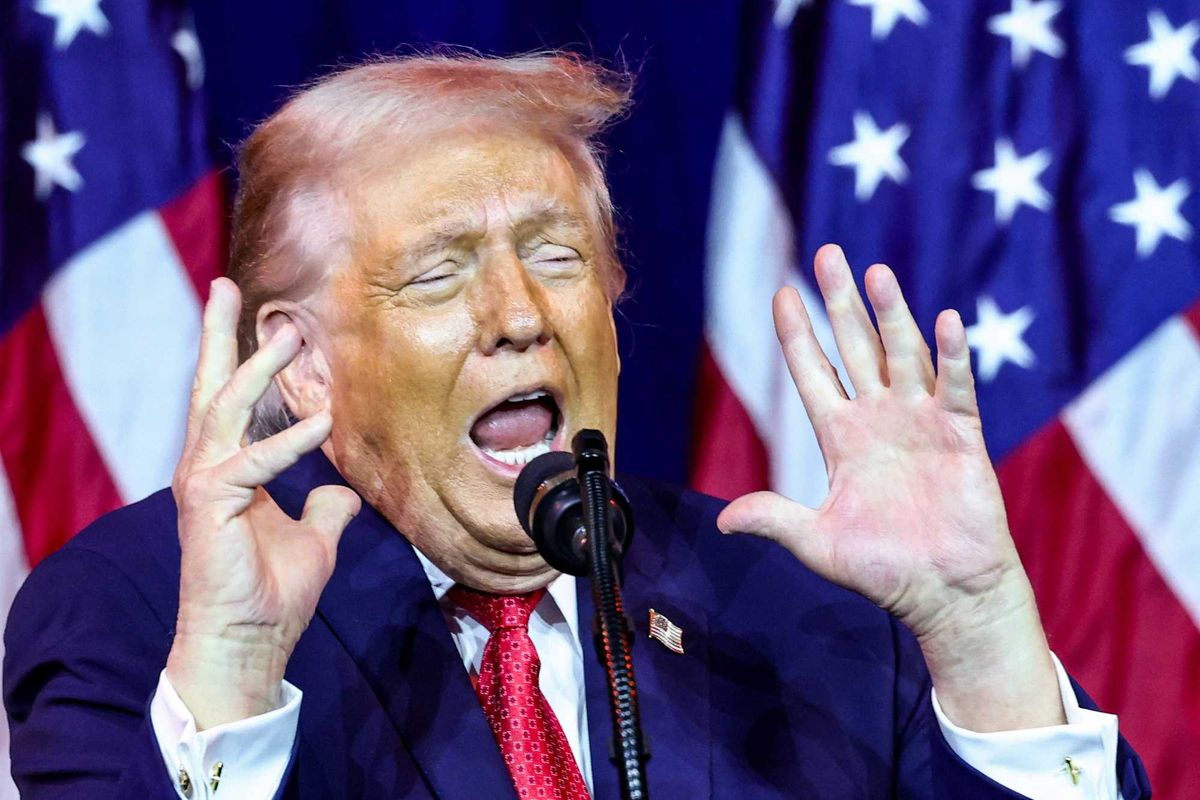
Donald Trump gestures during remarks in Washington, D.C. REUTERS/Kevin Lamarque


I wanted to highlight and give you context for some important news that broke on Wednesday.

The news is that Donald Trump’s federal prosecutors have failed to secure an indictment against six Democratic lawmakers — all veterans of the military or the intelligence community — who posted a video in November reminding active-duty members of the military and intelligence community that they were obligated to refuse illegal orders.

The video enraged Trump.

“SEDITIOUS BEHAVIOR, punishable by DEATH!” he wrote on his social media site.

He shared another post saying, “HANG THEM GEORGE WASHINGTON WOULD !!”

Days later, the six lawmakers disclosed that the FBI had contacted the House and Senate, requesting interviews with them, indicating that a criminal investigation was under way.

Jeanine Pirro, the U.S. Attorney for Washington, D.C. and a longtime Trump ally, promptly asked a grand jury to indict them.

But the grand jury refused.

I can’t emphasize enough how rare it is for a grand jury to refuse to issue an indictment that’s requested by a federal prosecutor, because prosecutors exert so much control over them.

Grand juries aren’t like juries in regular trials. They meet in secret — 16 to 23 citizens summoned from the community.

No judge is present. No lawyers who represent defendants are present. No witnesses appear. Prosecutors are in total command — presenting evidence of a crime and asking grand juries to indict.

And the evidentiary standard is not whether a crime occurred “beyond a reasonable doubt,” but merely whether there is “probable cause” of a federal crime.

It’s not surprising, then, that federal grand juries have issued indictments in more than 99 percent of cases prosecutors bring to them. (For example, in 2010, of 162,000 federal cases federal prosecutors presented to grand juries seeking an indictment, only 11 resulted in grand juries deciding not to indict.)

As Judge Sol Wachtler, the former New York jurist, famously said, prosecutors are in such complete control of grand juries that they could get them to indict a ham sandwich.

But in 2025, something odd began happening. Federal grand juries in Los Angeles, Washington, D.C., and Virginia refused to indict. At least seven of these cases involved clashes between protesters and federal officers. A grand jury in Virginia twice refused to indict New York Attorney General Letitia James.

Then came yesterday’s grand jury’s rejection of Trump’s demand that the six lawmakers he targeted be criminally prosecuted.

It’s an amazing spectacle. Ordinary people serving on grand juries are refusing to indict people who have become entangled in Trump’s viciousness. A citizen’s revolt.

Because of the secretive nature of grand juries, it’s impossible to know for sure why this has been happening. But the rejections suggest that grand jurors may have had enough of prosecutors seeking harsh charges in a highly politicized environment.

After the grand jury refused to indict him and five others, Sen. Mark Kelly (D-AZ) called out “an outrageous abuse of power by Donald Trump and his lackeys. Donald Trump wants every American to be too scared to speak out against him. The most patriotic thing any of us can do is not back down.”

He’s exactly right. The Justice Department and its federal prosecutors have abandoned any pretense at neutral justice. They’re now flagrant flaks for Trump.

On Wednesday, Republican senators weighed in against the regime.

Sen. Thom Tillis (R-NC) accused the regime of using “political lawfare” to try to lock up its perceived enemies: “Thankfully in this instance, a jury saw the attempted indictments for what they really were.”

Sen. Chuck Grassley (R-IA), the Judiciary Committee Chair, said: “I think our law enforcement people ought to be spending their time on making our community safe and going after real law breakers.”

Senate Majority Leader John Thune (R-SD) offered: “That’s the judicial system at work.”

At Trump’s insistence, Pirro has opened a criminal investigation of Jerome Powell, chair of the Federal Reserve. The DOJ is also pursuing a criminal investigations of Democratic officials in Minnesota who opposed Trump’s immigration crackdown. It arrested the journalist Don Lemon over his presence at a church protest in Minneapolis. Last week the FBI searched an elections office in the Atlanta area, based on debunked claims that the 2020 presidential election was stolen.

Not only are Senate Republicans rising up against this but so are ordinary Americans. They’re — we’re — saying no to Trump’s vicious prosecutions, and no to the federal prosecutors pursing them. We’re saying no to Republican candidates in special elections. We’re saying no to ICE and Border Patrol troops in our cities. We’re shouting “ICE OUT” and “F--- ICE” at sporting events. We’re saying no at marches and demonstrations.

A citizen’s revolt is occurring across America against the mad king, including places — such as grand juries — where revolts almost never occurred before.

Mark my words, friends: We will be stronger for having gone through this.


Robert Reich is an emeritus professor of public policy at Berkeley and former secretary of labor. His writings can be found at https://robertreich.substack.com/. His new memoir, Coming Up Short, can be found wherever you buy books. You can also support local bookstores nationally by ordering the book at bookshop.org


Munich Security Conference warns of era of 'wrecking-ball politics'

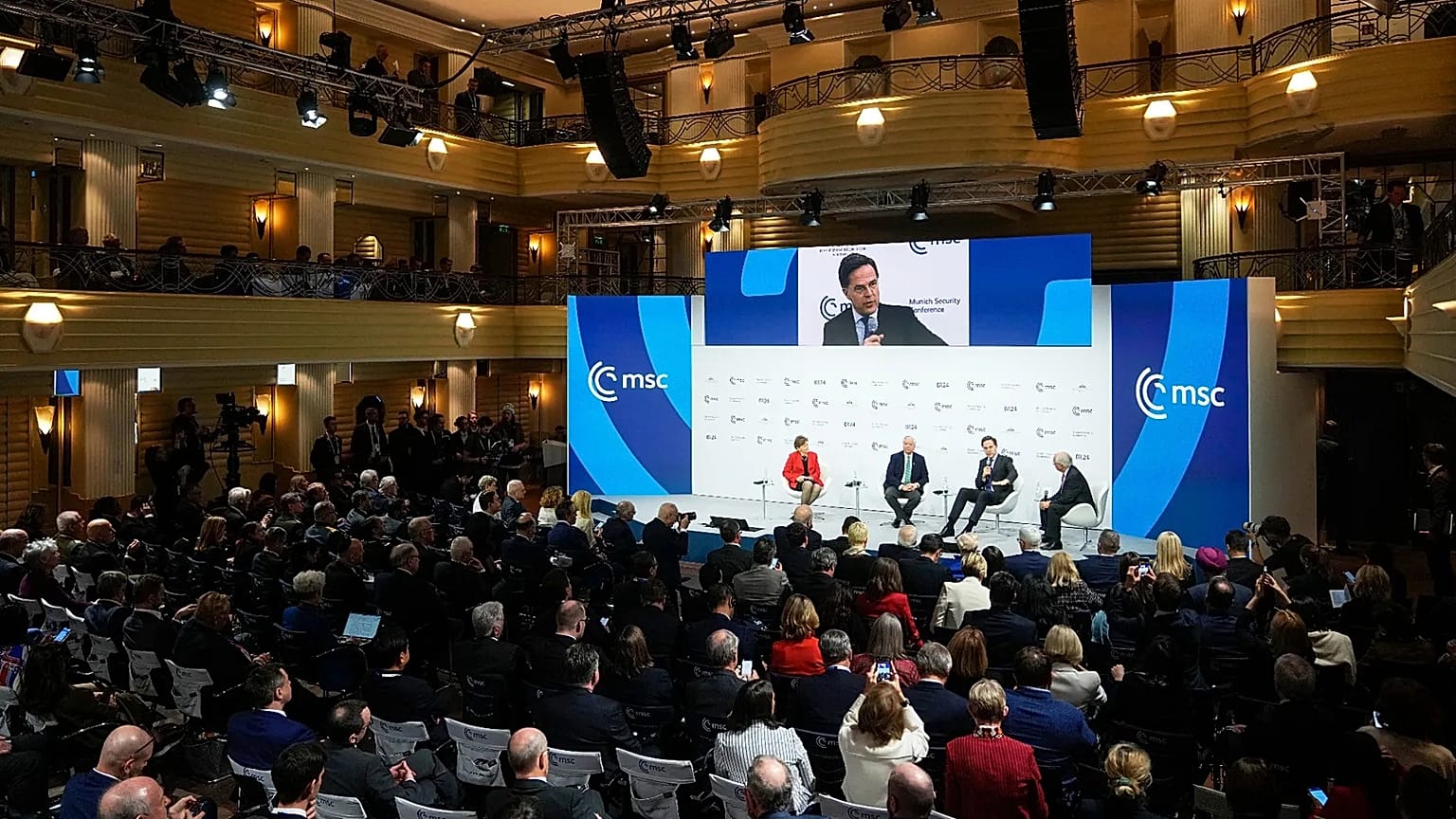
NATO Secretary General Mark Rutte, second right, speaks as he participates in a panel discussion during the Munich Security Conference in Munich, Feb. 15, 2025
Copyright AP Photo/Matthias Schrader

By Johanna Urbancik
 

As heads of state and government gather in Munich, a new report warns that the international order is under growing pressure, alliances are becoming more fragile, and geopolitical tensions are intensifying.

A large number of European and international heads of state and government will this week descend on Bavaria for the Munich Security Conference (MSC), which takes place from 13 to 15 February.

Around 65 heads of state and government are expected to attend, alongside some 450 representatives from global politics, academia and the defence industry.

In the foreword to the newly released 2026 MSC report, conference chair Wolfgang Ischinger writes that "rarely in the conference's recent history have there been so many fundamental questions on the table at the same time".

He points to core issues such as Europe's security, the future of the transatlantic partnership, and whether the international community is still capable of managing an increasingly "complex and contested" world

The report portrays a world in the midst of far-reaching political, economic and security upheaval. At its centre is a diagnosis that sets the tone for the entire document and the conference itself: "The world has entered a period of wrecking-ball politics."

'Reassurance, conditionality and coercion'

According to the report, cautious reforms and incremental policy adjustments are increasingly giving way to more radical restructuring that deliberately calls existing systems into question, or even seeks to dismantle them.

The country most prominently associated with this shift, it argues, is the United States. The very state that played a decisive role in building the post-war international order is now seen as one of the main drivers of its transformation. More than 80 years after it first took shape, that order is itself now "under destruction".

The report stresses that this is not just about individual policy decisions, but about a broader change in direction in US politics.

Washington, it argues, is challenging core principles that have shaped international cooperation for decades, from the role of international organisations and the importance of rules-based trade to close partnerships with democratic allies.

The effects of this shift are being felt worldwide, but especially in Europe, which has long relied on the US for security but which now experiences its partnership as "unsteady", shifting between "reassurance, conditionality, and coercion".

US Secretary of State Marco Rubio is expected to attend this year's conference. According to media reports, Vice President J.D. Vance's participation was initially confirmed, then cancelled a week later.

His speech at last year's conference was widely described as a "reckoning with Europe" and drew criticism from several politicians, including Germany's Chancellor Friedrich Merz and Defence Minister Boris Pistorius.
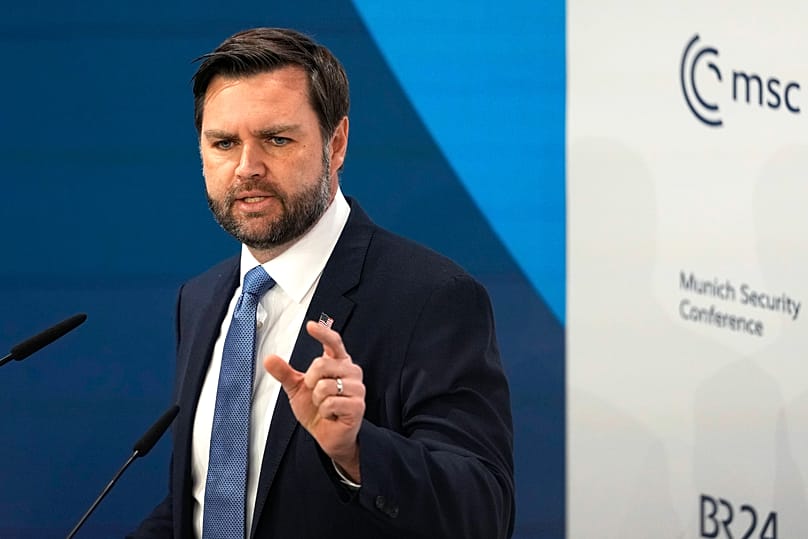
United States Vice-President JD Vance addresses the audience during the Munich Security Conference at the Bayerischer Hof Hotel in Munich, Germany, Friday, Feb. 14, 2025 AP Photo/Matthias Schrader

Chancellor Merz will lead this year's German delegation. NATO Secretary General Mark Rutte, European Central Bank President Christine Lagarde and numerous European heads of state and government are also expected to attend.

Rubio will attend "with a large delegation", and US congresswoman Alexandria Ocasio-Cortez has also confirmed her participation.

At the conference kick-off, US Ambassador to NATO Matthew Whitaker commented on the report's findings, rejecting its conclusions and stressing that the US has no intention of undermining NATO or other alliances.

"That's the first thing I reject; we're trying to make NATO stronger, not to withdraw or reject NATO, but make it work like it was intended as an alliance of 32 strong and capable allies," he said.

He reiterated that European allies must increase their defence spending and demonstrate that they can "deliver" on their commitments, including the new NATO spending targets.

Erosion of trust

Another key finding of the MSC report is a growing loss of trust in political systems. In many Western countries in particular, confidence is visibly declining.

Politicians are increasingly seen as "guardians of the status quo", "administering paralysed political systems that appear unresponsive to the majority of people". As faith in politics' ability to improve everyday life wanes, the report argues, electorates start to become open to more radical approaches. For many, abrupt breaks begin to seem more appealing than gradual change.

As a result, political actors who deliberately embrace confrontation and promise to tear down existing structures rather than reform them are gaining influence.

Before the conference, there was debate over whether the far-right Alternative for Germany (AfD) should be invited. Ischinger takes the view that the party should be included as long as it is not banned by the German authorities, and three AfD policy specialists, including Bundestag member RĂ¼diger Lucassen, are now set to attend.

Alongside the transatlantic relationship, the MSC report also addresses Russia's war on Ukraine and the associated hybrid threats facing Europe. It argues that Europe must prepare for a situation in which American support remains important, but can no longer be taken for granted.

Many European governments are therefore taking a dual-track approach: keeping the US closely engaged while at the same time building up greater capacity to act independently, for example through rearmament.

The report stresses that this sense of uncertainty is not only limited to Europe. In the Indo-Pacific, doubts are growing about the US' long-term commitment to the regional security order, while China's rise and "increasingly coercive behaviour" are contributing to a more "unstable" environment.

At the same time, the report also frames the current upheaval as an opportunity, noting that when old structures are shaken, "long-blocked" developments can begin to move again.

For instance, pressure on European NATO members has led many countries to significantly increase their defence spending. New partnerships are also emerging in trade, security and technology to end Europe's dependence on the US.

Yet whether this will ultimately lead to a more stable world remains uncertain – and many of the heads of government gathering in Munich this weekend worry that a looser global order could primarily benefit the largest and most powerful states.


'Under destruction': Europe's future

security in question at Munich conference


Global movers and shakers are gathering in southern Germany for the 62nd Munich Security Conference (MSC), which opens on Friday in the shadow of what its own report calls an international order “under destruction”.​


Issued on: 13/02/2026 - RFI

A copy of the Munich Security Report 2026, on display during a press conference in Berlin, Germany, on 9 February 2026. © Liesa Johannssen / Reuters

By:Jan van der Made


Organisers expect more than 60 heads of state and government, and around 100 foreign and defence ministers, to gather in Munich's Bayerischer Hof from Friday through Sunday. In total, more than 1,000 delegates from 120 countries are set to attend.

The 2026 Munich Security Report, titled “Under Destruction” and published last Monday, sets a stark tone.

It argues that the post-1945 order led by the United States is now being actively dismantled by “wrecking-ball politics” – not only by revisionist powers, but by movements inside Western democracies that favour demolition over reform.

The most powerful of the “demolition men”, it contends, is US President Donald Trump, whose administration has slashed foreign aid, walked away from key multilateral bodies and imposed sweeping tariffs that defy World Trade Organization rules.​

President Donald Trump speaks during an event to announce new tariffs at the White House, on 2 April 2025. @ AP - Mark Schiefelbein


According to the report, Trump’s second term has seen a “renunciation of core elements” of traditional US strategy: faith in multilateral institutions, support for an open trading system, and the role of “leader of the free world”.

Instead, it sketches an emerging order of transactional deals, regional spheres of influence and “neo-royalist” elites, in which private interests increasingly trump public ones.​

How Trump’s trade threats have reshaped Europe’s global strategy
European dependence

For Europeans, Munich comes at a moment the report describes as “a prolonged era of confrontation”.

Russia’s full-scale war against Ukraine, now approaching its fourth year, has shattered the post-Cold War security settlement, while Moscow steps up hybrid operations across the continent from cyber attacks to sabotage.​

At the same time, Washington’s “gradual retreat, wavering support for Ukraine, and threatening rhetoric on Greenland” have exposed Europe’s dependence on the US security umbrella, according to the MSC report.

It notes that US military assistance to Ukraine has dropped sharply since early 2025, forcing European allies and partners to shoulder most of the burden – including via a new NATO mechanism that channels European funds into US-made weapons for Kyiv.​

Europe’s defence dilemma: autonomy or dependence?

European leaders will arrive in Munich keen to show they are finally shifting from “security consumers” to security providers, pointing to steep increases in defence spending and efforts to coordinate industrial policy.

But the report warns of “multiple speeds” within Europe, as fiscally stronger northern and eastern states surge ahead while more indebted southern economies struggle with the new informal NATO goal to spend 5 percent of GDP on defence by 2035.​​

Beyond Europe, the report highlights China's economic and military dominance in Asia. It contrasts Washington's growing unease over Chinese pressure on Taiwan and in the South China Sea with US policies that hover between confrontational language, harsh tariffs and overtures to Beijing.​​


Chinese structures on the man-made Fiery Cross Reef in the disputed Spratlys group of islands in the South China Sea, on 20 March 2022. @ AP - Aaron Favila

Major test

The MSC report notes that in most NATO countries surveyed, majorities now see the US as a less reliable ally, and the West as less united than a decade ago.

The conference will again be a major test of transatlantic ties.

Last year’s incendiary appearance by Vice-President JD Vance, who claimed that mass immigration posed the most urgent danger to Europe, shocked many in the hall. This year, US Secretary of State Marco Rubio heads a large US delegation that includes some 50 members of Congress.


United States Vice-President JD Vance addresses the Munich Security Conference on 14 February 2025. @ AP - Matthias Schrader

Some 5,000 police officers will be on duty in Munich, with reinforcements from France, Austria, Switzerland and the Netherlands. Airspace over the city will be closed for the duration of the event.​

Outside the secure zone, 21 demonstrations are officially planned, including two large rallies against Iran’s government and a separate protest by opponents of the conference itself that could draw up to 4,000 people on Saturday.

Police also expect significant numbers of people for the Iran protests, with demonstrators arriving from across Europe.​


Europe set to 'circumvent America' as they do not trust Trump after 'betrayal': analysis
Ewan Gleadow
February 11, 2026


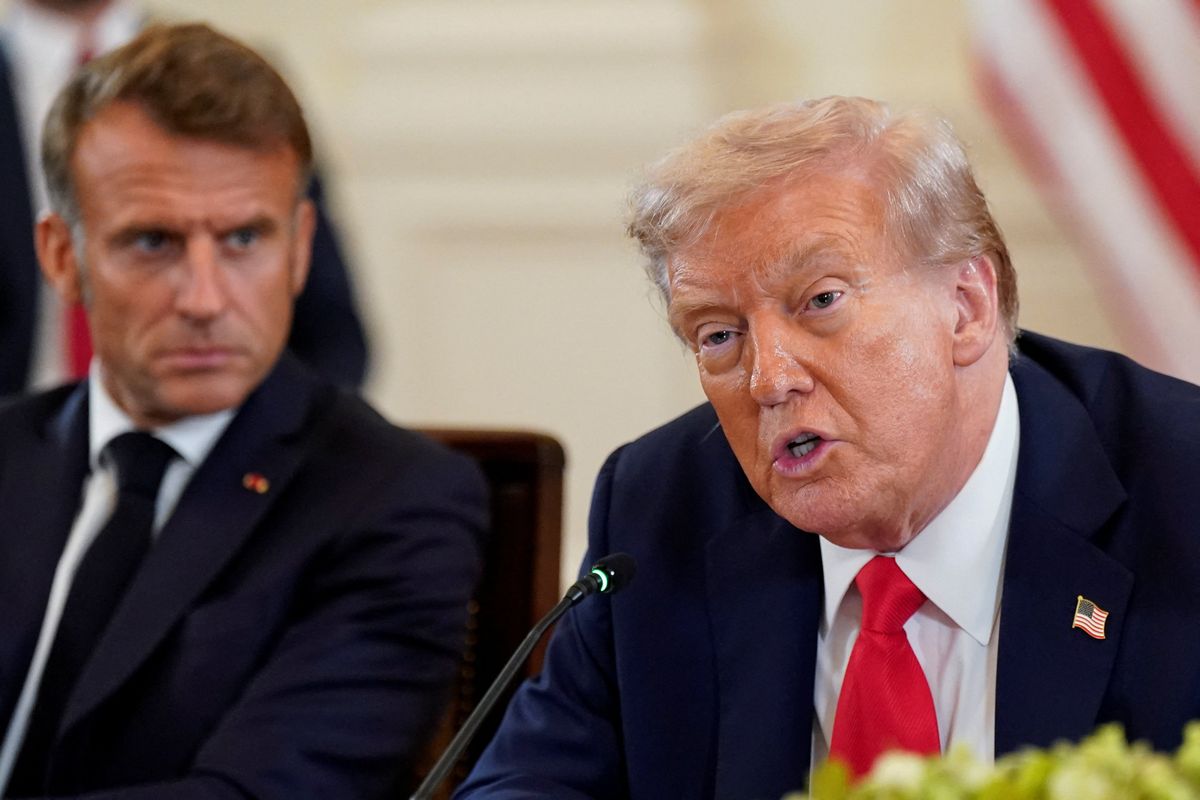
U.S. President Donald Trump speaks during a meeting with French President Emmanuel Macron, Ukrainian President Volodymyr Zelenskiy (not pictured) and European leaders amid negotiations to end the Russian war in Ukraine, at the White House in Washington, D.C., U.S., August 18, 2025. REUTERS/Al Drago

European nations may be set to freeze out the United States following Donald Trump's push to take control of Greenland, a political commentator has claimed.

Colonel Robert Hamlin believes NATO members, European countries, and world leaders are wary of Trump after his Donbas showmanship. Leaders will meet at a summit in Munich, Germany, later this month to deliberate on world affairs, and the US may find itself frozen out of such a conversation.

Col. Hamlin believes this could be a direct response from Europe after Trump tried to strongarm his way into ownership of Greenland. He wrote in The Hill, "As the grandees of geopolitics gather in Munich, the realization is dawning that there is not much to be done about Trump. Until voters rein him in, the goal will be to circumvent America and preserve what can be preserved.

"The question is whether there will be enough trust left whenever the U.S. comes to its senses and returns to the table. After the monumental Trump betrayal, that is not at all so clear."

The meeting could also see world leaders reduce their reliance on the US, with Col. Hamlin suggesting those countries meeting in Munich will try their best to stick to the rules.

"America’s erstwhile allies will try to preserve as much of the rules-based order as possible, reduce their vulnerability to U.S. coercion, and at least try to keep the door open for America to return if and when it chooses to do so," he wrote.

"But expect also economic and strategic workarounds, and the beginning of a campaign to project to American voters, with an eye to November, that their clueless leadership is engaged in terrible self-harm.

"The dense web of institutions and alliances built after World War II were not only primarily underwritten by the U.S., but also arguably made it the main beneficiary. This reality clashes violently with Trump’s narrative — cynical and seductive, but also stupid — that our allies have taken us for suckers."
Alarming steps by US allies show who Trump really serves

Thom Hartmann
February 13, 2026 
COMMON DREAMS


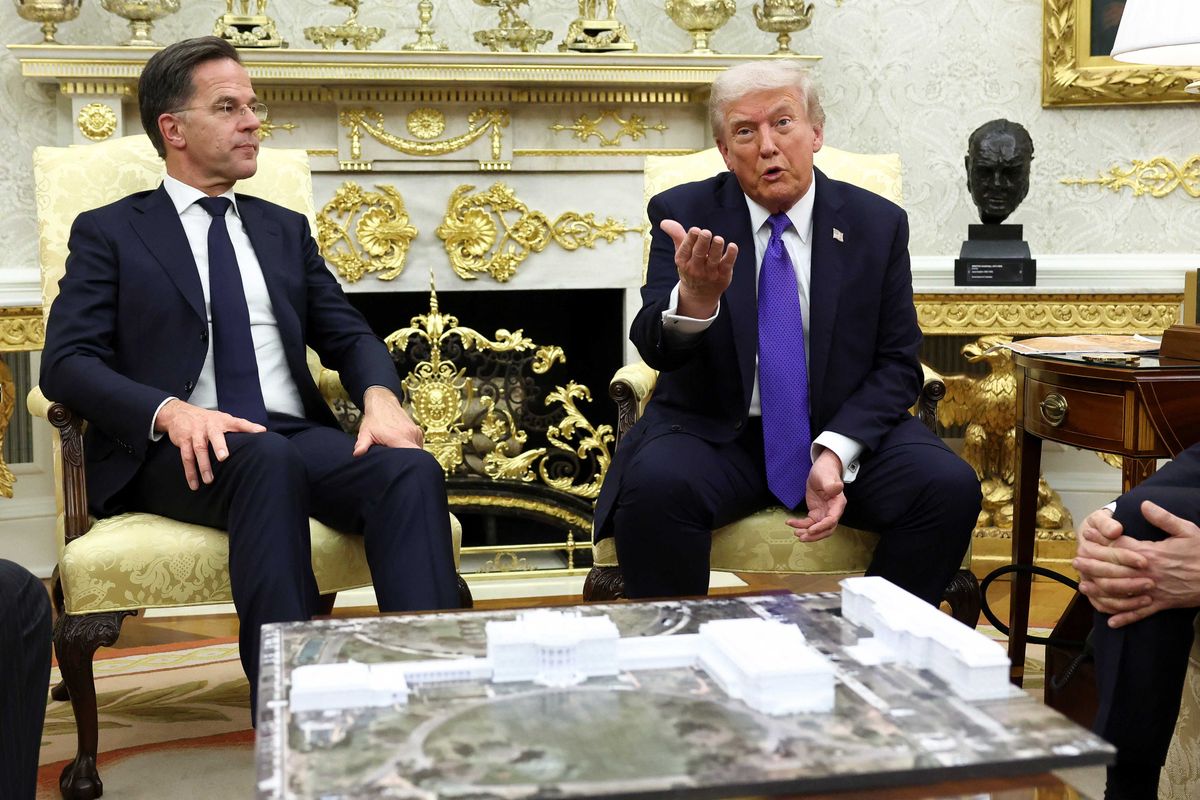
Donald Trump meets with NATO Secretary General Mark Rutte in the Oval Offi. REUTERS/Kevin Lamarque

Donald Trump is doing something to America that no foreign adversary has ever managed, something Vladimir Putin’s been dreaming about for decades: he’s convincing our oldest and closest allies, countries we fought wars to defend and liberate, and with whom we share a democratic system of government, that the United States can’t be trusted.

For example, France’s government just announced it’s ripping U.S. videoconferencing platforms — Zoom, Microsoft Teams, Webex, and others — out of its government offices nationwide and replacing them with a new French-created system called “Visio.”

That’s roughly 2.5 million French public employees who’ll no longer be using American digital products because the French have concluded that U.S. tech — and the Silicon Valley billionaires’ pathetic fealty to Trump, bringing him bribes and gifts and groveling in front of him — is a national security risk.


And it’s not just France: the German state of Schleswig‑Holstein just moved 44,000 employees off Microsoft and over to an open-source platform, and is now considering replacing Windows with Linux. They also dumped Microsoft’s SharePoint file-sharing system, going with open source Nextcloud.

We’re no longer seen as a reliable partner: many of our former allies now view us as a potential enemy.

Denmark’s government, Swiss authorities, Austria, and other European countries are exploring or implementing similar moves. The EU’s senior official for tech sovereignty, Henna Virkkunen, said that Europe’s dependence on American technology “can be weaponized against us.” As ABC News reported:

“A decisive moment came last year when the Trump administration sanctioned the International Criminal Court’s top prosecutor after the tribunal, based in The Hague, Netherlands, issued an arrest warrant for Israeli Prime Minister Benjamin Netanyahu, an ally of President Donald Trump.

“The sanctions led Microsoft to cancel [International Criminal Court’s prosecutor Karim Asad Ahmad] Khan’s ICC email, a move that was first reported by The Associated Press and sparked fears of a ‘kill switch’ that Big Tech companies can use to turn off service at will.”

It’s the same reason Canada is reconsidering purchasing F-35s from America, which would be another major economic and strategic blow to us. Under a leader as corrupt, mentally ill, and erratic as Trump, few countries are willing to have their essential tech or defense infrastructure vulnerable to his whims and tantrums.

Even more shocking, the National Security Desk reports:
“In a stunning shift announced today, NATO stripped the United States of command of all three of its operational‑level Joint Force Commands — the four‑star headquarters responsible for leading the Alliance in crisis and war.

“For the first time since NATO’s founding, every major operational command will now be led by European officers. The United Kingdom will assume command of JFC Norfolk, Italy will take over JFC Naples, and Germany and Poland will rotate leadership of JFC Brunssum. SACEUR remains American for now, but only symbolically; today’s tectonic move makes a future European SACEUR a matter of timing, not theory.”

This isn’t about Europeans “hating America” any more than than No Kings protestors calling out Trump’s fascist actions means they despise our country.

Quite simply, European leaders — like millions of Americans — are looking at Trump’s naked embrace of Putin, his open contempt for democracy, and his casual threats against NATO allies and concluding that no critical tech or defense system should ever again depend on the whims of this narcissistic wannabe American strongman.

Speaking of wannabe strongmen, ABC added:
“Billionaire Elon Musk is also a factor. Officials worry about relying on his Starlink satellite internet system...”

Analysts now explicitly warn that Trump’s and his toadies’ hostility to the EU and his willingness to weaponize sanctions and economic tools have made Silicon Valley firms look more like extensions of an unpredictable strongman who ignores the law, rather than the neutral digital providers they’ve historically positioned themselves as.

After all, if you’re a European defense or interior minister, you have to ask yourself: what happens to our communications and data if Trump wakes up pissed off at us one morning because we didn’t leap high enough when he yelled “Jump!”

Even more distressing, the damage isn’t just confined to tech. It’s hitting the very heart of the Western alliance system — which we largely created — that has kept relative peace since World War II. It’s been Putin’s goal for decades, and now he’s getting exactly what he wants from Trump.

When Trump said he would “encourage” Russia to attack NATO allies that, he claimed, weren’t “paying up,” European leaders didn’t shrug it off as a joke. European Council President Charles Michel called the comments “reckless,” correctly saying that such statements “serve only Putin’s interest” and undermine the core promise of mutual defense. Of course, serving Putin’s — rather than America’s — interests is exactly what Trump has been doing for a decade now.

Even NATO’s Secretary General felt compelled, once again, to publicly restate that Article 5 — the pledge that an attack on one is an attack on all — remains “ironclad,” slapping down the President of the United States.

As Sen. Adam Schiff (D-CA) said in response to Trump threatening to unleash Putin on Europe:
“He’s more interested in aggrandizing himself and pleasing Putin than protecting our allies. It would be enough to make Reagan ill.”


Schiff’s sentiments were echoed by Charles Michel, the president of the European Council:

“Reckless statements on #NATO’s security and Art 5 solidarity serve only Putin’s interest. They do not bring more security or peace to the world. On the contrary, they reemphasize the need for the #EU to urgently further develop its strategic autonomy and invest in its defense.”

So, here we are: the head of NATO and the head of the European Council reduced to reassuring the world that America’s president doesn’t speak for the alliance when he invites Russia to attack its members. Lewis Carroll, author of Alice in Wonderland, couldn’t have come up with something more bizarre.

European security analysts now talk openly about “low trust” and “ruptures and new realities” in their relations with the United States. One EU security study notes that Trump has shown “elements of active hostility against the European project,” highlighting his bizarre, paranoid claim that the EU was set up to “screw” the US, as well as his refusal to rule out the use of force to annex Greenland.

And now Trump has his emissary visiting rightwing and neo-Nazi parties and think tanks in Europe, offering them American cash and support. He and Putin appear totally committed to making the world safe for dictators and oligarchs by damaging the democracies of the world.

America’s and democracy’s enemies, of course, are thrilled. As one European think‑tank piece put it bluntly, Trump’s rhetoric is “a gift to Putin.” When the president of the United States trashes NATO, praises autocrats, and undermines the EU while half of Ukraine is being tormented by brutal cold, the man in the Kremlin doesn’t have to spend a ruble to fracture the West. Trump, like a dutiful dog, is doing it for him.

And this isn’t just elite hand‑wringing at the level of governments and ministers; ordinary Europeans are recalibrating their relationship with America, too. Surveys over the past year show European opinions of the United States dropping sharply, a reality we also see in the collapse of European vacationers to the United States.

One EU institute reports that nearly three‑quarters of Europeans now see the United States as a “somewhat or very unreliable” partner now, with average Germans among the most skeptical.

A broader survey across Britain, France, Germany, Denmark, Sweden, Spain, and Italy found U.S. favorability down, sometimes by double digits, with only about one-in-ten respondents expressing real trust in Trump’s America to defend them.

Another poll summarized by Politico found that even a majority of Canadians now see the US as a “negative global force,” driven largely by Trump’s erratic behavior and his obsession with self-enrichment, having already collected an estimated $4 billion for himself and his family since he was sworn to office.

Put simply, our allies are doing what any rational nation would do when a key partner goes rogue: they’re hedging.

They’re hedging by building their own tech infrastructure, so that Trump can’t flip a switch and cut off vital services or demand back-doors into their communications systems or share information with Putin. So Trump can’t hand them over to Putin the way he is Ukraine. They’re hedging by embracing “strategic autonomy,” aka European defense capabilities that don’t rely on Washington or anybody in America.

Meanwhile, here at home, Trump and his lickspittle Republicans are busily transforming America into exactly the kind of oligarchic, strongman system our grandparents fought World War II to stop.

He’s pardoned insurrectionists, is purging institutions and installing loyalists, and covering up the child-rape crimes of his billionaire friends, all while aligning himself — and, thus, America — with oligarchs and dictators abroad.

When you combine that internal authoritarian drift with external contempt for allies and admiration for Putin, you get the worst of all worlds: a United States that can no longer credibly lead democratic nations and may increasingly act as a spoiler on behalf of strongmen, grifters, and oligarchs worldwide. And, of course, on behalf of Putin.

Trump promised to “make America great again.” Instead, he’s teaching the rest of the free world that they need to live without us. All to our and our children’s detriment.

Thom Hartmann is a New York Times best-selling author and SiriusXM talk show host. His Substack can be found here.

Ally seeks to 'wriggle out of Trump’s shadow' as president 'shatters' stability

Ewan Gleadow
February 11, 2026 
RAW STORY


The unpredictable rhetoric of Donald Trump could cause a disaster in global politics, according to those relying on the United States's presence.

Countries across the world were given a taste of what the president is willing to do for his administration when he levelled threats at Greenland and captured Venezuelan president NicolĂ¡s Maduro. Peter Mortensen, a family therapist and psychologist from Denmark, told Politico that the US he once knew is no more and that looking to the country for support is no longer an option.

He said, "I talk to more people up here who say that our original belief that we can trust the United States and that they will always be there, they’re a strong force in the world — that has been shattered really seriously.

"Donald Trump is so unpredictable that whatever he takes as a personal insult he can make into a geopolitical crisis." Trump would write a letter to Norway's Prime Minister Jonas Gahr Støre earlier this year after failing to be awarded the Nobel Peace Prize.

Canada could be stirring Trump's wrath against the world, too, by aiding Nuuk and its residents. Politico columnists Mike Blanchfield and Calder McHugh wrote, "Opening a Canadian consulate in Nuuk, the capital of the autonomous territory of Greenland in the Kingdom of Denmark, has been in the works for over a year.

"But the timing, coinciding with both another round of menacing from U.S. President Donald Trump and bracing talk at Davos by Canadian Prime Minister Mark Carney of the need to forge new alliances, is not lost on anyone here.

"Into that vacuum arrives Canada. Their new strategy of working harder to be a player on the world stage, building alliances and offering security guarantees that they once left to the United States, is taking shape in Nuuk.

"Canada’s outreach to their Arctic neighbor could well be the beginning of the country’s attempt to build their own international bona fides and wriggle out of Trump’s shadow."


French winemakers toast new markets as exports fall and tariffs bite

Thousands of winemakers and buyers packed the halls of the Wine Paris trade fair this week, as the sector grapples with falling exports, US tariffs and climate uncertainty – even as some producers say strong demand for quality wines and new customers abroad offer reasons for optimism.


Issued on: 12/02/2026 - RFI

Wine producers and buyers meet at Wine Paris, held February 9–11, 2026, as the French wine industry confronts falling exports and US trade tariffs. AFP - PIERRE ANDRIEU
01:28


By: Alara Koknar


More than 52,000 visitors attended the event this year, with over 20,000 business meetings organised between producers and buyers.

French wine and spirit exports fell by almost 8 percent in 2025, according to the latest data from the French Federation of Wine and Spirits Exporters.

Shipments to the United States were down 20 percent last year. American tariffs, currently set at 15 percent on European wine and spirits, have added strain to an industry that supports some 600,000 jobs in France.

French President Emmanuel Macron at the opening day of the 2026 edition of the Wine Paris trade show on Monday, February 9. AP - YOAN VALAT

Exports under strain

“After Covid, a lot of US importers over-purchased and now their stocks are full so they are buying less from France,” Nathan Terrigeol, who runs the Bordeaux winery Vignobles Terrigeol with his brother Quentin, told RFI.

“That phenomenon, combined with Trump’s tariffs, has seriously impacted our exports.”

Some producers say the Trump administration's tariffs have not had as dramatic an impact on their sales as they feared.

How drinking culture, linked to French identity, can be a ’tool of exclusion'

Pierre Dietrich, founder of Pépin Wine, an organic winery whose bottles retail in the US for between $27 and $40, said his business has held up well.

“2025 was a good year for us, both in terms of the quality of the wine produced and our sales despite climate conditions not being ideal,” he said. “Our US sales are growing, despite tariffs. Yes we had to increase our prices due to tariffs but we didn’t lose many clients.”

Dietrich also pointed to trade diversification. While he sees opportunity in the Mercosur free-trade deal between the European Union and South American countries, he remains “worried for the rest of the French agricultural sector” facing what he considers unfair competition.


French winemakers are seeking new markets to offset declining US demand. AFP - MEHDI FEDOUACH

Climate disruption

Climate volatility remains another concern for French wine-growers. The sector has endured wildfires and hailstorms in recent years.

“We were lucky compared to other neighbouring producers,” said Terrigeol, explaining that his vineyards were spared last year from a nearby fire.

Beyond traditional markets, new opportunities are emerging.

Stuart Mugabe, a Ugandan wine importer who has attended the convention for the past three years, said demand for premium French wines remains strong in Uganda. He is also seeking organic and alcohol-free wines, noting there is “an empty space” for suppliers.

As consumption declines at home, French wine producers are seeking new markets, such as China and India, and are relying on the quality of their products to remain competitive.
Cyclone Gezani kills dozens, displaces thousands in Madagascar

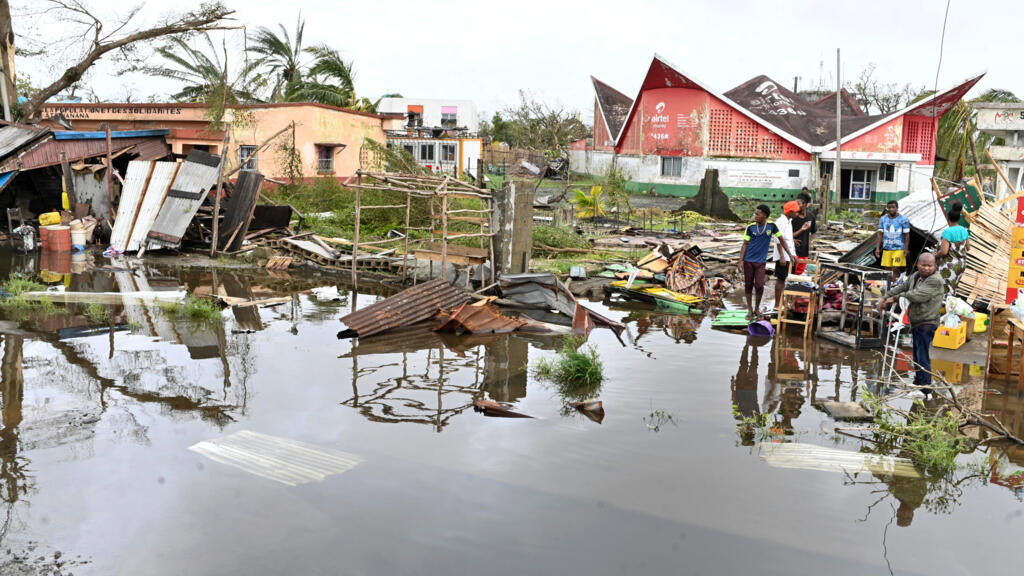
At least 38 people have died in Madagascar after Cyclone Gezani tore through the coastal city of Toamasina with winds of up to 250 km/h. The country’s leader appealed for "international solidarity" in the face of the catastrophe.


Issued on: 12/02/2026 - RFI

Residents assess the damage caused by Cyclone Gezina in Madagascar on 11 February 2026. © AP - Hery Nirina Rabary

The National Office for Risk and Disaster Management (BNGRC) confirmed on Thursday that at least 38 people were killed, six remain missing and at least 374 were injured after Cyclone Gezani made landfall late Tuesday.

The storm slammed directly into Toamasina, also known as Tamatave – Madagascar's second-largest city and home to nearly 400,000 people.

Its violent gusts and torrential rains ravaged “up to 75 percent” of the city and its surroundings, according to Madagascar’s new leader, Colonel Michael Randrianirina, who took power four months ago following a military takeover.

In a statement Thursday, he called for “international solidarity” to support urgent relief operations.

Aerial view of Toamasina, after Tropical Cyclone Gezani struck the eastern part of Madagascar on February 11, 2026. © BNGRC Madagascar


More than 18,000 homes were destroyed, while over 50,000 were damaged or flooded, the BNGRC said. At least 12,000 people have been displaced.

The storm also caused significant damage in the surrounding Atsinanana region, where post-disaster assessments are still under way.

Mozambique on alert

The CMRS cyclone forecaster on France's Indian Ocean island of RĂ©union said Toamasina had been “directly hit by the most intense part” of the cyclone. It described the landfall as likely one of the most intense recorded in the region – rivalling Cyclone Geralda, which left at least 200 people dead back in 1994.

Cyclone Gezani weakened after reached land, but continued crossing Madagascar from east to west as a tropical storm until Wednesday night.

Forecasters say it is expected to regain strength over the Mozambique Channel, potentially returning to “intense tropical cyclone” status, classified as stage four out of five. From Friday evening, it could strike southern Mozambique, a country already grappling with severe flooding since the beginning of the year.

Cyclone season in the south-west Indian Ocean typically runs from November to April and produces around a dozen storms each year.
2026 WINTER OLYMPICS

Guinea-Bissau makes Winter Olympics debut with teen skier Tang

Guinea-Bissau is making its first appearance at the Winter Olympics, with 19-year-old skier Winston Tang set to compete in the slalom at the Milano-Cortina Games in Italy, which run until 22 February.


Issued on: 13/02/2026 - RFI

Winston Tang, a 19-year-old skier representing Guinea-Bissau, will compete in the slalom. © Cortesia Winston Tang

For the West African country, it is the first time its winter sports federation has been represented at the Games.

Tang was born in Utah in the United States and began skiing at the age of two. He is following in the footsteps of his father, a former Olympic athlete, but says he is not focused on results.

“It’s just ski the best I can, try to make it to the second run and see how things go,” Tang explained.


African athletes have blazed a trail at Winter Olympics for over 60 years

Father and son on Olympic slopes

Tang’s father, Thomas Tang, competed for Chinese Taipei at the 1988 Winter Olympics in Calgary, Canada, and again in 1992 in Albertville, France, taking part in the giant slalom and super-G events.

Now secretary-general of the Guinea-Bissau Winter Sports Federation Tang senior says he feels enormous pride watching his son follow in his footsteps – or ski tracks.

“I’m so proud. People in Guinea-Bissau really support us,” he told RFI.

The federation’s ambition is to train other athletes and take them to the 2030 Winter Olympics, which will be held in the French Alps.

Thomas Tang (left), with his son Winston Tang, who is representing Guinea-Bissau at the Winter Olympics. © Cortesia Winston Tang

This story was adapted from the original version in Portuguese by Marco Martins
Senegal university suspends student associations following deadly clashes

Senegal’s largest university has suspended student associations after violent demonstrations over unpaid grants led to the death of a student. The victim’s family has called on the judiciary to clarify the circumstances of his death after an autopsy report circulating on social media showed multiple traumas.


Issued on: 13/02/2026 - RFI

Police vehicles in front of the UCAD campus in Dakar following the death of student Abdoulaye Ba. © Pauline Le Troquier / RFI

University gates and residences at the Cheikh Anta Diop University (UCAD) in the capital Dakar have remained closed since a second-year medical student was killed in unclear circumstances during a police intervention.

The student, Abdoulaye Ba, died on Monday following injuries sustained during a security intervention at the UCAD campus.

UCAD's academic council said late Thursday that it had been "deeply affected by this tragedy" and, for safety reasons, had decided to "suspend, on a precautionary basis and until further notice, the student associations".

Videos posted on social media showed scenes of chaos, with security forces entering university grounds and firing tear gas into buildings while students retaliated by throwing stones.


In one video, authenticated by France's AFP news agency, police are seen beating a screaming man with batons.

Senegal says student's death in clashes with police a 'tragedy'
Family calls for clarity

An autopsy report of the victim circulating in the media details multiple traumas, including haemorrhages in one lung and left kidney, bleeding in the brain caused by concussion and a ruptured spleen.

A source who witnessed the autopsy confirmed to RFI that Ba had suffered multiple haemorrhages.

It is still unclear what caused the student’s injuries.

On Thursday, in a brief statement to the press, the victim’s uncle Mamadou Dioulde Ba called on judicial authorities to “clarify the circumstances surrounding Abdoulaye Ba’s death”.

A number of social media posts relayed a photo of the young medical student in the lab.


Student becomes first death in growing Senegal election protests


Unpaid grants

The government has called Abdoulaye Ba’s death a “tragedy” and admitted to “police brutality”.

But Senegal’s Interior Minister Mouhamadou Bamba Cisse also defended the police intervention, accusing students of attempting to damage campus infrastructure.

A student association collective said it held Senegal’s president, prime minister and other government officials responsible for the deadly violence.

Senegalese students have been rallying over outstanding stipends for years, with demonstrations sometimes leading to clashes with police.

The country’s university academic calendar is often disrupted by student and faculty strikes. As a result, students can go months without receiving their stipends.

(with newswires)
Why France's agriculture law may not help the farmers it claims to defend

France’s parliament on Wednesday debated a petition against the Duplomb agriculture law, which would reauthorise the use of a pesticide banned in 2018. The issue has become a flashpoint between farming unions, scientists and environmental groups – with concerns for biodiversity and human health.


Issued on: 11/02/2026 - RFI

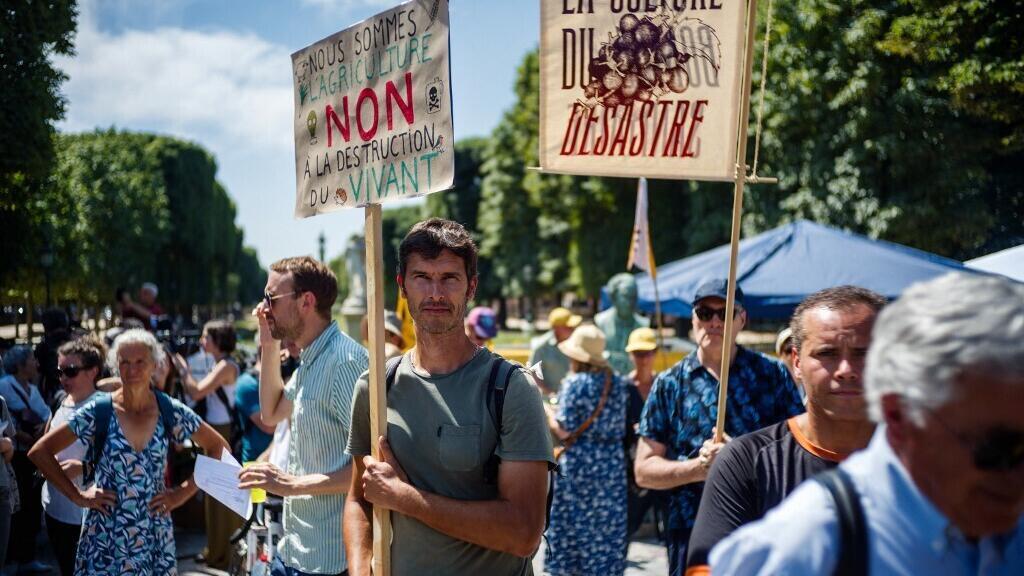
Farmers, scientists, beekeepers and citizens protest the Duplomb agricultural bill, which aims to ease access to pesticides. AFP - DIMITAR DILKOFF

By:Alison HirdFollow


The Loi Duplomb, named after conservative senator Laurent Duplomb who proposed it, claims to ease pressure on farmers by loosening rules on pesticide use, large-scale livestock farming and water storage projects.

Backed by the government and major farming unions, the law was passed on 8 July 2025.

It was immediately contested by some scientists, health experts and environmental groups because it reauthorised acetamiprid, part of the neonicotinoid group of pesticides banned in France in 2018 for harming bees and other pollinators.

Within days, a student-led petition denouncing the law as a “public health and environmental aberration” gathered more than 500,000 signatures. By the end of 2025, more than 2 million people had signed the petition – a record in France.

In August, opponents of the law brought it before France's constitutional council, which ruled against reintroducing the pesticide, arguing it flouted France’s environmental charter, which guarantees the “right to live in a balanced and healthy environment”.

However, all the other provisions in the law, such as easing authorisations for livestock farming and irrigation reservoirs, remained in place.

France's top constitutional court rejects return of bee-killing pesticide

Brain disorders

Senator Duplomb is continuing to push for a derogation on pesticides. In early February, he submitted a revised version of the censured article maintaining the reintroduction of acetamiprid, along with another insecticide, flupyradifurone, in a limited number of cases.

“No serious study has shown that acetamiprid is carcinogenic,” Duplomb told French public radio on Monday, defending the measure and underlining that France is the only country in the EU to have banned acetamiprid.

"We are banning molecules that are authorised in Europe whereas independent agencies have shown that [acetamiprid] was dangerous neither for people nor the environment. Today in France, through a particular kind of obscurantism, we would like to have people believe the opposite."

Chemist and toxicologist Jean-Marc Bonmatin said the lack of studies means there is no “formal proof” that acetamiprid causes cancer. However, “there are serious indications showing acetamiprid could be carcinogenic, notably for breast and testicular cancer because all neonicotinoids have been found to be endocrine disruptors,” he told RFI.

French health experts oppose bill that could reintroduce banned pesticides

There is no doubt, however, about the molecule’s impact on the brain.

“The main concern with neonicotinoids, and acetamiprid in particular, is the action of these neurotoxic molecules on the central nervous system”, Bonmatin said – adding that they affect neurodevelopment, notably in unborn babies and young children.

He pointed to “extremely important diseases” such as autistic spectrum disorders in children, and neurological disorders in the elderly.

“That’s why we scientists and doctors are taking action on this issue,” the chemist said.

In 2021, Bonmatin and colleagues at France’s Centre for scientific research (CNRS) published a list of the effects of neonicotinoids, including acetamiprid, on human health “so that doctors can recognise the symptoms of poisoning and the cases”.

While scientists often invoke the principle of precaution when studies are not clear, Bonmatin says that in this case the principle of prevention has to apply.

“We know very well what these pesticides will do to the population, to biodiversity, to the environment, so we have an obligation to protect people from future illnesses,” he said.

Even the European Food Safety Authority (EFSA) – often cited by supporters of acetamiprid – said in 2024 that there were "major uncertainties in the body of evidence for the developmental neurotoxicity (DNT) properties of acetamiprid".

It proposed reducing the acceptable daily intake by a factor of five.

French health watchdog warns of pesticide dangers to young children

Existing alternatives

Duplomb said the revised law would allow the use of the pesticide only where farmers have no alternative.

“We have focused on those sectors that INRAE considers to be in a complete dead end – where plant protection products are the only solution, such as hazelnuts, apples, cherries and sugar beet,” he said on Monday – referring to the National Research Institute for Agriculture, Food and the Environment.

The Loi Duplomb is backed by France’s largest farming union, the FNSEA, which is dominated by large cereal and sugar beet farmers and agribusinesses. It says sugar beet farmers in particular have no alternative to neonicotinoids when faced with the jaundice virus transmitted by aphids.

Bonmartin cites a 2021 report by Anses – France's food, environmental and occupational health and safety body – which specifically adressed the sugar beet issue and which found there were in fact around 20 alternatives.

“There are even varieties of sugar beet that resist the jaundice disease transmitted by flies,” he said. “So saying there is no alternative amounts to fake news to allow the reintroduction of neonicotinoids.”

“When the FNSEA says there is no alternative what they mean is that there is no alternative as easy as using pesticides.

"So the choice is either I take the easier solution through pesticides – the worst in terms of poisoning people – or I use alternatives and I preserve the environment, biodiversity and public health.”

France moves to ease pesticide ban to save sugar beet farmers

'Farmers are main victims'


The Loi Duplomb was presented as a way to “lift the constraints on the profession of agriculture” in response to farmers' protests in January 2024. One of their key demands was simpler rules and less paperwork.

Supporting the law, the FNSEA has denounced unfair competition linked to France’s ban on some pesticides and weedkillers allowed in other EU countries.

Other unions, including the Confédération paysanne, which represents smaller farmers and supports an agroecological transition, oppose the bill.

Eve Fouilleux, a researcher at the Centre for Agricultural Research for Development (Cirad), says farmers themselves are the main victims of pesticides, but they're not always aware of the danger.

She said the issue is not regulations but agricultural economics.

“The root of the problem is income – the price paid to farmers – the economic system is crushing them,” she told RFI. “When you spend €100 on food in the supermarket, only €6.90 goes to the farmer.

“It’s a system where farmers are being asked to produce more and more with very little added value. So for them, pesticides are a guarantee of being able to produce a few percent more yield. And what is tragic is that this few percent means a little more money for them, but it's a disaster for the groundwater, for water quality and for taxpayers' bills."

Fouilleux cited surveys showing farmers are “overwhelmingly in favour of the ecological transition in agriculture, but they’re asking for support”.

While the French government is spending a lot of money on the food system, 60 percent goes to manufacturers, supermarkets and commercial caterers, she explained.

Around 20 percent goes to farmers through subsidies from the EU’s Common Agricultural Policy (CAP), but these are paid per acre. “So the bigger you are, the more support you get.”

Fouilleux said the existing productivist system contributes to the economic marginalisation of farmers in the food system. “That’s the problem, it’s not about standards at all. It’s really a discursive strategy by the FNSEA union, which is in fact run by agri-food industrialists,” she said.

Economic interests

Duplomb himself is a large dairy farmer and a senior member of the FNSEA union. He is also a former agro-industry executive.

From 2014 to 2017 he was regional president of the dairy group Sodiaal – a major French cooperative that owns brands such as Yoplait, Candia and others – and has been a member of Candia’s supervisory board.

“There’s a conflict of interest. He defends bills that will benefit his farm,” said Guillaume Gontard, president of the Senate’s environmentalist group. “He’s a representative of agribusiness who lives off exports.”

The environmental NGO Terre de Liens has described the Duplomb law as “tailor-made for FNSEA and agro-industry”.

“Duplomb has very strong ties to the agrochemical industry,” Bonmatin said. “There’s a denial of scientific facts in favour of economic interests.”

"He's chosen private economic interest, he’s not defending the farming community at all. To do so, you just have to help it make the necessary transitions."

Dec 11, 2014 ... Our Synthetic Environment is a 1962 book by Murray Bookchin, published under the pseudonym "Lewis Herber".


few months between the New Yorker's serialization of Silent. Spring in June and its publication in book form that September,. Rachel Carson's alarm touched off ...


WORLD RADIO DAY

Sent off air by war, Gaza's local radio stations slowly return

The first local radio stations in the Gaza Strip are resuming broadcasts after a nearly two-year hiatus due to the war between Hamas and Israel – though FM antennae remain scarce.


Issued on: 13/02/2026 - RFI


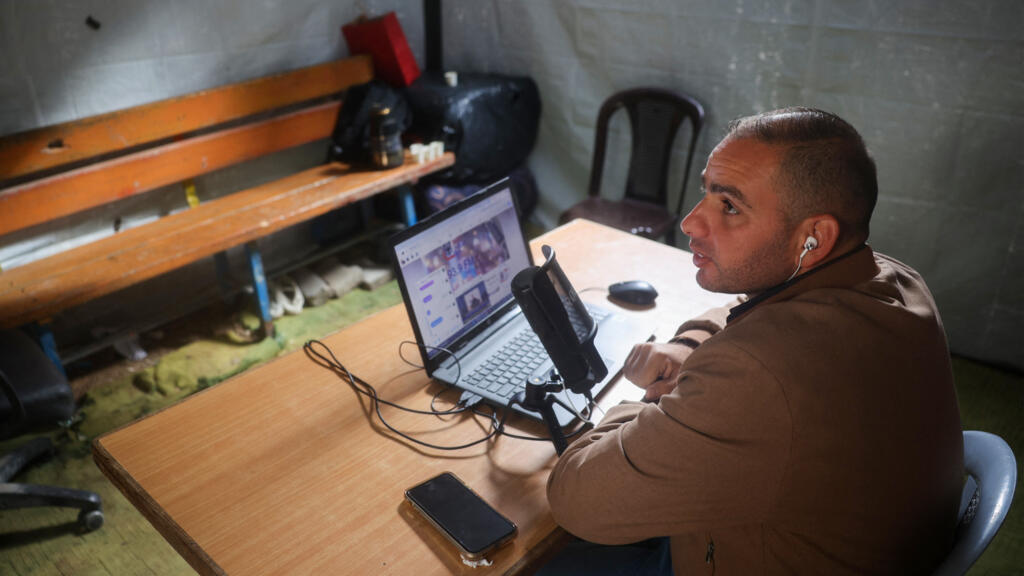
Abdullah al-Maghari hosts a radio programme from the Bureij camp for displaced Palestinians, located in the centre of the Gaza Strip, on 21 December 2024. © AFP/Eyad Baba

In a modest studio on the sixth floor of a building ravaged by war, Emad Nour's voice echoes.

The presenter, who works for Sawt Al Quds radio, tells listeners the good news: electricity is slowly coming back.

Gaza had around 20 local radio stations before Israel began its offensive in response to deadly attacks by Hamas in October 2023.

All ceased broadcasting as Israeli strikes intensified – cutting off a vital source of information about which areas had been hit, where aid was being distributed, or even health advice in a territory where people have limited access to media.

"In the aftermath of a devastating war, people living in difficult conditions told us they were sorry we weren't covering their struggles and suffering anymore," said Nour.

"They told us they loved us and needed our voice."

'Nowhere in Gaza is safe' says RFI correspondent amid call for global media access
From FM to internet

The station resumed broadcasting in January, starting with a tribute to colleagues killed, injured or imprisoned during the war.

With almost all FM antennae destroyed, its shows are broadcast online.

Listener Reema Salem said: "I recently saw videos of the Sawt Al Quds team on social media, and when I heard the sound of their programme, I was so moved."

Podcast: The power of radio during British-mandated Palestine

The radio station Voice of the People is also limited to broadcasting pre-recorded programmes online for now, said its journalist Ramzi Abdallah.

"We want to return to FM, but the transmitter isn't ready," he said. "Some equipment was lost in the war, mainly during Israeli raids."

With regular internet outages, Gazans' access to radio remains spotty. Only one station, Zaman FM, has so far returned to broadcasting over traditional FM.

This article has been adapted from the original version in French by Remi El Meghari in Gaza and Aabla JounaĂ¯di in Paris.