US cattle farmers caught between high costs and weary consumers
By AFP
February 14, 2026

Chris Stem warns that the cost of doing business is almost outpricing his ability to raise cattle in the United States - Copyright AFP ANDREW CABALLERO-REYNOLDS
Beiyi SEOW
In rural Virginia, dozens of young cows belonging to Chris Stem graze by a frozen pond. He is living his childhood dream of being a farmer — but reality is starting to bite.
Despite soaring beef prices as the US cattle population hit a 75-year low, farmers like Stem are feeling the squeeze from steeper business costs, budget-conscious consumers and President Donald Trump’s trade policy.
“The cost of doing business is almost outpricing (our ability) to continue to raise cattle,” Stem told AFP.
“From cutting hay to feeding the cattle to maintaining equipment, maintaining staff, feed, everything has gone up,” he said. “When does that stabilize and stop?”
Trump’s latest move to boost Argentine beef imports is adding to concerns, vexing a key support base of the Republican president as midterm elections approach.
Stem, 40, has a herd of around 250 cattle in Ashland, Virginia.
Most are sold at larger markets where they are purchased and fed to slaughter weight, while around 15 percent is processed nearby and sold at Stem’s butcher shop.
For him, higher beef prices have been a double-edged sword.
His revenue from selling cattle has risen, but so have operational costs.
And there are limits to how much he can hike consumer prices at his shop to make up the margins.
“They will only spend but so much on a cut of beef, especially when you have imported meats that you can purchase for 50 percent to 60 percent less at a larger store,” Stem said.
Already, ribeye that sold for $14.99 a pound in 2019 now sells for $32.99, he said. His customer sales have dropped by 30 percent.
To afford the property, he has diversified operations at Oakdale into winemaking and hosting events like weddings.
– ‘State of crisis’ –
Steeper beef prices have become a symbol of high living costs in the world’s biggest economy, which has fueled voter frustration. Last fall, Trump demanded that ranchers slash their prices.
Trump has since exempted Brazilian beef from sharp tariffs, and moved this month to expand imports of trimmings from Argentina to cool ground beef prices.
Yet, officials predict costs will keep creeping up.
Beef and veal prices were up 15 percent year-on-year in January while ground beef prices, which hit a new high in December, have continued climbing.
Costs will likely stay elevated as consumer demand remains robust, while it takes years to rebuild American herds depleted by drought and import restrictions over a parasite.
Meanwhile, American farmers and ranchers fear Trump’s policies will undercut their production and profits.
“We do need to feed the people of the United States,” said Stem. “But we’re opening a door that’s going to, I think, significantly harm farmers.”
“I’m a supporter of the Republican administration,” he added. “I’m not a supporter of the of the unknowns that we get right now.”
The Ranchers Cattlemen Action Legal Fund United Stockgrowers of America warned recently: “Our industry is in a state of crisis and needs protection against price-depressing imports.”
Iowa farmer Lance Lillibridge told AFP that cattle producers have been “living off very skinny margins” for years.
“People are getting tired of working this hard for nothing,” he added. “Right now, our cattle prices are exactly where they should be.”
– ‘Cut back’ –
But households are feeling the pinch.
Endawnson Nungo, 56, a South Carolinian in the railroad industry, told AFP “we’ve cut back a lot” due to beef prices.
At a butcher shop in Washington, scientist Caleb Svezia, 28, said he started noticing higher meat prices around six months ago.
He has cut back on snacks when grocery shopping, to save up for better quality meats.
Jamie Stachowski, who runs Stachowski’s Market, said customers have pulled back. Like Stem, he has had to raise prices, lifting them by 30 percent over the past year.
In turn, his sales dropped by 15 percent.
Some consumers also pivoted from prime cuts to secondary ones — or buy other meats altogether.
“The beef industry is billions and billions of dollars,” he said. “Yet everybody just makes pennies on the pound.”
By AFP
February 14, 2026
Chris Stem warns that the cost of doing business is almost outpricing his ability to raise cattle in the United States - Copyright AFP ANDREW CABALLERO-REYNOLDS
Beiyi SEOW
In rural Virginia, dozens of young cows belonging to Chris Stem graze by a frozen pond. He is living his childhood dream of being a farmer — but reality is starting to bite.
Despite soaring beef prices as the US cattle population hit a 75-year low, farmers like Stem are feeling the squeeze from steeper business costs, budget-conscious consumers and President Donald Trump’s trade policy.
“The cost of doing business is almost outpricing (our ability) to continue to raise cattle,” Stem told AFP.
“From cutting hay to feeding the cattle to maintaining equipment, maintaining staff, feed, everything has gone up,” he said. “When does that stabilize and stop?”
Trump’s latest move to boost Argentine beef imports is adding to concerns, vexing a key support base of the Republican president as midterm elections approach.
Stem, 40, has a herd of around 250 cattle in Ashland, Virginia.
Most are sold at larger markets where they are purchased and fed to slaughter weight, while around 15 percent is processed nearby and sold at Stem’s butcher shop.
For him, higher beef prices have been a double-edged sword.
His revenue from selling cattle has risen, but so have operational costs.
And there are limits to how much he can hike consumer prices at his shop to make up the margins.
“They will only spend but so much on a cut of beef, especially when you have imported meats that you can purchase for 50 percent to 60 percent less at a larger store,” Stem said.
Already, ribeye that sold for $14.99 a pound in 2019 now sells for $32.99, he said. His customer sales have dropped by 30 percent.
To afford the property, he has diversified operations at Oakdale into winemaking and hosting events like weddings.
– ‘State of crisis’ –
Steeper beef prices have become a symbol of high living costs in the world’s biggest economy, which has fueled voter frustration. Last fall, Trump demanded that ranchers slash their prices.
Trump has since exempted Brazilian beef from sharp tariffs, and moved this month to expand imports of trimmings from Argentina to cool ground beef prices.
Yet, officials predict costs will keep creeping up.
Beef and veal prices were up 15 percent year-on-year in January while ground beef prices, which hit a new high in December, have continued climbing.
Costs will likely stay elevated as consumer demand remains robust, while it takes years to rebuild American herds depleted by drought and import restrictions over a parasite.
Meanwhile, American farmers and ranchers fear Trump’s policies will undercut their production and profits.
“We do need to feed the people of the United States,” said Stem. “But we’re opening a door that’s going to, I think, significantly harm farmers.”
“I’m a supporter of the Republican administration,” he added. “I’m not a supporter of the of the unknowns that we get right now.”
The Ranchers Cattlemen Action Legal Fund United Stockgrowers of America warned recently: “Our industry is in a state of crisis and needs protection against price-depressing imports.”
Iowa farmer Lance Lillibridge told AFP that cattle producers have been “living off very skinny margins” for years.
“People are getting tired of working this hard for nothing,” he added. “Right now, our cattle prices are exactly where they should be.”
– ‘Cut back’ –
But households are feeling the pinch.
Endawnson Nungo, 56, a South Carolinian in the railroad industry, told AFP “we’ve cut back a lot” due to beef prices.
At a butcher shop in Washington, scientist Caleb Svezia, 28, said he started noticing higher meat prices around six months ago.
He has cut back on snacks when grocery shopping, to save up for better quality meats.
Jamie Stachowski, who runs Stachowski’s Market, said customers have pulled back. Like Stem, he has had to raise prices, lifting them by 30 percent over the past year.
In turn, his sales dropped by 15 percent.
Some consumers also pivoted from prime cuts to secondary ones — or buy other meats altogether.
“The beef industry is billions and billions of dollars,” he said. “Yet everybody just makes pennies on the pound.”
GOP Ripped for ‘Grotesque’ Farm Bill Full of ‘Industry-Backed Poison Pills’
“Chairman Thompson appears poised to check off industry’s cruel wish list,” one critic warned.
“Chairman Thompson appears poised to check off industry’s cruel wish list,” one critic warned.
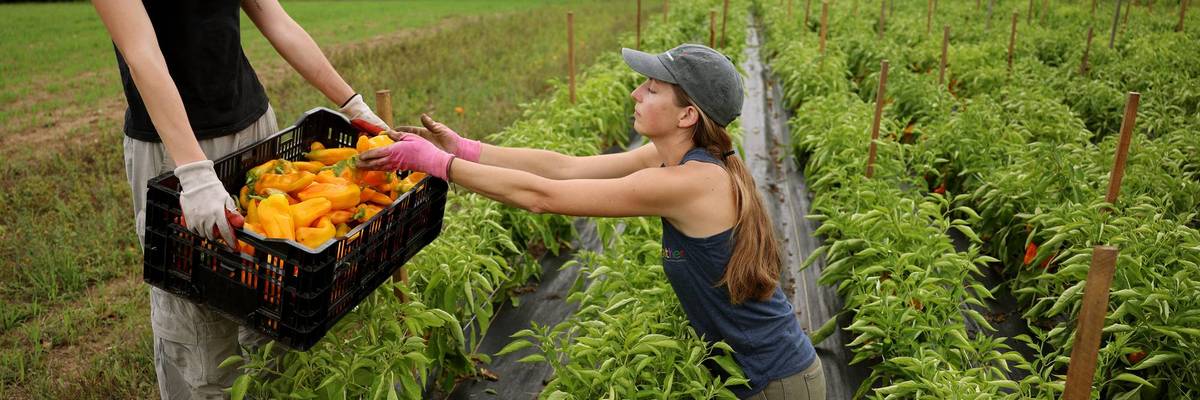
Farmers gather sweet peppers at Hungry Heart Farm in Kingston, New Hampshire, on September 23, 2025.
(Photo by Jessica Rinaldi/The Boston Globe via Getty Images)
Jessica Corbett
Feb 13, 2026
COMMON DREAMS
Advocates for animal welfare, environmental protection, public health, and small family farms fiercely condemned various “industry-backed poison pills” in the long-awaited Farm Bill draft unveiled Friday by a key Republican in the US House of Representatives.
“A new Farm Bill is long overdue, and the Farm, Food, and National Security Act of 2026 is an important step forward in providing certainty to our farmers, ranchers, and rural communities,” said House Committee on Agriculture Chair Glenn “GT” Thompson (R-Pa.) in a statement.
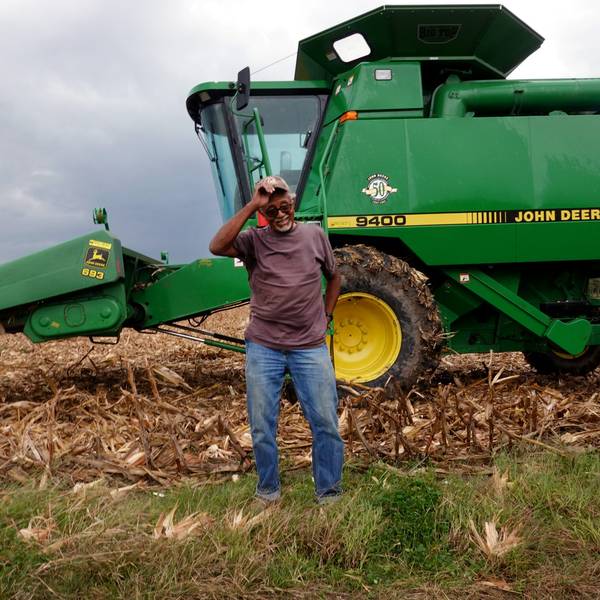
Agriculture Experts Warn of ‘Widespread Collapse’ in US Farms Thanks to Trump Policies
While Thompson has scheduled a markup of the 802-page proposal for February 23, critics aren’t waiting to pick apart the bill, which aligns with a 2024 GOP proposal that was also sharply rebuked. The panel’s ranking member, Rep. Angie Craig (D-Minn.), said that from what she has seen so far, the new legislation “fails to meet the moment facing farmers and working people.”
“Farmers need Congress to act swiftly to end inflationary tariffs, stabilize trade relationships, expand domestic market opportunities like year-round E15, and help lower input costs,” Craig stressed. “The Republican majority instead chose to ignore Democratic priorities and focus on pushing a shell of a farm bill with poison pills that complicates if not derails chances of getting anything done. I strongly urge my Republican colleagues to drop the political charade and work with House Democrats on a truly bipartisan bill to address the very real problems farm country is experiencing right now—before it’s too late.”
Brett Hartl, government affairs director at the Center for Biological Diversity, similarly blasted the GOP legislation on Friday, declaring that “this Republican Farm Bill proposal is a grotesque, record-breaking giveaway to the pesticide industry that will free Big Ag to accelerate the flow of dangerous poisons into our nation’s food supply and waterways.”
“This bill would block people suffering from pesticide-linked cancers from suing pesticide makers, eviscerate the EPA’s ability to protect rivers and streams from direct pesticide pollution, and give the pesticide industry an unprecedented veto over extinction-preventing safeguards for our nation’s most endangered wildlife,” he said, referring to the Environmental Protection Agency.
“If Congress passes this monstrosity, it will speed our march toward the dawn of a very real silent spring, a day without fluttering butterflies, chirping frogs, or the chorus of birds at sunrise,” Hartl warned. “No one voted for Republicans to allow foreign-owned pesticide conglomerates to dominate the policies that impact the safety of the food every American eats. But this bill leaves no doubt that’s exactly who is calling all the shots.”
Food & Water Watch (FWW) managing director of policy and litigation Mitch Jones also sounded the alarm about industry-friendly poison pills, arguing that any draft containing the “Cancer Gag Act” that would shield pesticide companies from liability or the Ending Agricultural Trade Suppression Act—which would block state and local policies designed to protect animal welfare, farm workers, and food safety—“must be dead on arrival.”
Sara Amundson, president of Humane World Action Fund—formerly called Humane Society Legislative Fund—also made a case against targeting state restrictions for animals like Proposition 12 in California, which the US Supreme Court let stand in 2023, in response to a challenge by the National Pork Producers Council and the American Farm Bureau Federation.
“Once again, the House Agriculture Committee Republican majority is bending to the will of a backwards-facing segment of the pork industry by trying to force through a measure to override the preferences of voters in more than a dozen states, upend the decisions of courts all the way up to the Supreme Court, and trample states’ rights all at the same time,” Amundson said Friday.
The National Family Farm Coalition highlighted that “instead of addressing the widespread concerns of family-scale farmers—ensuring fair prices for farmers, improving credit access, addressing corporate land consolidation, and creating a trade environment that benefits producers—this draft perpetuates the status quo that enriches and empowers corporate agribusiness. The result is an accelerating farm crisis that continues to hollow out rural communities across the US.”
Thompson also faced outrage over other policies left out of the GOP legislation—particularly from those calling for the restoration of $187 billion in cuts to the Supplemental Nutrition Assistance Program (SNAP) that congressional Republicans and President Donald Trump forced through last year with their so-called One Big Beautiful Bill Act (HR 1).
“HR 1 shifts unprecedented costs to already cash-strapped states, expands time limits, and strips food benefits away from caregivers, veterans, older workers, people experiencing homelessness, and humanitarian-based noncitizens,” noted Crystal FitzSimons, president of the Food Research & Action Center.
“HR 1 is an unforgiving assault on America’s hungry, deliberately dismantling our nation’s first line of defense against hunger,” she continued. “Yet, when given the opportunity to correct this harm in the latest Farm Bill proposal, Chairman Thompson unveiled a package that will only deepen hunger instead of fixing it. Hunger is not something Congress can afford to ignore.”
Jones of FWW said that “families and farmers are hungry for federal policy that supports small- and mid-sized producers and keeps food affordable. Instead, Chairman Thompson appears poised to check off industry’s cruel wish list.”
“America needs a fair Farm Bill,” he emphasized. “It is imperative that this Farm Bill repeal all Trump SNAP cuts and restore full funding to this critical nutrition program; stop the proliferation of factory farms; and support the transition to sustainable, affordable food.”