Saturday, March 14, 2026

UK

EXCLUSIVE: Usdaw General Secretary writes to PM ‘frustrated’ regarding changes to Employment Rights Act
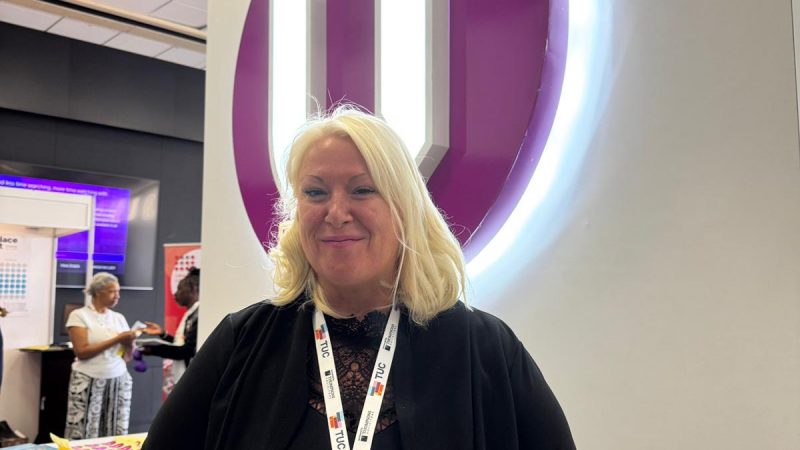

LabourList has seen a letter addressed to the Prime Minister, written by General Secretary of Labour affiliated union Usdaw Joanne Thomas, that demonstrates concerns the government is ‘set to fail to fulfil its manifesto commitment on guaranteed hours’ in the implementation of the Employment Rights Act.

LabourList contacted Usdaw, where a source confirmed that the letter is authentic.

Thomas outlined in the letter to Sir Keir Starmer, that she has received information suggesting the government will no longer implement the Employment Rights Act as promised in its manifesto – opting to no longer commit to a policy that everyone receives the right to a contract which reflects the number of hours they normally work.

This is due to the inclusion of a minimal hours threshold, that Thomas’ letter suggests would not only fall short of the Government’s initial commitments, but may ‘actually have unintended consequences of making working hours less secure than they are now, for the most vulnerable workers.’

The letter suggests that Thomas was anticipating an option for full-time workers to be included in the right as part of an upcoming consultation, but has now come to believe this measure will not be included in the consultation or considered by the Government.

The letter asks four questions for the Prime Minister to answer:

“1. Which Department is responsible for the decision not to include full-time workers in the consultation on guaranteed hours?

2. What legal advice has the Government received on this matter?

3. If legal advice which prevents the Government from fulfilling its manifesto commitment has been received, when was this received and why has it not been shared with unions?

4. What steps will you take to resolve this matter so that Usdaw can regain trust and confidence in the Government to deliver the Plan to Make Work Pay?”

Thomas states that the matter of guaranteed hours contracts goes ‘right to the heart of the Government’s make work pay agenda’ in addition to the Prime Minister’s ‘integrity’, before outlining that Starmer had spoken at Usdaw’s conference in 2024 and committed to the membership that the Employment Rights Act would not see these measures watered down.

The letter concludes by saying that in order to preserve the relationship between Usdaw and the Government, Thomas requires ‘full confidence that the Chancellor and the Secretary of State for Business and Trade will deliver the Plan to Make Work Pay’ requesting that the Prime Minister intervenes due to a ‘lack of clarity and accountability across departments’.

The letter was also CC’d to other union leaders, the Chancellor of the Exchequer, the Secretary of State for Business and Trade, the Parliamentary Under-Secretary of State for Employment Rights and Consumer Protection, and the Deputy Leader of the Labour Party.

LabourList has contacted Number 10, HM Treasury and the Department for Business and Trade for comment.

A Government spokesperson said:
“Tackling insecure work is vital if we are to boost incomes, raise living standards and increase productivity. The consultation has not yet been finalised or published.
We’re already implementing the plan to Make Work Pay and new measures coming into effect next month will mark a turning point for working life – improved sick pay, day one family leave rights and the new Fair Work Agency – as we look to put fairness and security at the heart of the workplace.”

Share your thoughts. Contribute on this story or tell your own by writing to our Editor. The best letters every week will be published on the site. Find out how to get your letter published.

Full letter text of USDAW letter:

Dear Keir

Employment Rights Act Implementation

I write in my capacity as Usdaw General Secretary. As you are aware, Usdaw has consistently been a supportive advocate of this Government, and the Employment Rights Act in particular. It is extremely frustrating that I now find myself in the position of having to write this letter and seek your personal intervention to resolve a major issue with implementation. Unfortunately, I have had information which leads me to believe the Government is set to fail to fulfil its manifesto commitment on guaranteed hours contracts.

As you will be aware the manifesto said that everyone would have the right to a contract that reflects the hours people normally work. We have been concerned since the first publication of the Bill that the inclusion of minimum hours threshold would fail in meeting the Government’s commitments and, even worse, would actually have unintended consequences of making working hours less secure than they are now, for the most vulnerable workers.

I had raised this issue repeatedly, at every level of Government, including with yourself. I had a clear expectation that the forthcoming consultation would include an option for full-time workers to be included in the right. I have since come to understand that this will not be included and that the Government has no intention of even considering it as an option. I have a number of questions that I am seeking an urgent response from you:

1. Which Department is responsible for the decision not to include full-time workers in the consultation on guaranteed hours?

2. What legal advice has the Government received on this matter?

3. If legal advice which prevents the Government from fulfilling its manifesto commitment has been received, when was this received and why has it not been shared with unions?

4. What steps will you take to resolve this matter so that Usdaw can regain trust and confidence in the Government to deliver the Plan to Make Work Pay?

Unfortunately, this issue does not sit in isolation. I understand that a number of other unions have concerns about implementation of other elements of the Act, which they will no doubt contact you about separately. Usdaw will of course support all of the TULO unions in seeking full delivery of the Government’s Plan to Make Work Pay.

On guaranteed hours specifically, this was the most important and potentially transformative new right within the Act for Usdaw members – on this I have been extremely clear with you and the whole of the Government. This goes beyond technical implementation and right to the heart of the Government’s Make Work Pay agenda. Beyond that, it goes to the heart of our working relationship, and your integrity as Prime Minister.

You spoke at our conference in 2024, and told our members that there would be no watering down of the New Deal. Our members listened to that message and they believed it. They campaigned for you, they voted for you, and they expect you to keep your promise. As things currently stand I cannot in good faith tell those members that you will do so. I have a responsibility to our members to give a clear eyed assessment of what any Government is delivering, or failing to deliver, for them.

I had believed that the Government was genuinely open to meaningful consultation on guaranteed hours. Indeed, Justin Madders, then Parliamentary Under-Secretary of State for Business and Trade is recorded in Hansard as stating on 4 December 2024 “There is an argument that anyone below full-time hours—again, there is a debate about what that means—could be within scope. That is why we are holding a consultation, to enable us to understand exactly who will be affected—whether we are trying to catch everyone or target the people who suffer the greatest insecurity of work. That is the purpose of the consultation.”

In order to preserve our ongoing relationship, I need to have full confidence that the Chancellor and the Secretary of State for Business and Trade will deliver the Plan to Make Work Pay. My attempts to seek assurances from your Government have led to frustration at what appears to be a lack of accountability and clarity across departments. I am, therefore, asking you to step in to resolve the situation and show leadership, as a matter of urgency.

I will be available for a call at your earliest convenience.

Yours sincerely

JOANNE THOMAS
General Secretary

CC:

Dave Ward, General Secretary, CWU
Steve Wright, General Secretary, FBU
Gary Smith, General Secretary, GMB
Roy Rickhuss, General Secretary, Community
Chris Kitchen, General Secretary, NUM
Sharon Graham, General Secretary, Unite
Naomi Pohl, General Secretary, Musicians’ Union
Maryam Eslamdoust, General Secretary, TSSA
Dave Calfe, General Secretary, Aslef
Andrea Egan, General Secretary, Unison
Rachel Reeves, Chancellor of the Exchequer
Peter Kyle, Secretary of State, Department of Business & Trade
Kate Dearden, Minister of State, Department of Business & Trade
Lucy Powell, Deputy Leader


How far is our voting system to blame for the country’s mess?


 March 10, 2026

Mike Phipps looks at a new Compass report on the broken nature of our electoral system.

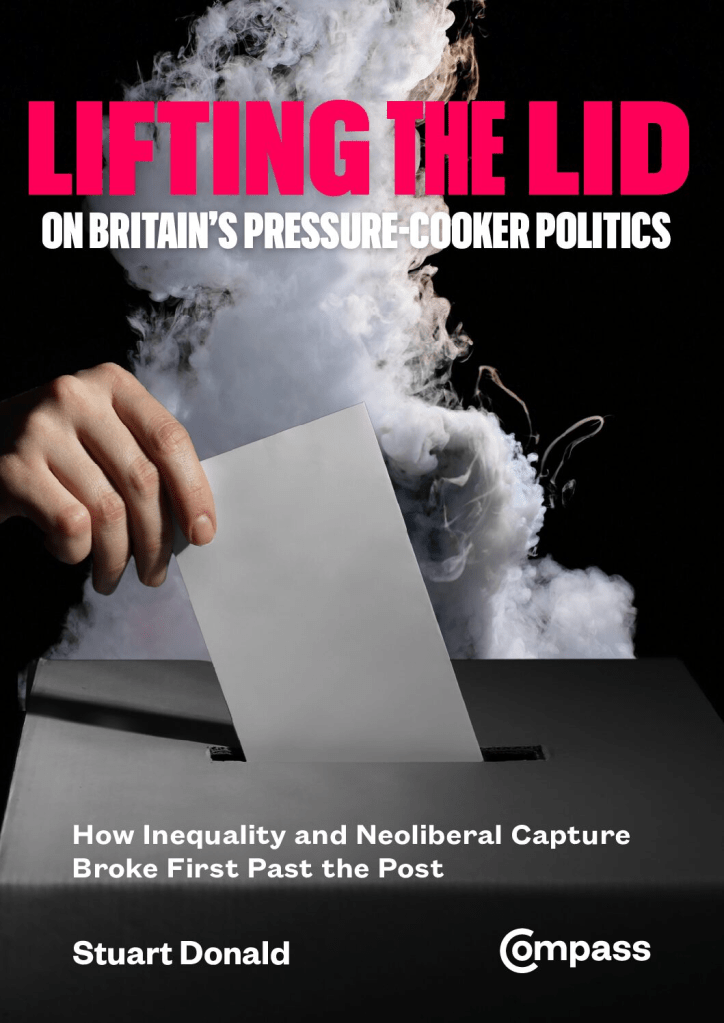
A new report from the centre-left thinktank Compass, Lifting the Lid on Britain’s Pressure Cooker Politics, by Stuart Donald, advances an unconventional argument against our electoral system and in favour of proportional representation (PR).

The argument

“Britain’s present instability,” it argues, “cannot be understood through culture-first explanations of populism, nor through party-specific accounts of Conservative failure or Labour timidity.” Rather, it is the First Past the Post (FPTP) voting system that “actively filtered redistributive demands out of politics.”

Under neoliberal economic governance, inequality has widened and decline spread into  new regions of the UK, once thought to be secure. In the process, FPTP “systematically orphaned whole electorates. Low-income voters lost leverage first, as safe seats and declining turnout rendered deprivation electorally disposable. Middle-income voters followed later, as loyalty insulated their constituencies from political consequence even as living standards eroded.”

A proportional electoral system would have been more responsive to such pressures. The failure of FPTP to represent such sections of the electorate became a pressure cooker, enabling far right populists. “Brexit was not the cause of Britain’s crisis but the moment its underlying pressures briefly escaped FPTP’s electoral filters. Reform UK represents the return of those same pressures.”

Donald argues that Britain is unique in Europe in its readiness to hand a single-party parliamentary majority to one of the continent’s most extreme populist-right movements. Other European countries have given power to far right populists, he concedes, but their more proportional electoral systems have mitigated the effects, because PR embeds institutional consensus through the need for coalitions and party negotiations. However, we should note that Britain too has had blasts of right wing populism from the Tory party in recent years, and the latest defections increasingly make Farage’s outfit a rerun of much of that.

Donald presents the key premises of his argument in five different chapters. The first shows how the rise of neoliberalism made inequality the central driver of Britain’s political breakdown. One cannot  argue with that.  

The second premise is that “FPTP made it unnervingly easy for a single party with a geographically efficient electoral base” to overturn the post-war consensus and embark on a programme of radical neoliberalism that would drive up inequality. Well, yes it did – and it delivered Margaret Thatcher three electoral victories, followed by one for John Major – all on a minority of the popular vote.

Nothing is inevitable

But it is more questionable to suggest that New Labour too, and its continued embrace of neoliberal macroeconomics, was the inevitable outcome of the UK electoral system. First, there is little doubt that John Smith could have won a Labour majority from late 1992 onwards, before New Labour was even dreamed of. When the general election did come in 1997, most Labour voters wanted something far more radical than Tony Blair was offering and many in fact voted Labour in the hope that taxes would rise to address mushrooming social inequality.

Some 72% of voters in May 1997 wanted an income tax increase to fund better education and public services. 74% wanted no further privatisations. 58% wanted wealth redistribution. While it is true that the 1997 Labour landslide meant that the government, sitting on scores of safe seats, could safely ignore the views of their voters, the fact remains that the failure to embrace the demands of millions of Labour supporters was a political choice by the Blair government. Donald overstates the dependence of Labour on middle England marginal seats, and assumes, questionably, that they embodied a moderation that Blair had to pander to.

Less disputable is Blair’s neglect of low income voters, among whom electoral turnout plummeted alongside their political exclusion. The now disgraced ‘Third Man’ of New Labour, Peter Mandelson, smugly scoffed that these voters had nowhere else to go – until they began voting for overtly fascist parties and UKIP – but also progressive nationalists in Scotland and Wales.

It’s worth underlining that the drift towards far right populism, seemingly so unavoidable, did not happen in Scotland. Every council area north of the border voted against Brexit, partly because the SNP was able to promote a progressive and inclusive nationalism very different from the conservative, backward-looking version on offer in England. So to claim “economic decline and instability spread, and these downwardly mobile communities were also politically ignored culminating in the rupture of Brexit” leaves an important part of the UK out of the equation.

Was, as Donald concludes, the rise of Reform UK the logical end-point of this process? It was certainly not pre-determined to be. The increasing sidelining of traditional working class and poorer voters during the Blair-Brown years was one of the reasons that the Labour membership, with the help of key affiliated unions, were keen to reorient the Party following the Party’s ejection from office in 2010. Ed Miliband – despite the financial and media advantages of his more right wing brother, won the Party leadership in that year.

More spectacularly, the disenfranchising of Labour’s heartlands was one of the key reasons for Corbyn’s decisive leadership win in 2015. In the 2017 general election, Labour won 40% of the vote on a 69% turnout – the highest since the Tories had been thrown out of office in 1997. The far right were marginalised.

The 2017 general election result underlined the fact that the gains made subsequently by the populist right were not inevitable and that an alternative perspective of “common sense socialism” could appeal to a very wide layer of the electorate – including traditional Labour voters ignored by the Blair governments. But there were plenty of forces, not least in the Labour Party itself, who were keen to draw a line under this experience, and within weeks of the 2017 achievement, the Labour right, aided by the mainstream media and others, began to concentrate their fire on the Party leadership. The exploitation by the Boris Johnson-led Conservatives of nationalist sentiment over Brexit was one of several reasons why the Corbyn advance could not be repeated.

Life after Starmer

The rise of the Starmer leadership was less a coherent political project – every single one of Keir Starmer’s ten pledges when he ran to become leader has long been abandoned – and more a factional campaign to expunge Corbynism from the Party. This meant rigged selections, the closure of local parties and individual expulsions, all at great cost to the pluralist and democratic traditions of the Party. Small wonder that voters who want change – promised by Labour in 2024 – may be looking elsewhere.

What’s interesting, however, as the Caerphilly and Gorton and Denton byelections underline, is that voters are still finding – despite the rise of Reform UK and Labour’s increasing tendency to emulate aspects of their social policy – ways to elect progressive representatives. And as Donald himself underlines, the bulk of Reform’s current support comes not form disenchanted Labour voters, but historical Conservative voters. As Farage’s party opens itself to more and more of the deadbeat retreads who crashed the economy in the Tories’ last years, it will be increasingly difficult for these charlatans to posture as purveyors of genuine change.

Whether Reform can displace the Conservatives in the bulk of their safest seats, as current polls suggest, remains to be seen. There is some evidence that the party may be peaking, now people are experiencing their policies in practice. At the same time, the search goes on in Conservative ranks for a new Boris Johnson figure to lead it, an important venture for those sections of the ruling elite unwilling to bet everything on the unpredictable Farage. Nonetheless, on current soundings, a non-aggression pact between the two parties would probably be enough to create a right wing parliamentary bloc following the next general election.

More contentious is Donald’s suggestion that Reform could win half of Labour’s safest seats next time around. By then, the Party may well be under new leadership – in fact, both main parties might be. None of this is to deny that Reform are a serious threat.

First Past the Post is no longer a system that can express the wishes of an increasingly fragmented electorate – of that there is no doubt. But as Nye Bevan said, “The language of priorities is the religion of socialism.” Any government prioritising electoral reform over the urgent cost of living, energy, climate, health, education and public services crises may well be judged harshly by the voters.

Furthermore, it would be tricky to impose an entirely different electoral without a referendum to legitimise it. Any government attempting to do so would be accused of gerrymandering. The last attempt to change the UK system for general elections was in  2011, when the Conservative-Lib Dem Coalition proposed the flawed, non-proportional system of Alternative Vote. Over two-thirds of those voting voted no, with all regions of the country showing a majority for the status quo. Only ten areas of the country registered a majority for change: this comprised six London boroughs, Oxford and Cambridge and Glasgow Kelvin and Edinburgh Central – no more. The vast majority of the country still needs to be convinced.

This is an immense challenge. Perhaps the campaign for electoral reform needs to take a more populist turn itself. If large numbers of voters could be shown that a system like Single Transferable Vote, for all its complexity, could take power out of the hands of small party selectorates and end the existence of super-safe seats and jobs for life, then they might be persuaded to vote for it. Campaigners are gradually winning the argument, but a lot more people need to be persuaded of the both need for the change – and the urgency of it.

Lifting the Lid on Britain’s Pressure Cooker Politicsby Stuart Donald is available here.

Mike Phipps’ book Don’t Stop Thinking About Tomorrow: The Labour Party after Jeremy Corbyn (OR Books, 2022) can be ordered here


Trump’s war on Iran: the impact on oil prices

MARCH 13 , 2026

Amid the humanitarian crisis, the illegal bombardments and the slaughter of defenceless civilians, one other feature of the unprovoked US-Israeli attack on Iran should be noted: the impact on international energy markets. Global oil prices are surging. For the first time since Russia’s 2022 invasion of Ukraine, the price of oil has skyrocketed past $100 per barrel. It is currently trading over a third higher than before the conflict began.

It’s not hard to see why. About 20 percent of the world’s oil comes from the Gulf region, and most of it is shipped on massive tankers through the narrow Strait of Hormuz – more than 20 million barrels a day.

But not anymore. Since the Iran war began, marine traffic through the Strait of Hormuz has nearly ground to a halt. Additionally, alternative routes are very limited.

The impact on some countries has been catastrophic.  Bangladesh, theeighth most populous country in the world, relies on imports for 95 percent of its energy needs. It has closed its universities and launched fuel rationing amid a worsening energy crisis.

People hoping that rapidly rising oil prices would lead President Trump to bring the US-Israeli war on Iran to a close will be doubly dismayed by his response this week. His decision to loosen sanctions on countries buying Russian oil is aimed at easing the pressure on prices. But it will also put some $10 billion in Russian coffers, making it easier to prosecute its illegal war on Ukraine. The move reinforces the belief that Trump is in the pocket of the Putin regime.

Perhaps Trump believes that the US economy is resilient enough to withstand a major oil price hike. That won’t apply in Europe – nor Britain. Simon Francis, coordinator of the End Fuel Poverty Coalition, said: “Global price shocks translate into higher energy costs because the UK remains so heavily dependent on gas and the mature North Sea basin will be unable to meet domestic demand within the next few years. Our energy system also links the cost of gas to electricity prices because the grid still relies on gas-fired power stations, although this influence eased last year.

“Bills are effectively protected until at least 1st July 2026 because the April to June cap has already been set. But that also means the real risk is what happens next. If elevated prices persist, they will affect Ofgem’s next price cap decision in May, which takes effect from July.

“Households that rely on heating oil are even more exposed, and the latest surge in those prices will be a major concern for rural and off-grid families needing to refill in the coming weeks.

“This is a stark reminder that the UK is still dangerously exposed to volatile international markets. The only lasting protection for households is to cut gas demand through a nationwide insulation programme, expand homegrown renewables and reform energy pricing so bills are no longer tied so closely to global fossil fuel prices.”

He added: “With prices rising again, ministers should urgently meet with charities and frontline organisations to discuss plans for emergency support for those most at risk from high energy bills.”

Uplift Deputy Director Robert Palmer said: “The UK’s dependence on fossil fuels is making all of us poorer – all except for the oil and gas bosses and their shareholders who once again will cash in at our expense. It’s not just energy bills that look set to increase, but the cost of driving, mortgages and our supermarket shop.

“The only way to insulate ourselves from these risks is by doubling down on renewables, like wind, and upgrading homes with solar power and heat pumps, so we can free ourselves from oil and gas.”

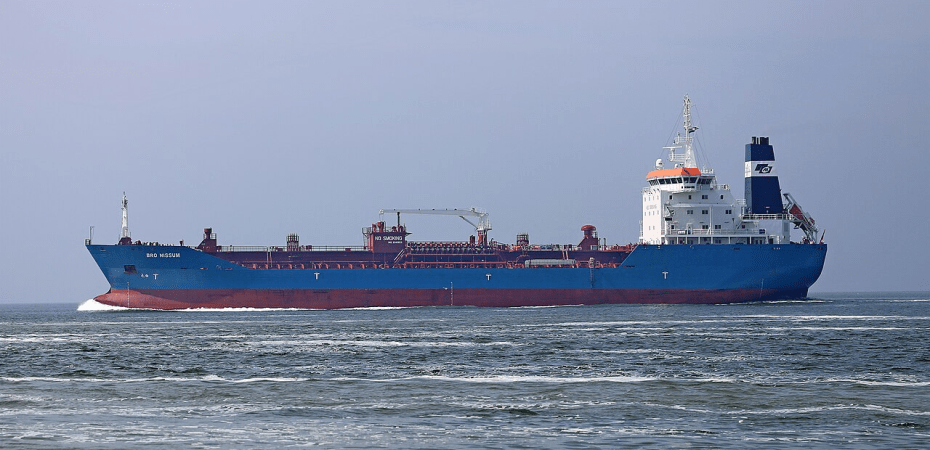
Image: https://commons.wikimedia.org/wiki/File:00_0558_Oil_tankers.jpg. Author: W. Bulach, licensed under the Creative Commons Attribution-Share Alike 4.0 International license.


Together for Iran

MARCH 14, 2O26

Over 200 pro-democracy, pro-justice and anti-war British-Iranians have signed a letter to Prime Minister Keir Starmer, calling on him not to support the Israeli-US war on Iran, but to adopt a consciously pro-democracy policy instead. A video of activist Nasrin Parvaz reading the letter has been beamed onto the Houses of Parliament. Other former detainees from the notorious Evin prison Nazanin Zaghari-Ratcliffe and Aras Amiri are among the signatories of the letter, reproduced below.

Dear Prime Minister,

We are British-Iranians and at this moment we are overcome with grief.

For decades we have been hoping for the day when Iranian democracy can finally flourish. Many of us have not been able to visit Iran for years for fear of imprisonment or worse. Nobody can claim to want the end of the Islamic Republic more than we do.

But attacking the country in this way will have the opposite effect. It will entrench the authoritarians and give life to the fiction that has sustained them internally for decades: that they are fighting western imperialism.

When Netanyahu – a man charged with international war crimes after killing countless civilians in Gaza – assassinates Iran’s dictator that kills the man but immortalises the myth. Iranians wanted him tried and punished for his crimes, not given the martyr ending he craved.

When Netanyahu says to Iranians “do not sit with your arms crossed” but instead to rise up and “finish the job” he reveals the racism that underpins his policy, as if 90 million people had been idly waiting several decades for his bombs.

This is of course not just Netanyahu’s war, Trump and the US are a significant part of it. But as US Secretary of State Marco Rubio said, “The president made the very wise decision — we knew that there was going to be an Israeli action, we knew that that would precipitate an attack against American forces, and we knew that if we didn’t pre-emptively go after them before they launched those attacks, we would suffer higher casualties”. So the US followed Netanyahu into this war.

Britain however doesn’t have to follow Netanyahu down the path of bombing schools, hospitals, sports grounds and pharmaceuticals manufacturers. Britain doesn’t have to follow Netanyahu in smuggling weapons into the country and arming groups in the hope of sowing anarchy.

A pro-democracy policy would protect political prisoners and ensure that Israel and the US do not bomb prisons like Evin. It is in those cells where the future democratic leaders of Iran reside. A pro-democracy policy would smuggle internet devices – not weapons – across the border, and break the blackout that is blanketing the country. A pro-democracy policy would call out Israel’s assassination policy even when it targets leaders we despise.

There is so much that can be done in solidarity with Iranians. But joining in with Netanyahu’s forever wars is not it.

A full list of signatories is at togetherforiran.org where the letter can be signed.

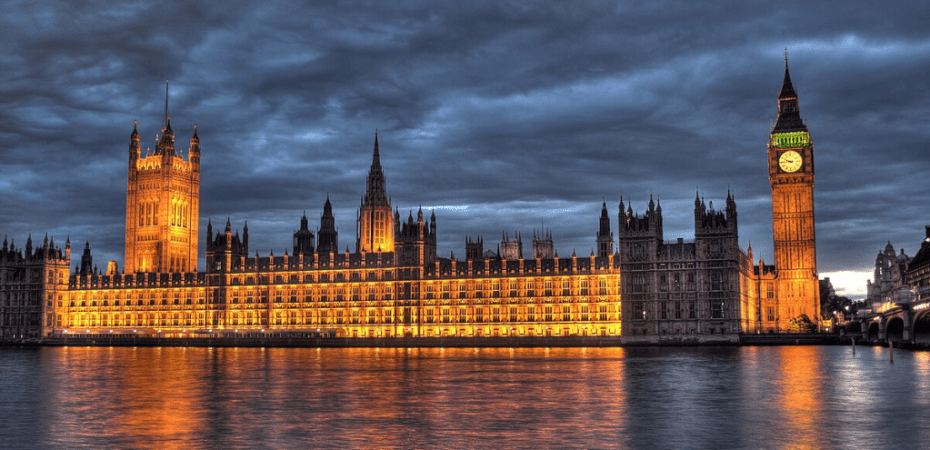
Image: British Houses of Parliament. Source: The British Parliament and Big Ben. Author: Maurice from Zoetermeer, Netherlands,  licensed under the Creative Commons Attribution 2.0 Generic license.

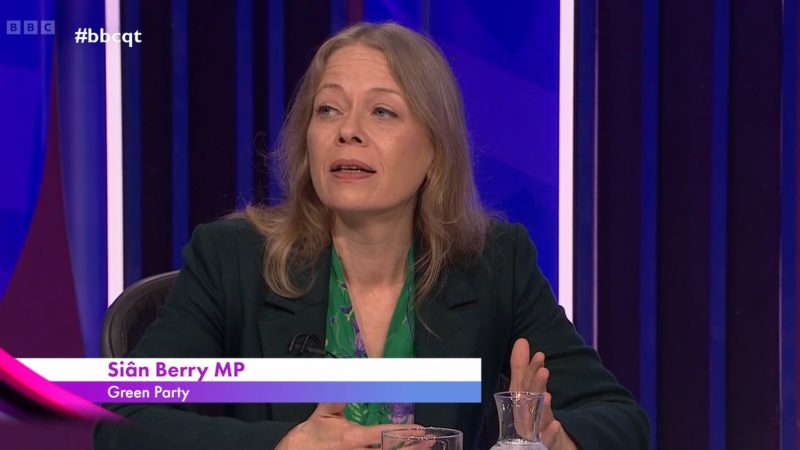
Green MP Siân Berry applauded for critique of ‘illegal war’ in Iran on Question Time

13 March, 2026 
 Left Foot Forward

'This war has been no help at all to the people of Iran'


Green Party MP Siân Berry was applauded on BBC Question Time yesterday (March 12) for her comments on the US and Israel’s war in Iran.

Responding to a question from the audience as to whether Donald Trump is ‘winning’ the war in Iran, Berry said: “Let’s be clear, this war from Donald Trump is an illegal war and both Reform and the Conservatives were completely wrong to be so gung ho in supporting it.”

Her initial remark was met with applause from the audience. She then went on to say following the applause: “Listen to that: the polling shows about 60 per cent of the British people are opposed to this because we learned the lessons from Iraq that getting involved in American aggression – which is what this is – doesn’t end well, particularly when it is without a plan.

Berry continued by adding: “And the Iranian regime is horrific, it’s despotic, it’s murderous, it needs to end. But so far, this war has been no help at all to the people of Iran. They must be wondering what they’re supposed to do.”

This comment was again met with applause from the audience. Berry concluded her contribution by saying: “They will be stuck in a destabilised country with a regime that is worse than ever before. It is incredibly worrying what is going on. And I think it is right that our country was cautious at first. I’m worried that we are getting dragged into this now. I don’t think that’s what people want.”

Chris Jarvis is head of strategy and development at Left Foot Forward
Opinion

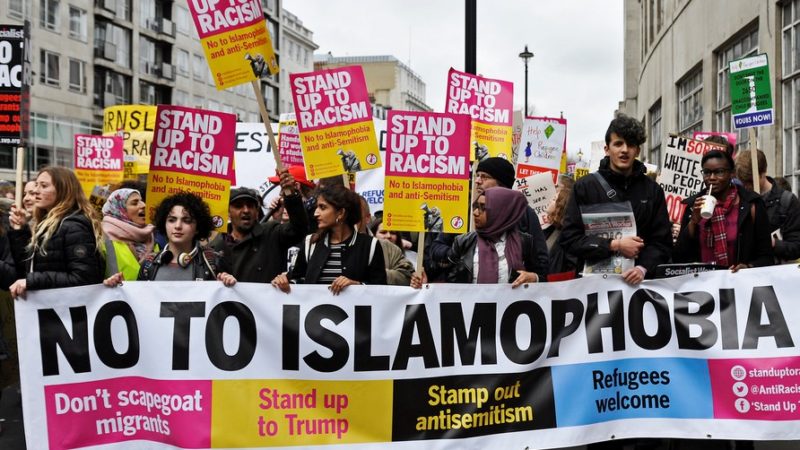
Relentless scapegoating has created a hostile environment for British Muslims

13 March, 2026 

'When a man walks into a mosque in Ramadan armed with an axe, we cannot simply shrug and move on.'


I recently stood at Prime Minister’s Questions in the House of Commons and said something that should never need saying in modern Britain: the toxic culture of Islamophobic rhetoric is putting Muslim lives at risk.

It came after a man entered Manchester Central Mosque during the holy month of Ramadan carrying weapons, including an axe. Worshippers were praying.

Thanks to the swift action of volunteers, we are talking about what might have happened. But that “might have been” should chill every one of us.

Just days later, another incident took place at a Muslim community centre in Worcester. Another place of gathering. Another community targeted.

These incidents cannot be dismissed as isolated. They sit within a climate that has been growing steadily more toxic.
The climate we are creating

At Prime Minister’s Questions, I warned that every single politician and every single journalist has a clear responsibility to stop fanning the flames of hatred.

We cannot pretend language does not matter. It does. It shapes public mood. It legitimises prejudice.

In recent years we have seen a sharp rise in inflammatory and Islamophobic rhetoric from political and media figures. These public figures are pouring fuel on the fire.

Their vile rhetoric is helping to normalise Islamophobia in a way we have never seen before in this country.
This is not the Britain I know

Yet the reality of Britain is very different from the toxic picture painted by those national figures peddle division.

Across our country, Muslims are teachers, nurses, shopkeepers, charity volunteers, parents and neighbours. They work in our NHS, run small businesses on our high streets and contribute every day to the life in communities across the country.

In my own city of Bradford, a proud city of sanctuary, with divergent nationalities from across the world, where over 100 languages are spoken across the community, those from different backgrounds have lived and worked alongside one another for generations. My own family were part of that story. My Grandfather and other family members worked in Bradford’s foundries and factories, helping build the industrial city we know today.

Growing up in Bradford, I went to school with people from all backgrounds and faiths. I started boxing at 11. I spent countless hours boxing alongside people from every background, one of the few places I’ve never experienced racism. It taught me something simple but important: most people get along perfectly well.

Some of the most admired figures in modern Britain are Muslim. Mo Farah is one of our greatest ever Olympic athletes. Nadiya Hussain became a national favourite after winning The Great British Bake Off.

And Britain’s favourite food is curry – something so woven into our national life that it is hard to imagine the country without it. Much of the restaurant industry that made it popular was built by Bangladeshi Muslim migrants who arrived in Britain after the war.

Modern Britain has been shaped by communities working together – not by the division some try to promote.
The reality Muslims face

Yet despite this reality, it is Muslim communities who are paying the price for the toxic rhetoric we now see in public debate.

We saw it in the recent attacks targeting mosques and community centres. I see it myself every day. The barrage of Islamophobic comments on my social media is staggering.

Scroll through the comments under almost any post I make about anything, but in particular confronting Islamophobia, and you will find thousands of racist responses. On my recent PMQs post alone there were more than ten thousand comments.

“No Muslim should be in any place of power”

“You’re a terrorist in our country you shouldn’t be in government”

“You’re not even British”

“Imran, in reality you should not be an MP, this is Great Britain, not Pakistan or Bangladesh.”

And these aren’t the worst comments. I do not delete them or hide them. I want people to see them. Because the only way to defeat racism is to expose it and confront it.

But the sheer volume of hatred is shocking. I honestly do not think I have ever seen so much open and unapologetic bigotry in this country.

We must ask ourselves: where does this language lead?
A hostile environment

There is now a clear hostile environment facing British Muslims.

It has long existed in discrimination around employment and housing, but in recent years it has intensified dramatically, fuelled by inflammatory rhetoric from national figures.

British Muslims are increasingly scapegoated and blamed for everything from immigration to wider social problems.

Relentless scapegoating has created an open season on British Muslims.

Let me be absolutely clear: Muslim communities deserve safety, dignity and the freedom to live their lives without fear.

Full stop.

Twenty months ago, people voted for change. They voted to turn the page on the politics of scapegoating and division.

Sadly, things are getting worse, not better.
A line must be drawn

It is unacceptable that, in 2026, I have to stand up in Parliament and spell out that Islamophobic hatred fuelled by national figures is putting Muslim lives at risk.

Because Muslim communities are telling me they are frightened.

When a man walks into a mosque in Ramadan armed with an axe, we cannot simply shrug and move on.

As a country, we must act.

Britain is better than this.


Imran Hussain is the Labour MP for Bradford East

Europe’s Criminalization of Palestine Solidarity


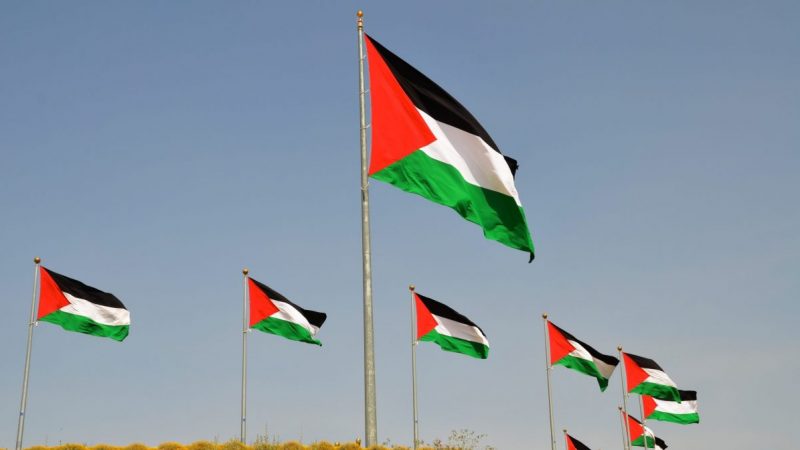
When Israeli forces bombed Iran in June 2025, German Chancellor Merz praised them for doing “the dirty work for all of us.” His statement exposes the roots of Europe’s military, economic, and diplomatic support for Israeli genocide and regional aggression. To sustain their “business as usual” policy toward Israel, European governments are criminalizing Palestine solidarity. Our latest visual with The European Legal Support Center (ELSC) depicts this architecture of repression, which we must understand as we build the architecture of solidarity.

This visual builds on analysis in ELSC’s report “Europe’s Proscription of Palestine Solidarity,” which documents how European governments––including the UK, Germany, the Netherlands, France, and other countries––are using counterterrorism frameworks to criminalize Palestine solidarity and demobilize opposition to genocide. They employ measures reminiscent of colonial emergency laws, suspending basic rights in order to maintain imperial dominance.

ELSC, in collaboration with Forensic Architecture, just launched Britain’s Index of Repression, which provides deeper insight into the multi-sited, institutionalised, and systematic nature of this repression. The public database records 964 verified incidents of legal, institutional, and political repression targeting students, academics, workers, journalists, artists, and organisers standing in solidarity with Palestine in the UK between 2019 and 2025. The database, accompanied by a report, builds on their previous work on Germany’s Index of Repression.

This is an ongoing monitoring project. Report an incident to ELSC here.

Power escalates its violence only when forced to respond to movements it cannot contain.
– Europe’s Proscription of Palestine Solidarity (report), ELSC, August, 2025

While these measures aim to quell support for Palestinian liberation, historical precedent suggests such repressive tactics often fail against determined collective movements for justice.In one important recent victory against the criminalization of Palestine solidarity in Europe, the UK High Court ruled that the government’s ban on Palestine Action was “disproportionate and unlawful.” In a related case, six Palestine Action activists were acquitted of the most serious charges against them. These developments followed a sustained hunger strike by Palestine Action activists held in prolonged pre-trial detention, which we marked in an updated version of our Hunger Strikes visual.

Visualizing Palestine is the intersection of communication, social sciences, technology, design and urban studies for social justice. Visualizing Palestine uses creative visuals to describe a factual rights-based narrative of Palestine/Israel. Read other articles by Visualizing Palestine, or visit Visualizing Palestine's website.
Calls for British Museum to stop ‘erasing Palestine and supporting genocide’

Yesterday


“The British Museum (must) avoid complicity in genocide, either through its representation of Palestinians and their history or by providing direct support to those that perpetrate or profit from that genocide.”


An open letter circulated this week urges the trustees of the British Museum to show support for Palestinians and to address allegations that the institution is contributing to the erasure of Palestinian history.

The letter has been signed by a number of prominent cultural figures, including actors Siobhan McSweeney, Maxine Peake and Juliet Stevenson. Several organisations also endorsed the appeal, coordinated by the campaign group Culture Unstained, including Jewish Artists for Palestine, Archaeologists Against Apartheid and Artists & Culture Workers London.

The campaign follows reports last month that the British Museum had removed references to the word “Palestine” from some of its exhibit labels after receiving a letter from UK Lawyers for Israel (UKLFI).

The museum rejected those claims, stating that the term “Palestine” continues to appear across a number of its galleries. However, UKLFI has said that the museum subsequently altered panels in its Egypt galleries, replacing the phrase “Palestinian descent” with “Canaanite descent”.

The open letter argues that such changes contribute to a broader attempt to erase Palestine “as a term, a place, a people and a historical reality.” It also criticises the museum’s wider institutional relationships, citing its decision to host a private event for the Israeli Embassy last year, and its continued partnership with the oil company BP.

According to the letter’s authors, these actions amount to complicity in the ongoing violence against Palestinians in Gaza. It calls on the museum to condemn the actions of UKLFI and to publicly recognise the findings of the United Nations Independent International Commission of Inquiry on the Occupied Palestinian Territory, which concluded that Israel has committed war crimes and genocide in Gaza.

“The British Museum (must) avoid complicity in genocide,” it read, “either through its representation of Palestinians and their history or by providing direct support to those that perpetrate or profit from that genocide.”

The letter also criticises the museum’s director, Nicholas Cullinan, writing that although he is reportedly “disgusted” by media reports about the labelling controversy, many are more disturbed by the museum’s decision to host a private event for the Israeli Embassy last year.

It points to the museum’s ongoing partnership with BP, which in 2023 renewed a ten-year, £50 million sponsorship deal to support the museum’s redevelopment. Campaigners say the museum has ignored repeated calls to remove BP’s name from its lecture theatre.

Cullinan, a British art historian who became director of the British Museum in 2024, has previously stated that he would not introduce what he described as “politically correct” labels in response to a particular political agenda.

At the time of his appointment, he said he was reconsidering how the museum’s collections are displayed, saying that any changes would be aimed at ensuring that the scholarship behind them is up to date rather than politically driven.