Sunday, March 15, 2026

Middle East war strains US air defence supplies needed by Ukraine
TRUMP'S REAL REASON FOR IRAN WAR
HELPING PUTIN

Middle East war strains US air defence supplies needed by Ukraine
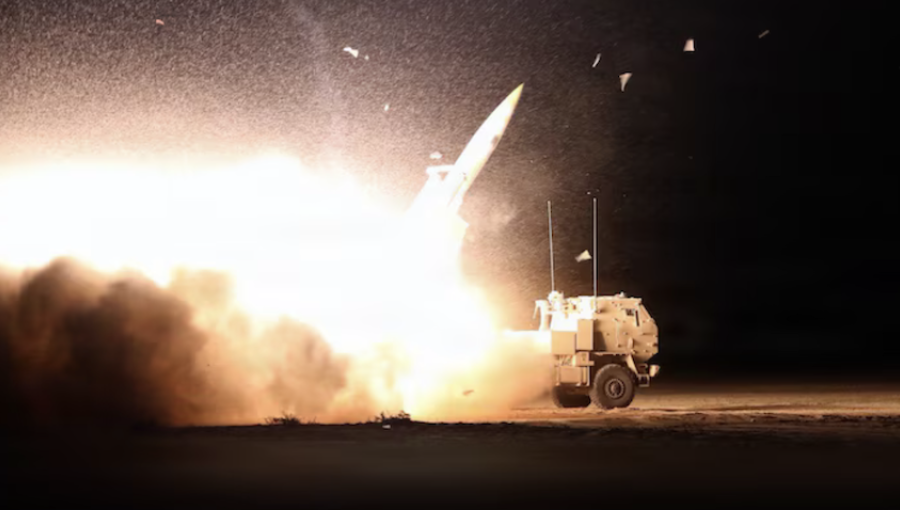
An M142 High Mobility Artillery Rocket System conducts live-fire missions during Operation Epic Fury. / war.gov
By bne IntelliNews March 15, 2026

The widening US-led war with Iran is rapidly consuming expensive American air defence munitions that Ukraine relies on to shield its cities from Russian missile strikes, raising concerns among European allies that Kyiv could face critical shortages in the months ahead, reported Politico.

Hundreds of interceptors from the US-made Patriot system have already been fired by American forces and their Gulf partners to counter waves of Iranian ballistic missiles and attack drones, according to European officials and US lawmakers. The scale of the fighting in the Middle East is eating into stockpiles that might otherwise have been available for Ukraine, placing two simultaneous conflicts in direct competition for the same limited supply of high-end defensive weapons.

The dynamic has unsettled governments across Europe that have been trying to sustain Ukraine’s air defence capabilities as Russia intensifies attacks on civilian infrastructure and energy facilities.

“If [Russian President Vladimir] Putin was feeling any pressure to negotiate before, and it’s not clear he was, it’s gone for now,” said one EU official familiar with the discussions. “The United States is distracted and burning through some of the weapons Europe wants to purchase for Ukraine. It’s a very gloomy scenario.”

The concern is that Moscow could exploit the moment by escalating missile and drone strikes while Western attention is divided between two theatres of war.

Ukraine’s air defence network, heavily dependent on the American-made Patriot missile system, has played a crucial role in protecting major cities from Russian ballistic missiles. However, the interceptors required to operate the system are among the most complex and costly weapons in the Western arsenal.

Ukrainian President Volodymyr Zelenskiy warned this week that shortages could become a serious challenge if the Middle East conflict continues to absorb available supply.

“The overall deficit of missiles for Patriot systems is not because of this war in the Middle East,” Zelenskiy said in an interview with WELT. But, he added, “this war will have influence on decreasing the number of missiles, decreasing the opportunity to get more missiles” for Ukraine.

The scale of the fighting around the Gulf has been striking. The defence ministry of the United Arab Emirates said Iran had launched 1,475 drones, 262 ballistic missiles and eight cruise missiles at the country since the war began. Most were intercepted using American-made systems, including Patriot and the Terminal High Altitude Area Defense, better known as THAAD.

More than 1,600 incoming drones and missiles were reportedly shot down — a figure that illustrates both the intensity of the attacks and the enormous expenditure of interceptor missiles required to stop them.

According to a Bloomberg Intelligence estimate, US and allied forces in the region may already have fired as many as 1,000 PAC-3 Patriot interceptors since the conflict began. That figure far exceeds the rate at which the sophisticated missiles can currently be replaced.

Production bottlenecks have long plagued the Patriot supply chain. In the years before the wars in Ukraine and the Middle East erupted, the United States produced roughly 270 Patriot missiles annually, according to the Center for Strategic and International Studies.

Demand has since surged as governments around the world scramble to strengthen their air defences.

In January, US defence contractor Lockheed Martin agreed to dramatically expand production of Patriot missiles, planning to increase output from around 600 annually in 2025 to about 2,000 per year. The expansion was partly driven by pressure from the administration of US President Donald Trump and requests from allied governments.

Yet industry officials say it will take years for new factories and supply chains to reach those levels of output.

“There’s a lot of confusion on that question, of what the priorities are going to be for Ukraine versus the Middle East,” said US Senator Richard Blumenthal, a Democrat who has advocated strong support for Kyiv.

“Europeans are frustrated that we’re not more forthcoming in terms of our production capacity, and that the difficulty of ramping up production is used as an excuse for failing to provide more,” he said.

The uncertainty is already affecting strategic planning among Nato governments.

“It goes without saying that Ukraine will be affected as the US will prioritise national needs,” said an official from a Nato country, speaking on condition of anonymity because of the sensitivity of the discussions.

European officials say recent delays in weapons deliveries have already had tangible consequences. A German government representative said “sluggish” shipments of air defence equipment late last year contributed to the heavy damage inflicted on Ukraine’s energy infrastructure during Russian winter bombardments.

“The worry is that Trump will break agreements, withhold supplies, and that Putin will ruthlessly exploit this,” the official said.

At the same time, soaring demand for advanced American weapons has pushed prices sharply higher.

“Some prices of weapon systems are clearly doubled,” said another Nato official involved in procurement discussions. “That’s the ballpark and degree of price issues we are having.”

For European governments, the immediate challenge is securing enough air defence interceptors to sustain Ukraine’s shield against Russian missiles. But the broader worry is that the entire pipeline of military equipment could tighten if the Middle East conflict expands further.

To mitigate that risk, Nato allies last year created the Prioritized Ukraine Requirements List, known as PURL. The mechanism allows European countries to purchase American equipment — including Patriot interceptors — and then transfer it to Kyiv.

The programme became particularly important after the Trump administration halted direct US military aid to Ukraine last year, leaving European governments to finance many of the weapons deliveries themselves.

Some European leaders now argue that the solution lies in shifting more production to the continent.

Finland’s defence minister, Antti Häkkänen, said Europe must develop its own industrial capacity alongside the American supply chain.

“We have emphasised there has to be some kind of a European industry pillar, and Ukrainian pillar,” Häkkänen said, allowing parts of the production process to move closer to the battlefield and shorten delivery times.

For now, however, the reality is that Ukraine’s most advanced air defences remain dependent on American technology and American factories. As Washington diverts resources to confront Iran, European officials fear Kyiv may soon find itself competing for the very weapons that keep its skies — and its cities — safe.


Cubans strike Communist Party facility as energy crisis ignites fury

Cubans strike Communist Party facility as energy crisis ignites fury
/ Cristian Crespo F - X
By bno - Taipei Office March 15, 2026

In the central city of Morón, Cuba, simmering anger over soaring food prices and relentless power cuts has erupted into violence as a band of protesters stormed a provincial Communist Party building, setting it ablaze in the process. Furniture was torn from the offices as fires were set late on March 13 and into the following day, while local police moved swiftly to detain those involved in the vandalism. Nearby, other state-run facilities, including a pharmacy and a government market, also bore the brunt of the unrest the BBC reports.

What began as a seemingly peaceful demonstration according to multiple media outlets rapidly descended into chaos. Footage circulating on social media captured rocks smashing through windows and flames leaping into the sky as the voices of demonstrators demanded change. Cuban authorities have already launched an official probe into the episode, sources say.

The unrest in Moron reflects a deepening crisis gripping the island, where blackouts of up to 15 hours a day are commonplace and have compounded severe shortages of food, fuel and medicine. In the capital Havana and other cities, residents have increasingly resorted to nighttime protests by banging pots and pans.

Cuban President Miguel Díaz‑Canel recognised the legitimacy of public grievances over living conditions but also took to social media to warn that acts of violence and vandalism would not be tolerated by the authorities, before pinning the blame for the energy crisis on the United States. In doing so, he cited a blockade that has effectively halted fuel deliveries to the island for the past three months.

Amid the turmoil, Havana confirmed ongoing talks with Washington aimed at easing the current bilateral tensions. Meanwhile, US President Donald Trump has continued to call for regime change in Cuba and has threatened additional measures against any nation caught supplying oil to the impoverished state which remains heavily reliant on imports.


Trump Has Replaced International Law With the Rule That Might Makes Right

The only answer to Trump’s savage moves is resistance, the kind of resistance that is rising not only throughout the Global South but also in places such as Minnesota.


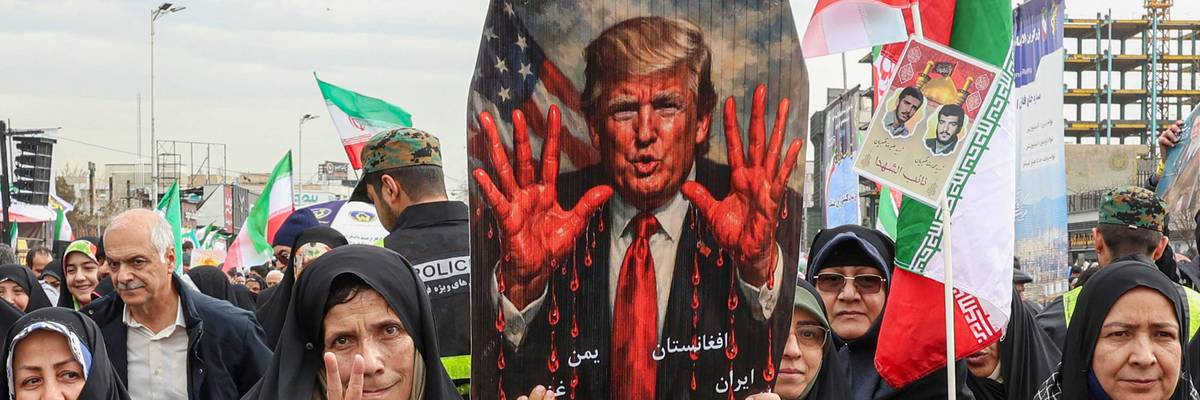
Women march with a sign depicting US President Donald Trump with bloodied hands in Tehran on February 11, 2026, during a rally marking the 47th anniversary of the 1979 Islamic revolution.

(Photo by AFP via Getty Images)

Walden Bello
Mar 15, 2026
Foreign Policy In Focus

In the second year of Donald Trump’s second term, beginning with the kidnapping of Venezuelan President Nicolás Maduro on January 2, 2026, followed by the war of choice he has waged against Iran alongside Israeli Prime Minister Benjamin Netanyahu, the US president has continued his demolition of the 80-year-old global order set up by Washington in the aftermath of the Second World War.

That dying regime is a structure of rules, practices, and policies maintaining the hegemony of the United States and the rest of the capitalist West that was promoted with the rhetoric of freedom, free trade, and democracy. In remarkably candid words, the gap between the reality of this so-called multilateral order and the ideology that justified it was captured by the leader of a country, Canada, whose elite benefited from it. In his speech in Davos on January 20, 2026, Prime Minister Mark Carney admitted:
For decades, countries like Canada prospered under what we called the rules-based international order. We joined its institutions, we praised its principles, we benefited from its predictability. And because of that, we could pursue values-based foreign policies under its protection.

We knew the story of the international rules-based order was partially false, that the strongest would exempt themselves when convenient, that trade rules were enforced asymmetrically. And we knew that international law applied with varying rigor depending on the identity of the accused or the victim.

This fiction was useful, and American hegemony, in particular, helped provide public goods, open sea lanes, a stable financial system, collective security, and support for frameworks for resolving disputes.

So, we placed the sign in the window. We participated in the rituals, and we largely avoided calling out the gaps between rhetoric and reality.

The order Carney describes is over, with the hegemon replacing its rules and practices, already unfair to the Global South as they were, with the unilateral exercise of coercion and force, with no rules at all except the rule that might makes right. Perhaps the essence of the new order is best captured by the words of US Defense Secretary Peter Hegseth during the US-Israeli bombing of Teheran: “This was never meant to be a fair fight, and it is not a fair fight. We are punching them while they’re down, which is exactly how it should be.”

In the first three months of 2026, Trump has already succeeded in dismantling the political fictions of the old regime, among them the central principle of the United Nations that expressly prohibits “the threat of the use of force against the territorial integrity or political independence of any state, or in any other manner inconsistent with the Purposes of the United Nations.” The kidnapping of Maduro and the assassination of Iran’s Supreme Leader Ali Khamenei were the hegemon’s announcement to the world that no country is exempt from outright, brazen intervention should Trump see it fit to do so, and there would not even be the fig leaf of constructing a “Coalition of the Willing” to prettify it, as George W. Bush did prior to his invasion of Iraq in 2003. Nor were foreign territories belonging to close allies, such as Greenland, immune from annexation should Trump decide it is in the US national interest to grab them.

Despite denunciations and votes against its aggressive initiatives at the General Assembly, through its veto power at the Security Council and its threat to withhold its financial contributions to the organization’s budget, the United States has neutered the UN.

Transforming the Multilateral Economic Regime

But before dismantling the political-military fiction of the old regime, Trump assaulted its economic fiction in 2025. More accurately, he resumed the transformation of the multilateral economic order that he began during his first presidency, from 2017 to 2021. During that earlier period, he continued the policy of his predecessor, Barack Obama, of blocking appointments and reappointments to the Appellate Court of the World Trade Organization (WTO), effectively paralyzing the body. But even more brazenly, he declared a unilateral trade war against China, undermining the system of rules and conventions of global trade that the United States led in institutionalizing in 1994, with the founding of the WTO.

In 2025, Trump expanded what he did not hesitate to call his “trade wars” to some 90 other countries. Among them were 50 African countries, some of whom received some of the highest, most punitive tariff increases in the world, like Lesotho (50%), Madagascar (47%), Mauritius (40%), Botswana (37%), and South Africa (30%). There was little rhyme or reason to the rates imposed, though in the case of South Africa, it was partly as punishment for bringing Israel to the International Court of Justice for committing genocide in Gaza.

Trump’s rhetoric is aggressive, brazen, and full of bluster, but let’s not be fooled. His is a defensive imperialism, a fighting retreat.

Foreign aid as an instrument of US policy was a pillar of the old international regime. As Thomas Sankara, one of Africa’s foremost fighters for liberation, pithily observed, “He who feeds you controls you.” To please his far-right base, which did not see foreign aid as important for the maintenance of US hegemony and viewed it as a waste of resources, Trump in one of his first acts—undertaken with Elon Musk, the world’s richest individual—abolished the Agency for International Development (USAID). This move drew divergent responses from progressives and liberals. For some, this was a tragedy since USAID programs were allegedly funding important public health and reproductive health projects in the Global South. For others, it was no loss at all since most of the funds for these initiatives went to pay the US contractors delivering or managing them.

Despite their crowing about doing away with foreign aid, Trump and Musk did not make any move to dismantle or reduce the flow of US funds to the International Monetary Fund, the World Bank, and regional development banks through which the bulk of US money for dominating the Global South via “development assistance” or “structural adjustment” was funneled. Most likely, the rationale was to hold these so-called multilateral organizations in reserve for the aggressive exercise of American power via Washington’s controlling interest or veto power in these institutions should this become necessary in the future.

In the meantime, these institutions continue to maintain poverty-creating structural adjustment programs, especially in Africa, promote wrong-headed “export-led industrialization” efforts even as the United States imposes massive punitive tariffs on imports from the Global South, and block all efforts to solve the massive indebtedness of developing countries to the tune of over $11.4 trillion, which threatens a rerun of the Third World debt crisis of the early 1980s.

Washington’s Sphere of Influence: Regional or Global?

Last November, the Trump administration released National Security Strategy 2025, which announced that the United States would focus its military, political, and economic initiatives to making the Western Hemisphere the primary US sphere of influence. Even before the release of the memorandum, Trump had announced US plans to annex Greenland and the Panama Canal.

Moreover, the “Trump Corollary” to the old Monroe Doctrine made it clear that this would mean aggressively putting an end or countering the activities of non-regional actors such as China in the hemisphere. Shortly after the National Security Strategy went public, the kidnapping of Maduro made it clear that Washington would not hesitate to brazenly intervene in the affairs of any sovereign state in the region, in violation of the central founding principle of the United Nations.

However, with its joint assault with Israel against Iran beginning February 28, Trump appeared to be forcefully telling everyone that the United States was not departing from the old liberal containment paradigm’s perspective that the whole world was Washington’s sphere of influence, as NSS 2025 seemed to have implied. Although Trump’s volatile personality is a factor behind his shifting moves, it is becoming increasingly clear that so long as an operation does not involve sending in ground troops and relies mainly on air power or naval power, Trump is willing to use US military power anywhere in the world, as he has done not only in Iran but also in northern Nigeria, with his bombing of Islamist forces there on December 25, 2025, calculating that with few soldiers returning home in body bags, the US public could be easily pacified into accepting new foreign military engagements.

Trump and Israel

But also central in accounting for Trump’s moves is the strong influence of Israel, as evidenced not only by the joint US-Israeli assault on Iran but also his full support of Netanyahu’s genocidal campaign against the Palestinian people in Gaza and the West Bank and his sponsorship of a US-led ethnic cleansing operation in Gaza via his deliberately misnamed “Board of Peace.”

A great majority of the people of the United States oppose the war on Iran. Even key figures in the MAGA Movement, such as Steve Bannon, Tucker Carlson, and Marjorie Taylor Greene, have complained that Trump’s recent actions in Venezuela and the Middle East represent his going back on his electoral promise never to get the United States into another “forever war.” Indeed, Carlson has denounced the Iran operation as “Israel’s war,” in which the United States has no business being involved.

Perhaps there is no better explanation for Trump’s subservience to Netanyahu than that provided by a leading figure of the American far right: Curt Mills, executive director of the American Conservative. According to Mills, Trump is
not saying no to Israel because he is fundamentally too agreeable or because he’s fundamentally corrupted. He’s agreeable. He is too close to them politically. And I think, yeah, I think he’s somewhat afraid of them. Why is he afraid of them? I think they’re an intimidating society. And I think people are afraid of Mossad. I think people are afraid of Israeli influence in foreign policy, they are afraid what it can do to people’s careers.

Whatever the cause or causes of his allowing himself to be lured into a war on Iran, it is now clear that this misadventure is a massive miscalculation that might lead to some fractures in his base.

To place things in perspective, though, Israel’s overweening influence began way before Trump. The United States forced the creation of the European settler colony by the United Nations in 1947. Since then, like Frankenstein’s monster, the creature has gradually but surely come to control its creator through the powerful Zionist lobby in Washington, to the point that subservience to its wishes has become a central characteristic of both Democratic and Republican administrations.

Trump, the Global South, and the Crisis of Capital

Whatever might be his immediate motivations, Trump’s moves are mainly directed at people and countries in the Global South—Palestine, Nigeria, Venezuela, Iran, and Cuba—the last of which he has threatened to assault next or strangle into submission. There is a logic to this strategy since it is mainly the Global South that has shifted the balance of global power and created the crisis of US hegemony. Among the landmarks in this historic process have been the rise of China to becoming the second most powerful economy in the world; the massive defeats of US arms in Iraq, Libya, and Afghanistan over the last 25 years; the rise of Iran as a regional power despite all the efforts of the United States and Israel to contain it; the ability of developing countries to stymie the WTO as an engine of trade liberalization; and the rise of the BRICS as a potential counterweight to the Western alliance.

Also central to the weakening of the hegemon has been the deepening crisis of the global capitalist regime of which Washington has been the global policeman, the key manifestations of which are the deindustrialization of the United State and Europe, the financialization of the leading capitalist economies where speculation rather than production has become the investment of choice, the astounding rise in global income and wealth inequality, and the sharpening contradiction between planetary survival and the ever more intensive drive for profits.

Trump’s regime of unilateralism is a savage world. But there is no going back to the old regime of US hegemony exercised through a multilateral order systematically biased against the Global South behind a façade of liberal democratic rhetoric.

Trump’s rhetoric is aggressive, brazen, and full of bluster, but let’s not be fooled. His is a defensive imperialism, a fighting retreat, a response to the overextension of American economic and political power and the comprehensive failure of capitalism to respond to the needs of humanity and the planet. The only answer to Trump’s savage moves is resistance, the kind of resistance that is rising not only throughout the Global South but also in places such as Minnesota, where people have rallied beyond race and ethnicity to form effective communities of solidarity to stop the brutal assault on migrant families.

The Italian thinker Antonio Gramsci had a saying related to the troubled 1930s that is also apt for our times: “The old world is dying, and the new world struggles to be born. Now is the time of monsters.” Trump’s regime of unilateralism is a savage world. But there is no going back to the old regime of US hegemony exercised through a multilateral order systematically biased against the Global South behind a façade of liberal democratic rhetoric. For the Global South, indeed, for all who are partisans of justice, peace, and planetary survival, there is no choice but to bravely meet the challenge of navigating the turbulent waters of this period of transition to get to the haven of a new global order that will serve the common interest of humanity and the planet, though there is no certainty regarding when or even if that arrival will come.


© 2023 Foreign Policy In Focus


Walden Bello
Walden Bello is the co-founder and current senior analyst of the Bangkok-based Focus on the Global South and the International Adjunct Professor of Sociology at the State University of New York at Binghamton. He received the Right Livelihood Award, also known as the Alternative Nobel Prize, in 2003, and was named Outstanding Public Scholar of the International Studies Association in 2008. His books include: "Counterrevolution: The Global Rise of the Far Right" (2019) and "Capitalism's Last Stand?: Deglobalization in the Age of Austerity" (2013).
Full Bio >
A Free Palestine Is the Key to Mid-East Peace

If true justice prevails in Palestine, it will inevitably prevail in Lebanon, in Syria, and beyond. The exhausted branding of the Middle East as a “war-torn region” will finally vanish.


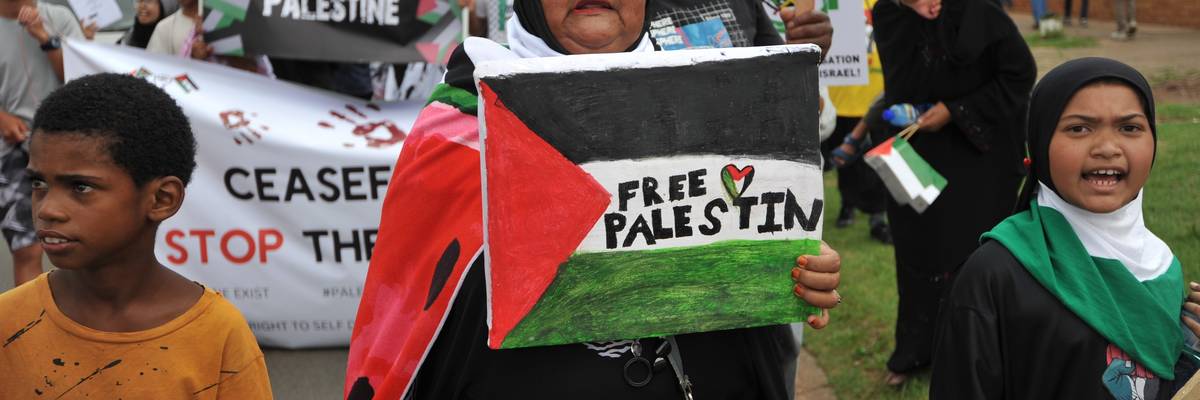
A Free Palestine march is shown on December 16, 2023 In Eldorado Park, South Africa.
(Photo by Laird Forbes/Gallo Images via Getty Images)


Ramzy Baroud
Mar 15, 2026
Common Dreams

Let us imagine a liberated Palestine. Let us consider how justice for the Palestinian people would reshape not only the region but, indeed, the entire globe.

This is not a conversation about a “political solution” in the narrow, bureaucratic sense. Such solutions require no particular genius: True justice can only occur when the Palestinian people are granted the totality of their rights and the fulfillment of their political aspirations.

Equally true is the reality that no such justice can manifest so long as Israel remains committed to its current Zionist ideology—a framework predicated on racial supremacy and the systematic eradication of the Indigenous Palestinian Arab population. Once the shackles of this ideology are broken, the exact political mechanics become secondary; history suggests that the future would lean toward a shared coexistence rather than a continuation of the current segregation along ethnic lines.

To some, discussing a liberated Palestine now may appear slightly—though not entirely—removed from the current war ravaging the region. It is a war that, if not permanently halted, will continue to devastate the peoples of the Middle East, inviting further militarization, runaway defense spending, and cycles of violence. On the contrary, this is the most critical discussion we can have today.

A just peace will invite more than just the absence of war; it will invite opportunity, reconstruction, a collective regional rise, and—most importantly—the restoration of hope.

In his seminal documentary, the late Australian journalist and filmmaker John Pilger summed up the centrality of Palestine to the Middle East in these prescient words:
A historic injustice has been done to the Palestinian people, and until Israel’s illegal and brutal occupation ends, there will be no peace for anyone—Israelis included.

These are not mere words of posturing; they are an undeniable historical truth. Palestine has remained the beating heart of every Middle Eastern war and every persisting conflict. For Israel, the occupation has served as the linchpin for its military incursions across borders. For Palestine’s neighbors and allies, it remains the unhealed wound of a region historically unified by political, cultural, linguistic, and religious continuity.

Even during periods when Palestine was seemingly relegated to the periphery of regional diplomacy, Israel was keen to remind its neighbors that its designs were never limited to the Palestinians alone. Whether in historic Palestine or the Shatat (Diaspora), the Zionist project has always signaled broader ambitions.

Israeli Prime Minister Benjamin Netanyahu has explicitly confirmed this expansionist intent, recently declaring that he is on a “historic and spiritual mission” to realize the vision of a “Greater Israel.” By openly connecting with a map that swallows Palestinian land and threatens the sovereignty of neighboring Arab states, he has made it clear that the erasure of Palestine is merely the first step in a much larger colonial design.

The current war confirms this centrality. Its origins, the ensuing political discourse, and the clashing visions of a “post-war” reality all pull Palestine back to the center of the global stage. To discuss Palestine as if it were an isolated issue—as some unfortunately do—is a profound historical mistake. Conversely, to discuss the future of the Middle East without centering Palestine is equally delusional.

Therefore, we must insist on the Palestinian discussion now more than ever. Once a just outcome to the Palestinian struggle is achieved, the positive shock waves will transform the region. Only then can we move from a state of perpetual warfare to a future rooted in genuine, collective liberation.

That said, do not expect a list of dry political recipes to follow. We already know, instinctively, what justice for Palestinians looks like. The freedom to live, to be treated with equality, to enjoy sovereignty, and to demand accountability and respect—these do not require exhaustive citations of international legal or humanitarian law. These are natural rights; they flow through us, individually and collectively, as surely as the blood in our veins.

The fact that Israel and its enablers refuse to respect international law, or to adhere to any common humanitarian principle, is no fault of the Palestinians or the other victims of Israeli aggression. The moral and legal burden must be shouldered entirely by those who have abused, disregarded, and dismantled the international legal order for far too long.

Today, the Palestinians—much like the people of Lebanon, Syria, and other nations across the region—are doing exactly what every oppressed nation must do: They are remaining steadfast. This Sumud is the key, now more than ever before. The ultimate outcome of this conflict will not be determined by lopsided death tolls or the sheer scale of structural destruction, but by the unyielding resilience of the people. History is a patient teacher; it tells us that if the rightful owners of the land hold their ground, they will eventually win.

Richard Falk, the former United Nations Special Rapporteur on Palestinian Human Rights and a prominent legal scholar, refers to this phenomenon as winning the “War of Legitimacy.” It is a war fought not with fighter jets, but with the moral clarity of those who refuse to disappear.

If true justice prevails in Palestine, it will inevitably prevail in Lebanon, in Syria, and beyond. The exhausted branding of the Middle East as a “war-torn region” will finally vanish. A just peace will invite more than just the absence of war; it will invite opportunity, reconstruction, a collective regional rise, and—most importantly—the restoration of hope.

This is not a desperate wish whispered in a time of darkness. It is the only way out.


Our work is licensed under Creative Commons (CC BY-NC-ND 3.0). Feel free to republish and share widely.


Ramzy Baroud
Ramzy Baroud is a journalist and the Editor of the Palestine Chronicle. He is the author of five books including: "These Chains Will Be Broken: Palestinian Stories of Struggle and Defiance in Israeli Prisons" (2019), "My Father Was a Freedom Fighter: Gaza's Untold Story" (2010) and "The Second Palestinian Intifada: A Chronicle of a People's Struggle" (2006). Dr. Baroud is a Non-resident Senior Research Fellow at the Center for Islam and Global Affairs (CIGA), Istanbul Zaim University (IZU). His website is www.ramzybaroud.net.
Full Bio >

 ZIONIST IMPERIALISM

Israel planning to invade southern Lebanon

Israel planning to invade southern Lebanon
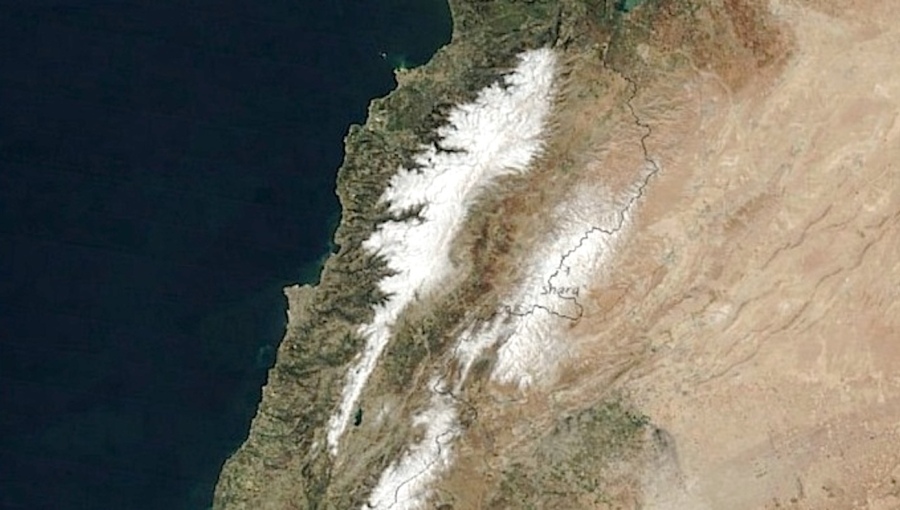
Israel is preparing plans for a major ground offensive in southern Lebanon aimed at pushing Hezbollah north of the Litani River after a large-scale rocket attack on northern Israel escalated regional tensions. / bne IntelliNews
By bne IntelliNews March 15, 2026

Israel is preparing plans for a large-scale ground offensive into southern Lebanon aimed at pushing the Iran-backed militant group Hezbollah away from the border and dismantling its military infrastructure, according to US and Israeli officials cited by Axios and The Times of Israel.

The operation under discussion would seek to seize territory south of the Litani River, which runs across southern Lebanon and has long served as a strategic dividing line in previous conflicts between Israel and Hezbollah. Officials said the plan gained urgency after Hezbollah launched more than 200 rockets at northern Israel on March 12 in an attack that Israeli officials said was coordinated with Iranian missile strikes.

“We are going to do what we did in Gaza,” a senior Israeli official told Axios, referring to Israel’s campaign to destroy militant infrastructure. “The goal is to take over territory, push Hezbollah’s forces north and away from the border, and dismantle its military positions and weapons depots in the villages,” the official said.

The report comes as Israel has begun reinforcing its northern military command. The Israel Defence Forces said chief of staff Lieutenant General Eyal Zamir had ordered a “broad reinforcement” of troops in the Northern Command “as part of strengthening readiness for various offensive and defensive scenarios”.

According to the military, the deployment will include units from the standing army, including the 98th Division with two brigade-level combat teams and combat engineering battalions. Reserve forces from the 252nd Division are expected to deploy to Gaza to replace regular units being shifted north.

Israeli authorities have also urged thousands of civilians in parts of southern Lebanon to evacuate, signalling concern that hostilities could intensify in border areas where Hezbollah has built extensive networks of tunnels, weapons depots and fortified positions.

The prospect of a ground operation would revive memories of previous Israeli incursions into Lebanon. After the 1982 Israel-Lebanon war, Israel maintained a security zone in southern Lebanon for nearly two decades before withdrawing in 2000 following prolonged guerrilla warfare with Hezbollah and allied groups.

Under the ceasefire that followed fighting along the border after the October 7, 2023 Hamas attacks, Lebanon committed to ensuring Hezbollah forces withdrew north of the Litani River, though Israeli officials have repeatedly said the measure was not fully implemented.

Hezbollah leader Naim Qassem said the group was prepared for a prolonged confrontation. “We have prepared ourselves for a long confrontation, and God willing, they (Israelis) will be surprised on the battlefield,” Qassem said in a televised address on March 14.

Lebanon was drawn more directly into the regional conflict after Hezbollah launched attacks on Israel following US and Israeli strikes that killed Iranian supreme leader Ayatollah Ali Khamenei, widening a war that has increasingly involved multiple Iranian-backed groups across the region.

A humanitarian crisis is unfolding in Lebanon with over 850,000 – one in seven of the population - displaced since the outbreak of war in the region two weeks ago and a year since the last conflict uprooted over a million Lebanese from their homes.

The conflict between Hezbollah and Israel reignited on March 2 after it fired rockets on Israel provoking a harsh counter reaction. Most Lebanese were hoping Hezbollah would not respond to the attack on Iran. The government is using Lebanon’s largest sports stadium as a makeshift shelter to house the increasing numbers without accommodation.

The Israeli army has killed 103 children, and wounded 326 more kids, in Lebanon in the past 11 days. Israel killed 773 people overall, and wounded 1,933, according to Lebanon’s Health Ministry.

Israel has invaded southern Lebanon on multiple occasions in the past:
 

1919: Chaim Weizmann: "the Litani was 'essential to the future of the Jewish national home'."

1941: Ben-Gurion & Moshe Dayan advocated Israeli occupation of southern Lebanon up to the Litani.

1948: During the war, Ben-Gurion thought the Litani should be Israel's northern border; Israel occupied Lebanese territory, withdrew to Ras al-Naqura line due to diplomatic pressure.

1950s: Prime Minister Moshe Sharett wrote in his diary that Moshe Dayan's plan for the control of the Litani River was to "'enter Lebanon … the territory south of the Litani will be annexed to Israel.'"

1978: the Israeli army invaded south Lebanon up to the Litani River. A UN resolution forced withdrawal back to the border.

1982: Israel re-invades Lebanon, occupies the territory south of the Litani River, besieges Beirut, slaughtering thousands of civilians. Facilitated Sabra and Shatila massacres

1982-2000: Israel occupies southern Lebanon south of the Litani River, giving rise to Hezbollah, founded in 1982 in response to the Israeli invasion and belligerent military occupation of Lebanon.

2006: Israel re-invaded Lebanon again, but suffered heavy losses m, failing to re-occupy it.

2024-present: On 1 October 2024, Israel invaded Southern Lebanon again, tried to occupy the south, but couldn't advance very far due to heavy resistance, so instead bombs & terrorizes the country on a daily basis since.


‘They Were All I Had’: Lebanese Father Buries Parents, 4 Daughters Killed by Israeli Bombing

One journalist said that “the massacres are multiplying” as IDF bombing kills hundreds of Lebanese and Palestinian civilians, and US-Israeli strikes kill and wound thousands of Iranians.


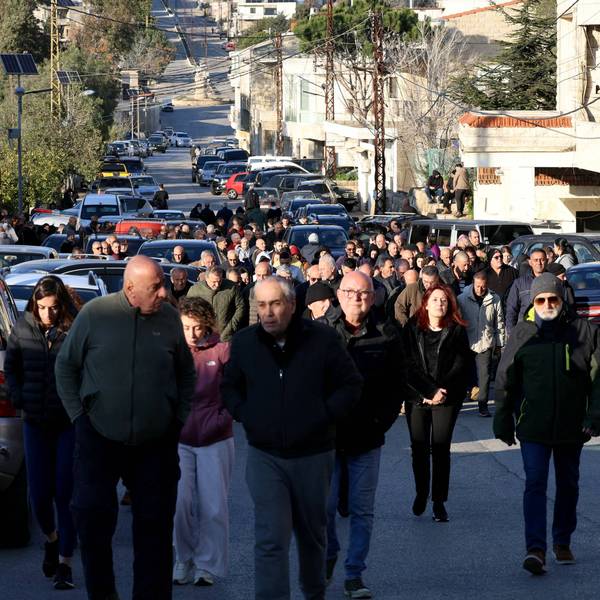
This Lebanese man—who was wounded in the same Israeli airstrike that killed his parents, four daughters, and other relatives—speaks to an Al Jazeera reporter on March 13, 2026.
(Photo by Al Jazeera screen grab)


Brett Wilkins
Mar 13, 2026
COMMON DREAMS

A grieving Lebanese father said he buried his parents, four young daughters, and other relatives on Friday after they were killed by an Israeli airstrike—one of many that have wiped out families in Gaza, Lebanon, and Iran.

“I lost four of my children, four daughters, they were all I had,” the unidentified man—whose face and head were visibly injured from what he said was the same Israeli strike—told Al Jadeed TV, an independent Lebanese outlet. “Four daughters: Zainab, Zahraa, Maleeka, and Yasmine.”


‘We Carry Nothing But Weapons of Peace,’ Said Priest Days Before Israel Killed Him in Lebanon


‘It Was Blowback’: Michigan Synagogue Attacker’s Family Killed by Israeli Airstrike

“And my mother and father,” he added. “Praise be to God. God’s greatness is abundant.”


According to Al Jazeera, the man’s brother-in-law and nephew were also killed in the strike.

“The Israeli enemy says every day that it is targeting infrastructure,” he told the Qatar-based news network. “Is this the infrastructure?”

It was a devastating scene repeated in other parts of Lebanon, including the south, were a distraught mother on Friday reportedly buried five sons killed by Israeli bombing, and in the Ghobeiry neighborhood of central Beirut earlier this week, when an Israeli airstrike destroyed the home of the Hamdan family, reportedly killing father Ahmad Hamdan, his three daughters, and two grandchildren. As of Tuesday, Hamdan’s wife was missing beneath the rubble of their bombed-out home.


As in Gaza—where officials say that more than 2,700 families have been erased from the civil registry during Israel’s ongoing genocide and around 6,000 other families have only a single surviving member—entire Lebanese families have been wiped out by Israeli strikes since October 2023.

In one such strike on the Maronite Christian village of Aitou in October 2024, members of four generations of one family were killed, with 22 victims ranging in age from a 4-month-old infant to a 95-year-old great-grandmother.


More than 800,000 Lebanese have also been forcibly displaced by Israel’s assault and attendant evacuation orders. On Friday, Médecins Sans Frontières (MSF), or Doctors Without Borders in English, issued a statement highlighting the war’s impact on families.

“We are seeing a similarity to what we saw in the past two and a half years in Gaza: broad evacuation orders, constant displacement of thousands of families, and systematic bombing on densely populated areas,” said MSF Lebanon coordinator Lou Cormack. “After 15 months of a fragile ceasefire that failed to stop the violence in Lebanon, families are once again trapped between fleeing or facing bombs.”

Israel says it is attacking Lebanon to stop Hezbollah rocket and other attacks, which have killed dozens of Israeli civilians and wounded even more.

Journalist Lylla Younes told Democracy Now! on Friday that “the massacres are multiplying” in Lebanon, pointing to an Israeli airstrike on a Sidon home that reportedly killed at least 8 people and wounded at least 9 others.

“We saw Syrian refugees, displaced, already killed; 7 killed in a massacre in Tamnin in the Beqaa Valley; a massive massacre in Nabi Chit, also in the Beqaa Valley, when the Israelis tried to do a nighttime incursion by helicopter,” Younes said.

Lebanon’s Health Ministry said Friday that an Israeli strike on a health center in Bourj Qalawayh, southern Lebanon killed 12 medics.


Lebanese officials said Friday that 773 people—including 103 children—have been killed by Israeli forces since March 2. This, in addition to Israel’s 2023-25 attacks on Lebanon that killed more than 4,000 people, including nearly 800 women and over 300 children.

In Iran, authorities said more than 1,300 civilians have been killed and over 10,000 others injured by US and Israeli bombing since February 28. More than 200 women and over 200 children have reportedly been killed.

Most of the 175 or more Iranians killed in a February 28 cruise missile strike on a girls’ school in Minab—an attack that was almost certainly carried out by the United States—were children, according to Iranian government and medical officials and international investigations.


Israeli attacks on Iran during last year’s 12-Day War also killed more than 1,000 Iranians, including 436 civilians, while Iranian counterstrikes killed 28 people in Israel.

In Gaza, 28 months of Israel’s assault—for which the country is facing a genocide case at the International Court of Justice and its prime minister is wanted by the International Criminal Court for alleged crimes against humanity—have left more than 250,000 Palestinians dead, maimed, or missing and around 2 million others forcibly displaced, starved, or sickened.

US-led wars in the Middle East, South Asia, and Africa have resulted in the deaths of more than 900,000 people—including over 400,000 civilians—since 2001, according to the Costs of War Project at Brown University’s Watson Institute for International and Public Affairs.

Stories from families devastated by Israel’s war on Lebanon are as common as they are heartbreaking.


“I was sleeping when the Israeli jet bombed the area,” one Lebanese teenager told the independent outlet [comra]. “My father, my mother, my sister-in-law, and her children were killed.”

“I saw my father torn to pieces,” he added. “I wish I had died instead of seeing my father like that.”