Friday, March 27, 2026


Japan Considers Switch From LNG to Coal

Japan is considering ramping up coal-fired power generation amid a liquefied natural gas crunch that has led to significantly higher prices.

Per a proposal drafted by the economy ministry, the 50% utilization rate cap on coal-fired power plants could be removed in the new fiscal year that begins in April, Reuters reported, adding that this could reduce consumption of LNG by half a million tons annually. For context, Japan imports around 4 million tons of liquefied gas annually from the Middle East.

This also happens to be the amount of LNG that the country has in storage, the report also said. Japan is the world’s second-largest importer of liquefied natural gas due to its energy commodity scarcity. These imports last year came into the spotlight after the United States stepped up the pressure on Russia’s energy industry and buyers of Russian energy commodities, urging them to switch to U.S. energy instead.

In November 2025, unnamed sources from the economy ministry told Reuters Tokyo was going to start buying LNG for its strategic reserve, at a monthly rate of at least 70,000 tons. The buying was scheduled to begin this January, which means the buyers did not have a lot of time to add any meaningful volumes of liquefied gas to the reserve before QatarEnergy declared force majeure on its exports following Iranian strikes on its infrastructure.

As a way of boosting its supply of liquefied natural gas, Japan’s largest buyer of the fuel, JERA. A month before the war erupted, JERA signed a long-term LNG sale and purchase agreement with QatarEnergy to secure the supply of 3 million tons per year for a period of 27 years, with deliveries expected to commence in 2028. Now, the Japanese utility expects the start of deliveries to be delayed, prompting a search for alternatives.

By Irina Slav for Oilprice.com


Cyclone Causes Outages at Australia’s Top LNG Projects

A cyclone has disrupted operations at a total of three LNG facilities in Australia, including Chevron’s Gorgon and Wheatstone, worsening an increasingly severe global LNG supply crunch.

Santos was the first to report a shutdown at its Barossa gas field, which feeds the Darwin LNG terminal, earlier this week as a tropical cyclone barreled towards Australia. Chevron reported the outages at Gorgon and Wheatstone earlier today, as quoted by Reuters, with a spokesperson saying that “We will resume full production at both facilities once it is safe to do so.”

Woodside also reported cyclone-related disruptions at a facility linked to its North West Shelf LNG project.


The Gorgon facility is the largest LNG project in Australia, with an annual capacity of 15.6 million tons, while Wheatstone has a capacity for 8.9 million tons. Woodside’s North Wet Shelf project produces 14.3 million tons per year, and Santos’ Darwin LNG facility, which is fed by Barossa gas, has a capacity of 3.7 million tons per year.

Natural gas prices in Asia have swelled by 143% since February 28, and European gas prices have gone up by 85%, and while some observers make a point of noting that even with that increase, prices are lower than they were back in 2022, this does not really matter. The important fact is that a sizable chunk of LNG supply has been taken off the market due to war and weather.

Meanwhile, the Australian government began eyeing a windfall profit tax on energy companies as a result of the soaring prices in the LNG sector. ABC first reported the news last week, saying the Department of Prime Minister and Cabinet had drafted a document for modelling “new levy options” for the gas and coal industries. “Energy producers should not benefit from high international prices at the expense of domestic customers,” the document said.

By Irina Slav for Oilprice.com

 

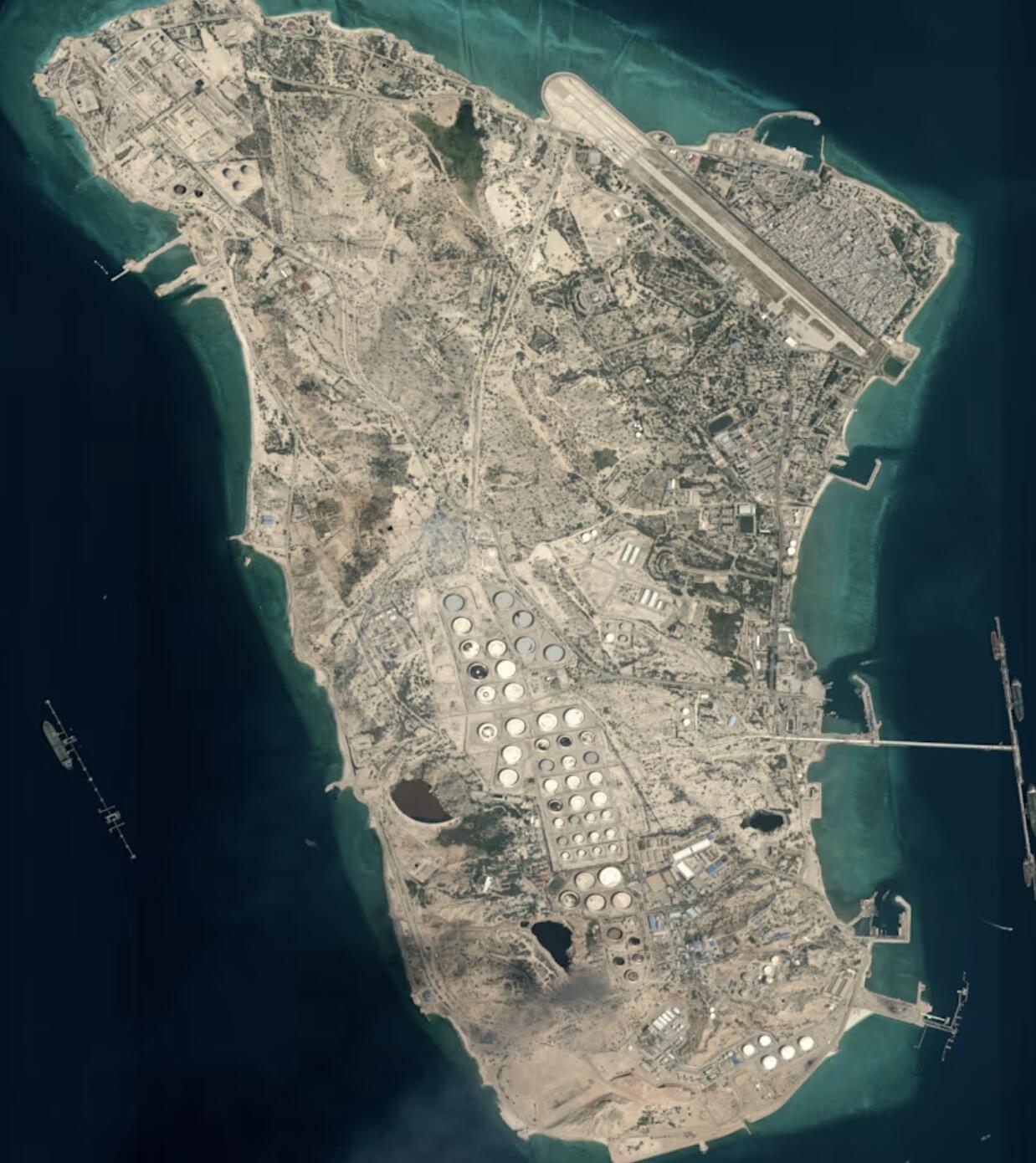
Iran Fortifies Oil Lifeline on Kharg Island Ahead of Potential U.S. Move

  • The Trump administration has explored the option of sending US forces to take control of Kharg Island.

  • The island is vital to Iran’s economy, handling roughly 90% of its crude shipments, and has become a focal point in escalating tensions.

  • Even if an assault is successful, it may not resolve the wider dispute over energy flows and could instead intensify the conflict.

Iran has recently bolstered its defenses around Kharg Island, anticipating a possible US move to seize the key oil export hubCNN reported this week. The island is vital to Iran’s economy, handling roughly 90% of its crude shipments, and has become a focal point in escalating tensions.

The Trump administration has explored the option of sending US forces to take control of the island as leverage to pressure Iran into reopening the Strait of Hormuz. But military officials caution that such an operation would carry serious risks. Iran has reinforced the island with additional air defense systems, including portable missiles, and has planted mines along likely landing zones.

There is also growing skepticism among US allies and policymakers about whether capturing the island would achieve its broader objective. Even if successful, it may not resolve the wider dispute over energy flows and could instead intensify the conflict. An Israeli source warned that US troops could face attacks from drones and shoulder-fired missiles if they attempt a landing.


“I would be very worried about this,” said retired Adm. James Stavridis. “Iranians are clever and ruthless. They will do everything they can to inflict maximum casualties on US forces both on the ships at sea, and especially once ground troops are anywhere in their sovereign territory.”

CNN writes that Iran has responded with its own warnings. Parliament speaker Mohammad Bagher Ghalibaf said any attempt to occupy Iranian territory would prompt retaliation against critical infrastructure in the region, adding that US troop movements are under close watch.

Despite its relatively small size—about one-third of Manhattan—Kharg Island would require a substantial military operation to capture. US forces in the region include Marine units trained for amphibious assaults, along with airborne troops preparing to deploy. Surveillance has shown newly fortified positions and defensive preparations on the island.

Although earlier US strikes weakened parts of Iran’s defenses, American forces would still face significant threats from missiles and drones launched from the nearby mainland. This has led to internal debate in Washington over whether the potential benefits justify the risks.

Regional allies are urging restraint, warning that a ground assault could result in heavy casualties and trigger wider retaliation across the Gulf. Some analysts suggest that targeting Iran’s oil exports through a naval blockade could be a less risky alternative to putting troops on the ground.

By Zerohedge.com


North Sea Oil Fight Escalates as Starmer Cites Legal Limits

  • Starmer says approval of major North Sea projects is a quasi-judicial decision that must be made by Energy Secretary Ed Miliband, not the prime minister.

  • Political pressure is intensifying, with industry leaders and opposition figures urging new drilling to support energy security and domestic supply.

  • Court rulings and climate considerations have complicated approvals, highlighting tensions between economic needs and the U.K.’s renewable energy agenda.

Sir Keir Starmer has said he doesn’t hold legal powers to approve fresh exploration of North Sea oil and gas fields, with the decision falling in the hands of net zero secretary Ed Miliband.

Starmer said current legislation determined that a quasi-judicial decision relating to cases for more gas extraction at Shell’s Jackdaw site and Equinor’s Rosebank oil field was left to Miliband.

The Prime Minister reiterated the government’s commitment to expanding renewable energy. He said the introduction of fresh legislation would “slow the process down” and accused the leader of the opposition, Kemi Badenoch, of failing to know about the law before raising questions in Parliament.


“Its absolutely clear that the quasi judicial [process] lies with secretary of state,” Starmer said. 

“In the last four weeks, because we are on a fossil fuel rollercoaster, everyone is being held to ransom. 

He added: “The most important thing to get energy security is to make sure we de-escalate the war.”

Starmer backed by Davey

Scottish courts ruled government approvals for more extraction at each field as unlawful on environmental grounds.

The power now falls on the energy secretary to make a decision while considering economic and environmental reasons for projects.

Badenoch accused Starmer of “hiding behind legal process every time” though Liberal Democrat leader Ed Davey, who served as the energy secretary in the coalition government, said he agreed with the Prime Minister. 

The Tory leader heckled Davey to “stop sucking up”. She also shouted out “you can change the law” and repeated the word “weak” several times. 

Starmer is facing growing pressure to remove restrictions on North Sea oil and gas projects from officials working across clean energy.

Jurgen Maier, who oversees Great British Energy, the publicly owned investment company, said in a post on LinkedIn that more drilling in the region would support a “managed energy transition”, slow job losses and improve tax receipts.

However, he said that energy costs would not be brought down and later emphasised he was “fully supportive” of the government’s position to use existing fields for further exploration.

Prime Minister’s Questions also came just a day after the lobby group Offshore Energies UK (OEUK) called on the government to “urgently” allow new drilling projects to take place. 

Its annual report said much as half of the UK’s liquified natural gas (LNG) will come from international suppliers by 2035. 

David Whitehouse, chief executive of OEUK, said: “As demand rises and electricity use accelerates, weakening domestic supply would only increase our reliance on imported LNG, leaving consumers more exposed to global volatility and higher emissions.”

Political donations from Brits overseas to be capped at £100,000 a year

The final Prime Ministers’ Questions before a two-week Easter break was also mired by controversy as Reform UK MPs stormed out of the chamber on their apparent dissatisfaction with Starmer’s answers. 

Ahead of a statement by communities secretary Steve Reed on Wednesday, Starmer confirmed that political donations made through cryptocurrencies 

The government also confirmed that it would accept a recommendation in the review for political funding from British citizens living abroad to be capped at £100,000 a year. 

This change may jar with Reform UK’s plans to secure more cash ahead of national elections, with major crypto investor Christopher Harborne, who has given the party more than £12m in the last year, being based in Thailand. 

Other recommendations include preventing donations from shell companies by ensuring funding is from post-tax profits rather than revenue and requiring foreign consultant lobbyists to join the official register they are currently exempt from. 

There will also be more stringent checks on the source of funds from political donors.

By City AM


Mitsubishi Materials to end some Onahama smelter operations by end-March 2027


Mitsubishi Materials said on Wednesday it will stop processing copper concentrate and operating related smelting facilities at its Onahama plant by the end of March 2027.

Intensifying competition from overseas smelters and a sharp deterioration in treatment and refining charges (TC/RCs) for copper concentrate had made the business outlook increasingly uncertain, Mitsubishi Materials said in a statement.

It expects to book an impairment loss of 21 billion yen ($132 million) in the fourth quarter of the financial year ending this month, mainly tied to the smelter’s fixed assets.

TC/RCs, fees paid by miners to turn concentrate into refined metal, have come under pressure as global smelting capacity, led by China, expands faster than mined supply, squeezing margins.

While Onahama has sought to remain profitable by suspending some processes, cutting concentrate processing and reducing costs, Mitsubishi Materials decided as part of a structural overhaul to halt concentrate processing and related smelting equipment at the plant, which has operated since 1965.

The electrolytic plant will continue to refine the group’s copper anodes and scrap‑derived anodes. Other facilities, including the platinum group metals recycling plant and the foundry producing copper ingots, will also continue operating.

Japanese copper smelters are grappling with tumbling TC/RCs and shrinking smelting margins.

With the aim of boosting profitability, JX Advanced Metals, its partners and Mitsubishi Materials said in November they plan to integrate Mitsubishi Material’s copper concentrates procurement and copper product sales into Pan Pacific Copper.

($1 = 159.0300 yen)

(By Yuka Obayashi; Editing by Christian Schmollinger and Alexander Smith)

 SOUTH AFRICA

Sibanye lawyer shot dead in suspected targeted hit


Sibanye lawyer shot dead in suspected targeted hit
Chinette Gallichan. (Image: LinkedIn Profile.)

A lawyer for Sibanye-Stillwater (JSE: SSW)(NYSE: SBSW) was shot and killed in central Johannesburg in what authorities say bears the hallmarks of a targeted attack.

Chinette Gallichan, a 35-year-old litigation attorney, was gunned down Monday while en route to represent the South African miner at the Commission for Conciliation, Mediation and Arbitration (CCMA) in a retrenchment case. Police said two unknown men followed her and opened fire before fleeing on foot. She was declared dead at the scene

“She represented us in employee disputes, which often go to the CCMA,” company spokesperson James Wellsted told local media. “I know there was a dispute that she was busy dealing with, but I don’t have all of the details.”

The murder has intensified scrutiny around labour tensions in South Africa’s mining sector, even as Sibanye recently secured a three-year wage agreement with major unions including the National Union of Mineworkers, AMCU, UASA and Solidarity. Union officials said those involved in the retrenchment matter were not affiliated with recognized labour groups at the company.

No arrests

Police have not made any arrests and say the motive remains under investigation. Sibanye declined further comment, citing the ongoing probe, while labour leaders and industry representatives condemned the killing and called for a thorough investigation.

AMCU president Joseph Mathunjwa said the murder was “completely unacceptable” and urged authorities to mobilize all available resources to ensure justice. Emil Glas of the Solidarity Legal Network described the attack as a brazen act against a legal professional carrying out her duties.

Sibanye’s latest available integrated report shows it cut its South African workforce by 12%, or 9,849 jobs, in 2024, with additional layoffs affecting both employees and contractors despite retrenchment avoidance measures.


South Korea, Germany exposed to rare earths shortage, Arafura says

Nolans project in the Northern Territory. Credit: Hancock Prospecting

The US and Japan are quickly locking up rare earths supply, leaving industrial powerhouses Germany and South Korea exposed, said the CEO of Australia’s Arafura Rare Earths, which is negotiating final supply agreements.

Since the world’s top rare earths producer China placed export restrictions on some of the minerals last year, roiling the automotive and defence industries, the US has led a push to diversify global supply chains and secure new supply sources.

Of that non-Chinese supply, there are only two Western companies producing at scale, Australia’s Lynas Rare Earths and MP Materials in the US, with its Mountain Pass deposit.

The US government secured Mountain Pass supply as part of a deal with MP Materials last year.

“(That) doesn’t meet all their needs, but meets a fair chunk of it,” Arafura CEO Darryl Cuzzubbo said.

Meanwhile, Lynas Rare Earths this month agreed a long-term supply deal with Japan Australia Rare Earths through 2038 and a smaller, shorter-term deal with the Pentagon.

“So the EU and in particular, Germany, and Korea are quite exposed, right? Where are they going to get their supply from?” Cuzzubbo said.

Since Lynas’ supply was locked up, Arafura has noticed more urgency from potential buyers, he added.

Nolans project supply

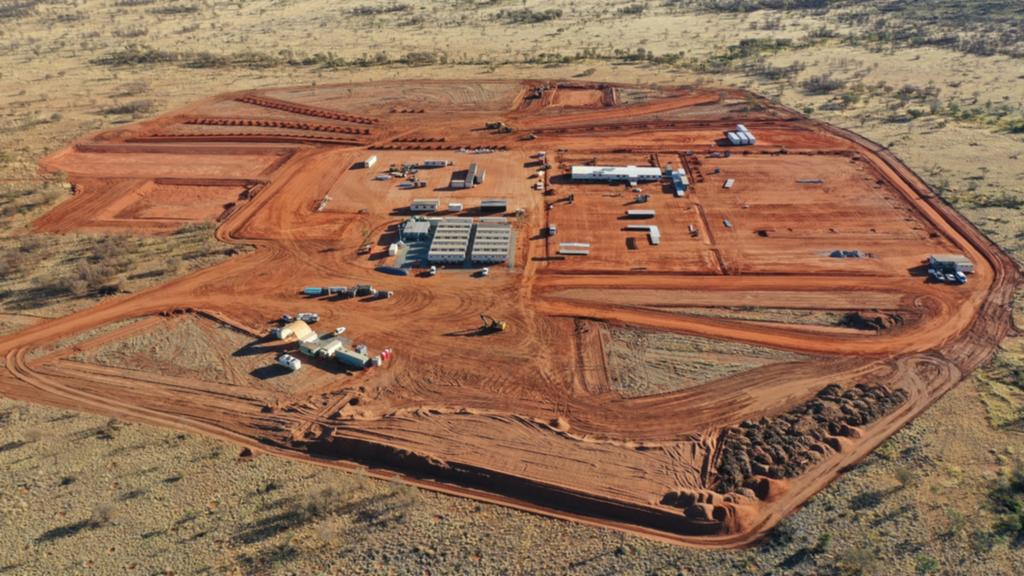
Arafura plans to supply from its Nolans project in the Northern Territory 4,440 metric tons a year of neodymium-praseodymium (NdPr) oxide, a key rare earth magnet material from the second half of 2029, representing around 4% of global supply.

It already has supply agreements with automakers Hyundai Motor and Kia as well as Siemens Gamesa Renewable Energy and commodity trader Traxys.

Arafura is seeking to place another 1,200 tons of NdPr oxide to bring secured supply to 80% of planned output as a condition required by its lenders, he said. Once that is achieved, Arafura will be able to make a final investment decision and begin constructing the project.

“We haven’t put all of our eggs into one basket, so we’re negotiating with multiple parties, and the one that gets there first on the right sort of pricing regime is the one we’re going to go with,” he said.

Arafura was looking for terms closer to those achieved by Lynas, he said.

In both deals, Lynas locked in a price of $110 per kilogram for NdPr, with additional terms around payments for higher prices. China-based prices are currently around $103 a kg.

Critical minerals reserve

Arafura, which has backing from the Australian government, expects to supply rare earths to Australia’s A$1.2 billion ($836 million) critical minerals reserve, which is expected to start operating in the second half of this year.

While details of how the reserve will work are still being hammered out, Cuzzubbo said he wanted to see a floor price tied to an independent international benchmark, like the one that is run by Benchmark Minerals Intelligence – and separate from China, which has dominated pricing.

“The market is broken, you need to create a functioning market,” he said.

“A floor price will take uncertainty out of pricing, which has been very uncertain given China’s control of pricing and that will help bring in investors,” he said.

“The strategic reserve can help … get projects up. But also… it is a bit of a bargaining chip that the Australian government can use with its allies.”

($1 = 1.4349 Australian dollars)

(By Melanie Burton; Editing by Jamie Freed and Thomas Derpinghaus)

Botswana seeks to raise debt ceiling to weather diamond market downturn

Stock image.

Botswana’s finance minister sought parliamentary approval on Wednesday to raise the country’s statutory debt ceiling from 40% to 60% of gross domestic product, as a prolonged downturn in the global market for diamonds has pressured public finances.

Ndaba Gaolathe said the proposal was aimed at giving the government flexibility during periods of economic stress, such as the one it is going through now.


The diamond market downturn has hit the southern African country hard, with two successive economic contractions in 2024 and 2025. Botswana had been viewed as an economic success story, partly because of its low public debt.


Raising the debt ceiling “does not imply immediate borrowing up to that level but rather establishes prudent headroom,” Gaolathe told lawmakers.

In last month’s budget, he said Botswana was expected to breach a debt-to-GDP ratio of 40% in the fiscal year that starts in April.

Late last year International Monetary Fund staff recommended raising the debt ceiling to 50% of GDP to give fiscal space to respond to economic shocks.

S&P Global this month downgraded Botswana’s sovereign ratings, saying diamond market weakness would weigh on its economy for longer than expected.

Diamonds typically account for about a third of Botswana’s national revenue and 75% of its foreign-exchange earnings.

(By Brian Benza and Anathi Madubela; Editing by Alexander Winning and Alexander Smith)

Energy shocks will slow climate action, BHP executive says


BHP Australia President Geraldine Slattery. Credit: Geraldine Slattery | LinkedIn

Ongoing energy disruptions will set back efforts to curb greenhouse gas emissions as nations prioritize supply security, according to one of the most senior executives at the world’s top mining company, BHP Group.

“Geopolitical fragmentation has repositioned resources and energy from traded commodities into instruments of national power,” Geraldine Slattery, president of BHP’s Australian operations, which include vast iron ore to copper mines, said in a speech in Canberra. “Resource and energy security and affordability have overtaken supply chain decarbonization as the dominant policy priority in many major economies.”

That shift has “real implications for investment decisions, and for the pace and pathways of decarbonization,” Slattery said in the Tuesday speech.

Volatility across oil and gas markets as a result of the conflict in the Middle East and a squeeze on tanker traffic through the vital Strait of Hormuz has prompted some nations to cap fuel exports and others in Asia to turn back to coal. While there’s evidence of consumers snapping up electric cars, solar systems and other green technologies to limit reliance on fossil fuels, major industries face a far more difficult task.

Melbourne-based BHP, which has cut operational emissions more than a third from a fiscal year 2020 baseline, is switching some large sites to renewable energy and deploying electric equipment, including giant haul trucks. Still, the producer faces challenges in significantly curbing its use of diesel-powered vehicles and told investors last year that spending on decarbonization would slow until the 2030s to reflect the sluggish development of technology.

Rio Tinto Group, another major miner, in December revised its forecast spending on emissions cuts through 2030 to $1 billion to $2 billion, from a previous estimate of $5 billion to $6 billion.

“Decarbonizing large industrial sectors depends on technologies that are not yet commercially viable at scale, rely on immature supply chains, or lack established markets,” Slattery said. “Diesel displacement in large-scale haulage and fugitive emissions from coal mining remain technically and commercially difficult to address.”

(By Paul-Alain Hunt and David Stringer)

Boliden expects earnings hit from seismic activity at key zinc mine


Garpenberg mine in Sweden. Credit: Boliden

Boliden said on Wednesday it expects earnings before interest, taxes, depreciation, and amortization for the first quarter of 2026 to be hit by about 400 million Swedish crowns ($42.77 million) after production was impacted at its Garpenberg mine due to abnormally high seismic activity earlier this month.

The Swedish miner said its first-quarter throughput was just under 0.8 million tons, down from an earlier expectation of slightly over 0.9 million tons. Production in the most affected part of the mine is not expected to resume in 2026, the company added.

Until further notice, Garpenberg’s production is estimated to be around 30% of the earlier guided capacity of 3.7 million tons per year, the company said.

The copper and zinc miner said a large part of the mine infrastructure, including crushers, hoist systems, and workshops were largely unaffected by the seismic activity.

However, a significant amount of ventilation, pressure air systems, and electrical infrastructure have been damaged and need to be renovated, which is estimated to take a few more weeks, the company said.

The company, which operates seven mines and five smelters in the Nordic region, Ireland and Portugal said seismic activity in Garpenberg has now decreased and mining production at low levels will begin in the second quarter.

Boliden, last month, reported fourth quarter adjusted earnings below analysts’ expectations, but proposed a higher than expected dividend for 2025.

The company’s recent performance has been boosted by firmer gold prices, which have lifted realized revenue from precious metals collected as a by-product from its mining and smelting flows. It also benefits from higher zinc prices.

($1 = 9.3518 Swedish crowns)

(By Akanksha Khushi; Editing by Shailesh Kuber)