In 1926, migrant workers in Paris formed a small political group named North African Star, the first movement to call for Algerian independence and freedom from French rule – decades before decolonisation became a reality.
Issued on: 17/04/2026 -

Algeria’s national flag, featuring a red star, originated with the North African Star movement. AFP - FAYEZ NURELDINE
At the time the group came together, Algeria was part of France, while Morocco and Tunisia were French protectorates. Political and trade union activity was banned in the colonies, forcing activists to mobilise in mainland France instead.
North African Star was created by workers, mainly from Algeria, who had migrated to France, beginning as a mutual aid association defending social rights before gradually becoming political.
Abdelkader Hadj Ali led the organisation, alongside Messali Hadj, who would later become its central figure. Its structure followed labour movement models, with committees and cells, and it maintained close ties with Communist circles active in anti-colonial struggles.
The French Communist Party had created the Union Intercoloniale, a network bringing together activists from the colonies to demand political and social equality. Among them was Nguyen Ai Quoc – later known as Ho Chi Minh.
North African Star grew out of this environment.
“The idea was to say: since every path is closed to us in our country, we will form a first core in mainland France,” historian Alain Ruscio told RFI.
Under France’s admittedly limited democratic freedoms, trade union activity could not be fully banned – allowing North African workers to band together.
At the time the group came together, Algeria was part of France, while Morocco and Tunisia were French protectorates. Political and trade union activity was banned in the colonies, forcing activists to mobilise in mainland France instead.
North African Star was created by workers, mainly from Algeria, who had migrated to France, beginning as a mutual aid association defending social rights before gradually becoming political.
Abdelkader Hadj Ali led the organisation, alongside Messali Hadj, who would later become its central figure. Its structure followed labour movement models, with committees and cells, and it maintained close ties with Communist circles active in anti-colonial struggles.
The French Communist Party had created the Union Intercoloniale, a network bringing together activists from the colonies to demand political and social equality. Among them was Nguyen Ai Quoc – later known as Ho Chi Minh.
North African Star grew out of this environment.
“The idea was to say: since every path is closed to us in our country, we will form a first core in mainland France,” historian Alain Ruscio told RFI.
Under France’s admittedly limited democratic freedoms, trade union activity could not be fully banned – allowing North African workers to band together.
The rise of Messali Hadj
By 1927, the movement had adopted a clear political aim. Its programme, presented in Brussels, called for a struggle “all the way to independence”.
Relations with the Communist Party, however, soon became strained.
“They were in the same bed, but did not have the same dreams,” Ruscio said, with the Communists seeing colonial workers as a potential militant force.
French authorities too quickly saw the group as a threat. It was dissolved in 1929 for posing a danger to the state, and its members closely monitored.
Hadj, who had become the movement’s leading figure, spent 22 years under house arrest or in prison.
Born in 1898 in Tlemcen, he had served in the French army during the First World War and joined the Communist Party in his twenties, while remaining a practising Muslim.
“In Algeria, the idea that religious faith and Communist commitment were compatible was deeply rooted,” Ruscio said. Cell meetings would pause for prayer before resuming.
Hadj stood apart from other Algerian political currents, which focused on gaining equal rights within the French system. His aim was independence, led by Algerians themselves.
His influence first grew among migrants in France before reaching Algeria. In 1936, speaking in Algiers, he urged supporters to mobilise and make their voices heard across the Mediterranean.
By 1927, the movement had adopted a clear political aim. Its programme, presented in Brussels, called for a struggle “all the way to independence”.
Relations with the Communist Party, however, soon became strained.
“They were in the same bed, but did not have the same dreams,” Ruscio said, with the Communists seeing colonial workers as a potential militant force.
French authorities too quickly saw the group as a threat. It was dissolved in 1929 for posing a danger to the state, and its members closely monitored.
Hadj, who had become the movement’s leading figure, spent 22 years under house arrest or in prison.
Born in 1898 in Tlemcen, he had served in the French army during the First World War and joined the Communist Party in his twenties, while remaining a practising Muslim.
“In Algeria, the idea that religious faith and Communist commitment were compatible was deeply rooted,” Ruscio said. Cell meetings would pause for prayer before resuming.
Hadj stood apart from other Algerian political currents, which focused on gaining equal rights within the French system. His aim was independence, led by Algerians themselves.
His influence first grew among migrants in France before reaching Algeria. In 1936, speaking in Algiers, he urged supporters to mobilise and make their voices heard across the Mediterranean.

Algerian Messali Hadj, leader of the MNA (Algerian National Movement) held under house arrest, gives a press conference 4 May 1962, in the courtyard of the Toutevoie castle in Gouvieux, near Chantilly, north of Paris. AFP
Building resistance in Paris
France's Popular Front government again dissolved North African Star on 26 January, 1937. Around 5,000 members were affected and several leaders, including Hadj, were arrested.
The Communist Party supported the decision, marking a clear break with the movement.
During the Second World War, Nazi Germany sought to court nationalist movements in the colonies, but Hadj refused any agreement with the Axis powers.
Although the organisation initially aimed to unite North Africa, it remained largely Algerian in character.
After its dissolution, it reformed under new names, including the Algerian People’s Party and later the Movement for the Triumph of Democratic Liberties.
But divisions emerged over armed struggle. Hadj rejected that path and warned it would lead to heavy losses and ultimately delay independence, Ruscio said.
When younger militants pushed towards armed action, Hadj warned them they were heading towards “a massacre, a bloodbath” and risked repeating the violence of May 1945 in eastern Algeria.
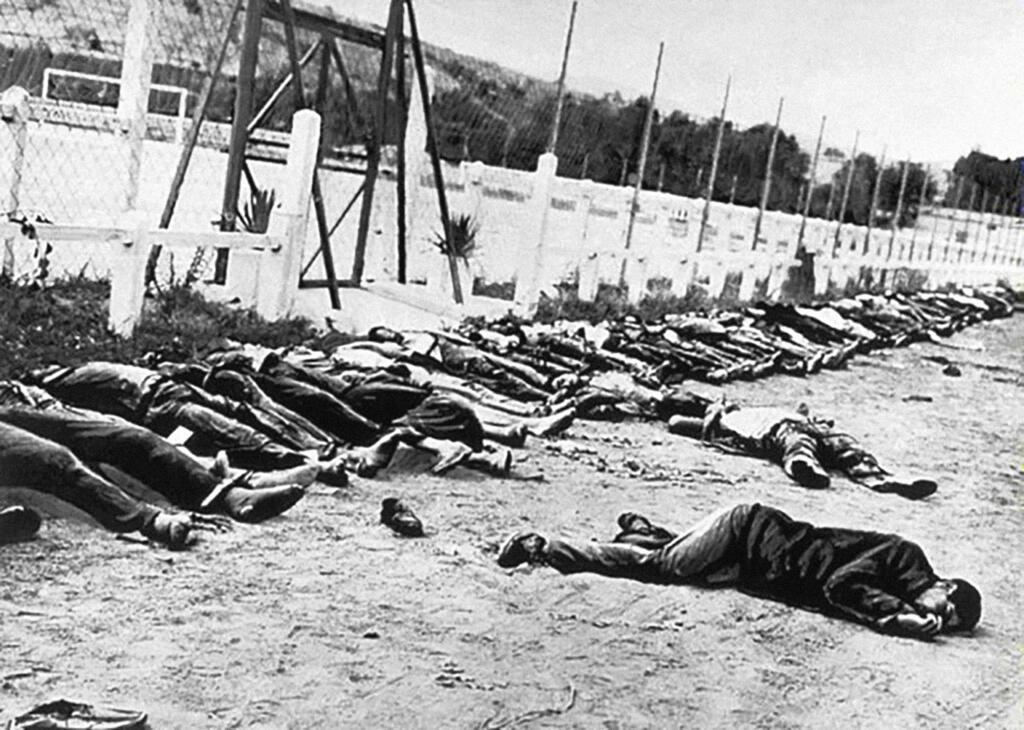
French authorities chose to violently repress the demonstration on 8 May 1945 in Setif, Algeria. © INA
Rival groups later took up arms, including the FLN, the National Liberation Front, leading to violent clashes. Nearly 4,000 deaths were recorded among Algerians in France during the war of independence.
A century after its creation, North African Star has largely faded from public memory – although its legacy remains visible in Algeria’s national flag, which originated with the movement.
This story was adapted from the original version in French by Anne Bernas.
Rival groups later took up arms, including the FLN, the National Liberation Front, leading to violent clashes. Nearly 4,000 deaths were recorded among Algerians in France during the war of independence.
A century after its creation, North African Star has largely faded from public memory – although its legacy remains visible in Algeria’s national flag, which originated with the movement.
This story was adapted from the original version in French by Anne Bernas.
SOUNDTRACK


No comments:
Post a Comment