It’s possible that I shall make an ass of myself. But in that case one can always get out of it with a little dialectic. I have, of course, so worded my proposition as to be right either way (K.Marx, Letter to F.Engels on the Indian Mutiny)
Saturday, April 04, 2026
India's Russian Crude Imports Jump 90% in March After U.S. Waiver
India's imports of Russian crude oil jumped by 90% in March versus February, following the major supply disruption in the Middle East and the U.S. waiver of purchases of Russian crude already loaded on tankers.
Following subdued purchases between November and February, India's imports of Russian crude soared last month by 90%, although overall Indian crude imports slumped by 15% due to the de facto closed Strait of Hormuz, The Times of India reported on Friday, citing data from Kpler.
While crude supply to India from Iraq, Saudi Arabia, and the United Arab Emirates (UAE) plunged in March compared to February, deliveries from one of Africa's top producers, Angola, tripled, although the share of Angolan crude remains small, the data showed.
Some supply from the Middle East did reach India, thanks to Saudi Arabia and the UAE re-routing exports to ports sitting outside the Persian Gulf and not necessitating transit through the Strait of Hormuz. These workarounds, however, are insufficient to compensate the supply lost to the de facto closed critical oil chokepoint.
“There are early signs of flows being negotiated on a bilateral basis, with Iran reportedly granting passage to countries such as India and Thailand,” Kpler's Fred Asiedu said earlier this week.
“This may allow selective access to MEG cargoes, but without consistent tanker movement it is difficult to argue that the Strait is meaningfully open.”
Since the U.S. waiver on purchases of Russian crude on tankers, India refiners have snapped up dozens of millions of barrels of the oil as key supplies from the Middle East are trapped.
By the middle of March, India was winning the competition with China to attract Russian crude cargoes with vessels turning mid-voyage away from their previous Chinese destinations and heading for India.
Russia and India are competing for millions of barrels of Russian crude that had accumulated on tankers early this year, when most buyers outside China steered clear of Russian barrels because of the U.S. sanctions and the U.S. pressure on India to slash Russian oil imports.
Colonial Pipeline has resumed service on its main gasoline artery to the U.S. East Coast after repairing damage caused by a third-party drilling crew in Georgia.
The company said it completed repairs on Line 1, its main gasoline route from the U.S. Gulf Coast to East Coast markets, and brought the system back into service after damage in Paulding County, Georgia. The incident occurred on Tuesday, caused by a third-party well-drilling crew.
The restart is significant because Line 1 is one of the most important fuel supply links in the United States, moving about 1.5 million barrels per day of gasoline from Houston to Greensboro, North Carolina. From there, supplies are distributed across local markets and shipped onward to population centers extending as far as New York Harbor.
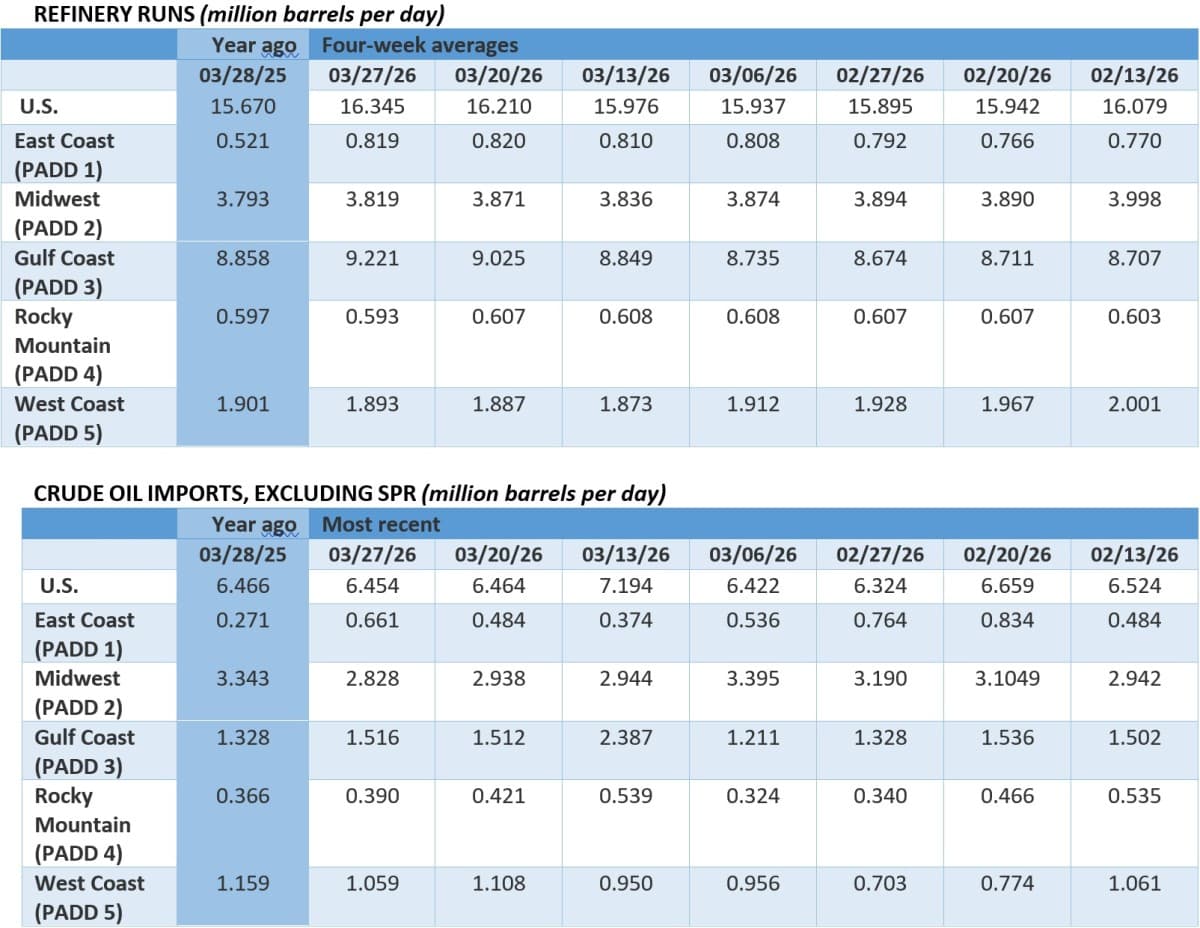
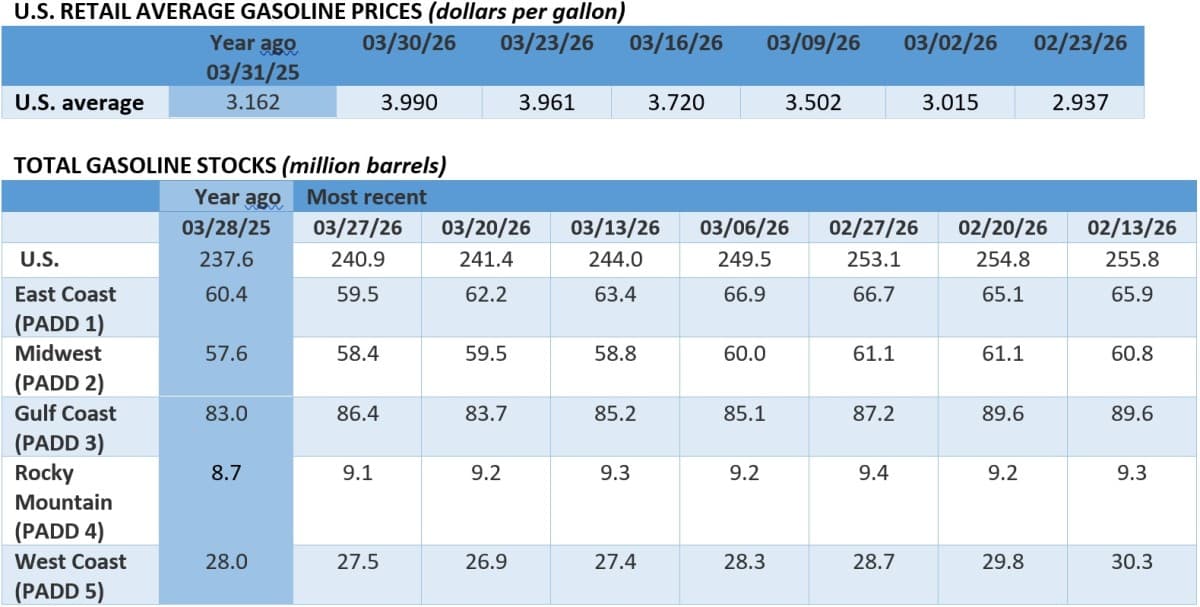
The disruption came at a sensitive moment for U.S. fuel markets. Consumers are already facing sharply higher pump prices tied to the Iran war, with average U.S. gasoline prices rising above $4 per gallon on Monday for the first time in more than three years. Any interruption on Colonial’s mainline tends to draw close market attention because the pipeline network is the largest refined-products system in the country and a crucial supplier to the East Coast, a region structurally dependent on inbound fuel flows.
While Colonial did not indicate any prolonged operational fallout, the latest incident revives concerns about the vulnerability of U.S. fuel infrastructure to accidental damage and unplanned outages. A similar shutdown on Line 1 occurred early last year after a leak in the same Georgia county, though that event had limited market impact because it took place during January, when gasoline demand is seasonally weak.
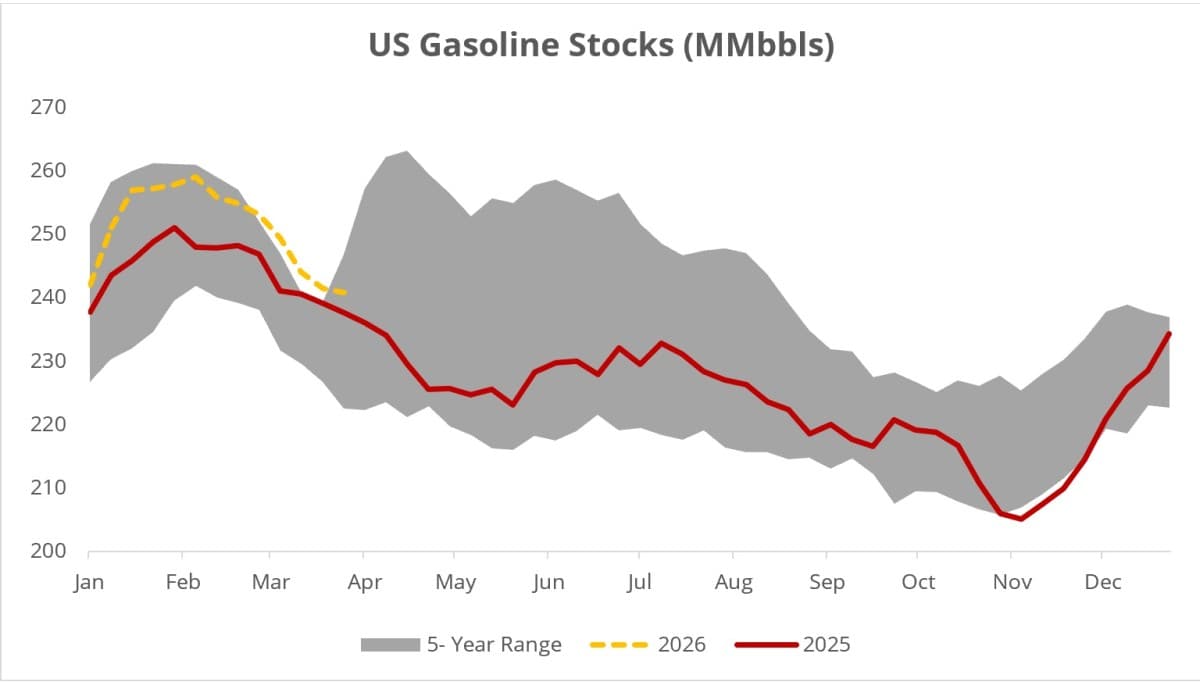
With service now restored, immediate fears of a more serious supply crunch may ease. Still, the episode underscores how quickly physical disruptions can rattle refined-product markets when inventories are tight and geopolitical tensions are already pushing prices higher.
By Charles Kennedy for Oilprice.com
Trump Loses Grip as Oil Surge Signals Deeper Crisis
For the first time in weeks, Donald Trump failed to cool oil markets, as escalating tensions with Iran crushed ceasefire hopes and reignited bullish momentum.
Friday, April 03, 2026
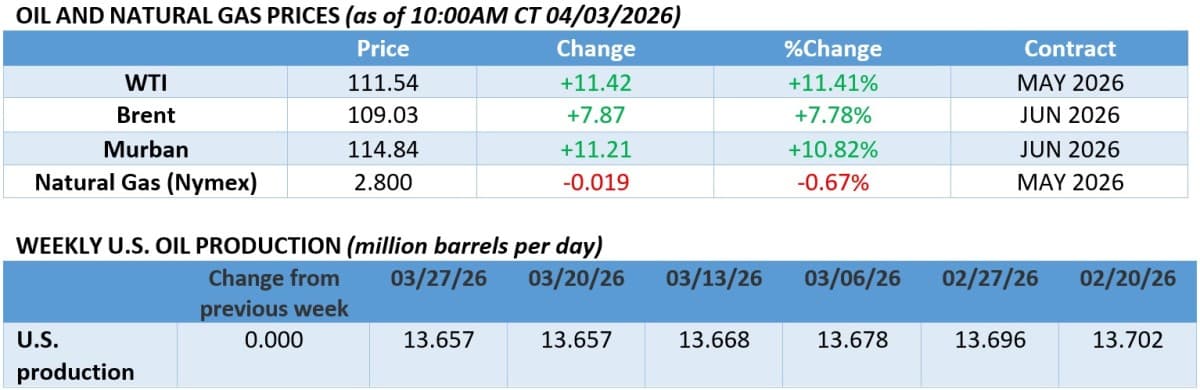
For the first time in many weeks, US President Trump couldn’t contain a late-week price surge as escalating tensions between Washington and Tehran dulled market bears’ expectations of a ceasefire anytime soon. WTI soared this week and is on par with ICE Brent (even if they trade different months), physical benchmarks above $140 per barrel bring back memories of 2008 and Tehran openly discusses introducing a toll mechanism for ships transiting the Strait of Hormuz. The return from Easter holidays is all set for another crude awakening as strikes on Middle Eastern energy infrastructure continue.
In Times of Cuts, OPEC+ Mulls Production Hikes. Despite most Middle Eastern OPEC members slashing output on the back of closed Hormuz navigation, this weekend’s OPEC+ ministerial meeting might see another 206,000 b/d output hike for May 2026, citing the need to ‘react’ to a rapidly tightening outlook.
China Forces Refiners to Run, Even If at a Loss. China’s state planner NDRC has told independent refiners, the so-called teapots, not to cut refinery runs below their utilization rates from their average levels of the past two years, with Shandong teapots currently operating at 55% of capacity.
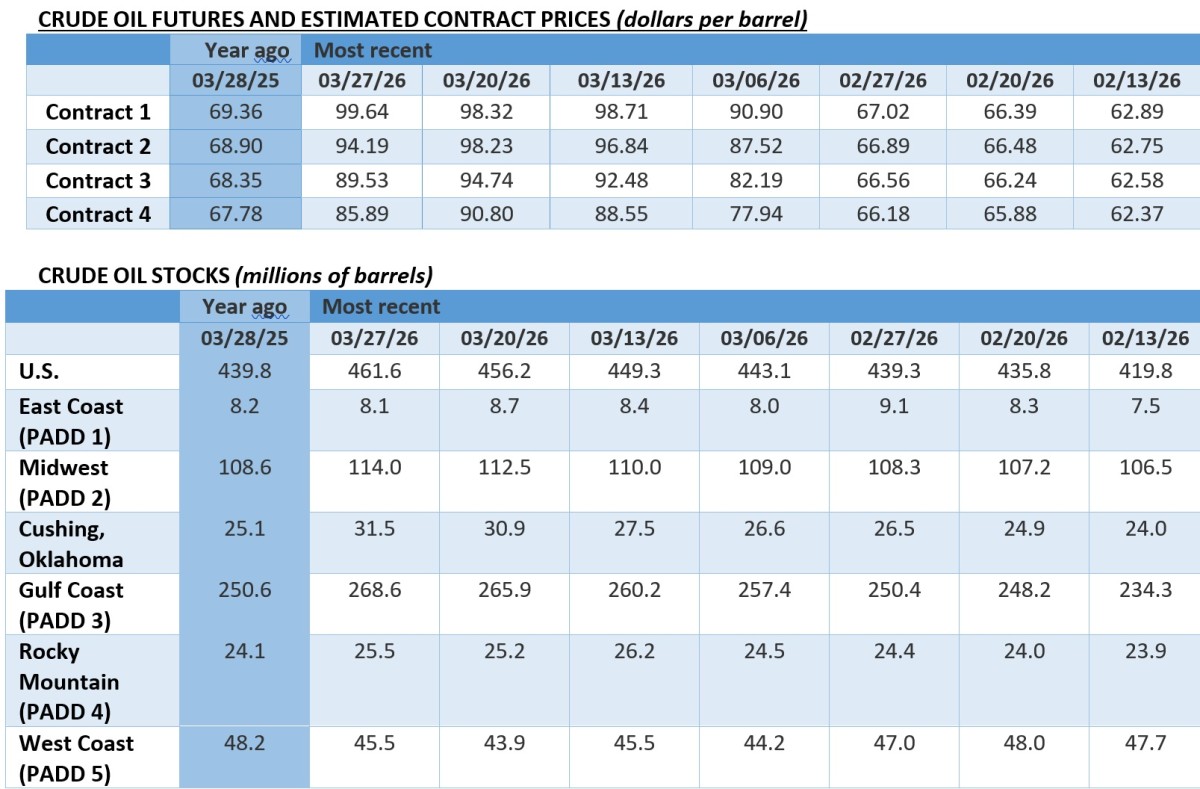
Trump Cabinet Softens Terms on SPR Release. The US Department of Energy has offered up to 10 million barrels of sour crude from the US Strategic Petroleum Reserve, easing participation terms as now buyers can return oil by November 2027 and minimum return volumes were lowered to 117%.
Trump Slashes Metal Import Duties. The Trump administration has cut import duties on derivative products made from steel, aluminium and copper from the previously imposed 50% to a new rate of 25% applied to the full value of product, eliminating the tariff on products with minimal metals content.
Oil Majors Eye Deeper US Offshore Exposure. According to media reports, an array of European oil majors comprising TotalEnergies, BP, Shell and Repsol are eyeing a majority stake in the Blackstone-backed ultra-deepwater Shenandoah offshore project, with a potential to produce 100,000 b/d.
Sweden Seizes Sanctioned Shadow Fleet Tanker. The Swedish Coast Guard said it had seized the Flora 1 tanker, part of Russia's shadow fleet, off the country's southern coast, claiming that it was the source of a 12km oil spill off the island of Gotland and launching an environmental investigation into the matter.
Facing Fuel Shortages, Bangladesh Cuts Working Hours. Bangladesh, a net importer of crude, refined products and gas, has introduced energy-saving measures to curtail energy consumption in the country, cutting work hours to 4 pm and mandating that all shopping centres be shut by 6 pm.
Key US LNG Plant Cuts Output After Outage. Cheniere Energy’s (NYSE:LNG) 30 mtpa Sabine Pass LNG plant has halved its LNG feedgas intake from 5 bcf/d to 2.6 bcf/d after at least one of the production trains was taken offline this week, with the operator claiming the units would be back soon.
Sulphur Rally Squeezes Miners Worldwide. Mining companies worldwide are suffering from soaring sulphur prices, adversely impacting the economics of metal leaching, with Indonesia’s nickel producers now facing sulphur prices above $600 per tonne, the highest in five years.
China Re-Exports Record LNG Volumes. Chinese gas importers re-exported 10 LNG cargoes in March, the highest monthly total ever for a country that is notoriously dependent on gas imports, sending prompt cargoes of liquefied gas to embattled neighbours, including South Korea and the Philippines.
Russia Bans Gasoline Exports until July. Russia’s government has imposed a ban on gasoline exports for refiners until the end of July, citing the need to keep domestic prices steady ahead of high-demand season in the summer, taking some 120,000 b/d of gasoline flows off the global markets.
Copper Bulls Eye Chinese Smelter Cuts, In Vain. Defying an industry-wide pledge to jointly cut copper smelting production by 10% this year, China’s leading copper smelters are planning to raise or maintain their output in 2026, keeping SHFE copper prices stuck below ¥96,240 per tonne ($14,000/mt).
Venezuela's Crude Exports Continue Rising. Venezuela’s oil exports jumped past the 1 million b/day mark in March for the first time since September 2025, boosted by increasing flows to Caribbean islands (used for blending by traders) and a surging demand for heavy barrels from India’s private refiners.
Asian LNG Prices Start to Slip as Demand Falters. JKM, Asia’s key LNG price marker has been declining this month, correcting downwards after peaking above $25/MMBtu in the first weeks of the US-Iran war, dropping to $19/MMBtu this week as spot demand in Northeast Asia dissipated on high prices.
By Tom Kool for Oilprice.com
UAE's Biggest Gas Plant Forced Offline for Second Time Since War Began
Operations at the Habshan gas facilities, the biggest gas processing site in the United Arab Emirates, were suspended early on Friday following a fire that erupted after an attack, Abu Dhabi Media Office said.
The Habshan onshore facilities are part of one of the world's largest gas processing plants, which is operated by Abu Dhabi's national oil company ADNOC. The five plants of the vast Habshan Complex have 14 processing trains and 6.1 bscfd capacity, according to the company.
This is the second time operations at Habshan have been suspended following attacks since the war began.
Abu Dhabi Media Office said on Friday that the "Abu Dhabi authorities are responding to an incident of falling debris at the Habshan gas facilities, following successful interception by air defence systems."
"Operations have been suspended while authorities respond to a fire. No injuries have been reported," the media office added.
Apart from hosting the UAE's largest gas processing complex, Habshan is home to oil facilities and is the starting point for the Habshan-Fujairah crude pipeline to Fujairah, the port that sits outside the Strait of Hormuz and can help re-route part of UAE's oil exports away from the de facto closed chokepoint.
Fujairah itself has also been targeted by Iran in several attacks since the war began.
Separately, another Gulf producer, Kuwait, also reported another Iranian attack on Friday. Kuwait Petroleum Corporation (KPC) confirmed that the Mina Al-Ahmadi refinery was targeted in a drone attack early on Friday, resulting in fires in several operational units.
No injuries have been reported in the attack, which is the second on the refinery, located 50 kilometers (31 miles) south of Kuwait City. The facility has the capacity to process 346,000 barrels per day (bpd) of crude oil.
Mina Al-Ahmadi was hit by drone attacks on March 20, which caused fires in several units.
BP is benefiting from a war-driven surge in oil profits, boosting investor sentiment.
Meg O’Neill arrives with a reputation for decisive leadership but faces unresolved strategic questions.
Investors are demanding a clear long-term direction beyond short-term gains from geopolitical disruption.
In one sense it’s a baptism of fire – in another, hardly at all. Meg O’Neill’s arrival as the first female chief executive of BP comes, in a sense, at an auspicious moment.
Oil majors’ earnings are set for a significant windfall from the conflict in Iran, with those of BP and Shell forecast to see a combined £5bn this year – and that’s if the war is limited in timeframe.
That cannot mask, though, the scale of the task facing O’Neill, who arrives from Australia’s Woodside Petroleum with a formidable reputation for rapid, hard-nosed corporate decision-making.
“Right now, we’re operating in an environment of significant complexity: geopolitical tension, conflict, rapid technological change and shifting global energy demand,” she told colleagues yesterday.
“There’s always more to do and I believe we can safely accelerate performance and drive innovation, sustainability and growth.”
BP needs it now more than ever. Its target for reducing net debt to $14bn-$18bn by the end of 2027, partly driven by asset sales, may be within reach a year early, but that will do little to address the more fundamental questions being posed by the company’s shareholders: how to shape a strategy which returns it to long-term sustainable growth.
O’Neill’s predecessor, Murray Auchincloss, was resistant to big strategic decisions that would shift BP away from the diversified energy group it had become and back towards its roots as a more focused – but smaller – oil and gas exploration and production company.
His new chairman, the former CRH boss Albert Manifold, had no truck with that resistance, repeatedly telling investors that he wanted to drive radical change at BP to improve its performance.
“That’s how we make bp simpler, stronger and more valuable,” O’Neill wrote. “I’m committed to providing clear direction and consistency so we can move forward together with confidence.”
The Iran war has put the wind in BP’s sails, with its shares up by nearly half since her appointment was announced. Investors will want rapid evidence of O’Neill’s strategic vision, though, to be convinced that her arrival isn’t yet another false dawn.
BP has named long-serving executive Carol Howle as deputy CEO, effective immediately, in a move that consolidates strategic oversight at a critical juncture for the company. Howle will retain leadership of BP’s powerful supply, trading and shipping (ST&S) division while taking on responsibility for the company’s ongoing portfolio review and long-term strategy development.
The restructuring also shifts BP’s strategy and sustainability team under Howle’s supervision, centralizing decision-making as the company reassesses its trajectory beyond its 2027 targets.
The appointment comes amid a broader leadership transition at BP, with Meg O’Neill recently stepping into the CEO role. The move signals a push toward tighter strategic alignment and capital discipline, as the company navigates investor pressure to balance energy transition ambitions with returns from its core hydrocarbons business.
BP has faced scrutiny in recent years over shifting energy transition targets and capital allocation priorities, particularly as peers recalibrate toward more oil and gas investment following weaker-than-expected returns from low-carbon ventures. The creation of a strengthened deputy CEO role suggests BP is seeking to streamline execution and sharpen focus on value generation.
Howle’s continued oversight of ST&S—one of bp’s most profitable units—further underscores the importance of trading operations in supporting earnings stability during periods of market volatility.
Howle brings 25 years of experience at BP to the role, having led ST&S since 2020. She also served as interim CEO in December 2025, positioning her as a central figure in the company’s leadership bench.
Her expanded responsibilities place her at the center of bp’s strategic reset, particularly as the company evaluates asset portfolios and investment priorities in a rapidly evolving energy landscape.
The leadership reshuffle may be viewed positively by investors seeking clearer strategic direction and improved capital efficiency. By consolidating strategy, sustainability, and portfolio review under a single executive, BP appears to be aiming for faster decision-making and more coherent execution.
The emphasis on disciplined capital allocation and operational reliability aligns with broader industry trends, as oil majors prioritize shareholder returns amid uncertain energy transition pathways.
By Charles Kennedy for Oilprice.com
How the U.S. and Europe Are Betting Differently on Energy Security
Hornsea 3, set to become the world's largest offshore wind farm at 2.9 GW, connected its first seabed export cable to the UK coast on March 26, a key step toward its 2027 completion.
France is launching tenders for 12 GW of offshore and floating wind capacity by 2027 under a 'Made in Europe' initiative designed to prioritize local supply chains and reduce external energy dependence.
The Trump administration is paying TotalEnergies $1 billion to exit U.S. offshore wind projects representing more than 4 GW of potential clean power, redirecting those funds toward oil and gas.
Europe is making a push for a robust homegrown offshore wind sector at the same time that the United States is gutting its own. The world's largest wind farm, currently under construction in the North Sea, made major progress on March 26 when it successfully connected its first export cable from the seabed to the coast of the United Kingdom. Meanwhile, France plans to auction off 10 offshore and floating wind projects with a combined capacity of 12 gigawatts by 2027 as part of a ‘Made in Europe’ initiative.
In the UK, the connection of the undersea cable for the massive Hornsea 3 offshore wind project marks a significant milestone for the offshore wind capacity and for European collaboration on making a more independent and autonomous energy industry. The project, which will benefit consumers in the United Kingdom, is being headed by Ørsted, a company from Denmark, while the cable installation is being carried out by Belgium’s Jan De Nul Group. When finished in 2027, the project will have a power generation capacity of 2.9 gigawatts, enough to power 3.3 million homes.
“Hornsea 3 will be a cornerstone in achieving the UK government’s climate and clean energy targets while increasing energy independence and creating local jobs,” Duncan Clark, Head of Ørsted UK & Ireland, was quoted by Interesting Engineering. “It will make a significant contribution towards the UK Government’s ambitious target of 50 GW of offshore wind by 2030 and net-zero by 2050.
It will also help to increase the United Kingdom and Europe’s energy independence, a pressing issue in today’s geopolitical climate. In France, the upcoming tenders for offshore wind energy will prioritize local supply chains. “We want these bids to be done as much as possible with our technologies, our factories, our employees,” said French Finance Minister Roland Lescure. “This is a long-term strategy to secure our industrial supply chains,” he continued.
The push for homegrown offshore wind comes as a part of the bloc’s larger energy security strategy, which has been kicked into overdrive by the current global energy crisis reverberating out of the Strait of Hormuz. The current crisis marks the third time in four years that European energy markets have been kneecapped by their dependence on global supply chains to keep the lights on. European leaders are determined to make sure that it doesn’t happen again.
Meanwhile, on the other side of the Atlantic, the United States is taking a completely different approach to energy security. Instead of diversifying domestic energy production in the interest of building up resilience to global market shocks, the United States is piling all of its eggs back into the petro-basket. In fact, the Trump administration is paying a French company TotalEnergies $1 billion to abandon offshore wind projects that could have generated over 4 GW of clean power. Instead, that money will be channeled into oil and gas.
“When the Trump administration came to power and began setting U.S. energy policy, we said that we’ll have to reconsider, clearly, these offshore wind project developments,” says Patrick Pouyané, the CEO of TotalEnergies. However, this doesn’t mean that they will be backing off of offshore wind development entirely. “To be clear, we don’t renounce onshore wind,” Pouyané went on to say. “We continue to invest in onshore solar, onshore wind, batteries [in other countries].”
Few examples more accurately and powerfully capture the growing divide in energy policy between the United States and Europe. While Europe tries to shore up energy autonomy and independence through renewables, the United States is targeting energy dominance through fossil fuels. Some experts say that this play will end up costing United States consumers more per megawatt hour of energy – and end up costing the world in terms of climate-related externalities.
Trump told Reuters he is "considering" withdrawing from NATO after European allies declined to send navies to reopen the Strait of Hormuz, which handles roughly 20% of global oil supply.
Spain closed its airspace to U.S. military planes, France blocked weapons flights to Israel, and Britain restricted base access to defensive missions only, prompting Trump to call the alliance a "paper tiger."
With Brent crude hovering near $100 a barrel and U.S. gas prices above $4 a gallon, analysts warn the standoff could deteriorate further if NATO Secretary-General Mark Rutte fails to change Trump's mind during a Washington visit next week
.
President Donald Trump told Reuters on Wednesday that he is considering withdrawing the United States from the 76-year-old alliance after European allies declined to send warships to reopen the Strait of Hormuz to global shipping.
"Wouldn't you if you were me?" he asked.
Earlier this week, in an interview with Britain's The Telegraph, he called NATO a "paper tiger" and said Russian President Vladimir Putin shared the assessment.
The spat has a straightforward trigger.
The Strait of Hormuz, the narrow chokepoint between Iran and Oman through which roughly 20% of the world's oil flows, has been effectively closed to commercial traffic since the war began. Oil prices have surged in response, with Brent briefly touching $120 a barrel before retreating. The EIA now forecasts Brent will average $79 per barrel for the full year, a sharp revision from its pre-war estimate of $58. U.S. gasoline prices have crossed $4 a gallon.
Trump wants allies to help reopen it, but they’ve largely said no.
Spain closed its airspace to U.S. military planes involved in the conflict. France refused to let planes carrying weapons to Israel pass over French territory. Britain allowed American bombers to use its bases, but only for defensive strikes, not offensive ones, prompting Trump to publicly lambast the country's "special relationship." Poland's defense minister said Warsaw has "no plans" to move its Patriot air-defense systems to the Middle East.
Secretary of State Marco Rubio made clear the administration is keeping a ledger. In an interview with Al Jazeera, he called the allies' response "very disappointing" and said the value of NATO, if it only works one direction, is something that will "have to be re-examined."
That dynamic surfaced sharply at a G7 foreign ministers meeting near Paris last week.
EU foreign policy chief Kaja Kallas asked Rubio when U.S. patience with Vladimir Putin over Ukraine would run out. Rubio, according to five people familiar with the exchange, responded with irritation. The meeting did not end warmly.
There are reasons to take Trump's NATO threats with some skepticism. He made similar noises during his first term and then praised European leaders effusively at NATO's annual summit in June 2025. A 2023 law co-sponsored by Rubio bars any president from withdrawing without congressional approval, though legal experts say Trump could test that in court. Analysts also note that, as commander-in-chief, he could simply choose not to defend a NATO member under attack, no formal exit required.
"The big question is, let's say there is an actual armed attack on NATO. Would there be a political decision to come to the aid of that ally?" former U.S. ambassador to NATO Ivo Daalder told Axios. For countries that share a border with Russia, that is not an academic question.
NATO Secretary-General Mark Rutte, who has managed a working relationship with Trump, is scheduled to visit Washington next week. He has talked Trump down before. Whether the same approach works now, with oil above $100 and European governments actively blocking U.S. war operations, is an open question.
Julianne Smith, the U.S. ambassador to NATO under President Biden, put it plainly: "I do think we're turning the page of 80 years of working together."