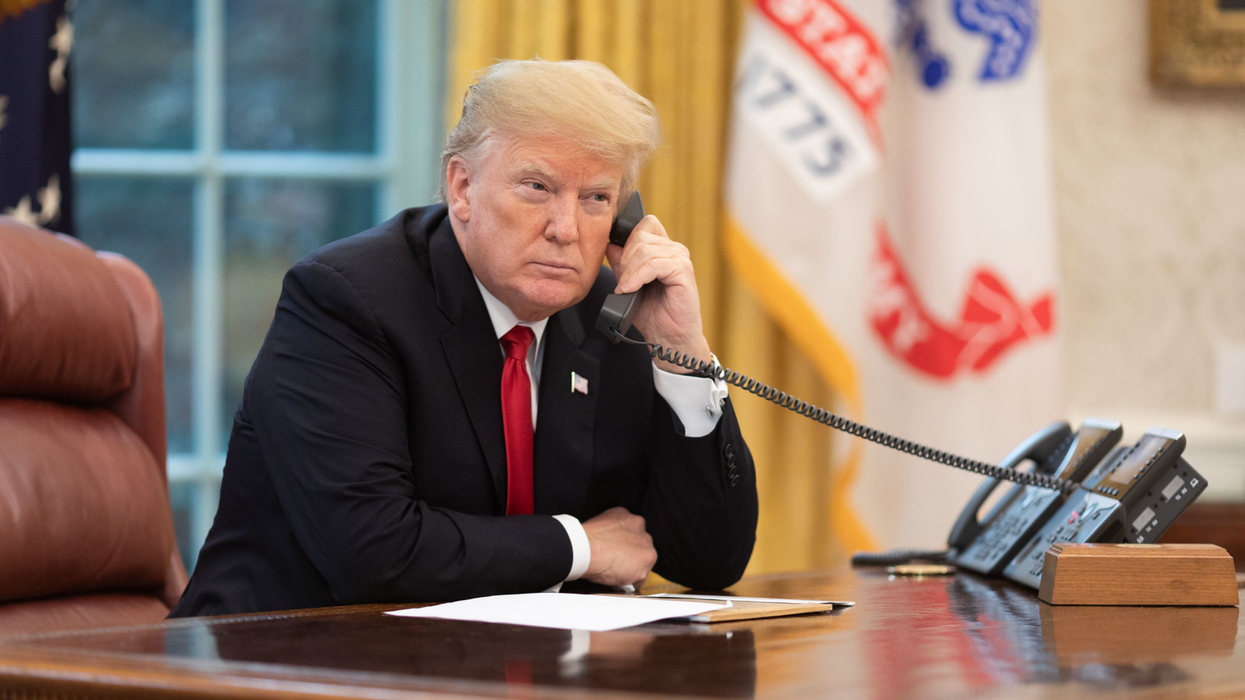
“We are witnessing the continuing utmost contempt for the international legal order,” said a group of two dozen United Nations special rapporteurs.
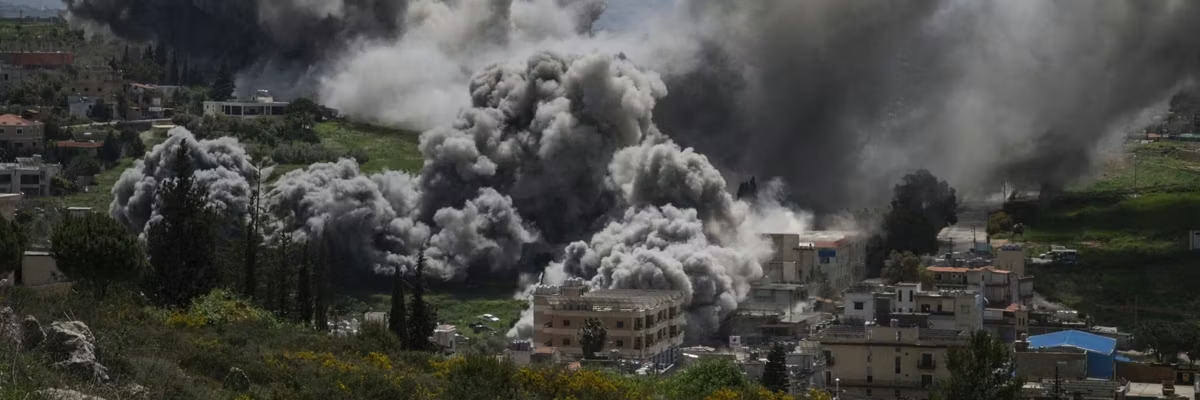
An Israeli airstrike is seen on April 16, 2026 in Nabatieh, Lebanon.
(Photo by Adri Salido/Getty Images)
Jake Johnson
Apr 16, 2026
COMMON DREAMS
A group of two dozen United Nations experts issued a scathing joint statement on Wednesday condemning Israel’s ongoing assault on Lebanon as “a blatant violation of the UN Charter, a deliberate destruction of prospects for peace, and an affront to multilateralism and the UN-based international order.”
“We are witnessing the continuing utmost contempt for the international legal order, for diplomacy, and above all for the lives of civilians and the environment in Lebanon,” the experts said. “Israel has chosen the very moment a ceasefire was announced—one that its Pakistani mediator stated included Lebanon—to unleash the largest coordinated wave of strikes on the country since 1980.”
Calls for ‘Full Arms Embargo’ Against Israel as Lebanon Massacres Imperil Ceasefire Hopes
Iran Blocks Strait of Hormuz as ‘Barbaric’ Israeli Bombing Kills Hundreds in Lebanon
Despite signals in recent days that the Israeli and Lebanese governments are engaged in their highest level of diplomatic talks in decade, Israel’s military continues to ferociously bomb southern Lebanon, devastating entire towns—including homes and schools—and killing civilians. On Wednesday, according to Lebanese officials, Israeli forces killed three paramedics in a “triple-tap” airstrike on the town of Mayfadoun.
“This is not self-defense,” said the UN experts, including special rapporteur on the right to education Farida Shaheed, special rapporteur on the right to food Ben Saul, and special rapporteur on the occupied Palestinian territories Francesca Albanese.
“The issuance of blanket evacuation orders, combined with the destruction of urban and village housing that displaced persons would have returned to, is consistent with the pattern of domicide that was initiated during the genocide in Gaza,” the experts continued. “Forced displacement of a civilian population constitutes crimes against humanity and is a war crime under international law.”
More than a million people, over a fifth of Lebanon’s population, have been displaced since Israel ramped up its assault on the country in early March, claiming to target the political and militant group Hezbollah.
UNICEF USA said Thursday that at least 600 children have been killed or wounded by Israeli attacks on Lebanon since March 2, and more than 390,000 have been forced from their homes. Overall, Israel’s assault on Lebanon has killed more than 2,000 people since early march.
“Nowhere is safe for children in Lebanon,” the organization said.
In their statement on Wednesday, the UN experts demanded that Israel “immediately cease all military operations in Lebanon” and urged the United States—Israel’s leading ally and arms supplier—to “use its influence” to ensure Israel stops the bombing.
After failing to secure victory through overwhelming violence, Israel is increasingly relying on coercive diplomacy to impose political outcomes.
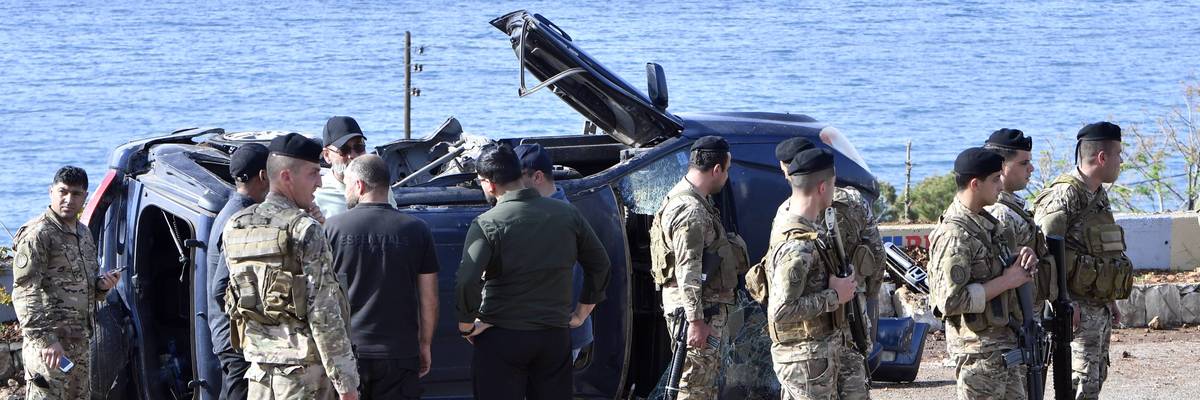
A view of the destruction after the Israeli army targeted a moving vehicle on Al-Saadiyat Street near the city of Sidon in southern Lebanon on April 16, 2026.
(Photo by Houssam Shbaro/Anadolu via Getty Images)
Ramzy Baroud
Apr 16, 2026
A ceasefire in Lebanon was announced on Thursday by US President Donald Trump, but its reality tells a very different story. The ceasefire was not the product of American diplomacy, nor Israeli strategic calculation. It was imposed—largely as a result of sustained Iranian pressure.
Washington, Tel Aviv, and their allies—including some within Lebanon itself—will continue to deny this reality. Acknowledging Iran’s role would mean admitting that a historic precedent has been set: for the first time, forces opposing the United States and Israel have succeeded in imposing conditions on both.
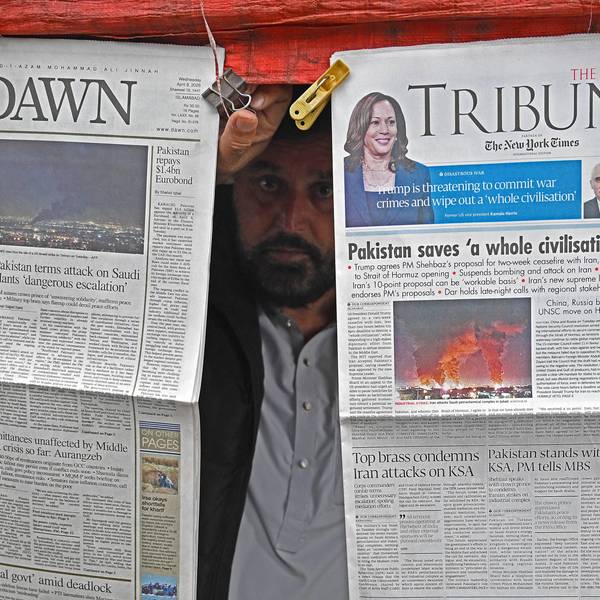
Pakistan Reiterates That Lebanon Is Still Part of Ceasefire Despite Israel’s Attacks
This is not a minor development. It is a strategic rupture. But it is not the only fundamental shift now underway: Israel’s very approach to war and diplomacy is itself changing.
After failing to secure victory through overwhelming violence, Israel is increasingly relying on coercive diplomacy to impose political outcomes.
Over the past two to three decades, this Israeli strategy has become unmistakably clear: achieving through diplomacy what it has failed to impose on the battlefield.
‘Diplomacy’ as War
Israeli ‘diplomacy’ does not conform to the conventional meaning of the term. It is not negotiation between equals, nor a genuine pursuit of peace. Rather, it is diplomacy fused with violence: assassinations, sieges, blockades, political coercion, and the systematic manipulation of internal divisions within opposing societies. It is diplomacy as an extension of war by other means.
Likewise, Israel’s conception of the ‘battlefield’ is fundamentally different. The deliberate targeting of civilians and civilian infrastructure is not incidental, nor merely ‘collateral damage’; it is central to the strategy itself.
Nowhere is this clearer than in Gaza. Following the ongoing genocide, vast swathes of Gaza have been reduced to rubble, with estimates indicating that around 90 percent of the whole of Gaza has been destroyed. According to the Gaza Ministry of Health, women and children consistently account for roughly 70 percent of all of Gaza’s casualties.
This is not collateral damage. It is the deliberate destruction of a civilian population, an act of genocide that is designed to force mass displacement and remake the political and demographic reality in Israel’s favor.
The same logic extends beyond Gaza. It shapes Israel’s wars in Lebanon against Hezbollah and its broader confrontation with Iran.
The United States, Israel’s principal ally, has historically operated within a similar paradigm. From Vietnam to Iraq, civilian populations, infrastructure, and even the environment itself have borne the brunt of American warfare.
A Faltering Model
It is often argued that Israel turned to ‘diplomacy’ following its forced withdrawal from southern Lebanon in 2000 under resistance pressure. While this moment was pivotal, it was not the beginning.
Earlier precedents exist. The First Intifada (1987–1993) demonstrated that a sustained popular uprising could not be crushed through brute force alone. Despite Israel’s extensive repression, the revolt endured.
It was in this context that the Oslo Accords emerged—not as a genuine peace process, but as a strategic lifeline. Through Oslo, Israel achieved politically what it could not impose militarily: the pacification of the uprising, the institutionalization of Palestinian political fragmentation, and the transformation of the Palestinian Authority into a mechanism for internal control.
Meanwhile, settlement expansion accelerated, and Israel reaped the global legitimacy of appearing as a ‘peace-seeking’ state.
Yet the last two decades have exposed the limits of this model.
From Lebanon in 2006 to repeated wars on Gaza (2008–09, 2012, 2014, 2021, and the ongoing genocide since 2023), Israel has failed to secure decisive strategic victories. Its ongoing confrontations with Hezbollah and Iran further underscore this failure.
Not only has Israel been unable to achieve its stated military objectives, but it has also failed to translate overwhelming firepower—even genocide—into lasting political gains.
Some interpret this as a shift toward perpetual war under Prime Minister Benjamin Netanyahu. But this reading is incomplete.
Perpetual War?
Netanyahu understands that these wars cannot be sustained indefinitely. Yet ending them without victory would carry even greater consequences: the collapse of Israel’s deterrence doctrine and, potentially, the unraveling of its broader project of regional dominance.
This dilemma strikes at the heart of Zionist ideology, particularly Ze’ev Jabotinsky’s concept of the ‘Iron Wall’—the belief that overwhelming, unrelenting force would eventually compel indigenous resistance to surrender.
Today, that premise is being tested—and found wanting.
Netanyahu has repeatedly framed current wars as existential, comparable in significance to 1948—the war that resulted in the ethnic cleansing of Palestinians during the Nakba and the establishment of Israel.
Indeed, the parallels are unmistakable: mass displacement, civilian terror, systematic destruction, and unwavering Western backing—once from Britain, now from the United States.
But there is a critical difference: The 1948 war led to the creation of Israel; the current wars are about its survival as an exclusivist settler colonial project.
And herein lies the paradox: the longer these wars continue, the more they expose Israel’s inability to secure decisive outcomes. Yet ending them without victory risks a historic defeat—not only for Netanyahu, but for the ideological foundations of the Israeli state itself.
Israeli society appears to recognize the stakes. Polls throughout 2024 and 2025 have shown overwhelming support among Israeli Jews for continued military campaigns in Gaza and confrontations with Iran and Lebanon.
Public discourse frames this support in terms of ‘security’ and ‘deterrence’. But the underlying reality is deeper: a collective recognition that the long-standing project of military supremacy is faltering.
Having failed to subdue Gaza despite the genocide, Israel is now attempting to achieve through diplomatic maneuvering what it could not secure through war. Proposals for international oversight, stabilization forces, and externally imposed governance structures are all variations of this approach.
But these efforts are unlikely to succeed.
Gaza is no longer isolated. The regional dimension of the conflict has expanded, linking Lebanon, Iran, and other actors into a broader, interconnected front.
Balance is Shifting
In Lebanon, Israel has been repeatedly forced toward ceasefire arrangements not out of choice, but because it failed to defeat Hezbollah or break the will of the Lebanese people.
This dynamic extends to Iran. Following the joint aggression on Iran starting February 28, both the United States and Israel were compelled to accept de-escalation frameworks after failing to achieve rapid or decisive outcomes.
The expectation that Iran could be quickly destabilized—replicating the models of Iraq or Libya—proved illusory. Instead, the confrontation revealed the limits of military escalation and forced a return to negotiations.
This is the essence of Israel’s current predicament.
Diplomacy, in this model, is not an alternative to war—it is a pause within it. A temporary tool used to regroup before the next phase of confrontation.
But in Israel’s case, this aggressive ‘diplomacy’ is increasingly becoming the only available tool, precisely because its military strategy has failed to deliver victory.
Lebanon was meant to be the exception—a theater where Israel could isolate and defeat Hezbollah. Instead, it became further evidence of strategic failure.
Efforts to separate the fronts—Gaza, Lebanon, Yemen, Iran—have collapsed. Iran has explicitly linked its diplomatic engagement to developments on other fronts, forcing Israel into a broader strategic entanglement it cannot control.
This marks a profound shift.
The foundational pillars of Israeli strategy—overwhelming force, fragmentation of adversaries, narrative control, and political engineering—are no longer functioning as they once did.
Yet Netanyahu continues to project victory, declaring success at regular intervals, invoking deterrence, and framing ongoing wars as strategic achievements.
But these narratives ring hollow.
The reality, increasingly evident to observers across the region and beyond, is that the balance is finally shifting.
For the first time in decades, the trajectory of history is no longer bending in Israel’s favor.
Our work is licensed under Creative Commons (CC BY-NC-ND 3.0). Feel free to republish and share widely.
Ramzy Baroud
Ramzy Baroud is a journalist and the Editor of the Palestine Chronicle. He is the author of five books including: "These Chains Will Be Broken: Palestinian Stories of Struggle and Defiance in Israeli Prisons" (2019), "My Father Was a Freedom Fighter: Gaza's Untold Story" (2010) and "The Second Palestinian Intifada: A Chronicle of a People's Struggle" (2006). Dr. Baroud is a Non-resident Senior Research Fellow at the Center for Islam and Global Affairs (CIGA), Istanbul Zaim University (IZU). His website is www.ramzybaroud.net.
Full Bio >
Negotiations may end up stopping bombs on Beirut, but are unlikely to end Israel’s expanding south Lebanon occupation.
By Shireen Akram-Boshar ,
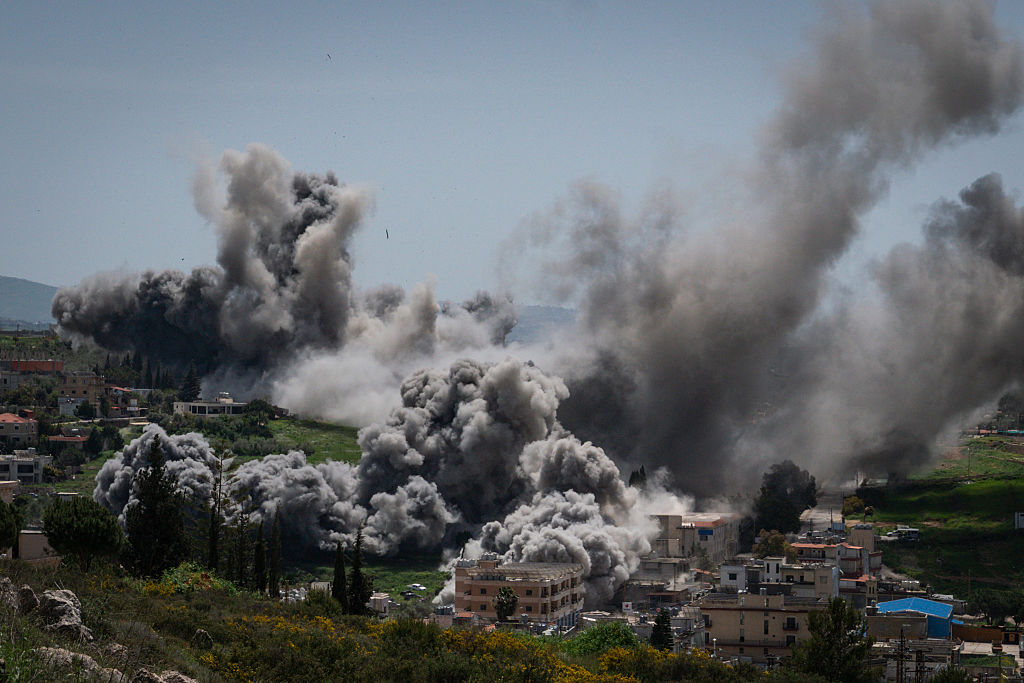
On April 16, U.S. President Donald Trump announced a 10-day ceasefire in Lebanon, set to begin later that day. Although Lebanese President Joseph Aoun and Prime Minister Nawaf Salam welcomed this announcement, it is unlikely to put a stop to Israel’s expanding occupation of south Lebanon. In the hours before the announcement, Israel continued to bomb Lebanon’s south, bombing a school as well as the last main bridge connecting the south of the country to the rest of Lebanon.
The announcement came after a meeting on April 14, in which U.S. Secretary of State Marco Rubio hosted Lebanon and Israel’s ambassadors for the first diplomatic talks between the two countries since the early 1990s, a move that is likely to cause further turmoil in Lebanon. In a statement after the meeting, the U.S. explained that direct negotiations would be launched at a later date, and that objectives included the disarming of Hezbollah. Additionally, it asserted that mediation would be limited to the U.S., and that Lebanon’s reconstruction would be linked to negotiations with Israel.
A day after the envoys met in Washington, D.C., Israel launched another round of strikes on southern Lebanon, pushing forward with its invasion of the south even as it purportedly moves toward “peace.” Israel’s strikes reportedly killed 20; at the same time, Israel issued yet another forced displacement order for residents of the south. Days earlier, protesters in Beirut mobilized against the Lebanese government’s planned negotiations with Israel.
The push for direct negotiations between Israel and Lebanon came after Israel’s massive attacks on Lebanon on April 8. Hours after a fragile ceasefire took effect in the U.S.-Israeli war with Iran on April 7, Israel escalated its attacks on Lebanon, unleashing the most violent assault of its six-week war on the country. Iran and Pakistan — which mediated the U.S. ceasefire with Iran — insisted that a halt to attacks on Lebanon was part of the agreement, but Israeli Prime Minister Benjamin Netanyahu and Trump claimed otherwise. Israel’s military declared that “the battle in Lebanon is ongoing,” while renewing expanded evacuation orders for southern Lebanon.
Israel’s wave of attacks on April 8 clearly aimed to pressure the Lebanese government to further capitulate to Israel’s wishes. Throughout that morning, Israel bombed areas of southern Lebanon, attacking residential buildings as well as medical vehicles and a medical center. In the early afternoon, Israel escalated, unleashing more than 100 airstrikes in less than 10 minutes, bombing residential and commercial areas across Beirut as well as in southern Lebanon and the eastern Bekaa Valley. These airstrikes killed at least 357 people and wounded more than 1,200, marking the deadliest day of Israel’s current assault on the country. Airstrikes struck residential complexes, bridges, grocery stores, a funeral procession in a cemetery, and a university hospital.
Freelance reporter and editor Lylla Younes described for Truthout what it was like to witness the attacks in Beirut: “Across the city, we could see plumes of smoke billowing from the sites of recent airstrikes. The air was smoky, and the city was full of the sounds of ambulance sirens and yelling beneath the buzz of drones overhead.”
The next day, Younes visited the site of one the airstrikes — “an apartment building in Ain al-Mreisseh where 27 people were killed. Children’s toys were scattered among the rubble. Medics were working to pull out four bodies that still lay beneath.”
Israel’s military spokesperson claimed that its expanded attacks across Lebanon were due to Hezbollah militants dispersing beyond Shia-majority areas, like Christian-majority Ain Saadeh, east of Beirut. This claim should be seen as a naked justification to escalate and expand attacks across the capital and Lebanon as a whole, and to attack civilian areas without warning. In addition, these attacks aim to turn non-Shia residents of the country against Hezbollah, goading sectarian strife, and pressuring the government to come to the negotiating table with their hands against the wall.
A Genocidal Aggression
Israel began its latest escalation in its war on Lebanon on March 2, when Hezbollah fired rockets at Israel after the U.S.-Israeli assassination of Iranian leader Ali Khamenei. In reality, Israel had already been waging a protracted war on southern Lebanon since 2024. The ceasefire that marked the end of Israel’s 2024 war on Lebanon did not see an end to Israel’s attacks on the south of the country. In a familiar pattern from Gaza, the agreement essentially became a one-way ceasefire, with Israel attacking south Lebanon on a regular basis and continuing to occupy areas of the south between November 2024 and March 2026. According to the UN, Israel violated the 2024 ceasefire more than 15,000 times.
Since March 2, Israel has carried out a campaign of collective punishment, particularly of the Shia-majority regions of Lebanon, and has expanded its occupation of the south of the country. Israel’s assaults, and in particular its occupation of the south, have forced 1.2 million people — 20 percent of the country’s population — to flee their homes, creating a severe displacement crisis. Israel is also working to exploit frustrations with Hezbollah and sectarian tensions within Lebanon to push the country toward civil strife or even civil war.
This current war adds to the prolonged list of catastrophes that Lebanon has already been facing: The country has been suffering from a severe economic crisis since 2019, with one of the world’s worst economic collapses seen since the 19th century. Lebanon was also still reeling from its 2024 war with Israel and had not yet managed to rebuild. Israel’s continued bombardment and occupation have thrust the country further toward political and civil chaos.
Younes described the general situation across the country over the past few weeks:
In the South, the bombing is relentless and the [Lebanese] army has fully pulled out, leaving the remaining residents to an unknown fate. In Beirut, hundreds of thousands of displaced are crowded into schools transformed into government shelters, relying on dwindling aid due to spiking food and fuel prices. The Israeli aggression is relentless and punishing, and has no regard for civilian life — there are countless examples of that now. The Israeli military’s killing of more than [80] first responders since March 2 alone indicates the genocidal nature of this aggression.
Israel’s expansion of its war on Shia-majority areas of Lebanon uses methods from its genocidal war on Gaza. Israel has waged mass ethnic cleansing of the population of the south of Lebanon, as well as the southern suburbs of Beirut — both of which have largely been depopulated throughout the course of the war. The Israeli military has issued numerous expulsion orders as it invades and pushes towards the Litani River — some 20 miles north of Lebanon’s border with Israel — while destroying civilian infrastructure.
Over the past weeks, Israel has strategically targeted bridges connecting the south to the rest of the country over the Litani River, managing to cut off and isolate the south from the rest of the country. As historian Zeead Yaghi, a postdoctoral fellow at the American University of Beirut, explained to Truthout, “The Israeli defense minister has said that he envisions Israeli forces to remain in southern Lebanon for a long period of time or until Israel feels Hezbollah no longer resembles a threat to it, repeatedly referencing the ‘Gaza example.’”
Israel’s method of mass expulsion, destruction, and flattening of civilian infrastructure has been dubbed the “Khan Younis option,” which it is now repeating over large parts of Lebanon. In fact, the “Khan Younis option” itself originated with the Dahiyah Doctrine, developed by Israel on its 2006 war on Lebanon only to be expanded on later in Gaza.
Echoes of Israel’s Past Occupation
Israel’s expanding invasion of south Lebanon is reminiscent of its previous invasion and occupation of the south of Lebanon in 1982. Throughout the 1970s, Israel had intervened in Lebanon in order to crush the Palestinian movement there — which was largely based in the refugee camps of Lebanon. That movement took the form of armed struggle carried out under the umbrella of the Palestine Liberation Organization (PLO), after the defeat of the 1967 war pushed more Palestinians into militant struggle from the diaspora. In the late 1970s, Lebanon became embroiled in a civil war that initially saw a strong left-wing movement made up of Nasserists, nationalists, Baathists, and communists — a cross-sect coalition made up of Sunni and Shia Muslims, as well as Christians of different denominations — allied with the Palestinian movement. But throughout the late 1970s and ‘80s, Israel intervened to weaken the Lebanese left and, most crucially, to destroy the Palestinian movement. This peaked with its 1982 invasion, which led to an 18-year Israeli occupation of the south of Lebanon.
Israel’s 1982 invasion, which included a two-month-long siege and bombardment of Beirut, managed to force the PLO to leave Lebanon entirely. While the siege of Beirut ended after two months — with the horrific Sabra and Shatila massacre in September 1982 as its epilogue — Israel’s occupation of the south of Lebanon continued. The ejection of the PLO further weakened the Lebanese left forces, including the resistance forces fighting Israel’s occupation in the south.
At first, the vacuum was filled by the Lebanese National Resistance Front (LNRF), established in 1982 to resist Israel’s occupation and to represent the left in the civil war, but it was weakened both by Israel and the Syrian state, ruled by Hafez al-Assad, which wanted a Lebanese resistance under its control. Hezbollah also emerged to resist Israel’s occupation of the south, quickly gaining the support of the Syrian and Iranian states. Sectarian dynamics were on the rise, and Hezbollah attacked the LNRF and other left-wing groups. By the end of the civil war, Hezbollah had maneuvered to become the sole resistance force in the south, eclipsing the cross-sectarian resistance movement that had existed in the late ‘70s and early ‘80s. Eventually, it made the Israeli occupation of the south costly enough for Israel that it was forced to pull out in May 2000 — 18 years after its occupation began.
Israel Pushes Lebanon Toward Civil Strife
Now people in Lebanon worry that today’s occupation might prove to be worse than 1982. According to Yaghi, in 1982, “Israel did not explicitly attempt to depopulate the villages in occupied southern Lebanon during its invasion. In fact, residents were allowed to stay and were governed by the IDF [Israel Defense Forces] and its local Lebanese militia ally, the South Lebanon Army.”
But today, Yaghi says, “Every indication so far, be it from statements from Israeli military and political officials to the actions of the IDF itself, demonstrates clearly Israel’s objective to depopulate and render uninhabitable the land south of the Litani River. By uninhabitable that also means destroying the possibility of economic activities and subsistence in the south, mainly agriculture. Israel sprayed pesticide on agrarian fields back in February, as well as in 2025.”
Ever since the 2024 war, which saw Israel assassinate the vast majority of Hezbollah’s leadership, the organization is weakened to the point that it will be more difficult for it to fight the Israeli occupation. Nonetheless, Hezbollah fighters have remained in the south, clashing with Israeli military forces, and Hezbollah has continued to direct missiles onto northern Israel.
Also reminiscent of the 1980s, the current war has seen Israel tug on sectarian dynamics and push the country towards civil strife. Divisions within Lebanon have taken a sectarian overtone, with discrimination against the internally displaced, who are largely Shia. Sectarian sentiments, which had decreased in particular during the cross-sectarian 2019 uprising in Lebanon, have returned to a high level. Many of the internally displaced face discrimination in finding shelter or apartments to rent in other areas. Among the 1.2 million displaced, only about 130,000 are residing in overcrowded shelters; most are either staying with relatives or sheltering in the open. For this reason, some have remained in the south, even as it has been isolated from the rest of Lebanon.
In addition to bombing non-Shia areas, in a clear attempt to pit people of different sects against each other, Israel and the U.S. have pressured the Lebanese government to push for Hezbollah’s disarmament and for negotiations and normalization with Israel.
Although Hezbollah is part of the current government and has been since 2005, other factions within Lebanon’s government have moved in the past year to pressure and disarm Hezbollah, even as it is the only force capable of resisting Israel’s attacks. On March 2, immediately after the start of the current, expanded war, Lebanese Prime Minister Salam blamed Hezbollah for the conflict, declared all military operations by Hezbollah illegal, and demanded that it disarm. The government then asked the Lebanese Army to leave the area south of the Litani River — ejecting another force that could at least protect the populations that remained in the south.
The Lebanese government’s move toward direct talks with Israel ignores the reality that no state can make peace with a genocidal neighbor that is determined to expand, both in order to crush any resistance and opposition to its policies, and to fulfill the designs of its expanded settler-colonial “Eretz Israel.” Any negotiations with Israel will not lead to the safety of the Lebanese population, but will instead push the country further toward civil strife.
This article is licensed under Creative Commons (CC BY-NC-ND 4.0), and you are free to share and republish under the terms of the license.

Shireen Akram-Boshar
Shireen Akram-Boshar is a socialist writer, editor and Middle East/North Africa solidarity activist.
Trump and Netanyahu’s War on Lebanon Threatens Stability and Long-Term Security
April 17, 2026

Image by Marissa&Eric.
Middle East professor of political science Oren Barak explains Lebanon as a fragile state and how the ongoing conflict with Israel exacerbates the region’s destabilization. Groups such as Hezbollah will continue to exist if the basic conditions that led to their emergence continue.
The geopolitical landscape of Lebanon has been greatly impacted by the threat of regional hard power. In this interview, exclusive to CounterPunch, Oren Barak, the Maurice B. Hexter Chair in International Relations at The Hebrew University of Jerusalem, explains how institutions, non-state actors, and historical conflicts impact both peace and security. As Israel engages in more and more illegitimate state violence amid the war with Iran, greater regional conflict could spin out of control in Lebanon and Syria. Barak’s insight and the Rational Actor Model explains how only diplomacy can prevent complete devastation and achieve a proper desired outcome.
Daniel Falcone: Your research looks at the Israeli state after 1967 and Lebanon after 1920. How do these examples from history explain present-day Lebanon? To what extent is Israel using arguments, or the politics of the past, for long-term security when the offensives are really conducted for expansion?
Oren Barak: In both cases, Israel after 1967 and Lebanon after 1920, the state’s expansion was justified in existential terms, that is, as means to prevent the annihilation of the ethnic or national community. This was because the existing pre-expansion borders were seen as insufficient to prevent genocide. Recall that Abba Eban, Israel’s foreign minister, argued in the UN after the 1967 war that, “The June [1967] map is for us equivalent to insecurity and danger. I do not exaggerate when I say that it has for us something of a memory of Auschwitz.”
Therefore, Jewish leaders in Israel and Maronite Christian leaders in Lebanon argued that their communities needed “secure” or “natural” borders that would guarantee that its members would “never again” be slaughtered. But this was an illusion. The new territories were inhabited by people who did not belong to the community, and who rejected their forced inclusion into the state.
In Israel, the same logic has become predominant since October 7, 2023. The existing borders, especially with Gaza, but also with Syria and Lebanon, are seen as insufficient to prevent enemy attacks against Israel, or the “White Toyotas” scenario. Therefore, the argument is that Israel must seize/occupy lands beyond its border. These lands, moreover, should be forcefully emptied by their inhabitants and all houses and buildings should be demolished. The argument is that only such a strategy of “scorched earth” can guarantee Israel’s long-term security. But this, too, is an illusion. The state’s expansion elicits armed resistance from the other side, Hamas, Hizbullah, and most international actors reject Israel’s actions. But over and above, Israel does not have sufficient power to uphold these new borders.
Daniel Falcone: In your book on the Lebanese Army, you researched its transition from a sectarian institution into a power-sharing one on behalf of Lebanese civil society. How did that change impact the understanding of the role of the military in nation-building as a form of resistance?
Oren Barak: Traditionally, militaries were seen as institutions that integrate, and even mold together, members of divergent groups in society. However, what I demonstrate in my book is that divided societies such as Lebanon, which are marked by deep cleavages between their communities (ethnic, national, and regional), militaries, while promoting national, even supra-ethnic values, identities, and historical narratives, also reflect these basic social divisions.
This is mainly because no community can allow the military, and the other security services, to become monopolized by other communities and become an instrument of ethnic oppression. The result is a somewhat paradoxical outcome, reflected in the book’s title, The Lebanese Army: A National Institution in a Divided Society. The military serves as an instrument, or tool, of nation-building, but at the same time helps solidify sub-national identities. But in divided societies, I really don’t see a viable alternative.
Daniel Falcone: Further, in your piece, The Case for Averting War Between Israel and Hizballah, you point out how that military force will not eliminate Hezbollah. Can you talk about how diplomatic methods for protecting states are the more sustainable path in stopping the worst of conflict? Who is more defiant of this tactic, Netanyahu or Trump?
Oren Barak: Military force alone cannot eliminate violent non-state actors such as Hizbullah and Hamas. These actors will continue to exist so long as the basic conditions that led to the emergence of these actors do not change dramatically. In Lebanon, this refers to the lack of effective state authority over all its territory — especially in South Lebanon, but also to the socioeconomic deprivation of many Shi’ite Muslims, who see Hizbullah as their patron and champion. If the people do not have viable alternatives, which, in my view, only the state can provide, they will continue to support actors such as Hizbullah. The same is true about Hamas, although in the Palestinian Territories, the situation is different because there is no state.
I think that the tragedy of Israelis, Palestinians, and Lebanese is that the current Israeli government, but also previous ones, have not only abandoned the diplomatic state-oriented path but also de-legitimized it completely. This is one important common denominator between Netanyahu and Trump — both hate states, international institutions, international law and international norms, and see diplomacy as the weapon of the weak. For them, the only way to survive in a hostile world is to project and use power or money, to buy off their opponents. However, for Trump the economic factor of “business” is more important than the use of military power, and this can explain the actual and potential disagreements between the two leaders when the use of military force results in a major economic crisis as in the Gulf.
Daniel Falcone: Trump made very outrageous statements regarding Iran, perhaps knowing a ceasefire was imminent. Despite this, JD Vance and Netanyahu insist that ongoing Israeli strikes against Hezbollah in Lebanon are peripheral acts. First, how are they part of the larger war ecosystem, and what lessons from your research argue for the promotion of stability to strengthen all states involved?
Oren Barak: Well, it became clear that Lebanon, which became embroiled in the US-Israel-Iran war, is closely linked to the “bigger” ceasefire between the US and Iran. I hope that Israeli-Hizbullah violence will not undermine the US-Iran ceasefire and the prospects of reaching a long-term agreement, which is really the only way to prevent future conflicts.
Daniel Falcone: Reports show hostile levels of substantial state violence coming from the onslaught of Israeli strikes in Lebanon. The Iranians are issuing warnings that these attacks violate the ceasefire. How do you see the inevitable escalation? Are there any regional strategies or actors that can help strike a balance to stop the killing?
Oren Barak: Israel has agreed – quite reluctantly and under US pressure – to limit its attacks in Lebanon and to hold direct talks with Lebanon in the United States. There is a major opportunity here, especially in view of the positions of Lebanon’s current government (especially President Joseph Aoun and Prime Minister Nawaf Salam) and their open rejection of Hizbullah’s claim to be a “resistance” and not an (illegitimate) militia that needs to be disbanded. I truly hope that Israeli Lebanese negotiations will commence and that they will be successful. I also hope that they will address the issue that I mentioned earlier, namely, the lack of effective state authority over all its territory in Lebanon, and especially in the Israeli-Lebanese border area.
Daniel Falcone is a historian, teacher and journalist. In addition to CounterPunch, he has written for The Journal of Contemporary Iraq & the Arab World, The Nation, Jacobin, Truthout, Foreign Policy in Focus and Scalawag. He resides in New York City and is a member of The Democratic Socialists of America.


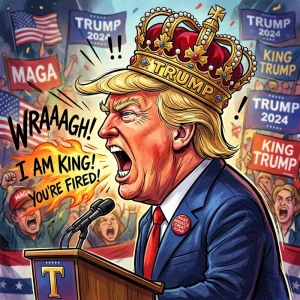


 This man is not well.Image from Truth Social