Saturday, April 18, 2026

TAX CUTS = AUSTERITY
Chile’s Kast pushes sweeping tax and spending overhaul

Chile’s Kast pushes sweeping tax and spending overhaul
Chile’s Kast pushes sweeping tax and spending overhaul / bne IntelliNewsFacebook
By bne IntelliNews April 18, 2026

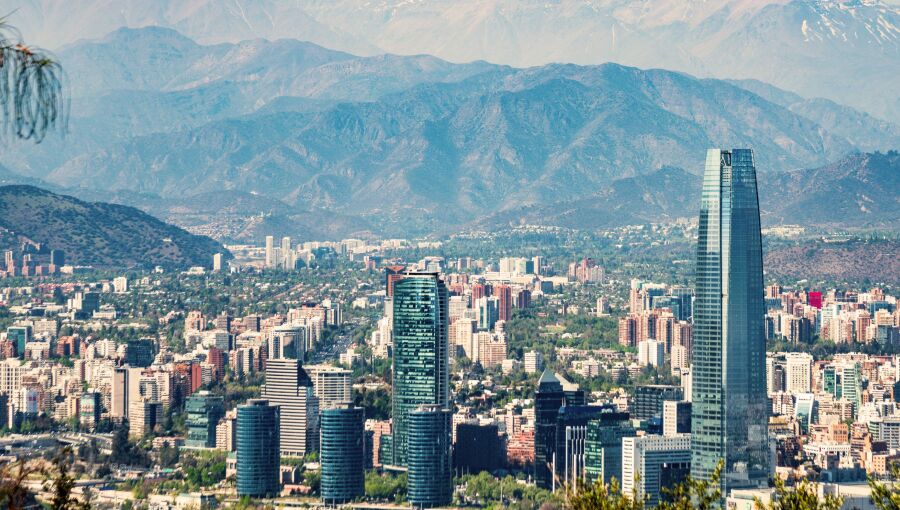
Chile’s President José Antonio Kast has unveiled an ambitious package of more than 40 economic and regulatory reforms aimed at breaking what he described as a decade of stagnation, but the proposal has already triggered political resistance and street protests as it moves towards Congress.

The plan, branded the “Law on Reconstruction and Economic and Social Development”, combines sharp corporate tax cuts, regulatory easing and public spending restraint with incentives designed to attract investment and formalise employment. Kast presented the initiative during a nationwide address from the presidential palace in Cerro Castillo, framing it as a break from what he called years of fiscal drift and underperformance.

At the centre of the proposal is a reduction in corporate tax from 27% to 23%, a measure the government argues will bring Chile closer to the OECD average and unlock investment across roughly 150,000 firms that account for more than half of formal employment and the bulk of domestic investment. The administration also proposes a temporary VAT exemption on new housing sales, a 7% levy on repatriated capital for a limited window, and long-term tax stability guarantees of up to 25 years for major investors.

Kast set out macroeconomic targets of 4% annual growth and unemployment falling to 6.5% by 2030, alongside fiscal balance. Chile’s economy expanded 2.5% in 2025, while inflation ended the year at 3.5% and the structural deficit reached 3.6% of GDP, its highest level in two decades.

The president has argued that investment certainty and lower taxation are essential to reversing weak productivity, insisting that growth is the only sustainable route to higher employment and social stability. He also announced plans to accelerate environmental permitting, cutting approval timelines and limiting the scope for administrative challenges that can delay infrastructure and energy projects.

The announcement came against a backdrop of rising political tension. On April 15 evening, small-scale cacerolazos were reported in parts of Santiago as the televised address was broadcast, reflecting unease among opposition groups and civil society over both the tax cuts and broader governance direction. Critics from left-wing parties accused the government of advancing a “disguised tax reform” that would disproportionately benefit higher earners and deepen fiscal pressure.

Opposition parties in Congress have signalled resistance, particularly to the corporate tax reduction, with some lawmakers warning they may challenge aspects of the bill at the Constitutional Court if it is not split into separate legislative proposals. The government, however, insists the package must be treated as a single, integrated reform to achieve its growth objectives.

Alongside economic measures, Kast highlighted tightening migration enforcement, including expanded border controls and deportation operations. The administration said the first removal flights would depart on April 16, targeting undocumented migrants, as part of a broader security and migration agenda.

Fiscal consolidation is another pillar of the plan, with a 3% reduction in ministerial budgets and efforts to contain public spending growth. Officials argue this is necessary to restore credibility after repeated deviations from fiscal rules in recent years.

The political battle now shifts to Congress, where the government lacks a clear majority and will rely on cross-party support to advance the legislation. Business groups have cautiously welcomed the focus on investment and regulatory reform, while opposition leaders argue the measures risk worsening inequality without guaranteed fiscal offsets.

Kast has urged legislators to treat the reform with “urgency and responsibility”, insisting it is designed to restore growth, employment and long-term economic confidence.


Estonia's Poltsamaa mustard production to end after 64 years as war pushes up input costs

Estonia's Poltsamaa mustard production to end after 64 years as war pushes up input costs
Estonia's Poltsamaa mustard production to end after 64 years as war pushes up input costs. / bne IntelliNewsFacebook
By bne IntelliNews April 18, 2026

Production of the iconic Poltsamaa strong mustard in Estonia will end this month after more than six decades, ERR News reported on its website ERR.ee on April 16.

Parent company Orkla Eesti said mustard production would be moved to Latvia and continue under the Felix brand using the same recipe. The Poltsamaa facility will remain operational, producing other goods such as pickled vegetables.

The mustard was launched in 1961 and became a staple in Estonia, with around 60mn tubes sold. Domestic demand remains strong, but production is being consolidated as part of a broader strategic shift by the Norwegian-owned parent.

The closure comes as Estonian industry faces sharply higher input costs linked to the US-Iran war. The Estonian Employers' Confederation warned that several companies could face bankruptcy as a result of the disruption.

In an appeal to the government, the confederation said the closure of the Strait of Hormuz had not only sharply reduced the supply of oil and petroleum products but had also disrupted the global availability of other key raw materials, including fertilisers, helium used in the semiconductor industry and aluminium.

Confederation chairman Hando Sutter told ERR that feedback gathered from members on the current situation was deeply worrying.

Estonia's economy contracted for nearly two and a half years before showing signs of improvement at the end of 2025, according to earlier IntelliNews reporting.

Poltsamaa is a small town in central Estonia. The mustard brand has been widely recognised as part of Soviet-era Estonian food heritage and survived the country's transition to a market economy after independence in 1991.

 CANADA IN A MULTIPOLAR WORLD

Carney leads middle power coalition drive as CANZUK gains traction

Carney leads middle power coalition drive as CANZUK gains traction
Is this the British Empire 2.0 or something new? / bne IntelliNewsFacebook
By External contributor April 18, 2026

Energy giant Canada has emerged as the leading driver of efforts to build a formal middle-power coalition among like-minded Commonwealth nations, with Prime Minister Mark Carney using his first year in office to push the long-dormant CANZUK concept and a broader variable-geometry foreign policy doctrine as the US ramps up efforts to weaken the Canadian economy. 

Carney's January speech at the World Economic Forum in Davos, titled "Principled and Pragmatic: Canada's Path", declared that the international order had suffered "a rupture, not a transition" and called on middle powers to cooperate rather than accept subordination to great powers. His line that "middle powers must act together because if we're not at the table, we're on the menu" has since been repeated by advocates of closer ties between Canada, Australia, New Zealand and the United Kingdom.

The shocking speech drew an unusual standing ovation at Davos and was followed by a sharp response from US President Donald Trump, who rescinded an invitation for Canada to join his Board of Peace and threatened 100% tariffs on Ottawa unless it abandoned a planned trade deal with China.

Canada has since followed up with concrete diplomatic activity. Carney has completed a week-long mission to India, Australia and Japan and has hosted 18 nations in Montreal to define the governance of a proposed Defence, Security and Resilience Bank, modelled on the World Bank but aimed at mobilising private capital for collective security among like-minded partners.

Canada has become the first non-European country to join the European Union's Security Action for Europe programme. Joint exercises with South Korea, Japan, Australia and the Philippines have been stepped up, alongside closer defence cooperation with the UK and Nordic states.

The harder edge of Carney's foreign policy has been backed by a defence spending commitment to hit NATO's 2% of GDP target this year and reach 5% by 2035, marking the largest Canadian strategic reset since the early Cold War. Major procurement programmes under consideration include 12 submarines from South Korea's Hanwha Ocean or Germany's ThyssenKrupp, 88 fighter jets, Australian-supplied over-the-horizon radar and 15 Canadian-built destroyers.

The CANZUK proposal fits into this wider architecture. Advocates argue the four countries share Westminster parliamentary systems, common-law traditions and King Charles III as head of state, providing a natural basis for deeper trade, mobility and security ties. Australia and New Zealand already operate something close to the proposed arrangement, with free movement, work rights, healthcare access and domestic university fees for each other's citizens.

A full CANZUK framework would extend this to the UK and Canada, removing tariffs, recognising professional qualifications and allowing engineers, doctors, teachers and lawyers to practice across the four countries without additional accreditation. The combined population would reach around 135mn, with significant natural resource endowments concentrated in Australia and Canada.

Support for the CANZUK proposal has come from Canadian opposition leader Pierre Poilievre and former UK Cabinet minister Tom Tugendhat, who argued that the geographic separation of the four countries would be an advantage rather than a constraint. The Australian Institute of International Affairs has proposed a plurilateral agreement among the four countries modelled on the dormant Indo-Pacific Economic Framework.

Not all reaction has been positive. The Council on Foreign Relations has argued that a formal middle power club would make the world more dangerous by accelerating the break-up of the liberal international order. Analysts have also noted that Carney's own outreach to China, including a "canola for electric vehicles" deal, risks undermining coalition discipline.

Carney has committed to both a foreign policy review and a national security strategy built around what he has called "values-based realism" in a world of "variable geometry", meaning different coalitions for different issues. However, Global Affairs Canada is facing a 20% budget cut, from CAD9.05bn ($6.46bn) in 2025-26 to CAD7.22bn ($5.15bn) in 2026-27, prompting criticism from former diplomats who argue the department is being hollowed out just as Canada's international ambitions expand.

Australia and the UK remain comparatively cautious, with analysts describing current governments in Canberra and London as preferring to ride out global conditions rather than reshape them. Canada's role as the driver of the agenda reflects both the acute pressure Ottawa faces from the Trump administration, which has imposed sectoral tariffs on Canadian steel, aluminium and lumber, and Carney's personal track record as a former Bank of Canada and Bank of England governor with extensive networks in London.

Could Canada Join The EU? Geography, Law, And The Prospects Of Membership – Analysis


April 18, 2026 

By Geopolitical Monitor
By Matteo Vecchi


The current historical and geopolitical context obliges us to reconsider the supposed status quo, thus requiring a more collective and courageous interpretation – and, crucially, implementation – of the European Union project.

The Union’s territorial configuration already extends far beyond the boundaries that commonly structure our political imagination and our mental maps: even a cursory look at Netherlands and French overseas territories shows how the EU’s reach already leans into the Pacific and other extra-European regions. In this scenario, the Union lives today in a “beyond the map” dimension that destabilizes any purely continental account of what counts as “Europe.” What it is important to consider, first and foremost, is the relationship between geography and law. The definition of territories, the impact law has upon them, and, conversely, the constraints that territorial facts impose on legal choices are issues that arise independently of – and in many respects prior to – any geopolitical analysis. When the Union determines who can become a member state, it does not simply draw lines on a map; it makes an interpretive choice about what should be treated, today, as “Europe.”

At the time of drafting this contribution, the European Union also appears, in several respects, reinvigorated. On the one hand, the most recent elections in Hungary seem to reopen spaces for recomposing the tensions between integration and democratic backsliding. On the other, a renewed – albeit still embryonic – debate has emerged in the United Kingdom on the possibility of a return to the European family. Taken together, these developments suggest that the Union is not a static construction but a political-legal organism capable of renegotiating, over time, both its territorial reach and its normative self-understanding.

The EU treaties set substantive conditions for accession but leave the notion of “Europe” and the Union’s ultimate geographical reach remarkably open-textured, which makes it conceptually possible to imagine Canada as a future member state. It is precisely this deliberate openness that allows the Union to grow and prosper by facing up to what it already is – a community of law founded on shared values – and to what it might become, should it push to their logical conclusion forms of membership grounded less in territorial contiguity and more in constitutional, economic, and value-based convergence.

Legal Premises: What Is a “European State”?


Article 49 of the Treaty on European Union (TEU) provides that “any European State which respects the values referred to in Article 2 and is committed to promoting them may apply to become a member of the Union.”

This provision lays down the basic checkmarks for accession – statehood, “European” character, and compliance with the Union’s values – but it does not itself codify any precise geographical boundary of Europe. As historians and geographers have long observed, Europe’s borders are the contingent outcome of intellectual, political, and military decisions rather than the expression of a self-evident natural frontier, which makes it difficult to say in strictly legal terms where Europe “ends.”

Of course, public international law offers a more stable conceptual starting point in the classical definition of the state codified in Article 1 of the 1933 Montevideo Convention: a state is an entity possessing a permanent population, a defined territory, a government, and the capacity to enter relations with other states. The European Union, as J. Odermatt and others have noted, is a highly developed international organization of integration but not itself a state in the Montevideo sense. If we combine this neutral conception of statehood with the open-textured reference in Article 49 TEU to “any European State,” it becomes apparent that the legal category of potential members is not strictly determined by geography alone but is mediated by political and value-based assessments.

Alongside this formal, geography-related dimension, it is useful to foreground two additional markers that increasingly structure debates on the Union’s external identity: shared customs and shared languages. It is hardly accidental that French remains one of the EU’s principals working languages and that English, despite Brexit, continues to function as the de facto lingua franca of the Union’s institutions and public sphere. Nor is it coincidental that Canada, as a bilingual federation with deep-rooted French and English linguistic communities and liberal-democratic institutions, exhibits a way of life and constitutional culture that often overlaps with, rather than merely resembles, that of many EU member states.

Canada and the EU: From Privileged Partner to “Possible” Candidate?

The idea of Canada’s potential accession to the EU is not entirely novel; in recent years, scholars and commentators such as Frédéric Mérand and other authors working on Canada–EU relations have explicitly teased the prospect of Canadian EU membership as a long-term strategic option. These interventions underline that, although formal negotiations are not currently foreseen, the question “could Canada join?” has shifted from the realm of pure fantasy to that of speculative but serious legal and political debate. In this sense, the discussion about Canadian accession mirrors broader reflections on the elasticity of Article 49 TEU and on the extent to which “European” can be interpreted in cultural, political, or even functional terms rather than as a strictly continental label.

This debate must be situated against the background of a dense and constantly evolving web of bilateral agreements between Canada and the EU, among which the Comprehensive Economic and Trade Agreement (CETA)occupies a central place. Signed in 2016 and provisionally applied since 2017, CETA removes customs duties on the vast majority of goods, opens public procurement markets on both sides, facilitates trade in services and investment, and includes ambitious provisions on labor rights and environmental protection. As the EU’s own explanatory materials emphasize, CETA is designed not merely as a trade liberalization instrument but as a framework that aligns regulatory standards and promotes a model of economic globalization constrained by social and environmental safeguards.

The depth and breadth of this agreement mean that Canada already participates in aspects of the Union’s economic and regulatory space that, for many other partners, are only accessible through membership. Provisions on mutual recognition of professional qualifications, non-discrimination of investors, and extensive market access have brought Canadian and EU legal orders into an unusually high degree of interdependence, even though Canada remains formally a “third country” in the current geopolitical context, marked by democratic backsliding in various regions and by increasing contestation of multilateral norms, this close association can be considered as part of a broader attempt to consolidate a transatlantic area grounded in democracy, the rule of law, and robust welfare and environmental standards.

From this perspective, the existing treaty architecture between Canada and the EU may be viewed as an intermediate stage along a continuum of integration rather than as a definitive ceiling. Article 49 TEU, interpreted in conjunction with the Copenhagen criteria, already requires that candidate states display stable democratic institutions, a functioning market economy, and the ability to take on the obligations of membership – conditions that Canada, as a mature liberal democracy and advanced economy, would have little difficulty satisfying on paper.

If the Union and its member states were prepared to construe the notion of a “European State” in a functional and value-oriented fashion privileging constitutional affinity, dense economic integration, and shared public-law commitments over strict territorial contiguity, there is nothing in primary law that would make a Canadian application inconceivable as a matter of principle.

In this light, Canada’s candidacy would test, and potentially expand, the outer limits of the Union’s self-understanding as a regional organization that aspires to be a global normative power. It would force EU institutions and member states to clarify whether “Europe” in Article 49 TEU denotes a physical place, a historical-civilizational project, or a constitutional space bound together by common values and legal commitments – and whether, in an era of democratic backsliding and geopolitical realignment, that space might legitimately include a North American democracy that already shares in practice a significant portion of the Union’s rules.

This article was published at Geopolitical Monitor.com

Geopoliticalmonitor.com is an open-source intelligence collection and forecasting service, providing research, analysis and up to date coverage on situations and events that have a substantive impact on political, military and economic affairs.


Kuwait citizenship purge tops 50,000 as new decree tightens revocation rules

Kuwait citizenship purge tops 50,000 as new decree tightens revocation rules
Kuwait citizenship purge officially tops 50,000 as new decree tightens revocation rules / bne IntelliNewsFacebook
By bnm Gulf bureau April 17, 2026

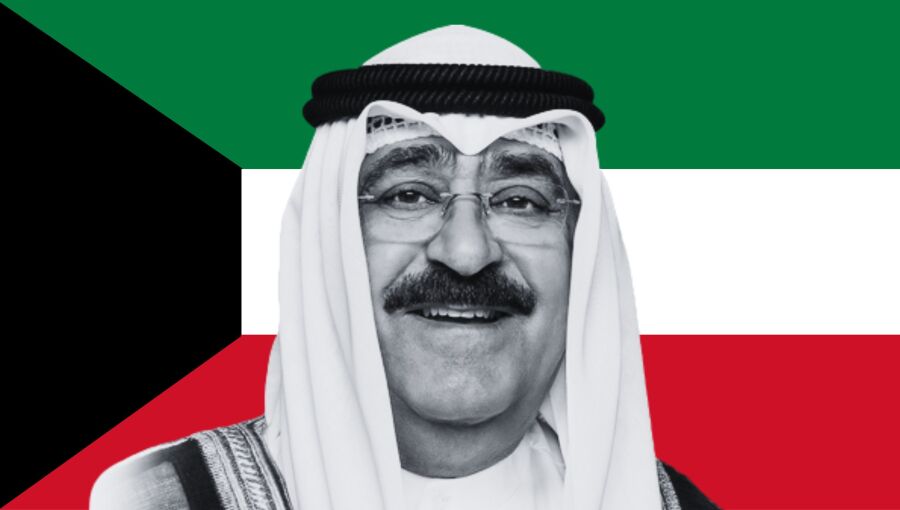
Kuwait has stripped more than 50,000 people of their citizenship since September 2024, with campaigners saying the total could be as high as 250,000, as the government continues its sweeping nationality crackdown under a new decree published this week.

The Kuwaiti Official Gazette published Decree-Law No. 52 on April 13, amending a 1959 decree on Kuwaiti Citizenship. The five-article decree restructures the nationality system, strengthens the state's sovereign authority over citizenship and introduces new penalties for fraud, according to state news agency KUNA.

The backlash so far has been considerable, with human rights groups and exiled Kuwaitis saying the state is effectively waging a campaign which is counter to international law. It also potentially indicates a state under mounting financial strain, as years of deficits and heavy public spending squeeze a welfare model long sustained by oil wealth. With revenues under pressure and subsidies and salaries consuming most of the budget, authorities are moving to narrow the circle of those entitled to state benefits.

The situation in Kuwait has been massively exacerbated by the US-Israeli war on Iran, which saw Tehran effectively shut off Kuwait from its export market via the Strait of Hormuz. Also, repeated Iranian strikes on key Kuwait oil assets have also massively reduced the state's ability to pay and could potentially open the door to a sovereign debt crisis in the next few months. 

"Kuwaiti citizenship has been revoked from approximately 36,000 citizens, along with their dependents, in the raids issued today, according to data from the Citizenship Investigation Committee," AR Media reported. 

A further 2,182 people and their dependents had their citizenship revoked on April 14 under the new amendments, GDN Online reported, citing the official gazette. Among those stripped was prominent Muslim scholar and author Nabil Al Awadi.

If proven, some 20% of Kuwait's citizens have been made stateless, in some cases effectively forcing many to leave the country; it is unknown currently if the state is also seizing bank accounts. 

Subtle amendments

The first amendment clarifies that Kuwaitis are those who lived in the country before 1920 and remained residents until December 14, 1959; however, due to the transient nature of Kuwait, Iraq, Saudi Arabia, and Iran a century ago, many natural-born Kuwaitis have become stateless overnight. 

Authorities may now use DNA testing and biometric identification in nationality disputes; however, due to the historical inter-linking of tribes near the Persian Gulf, rights groups have said that the process is discriminatory and nonsensical. 

The state is also threatening people, saying "providing false information" in nationality cases, with penalties of up to three years in prison and a KWD3,000 ($9,760) fine, rising to seven years and KWD5,000 ($16,267) for deliberate fraud.

Nationality decisions have been classified as sovereign acts under the new law, meaning they are not subject to judicial review, with growing international calls to reverse the decision.

Anti-woman agenda

Another aspect which has been ignored in recent Western media is the move by the state to strip widows of their citizenship. A replaced Article 10 stipulates that a Kuwaiti woman naturalised through marriage to a Kuwaiti man will lose her citizenship after her husband's death or the termination of the marriage if she has no children. 

"Article 11 requires naturalised citizens holding another nationality to renounce it within three months, with failure to do so rendering their Kuwaiti citizenship null and void from the date of issue."

The campaign began in late 2024 after Emir Sheikh Mishal Al Ahmad Al Sabah dissolved parliament and suspended parts of the constitution in May that year. The Ministry of Interior has justified the revocations as corrective measures targeting fraudulent naturalisations, citing fabricated tribal lineages and false residence claims.

Official data indicates that at least 26,000 of those affected are women who gained citizenship through marriage. High-profile figures stripped of nationality include singer Nawal Al Kuwaitia, actor Dawood Hussein, Islamic scholar Tareq Al Suwaidan and former army brigadier Turki Al Mutairi.

Kuwait stopped regularly announcing figures in September 2025.

Human Rights Watch and Democracy for the Arab World Now have documented cases of affected individuals being deported in handcuffs, having bank accounts frozen and being denied access to education and healthcare.


New hardline security unit in charge of Russia’s VPN crackdown

New hardline security unit in charge of Russia’s VPN crackdown
Trust in Putin has already fallen to its lowest level since before the full-scale invasion of Ukraine.
 / bne IntelliNewsFacebook
By bne IntelliNews April 18, 2026

The control of Russia’s internet, including the latest escalation of the war on VPNs, has reportedly shifted to the Federal Security Bureau’s (FSB) Second Service unit, headed by Colonel General Alexei Sedov, according to an investigation by The Bell.

Reportedly, the notoriously hardline unit is behind recent restrictions ranging from limits on calls in messengers, pressure to block the Telegram messenger, and forcing the private sector to restrict the usage of VPNs.

Sedov reportedly got a free hand on enforcing internet control from President Vladimir Putin himself before the August 2025 restrictions on WhatsApp and Telegram calls.

As covered by IntelliNews, Russian authorities have notably stepped up the war on VPNs, enlisting the private sector to monitor and restrict VPN usage among the population.

This tactic has reportedly been put into action at a meeting on March 30 with more than 20 country’s largest digital platforms and services, including e-commerce, media and tech firms, instructing them to introduce VPN restrictions on users by mid-April. 

Reportedly, the Second Service officers were the ones handing written orders demanding they combat VPN at the meeting, according to The Bell. 

The Second Service, formally the Service for the Protection of the Constitutional Order and the Fight Against Terrorism, is one of the FSB’s core domestic security arms. The Bell reminds that it is widely seen as the institutional successor to the Soviet KGB’s Fifth Directorate, the unit that targeted dissidents, monitored intellectuals and suppressed perceived ideological deviation. 

In modern Russia, the service is tasked with counter-extremism, political surveillance and neutralising what the state defines as internal threats. Unlike more technical FSB departments, its methods are rooted in coercive enforcement rather than market coordination or regulatory compromise, The Bell notes.

The Bell linked the same unit to earlier high-profile operations, such as the 2020 poisoning attempt against opposition leader Alexei Navalny and the surveillance of opposition politician Vladimir Kara-Murza. 

According to a separate Bloomberg report, the hardline turn in internet restrictions has already triggered criticism inside the Kremlin. Some officials are reportedly worried that restrictions on Telegram, internet outages and blocking VPN would lead to popular discontent ahead of the State Duma elections in autumn 2026.

Trust in Putin has already fallen to its lowest level since before the full-scale invasion of Ukraine.


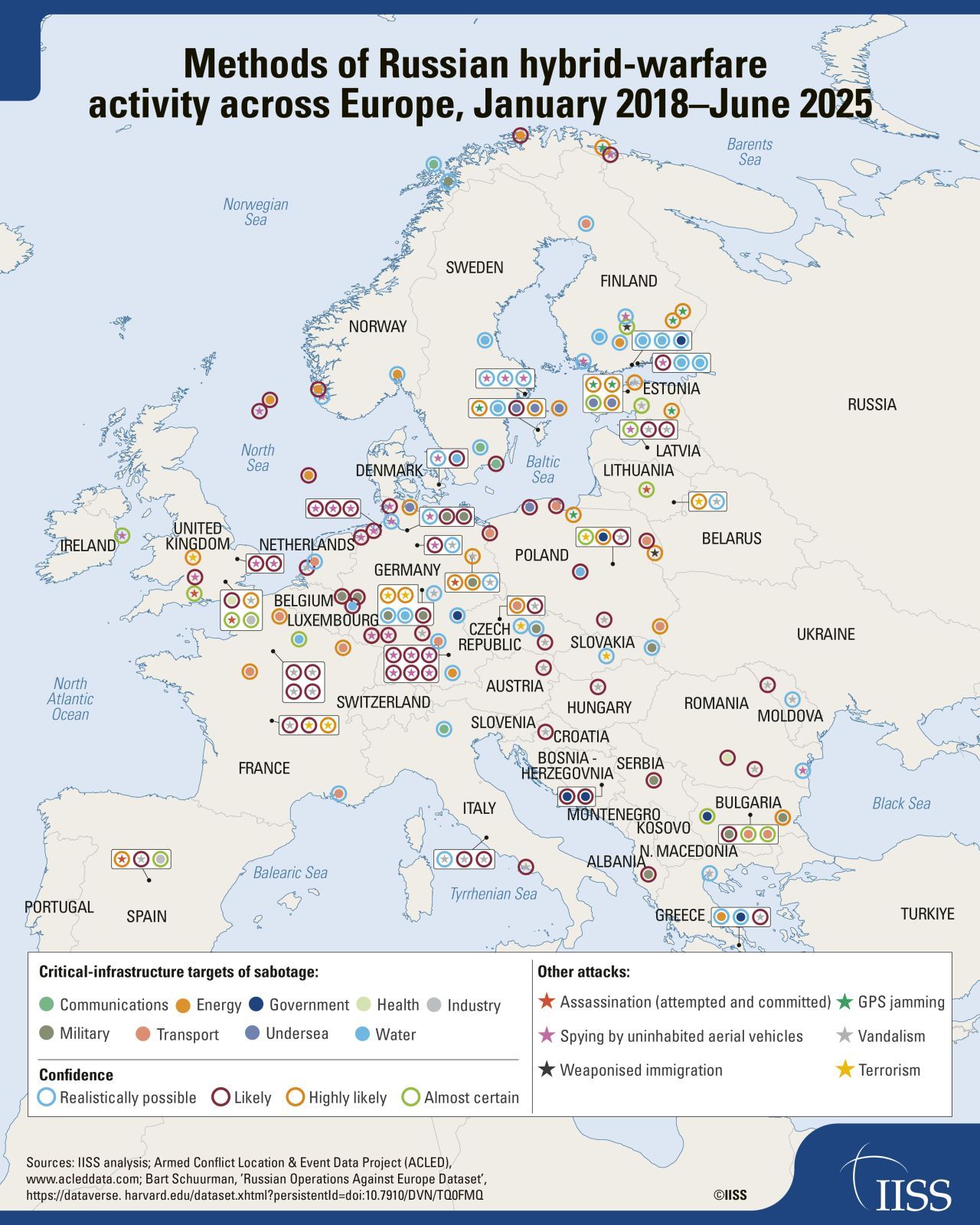
Russian sabotage operations in Europe almost quadrupled in 2024, IISS says

Russian sabotage operations in Europe almost quadrupled in 2024, IISS says
Subsea cable attacks are a growing threat to Europe from Russia. / bne IntelliNewsFacebookTwitter
By bne IntelliNews April 18, 2026

The number of Russian sabotage operations recorded in Europe almost quadrupled between 2023 and 2024, according to new research from the International Institute for Strategic Studies (IISS) that highlights growing concerns over the resilience of European critical infrastructure.

The report by Charlie Edwards and Nate Seidenstein, first published in August 2025, cited significant ongoing concerns raised by NATO and EU policymakers over the state of European critical infrastructure (ECI).

The study flagged a significant lack of investment in critical infrastructure in recent decades. It also cited the continued use of legacy computer systems and out-of-date software across ECI networks.

A significant portion of critical infrastructure across Europe remains privately owned or privately operated, complicating government oversight and coordination on security measures, the report said.

The vulnerability of submarine cables was identified as a particular concern given the European economy's dependence on them for data, power and financial flows.

Several high-profile incidents involving damage to undersea cables in the Baltic Sea and North Sea have been linked by European authorities to Russian activity over the past two years.

The findings were released ahead of the inaugural IISS Stockholm Civil Defence Forum, scheduled for April 21-22 in the Swedish capital.

The quadrupling of Russian sabotage activity comes against the backdrop of the continuing war in Ukraine, now in its fourth year, and European efforts to strengthen civil defence readiness.

Several European states including Sweden, Finland and the Baltic countries have stepped up preparedness planning, with the Nordic-Baltic region identified as particularly exposed given its proximity to Russian territory and dependence on shared energy and communications infrastructure.

The global reach of deepfakes revealed: The US is the most vulnerable country


By Dr. Tim Sandle
SCIENCE EDITOR
DIGITAL JOURNAL
April 16, 2026


Activists hold eye masks during a protest against deepfake porn in Seoul - Copyright AFP Anthony WALLACE

The ‘deepfake phenomenon’ began circa 2019 and slowly something that hit most members of the public as an amusing tool has become a dominant form of cybercrime.

In terms of digital and non-digital boundaries, deepfake technology has seemingly created a ‘new reality’ where criminals are merrily cashing in on an unsuspecting public on a significant scale. This is the trend from a new study by cybersecurity company Surfshark.

Deepfakes rely on a type of neural network called an autoencoder. These consist of an encoder, which reduces an image to a lower dimensional latent space, and a decoder, which reconstructs the image from the latent representation.

The study also breaks down the full financial toll, revealing the hardest-hit countries and the most effective scam tactics fuelling this digital crime wave. Overall, deepfake fraud has already cost $2.19 billion globally. This is a figure that is set to grow.
Faked celebrity endorsements

In terms of the most powerful forms of deepfake, investment endorsements by celebrities and government officials top the list (52% of all reported deepfake-related fraud losses), costing $1.13 billion.

This is followed by corporate attacks — such as the impersonation of CEOs to request unauthorized transactions — at 25%. Other significant contributors include financial crimes where victims’ identities are stolen and scammers use deepfake technology to secure bank loans or drain accounts (9%), followed by deepfaked romance scams (7%), family member impersonation (6%), and various other forms of deepfake-related fraud (2%).
U.S. and Europe lead the victims

Geographically, the U.S. is the most targeted country globally for deepfake-related scams, suffering $712 million in losses. Of these, 43% occurred in the corporate sector — involving scams in which deepfakes were used to trick organizations into sending money or, in some cases, to place fake candidates in remote jobs. Another 31% of losses resulted from deepfaked investment opportunities.

Europe’s top deepfake fraud victims are the UK ($149 million), Sweden ($63 million), and Spain ($56 million), each ranking in the global top 10. In these three countries, 90% of losses were caused by scams that used deepfakes of famous people to endorse various investment opportunities. The remaining losses, particularly in the UK, were due to scams targeting corporations and incidents involving deepfake romance schemes.

With other top-ranking countries Malaysia, ranking second globally with $502 million in losses, was almost entirely targeted by deepfaked investment schemes (99.7%).

Meanwhile, Hong Kong, in third place with $229 million in losses, has become the global hub for deepfake romance fraud ($105 million).

However, Indonesia stands out as a major outlier. Ranking fifth with $139 million in losses, nearly all of its damages came from criminals using deepfake technology to bypass bank security measures to secure fraudulent loans.
Click and send this story: Email is 55 years old


By Dr. Tim Sandle
SCIENCE EDITOR
DIGITAL JOURNAL
April 14, 2026


Image: — © AFP,File Cole BURSTON

We see the @ sign every day, a symbol that has been around for centuries. Yet it only became what it is today because of a small decision in the early days of email (or ‘e-mail‘ – the hyphenated form, e-mail, was the original spelling and is still preferred by some style guides like Merriam-Webster and The Chicago Manual of Style).

The origins of electronic mail evolved from simple messages on shared computers in the 1960s to a global communication standard using protocols like SMTP, POP3, and IMAP.

Yet it was only when a message was shared between two different types of computers that ‘e-mail’ is commonly regarded to have begun.

When MIT graduate Ray Tomlinson sent the first email in 1971, he chose the @ symbol – an old, obscure character at the time (commonly called the at symbol). Today, that symbol is used billions of times a day and is instantly recognized across languages and systems.


Email Day is April 23, the birthday of Ray Tomlinson, the computing legend who sent the first email.

In 1971, Ray Tomlinson sent the first email between two computers connected to the Advanced Research Projects Agency Network (ARPANET). He chose the @ symbol to separate the user from the machine, Zero Bounce reports. ARPANET, together with the TCP/IP protocol suite, became the foundation of the Internet.

Years later, when asked about the invention, Tomilson said simply: “It seemed like a neat idea.”

The sign was commonly used as an accounting and invoice abbreviation meaning “at a rate of”. In scientific and technical literature, @ is used to describe the conditions under which data are valid or a measurement has been made.

The Internet Hall of Fame states: “Tomlinson’s email program brought about a complete revolution, fundamentally changing the way people communicate.”

Cross-cultural meanings

The symbol has also evolved beyond its technical role. Depending on the language, people now imagine it very differently: a snail in Italian, a monkey in German, even a strudel in Hebrew.In Russian, it is commonly called соба[ч]ка (soba[ch]ka – ‘[little] dog’).
In Greek, it is called παπάκι meaning ‘duckling’.
In Ukrainian, it is commonly called ет (et – ‘at’) or Равлик (ravlyk), which means ‘snail’.
In Hungarian, it is called kukac (a playful synonym for ‘worm’ or ‘maggot’).
In Faroese, it is kurla, hjá (‘at’), tranta, or snápil-a (‘[elephant’s] trunk A’).

The earliest yet discovered symbol in this shape is found in a 1345 Bulgarian translation of a Greek chronicle written by Constantinos Manasses.
Email: 55 years old

This year marks 55 years since that first email, and there are few, other small design decisions that scaled this widely. The @ sign turned into a global standard, and then into something cultural.

The widespread use of e-mail among the general population began after the Simple Mail Transfer Protocol (SMTP) protocol was successfully implemented on the ARPANET in 1983.

The content of that first email? Tomlinson said it was “entirely forgettable,” but likely a string of characters like “QWERTYUIOP.”