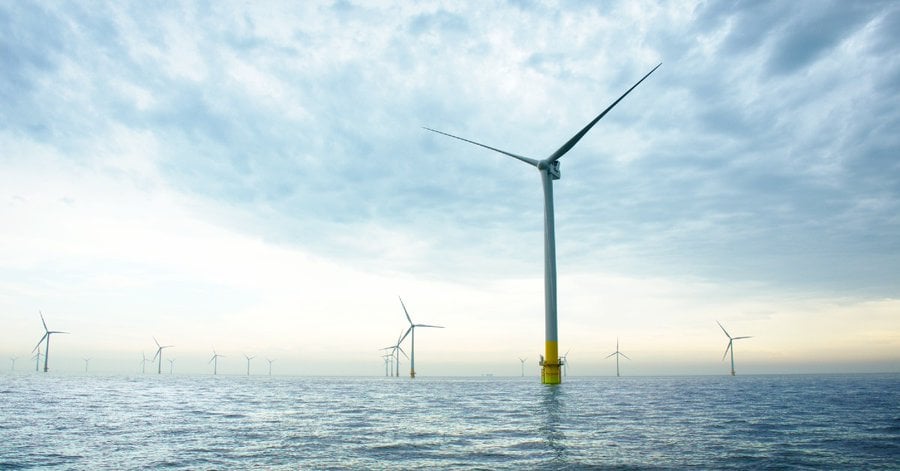
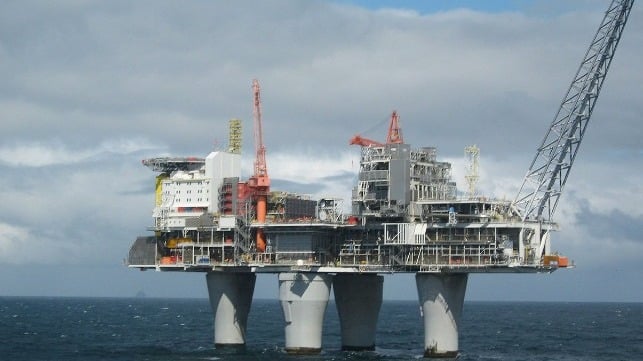
It’s imperative that we stand up to the forces of ecocide, while developing a more realistic vision of the better world that awaits us once we’ve jumped off the growth-by-carbonization bandwagon.
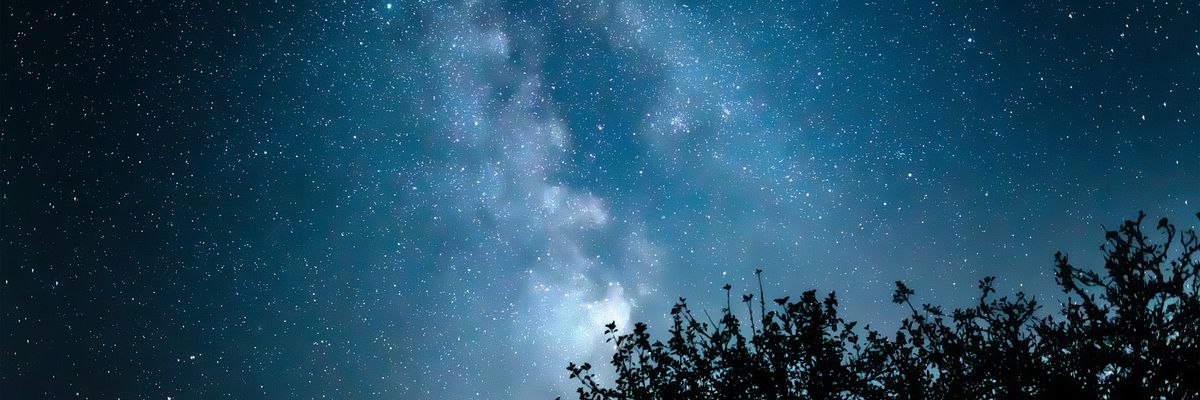
A night starry sky is shown against the background of the Milky Way and trees.
(Photo: Believe_In_Me/ iStock via Getty Images)
Stan Cox
Jan 14, 2026
TomDispatch
Let me start by putting things bluntly: Don’t bother to tell Donald Trump, but with his distinct help, we’re doing nothing less than cooking ourselves. Thanks to the continued use of fossil fuels in a staggering fashion and the growth of greenhouse gas emissions, almost half of the world’s population now suffers through 30 additional days of extreme heat annually. Heatwaves roll in thicker and faster every year.
On average, according to the medical journal The Lancet, 84% of the extremely hot days we’ve faced over the past five years would not have occurred without human-induced climate change that the American president seems intent on making so much worse. Heat-related deaths are already 63% more frequent than in the 1990s. That Lancet article also reported that heat- and drought-related hunger, as well as deaths from wildfire smoke and industrial air pollution, are breaking records globally almost yearly.
Climate Impacts Tracker dubbed 2025 “The Year of Climate Disasters,” noting:
Flash floods tearing up a Himalayan village in India, hurricanes and wildfires ravaging the US, heatwaves and wildfires scorching Europe, record-breaking heat in Iceland and Greenland, torrential rains and floods roaring through Southeast Asia—2025 marked yet another year of human tragedies, driven by extreme weather events.
The number of environmental disasters and their destructiveness are only ratcheting up in step with increases in global greenhouse gas emissions, ever more extraction of key minerals, the ever-greater exploitation of biological resources, and outbreaks of resource wars (most recently with the US assault on Venezuela). All of that is linked to one crucial phenomenon: the single-minded pursuit of economic growth by the owning and investing classes. Not surprisingly, they reap the lion’s share of the benefits from such growth and bear next to none of its devastating consequences.
Though it’s seldom highlighted, the world economy has indeed reached an astounding physical scale. During the past century, resource extraction has doubled every 20 years or so. Indeed, humanity reached a grim milestone in 2021, when the global quantity of human-made mass—that is, the total weight of all things our species manufactured or constructed—surpassed the total weight of all living plant, animal, and microbial biomass on this planet. And worse yet, that mass of human-made stuff continues to grow, year by year, even as the natural world diminishes further.
In other words, our species is vainly striving to circumvent what’s come to be known as Stein’s Law from an aphorism credited to economic guru Herbert Stein: “If something can’t go on forever, it won’t.”
Societies could indeed achieve a distinctly better quality of life because of (not in spite of) degrowth.
Count on this: At some point, global economic growth will finally have to grind to a halt and shift into reverse. After all, if the corporate and political powers carry on with business as usual, such growth will end in chaotic, violent collapse. (Think Mad Max.) But if the elites can be thwarted and we can dramatically reduce our dependence on fossil fuels and other resources in a reasonably well-planned way, we might be able to avoid that fate.
That’s the pitch put forward by the degrowth movement. In essence, it’s a refutation of the “green growth” doctrine. (Green-growthers, ignoring Stein’s Law, claim that technological “innovation” will ensure that economies can continue to grow indefinitely.) In that debate, degrowth finally seems to be getting a leg up. A 2023 survey of nearly 800 climate-policy researchers found that almost three-quarters of them favored degrowth or no growth over green growth.
And here’s the reality the rest of us need to take in: Societies could indeed achieve a distinctly better quality of life because of (not in spite of) degrowth, since full-scale restraints on the endless extraction and consumption of fossil fuels could force them to ensure that their limited resources would be used to satisfy basic human needs instead of being wasted on yet more increasing profits for the already wealthy few.
The growth-addled political and economic forces pushing us toward ecological doom are many and formidable indeed. And that makes it ever more important that people in rich, overconsuming countries like ours come to realize how important it is that we stand up to the forces of ecocide, while developing a more realistic vision of the better world that awaits us once we’ve jumped off the growth-by-carbonization bandwagon.
One way to bring that better world into sharper focus is to examine a few of the many miseries and dangers that degrowth would help us alleviate or even leave behind. What follows is just a handful of examples.
Goodbye, War Machine
Topping the list of American institutions and resources that a degrowth economy could starve would be the US military-industrial complex. After all, the Pentagon is actually the largest institutional user of fossil fuels in the world. The greenhouse gases our military emits, even in peacetime, are believed to have a global-warming impact of 60 million metric tons of carbon dioxide annually. The Earth can’t handle that any longer.
To begin shrinking our military’s now trillion-dollar annual budget would not only prevent a significant amount of global warming but also save countless human lives and greatly enhance the quality of life in this country and across the planet.
With degrowth, for example, the Defense (not—thank you, Donald Trump, Pete Hegseth, and crew!—War) Department’s nearly 3 million employees, who enable the resource-heavy, deadly work of war-fighting, imperialism, and, if the Trump administration gets its way, the suppression of domestic political protest, can find themselves better jobs. After all, employees in all but the top echelons of the military, underpaid and exploited, endure often harsh working and living conditions. Zeroing out the Pentagon would free up a vast workforce to help meet people’s actual needs rather than killing all too many of us on this planet (most recently, at least 115 in the bombing of Venezuelan boats and 40 more in the January 3rd attack on Caracas). And they’d be better off losing those jobs.
Enlisted personnel receive such small paychecks that many are eligible for SNAP (“food stamp”) benefits, even if only 14% apply for them. Among the families of junior enlisted troops, 45% often can’t afford enough food. More than 286,000 of them don’t get an adequate variety or amount of food and, of those, about 120,000 report sometimes skipping meals and eating less than they need for fear of running out of money.
And that’s not all. A nationwide analysis suggested that towns and cities abutting military bases have higher crime rates (19% greater for property crimes and 34% for violent crimes) than similar towns not near such installations.
Worse yet, people living or working in or around military bases are often exposed to dangerous levels of toxic contamination over long periods and can also be plagued by noise pollution. Not surprisingly, studies have also found high rates of hearing loss among the troops. In the United States, almost 15% of active-duty personnel suffer hearing impairment of some sort (and it’s one of the most common health problems among veterans as well).
Dismantling our war machine would also help restore a better quality of life for tens of millions of people elsewhere. Consider the death and misery our military has inflicted during the past six decades on Indochina, Grenada, Panama, Iraq, Kuwait, the Balkans, Afghanistan, Syria, Yemen, Iran, and now the Caribbean Sea, the Eastern Pacific Ocean, and of course Venezuela.
As if that weren’t bad enough, for decades, our military-industrial complex has provided armaments to repressive, murderous regimes around the globe—Israel’s genocide of the Palestinian people being the most recent example.
Adiós, Vehicular Supremacy
In a much less resource-intensive American society, human needs would also no longer be subordinated to those of gasoline-driven motor vehicles, and our collective quality of life would improve dramatically.
Based on the importance of keeping this planet livable, any ecologically sane society would break free from what Gregory Shill has labeled “automobile supremacy” and that, of course, would be a particularly significant accomplishment for any degrowth movement in the United States or other wealthy countries.
As a start, motor vehicles are regularly among the top 10 causes of death for US residents under the age of 55. Worse yet, pedestrian fatalities, which had been falling for decades, shot up by 71% between 2010 and 2023, while fatalities caused by increasingly taller, heavier, more aggressively armored pickups and SUVs climbed at precisely twice that rate, 142%.
Starving militarism and automobile supremacy of resources, while improving the quality of life of our communities, would also go a long way toward halting the ecological breakdown of this planet while the sources of many smaller-scale dangers and ills would also fade into the past.
With private gas-driven vehicles largely replaced by extensive transit networks, electric vehicles, and bike and foot traffic, we also won’t have to contend with as many road-raging drivers in armored pickup trucks the size of World War II tanks. We won’t face the health dangers posed by air and noise pollution from vehicle traffic. Our cities will have vastly more green space, because significant parts of the 30% of their soil surface now covered by concrete or asphalt solely to accommodate motor vehicles could be revegetated. And we won’t suffer the extra-blistering summer heat that comes with such over-paving.
With degrowth and the end of automobile supremacy, traffic jams will vanish into the past; we’ll no longer risk being killed while simply walking, biking along a roadway, crossing a street legally, or engaging in lawful, peaceful protest; and everyone will all too literally be able to stop driving everyone else crazy.
Farewell to So Many Other Fossil-Fuelized Plagues
Starving militarism and automobile supremacy of resources, while improving the quality of life of our communities, would also go a long way toward halting the ecological breakdown of this planet while the sources of many smaller-scale dangers and ills would also fade into the past. Taken alone, each might appear insignificant, but cumulatively, such culprits severely degrade the quality of life in our wildly growth-oriented economy. As just one example of something that, with degrowth, we could say “good riddance” to, let me suggest that loud-mouthed neighborhood bully, the leaf blower.
Generating wind speeds approaching those of an EF5 tornado, gas-powered leaf blowers blast out noise at 95 to 115 decibels (two to eight times louder than the safe upper limit set by federal agencies). Electric leaf blowers, while less noisy, still significantly exceed the maximum safe noise level near schools, hospitals, daycare centers, retirement homes, or anywhere else where there are vulnerable people present.
Most gas-powered blowers and other deafening lawn machinery are operated for long hours by commercial landscaping crews, whose ears are just a couple of feet from the roar. Often surrounded by other leaf blowers, lawn mowers, and gas-powered equipment, such workers commonly suffer hearing loss.
The noise of a leaf blower, like that produced by vehicular traffic and wind turbines, is rich in low-frequency sound that carries long distances, easily passing through walls. Exposure to such noise raises the risk of a range of health problems, including sleep disruption, mental stress, high blood pressure, heart ailments, stroke, and immune-system dysfunction.
And keep in mind that the substitution of leaf blowers for perfectly functional rakes is just the tip of the iceberg. Our economy is now chock-full of unnecessary products that diminish the quality of life and would be left in the nearest ditch if energy consumption were deeply reduced.
Hello Again, Night Sky
By ending profligate energy consumption, degrowth could also restore much-loved wonders of nature that the growth economy has stolen from us.
Consider the night sky. Since 2010, in cities and towns, as well as anyplace near them, “skyglow” (a bleaching out of the night sky that hides stars from view) has been increasing at an astonishing rate of 10% a year.
This surge in light pollution has coincided with the rapid adoption of light-emitting diodes (LEDs) for streetlights and other outdoor illumination. Such LEDs produce far more light per watt of energy consumed than older light sources. Unfortunately, companies and municipalities have taken advantage of LED efficiency not by cutting their energy consumption, but by flooding parking lots, streets, billboards, sports fields, and car dealerships with even brighter light.
We’d reap myriad benefits by deeply cutting resource use while ensuring that collective sufficiency and justice for all become the focus of our world.
Most LED lighting now in use is rich in short wavelengths at the “cool-blue” end of the visible spectrum, which ensures that it will be scattered by the atmosphere more efficiently and so produce a rapid increase in skyglow. As a result, stars have all but disappeared from the night sky in cities, suburbs, and nearby rural areas.
Exposure to cool-blue light at night also threatens humans and other species by disrupting our circadian sleep-wake cycle. Among the impacts on human health are gastrointestinal disorders, diabetes, cardiovascular disease, and even cancer.
A degrowth society dialing down its energy use would not only reduce light and noise pollution but achieve significant advances in environmental justice. Brightly lit industrial and commercial facilities and parking lots are all too often placed in low-income, racialized communities. As a consequence, across the United States, light pollution is more severe in neighborhoods where a larger proportion of the population is Black, Latino, or Asian.
Amid mounting ecological and humanitarian crises and with Donald Trump still in the White House for another three potentially devastating years, the vanishing of the heavens may be regarded as a problem only for astronomers and aesthetes. But such a view badly underestimates how important the starry night sky has proven to be to our culture, scientific progress, and social cohesion. It was an unalloyed good, shared freely and equally by all humanity. And it could be so again if, with degrowth, we put our cities and towns on a dimmer switch.
To be clear, the degrowth movement’s not claiming that the way to prevent ecological and civilizational collapse is simply to play Whac-A-Mole by working our way through individual problems like traffic congestion or light and noise pollution. In fact, the point of degrowth is that societies should leave all such problems, including the potential disaster of climate change, in history’s trash heap. We’d reap myriad benefits by deeply cutting resource use while ensuring that collective sufficiency and justice for all become the focus of our world.
© 2023 TomDispatch.com
Stan Cox is the author of The Green New Deal and Beyond (2020), The Path to a Livable Future (2021), and the ‘In Real Time’ blog, all from City Lights Books. See the evolving ‘In Real Time’ visual work at the illustrated archive; listen to the ‘In Real Time’ podcast for the spoken version of this article; and hear a discussion of it on the Anti-Empire Project podcast
Full Bio >
Let me start by putting things bluntly: Don’t bother to tell Donald Trump, but with his distinct help, we’re doing nothing less than cooking ourselves. Thanks to the continued use of fossil fuels in a staggering fashion and the growth of greenhouse gas emissions, almost half of the world’s population now suffers through 30 additional days of extreme heat annually. Heatwaves roll in thicker and faster every year.
On average, according to the medical journal The Lancet, 84% of the extremely hot days we’ve faced over the past five years would not have occurred without human-induced climate change that the American president seems intent on making so much worse. Heat-related deaths are already 63% more frequent than in the 1990s. That Lancet article also reported that heat- and drought-related hunger, as well as deaths from wildfire smoke and industrial air pollution, are breaking records globally almost yearly.
Climate Impacts Tracker dubbed 2025 “The Year of Climate Disasters,” noting:
Flash floods tearing up a Himalayan village in India, hurricanes and wildfires ravaging the US, heatwaves and wildfires scorching Europe, record-breaking heat in Iceland and Greenland, torrential rains and floods roaring through Southeast Asia—2025 marked yet another year of human tragedies, driven by extreme weather events.
The number of environmental disasters and their destructiveness are only ratcheting up in step with increases in global greenhouse gas emissions, ever more extraction of key minerals, the ever-greater exploitation of biological resources, and outbreaks of resource wars (most recently with the US assault on Venezuela). All of that is linked to one crucial phenomenon: the single-minded pursuit of economic growth by the owning and investing classes. Not surprisingly, they reap the lion’s share of the benefits from such growth and bear next to none of its devastating consequences.
Though it’s seldom highlighted, the world economy has indeed reached an astounding physical scale. During the past century, resource extraction has doubled every 20 years or so. Indeed, humanity reached a grim milestone in 2021, when the global quantity of human-made mass—that is, the total weight of all things our species manufactured or constructed—surpassed the total weight of all living plant, animal, and microbial biomass on this planet. And worse yet, that mass of human-made stuff continues to grow, year by year, even as the natural world diminishes further.
In other words, our species is vainly striving to circumvent what’s come to be known as Stein’s Law from an aphorism credited to economic guru Herbert Stein: “If something can’t go on forever, it won’t.”
Societies could indeed achieve a distinctly better quality of life because of (not in spite of) degrowth.
Count on this: At some point, global economic growth will finally have to grind to a halt and shift into reverse. After all, if the corporate and political powers carry on with business as usual, such growth will end in chaotic, violent collapse. (Think Mad Max.) But if the elites can be thwarted and we can dramatically reduce our dependence on fossil fuels and other resources in a reasonably well-planned way, we might be able to avoid that fate.
That’s the pitch put forward by the degrowth movement. In essence, it’s a refutation of the “green growth” doctrine. (Green-growthers, ignoring Stein’s Law, claim that technological “innovation” will ensure that economies can continue to grow indefinitely.) In that debate, degrowth finally seems to be getting a leg up. A 2023 survey of nearly 800 climate-policy researchers found that almost three-quarters of them favored degrowth or no growth over green growth.
And here’s the reality the rest of us need to take in: Societies could indeed achieve a distinctly better quality of life because of (not in spite of) degrowth, since full-scale restraints on the endless extraction and consumption of fossil fuels could force them to ensure that their limited resources would be used to satisfy basic human needs instead of being wasted on yet more increasing profits for the already wealthy few.
The growth-addled political and economic forces pushing us toward ecological doom are many and formidable indeed. And that makes it ever more important that people in rich, overconsuming countries like ours come to realize how important it is that we stand up to the forces of ecocide, while developing a more realistic vision of the better world that awaits us once we’ve jumped off the growth-by-carbonization bandwagon.
One way to bring that better world into sharper focus is to examine a few of the many miseries and dangers that degrowth would help us alleviate or even leave behind. What follows is just a handful of examples.
Goodbye, War Machine
Topping the list of American institutions and resources that a degrowth economy could starve would be the US military-industrial complex. After all, the Pentagon is actually the largest institutional user of fossil fuels in the world. The greenhouse gases our military emits, even in peacetime, are believed to have a global-warming impact of 60 million metric tons of carbon dioxide annually. The Earth can’t handle that any longer.
To begin shrinking our military’s now trillion-dollar annual budget would not only prevent a significant amount of global warming but also save countless human lives and greatly enhance the quality of life in this country and across the planet.
With degrowth, for example, the Defense (not—thank you, Donald Trump, Pete Hegseth, and crew!—War) Department’s nearly 3 million employees, who enable the resource-heavy, deadly work of war-fighting, imperialism, and, if the Trump administration gets its way, the suppression of domestic political protest, can find themselves better jobs. After all, employees in all but the top echelons of the military, underpaid and exploited, endure often harsh working and living conditions. Zeroing out the Pentagon would free up a vast workforce to help meet people’s actual needs rather than killing all too many of us on this planet (most recently, at least 115 in the bombing of Venezuelan boats and 40 more in the January 3rd attack on Caracas). And they’d be better off losing those jobs.
Enlisted personnel receive such small paychecks that many are eligible for SNAP (“food stamp”) benefits, even if only 14% apply for them. Among the families of junior enlisted troops, 45% often can’t afford enough food. More than 286,000 of them don’t get an adequate variety or amount of food and, of those, about 120,000 report sometimes skipping meals and eating less than they need for fear of running out of money.
And that’s not all. A nationwide analysis suggested that towns and cities abutting military bases have higher crime rates (19% greater for property crimes and 34% for violent crimes) than similar towns not near such installations.
Worse yet, people living or working in or around military bases are often exposed to dangerous levels of toxic contamination over long periods and can also be plagued by noise pollution. Not surprisingly, studies have also found high rates of hearing loss among the troops. In the United States, almost 15% of active-duty personnel suffer hearing impairment of some sort (and it’s one of the most common health problems among veterans as well).
Dismantling our war machine would also help restore a better quality of life for tens of millions of people elsewhere. Consider the death and misery our military has inflicted during the past six decades on Indochina, Grenada, Panama, Iraq, Kuwait, the Balkans, Afghanistan, Syria, Yemen, Iran, and now the Caribbean Sea, the Eastern Pacific Ocean, and of course Venezuela.
As if that weren’t bad enough, for decades, our military-industrial complex has provided armaments to repressive, murderous regimes around the globe—Israel’s genocide of the Palestinian people being the most recent example.
Adiós, Vehicular Supremacy
In a much less resource-intensive American society, human needs would also no longer be subordinated to those of gasoline-driven motor vehicles, and our collective quality of life would improve dramatically.
Based on the importance of keeping this planet livable, any ecologically sane society would break free from what Gregory Shill has labeled “automobile supremacy” and that, of course, would be a particularly significant accomplishment for any degrowth movement in the United States or other wealthy countries.
As a start, motor vehicles are regularly among the top 10 causes of death for US residents under the age of 55. Worse yet, pedestrian fatalities, which had been falling for decades, shot up by 71% between 2010 and 2023, while fatalities caused by increasingly taller, heavier, more aggressively armored pickups and SUVs climbed at precisely twice that rate, 142%.
Starving militarism and automobile supremacy of resources, while improving the quality of life of our communities, would also go a long way toward halting the ecological breakdown of this planet while the sources of many smaller-scale dangers and ills would also fade into the past.
With private gas-driven vehicles largely replaced by extensive transit networks, electric vehicles, and bike and foot traffic, we also won’t have to contend with as many road-raging drivers in armored pickup trucks the size of World War II tanks. We won’t face the health dangers posed by air and noise pollution from vehicle traffic. Our cities will have vastly more green space, because significant parts of the 30% of their soil surface now covered by concrete or asphalt solely to accommodate motor vehicles could be revegetated. And we won’t suffer the extra-blistering summer heat that comes with such over-paving.
With degrowth and the end of automobile supremacy, traffic jams will vanish into the past; we’ll no longer risk being killed while simply walking, biking along a roadway, crossing a street legally, or engaging in lawful, peaceful protest; and everyone will all too literally be able to stop driving everyone else crazy.
Farewell to So Many Other Fossil-Fuelized Plagues
Starving militarism and automobile supremacy of resources, while improving the quality of life of our communities, would also go a long way toward halting the ecological breakdown of this planet while the sources of many smaller-scale dangers and ills would also fade into the past. Taken alone, each might appear insignificant, but cumulatively, such culprits severely degrade the quality of life in our wildly growth-oriented economy. As just one example of something that, with degrowth, we could say “good riddance” to, let me suggest that loud-mouthed neighborhood bully, the leaf blower.
Generating wind speeds approaching those of an EF5 tornado, gas-powered leaf blowers blast out noise at 95 to 115 decibels (two to eight times louder than the safe upper limit set by federal agencies). Electric leaf blowers, while less noisy, still significantly exceed the maximum safe noise level near schools, hospitals, daycare centers, retirement homes, or anywhere else where there are vulnerable people present.
Most gas-powered blowers and other deafening lawn machinery are operated for long hours by commercial landscaping crews, whose ears are just a couple of feet from the roar. Often surrounded by other leaf blowers, lawn mowers, and gas-powered equipment, such workers commonly suffer hearing loss.
The noise of a leaf blower, like that produced by vehicular traffic and wind turbines, is rich in low-frequency sound that carries long distances, easily passing through walls. Exposure to such noise raises the risk of a range of health problems, including sleep disruption, mental stress, high blood pressure, heart ailments, stroke, and immune-system dysfunction.
And keep in mind that the substitution of leaf blowers for perfectly functional rakes is just the tip of the iceberg. Our economy is now chock-full of unnecessary products that diminish the quality of life and would be left in the nearest ditch if energy consumption were deeply reduced.
Hello Again, Night Sky
By ending profligate energy consumption, degrowth could also restore much-loved wonders of nature that the growth economy has stolen from us.
Consider the night sky. Since 2010, in cities and towns, as well as anyplace near them, “skyglow” (a bleaching out of the night sky that hides stars from view) has been increasing at an astonishing rate of 10% a year.
This surge in light pollution has coincided with the rapid adoption of light-emitting diodes (LEDs) for streetlights and other outdoor illumination. Such LEDs produce far more light per watt of energy consumed than older light sources. Unfortunately, companies and municipalities have taken advantage of LED efficiency not by cutting their energy consumption, but by flooding parking lots, streets, billboards, sports fields, and car dealerships with even brighter light.
We’d reap myriad benefits by deeply cutting resource use while ensuring that collective sufficiency and justice for all become the focus of our world.
Most LED lighting now in use is rich in short wavelengths at the “cool-blue” end of the visible spectrum, which ensures that it will be scattered by the atmosphere more efficiently and so produce a rapid increase in skyglow. As a result, stars have all but disappeared from the night sky in cities, suburbs, and nearby rural areas.
Exposure to cool-blue light at night also threatens humans and other species by disrupting our circadian sleep-wake cycle. Among the impacts on human health are gastrointestinal disorders, diabetes, cardiovascular disease, and even cancer.
A degrowth society dialing down its energy use would not only reduce light and noise pollution but achieve significant advances in environmental justice. Brightly lit industrial and commercial facilities and parking lots are all too often placed in low-income, racialized communities. As a consequence, across the United States, light pollution is more severe in neighborhoods where a larger proportion of the population is Black, Latino, or Asian.
Amid mounting ecological and humanitarian crises and with Donald Trump still in the White House for another three potentially devastating years, the vanishing of the heavens may be regarded as a problem only for astronomers and aesthetes. But such a view badly underestimates how important the starry night sky has proven to be to our culture, scientific progress, and social cohesion. It was an unalloyed good, shared freely and equally by all humanity. And it could be so again if, with degrowth, we put our cities and towns on a dimmer switch.
To be clear, the degrowth movement’s not claiming that the way to prevent ecological and civilizational collapse is simply to play Whac-A-Mole by working our way through individual problems like traffic congestion or light and noise pollution. In fact, the point of degrowth is that societies should leave all such problems, including the potential disaster of climate change, in history’s trash heap. We’d reap myriad benefits by deeply cutting resource use while ensuring that collective sufficiency and justice for all become the focus of our world.
© 2023 TomDispatch.com
Stan Cox is the author of The Green New Deal and Beyond (2020), The Path to a Livable Future (2021), and the ‘In Real Time’ blog, all from City Lights Books. See the evolving ‘In Real Time’ visual work at the illustrated archive; listen to the ‘In Real Time’ podcast for the spoken version of this article; and hear a discussion of it on the Anti-Empire Project podcast
Full Bio >