Saturday, December 12, 2020

NASA, US, European Partner Satellite Returns First Sea Level Measurements


NEWS PROVIDED BYNASA

Dec 10, 2020, 11:07 ET


WASHINGTON, Dec. 10, 2020 /PRNewswire/ -- Sentinel-6 Michael Freilich, a joint U.S.-European satellite built to measure global sea surface height, has sent back its first measurements of sea level. The data provide information on sea surface height, wave height, and wind speed off the southern tip of Africa.

"We're excited for Sentinel-6 Michael Freilich to begin its critical work studying sea level and helping us understand the many aspects of our planet's global ocean," said Thomas Zurbuchen, NASA's associate administrator for science at the agency's headquarters in Washington. "I know Mike would be thrilled that the satellite bearing his name has begun operating, but he'd also be looking forward to studying the data from this important mission, as we all are."

Since the successful Nov. 21 launch from Vandenberg Air Force Base in California aboard a Space-X Falcon 9 rocket, engineers and scientists have spent several weeks switching on and checking out the satellite and its instruments, making sure everything is operating as it should.

"Christmas came early this year," said Josh Willis, project scientist at NASA's Jet Propulsion Laboratory in Southern California. "And right out of the box, the data look fantastic."

Sentinel-6 Michael Freilich will continue a decades-long effort to measure global ocean height from space, which started in the early 1990s. Since then, the rate of sea level rise has doubled with a current rate of 0.16 inches (4 millimeters) per year. The rise is caused almost entirely by a combination of meltwater from land-based glaciers and ice sheets and the fact that seawater expands as it warms.

"Data from Sentinel-6 Michael Freilich will help us evaluate how the Earth is changing," said Karen St. Germain, director of NASA's Earth Science Division. "When we combine the data from instruments like the altimeter on Sentinel-6 Michael Freilich with data from other satellites like GRACE-FO and IceSat-2, we can tell how much of the sea level rise is due to melting ice and how much is due to expansion as the oceans warm. Understanding these underlying physical mechanisms is what allows NASA to improve projections of future sea level rise."

The initial orbit for Sentinel-6 Michael Freilich was 11.4 miles (18.4 kilometers) lower than its ultimate operational orbit of 830 miles (1,336 kilometers) above Earth. Engineers plan to move the satellite into its operational orbit by mid-December, where it will trail the Jason-3 satellite by 30 seconds. During this tandem flight, scientists and engineers will spend the next six to 12 months cross calibrating the data collected by both satellites to ensure the continuity of measurements between the two. Once assured of the data quality, Sentinel-6 Michael Freilich will then become the primary sea level satellite. The first publicly available sea level data will be available in about six months, with the rest available within a year.

"We are now gearing up the operational systems supporting the processing of the instruments' data by EUMETSAT and partner organizations, as they are all contributing to this complex process," said Manfred Lugert, program manager for the Sentinel-6/Jason-CS (Continuity of Service) mission at the European Organisation for the Exploitation of Meteorological Satellites (EUMETSAT). "This will keep us busy for the next few months, as the independent scientific validation and fine tuning need to be undertaken very carefully." Lugert expects the first operational products from the mission would be available to those who need them by mid-2021.

In addition to measuring sea level, Sentinel-6 Michael Freilich is monitoring atmospheric temperature and humidity, which will help improve weather and hurricane forecasts. Engineers and scientists turned on that instrument Nov. 27, and the initial data look good.

More About the Mission

Sentinel-6 Michael Freilich is named in honor of the former director of NASA's Earth Science Division, who was a leading figure in advancing ocean observations from space. Freilich passed away Aug. 5, 2020. "I think he would be proud," said Willis. "Like Mike himself, we expect great things from the satellite that bears his name, and so far, it's looking good."

The spacecraft is one of two identical satellites that will extend a nearly 30-year sea level record collected by an ongoing collaboration of U.S. and European satellites by another decade. That record began in 1992 with the TOPEX/Poseidon satellite and continued with Jason-1 (2001), OSTM/Jason-2 (2008), and Jason-3, which has been observing Earth's oceans since 2016. Sentinel-6 Michael Freilich will pass the baton to its twin, Sentinel-6B, in 2025.

Both spacecraft are a part of the Sentinel-6/Jason-CS mission, which will collect accurate measurements of sea surface height for more than 90% of the world's oceans. The satellites will also monitor atmospheric temperature and humidity, as well as wave height and wind speed, which will provide crucial information for operational oceanography, marine meteorology, and climate studies.

ESA (European Space Agency), EUMETSAT, NASA, and the National Oceanic and Atmospheric Administration (NOAA) are jointly developing the Sentinel-6/Jason-CS mission, with funding support from the European Commission and support from France's National Centre for Space Studies (CNES). The mission is part of Copernicus, the European Union's Earth observation program, which the European Commission manages.

NASA's contributions to the Sentinel-6/Jason-CS mission are three science instruments for each of the two satellites: the Advanced Microwave Radiometer for Climate, the Global Navigation Satellite System - Radio Occultation, and the Laser Retroreflector Array. NASA also contributed launch services, ground systems supporting operation of the NASA science instruments, the science data processors for two of these instruments, and support for the U.S. members of the international Ocean Surface Topography Science Team. NASA's Jet Propulsion Laboratory at the California Institute of Technology in Pasadena manages the agency's contribution to the mission.

For more information, visit:

https://www.nasa.gov/sentinel-6

https://www.esa.int/Sentinel-6

https://edefis.eu/CopernicusFactsheets

Seafarer Announces; 
Discovery of Historic Period Shipwreck Material

NEWS PROVIDED BY Seafarer Exploration Corp.

TAMPA, Fla., Dec. 10, 2020 /PRNewswire/ -- Seafarer Exploration Corp. (OTCQB: SFRX) - Seafarer Exploration Corp. is announcing that we have discovered a large concentration of colonial era shipwreck material in Area 2 off Melbourne Beach, Florida. The historic period shipwreck material comprises a variety of artifacts situated within a concentrated area and includes standing rigging, ships fittings, rope and wood fragments. The historic artifact area is still under investigation and could either be part of the historic material previously found over the past few years or a second historic shipwreck entirely. Currently there is not enough information to precisely determine the provenance of the artifacts. In accordance with the current site permit, the site has been reported to the Florida Bureau of Archaeological Research (FBAR) and we have temporarily paused bottom-disturbing activities within 50 meters of the location containing the artifacts in order to preserve the archaeological site context until a continued site exploration plan can be submitted to the FBAR. Once submitted, the site can be more extensively explored. In the meantime, Seafarer Exploration will continue to archaeologically investigate this area as well as explore other locations of interest in Area 1 and Area 2.

According to the project archaeologist, Dr. Robert H Baer, "The Seafarer Exploration discovery possibly dates from the mid - 1600s to the period ending before the Industrial Revolution - no later than 1800. The type and orientation of the artifacts on the ocean floor is indicative of materials used to construct a colonial period sailing vessel that came to rest on the ocean floor where it decayed leaving a fairly compact scatter pattern. The location and depth would have also minimized scatter from storms and near-shore surge. This is unlike other sites which can be scattered for miles."

The work product described here was performed under the authority of an exploration permit from the State of Florida FBAR.

About Seafarer Exploration:

Seafarer Exploration Corp. is a publicly traded underwater salvage and exploration company traded under the symbol SFRX. The principal business of the company is to develop the infrastructure necessary to engage in the archaeologically-sensitive research, documentation, exploration, recovery, and conservation of historic shipwrecks. The company has secured multiple sites it believes contain historic and valuable shipwrecks. The company will use accepted archaeological methods to properly document, research and recover portions of the wrecks. Seafarer employs scientists and historians and is committed to preserving the cultural and historical significance of every wreck it finds.

Disclaimer:

The press release may include certain statements that are not descriptions of historical facts but are forward-looking statements within the meaning of Section 27A of the Securities Act of 1933 and Section 21E of the Securities Exchange Act of 1934. These forward-looking statements may include the description of our plans and objectives for future operations, assumptions underlying such plans and objectives, and other forward-looking terminology such as "may," "expects," "believes," "anticipates," "intends," "projects," or similar terms, variations of such terms or the negative of such terms. There are a number of risks and uncertainties that could cause actual results to differ materially from the forward-looking statements made herein. Such information is based upon various assumptions made by, and expectations of, our management that was reasonable when made but may prove to be incorrect. All of such assumptions are inherently subject to significant economic and competitive uncertainties and contingencies beyond our control and upon assumptions with respect to the future business decisions which are subject to change. Accordingly, there can be no assurance that actual results will meet expectation and actual results may vary (perhaps materially) from certain of the results anticipated herein.

SOURCE Seafarer Exploration Corp.
Related Links

http://seafarercorp.com
PATER PEDERASTY SOROR PEDOPHILIA
German nuns accused of enabling child sex abuse
by priests

Nuns in the city of Speyer "dragged" children to be sexually abused by priests and politicians, a survivor told a German court. His explosive testimony is the latest abuse scandal to rock the German Catholic Church.


The scandal comes as the Archbishop of Cologne faces accusations of covering up allegations of child sexual abuse involving a now-deceased priest

Catholic nuns who ran a former children's home in the German city of Speyer allegedly aided in the sexual abuse of the children who were under their care, according to a newly-surfaced court decision.

The latest scandal came to light after a victim filed a case to claim compensation from the Catholic church, prompting the Darmstadt Social Welfare Court to investigate.

Although the court ruled on the case in May this year, it was not made public until now.

Protestant news agency EPD and Catholic news agency KNA acquired copies of the court's decision, which detailed claims of horrific abuse that children suffered at the hands of clergy members in the 1960s and 1970s.

Nuns were key in aiding the abuse, regularly bringing boys and girls to predatory priests and even receiving money to do so, the man testified in court.

On Thursday, the Bishop of Speyer, Karl-Heinz Wiesemann, went public with the allegations of abuse for the first time in an interview with Catholic magazine Der Pilger. He said that "several" abuse allegations had been filed.

Years of abuse at children's home


The court testimony in the court case stems from a 63-year-old man who lived at the nun-run children's home in Speyer for several years.

Much of the alleged abuse centered on one priest in particular — identified by the Bishop of Speyer as a now-deceased vicar named Rudolf Motzenbäcker.


The victim in the case was an altar boy at the Speyer Cathedral

During the 10 years that he lived in the children's home, nuns would allegedly take him to the priest's apartment once or twice a month and that they "downright dragged" him there.

The man estimated he'd been assaulted around 1,000 times.

Motzenbäcker was also alleged to have organized so-called "sex parties" that took place every three or four months that included several male clergy members and politicians.

Nuns would allegedly bring boys and girls — serving drinks and food to the men in one corner of the room while children were assaulted nearby.

"The nuns earned money from it. The men who were present would have donated generously," the victims testimony reads, according to KNA.

The man suffers from severe post-traumatic stress disorder as a result of the ordeal. He said that many of the children who were involved at the time are dead now, many of whom died by suicide.

Watch video 02:53 Cologne archbishop criticized for refusal to publish abuse report

Church encourages other victims to come forward

The abuse commissioner for the religious order that ran the children's home, which closed down in 2000, said there were no longer any documents on the children in the Speyer home.

The court and the experts who interviewed the man said they had no doubt about the victim's credibility.

Other victims have separately come forward with their own allegations of abuse, the diocese of Speyer said, providing similar stories of abuse — particularly involving Motzenbäcker.

The diocese paid the man €15,000 ($18,100) in recognition of his suffering.

Speyer Bishop Wiesemann said that the archdiocese agrees with the court that the man suffered sexual abuse during his time in the church-run home. He said the church has been passing information to prosecutors and encouraged other victims to come forward.

The latest scandal to hit Germany's Catholic Church comes as the Archbishop of Cologne is facing accusations of covering up allegations of child sexual abuse involving a now-deceased priest.

rs/aw (epd, KNA)
AND IN THE REST OF THE G20?
Almost 2,000 FGM cases identified in Germany last year — study

A rights group found evidence of 2,000 women, including some 200 minors, in Germany last year who underwent female genital mutilation in the past and were in need of treatment, calling that figure the tip of an iceberg.

A 2019 protest by the Terre des Femme NGO in Berlin. The main German-language banner reads: 'Protect girls!"

Almost 2,000 patients in Germany last year were diagnosed with genital mutilation in need of treatment, a women's rights group said on Friday, demonstrating a sharp increase in recent years.

The figure is up almost 40% compared with 2016, when around 1,300 diagnoses of people who had previously undergone female genital mutilation (FGM) and were in need of treatment were made, according to The TaskForce for effective prevention of FGM.

The TaskForce conducted a survey of German physicians associations and the results showed that roughly 200 of those diagnosed were minors — half of whom were younger than 12.

The research included females who received outpatient care by statutory health insurance providers. Cases discovered during inpatient stays in hospitals, or during private medical treatment, were not included.

Watch video 02:01 Kenya: Traditional beads and the fight against FGM

'Tip of the iceberg'


"What we see from these figures is only the tip of the iceberg and represents perhaps 2 to 5% of the actual mutilation victims who live in our country, because political leaders do not want complete data collection," TaskForce's founder, Ines Laufer, said of the current situation in Germany.

The rights group estimates more than 20,000 girls may have undergone FGM because they or their parents "come from countries with an FGM rate of over 75% such as Egypt, Ethiopia, Eritrea, Sudan, Mali and Somalia and others" the TaskForce website states.

The unusually large numbers of migrants allowed into Germany from the Middle East and Africa in 2015 and 2016 is thought to help explain the uptick in known FGM numbers in Germany in recent years.

"We call for the implementation of state protective measures, such as regular medical checks and the introduction of mandatory medical reports to the law enforcement authorities if genital mutilation is found in underage victims," Ines Laufer said.

FGM, also known as female genital cutting (FGC), is a practice that involves the partial or total removal of the female genital organs, such as the clitoris or labia, for non-medical reasons.

As well as severe bleeding, FGM can cause a variety of health issues, from infections and cysts to infertility and complications in childbirth. It can also result in an increased risk of newborn deaths, according to the World Health Organization.

'GET THE CHURCH OUT OF MY WOMB'
Argentina's lower house approves bill legalizing elective abortion

In a landmark move, Argentina's lower house has passed a law to legalize elective abortion. The bill still needs approval from the predominantly Catholic country's traditionally conservative Senate.

Hundreds of protestors, who had spent the night outside of the congress building in Buenos Aires, celebrated the landmark decision

Argentina's lower house of Congress on Friday approved a bill to legalize elective abortion to the 14th week of pregnancy, sending the proposal to the Senate, which rejected a similar bill two years ago.

The draft bill was passed with 131 votes in favor, 117 against and six abstentions. The bill still needs approval from the country's Senate in a debate expected before the end of 2020.

Argentine law currently only allows abortions when there is a serious risk to the health of the mother or in the event of rape. Women who have an abortion, as well as those who assist them, can face prosecution.

If passed, those below the age of 16 would also be allowed to exercise "their rights through their legal representatives" and seek "legal assistance" in cases of "conflict of interest."
Tight vote expected at Senate

Friday's approval follows more than a decade of campaigning by the National Campaign for the Right to Free and Safe Legal Abortion.

Hundreds of protesters had spent the night outside of the congress building in the capital, Buenos Aires, calling for the decriminalization of abortion.

Elizabeth Gómez Alcorta, the government's women, gender and diversity minister, called the lower house's approval a "fundamental step and recognition of a long struggle that women's movements have been carrying out in our country for years."

"We are going to continue working so that the voluntary termination of pregnancy becomes law," Alcorta said after the vote.

However, many women's rights activists are concerned that an even tighter vote can be expected at the Senate , a traditionally more conservative chamber.
Roman Catholic Church condemns decision

Ahead of the debate, which extended from Thursday into Friday morning, the Roman Catholic Church had urged legislators for "a second of reflection on what respect for life means."

Lawmakers from several parties have argued that abortions would be a violation of the American Convention on Human Rights, and that the right to life should be safeguarded by law, "in general, from the moment of conception."

Rights group Amnesty International, however, lauded the lower house vote and appealed to the Senate not to "turn its back" on women.

According to the government, several thousand women seeking abortions have died during clandestine abortion procedures in Argentina since 1983. Around 38,000 women are hospitalized every year in the South American country after undergoing unsafe abortion procedures.

'Moving forward'


Mexico City, Cuba and Uruguay are among the few places in Latin America where women can undergo abortions during the first 12 weeks of pregnancy regardless of the circumstances.

Before being elected a year ago, center-left President Alberto Fernandez had vowed to push for making abortion voluntary and cost-free as part of efforts to provide women with access to "comprehensive health."

Health Minister Gines Gonzalez Garcia said Friday's approval showed that Argentina was "moving forward."

"If this were a masculine problem it would have been resolved a long time ago," Garcia said.

Celebration in Argentina after lawmakers pass bill to legalize abortion


Women celebrate in Buenos Aires, Argentina, on Friday after the lower house of congress passed a bill legalizing abortion. The proposal faces a challenge in the senate, where a similar measure was defeat two years ago. Photo by Juan Ignacio Roncoroni/EPA-EFE

Dec. 11 (UPI) -- Lawmakers in Argentina's lower house of congress narrowly passed legislation Friday to legalize abortion, a key parliamentary step that followed nearly an entire day of contentious debate.

The Chamber of Deputies passed the bill by a vote of 131-117 after 20 hours of debate.

The bill, if it becomes law, would make it legal to end pregnancies up to 14 weeks -- and Argentina would be just the fourth Latin American country to legalize abortion.

The bill is part of President Alberto Fernandez's social agenda, which leans heavily toward reforms for women's rights.

While the bill faces uncertainty in the Argentine Senate, Fernandez's support lends the abortion-rights movement a voice it did not have under former center-right President Mauricio Macri.

A bill legalizing abortion was narrowly defeated two years ago in Argentina's Senate, which has long been opposed to abortion-rights legislation.

Another factor at play in the debate is that Pope Francis, an Argentina native, spoke out against the bill that failed in 2018.

The new version offers some changes from the old bill, including provisions to allow medical institutions to refer women to another clinic for an abortion. The updated bill also changes protocols in dealing with underage women with no parents.

Advocates hope the changes will be enough to get the bill passed in the Senate.


Argentina's lower house approves draft bill legalising abortion


Issued on: 11/12/2020 -
Aerial view of demonstrators displaying green headscarfs -symbol of pro-abortion activists - outside the Argentine Congress in Buenos Aires, on December 10, 2020
AFP - Emiliano Lasalvia

Lawmakers in Argentina’s lower house on Friday passed a bill that would legalise abortion in most cases, responding to long-sought demands from women's rights activists. 

The bill, which needs approval from Argentina's Senate in a debate expected before the end of the year, allows for abortions to be carried out up to the 14th week of pregnancy.

Backed by President Alberto Fernández, the bill was approved in a 131-117 vote with six abstentions after a debate that extended from Thursday into the early hours of Friday morning.

The Roman Catholic Church in Argentina appealed to legislators before the vote for “a second of reflection on what respect for life means", echoing the position of Pope Francis, an Argentine, that abortion is part of today’s “throwaway culture” that doesn’t respect the dignity of the unborn, the weak or elderly.

Green and blue flags outside Congress

Protesters supporting the bill had gathered outside Congress wearing green scarves for an overnight vigil to await the news. A similar vote to legalise abortion was narrowly defeated in 2018.

Opposition groups, wearing light blue scarves, also took to the streets to demonstrate against the bill.

The initiative includes a parallel bill which will face a separate vote to assist women who want to continue with their pregnancy and face severe economic or social difficulties.

Argentine law currently only allows the voluntary interruption of pregnancy when there is a serious risk to the mother or in the event of rape, although activists say many women often do not receive adequate care.

The country has seen a gradual rise in agnosticism in recent years. While the current government is strongly behind the bill, that was not the case in 2018 during the conservative administration of Mauricio Macri.

Latin America has some of the world’s most restrictive abortion laws. Mexico City, along with Cuba and Uruguay, are among the few places in the region where women can undergo abortions during the first 12 weeks of pregnancy regardless of the circumstances.

On Thursday, dozens of members of a group called the National Campaign for the Right to Free and Safe Legal Abortion gathered near congress and followed the lawmakers’ debate on large video screens set up outside the building. They wore green, in contrast with anti-abortion activists who often wear blue.

Abortion rights and anti-abortion demonstrators gathered in separate, designated areas under tight security. They wore masks as part of efforts to curb the spread of Covid-19. 

(FRANCE 24 with AP and REUTERS)
#CORVID #INTELLIGENCE
Ravens are as intellectually 'skilled' as chimpanzees — study


Young ravens showed social and physical skills "on a par" with Great Apes, say German scientists. Their study also suggests that ravens' brains, while different from mammals, are cognitively advanced.


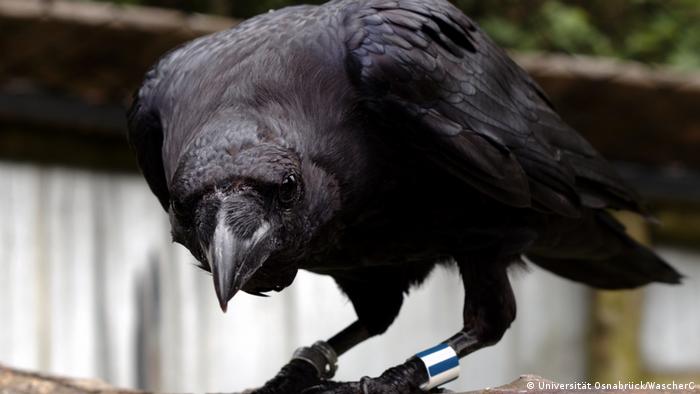
Ravens are on par with Great Apes in cognitive performance, researchers in Germany have found

Eight young ravens, put though cognitive tests often used on chimpanzees and orangutans, exhibited physical and social intelligence "very similar" to adult primates, a study published in Scientific Reports concluded Friday.

The first "large scale" study of ravens' cognitive skills helped to unravel "one of science's great mysteries," researchers said: How avian brains — different from mammals — had evolved, providing "parallel" intelligence over 300 million years.
How was the test carried out?

The common ravens (Corvidae) were hand-raised at the Max Planck Institute (MPG) for Ornithology near Munich. They were released into an outdoor aviary and put through so-called PCTB experiments — often used for Great Apes.

In one test, a raven would select one of three moving cups hiding a food treat, using its beak to peck or point at it, whereas a chimpanzee would use a finger.

Also run were tests on whether the ravens understood causality, had spatial and rotational memory, could communicate by looking and pointing, and exhibited mind capability by following the gazes of others.

Already, at four months, the young ravens demonstrated "full blown" cognitive skills in handling nine physical and six social tasks, said the project's leading cognitive scientists, Osnabruck University professor Simone Pika and MPG's Miriam Sima.

"At four months of age young ravens are already quite independent," said Pika, adding that they aggregated together, and were "cognitively on top of things to deal with these new challenges."

"Our ravens and the great ape individuals showed considerable similarities," said the authors, referring to cognitive skills tested until the birds were 16 months old. 


Researchers used an experimental test-battery developed for primates, but made it 'raven-friendly'

How will the results be used?

In an ever-changing ecological environment, raven survival relies heavily "on successful cooperation and alliances," and their "cognitive toolkit" to rapidly deal with complex challenges, the authors said.

For future studies, the scientists suggested comparing the cognitive skills of ravens and parrots if experimenters were involved or not involved in hand-raising.

The raven study was carried out at the Max Planck Institute for Ornithology, once the workplace of behavioral scientist and Nobel Prize winner Konrad Lorenz.

Four-month-old ravens just as intelligent as adult apes, study suggests


The cognitive abilities of ravens are on par with apes, according to new research.
 Photo by Pxhere/CC

Dec. 10 (UPI) -- The cognitive capabilities of four-month-old ravens are on par with those of full-grown apes, according to a new study published Thursday in the journal Scientific Reports.

Researchers subjected different-aged ravens to a series of experimental tasks to test the birds' spatial memory, communication abilities and learning capacity.

They also tested the ravens' ability to understand relative numbers and addition, as well as their ability to grasp object permanence -- the understanding that an object still exists when it is out of sight.

"For instance, to investigate whether ravens know where food is located, we hid treats under a cup, and moved it quickly back and forth among other cups that were empty, just as one does in the 'shell game,'" study co-author Miriam Sima said in a news release.

"A raven selected a cup by pecking or pointing at it with its beak, while a chimpanzee would have done this with their fingers," said Sima, researcher with the Max Planck Institute for Ornithology in Germany.

Testing revealed all eight hand-raised ravens, ages 4, 8, 12 and 16 months, to be of similar intelligence, suggesting the species' cognitive capabilities develop at a rather rapid pace.

It makes sense that ravens reach cognitive maturity by four months. Around the same time, the birds tend to first exert their independence and begin exploring their surroundings.

The ravens showed individual differences in their cognitive capabilities, but overall, the eight birds were best at addition and understanding relative numbers, and less adept at spatial memory.

When the authors of the new study compared the performance of the ravens with those of 106 chimpanzees and 32 orangutans, they found the birds -- with the exception of spatial memory -- were just as cognitively capable as the apes.

Authors of the new study suggest the tests show the intelligence of ravens isn't specific to their domain. Their cognitive skills, scientists contend, are exemplary of an impressive general intelligence.

"Our results suggest that ravens are not only social intellects but have also developed sophisticated cognitive skills for dealing with the physical world," researchers wrote.

In followup studies, researchers hope to design tests that reveal the more species-specific cognitive skills.

Ruhollah Zam: Iran executes journalist who inspired 2017 protests

Authorities say journalist Ruhollah Zam, who was convicted of fomenting violence during the anti-government protests, has been executed. His Telegram channel had over a million followers.

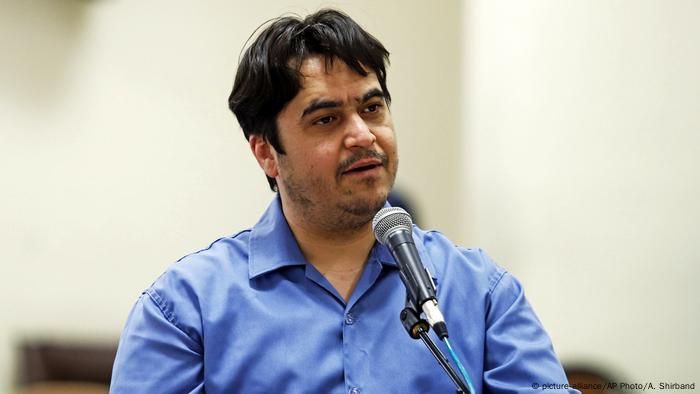
Iranian journalist Ruhollah Zam speaks during his trial at a court in Tehran


Iranian authorities on Saturday morning executed once-exiled dissident journalist Ruhollah Zam over his online work that helped inspire nationwide anti-government protests in the Middle East nation in 2017.

The execution took place just months after he returned to Tehran under mysterious circumstances.

In June, a court sentenced 47-year-old Zam to death, saying he had been convicted of "corruption on Earth," a charge often used in cases involving espionage or attempts to overthrow Iran's government.

Iran's Supreme Court on Tuesday upheld the death sentence.

'Serious blow to press freedom'


Zam's website AmadNews and a channel he created on the popular messaging app Telegram had spread the timings of the mass protests and embarrassing information about officials that directly challenged Iran's Shiite theocracy.

Those demonstrations, which began at the end of 2017, represented the biggest challenge to Iran since the 2009 Green Movement protests and set the stage for similar mass unrest in November of last year.

The initial spark for the 2017 protests was a sudden jump in food prices, but they later morphed into broad demonstrations against the nation's ruling class.

Zam, who has said he fled Iran after being falsely accused of working with foreign intelligence services, denied inciting violence on Telegram at the time.

The details of his arrest still remain unclear. Though he was based in Paris, Zam somehow returned to Iran and found himself detained by intelligence officials. He's one of several opposition figures in exile who have been returned to Iran over the last year.

France previously has criticized his death sentence as "a serious blow to freedom of expression and press freedom in Iran.''

sri/mm (AP, Reuters)
Steelmaker Thyssenkrupp rejects German state aid

Industrial giant Thyssenkrupp has ruled out government participation to support it during the COVID pandemic, an option favored by unions but judged too costly by management.

A worker at a Thyssenkrupp steel manufacturing unit in the German town of Duisburg

The management of Thyssenkrupp has rejected the prospect of the German government coming to the rescue of the ailing conglomerate, arguing that it would be too costly.

"State participation off the table," Klaus Keysberg, the group's financial director, told the German daily Rheinische Post.

In an interview published Friday evening, Keysberg blamed "high costs" in the long term of government assistance, "due to the interest payments and the terms of repayment."

Thyssenkrupp CEO Martina Merz, however, has yet to rule out state assistance.

Already weakened by years of cut-price competition from China in the steel industry, Thyssenkrupp has further struggled with the effects of the COVID-19 pandemic that caused business activity to plunge.

The company incurred heavy losses over the course of its fiscal year, ending September 30, particularly in its steel business. Earnings before interest and tax plunged to minus €1.6 billion (minus $1.94 billion), with the steel sector accounting for €946 million in losses. In the previous fiscal year, Thyssenkrupp made a net loss of €110 million. Revenue fell year-on-year by 15% to €28.9 billion.

Looking ahead, Thyssenkrupp expects to make a net loss of "over one billion euros" in its 2020-2021 financial year.

Watch video Thyssenkrupp moves ahead with company split


The right response?

To counter the headwinds, Thyssenkrupp has indicated it is looking for partners to help shore up steel operations. British steel giant Liberty launched a takeover bid in October. Discussions are also underway with Sweden's SSAB and India's Tata Steel.

An alliance with fellow German steelmaker Salzgitter to create a national steel champion is also being considered. But these options won't be decided until "spring 2021," Thyssenkrupp said.

In mid-November, the troubled company said it would cut an additional 5,000 jobs as part of its restructuring plan, bringing the total to nearly 11,000, to be spread out over several years.

Watch video 06:22 Can steel production be made greener?

The powerful IG Metall union had organized rallies in October to demand a rescue plan from Berlin.

But the government was never enthusiastic, despite their acquisition of stakes in the airline Lufthansa and tour operator TUI, which also had business ravaged by the health emergency.

"I don't believe that nationalization is the right response at the moment," Germany's Economy Minister Peter Altmaier said in October on Thyssenkrupp.
OBIT IN THE AGE OF #METOO
Praise, criticism as S. Koreans react to death of director Kim Ki-duk

Issued on: 12/12/2020 - 
South Korean director Kim Ki-duk won acclaim for his films, but he was tarnished by allegations of sexual abuse in his later years Tiziana FABI AFP/File

Seoul (AFP)

There were mixed reactions Saturday in South Korea to the death of acclaimed director Kim Ki-duk, whose cinematic legacy was tarnished by allegations of sexual assault.

Kim, who won global fame with his bold portrayal of extreme violence and human brutality, died nine days shy of his 60th birthday in Latvia on Friday.

He faced a number of sexual assault and abuse allegations from actresses who worked in his films as well as other staffers in recent years, all of which he denied.

"'Spring, Summer, Fall, Winter... and Spring' directed by Kim is a masterpiece. I wish him peace in heaven," wrote one user on Naver, South Korea's biggest web portal.

"I have watched many of his films. May he rest in peace," said another user.

But many on social media criticised the controversial director, pointing to the abuse allegations against him.

"A big loss and grief for Korean cinema," read the headline of the report on Kim's death in South Korean daily The Financial News.

Some responded to the piece saying such praise was not deserved.

"Kim does not and should not represent the Korean cinema," read one comment.

"Directors who respect actors on the set and entertain the audience in theatres are those who represent the industry, not Kim."

Another user said: "I hope the victims of Kim's abuses overcome their struggles and live a happy life."

Coverage of his death in other South Korean media reflected the conflicting views on the director.

"Kim Ki-duk: Golden Lion winner, alleged abuser and died of the coronavirus... a life filled with ups and downs," read a headline by News 1, a local news agency, referring to the top prize at the Venice Film Festival.

In 2017, a South Korean actress accused Kim of physically abusing her the previous year on the set of "Moebius".

Soon, another actress accused him of rape, and a spate of other allegations from staffers and performers followed.

Kim denied the allegations.

© 2020 AFP
Peru suspends clinical trials of Chinese Covid vaccine

Issued on: 12/12/2020 - 
Peru's clinical trials for the vaccine, developed by Chinese drug giant Sinopharm, were due to conclude this week, after testing around 12,000 people 
ERNESTO BENAVIDES AFP/File
Lima (AFP)

Peru has temporarily suspended clinical trials of a Covid vaccine made by Chinese drug giant Sinopharm after detecting neurological problems in one of its test volunteers.

The National Institute of Health said Friday that it had decided to interrupt the trial after a volunteer had difficulty moving their arms, according to local media.


"Several days ago we signaled, as we are required, to the regulatory authorities that one of our participants (in trials) presented neurological symptoms which could correspond to a condition called Guillain-Barre syndrome," said chief researcher German Malaga in comments to the press.

Guillain-Barre syndrome is a rare and non-contagious disorder which affects the movement of the arms and legs. Peru declared a temporary health emergency in five regions in June last year following multiple cases.

In the 1970s a campaign to innoculate Americans against a supposedly devastating strain of swine flu ground to a halt after some 450 of those vaccinated developed the syndrome, which can also cause paralysis.

Peru's clinical trials for the Sinopharm vaccine were due to conclude this week, after testing around 12,000 people.

If they are successful -- which won't be known until mid-2021 -- the Peruvian government was expected to buy up to 20 million doses to inoculate two-thirds of its population.

60,000 across the globe have already taken the Sinopharm vaccine, including volunteers in Argentina, Russia and Saudi Arabia.

Peru has one of the world's highest per capita death rate from the virus, which as of Friday had caused 36,499 deaths and 979,111 infections.

The pandemic has hit the South American country's economy hard, with GDP plunging more than 30 percent in the second quarter.

© 2020 AFP


Mexico's 'tower of skulls' yields more ancient remains

Issued on: 12/12/2020 -
Mexican authorities have described the site as one of the country's most important archaeological discoveries in years - INAH/AFP


Mexico City (AFP)

Mexican archaeologists said Friday they had found remains of 119 more people, including women and several children, in a centuries-old Aztec "tower of skulls" in the heart of the capital.

The new discovery was announced after an eastern section of the Huei Tzompantli was uncovered along with the outer facade, five years after the northeastern side was found.

Archaeologists believe that many of the skulls belonged to captured enemy warriors and that the tower was intended as a warning to rivals of the Aztec empire, which was overthrown by Spanish conquistadors in 1521.

Some of the remains could be of people who were killed in ritual sacrifices to appease the gods, according to experts quoted in a statement released by the National Anthropology and History Institute.

"Although we cannot determine how many of these individuals were warriors, perhaps some were captives set aside for sacrificial ceremonies," archaeologist Barrera Rodriguez said.

The tower, 4.7 meters (15.4 feet) in diameter, is thought to have been built around the end of the 15th century.

It is located in the area of the Templo Mayor, one of the main temples of the Aztec capital Tenochtitlan in the historic district of modern-day Mexico City.

In total more than 600 skulls have now been found at the site, which Mexican authorities have described as one of the country's most important archaeological discoveries in years.


"At every step, the Templo Mayor continues to surprise us," Culture Minister Alejandra Frausto said in a statement.

"The Huei Tzompantli is, without a doubt, one of the most impressive archaeological finds in our country in recent years."

The statement noted that in Mesoamerica human sacrifice was seen as a way of ensuring the continued existence of the universe.

For that reason, experts consider the tower to be "a building of life rather than death," it said.

© 2020 AFP


COMMODITY FETISH
Wayne Gretzky rookie card becomes first to crack $1m milestone


Issued on: 12/12/2020 - 
Hockey icon Wayne Gretzky, shown here addressing fans at the 2020 all-star game, established another record when his rookie card sold for more than $1 million at an online auction 
BRUCE BENNETT GETTY IMAGES NORTH AMERICA/AFP

Los Angeles (AFP)

Wayne Gretzky's rookie trading card became the highest selling hockey card of all time when a mint condition version of his 1979 card fetched US$1.29 million in an online auction on Friday.

The Canadian hockey icon, who retired more than two decades ago, is considered the greatest NHL player of all time and his O-Pee-Chee rookie card became the first hockey card to go for more than $1 million.

"Gretzky is the greatest of all time," Chris Ivy of Heritage Auctions said. "This is his rookie card, and then add onto all that it's O-Pee-Chee, which is the Canadian version, and is highly sought after."

The record-setting card is one of just two to receive a perfect "gem mint" score from appraisers who looked at over 5,000 versions of his rookie card.

The card features a picture of the "Great One" in the uniform of the Edmonton Oilers, who he played with for nine seasons, winning four Stanley Cups.


The card previously sold in 2016 for $465,000 and the auction house had predicted that this time it would garner at least $1 million.

"That this card survived 40-plus years in this perfect condition, the desirability of it for collectors is to have the best of the best, and that's what this is," Ivy said.

O-Pee-Chee is the Canadian version of the US-based Topps Company. Ivy said when it comes to collectible hockey cards O-Pee-Chee is more sought after because of its Canadian connection.

"O-Pee-Chee has always outperformed Topps in hockey simply because they're the Canadian brand," he said. "They're the same cards, essentially, but hockey is the national sport of Canada."


Gretzky retired from the NHL in 1999 with a record 894 goals, 1,963 assists and 2,857 points.

© 2020 AFP
GREEN CAPITALI$M #WINDTURBINES #SOLAR

Duke Energy Renewables invests in bald eagle research, education in Oklahoma

- Support of Sutton Avian Research Center provides public with livestream video access to bald eagle nesting activity

- Eagles typically build nests in late fall and early winter, with eggs arriving in December, January 

MAKING UP FOR FIFTY YEARS OF ENVIRONMENTAL 
AND HUMAN DAMAGE


NEWS PROVIDED BY Duke Energy

CHARLOTTE, N.C., Dec. 10, 2020 /PRNewswire/ -- During bald eagle nesting season, avian enthusiasts agree the best things come in pairs.

That's especially true this season as Duke Energy Renewables has partnered with Sutton Avian Research Center in Oklahoma on the installation of the center's second eagle nest camera, now livestreaming video at suttoncenter.org.

Duke Energy Renewables provided grants totaling $37,500 to support the Sutton Center's original camera in Sequoyah National Wildlife Refuge – the longest consistently running nest camera in the nation – and fund the installation of a second nest camera in rural Bartlesville, just half a mile from the Sutton Center.

The second camera is now live on the Sutton Center website, and an adult eagle and a juvenile eagle have been spotted in the area. In Oklahoma, eagles typically refresh the nest in late fall or early winter, with eggs appearing in December or January.

The Sutton Center is well-known for its avian research and successful bald eagle recovery programs. It is credited with restoring Oklahoma's bald eagle population from zero nesting pairs in the 1980s to more than 200 nesting pairs today.

"People care more when they can connect with the natural world," said Lena Larsson, Ph.D. and the executive director at the Sutton Center. "Duke Energy Renewables' grant supports the Center's mission to find cooperative conservation solutions for birds and the natural world through science and education. Especially now when people are staying inside to avoid the coronavirus, providing a safe window for experiencing nature up close is tremendously important."


Duke Energy Renewables is one of the nation's top renewable energy providers. It is a commercial business unit of Duke Energy (NYSE: DUK), a leader in developing national best practices to reduce bird impacts at wind facilities and from power lines.

"The incredible work of the Sutton Center complements our own efforts to prioritize the conservation of wildlife where our renewable energy projects are located, including Frontier Windpower II in Oklahoma and the eagle protection measures we've implemented there," said Chris Fallon, president of Duke Energy Renewables. "We're proud to be an active participant in the Sutton Center's education efforts as we deliver on our mission to provide safe, clean, renewable energy in a sustainable way."


Frontier Windpower II
In 2019, Duke Energy Renewables announced the largest wind power project in its fleet – the 350-megawatt (MW) Frontier Windpower II project in Kay County, Okla., which is nearing completion.

Frontier II is an expansion of Frontier Windpower, which has been operational since 2016. The Frontier II project will incorporate IdentiFlight, an advanced technology that quickly detects eagles and slows a turbine to prevent collisions, as part of the company's comprehensive eagle management plan.

Once complete, Frontier I and II will generate a total of 550 MW of wind energy – enough clean energy to power approximately 193,000 homes.

Front-row seat
The Sutton Center's bald eagle cameras provide web users around the globe a front-row seat to the birds' real-time nesting activities; nesting season for Oklahoma bald eagles extends from November to June.

Known to mate for life and live for decades, bald eagles can boast wingspans of up to 8 feet. Bonded pairs often return to the same nesting site year after year, where eagle cams can reveal their unique personalities, courting rituals, egg laying, incubation habits, feeding strategies, and the sometimes heartbreaking survival challenges of eaglets.

Sutton Research Center
The George Miksch Sutton Avian Research Center (Sutton Center) is a private, nonprofit organization located near Bartlesville, Okla. It was founded in 1983 with the mission of finding cooperative conservation solutions for birds and the natural world through science and education. The Sutton Center focuses on educating young people and enriching their lives through free, inclusive and accessible education programs that work in concert with our wildlife recovery efforts.

The Sutton Center has become a leader in avian research and conservation and has conducted intensive, conservation-oriented, ecological field research on declining grassland birds, developed and applied techniques for the reintroduction and monitoring of Southern bald eagles, managed the successful captive breeding of endangered species and performed bird surveys across the world. For more information about supporting its mission, visit suttoncenter.org, email info@suttoncenter.org, or follow Sutton Center on Facebook and Instagram.

Duke Energy Foundation
The Duke Energy Foundation provides philanthropic support to meet the needs of communities where Duke Energy customers live and work. The Foundation contributes more than $30 million annually in charitable gifts and is funded by Duke Energy shareholder dollars. More information about the Foundation and its Powerful Communities program can be found at duke-energy.com/foundation.

Duke Energy Renewables
Duke Energy Renewables, a nonregulated unit of Duke Energy, operates wind and solar generation facilities across the U.S., with a total electric capacity of 3,000 megawatts. The power is sold to electric utilities, electric cooperatives, municipalities, and commercial and industrial customers. The unit also operates energy storage and microgrid projects. Visit Duke Energy Renewables for more information.

Duke Energy (NYSE: DUK), a Fortune 150 company headquartered in Charlotte, N.C., is one of the largest energy holding companies in the U.S. It employs 30,000 people and has an electric generating capacity of 51,000 megawatts through its regulated utilities, in addition to Duke Energy Renewables' capacity.

Duke Energy is transforming its customers' experience, modernizing the energy grid, generating cleaner energy and expanding natural gas infrastructure to create a smarter energy future for the people and communities it serves.

Duke Energy was named to Fortune's 2020 "World's Most Admired Companies" list, and Forbes' 2019 "America's Best Employers" list. More information about the company is available at duke-energy.com. The Duke Energy News Center contains news releases, fact sheets, photos, videos and other materials. Duke Energy's illumination features stories about people, innovations, community topics and environmental issues. Follow Duke Energy on Twitter, LinkedIn, Instagram and Facebook.

SOURCE Duke Energy


W. M. Keck Observatory and Duke Energy's REC Solar announce completion of major sustainability project in Hawaii

- 133-kW rooftop solar site is world's largest commercial solar system installed at highest altitude

CHARLOTTE, N.C. and MAUNA KEA, HawaiiDec. 10, 2020 /PRNewswire/ -- Duke Energy's REC Solar and W. M. Keck Observatory have completed the world's largest commercial solar system installed at the record-breaking altitude of 13,600 feet.

The rooftop solar project – located near the summit of Mauna Kea, a dormant volcano on the Big Island of Hawaii – will reduce Keck Observatory's carbon footprint and lower its cost of energy.

The solar photovoltaic (PV) system is located on the rooftop of Keck Observatory's telescope facility, between the domes of the twin Keck I and Keck II – among the world's largest optical and infrared telescopes. The system will annually produce 259.1 MWh of energy, which will reduce the observatory's electric power needs by about 10-15% and eliminate 183 metric tons of carbon emissions.

"Incorporating renewable energy generators such as solar PV is important to Keck's core values of stewardship and service. It will reduce our reliance on electricity derived mainly from fossil fuels, which underscores our efforts to be good stewards of the planet," says project lead Mark Devenot, infrastructure specialist at Keck Observatory.

Hawaiian Electric approved operation of the PV system on Sept. 30, 2020. The system consists of a 133-kW photovoltaic array and 332 solar panels that are strategically placed on the unique 20,940-square-foot ballasted roof to avoid snow and ice fall from the domes, as well as high winds that occasionally occur a few times a year.

"One of the biggest challenges was attaching the PV array to this type of roof, which has no structural framework to anchor the system," says Devenot.

To address this issue, the solar system was custom engineered for the unique ballasted roof design and to support high winds. The team also had to deal with working at high altitude, which averaged 40% less oxygen than at sea level.

"Incorporating rooftop solar at Keck Observatory has been a special experience for the REC Solar team due to the project's focus on science, safety and innovation," says Dan Alcombright, managing director, growth implementation at Duke Energy. "Our team remained respectful of land and wind limitations throughout construction and leveraged our local experience and detailed weather data to engineer solar with specialized mechanical attachments that can handle the wind gusts and climate of a Pacific island at high altitude. We're pleased to be able to provide Keck with a viable energy solution that positively impacts both their organization and the environment."

At high altitude, the panels will catch more photons and produce more energy than at sea-level locations. This is because sunlight atop Mauna Kea doesn't have to travel through as much of the Earth's atmosphere where the photons could be absorbed by something else. Having 40% less atmosphere, which is one of the reasons that makes Mauna Kea one of the best places on Earth to conduct astronomy, also makes for efficient solar energy generation.

REC Solar has developed more than 100 commercial and utility-scale solar projects across the Hawaiian Islands, including Keck Observatory's Waimea headquarters in 2013. This new rooftop solar installation at Keck Observatory's telescope facility on Mauna Kea provides a unique research opportunity for the team to gather data on how solar panels operate in a thinner atmosphere with a high UV index and under higher than average winds. The team will continue to monitor and analyze these conditions for future solar installations at high altitudes.

W. M. Keck Observatory

The W. M. Keck Observatory telescopes are among the most scientifically productive on Earth. The two 10-meter optical/infrared telescopes on the summit of Mauna Kea on the Island of Hawaii feature a suite of advanced instruments including imagers, multi-object spectrographs, high-resolution spectrographs, integral-field spectrometers, and world-leading laser guide star adaptive optics systems. Keck Observatory is a private 501(c) 3 non-profit organization operated as a scientific partnership among the California Institute of Technology, the University of California, and the National Aeronautics and Space Administration. The Observatory was made possible by the generous financial support of the W. M. Keck Foundation. The authors wish to recognize and acknowledge the very significant cultural role and reverence that the summit of Mauna Kea has always had within the Native Hawaiian community. We are most fortunate to have the opportunity to conduct observations from this mountain. For more information, visit: www.keckobservatory.org.

Duke Energy Renewables / REC Solar

REC Solar is a business unit of Duke Energy Renewables, a nonregulated affiliate of Duke Energy (DUK) that operates 3,000 MW of wind and solar generation facilities across the U.S. Based in San Luis Obispo, Calif., with offices in Petaluma, Calif., and Honolulu, Hawaii, REC Solar has installed over 800 solar, energy storage, microgrid, and EV fleet charging sites for commercial, public sector and utility-scale customers. The company provides design, engineering, financing, operations and maintenance services, allowing for a simplified customer experience. Visit Duke Energy Renewables or REC Solar for more information.

Media contact: Jennifer Garber
Media line: 800.559.3853

SOURCE Duke Energy

Related Links

https://www.duke-energy.com/renewable-energy


ICC prosecutor wants full probe into Ukraine
war crimes

Issued on: 12/12/2020 
Maidan activists stand on an armoured vehicle in central Kiev in February 2014
 LOUISA GOULIAMAKI AFP/File

The Hague (AFP)

International Criminal Court chief prosecutor Fatou Bensouda said on Friday that a "broad range" of war crimes were committed in the Ukraine since 2014, as she pushed for a full investigation.

Hague-based ICC prosecutors launched a preliminary probe in 2015 after Kiev gave it the green light to look into alleged crimes committed during the pro-EU Maidan demonstrations, which came to a head in February 2014 when pro-Moscow president Viktor Yanukovic was ousted.

Ukraine, which is not an ICC member state, later also gave Bensouda permission to broaden her scope and go beyond February 2014 to include the deadly conflict that has since wracked the country's east.

Bensouda said her initial probe had now finished.

"My office has concluded that there is a reasonable basis at this time to believe that a broad range of conduct constituting war crimes and crimes against humanity within the jurisdiction of the court have been committed in the context of the situation in Ukraine," Bensouda said.

ICC investigators "furthermore found that these crimes, committed by the different parties to the conflict, were also sufficiently grave to warrant investigation by my office," she said in a statement.

Bensouda said the next step would be to ask judges at the ICC, set up in 2002 to probe the world's worst crimes, permission to open a full-blown probe.

"Having examined the information available... my office has concluded that the potential cases that would likely arise from an investigation into the situation in Ukraine would be admissible," before the ICC, she said.

- 'Inevitable justice' -

Kiev welcomed the move on Friday, saying the ICC's prosecutors had "announced a historic decision".

"International justice may not be served fast, but it is surely inevitable," Ukrainian Foreign Minister Dmytro Kuleba said on Twitter.

Thousands have been killed since pro-Russia militias in eastern Ukraine launched a bid for independence in 2014, kicking off a conflict that deepened Russia's estrangement from the West.

This included the 298 victims -- mainly Dutch -- who died when Malaysia Airlines MH17 was blasted out of the sky by a surface-to-air missile over eastern Ukraine in July 2014.

Dutch prosecutors say the missile was fired from territory held by pro-Moscow separatists, who were supplied by Russia.

Moscow however, has vigorously denied any involvement.

It was unclear whether the downing of MH17 would form part of the ICC's investigation, as a Dutch court in March began hearing a case against four suspects, three of them Russian and one Ukrainian.

Kiev's ongoing war with separatists has claimed around 13,000 lives and displaced 1.5 million others.

Russian President Vladimir Putin and Ukrainian leader Volodymyr Zelensky agreed last December to a series of measures to relaunch a peace process in Ukraine.

Bensouda's announcement followed her earlier statement in which the Gambian-born prosecutor said she would also ask judges to give her office the go-ahead for a full probe into ongoing violence in Nigeria.

© 2020 AFP