Trump Orders Navy to Look at Foreign Shipbuilding Options
In a memo released Thursday, U.S. President Donald Trump confirmed a foreign-shipbuilding plan that his Office of Management and Budget shared with the press in late May.
Effective Thursday, Trump has ordered the Navy to contemplate a "Finnish model" of ship procurement: the concept would award orders for the first few hulls in a series to a foreign yard, on the condition that production of follow-on ships happens in the United States.
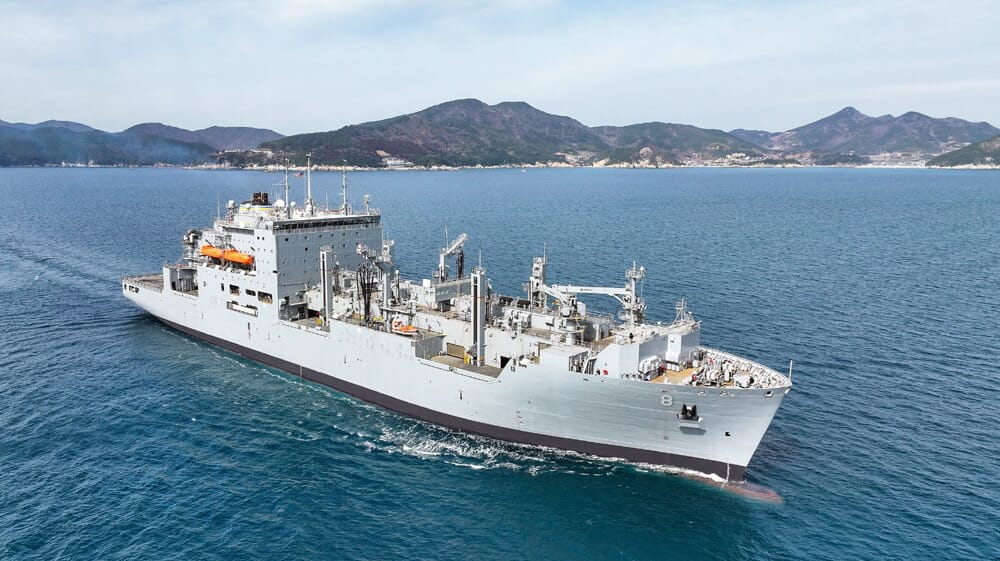
The order calls on the Pentagon to use foreign shipyards for three specific vessel classes. The first would be for surface combatants for "anti-submarine warfare, surface warfare and convoy escort duties" (frigates). It would also favor foreign construction of two classes of auxiliary ships that are normally civilian-crewed: ro/ro cargo vessels (a Military Sealift Command capability) and CONSOL-ready tankers (historically a chartered-in capability).
To qualify, a foreign shipbuilder would have to participate in building up American industrial base by buying or opening a yard in the United States. The first two hulls in a series would go to the foreign builder, meaning that design, engineering and procurement would happen overseas from the outset, along with the most expensive part of a long project: the first-in-class hull.
The memo cites the limitations of the U.S. defense shipbuilding industrial base, along with the production delays that currently affect all Navy shipbuilding programs.
"It will use proven, reliable, and affordable technologies and ship designs, as well as award contracts that enable purchases from foreign suppliers in the near term while simultaneously incentivizing investment in America’s shipbuilding industrial base, consistent with other major equipment purchases such as icebreakers," Trump wrote.
The Shipbuilders Council of America has objected to the order. "Directing the DoW to build overseas only undercuts the federal Maritime Action Plan and generational investment into commercial and government shipbuilding. Every hull built abroad is demand, jobs, and industrial capability diverted from American shipyards this administration pledged to rebuild," SCA said in a statement to USNI.
The overseas defense order adds to existing concerns on the commercial side of the industry. American shipbuilding interests have already warned about the effects of the Trump administration's historically-long Jones Act waiver, which allows foreign-built, foreign-crewed ships to operate between U.S. seaports. Without the Jones Act, American shipowners face uncertainty about the competitiveness and value of their vessel assets, and the SCA reports that infrastructure investment and ordering interest have dropped as a result.
The memo also directs a study of options for starting up a fifth Navy-owned public shipyard for submarine maintenance, helping address the backlog of sub repairs and increasing readiness of the fleet. In unsparing language, it also orders a deep review of the Navy's procurement establishment, Naval Sea Systems Command, with an eye to streamlining its bureaucracy and introducing more accountability.
Separately, the wide-ranging memo calls for a major redesign for future Ford-class carriers, including the removal and replacement of the class' signature electromagnetic aircraft catapults and weapons elevators.
Austal USA Delivers First LCU for the U.S. Navy
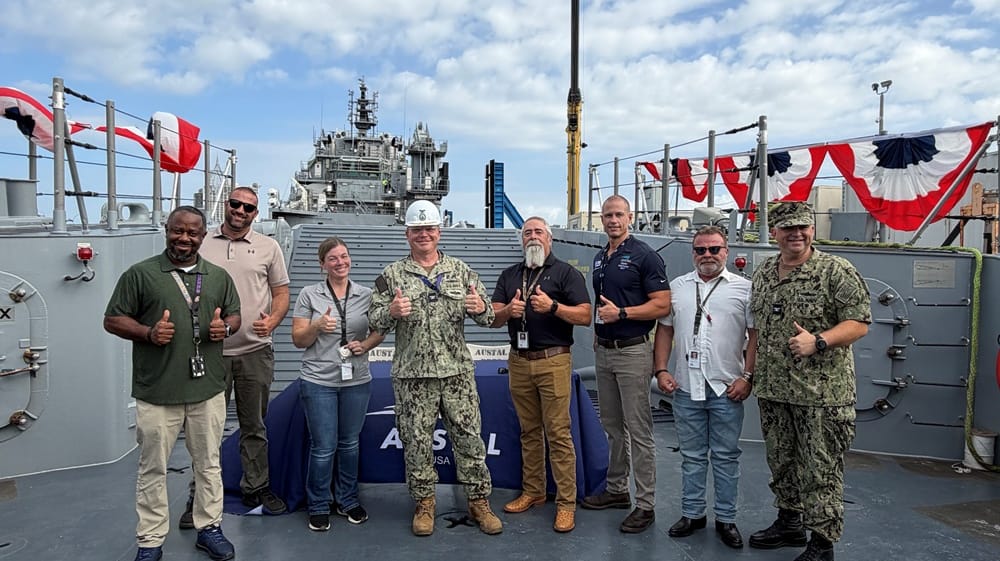
Defense shipbuilder Austal USA has delivered its first landing craft for the U.S. Navy, the first ever steel-hull vessel that the company has completed and delivered to its primary customer.
“The delivery of LCU 1710 represents a major achievement for Austal USA and our shipbuilding team,” said Gene Miller, President of Austal USA. “It also demonstrates Austal USA’s ability to skillfully design, build and deliver highly complex steel vessels while continuing to support the Navy’s evolving mission requirements.”
LCU 1710 is a next-generation landing craft utility for the amphib fleet, designed to haul Marines and their equipment to a beachhead after the initial stages of an amphibious assault (or other handy uses, like delivering disaster relief supplies).
Austal's steel shipbuilding line is new and has yet to become profitable for the company, dragging on group performance with an expected division loss of -$175 million in FY2026. The LCU contract is loss-making, along with its Towing, Salvage & Rescue Ship (T-ATS) and Auxiliary Floating Dry Dock Medium (AFDM) programs.
Austal's early bids underestimated cost of completion for its first steel hulls, and the Navy has yet to renegotiate pricing to help out Austal's bottom line. The firm said in its most recent earnings report that it will continue to pursue contract modification to adjust for extra costs, and that its claims are justified to pay for "changes in customer requirements and deficiencies in design specifications provided to Austal USA" - a widely-acknowledged issue in Navy shipbuilding, and an area that the Pentagon is actively working to address.
Steel construction is a recent development at its U.S. yard, and reflects the Navy's experience with the difficulties of aluminum construction in naval applications. As it phased out aluminum-hull procurement, the Department of Defense supported Austal in its efforts to develop its steel capabilities. This included a $50 million matching grant toward the construction of the steel line and the development of additional capacity for steel naval vessel construction at its Mobile shipyard.
Austal USA launched its first steel-hulled ship, the salvage tug USNS Billy Frank Jr., in June 2025. The tug was envision as a starter contract for Austal USA develop its skills in steel construction and its new automated steel panel line. It was recently moved over to a berth at Alabama Shipyard (an Austal affiliate) but has not yet delivered. The LCU, being a smaller and simpler vessel, launched two months after Billy Frank Jr. but delivered sooner.

No comments:
Post a Comment