Showing posts sorted by date for query burqas. Sort by relevance Show all posts

Saturday, November 28, 2026

FASCIST ISAMOPHOBIA

No burqas at school and fewer foreign pupils: Italy passes controversial education law

Final green light for the school decree
Copyright AP Photo
By Chiara Zampiva
Published on

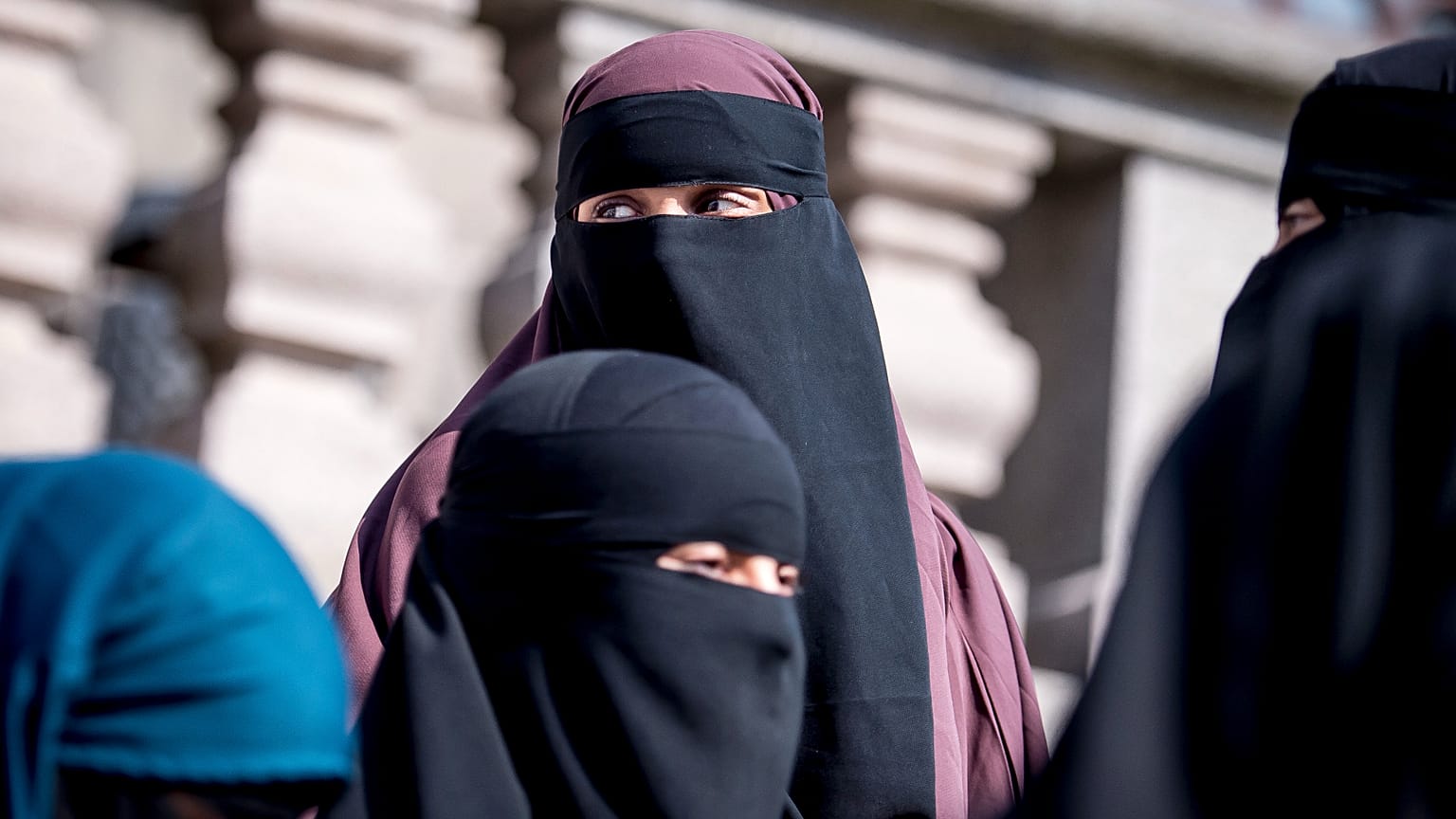
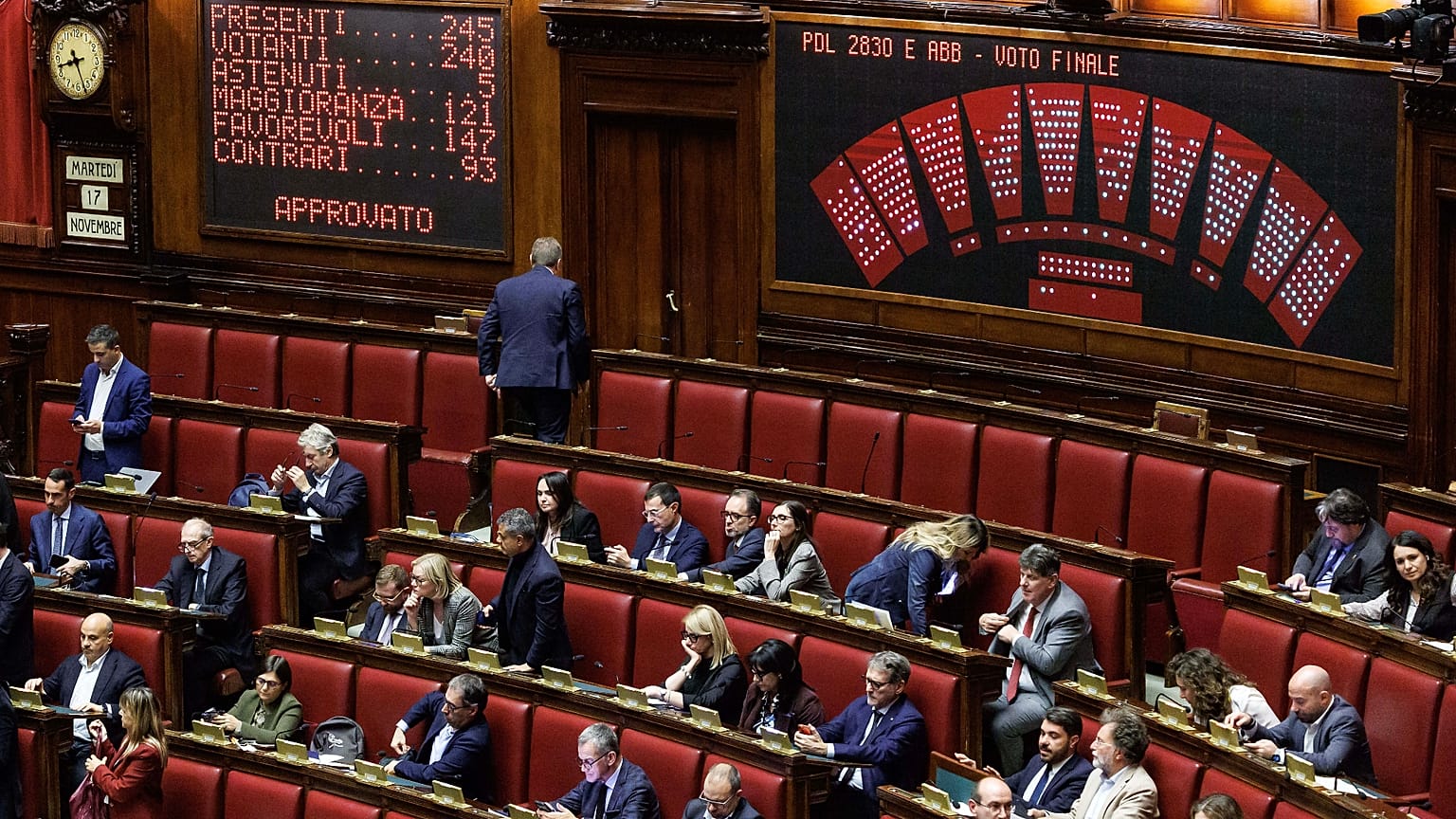
The school decree, which includes new rules on digital transition, was finally approved in the Chamber on Thursday. During the vote, opposition MPs displayed signs saying "At school no one is a foreigner".

Italy has approved a controversial education reform introducing a ban on face coverings in schools and a 30% cap on students of foreign origin in first-year classes, prompting accusations of discrimination from opposition parties.

The cap will not apply to students who have already achieved an adequate knowledge of the Italian language, while the ban on face coverings will prevent Muslim female students from wearing burqas and niqabs in class.

The legislation also introduces Italian language courses for foreign parents.

The Chamber of Deputies gave its final approval to the Decreto Scuola with 142 votes in favour, 112 against and four abstentions, following its approval by the Senate on 20 November.

Decree-law 170 of 30 September 2026, which introduces urgent provisions to ensure the regular start of the 2026/2027 school year, support measures under the National Recovery and Resilience Plan (PNRR) and promote the integration of foreign students, had already secured the government's confidence.

The final vote was marked by protests from opposition MPs, who displayed a sign in the chamber reading "At school nobody is a foreigner".Relat

Opposition accuses government of discrimination

Opposition parties sharply criticised the new restrictions, accusing the government of failing to address the real challenges facing Italy's education system.

"The problem is not how many foreign children there are in a class, but how many teachers and what tools we provide to guarantee everyone the right to learn. Everything else is discrimination and racism," Five Star Movement (M5S) MP Antonio Caso said.

"Alessandro Ingusci died because of indifference, while he was asserting the right to study and to housing. And this should be the real urgency for a government that issues decrees to address emergencies in schools. Yet this decree does not tackle any of the real urgent issues: not the safety of school buildings, not the low salaries of teachers, not the right to study," he added.

Irene Manzi, the Democratic Party's national head for schools and leader of its group on the education committee, also condemned the measures.

"A decree that divides girls and boys within classes and moves them from one school to another if the 30 per cent limit is exceeded, ignoring their stories, the contexts in which they live, the environment in which they grow up. It treats them like parcels," Manzi said.

"And it adds sanctions for parents and reports from educational institutions such as the CPIA, breaking that climate of trust on which the educational community should be based. As if foreign families had fewer rights."

"What has been approved is a decree without vision," she added.

Meanwhile, the governing majority expressed "maximum satisfaction" with the final approval of the legislation.

"Today's vote is also a significant show of unity of the majority around our government and its reforming action," Minister for Education and Merit Giuseppe Valditara said in a statement.

Digital textbooks divide governing coalition

Despite the controversy surrounding restrictions on foreign pupils, the fiercest clash between the majority and the opposition concerned a provision on school and university e-books, which also divided the governing centre-right coalition.

Under the new legislation, publishers of school and university textbooks will be required to offer digital versions of their publications at 50% of the price of their printed equivalents.

The measure aims to make educational materials more accessible and ease the financial burden on families.

However, the Italian Publishers Association (AIE) expressed strong opposition to the provision.

"Our deep opposition remains unchanged to a measure that does not bring real economic benefits to families and students but places on educational and academic publishing the burden of a support policy that should be a public responsibility," AIE President Innocenzo Cipolletta said.

"A provision that is not consistent with the results of countless international scientific studies, that interferes with copyright, opens the door to piracy, alters the economic value of the work, puts at risk the sustainability and jobs of companies and ultimately undermines the cultural value of books in the educational path."

Within the governing coalition, Forza Italia opposed the measure on e-books, while Brothers of Italy (Fratelli d'Italia) supported it. The majority subsequently closed ranks for the final vote.

Rosaria Tassinari, Forza Italia's group leader on the Culture Committee, welcomed the final approval of the decree.

"Forza Italia has expressed a clear and consistent position, opening a debate that led to the agenda item signed within the majority, which represents a point of balance between the different sensitivities that emerged," she said.

What else does the new school law introduce?

The legislation also introduces changes to teacher recruitment, including permanent appointments, and modifies specialisation pathways for support teachers.

It updates the timing and procedures for drafting Individual Education Plans and introduces additional funding for administrative, technical and auxiliary staff, as well as for the fund aimed at improving educational provision.

Monday, September 21, 2026

ISLAMOPHOBIA

Meloni announces ban on burqa and niqab in Italian schools, cap on foreign students

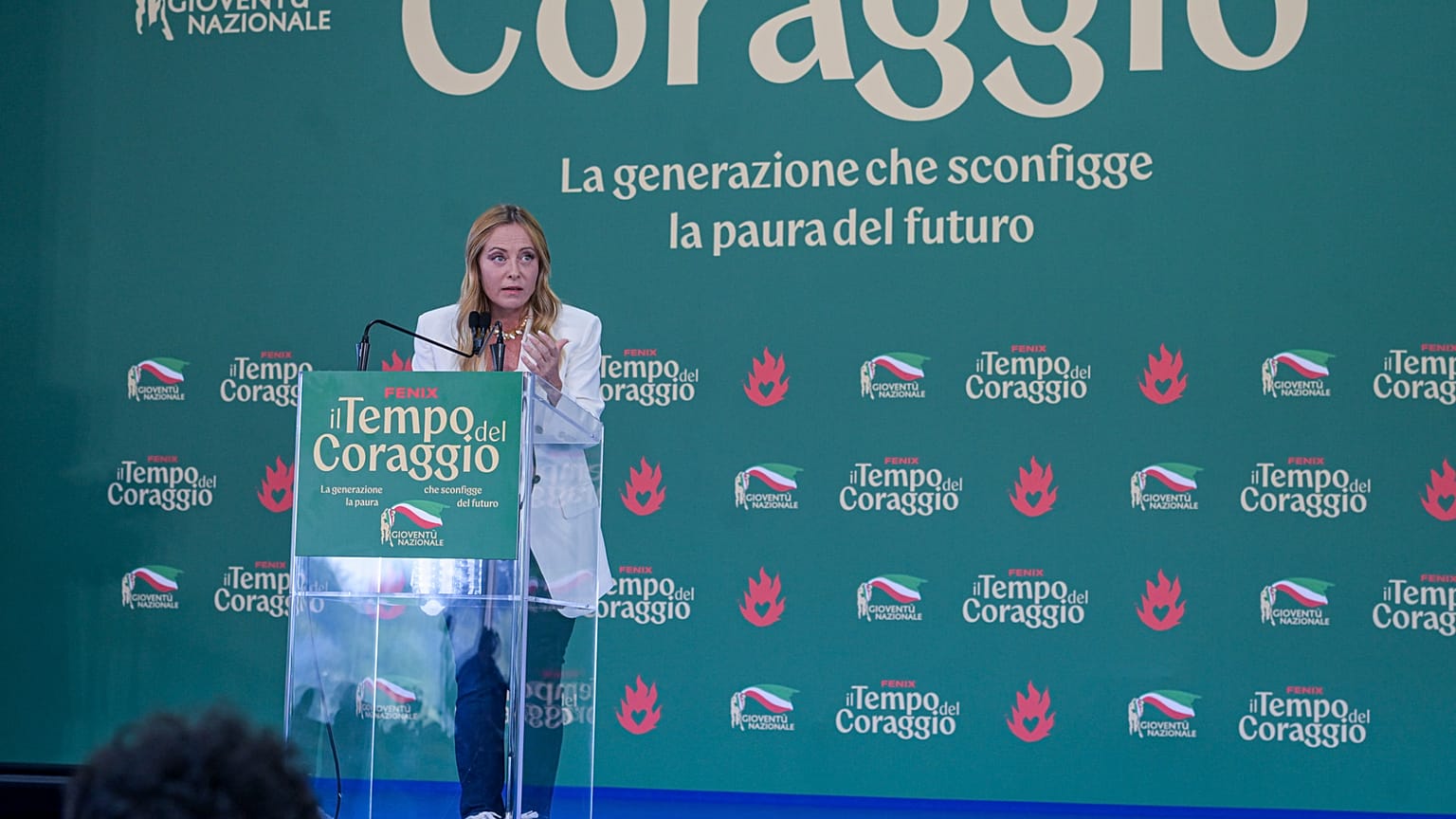
Italian Prime Minister Giorgia Meloni
Copyright LaPresse

By Fortunato Pinto
Published on

Italy’s government is preparing new school measures, including a ban on niqabs. Meloni is facing competition from retired general Roberto Vannacci, who has called for tougher measures on migration.

Italian Prime Minister Giorgia Meloni has announced that the government is preparing a bill that would ban burqas and niqabs in schools and introduce a limit on the number of foreign pupils in each class.

Several European countries, including France and Belgium, already ban face coverings in public places. Austria has also introduced restrictions in schools. Elsewhere, including Spain and Poland, freedom of conscience and religion is protected by the constitution.

Meloni said a package of measures will soon go before the Italian cabinet, including a ban on burqas and niqabs in schools, a requirement for parents of pupils facing “serious difficulties integrating” into the national school system to learn Italian, and a limit on places for foreign pupils.

Italy heads to the polls next year, with competition intensifying to the right of Meloni’s party following the entry of retired general Roberto Vannacci, who has called for even tougher measures. Migration is a highly political and divisive issue in Italy.

“It is unacceptable that in an Italian classroom the children who end up feeling pushed into a corner are Italian children because they have become the minority. That cannot be allowed,” she said during a rally organised by Gioventù Nazionale, the youth wing of her Brothers of Italy party.

“Calling all this integration is yet another lie, a convenient lie for those who live off ideology, for those who preach to us from their living rooms and then send their own children to schools where this problem does not exist.”

Previous initiatives and legislative proposals

Meloni’s announcement comes after several related initiatives in recent months.

In early August, Education and Merit Minister Giuseppe Valditara proposed action on the full-face veil through an amendment to the security bill.

At the end of July, Futuro Nazionale — the party founded by far-right MEP Roberto Vannacci, who has backed Meloni’s proposal — tabled a resolution against the full-face veil in the Chamber of Deputies’ Culture Committee. It was approved with centre-right votes after being redrafted at the government’s request.

In March, the League introduced a bill in the Senate to amend Article 5 of the 1975 Reale law, which was introduced by then-Justice Minister Oronzo Reale during the Years of Lead to ban face coverings in public places.

The proposed amendment would create a new offence of forcing someone to conceal their face, punishable by one to two years in prison and fines of between €10,000 and €30,000. It would also bar those convicted from obtaining Italian citizenship.

Full-face veils in Europe

Meloni referred specifically to a ban on burqas and niqabs. A burqa traditionally covers the entire body and includes a mesh over the eyes, while a niqab covers the face, leaving only the eyes visible. A hijab, by contrast, covers the hair and neck but leaves the face uncovered.

Several European countries have introduced restrictions on face coverings in public spaces.

France imposed a nationwide ban on concealing the face in public places in April 2011, a measure later upheld by the European Court of Human Rights.

Belgium approved a nationwide ban in July 2011, with fines and prison sentences for violations. Bulgaria has prohibited full-face veils in state, administrative and educational institutions since September 2016.

Austria passed an anti-mask law in October 2017 requiring faces to remain visible in public spaces. From September 2026, girls up to the age of 14 will also be prohibited from wearing at school any veil that “covers the head according to Islamic traditions”.

Denmark introduced a nationwide ban in August 2018, with financial penalties increasing for repeat offences. The Netherlands introduced a partial ban in August 2019 covering schools, hospitals, government offices and public transport.

Switzerland introduced a federal ban on face coverings in public spaces following a national referendum, with the implementing legislation coming into force in 2023. Portugal completed its legislative process in August 2026 with a law banning face coverings in public spaces and imposing financial penalties.

Germany has no nationwide ban, but federal legislation prohibits public employees, judges, members of the armed forces and motorists from covering their faces while driving. Several Länder also restrict full-face veils in schools and universities for students and teachers.

Foreign pupils in the classroom

If Italy introduces a statutory maximum for foreign pupils in each class, it would become the first European country to adopt such a rule, according to the proposal.

Italy already has a 30% limit on non-Italian pupils, set out in a 2010 ministerial circular issued by then-Education Minister Mariastella Gelmini. The limit has often gone unenforced because of local demographic conditions and a lack of flexibility, particularly in urban outskirts.

Other European countries use different approaches.

Denmark has some of the most restrictive policies. The government has allowed upper secondary schools to introduce caps of up to 50% for pupils of “non-Western origin” or from disadvantaged neighbourhoods. Schools can also organise classes based on parents’ income, with the aim of encouraging social and ethnic mixing — a model the Italian government is watching with interest.

In France, quotas based on origin would be unconstitutional because the state does not collect statistics based on ethnic or religious identity. Instead, authorities use “zoning” to redesign school catchment areas, linking working-class and wealthier neighbourhoods. In areas with high concentrations of migrants, the state also reduces the number of pupils per class.

Criticism of Meloni’s proposal

Meloni’s announcement has received support from members of the governing coalition but has also drawn criticism from the opposition and legal experts.

Speaking to ANSA, Salvatore Curreri, a professor of constitutional law at the University of Enna, pointed to Article 34 of the Constitution, which states that “school is open to everyone”, including foreign children.

“If the measure were so restrictive as to uproot minors and their families to other areas, far from where they live, it could prove excessive precisely because it conflicts with the overriding functional aim of integration, with the risk of infringing a right recognised by the constitution,” Curreri said.

Angelo Bonelli, an MP for the Green and Left Alliance (AVS) and co-spokesperson for Green Europe, also criticised the proposal.

“Yet again, instead of dealing with schools, she is chasing the neo-fascist right of AfD and Vannacci, who has proposed separate classes for students with disabilities,” he said. “The truth is that the prime minister is not at all interested in how schools work. Our teachers’ salaries are among the lowest in Europe.”


BABUSHKA

Thursday, August 20, 2026


Portugal enacts 'burqa law' banning face coverings in public space

Portugal joins a long list of countries around the world that have already banned face-covering veils in public spaces.
Copyright AP Photo

By Joana Mourão Carvalho & Greta Ruffino
Published on

In Portugal, violators face fines ranging from €150 to €3,000, with exemptions for health, professional, artistic or weather-related reasons, as well as in places of worship, diplomatic missions and on aircraft.

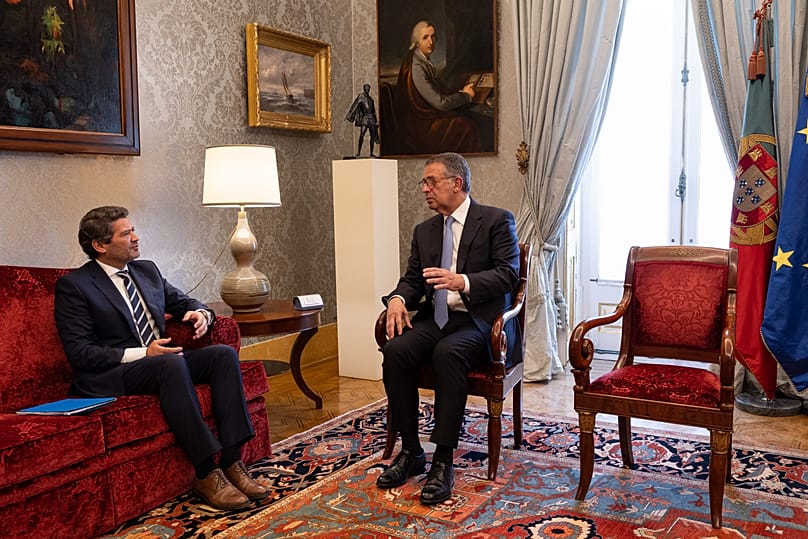
Portugal's President António Jose Seguro has enacted a law banning face coverings in public spaces, a measure widely seen as targeting Muslim women who wear full-face veils.

"The face must be considered a central element of human identity and communication," Seguro said in a statement late Tuesday.

The legislation, dubbed the "burqa law" by local media, was approved by parliament in July with the support of the governing right-wing coalition and far-right parties. Left-wing parties voted against it.

The law prohibits clothing designed to conceal the face or prevent identification in public spaces. It also bans forcing someone to cover their face for reasons related to gender, religion, age or origin.

Seguro acknowledged that the issue was one of "great social and cultural sensitivity".

President of the Republic promulgated law after changes to Chega's proposal Miguel Figueiredo Lopes/Presidencia da Republica

Left-wing parties warn of Islamophobia risks and question security justification

The bill put forward by the far-right Chega party received negative opinions from the Portuguese Bar Association, the High Council of the Public Prosecutor's Office and the Portuguese Association of Women Lawyers, alongside concerns over its potential unconstitutionality.

The centre-left Socialist Party (PS), green-left Livre and the Portuguese Communist Party (PCP) opposed the proposal, warning it could fuel Islamophobia. It was backed by the centre-right Social Democratic Party (PSD).

The PS denounced "Islamophobic purpose that was evident in the explanatory memorandum [of the bill], the context of radicalism in which we live and the risks this creates for the communities directly targeted."

The PCP said the proposal had "nothing to do with women's rights, nor with security issues", but was "solely about fuelling hate speech and violence against those who are different, fuelling racist and xenophobic discourse."

Livre accused the right of "hypocrisy" and of conducting the debate in a "biased manner", in an attempt to create in Portugal "a moral panic over a supposed Islamic invasion that the far right so often talks about."


Full-face veil bans: How do rules compare across Europe?

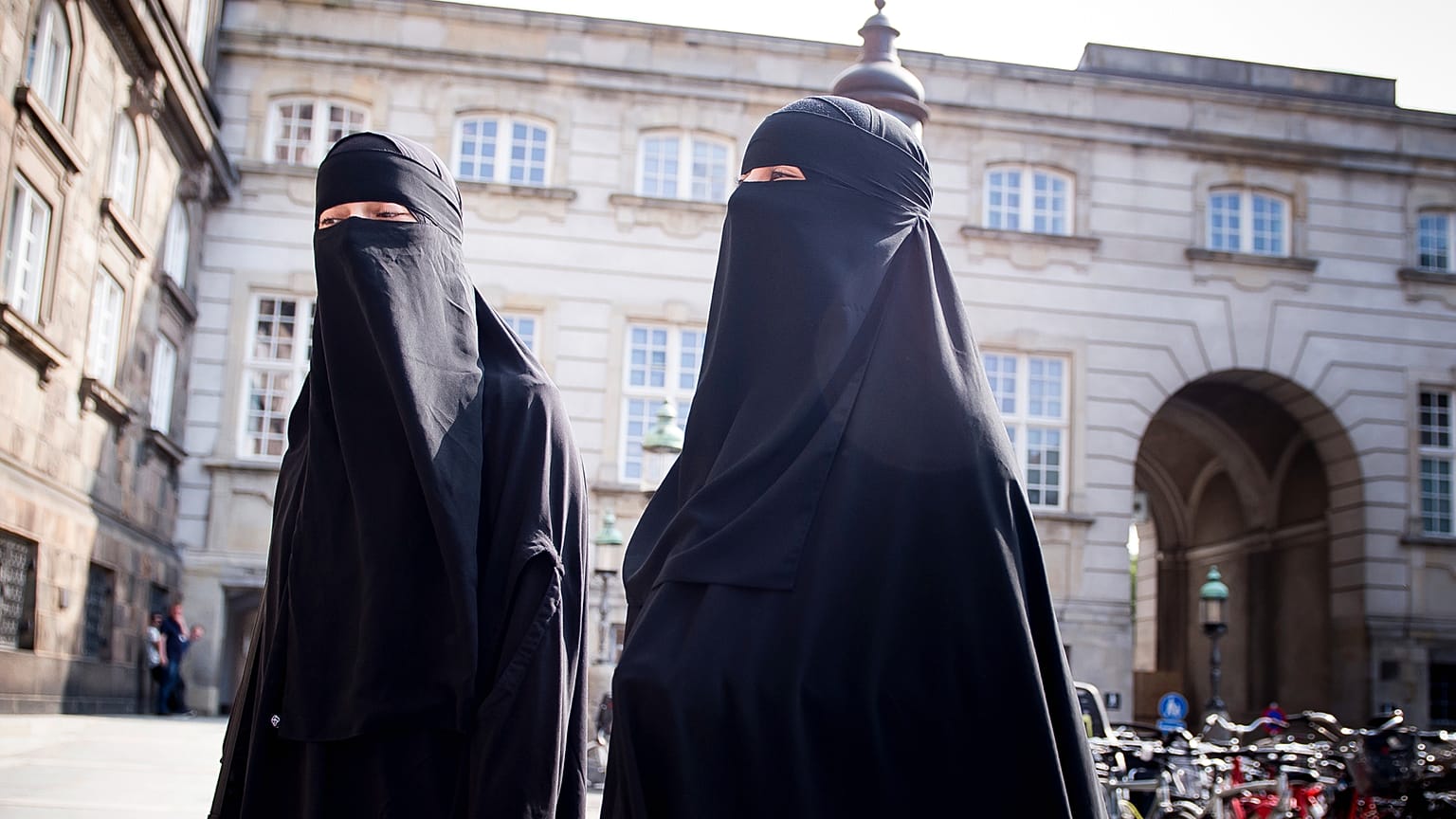
Women wearing niqabs stand outside the Danish Parliament in Copenhagen on 31 May 2018, as Denmark approved a ban on garments covering the face.
Copyright Ritzau Scanpix

By Greta Ruffino & Joana Mourão Carvalho
Published on

European countries take widely different approaches to full-face veils, from nationwide bans to restrictions in specific public spaces. Euronews looks at how the rules vary across the continent.

On Thursday, Portugal joined a growing list of European countries that have banned or restricted burqas and other full-face veils in public spaces.

But rules vary widely across the continent. Euronews breaks down how different European countries regulate face coverings.

France pioneered Europe’s face-covering ban

France became the first European country to ban full-face coverings in public spaces in 2011. Violations can result in a fine or mandatory civic education.

The French government argued that face coverings prevent people from being clearly identified, posing potential security risks and hindering social interaction in a society where facial recognition and expression play an important role in communication.

During the COVID-19 pandemic, questions were raised over whether protective face masks were compatible with the ban. Authorities later clarified that masks were permitted under existing health and safety exemptions.

Belgium: Fines and prison for violations

In Belgium, the ban dates back to 2011, with offenders facing fines or up to seven days in prison.

Alongside France, Belgium was one of the first European countries to introduce such restrictions, citing public security and social integration.

The law aims to facilitate communication and prevent people from concealing their identities in public spaces, measures Belgian authorities have defended as essential to ensuring the full participation of all citizens in society.

Bulgaria: Full-face veils restricted to private spaces

The wearing of burqas and other full-face veils has been banned in public spaces in Bulgaria since September 2016 and is restricted to private homes and places of worship. Muslims make up around 12% of Bulgaria's population.

Austria: Face-veil ban extended to schools

In Austria, a ban on full-face veils, including the burqa and niqab, came into force in 2017 under legislation known as the "Anti-Face-Veiling Act". The measure was introduced on security and integration grounds, with authorities arguing that face coverings hinder communication and social cohesion.

Additionally, in 2025, Austria's parliament approved a law banning Islamic headscarves for girls under the age of 14 in schools. The ban explicitly refers to "the headscarf that covers the head in accordance with Islamic tradition".

Denmark: A blanket ban on face coverings

Denmark enacted a full ban on face coverings in all public places in 2018. The law, which prohibits any clothing that conceals the face — including burqas and niqabs — has been justified primarily on grounds of public identification and societal transparency.

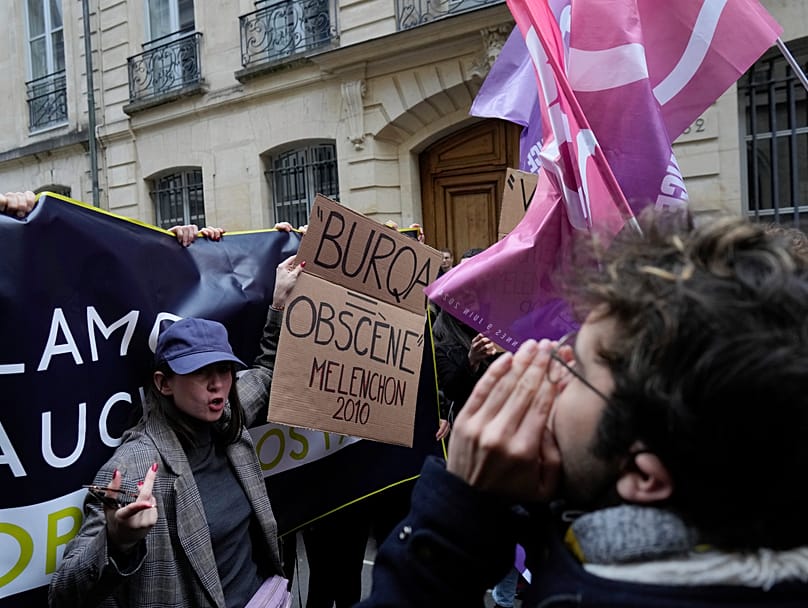
Nemesis founder Alice Cordier protests against a conference by Jean-Luc Mélenchon at Sciences Po in Paris on 22 April 2024, holding a sign reading "Burqa=obscene". (AP Photo/Thibault Camus)

Netherlands: Partial restrictions in key institutions

In the Netherlands, a 2019 law restricts face coverings in specific public settings — such as schools, hospitals, and public transport — where clear communication and identification are deemed essential.

While not a total ban, it reflects a growing inclination toward regulating religious expression in state spaces.

Germany: A fragmented approach to face-covering bans

Germany has taken a fragmented approach, with some states introducing partial bans in schools and public spaces on security and communication grounds. Specific restrictions also apply to certain professions and everyday situations.

While some regions consider such bans necessary to promote integration and social cohesion, others fear they could isolate certain communities and undermine social inclusion.

Luxembourg: Full-face veils restricted in public institutions

In Luxembourg, a law restricting the wearing of full-face veils came into force in spring 2018.

Face coverings are prohibited on public transport, in schools and on school grounds, in facilities for children under 16, hospitals, common areas of care homes for older people, including corridors and lifts, as well as in judicial buildings and public administration facilities open to the public.

Spain: Legal silence, local discretion

Spain lacks national legislation on the issue, leaving decisions to the discretion of schools and institutions.

In 2013, the Supreme Court backed a Madrid high school's decision to exclude a hijab-wearing student, setting a precedent but not a standard.

While Islamic groups have stressed that the Spanish Constitution and a 1992 cooperation agreement together protect the right to wear religious attire, the Ministry of Education has not prioritised national guidance, arguing that such cases are rare and manageable at the local level.

Portugal: Legal neutrality, selective application

Portugal doesn’t explicitly ban religious symbols but permits institutions — both public and private — to enforce neutral dress codes, as long as these are applied uniformly.

The aim is to protect employees from religious pressure while ensuring that workplaces remain ideologically neutral.

Italy: A law from another era

Italy does not have a specific ban on religious dress, but a 1975 anti-terrorism law prohibits face coverings in public.

Though originally unrelated to religious attire, this law has occasionally been invoked to restrict the niqab and burqa in certain public or security-sensitive environments.

Sweden: Freedom first, local pushback

Sweden has no national ban on religious attire, and the veil remains permitted across public life. The national approach favours individual rights, though some municipalities have attempted to impose school-specific restrictions, citing integration and gender equality. These moves have sparked debate but have not yet reshaped national policy

Greece: Legal protections with practical limits

Greek law offers robust anti-discrimination protections based on religion across employment and public services. Yet, practice has sometimes told a more complicated story. In one 2022 case, a hospital barred a nursing student from wearing a headscarf during her internship, citing uniform regulations.

The Greek Ombudsman ruled the policy did not violate anti-discrimination laws, framing it as a dress code issue, not a religious one.

Restrictions on face- or body-covering veils, varying in scope and extent, are also in place in countries across several continents, including China, Australia, Russia, Canada, Sri Lanka, Gabon, Chad, Senegal, the Republic of the Congo, Cameroon, Morocco, Algeria and others.


LA REVUE GAUCHE - Left Comment: Search results for BURQA


LA REVUE GAUCHE - Left Comment: Search results for HIJAB


LA REVUE GAUCHE - Left Comment: Search results for BABUSHKA


Sunday, August 16, 2026

Afghanistan Under Taliban Rule: Five Years Of Crisis, Isolation, And Growing Resistance – Analysis


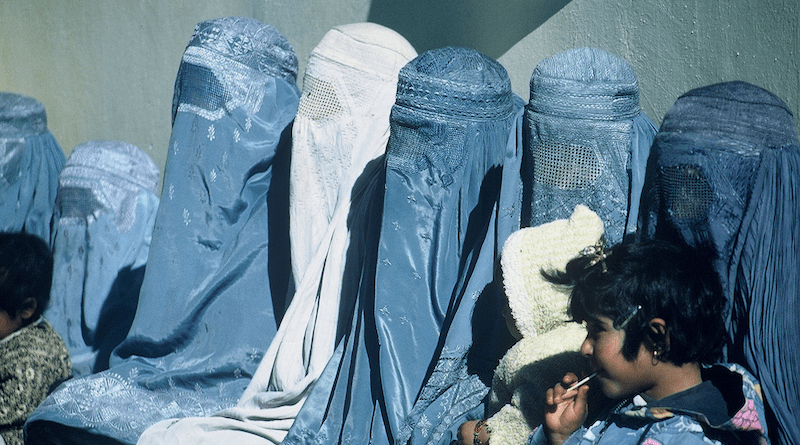
A group of women in Afghanistan wearing burqas. Photo Credit: Nitin Madhav (USAID), Wikimedia Commons

August 16, 2026

RFE RL
By Daud Khattak


Key Takeaways

Five years after seizing power, the Taliban has restored relative security but overseen a severe economic crisis, widespread poverty, food insecurity, and near-total international isolation driven largely by its systematic exclusion of women and girls from public life and education.

Governance remains highly centralized, traditional, and non-inclusive—dominated by Pashtun leaders around Mullah Hebatullah in Kandahar—with no comprehensive plan for economic recovery or modern administration, leaving ordinary Afghans increasingly alienated.

While the Taliban pursues limited international engagement (including talks with the EU and closer ties with Russia, China, and others) to attract aid and investment, analysts warn of growing domestic discontent, rising crime, summary executions, and emerging armed resistance, suggesting the regime’s long-term stability is fragile.


A lack of rights, falling wages, deteriorating living conditions: Five years of Taliban rule have brought changes to Afghanistan, but not the ones many Afghans hoped for.

Though roadside bombs and violent clashes between warring factions have largely subsided, the country faces a profound economic crisis, a severe humanitarian emergency that has left millions of people in need of aid, and near-total international isolation over the Taliban’s human rights record, particularly its systematic erasure of women and girls from public life.


For a lot of Afghans, hope may not be completely lost, but it has taken a major hit.

“I’ve been driving a taxi in Kabul for 20 years, but over the past five years, I have seen problems that I had never experienced before,” a cab driver told RFE/RL of the financial hardship he has experienced under the Taliban.

“All I want is to earn a halal living and put food on the table,” the man in his mid-40s said near his taxi, which is almost the same age.

When they seized power in August 2021 as international forces withdrew, the Taliban inherited a structurally fragile economy heavily dependent on inflows of foreign aid.

But that has all but dried up as Taliban policies, especially the almost total isolation of females from public life outside their homes, halted the flow of funds.

Afghans from large business owners to retailers, transporters, and daily wage laborers now complain about falling earnings and shrinking economic opportunities under the Taliban.

‘Medieval Ideas Of Governance’

An April 2025 World Bank report said that “poverty, food insecurity, and malnutrition remain pressing challenges” in Taliban-ruled Afghanistan where high unemployment and restrictions on women continue to strain livelihoods.

With girls’ secondary-school enrollment at just 3 percent, the World Bank report says a “generation of young women faces a future of poverty and dependence.”

“The Taliban are using medieval ideas of governance to rule a country which faces complex 21st century challenges,” said Michael Semple, a professor at Queens University Belfast.

The Taliban has restored relative calm after decades of conflict.

Bomb blasts and security concerns have eased, but analysts say the regime has done little to address its major challenge — establishing economic stability and ensuring good governance to improve living standards.

The Taliban has abolished all democratic institutions and advisory authorities, centralizing decision-making around its reclusive chief Mullah Hebatullah, who has issued a stream of edicts — many relating to girls and women — without setting out any comprehensive plan or road map to ensure good governance and economic prosperity.

The center of decision-making has largely shifted from the capital, Kabul, to the remote southern province of Kandahar, the birthplace of the Taliban movement in the mid-1990s.

At the same time, the predominantly ethnic-Pashtun Taliban, whose roots lie largely in southern and southeastern Afghanistan, has concentrated power at all levels among its own senior leaders, commanders, and members.


“The most important challenge for the Taliban is that they have no model of governance,” said Washington-based Afghan analyst Mushtaq Rahim, who was involved with various governmental and nongovernmental projects regarding good governance in Kabul before August 2021.

“They are running Afghanistan on purely traditional lines which is not in line with international norms,” Rahim told RFE/RL, adding that the primary reason for sticking to the traditional system of governance is that the “Taliban have neither the capacity nor the capability to do so themselves, while they don’t accept help from the outside.”

That lack of governance, coupled with growing economic insecurity, has raised concerns among some that Afghanistan could return to being a cauldron of insecurity.

London-based Afghan analyst Sami Yousafzai believes that over the past five years, the Taliban have alienated ordinary Afghans “who feel like strangers in their own land.”

“With their purely rural background, the Taliban care more about group loyalty and far less about national unity,” Yousafzai told RFE/RL.

Semple said he too believes “the population is alienated,” with the Taliban blocking “every effort to start a political process which could open the way to a more inclusive system.”

Ominously, Semple said, at least three groups have recently announced armed resistance against the Taliban in Badakhshan, a resource-rich province in Afghanistan’s northeast that borders Tajikistan, Pakistan, and China.

“Armed resistance is growing,” he said, pointing out that many provinces are also reporting crime waves and that the Taliban itself is conducting “summary executions and enforced disappearances.”

“The main thing prolonging the Taliban rule is the absence of an effective resistance able to mobilize people on the ground,” he said.
International Outreach

As it grapples with these challenges at home, the Taliban has also begun trying to make inroads into the international community, a push analysts say is likely tied at least in part to efforts to attract foreign aid and investment and stabilize the economy.

Afghanistan’s gross domestic product in 2020 reached around $20 billion, when international forces were still stationed in the country and the government was bolstered by inflows of foreign funds.

That plummeted to just above $14 billion in 2021, according to the World Bank, though it has managed to rebound slightly — buoyed by remittances from abroad — even as living standards for ordinary Afghans continue to worsen.


Russia is the only country that has formally recognized the Taliban government, which has also managed to develop closer contacts with China, India, the United Arab Emirates, and some Central Asian nations.

In a sign of its growing international outreach efforts, a Taliban delegation traveled to Brussels in June for unprecedented, closed-door technical talks with the European Commission and representatives from 15 EU member states. The visit saw discussions on migration, the deportation of rejected Afghan asylum seekers, and consular cooperation.

The European Policy Center called the controversial trip a “creeping normalization” while the Taliban hailed it as a “historic” step toward building trust and establishing a broader diplomatic presence, even though aid wasn’t on the agenda and no European Union country appears ready to officially recognize the Taliban’s de facto authority.

Meanwhile, analysts say the Taliban will try to continue to block every effort to start a political process that could open the way to a more inclusive system in an effort to hang on to power.

“I think that there is every chance that the Taliban emirates will be overthrown, but I suspect that the force that will overthrow it is not yet in the field,” Semple said.


Daud Khattak is a senior international correspondent covering the Near East in RFE/RL’s Central Newsroom. He was previously the managing editor of RFE/RL’s Radio Mashaal.


About RFE RL
RFE/RL journalists report the news in 21 countries where a free press is banned by the government or not fully established.
View all posts by RFE

Friday, December 12, 2025

ISLAMOPHOBIC BABUSHKA BAN

Austria set to vote on headscarf ban in schools


By AFP
December 10, 2025


Austrian lawmakers are set to vote on a headscarf ban for girls in schools 
- Copyright AFP Alex HALADA

Austrian lawmakers on Thursday are expected to approve a law banning headscarves in schools for girls under 14, a move rights groups and experts say is discriminatory and could deepen societal division.

Austria’s conservative-led government — under pressure at a time when anti-immigration sentiment is running high — proposed the ban earlier this year. They argue it is to protect girls “from oppression”.

In 2019, when the country introduced a ban on headscarves in primary schools, the constitutional court struck it down, calling it unconstitutional and discriminatory. This time however, the government insists that its law is constitutional.

The law, if passed, would prevent girls younger than 14 from wearing headscarves that “cover the head in accordance with Islamic traditions” in all schools.

“When a girl… is told that she must hide her body… to protect herself from the gaze of men, it’s not a religious ritual, but oppression,” Integration Minister Claudia Plakolm said when presenting the bill.

The ban, which applies to “all forms” of the Islamic veil including hijabs and burqas, would take full effect with the start of the new school year in September, Plakolm said.

From February, an initial period would be launched during which the new rules would be explained to educators, parents and children with no penalties for breaking them.

But for repeated non-compliance, parents would face fines ranging from 150 to 800 euros ($175-930).

The government said that about 12,000 girls would be affected by the new law, basing its figures on a 2019 study that showed that approximately 3,000 girls aged below 14 wore a headscarf six years ago.


– ‘Stigmatised’ –


Rights organisations have criticised the bill, including Amnesty International Austria.

Amnesty said it “constitutes blatant discrimination against Muslim girls” and described it as an “expression of anti-Muslim racism”.

Such measures risk “fuelling existing prejudices and stereotypes against Muslims”, the group warned.

The draft law has also drawn criticism from the IGGOe, the body officially recognised as representing the country’s Muslim communities.

It said the ban “jeopardises social cohesion”, saying “instead of empowering children, they are stigmatised and marginalised”.

Angelika Atzinger, managing director of the Amazone women’s rights association, said a headscarf ban “sends girls the message that decisions are being made about their bodies and that this is legitimate”.

Her comments appeared in a statement published by the anti-racism group SOS Mitmensch, which also opposes the proposed law.

Austria’s anti-immigration, far-right Freedom Party (FPOe), which won last year’s general election but failed to form a government, said the ban did not go far enough. They want it extended to all students, teachers and other staff.

The governing coalition said it was confident the revised ban would not be overturned a second time.

It argued that the law provides for such restrictions if the rights of a child, which are enshrined in the constitution, would otherwise be infringed upon.

But constitutional law expert Heinz Mayer has raised doubts that a ban can be constitutional, recalling the top court’s ruling in 2020, which found that “one religion was being discriminated against”.

It also ruled that “if the headscarf is a symbol of oppression”, a ban puts children in “an uncomfortable situation”, but not the people who impose it on them, he told AFP.

In France, authorities banned school children in 2004 from wearing “signs or outfits by which students ostensibly show a religious affiliation” — such as headscarves, turbans or Jewish skullcaps — on the basis of the country’s secular laws, which are meant to guarantee neutrality in state institutions.

Saturday, June 21, 2025

How America Goes to War: Iraq, Ukraine and Now Iran


 June 20, 2025

Photograph by Nathaniel St. Clair

After promising during the 2024 election to stop the USA’s ‘forever wars’ in the 21st century, in less than six months in office Donald Trump is about to start another ‘forever’ war with Iran.

There’ll be no prior vote in Congress, as required by the US Constitution. No seeking support of the United Nations or forming a coalition with allies. Nor even a preparation of public opinion, apart from the Fox News network that appears completely on board. There won’t even be a suspension of the War Powers Act, as occurred in previous ‘forever wars’.

Trump plans to simply order US aircraft to bomb Iran, within days or perhaps even hours. Certainly as soon as the three additional US aircraft carrier task forces he’s ordered arrive on station in the Arabian sea off Iran’s southern coast.

The carriers and planes are there to neutralize Iranian coastal and inland anti-aircraft missile forces to create a corridor for US B-2 strategic bombers flying from USA’s Diego Garcia island airbase in the Indian Ocean. The B-2s will drop US made GBU 43 bunker busting bombs on the three or more Iranian sites that Israel, and now USA, allege are producing nuclear material for use in an Iranian bomb.

The US bombing will occur on the flimsiest evidence supporting the claim Iran is just weeks away from having a nuclear weapon, as the US and Israel leadership and both countries’ media are saying. To the contrary, however, UN IAEA inspectors this past March 2025 publicly said there was no evidence Iran was near having such a weapon. Tulsi Gabbard, the Director of the US Director of National Intelligence, which coordinates all 17 US intelligence services, also told Congress that same month there was no evidence.

Two days ago as Trump was leaving a G7 meeting in Canada he was asked by the media what he thought of Gabbard’s view and statement. Trump replied: “I don’t care what she said. I say they’re working on a weapon…I don’t listen to her”. So who does Trump listen to? Netanyahu? Israel’s CIA-like counterpart, Mossad, instead of US intelligence services?

Trump will send US planes and bombers into Iran— not to prevent an attack on the USA by that country; not in response to an actual or imminent attack by Iran on US bases or its 40,000 troops now in west Asia; nor in response to an attack by Iran on US warships or any international shipping.  Iran is not at war with the USA nor plans to; nevertheless, the USA will soon be at war with Iran.

Iran publicly offered this past week to sign a treaty saying it has no nuclear weapon and agrees not to develop one—a move strongly suggesting it is not concerned US inspectors would find anything indicating it has.

Trump is thus preparing to take the USA into another ‘forever’ war, this time with Iran on behalf of a foreign nation—Israel—simply because its leader, Natanyahu, has asked him to do so. The Israeli leader has been asking the USA to attack Iran since 2002 when he addressed the US Congress on the eve of the USA’s imminent Iraq invasion in 2003. Now he’ll likely get what he’s been asking for: the USA to attack Iran on behalf of Israel.

Since 2002 Natanyahu has cleverly deepened Israel’s influence—and indeed control—of the US government through its lobbying group, AIPAC, and other personal connections within the US bureaucracy, aka its Deep State.

A majority in Congress has already been writing a blank check to Israel to cover the costs of its current wars in GAZA, Lebanon and Syria. Congress will no doubt rubber stamp quickly any US air attack on Iran, in order to legitimize US bombing Iran—an act of war and aggression by America by any definition of international law. Like Congress, the US government bureaucracy and Deep State is also deeply aligned with Israeli interests, as is the Trump administration and the president himself.

The two political systems—USA and Israel—are fused at the political hip and have been for some time. There has never been anything quite like the political integration of the two systems, America and Israel, in the entire 250 year history of the USA.

Israel is the American Empire’s landlocked aircraft carrier looking out over the entire middle east, enforcing US imperial interests; America is Israel’s military weapons industry and blank check writer. It is estimated more than $340 billion in aid has been given to Israel by the US government since the 1970s. Most of which gets recycled back to the US companies providing Israel US advanced weaponry.

The USA ‘How to Go to War’ Playbook

Since 2001 America has been embroiled in what can only be called wars of empire: Wars to expand the empire. Wars to punish those who try to break from it or dare to chart an independent path. Wars to pre-emptively attack those who pose a potential challenge to it in the future.

There have been three defining wars of empire in the 21st century: the Iraq war of 2003-10 (of which the Afghan war was a second front). The Ukraine proxy war of 2021-25. And the Israel-Iran proxy war of 2023-25.

In retrospect, there is a pattern in how the US prepares and initiates war across all three.

When the US imperial elites—in government, Deep State, and Military Industrial Complex—shift the machinery of war into first gear and the war train leaves the station there is no calling it back. The gears of war were set in motion in 2002 in the case of the Iraq war; in 2021 in Ukraine; and sometime during 2024 in the current case of Iran. War plans are developed and the funding sources identified and earmarked months, and sometimes years, before military action is initiated.

Once the decision is made what remains is mostly the timing, i.e. when is it best to pull the trigger. That timing depends on getting the necessary military assets in place, lining up agreement to go to war with key players in Congress and US allies, preparing public opinion by creating an imminent threat image with the US public, and, if time and conditions permit, staging a ‘false flag’ event to give credibility to the imminent threat.

Here’s how the playbook works after initial preparations, as the US war train shifts into higher gear as evidenced in the last three major wars in the 21stcentury: Iraq, Ukraine, and Iran:

The Case of Iraq 2003

First, the US raises a set of demands the target country must meet and engages in a period of negotiations with it.

In the case of the Iraq war of 2003 the US charged Iraq with possessing weapons of mass destruction (WMDs) that it was planning to use. Who can forget the visuals of Secretary of State Colin Powell addressed the UN security council showing charts of African countries from where Iraq had purchased ‘yellow cake’ to make nuclear material. WMDs include chemical or biological weapons. But Powell’s presentation suggested Iraq’s WMDs were also nuclear.

UN and US inspectors found no evidence of WMDs in the run up to the war. And after the war it was confirmed there were none. That didn’t matter at the time. The US War train had left the station months before. Assets and allies, Congress and public opinion, were already prepared and in place. In negotiations on the eve of war, Iraq agreed to US initial demands.  The US just moved the goalposts. It demanded instead of UN IAEA inspectors the Iraqi armed forces submit to the occupation of Iraq by US/NATO forces to ensure there were no WMDs. In other words, agree to de facto unconditional surrender.

The WMD issue was just a cover. The real US demand was regime change in Iraq and the deposing of Saddam Hussein as the country’s leader and dismantling of his political party. When the US goes to war it is always about regime change. The manufactured threat issue is always just a cover. Negotiations are never intended to reach a compromise. They are just a tactic.

The US war prep playbook is to never agree to a deal via negotiations but only make it appear one is possible. The US raises new, more unacceptable demands and ignores concessions offered by the target country as a basis for a deal. Negotiations are thus used to lull the opponent into thinking a compromise is possible when in fact no deal will ever be agreed to. However, as the US ratchets up demands and moves the goalposts, it issues public statements in parallel that discussions are going well and negotiators are getting closer to a deal to avert war.

In the weeks just prior to the Iraq war erupting, Saddam offered UN and US inspectors free access to all sites, including military, in Iraq to determine there were no WMDs. The US ignored Saddam’s offers. WMDs were just the pretext. It was always about regime change. It always is.

And then when all assets are in place, the war hammer drops. An attack is launched by surprise with no prior indication or warning.

The parallels with the current imminent US war with Iran are notable.

The Case of Iran 2025  

Ever since the collapse of Syria in late 2024 and Trump’s ascendancy to the presidency, the US has been using negotiations to lull Iran into thinking a deal was possible to avert a US involvement in Israel’s war with Iran.  When Iran agreed last week to sign a treaty indicating it had no bomb and would not develop one in the future, the US moved the negotiations goalposts: it demanded the Iranians open up their military sites to US and Israeli inspectors to verify if nuclear production machinery was creating fissionable material.

The US further demanded Iran turn over its entire existing stock of fissionable uranium.  Iran agreed to do so for all its excess material except for what was needed to run its civilian nuclear power plants. It offered to turn over all its excess stock of uranium to be managed by a third party, in this case Russia.

The US responded Iran must turn over all its uranium stock, including that needed to run its civilian nuclear generating plants. In other words, Iran had to shut down its civilian nuclear power plants.

As negotiations proceeded last week, Trump publicly declared the US and Iran was close to a deal. He added the situation looked promising and a deal was likely on Sunday, June 15, when US and Iranian teams were scheduled to meet again. Within 48 hours of Trump saying a deal was imminent, Israel launched its surprise attack on Iran. It is naïve to believe Trump had no knowledge of Israel’s surprise attack launched in Friday, June 13. He as much indicated he knew. And he knew such an attack would lead to a cancelling of June 15 negotiations. He knew no deal was imminent. Negotiations had served their purpose to lull Iran into thinking a deal was possible, even imminent.

Whether this tactic resulted in Iran leaving its guard down on June 13 cannot be known for certain. What is certain is that Israel’s June 13 attack wiped out much of Iran’s air defense system and giving Israel aircraft more or less free entry into Iran air space to bomb not only military facilities but power plants throughout the country, including nuclear, as well.

It was the Israeli version of Colin Powell’s ‘shock and awe’ prediction of the prior US air war launch on Iraq.

Israel’s surprise attack not only neutralized many of Iran’s air defense facilities but Israel simultaneously carried out assassinations of high ranking Iranian military, government officials as well as civilian Iranian scientists. Israel thus included a ‘decapitation’ strategy, which had previously proved successful with Hamas in GAZA and Hezbollah in Lebanon. Purposely targeting and decapitating civilians is considered a war crime.

So is targeting civilian nuclear facilities. In the initial attack Israel bombed several, with reported nuclear radiation fallout occurring in several locations in the country.

To sum up: the US Iran war playbook has followed much of that employed by the USA in Iraq: engage in negotiations to lull the opponent into thinking a deal is possible. Keep moving the demands goalpost as the opponent makes concessions. Use a pretext like WMDs (Iraq) or nuclear bomb in weeks (Iran) to maneuver public opinion in support of the war. And as in the case of Iraq, the actual goal is regime change. Military action is designed to achieve political objectives. Launching a surprise massive air campaign is to inflict as much damage on the economy and disable the government in order to spark political uprisings to depose the regime and its leaders.

Neither WMDs or a nuclear bomb are ever the real issue or objectives. They are the excuse to launch a massive military air strike to wreck the economy and create political instability and engineer regime change. And negotiations in the run up to war are a tactic, not a step in a process to reach a compromise and a deal to avert war. Their purpose is to lull the opponent into thinking a deal is possible when it isn’t.

When the US playbook believes pretexts and excuses like WMDs or nuclear bombs are not sufficient to invade, it adds a ‘false flag’ operation to the playbook. Some notable false flags from earlier US wars include the alleged ‘Tonkin Gulf’ attack by North Vietnam boats on US destroyers that was used to justify US expanding its war in Vietnam; the claim the Cuban army had invaded Grenada and seized US medical students as hostage; the charge that Panama president Noriega was running a drug operation transporting Colombia cocaine to American cities as justification for the US invasion of that country in 1989; the claim that Assad, president of Syria, was using chemical weapons; Iraqis in 1990 were killing Kuwaiti babies in incubators.  Every US war playbook engineers a pretext and/or a false flag operation leading up to initiating  military action.

The Case of Ukraine

The case of Ukraine is a variation on these themes.  In 2014 following the US financed and CIA directed coup in that country, Russia occupied Crimea to prevent NATO from seizing its naval base there, which would have led to NATO occupying the entire Black Sea.  There were brief military conflicts in eastern Ukraine, followed by negotiations and a cease fire in a Minsk Agreement between Russia, Ukraine and Europe. Germany’s then Chancellor, Merkle, and France’s president, Holland, served as guarantors of the Minsk agreement. Later in 2022 they would both admit publicly the purpose of the Minsk negotiations and deal was to lull Russia into thinking the military conflict as over. Ukraine was not militarily prepared to go to war yet. It would require 8 more years to prepare massive fortifications and weapons development and training of troops before it was.

The US/NATO decision to go to war with Russia in Ukraine was made by US president Biden around June 2021 when he met with Putin for the first, and last time. The US plans for the Ukraine war date back to 2015. They were shelved when Trump won in 2016 and thereafter quickly dusted off by Biden when he took office in January 2021. Biden in August 2021 ‘cleared the decks’ in Afghanistan by pulling out. US advisors and weapons thereafter began pouring into Ukraine. Putin attempted to ‘negotiate’ with the US from afar during the rest of 2021 without any progress. The US-Ukraine plan called for a major Ukraine offensive in February 2022 to defeat what remained of the local Russian ethnic resistance in Ukraine’s two eastern provinces, Lughansk and Donetsk. But the Russians pre-empted that and invaded first in late February.

Russian advances were swift even though it invaded with barely 90,000 troops across a combat line of 1500 kilometers from Kiev to south Donetsk. That limited force was no where near sufficient to occupy Kiev or conquer Ukraine. Its purpose was intimidation to force Ukraine into a compromise deal which was tentatively reached in Istanbul, Turkey. As discussions in Istanbul were occurring, Russia was asked to show good faith by withdrawing its forces from Kiev which it did. A tentative deal was then reached between Ukraine and Russia in Istanbul in April 2022 which was quite favorable to Ukraine. However, NATO convinced Ukraine president Zelensky to reject the deal and to continue the war. The Istanbul negotiations collapsed.

Twice Russia was lulled into negotiations to ‘buy time’, as Merkle and Holland admitted in 2015 with the Minsk deal and Ukraine did again in April 2022. US/NATO rushed in weaponry and advisers after Istanbul and Ukraine launched a major offensive that threw Russian forces back from Kiev and other locations to limited positions in Lughansk and Donetsk.  Thus Russia was out-maneuvered twice by negotiations with US/Ukraine that were never intended to conclude with a compromise deal to end the war in Ukraine.

As in the cases of Iraq and now Iran, from the outset the US playbook in Ukraine proxy sought the ultimate objective of regime change in Russia.  The admitted strategy was a military conflict in Ukraine, financed and provided with weapons by NATO, which the plan envisioned would lead to a collapse of the Russian economy, political instability, and the deposing of Putin by Russian oligarchs and military.

The US neocon and CIA analysis was Russia’s economy was weak and the Putin government even weaker. A military conflict, supported by extensive sanctions on Russia’s economy was argued in US war planning to lead to Russian implosion and NATO/Ukraine victory. Regime change was again the objective.

Negotiations at Minsk in 2015 or Istanbul in 2022 were never meant to reach a deal but to lull Russia into thinking one was possible. In 2025 the US and EU again tried to lure Russia into a negotiation that demanded as a precondition to negotiations that Russia agree to a ceasefire first. The preconditions in turn allowed Ukraine to rearm and mobilize and train more troops during negotiations.

It was clear the US/NATO 2024 proposal was another example of negotiations employed as a tactic to ‘buy time’ to prepare for another military offensive—after which the pretext of negotiations would be dropped. This time, however, Russia did not agree to ceasefire first and then negotiations. Nor will it again agree to negotiations as a delaying tactic after twice being manipulated and out-maneuvered in 2015 and 2022.

Unlike in the cases of Iraq in 2003 and Iran today, in the case of Russia the US playbook’s negotiations tactic as well as its strategic objective of regime change have both conclusively failed.

What’s Next in the US-Israel Proxy War On Iran?

The official position of the USA is that it isn’t involved in Israel’s war with Iran. Few believe that given the US provision of weapons to Israel, likely planning the operation for months, and obvious US satellite surveillance and targeting assistance.  As US official spokespersons deny US involvement, Trump himself publicly refers to the Israel attack as “we”, calls on Iran to ‘unconditionally surrender’ and says the US knows where Iranian leader Khamenei is located and could ‘take him out’ any time. All of which hardly suggests no USA involvement. Will the US then overtly escalate its involvement by bombing suspected Iranian nuclear weapons development sites deep inside several mountains. No one yet knows for certain but it is very likely Trump will do so.

But what if the US GBU 43 ‘bunker busting’ bombs do not achieve their objective and destroy Iranian deep mountain sites? The only further weapon that can is a tactical nuclear US bomb. Will it risk that?

It is likely should Trump allow B-2s to drop bunker buster bombs that Iran will attack US naval bases in the Persian gulf located in Bahrain and elsewhere. The same response may occur should US carrier plans attack Iran’s Persian Gulf ports and naval installations. A large contingent of US naval forces are stationed in Bahrain. What happens if the Gulf erupts in military conflict? One outcome is certain: global oil and gas prices will quickly rise and so will US consumer energy costs and inflation in general.

There is also the question what will Russia, now a signatory to a mutual Russia-Iran defense agreement since January, do in response to a US direct military involvement in Iran? It is difficult to imagine Russia will not come to Iran’s defense. That would greatly undermine its credibility everywhere. Nor will China remain neutral. Reports are it is already shipping weapons to Iran by air. It is very unlikely Russia or China will permit its ally Iran to be militarily defeated or its government to collapse. And then there’s Pakistan that has vowed to provide Iran with nuclear weapons if either Israel or US use them on Iran.

Can an air attack by Israel, with or without the USA, actually succeed in bringing about regime change in Iran? That too is extremely unlikely.  Iran is not Libya. Its leadership is not isolated from public support, as was Assad in Syria.

It is difficult to see how the Israel air attack, despite some of its initial successes, can succeed in the longer term in bringing about the primary objective of Iranian regime change. What then? Can Netanyahu then agree to compromise after significant Israeli military bases and urban areas have been seriously damaged by Iranian hypersonic missiles that have shown to penetrate Israeli air defenses and will continue to do so? Iran has a population of 92 million and has shown it will sacrifice millions dead in its 1980s war with Iraq if necessary.

Neither the US or Israel have sufficient ground forces with which to invade Iran. Israel is a population of 10m with military forces engaged in GAZA, Lebanon and recently Syria. It would be a disaster for the US to invade Iran with ground troops.  Even an air attack on Iranian sites risks significant US losses of aircraft. Trump should remember the disastrous US air invasion of Iran during the Carter administration to attempt to rescue US hostages in Tehran. It failed miserably, with the US losing several aircraft on the attempted entry.

Despite these likelihoods US neocons like Lindsey Graham now call for the commitment of US troops to Iran. Thus proving once again that neocons never compromise or admit defeat; once their plans fail they simply double down and call for further escalation.

Trump should also consider the effect of a decision to bomb Iran on his domestic base. The initial phase of a MAGA movement realignment in domestic US politics may impale itself on Trump’s escalation in Iran. Already significant voices in the MAGA movement are challenging Trump’s imminent decision to bomb: Tucker Carlson, Steve Bannon, and a growing list of MAGA members in Congress.

Millions of American voters in 2024 no doubt voted for Trump last November in part because of his campaign promise to end America’s ‘forever wars’. Bombing Iran after less than six months in office will reveal that was just another fake election campaign pledge that presidents feed the public for votes, then turn around and do the bidding of the neocons who’ve been running US foreign policy since 2001, the US military industrial complex and their Deep State allies in America.

Should Trump soon decide to bomb Iran that act will likely unleash global and domestic US responses not easily contained by the Trump administration. Trump’s advisers should remind him not only of Carter’s disastrous invasion in 1979, but of Nixon’s bombing of North Vietnam which only accelerated the collapse of US’s war in Vietnam.

Air wars are successful only when targeting small weak military state opponents. They worked with Serbia, Libya, in Sudan, and such. Even in Iraq and Afghanistan US ground troops had to be committed and then were forced to leave. And this time the US simply has no sufficient ground forces, short of reinstituting a draft. Europe has even less.

Trump’s decision to bomb Iran will result in forces of global and domestic US political entropy spinning out of his control. But like the US neocon community—which Trump has now apparently joined—looking beyond the immediate situation to possible consequences is not part of their mental apparatus nor in either of their war time playbooks.

Looking back in the months to come, the USA proxy war in Ukraine may be understood as the dress rehearsal to World War III. But a US-Israel war on Iran will be understood as the actual start of a global conflict.
Jack Rasmus is author of  ’The Scourge of Neoliberalism: US Economic Policy from Reagan to Trump, Clarity Press, January 2020. He blogs at jackrasmus.com and hosts the weekly radio show, Alternative Visions on the Progressive Radio Network on Fridays at 2pm est. His twitter handle is @drjackrasmus.

U.S./Israel-Iran War: The Issue is Palestine; the Issue is Zionism

 June 20, 2025
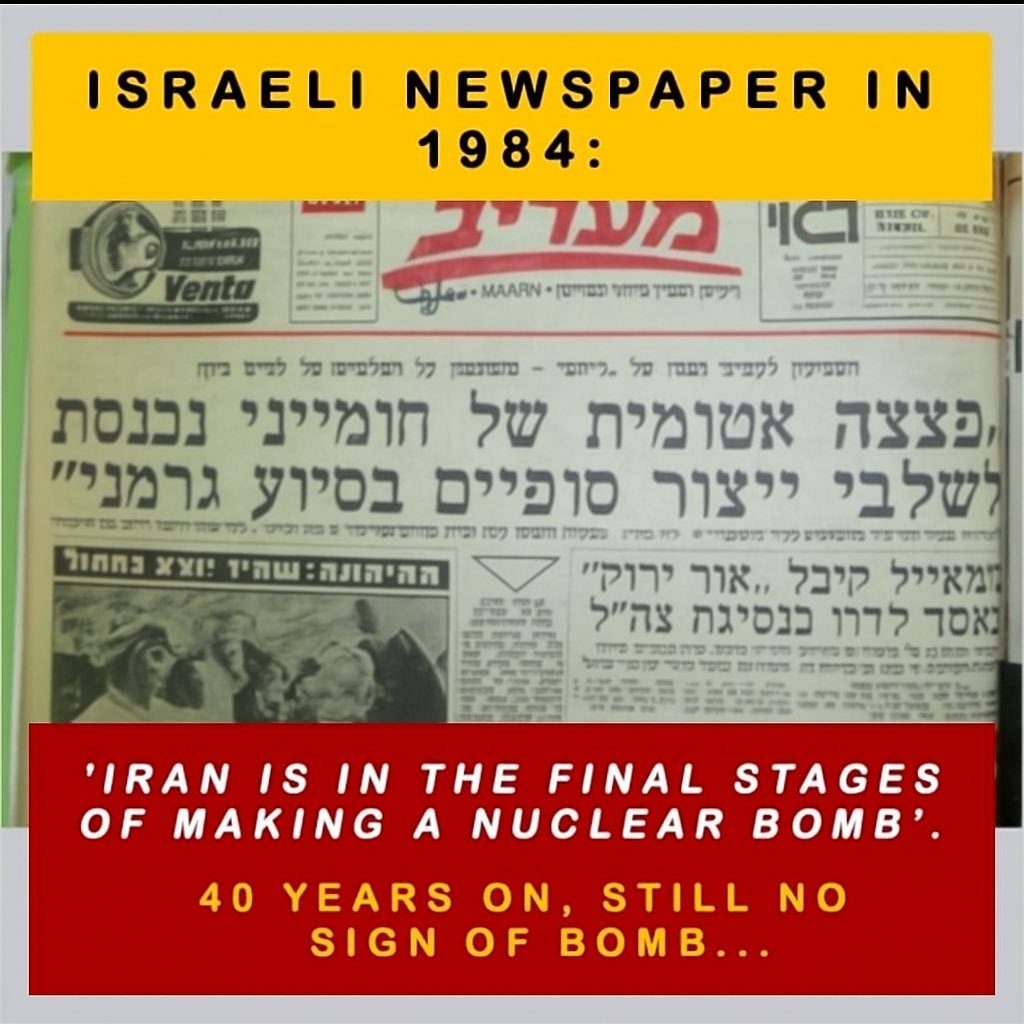
Image

On the one hand, I feel the need to say something about the US/Israel-Iran war; On the other hand, I saw it coming and said it right after October 7th, 2023, in “Israel’s Solution to Gaza: War on Iran.” And I’m really tired and depressed to see it happening as was inevitable.

The most important thing here is for everyone to understand what this conflict is, and is not, about.

In a short clip I urge everyone to watch, Seyed Mohammad Marandi says it quite well: “The real issue is not Iran’s nuclear program. The real issue for the United States is Iran’s support for the Palestinian people. That is it…The issue for the United States is Palestine.”

The issue is not nuclear weapons, and we have to stop giving credence to any attempt to fix the public focus on that. The issue is Palestine—or, in other words, Zionism.

It is about Zionism. It is about forcing Iran—the remaining powerful nation-state in the region that has not—to once and for all accept the Zionist colonizing project of expelling and exterminating the Palestinian people, which is underway in Gaza and the West Bank.

Per Marandi:

[The United States] wants Iran to end its support for Palestine. It wants Iran to be something like Turkey …or the Emirates, or Egypt, or Jordan, or Morocco, or it doesn’t matter, [to], say, criticize the Israeli regime, but at the end of the day do nothing in reality to oppose its hegemony and domination.

It is indeed a regime-change operation against Iran, and its entire point—the only thing about the regime that has to change—Is for Iran to accept the Zionist project, which means, abandoning support for Palestinian liberation, accepting Israel as the unchallenged regional hegemon, and ridding itself of any military capacity that would allow effective resistance to any aggression, including against the Palestinians, that Israel might wish to undertake.

Understand: the only thing. If Ayatollah Khamenei announces tomorrow that Iran is capitulating to acceptance of the Zionist project and changes nothing else, sanctions will be lifted and relations with Iran will be normalized. The United States will not care if Iran is Islamist or secular, theocratic or democratic, if women have to wear hijabs or burqas or miniskirts. All the blather about democracy, women’s rights, and secular liberalism will disappear. Even civilian nuclear power would be permitted.

Understand also: If Iran were to capitulate on the nuclear issue and announce that it will forgo all nuclear enrichment, it will still be attacked. If and only if Iran capitulates on accepting the Zionist project and abandoning the Palestinians to whatever fate Israel wants to inflict on them (extermination and expulsion, as we all see), will the attack on Iran stop.

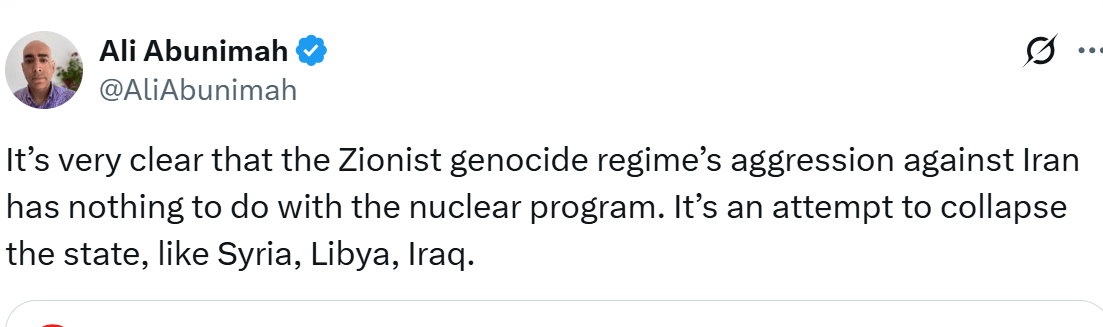
A screenshot of a white background AI-generated content may be incorrect.It’s convenient for the U. S. and Israel to present the nuclear issue to the public as the main problem, but it is only relevant to them as a lesser included aspect of the principal issue of capitulation to the Zionist project—“lesser” because, as they know, as the DNI has declared (“I don’t care what she says”), Iran has no nuclear weapons, but has other weapons and assets that presently do threaten the Zionist project.

Sure, Israel—which is not so much targeting Iran’s nuclear sites, please note—wants the U.S., the only country with the means to possibly damage it, to attack the Fordo site. Zionist hawks, knowing how opposed the American people are to war on Iran, are pushing the idea that it can be a one-and-done action that will solve the problem and won’t get the US totally involved in the war. But, as everybody knows, if the U.S. directly attacks Fordo (or anywhere else in Iran), the Iranians will of course strike back at U.S. military assets—which is exactly what Israel wants. Israeli and American Zionists want the U.S. to attack Iran’s nuclear sites not because they are afraid of some imminent nuclear weapon coming from them, but because they want the U.S. to be hit by Iran and become thoroughly and inextricably involved in the real difficult problem—the regime-change war. That’s why we have to refuse the constant framing that nuclear weapons are the real issue.

Democracy? The cry to attack Iran is not the voice of America. Where, oh where, could it be coming from?

In order to keep war-averse Americans from realizing what a difficult fight this will be, the media discussion carefully avoids clarifying the unreasonable, total submission being demanded of Iran, but the expansive demands of Israel and the U.S. are on the record.

As Benjamin Netanyahu says: “We want three central results: eliminating the nuclear programme, eliminating the ability to produce ballistic missiles and eliminating the axis of terror. We will obviously do what we must to achieve these objectives, and we have been coordinating well with the United States.” And, indeed, Trump’s National Security Presidential Memorandum (NSPM) echoes those three Israeli demands, that “Iran should be denied a nuclear weapon and intercontinental ballistic missiles; Iran’s terrorist network should be neutralized; and Iran’s aggressive development of missiles, as well as other asymmetric and conventional weapons capabilities, should be countered.”

The U.S. and Israel are not trying to get Iran to end a nuclear weapons program it doesn’t have; they are demanding that Iran give up its highly developed missile and military capabilities and its support of Palestinian resistance groups (“terrorist network”). They are demanding that Iran abandon its principled opposition to Zionist colonialism and support of the Palestinian people, disarm itself to the point of being defenseless against any Israeli attack, and adopt a comprehensively submissive posture—bend the knee—to Israel.

USrael is seeking that level of submission because Israel feels it’s necessary to protect its genocidal ethnic cleansing of the Palestinian people and secure the future of the Zionist project. But, as Seyed Mohammad Marandi says. “Iran won’t do that. Iran is not going to trade its support for the Palestinian people” in order to get acceptance by the Zionist U.S. and West—a faction of the world community that is in decline and has little to offer anyway.

The fight is now on. Israel and the United States are all in—fully committed to a military assault on Iran to force its submission. If it is going to maintain its principled stance of anti Zionist, pro Palestinian resistance, Iran must weather the onslaught, which will include nuclear attack, and prevail militarily and politically. Iran must be able and willing to inflict massive damage on Israel and Israelis.

Let’s have no illusions about any of this.

The United States is and always has been involved in Israel’s military action.

American participation in the war on Iran that it’s been planning with Israel since at least 2017 is now unfolding In politically convenient stages. . The U.S. will, forthwith, engage directly with any level of force the Israelis want, at any cost in lives and treasure to the U.S.

And, please, this does not depend on what’s percolating in Donald Trump’s head. It is an imperative of the U.S. Zionist Deep State, which gets what it wants. As Douglas Macgregor says: “Netanyahu controls more of the Senate than Donald Trump.”

A screenshot of a phone AI-generated content may be incorrect.

It is not a matter of dragging the United States into a war on Iran; it’s a matter of dragging the United States out of the war it’s already in. One can only hope there are enough anti-war forces in this country to mobilize a political rebellion and drag us out of this ultimate, unconstitutional, self-destructive, Israel-first war before it further demolishes the world and our country.

It’s shameful for those of us on the left that the stirrings of such a revolt come from elements of the MAGA base who are bristling about Trump’s betrayal of “America First,”

“No More Regime Change Wars” promises, and/or from Pentagon generals giving a realistic assessment of the military situation. (Certainly not from the Democrats.) It was Tucker Carlson and “senior Pentagon officials” who led him to call off the attack on Iran he ordered in 2019. But this time, with Israel having gone all in and under fire, I do not believe Trump, who’s already smacked down “kooky” Tucker, will resist the Zionist pressure he has built up around him since then. To paraphrase Macgregor: Netanyahu controls more of Donald Trump than does the MAGA base.

One party will prevail.

If the fight ends, or even indefinitely pauses, with Iran making no concessions on nuclear enrichment, missiles, or support for Palestinian resistance, Israel and the United States will have suffered a significant defeat, and Zionism will be in strategic retreat. If it ends with Iran conceding on any of those things—and conceding “just” on the nuclear-enrichment pretext will only prime the concession pump—then Iran will have been defeated, will have been forced to accept Israeli hegemony, and will be on a path toward political dissolution.

Per Trita Parsi:

If the nuclear program is destroyed, Israel will turn to Iran’s missile program. It will not accept Iran having missiles that can wreak havoc on Israel … Without missiles, an air force, and a nuclear deterrent, Iran will be completely exposed and defenseless. Once that is achieved, the Israelis will push for regime change or regime collapse. And after that… they will push to destroy the rest of Iran’s conventional military so that Iran won’t be able to challenge Israel’s emerging regional military hegemony for decades to come. Iran’s territorial integrity will also be put at risk

Given the costs of this battle to both, it is unlikely that either party will stop fighting without inflicting a clear defeat on the other. “UNCONDITIONAL SURRENDER!” is Trump’s and Israel’s goal, and they will not be negotiated out of it. Iran best be fighting that kind of battle. This is a fight that will end either the anti-Zionist Islamic Republic of Iran or the Zionist Greater Israel project.

Zionist USrael understands this, is all in on it, and will use every weapon and every level of force to prevail. The U.S. will pull in every military asset, even transferring indispensable weapons from Ukraine. (Zelensky is learning what it means to be a side piece. Israel is always the America’s main squeeze.) Anti-Zionist Iran had better be as unequivocally all in. There’s no exit but victory.

The parties have different military, political, and economic assets and weaknesses, and it is impossible to know who will win. Iran has a large, populous, mountainous, industrially, scientifically, and militarily developed country that cannot be invaded and occupied, and can outlast in any attritional battle. The USrael camp cannot sustain casualties or time.

USrael has formidable military power, including nuclear weapons, that will be used to try and quickly decapitate command-and-control and massively devastate Iranian cities (and, more performatively, nuclear processing facilities), in hopes of precipitating political collapse and capitulation.

USrael also has networks of proxies, including Western-aligned Iranian elites and dissidents—not to mention possible Kurdish and takfiri “moderate rebels” and such—that will be mobilized to instigate chaos.

I repeat. It cannot be avoided: Because of all the USraeli weakness stated above, USrael will use nuclear weapons against Iran. These are the only weapons the U.S. and Israel think could force quick-enough Iranian capitulation. There is no possibility that USrael will allow itself to be defeated (or dragged into an attritional conflict, which would be a defeat) without using every weapon in its arsenal. To pretend otherwise is wishful thinking.

If Iran is going to prevail, it must be prepared to take nuclear hits. If it doesn’t have the political and military ability to take those hits and persevere, or if it thinks it can finesse this conflict in ways that will avoid them, it will lose.

All is at risk, and nobody knows how this will end. Each party is in the Mike Tyson predicament: “Everyone has a game plan until they get smacked in the face.”

USrael’s “shock and awe” plan will go swimmingly until American ships get sunk and soldiers killed, the Strait of Hormuz is closed and oil is $10 a barrel, US streets and congressional offices are filled with angry protestors, and would-be Jewish-supremacists are heading back en masse to the East Bank (of the Hudson), breaking out of the Zionist concentration camp for Jews that Israel is already becoming:: ‘It’s important to clarify,” Israel’s Transportation Minister declares, “that, at this stage, we will not allow Israeli citizens to leave the country. Only those who came to Israel as tourists, businesspeople, or diplomats…will be allowed to leave.”

Can Iran’s plan for maintaining its principled anti-Zionist support of Palestinian resistance survive if Khamenei is assassinated, Qom and Tehran are nuked, and its own population is facing a devastation like Gaza’s? Iran will get help from Ansarallah, but that’s not enough. Where is Hezbollah? What can Iraqi resistance groups contribute? The coordinated offensive of regional resistance groups that was always a necessary part of the plan has clearly been hobbled by assassination. Will Pakistan send or intervene with nukes? Any country that does will get nuked by Israel. That’s what its nukes are for! The Arab nations, the UN, or the “international community” will not come to the rescue. Russia and/or China will provide diplomatic support and may provide weapons, which would be a great help. But they, too, have their own populations and problems, and are more likely to counsel concessional compromise than to risk a military confrontation with two nuclear powers (at least one utterly fanatical) to preserve an anti-Zionist, adamantly pro-Palestinian Iran.

The horrible predicament of the Palestinian people is that no country in the world is willing to risk everything, to make its own people pay any price, to defeat Zionism, while the United States is willing to do all of that to protect the Zionist project. We are about to find out if Iran is the exception.

We just do not know how this is going to end up, who is going to win, or how much of the world it will devastate.

The victory we do know about and have to recognize, which Trump’s reckless, unpopular, and unconstitutional military intervention demonstrates—as did Bush’s and Obama’s and Biden’s and every one on Wesley Clark’s list—is the unconditional surrender of the United States to the Zionist project, the conquest and degradation of the United State by the parasite of Zionism We can only hope that this self-insult is so obvious and dangerous and shameful as to inspire the necessary revolt against it , and that the cure will come in time for Iran and the Palestinian people.

Jim Kavanagh edits The Polemicist. Follow him on Twitter @ThePolemicist_.