Showing posts sorted by relevance for query burqas. Sort by date Show all posts

Monday, September 21, 2026

ISLAMOPHOBIA

Meloni announces ban on burqa and niqab in Italian schools, cap on foreign students
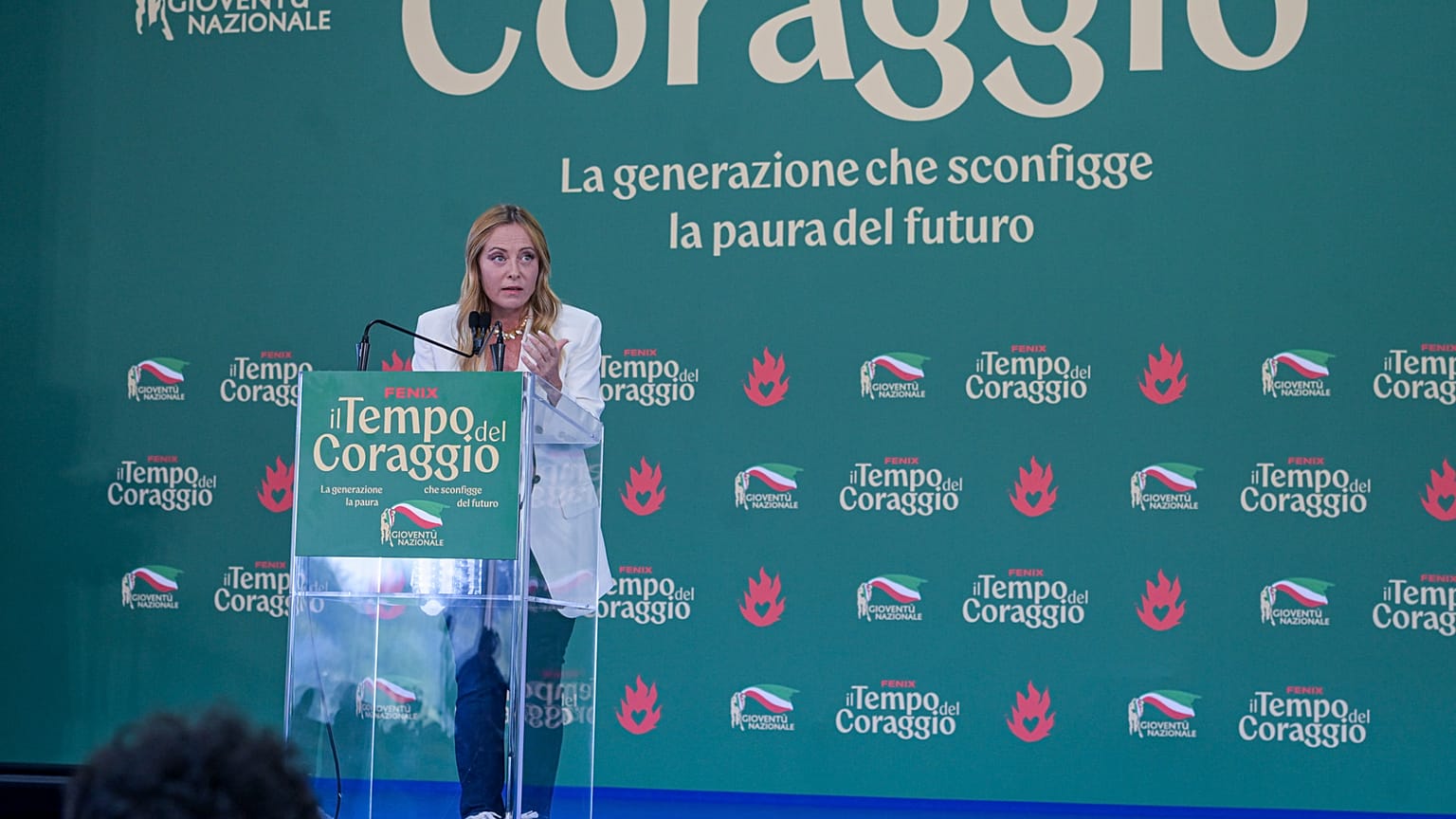
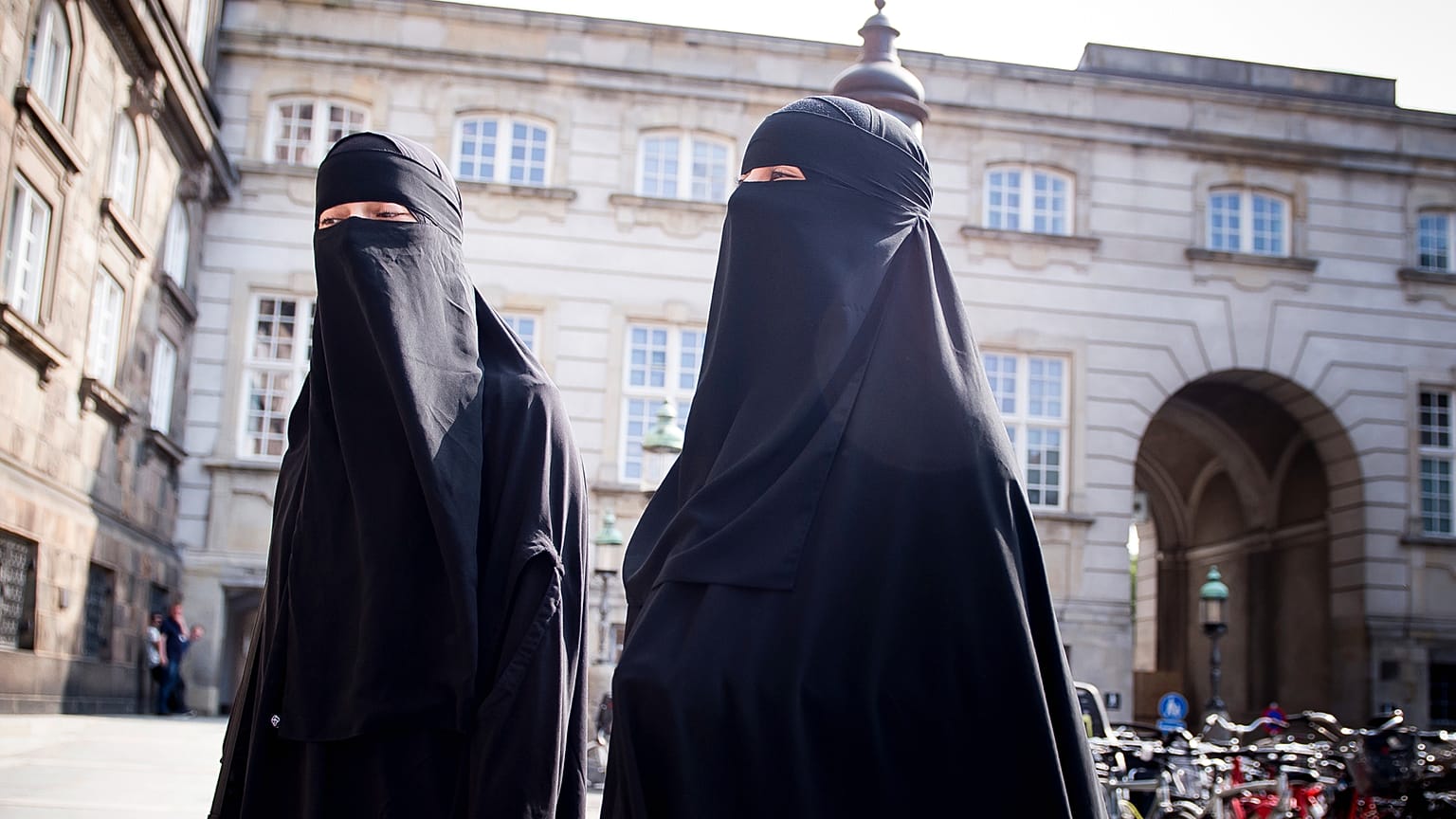
Italian Prime Minister Giorgia Meloni
Copyright LaPresse

By Fortunato Pinto
Published on

Italy’s government is preparing new school measures, including a ban on niqabs. Meloni is facing competition from retired general Roberto Vannacci, who has called for tougher measures on migration.

Italian Prime Minister Giorgia Meloni has announced that the government is preparing a bill that would ban burqas and niqabs in schools and introduce a limit on the number of foreign pupils in each class.

Several European countries, including France and Belgium, already ban face coverings in public places. Austria has also introduced restrictions in schools. Elsewhere, including Spain and Poland, freedom of conscience and religion is protected by the constitution.

Meloni said a package of measures will soon go before the Italian cabinet, including a ban on burqas and niqabs in schools, a requirement for parents of pupils facing “serious difficulties integrating” into the national school system to learn Italian, and a limit on places for foreign pupils.

Italy heads to the polls next year, with competition intensifying to the right of Meloni’s party following the entry of retired general Roberto Vannacci, who has called for even tougher measures. Migration is a highly political and divisive issue in Italy.

“It is unacceptable that in an Italian classroom the children who end up feeling pushed into a corner are Italian children because they have become the minority. That cannot be allowed,” she said during a rally organised by Gioventù Nazionale, the youth wing of her Brothers of Italy party.

“Calling all this integration is yet another lie, a convenient lie for those who live off ideology, for those who preach to us from their living rooms and then send their own children to schools where this problem does not exist.”

Previous initiatives and legislative proposals

Meloni’s announcement comes after several related initiatives in recent months.

In early August, Education and Merit Minister Giuseppe Valditara proposed action on the full-face veil through an amendment to the security bill.

At the end of July, Futuro Nazionale — the party founded by far-right MEP Roberto Vannacci, who has backed Meloni’s proposal — tabled a resolution against the full-face veil in the Chamber of Deputies’ Culture Committee. It was approved with centre-right votes after being redrafted at the government’s request.

In March, the League introduced a bill in the Senate to amend Article 5 of the 1975 Reale law, which was introduced by then-Justice Minister Oronzo Reale during the Years of Lead to ban face coverings in public places.

The proposed amendment would create a new offence of forcing someone to conceal their face, punishable by one to two years in prison and fines of between €10,000 and €30,000. It would also bar those convicted from obtaining Italian citizenship.

Full-face veils in Europe

Meloni referred specifically to a ban on burqas and niqabs. A burqa traditionally covers the entire body and includes a mesh over the eyes, while a niqab covers the face, leaving only the eyes visible. A hijab, by contrast, covers the hair and neck but leaves the face uncovered.

Several European countries have introduced restrictions on face coverings in public spaces.

France imposed a nationwide ban on concealing the face in public places in April 2011, a measure later upheld by the European Court of Human Rights.

Belgium approved a nationwide ban in July 2011, with fines and prison sentences for violations. Bulgaria has prohibited full-face veils in state, administrative and educational institutions since September 2016.

Austria passed an anti-mask law in October 2017 requiring faces to remain visible in public spaces. From September 2026, girls up to the age of 14 will also be prohibited from wearing at school any veil that “covers the head according to Islamic traditions”.

Denmark introduced a nationwide ban in August 2018, with financial penalties increasing for repeat offences. The Netherlands introduced a partial ban in August 2019 covering schools, hospitals, government offices and public transport.

Switzerland introduced a federal ban on face coverings in public spaces following a national referendum, with the implementing legislation coming into force in 2023. Portugal completed its legislative process in August 2026 with a law banning face coverings in public spaces and imposing financial penalties.

Germany has no nationwide ban, but federal legislation prohibits public employees, judges, members of the armed forces and motorists from covering their faces while driving. Several Länder also restrict full-face veils in schools and universities for students and teachers.

Foreign pupils in the classroom

If Italy introduces a statutory maximum for foreign pupils in each class, it would become the first European country to adopt such a rule, according to the proposal.

Italy already has a 30% limit on non-Italian pupils, set out in a 2010 ministerial circular issued by then-Education Minister Mariastella Gelmini. The limit has often gone unenforced because of local demographic conditions and a lack of flexibility, particularly in urban outskirts.

Other European countries use different approaches.

Denmark has some of the most restrictive policies. The government has allowed upper secondary schools to introduce caps of up to 50% for pupils of “non-Western origin” or from disadvantaged neighbourhoods. Schools can also organise classes based on parents’ income, with the aim of encouraging social and ethnic mixing — a model the Italian government is watching with interest.

In France, quotas based on origin would be unconstitutional because the state does not collect statistics based on ethnic or religious identity. Instead, authorities use “zoning” to redesign school catchment areas, linking working-class and wealthier neighbourhoods. In areas with high concentrations of migrants, the state also reduces the number of pupils per class.

Criticism of Meloni’s proposal

Meloni’s announcement has received support from members of the governing coalition but has also drawn criticism from the opposition and legal experts.

Speaking to ANSA, Salvatore Curreri, a professor of constitutional law at the University of Enna, pointed to Article 34 of the Constitution, which states that “school is open to everyone”, including foreign children.

“If the measure were so restrictive as to uproot minors and their families to other areas, far from where they live, it could prove excessive precisely because it conflicts with the overriding functional aim of integration, with the risk of infringing a right recognised by the constitution,” Curreri said.

Angelo Bonelli, an MP for the Green and Left Alliance (AVS) and co-spokesperson for Green Europe, also criticised the proposal.

“Yet again, instead of dealing with schools, she is chasing the neo-fascist right of AfD and Vannacci, who has proposed separate classes for students with disabilities,” he said. “The truth is that the prime minister is not at all interested in how schools work. Our teachers’ salaries are among the lowest in Europe.”


BABUSHKA

Thursday, August 20, 2026


Portugal enacts 'burqa law' banning face coverings in public space

Portugal joins a long list of countries around the world that have already banned face-covering veils in public spaces.
Copyright AP Photo

By Joana Mourão Carvalho & Greta Ruffino
Published on

In Portugal, violators face fines ranging from €150 to €3,000, with exemptions for health, professional, artistic or weather-related reasons, as well as in places of worship, diplomatic missions and on aircraft.

Portugal's President António Jose Seguro has enacted a law banning face coverings in public spaces, a measure widely seen as targeting Muslim women who wear full-face veils.

"The face must be considered a central element of human identity and communication," Seguro said in a statement late Tuesday.

The legislation, dubbed the "burqa law" by local media, was approved by parliament in July with the support of the governing right-wing coalition and far-right parties. Left-wing parties voted against it.

The law prohibits clothing designed to conceal the face or prevent identification in public spaces. It also bans forcing someone to cover their face for reasons related to gender, religion, age or origin.

Seguro acknowledged that the issue was one of "great social and cultural sensitivity".

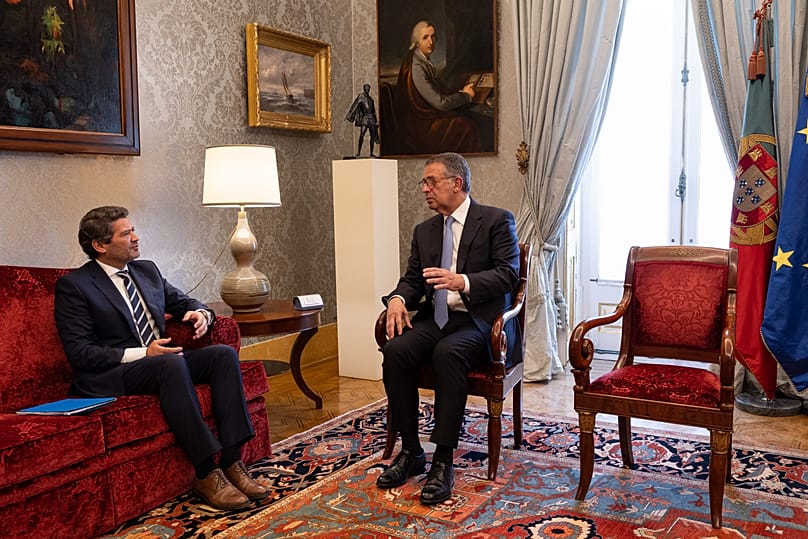
President of the Republic promulgated law after changes to Chega's proposal Miguel Figueiredo Lopes/Presidencia da Republica

Left-wing parties warn of Islamophobia risks and question security justification

The bill put forward by the far-right Chega party received negative opinions from the Portuguese Bar Association, the High Council of the Public Prosecutor's Office and the Portuguese Association of Women Lawyers, alongside concerns over its potential unconstitutionality.

The centre-left Socialist Party (PS), green-left Livre and the Portuguese Communist Party (PCP) opposed the proposal, warning it could fuel Islamophobia. It was backed by the centre-right Social Democratic Party (PSD).

The PS denounced "Islamophobic purpose that was evident in the explanatory memorandum [of the bill], the context of radicalism in which we live and the risks this creates for the communities directly targeted."

The PCP said the proposal had "nothing to do with women's rights, nor with security issues", but was "solely about fuelling hate speech and violence against those who are different, fuelling racist and xenophobic discourse."

Livre accused the right of "hypocrisy" and of conducting the debate in a "biased manner", in an attempt to create in Portugal "a moral panic over a supposed Islamic invasion that the far right so often talks about."


Full-face veil bans: How do rules compare across Europe?

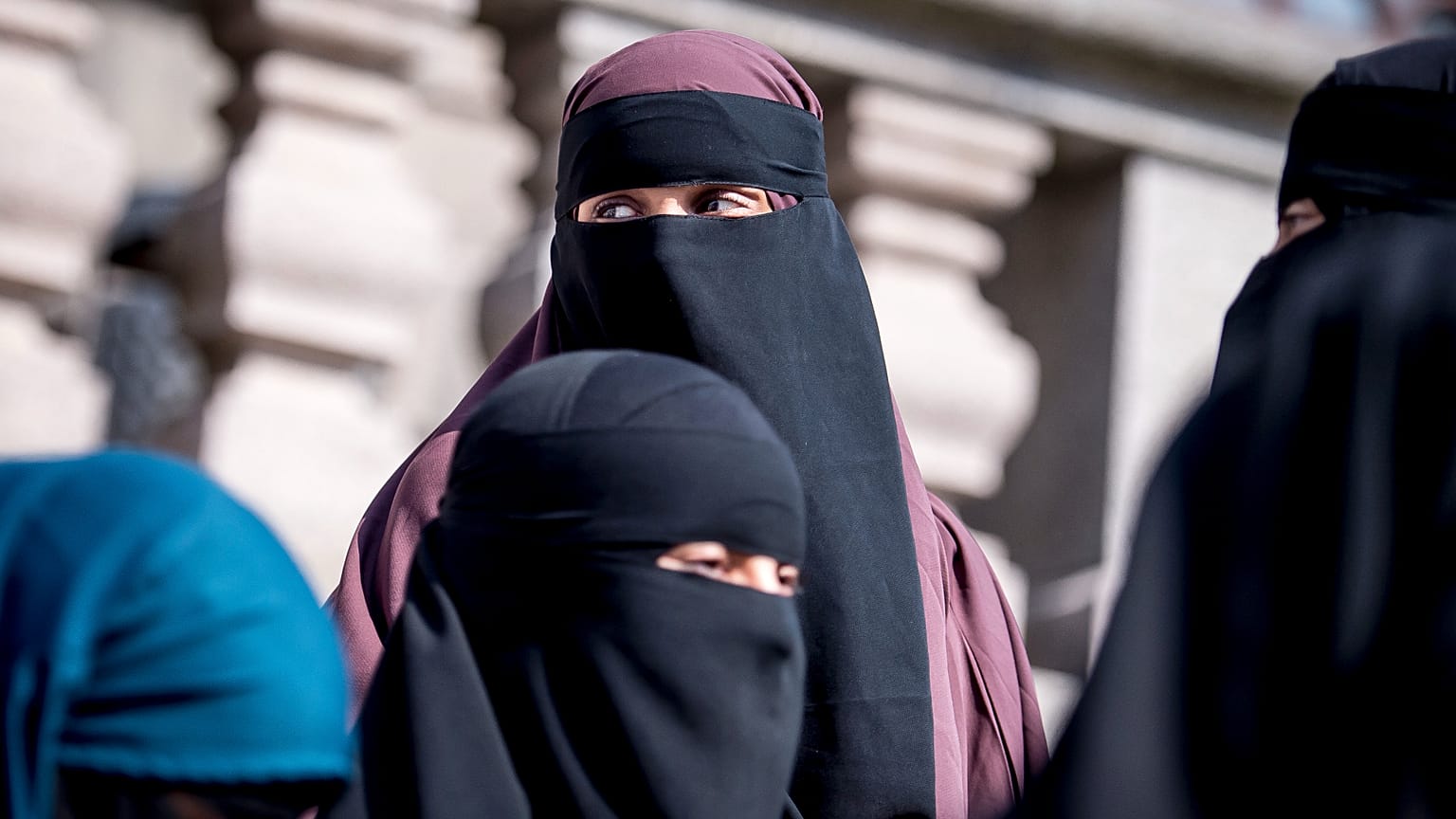
Women wearing niqabs stand outside the Danish Parliament in Copenhagen on 31 May 2018, as Denmark approved a ban on garments covering the face.
Copyright Ritzau Scanpix

By Greta Ruffino & Joana Mourão Carvalho
Published on

European countries take widely different approaches to full-face veils, from nationwide bans to restrictions in specific public spaces. Euronews looks at how the rules vary across the continent.

On Thursday, Portugal joined a growing list of European countries that have banned or restricted burqas and other full-face veils in public spaces.

But rules vary widely across the continent. Euronews breaks down how different European countries regulate face coverings.

France pioneered Europe’s face-covering ban

France became the first European country to ban full-face coverings in public spaces in 2011. Violations can result in a fine or mandatory civic education.

The French government argued that face coverings prevent people from being clearly identified, posing potential security risks and hindering social interaction in a society where facial recognition and expression play an important role in communication.

During the COVID-19 pandemic, questions were raised over whether protective face masks were compatible with the ban. Authorities later clarified that masks were permitted under existing health and safety exemptions.

Belgium: Fines and prison for violations

In Belgium, the ban dates back to 2011, with offenders facing fines or up to seven days in prison.

Alongside France, Belgium was one of the first European countries to introduce such restrictions, citing public security and social integration.

The law aims to facilitate communication and prevent people from concealing their identities in public spaces, measures Belgian authorities have defended as essential to ensuring the full participation of all citizens in society.

Bulgaria: Full-face veils restricted to private spaces

The wearing of burqas and other full-face veils has been banned in public spaces in Bulgaria since September 2016 and is restricted to private homes and places of worship. Muslims make up around 12% of Bulgaria's population.

Austria: Face-veil ban extended to schools

In Austria, a ban on full-face veils, including the burqa and niqab, came into force in 2017 under legislation known as the "Anti-Face-Veiling Act". The measure was introduced on security and integration grounds, with authorities arguing that face coverings hinder communication and social cohesion.

Additionally, in 2025, Austria's parliament approved a law banning Islamic headscarves for girls under the age of 14 in schools. The ban explicitly refers to "the headscarf that covers the head in accordance with Islamic tradition".

Denmark: A blanket ban on face coverings

Denmark enacted a full ban on face coverings in all public places in 2018. The law, which prohibits any clothing that conceals the face — including burqas and niqabs — has been justified primarily on grounds of public identification and societal transparency.

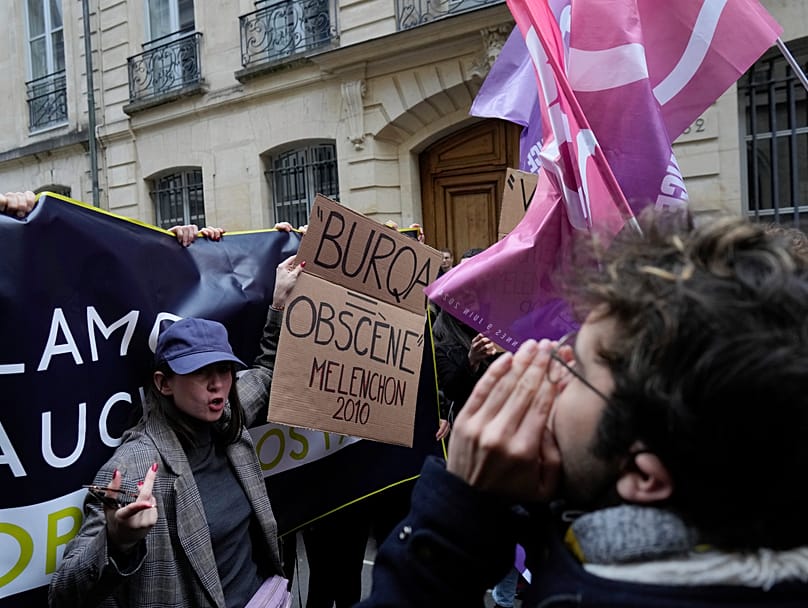
Nemesis founder Alice Cordier protests against a conference by Jean-Luc Mélenchon at Sciences Po in Paris on 22 April 2024, holding a sign reading "Burqa=obscene". (AP Photo/Thibault Camus)

Netherlands: Partial restrictions in key institutions

In the Netherlands, a 2019 law restricts face coverings in specific public settings — such as schools, hospitals, and public transport — where clear communication and identification are deemed essential.

While not a total ban, it reflects a growing inclination toward regulating religious expression in state spaces.

Germany: A fragmented approach to face-covering bans

Germany has taken a fragmented approach, with some states introducing partial bans in schools and public spaces on security and communication grounds. Specific restrictions also apply to certain professions and everyday situations.

While some regions consider such bans necessary to promote integration and social cohesion, others fear they could isolate certain communities and undermine social inclusion.

Luxembourg: Full-face veils restricted in public institutions

In Luxembourg, a law restricting the wearing of full-face veils came into force in spring 2018.

Face coverings are prohibited on public transport, in schools and on school grounds, in facilities for children under 16, hospitals, common areas of care homes for older people, including corridors and lifts, as well as in judicial buildings and public administration facilities open to the public.

Spain: Legal silence, local discretion

Spain lacks national legislation on the issue, leaving decisions to the discretion of schools and institutions.

In 2013, the Supreme Court backed a Madrid high school's decision to exclude a hijab-wearing student, setting a precedent but not a standard.

While Islamic groups have stressed that the Spanish Constitution and a 1992 cooperation agreement together protect the right to wear religious attire, the Ministry of Education has not prioritised national guidance, arguing that such cases are rare and manageable at the local level.

Portugal: Legal neutrality, selective application

Portugal doesn’t explicitly ban religious symbols but permits institutions — both public and private — to enforce neutral dress codes, as long as these are applied uniformly.

The aim is to protect employees from religious pressure while ensuring that workplaces remain ideologically neutral.

Italy: A law from another era

Italy does not have a specific ban on religious dress, but a 1975 anti-terrorism law prohibits face coverings in public.

Though originally unrelated to religious attire, this law has occasionally been invoked to restrict the niqab and burqa in certain public or security-sensitive environments.

Sweden: Freedom first, local pushback

Sweden has no national ban on religious attire, and the veil remains permitted across public life. The national approach favours individual rights, though some municipalities have attempted to impose school-specific restrictions, citing integration and gender equality. These moves have sparked debate but have not yet reshaped national policy

Greece: Legal protections with practical limits

Greek law offers robust anti-discrimination protections based on religion across employment and public services. Yet, practice has sometimes told a more complicated story. In one 2022 case, a hospital barred a nursing student from wearing a headscarf during her internship, citing uniform regulations.

The Greek Ombudsman ruled the policy did not violate anti-discrimination laws, framing it as a dress code issue, not a religious one.

Restrictions on face- or body-covering veils, varying in scope and extent, are also in place in countries across several continents, including China, Australia, Russia, Canada, Sri Lanka, Gabon, Chad, Senegal, the Republic of the Congo, Cameroon, Morocco, Algeria and others.


LA REVUE GAUCHE - Left Comment: Search results for BURQA


LA REVUE GAUCHE - Left Comment: Search results for HIJAB


LA REVUE GAUCHE - Left Comment: Search results for BABUSHKA


Saturday, November 28, 2026

FASCIST ISAMOPHOBIA

No burqas at school and fewer foreign pupils: Italy passes controversial education law

Final green light for the school decree
Copyright AP Photo
By Chiara Zampiva
Published on

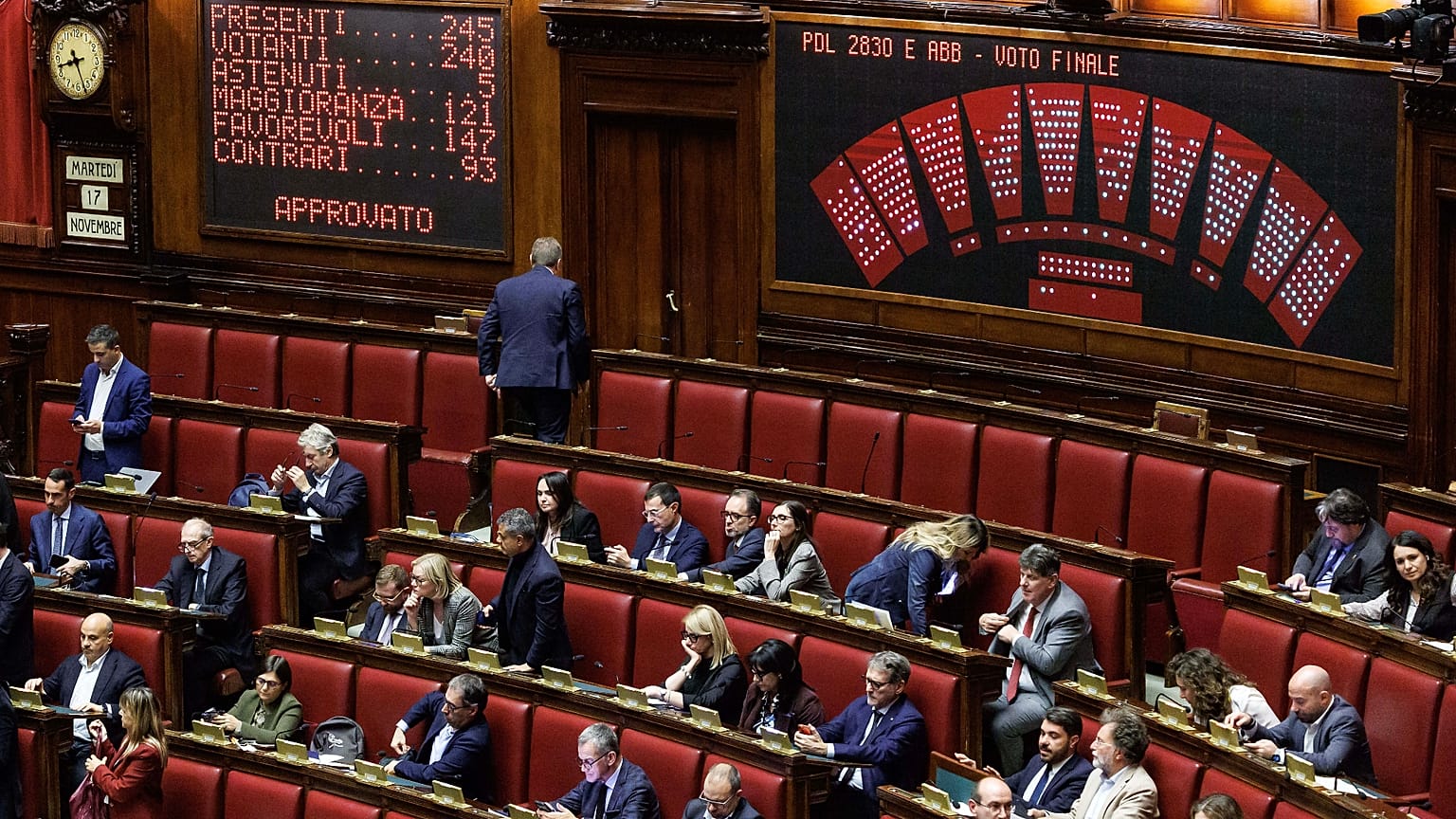
The school decree, which includes new rules on digital transition, was finally approved in the Chamber on Thursday. During the vote, opposition MPs displayed signs saying "At school no one is a foreigner".

Italy has approved a controversial education reform introducing a ban on face coverings in schools and a 30% cap on students of foreign origin in first-year classes, prompting accusations of discrimination from opposition parties.

The cap will not apply to students who have already achieved an adequate knowledge of the Italian language, while the ban on face coverings will prevent Muslim female students from wearing burqas and niqabs in class.

The legislation also introduces Italian language courses for foreign parents.

The Chamber of Deputies gave its final approval to the Decreto Scuola with 142 votes in favour, 112 against and four abstentions, following its approval by the Senate on 20 November.

Decree-law 170 of 30 September 2026, which introduces urgent provisions to ensure the regular start of the 2026/2027 school year, support measures under the National Recovery and Resilience Plan (PNRR) and promote the integration of foreign students, had already secured the government's confidence.

The final vote was marked by protests from opposition MPs, who displayed a sign in the chamber reading "At school nobody is a foreigner".Relat

Opposition accuses government of discrimination

Opposition parties sharply criticised the new restrictions, accusing the government of failing to address the real challenges facing Italy's education system.

"The problem is not how many foreign children there are in a class, but how many teachers and what tools we provide to guarantee everyone the right to learn. Everything else is discrimination and racism," Five Star Movement (M5S) MP Antonio Caso said.

"Alessandro Ingusci died because of indifference, while he was asserting the right to study and to housing. And this should be the real urgency for a government that issues decrees to address emergencies in schools. Yet this decree does not tackle any of the real urgent issues: not the safety of school buildings, not the low salaries of teachers, not the right to study," he added.

Irene Manzi, the Democratic Party's national head for schools and leader of its group on the education committee, also condemned the measures.

"A decree that divides girls and boys within classes and moves them from one school to another if the 30 per cent limit is exceeded, ignoring their stories, the contexts in which they live, the environment in which they grow up. It treats them like parcels," Manzi said.

"And it adds sanctions for parents and reports from educational institutions such as the CPIA, breaking that climate of trust on which the educational community should be based. As if foreign families had fewer rights."

"What has been approved is a decree without vision," she added.

Meanwhile, the governing majority expressed "maximum satisfaction" with the final approval of the legislation.

"Today's vote is also a significant show of unity of the majority around our government and its reforming action," Minister for Education and Merit Giuseppe Valditara said in a statement.

Digital textbooks divide governing coalition

Despite the controversy surrounding restrictions on foreign pupils, the fiercest clash between the majority and the opposition concerned a provision on school and university e-books, which also divided the governing centre-right coalition.

Under the new legislation, publishers of school and university textbooks will be required to offer digital versions of their publications at 50% of the price of their printed equivalents.

The measure aims to make educational materials more accessible and ease the financial burden on families.

However, the Italian Publishers Association (AIE) expressed strong opposition to the provision.

"Our deep opposition remains unchanged to a measure that does not bring real economic benefits to families and students but places on educational and academic publishing the burden of a support policy that should be a public responsibility," AIE President Innocenzo Cipolletta said.

"A provision that is not consistent with the results of countless international scientific studies, that interferes with copyright, opens the door to piracy, alters the economic value of the work, puts at risk the sustainability and jobs of companies and ultimately undermines the cultural value of books in the educational path."

Within the governing coalition, Forza Italia opposed the measure on e-books, while Brothers of Italy (Fratelli d'Italia) supported it. The majority subsequently closed ranks for the final vote.

Rosaria Tassinari, Forza Italia's group leader on the Culture Committee, welcomed the final approval of the decree.

"Forza Italia has expressed a clear and consistent position, opening a debate that led to the agenda item signed within the majority, which represents a point of balance between the different sensitivities that emerged," she said.

What else does the new school law introduce?

The legislation also introduces changes to teacher recruitment, including permanent appointments, and modifies specialisation pathways for support teachers.

It updates the timing and procedures for drafting Individual Education Plans and introduces additional funding for administrative, technical and auxiliary staff, as well as for the fund aimed at improving educational provision.

Sunday, March 16, 2025

Bangladeshi women alarmed by emboldened hardliners

AFP 
Published March 15, 2025 

Women activists holding bamboo sticks take part in a demonstration in Dhaka on March 9, 2025, to condemn rape and violence against women in Bangladesh.


Asif Sardar Arnab, a librarian at the Dhaka University arrested for sexually harassing a student, was soon released — greeted by a cheering crowd who presented him with flower garlands.

His alleged victim was a student who enthusiastically supported the youth-led uprising that overthrew the nation’s autocratic government last year.

That young woman, after receiving a torrent of violent threats from religious hardliners emboldened by the political upheaval, now wonders whether she made the right choice.

“A perpetrator was freed because of a mob,” she said in a social media post.


“You can’t imagine the number of rape and death threats I’ve received,” added the woman, who cannot be identified due to Bangladeshi laws designed to protect sexual harassment complainants from retribution.

“We made a mistake by joining the movement. So many people sacrificed their lives in vain.”

Ex-premier Sheikh Hasina, ousted in last August’s revolution, took a tough stance against religious movements during her 15-year tenure. Her government was blamed for gruesome human rights abuses, and for many, her departure heralded change.

Since her exit, the hardline religiously fuelled activism that Hasina’s government had driven underground has resurfaced. Much of it is directed at Bangladeshi women, accused of failing to act with sufficient modesty.

Arnab, who works at the library of the prestigious Dhaka University, was accused of accosting a student on campus, saying that her choice of attire did not sufficiently cover her breasts.

The student complained, and Arnab was arrested. Supporters of Arnab, who believed he had acted in appropriate deference to his religious convictions, surrounded the police station and demanded his release.

They yielded when a court quickly bailed Arnab — something the female student attributed to mob pressure.


Demonstrators scuffle with police during a protest march near the home ministry, in Dhaka on Feb 24 against the recent incidents of rape and violence against women in Bangladesh. — AFP

A spokesperson for Dhaka’s police force, Md Talebur Rahman, told AFP that Arnab was still under investigation and also acknowledged the menacing behaviour his victim had faced.

“She can lodge a complaint against those who have been threatening her,” Rahman added.

‘A crisis’


It is far from an isolated incident.

Several women’s football matches were cancelled this year after pitch invasions by hardliners angry at women’s participation in sport. Two women were briefly taken into protective custody by police this month after an altercation that began when they were harassed for publicly smoking cigarettes by a crowd of men on their way to pray at a mosque.

Hardline groups have also demanded that organisers of religious commemorations and other public events remove women from the line-up.

Dhaka University student Jannatul Promi, 23, said that the rising incidences of harassment had left young women feeling unsafe.

“We are going through a crisis,” she said. “The other day, I was waiting for the metro when a man approached me and asked if I should be outside without a veil. As soon as I responded, more people joined him against me.”


Dhaka University student Jannatul Promi looks on during an interview with AFP in Dhaka on March 9. — AFP

Fellow student Nishat Tanjim Nera, aged 24, said the authorities had failed in their duty.

“Harassment incidents are happening repeatedly, but there is no redress from the government,” she said.


Dhaka University student Nishat Tanjim Nera speaks during an interview with AFP in Dhaka on March 9. — AFP


‘Complete denial’

Several recent cases of sexual violence have captured public attention.

An eight-year-old girl died on Thursday from wounds she sustained during a rape days earlier — a case that prompted days of protests and vigils by women in Dhaka and elsewhere.

Such is the level of public anger that police have begun transporting rape suspects to court in the middle of the night, out of fear of attacks.

Nobel Peace Prize winner Muhammad Yunus, who leads the interim government which replaced Hasina, condemned the “horrific acts of violence” against women.

“This is deeply concerning and completely at odds with our dream of building a new Bangladesh,” he said.

Yunus’s administration has struggled to restore law and order, with many police officers refusing to return to work and the army brought in to help.

Since last month, it has directed scant police resources to a sweeping crackdown, dubbed Operation Devil Hunt, against gangs allegedly connected to Hasina and working to foment unrest.

Maleka Banu, of the feminist campaign group Bangladesh Mahila Parishad, said those resources would have been better spent on trying to curb sexual violence.

“What good is it for the government to simply express concern? We expected action,” she said.

“After Sheikh Hasina’s fall, a series of violent incidents followed. The government was in complete denial […] Now, they claim the fallen dictator is behind every crime.”


Freedom for Women Still a Far Cry


Suresh Khairnar | NewsClick


Women are still invisible in households, more so in North India and South-West Asia.


Image Courtesy: Social media

International Women's Day was celebrated the world over on March 8, but have women really been liberated?

I belong to Maharashtra, the state of Jyotiba Phule and Baba Saheb Ambedkar. I was born in the so-called 96 clan Maratha community. Seventy years ago, our family was a joint family, in which my father and his three brothers and one of his two married sisters lived, The other sister in her in-laws' house. My other aunt's husband left home after marriage and became a sadhu. His whereabouts were never known. Because of this, my elder aunt, who was the eldest, lived with us. She was childless.

So, apart from the five women in our house, including my father and his three brothers and their children, we had a family of 25-30 people. I am 72 years old now. I have never seen the women of our house coming or walking in front of men during the day. I have never seen my parents talking to each other. And the five women used to eat whatever was left after all the men and children had eaten. If there was insufficient food for them, I have never seen them cook again. That is why, all the women of our house have been physically weak and underweight! I

In Hinduism, women have been given the status of Annapurna Devi! But all the Annapurna Devis of our house were victims of malnutrition.

We worry about the rights of Muslim women. But I have seen the phenomenon of darkness under the lamp. My village is also included in the history of Satyashodhak Samaj. But, I have never seen the women of the houses of the so-called Satyashodhak leaders moving around the village during the day. Although this was 70 years ago.

How do women become victims of malnutrition? It is my opinion that women suffering from anaemia should not be measured by economic issues. This includes women from affluent families as well. Both men and women living below the poverty line are victims of malnutrition. On the contrary, among the so-called affluent sections, too, women are reminded from their birth, even during lactation, that they are girls. In this regard, the book, Second Sex, by French feminist author Simone de Beauvoir, looks at women from all aspects -- biological to social, economic and cultural. Every man and woman doing public work needs to read it.

In the early 1980s, I started visiting Bihar because of the JP (Jayaprakash Narayan) movement. After visiting the homes of socialist leaders, Gandhi-Vinoba Bhave followers, I saw that food, tea, snacks, everything was being served regularly, but the hands that made them were not visible. Even today, over 50 years have passed, but I have still not met the life partners of some of our socialist friends.

However, the names of Jayaprakash Narayan and his wife Prabhavatiji in Bihar’s public life are similar to Mahatma Gandhi-Kasturba. But if we leave this exception, the condition of women in all the states of North India is not very different even today.

A socialist leader had once occupied the seat of the country's Prime Minister for some time. Mrinal Tai Gore, a prominent socialist leader then, and some women got the opportunity to visit his ancestral house. Mrinal Tai Gore told me later that she felt the lack of women in the room. She said that she took advantage of being a woman and went inside the house and met the women of the household. And from the conversation, she found that some of them were post-graduates, while the other women were graduates. But they were forbidden to come into the meeting room. During his tenure as Prime Minister, this socialist leader’s wife was never seen in public life.

During 1990-91, while working on the aftermath of the Bhagalpur riots in Bihar, our team had to frequently visit Muslim localities because the community had suffered the most destruction. We saw some women gathered near the windows watching us very closely, but they were all veiled. There was no dearth of hospitality there either. But the hands that cooked the food were not visible.

Once Manisha Banerjee, Vani Sinha, Shamli Khastgir and Veena Aalase, who were among the women who often visited us from Calcutta and Shantiniketan, informed me that in a Muslim- dominated village named Rajpur, an exclusive meeting of women was being organised on the roof of someone's house in the evening, and I should address that meeting. After climbing the roof, I saw that except Manisha, Banidi, Shyamlidi and Veenaadi, all the other women were wearing burqa. But, as soon as I started my address, I saw that almost all the faces covered with burqa were now visible. I felt a bit embarrassed. Our meeting went on till it was quite dark, but the atmosphere was beautiful and pleasant.

Similarly, 15 years ago, I had gone to Aligarh Muslim University for the Maulana Azad Memorial Speech. The main speech was delivered in Kennedy Hall. I saw that all the students sitting in the lower hall were males. The female students were seated in the upper gallery. When I looked up, I could see only burqas. I had an extra day, so I expressed my desire to see the university. A professor was given the special duty of hosting me. After breakfast, he took me around in a university car. He also took me to the tomb of Sir Syed Ahmed. When I was returning from there on foot, an elderly gentleman wearing a sherwani greeted me and said, "I am the head of the department of Islamic studies, and I was very impressed with your speech yesterday. If you are not busy right now, can you come to our department for a chat for some time?" I promised him that I would visit the department some time later. When I stepped into his department, the very small hall was full of students sitting in burqas. The gentleman said: "Yesterday, you spoke about how Muslims of the whole world are being targeted in a planned manner in the name of political Islam. And this is the reason that these girls of our department wanted to meet you after listening to your speech from the gallery”.

 I told him, “You have done me a favour. Because for the last 20 years, I have been working on the Hindu-Muslim issue after the Bhagalpur riots and in that, I especially try to focus more on women. Because it is women who have to bear the wounds of any riot and war more than anyone.” I noticed that in that hall, too, all the girls had lifted their burqas. A serious debate went on with all the girls for at least more than two hours.

All those girls were post-graduates and some of them said that they would go for higher research studies later.

Half of the world's population is women. But the condition of women is still very unequal, to a greater or lesser extent. The worst situation is in those parts of the world where the feudal system still prevails.

The status of women is still very pitiable in almost all of North India and South-West Asia. The writings of Tehmina Durrani of Pakistan, Taslima Nasreen of Bangladesh and Shirin Abad of Iran show that even today women are treated as ‘slaves’.

And in the so-called Western culture, women are still projected like a commodity, and object. Which why there is a competition to display their bodies in advertising and fashion shows—whether it is an advertisement of a men's underwear or his shaving blade.

Sex trade is a product of this very trend and has turned into an industry. I remember (in 1993-94), I got a chance to attend a conference on Human Rights (Huron) in Nepal's capital, Kathmandu. It was inaugurated by the then Nepal Prime Minister Girija Prasad Koirala. Speakers at the gathering were only focusing on the excesses of the monarchy, police, and army. So, when my turn came, I said that "All the speakers before me have spoken of numerous reprehensible acts of oppression, atrocities and exploitation being done by the government and the royal family. But I have come from India, and I am from Calcutta. I am from Maharashtra. I have noticed one thing since my childhood, that from the towns of India to the big cities like Calcutta, Mumbai, 50% of girls in brothels are from Nepal. I have not seen anyone even close to Huron thinking about this subject, which is a very serious matter. Now the Rana regime has ended and democracy has begun. So, I expect the Honourable Prime Minister that special efforts should be made to stop the trade of all these women.”

Immediately after my speech, Prime Minister Koirala took the mike, and said, "I assure Dr. Suresh Khairnar that I will try, especially from my government's side, to end this practice!"

The Nepal Women's Organisation told me that I was the first person who had spoken on women's issues at the event.

Similarly, I have seen women working in every field in Kashmir and Palestine. We have seen women from the Kurdish-dominated triangle of Iraq, Iran and Turkey, which is also called the Total Kurdish Area. We have seen women wearing jeans and T-shirts and fighting, riding vehicles and horses. We have seen them working in every field of life.

The writer is former president of Rashtra Sewa Dal. The views are personal.


BOOK REVIEW: Savitrinama — Many Shades of a Rare Teacher, Poet, Revolutionary


Aniket Gautam | 


Savitribai Phule understood the suffering of Brahmin widows, taught students from all classes, helped victims of famines, provided financial assistance to students, wrote poetry and much more…

Mukta, a 14-year-old untouchable student of Savitribai Phule, wrote an article in 1855 criticising Brahmanical hegemony and the exploitation of Shudras and Ati Shudras. Her words were, “These Laddu-eating Brahmins say that Vedas are theirs. Ones who are not Brahmins, have no right to read the Vedas. Doesn't it mean that we people are without religion, because we are forbidden from reading Vedas? Oh God, please let us know which religion is ours, so that we can make the arrangements”.

When Mukta read her article before the editor of Gyanuday, the editor was speechless on the revolutionary content of her text.

Reading this particular incident of history, informs us about the social impact of the Savitribai’s way of educating masses. Unlike today, when academic institutions are merely instruments of the ruling Hindutva ideology.

Savitrinama, originally written in Marathi and translated in Hindi by author Ujjwala Mhatre, along with the introduction by Hari Narke, is an important academic work on Savitribai and her struggles. According to Narke, there are 200 books on the Phule (Jyotiba and Savitri) couple. Out of these, 40 books are on Savitribai Phule. It is widely known that Savitribai was the first female teacher of India, but her revolutionary thoughts and political writings are less read. Thus, this book informs readers of how the Phule couple challenged the Brahmanical hegemony and found solutions to it.

Challenging Brahmanical Patriarchy

The Phule couple saw the lack of education as the primary enemy of the untouchables and women. This persistence of no education posed the oppressed sections toward institutionalised slavery, which not only “mentally” enslaved them, but “materially” too. Therefore, this institutionalised slavery required fundamental and systemic reforms.

This systematic and revolutionary reform began with the initial education of Savitribai herself. Savitribai, who was married at the age of 11, was always enthusiastic about education. Jyotirao educated her at home. During those times, when education was supposed to be the “preserve” of the Savarnas (upper castes), the Phule couple resisted against the social norm by educating themselves. Both within the private sphere and public sphere, their desire to read made the orthodox society unhappy.

Savitribai was facilitated by Sakharam Yashwant Paranjpe and Keshav Shivaram Bhavalkar, both friends of Jyotirao. Thereafter, the Phule couple began to establish institutions to educate the masses. They began schools for people from different religions, classes and castes. These public institutions were open to all castes. They introduced schools for Brahmin widows.

The Phule couple resisted the traditional customs of child marriage and female infanticide. Two of the many schools established by the Phule couple were, Native Female School in Pune and Society for Promoting Education among Mahars and Matangs.

In 1882, Jyotirao Phule exposed the conditions of education among the non-Brahmins before the Hunter Commission. He argued that, “There were no schools for women that can be called our own”. Despite the establishment of schools for widows and untouchable women, the dropout rate among students remained a huge problem for the Phule couple because the dropouts mostly belonged to the working class and were victims of both Brahmanism and feudal slavery. Thus, the Phule couple began to provide financial assistance to those students to reduce the dropout rate.

Brahmin widows who could neither marry nor have hair (the hair of widows used to be chopped off to make them look unattractive), urged the Phules to take action against such corrupt practices. They provided shelter homes for widows, where they could learn and foster their children.

The book mentions the terrible story of two Brahmin widows. The first story, important to this discussion, is about Kashibai, a Brahmin widow. She was a worker at Jyotirao’s friend's house. Kashibai was manipulated by a Brahmin neighbour. Her sexual contact with the person made her pregnant. Scared by the consequences of bearing an illegitimate child, she killed her child and threw the body in Govande's private well. This incident occurred due to the patriarchal construction of our society.

Kashibai was given the harshest punishment for her act. She was sent to Andaman and Nicobar cellular jail, widely known as Kala Pani in 1863. She is named as the first woman in the history of India to be sent to Kala Pani.

Deeply shattered by the incident, the Phules sought to organise and educate upper caste widows. They opened community shelters to provide space for Brahmin widows. Consequently, their appeal reached the widows. Till 1885, as many as 35 Brahmin widows joined these community shelters.

It was the sheer dedication of Savitribai Phule that she envisioned the society as a whole as her family. The Phule couple was childless, for which they also faced slurs from the society, because childlessness was assumed to be the failure of women predominantly.

In 1874, another Brahmin widow, Kashibai. visited the Phules. She, too, like many Brahmin widows, was a victim of sexual violence that resulted in unwanted pregnancy. The Phules, who were childless, adopted the baby, and named him Yashwant.

The Satyashodhak Samaj, initiated by the Phules, also conducted “Satyashodhak Marriages” and promoted inter-caste marriages. Marriages promoted by Satyashodhaks shunned ritualism. These marriages did not follow the “dowry” system. Yashwant’s marriage, too, was held in the Satyashodhak way.

Savitribai Phule challenged all the predominant patriarchal social relations. She used to face humiliation for teaching working class children. The upper caste men used to throw cow dung and dirt on her. They used to gather around the street to stigmatise her. Savitribai Phule, determined to educate her children, didn't fear humiliation by the Brahmanical patriarchs. Instead, these occurrences strengthened her determination. People around her were inspired by her dedication for the human cause.

Narayan Meghaji Lokhande, who was editor of Deenbandhu, was greatly inspired by Savitribai. Lokhande led a massive strike by the Naai (barber) community, which was also considered inferior by the Savarnas. The motive of the collective strike was refusal to the practice of shaving the heads of Brahmin widows. According to Brahmanical customs, it was necessary for Brahmin widows to remove hair.

Kavya Phule

Savitribai, along with her social activism, wrote poems that questioned the ruling Brahmanical ideology. These poems highlighted the oppression of Shudra, Atishudra and working classes. A few of her poems are titled as, Angrezi Maai, Mannat, Shudra Sabd ka Arth, Angrezi Seekho and Agyan.  Her words echoed resistance and strived for a better world. She spoke of the terrible conditions of peasants being exploited by feudalism, religious dogmatism and communalism.

Her poems spoke of resistance, liberation and history. Poetess Phule knew the importance of art and culture. This artistic side of Phule is less known and acknowledged. Civil rights activist Nina Simone has spoken on the arts and politics in a more nuanced way.

"An artist's duty, as far as I'm concerned, is to reflect the times. I think that is true of painters, sculptors, poets, musicians. As far as I'm concerned, it's their choice, but I CHOOSE to reflect the times and situations in which I find myself. That, to me, is my duty. And at this crucial time in our lives, when everything is so desperate, when everyday is a matter of survival, I don't think you can help but be involved. Young people, black and white, know this. That's why they're so involved in politics. We will shape and mold this country or it will not be molded and shaped at all anymore. So I don't think you have a choice. How can you be an artist and NOT reflect the times? That to me is the definition of an artist."

--Nina Simone.

Poetess Phule, too, reflected the times she was living in. In her poem, Shudron ki Vyadhi”, she wrote about education as the only means to achieve liberation for the Shudra slaves.

“दो हजार वर्षों से शूद्र एक व्याधि से हैं पीड़ित । भूस्वामियों की गुलामी से हैं अब तक दमित ।।

हाल देख उनका, मन बगावत कर उठता है।

 क्या इससे मुक्ति का कोई सहज रास्ता हो सकता है?

शिक्षा ही एकमात्र राह, और नहीं विकल्प। गुलामी की जंजीरें तोड़, मानवता का करें संकल्प ।।”

In another poem, Divya Kheti, she explains how the labour of Shudra peasants is appropriated by the priestly class.

“शूद्र खेती कर जैसे-तैसे निज पेट पालते हैं। उच्चवर्णीय बिन श्रम के छप्पन भोग खाते हैं ।।

The Phules considered English as a progressive response to Brahmanism. Savitribai Phule’s poem, Angrezi Maayi, well explains their optimism toward the English language.

अंग्रेजी माई ज्ञान सच्चा हमें देती है।

मानवता का दूध पिला, शूद्रों को समर्थ कर देती है।। दे तालीम उनको, दूर करती है अज्ञानता, जोड़ती है शूद्रों का मनुष्यता से नाता ।।

Savitribai’s Letters …

 Apart from protest poems, Savitribai wrote three letters to Jyotirao Phule. Her first letter to him, written on October 10 in 1856, provides us insights about the first Muslim female teacher of India, Fatima Sheikh. Recently, a public intellectual has claimed that Fatima Sheikh never existed, instead, she was a fictional character. Reading this letter of Savitribai Phule, provides us concrete evidence of Fatima being the historical figure and close companion of the Phules. In this letter, Savitribai also shares the essential details of the dominance of Brahmanical ideas in her family. She faces criticism from her brother for her emancipatory moves toward the uplift of untouchables. However, her brother was unanswerable to Savitribai’s rational arguments.

Rad Also: Fatima Sheikh: Politics of Historical Erasure, Exclusion

In her second letter, written on August 29, 1868, Savitribai mentioned an “unusual” incident. According to the letter, a Brahmin, named Ganesh, who had interest in the “ritualistic” activities, reached Savitribai’s village. During his work of teaching religious rituals, he had a relationship with an untouchable girl named Saarja. Both fell in love.  Soon, the villagers were informed about their relationship and Saarja being pregnant. Angered by their inter-caste relationship, the villagers paraded both of them on the streets and decided to kill them. Savitribai, when informed about this, reached the spot and resisted against the villagers’ tyranny and saved Ganesh and Saarja. People who were silent on the injustice being done to the couple, were shocked by Savitribai's courage.

The third letter, written on April 20,1877, gives the reader insights into the horrible reality of famine in the region. According to Savitribai, rivers, canals and trees, everything withered in the region. People were dying of hunger. They were forced to flee to other places. She decribes how people are drinking their own urine in compulsion, to save their lives. In response to these horrible sufferings, Satyashodhaks moved forward to help the peasants and distributed material necessities to save their lives. Fifty Satyashodhaks were arrested by the British officials, but on the insistence of Savitribai Phule, they were set free.

Apart from these essential letters, this book consists of speeches of Savitribai Phule on different subjects, such as industry, ethics and morality and indebtedness.

Phules’ Love For the Society

This book makes us aware about the many shades of Savitribai Phule. She was revolutionary in many aspects. She understood the pain and suffering of Brahmin widows, taught students from all classes, helped out the victims of famines and droughts, provided financial assistance to the students and much more. Brahmanical patriarchy, that dominated every sphere of the times then, was challenged through the institutionalised and systemic measures of Savitribai. Her revolutionary activism teaches us the true meaning of love and revolution. Love shall never be limited to individuals, instead it shall be extended to the oppressed classes of our society.

She is not only the first female teacher of India, rather she has ‘firsts’ in many spaces. She was the first woman in India to participate in a funeral procession. After the death of Jyotirao, her life-long comrade and partner, Savitribai performed the last rites.

The Phule’s revolutionary activism challenged all the prevailing “isms” of the times, such as, feudalism, casteism, colonialism and communalism.  Savitribai Phule, mother of the Indian working classes, passed away after falling prey to the dangerous plague disease, while saving the life of others.

The writer is pursuing a Masters in political science at the Department of Political Science, Delhi University. The views are personal.