
The Iranian Trap: Neither Military Action Nor Nuclear Negotiations Can Solve Trump’s (and Israel’s) Conundrum
The trajectory of the Trump administration’s Iran policy has undergone a profound recalibration since the beginning of 2026, transitioning from expectations of imminent regime collapse to the fraught terrain of nuclear negotiations. The proverbial elephant in the room is the fundamental recognition of previous miscalculation regarding Iran’s internal cohesion and deterrence capabilities.
In January, the administration’s initial stratagem hinged upon transforming nascent demonstrations into comprehensive insurgency, which would be consummated through selective airstrikes, precipitating regime change. This hypothesis has been decisively refuted by events on the ground.
The regime change that was not
The genesis of Plan A resided in the convergence of economic grievances and externally orchestrated agitation. When protests erupted in late December 2025, initially catalysed by the precipitous devaluation of the Iranian rial, the Trump administration perceived an opportunity for decisive intervention. As U.S. Treasury Secretary Scott Bessent explicitly stated: “One thing we could do at Treasury, and what we have done, is create a dollar shortage in the country. […] It came to a swift, and I would say grand, culmination in December when one of the largest banks in Iran went under. There was a run on the bank, the central bank had to print money, the Iranian currency went into free fall, inflation exploded, and hence we have seen the Iranian people out on the street.”
The protests, which commenced amongst Tehran’s bazaar merchants before metastasising across Iran, were erroneously interpreted through the lens of the 2022 Mahsa Amini demonstrations. Intelligence assessments, particularly those emanating from Israeli sources, postulated that Iran constituted a house of cards vulnerable to collapse following sustained external pressure and internal insurrection.
Critical to this conception was the deployment of Starlink satellite terminals, which had been surreptitiously distributed throughout Iran. These devices, allegedly numbering between forty and fifty thousand units, were intended to circumvent government restrictions and facilitate coordination amongst protest movements. CIA and Mossad networks within Iran (according to former Secretary of State and former CIA Director Mike Pompeo himself) reportedly orchestrated elements of the demonstrations through these channels, directing protesters from operational centres in Germany and elsewhere in Europe. The tactical approach incorporated orchestrated violence—which included the burning down of mosques, which is decisively not the way Iranians usually demonstrate—designed to create the perception that state authority was disintegrating, with reports documenting instances where protesters were instructed to commit acts of extreme brutality to engender an atmosphere of chaos and state failure. The Trump administration’s expectation was that these protests would generate sufficient instability to justify limited military strikes against critical regime infrastructure, serving as the coup de grâce that would precipitate regime change.
However, the Iranian response demonstrated sophistication that fundamentally undermined this stratagem. On 8 January 2026, Iranian authorities implemented comprehensive countermeasures that proved decisive in neutralising the insurgent infrastructure. The government successfully disrupted Starlink connectivity through deployment of military-grade jamming equipment, likely procured from Russian or Chinese sources, which generated packet loss rates initially reaching thirty per cent and subsequently escalating to eighty per cent in certain localities. According to American, British, and Israeli sources, this technological countermeasure — unprecedented in scope and effectiveness—severed the command-and-control architecture linking external handlers with domestic operatives.
More significantly, Iranian security services exploited the Starlink disruption to identify and apprehend individuals possessing these terminals, methodically dismantling crucial parts of the CIA and Mossad operational networks that had been cultivated over years. Intelligence sources indicate that between twenty and thirty arrests occurred daily following the initial crackdown, with security forces conducting systematic door-to-door operations to confiscate satellite equipment and detain suspected collaborators. The protests, deprived of external coordination and facing increasingly assertive state response, dissipated by mid-January. Crucially, there were no defections from critical state institutions: neither the Islamic Revolutionary Guard Corps, the regular military, the Basij militia, nor the parliamentary apparatus exhibited fissures—thus no regime collapse could ensue. Israeli intelligence assessments, subsequently communicated to the Trump administration, concluded categorically that the protests had not approached the threshold of threatening regime survival and that conventional airstrikes would prove insufficient to precipitate governmental collapse.
The Trumpian military ire that also did not come to pass (yet)
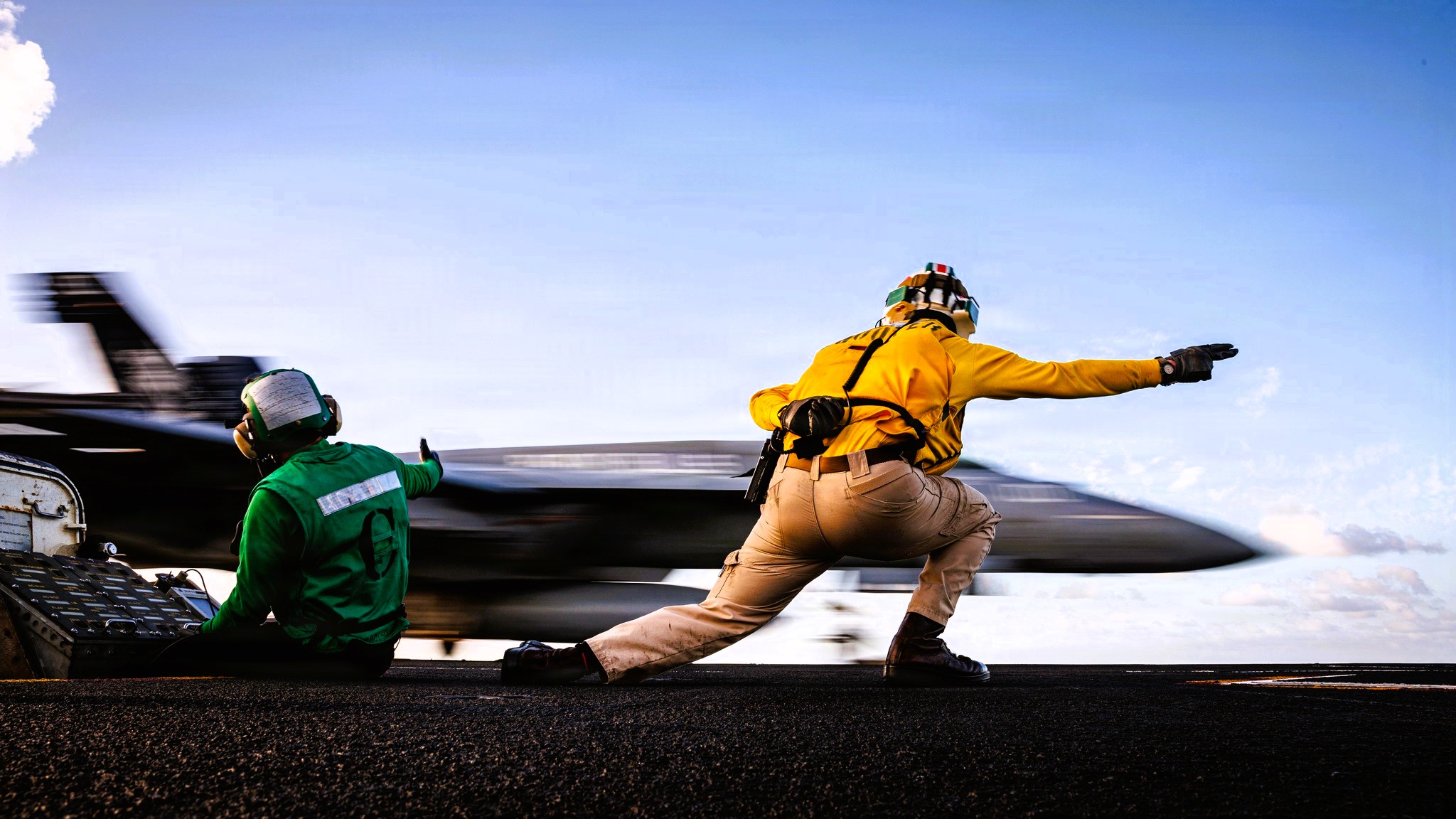
This recognition prompted consideration of Plan B: achieving regime change through direct military action. The administration assembled what President Trump characterised as a massive armada in the Persian Gulf, centred upon the USS Abraham Lincoln carrier strike group. However, this deployment rapidly evolved from an instrument of coercion into a strategic liability. Iran had systematically fortified its coastline with anti-ship missile batteries, deployed submarines capable of launching anti-ship munitions whilst submerged, and positioned swarms of fast-attack craft. Military analysts assessed that the air defence complements of the American vessels would prove inadequate against saturation attacks involving hundreds of Iranian drones and missiles. The armada was compelled to maintain increasing distance from Iranian territorial waters, diminishing its operational utility whilst accruing substantial financial costs.
More fundamentally, Iran articulated an unambiguous deterrence posture: any attack, regardless of scale, would trigger comprehensive regional warfare, including closure of the Strait of Hormuz and strikes against American military installations throughout the Middle East and Israeli territory. This explicitly rejected American proposals for performative, symbolic exchanges (in stark contrast to the conclusion of June’s Twelve-Day War).
Israel’s January cold feet
Israel’s communication to Washington that it would not participate in American strikes, out of fear of Iranian counter-strikes on Israeli territory, coupled with Iranian warnings that Israeli involvement was irrelevant to Tehran’s calculus of retaliation, further complicated the equation. Trump, whose appetite for military engagement has consistently favoured rapid, decisive operations yielding demonstrable political dividends (which we have called the litterbox approach), confronted the prospect of protracted conflict with uncertain outcomes and potentially catastrophic economic ramifications. Market volatility, already elevated due to concerns regarding American fiscal sustainability and trade policies, rendered the prospect of disrupted energy supplies through Hormuz closure particularly unpalatable. No quick and easy victory was on the table this time.
The administration’s calculations regarding acceptable cost-versus-benefit ratios and achievable objectives underwent fundamental revision: the price of military confrontation substantially exceeded any plausible benefit, particularly given the absence of internal Iranian vulnerabilities that might facilitate regime change. Yet while Israel might be reluctant to directly join the fight, it is also the state actor desiring this war more than anyone else, as highlighted by Haaretz’s Gideon Levy. It is not surprising that Axios reported a U.S. official summing the situation up by stating: “It’s the Israelis who want a strike. The President is just not there.”
Towards the new, old nuclear negotiations
This strategic impasse has precipitated negotiations between the U.S. and Iran towards a nuclear accord. This could mark the resumption of nuclear negotiations for the first time since the 2025 collapse. The meeting was initially planned for Türkiye’s Istanbul, with participation from regional powers like Saudi Arabia, Egypt, the UAE, Oman, and Qatar to broaden discussions beyond nuclear issues to include missiles and Iran’s regional militias. However, Iran has pushed to relocate the talks to Oman and restrict them to bilateral U.S.–Iran discussions focused solely on the nuclear file, excluding broader topics—a move seen as an attempt to limit U.S. leverage.
As it currently seems, Iranian Foreign Minister Abbas Araghchi and U.S. Special Envoy Steve Witkoff are leading the delegations, with communications ongoing via intermediaries. Yet these talks are being planned under profoundly disadvantageous circumstances for the Trump administration. The irony is not lost that, in 2018, Trump himself tore apart the already existing Iran Nuclear Deal, i.e., the Joint Comprehensive Plan of Action, notwithstanding internationally documented full Iranian compliance. The current negotiating landscape reflects this history: whereas the JCPOA negotiations occurred when Iran sought sanctions relief, the present context features an Iran that has developed economic resilience through sanctions circumvention, strengthened regional partnerships with Russia and China, and demonstrated both technical nuclear advancement and a robust internal security apparatus—not to mention the outcome of June’s Twelve-Day War.
The substantive positions reveal intractability. The Trump administration presently seeks complete cessation of uranium enrichment, dismantlement of ballistic missile capabilities, and termination of support for regional allies; in Secretary of State Marco Rubio’s words: “To reach a deal, ballistic missile program, nuclear program and support for proxies must be discussed”—a position Iran finds eminently disagreeable. These maximalist demands reflect both security concerns and political imperatives: any agreement must be presentable domestically as superior to the JCPOA, yet this is an exceedingly daunting task given the current circumstances.
Conversely, Iranian negotiators have indicated willingness to engage solely on nuclear matters, categorically excluding ballistic missiles and regional partnerships. Tehran’s priority centres upon sanctions relief. Iranian leadership has emphasised that negotiations cannot proceed under military threat, insisting that the American naval deployment be repositioned.
The asymmetry of leverage further complicates prospects for agreement. Iran, having weathered the attempted insurrection and demonstrated its deterrence credibility, negotiates from a position of relative strength despite economic vulnerabilities. The Iranian calculation appears to be that any agreement must demonstrably improve upon the JCPOA’s terms from Tehran’s perspective, incorporating more robust—or even complete—sanctions relief and fewer constraints on peaceful nuclear activities. Such an outcome, however, would prove politically untenable for Trump, who requires the capacity to characterise any accord as a decisive American victory that rectifies the purported deficiencies of the Obama-era agreement. This fundamental incompatibility between what Iran might accept and what Trump could present as triumph suggests that negotiations, whilst potentially protracted, are unlikely to yield comprehensive resolution.
Is the war that did not materialise over, or merely postponed?
Concurrently, Israeli pressure introduces additional complications. Prime Minister Netanyahu has communicated unambiguous opposition to any nuclear agreement that does not address Iran’s ballistic missile programme and regional activities. Israeli officials have conveyed to American counterparts that they will not endorse an accord confined to nuclear matters and that, absent Israeli support, domestic American political dynamics will render any agreement unsustainable. This Israeli positioning effectively establishes a veto over negotiated outcomes.
Netanyahu’s government has articulated demands including complete dismantlement of Iran’s peaceful nuclear energy programme and formal dissolution of the axis of resistance. These prerequisites, which Iranian leadership has characterised as deliberately unrealistic, appear designed less to facilitate agreement than to ensure negotiations’ failure, thereby preserving the rationale for eventual military confrontation. PM Netanyahu’s urgent Wednesday, 10 February, meeting with President Trump is anything but the best of omens, since the Israeli commentariat is converging on the conclusion that a successful Iran deal would be negative for Israel’s strategic interests and must be averted.
The spectre of regional conflagration therefore persists, albeit temporarily deferred rather than definitively averted. The failure of Plan A and the prohibitive costs associated with Plan B have not eliminated military options from consideration; they have merely displaced them temporally whilst negotiations proceed. Should these talks collapse, as appears probable given the incompatibility of positions, the question becomes whether Trump will accept stalemate, simply try to (make the American public) forget, or pursue military action despite its evident risks.
The precedent of the June 2025 Twelve-Day War between Israel and Iran, during which American forces participated in strikes against Iranian nuclear facilities (“obliterating them,” in Trump’s words—although somehow now there need to be negotiations regarding the future of Iran’s already “obliterated” nuclear capabilities), suggests that limited operations remain within the realm of possibility, in the hope of regime collapse. However, Iranian deterrence messaging has grown increasingly explicit: any future attack will trigger comprehensive retaliation against both American and Israeli targets, potentially drawing indirect Russian and Chinese involvement through naval deployments in the Persian Gulf and provision of advanced military technology. “Indirect” is the word here.
Impasse: No good options left
The episode illuminates how deterrence architecture, internal resilience, cost-versus-benefit considerations, and great power dynamics interact to constrain even the most powerful actors’ freedom of manoeuvre. The United States confronts a situation where none of the available courses of action yields satisfactory outcomes: military intervention risks uncontrollable regional escalation; negotiations appear unlikely to produce politically viable agreements; and continued pressure through sanctions and covert operations has demonstrated limited efficacy in achieving regime change, collapse, or domestic Iranian chaos.
The timing of renewed hostilities remains the principal unknown variable. As it currently seems, war has been postponed, not prevented: the structural factors that generated this crisis persist. Whether the current diplomatic interlude evolves into a sustainable modus vivendi or merely constitutes a prelude to the second round of direct Iranian-American military confrontation will depend upon variables including Trump’s electoral calculations as midterm elections approach, the trajectory of Iran’s nuclear programme, developments in Gaza and Lebanon that may affect regional dynamics, the extent of Israel’s leverage on the U.S. President and Israel’s own security considerations should the region be set ablaze, and the extent to which Russia and China are prepared to substantively support Iranian deterrence.
What appears incontrovertible is that the assumptions undergirding Plan A have been comprehensively discredited, compelling all parties to navigate considerably more complex and hazardous terrain than initially anticipated. The crux of the matter here is that there is hardly a scenario in which a military confrontation does not ignite the region with truly unpredictable consequences, rather than being limited within the territory of Iran. A bumpy road lies ahead, even after a temporary diplomatic break.

Bibi to Don: You Can’t Use Your Nukes without Starting Armageddon. But We Can Use Ours.
Twice in the last year, Israel and its Big Brother have started a war to crush Iran. Without success. But if at first you don’t succeed… So Israeli Prime Minister Benjamin Netanyahu is still trying to sell the leader of the dwindling superpower on the idea of destroying Iran.
Netanyahu is obsessed, because — in his view — Iran is the only sworn enemy of Israel that is powerful enough to prevent his aim of complete domination in West Asia. The destruction of Iraq, Libya and Syria were stepping stones on the path to his vision, but he calculates that only Iran now stands in his way. And that is unacceptable.
He will is telling Trump that they both should have tried harder and been better prepared last June and again this January, but if they don’t succeed now, they risk losing the opportunity altogether, which would be unthinkable. Israel suffered serious losses at its air bases, its integrated operational headquarters, known as Unit 8200, and its intelligence services, the Mossad. But even more serious, they and the US determined that after 11 days of war, they had a critical shortage of anti-aircraft weaponry to stop the superior numbers of Iranian hypersonic missiles and long-range drones. That’s when they offered a ceasefire, and Iran accepted. That’s when they offered a ceasefire, and Iran accepted.
This January they didn’t even get that far. On both occasions, Israel and the US initiated the conflict with major internal sabotage to disable Iran’s government and military capability. Both times, they failed, and in January, they failed early enough and decisively enough that the military invasion was called off.
Now the US is amassing its navy and airforce – but not its army – in the region, for an even more robust attack. They were hoping that the threat would be enough to cause Iran to surrender at the negotiation table what they have so far failed to accept. But that, too, is failing, because the demands are absurd: to give up their entire defense arsenal, the most elemental uranium enrichment for peaceful purposes, and to end all relations with regional allies. Ridiculous. No country is going to strip itself bare naked and bend over voluntarily.
Would Iran “win” against an all-out fight? Perhaps not, but neither would the US and Israel. The intelligence services of the US, Israel, Britain, and other nations have no doubt that, even if Iran “loses” – it can inflict major destruction upon the vaunted US “armada” as well as its bases in the region. More to the point, it can cut off the narrow straight of Hormuz, blocking the transit of petroleum tankers from the biggest supply of oil in the world. It can also just as easily destroy the major production facilities surrounding the Persian Gulf, in Saudi Arabia, Abu Dhabi, Qatar, Kuwait, and Iraq. The world’s economy would go into a tailspin. Furthermore, Iran would resume where it left off in Israel, and destroy the remainder of its major military and economic resources. In fact, Israel even offered to stay out of the fight if Iran would leave them alone. Iran refused.
In short, there is no strategy for the defeat of Iran that will not also bring great destruction upon its attackers, as well as economic catastrophe on the entire world. But Benjamin Netanyahu will not be deterred. Israel will not suffer economic catastrophe, because the US will provide, whatever the sacrifice to the US. Furthermore, a global economic disaster only enhances Israel’s protected position, as well as its potential for expansion. Israel views chaos as opportunity.
But Israel must also defeat and destroy Iran, while avoiding the destruction that Iran is capable of wreaking upon Israel. I believe that in Netanyahu’s mind, the only option for that to happen is to go nuclear – early and decisively. If he is right now discussing this with Trump, he is saying that while the use of US nuclear weapons might risk global nuclear Armageddon, Israeli nuclear weapons might be less of a risk, and the US could maintain deniability. In order to work, the nuclear strike would have to be at the start of the attack and sufficient in number to assure that they get past Iranian defenses and knock out the weapons that would otherwise destroy Israel.
This is a terrifying prospect, with potentially wide ranging consequences, including nuclear Armageddon. Let us hope that the US will refuse, and that Israel will not attempt to go it alone, if Netanyahu even proposes it. This is the most likely outcome, in my opinion, but I also believe that the possibility is too important to leave unspoken. I would rather see businessman Trump drop the sanctions and threats, and establish mutually beneficial relationships and investments with Iran, regardless of what Israel says.

No comments:
Post a Comment