AU
Citigroup picks London gold vault for precious metals push

Citigroup Inc. plans to use a vault near London’s Heathrow Airport to store precious metals, as it seeks to join the small number of banks that provide a crucial role in the world’s biggest gold-trading hub.

The bank is partnering with secure logistics firm Malca-Amit, which operates the vault, according to people familiar with the matter, who asked not to be identified as the details are private. Citigroup is in the process of becoming a clearing member of the London market as investor interest in bullion increases, Bloomberg reported in October.
Those members clear tens of billions of transactions every day in London, where more than $1 trillion in gold is stored, offering vaulting capacity where precious metals can change hands to settle contracts. Their number has dwindled to just four banks in recent years: JPMorgan Chase & Co., ICBC Standard Bank Plc, HSBC Holdings Plc and UBS Group AG.
Bullion vaults are often located close to or within airports, where metal can be easily flown in or out. Malca-Amit’s site is near Heathrow Airport in west London, according to its website. A 2012 profile of the company’s high security facility described how at that time it had capacity for more than 300 tons of gold — an amount worth approximately $43 billion at current prices — and 1,000 tons of silver.

As the largest player in precious metals, JPMorgan’s London vault is one of the biggest stores of gold in the world. The vault, located in the City of London, holds almost 1,000 tons of gold on behalf of just one bullion-backed exchange traded fund, an amount worth roughly $136 billion.
HSBC also has its own London vault, while ICBC Standard Bank purchased Barclays Plc’s London facility in 2016. UBS contracts with an external custodian for its vaulting needs, just as Citigroup plans to. Revenues from vaulting — which are typically calculated as a percentage of the value of the gold stored — have jumped as prices have rallied about 45% over the past year.
Citigroup and JPMorgan declined to comment. Malca-Amit didn’t respond to a request for comment.
(By Jack Ryan and Yihui Xie)
Singapore looks to become hub for hosting central bank gold

Singapore is planning to expand its gold-storage capacity to become a custodian of bullion held by foreign central banks, part of a broader push by the city-state to compete with Hong Kong as a regional hub for the precious metal.
The Monetary Authority of Singapore said Friday it will “look to provide vaulting services for foreign central banks and sovereign entities to meet potential demand.” The nation’s also developing “gold-related capital market products to promote price discovery and build liquidity.”
In addition, Singapore plans to build a clearing system to support over-the-counter settlement for trading gold locally, according to a joint statement from MAS and the Singapore Bullion Market Association.
Singapore’s ambition to become a major gold-trading hub follows a historic rally for the precious metal underpinned by a search from investors for alternative stores of wealth. Though bullion has retreated since the war began in the Middle East, many central banks – including China’s – have been steadily adding gold over the past few years as a way to hedge against US dollar dominance.
“We are working closely with the industry to see how we can position Singapore as a gold-trading hub in Asia,” said MAS deputy chairman Chee Hong Tat, who is also Singapore’s minister for national development. “It plays to our strengths, and it adds a new vertical pillar to what we are already offering” in wealth and asset management, Chee told reporters at a briefing.
As part of its push, the government has established a working group that includes JPMorgan Chase & Co. and UBS Group AG as well as DBS Group Holdings Ltd., United Overseas Bank Ltd. and ICBC Standard Bank Plc. Bloomberg News first reported the initiative earlier in March.

Attracting central banks – the ultimate providers of liquidity, given the large volumes of gold they hold in reserves – will be among the keys to Singapore’s plans, along with support from established financial institutions that serve as market-makers. Together, they form the backbone of the world’s dominant gold-trading hub — London — where billions of dollars’ worth of the metal is traded every day.
Globally, central banks hold nearly 39,000 tons of bullion — or about 18% of all gold ever mined — according to the World Gold Council. Even a small share of that market would bolster Singapore’s influence in regional trade that is currently dominated by Hong Kong — the gateway for precious metals going in and out of China, the world’s largest consumer of bullion.
“The space is big enough for us to co-exist and for both cities to be able to grow our respective services,” Chee said. Central banks and investors “see gold as an asset that can help them in this more uncertain environment.”
Singapore’s proposal could potentially attract nations that have challenged the status and credibility of historic hubs such as London and New York. A number of countries including Germany have repatriated gold for security reasons, and there have been similar moves from Poland, the Netherlands and Serbia.
In Asia, the People’s Bank of China is backing the Shanghai Gold Exchange to court central banks in friendly countries to buy bullion and store it within the country’s borders, Bloomberg News reported in September. Cambodia was one of the first countries to take up Beijing’s offer.
Singapore’s gold reserves stood at 193.6 tons as of January, according to data from MAS.
(By Chanyaporn Chanjaroen, Yihui Xie and Joyce Koh)
Indonesia’s Agincourt says it can resume operations after government lifts sanctions
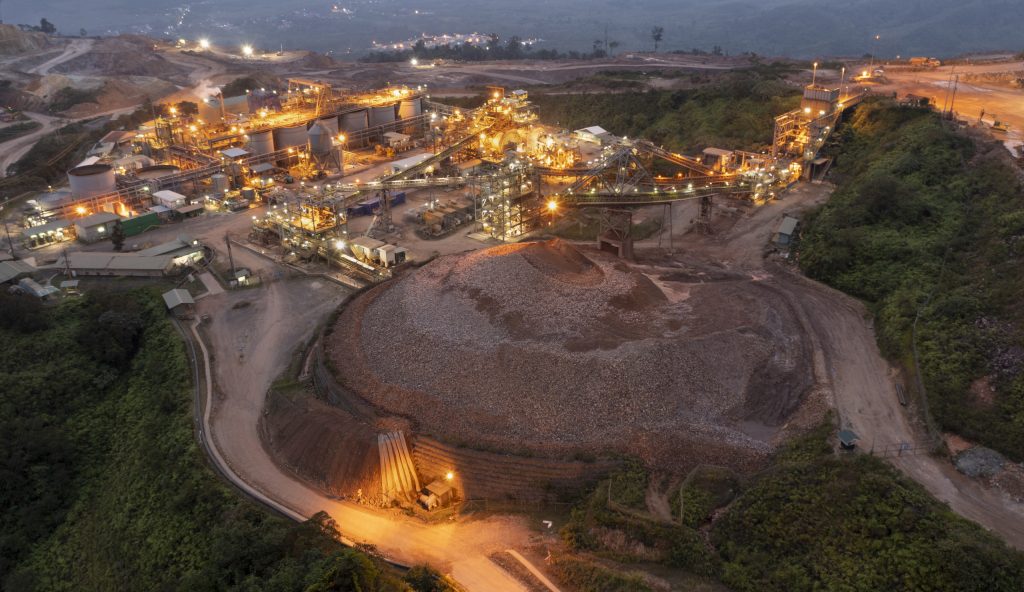
Indonesian gold miner Agincourt Resources said on Thursday that it has been given the go-ahead from the environmental ministry to resume operations at its Martabe gold mine, which was sanctioned after accusations of environmental breaches.
Agincourt was among the 28 firms whose permits were revoked by the government following claims they were responsible for environmental damage that worsened last year’s floods in Sumatra, which killed at least 1,200 people.
Agincourt is part of conglomerate Astra International. Astra’s majority shareholder is Jardine Matheson.
“The company welcomed the environmental ministry’s decision related to the approval to continue operations at the Martabe gold mine,” said Katarina Siburian, Agincourt’s spokesperson.
The company is making necessary preparations and will comply with all requirements, and is committed to environmental protection and safety standards, Katarina said, adding that operations have not yet resumed.
Mining operations at Martabe had been suspended since December last year.
Officials from Indonesia’s environment and energy ministries did not immediately respond to requests for comment.
Deputy energy minister Yuliot Tanjung was quoted on Wednesday by news website Bloomberg Technoz as saying that the permit had been restored, adding that the ministry was still evaluating the company’s mining quota.
Another company sanctioned by the government, PT North Sumatra Hydro Energy (NSHE), has also been given permission by the government to resume operations, energy ministry official Eniya Listiani told Reuters on Thursday.
The company is controlled by China’s state-run SDIC Power Holdings Co. Ltd.
Commercial operations at the hydropower plant operated by NSHE are expected to start in October, Eniya said.
The hydropower project, worth over $1.6 billion, has long been on the radar of environmental activists, with many calling for it to be stopped because of the ecological destruction it has wrought on the biodiverse island.
(By Bernadette Christina and Stanley Widianto; Editing by David Stanway)

No comments:
Post a Comment