Oman’s foreign minister tells the US some hard truths, because that’s what friends do
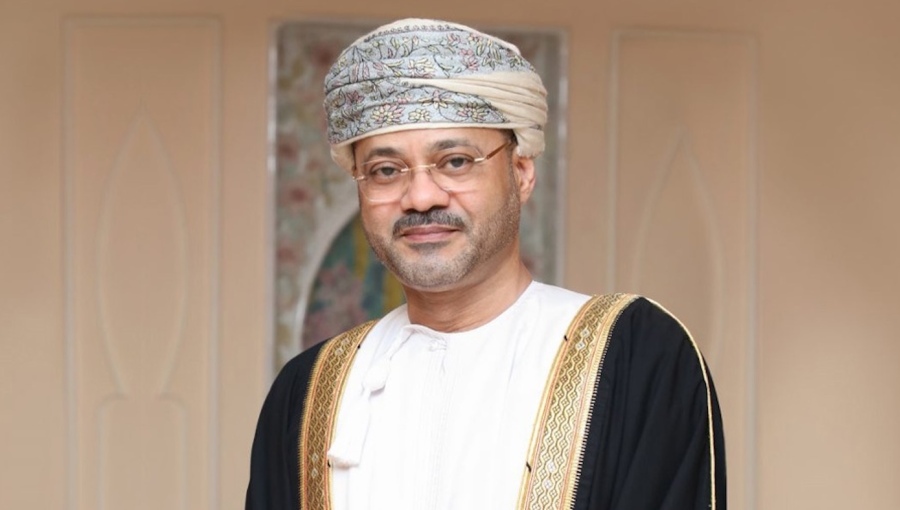
Oman has played a leading role in the mediation between the US and Iran trying to prevent the regional conflict that started two weeks ago. In a poignant opinion piece “America’s friends must help extricate it from an unlawful war,” published by The Economist, Foreign Minister of Oman Badr Albusaidi was sharply critical of the US but offered this criticism as “a friend,” as America’s friends have a responsibility to tell the truth.
Albusaidi struck a balance between highlighting the disaster that the White House has caused with its ill-conceived and illegal attack on Iran, and the need for allies of the US to pressure it into ending the conflict. Poignantly, he chimed with an increasing number of Trump critics, arguing that the US has “lost control of its foreign policy” to Israel.
Albusaidi warned that the war between the US and Iran represents a “profound strategic miscalculation”, arguing that both sides have more to gain from peace than conflict.
Neutral Oman has played a key role in mediating talks between the US and Iran in the run up to the start of Operation Epic Fury on February 28. Unlike many of the other Gulf Cooperation Council (GCC) countries it does not host a US military base and keeps what weapons supplies it buys low profile, although it does have defence agreements granting the US limited access to some ports and airports.
Widely seen as the Gulf’s “honest broker,” the day before Iranian Foreign Minister Abbas Araghchi almost closed a deal with the US, via Omani intermediation, to give up on its uranium enrichment ambitions and end its missile program. “A deal was within reach. We left Geneva with an understanding that we’d seal a deal the next time we meet… but it was Mr Trump, yet again, who ultimately ordered the bombing of the negotiating table,” Araghchi said in a social media post.
Reflecting on failed diplomacy, Albusaidi said: “Twice in nine months the US and Iran have been on the verge of a real deal” on Tehran’s nuclear programme, describing it as “a shock but not a surprise” when talks were derailed by military action. The subsequent escalation, he argued, was predictable: Iran’s retaliation was “inevitable, if deeply regrettable and completely unacceptable,” but also “probably the only rational option available to the Iranian leadership.”
He warned that the consequences are being felt most acutely in the Gulf, where US security guarantees are now seen as a liability and the outlook has darkened.
“For Gulf states an economic model in which global sport, tourism, aviation and technology were to play an important role is now endangered. Plans to become a global hub for data centres may need to be revised,” he said.
Arab states that once relied on Washington “now experience that co-operation as an acute vulnerability,” threatening both “their present security and future prosperity.” The disruption to Hormuz has already begun to reverberate globally, “driving up energy prices and threatening deep recession,” a risk that “if this had not been anticipated… was surely a grave miscalculation.”
Albusaidi was particularly blunt of Washington’s decision-making and its abrogation of its foreign policy to Israel.
“The American administration’s greatest miscalculation, of course, was allowing itself to be drawn into this war in the first place. This is not America’s war, and there is no likely scenario in which both Israel and America will get what they want from it,” he said. “Hopefully America’s commitment to regime change is just rhetorical, whereas Israel explicitly seeks the overthrow of the Islamic Republic and probably cares little about how the country is governed, or by whom, once this has been achieved.”
“With this objective in mind Israel’s leadership seems to have persuaded America that Iran had been so weakened by sanctions, internal divisions and the American-Israeli bombings of its nuclear sites last June, that an unconditional surrender would swiftly follow the initial assault and the assassination of the supreme leader,” he said.
He said regime change in Iran could only be achieved by a “a long military campaign” and potentially US ground troops, opening “a new front in the forever wars. This is not what America’s government wants. Nor do its people, who certainly do not see this as their war.”
He urged US allies to confront uncomfortable realities. “America’s friends have a responsibility to tell the truth,” he said, including that “there are two parties to this war who have nothing to gain from it.” This, he suggested, also means acknowledging “the extent to which America has lost control of its own foreign policy.”
Looking ahead, Albusaidi argued that US interests lie in “a definitive and decisive end to nuclear-weapons proliferation… secure energy supply chains and renewed investment opportunities,” all of which are “best achieved with Iran at peace with its neighbours.” Despite the breakdown in trust, he maintained that “the path away from war… may have to lie through precisely this resumption” of negotiations.
“This is an uncomfortable truth to tell, because it involves indicating the extent to which America has lost control of its own foreign policy. But it must be told,” Albusaidi said.
To incentivise renewed diplomacy, he proposed linking US-Iran talks to a broader regional framework. A process aimed at “transparency on nuclear energy—and the energy transition more broadly” could offer a shared prize, potentially culminating in “a regional non-aggression treaty” and “a substantive regional deal on nuclear transparency.”
“It may be difficult for America to return to the bilateral negotiations from which it was twice diverted by the temptations of war. It will certainly be difficult for the Iranian leadership to return to dialogue with an administration that twice switched abruptly from talks to bombing and assassination. But the path away from war, hard though it may be for both parties to follow it, may have to lie through precisely this resumption,” Albusaidi said.

No comments:
Post a Comment