Tuesday, January 28, 2020

SHE HAS A PLAN FOR THAT
Elizabeth Warren unveils plan to fight infectious diseases

By Clyde Hughes
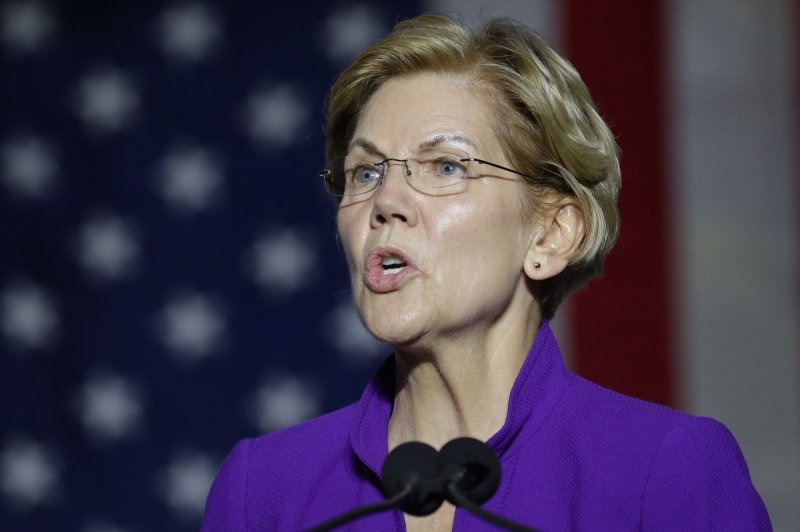
Democratic presidential candidate and Sen. Elizabeth Warren vowed 
to invest more in federal agencies to better handle global health threats 
like coronavirus. File Photo by Pete Marovich/UPI | License Photo

Jan. 28 (UPI) -- Amid a deadly global spread of coronavirus, Democratic presidential candidate and Massachusetts Sen. Elizabeth Warren unveiled a health plan Tuesday she says would fight the spread of infectious diseases and prepare the world better for viral outbreaks.

Called "Preventing, Containing and Treating Infectious Disease Outbreaks at Home and Abroad," the criticizes the Trump administration for shortchanging organizations like the Centers for Disease Control and Prevention that are responsible for health security.

Warren says in the plan greater investments must be made in public health agencies, hospitals and healthcare providers to better prepare them for dangerous outbreaks -- such as the coronavirus strain that's so far killed more than 100 people in China.

The plan includes strengthening public health systems to help them prevent and manage outbreaks; fully funding the Global Health Security Agenda; approving her "Medicare for All" plan; increasing funds for global health initiatives to fight diseases like HIV, tuberculosis and malaria; and fighting global warming.

"Trump has repeatedly tried to nickel and dime federal programs essential to health security," she wrote. "Trump eliminated the key position that coordinates global health security across the many federal agencies that work to keep us safe. And his response to natural disasters that could lead to serious outbreaks, like hurricanes in Puerto Rico, has been basically non-existent.

"That's why I have a plan to prevent, contain, and treat infectious diseases -- one that will help keep America safe and healthy. And as president, I will work across all levels of government here at home and with our many partners abroad to turn that plan into action."

Warren said she would remove a gag order that prevents health organizations from talking about abortion and re-establish the health security post in the White House that was eliminated by Trump, while investing in the Coalition for Epidemic Preparedness Innovations alliance that focuses on vaccine development.

"Like so much else, Trump's approach to keeping us safe from disease outbreaks is a mess," she wrote. "But when he's gone, we can fix it."

---30---


Lawyers for a Portuguese computer hacker said on Monday he was responsible for revealing the dealings of Angolan billionaire Isabel dos Santos, a corruption scandal with fallout across Europe and Africa.
AFP/File / FERENC ISZARui Pinto is described by his lawyers
 as a 'very important European whistleblower'

Lawyers for a Portuguese computer hacker said on Monday he was responsible for revealing the dealings of Angolan billionaire Isabel dos Santos, a corruption scandal with fallout across Europe and Africa.

The hacker, Rui Pinto, handed over a hard drive "containing all data related to the recent revelations concerning Ms. Isabel Dos Santos’s fortune" to a whistleblowing organisation in 2018, his lawyers said.

The tycoon daughter of former Angolan president Jose Eduardo dos Santos now faces a slew of corruption allegations stretching across Angola's state oil and diamond industries and banks -- all of which she has denied in interviews from London.

Rui Pinto -- described by his lawyers as a "very important European whistleblower" -- is also behind the so-called Football Leaks, a series of stories about financial dealings and transfers involving clubs in Europe's top leagues.

The football revelations, which first appeared in 2015 and were eventually published in Germany's Spiegel and other European outlets, sparked criminal investigations in countries including Britain and France.

Pinto, 31, was extradited from Hungary last March over allegations that he hacked into the systems of investment fund Doyen Sports and tried to blackmail them in return for not publishing information he had taken.

His lawyers have argued that Pinto -- currently in pretrial detention in Portugal -- willingly stopped the blackmail attempt and turned whistleblower, publishing the documents rather than profiting personally.

But a Portuguese court decided on January 17 to go ahead with his trial on a total of 90 charges.

- 'Broken system' -

According to his lawyers, the hard drive Pinto handed over on the Angolan tycoon's finances provided the source material for revelations about "all the actors that might be involved in the fraudulent operations committed at the expense of the Angolan State".

The New York-based International Consortium of Investigative Journalists (ICIJ) -- which had also worked on previous financial scandals including the 2016 "Panama Papers" -- began publishing stories on dos Santos in mid-January.

The consortium said it had trawled more than 715,000 files and produced stories it said revealed a "broken international regulatory system".
AFP / John SAEKIFactfile on Angolan businesswoman
 Isabel dos Santos, charged with money laundering

Within days, Angola's prosecutors announced charges against dos Santos, as the so-called Luanda Leaks scandal swirled around allegations that she had syphoned off hundreds of millions of dollars of public money into offshore accounts during her tenure at Sonangol, Angola's state-owned oil giant.

Hundreds of companies, many based in tax havens such as the British Virgin Islands, are alleged to have helped dos Santos accrue her fortune.

A Portuguese banker who worked for Eurobic -- in which dos Santos is the main shareholder -- was found dead last week in an apparent suicide. He was named in the Luanda Leaks documents and later described in media reports as her account manager.

Pinto had forwarded the hard drive to the Platform to Protect Whistleblowers in Africa and the ICIJ, his lawyers said.

He had "sought to help understanding complex operations conducted with the complicity of banks and jurists which not only impoverish the people and the State of Angola, but may have seriously damaged Portugal’s general interest", the statement said.

Angolans call Isabel dos Santos "the princess", and she is Africa's richest woman according to Forbes, which estimates her assets at $2.1 billion.

27JAN2020


Xi says China fighting 'demon' virus as nations prepare airlifts

DIALECTICAL MATERIALISM ONLY BELIEVES IN ONE DEMON; MAXWELL'S
Xi says China fighting 'demon' virus as nations prepare airlifts

AFP / NICOLAS ASFOURI
Many streets in Beijing are nearly 
 amid fears over the coronavirus epidemic -- with the death
 toll soaring above 100, China and foreign governments
are stepping up measures to try to contain it

China is battling a "demon" virus that has so far killed more than 100 people, President Xi Jinping said Tuesday, as nations readied planes to airlift foreigners trapped at the epicentre of the outbreak.

Xi made his remarks during talks with the head of the World Health Organization in Beijing amid growing global concerns about a novel coronavirus that has infected thousands in China and reached more than a dozen other countries.

In a development that could cause more jitters abroad, Japan and Germany reported the first confirmed cases of human-to-human transmission outside of China.
AFP / Naohiko HattaChinese President Xi Jinping speaks during a 
meeting with World Health Organization chief Tedros Adhanom 
 Ghebreyesus (not pictured) at the Great Hall of the People in Beijing
 -- he called the epidemic a "demon"

The infection is believed to have originated in a wild animal market in the central Chinese city of Wuhan, where it jumped to humans before spreading rapidly across the country, prompting authorities to enact drastic nationwide travel restrictions in recent days.

Countries are also concerned about the fate of thousands of foreigners stuck in Wuhan, a city of 11 million people that has been sealed off by Chinese authorities in a bid to contain the disease.

Tokyo deployed a plane to the virus-stricken metropolis late Tuesday that was scheduled to repatriate Japanese nationals on Wednesday, the same day that a US aircraft is expected to bring American citizens back to their homeland.

France and South Korea are also planning to fly out their citizens later this week, and several other countries, including Germany, were considering doing the same.

"Chinese people are currently engaged in a serious struggle against an epidemic of a new type of coronavirus infection," Xi told WHO chief Tedros Adhanom Ghebreyesus.

"The epidemic is a demon, and we cannot let this demon hide," the Chinese leader said, pledging that the government would be transparent and release information in a "timely" manner.

AFP / NICOLAS ASFOURI  Fever checks are being conducted
 across China, even at this condo building in Beijing -- anger
 is simmering on Chinese social media over the official
 response to the health emergencyHis comments came after anger simmered on Chinese social media over the handling of the health emergency by local officials in central Hubei province.

Some experts have praised Beijing for being more reactive and open about this crisis as compared to its handling of the Severe Acute Respiratory Syndrome (SARS) epidemic of 2002-2003.

But others say local cadres were more focused on projecting stability earlier in January than adequately responding to the outbreak during regional political meetings.

Since then, the number of cases has soared -- doubling to more than 4,500 in the past 24 hours.

- Contagion abroad -

The WHO last week stopped short of declaring the outbreak a global emergency, which could have prompted a more aggressive international response such as travel restrictions.

Until Tuesday, all reported cases in more than a dozen countries had involved people who had been in or around Wuhan.

AFP / DANIEL LEAL-OLIVAS 
Face masks are being used as a frontline defense in China 
and around the world against the deadly coranavirus -- here,
 a passenger is seen arriving at London's Heathrow airport


But in Japan, a man in his 60s apparently contracted the virus after driving two groups of tourists from the city earlier in January, the health ministry said.

And a 33-year-old German man contracted the disease from a Chinese colleague from Shanghai who visited Germany last week, according to health officials.

Vietnam has been investigating a possible case of human-to-human transmission.

The development came after countries including Sri Lanka, Malaysia and the Philippines announced tighter visa restrictions for people coming from China.

China has taken its own drastic steps to stop the virus, which health officials say is passed on between people through sneezing or coughing, and possibly through physical contact.

AFP / Patricio ARANA Countries or territories with confirmed cases of 
the new 2019 novel coronavirus

Zhong Nanshan, a renowned scientist at China's National Health Commission, told the official Xinhua news agency on Tuesday that the outbreak could peak in a week or 10 days.

Authorities initially sealed off Wuhan and other cities in Hubei province late last week, trapping more than 50 million people.

China has since extended the Lunar New Year holiday to keep people indoors as much as possible, and suspended a wide range of train services.

On Tuesday, authorities urged Chinese citizens to delay any foreign travel "to protect the health and safety of Chinese and foreign people".

Wuhan, meanwhile, has been turned into a near ghost-town under a lockdown that has largely confined the industrial hub's residents to their homes.

With a ban on car traffic, the streets were nearly deserted apart from the occasional ambulance -- although the city's hospitals are overwhelmed.

"Everyone goes out wearing masks and they are worried about the infection," said David, a Chinese man who works in Shanghai but ended up trapped in Wuhan after it was put under quarantine.


Maxwell's demon is a thought experiment created by the physicist James Clerk Maxwell in 1867 in which he suggested how the second law of thermodynamics might hypothetically be violated. In the thought experiment, a demon controls a small door between two chambers of gas.


Maxwell's equations represent one of the most elegant and concise ways to state 
the fundamentals of electricity and magnetism. From them one can develop ...
China now world's second-largest arms producer after U.S.

PERMANENT ARMS ECONOMY

By Ed Adamczyk


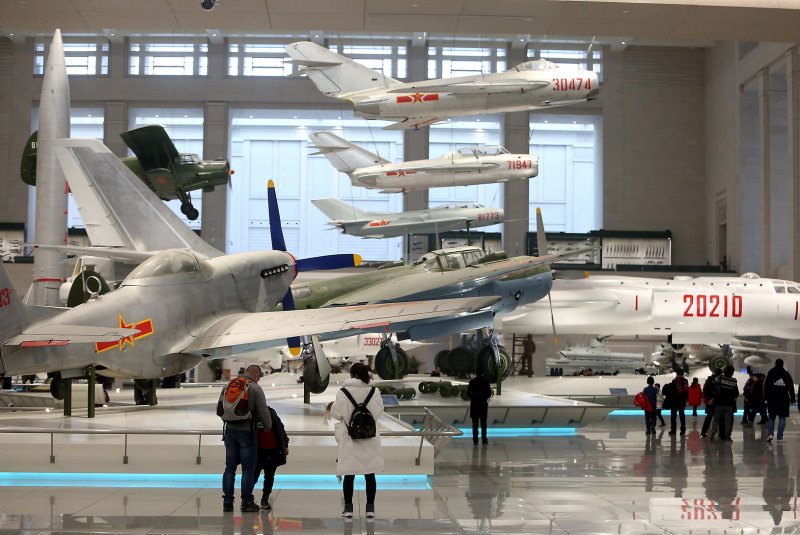
Visitors observe aircraft at China's Military Museum in Beijing.
 A study released on Monday indicates that China is the 
world's second-largest arms producer, ahead of Russia and
 behind only the United States. 
Photo by Stephen Shaver/UPI | License Photo

Jan. 27 (UPI) -- China is the world's second-largest arms producer, after the United States, a Swedish research center announced on Monday.

Information on China's weapons manufacturing has been unreliable in the past because of a lack of transparency, causing the Stockholm International Peace Research Institute to exclude Chinese companies from consideration until now.

For years, the United States has ranked first and Russia second in the organization's SIPRI Top 100 list of arms-producing and military services companies.

Credible data from 2015 to 2017 relating to four large Chinese companies has emerged, a SIPRI statement said Monday, allowing development of "reasonably reliable estimates of the Chinese arms industry."

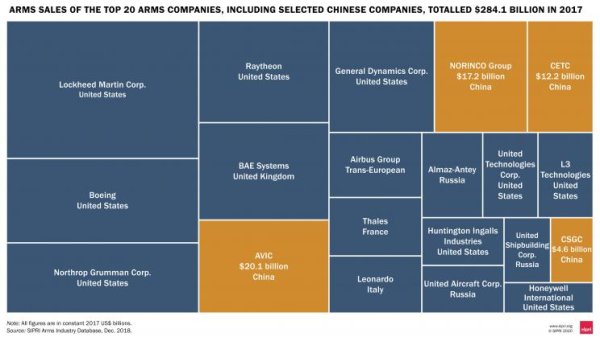
Those estimates put China ahead of Russia in arms sales, 
behind only the United States.

Image courtesy of SIPRI

The four Chinese companies combine for $54.1 billion in sales, and would place each among the top 20 armaments producers in the world.

One, Aviation Industry Corp., would rank sixth in the world with $20.1 billion in sales. Another, China North Industries Group Corp., would be the world's largest producers of land armaments systems with $17.2 billion in sales.

RELATED Lockheed awarded $32.9M deal to upgrade Taiwan's F-16s

The SIPRI study's largest arms makers, including the Chinese companies, are, in order: Lockheed Martin, Boeing, Northrop Grumman and Raytheon, all of the United States; Britain's BAE Systems; China's Aviation Industry Corp., the United States' General Dynamics; the trans-European Airbus; France's Thales; Italy's Leonardo, and China North Industries and China Electronics Technology Group.

The survey excludes China from its list of arms sales by country, but indicates that the United States has 57.9 percent of the international arms market, followed by the United Kingdom with 9.6 percent and Russia with 7.1 percent.

RELATED State Department approves $2.75B sale of F-35Bs to Singapore

JEAN DE ARC OMD

Trump snubs Pelosi for signing ceremony of trade deal she helped him pass
NO ONE EVER SAID HE COULD NOT BE PETTIER 
IT WAS MORE HER BILL THAN HIS
NOTICE NO ONE CALLS THE 'TRADE DEAL' BY ITS TRUMPIAN NAME; USMCA
OF COURSE HE HAS NOT INVITED DEMOCRATS TO ANY OF HIS EVENTS
FOR HIM AND HIS TRUMPETTES THERE IS ONLY ONE TRIBE

January 28, 2020 By Matthew Chapman


On Tuesday, CNN’s Haley Byrd reported that President Donald Trump 
is not inviting House Speaker Nancy Pelosi (D-CA) to the signing of the 
United States-Mexico-Canada Agreement (USMCA), the president’s
 signature trade agreement that updates and modernizes the earlier NAFTA deal.

Major Democratic committee chairs who were instrumental in shaping the final resolution, including Ways and Means Chairman Richard Neal (D-MA) were reportedly also not invited to the signing.

Democratic votes were critical to the ultimate passage of USMCA, and also played a role in influencing the final, bipartisan details of the agreement.

The trade deal was passed in the House on the same day that the articles of impeachment for the Ukraine scheme were unveiled against the president.
FTC sues Martin Shkreli for illegally monopolizing drug
By Darryl Coote

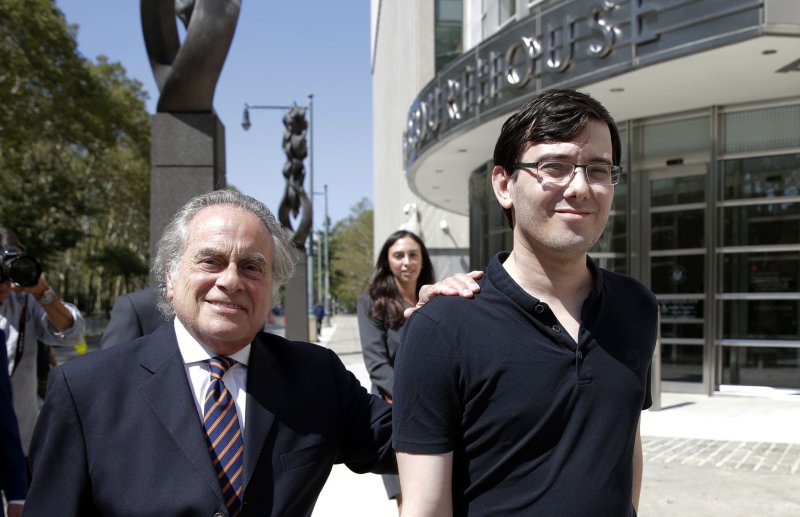
Attorney Benjamin Brafman puts his hand on the shoulder
 of former Turing Pharmaceuticals CEO Martin Shkreli as 
he exits the United States Federal courthouse after being
 found guilty of multiple criminal charges in his federal 
securities fraud trial on Aug. 4, 2017 in New York City. 
Photo by John Angelillo/UPI | License Photo

Jan. 28 (UPI) -- The Federal Trade Commission has charged disgraced former drug industry executive Martin Shkreli and Vyera Pharmaceuticals with concocting an elaborate competition-fixing scheme to maintain their monopoly over the life-saving drug Daraprim.

The FTC and the State of New York filed the complaint in federal court against the pharmaceutical company and its former executive who is currently severing a seven-year jail sentence for fraud, accusing them of pursuing "an elaborate anticompetitive scheme" to prevent generic versions of Daraprim from being introduced into the market.

According to the complaint, Daraprim, which treats a rare parasitic infection that is fatal in those with compromised immune systems, was relatively affordable for some 60 years until Vyera, then known as Turing Pharmaceuticals, hiked up its price from $17.50 a tablet to $750 immediately after purchasing the drug in 2015.  
It then prevented other companies from developing a generic equivalent of the drug through drawing up restrictive distribution agreements that barred them from buying samples of the medication while also limiting their access to a necessary ingredient used in its manufacturing, the FTC said in the complaint.

RELATED Costs for multiple sclerosis meds tripled in past decade

"Daraprim is a lifesaving drug for vulnerable patients," said Gail Levine, deputy director of the Bureau of Competition at the FTC. "Vyera kept the price of Daraprim astronomically high by illegally boxing out the competition."


The regulators also said Vyera and its then-executive Shkreli created other so-called data blocking agreements to prevent sales information on Daraprim from getting into the hands of companies that make generic drugs in order to prevent them from assessing whether it is in their interest to even pursue manufacturing a cheaper version of the drug.

"Absent Defendants' anticompetitive conduct, Daraprim would have faced generic competition years ago," regulators said in the complaint. "Instead, toxoplasmosis patients who need Daraprim to survive have been denied the opportunity to purchase a lower-cost generic version, forcing them and other purchasers to pay tens of millions of dollars a year more for this life-saving medication."

RELATED Blue Cross Blue Shield group joins $55M project to lower drug costs

The FTC is suing for monetary relief for those who suffered due to the alleged scheme to keep the price of the drug artificially inflated, remedial injunctive relief to restore competitive conditions to the market and to bar Shkreli and other named defendants from working in the pharmaceutical industry again.

Along with Shkreli, who is also known as "Pharma Bro," former pharmaceutical executive Kevin Mulleady and Vyera's parent company Phoenixus AG are named as defendants in the complaint.

New York Attorney General Letitia James accused the defendants of not only "despicably" jacking up the price of Daraprim but also holding it hostage from those who needed it.

RELATED FDA approving meds faster, based on less evidence

"We filed this lawsuit to stop Vyera's egregious conduct, make the company pay for its illegal scheming and block Marin Shkreli from ever working in the pharmaceutical industry again," James said in a statement. "We won't allow 'Pharma Bros' to manipulate the market and line their pockets at the expense of vulnerable patients and the health care system."

Shkreli was convicted in August of 2017 for running a Ponzi scheme and bilking investors out of $11 million and was sentenced to seven years in prison.

Shkreli's lawyer Benjamin Brafman said in a statement that "Mr. Shkreli looks forward to defeating this baseless and unprecedented attempt by the FTC to sue an individual for monopolizing a market."


---30---

TWO TRIBES FRANKIE GOES TO HOLLYWOOD EXTENDED RELEASES


BRONSKI BEAT
 LGBTQ DANCE & ROMANCE TO OVERCOME THE OPPRESSION OF THE HOMOPHOBIC NINETIES 
Lawsuits seek to halt new federal hog slaughter inspection system 
"It poses a significant risk to the public,"
Center for Food Safety
At least three lawsuits seek to stop a new federal system for inspecting hog slaughter on the grounds that it could endanger workers and lead to more foodborne illnesses

By Jessie Higgins


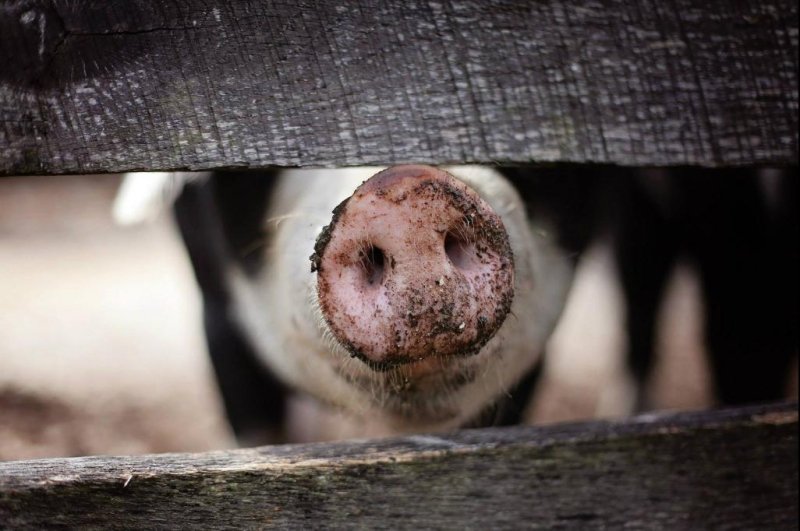
Three lawsuits have been filed challenging the U.S. 
Department of Agriculture's new swine 
slaughter inspection system. Photo courtesy of Pixabay

EVANSVILLE, Ind., Jan. 22 (UPI) -- At least three lawsuits seek to stop a new federal system for inspecting hog slaughter on the grounds that it could endanger workers and lead to more foodborne illnesses.

"It poses a significant risk to the public," said Ryan Talbott, a staff attorney for the Washington D.C.-based Center for Food Safety, one of the groups involved in a suit.

Part of his group's concern, Talbott said, is that the new system will reduce the number of federal inspectors directly supervising the plant "line," where the animals are killed and butchered.

Under the previous system, inspectors were placed at various stages of the slaughter process to monitor for disease and contamination. But the new system gives the inspectors other responsibilities in the plant.

The USDA adopted the system Oct. 1 in an amendment to federal meat inspection regulations. The new system is optional for commercial slaughter establishments. Plants that want to implement it have until March 30 to sign up.

The USDA has said the change "modernizes" the inspection process by using current science and technology to make slaughter safer.

The new system requires slaughterhouses to conduct microbial testing for pathogens and develop written plans for sanitation. Inspectors removed from the slaughter line will instead monitor and review implementation of those sanitary plans and microbial testing, according to the USDA.

"This regulatory change allows us to ensure food safety while eliminating outdated rules and allowing for companies to innovate," Agriculture Secretary Sonny Perdue said in a statement in September. "The final rule is the culmination of a science-based and data-driving rule making process."

But critics say that removing inspectors from the line will undermine the USDA's ability to spot and prevent diseased animals or contaminated meat from making it through the plant and into stores.

"It's stopping inspectors from being able to do the critical appraisal and inspection of the animals," said Zach Corrigan, senior staff attorney at Food & Water Watch, based in Washington, D.C., another group that is suing USDA.

In addition, the new system also eliminates federally imposed "maximum line speeds," which cap the rate at which animals and carcasses move through the plant, Corrigan said.

"Raising the line speeds is going to put a lot of pressure on poorly trained individuals who are not going to be able to conduct adequate inspections," said Sarah Sorspher, deputy director of regional affairs at the Center for Science in the Public Interest, which is not part of the current lawsuits.


More than a dozen organizations are involved in federal lawsuits asking the courts to overturn the system.

One suit, brought the United Food and Commercial Workers Union, alleges that pulling inspectors from the line and eliminating line speed caps will put workers in danger.


"There is no doubt that increasing line speed will increase laceration injuries to workers," according to the lawsuit, which was filed in October in the U.S. District Court in Minnesota. The union has asked the court to set aside a new rule through which USDA established the revamped inspection system.

The USDA has moved to dismiss the union workers' suit. Judge Joan N. Ericksen has yet to rule on that motion.

A second suit, filed in December in the U.S. District Court for the Western District of New York by a handful of animal welfare and environmental groups, contends that increasing line speeds will inhibit a plant's ability to humanely handle and kill the animals. The suit also asks that the new inspection rule be set aside.

And the most recent suit, filed Jan. 13 in the U.S. District Court for the Northern District of California-San Francisco by the Center for Food Safety and Food & Water Watch, alleges that having fewer inspectors on the line puts consumers' "health and welfare" at risk. It asks the court to not only vacate the rule, but also declare it illegal.

The USDA's Food Safety and Inspection Service declined to comment on the pending litigation.

The agency has about two months to respond to the consumer safety suit. It has about a month to respond to a suit that was filed by multiple animal rights groups Dec. 18.

"Part of what makes this such an interesting issue is the way it brings together all these different groups with different concerns," said Lori Ann Burd, the environmental health director and senior attorney at the Center for Biological Diversity, one of several nonprofits that filed a suit that challenges the new system based on the impact to animal welfare and the environment.

"These changes are bad for the pigs, they're bad for the workers, they're bad for the people living around the slaughterhouses and they're bad for consumers," Burd said.

Various meat industry groups have defended the new system, however.

"The important thing to remember is the USDA is still inspecting 100 percent of the live animals and carcasses," said Sarah Little, a spokeswoman for the North American Meat Institute, which supports the new system.

---30---