Monday, March 08, 2021


UCP OIL SHILLS ASK FOR HANDOUT
Alberta working with oil companies to draft new carbon reduction plan, seeks $30B in funding from Ottawa
CARBON CAPTURE TO FRACK OLD WELLS
CALGARY — As the federal government is set to unveil new emissions reductions target at a global climate summit next month, Alberta is drawing up a $30 billion carbon reduction plan it wants Ottawa to pay for.

© Provided by Financial Post Alberta Energy Minister Sonya Savage and Premier Jason Kenney.

Alberta Premier Jason Kenney, Energy Minister Sonya Savage and their staff have been working with oil executives in the province for months to draw up a plan for massive new investments in carbon emissions-reducing technology to be deployed at oilsands facilities, electric generating stations, cement plants and other industrial plants.

Th
otal emissions — and would cost $30 billion over the next 10 years and the province is asking Ottawa to pay for it, beginning in the federal government’s next budget.e plan, which Canada’s largest oil producing province believes will reduce emissions by 30 mega tonnes by 2030 — equivalent to an 11 per cent reduction of its t

“We want the federal government to step up,” Alberta Energy Minister Sonya Savage said Monday, adding the province is asking Ottawa to include a $2 billion to $3 billion per year in funding or tax breaks for carbon capture utilization and storage (CCUS) projects in Alberta over the next 10 years, or a $30-billion commitment.

“Carbon capture and CCUS have a long lead time, it can take 4 to 5 years to get to the point where they’re even under construction. So if we want to meet our targets for 2030 and beyond, we have to get moving on them now or yesterday,” Savage said.

Oilsands emissions intensity 35% lower than reported and could drop another 19%, new study says

Officials in Edmonton say the province is making the ask of Ottawa now partly because they believe Prime Minister Justin Trudeau and U.S. President Joe Biden will jointly announce coordinated new climate measures at the Climate Leaders Summit in Washington, D.C. on April 22 to coincide with Earth Day.


The federal government is preparing to announce new 2030 climate targets at the Earth Day summit, federal officials confirmed, and carbon capture is expected to be a part of the country’s strengthened climate plan.

“Carbon capture technology creates jobs, lowers emissions and increases our competitiveness. It’s an important part of our government’s plan to get to net-zero emissions by 2050, and are working with the provinces, including Alberta, to keep Canada at the forefront of this promising technology,” Ian Cameron, spokesperson for Natural Resources Minister Seamus O’Regan, said in an emailed statement.

In February, Johnathan Wilkinson, Canada’s Minister of Environment and Climate Change, and U.S. Special Presidential Climate Envoy John Kerry met to discuss ways to “develop a work plan for bilateral climate cooperation to raise the scale and scope of climate ambition.”

A government press release noted that Minister Wilkinson was eager to work closely with Secretary Kerry in advance of the U.S. April 22 Earth Day Summit.

Similarly, the U.S. oil and gas industry is preparing a suite of new policies that it expects will be unveiled at the April summit.

“The administration has been working behind the scenes to craft these policies but the details of them are pretty vague at this point,” said Scott Lauerman, spokesperson for the American Petroleum Institute, an oil and gas lobby group in Washington D.C.


Ahead of that summit and potential new climate targets, Alberta’s government is proposing carbon reduction plans that would help Ottawa meet its climate change targets in a way that will allow the province’s oil and natural gas sector to survive.

Alberta is unique in Canada because its 191-mega tonnes of industrial emissions are its largest source of emissions, making up roughly 70 per cent of the province’s total emissions, which amount to 273 MT. By comparison, Ontario’s industrial emissions represent roughly 21 per cent of that province’s total emissions.

Documents obtained by the Financial Post outlining Alberta’s “consolidated ask” show the province believes initiatives currently underway will reduce its total emissions by 30 million MT. Investments in CCUS would reduce the province’s emissions by a further 30 MT over the next 10 years and “catalyzes investment of $30 billion in-process innovations and Canada’s clean-tech ecosystem.”

The province believes that CCUS will allow the province’s industrial base to reduce its total emissions in line with the Paris Agreement.

“A consolidated plan to reduce Alberta’s industrial emissions is the best way to achieve concrete reductions by 2030 and 2050. Alberta understands the need to secure jobs today and jobs tomorrow with a renewed ESG narrative in support of actual projects that can reduce some of Canada’s largest sources of emissions,” the documents state.

Savage said the province has already funded some carbon-reduction strategies with the proceeds from its carbon tax system, called the Technology Innovation and Emissions Reduction (TIER) program, but is looking for assistance from Ottawa.

On Monday, Alberta and Ottawa jointly announced the launch of a new committee to advance CCUS in the country but provided few specifics on the committee’s goals.

“Carbon capture technology creates jobs, lowers emissions and increases our competitiveness. It’s how we get to net zero,” O’Regan said in a press release.

The announcement Monday called “for the development of a comprehensive CCUS strategy and for the government to explore opportunities to help maintain Canada’s global competitiveness in this growing industry.”

BYE BYE, BOLSONARO 
Top Brazil judge annuls Lula convictions, opening door to 2022 run

Issued on: 08/03/2021 - 
Former president of Brazil Luiz Inacio Lula da Silva gestures after voting at a polling station during the municipal elections in Sao Bernardo do Campo, Brazil, November 15, 2020. © Amanda Perobelli, REUTERS

Text by FRANCE 24

A Supreme Court judge on Monday annulled the criminal convictions against Brazil's former president, Luiz Inacio Lula da Silva, restoring his political rights ahead of next year's presidential election.

The decision scrambles forecasts for the 2022 race, potentially paving the way for a showdown between President Jair Bolsonaro, a far-right populist, and Lula, easily his most formidable opponent on the left.

Lula, as he is known throughout Brazil, governed Latin America's largest economy between 2003 and 2011. He was convicted over graft allegations in 2018 and released in late 2019.

In a surprise decision, Justice Edson Fachin ruled on Monday that a court in the southern city of Curitiba did not have the authority to try Lula on corruption charges and that he must be retried in federal courts in the capital, Brasilia.

The decision means Lula would be eligible to run for president next year should he wish to challenge Bolsonaro, said the local newspaper Folha de Sao Paulo.


Hailing the ruling in a Twitter post, Lula said it was "recognition that we have always been correct throughout our legal battle".


The office of Brazil's prosecutor general said it will appeal the decision, which will also be reviewed by the full Supreme Court.

Polarising figure

Lula's graft conviction in 2018 blocked him from running in the elections that year. He was then released from prison in late 2019, but could not run for office due to his criminal record.

The 75-year-old has maintained his innocence and said the case against him was politically motivated.

The charismatic former union leader is a polarising figure but still popular with many of the country's poor, who credit him for bringing millions out of poverty.

Lula is the only one of 10 potential 2022 candidates who outperformed Bolsonaro in a survey by polling company Ipec, published in newspaper O Estado de S.Paulo last week.

It found that 50 percent of the 2,002 people it interviewed "would certainly" or "could" vote for Lula, compared with 38 percent for Bolsonaro.

(FRANCE 24 with REUTERS)


Brazil judge overturns ex-leader Lula's convictions

Issued on: 08/03/2021 - 

Brasília (AFP)

A Brazilian Supreme Court judge on Monday overturned the graft convictions against former president Luiz Inacio Lula da Silva, clearing the way for the left-wing leader to run in the 2022 presidential election.

Justice Edson Fachin overturned both convictions against the popular-but-tarnished ex-president (2003-2010) stemming from a probe into a massive corruption scheme centered on Brazilian state oil company Petrobras.

Fachin ruled the court in the southeastern city of Curitiba that convicted Lula "lacked jurisdiction," and sent four related cases against him -- two of which were still pending judgment -- to a federal court in the capital, Brasilia.

Lula, 75, regains the right to run for office unless the convictions are reinstated.

The prosecutor general's office said it would appeal.

"This is recognition that we were right throughout this long legal battle," Lula's lawyers said in a statement.

They called the decision vindication of their arguments: "ex-president Lula's innocence, the invalidity of the cases and the 'lawfare' that was waged against him."

The cases stem from Operation Car Wash, a sprawling anti-corruption investigation that brought down a Who's Who of powerful politicians and business executives in Brazil, jailed for using inflated construction contracts to systematically fleece Petrobras for billions of dollars.

Lula, who spent more than 18 months in prison before being freed in 2019 pending appeal, was the most powerful figure felled.

Prosecutors accused him of using the corruption scheme to take bribes, remodel a triplex beach apartment and channel illegal funds to his foundation.

His image was badly tarnished by the convictions, which resulted in jail sentences totaling 26 years.

Still, an Ipec opinion poll published Sunday gave Lula more potential votes in the October 2022 presidential elections than President Jair Bolsonaro -- the only politician to outperform the incumbent.

- 'The show's just starting' -

Lula claims he is innocent, and that the cases against him were fabricated to take him out of the running for Brazil's 2018 presidential race.

That election was ultimately won by far-right Bolsonaro, who capitalized on massive backlash against Lula's Workers' Party (PT).

Lula supporters have long cried foul.


They point to the fact that the lead judge in the Car Wash probe, Sergio Moro, went on to accept the post of justice minister under Bolsonaro, and that hacked phone messages show he conspired with prosecutors to ensure Lula was sidelined.

Social media in Brazil erupted with pictures of Lula donning a pair of red sunglasses or tearing into a punching bag with boxing gloves on.

"The 2022 election started today," opinion columnist Thomas Traumann wrote on Twitter.

"If you thought Brazil was politically polarized before, take a seat, because the show's just getting started."

Lula remains a hero on the left, and many Brazilians fondly recall the economic boom he presided over, as well as social programs that helped lift millions of people from poverty.

"Lula innocent," his party proclaimed on Twitter.

But his vindication is far from complete. The former metal worker-turned-president still faces several other corruption and influence-peddling cases, aside from the Operation Car Wash charges.

And he remains highly controversial -- so much so that the Sao Paulo stock exchange plunged by 2.5 percentage points after news of the court decision broke.

The former president's press office said he had no immediate comment on the ruling.

Neanderthals disappeared from Europe earlier than thought, says study


The remains of the upper and lower jaw of a Neanderthal from the Spy Cave in Belgium Patrick SEMAL RBINS/AFP
Issued on: 08/03/2021 -


Washington (AFP)

Neanderthal fossils from a cave in Belgium believed to belong to the last survivors of their species ever discovered in Europe are thousands of years older than once thought, a new study said Monday.

Previous radiocarbon dating of the remains from the Spy Cave yielded ages as recent as approximately 24,000 years ago, but the new testing pushes the clock back to between 44,200 to 40,600 years ago.

The research appeared in the Proceedings of the National Academy of Sciences and was carried out by a team from Belgium, Britain and Germany.

Co-lead author Thibaut Deviese from the University of Oxford and Aix-Marseille University told AFP he and colleagues had developed a more robust method to prepare samples, which was better able to exclude contaminants.

Having a firm idea of when our closest human relatives disappeared is considered a key first step toward understanding more about their nature and capabilities, as well as why they eventually went extinct while our own ancestors prospered.

The new method still relies on radiocarbon dating, long considered the gold standard of archeological dating, but refines the way specimens are collected.

All living things absorb carbon from the atmosphere and their food, including the radioactive form carbon-14, which decays over time.

Since plants and animals stop absorbing carbon-14 when they die, the amount that remains when they are dated tells us how long ago they lived.

When it comes to bones, scientists extract the part made up of collagen because it is organic.

"What we have done is to go one step further," said Deviese, since contamination from the burial environment or through glues used for museum work can spoil the sample.

Instead, the team looked for the building blocks of collagen, molecules called amino acids, and in particular selected specific single amino acids they could be sure were part of the collagen.

- 'Reliable framework' -


The authors also dated Neanderthal specimens from two additional Belgian sites, Fonds-de-Foret and Engis, finding comparable ages.

"Dating all these Belgian specimens was very exciting as they played a major role in the understanding and the definition of Neanderthals," said co-lead author Gregory Abrams, of the Scladina Cave Archaeological Centre in Belgium.

"Almost two centuries after the discovery of the Neanderthal child of Engis, we were able to provide a reliable age."

Genetic sequencing was meanwhile able to show that a Neanderthal shoulder bone previously dated at 28,000 years ago was heavily contaminated with bovine DNA, suggesting the bone had been preserved with a glue made from cattle bones.

"Dating is crucial in archaeology. Without a reliable framework of chronology we can't really be confident in understanding the relationships between Neanderthals and Homo sapiens," added co-author Tom Higham of the University of Oxford.

Certain stone tool use has been attributed to Neanderthals and has been interpreted as a sign of their cognitive evolution, said Deviese.

But if the timeline for Neanderthals' existence is being pushed back, Deviese added, then Paleolithic industries should be re-examined to determine if they really were the work of the extinct hominid species.

© 2021 AFP

#IWD

ISS: Astronaut Cristoforetti readies to return 'home'

In 2022, ESA astronaut Samantha Cristoforetti will fly to the International Space Station for a second time. She calls it her "home away from home," but many things there have changed since her first visit.


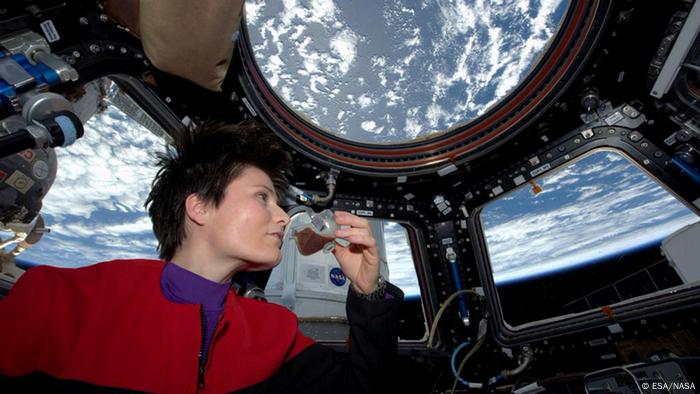
Samantha Cristoforetti is looking forward to more coffee breaks at the ISS next year

ESPRESSO IN SPACE

"It is a great pleasure for me to announce Samantha's coming space mission," said Josef Aschbacher, the new director general of the European Space Agency (ESA), as he opened a press conference on March 3.

ESA astronaut Samantha Cristoforetti is scheduled to go back to the International Space Station (ISS) for her second stay in the spring of 2022, following her two colleagues Thomas Pesquet and Matthias Maurer, who will set off for the ISS in April and October 2021 respectively.


Cristoforetti herself is delighted. "Not surprisingly, it was a feeling of extreme joy and gratefulness for this opportunity. As I've mentioned before, I had the amazing opportunity the past few years to grow as an astronaut. But we have this tendency of wanting to go back to space as soon as possible," she admitted.

Freshly brewed ISSpresso

For Cristoforetti, it will be a return to her "home away from home," as she likes to call the ISS. The Italian astronaut has indeed already spent a remarkable amount of time in orbit. From fall 2014 to spring 2015, she was at the station for 200 days working as flight engineer for the mission Futura, the second-longest period spent in space by an ESA astronaut. Her colleague and astronaut classmate Luca Parmitano is the only one to have topped that record — by just a single day.

The world record for the longest single spaceflight is held the Russian cosmonaut Valeri Polyakov with 437 days. But his compatriot Gennady Padalka has spent more time in space overall than anyone else, totting up a record total of 878 days when all his five missions are combined. 

During her first stay at the ISS, Cristoforetti conducted many experiments, most of them related to biology and genetics. In one of them, she looked at how mammalian immune cells reacted to different levels of microgravity. The data drawn from this experiment showed that it takes only a few seconds for these cells to adapt to weightlessness.

But one experiment in particular caught people's attention during her stay: she was able to come up with the first freshly brewed espresso on the ISS.

Commercial support

This time round, many things will have changed. "The positive side of having waited all these years is that the mission will have some different aspects to it. So it's kind of exciting to fly a new spaceship," said Cristoforetti, referring to the new commercial spacecraft from the US that will replace the Russian Soyuz spacecraft for the three next ESA missions to the ISS.

It still has to be decided which spacecraft will take Cristoforetti: Space-X's Dragon or Boeing's Starliner. The exact date for her flight has also not been confirmed yet.


Recently refurbished

"The space station has been undergoing this midlife upgrade for some time. New hardware up there, new operations, a lot more interesting experiments," said Cristoforetti. One thing she is particularly looking forward to is a new piece of equipment already waiting on board the ISS to go into operation in the space laboratory Columbus: a 3D printer to print metal in space.


ESA's astronaut class from 2009: Cristoforetti and her colleague Pesquet

 (on her right) will fly to the ISS in 2022 and 2021

And the ISS has its own space balcony now: Bartolomeo, a platform newly installed outside the Columbus module that will allow private companies to carry out experiments under space conditions.

Feet on the ground, eyes on the stars

Although Cristoforetti has spent the past few years back with her feet on solid ground, her gaze has been set on goals even further away than the ISS, as preparations rev up to put people on the moon once more.

"It's been exciting years since I came back. I am very grateful actually that I had the chance of growing professionally and to give something back from my experience as an astronaut," she said. For example, she has headed ESA's Spaceship EAC initiative, where she has mentored students tackling the technological challenges involved in moon missions. The plan is for such missions to be launched not from Earth, but from the Lunar Orbital Platform-Gateway, a space station orbiting the moon projected to be built within the next nine years. 

As an experienced astronaut, Cristoforetti knows exactly what a person needs to feel at home in space. For this reason, she was selected to be the crew representative for the future residents of this lunar station. 

"I was able to give my contribution from the perspective of an astronaut. And I am especially excited about that because Italy is leading the designing and manufacturing of these modules for ESA," she said, referring to the I-Hab modules that will be the main living quarters for future astronauts at the Gateway.


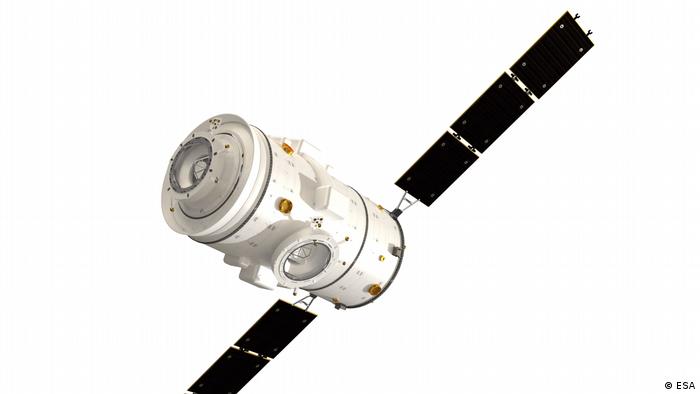
This artist's impression shows the planned I-Hab module 

for astronauts working at the Lunar Gateway

Over the moon

Who these astronauts may be has been a mystery since 2009, when the last official class of astronauts, to which Cristoforetti belonged, was chosen by ESA. But that is about to change: From March 2021 until April 2021, ESA is once again taking applications from aspiring astronauts.

"Samantha and her colleagues are highly qualified and very young and there is no intention to not have them in space anymore," said ESA Director General Josef Aschbacher. "But, of course, we need to renew our astronaut class and eventually send astronauts beyond the ISS toward the moon. And eventually, in the next decade, even further, to Mars." There are three places already reserved for European astronauts to fly to the Lunar Gateway within this decade.

For now, Cristoforetti is returning to the ISS, where she will most likely stay for the usual six-month stint. Does she have any more premieres in mind on the lines of that first espresso in space? "I don't know, I have a few ideas. But that would be a little bit early to give it away," she said.

#IWD
Women's Day draws thousands in Barcelona, Madrid demos banned


Spain has a thriving feminist movement 


Barcelona (AFP)

Several thousand demonstrators massed in Barcelona on Monday for a socially-distanced International Women's Day march after a day of national rallies except in Madrid, where gatherings were banned over the virus.

Wearing purple masks and brandishing placards with purple slogans reading "No means no" and "The real pandemic is machismo", thousands of women packed the Barcelona's Paseo de Gracia boulevard, many chanting "Long live the feminist struggle", an AFP correspondent said.

"The pandemic has made the differences clearer. Who's been left to look after everyone at home? Who's had problems going back to work?" asked Alys Samson, 29.


"It's time for us to make our voices heard in the face of the far-right violence, we have to find ways to stand up for ourselves and end the machismo and racism that's growing everywhere."

Other purple rallies also took place in the southern city of Seville, in the eastern coastal city of Valencia and dozens of other towns and cities.

Despite the ban on demonstrations in Madrid, more than 100 people gathered in the city's central Puerta del Sol square.

The rally took place peacefully without any intervention from the police, an AFP correspondent said.

Madrid still has one of the country's highest rates of Covid-19 infections and last week, the Spanish government imposed a ban on all such gatherings in the capital for International Women's Day.

Last year over 100,000 people hit the streets of Madrid, including three ministers who subsequently tested positive for Covid-19, just days before the government imposed one of Europe's strictest lockdowns as infections and deaths soared.

The move sparked sharp criticism from the rightwing opposition, which blamed the leftwing government of Prime Minister Pedro Sanchez for allowing the huge march to go ahead.

Speaking at an official event to mark the day, Sanchez said "much work remains to be done" to advance women's rights.

"If there is one thing we cannot give up, breaking down the prejudices that still persist, it is the feminist struggle, because everything is at stake -- progress, decency as a country and economic growth," the premier said.

"The agenda for change that our country needs is the feminist agenda, with people's lives at the centre, public services and the fight against all forms of male violence."

Spain has a thriving feminist movement which in 2018 saw five million people taking part in a nationwide strike on International Women's Day to call attention to gender disparities.

But the movement has faced a backlash this year, with several street murals celebrating prominent women vandalised over the weekend in Madrid and elsewhere.

© 2021 AFP
Algerian women hit the streets demanding equal rights


Algerian women chant slogans during a protest in the capital Algiers against a family code they say restricts their rights 


RYAD KRAMDI AFP

08/03/2021 - 

Algiers (AFP)

Hundreds of women marched Monday in the Algerian capital to protest against a family code many consider demeaning, as they marked International Women's Day in the conservative country.

The family code is the general law that governs family and property relations in Algeria.

Adopted in 1984 and revised in 2005, it is inspired from Islamic sharia law and seen by many rights groups as anti-constitutional, because it does not respect equality between citizens.


Women held up banners calling on authorities to abrogate the "infamous" code and other signs saying they were marching "for change", AFP reporters said.

Feminists say that under the code women's rights are limited and they are subject to rules set out by men, rendering women "minors for life", despite the modifications made in 2005.

The marchers also denounced violence against murder including femicide in Algeria, where according to campaigners 75 such killings took place in 2019, and more than 40 last year.

The protesters also slammed a controversial draft law that calls for stripping Algerians of their citizenship if they carry out activities abroad that could undermine the "interests of the nation".

Chanting "women are committed" and "equality between men and women", the protesters marched toward the central post office, an emblematic rallying point for the pro-democracy "Hirak" movement.

At the end of the peaceful protest some demonstrators were jostled by policemen who sought to push them out of the city centre, witnesses said.

#IWD

International women's day: Why are women-led nations doing better with Covid-19?

Whether it has been New Zealand under Jacinda Ardern or Taiwan under the presidency of Tsai Ing-Wen or Germany under Angela Merkel, female-led countries have been held up as examples of how to manage a pandemic. FRANCE 24's Annette Young tells us more.

#IWD
VODKA AND THE FIST

Ukrainian women march against domestic abuse


The march took place with a heavy police presence
ARMED MEN IN ARMOUR 

Issued on: 08/03/2021 -
Kiev (AFP)

Nearly 2,000 people marked International Women's Day in Kiev Monday with a march demanding that Ukraine ratify the Istanbul Convention against domestic abuse.

The demonstrators, mainly women, carried signs that read "No to domestic violence" and "I am allergic to patriarchy".

Ukraine signed the Istanbul Convention in 2011 but has yet to ratify it. The document is aimed at fighting the abuse of women, in particular domestic violence.

But religious groups in Ukraine have criticised attempts to introduce the notion of gender in national legislation, saying it threatens traditional family values.


The rally was protected by a large police presence and officers arrested two men who tried to attack the march. Several dozen far-right activists meanwhile staged a demonstration of their own nearby.

Ukrainian laws designed to protect victims of domestic violence have many loopholes and are rarely enforced. Suspects are more often than not acquitted, say campaigners.


Organisers of the march also sought to call attention to the heavy impact of Covid-19 on women, who represent a majority among Ukrainian health care providers, teachers and social workers.

Two-thirds of women in Ukraine say they have suffered physical, psychological or sexual abuse since the age of 15, according to a 2019 study by the Organization for Security and Cooperation in Europe (OSCE).

#IWD
US, EU, NZ leaders warn pandemic risks women's rights


US Vice President Kamala Harris, addressing European MPs via video link on International Women's Day Aris Oikonomou AFP


Issued on: 08/03/2021 

Brussels (AFP)

The coronavirus pandemic and ensuing economic and political turmoil have sharpened the challenges facing women as they demand equal rights, three of the world's most influential female leaders warned Monday.

US Vice President Kamala Harris, New Zealand's Prime Minister Jacinda Ardern and EU chief Ursula von der Leyen addressed the European Parliament on International Women's Day.

"Simply put, our world does not yet work for women as it should," Harris, the first woman and the first American of African and Asian descent to serve as US vice-president, told MEPs.

"COVID-19 has threatened the health, the economic security, and the physical security of women everywhere," she warned in a video address recorded in Washington.

"At the same time, women comprise 70 percent of the global health workforce, putting them on the front lines and at risk of contracting the virus," Harris said.

"Women working in often overlooked sectors have been hit the hardest, especially those working in low wage jobs, and those working in the informal economy," she said.

"Meanwhile, quarantine measures have meant that women have shouldered an increased burden at home as they care for children day and night."

From New Zealand, Ardern warned that "no country is safe until every country is safe" and that the coronavirus vaccination drive must reach 7.8 billion women and men around the world.

"Women are at the forefront of fighting the COVID crisis," she said.

"They are amongst the doctors, nurses, scientists, communicators, caregivers and frontline and it seemed to workers who faced the devastations and challenges of this virus every day."

- Pay gap -

Von der Leyen, the first woman to head the EU executive, touted her plans to insist on transparency and in hiring and salaries to incite European companies to close the gender pay gap.

"Let's have a look at what women have endured and 12 months of pandemic," she said, citing "female doctors and nurses, working double shifts. for entire weeks and months".

She praised female entrepreneurs, and "mothers of locked-down children who've had to learn the toughest and most amazing job in the world with no support from the outside world".

Von der Leyen complained that women in Europe are paid 14 percent less than men and only 67 percent are in paid work, compared to 78 percent of men. "This is simply not acceptable," she said.

"We have to remove the obstacles on the path towards equality. We have to strive for equal opportunities," she said, to applause from the parliament, where men account for 60.5 percent of the MEPs.

© 2021 AFP

Asia's 'Milk Tea'***  activists give cross-border support for democratic change

LONG LIVE THE BOURGEOIS REVOLUTION
THAT THE PROLETARIAT DEFENDS


An online solidarity movement is bringing together democracy activists throughout Asia for a fight against authoritarianism. But how much difference can a popular hashtag actually make?


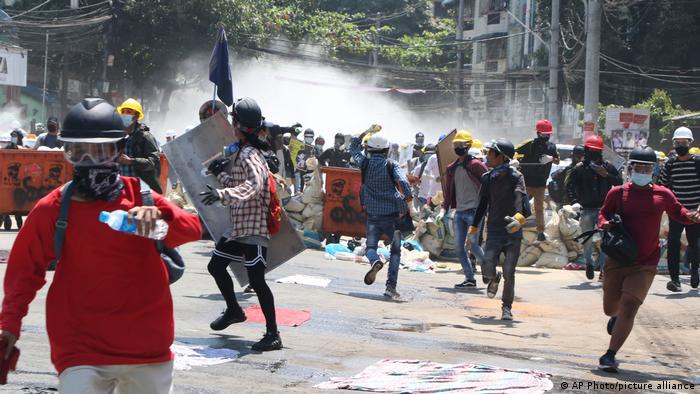
The Milk Tea Alliance is nurturing transnational solidarity with protests such as this one in Yangon, Myanmar, on March 8

Solidarity between pro-democracy advocates has been gaining momentum across Asia in the last couple of months, both in cyberspace and in the streets.

The informal Milk Tea Alliance unites like-minded political activists from Hong Kong, Taiwan, Thailand and Myanmar.

Although their agendas at home vary, protesters clashing with riot police in Myanmar can relate to Thais demanding reform of the monarchy. Hong Kongers contesting Beijing’s National Security Law, meanwhile, can resonate with Taiwanese resisting Chinese mainland encroachment.

Thitinan Pongsudhirak, a professor of political science at Thailand's Chulalongkorn University, told DW that the growing transnational movement "has aligned the aspirations of young demographics across Asia, favoring democratic norms and values against authoritarianism in their countries and beyond."
How did the Milk Tea Alliance come about?

In recent months, young pro-democracy activists in Asia have shown how online activism can morph into collective international action by sharing tried-and tested protest tactics.

The pan-Asian coalition started out in April last year as a humorous hashtag after a Thai actor retweeted a photo that categorized Hong Kong as an indedendent country.

Fervent Chinese nationalists lashed out at the outspoken Thai Twitter users, only to have their comments deflected with self-deprecating humor.

Netizens in Hong Kong and Taiwan quickly chimed in on the online spat, and the three nations formed an anti-China front. They dubbed themselves the Milk Tea Alliance — after the popular East and Southeast Asian beverage.

Though it initially emerged as a pushback against China’s dominance in the region, the movement has since widened to represent a larger struggle but with one common cause: fighting authoritarianism.

Watch video 26:05 Is Hong Kong's pro-democracy movement defeated?


Myanmar joins the club


Myanmar's youth have also taken to the streets to protest against the military's seizure of power in a coup on February 1. Some of the protesters are the latest members of the cross-border network pushing for democracy.

"For many young protesters, joining the Milk Tea Alliance alongside other Asian youth represents a rejection of the closed and authoritarian society the military maintained for decades through violence and terror," Ronan Lee, a visiting scholar at the International State Crime Initiative at Queen Mary University of London, told DW.

More than 50 people have been killed and nearly 1,500 people have been arrested since the Myanmar army ousted the democratically elected government of Aung San Suu Kyi, according to the Assistance Association for Political Prisoners (AAPP) monitoring group.

The Myanmar military — which ruled the country from 1962 for almost five decades — had expected that it would be able to quell the unrest by arresting key politicians and notable activists. However, "this time Myanmar's protests have far more leaders than the military expected and continue [to demonstrate] even after a thousand arrests," Lee noted.

"Diversified leadership structures learned from the Milk Tea Alliance have helped Myanmar’s protesters frustrate military efforts [to crack down on protests]," he added.

Watch video02:30 Myanmar protesters defiant after deadly crackdown

From hashtag to pan-Asian movement

In one of the latest displays of transnational solidarity, activists across Asia took to the streets at the end of February in support of Myanmar demonstrators.

Some also answered calls from pro-democracy campaigners to hold online protests by posting photos of themselves showing the three-finger salute — a gesture borrowed from The Hunger Games film trilogy and a symbol of resistance shared with the Thai pro-democracy movement.

"Today we witnessed transnational solidarity across #MilkTeaAlliance. It is no longer just a hashtag. You made it a movement," tweeted the Milk Tea Alliance account on February 28.


Pursuing a democratic future

As authorities continue to crack down on prominent pro-democracy activists in Hong Kong and Thailand, prospects of any major political shift in the region appear slim.

Professor Thitinan says while the Milk Tea Alliance holds opportunities for further growth, the movement will need stronger coordination efforts to stand up to authoritarian forces.

"The Milk Tea Alliance has potential to catch on as a significant political force across Asia as the younger generations grow up and have more means to carry on political activities. But this requires leadership, coordination, and organization," Thitinan told DW.


IN PICTURES: MYANMAR PROTESTERS FACE OFF AGAINST MILITARY
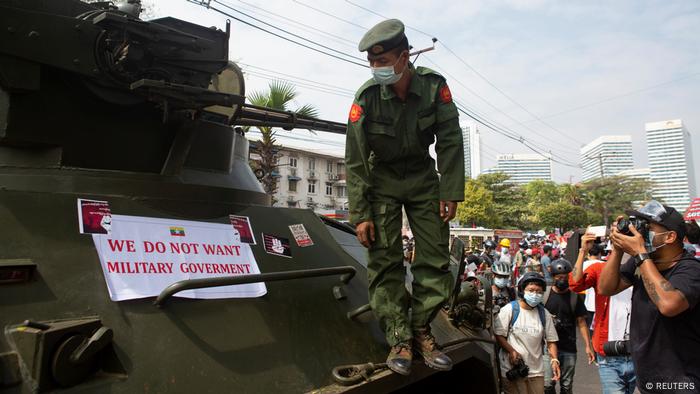
'We do not want military government'

The new military junta stationed extra troops and armored vehicles around the country on Monday to deal with the ongoing protests. People continued to take to the streets anyway, as seen above where protests took place outside the central bank in Yangon.
PHOTOS

*** WE CALL IT BUBBLE TEA