Germany sees US as vulnerable to squeeze on potash supplies
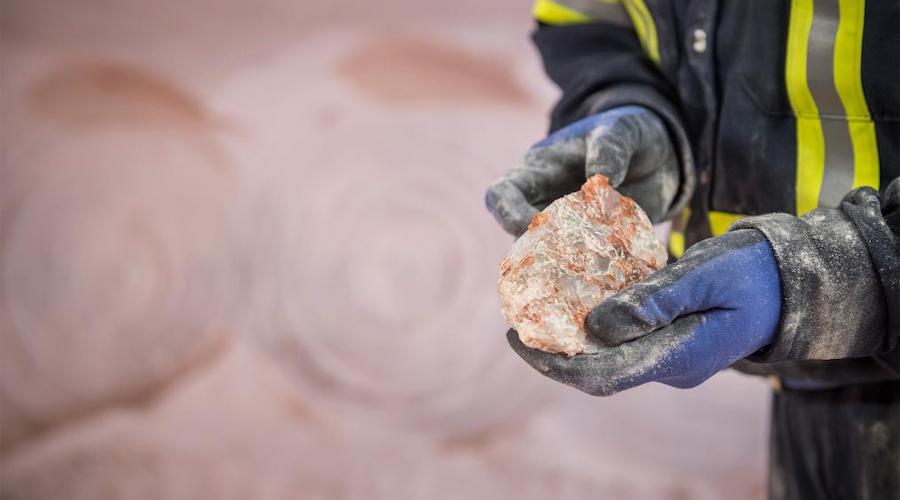
German authorities seeking to map out US supply-chain vulnerabilities as a way to win leverage with President Donald Trump’s administration have identified a key pressure point: potash.

The US imports more than 90% of the key ingredient for agricultural fertilizer, leaving the world’s No. 1 economy highly reliant on global producers — above all Canada. Potash, a potassium-rich fertilizer made from underground deposits, would be among options for US allies should Trump further ratchet up trade and security threats, according to people familiar with the considerations.
The US president’s threats to seize Greenland, a Danish territory, stunned European leaders and prompted an effort to examine how they could identify points in global supply chains where they could apply pressure, Bloomberg reported in March. Sensitive areas include action against US technology companies with ties to the White House, scrutiny over artificial-intelligence investments and drug prices, the report showed.
In the agriculture sector, potash has emerged as a clear vulnerability. Canada is by far the largest exporter to the US and the country’s Nutrien Ltd. is the world’s largest producer. Another big player is K+S Group, a Kassel, Germany-based company that produces from the Bethune potash mine in the western province of Saskatchewan.
German officials monitoring US dependencies are looking at how companies such as K+S could be moved to scale back shipments to the US in a trade conflict, the people said on condition of anonymity as deliberations took behind closed doors.
German Finance Minister Lars Klingbeil will travel to Canada later this week. No decision has been made on any restrictions involving potash and Berlin’s preferred avenue is to improve transatlantic relations than enter a tit-for-tat trade conflict that would hurt companies on both sides of the Atlantic, the people said.
Spokespeople for the German and Canadian governments declined to comment. K+S didn’t immediately respond to a request for comment.
It’s unclear how any move on potash exports would develop in Canada, which is focused on discussions with the US on sectoral tariffs for steel, aluminum, cars and lumber ahead of a review of the US-Mexico-Canada Agreement, scheduled for July 1.
Any restrictions would also become a political issue in Canada, where the industry is concentrated in western provinces dominated by conservative leaders. Saskatchewan Premier Scott Moe in late 2024 rejected a proposal to impose potential export taxes on potash, uranium and oil.
Prime Minister Mark Carney last week told The Canadian Press that his government would not use energy or critical minerals as leverage in US trade talks.
For Germany, relations with the US deteriorated over the last week after Chancellor Friedrich Merz sharply criticized the US-led war on Iran, prompting a blunt response from Trump and an announcement the Pentagon would withdraw more than 5,000 American troops from the country.
The US in the meantime is seeking to diversify its potash imports. In March, the Trump administration lifted sanctions on a key potash producer in Belarus, Russia’s closest ally, after President Alexander Lukashenko agreed to release 250 political prisoners in Washington’s latest deal with the Russian ally.
Belarus was a major global potash player, supplying about a fifth of the world’s demand for the soil nutrient before Western sanctions curbed the flows in retaliation to political repression and involvement in Russia’s war against Ukraine.
While Russia is also an important potash producers, Canada remains the world’s largest exporter by a significant margin, shipping over 22 million tons annually and accounting for almost two-fifths of global exports as of early 2026.
The US decision applied to the state-owned potash fertilizer maker Belaruskali and potash trader Belarusian Potash Co., according to state-owned news agency Belta, which cited Trump’s special envoy to Belarus, John Coale.
Lukashenko has also offered to sell a potash mine to the US for $3 billion, Belta reported last month. The US is considering the offer, but so far hasn’t offered a fair price, Lukashenko was quoted as saying.
(By Michael Nienaber)

No comments:
Post a Comment