Tuesday, November 09, 2021

Liberty University files restraining order against 'whistleblower' suing for wrongful firing

By Michael Gryboski, Christian Post Reporter | Tuesday, November 09, 2021
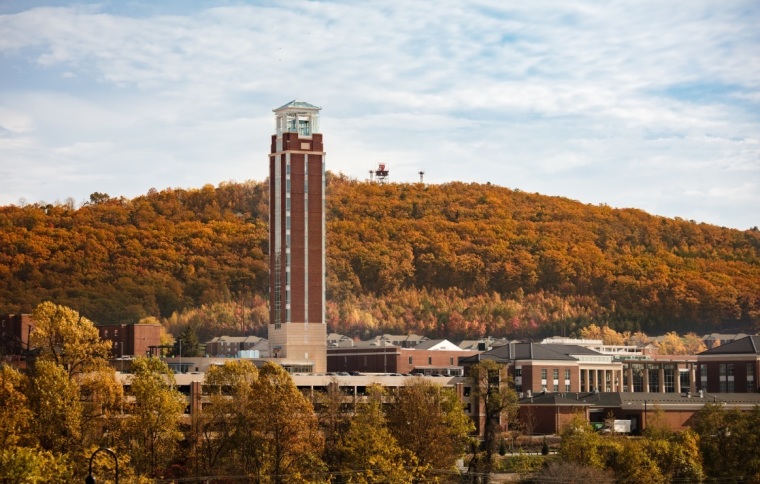
The Freedom Tower at Liberty University in Lynchburg, Virginia,
 is the home of Liberty's School of Divinity. | Courtesy of Liberty University

Liberty University is asking a federal court to stop a former employee from disclosing confidential information and documents amid a legal battle over claims that the evangelical Christian school wrongfully fired him for speaking out about how it handled sexual assault allegations.

Scott Lamb, formerly the school’s senior vice president of communications, sued the Lynchburg-based university and claimed that he was dismissed because he expressed concern over how Liberty officials handled sexual assault claims.

Liberty filed a request for a temporary restraining order last Friday in the U.S. District Court for the Western District of Virginia against Lamb, arguing that he is still bound to his confidentiality agreement with the university.

The motion also asks for Lamb to, among other things, deliver “all documents or other information, including all privileged, confidential, and/or trade secret information” to Liberty and to disclose all the people to whom he has sent such sensitive documents or information.

In a memorandum of law filed in support of the motion, a copy of which was emailed to The Christian Post on Monday, Liberty argued that “Lamb promised not to disclose any confidential information without Liberty approval and to return all confidential Liberty information upon his departure” when he signed a confidentiality agreement in 2018.

“Although many of these materials were likely protected trade secrets, privileged communications or attorney work product protected information, Lamb has admitted that he disclosed them to the media, general public and commercial enemies of Liberty without privilege or prior permission as contractually required,” the memorandum reads.

“Perhaps most shockingly, Lamb has demonstrated no regard for the attorney-client privilege, freely discussing privileged advice regarding litigation strategy and other matters on national media.”

Liberty filed a counterclaim to Lamb’s lawsuit, denying certain statements made in his filing last month. Liberty contends that Lamb was fired "for insubordination, expense mismanagement, and overall poor performance."

In a statement emailed to CP, the university said that while it “made every possible effort to avoid taking this action,” it believes that “Lamb simply continues to make egregious, false claims and to violate the law.

“We simply had to act to protect the institution’s mission. We will let the lawsuit speak for itself. It speaks clearly and factually. We have absolutely no doubt that in court our claims will be irrefutable,” Liberty maintained

Lamb directed CP to a statement he posted to Twitter on Monday in which he explained that he tried to change Liberty from within regarding alleged abuses. He claimed that Liberty is “lying about the reason for my termination.”

“Because Liberty University has neither the law nor the facts on its side, its strategy is to pound on the one who sought to reform from within — the whistleblower,” tweeted Lamb.

“As I allege in my lawsuit, I spoke about abuses at Liberty during my entire duration of employment. I spoke out loudly, often, and with little regard for hanging to my job, because I spoke as one who will give an account to God.”

In his statement, Lamb said that he gave over 20 hours of testimony when the Baker Tilly firm interviewed him during an independent investigation in 2021.

“Before my first minute of testimony, I was given a 2-page letter of ‘whistleblower protection,’ signed by interim president Jerry Prevo, instructing me to speak honestly, forthrightly, thoroughly, and without any regard to the reputation of the school, its leadership, or its board. “And Prevo promised that there would be no retaliation for my honest testimony,” he wrote.

“I indicted the former president, the Board of Trustees for negligence and Jerry Prevo as the chairman of the trustees during the entire presidency of Jerry Falwell Jr. Baker Tilly presented their report to Jerry Prevo and the Board of Trustees on September 29. Seven days later, Jerry Prevo fired me.”

Lamb further added that he has “enough documentary evidence” to prove his claims in court and would be happy to give testimony under penalty of perjury to federal agencies or U.S. Congress.

Lamb added that while Liberty “can hire every lawyer and PR firm in the land to attempt to silence me,” this “will not stop the truth from breaking out of Liberty’s conspiracy of silence.”

“God help me if I do anything else but speak up for the true heroes of this story — those who were silenced previously but now are shouting from the rooftops,” he concluded.

Last month, ProPublica published an investigative piece titled, “‘The Liberty Way’: How Liberty University Discourages and Dismisses Students’ Reports of Sexual Assaults.”

ProPublica interviewed former Liberty students who detailed experiences in which the university allegedly mishandled sexual assault allegations and claimed the school even threatened accusers.

The article mentioned how Lamb was allegedly fired for expressing concerns over how the university was handling the allegations of sexual misconduct.

“Concerns about sexual assault would go up the chain and then die,” Lamb told ProPublica, adding that he believed Liberty engaged in a “conspiracy of silence” regarding allegations.

In July, 12 unnamed women filed a class-action suit against Liberty, claiming the school violated Title IX federal discrimination law by failing to process allegations properly.

“Liberty University has intentionally created a campus environment where sexual assaults and rapes are foreseeably more likely to occur than they would in the absence of Liberty’s policies,” stated the lawsuit.

The suit claimed “The Liberty Way,” the school’s honor code, was used to silence accusers by not clarifying if a woman who reports being sexually assaulted will be punished for violating the code if she admits to breaking other aspects of the code, such as the ban on drinking, when reporting an alleged assault.

Liberty President Jerry Prevo issued a statement declaring that “The Liberty Way should never be misused to cover up wrongdoing.”

“It is also the case that as a Christian university we will remain unwavering in our commitment to cultivating a culture in our Liberty community that honors God’s Word and embraces God’s principles for life,” stated Prevo.

“While ‘The Liberty Way’ must never be used to discourage victims from reporting wrongdoing, we also believe that we do not have to choose between embracing our code of conduct as a Christian university and in complying with our legal Title IX obligations.”
At least 10 missing in Turkey building collapse

Issued on: 09/11/2021 - 

There were conflicting reports about how many people were trapped under the debris Handout IHH humanitarian aid group/AFP


Istanbul (AFP) – A two-storey building packed with shoppers and diners collapsed in eastern Turkey on Tuesday, burying at least 10 people under heavy debris.

The incident occurred on a busy street in the eastern plains city of Malatya during evening rush hour, as residents packed shops on their way home from work.

Witnesses and media reports said the building crumbled during planned repairs that resulted in damage to one of the supporting columns.

"I heard a crack first and then the building collapsed. A cloud of dust emerged. It was like judgement day," witness Turhan Cobanoglu told HaberTurk television.

Turkey's AFAD emergencies service said 13 people had been rushed to hospital as rescuers searched for signs of life under piles of debris spilling across one of Malatya's main thoroughfares.

Officials issued contradictory reports about how many people were believed to be inside the various restaurants and shops when the building crumbled at 4:50 pm.

Local mayor Osman Guder told HaberTurk television that between 20 and 25 were believed to still be trapped inside.

Malatya's main opposition CHP party chairman Enver Kiraz put the number trapped at up to 30.

"On the first floor, there was a chicken restaurant, a dried nuts seller and bakery. And on the second floor there was a coffee house," Kiraz told AFP by telephone.

"It is a very busy street. As far as I know, some of the people were injured while passing by the building."

But HaberTurk later reported that only 10 people remained unaccounted for.

Media reports said two of those rescued had suffered serious injuries.

Television images showed rescuers using construction diggers to remove large blocks of debris and trying to listen for signs of any survivors as the evening set in.

Turkey has been rocked by a series of disasters -- including a wave of wildfires and two flash floods -- that claimed some 100 lives this year.

President Recep Tayyip Erdogan came under fierce political pressure when it emerged in August that Turkey no longer had functioning fire fighting planes.

The deadly flash floods wiped out houses in mountain valleys and sparked questions over why officials were approving construction licences for regions prone to violent weather events.

Erdogan's communications director Fahrettin Altun said the state and regional authorities had fully mobilised in the search and rescue mission.

"Our prayers and hearts are with our Malatya brothers and sisters," Altun tweeted.

© 2021 AFP


WTF
WATCH: Starbucks CEO begs workers not to unionize by comparing the company to Holocaust prisoners

Sarah K. Burris
November 09, 2021


Starbucks employees are inches from forming a union to advocate for safer working conditions, better wages and benefits. The movement might be leading CEO Howard Schultz to desperation.

In a video address, Schultz compared Starbucks to Holocaust prisoners in his effort to stop the unionization. He described the experiences of prisoners in rail cars headed to their torture and death in Nazi concentration camps, Vice News reported.

Schultz explained that in those rail cars only a few were given blankets and had to share them with others. He told the workers that the Starbucks workers should share the company's blanket instead of demanding their own individual benefits. One of the many problems with Schultz's argument is that the workers are still the Holocaust prisoners in that analogy.

"Not everyone but most people shared their blanket with five other people," Schultz, who noted that he is Jewish before sharing the story, said. "So much of that story is threaded into what we've tried to do at Starbucks is share our blanket."

Howard Schultz's net worth is $5 billion
.

A spokesperson wouldn't comment on the story, but noted he's talked about it before in a March 2016 speech to shareholders about "the American dream" Vice reported.

See the video below:


Howard Schultz compares workers to prisoners of Nazis
Sudan internet cuts complicate civil disobedience campaign against coup

Issued on: 09/11/2021 -

Sudanese pro-democracy groups on Sunday launched two days of civil disobedience and strikes in protest against last month's military coup, although participation appeared to be limited by interruptions to internet and phone connections. FRANCE 24's Karim Yahiaoui reports from Khartoum.


TEARGAS IS A CNS
Tunisian demonstrator dies after inhaling tear gas at landfill protest, hospital official says


People clashwith security forces in Tunisia’s central region of Sfax, which has seen weeks of angry demonstrations over a growing waste crisis, on November 9, 2021. 
© Houssem Zouari, AFP

Issued on: 09/11/2021 - 
Text by: NEWS WIRES

A Tunisian demonstrator died overnight after inhaling tear gas as police dispersed protests over the reopening of a landfill site, a medic and a relative said Tuesday.

The 35-year-old died in the town of Aguereb in the central region of Sfax, which has seen weeks of angry demonstrations over a growing waste crisis.

"Abderrazek Lacheheb was transferred to Aguereb hospital suffering from asphyxia," a hospital official said.

The man's cousin Houcine Lacheheb said the man had been alive when he arrived at the hospital but had died after security forces fired tear gas outside.

"It was the police who killed him," he said.

An AFP journalist in Aguereb saw security forces using tear gas to disperse stone-throwing demonstrators.

Tunisian human rights group FTDES said Aguereb had seen "a violent intervention by security forces on Monday night to force the reopening of the Qena rubbish dump".

"The massive use of tear gas caused the death of Abderrazek Lacheheb," it said.

Protests flared again on Tuesday and demonstrators set fire to a National Guard station in the town, interior ministry spokesman Yasser Mesbah said.

The prosecution said it had opened an inquiry into Lacheheb's death.

The interior ministry denied he had been suffocated by tear gas.

"The man had a health problem that was nothing to do with the protests. His hospitalisation and death were nothing to do with" the demonstrations, Mesbah said.

Videos shared on social media showed residents fleeing clouds of tear gas in front of the hospital, where angry relatives of Lacheheb were demonstrating after his death.

Public pressure had forced the closure of the Sfax region's main rubbish dump, in Aguereb, in September. City councils in the region have been refusing to collect trash, complaining that the state has not found workable alternatives.

In a meeting on Monday with Prime Minister Najla Bouden and Interior Minister Taoufik Charfeddine, President Kais Saied called for an urgent solution to the Sfax rubbish crisis.

(AFP)

CNS (chemical weapon) From Wikipedia, the free encyclopedia CNS is a mixture of chloroacetophenone, chloropicrin and chloroform that is used as a chemical warfare agent. CNS has the lachrymatory effects of chloroacetophenone and choking effects of chloropicrin.
Appearance: Liquid
CAS Number: None
Odor: Flypaper-like
en.wikipedia.org/wiki/CNS_(chemical_weapon)
New emissions pledges barely affect global heating: UN

Issued on: 09/11/2021 
Earth is on course to heat some 2.7C this century despite a slew of net-zero country plans Andy Buchanan AFP

Glasgow (AFP) – A flurry of emissions pledges around the COP26 climate summit will likely do little to slow global warming, the UN said Tuesday, calling on nations to sharply accelerate their greenhouse gas cuts this decade.

Nations have presented a range of new and enhanced commitments -- including a vow by India to be carbon neutral by 2070 -- in recent weeks as the UN climate summit sets its sights on limiting temperature rises to 1.5 degrees Celsius.

Countries came in to the negotiations far off target, with national emissions-cutting pledges -- known as nationally determined contributions, or NDCs -- put Earth on course to warm a "catastrophic" 2.7C this century.

And a fresh assessment of their new pledges by the UN Environment Programme (UNEP) found the outcome was "very similar", largely because the most ambitious emissions cuts are envisaged after 2030.

The report highlights the challenges facing climate negotiations, given the yawning gap between the emissions cuts needed this decade to keep warming to 1.5C and the continuing increases in greenhouse gases pumped into the atmosphere.

COP26 President Alok Sharma said it shows that "there has been some progress but clearly not enough".

"What we have always said is that we want at this COP to able to say with credibility that we are keeping 1.5 alive, and that's what we will be working at over the next few days," he said on Tuesday.
Off target


Experts have said several new pledges at COP26 could have a significant effect, including India's net-zero commitment and an international agreement to cut 30 percent of global methane emissions by 2030.

These have given rise to a number of recalculated global warming projections.

UN Climate Change said last week that countries' renewed NDCs -- updated every five years under the Paris agreement -- would see emissions climb 13.7 percent by 2030 before sharply declining thereafter.

To keep in line with 1.5C, emissions must instead fall 45 percent by then.

International Energy Agency executive director Fatih Birol said last week if all the pledges were implemented in full and if nations swiftly slashed their emissions then heating could be limited to as much as 1.8C.

But more recent calculations have come in higher.

Looking at just the national plans and announcements, UNEP said they would likely save 500 million tonnes of carbon pollution by 2030.

But it said that, taken together, all current national emissions-reduction plans would still see warming of 2.7C by 2100.

When other net-zero action -- such as carbon offsets and reforestation -- were factored in alongside decarbonisation efforts the warming estimate was 2.1C.

"We are not where we need to be and we need to step up with much more action," said UNEP executive director Inger Andersen.

"At this point, when we look at what has come in in the additional pledges frankly, it's an elephant giving birth to a mouse."
'Kick the can'

UNEP's assessment came on the same day as a similar analysis by the think tank Climate Action Tracker (CAT), which said that if countries fully implement their short-term emissions goals, global heating could be limited to 2.4C this century.

The CAT calculation is based on a 50-percent probability of hitting a given temperature, whereas UNEP's is a more conservative 66 percent.

Teresa Anderson, Climate Policy Coordinator ActionAid International, said the report was "the strongest evidence yet that too many net zero targets aren't worth the paper they're written on".

The latest report came as a who's who of US political heavyweights arrived to underscore America's recommitment to the UN climate process, after former President Donald Trump pulled the country out of the Paris Agreement.

"We come here equipped, ready to take on the challenge and meet the moment," said Nancy Pelosi, Speaker of the House of Representatives, a day after ex-President Barack Obama told the conference that he understood why young people were "frustrated" with climate inaction.

"This is all about the children. Leaving them a world where they can be healthy, most secure, and more in reach of their fulfilment," Pelosi said.

© 2021 AFP
THE REAL PURPOSE OF ABSTINENCE EDUCATION
U.S. adolescents getting less sex education now than 25 years ago, study finds
By HealthDay News


Researchers say that about half of teens receive minimum standards of sex education, a far lower number than 25 years ago. File Photo by Zurijeta/Shutterstock

Sex Ed -- it's been a staple of public education for decades, but new research shows that only half of American teens are getting instruction that meets minimum standards.

"The findings show that most adolescents are not receiving sex education that will enable them to manage their sexual lives," said study author Leslie Kantor, chair of the Department of Urban-Global Public Health at Rutgers School of Public Health in New Jersey.


Kantor and her team analyzed data from nearly 8,000 U.S. adolescents in the National Survey of Family Growth from 2011-2015 and 2015-2019. They found that in both periods, about half the youths received sex education that met national standards.

More than 75% of teens received instruction about "how to say no to sex," while only about 60% received information about birth control.

In 1995, more than 80% of teens received information about birth control.

Another concerning finding was that a significant percentage of teens do not receive any information about protecting themselves against sexually transmitted diseases before they begin having intercourse.

The researchers also found notable gender and racial disparities in adolescents' access to comprehensive sex education.

Females are more likely than males to receive instruction in waiting until marriage to have sex, while males are more likely than females to be taught about condom use.


Fewer Black and Hispanic males than white males are instructed about birth control, HIV and STI -- sexually transmitted infections -- prevention, and saying no to sex.


Queer youth are less likely than straight youth to be taught about HIV/STI prevention and where to get birth control.


The study was published this month in the Journal of Adolescent Health.

"Policymakers at every level must invest in inclusive and comprehensive sex education programs with an eye toward greater equity and inclusivity," Kantor said in a Rutgers news release.

"The United States is failing adolescents and their families by providing limited sex education to so many of its youth," Kantor added.

"Federal, state and local policymakers must work harder to ensure that sex education is provided that is age appropriate and that education is equitable and meets the needs of all youth rather than leaving some youth less equipped to lead sexually healthy lives," Kantor said.

More information

The American Academy of Pediatrics offers advice on talking to children about sex.

Copyright © 2021 HealthDay. All rights reserved.

Lyft to offer rides in fully self-driving vehicles in Las Vegas by 2023


The company said Las Vegas will be the first of several U.S. markets to see the self-driving ride-share vehicles. File Photo by Ronda Churchill/UPI | License Photo

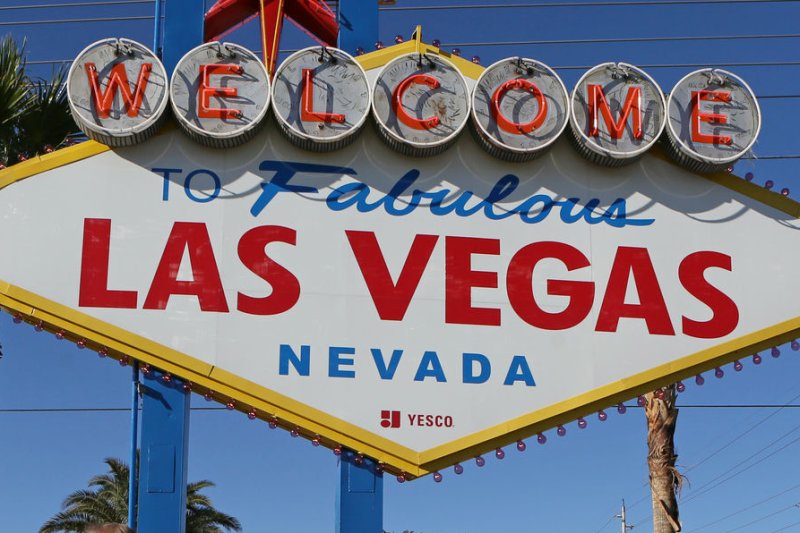
Nov. 9 (UPI) -- Autonomous vehicle technology company Motional announced on Tuesday that it will help offer fully driverless Lyft service within two years -- and they'll pick up their first U.S. passengers in Las Vegas.

Motional, a $4 billion joint venture between Hyundai and auto supplier Aptiv, said Las Vegas will be the first U.S. city to see the driverless vehicles in 2023.

The company said it's been operating driverless technology with Lyft in Las Vegas for three years, and they will use Hyundai's electric IONIQ 5-based robotaxi.

"Lyft's powerful network is the ideal platform for deploying autonomous vehicles at scale," Lyft co-founder and CEO Logan Green said in a statement.

"We can't wait for riders in Las Vegas to be the first to summon fully driverless cars on the Lyft platform."

Motional President Karl Iagnemma said Vegas will be the first of several U.S. markets to see the self-driving ride-share vehicles.

"[We] are now laying the foundation for large-scale deployments of driverless robotaxis," Iagnemma said. "We look forward to beginning this next chapter in Las Vegas, and then quickly scaling to other markets across the Lyft network."

Pakistan's crackdown on free press leaves journalists vulnerable to attacks

Journalists in the South Asian nation are facing draconian media laws and a culture of impunity, which has opened the door to intimidation and threats on social media.


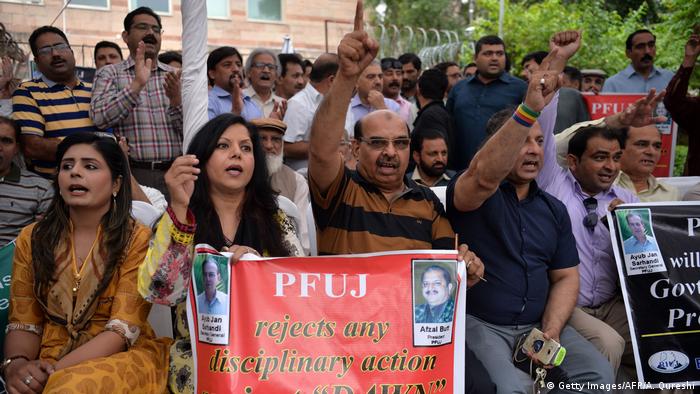
A journalist's union protests a government investigation of an article in Pakistan's 'Dawn' newspaper


Journalists in Pakistan are currently working in an increasingly authoritarian environment, and encounter systemic censorship, violence and limits on free speech, according to Pakistani and international media watchdogs.

One report from the Pakistan Press Foundation (PPF), released last week in conjunction with the UN's "International Day to End Impunity for Crimes against Journalists," highlighted the "increasingly repressive environment" faced by Pakistani journalists.

The report said journalists publishing work online are "often on the receiving end of hate, threats and abuse."

"The past year has seen the continuation of trends to threaten and intimidate journalists online. While both private individuals online and members of the government continue to participate and initiate trends against certain media professionals and organizations, there is also an increased focus on setting up rules for social media platforms," the report said.

In June, a draft law was proposed for a government entity called the Pakistani Media Development Authority (PMDA), which would have sole power over media regulation in Pakistan.

Reporters Without Borders (RSF) said the PMDA would be able to hand down "arbitrary decisions with no possibility of appeal by journalists or public," and compared it to a "centralized censorship office typical of the worst authoritarian regimes."

Another proposal in October from Pakistan's Information Technology and Telecommunication Ministry is called the "Removal and Blocking of Unlawful Online Content."

It would give authorities the "right to control and censor any type of message posted on social media platforms," RSF said.

Pakistan is currently ranked 145th out of 180 countries in RSF's World Press Freedom Index.

'Dissent treated like a crime' in Pakistan

Rimmel Mohydin, a South Asia campaigner with Amnesty International, told DW that media in Pakistan is facing a "structural attack" by authorities.

This includes applying pressure on independent media houses, their advertisers, their owners and individual journalists to "toe the line," and not hold power to account.

"Dissent is being consistently treated like a crime," Mohydin said.

"Journalists have faced physical violence, censorship and now face the possibility of the PMDA actually materializing, which will further curb the journalistic freedom," she added.

Press freedom under attack under PM Khan?


Pakistan's censorship drive and attacks on press freedom have gathered pace under Prime Minister Imran Khan, who has sought to placate powerful conservative and religious constituencies, say critics.

In July, Khan was featured on the RSF's "red list," along with several other heads of government who have clamped down on press freedom.

"Press freedom is in a decidedly not good place in Pakistan," Michael Kugelman, a South Asia expert at the Washington-based Woodrow Wilson Center for Scholars, told DW.

Kugelman said press crackdowns in Pakistan often play out covertly, with "journalists receiving threats and warnings, media houses punished by having their advertisers removed, and media personnel feeling compelled to self-censor."

Ismat Jabeen, an Islamabad-based journalist and press freedom activist, told DW that Pakistan is facing one of its " worst periods of coercive censorship that is both overt and covert."

"This is in proportion to the rising intolerance of a state dominated by security imperatives that it doesn't want scrutiny of," Jabeen said. She added that it is not in the interest of the government to provide a space for dissent in the media.

Female journalists face online harassment


In Pakistan, female journalists say they are increasingly targeted online with harassment, including rape threats, according to the Committee to Protect Journalists (CPJ), a New York based media watchdog.

Mohydin from Amnesty International said that many female journalists self-censor or stop posting articles online altogether in order to avoid harassment.

"Many of these journalists have told Amnesty International that they have had to deactivate their personal social media accounts," Mohydin said. Some of the attacks even come from officials, she added.

"If authorities object to the work of a journalist, they have the right of reply, but must never target them on the basis of their gender or use abusive language," she said.

"Authorities have a particular responsibility to protect women from gender discrimination and must lead by example and demonstrate through their own actions why journalists must be respected and protected, and discourage attacks launched by their supporters or trolls," Mohydin added.

Online media the last space for free speech


With mainstream media outlets in Pakistan subject manipulation and restriction by authorities, online spaces relatively offer better alternatives for freedom of expression.

"In Pakistan, social media and the broader online space are really the sole remaining repository for liberal and progressive thought, and that includes criticism of the state and especially the military," analyst Kugelman said.

"It's natural that the state would seek to crack down on online dissent. And in a country with a highly patriarchal and sexist society, it's unsurprising that women journalists would face the brunt of this," he added.

Attacks on journalists go unpunished

In Islamabad alone over the last six months, around 30 incidents of violence against journalists were reported, but not a single culprit was arrested.

"The community of journalists and media practitioners in Pakistan feel that without specialized laws on safety for them, the impunity of attackers cannot be lessened. The attacks continue to happen because attackers go unpunished," said Jabeen.

Mohydin echoed a similar view, blaming also Pakistani society's general apathy toward what happens to journalists for contributing to the problem.

"The lack of meaningful legislation and its implementation, a general apathy towards what happens to journalists, vicious online campaigns to cast doubt on their credibility, and a misplaced belief that the press presents a threat to the country all combine to make holding attackers accountable a rarity," she underlined.

Interview: UN genocide adviser says Ethiopia's warring parties must talk

The UN's special adviser on genocide prevention, Alice Wairimu Nderitu, says the parties fighting in Ethiopia's war have few options but to negotiate.


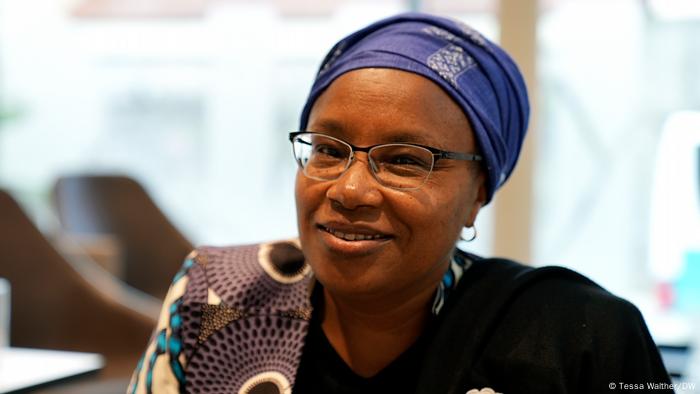
Alice Wairimu Nderitu, UN special adviser on the prevention of genocide, is an experienced armed conflict mediator

Alice Wairimu Nderitu of Kenya is the United Nations special adviser on the prevention of genocide. She is also an experienced mediator in the field of peacebuilding and violence prevention, having led as mediator and senior adviser in reconciliation processes.

DW: The situation in Ethiopia is deteriorating at an alarming rate and there have been calls for action from the United Nations, the United States and others. What needs to happen to alleviate the situation?

Alice Wairimu Nderitu: What needs to happen as a matter of urgency is that the African Union Peace and Security Council needs to convene a meeting on Ethiopia.

The other body that needs to do something is IGAD [the Intergovernmental Authority on Development, which is made up of eight East African countries]. African countries are governed by colonial borders and these colonial borders split ethnic communities into two. For example, the Oromo [ethnic group] exists in both Kenya and in Ethiopia, the Somali exist in both Somalia and Ethiopia, and the Luo exist in both Ethiopia and South Sudan. So the danger of cross-border conflict, of spillover from the conflict is very, very huge right now.

We need IGAD to step in. [Ethiopia's neighbors] need to work on ensuring that cross-border conflicts are prevented before they happen and not deal with it when they happen. I welcomed the statements by President Uhuru Kenyatta of Kenya and President Yoweri Museveni of Uganda, saying that they were now working around supporting Ethiopia. It is a very positive step.

What actions could we be seeing in the coming days to try to solve this conflict?

This violent conflict has been characterized by the refusal of the parties — and by parties I mean the leadership of the TPLF [Tigray People's Liberation Front], the OLA [Oromo Liberation Army] leadership, and the Ethiopian Prime Minister Abiy — to engage, to speak. So there is now no option. They have to engage. They have to dialogue. The world will not sit back and allow these transgressions of violence and killings to continue anymore in the name of sovereignty.

The key message that we are putting across, not just from the UN, but internationally, is that sovereignty means responsibility — that they should take responsibility for their actions.

What would be the best solution to the current conflict in the Tigray region?

This is an Ethiopian problem, it's not a Tigray problem. If we solve Tigray today and we don't solve what's happening in [the region of] Oromo, then we will have another issue. People talk about how the Tigray forces are threatening to overrun the capital Addis Ababa. The danger of that, at this moment, is more from the OLA than from the TPLF.

In all the wars that have been fought in the world, ultimately people end up sitting at a table making decisions. So what needs to happen right now to end this conflict? Ethiopian leaders, the Ethiopian prime minister, the TPLS — they must sit at the table now and talk. The Ethiopian prime minister has said over and over again that he cannot negotiate with [the TPLF because it has been designated as] a terrorist organization.

We have to ask Abiy to remember that he's a Nobel laureate for peace and that he needs to sit at the table and not think about sitting with terrorist organizations. He needs to think about which lives he can save next. No more Ethiopians should die because Abiy cannot sit at the table with his fellow Ethiopians.

I know that there has been violence perpetrated by both sides, but at this point in time, all parties must act in the best interests of the average Ethiopian who is sitting in his house cowering in fear, thinking about whether he could be killed or not.

Really for Prime Minister Abiy, I think that the Nobel Peace Prize put him at another level. Whether the Ethiopian comes from Tigray or comes from Amhara or comes from Oromo, we must have the prime minister stepping up and saying: "No more deaths. Nobody will die anymore in this country, and I will now sit at the table in dialogue."

Let him sit with [the African Union envoy, former Nigerian President Olusegun] Obasanjo and with the TPLF and with the OLA and everyone else who is making demands of the state, let them sit together and find a solution. We are here to support that in every possible way.