Monday, February 28, 2022

 ELIMINATE THE SECOND AMENDMENT

Most older adults support steps to reduce firearm injury risk, study shows


National survey highlights the subgroups of people over 50 who might benefit most from counseling and programs designed to reduce risk for them and their children


Peer-Reviewed Publication

MICHIGAN MEDICINE - UNIVERSITY OF MICHIGAN

A strong majority of American adults over 50 -- including the 37% of older adults who own guns or live with someone who does -- supports specific steps that could reduce the risk of firearm injury and death, a new national study shows.

The University of Michigan study shows support among older adults for everything from firearm safety counseling by health care providers, and background checks for firearm purchasers, to “red flag” policies that allow for temporary firearm removal from people at high risk of harming themselves or others.

The study also highlights opportunities to help older adults recognize and address the risks in their own homes, especially for those who live with children, have heightened suicide risk, or are beginning to experience cognitive decline and/or dementia.

For instance, the study shows 24% of firearm owners over age 50 regularly store at least one of their firearms loaded and unlocked, which past research has shown increases the potential risk of accidental or intentional injury. Gun locks and locked storage containers such as gun safes can reduce that risk, as can ‘smart guns’ that can only be fired by a specific individual.

Published this week in the journal Preventive Medicine, the study is based on a national survey of more than 2,000 adults aged 50 to 80 carried out by members of the U-M Institute for Firearm Injury Prevention, Injury Prevention Center and Institute for Healthcare Policy and Innovation, along with a colleague from Michigan State University.

The researchers conducted the study because one-third of all firearm-related deaths in the United States occur among people in their 50s, 60s and 70s, with 84% of those deaths resulting from suicide.

Preventing injury and death among older adults, and the children and teens who live with them, has taken on new urgency because of the rise in such incidents in the past decade, the researchers say.

“Just as health care providers and health policymakers have worked to address other preventable causes of injury and death, we hope these findings will inform the effort to reduce the toll of firearm injuries among older adults, while respecting firearm ownership rights,” said study leader Patrick Carter, M.D., a U-M emergency physician who co-directs the U-M Institute for Firearm Injury Prevention and directs the Injury Prevention Center. “This is especially true for older adults experiencing depression, cognitive decline, and other conditions that may increase their risk for firearm injury, as well as those with children and teens living with or visiting them.”

Rebecca Cunningham, M.D., the study’s senior author and U-M vice president for research, added, “Firearm safety is about identifying and reducing risk, and creating policies, programs and education that can help achieve this. Every suicide, every accidental shooting, every homicide is a tragedy that affects far more people than just the person pulling the trigger or getting shot. These new data can help us move forward at the societal and personal level.”

Key findings:

The survey covered a wide range of topics, from firearm ownership and storage practices to attitudes toward specific policies and programs. Respondents were also asked about their own health and the presence of children in the home.

Ownership and storage

  • 27% of older adults own at least one firearm, and most of these individuals own more than one. Another 10% say they live with someone who owns a firearm.
  • 40% of firearm owners say they regularly store their firearms locked and unloaded, 35% say they store their firearms unlocked and unloaded, and 24% store their firearms loaded and unlocked.
  • Storage practices differed by firearm type, with a larger proportion of handgun owners reporting they stored at least one firearm loaded and unlocked, while only 3% of long-gun owners reported keeping their long guns stored loaded and unlocked.
  • 69% of those who own firearms cited protection as a reason, while 55% cited target shooting or hunting and 30% cited a constitutional right. (Respondents could choose more than one option.)
  • Among those who cited protection as a reason for ownership, only 5% said it was to protect themselves against someone they specifically knew, while most endorsed a general sense they needed the weapon to protect themselves.
  • 20% of firearm owners who have children living with them or visiting regularly said they store at least one firearm unlocked and loaded, compared with 35% of firearm owners who do not have children living with them or visiting. Other research has shown that 75% of adolescent suicides involve a gun from the teen’s own home or a relative.

Attitudes toward preventive programs and policies

  • Most older adults, both firearm owners and non-firearm owners, said they would be comfortable being asked or counseled about firearm safety by a doctor or other clinician. 69% of firearm owners would be comfortable with healthcare-based screening for firearm ownership, and 63% would be comfortable with receiving counseling about safe firearm storage from a health care provider. The percentages were higher among non-firearm owners, including those who live with a firearm owner.
  • “Red flag” laws and programs that allow family members or police to petition courts to restrict firearm access by people they believe to be a danger to themselves or others met with approval from 79% of firearm owners and 89% of non-firearm owners.
  • 81% of firearm owners and 92% of non-firearm owners support efforts to remove firearms from the homes of older adults with dementia or confusion.
  • 88% of firearm owners and 93% of non-firearm owners support restricting those who are under domestic violence restraining orders from owning or having access to firearms.
  • Background checks for all firearm sales, including private ones between individuals, met with support from 85% of firearm owners and 93% of non-firearm owners.

Individual and family characteristics and risk factors

  • Firearm owners were more likely to be white, male and veterans than non-firearm owners, and more likely to be in higher income brackets and to live in rural areas outside the Northeast.
  • 77% of firearm owners had children living with them, or regularly visiting them, compared with 70% of non-firearm owners.
  • 40% of non-firearm owners said that the presence of children in their home influenced their decisions about owning firearms, compared with 20% of those who owned firearms.
  • 40% of firearm owners said they had experienced social isolation or lack of companionship in the last year; the survey was taken just before the start of the COVID-19 pandemic. This percentage was much higher (89%) among older firearm owners who rated their physical or mental health as fair or poor.
  • 9% of the older firearm owners in the survey met criteria for having depression, which is a risk factor for suicide, compared with 8% of non-firearm owners.


The study was funded by the National Institutes of Health (DA039341, CE003085).

In addition to Carter and Cunningham, the study’s authors are Eve Losman, M.D., Jessica Roche, M.P.H., Preeti Malani, M.D., Jeffrey Kullgren, M.D., M.S., M.P.H., M.S., Erica Solway, Ph.D., M.P.H., Matthias Kirch, M.S., Dianne Singer, M.P.H,, Maureen Walton, Ph.D., of U-M and April Zeoli, Ph.D., of MSU.

Citation: Firearm ownership, attitudes, and safe storage practices among a nationally representative sample of older U.S. adults age 50 to 80, Preventive Medicine, Vol. 156, March 2022, DOI:10.1016/j.ypmed.2022.106955, https://www.sciencedirect.com/science/article/pii/S0091743522000032#


Disclaimer: AAAS and EurekAlert! are not res

Better education needed about oral sex disease risk, poll of young people shows

Most teens and young adults underestimate sexually transmitted infection risk, and feel their generation needs better information

Peer-Reviewed Publication

MICHIGAN MEDICINE - UNIVERSITY OF MICHIGAN

Most teens and young adults know it’s possible to catch or spread a sexually transmitted infection by having unprotected oral sex, a new poll shows. But more than half underestimate the level of that risk, including many who focus on avoiding pregnancy risk, the data show.

Just over half (54%) of young people also feel their generation needs more education about the risks of oral sex, and how to reduce those risks by using protective barriers such as dental dams and condoms. One in five also called for more depictions or discussion of protection during oral sex in popular culture to normalize the concept.

The new study is published in the Annals of Family Medicine by a team from the MyVoice text-based poll based at the University of Michigan’s Department of Family Medicine. The study is based on answers from 909 young people across the country with an average age of 19.

Past research has shown that oral sex can transmit herpes, gonorrhea, chlamydia, syphilis, HIV, and human papillomavirus, called HPV for short. In the last two decades, the number of Americans diagnosed with head and neck cancers linked to HPV infection, mainly due to oral sex, has surpassed the number diagnosed with HPV-related cervical cancer linked to vaginal sex. A vaccine against all HPV infections is available for both young women and men, but is not widely used among young men.

On a scale of 1 to 5, with 1 being least risky, 60% rated unprotected oral sex at 1, 2 or 3. But young women were more nearly twice as likely as young men to rate it as a 4 or 5 on the risk scale, while young men were twice as likely to rate it as a 1 or 2. Those who rated it low on the risk scale mostly focused on the lack of pregnancy risk and a lower risk of transmitting an STI compared with unprotected vaginal sex.

“Youth deserve to know the facts about the risks of oral sex,” said Tammy Chang, M.D., M.P.H., M.S., director of MyVoice and an associate professor of family medicine at Michigan Medicine. “It's not just about sexually transmitted infections, but also the risk for cancer later in life. Educating youth about the risks of oral sex today and making protection accessible and easy to use can begin to change the cultural norms around oral sex and save lives.”

The study’s co-first authors are U-M Medical School student Arianna Strome and U-M School of Public Health doctoral student N’dea Moore-Petinak. The study was funded by the Michigan Institute for Clinical & Health Research, the U-M MCubed program, and the Department of Family Medicine.

Citation: Youths’ Knowledge and Perceptions of Health Risks Associated With Unprotected Oral Sex, The Annals of Family Medicine January 2022, 20 (1) 72-76; DOI: DOI:10.1370/afm.2761, https://www.annfammed.org/content/20/1/72

Wider-reaching solutions urgently needed to reach realistic 'net zero,' warn researchers

There should be greater investment in using a wider group of experts to make decisions about how the landscape is managed if the UK is to reach climate targets such as net zero, a new report warns.

Reports and Proceedings

UNIVERSITY OF LEICESTER

Landscape Decisions Net Zero 

IMAGE: LANDSCAPE VIEW OF WHINLATTER, CUMBRIA. view more 

CREDIT: BETH COLE/UNIVERSITY OF LEICESTER

There should be greater investment in using a wider group of experts to make decisions about how the landscape is managed if the UK is to reach climate targets such as net zero, a new report warns.

Tackling the climate emergency should involve those knowledgeable in the arts, business owners, farmers, landowners, developers and investors, the study says.

The interdisciplinary team of UK researchers have highlighted ‘multiple contradictions’ in the pathways to net zero climate targets and called for wider-reaching solutions to create a more sustainable future.

The Landscape Decisions Programme, led by the University of Leicester, has published a new research report with input from environmental scientists, ecosystem modellers, human geographers, humanities scholars, and other experts from Leicester, Reading, Exeter, Bangor, Leeds, Nottingham, Wales Trinity Saint David, and Robert Gordon universities, plus expertise from Rothamsted Research and the UK Centre for Ecology and Hydrology.

The UKRI-funded report stresses the potential negative impact of existing pathways to net zero climate targets, which include losses in the benefits of biodiversity, human wellbeing and cultural knowledge of the landscape.

The UK government has previously set a net zero target of 2050, through a proposed reduction in greenhouse gas emissions and better management of so-called ‘carbon sinks’ such as peatlands and forests, and with new carbon capture technologies.

Recommendations made by the interdisciplinary group include a greater focus on locally-devolved decisions in land-use solutions, as a one-size-fits all approach to net zero landscape management could be damaging in certain environments.

As well as studying the physical impact of landscape decisions, these should be taken within the full context of the social consequences of these changes; for example, in the case of sudden large-scale changes to farming.

The group do, however, recognise that “swift action is essential, otherwise we head deeper towards an inability to reach net zero carbon targets, contribute to biodiversity collapse and, promote societal disengagement with landscapes”.

Dr Beth Cole is Senior Research Fellow for the Landscape Decisions Programme, based at the University of Leicester, and lead author for the report. She said:

“To reach the net zero goals we need to make some challenging decisions about the way we use, manage, and interact with landscapes in the UK. These landscape decisions are dependent upon many factors including the environmental characteristics, and the geographic location of the land, but in this report, we also consider the wider social framing of these decisions and call for inclusive, place-specific net zero practices within landscapes that support both biodiversity and people.

“Collaborating across disciplines this group of researchers together make a team that is greater than the sum of its parts and who have broken down some of the silos this urgent issue is normally approached from.”

Dr Katharine Earnshaw, a co-author based in the University of Exeter’s Department of Classics and Ancient History, said:

“We have an urgent need to think about the culture of change – not just what could be possible on paper. This means a better consideration of the whole picture: social and ethical ideas – the habits of thinking – alongside empirical evidence, taking account of past, present and future.

“This novel report demonstrates the genuine benefits of working across different subjects and with communities and businesses so that we do not reproduce the inequalities that have led us to this crisis.”

Co-author and natural scientist Professor Simon Willcock, of Rothamsted Research and Bangor University, added:

“Obviously, there is an urgent need to move towards net zero landscape decisions to limit the impacts of climate change. However, landscape changes impact a great variety of things – from the carbon and water cycles to biodiversity and local peoples.

“Only by making interdisciplinary decisions that take these many things into account can we move towards achieving sustainability more broadly – benefiting people and nature. Our report highlights this and provides key recommendations as to how net-zero can be achieved more inclusively.”

Professor Heiko Balzter is a Professor of Physical Geography at the University of Leicester and Director of the Centre for Landscape and Climate Research, and is Chair of the Programme Coordination Team for the UKRI Landscape Decisions Programme. He added:

“Our landscapes in the UK are about to change faster than they have done in a long time. These changes are driven by the urgent need to prevent catastrophic climate change by achieving net zero emissions no later than 2050, reversing the loss of many endangered animal and plant species, as well as improving food security and livelihoods of our farmers. This report highlights some key recommendations for decision-makers on ethical consideration, participatory approaches and the trade-offs and synergies between different goals and interventions.”

Landscape Decisions to Meet Net Zero Carbon: Pathways that consider ethics, socio-ecological diversity, and landscape functions’ is available in full at landscapedecisions.org.

Landscape Decisions is a Strategic Priorities Fund (SPF) programme funded by UK Research and Innovation (UKRI).


Atheists more likely to hide beliefs if they're women, Republicans, southerners or were previously religious

peer group
Credit: Unsplash/CC0 Public Domain

Atheists in the United States are more likely to conceal their beliefs if they're women, Republicans, southerners or if they've previously been religious, according to new research from Rice University and West Virginia University.

"Patterns of Perceived Hostility and Identity Concealment among Self-Identified Atheists" appears in a recent edition of Social Forces and was authored by Jacqui Frost and Elaine Howard Ecklund of Rice University and Christopher Scheitle of West Virginia University. The study used  from a nationally representative sample of U.S. adults and examined which  are more likely to hide their  and why.

While certain atheists were more likely to conceal their identity depending on where they lived or with whom they were affiliated, they were still less likely to conceal their identity when compared to other non-religious groups, such as agnostics or those who simply say they do not have a religion, the researchers wrote.

Frost, a postdoctoral research fellow in sociology and the Religion and Public Life Program at Rice and the study's lead author, said that findings about atheists hiding their religious beliefs aren't surprising. Previous research shows atheists are among the least liked and most distrusted  in the U.S.

"If someone is already in a marginalized group—like women—or are members of a group that is heavily religious—such as Republicans or southern Americans—it stands to reason they are less likely to take on the additional stigma of being an 'out' atheist," she said.

Earlier research has also shown that atheists are more likely to report discrimination on the basis of their atheism in , at school and at work, Frost said.

A 2015 survey from the Pew Research Center found the number of people who claim no religious affiliation had increased to 25%. That raises a question among researchers studying this subject: What can be done to support and protect this growing group of people in the U.S.?

"Our research suggests that openness about one's atheist identity may help combat some of the effects of the stigma they face," said Ecklund, director of the Religion and Public Life Program and a Herbert S. Autrey Professor of Social Sciences at Rice.

"In addition, the ability to gather with fellow atheists may help encourage this openness and provide individuals with a safe place to seek support in the face of discrimination," Scheitle said.

The researchers wrote that their findings are valuable for understanding the many different types of religious discrimination. The work also helps better understand how to address and cope with negative side effects of this mistreatment.New book explores the different—and surprising—types of atheism in science

More information: Jacqui Frost et al, Patterns of Perceived Hostility and Identity Concealment among Self-Identified Atheists, Social Forces (2021). DOI: 10.1093/sf/soab165

Provided by Rice University 

Study finds eDNA 'game-changer' to help protect native animals

Study finds eDNA 'game-changer' to help protect native animals
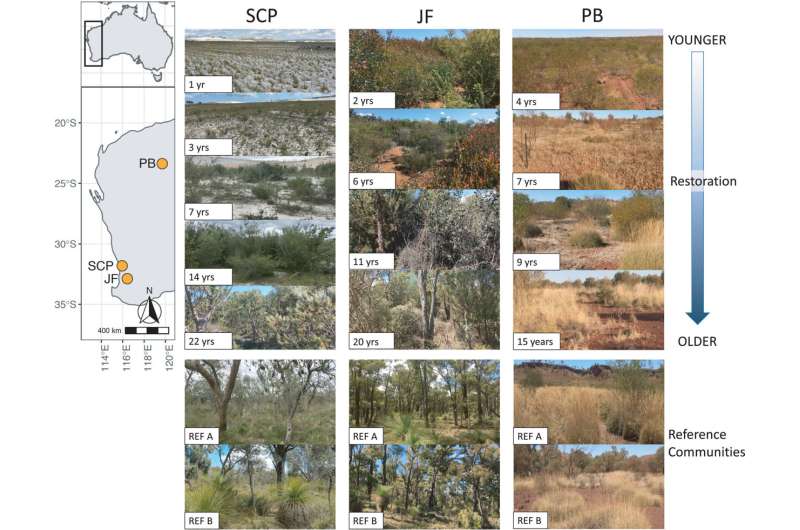
Chronosequences of mining restoration where invertebrate samples were collected. 
Restoration sites shown with the number of years restoration from 1 to 22 years. 
Reference sites shown below. JF, Jarrah Forest; PB, Pilbara; SCP, Swan Coastal Plain.
 Credit: DOI: 10.1111/mec.16375

Curtin University researchers have identified a "game-changing" way of protecting native animals—including pygmy possums, western bush wallabies and Australian painted-snipe birds—using sophisticated DNA technology.

Two research papers, published in Molecular Ecology and Biodiversity and Conservation, examined animals and insects across multiple locations including Western Australia's Pilbara region, Perth region and the Jarrah Forest to find out where the use of DNA metabarcoding—a rapid DNA sequencing tool—would be most effective to monitor restoration.

Lead researcher Dr. Mieke van der Heyde, from Curtin's School of Molecular and Life Sciences, said DNA metabarcoding was a game-changer for monitoring the recovery of insects and animals because it could save time, money and resources.

"Fauna monitoring is often overlooked in restoration efforts because there is an assumption that as long as there are plants, everything else will come back on its own—and this isn't necessarily true," Dr. van der Heyde said.

"The problem is that monitoring fauna is hard, often requiring teams of experts in remote locations for weeks at a time, making it time-consuming and expensive. Tracking down the expertise to identify all the animals can also be difficult."

Dr. van der Hyde said DNA metabarcoding has a per sample cost rather than a per specimen cost, so it can be a cost-effective alternative to monitoring fauna recovery in diverse ecosystems but warned that it is not a 'one-size-fits-all' method.

"We found DNA metabarcoding can show the recovery of insects and plants in woodlands and forests, but not in the arid Pilbara region; and ground-dwelling insects give a better restoration signal than flying insects because they don't travel as far," Dr. van der Heyde said.

"In the arid Pilbara, we could tell the difference between restoration and reference sites using the animals detected from pooled poo samples. The lack of rain makes the droppings last longer and the lack of vegetation makes it much easier to see, especially bird droppings," Dr. van der Heyde said.

"Unfortunately, DNA metabarcoding can only identify animals and insects if we have reference DNA for them in our database. To improve this tool, we need to DNA barcode many more  if we want accurate, species-level identifications from DNA.

"This technology can drastically improve conservation and  for the many species under threat from loss of habitat and changing climates."

The papers are titled "Evaluating  trajectories using DNA metabarcoding of ground-dwelling and airborne invertebrates and associated " and "Scat DNA provides important data for effective monitoring of mammal and bird biodiversity." eDNA provides researchers with 'more than meets the eye'

More information: Mieke Heyde et al, Evaluating restoration trajectories using DNA metabarcoding of ground‐dwelling and airborne invertebrates and associated plant communities, Molecular Ecology (2022). DOI: 10.1111/mec.16375

M. van der Heyde et al, Scat DNA provides important data for effective monitoring of mammal and bird biodiversity, Biodiversity and Conservation (2021). DOI: 10.1007/s10531-021-02264-x

Journal information: Molecular Ecology 

Provided by Curtin University 

ISS experiments to find solutions for cleaning up orbital debris and repairing damaged satellites

by Sara Cody, Massachusetts Institute of Technology
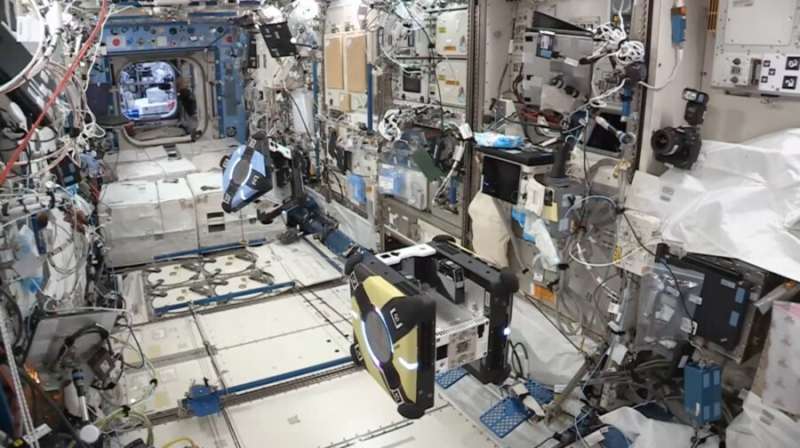
Astrobee is a team of free-flying cube-shaped robots that help astronauts perform routine tasks either autonomously or by remote control. An international research collaboration between researchers at MIT and the German Space Agency used this platform to test a set of algorithms to enable a rendezvous with a tumbling target. Credit: Massachusetts Institute of Technology

In 2002, the European Space Agency launched Envisat, the largest civilian satellite (at the time) to go to low Earth orbit (LEO). For a decade, it observed our planet and sent back valuable data on Earth's climate, tracking the decline of Arctic sea ice and more, until it went dark in 2012. One of the prevailing theories for its demise is that it simply ran out of fuel. As LEO becomes more crowded, Envisat is a school bus-sized example of a growing area of concern in the space domain: orbital debris and the ever-increasing risk of disrupting active satellite missions that would yield outcomes ranging from inconvenient to catastrophic for modern society.

But how do you catch up to an uncooperative object tumbling through space faster than a speeding bullet? An international research collaboration between MIT and the German Space Agency (DLR) completed a series of experiments aboard the International Space Station (ISS) that illuminated a possible path forward to help address this question.

"If we could refuel or repair these tumbling bodies that are otherwise functional, it would be really useful for orbital debris reduction, as long as we can catch up to it. But a close-proximity rendezvous is hard to do if you don't know exactly how your target is moving," says Keenan Albee SM '19, a Ph.D. candidate in aeronautics and astronautics who helped lead the project. "We've assembled a set of algorithms that figures out how the target is tumbling, and then along with other tools that allow us to account for uncertainty, we can produce a plan to get us to the target, despite the tumble."

To test their algorithms in microgravity, the team used NASA's Astrobee robots aboard the ISS as their test bed. Astrobee is a team of three cube-shaped robots that help astronauts perform routine tasks either autonomously or by remote control, such as taking inventory, documenting experiments, or moving cargo, using their electric fan propulsion system as well as their built-in cameras and sensors to move about the station and perform their tasks. The first round of microgravity experiments aboard the ISS in June 2021 tested this set of algorithms both individually and together to enable a successful autonomous rendezvous of a "Chaser" Astrobee robot with a tumbling "Target" Astrobee, which were improved upon and tested again in a successful second session in February 2022.

The MIT project team comprises researchers from the Space Systems Laboratory (SSL) and the Astrodynamics, space Robotics, and Controls Laboratory (ARCLab), including Albee, Charles Oestreich SM '21, and principal investigator Richard Linares, the Boeing Career Development Professor in Aeronautics and Astronautics. The DLR team includes principal investigator Roberto Lampariello, graduate student Caroline Specht, and graduate student Hrishik Mishra.

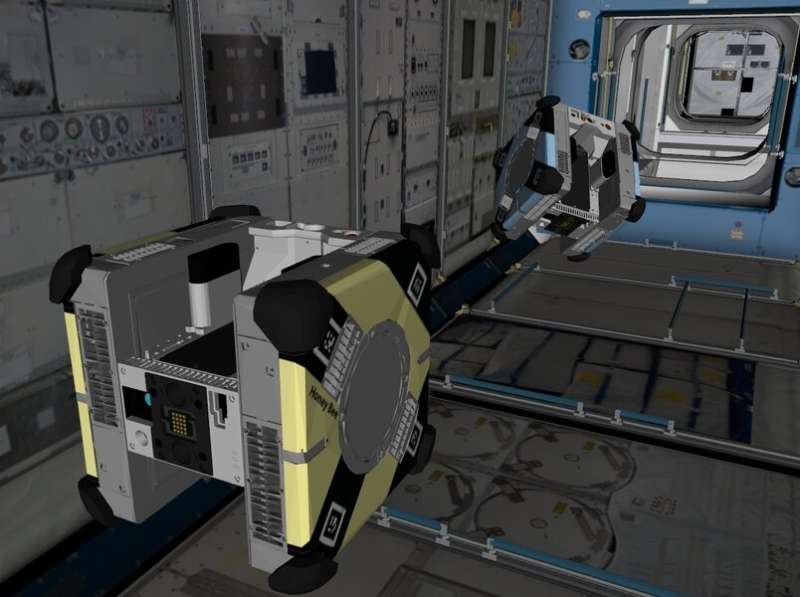
To test the set of algorithms selected by the TumbleDock/ROAM team, first the “Chaser” Astrobee robot (yellow) observes the movement of a tumbling “Target” robot (blue) using its time-of-flight camera. Using data gathered from its cameras, lidar sensors, and onboard inertial measurement unit, the Chaser develops a model of the Target’s state. From there, the Chaser will create a trajectory to follow, correcting reference errors using robust control. Once the trajectory is completed, the Chaser robot reaches a “mating point” with the Target robot. The result: a successful rendezvous. Credit:Background image courtesy of NASA. Illustration by MIT AeroAstro

The TumbleDock/ROAM project

First, the MIT and DLR research teams identified a series of algorithms, including simultaneous localization and mapping (SLAM), system identification, online motion planning, and model predictive control to test on Astrobee's autonomous robots and software platform to enable autonomous rendezvous. Then, they worked to develop the software and hardware required to experiment on the Astrobee platform. Astrobee's open-source flight software, developed by NASA Ames, was augmented with MIT's testing interface, the Astrobee Science Application Package, to enable low-level autonomy experiments. The TumbleDock/ROAM project was the first of a series of research collaborations out of the SSL/ARCLab to use this interface for algorithm testing on-orbit.

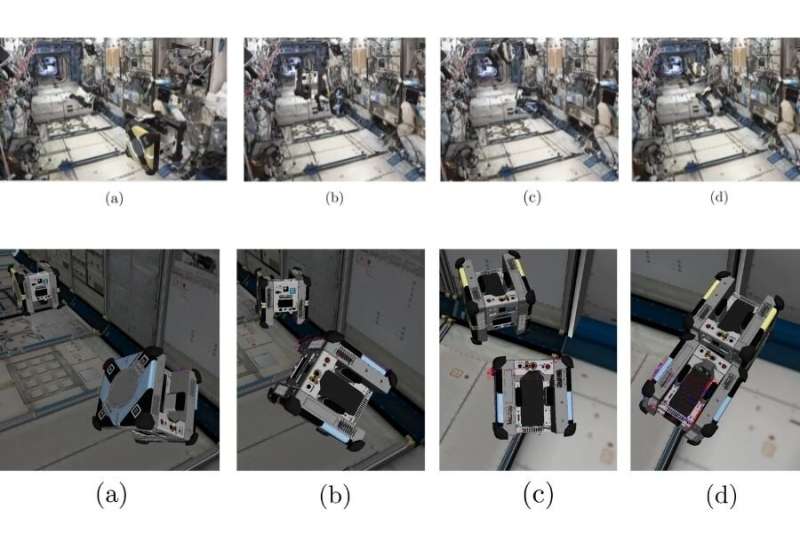
Working in a control room from MIT's campus, the team commanded the first round of microgravity testing with Astrobee. One Astrobee served as the "Chaser," with the goal of performing an autonomous rendezvous with another Astrobee acting as the tumbling "Target." Using data from Astrobee's cameras, lidar sensors, and onboard inertial measurement unit, the observing Chaser developed a model of the tumbling Target's motion and inertial properties, which then informed a nonlinear programming-based trajectory optimization to reach a "mating point," fixed in the rotating Target's frame. This trajectory was then tracked using robust model predictive control. The result: a successful rendezvous.

After the first round of testing, the team continued to refine their software based on lessons learned from seeing their work operate on an actual test bed. According to the students, seeing their experiment operate in an actual test bed rather than a simulation is a game-changer.

"I think it's so important for young roboticists and engineers to actually get their hands dirty on a physical system because you see the actual interactions between bodies in the field and gain a new understanding on parameters you may not have thought were important, but require copious amounts of tuning," says Specht. "Working out the math and simulating it is one thing, but actually putting it on a real system and seeing how that works in the real world is a completely different experience, and it opens your mind to so many different possibilities."
In microgravity experiments conducted aboard the International Space Station using NASA’s Astrobee robot system, a research team from MIT and DLR tested a set of algorithms to enable a successful autonomous rendezvous of a "Chaser" Astrobee robot with a tumbling "Target" Astrobee. The time-lapse on top shows a successful rendezvous in real time, while the time-lapse below shows a trajectory in simulation. Credit: Massachusetts Institute of Technology

After the first test session, the TumbleDock/ROAM team worked closely with both NASA and DLR to make further improvements to their system. DLR developed enhancements to Astrobee's default localization system that complemented additional upgrades created by the team at NASA Ames, with MIT continuing work on system integration and other algorithm overhauls. The final test session in February 2022 put these improvements in estimating the Target's orientation, safely tracking the motion plan to the Target with robustness guarantees, and working with Astrobee's maturing localization system to the test, yielding a number of successful rendezvous maneuvers with differing motion plans.

"Because Astrobee is such a new system, we've had a lot more opportunity to collaborate more closely with the engineers from NASA Ames throughout the entire process than we would have otherwise," says Oestreich. "We've had some unique use cases for their system, so it's been an interesting challenge to work through together and get everyone in the same loop."

Working closely together on this project has also yielded benefits for the agency. NASA used portions of data from their project to improve the Astrobee base localization system and have also incorporated changes into the flight code software, providing crucial inputs to the autonomous rendezvous pipeline that will continue to benefit all future Astrobee users.

Passing the torch


NASA's Astrobee robot system is preceded by SPHERES (Synchronized Position Hold, Engage, Reorient Experimental Satellites), small programmable probes first conceived of by MIT undergraduates and further developed by MIT SSL. The SPHERES satellites launched in 2006 and were operated by SSL and NASA under professors David Miller and Alvar Saenz-Otero until Dec. 31, 2019, when Astrobee took over as the sole microgravity robotics test bed aboard the ISS. ROAM, or Relative Operations for Autonomous Maneuvers, became the umbrella for SSL research projects that focused on developing systems to support satellite proximity operations and is part of the namesake of the TumbleDock/ROAM project team.

Before the TumbleDock/ROAM team commanded their experiment aboard the ISS from Earth, they ran through rendezvous maneuvers in simulation.
 Credit: Massachusetts Institute of Technology

"Our project achieved multiple on-orbit firsts both for MIT and for Astrobee, which is really exciting," says Albee. "We were the first Astrobee payload to perform simultaneous complex control of multiple robots and the first to perform low-level planning and control autonomy research using the Astrobee system. It was also the first time the SSL commanded an ISS payload directly and in real time from MIT's campus."

In addition to building the systems, the research teams at MIT and DLR collaborated on operations, experiments, and testing, leveraging the work done previously in SPHERES to enable this new application with Astrobee. When Lampariello first met David Miller, the Jerome C. Hunsaker Professor and former director of the SSL at MIT, he proposed a research project to test his motion planning software for tumbling targets on the SPHERES system. This initial collaboration eventually led to the TumbleDock/ROAM project on Astrobee.

"This project brings together the work my lab has done in motion planning and the work in perception that MIT has developed. Together, we all worked to develop the controls required to test the hardware," says Lampariello. "By the time we ran the tests aboard the ISS, we had a whole pipeline of functionalities—perception, motion prediction, planning, and control—to demonstrate on the Astrobee platform."

According to Oestreich, the TumbleDock/ROAM project not only builds on a foundation of knowledge and collaboration from SPHERES, but also on a legacy of generations of graduate work in SSL that came before them.

"The SLAM and target estimation algorithms, which help with the initial stage of finding out how the target is tumbling, were developed by graduate students in SSL and have been handed down through generations of us now," says Oestreich. "It's been interesting to see how it has evolved over the past eight years from thesis to thesis as each person worked to advance its capabilities further, and it has been cool to be able to implement it on new hardware like Astrobee."

In the process of building and refining their Astrobee experiment, they found the interface they developed could be adapted and repurposed for other investigations. Looking ahead, the TumbleDock/ROAM team hopes to make Astrobee as useful for other researchers as SPHERES was for them. The team has already run another set of experiments, RElative Satellite sWArming and Robotic Maneuvering (ReSWARM), in collaboration with KTH Space Center in Sweden and IST at the University of Lisbon in Portugal. The ReSWARM experiments successfully demonstrated a variety of algorithms related to on-orbit assembly and servicing, including information-aware motion planning and distributed model predictive control of microgravity robot teams. While MIT is currently one of the most prolific users of the Astrobee platform, the project team plans to continue refining their work with the goal to make testing resources open source for other researchers at MIT and beyond.

Explore further
Astrobee's first robot completes initial hardware checks in space
More information: Keenan Albee et al, A Robust Observation, Planning, and Control Pipeline for Autonomous Rendezvous with Tumbling Targets, Frontiers in Robotics and AI (2021). DOI: 10.3389/frobt.2021.641338


New, nature-inspired concepts for turning carbon dioxide into clean fuels

carbon dioxide
Credit: CC0 Public Domain

Researchers have developed an efficient concept to turn carbon dioxide into clean, sustainable fuels, without any unwanted by-products or waste.

The researchers, from the University of Cambridge, have previously shown that biological catalysts, or enzymes, can produce fuels cleanly using , but at low efficiency.

Their latest research has improved  production efficiency by 18 times in a laboratory setting, demonstrating that polluting carbon emissions can be turned into green fuels efficiently without any wasted energy. The results are reported in two related papers in Nature Chemistry and Proceedings of the National Academy of Sciences.

Most methods for converting CO2 into fuel also produce unwanted by-products such as hydrogen. Scientists can alter the chemical conditions to minimise hydrogen production, but this also reduces the performance for CO2 conversion: so cleaner fuel can be produced, but at the cost of efficiency.

The Cambridge-developed proof of concept relies on enzymes isolated from bacteria to power the  which convert CO2 into fuel, a process called . Enzymes are more efficient than other catalysts, such as gold, but they are highly sensitive to their local chemical environment. If the local environment isn't exactly right, the enzymes fall apart and the chemical reactions are slow.

The Cambridge researchers, working with a team from the Universidade Nova de Lisboa in Portugal, have developed a method to improve the efficiency of electrolysis by fine-tuning the solution conditions to alter the local environment of the enzymes.

"Enzymes have evolved over millions of years to be extremely efficient and selective, and they're great for fuel-production because there aren't any unwanted by-products," said Dr. Esther Edwardes Moore from Cambridge's Yusuf Hamied Department of Chemistry, first author of the PNAS paper. "However,  sensitivity throws up a different set of challenges. Our method accounts for this sensitivity, so that the local environment is adjusted to match the enzyme's ideal working conditions."

The researchers used computational methods to design a system to improve the electrolysis of CO2. Using the enzyme-based system, the level of fuel production increased by 18 times compared to the current benchmark solution.

To improve the local environment further, the team showed how two enzymes can work together, one producing fuel and the other controlling the environment. They found that by adding another enzyme, it sped up the reactions, both increasing efficiency and reducing unwanted by-products.

"We ended up with just the fuel we wanted, with no side-products and only marginal energy losses, producing clean fuels at maximum efficiency," said Dr. Sam Cobb, first author of the Nature Chemistry paper. "By taking our inspiration from biology, it will help us develop better synthetic  systems, which is what we'll need if we're going to deploy CO2 electrolysis at a large scale."

"Electrolysis has a big part to play in reducing carbon emissions," said Professor Erwin Reisner, who led the research. "Instead of capturing and storing CO2, which is incredibly energy-intensive, we have demonstrated a new concept to capture carbon and make something useful from it in an energy-efficient way."

The researchers say that the secret to more efficient CO2 electrolysis lies in the catalysts. There have been big improvements in the development of synthetic catalysts in recent years, but they still fall short of the enzymes used in this work.

"Once you manage to make better catalysts, many of the problems with CO2 electrolysis just disappear," said Cobb. "We're showing the scientific community that once we can produce catalysts of the future, we'll be able to do away with many of the compromises currently being made, since what we learn from enzymes can be transferred to synthetic catalysts."

"Once we designed the concept, the improvement in performance was startling," said Edwardes Moore. "I was worried we'd spend years trying to understand what was going on at the molecular level, but once we truly appreciated the influence of the local environment, it evolved really quickly."

"In future we want to use what we have learned to tackle some challenging problems that the current state-of-the-art catalysts struggle with, such as using CO2 straight from air as these are conditions where the properties of enzymes as ideal catalysts can really shine," said Cobb.

A new, sustainable way to make hydrogen for fuel cells and fertilizers
More information: Erwin Reisner, Fast CO2 hydration kinetics impair heterogeneous but improve enzymatic CO2 reduction catalysis, Nature Chemistry (2022). DOI: 10.1038/s41557-021-00880-2. www.nature.com/articles/s41557-021-00880-2
Esther Edwardes Moore et al, Understanding the local chemical environment of bioelectrocatalysis, Proceedings of the National Academy of Sciences (2022). DOI: 10.1073/pnas.2114097119
Journal information: Proceedings of the National Academy of Sciences  Nature
 Chemistry 
Provided by University of Cambridge 


Origin of the 30,000-year-old Venus of Willendorf discovered

Origin of the 30,000-year-old Venus of Willendorf discovered
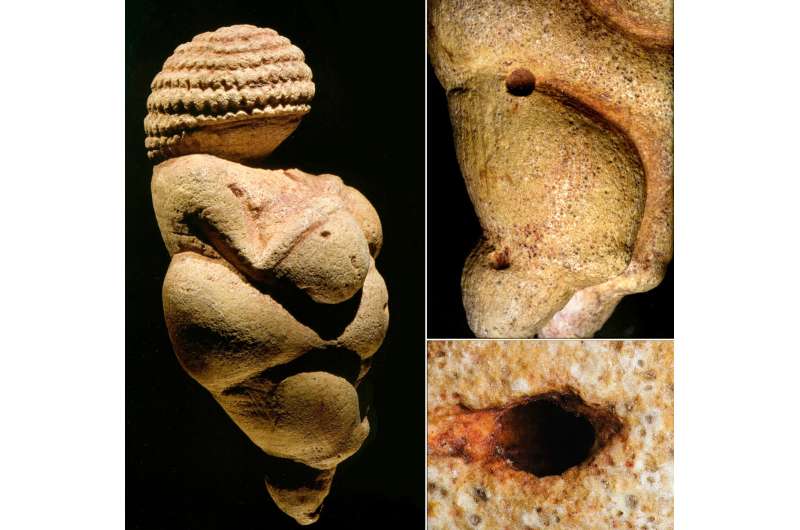
The original Venus from Willendorf. Left: lateral view. Right-top: hemispherical cavities on
 the right haunch and leg. Right bottom: existing hole enlarged to form the navel. 
Credit: Kern, A. & Antl-Weiser, W. Venus. Editon-Lammerhuber, 2008

The almost 11-cm-high Venus figurine from Willendorf (Austria) is one of the most important examples of early art in Europe. It is made of a rock called oolite that is not found in or around Willendorf. A research team led by the anthropologist Gerhard Weber from the University of Vienna and the two geologists Alexander Lukeneder and Mathias Harzhauser as well as the prehistorian Walpurga Antl-Weiser from the Natural History Museum Vienna have now found out with the help of high-resolution tomographic images that the material from which the Venus was carved likely comes from northern Italy. This sheds new light on the remarkable mobility of the first modern humans south and north of the Alps. The results currently appear in Scientific Reports.

The Venus von Willendorf is not only special in terms of its design, but also in terms of its material. While other Venus figures are usually made of ivory or bone, sometimes also of different stones, oolite was used for the Lower Austrian Venus, which is unique for such cult objects. The figurine found in the Wachau in 1908 and on display in the Natural History Museum in Vienna has so far only been examined from the outside. Now, more than 100 years later, anthropologist Gerhard Weber from the University of Vienna has used a new method to examine its interior: micro-computed tomography. During several passes, the scientists obtained images with a resolution of up to 11.5 micrometers—a quality that is otherwise only seen under a microscope. The first insight gained is: "Venus does not look uniform at all on the inside. A special property that could be used to determine its origin," says the anthropologist.

Along with the two geologists Alexander Lukeneder and Mathias Harzhauser from the Natural History Museum in Vienna, who had previously worked with oolites, the team procured comparative samples from Austria and Europe and evaluated them. A complex project: Rock samples from France to eastern Ukraine, from Germany to Sicily were obtained, sawn up and examined under a microscope. The team was supported by the state of Lower Austria, which provided funds for the time-consuming analyses.

The inside also gives information about the outside

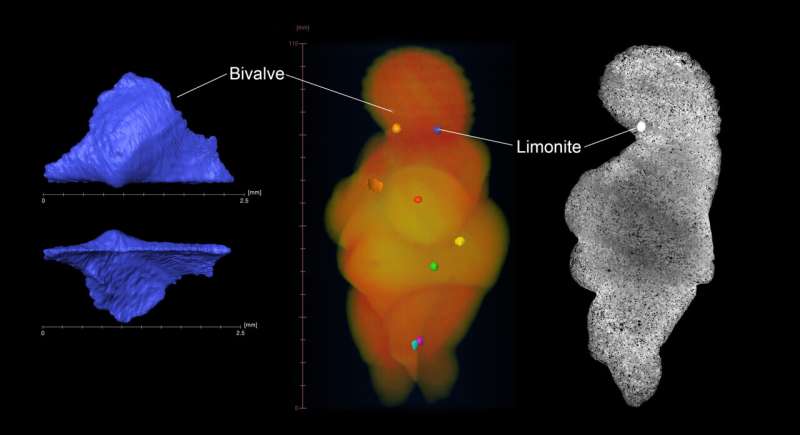
The tomographic data from the Venus showed that the sediments were deposited in the rocks in different densities and sizes. In between there were also small remnants of shells and six very dense, larger grains, so-called limonites. The latter explains the previously mysterious hemispherical cavities on the surface of Venus with the same diameter: "The hard limonites probably broke out when the creator of the Venus was carving it," explains Weber. "In the case of the Venus navel, he then apparently made it a virtue out of necessity."

Another finding: The Venus oolite is porous because the cores of the millions of globules (ooides) of which it is comprised had dissolved. This is a great explanation for why the resourceful sculptor chose this material 30,000 years ago: It is much easier to work with. The scientists also identified a tiny shell remnant, just 2.5 millimeters long, and dated it to the Jurassic period. This ruled out all other potential deposits of the rock from the much later Miocene geological era, such as those in the nearby Vienna Basin.

Origin of the 30,000-year-old Venus of Willendorf discovered
Pictures derived from micro-computed tomography scans of the Venus. Left: Segmented
 bivalve (Oxytomidae) that was located on the right side of the Venus head; scan
 resolution 11.5 μm; characteristic features are theumbo and the wings. Middle: Volume
 rendering of the virtual Venus; six embedded limonite concretions: neck right (orange), 
neck left (blue), breast left (red), belly left (yellow), hip left (green), leg left (purple); three
 mollusc fragments: bivalve head right (blue, only 2.5 mm long, see white line from label
 "Bivalve" for position), shell breast middle (orange), shell leg left (turquoise). 
Right: Single μCT-slice showing the porosity and layering of the oolite; note the relative 
density of the limonite concretion; scan resolution 53 μm. 
Credit: Gerhard Weber, Universityof Vienna

A long way for that period

The research team also analyzed the grain sizes of the other samples. Hundreds, sometimes even thousands of grains were marked and measured with image processing programs or even manually. None of the samples within a 200-kilometer radius of Willendorf even remotely matched. The analysis finally showed that the samples from the Venus were statistically indistinguishable from samples from a location in northern Italy near Lake Garda. This is remarkable because it means that the Venus (or at least its material) started a journey from south of the Alps to the Danube north of the Alps.

"People in the Gravettian—the tool culture of the time—looked for and inhabited favorable locations. When the climate or the prey situation changed, they moved on, preferably along rivers," explains Gerhard Weber. Such a journey could have taken generations.

One of the two possible routes from the south to the north would lead around the Alps and into the Pannonian Plain and was described in simulations by other researchers a few years ago. The other way to get from Lake Garda to the Wachau would be via the Alps. Whether this was possible more than 30,000 years ago is unclear due to the climate deterioration that began at that time. This would be a rather improbable variant if there had already been continuous glaciers at that time. However, the 730 km long path along the Etsch, the Inn and the Danube had always been below 1,000 meters above sea level, with the exception of 35 kilometers at Lake Reschen.

Possible, but less likely, connection to eastern Ukraine

The statistics clearly point to northern Italy as the origin of the Venus oolite. Nevertheless, there is another interesting place for the origin of the rock. It is in eastern Ukraine, more than 1,600 kilometers linear distance from Willendorf. The samples there do not fit as clearly as those from Italy, but better than all the rest of the sample. An interesting connection here: Venus figures were found in nearby southern Russia, which are somewhat younger, but look very similar to the Venus found in Austria. Genetic results also show that people in Central and Eastern Europe were connected to one another at this time.

The exciting story of the Lower Austrian Venus could be continued. Only a few systematic studies have so far dealt with the existence of early humans in this time frame in the Alpine region, and with their mobility. The famous "Ötzi," for example, only comes into play much later, namely 5,300 years ago. "We want to use these Venus results and our new Vienna research network Human Evolution and Archaeological Sciences, in cooperation with anthropology, archaeology and other disciplines, to further clarify early history in the Alpine region," concludes Weber.Venus will soon appear to sink and disappear right before our eyes

More information: Gerhard W. Weber et al, The microstructure and the origin of the Venus from Willendorf, Scientific Reports (2022). DOI: 10.1038/s41598-022-06799-z

Journal information: Scientific Reports 

Provided by University of Vienna 

Molds and yeasts common in daycares — could cause chronic asthma and allergy

Date:February 23, 2022
Source:American Society for Microbiology

Summary:
Citizen science sampling of dust in outdoor and indoor surfaces led to the identification of building features that contribute to the prevalence of yeasts and molds in daycare centers. This information is important to understand environmental factors contributing to the alarming rise of respiratory chronic diseases in children.


Molds, and especially yeasts, were far more common in indoor daycare centers than outside of them, according to a new study. Factors such as certain building features and the number of children in a daycare influenced the species of fungi found within, suggesting that many of the molds and yeasts probably have indoor sources.

"This information is important to understand the alarming increase in chronic diseases like asthma and allergies in children," said first author Eva Lena Estensmo, Ph.D., University of Oslo, Norway. The research is published in Applied and Environmental Microbiology, a journal of the American Society for Microbiology.

The study was motivated by the rise in chronic allergies and asthma, combined with the general lack of knowledge about the indoor mycobiome, said Dr. Estensmo. "Fungal growth can lead to poor indoor air quality, and some fungi are associated with allergic reactions and respiratory symptoms that may lead to chronic respiratory diseases."

In the study, the researchers investigated the indoor and immediate outdoor mycobiomes of 125 daycare centers in Norway, sampling dust swabbed from the insides and outsides of door frames and correlating the findings with different variables such as the number and ages of children in each daycare, the building type (single building, apartment, etc.), building materials (bricks, wood, etc.), ventilation type, presence of pests, history of mold damage and year of construction.

The study also accounted for environmental data including temperature and moisture levels inside and out, distance from the coast, and longitude and latitude of the daycare centers.

"Especially the high diversity of yeasts came as a surprise," said Dr. Estensmo. "Many might be associated with the human body. We don't fully know whether the yeasts are especially associated with children, but we have some indications -- work in progress -- that far more yeasts are present in daycares than in other indoor environments.

"In addition, the daycare environment with a lot of activity and high density of people is an interesting environment to study in relation to human influence on the indoor mycobiome," said Dr. Estensmo. She said it was well established that the indoor microbiome related to bacteria is influenced by humans, but that much less had been known about human influence on the mycobiome.

"Since young children often bring in organic materials such as soil and litter from nature, daycare centers may accumulate extra organic substrates promoting fungal growth, compared to other indoor environments," the authors wrote. Previously, it has been shown that the concentration of fungi in daycare centers is higher than that in homes.

Citizen scientists played an important role in the research, using materials mailed to them by the investigators to collect dust samples from doorframes both outside and inside the buildings. They also filled out questionnaires the researchers had mailed them, on the number and ages of children in the daycares, the building type (single building, apartment, etc.) and the previously mentioned characteristics of the buildings.
special promotion


Story Source:
Materials provided by American Society for Microbiology. Note: Content may be edited for style and length.

Journal Reference:
Eva Lena F. Estensmo, Synnøve Smebye Botnen, Sundy Maurice, Pedro M. Martin-Sanchez, Luis Morgado, Ingeborg Bjorvand Engh, Klaus Høiland, Inger Skrede, Håvard Kauserud. The indoor mycobiome of daycare centers is affected by occupancy and climate. Applied and Environmental Microbiology, 2022; DOI: 10.1128/aem.02113-21

Onset of modern sea level rise began in 1863, study finds

Date: February 24, 2022

Source: Rutgers University

Summary:
Scientists have found that modern rates of sea level rise began emerging in 1863 as the Industrial Age intensified, coinciding with evidence for early ocean warming and glacier melt. The study, which used a global database of sea-level records spanning the last 2,000 years, will help local and regional planners prepare for future sea-level rise

An international team of scientists including Rutgers researchers has found that modern rates of sea level rise began emerging in 1863 as the Industrial Age intensified, coinciding with evidence for early ocean warming and glacier melt.

The study, which used a global database of sea-level records spanning the last 2,000 years, will help local and regional planners prepare for future sea-level rise. The study appears in the journal Nature Communications.

Sea-level rise is an important indicator of broader climate changes. By identifying the time when modern rates of sea-level rise emerged above natural variability, the researchers were able to pinpoint the onset of a significant period of climate change.

By examining the worldwide records, the researchers found that globally, the onset of modern rates of sea-level rise occurred in 1863, in line with the Industrial Revolution. At individual sites in the United States, modern rates emerged earliest in the mid-Atlantic region in the mid to late 19th century, and later in Canada and Europe, emerging by the mid-20th century.

The study is especially timely given NOAA's recently-released report detailing the rapid acceleration of sea-level rise on U.S. coasts.

"We can be virtually certain the global rate of sea-level rise from 1940 to 2000 was faster than all previous 60-year intervals over the last 2,000 years," said Jennifer S. Walker, lead author of the study and postdoctoral associate in the Department of Earth and Planetary Sciences at Rutgers University-New Brunswick. "Having a thorough understanding of site-specific sea-level changes over long timescales is imperative for regional and local planning and response to future sea level rise."

Walker noted that the statistical model the research team utilized could also be applied to more individual sites to further understand the processes driving sea-level change on global and regional scales.

"The fact that modern rates emerge at all of our study sites by the mid-20th century demonstrates the significant influence global sea-level rise has had on our planet in the last century," Walker added. "Further analysis of the spatial variability in the time of emergence at different locations will continue to improve society's understanding of how regional and local processes impact rates of sea-level rise."
special promotion


Explore the latest scientific research on sleep and dreams in this free online course from New Scientist — Sign up now >>>


Story Source:

Materials provided by Rutgers University. Original written by Emily Everson Layden. Note: Content may be edited for style and length.


Journal Reference:
Jennifer S. Walker, Robert E. Kopp, Christopher M. Little, Benjamin P. Horton. Timing of emergence of modern rates of sea-level rise by 1863. Nature Communications, 2022; 13 (1) DOI: 10.1038/s41467-022-28564-6