Thursday, June 09, 2022

 Saskatoon

Indigenous scholar says he was rejected by University of Sask. over lack of documentation

Réal Carrière, a northern Saskatchewan man of Cree and 

Métis ancestry, will stay at the University of Manitoba

University of Manitoba professor Réal Carrière said he wanted to work at the University of Saskatchewan, but administrators made excessive demands for documents to prove he's Indigenous. (Submitted by Réal Carrière)

An award-winning Cree-Métis professor who grew up in northern Saskatchewan will not be moving to his home province's university because administrators demanded certain paperwork to prove he's Indigenous.

"I wanted to come to the University of Saskatchewan. This is all pretty disappointing," Réal Carrière said.

Critics say Carrière's ordeal is an example of misguided over-reaction by U of S administrators to an earlier case of an Indigenous identity controversy involving former U of S professor Carrie Bourassa.

Indigenous studies faculty say they're angry about the Carrière situation, but also fear existing staff might soon face these new "colonial" requirements.

"There's a strong stink to all of this. This is a step backwards. I think it's a mistake," said acting Indigenous studies department head Jim Waldram.

Fellow faculty member Winona Wheeler agreed.

"It's really, really sad we weren't able to hire one of our own sons. This is his home territory. He would bring so much to the university [with] his academic background, traditional knowledge and community connections," Wheeler said.

No one from the university's administration was available for an interview, but last month, the U of S announced it would have an Indigenous verification policy in place by fall.

In a written statement to CBC News Thursday morning, U of S interim chief communications officer Heather Persson said the events described by Carrière, Wheeler and Waldram are an "inaccurate depiction of our recruitment process." Persson said privacy rules prohibit officials from giving any further details.

Réal Carrière and his sister, Michela, grew up on the family trap line in northern Saskatchewan's Cumberland Delta. (askiholisticadventures.com)

Carrière's family has lived for generations in and around the Cumberland House Cree Nation and adjacent Métis village more than 400 kilometres northeast of Saskatoon.

His father, Solomon, is a world champion marathon canoeist and trapper while his mother, Renee, is a land-based educator and his sister Michela is a horticulturalist who hosts eco-tours in the Cumberland Delta.

"That's about as Indigenous as you can get," Wheeler said.

Waldram, one of the original faculty members of the the Indigenous studies department nearly 40 years ago, said Carrière was "ideally positioned and would have been a tremendous asset."

Carrière, who speaks Cree, has taught at the University of Manitoba for several years after winning multiple awards for his doctoral thesis entitled Rediscovering the Path: Decolonizing Indigenous Governance.

Late last year, a faculty position was posted by the U of S Indigenous studies department. Carrière said he was happy at the U of M, but jumped at the chance to return "home" to the U of S.

Earlier this year, he was interviewed by a committee including Waldram, Wheeler and five other Indigenous faculty members. It included a lengthy discussion on his Indigenous identity.

Carrière said he was happy to discuss his identity with the hiring committee, who then contacted his family and community members.

Carrière was the unanimous choice of the committee, and a job offer was prepared.

'Our identity has been policed for generations'

But then an extra step was added by high-ranking university administrators, they said. Without consulting the hiring committee, the interim vice-provost called Carrière in for an interview.

Carrière said he was told to submit written documentation proving he's Indigenous. Carrière does not have written documentation of his status because he believes it's a "colonial" method.

"Our identity has been policed for generations. Now we're reducing it to a status card or piece of paper? Is this reconciliation?" Carrière said.

"What about the thousands of non-status people working at various institutions? Are they going to be told they're not valued anymore?"

In a further effort to convince administrators, the hiring committee submitted a letter from an elder, as well as various videos. They say it wasn't enough. Carrière withdrew his name.

"This institution is supposed to be a leader in the community. It would have been great to come back," Carrière said.

Waldram said he feels bad for Carrière, but he's also angry that administrators disrespected the wishes of their expert committee.

"This was an expert group of mainly Indigenous scholars, but we were cut out," Waldram said.

Carrière's ordeal is a direct result of an earlier controversy at the U of S, Waldram and Wheeler said.

Carrie Bourassa recently resigned from the University of Saskatchewan following accusations she made false claims about her Indigenous ancestry. (YouTube)

In a CBC News story late last year, Wheeler and others said professor Carrie Bourassa had made numerous false claims about her Indigenous identity. Bourassa went on unpaid leave from one of her positions and resigned earlier this month from the U of S faculty.

It sparked a national conversation on how to define "Indigenous," particularly for positions reserved for Indigenous people. But little attention was paid to the negative effects of implementing an impersonal, document-based system, say critics.

'Bordering on the paranoid'

Wheeler, Waldram and others say U of S administrators, in a desperate effort to avoid another public scandal, have caused the pendulum to swing too far in the other direction.

"It's bordering on the paranoid," Wheeler said.

"Instead of trying to weed out the frauds, our identity has been problematized and it's up to us to prove who we are."

In the wake of the Bourassa controversy, the U of S and other universities established task forces on the issue of Indigenous identity. A national conference was held in Regina this spring.

Wheeler and Waldram said they hope the U of S task force will come up with more reasonable policies. They also hope that the detailed work of Indigenous scholars such as those on Carrière's hiring committee will be respected in the future.

In the Thursday written statement, Persson said the U of S "respects the principles of sovereignty and self-determination in relation to Indigenous membership and citizenship. The Indigenous membership and citizenship task force is working with Indigenous communities and leaders to identify the appropriate verification information to be required when hiring Indigenous scholars." 

Last month, Angela Jaime, interim vice-provost of Indigenous engagement at the U of S and chair of the task force, said the new policy will involve "creating a space that is meant for Indigenous people, resources that are meant for Indigenous people to make sure that we don't have fraudulent claims going forward.

"We're working to do an even better job going forward in creating that space of funding resources positions [and], senior leadership positions. And we want to be very clear that it's important that Indigenous voices are holding those spaces."

Alberta NDP's best summer ever looms as Jason Kenney fades away

Rachel Notley has time to prepare for 2023 election, but it's tough to size up an unknown rival

Rachel Notley at the 2016 Calgary Stampede, while she was premier. This is her last summer before she bids for a return to the premier's chair in the 2023 provincial election. (Jeff McIntosh/The Canadian Press)

This column is an opinion by campaign strategist Leah Ward, a former aide to Alberta NDP leader Rachel Notley. For more information about CBC's Opinion section, please see the FAQ.

Alberta Premier Jason Kenney's political demise leaves a big opening for NDP Leader Rachel Notley. But a leaderless United Conservative Party creates big unknowns for the NDP's strategic calculus.

If nature abhors a vacuum, so does politics.

The opportunity for Notley's party to fill in this gap is more immediate. Kenney's prolonged departure and a potentially months-long race to replace him means the UCP is sidelining itself during one of the most productive seasons for politics — summer. 

For most politicians, summer is a buffet of opportunity. Unencumbered by legislature sittings, MLAs are released to their home ridings where they can talk to constituents, community leaders, and stakeholders to make and re-make important connections. 'Tis the season of barbecues, Pride parades, fundraisers, and not least of all, the Calgary Stampede. 

Jason Kenney infamously removed nearly all COVID-19 measures in time for last summer's circuit, hoping he would be able to schmooze his way back into popularity after steadily declining poll numbers. But as much as last year failed to bring the best summer ever for the UCP, 2022 could be the best summer for Notley and her party. 

NDP's summer funspot: Calgary

The UCP leadership race means its MLAs and operatives will have to spend much of their summer working on their preferred candidate's campaign. Meanwhile, the NDP will be taking full advantage of a clear runway to continue growing their pre-election ground game and, most importantly, their campaign for Calgary. 

Unquestionably, the next election will be determined by who can win the most seats in Calgary, with Edmonton a lock for the NDP and the rest of Alberta tilted in the UCP's favour. The NDP knows this, and is tackling it head on. A quick glimpse at the social media accounts of any Alberta New Democrat, even the Edmontonians, will reveal a major presence in the city. 

Alberta NDP Leader Rachel Notley has spent more time in Calgary in recent years than she did as premier, given the city's importance as the election battleground, writes former aide Leah Ward. (Alberta NDP )

Contested nominations, packed event halls, and well-attended fundraisers abound. These are prime organizing months in normal times but in the one-year run-up to the election, time spent in the battleground city is crucial and the NDP is taking full advantage. 

The significance of this cannot be overstated. Notley has spent more time in Calgary since 2019 than she did as premier. As public opinion polling points to the possibility of her return to government, demand for face time with her and key senior staff is increasing as quickly as it is made available. 

The NDP has already kicked off its summer with election-style announcements on economic diversification, health-care funding and a curriculum reset. They're also hitting self-induced sore points for the UCP by pledging to cancel the Kananaskis user fee and end coal mining on the eastern slopes.

Notley versus TBD

Insofar as the summer holds the potential for significant gains for the NDP, the fall brings as many challenges. Because until a new UCP leader is chosen, they're shadowboxing an unknown opponent. 

While no date has yet been confirmed by UCP officials, some speculated scenarios push the leadership vote as far out as the end of October — coinciding with an opportunity to present a fiscal update that could forecast a budget surplus north of $10 billion. 

Alberta Premier Jason Kenney applauds after Finance Minister Travis Toews delivered the 2022 budget in February. (Jason Franson/The Canadian Press)

If that comes to pass, a new UCP leader will have more than enough (petty) cash to clean up a number of issues dogging the current premier and party. Without breaking a sweat, they could reindex disability support payments to inflation, restore education funding to match enrolment, and cancel the Kananaskis fee. 

Knocking off a few high-profile problem files could give a new leader the fresh start they'll be looking for. If the UCP can prove itself trustworthy of managing this latest revenue windfall, removing these wedge issues could also suck the wind out of the NDP's sails.

The NDP might anticipate these moves and keep its focus on the UCP's most gaping vulnerability — public trust. The ballot box question in the next election could centre on which party Albertans trust to manage the surplus.

And if top-of-mind issues remain centred on economic diversification, restoring stability in health care and education, and improving affordability, the NDP may be the more appealing option. 

But the failsafe for the NDP is to hold fast to the ground game in Calgary and keep building momentum over the next few months. If they gain enough of it, it may be hard for the UCP to catch up, regardless of who the next leader is. 

On the other hand, if the new UCP leader opts to spend their way out of trouble, billions of dollars in surplus could be enough to fill any vacuum — political or otherwise.


Do you have a strong opinion that could add insight, illuminate an issue in the news, or change how people think about an issue? We want to hear from you. Here's how to pitch to us.

ABOUT THE AUTHOR


Leah Ward

Freelance contributor

Leah Ward is the former director of communications for Rachel Notley and the Alberta NDP caucus, and is currently the director of campaigns for Metric Strategies. Leah worked on the 2019 provincial election campaign as part of the Alberta NDP’s war room and was a senior advisor to former Premier Rachel Notley.

Global labour boss champions social protection for all workers


By Afolake Oyinloye
Last updated: 19/05/22
BUSINESS AFRICA


The Chinese have popularised the belief that every crisis presents an inherent opportunity. In this edition of Business Africa, we find out how workers, businesses and economies are navigating several crises, both local and global.

Protecting workers amidst global crises

Workers all over the world are worried about the repercussions that the ongoing inflation trend may have on their employers and consequently their jobs.

Coming right after the disruptive Coronavirus pandemic, the possibility of company closures, mass lay-offs and abuse of workers’ rights looms large.

We spoke to the new head of the International Labour Organisation, Gilbert F. Houngbo, to find out what can be done to protect workers.

Making DRC’s minerals work for its people

The Democratic Republic of Congo is one of the richest countries in the world in terms of mineral wealth.

And yet, like many other African countries, the majority of the people of DRC live in abject poverty, a stark contrast to their country’s wealth.

As demand for DRC’s minerals like cobalt increases, we explore possible solutions that need to be implemented by African governments to ensure that proceeds from mineral exploitation trickle down to every citizen.

Zambia’s thriving ride-hailing sector

In Zambia, the entry of a new player in the ride-hailing business has caused some disruption.

While the customers are loving the Russian Yango app for its affordability, the home-grown Ulendo which has been a monopoly in the industry for the last 4 years is worried.

We explore the possibilities that competition brings to mobility in this Southern African nation.

VIDEO

https://www.africanews.com/2022/05/19/global-labour-boss-champions-social-protection-for-all-workers-business-africa/?jwsource=cl


Spain, Portugal struggle with extreme drought

Spain and Portugal are grappling with a devastating drought which has left rivers nearly dry, sparked deadly wildfires and devastated crops — and experts warn that prolonged dry spells will become more frequent. Photo: AFP file

MADRID: Spain and Portugal are grappling with a devastating drought which has left rivers nearly dry, sparked deadly wildfires and devastated crops — and experts warn that prolonged dry spells will become more frequent.

The national weather office says 94 percent of Portugal is enduring what it classifies as an “extreme” drought.

“The country has never experienced a drought like this in the sense that it worsened significantly in October, a time of the year when the situation normally improves,” a climatologist with the weather office, Fatima Espirito Santo, told AFP.

Two-thirds of Spain has received considerably less rain during the last three years than it normally does.

“It’s a ruinous situation,” said Jose Ramon Gonzalez, a small rancher in Spain’s normally rainy northwestern region of Galicia.

Due to the scarcity of grass, Gonzalez was forced to spend thousands of euros to buy fodder for his cattle in July, four months earlier than normal.

“There are rivers, springs, which neither I, at the age of 45, nor my parents, nor my grandparents, have seen dry which have dried up,” he said.

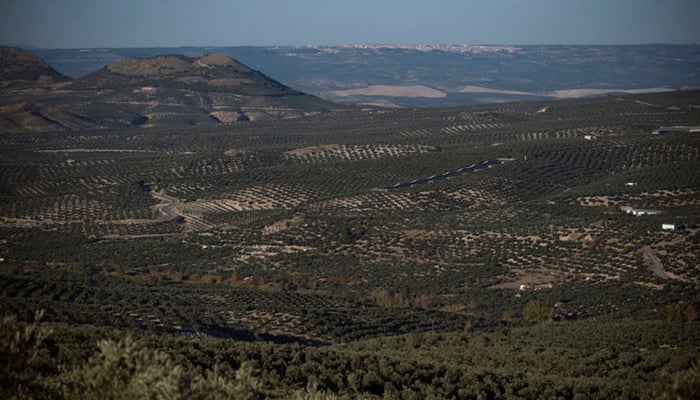
About 1.38 million hectares (3.4 million acres) of grains, sunflowers and olive trees have been affected by drought or frost in Spain as of the end of October, according to Spanish farming insurance agency Agroseguro.

It has dished out more than 200 million euros ($236 million) in compensation this year.

“You feel helpless like when you are sick, you can’t do anything. This sickness is called drought,” said Vicente Ortiz, a farmer and rancher in Spain’s central Castilla-La Mancha region, whose endless plain is depicted in “Don Quixote”, the famous work by Miguel de Cervantes.

Ortiz said his grain harvest has plunged 70 percent from last year and he expects to harvest half as many olives.

The situation is just as dire for farmers across the border in neighbouring Portugal.

“All crops are suffering from this lack of water in our region, from olives to grains and grapes,” said Fremelinda Carvalho, the president of the association of farmers on Portalegre in central Portugal.

The dry fields and forests have fuelled wildfires, which killed 109 people this year in Portugal and five in Galicia, many dying in their cars as they tried to flee the flames.
Water conflicts

Water reservoirs are at abnormally low levels.

In Portugal 28 of the country’s water reservoirs in October were at less than 40 percent of their storage capacity.

This weekend about a hundred fire trucks began transporting water from one dam in northern Portugal to another that is running dry and supplies water to Viseu, a city of around 100,000 residents.

In Spain the water reservoirs along the Tagus River, which empty into the Atlantic near Lisbon, were as of Monday at just 39.3 percent of their capacity.

The levels were even lower in the Douro River further north and the Segura River, which is used to irrigate crops in southeastern Spain.

Spain’s largest power company, Iberdrola, saw its hydroelectric power production plunge 58 percent during the first nine months of the year, compared to the same period last year, pushing up electricity prices.

The drought is also fuelling conflicts among regions over the use of water.

One source of tension is a massive aqueduct built in the 1960s during the Spanish dictatorship of Francisco Franco to siphon off water from the Tagus River to the smaller Segura River.

The Tagus River “can not support” this aqueduct, said Antonio Luengo, head of the agency that regulates water in Spain’s Castilla-La Mancha region.

The water diverted from the Tagus had been used to massively develop fruit and vegetable farms in southeastern Spain and now water from the Mediterranean must be desalinated to support these crops, he said.
Climate risks

Experts warn that droughts are likely to become more frequent and severe in the region.

“Spain has since 1980 shown signs of climate change, which have increased since 2000,” said Jorge Olcina, who heads the University of Alicante’s climate institute.

The country’s climate “tends to have more subtropical characteristics. Higher temperatures and rarer and more intense rains. So climate-related risks — heatwaves and rain and droughts and floods, will increase in the coming decades,” he added.

Spain has managed water “very badly”, said Julio Barea, spokesman for the Spanish branch of Greenpeace.

He cited as examples the use of water to irrigate trees that do not normally need much water, such as olive and almond trees, and the planting of water-intensive crops that are not suited to Spain’s Mediterranean climate.

Both governments have promised financial aid to farmers, who still anxiously wait for rain.

“We are constantly looking at the sky,” said Ortiz, the rancher in Castilla-La Mancha.

97% of Portugal in severe drought, 2,000 Spanish evacuated amid fires

CGTN

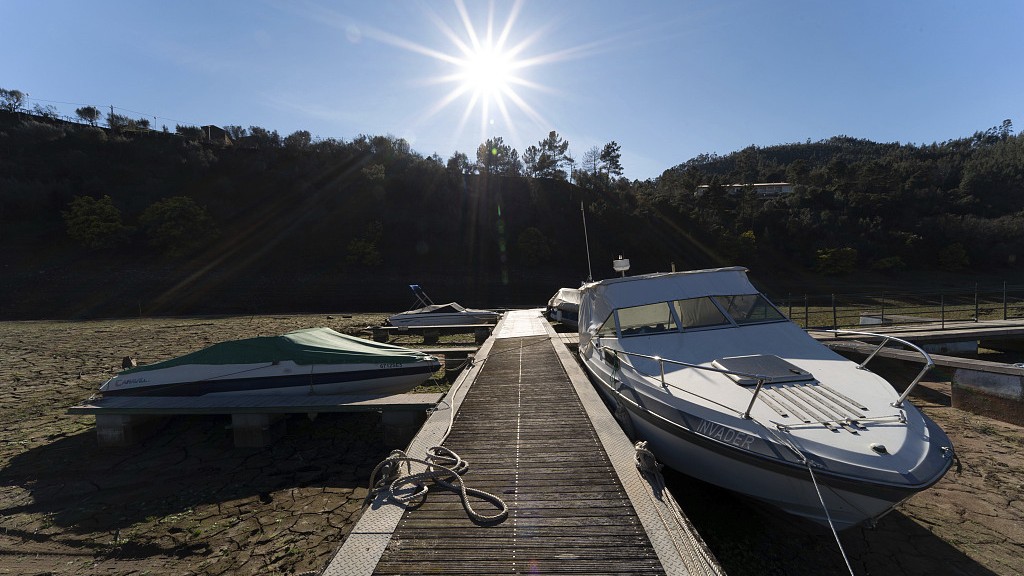
The local waterfront in Pampilhosa da Serra, Portugal. 
/Sergio Azenha/CFP


More than 97 percent of Portugal is in "severe drought" after its hottest May in almost a century – while a wildfire in southern Spain has caused the evacuation of thousands.

Portugal's national meteorological office IPMA has reported the country's hottest May since 1931, with rainfall in May "much lower than normal", amounting to just 13 percent of the average for May recorded between 1977 and 2000, the reference period.

As a result, there had been a "very significant spread of severe drought", which now affected 97 percent of the country, the IPMA said. A further 1.4 percent of the country is suffering "extreme drought" – the IPMA's highest classification.

Meanwhile, around 2,000 people were evacuated overnight as a fire raged through a forested area of southern Spain in an area badly hit by wildfires just nine months ago.

The blaze began on Wednesday afternoon in the mountainous Sierra Bermeja area, which lies inland from the resort of Estepona. The region is bracing for a heatwave that is expected to push temperatures above 40 degrees Celsius in the coming days.

"Almost 1,000 people" had been drafted in to help efforts to fight the fire and ensure security in the Pujerra area, the 112 emergency services in the southern Andalusia region said on Twitter. Of that number, around 500 were forest firefighters.

Last September, a huge wildfire raged for seven days in the Sierra Bermeja area, killing a firefighter and forcing 2,600 people from their homes as it burned through some 10,000 hectares of land.

The Iberian peninsula experienced a much drier winter than usual – it was Portugal's driest since 1931, with only 277mm of rainfall from October to mid-March.

It was also Spain's second driest and fourth warmest since 1961, according to the meteorological agency Aemet, with the Spanish mainland receiving only the equivalent of 45 percent of the average rainfall for a normal winter.

Scientists say repeated droughts are a sign of climate change. They are expected to become even more frequent, more prolonged and more intense in the future.

Source(s): AFP ,Reuters
Twice as many Londoners are now working from home as before the pandemic

New research has found that hybrid working is here to stay as people swap the commute for greater flexibility. But London's recovery is lagging behind other big UK cities, so what will that mean for the future of the capital?


Amy Borrett
Data journalist @amy_borrett
Wednesday 8 June 2022


Three-quarters of Londoners worked from home at least one day a week in spring 2022, according to new research from King's College London's Policy Institute and Business School.

This is a marked shift from before COVID-19, when less than half as many Londoners worked from home.

The researchers surveyed more than 2,000 people with a regular workplace in London, including those that live outside the city and commute in for work.

Their findings suggest hybrid working is here to stay and could have a profound impact on the future of London's economy.

Most people think this is the new normal. The survey found that almost three-quarters of London workers think they're never going back to working five days in the office.

This is true at all experience levels and ages, despite most London workers believing that senior managers want people to come in more often.

The capital hasn't returned to normal as quickly as other UK cities.

Data from the Centre for Cities shows that weekday footfall, a measure of activity in city centres, in London is 40% below pre-pandemic levels, while in other major cities it has already recovered.

Mark Kleinman, professor of public policy at King's College London, says that this doesn't reflect a slower economic recovery.

"London looks almost normal in terms of things like the West End, going out to shows and to sporting events, but it's definitely not back to normal in terms of people being in the office," he says.

"This is because London has more people in the kinds of occupations and sectors where it's possible to work from home compared to other cities in the UK, like finance and business services."

Why do people want to work from home?

Unsurprisingly, avoiding the commute was the most common reason for wanting to work from home.

This was closely followed by finding it easier to manage personal responsibilities and being more relaxed when at home.

But most people don't want to work from home all the time.

Almost three-quarters of Londoners would choose hybrid work if given the choice, with the most popular option being three-days a week out of the office.

Professor Kleinman says that this points to a "profound change" in the way the economy works.

"This is going to take a long time to shake out and there is a lot of experimentation going on," he says.

Some companies are trying to mandate a return to the office. But only 16% of people are positive about being forced back, according to the research.

Older people are more likely to be open to the idea. Almost 30% of people aged 50 and over would choose to be in the office full-time, compared to just 14% of 16 to 24-year-olds.

Will this negatively affect our work?

People are more likely to say they perform well when working from home than in the office.

But Londoners are finding it harder to connect with colleagues at home. And four in ten people find it harder to switch off at the end of the day.

There is no consensus about whether working from home will reduce the quality of life and the number of jobs in London.

But over-50s and Conservative voters are the most likely to be pessimistic about the impact on life in the capital.

Prof Kleinman says that there are welfare benefits to working from home, but also points out that communal working is the main driver of growth in cities.

"If people are happier with their working arrangements, then there are probably fewer negative consequences for the economy.

"But cities exist for a reason. Crowding together lots of talent, ideas and institutions is a fundamental driver of economic growth and that hasn't gone away.

"If you have a more dispersed workforce, you're going to lose some of that, which may slow down economic growth in the medium and long term."

Methodology

Researchers from King's College London's Policy Institute and Business School surveyed a representative sample of 2,015 London workers aged 16 and above, as defined by those with a regular workplace in London. This allowed them to capture the views of people who live outside London but would have commuted into the city in the past.

The Data and Forensics team is a multi-skilled unit dedicated to providing transparent journalism from Sky News. We gather, analyse and visualise data to tell data-driven stories. We combine traditional reporting skills with advanced analysis of satellite images, social media and other open source information. Through multimedia storytelling we aim to better explain the world while also showing how our journalism is done.
Explainer: What are carbon markets and are they effective in reducing greenhouse gas emissions?

Before India’s first carbon market comes up in Gujarat, here is the lowdown on how such a market works.
Representational image. | Ajay Verma/ Reuters

India is the third-largest carbon emitter in the world and is just now warming up to the idea of putting a price on carbon dioxide emissions. India is behind 40 countries and more than 20 cities, states and provinces that have already implemented carbon pricing schemes.

This covers about 13% of annual global greenhouse gas emissions, as per the World Bank. China, the world’s largest carbon emitter, embarked on the largest carbon emission trading system in July 2021.

The Gujarat government signed a Memorandum of Understanding with Energy Policy Institute at the University of Chicago and Abdul Latif Jameel Poverty Action Lab on May 23 to set up India’s first carbon market.

Carbon dioxide helps trap heat in the atmosphere and is also the primary greenhouse gas accounting for about 76% of total greenhouse gas emissions in the world.

Why are carbon markets needed?

Since the beginning of the industrial era, human activities have raised atmospheric concentrations of carbon dioxide by about 50%, according to the National Aeronautics and Space Administration. To tackle this, political authorities from nations across the world adopted the Kyoto Protocol, which committed to reducing greenhouse gases by implementing a strategy called carbon trading.

The Protocol called for 38 industrialised economies to reduce their greenhouse gas emissions between 2008 and 2012 to levels 5.2% lower than 1990.

In 2015, a structured framework for carbon markets was put in place through the latest international treaty on climate change under Article 6 of The Paris Agreement. If executed correctly, international emissions trading could nearly double emissions reductions between 2020 and 2035, according to the Environmental Defence Fund.

What are carbon markets?

Carbon markets are created to discourage polluters from emitting more carbon into the atmosphere. Like any other trading market, a carbon market is a trading system in which carbon credits are either purchased or sold by regulated entities, mainly companies.

“Carbon markets are one of the instruments of pricing carbon,” Vaibhav Chaturvedi, an economist and Research Fellow at the Council on Energy Environment and Water, told FactChecker. “In any market, there is a commodity, a demand and supply of that commodity and then its price. Here, carbon is the commodity. However, it is not an inherent market like the food market. Carbon markets are born out of externalities (unintended consequences of any production or consumption). Hence it will need strict regulations.”

This approach to reducing carbon emissions focuses on putting a price on carbon. Assigning monetary value to carbon could potentially create responsibility within polluting companies for emissions that were previously unaccounted for.

How do carbon markets work?

There are two ways of implementing carbon pricing: the emissions trading system, also known as the “cap and trade” scheme and carbon tax.

In the “cap and trade” system, a regulator, in most cases the government, fixes an upper limit on emissions allowed across a given polluting industry. The government then issues a limited number of permits to these industries to cap the amount of carbon they are allowed to emit in a period of time. Each entity is either allotted a specific allowance of carbon it can emit (grandfathering) or has to buy emission rights through an auction process.Representational image. Jayanta Shaw/ Reuters
For instance, if a group of fossil-fuel fired power plants emit 1 lakh tonnes of carbon a year, the cap would mean that the government would allow the collective emissions across these plants to be 80,000 tonnes. If a plant manages to reduce its carbon emissions to levels lower than its emission rights, it is allowed to sell its carbon credits to another power plant that is finding it expensive to mitigate emissions in-house. Here, carbon credits are used as a currency or trading unit to trade carbon.

Carbon tax, on the other hand, is imposed on polluting industries that use coal, oil and natural gases for each tonne of carbon dioxide they emit. The Council on Energy Environment and Water researcher explained that by placing higher taxes polluting industries are compelled to reduce the level of pollution and look to alternatives that impact the environment less. Since these taxes are imposed directly and do not require trading, they act as revenue for the government to fund various other sustainable development projects.

As of April 2021, the global rate of carbon ranges from less than $1 (Rs 77.70) to as high as $137 (Rs 10,647) per metric tonne of carbon dioxide, according to the World Bank’s Global Carbon Pricing Dashboard.

How effective is carbon pricing?

While carbon pricing has been hailed as an effective tool in reducing carbon emissions, environmentalists argue that the challenges lie in applying the strategy. According to findings of the Stockholm Environment Institute, around 80% of projects under the carbon trading scheme in both countries were of low environmental quality and that the system had actually increased emissions by 600 million metric tonnes.

One common concern is the possibility of double-counting, which is a situation where two parties claim the same carbon removal or emission reduction. All countries have emission targets. For instance, if a developing country reduced its carbon emissions by 1 metric tonne through an energy-efficient scheme and sold its reduction to a developed country and also counted the reduction in its own target, it would lead to double counting. According to Carbon Market Watch, it is equivalent to “cheating” the atmosphere.

Secondly, political and corporate corruption could lead to a carbon market collapse. In 2015, companies in Russia and Ukraine abused the system in this manner. It is imperative to look at carbon trading from the context of every economy, said Chaturvedi while adding that although carbon markets as an instrument to reduce emissions is useful, it is the relaxed regulations that could make it ineffective. “It is not the fault of the instrument but the relaxation in caps by regulators that lead to lower mitigation of emissions,” he said.

Where does India stand in carbon trading?

While India does not have a formal mechanism or policy for carbon markets yet, it has four schemes that place a price on carbon in one way or another, according to the Bureau of Energy Efficiency, a statutory body under the Ministry of Power.

1. Coal cess: A tax on coal was introduced by the Indian government in 2010. Under this scheme, tax was to be levied as excise duty on items such as coal, lignite and peat. The cess rate steadily increased from Rs 50 in 2010 to Rs 400 in 2016.

Representational image. Photo credit: Mukesh Gupta/ Reuters

While the scheme was aimed at utilising the collected revenue to finance clean-energy initiatives and research via the National Clean Energy Fund, it failed. Of the Rs 86,440 crore collected as cess, Rs 15,911 crore ended up being utilised for the desired purpose.

In 2017, the coal cess was abolished and replaced by the GST Compensation Cess. Currently, the proceeds from this tax are used for compensating states for revenue losses.

2. Perform, Achieve and Trade Scheme: Under this scheme which was launched in 2008, the government assigns specific energy reduction targets to major polluting industrial sectors. Those exceeding the targets are awarded Energy Saving Certificates while industries that do not meet these targets are required to purchase Energy Saving Certificates from industries that have exceeded their targets through a centralised online trading mechanism hosted by the Indian Energy Exchange.

3. Renewable Energy Certificates: Renewable Energy Certificate which was introduced in 2010 is a market-based instrument meant to promote renewable energy and facilitate compliance of renewable purchase obligations. Under this scheme, electricity distribution agencies are required to purchase or produce a minimum specified quantity of their requirements from renewable energy sources. Under this scheme, one Renewable Energy Certificate is created when 1 megawatt-hour is generated from renewable energy.

In the last decade, India’s Renewable Energy Certificate market has recorded net sales of Rs 9,266 crore, according to a study conducted by the Council on Energy Environment and Water. The study highlighted that Renewable Energy Certificates saw a linear trend line in volume growth till 2020, but due to inadequate demand and supply, the scheme was later suspended.

3. Internal Carbon Pricing Scheme:
Internal Carbon Pricing is a mechanism for private companies to voluntarily reduce emissions so they can channel investments toward clean and energy-efficient technologies and meet corporate sustainability goals. As of 2019, more than 1,600 companies worldwide were practising Internal Carbon Pricing strategies. In India, in 2019, 697 companies practised internal carbon pricing.

Avantika Goswami, Programme Manager, Climate Change, Centre for Science and Environment, wrote in an article on Down To Earth, that between 1990 and 2019, China, along with the original seven, was behind 67% of the world’s emissions. The remaining world, which is home to about 66% of the world population, emitted only 33%.

China and the developed world will continue to grab the lion’s share of the carbon budget in 2020-’30 and the burden of reducing emissions will be borne by developing countries.

This article first appeared on FactChecker.in, a publication of the data-driven and public-interest journalism non-profit IndiaSpend.
Arctic oil and gas: the wrong solution to the world’s energy crisis

Skyrocketing energy prices and the consequences of the invasion of Ukraine are encouraging some global leaders to expand hydrocarbon production in the Arctic. If this goes ahead, it would be a disaster.


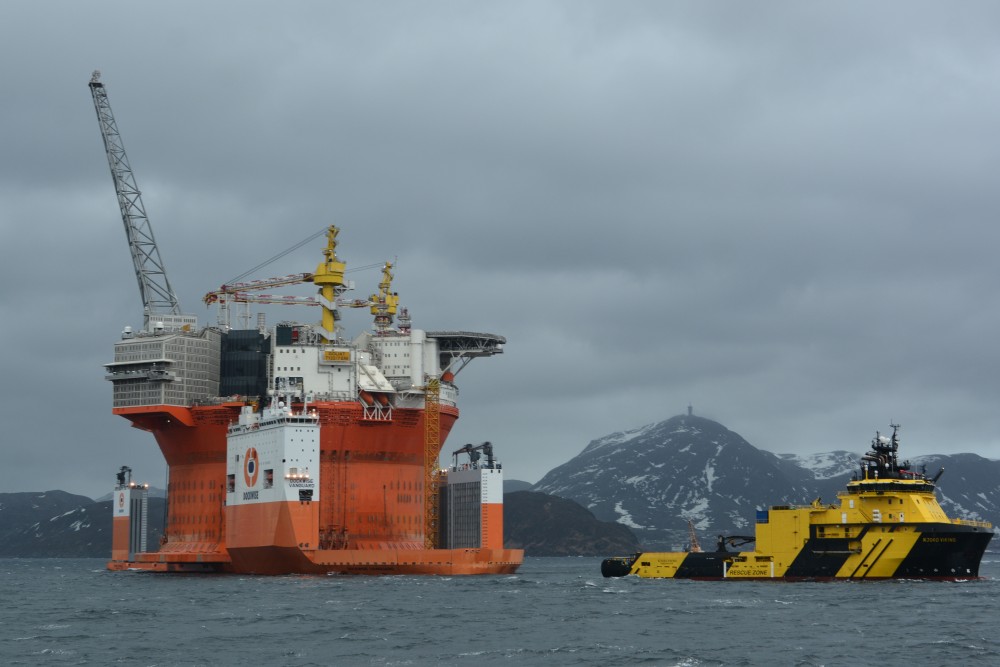
Goliat platform, the world's northernmost offshore oil-drilling installation. 
Photo: Thomas Nilsen

Jan Dusik
Interim Director, WWF Arctic Programme
April 04, 2022

The Arctic is warming faster than any other region on Earth. But even as climate change threatens its unique ecosystems, and as thawing permafrost undermines its physical human infrastructure, some powerful voices are using the current energy crisis to call for increased oil and gas production in this most vulnerable part of the world.

This we believe would be both environmentally catastrophic and economically wrong-headed.

At WWF, we have long opposed further oil and gas extraction in the Arctic. Not only is it one of the most pristine environments left, it is also uniquely vulnerable to pollution and accidental spills. It is difficult for operators to respond to disasters in this remote region, there is no effective way to clear up oil spills in sea ice, and low temperatures slow natural processes that break down spilled hydrocarbons.

In recent years, a growing number of Arctic governments have slowed or stopped further oil and gas development. Greenland has banned oil exploration, while Denmark, Sweden and the Canadian province of Quebec have joined the Beyond Oil and Gas alliance with the aim of facilitating the managed phase-out of oil and gas production. For years, Canada’s federal government has had a temporary ban in place on offshore oil drilling in the Arctic.

But the invasion of Ukraine and the urgent drive to close energy markets to Russian oil and gas has led some countries to reconsider their green ambitions. In addition, rocketing energy prices have raised the prospect of expanding oil and gas extraction in the Arctic.

Going to the edge

In Norway for example, the government is proposing an expansion of exploration in the pristine ice edge in the Norwegian part of the Barents Sea. The ice edge, which is teeming with biodiversity, is critical for the survival of many threatened Arctic species. Meanwhile, Canada is mulling a review of its current moratorium on Arctic drilling and is considering starting new production in Bay de Nord in Newfoundland. And efforts to scale up production in Alaska, including in the Arctic Refuge, are back on the table.

The environmental case against increased production in the Arctic is clear and irrefutable. Not only does drilling offshore increase the risk of disastrous spills, threatening wildlife, habitats and communities, but the increased greenhouse gas emissions from greater fossil fuel use will accelerate climate change in the region. Average temperatures in the Arctic were 3.1°C above pre-industrial levels in 2019, compared with the 1°C average increase globally. Last month, a polar heatwave meant temperatures were a staggering 30°C above usual levels.

That level of warming is literally eroding the very foundations of hydrocarbon extraction in the region. Much of the oil and gas infrastructure is built on permafrost which is thawing. This is necessitating many millions of dollars of investment simply to shore up existing capacity. Indeed, one of the worst pollution disasters in the region in recent years – an oil spill by Norilsk Nickel which polluted two rivers within the Siberian Arctic – was also related to abrupt permafrost thaw.

Stranded assets


An expansion of oil and gas extraction is also economically misguided. Energy prices have indeed risen sharply in response to a supply shock caused by Russia’s invasion of Ukraine. The sharp rise in prices is likely to be a short-term response to the invasion of Ukraine, and prices are predicted to return to levels lower than before the invasion. If new projects are given the go-ahead based on current oil prices, investors could easily see their investments stranded.

In addition, most energy analysts believe that oil and gas demand is in decline as the world acts in response to climate change, meaning that any new oil or gas extraction would ultimately be for nothing. That’s because it takes an average of 16 years before newly discovered resources can enter production, and so any new finds would only be coming on stream once the energy transition was well underway. Indeed, the current crisis is likely to accelerate this transition, as energy security considerations join concerns about climate change as strong reasons to rapidly move beyond fossil fuels.

One side effect of Russia’s diplomatic and economic isolation is likely to be heightened peril for the Arctic and for the environment more broadly: Its government’s already lukewarm readiness to act on climate change is likely to evaporate altogether. The Russian government will likely respond to western sanctions with environmental deregulation. A lack of investment and access to knowhow will accelerate the deterioration of its infrastructure in the Arctic and increase the risk of incidents.

All of this makes it even more important that other Arctic nations resist pressure to increase their own exploitation of the region’s natural resources. Instead, countries across the world must redouble their commitments to conserve this most precious and vulnerable part of the world against climate change and increasing human activity.

‘Significant’ amounts of mercury in permafrost threatens Arctic food supply, research says

Speed at which permafrost is releasing toxic metal is still being studied.


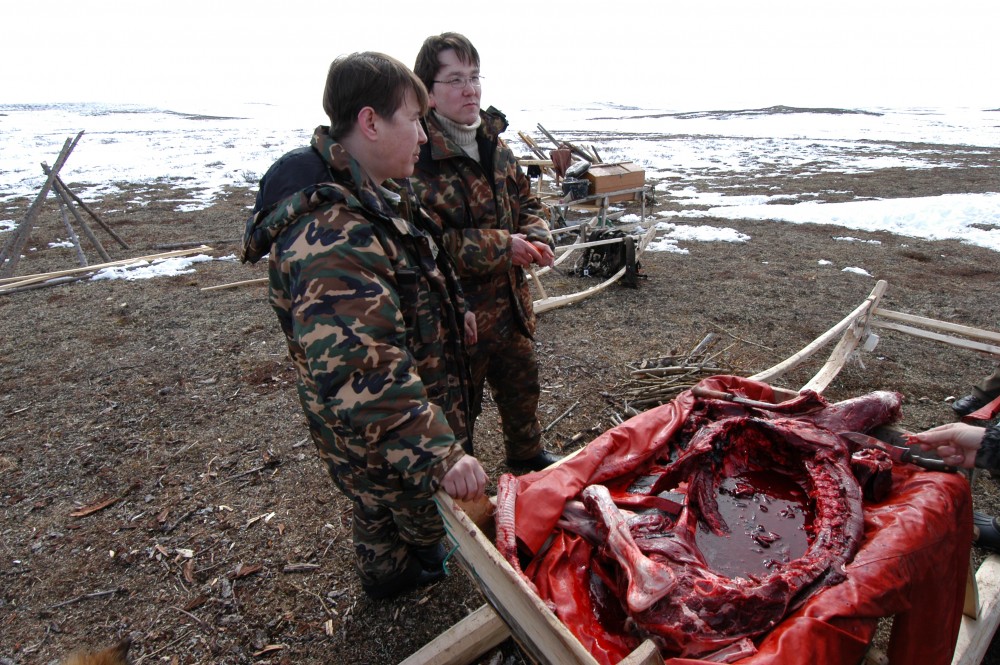
The indigenous peoples of the Russian north do not only eat the meat of the reindeer, but have other parts of the animal as well as an important part of their traditional food. Photo: Thomas Nilsen

By Liny Lamberink

CBC News
June 07, 2022

Scientists have long known human activity like burning coal, mining metal and incinerating garbage emits mercury into the air — but in the past few years, they’ve realized permafrost is a “significant source” of mercury in the natural environment.

And as that permafrost thaws, new research says those ancient stores of mercury are being released into the Arctic where it threatens to increase the concentration of the toxic metal in traditional food sources.

“We’re starting to see evidence of that natural mercury entering rivers, lakes and ultimately the Arctic Ocean,” said Peter Outridge, a scientist with the Geological Survey of Canada.

A recently published paper in the journal Nature Reviews says 200 tonnes of mercury end up in the Arctic Ocean each year. The paper, which Outridge helped write, is one chapter of a mercury assessment carried out by the Arctic Monitoring Assessment Program (AMAP) every 10 years.

It says one-third of the mercury going into the ocean comes from the atmosphere, a quarter comes from ocean currents, one fifth comes from river flows and one-fifth comes from coastal erosion.

“We’re refining our understanding about where mercury [in the Arctic] is coming from,” said Outridge. As little as a decade ago, he said, the science was focused on human sources of mercury.

Still safe to eat

Outridge said mercury levels in Arctic food animals are 10 times higher than they were before the Industrial Revolution, and those levels peaked in between the 1960s and 1980s. Since then, he said, mercury concentrations in Arctic animals have been generally stable or declining.

But, he said, scientists don’t have a clear idea yet of how quickly mercury is being released from thawing permafrost. “That’s very much an active area of research,” he said.

In a plain language summary of its latest mercury assessment, AMAP says most marine mammals are at low- or no-risk for health effects from mercury exposure.

Raymond Ruben, the mayor of Paulatuk, N.W.T., said mercury contamination is not a priority or concern in his Arctic community, but it’s something he’s keeping an eye out for. He said his community relies on Arctic char and whale for food, and if mercury levels in those animals go up — it may change what people feel safe eating.

AMAP says animals near the top of the food chain — like polar bears, pilot whales, narwhals, beluga and hooded seals and several seabird populations — are “cause for concern” because they’re exposed to higher levels of mercury.

Because those animals are a critical component of traditional diets, AMAP says people living in Arctic communities face some of the highest dietary exposures to mercury worldwide.

But Outridge says people would be “well-advised” to continue eating northern foods. He said the nutritional benefits, at this point, “very much outweigh” the possible negative impact of ingesting mercury.

This story is posted on the Barents Observer as part of Eye on the Arctic, a collaborative partnership between public and private circumpolar media organizations.
Two years after huge Arctic spill, river water in Norilsk is still red from diesel fuel

Company Nornickel claims environment on the site of its major diesel oil spill is satisfactory. Investigations by a visiting environmentalist indicate otherwise.


Environmentalist Vasily Ryabinin found plenty of oil in the water during a recent visit to Norilsk. Photo: Screenshot from video by Activatica

By Atle Staalesen
June 08, 2022

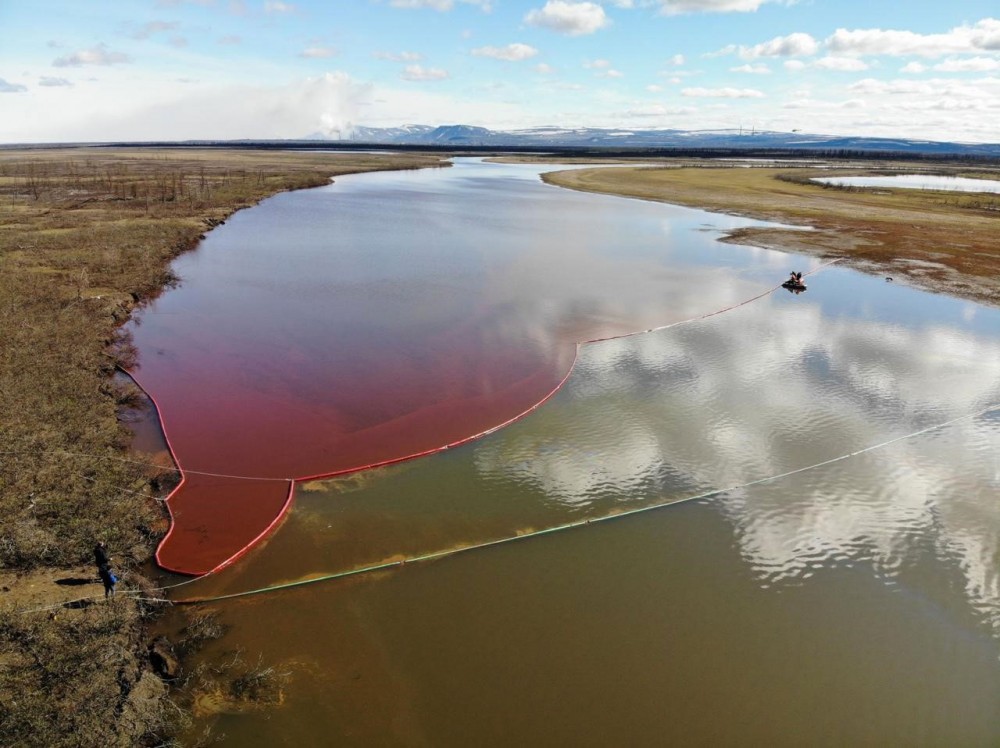
“Two years have passed, there have been some clean-up operations, but these dirty red substances are still in the ground and nothing has changed,” says Vasily Ryabinin. He stands by a stream coloured red by the diesel fuel that in 2020 poured into the vulnerable Arctic nature from a collapsed oil tank reservoir.

More than 21,000 tons of fuel spilled into the tundra, streams and lakes when the tank tilted and cracked following what is believed to have been negligent maintenance from Nornickel and its subsidiary Norilsko-Taymyrsky Energy Company.

“Time flies, two years have passed, nothing has changed —red water is still running,” Ryabinin says in a video from the area.

Oil on the water in Norilsk. Photo: Rosprirodnadzor

The video is recorded only few days after Nornickel announced that the environmental situation in the area is ‘satisfactory.’ According to the company, a comprehensive study by more than 70 researchers from ten research institutes concludes that clean-up in the area has been successful and that the local ecosystem is getting restored.

The study included a wide range of tests of local waters, ground, botanics, fish and wildlife, Nornickel informs.

According to leader of the research expedition Fyodor Romanenko, the purpose of the initiative was to get “accurate, comprehensive and reliable research information based on complex study of the current state of pollution in the water-collecting parts of the Pyasina River.”

The river was among the waterways worst affected by the spill.

“The results of the studies allow the researchers to define the state of the ecosystem of the Norilsk industrial hub and the territory of the Taymyr Peninsula as satisfactory,” Norilsk informs.

However, environmentalist and activist Vasily Ryabinin disagrees.

“Dear researchers, if you really want to check the true condition of the eco-system, you can simply call me and I will show you where to check,” Ryabinin says as he stands on the shore of the red-coloured stream.

Or perhaps this simply is “useful soil,” the activist adds in an ironic comment aimed at the mining and metallurgy company.

Nornickel is known world-wide for its reckless care of nature around its industrial facilities. The vulnerable Arctic environment surrounding plants in Taymyr and the Kola Peninsula have over decades been subject to serious degradation.

The spill of diesel fuel significantly added trouble to the strained environment in the area. Several hundred people were involved in the clean-up operations in summer 2020.

A big number of special containers was flown into the area and placed along the worst affected rivers and streams. Spilled oil was pumped into the containers. In addition, the company started production of storage facilities for up to 100,000 tons of polluted soil. However, flooding, bad weather and the harsh climate complicated operations.

Information about the situation was firmly controlled by the authorities and Nornickel hardly any independent environmental experts were granted permission to enter the area.

A historical fine followed. Nornickel in early 2021 had to pay a record-big sum of 146 billion rubles (€1.66 billion) for environmental damage inflicted.

The red king crab: a blacklisted but valuable fisheries resource


With climate change come changes in species distribution. Here in the High North, we expect to see many marine species move northwards. In addition, humans sometimes move species for commercial purposes with varying outcomes. One such species in the red king crab.

By: Jenny Jensen, Magnus Aune, Paul Renaud, Benjamin Merkel
 and Guttorm Christensen // Akvaplan-niva
April 20, 2022
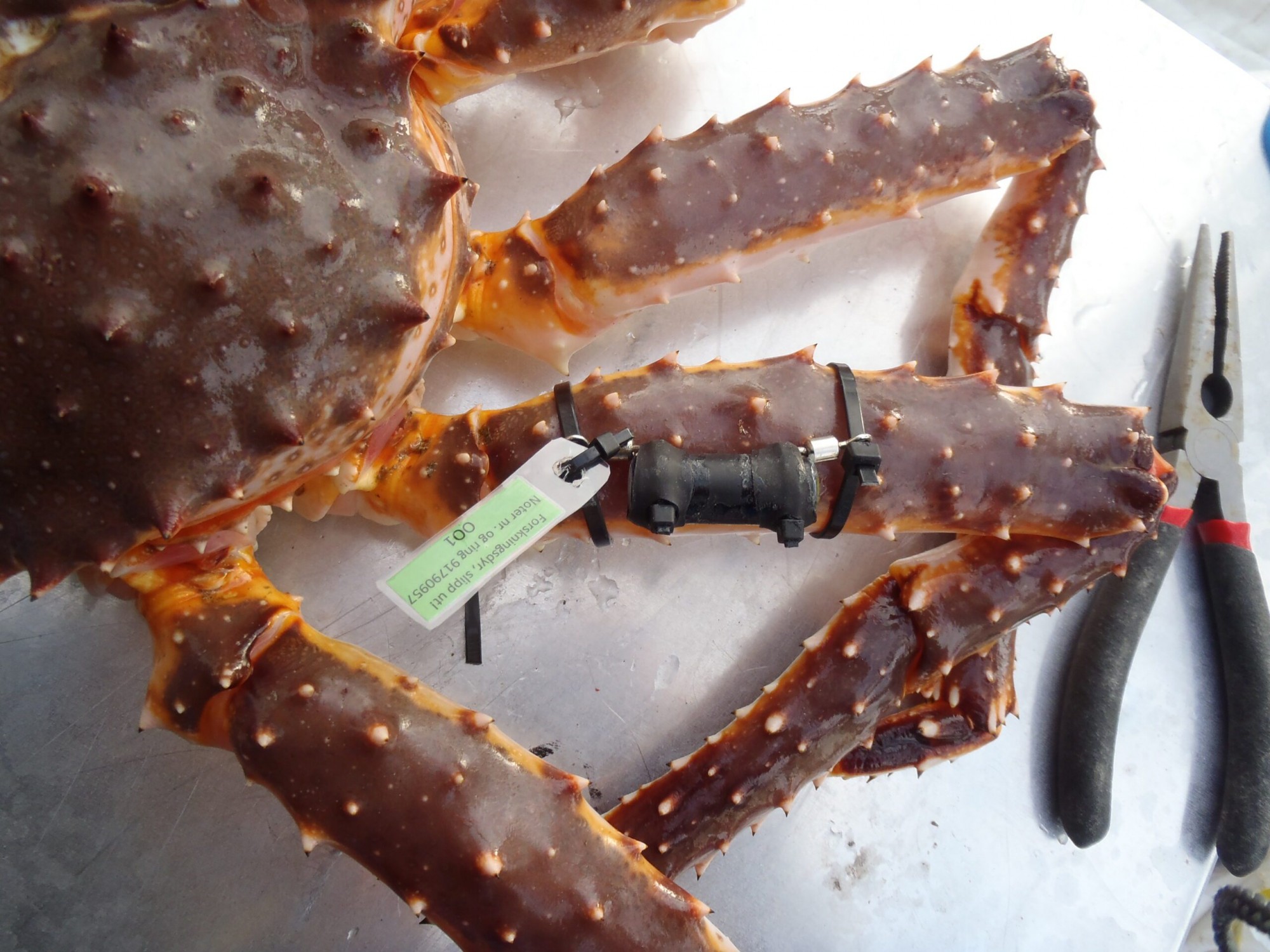
Red king crab with an acoustic tag and information on how to contact the researchers attached to a leg with cable ties. 
Photo: Guttorm Christensen/ Akvaplan-niva

Starting in the 1960s, Russian scientists introduced a Pacific marine species, the red king crab (Paralithodes camtschaticus), to the eastern Barents Sea to establish a new commercial fishery. Following this introduction, we have seen two parallel developments. First, in recent decades, dense aggregations of the species gradually moved into Norwegian waters and south-westwards along the Norwegian coast. Second, as intended by its introduction into the Barents Sea, the crab has indeed become a major harvestable stock, with commercial catches in Norwegian waters worth 30 000 000 Euros in 2019.

However, the red king crab has a destructive impact on the benthic fauna: it has therefore been blacklisted in Norway and the fisheries authorities do not want the species to move further west along the coast. Accordingly, current Norwegian policy is quota regulations east of Nordkapp and free (eradication) fishing in areas farther west.

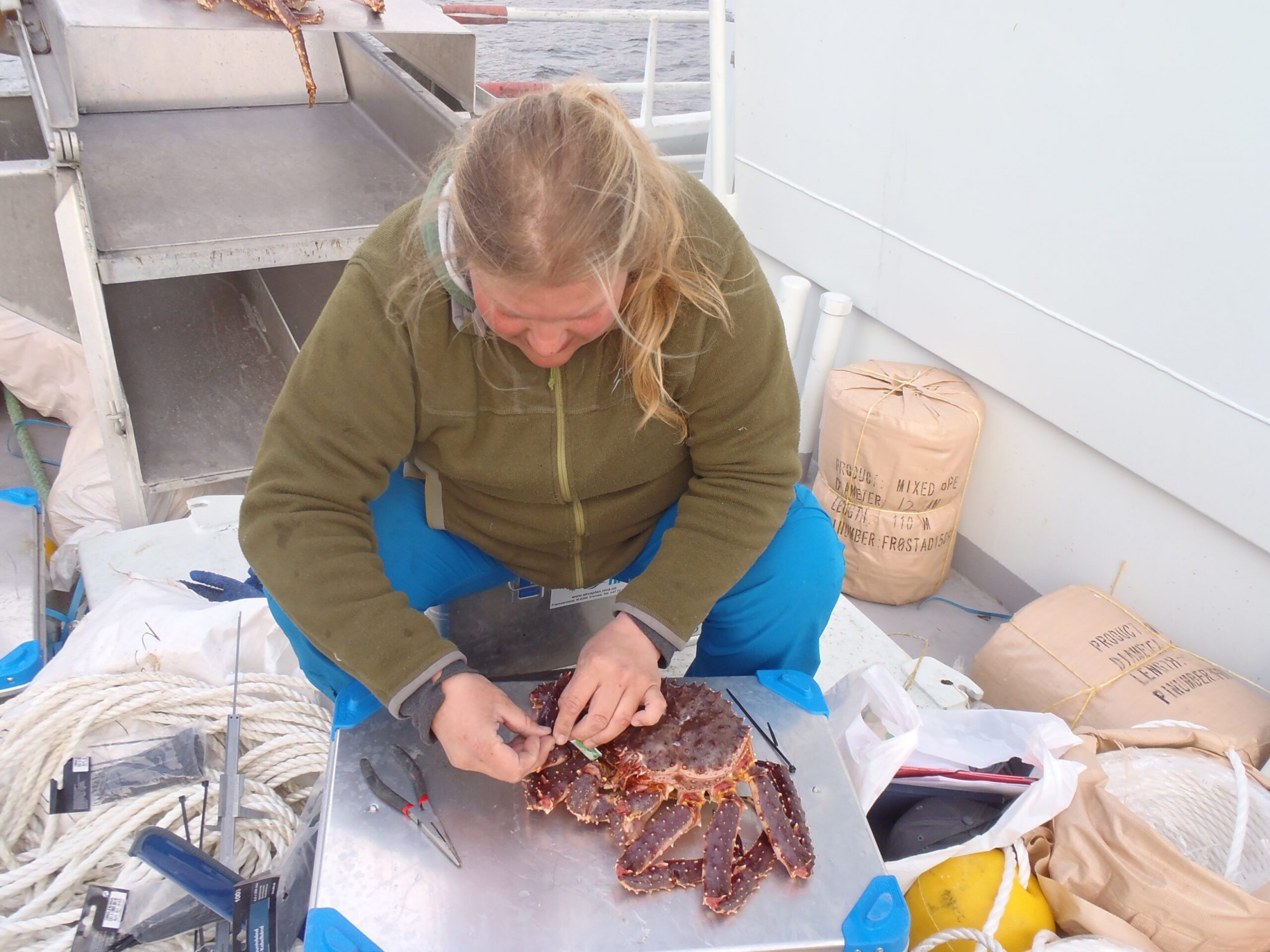
Attaching an acoustic tag to a red king crab onboard MS Stormfuglen in Gamvikfjorden. Photo: Magnus Aune / Akvaplan-niva

ADVERTISEMENT


As red king crabs can be numerous in an area one day and almost completely absent the next, it is tricky to locate them for harvesting. Fishers therefore spend considerable time and burn much fuel searching for crabs. This also causes pollution and climate gas emissions that could be avoided with better information. This is why a group of fishermen from Hammerfest eagerly contacted Akvaplan-niva and asked: “What do the crabs do? And where ARE they?” With funding from the Regional Research Fund North and fishery companies, we started to find answers to their questions.

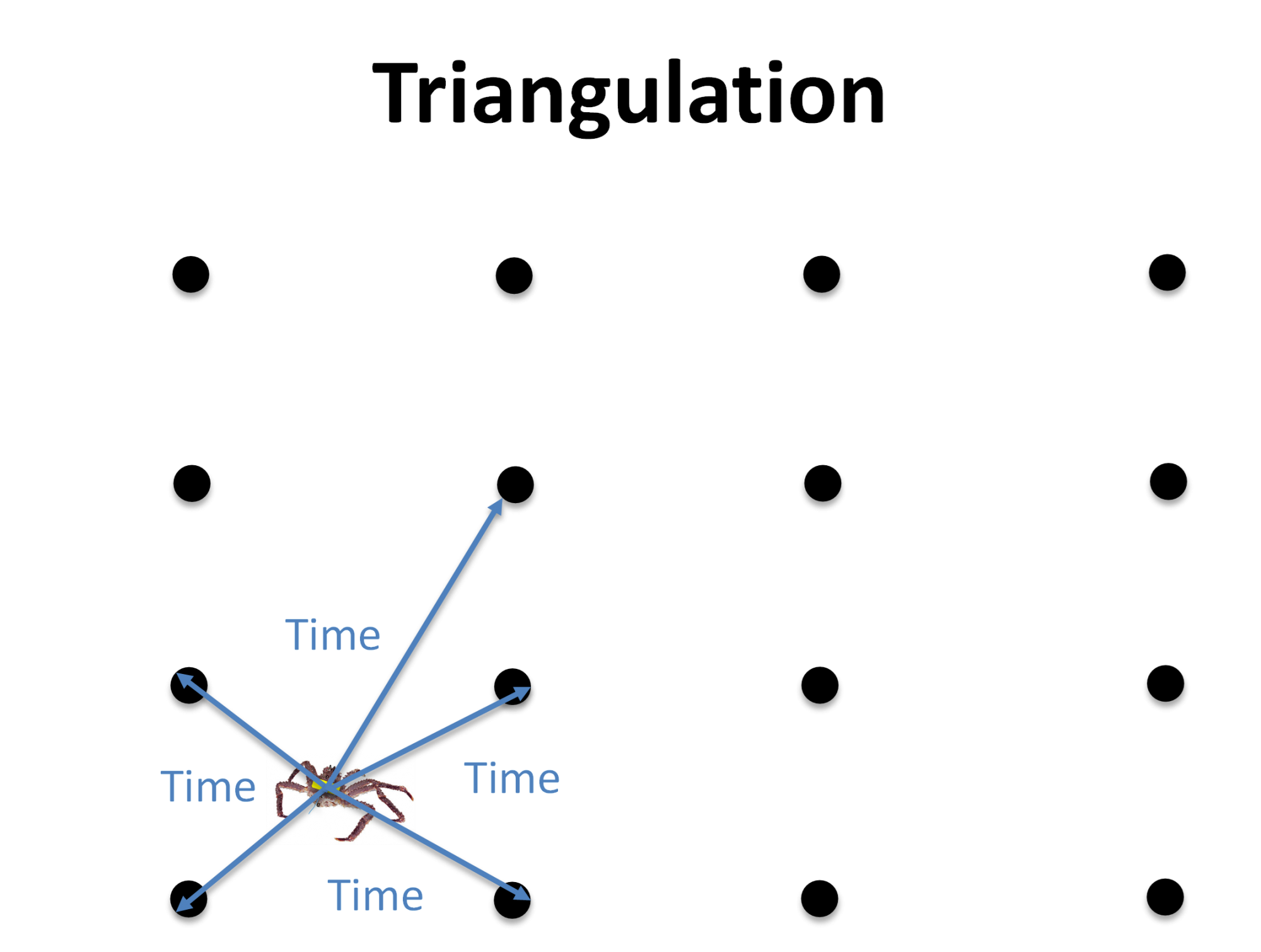
In the study, we equipped 39 crabs with acoustic tags that transmitted a signal telling us the identification code of each individual. These signals were then picked up and stored in receivers that we moored in a grid system in Gamvikfjorden northwest of Hammerfest. By triangulation (using the difference in how long it took for signals to reach different receivers), we could calculate the position of the crabs to within about three metres.

Two examples of red king crabs’ movements in Gamvikfjorden on the island Sørøya in the period May-November 2016. One individual left the fjord rapidly after tagging (left) and one individual remained, moving around the study area during the entire 6-month period after tagging (right).
 Map: Magnus Aune / Akvaplan-niva

We experienced some challenges with receivers being lost, as the next stop northwards of the study location is the North Pole and the weather can be harsh. In spite of this, we managed to record high-quality data from March to October. The data revealed many interesting aspects of the crab’s habitat use and we found that about half of the tagged crabs left Gamvikfjorden within two weeks after tagging. Three individuals were recaptured in fishing gear as far as 147 km from the tagging location, having moved with average speeds of 200-500 metres per day.

The crabs that remained in the fjord over the summer showed many interesting behavioural patterns. For instance, in late spring when the water masses were cold throughout, the crabs were found both in shallow and deeper waters, likely eating different food types. However, as summer progressed and temperatures rose above ~6°C, the crabs quickly moved into deeper and colder waters. Also, many crabs appeared to be social, walking together almost all the time. These findings confirm that the red king crab can move fast, but also that it has clear temperature preferences. From this, one can make predictions as to where the crabs are likely to be at different times of the year.

The principle behind triangulation of red king crabs within the acoustic receiver grid. 
Graphic: Jenny Jensen / Akvaplan-niva

Providing the fishermen with precise knowledge of where aggregations of the red king crab can be found will help them to harvest this valuable resource more efficiently, with a higher profitability and a lower environmental footprint. Our new findings can hopefully act as a corner piece in the puzzle of understanding the crab in the new waters that it has invaded. From this we can build additional knowledge to support sustainable harvesting and at the same time minimise the crab’s southward colonisation. Because let’s face it: despite its blacklist membership the red king crab is not likely to disappear.

The red king crab, Paralithodes camtschaticus. 
Photo: Jenny Jensen / Akvaplan-niva

This story is originally published on the website of the Fram Centre