Tuesday, September 27, 2022

Canada, South Korea seek deeper cooperation on critical minerals

Reuters | September 23, 2022 

Canadian Prime Minister Justin Trudeau meeting with 
South Korean President Yoon Suk-yeol. 
IN LONDON AT QUEEN LIZ'S FUNERAL
Image: Government of Canada

Canadian Prime Minister Justin Trudeau and South Korean President Yoon Suk-yeol on Friday agreed to deepen cooperation on critical minerals used in electric vehicles (EVs) batteries as both countries seek to cut emissions to fight climate change.


Yoon visited London for the funeral of Queen Elizabeth, and then New York in his first US trip to attend the UN General Assembly, before arriving in Canada on Thursday. On Friday, Yoon met Trudeau in Ottawa, and then they both spoke to reporters.

“Yoon and I discussed ways to collaborate in a variety of areas, including essential minerals, batteries for electric vehicles, and emerging technologies, including AI (artificial intelligence),” Trudeau told reporters.

Canada has many of the critical minerals – like lithium, cobalt and nickel – that are now used to make batteries for EVs, and the government is in the process of seeking to help producers and processors scale up production.

“Canada, as a global leader in the production of minerals, and Korea, a major semiconductor and battery maker – each play crucial roles in global supply chains,” Yoon said through an interpreter.

“The governments and businesses of our two nations will work together for the mineral resources sector to build a cooperative architecture… to respond to the shocks resulting from the changing world order,” Yoon added.

China is currently by far the dominant global supplier of critical minerals used in EVs. Yoon said it was strategically important for both countries to find an alternative supplier.

Canada and South Korea are already cooperating in the sector, Trudeau pointed out.

In March, Stellantis, the parent of Jeep and Chrysler, said it would build an EV battery plant in a joint venture with South Korea’s LG Energy Solution in Windsor, across the border from Detroit.

In a joint statement, the two countries said they agreed to deepen their “strategic partnership on supply chain resiliency” and would seek to position themselves as “competitive players in the critical minerals supply chain and battery and EV value chains”.

To that end, both countries agreed to develop a memorandum of understanding in the coming months to “support clean energy transition and energy security, including with respect to critical minerals”.

(By Steve Scherer; Editing by Sandra Maler)
Greenland Minerals dealt setback in legal fight for rare earth project licence
Reuters | September 26, 2022 | 

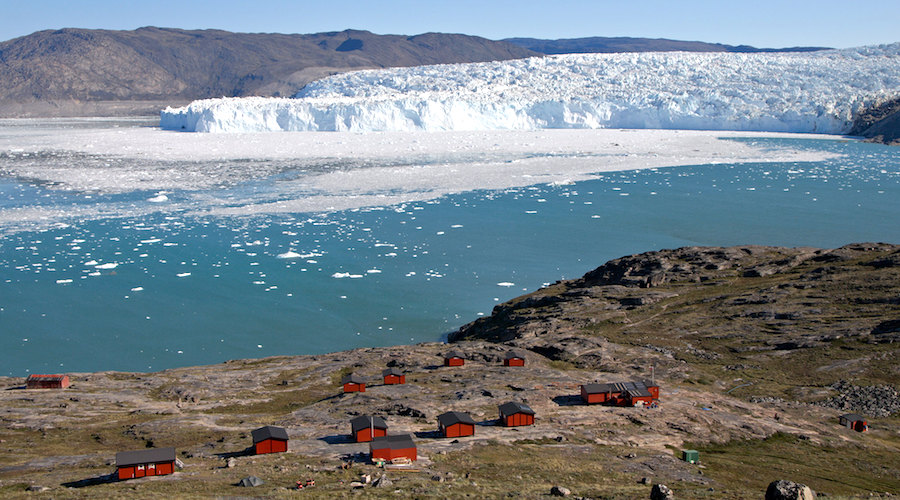
Greenland Minerals wants to develop the Kvanefjeld rare earths and uranium project. 
(Image courtesy of Greenland Travel.)

Australia’s Greenland Minerals Ltd said on Monday an arbitration tribunal had declined its request for interim orders against the Greenland government’s draft decision to reject the miner a licence for the Kvanefjeld rare-earths project.


The company had, in July, lodged an objection against the draft decision as it relied on a rule – which bans mining of ore bodies with uranium content of 100 parts per million (ppm) or greater – that is being contested separately in the court.


The tribunal ruled the interim orders requested would no longer serve their purpose of maintaining the status quo as the Greenland government had already rejected the miner’s licence application, Greenland Minerals said in a statement.


In March, the miner took the governments of Greenland and Denmark to court for the legislation passed last year that banned uranium mining, risking the development of the Kvanefjeld project.

More than 1 billion tonnes of mineral resources have been identified in the Kvanefjeld project area, with ore estimates of 108 million tonnes. It also contains radioactive uranium, which some locals are concerned would harm the environment.

Greenland Minerals said the tribunal made no findings on any other aspects of its case against the governments of Greenland and Denmark but that it “will continue to seek appropriate remedies in the arbitration.”

The company expects the government to soon issue a final decision rejecting its licence application, it added.

Greenland Minerals’ shares fell about 9.5%.

(By Riya Sharma; Editing by Savio D’Souza)


As sentiment turns in favour of nuclear energy, Fission preps for Q4 feasibility

Summer exploration at Fission Uranium's Patterson Lake South project in Saskatchewan. Credit: Fission Uranium

Fission Uranium (TSX: FCU) discovered the Triple R uranium deposit at its Patterson Lake South (PLS) project in Saskatchewan in 2012 – a year after the Fukushima nuclear plant disaster in Japan decimated the uranium market. 

But following a decade in the “wilderness,” uranium stocks are now finally on the upswing, benefitting from growing recognition of nuclear energy’s place in limiting global temperature rises, reducing emissions of greenhouse gases and countries’ looming net zero goals targeted between 2030 and 2050. 

“A few years ago, you were always trying to convince people they should be contrarian and look forward, but they really couldn’t see their way out of the weeds,” said Fission’s president and CEO Ross McElroy in mid-September. 

“When we talk to investors now, there is rarely anybody that I have to convince that nuclear’s the place to be and that it plays a key role in the energy mix and particularly in green energy.” 

The Sprott Physical Uranium Trust Fund, launched in mid-2021 has helped support uranium prices, while Russia’s ongoing war in Ukraine has stoked efforts to source the critical energy metal from friendly sources. Japan’s announcement that it will renew its investment in nuclear power, as well as similar moves from other countries, have solidified that positive sentiment. 

This, just as the company prepares to complete a feasibility study for the project by the end of the year. 

It will build on a positive 2019 prefeasibility study that outlined a capex of $1.2 billion for an underground mine with a life of 7.3 years. The operation would produce 11.3 million lb. U3O8 per year at low operating costs of US$7.18 per lb. 

Despite its short mine life and large capex, the study forecast a 25% internal rate of return after taxes, using a long-term uranium price of US$50 per lb. The net present value (at an 8% discount rate) was $702 million. 

One major difference in the upcoming feasibility study will be a longer mine life. Based on a resource update released in September that incorporated 175 drill holes completed over the last three years, the mine life in the feasibility study is likely to be extended (by around two years, according to a recent research note from Katie Lachappelle, a mining analyst at Canaccord Genuity). The update brought resources in the R840W zone into the indicated category, which will bring a third zone into the mine plan, adding 11.2 million lb. uranium oxide. It also bulked up the largest of the five zones at Triple R – R780E. 

Indicated resources stand at 2.7 million tonnes grading 1.94% U3O8 and 0.61 gram gold per tonne for 114.9 million lb. U3O8 and 52,700 oz. gold. Inferred resources are 635,000 tonnes at 1.1% U3O8 for 15.4 million lb. 

Overall, indicated resources rose by 21.3%, with only a small decline in grade (from 2.1% U3O8). 

Another factor that will be incorporated into the feasibility study is the inflationary environment. While high inflation has resulted in escalating price tags for large gold and copper mines under construction, McElroy said the project’s smaller footprint should temper the impact of inflation on PLS. “This is a small tonnes per day operation. There’s not a lot of steel and equipment,” he said. 

The expected timing of the start of construction three or four years down the road would also have to be considered. 

The uranium price could also be higher. The previous study used a long-term price of US$50 per lb., although uranium was trading at around US$28 per lb. at the time. While McElroy says that the current price, at around US$50 per lb., is still well below the incentive price, he believes the market will continue to improve.  

“I think that the price of uranium is going to be right where [we] want it to be when this does become an operating mine,” said McElroy, who spoke from Europe shortly after attending the World Nuclear Symposium in London in September — an event he described as the most optimistic in his 15 years of attending. 

The company has started the environmental assessment process and is planning on a 36-month timeline for permitting. It hopes to start construction in 2026, followed by production in 2029.  

It recently signed engagement and communication agreements with both the Buffalo River Dene First Nation and Ya’thi Néné Lands and Resources Office, which represents the Athabasca Nations and communities of the Nuhenéné. Previous feedback from local First Nations communities resulted in one major change in the proposed project – making it a fully underground mine rather than open pit and underground as originally proposed in a preliminary economic assessment. 

“The local communities definitely prefer to see an underground mine as opposed to a surface, and we actually are in a position where you have the flexibility to mine it either way,” McElroy said. Although the deposit is shallow, starting at only 50 metres, open pit mining would have cost about $100 million more, he said, because two of the deposits are located under a lake and would require a berm to be constructed for access. 

Chinese investment

While PLS, located about 150 km north of La Loche, Sask., appears to be a strong project, it won’t be cheap to build. As a junior with a sub-$500-million market cap, Fission is open to developing it on its own, or bringing in a strategic partner or larger mining company, McElroy says. 

The company already has an offtake agreement for up to 35% of its production with Hong Kong-listed CGN Mining. In a deal that closed in early 2016, CGN invested $82 million in Fission for a 19.99% equity stake. CGN is controlled by China General Nuclear Power Corp. 

McElroy acknowledges that relations between Canada and China have chilled considerably since that deal. However, he still sees CGN as a good partner. 

“There might be a bit more tension on an international basis between Canada and China, but on a company level between us and our Chinese partner, there’s no chilling of the relationship. We have a good, strong working relationship,” he said. 

“The Chinese story still impresses me a great deal,” he added. “They’re one of the most aggressive builders of nuclear reactors worldwide — that was always a compelling story six years ago, and it’s still a compelling story right now.” 

CGN hasn’t sold shares since its initial investment, but its ownership has been diluted to around 14% as it hasn’t participated in subsequent financings. The deal also gave it the right to nominate two members to Fission’s board, which was increased to nine members. 

In 2012, Canada and China signed an agreement, supplementing a 1994 Co-operation in the Peaceful Uses of Nuclear Energy agreement that allowed China to buy Canadian uranium. With uranium designated as a critical mineral and the more adversarial relationship that has developed since then, it’s not clear whether this will change. 

In a more near-term consideration, there is potential to reduce costs at PLS by sharing infrastructure with NexGen Energy (TSX: NXE), which is developing its $1.3-billion Arrow project only 3 km away. NexGen has already started the permitting process for the project, which is located on the same trend as Arrow, and is expected to produce around 29 million lb. of U3O8 per year over 11 years. No formal discussions have taken place, however. McElroy also doesn’t rule out a merger between the companies – if it makes sense for Fission shareholders. 

With the growing push for clean energy globally and the limited pool of uranium miners, McElroy believes PLS could attract a forward-thinking, commodity agnostic miner as an investor or acquirer. 

“A uranium deposit like this is not entirely different than gold mining a vein-hosted, greenstone belt mine, in fact they look very similar.” 

Discovery potential 

When Fission made its initial discovery at PLS, located about 8 km southwest of the Athabasca Basin margin a decade ago, it set off a staking rush in a new region. 

“Prior to our discovery, nobody thought there was any uranium in that area at all — it really wasn’t on anybody’s radar,” said McElroy, who shared The Northern Miner’s person of the year award in 2013 with then-Fission exec Dev Randhawa for the achievement, and also received Prospectors & Developers Association of Canada’s Bill Dennis award for exploration success in 2014. “It really changed the whole focus of where people are looking and even how they were looking.” 

With the PLS land package measuring 310 sq. km — about five times the size of the island of Manhattan — McElroy believes there’s more to be discovered. 

“The potential for more than one Triple R type deposit on our property is pretty high, so we’ll start kicking off exploration again at some point.” 

CANADA
Federal guide for inclusion of Indigenous knowledge in impact assessments

Canadian Mining Journal Staff | September 27, 2022 |

Credit: Adobe Stock

The Government of Canada has announced a new framework to guide inclusion of Indigenous knowledge in impact assessments for mining projects. The framework – known as The Indigenous Knowledge Policy Framework for Project Reviews and Regulatory Decisions – was developed in partnership with 79 Indigenous communities and organizations across the nation.


The framework is designed to inform the respectful, consistent and meaningful inclusion and protection of Indigenous knowledge in project reviews and regulatory decisions under the Impact Assessment Act; the Canadian Navigable Waters Act; the Canadian Energy Regulator Act; and the fish and fish habitat protection provisions of the Fisheries Act.

The framework provides a foundation for stronger relationships between the government and Indigenous Peoples based on respect for different worldviews and sources of knowledge. It will better enable the inclusion of Indigenous knowledge in the impact assessment process to improve project design, strengthen mitigation and accommodation measures, and make sound regulatory decisions for sustainable resource development.

Recognizing the importance of Indigenous knowledge systems and providing for its respectful inclusion in assessments of major projects like dams, mines and liquefied natural gas facilities is one more step in the government’s efforts to strengthen partnership with Indigenous Peoples. It is a concrete example of how the Impact Assessment Agency of Canada is implementing the objectives of the United Nations Declaration on the Rights of Indigenous Peoples (UNDRIP).

The framework represents the first step in the development of guidance specific to Indigenous knowledge in impact assessment, including on best practices for reviewing Indigenous knowledge in project submissions and establishing confidentiality procedures.

“Indigenous knowledge has made, and continues to make, valuable contributions to environmental, regulatory and other processes across the country. Today’s announcement is an important step forward in the Government of Canada’s commitment to foster reconciliation and partnership with Indigenous peoples by aligning federal regulators and decision-makers on how to respectfully and meaningfully include Indigenous knowledge in project reviews and regulatory decisions,’ said the Hon. Steven Guilbeault, Minister of Environment and Climate Change Canada.

Click here to learn more about the new framework.
Another mine dam wall collapses in South Africa
Reuters | September 27, 2022 | 

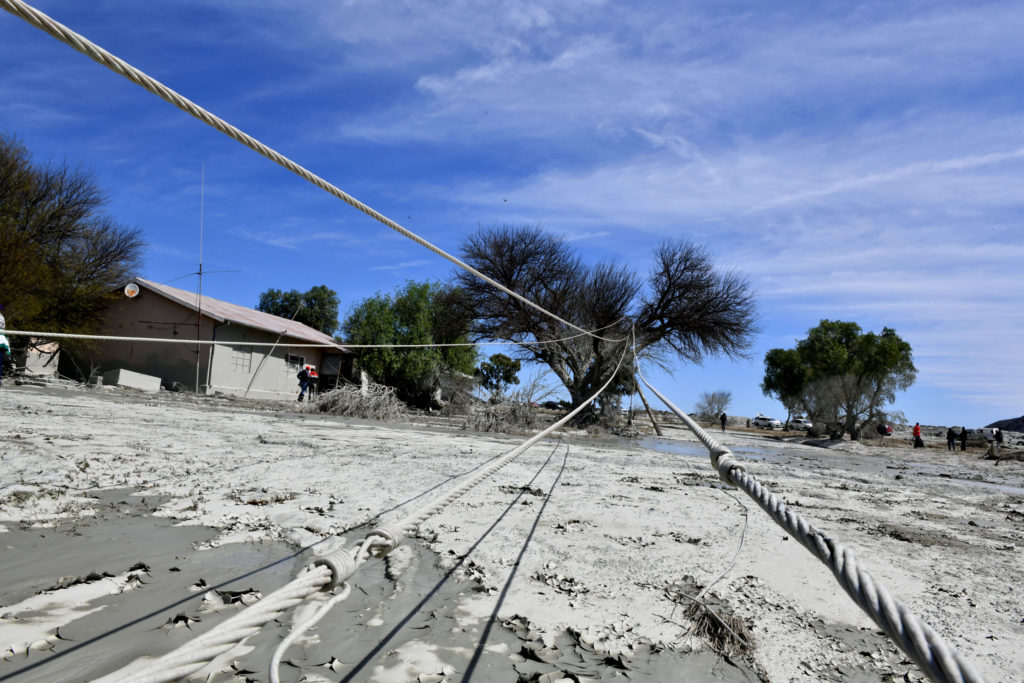
The Jagersfontein-Charlesville area in the Free State. 
Image from the South African Government.

A mine dam wall has collapsed at a diamond mine in South Africa’s Free State province just weeks after a similar incident at the same site left one person dead and scores of injured, the provincial government said on Tuesday.


The incident occurred in the diamond mining town of Jagersfontein, which on Sept. 11 saw a dam holding liquid mine waste from a tailings reprocessing operation burst open, releasing a flood of mine slurry that swept away houses and cars.


There were no immediate reports of any injuries or deaths from the latest dam wall collapse at the dormant diamond mine, which was once owned by De Beers, a unit of Anglo American.

The provincial government in a statement said it was still trying to establish the extent of the water flow, adding that emergency crews were at the scene.

(By Bhargav Acharya; Editing by Sandra Maler)

ANOTHER LEFTIST GOVERNMENT
BHP sees Chile uncertainties easing in investment climate boost

Bloomberg News | September 27, 2022 

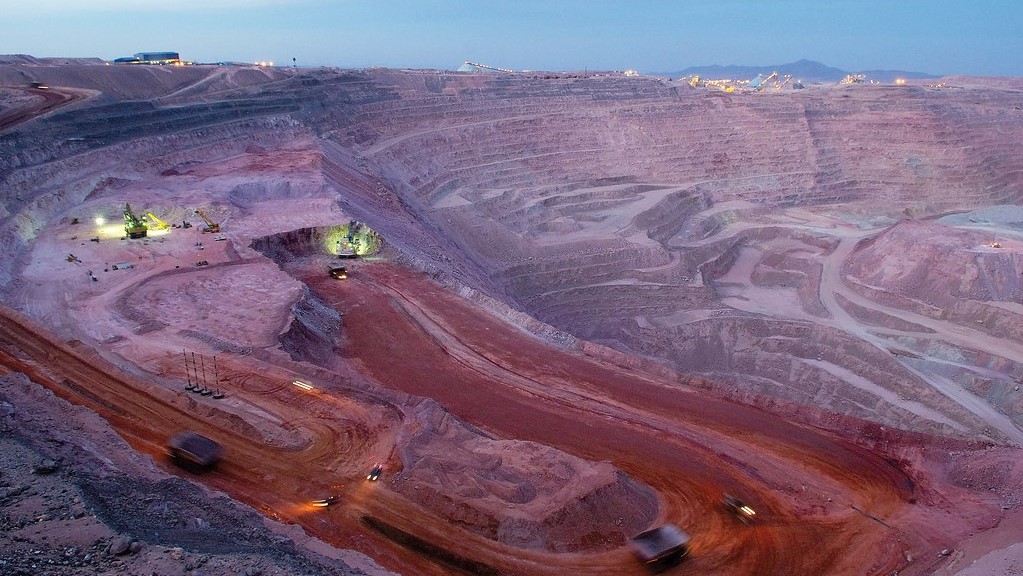
Cerro Colorado mine in Chile. Image from Consejo Minero.

Chilean regulatory uncertainties that have held up some investments in the biggest copper-producing nation are dissipating, according to top mining company BHP Group.


In a referendum earlier this month, Chileans overwhelmingly rejected a proposed new constitution, while authorities are showing their willingness to receive feedback on planned tax hikes, BHP President Minerals Americas Ragnar Udd said Tuesday.

“The uncertainties are easing,” he said in an interview from the Perumin conference in Arequipa, Peru. “We’re starting to see a bit more moderated conversations around the constitution in terms of what that’s going to look like one way or the other.”

BHP, which operates the world’s biggest copper mine in Chile, has dangled $10 billion to develop more resources in the country if those uncertainties are finally resolved. Huge investments are needed to help boost global supply at a time when demand for the wiring metal is set to rise as the world turns away from fossil fuels.

While it’s up to Chileans to decide whether they want a regulatory environment that remains competitive with other mining nations, people do recognize the importance of a stable economy, Udd said.

“The conversations I’ve had would suggest that there is a sensation that the reality is that Chile has an important role to play in the world and some of the changes that we see going forward probably won’t be as extreme as we’ve seen in the past,” he said.

In the case of its smallest mine in Chile, Cerro Colorado, BHP is exploring alternatives to continue operating beyond 2023, when its current permits expire. A solution probably would include the use of seawater, either desalinated or salt water, he said.

“That’s a process and studies we’re working through at this point.”

(By James Attwood)


California To Ban Natural Gas Heaters By 2030

California has made yet another step on its way to complete reliance on renewable energy by banning the use of gas-powered water heaters and furnaces from 2030.

The proposal to ban these products was approved unilaterally by the California Air Resources Board yesterday, Bloomberg reports.

“We’re really hopeful that this is the beginning of a domino effect and other states will follow California’s lead,” said Leah Louis-Prescott, an associate at RMI, a clean energy non-profit.

The ban does not cover gas stoves for now but many cities in California are seeking to discourage the use of gas stoves and a switch to electric-only appliances.

Now, with the gas furnace ban, Californians will have to familiarize themselves with heat pumps: all-electric heating appliances that are gaining popularity in Europe as an alternative to traditional heating methods.

Touted as the way forward in heating technology, heat pumps are praised for efficiency and emission footprint but they do have constraints such as temperature and they add to electricity consumption, which could strain a grid designed for a certain—lower—level of consumption.

Earlier this month California moved to ban the sales of internal-combustion engine cars from 2035. While climate activists have welcomed the news, there are some issues, such as the fact that EVs in California, which is the biggest EV market in the States, only make up 15 percent of new car sales, per figures from the California New Car Dealers' Association.

Going from 15 percent to 100 percent in 11 years would be challenging for a car industry that is already struggling to find enough raw materials for the millions of EVs companies have committed to manufacture.

Meanwhile, California continues to get some 40 percent of its power from fossil fuels. This needs to change if the state is to hit its own target of a zero-emission grid by 2045.

By Irina Slav for Oilprice.com

Finland plans new tax on mining
Reuters | September 27, 2022 

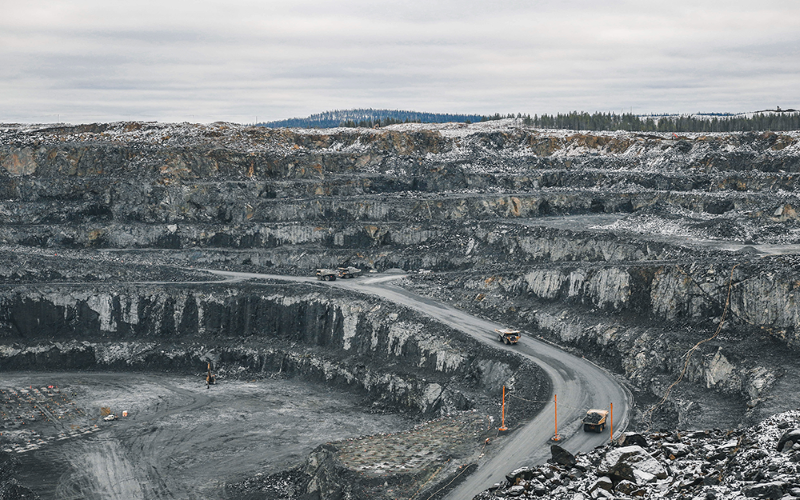
The Kevitsa open-pit mine in northern Finland. Credit: Boliden

Finland’s government plans to introduce a new tax on minerals extracted by the mining industry, the Nordic country’s finance ministry said on Tuesday.


Some of the European Union’s greatest known reserves of minerals used for batteries and other products are located in Finland where there are around 40 operational mines producing nickel, zinc, lithium, cobalt and gold among others.

Finland has thus far not collected taxes on minerals but the government now proposes introducing a royalty of 0.6% on the taxable value of metallic minerals and of 0.2 euros per extracted tonne for other minerals, the ministry said.

With the new tax, the government calculates it could collect annually some 25 million euros ($24.1 million), with 60% of it to be directed to the municipalities where mines are located and 40% to the central government.

“The aim of the tax is to take into account the nature of mining minerals… as non-renewable natural resources and to direct a reasonable compensation for their use to the society,” the ministry said in a statement.

The new tax, pending approval in Finland’s parliament, is planned to take effect from the beginning of 2024.

($1 = 1.0376 euros)

(By Anne Kauranen; Editing by Terje Solsvik)
PERU
DESPITE A LEFT WING EL PRESIDENTE
MMG expects to invest $2 billion in troubled Las Bambas copper mine in Peru
OR IN THIS CASE BECAUSE OF HIM
Reuters | September 27, 2022 |

(Reference image by the Peruvian Ministry of Energy and Mines, Twitter).

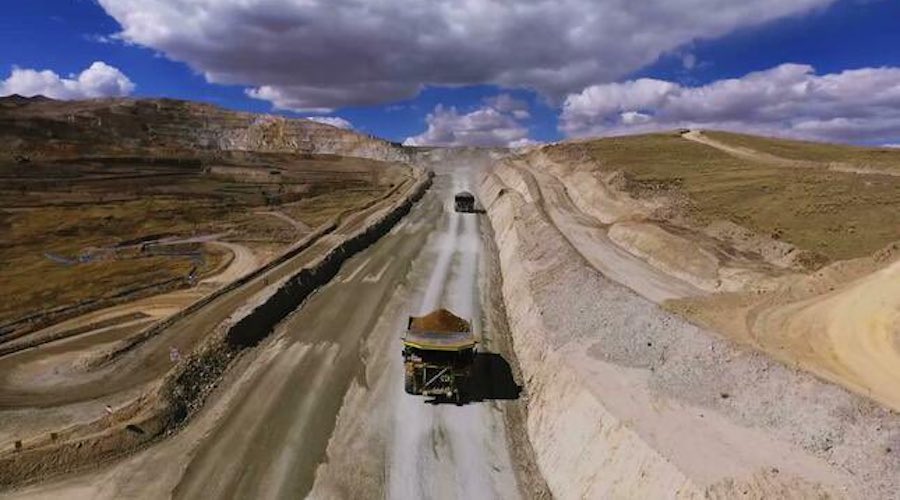
Chinese miner MMG Ltd expects to invest $2 billion in the next five years to expand its troubled Las Bambas copper mine in Peru and is eyeing potential acquisitions to further increase production, an executive said on Tuesday.


Las Bambas General Manager Edgardo Orderique said at the Perumin mining conference that the company is hoping to double copper production by 2025 and double it again by 2030.

The mine is expected to produce 240,000 tonnes of copper in 2022, after years of production drops due to falling ore grades and social conflicts.

Peru is the world’s No. 2 copper producer and Las Bambas is one of the largest producers of the red metal in the world.

Las Bambas opened in 2016 in the Peruvian Andes, but has suffered recurrent disruptions from indigenous communities who say its vast mineral wealth has not translated into better living conditions.

Those disruptions reached a new peak this year when members of two neighboring communities settled inside Las Bambas, forcing the company to suspend all operations for over 50 days.

“The cost of the conflict since 2016 to date is of about 528 days of interrupted operations, almost a year and a half that we have gone through this situation,” Orderique said.

Most of the disruptions affected copper trucking, rather than copper mining.

Las Bambas is currently trying to build a second pit but work has been halted due to opposition from the indigenous Huancuire community, which used to own the land where the project is slated to be built.

Orderique said he hoped that the pit can be built in the “following months” to compensate for falling ore grades at its current pit.

MMG has previously said it will not go forward with the project until it can reach an enduring agreement with the Huancuire community.

(By Marcelo Rochabrun and Marco Aquino; Editing by Richard Pullin and Josie Kao)

BHP wants to expand presence in Peru, says executive
Reuters | September 27, 2022 

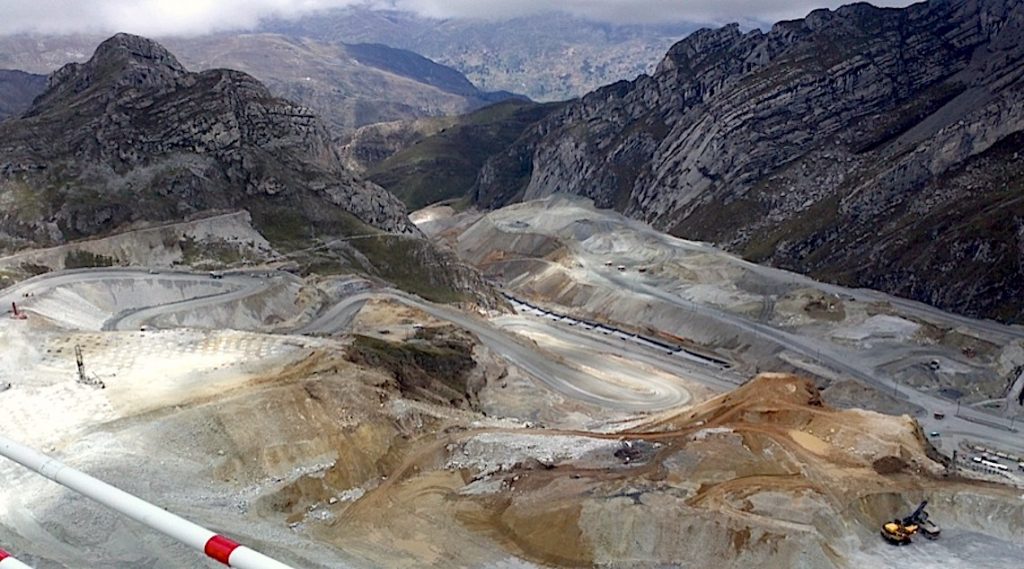
The Antamina mine in Peru is one of the largest copper-zinc mines in the world. (Image courtesy of Antamina)

Global miner BHP wants to expand its presence in Peru through exploration of new projects, Rag Udd, who heads the company in the Americas, said on Tuesday at the Perumin mining conference.


Peru is the world’s No. 2 copper producer and BHP is a part-owner of one of its largest copper mines, Antamina.

Udd added that BHP will invest $12 million on exploration in the next 10 months and that it is evaluating six potential projects.

Despite falling prices in recent months, Udd said he remains optimistic about future demand for copper amid an energy transition away from fossil fuels.

“Peru has all the potential to grasp that opportunity and unleash a new positive cycle,” Udd said, adding the country has maintained “stable” macroeconomic fundamentals in recent years.

BHP is also the operator of the world’s largest copper mine, Escondida in Chile.

(By Marcelo Rochabrun and Marco Aquino; Editing by Jonathan Oatis)

Sierra Metals halts 2022 production and finance guidance on Peru mine blockade

Cecilia Jamasmie | September 23, 2022 | 

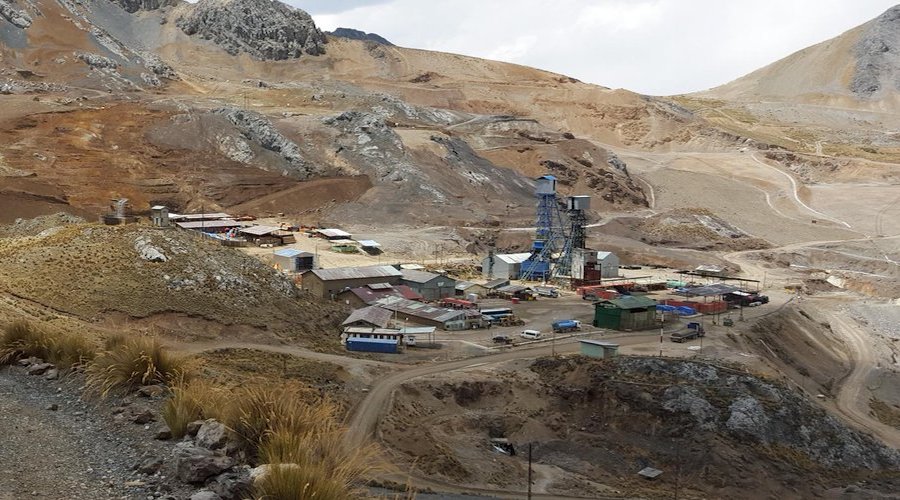
Yauricocha copper mine. (Image courtesy of Sierra Metals | Twitter.)

Sierra Metals Inc. (TSX: SMT) (NYSE AMERICAN: SMTS) (BVL: SMT) said a group of residents from the Peruvian town of Alis are blocking the access to its flagship Yauricocha copper mine, where production has been suspended for over a week.


The Canadian miner did not specify why community members are blocking access to the mine, but some speculate it could be tied to the death of three miners at the operation due to a mudslide on Sept. 12.

Mine production remains halted with activities limited to critical operations to ensure proper safety and maintenance, Sierra Metals said.

The Toronto-based miner noted that due to uncertainty around how long it will take to solve the dispute and the potential delay in the progressive restart of production at Yauricocha, 2022 production and financial guidance have also been suspended.

Company representatives have taken part in conversations with members of the group and are also studying requests organized by the Peruvian government.

Sierra Metals said it remained committed to the social development of its host communities, adding that it was working towards “a peaceful and expeditious resolution” of the situation.

“As a road blockade is a matter of public concern, the company has involved the local authorities for their mediation and assistance in resolving this matter,” it said in the statement.

Yauricocha is an underground mine located in western central Peru in the Yauyos province at an average altitude of 4,600 meters.

Last produced 31.8 million pounds of copper and 79.3 million pounds of zinc.
Conflicts on the rise

Mining conflicts are on the rise in Peru, the world’s No. 2 copper producer and an important producer of zinc, as empowered local communities are upping demands under the administration of leftist President Pedro Castillo, in power since July 2021.

Earlier this year, a wave of protests hit the country’s major operations, including Glencore’s (LON: GLEN) Antapaccay, the country’s sixth largest copper mine. Other operations affected were Southern Copper Corp’s Cuajone mine and MMG’s giant Las Bambas mine, which is the nation’s fourth-largest copper mine and the world’s ninth-largest.

Copper is a hot commodity due to its role in the world’s decarbonization, with experts predicting that demand for the orange metal relating to energy transition activities — clean power and electrified transport, and the infrastructure supporting them — will grow about 4% per year between now and 2040.

Traditional copper consumers, such as construction and manufacturing of heating and cooling equipment will increase their need for copper only 1.5% per year over the same period.

Goldman Sachs expects global demand for copper will begin to outstrip supplies by 2025, pushing prices to twice their current level.

BULLSHIT

Revised Colombia tax bill still puts mining investment at risk – industry group

Reuters | September 27, 2022 |

Colombia. Stock image.

A tax reform proposed by Colombia’s leftist government will put mining investment and production at risk, despite modifications to the bill announced this week, the head of the country’s mining association said on Tuesday.


Colombia’s new leftist President Gustavo Petro has said he wants to raise an additional 25 trillion pesos (some $5.6 billion) in tax revenue in 2023, before eventually adding about $11.5 billion annually for social programs to government coffers.


The government agreed on Monday to modify the reform to continue to allow oil and mining companies to deduct royalty payments from taxes in exchange for raising income taxes on them by 5% and increasing an export tax for oil and coal sold above certain threshold prices to 20%.

Oil and coal are Colombia’s principal exports and sources of national income. Petro campaigned on promises to move toward renewables and halt new oil exploration.

Juan Camilo Narino, Colombian Mining Association (ACM) president, said even the modified bill put an undue tax burden on miners, citing what he said was 90% effective tax rate.

“The tax structure must coincide with the realities of the business,” Narino told reporters. “These contributions are going to diminish and fall drastically in the short and medium-term,” he said referring to pressure the new tax regime will put on the industry.

Narino said the mining industry would contribute 48% of the revenue raised by the tax reform – some $2.62 billion.

The bill may compromise production of minerals, especially coal, Narino added, and reduce foreign investment by up to 17%.

“It puts at profound risk the viability of the Colombian mining sector, future investments and most seriously, the stability of 640,000 families” involved in the industry, he said.

Coal exports will pay the 20% tax when prices exceed $86 per tonne, based on a 20-year average, the ACM said.

The group has asked the government to remove that proposed charge in exchange for higher income tax, Narino added, similar to taxes levied on the financial industry.

Mining companies will pay 14.7 trillion pesos in taxes, royalties and high price duties this year, he said, a figure that could rise to 25 trillion pesos next year.

(By Luis Jaime Acosta and Julia Symmes Cobb; Editing by Jane Merriman)

Colombia May Shoot Itself In The Foot With Ban On Fracking

OR IT MAY KEEP THE PEOPLE HAPPY

(NOT PROTESTING)

  • Crude oil is Colombia’s largest export responsible for around a third of the Andean country’s total exports by value.

  • Colombia’s lack of proven oil and natural gas reserves, and the absence of large-scale discoveries for two-decades, points to fracking being the only viable means of sustaining its oil industry.

  • Colombia’s previous government was in favor of fracking, but the current government is looking to ban the practice altogether.

  The controversial hydrocarbon technique hydraulic fracturing, known as fracking, which sparked the U.S. oil boom catapulting that country to become the largest petroleum producer globally, is drawing considerable attention in Latin America. A major fracking boom is underway in the region’s third largest economy, Argentina, which is driving oil and natural gas production to record highs. Mexico is also embracing the controversial hydrocarbon extraction technique to boost economically crucial petroleum output. Fracking is also under consideration in Bolivia, Chile and Uruguay as Latin American economies, hit hard by the 2020 COVID-19 pandemic, struggle to boost growth and government income while reducing soaring poverty. In stark contrast the strife-torn Colombia is seeking to ban fracking with newly appointed leftwing President Gustavo Petro having campaigned on an anti-extractivist platform.

During his electoral campaign Colombia’s first ever leftwing president stated he intended to end contracting for oil exploration and ban fracking in the Andean country. This will sharply impact Colombia’s hydrocarbon dependent economy and potentially cut funding for Petro’s planned programs aimed at alleviating poverty. For over a decade Colombia has punched well-above its weight when it comes to hydrocarbon production. Despite a lack of proven oil reserves, which at the end of 2021 amounted to just over 2 billion barrels sufficient for 7.6 years of production, Colombia is Latin America’s third largest oil producer. The expansion of the oil industry over the last two decades, with annual average petroleum output exceeding one million barrels per day for the first time during 2013, saw petroleum become a key economic driver.

Crude oil is Colombia’s largest export responsible for around a third of the Andean country’s total exports by value. Data from Colombian government statistics agency, DANE, shows the Andean country exported $12.1 billion of crude oil and derivative products for the first seven months of 2022. That represents 35% of all exports, which totaled $34.6 billion, for the period, making petroleum Colombia’s single largest export. The peak oil industry body, the Colombian Petroleum Association, estimated the hydrocarbon sector (Spanish) directly contributed $20 trillion Colombian pesos to government coffers during 2021 which was a considerable increase over the $11.5 trillion generated in 2020 but less than the $26.2 trillion paid during 2019. The industry body believes that amount will rise to over $24 trillion pesos for 2022. Those numbers indicate Colombia’s oil industry is responsible for generating around a fifth of government revenue. That underscores the industry’s importance as a source of fiscal income, especially with the Petro administration planning to hike government spending on social programs in an uncertain economic environment weighed down by runaway inflation and fears of a global recession. 

Colombia’s endemic lack of proven oil and natural gas reserves, coupled with an absence of large-scale discoveries for two-decades, points to fracking being the only viable means of sustaining the Andean country’s vital hydrocarbon sector. This is especially the case with Colombia’s proven oil reserves set to expire by around 2030 and sooner if production returns to pre-pandemic levels of around 880,000 barrels per day. Since 2017 Colombia has been facing a natural gas crisis, which forced the country to start importing liquified natural gas in December 2017. That further stresses the need for Bogota to focus on bolstering energy security and expanding hydrocarbon reserves, particularly with proven natural gas reserves of nearly 3.164 trillion cubic feet only capable of sustaining production for eight years.

Fracking has long been seen as a solution to Colombia’s limited proven hydrocarbon reserves. The U.S. EIA estimates Colombia has at least 5.4 billion barrels of technically recoverable shale oil and 20.1 trillion cubic feet of shale gas in the Middle Magdalena and Llanos Basins alone. Colombia’s highest administrative tribunal the Council of State in a July 2022 ruling overturned its moratorium on hydraulic fracturing, established in 2018, and rejected a lawsuit seeking to ban fracking in Colombia. The court found that the rules implemented by the Duque administration, which left office on 7 August 2022 when Petro was inaugurated, for fracking are legal. The decision opened the door for the commencement of commercial fracking operations in Colombia.

Nonetheless, moves are afoot by Petro’s administration to ban fracking in Colombia despite the Council of State of Ruling. The Andean country’s Congress recently held a hearing for Bill 114 of 2022 (Spanish) which seeks to prohibit hydraulic fracturing of the exploitation of unconventional hydrocarbon deposits. The bill is supported by Colombia’s President whose Minister of the Environment and Sustainable Development Susana Muhammad was quoted as stating in local media (Spanish):

“We believe that fracking and unconventional ones are not a path that accelerates the energy transition because it would delay it, has high environmental costs especially in land use, in the use of water and irrigation not known and difficult to know only, as is the impact on the very complex Colombian geology,"

For the bill to proceed it must be debated by a congressional commission and discussed in both chambers before approval and authorization by Colombia’s president.

Rising uncertainty surrounding fracking saw Colombia’s state-controlled energy company Ecopetrol request permission (Spanish) from the industry regulator, the National Hydrocarbons Agency (ANH – Spanish initials), to suspend its two fracking pilots for 90-days. Ecopetrol, which is the operator, partnered with ExxonMobil to develop two fracking projects in the Middle Magdalena Valley, near the municipality of Puerto Wilches, known as Kale and Platero. The pilots are attracting substantial opposition from the local community, primarily over concerns regarding water contamination. A Barrancabermeja court ruled in the favor of a community organization which sought to end the projects on the basis that Ecopetrol had not consulted with the local community as required by Colombian law. The Administrative Court of Santander later overruled that decision finding the request for prior consultation by the local Afrowilches community was inadmissible. Those events indicate that even if Bill 114 of 2022 is not passed into law considerable opposition to fracking will continue in Colombia, making its introduction fraught with uncertainty, thereby deterring the required investment from energy companies.

By Matthew Smith for Oilprice.com