Wednesday, January 25, 2023

‘It’s an Employer’s Market’: Tech layoffs may have turned the Great Resignation into the Great Re-Signing

Alexandra Ross
January 23, 2023


The spate of big-tech layoffs has once again upended the dynamic between employers and workers, workers and executives say, leading to prolonged job searches and widespread fear and concern among many in the industry.

“It’s an employer market after years of employees having the benefit of working from home [and] more jobs with higher wages and perks,” said Angela Bateman, who is looking for work after being fired from education technology company Osmo in November. “Employers reassert their dominance – Disney DIS, +2.14%, Google GOOGL, +1.81% GOOG, +1.94%, Meta META, +2.80%, Apple AAPL, +2.35%, Snap SNAP, +2.10%
[are] Ask workers to be on site three or four days a week.”

On Friday, Alphabet Inc.’s Google became the latest tech giant to add to the uncertainty by announcing 12,000 job cuts just two days after Microsoft Corp. MSFT, +0.98% announced 10,000 job cuts. The two join a long list of companies that have announced layoffs in recent months, including Salesforce Inc. CRM, +3.05%, Facebook parent Meta Platforms Inc., Amazon.com Inc. AMZN, +0 .28%, Cisco Systems Inc. CSCO, +1.54%, Intel Corp. INTC, +3.59%, HP Inc. HPQ, +2.47%, Coinbase Global Inc. COIN, +1.45%, Spotify Technology Inc. SPOT, +2.07% and Snap Inc.

As laid-off workers struggle to land new jobs, many executives believe it could increase people’s willingness to stay with their current companies. Former Cisco CEO John Chambers sees it this way: The Great Resignation, in which tech workers jumped from one high-paying job to another has evolved into the Great Recommitment.

“A career used to last two years in a company. It’s been that way for more than a decade,” Chambers, who is now a venture capitalist, told MarketWatch. “Now the last to be hired is the first to be fired. There has been a shift towards employees re-evaluating their engagement with companies, with an emphasis on culture. There is dramatically less turnover.”

But while tech executives foresee a renewed commitment to jobs, ordinary workers see escalating tensions amid job cuts, the mandate to work in the office at least three days a week and the expectation of higher production with fewer resources. They say they are now more inclined to stay with their employers and forgo the job hopping of recent years, rather than embark on a job hunt that could take up to a year with fewer vacancies and increased competition.

“There’s fear of competing with big tech guys because I think their profile is a ‘safe’ bet for scared companies who may be less willing to take risks with people who aren’t from established brands,” said Alex Gammelgard, a San Francisco marketing executive who previously worked at TrustedHealth. In her months-long search for a job, Gammelgard told MarketWatch, she’s “found pretty much everything is closed” since Thanksgiving.

“I see on LinkedIn that within a week a position will have 100 to 500 applicants, which is way more than normal, which shows the impact of the layoffs at Big Tech,” she said.

Altogether, more than 56,500 tech jobs — nearly all in the US — have already been shed this year, according to Layoffs.ai data, and more layoffs are on the horizon. There were 97,171 job cuts in 2022, up 649% from the previous year, consultancy Challenger, Gray & Christmas reported.

Also read: “It wasn’t sustainable or real”: Tech layoffs are approaching Great Recession levels

The sudden downsizing of tech jobs has raised concerns about employers after years of perks and breakneck hiring. According to a survey of 2,162 people conducted in late November, 69% of recently laid-off workers have received no support from their previous employers, and 60% said they were less likely to trust their next employer US workers by BizReport.

“After Meta announced they were cutting 11,000 [in November], others in Silicon Valley soon followed,” Bateman told MarketWatch. “It seemed to open a floodgate; They were just waiting to be cut.”

“Muskification” changes perspective

The layoffs are likely to continue, tech executives warn, as companies scale back activity amid slowing sales. Workers laid off by smaller companies face the prospect of competing for jobs with the tens of thousands of former big tech workers who are now looking for jobs.

Todd Erickson has applied for 70 open positions since he was fired from start-up Phase Change Software in October after six years with the company. He’s only heard of 10 of those jobs.

“It’s been a rough few months,” Erickson told MarketWatch. “I’ve had a role that required me to do whatever needs to be done, including technical writing, legal work, and web development, and haven’t developed any expertise that would be helpful in this job market.”

Adding to the frustration is that job listings on job boards appear to be nothing more than “fishing expeditions,” non-existent job listings from employers looking for unrelated talent Description, said Gammelgard and others.

First take: Big Tech’s layoffs aren’t as big as they seem

A consequence of the current job decline in the tech industry is that some job seekers may have to look for work outside of the industry, predicted Schiffer. “The ‘muskification’ of workforce compression is causing tech companies to reconsider the use of human capital,” he said, referring to Elon Musk’s moves since buying Twitter in October. “We find ourselves in a cycle of contraction after years of overstaffing.”

“The 2023 story is a push for more value and efficiency,” said Dennis Woodside, CEO of Freshworks Inc. FRSH, +1.53%, a veteran of Google, Impossible Foods Inc., Dropbox Inc. DBX, +2, 59% and Motorola Inc.

The elimination of 22,000 jobs at Google and Microsoft last week “exacerbates the problems for tech job seekers” who aren’t developers or programmers, Eric Schiffer, CEO of private equity firm Patriarch, told MarketWatch. “There’s a lot more pain to come.”

Tech workers may be needed more in non-tech companies

The news isn’t all bad, however. Other industries are coveting tech workers, economists say, and the job market remains strong, with an unemployment rate of 3.5% in December, a decade low, according to the Job Openings and Labor Turnover Survey, reported monthly by the US Bureau of Labor work statistics. Even Silicon Valley added nearly 13,000 new workers in December and had an unemployment rate of 2% that month, according to analysis by the Silicon Valley joint venture’s Institute for Regional Studies.

“The other point I’ve been trying to make for two years [was that] the rest of the economy was tech starved,” Federal Reserve Governor Christopher Waller said at the Council on Foreign Relations in New York on Friday. “They couldn’t get enough technicians. You know what? Now for the rest of the economy there are a lot of technicians they can hire to get things done.”

He added, “So I think there’s going to be quite a redistribution of tech talent in the rest of the economy, unlike maybe some other sectors.”

Damien Daurio, who lost his job at DirecTV last summer, found employment as a software contractor for Charles Schwab Corp with the help of recruiters and placement companies. BLACK, +0.91%. Because of his ability to manage software projects, Daurio said it was easier to find another job than it might have been for a non-technical position.

Meanwhile, others who recently quit tech jobs are seeing opportunity in the current climate. Donna Estrin left the cybersecurity industry in October and started a consulting firm in November. “In my opinion, if people are laid off, companies will hire contract workers and not replace full-time workers,” she told MarketWatch. “Companies still have work to do, so they need consultants.”

Muddu Sudhakar, CEO of software company Aisera, expects layoffs into at least the first half of 2023 and credits AI-enabled technologies like his company’s that have enabled him to increase hiring.

But not all job seekers succeed. The prospects are “pretty bleak,” said Erickson, who postponed knee surgery because he lacks full health insurance. “I just applied to Microsoft,” he said, “but I doubt that will work with 10,000 layoffs.”

MarketWatch contributor Gregory Robb contributed to this article.
Crypto Exchange Gemini Cutting Another 10% of Staff: Report

Nelson Wang
Mon, January 23, 2023 at 10:31 AM MST·1 min read

THE WINKLEVOSS BROS

In at least its third round of layoffs since June, crypto exchange Gemini is shedding another 10% of its staff, according to an internal message viewed by The Information.

Gemini has been swept up in the bankruptcy of crypto lender Genesis Global Capital and has been unable to pay out funds to its Earn account holders. Gemini's founders, Cameron and Tyler Winklevoss, have engaged in a Twitter war with Digital Currency Group, the parent company of Genesis, over the $900 million owed to Earn customers. (DCG is also the parent company of CoinDesk.)

“It was our hope to avoid further reductions after this summer, however, persistent negative macroeconomic conditions and unprecedented fraud perpetuated by bad actors in our industry have left us with no other choice but to revise our outlook and further reduce headcount,” wrote Cameron Winklevoss, the president and co-founder of Gemini, in the internal message.

Gemini declined to comment on this story.

Gemini had previously cut 10% of its staff in June, followed by more layoffs in July, according to TechCrunch. Gemini’s headcount was down overall from 1,100 at the start of 2022 to between 650 and 700 people near the end of the year, according to The Information.

Many large crypto companies, including Coinbase, Crypto.com, Blockchain.com and ConsenSys, have cut staff in recent weeks amid the ongoing crypto winter. CoinDesk estimates nearly 27,000 jobs have been lost across the industry since April of last year.

JPMorgan CEO paid $34.5 million in 2022, Genesis files for bankruptcy, LIV Golf inks broadcasting deal

Bankrupt crypto lender Genesis plans to seek mediation if creditor deal isn't struck this week


David Hollerith
·Senior Reporter
Mon, January 23, 2023 

Crypto lender Genesis filed for bankruptcy last Thursday, but its lawyers have been in negotiations with creditors and its largest borrower — parent company Digital Currency Group (DCG) — for more than two months.

And in bankruptcy court on Monday afternoon, lawyers for Genesis said a deal with creditors still hasn't been reached and said if an agreement can't be reached "within the next few days," the firm is will ask the judge to appoint a mediator.

"We have a clear roadmap for this Chapter 11 case," Genesis counsel Sean O'Neal said. "We've filed a plan, and that plan is confirmable on its face."

Court documents filed the day after its bankruptcy petition show Genesis already had a restructuring plan drawn up, with hopes to sell its assets as soon as May. Genesis held $5.1 billion in liabilities in the weeks following its withdrawal freeze on Nov. 16, 2022.

The company's largest creditor is the combined 340,000 Gemini Earn customers who are owed $795.5, million according to a list of Genesis's largest creditors. Those customers have formed an "ad hoc" committee represented by law firm Kirkland & Ellis. Another group of around 60 institutional creditors, represented by Proskauer Rose, is owed $1.5 billion.

As its largest borrower at petition date, DCG owes Genesis at least $1.65 billion, including approximately $575 million in loans due in May 2023 and a $1.1 billion promissory note due in June 2032.


Genesis logo displayed on a phone screen is seen through the broken glass in this illustration photo taken in Krakow, Poland on December 1, 2022. 
(Photo by Jakub Porzycki/NurPhoto via Getty Images)

Prior to its bankruptcy filing, no agreement was reached on how Genesis should pay back creditors. In its negotiation with creditor groups and DCG, lawyers for Genesis said they had already gone through "15 iterations of various term sheets" since the lending business eliminated customer withdrawals in November.

"If we don't reach a conclusion by the end of this week, at least to a deal in principle, we will seek the appointment of a mediator," a lawyer for Genesis told the judge.

Working with financial advisor Moelis, Genesis hopes to find a buyer or financing source with an auction for its business targeted for 90 days after its Thursday petition.

If successful, creditors would see a recovery in the form of cash, digital assets, and equity shares from brokerage accounts in addition to proceeds from the auction sale.

As part of the deal, DCG is also proposing partly paying back Genesis creditors with its own equity.
'Run on the bank'

In the spring of last year, Genesis was forced to liquidate collateral for several customer loans, including $1.2 billion borrowed by defaulted crypto hedge fund Three Arrows Capital.

The company took a $1.1 billion loss on those loans, which DCG assumed in return for a promissory note.

Five months later, crypto exchange FTX imploded, taking with it $175 million in Genesis funds. As a declaration court document from Genesis' interim CEO Derar Islim revealed last Friday, customers attempted to recall $827 million in loans, which he called a "run on the bank."

Genesis has also hired its law firm Cleary Gottlieb to investigate transactions between the company and "DCG entities." The investigation includes focus on approximately $850 million in unsecured loans and the $1.1 billion promissory note Genesis Global Capital lent to DCG, according to a court filing.

In two open letters, Gemini co-founder and president Cameron Winklevoss claimed DCG CEO Barry Silbert and others misled Gemini in disclosing details of Genesis' financial health.

A representative for the U.S. Office of the Trustee said they had concerns related to Genesis' newly appointed board of directors and the committee leading its internal investigation, as both were appointed by DCG.

Genesis filed for Chapter 11 in the Southern District of New York on January 19. The case's court docket is available via Kroll.
Date Set for Oral Arguments in Grayscale’s Appeal of SEC’s Bitcoin ETF Decision

Lyllah Ledesma
Tue, January 24, 2023 


The District of Columbia Court of Appeals has set a date to begin hearing oral arguments in Grayscale Investment’s appeal of the Securities and Exchange Commission’s (SEC) decision to deny the conversion of the Grayscale Bitcoin Trust (GBTC) into an exchange-traded fund (ETF), according to a court order filed Monday, as reported by CNBC.

The arguments will take place at 9:30 a.m. ET on March 7, which is sooner than Grayscale had anticipated.

In a tweet on Tuesday, Grayscale said that “we previously anticipated oral arguments to be as soon as Q2 2023, so having them scheduled to begin on March 7 is welcome news.”

Separately, Grayscale CEO Michael Sonnenshein reiterated on CNBC on Tuesday that the company would consider making a tender offer to redeem shares of the trust if it runs out of options to convert the trust into an ETF.

“If we do exhaust all the judicial options to challenge the SEC stance on this product, we would entertain working constructively with regulators and shareholders to offer a tender offer,” Sonnenshein told CNBC.

Sonnenshein did not disclose details of the potential tender offer, but in a letter to shareholders in December Grayscale noted that one option is to tender an offer for up to 20% of outstanding GBTC shares.

Grayscale’s application to convert GBTC into an ETF was rejected by the SEC in June. Grayscale shortly thereafter filed suit against the SEC, arguing that the agency's logic for denying the application was “flawed” and “inconsistently applied.

GBTC shares have been trading at a discount to the price of the underlying asset, bitcoin, since February 2021. It is currently trading at a 41% discount, according to data from TradeBlock.

Grayscale is owned by Digital Currency Group, which also owns CoinDesk. Grayscale has been facing scrutiny over its financial health following the collapse of FTX as it attempts to raise capital. Genesis Global Capital, Grayscale’s sister company, filed for bankruptcy protection last week.
MONOPOLY BUSTING
Justice Department sues Google to break up its advertising empire
Alexis Keenan and Daniel Howley
Tue, January 24, 2023 at 11:07 AM MST·7 min read

The U.S. Department of Justice and eight states filed an antitrust lawsuit against Google (GOOG, GOOGL) on Tuesday, seeking the breakup of the company's online ad business.

This latest action comes more than two years after the agency and a group of state attorneys general joined in another suit alleging Google's search and search advertising businesses violate U.S. antitrust laws.

The Justice Department’s alleges that Google's suite of online advertising tools prevents competitors from entering the online advertising market and blocks publishers from monetizing their own content.

The department further claims that Google is illegally using, or trying to use, its monopoly power, and should be required to divest a host of entities that allow it to carry out the allegedly offending behavior.


Google CEO Sundar Pichai speaks during the Google I/O 2019 keynote session at Shoreline Amphitheatre in Mountain View, California on May 7, 2019. 
(Photo by Josh Edelson / AFP)

"Google’s anticompetitive behavior has raised barriers to entry to artificially high levels, forced key competitors to abandon the market for ad tech tools, dissuaded potential competitors from joining the market, and left Google’s few remaining competitors marginalized and unfairly disadvantaged," the complaint states.

"Google has thwarted meaningful competition and deterred innovation in the digital advertising industry, taken supra-competitive profits for itself, and prevented the free market from functioning fairly to support the interests of the advertisers and publishers who make today’s powerful internet possible."

The DOJ is specifically calling for Google to divest at least its Google Ad Manager suite, including both Google’s publisher ad server, DFP, and Google's ad exchange, AdX.

Shares of Google parent Alphabet (GOOG, GOOGL) fell as much as 1.6% following the news.

Pennsylvania State University law professor John Lopatka said the stakes for Google increase with the Justice Department's new lawsuit.

"The multiple actions expand the scope of the litigation for Google, and the greater scope somewhat increases its litigation burden," Lopatka told Yahoo Finance. "Reaching negotiated settlements becomes harder as the number of plaintiff groups increases."

Lopatka adds that a DOJ victory, as opposed to a victory by the states, would dramatically benefit private plaintiffs by establishing Google's liability for anticompetitive conduct that injured them.

A victory by the states would indeed bolster the cases of private plaintiffs, but not nearly as much as would a DOJ victory, as private plaintiffs would need to show only damages to impose liability for Google's anticompetitive conduct.

Yahoo Finance has reached out to Google for comment and will update this story when it receives a response.

Prior to the DOJ's filing, Alphabet reportedly sought to quell the DOJ's antitrust concerns by offering to split up its ad auction and ad placement businesses. That offer, according to The Wall Street Journal, was to maintain the would-be separate entities under the company's larger, parent company, Alphabet.

Google has for years faced scrutiny from domestic and overseas lawmakers and regulators concerning its dominance across multiple online and mobile markets.

In the U.S, the firm has faced investigations by the DOJ, the U.S. Federal Trade Commission, and state attorneys general over suspicions that the company’s search and digital advertising businesses operate as illegal monopolies.

In 2021, dozens of attorneys general sued the company, alleging that it was operating illegal monopolies in the market for Android app distribution by imposing technical barriers that prevent third parties from distributing apps outside the Play Store.

Over a decade ago, the company was fined roughly $10 billion (8.6 billion euros) by the European Commission, the European Union’s antitrust watchdog. Those fines resulted from three separate antitrust violations alleged by the Commission.

In 2017, the company was hit by the Commission for allegedly abusing its market dominance in search, and again in 2018 for allegedly abusing its market power in the mobile space by preloading its own apps on new Android phones. And in 2019, the company was again fined for limiting its rivals from working with companies that already had deals with Google’s AdSense platform.
Advertising

Google’s digital advertising business has become an antitrust target due to its unrivaled size and volume. The company holds a commanding lead in the space and controls some of the most important links in the online advertising chain — centrally its DoubleClick platform, a premier tool for online publishers, helping them create, manage, and track online marketing campaigns.

Acquired in 2007, DoubleClick was cited by Sen. Elizabeth Warren (D-MA) as one of the major acquisitions Google should be forced to unwind to improve competition in the advertising space.

Google, and competitor Facebook (META), have also been lambasted for the impact their outsized share of the online advertising market has on the media industry. With Google competing directly with online publishers for digital ad space, publishers have been forced to significantly cut back newsroom staff, sell themselves off, or close down entirely.

In Feb. 2021, Australia passed legislation that forces Google and Facebook to negotiate payment deals with media companies for using their content. Previous attempts to force Google to pay for media it benefits from ended in failure. In 2014, Spain passed legislation that would force internet sites to pay for content it used from publishers including headline and news snippets.

But rather than comply, Google simply shut down its Spanish Google News site. Users could still find articles in Google’s search results, but couldn’t use the Google News platform to get news from Spain-based publications anywhere in the world.
Search

Google is already defending itself against the DOJ's lawsuit alleging illegal dominance in the online search industry. As of Dec. 2022, Google controlled more than 92% of the world’s search traffic market share, according to StatCounter. In its lawsuit filed in Oct. 2020, the Justice Department and state attorneys general allege the company is unlawfully maintaining monopolies through anticompetitive and exclusionary practices in the search and search advertising markets.

According to the Justice Department, Google's exclusionary agreements, "collectively lock up the primary avenues through which users access search engines, and thus the internet, by requiring that Google be set as the preset default general search engine on billions of mobile devices and computers worldwide and, in many cases, prohibiting preinstallation of a competitor."

Google CEO Sundar Pichai testifies before the House Judiciary Subcommittee on Antitrust, Commercial and Administrative Law during a hearing on "Online Platforms and Market Power" in the Rayburn House office Building on Capitol Hill, in Washington, U.S., July 29, 2020. Mandel Ngan/Pool via REUTERS

In 2013, the FTC declined to take action against Google after an agency investigation of its search business. The decision followed a $22.5 million fine imposed on the company the prior year to settle claims that it violated a privacy settlement with the FTC agreeing that it would avoid placing “cookies” on and serving targeted advertisements to users of Apple’s competing browser company Safari.
Self-preferencing

Accusations that Google favors its own products or reduces the visibility of competitors in its search results have also been circulating for years.

One of the company’s biggest critics is Yelp, which, along with TripAdvisor, has hit at the company for placing Google-sourced ads above algorithmically-defined search results in the Google search page.

In July 2020, The Wall Street Journal reported on its investigation into Google’s search algorithm, finding that the tech giant favored its own YouTube videos in search results over those from competing video streaming services.

Alexis Keenan is a legal reporter for Yahoo Finance. Follow Alexis on Twitter @alexiskweed.
‘I’m devastated. I’m sad, angry’: Laid-off Google employees vent about being unable to say goodbye to colleagues and feeling ‘blindsided’ by ‘random’ culling

Prarthana Prakash
Mon, January 23, 2023 

Many Google employees were having a normal day on Jan. 20 before their lives were turned upside-down. Some workers had gotten their jobs at the tech giant after years of dreaming about it, and others had been there for over a decade.

Then suddenly that morning Google’s parent, Alphabet, announced that it was cutting 12,000 jobs. In doing so, it joined a long list of tech companies that have eliminated scores of employees in recent months.

An outpouring followed on social media, including the professional networking service LinkedIn. Employees wrote about feeling a mix of gratitude, anger, and uncertainty for what’s next.

Justin Moore had worked at Google for more than 16 years, according to his LinkedIn profile, before he was laid off last Friday. He wrote in a post that being among those who had lost their jobs showed that companies viewed employees as “100% disposable.” He also said he had not received any further information beyond the email stating his role as an engineering manager was impacted by the layoff.

Another employee, Blair Bolick, a recruiter for the business intern program at Google, wrote about the impersonal manner in which the news of layoffs was communicated.

“I can’t feel gratitude in this moment for a company that I gave so much of myself to, but felt it appropriate to part ways by locking me (and 12,000 of my colleagues) out of my corporate account at 4am,” she wrote in a LinkedIn post.

“I’m devastated. I’m sad, angry,” said Bolick, who had been at the company for over four years.

When employees lost access to their company communication channels, it was harder for them to bid farewell to colleagues.

A Google product manager, Manas Minglani, who was impacted by the layoffs wrote that he couldn’t say his goodbyes. His access to work devices had been revoked the morning of the layoffs.

In a TikTok video, Nicole Tsai, who was a program manager at Google, said that the layoffs were “random” and that employees were “blindsided,” as the decision of who stayed or was laid off didn’t appear to be performance-based.

To be sure, layoffs are never easy for employees or the companies that implement them.

Google’s most recent quarterly earnings, announced in October, missed analyst expectations. Afterward, the company’s leadership said it would slash expenses and slow its hiring in the subsequent quarter.

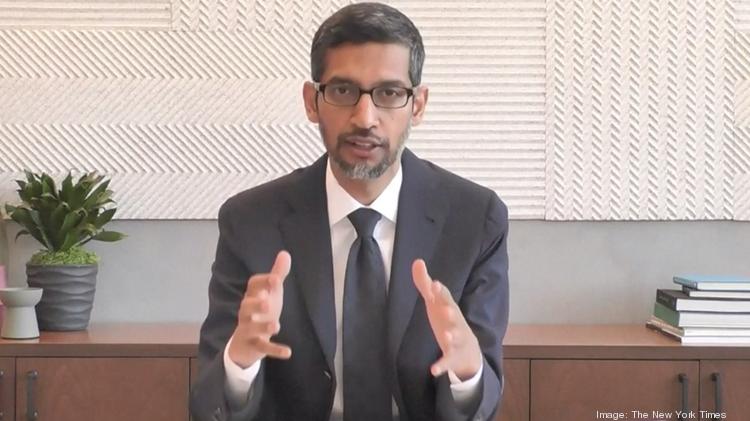
In the email sent to employees early Friday, Google CEO Sundar Pichai wrote that he takes “full responsibility for the decisions that led us here.”

“These are important moments to sharpen our focus, reengineer our cost base, and direct our talent and capital to our highest priorities,” he wrote.

Google did not immediately respond to Fortune’s request for comment.


A Google engineer of 8 years says his 'spidey-senses' detected incoming layoffs — and felt 'isolated' when his 'faceless' severance email arrived

Story by kduffy@insider.com Kate Duffy

Alphabet CEO Sundar Pichai announced mass layoffs at Google on Friday. AP© AP
A laid-off Google engineer said his "spidey-senses" detected incoming job cuts at the company.
Zac Bowling told Insider he'd been laid off before and was familiar with the build-up.
He said Google's severance email was "cold," "faceless," and made him feel "isolated."

A laid-off Google engineer said his "spidey-senses" detected incoming job cuts at the company — and the "cold" severance email that followed left him feeling "isolated."

Zac Bowling, who worked at Google for almost eight years, told Insider he suspected layoffs were around the corner because of various changes at the tech giant in recent months and years. He said he's been laid off twice before from other companies and was familiar with the build-up.

According to Bowling, Google had put in place travel restrictions for some employees, cut certain budgets, and implemented a temporary hiring freeze. He said "fun budgets" — money allocated annually for team-building — had been slashed. Over the eight years he worked at Google, Bowling said the perks became "less interesting."

A wave of layoffs that hit dozens of US companies toward the end of 2022 shows no sign of slowing down into 2023.

Google is the latest tech giant to slash thousands of workers. In a memo sent to staffers on Friday, the company announced it will layoff an estimated 12,000 employees, or 6% of its global workforce. Sundar Pichai, CEO of Google parent company Alphabet, wrote in the memo the reductions come after a "rigorous review" of the business and will "cut across Alphabet, product areas, functions, levels and regions."

"Over the past two years we've seen periods of dramatic growth," Pichai said. "To match and fuel that growth, we hired for a different economic reality than the one we face today."

However, Google is not the first major corporation to make significant cuts in the new year: Fellow tech companies, including Amazon and Salesforce, and finance behemoths, like Goldman Sachs, announced massive layoffs in the first weeks of 2023 amid a continued economic downturn and stagnating sales.

The downsizing followed significant reductions at companies including Twitter and Meta late last year.

The layoffs have primarily affected the tech sector, which is now hemorrhaging employees at a faster rate than at any point during the pandemic, the Wall Street Journal reported. According to data cited by the Journal from Layoffs.fyi, a site tracking layoffs since the start of the pandemic, tech companies slashed more than 150,000 in 2022 alone — compared to 80,000 in 2020 and 15,000 in 2021.

Here are the notable examples so far in 2023: See More

But he said he didn't think he'd be among the roughly 12,000 people that Google announced Friday would be laid off from its global workforce.

Insider has seen a copy of Bowling's severance letter.

Google's layoffs followed similar moves by Meta, Microsoft, Amazon, and other major tech firms.

"I had a feeling that we would follow the trend and it's a good excuse for Google to do the same thing that the other big companies are doing," Bowling said.

No goodbyes — just a "cold" email

Bowling said he woke up oblivious to his fate on the day layoffs were announced. After he made coffee, he checked his personal laptop to see that his manager had sent him a LinkedIn message saying they were sorry to hear about the news.

Bowling said he was confused and checked his work email on his phone, but his account was missing. At that point, his heart "immediately sank," he said. When he logged onto his work laptop, his password didn't work for his corporate email and other work accounts.

An hour later, at 9 a.m., he received on his personal account an email from Google informing him that he no longer had a job at the company. Bowling described the email as "cold," "impersonal," and "faceless."

"It's very isolating in that you just feel all alone all of a sudden because you just have no connection back to anything," Bowling said. "You don't even get to say goodbye."

Google didn't immediately respond to Insider's request for comment, made outside normal US operating hours.

A company spokesperson previously referred Insider to CEO Sundar Pichai's blog post announcing the layoffs, saying it was "all we have to share at this time."

Chris McDonald, another laid-off Google engineer, told Insider he was in "a state of shock" after receiving his severance email at 3 a.m. on Friday.

Another ex-Google employee described being laid off as a "slap in the face."

Staff still at Google asked leadership at a town hall meeting about finding "psychological safety" at the company.


Google is cutting workers in the Bay Area, including at the Googleplex

Sundar Pichai, the CEO of Alphabet and Google, said the latter's job cuts are needed to refocus the company.

By Max A. Cherney – Senior Reporter, Silicon Valley Business Journal
 Jan 25, 2023

Google LLC is cutting more than 1,600 jobs in the Bay Area and more than 1,800 statewide as part of its 12,000-person layoffs.

The biggest hits are coming at its headquarters campus and surrounding offices in Mountain View, where it's laying off at least 1,436 workers, according to a batch of letters Anna Raske, Google's vice president for Googler and community relations, sent to state employment officials Friday. The layoffs are set to begin March 31, Raske said.

"Separations resulting from this action are expected to be permanent," she said in the letters, which were made public Tuesday.

Google representatives did not respond to a request for comment on the cuts.

As part of the layoffs, the search giant, a subsidiary of Alphabet Inc. (Nasdaq: GOOGL), is cutting staff in the following Bay Area cities:Mountain View: At least 1,436 people (Raske separately listed 1,447 jobs by title that were affected by the cuts) across some 87 sites.
Palo Alto: 53 people across three different sites, nearly all from subsidiary Nest Labs Inc.'s headquarters at 3400 Hillview Ave.
San Bruno: 119 people across five different sites at Google-owned YouTube LLC's headquarters campus

Additionally, Google is cutting staff in Southern California:Los Angeles: 53 peopleacross six sites
Playa Vista: 124 people across two sites
Irvine: 60 people total from two sites

All told, Google is cutting at least 1,845 employees in California. That adds to more than 15% of the overall layoffs it announced last week. The company is planning on cutting 12,000 employees in its restructuring, or about 6% of its workforce. On Monday, Alphabet CEO Sundar Pichai told employees the staff cuts would help the company get through a difficult period.

"I am confident about the huge opportunity in front of us, thanks to the strength of our mission, the value of our products and services and our early investments in AI," Pichai wrote in a memo to Google staff last week, announcing the layoffs. "To fully capture it, we'll need to make tough choices."

One engineer who was laid off told the Business Journal there weren't any warning signs within Google, only that other big tech companies have also announced substantial layoffs.

"It was even a little surreal," the former employee said. "There was a shock associated with it. It was surprising. It was a little scary, given that a lot of tech companies are doing layoffs, and tech is kind of in flux right now due to the looming recession."

Ahead of the job cuts, Google (Nasdaq: GOOGL) had 36,603 local employees, which made it the top employer in Silicon Valley, according to Business Journal research.


Employers, Silicon Valley
Ranked by Local employee headcoun

RankBusiness NameLocal Employee Headcount1 Alphabet/Google LLC 36,603
2 Apple Inc. 25,000
3 Tesla Motors Inc. 22,000
View This List

Google CEO Sundar Pichai defends layoffs at 'town hall,' says exec bonuses will be cut


Pager Duty, Innovaccer and UberFreight announce layoffs


Google is among the many large tech employers that have announced significant job cuts in recent weeks. Amazon.com Inc. last week said it is planning to cut 261 employees in the Bay Area. Earlier this month Intel told state and local officials that it planned to cut over twice the number of jobs in Santa Clara than it previously expected.


Google CEO Sundar Pichai says he will take less pay this year as he joins JPMorgan’s Jamie Dimon and Apple’s Tim Cook in taking a compensation hit


Prarthana Prakash
Tue, January 24, 2023 


Tech companies were at their heyday not too long ago. Anywhere you looked, it was jobs galore and the stocks of tech companies were performing great too.

That was until a major stock market plunge and a slew of layoffs took over the tech world. Seemingly powerful giants like Meta, Amazon, and Microsoft weren’t spared from it, and as of last week, neither was Google.

Last week Google’s parent company, Alphabet, announced that it would cut 12,000 jobs across the company. The news was unexpected for many employees, some of whom took to social media to describe the process as “random” and say they felt “100% disposable.”

The announcement comes at a time of economic uncertainty and period of tumult for tech companies across the board. Close to 60,000 jobs have been eliminated in 2023 so far from 174 tech companies, according to Layoffs.fyi, a layoffs tracking website.

As questions piled up over the weekend, Google CEO Sundar Pichai addressed the entire company in a meeting on Monday to answer questions, and announced then that top executives would take a pay cut this year as part of the company’s cost reduction measures, Business Insider reported.

Pichai said that all roles above the senior vice president level will witness “very significant reduction in their annual bonus,” adding that for senior roles the compensation was linked to company performance. It was not immediately clear how big Pichai’s own pay cut would be.

Google did not immediately return Fortune’s request for comment.

Pichai’s move to cut the pay for senior executives comes only weeks after Apple’s Tim Cook announced his compensation would be 40% lower amid shareholder pressure. The iPhone maker had a strong 2022 and remains one of the few tech behemoths that hasn’t announced layoffs yet.

And last week, the board of JPMorgan Chase, an investment bank, announced that it would do away with the “special award” component of CEO Jamie Dimon’s pay. The one-off payment for Dimon paid the previous year amounted to nearly $50 million, and this year he will be making $34.5 million.


Billionaires Worth $123 Billion Buy Stake In Kushner’s Thrive


Brian Chappatta and Sarah McBride
Tue, January 24, 2023 


(Bloomberg) -- A group of global billionaires worth at least $123 billion are buying a stake in Thrive Capital, the venture-capital firm founded by Josh Kushner.

India’s Mukesh Ambani, Brazil’s Jorge Paulo Lemann and France’s Xavier Niel will join KKR & Co. co-founder Henry Kravis and Walt Disney Co. Chief Executive Officer Robert Iger in investing $175 million to purchase a 3.3% stake in Thrive.

“These extraordinary operators have built storied institutions, achieved geographic preeminence, ushered beloved brands to even greater heights, and pioneered entirely new industries,” Thrive said in a statement on Tuesday posted on Medium.

The deal values Thrive at $5.3 billion, up from $3.6 billion in 2021, when it sold a stake to a unit of Goldman Sachs Group Inc., according to a spokeswoman for New York-based Thrive. Its total assets under management reached $15 billion last year.

Thrive has repurchased the stake sold to Goldman Sachs and the stake held by the new syndicate is the same, Thrive said on Medium. The Wall Street Journal first reported details of the stake sale.

The investment represents a collection of some of the richest people from across the globe.


Ambani is the world’s 12th richest person, with a $84.7 billion fortune, according to the Bloomberg Billionaires Index. Lemann, with a net worth of $21.1 billion, is Brazil’s wealthiest individual. Kravis is worth $9.5 billion and Niel has an $8.1 billion personal fortune, according to the index.

A lot of these folks have been involved in my life for quite a bit of time,” Kushner, 37, said in an interview with the Journal. “Now they actually have a vested stake in the firm’s success.”

Thrive was founded in 2009 by Kushner, the younger brother of Jared Kushner, the son-in-law of former President Donald Trump who served as a senior White House adviser under his administration.

It has invested in firms including Oscar Health Inc., Compass Inc., Affirm Holdings Inc., Opendoor Technologies Inc., Unity Software Inc., Hims & Hers Health Inc. and SKIMS, an underwear company created by Kim Kardashian.


GLEEFULLY REPORTED BY RW NATIONAL REVIEW

Biden Human-Rights Pick Withdraws Following GOP Pushback over Anti-Israel Statements
PRO PALESTINE/PRO BDS ARE NOT ANTI-SEMETIC

Ari Blaff
Tue, January 24, 2023 


Sarah Margon, the former Washington director of Human Rights Watch (HRW), withdrew her application to serve as assistant secretary of state for democracy, human rights, and labor following Republican pushback.

President Joe Biden nominated Margon in April 2021, prompting pushback from Senate Foreign Relations Committee Republicans, particularly ranking member Jim Risch of Idaho.

Risch highlighted Margon’s previous comments about Israel, particularly her ostensible approval of a one-state solution and support for boycotting Israel, as leading factors disqualifying her candidacy.

When Airbnb decided to remove listings from Israeli towns in disputed territories, Margon applauded the company “for showing some good leadership here. Other companies should follow suit.”


Margon had earlier expressed her support for the United Nations Relief and Works Agency (UNWRA), a dedicated body overseeing Palestinian refugees, that has been repeatedly cited for promoting and distributing antisemitic textbooks to children.


“The beginning of a new Congress provides the president with opportunities to reassess all nominees who did not get confirmed before the end of the year. There are many qualified people on both sides of the aisle for positions in government, and I look forward to thoroughly reviewing the nominees the president sends to the Senate,” Risch told National Review in a statement on Tuesday afternoon.


The Republican Jewish Coalition had also long opposed Margon’s nomination.

“Sarah Margon has made her career at some of the most virulently Israel-hating organizations around. For several years, she ran the Washington office of Human Rights Watch, a terribly misnamed, bitterly anti-Israel organization,” a press release from May 2021 asserted.

“President Biden and Secretary Blinken claim to oppose the anti-Israel Boycott, Divestment, and Sanctions (BDS) movement, but now they want to install a supporter of Israel boycotts in a senior role.”

However, during the nomination process, Margon denied ever supporting a boycott of Israel. “Sometimes when we retweet or say things in the heat of the moment, we do not necessarily think of the broader impact of them,” Margon said during her nomination hearing. “What I was focused on was the importance of ensuring Israelis and Palestinians could have equal protection under the law, access to democratic processes, security and prosperity. That was the thrust of my tweet.”

The struggle for Democrats on the committee to successfully pass Margon through the nomination process ultimately led her to pull her candidacy.

“At present, I don’t see a path forward for confirmation, and after 1 ½ years, it’s time to move on,” Margon said in a statement obtained by Politico. “I will continue to work on democracy and human rights, and am grateful to President Biden and Secretary [of State Antony] Blinken for their confidence in me and the honor of a nomination.”

NATIONAL REVIEW ANTI SEMITISM 

Margon worked as the U.S. Foreign Policy Director at the Open Society Foundation, funded by the billionaire George Soros.


Fellow HRW alum, the organization’s former director Ken Roth, was also embroiled in controversy this week when Harvard re-extended a fellowship invitation to him after concerns over his “anti-Israel bias.”
THE HEGEMON'S GRANDE TOUR
As Yellen woos Africa, sceptics ask 'Is the U.S. here to stay?'


 U.S. Treasury Secretary Janet Yellen visits Senegal

Tue, January 24, 2023
By Andrea Shalal and Carien Du Plessis

LUSAKA (Reuters) - U.S. Treasury Secretary Janet Yellen's three-country trip to Africa - the leading edge of a new diplomatic push by the Biden administration - aims to show the continent the United States is a true partner, one here for the long-haul.

But after decades of losing ground to China and the tumult of the Donald Trump years, when the former president threatened to slash aid and roll back military support, it is a tough sell.

As Africa struggles with economic headwinds caused by the COVID-19 pandemic, the war in Ukraine and, notably, Washington's own monetary policy, Africans are asking for proof the United States will stay the course this time.

Yellen, so far, is at pains to make guarantees.

"I don't know how I can give assurances, honestly," she told Reuters in an interview en route from Senegal to Zambia. But Republicans and Democrats alike support long-standing initiatives, including in the areas of health and trade, she said.

Yellen's trip kicks off a year of high-level U.S. visits that will include President Joe Biden, Vice President Kamala Harris, Trade Representative Katherine Tai, and Commerce Secretary Gina Raimondo.

Washington hosted African leaders from 49 countries and the African Union at a summit in December, where Biden said the United States was "all in" on Africa's future and planned to commit $55 billion over the next three years.

African officials have broadly welcomed the United States' renewed engagement. But the timing, two years into Biden's four-year term, is viewed by many as "late and somewhat half-hearted", said Chris Ogunmodede, a Nigerian researcher and associate editor of World Politics Review.

"The fears that Biden will not follow through, or that he could lose and be replaced by a hostile Republican administration, definitely exist," he said.

CHINA, DEBT AND RATE HIKES

As the United States touts its long-standing ties to Africa and a renewed commitment to ramping up trade and investment, it's playing catch-up with China and facing a growing challenge from Russia.

Chinese trade with Africa is about four times that of the United States, and Beijing has also become an important creditor by offering cheaper loans than Western lenders.

American officials - both Democrats and Republicans - have criticised China's lending as lacking transparency and predatory.

In Senegal, Yellen warned Africa against "shiny deals that may be opaque and ultimately fail to actually benefit the people" and has accused China of dragging its feet on a critical debt restructuring in Zambia.

But U.S. fiscal policy is creating its own drag.

African countries have become collateral victims of this year's rate hikes by the U.S. Federal Reserve, aimed at curbing inflation at home.

"Tightening financial conditions and the appreciating US dollar have had dire consequences for most African economies," the African Development Bank (AfDB) wrote in a report last week.

The cost of debt service is expected to hit $25 billion next year according to the World Bank, up from $21.4 billion in 2022. In local currency term, it's risen even faster, increasing the risk of debt distress, the AfDB stated.

African countries are also finding it harder to access capital markets to meet their fiscal needs and refinance maturing debt.

The United States, meanwhile, has largely failed to offer viable alternatives to cheap Chinese credit, officials said.


"China is an important partner," Democratic Republic of Congo Finance Minister Nicolas Kazadi told Reuters. "It is clearly shown that it's not easy to mobilise U.S. investors."

One senior U.S. Treasury official said the United States had long been engaged in Africa, funding anti-HIV work and working on other health issues. "We don't often talk about it. It's not named bridges or highways ... but if you think about just the sheer lives saved - estimates of 25 million lives saved with our engagement with (AIDS relief) - that is real."


RUSSIAN CONFLICT

African countries have largely rejected U.S. pressure to take sides in the Russia-Ukraine conflict, some of them citing Moscow's colonial-era support for their liberation movements.

Russia has blocked Ukrainian grain exports, driving up food inflation and aggravating one of the worst food crises in Africa's history, U.S. officials note.

On Friday, Yellen said in Senegal that the war was hurting the continent's economy, and that a Group of Seven-led price cap on Russian crude oil and refined products could save African countries $6 billion annually.

On Monday, though, South Africa hosted a visit by Russian Foreign Minister Sergei Lavrov and defended its decision to hold joint naval exercises with Russia and China off its east coast next month - a day before Yellen was scheduled to arrive.

"All countries conduct military exercises with friends worldwide," South Africa's Foreign Minister Naledi Pandor, standing alongside Lavrov, told reporters.

Washington, Beijing and Moscow are all courting African nations with their own interests in mind, say foreign policy experts including Ebrahim Rasool, a former South African ambassador to the United States. African leaders, hoping for greater representation in bodies like the G20 and UN Security Council, can play that game too.

"The U.S. sometimes has good intentions and meetings but not always the follow-through," Rasool said, adding that sometimes Russia and China are needed to stir the U.S. into action.

(Additional reporting by Tim Cocks in Johannesburg, Ngouda Dione in Dakar, and Karin Strohecker, Jorgelina do Rosario and Marc Jones in London; Writing by Joe Bavier; Editing by Alistair Bell)

Yellen urges Zambia debt restructuring after talks with China


Mon, January 23, 2023 
By Andrea Shalal

LUSAKA (Reuters) -U.S. Treasury Secretary Janet Yellen said on Monday on a visit to Zambia it was critically important to restructure its debt, and she believes progress could be made after her frank talks last week with China, which is owed almost $6 billion by Lusaka.

Yellen added that Zambia's debt overhang was a drag on its whole economy and that China had been a barrier to resolving the southern African country's debt problem - government data showed Zambia's total external debt at $17 billion at the end of 2021.

However, Yellen said she was encouraged that progress could shortly become possible following her meeting with Chinese officials in Zurich last week.

"I specifically raised the issue with Zambia (with Chinese officials) and asked for their cooperation in trying to reach a speedy resolution. And our talks were constructive," Yellen said.

She told Zambian Finance Minister Situmbeko Musokotwane that the timely finalisation of Zambia's debt treatment was a top priority for the Treasury.

"We will continue to press for all official bilateral and private-sector creditors to meaningfully participate in debt relief for Zambia, especially China," she said.

Yellen said she was keen to continue talks with Musokotwane and other Zambian officials about Zambia's "impressive progress" on economic reforms, and how regional economic integration and deepening trade ties could support the country's growth.

However, Musokotwane said at the start of a bilateral meeting with Yellen that the debt restructuring process has been moving slowly and its outcome was not certain.

Calling for the help of global leaders to advance the restructuring process, he said it was needed to create conditions conducive to investments and to reduce pressure on Zambians to migrate.

During a meeting with President Hakainde Hichilema, who took charge in August 2021, Yellen told the Zambian leader a debt treatment deal under the Common Framework was "overdue".

A senior Treasury official, speaking on condition of anonymity, said U.S. officials believed progress was possible soon given intensified discussions with China.

However, there were two main sticking points with China, the official added: Beijing's insistence that local debt owned by foreign investors be included, and that multilateral development banks also take a haircut - both of which points have been rejected by the United States, Zambia and other countries.

In sovereign debt restructurings, multilateral lenders are usually exempted from haircuts in recognition of their special status providing concessional financing as lenders of last resort. Meanwhile treating holders of bonds within a debt restructuring differently depending on their geographic location could prove challenging and potentially unworkable.

Yellen told reporters it was important for Zambia to address corruption and human rights, and to create a business environment that would promote investment and trade.

She lauded Hichilema for making the fight against corruption an important part of his agenda. "It's something that needs continued focus," she said. "I would say the work isn't done, but there clearly has been an important focus on it."

In response, the Chinese Embassy in Zambia said "the biggest contribution that the U.S. can make to the debt issues outside the country is to act on responsible monetary policies, cope with its own debt problem, and stop sabotaging other sovereign countries' active efforts to solve their debt issues."

The comments were made in a post on the embassy's official website on Tuesday.

Yellen's meeting with Musokotwane took place at Zambia's finance ministry, where large signs with slogans such as "This is a corruption-free zone" and "Say NO to corruption. Integrity is a virtue" were on prominent display in the hallways.

Yellen is on a three-country visit to Africa. In Senegal, she said Russia's war in Ukraine was hitting Africans particularly hard by exacerbating food insecurity and putting an unnecessary drag on the continent's economy.

(Reporting by Andrea Shalal; Writing by Anait Miridzhanian, Bhargav Acharya and Alexander Winning; Editing by Mark Porter, Stephen Coates, William Maclean)
BAM!
Spartz won’t support McCarthy in denying Omar seat on Foreign Affairs committee


Mychael Schnell
Tue, January 24, 2023 

Rep. Victoria Spartz (R-Ind.) said she will not support Speaker Kevin McCarthy’s (Calif.) effort to deny Rep. Ilhan Omar (D-Minn.) a seat on the House Foreign Affairs Committee, making matters more difficult for the GOP leader as he looks to follow through on his pledge to not seat the congresswoman on the panel.

Spartz also said she opposes McCarthy’s vow to block Reps. Adam Schiff (D-Calif.) and Eric Swalwell (D-Calif.) from the House Intelligence Committee.

But while McCarthy has the power to unilaterally block Schiff and Swalwell from the Intelligence Committee, unseating Omar would take a vote of the full House, where Republicans hold only a narrow majority.

Spartz pointed to the Democratic-led moves in 2021 to strip Reps. Marjorie Taylor Greene (R-Ga.) and Paul Gosar (R-Ariz.) of their panel assignments — which she voted against — as a reason for her resistance.

“Two wrongs do not make a right,” Spartz wrote in a statement on Tuesday. “Speaker [Nancy] Pelosi [D-Calif.] took unprecedented actions last Congress to remove Reps. Greene and Gosar from their committees without proper due process. Speaker McCarthy is taking unprecedented actions this Congress to deny some committee assignments to the Minority without proper due process again.”

“As I spoke against it on the House floor two years ago, I will not support this charade again,” she added. “Speaker McCarthy needs to stop ‘bread and circuses’ in Congress and start governing for a change.”

McCarthy has pledged to keep Schiff and Swalwell off the Intelligence Committee and Omar from the Foreign Affairs Committee after Democrats kicked Greene and Gosar off their panels.

The Intelligence panel is a select committee, which means the Speaker assigns members in consultation with the minority leader. That authority also gives him the ability to unilaterally deny members seats on the committee. Members of the Foreign Affairs Committee, on the other hand, are chosen by each party and then ratified by the full House.

Rep. Nancy Mace (R-S.C.) has also expressed a coolness to denying Omar the committee seat after voting against booting Greene and Gosar from their panels in 2021.

“I’m going to treat everybody equally,” Mace told CNN. “I want to be consistent on it.”

That GOP opposition to not seating Omar on the Foreign Affairs Committee could present a math problem for McCarthy as he looks to make good on his vow in the narrowly split chamber.

Republicans can afford to lose only two more of their members, in addition to Spartz and Mace, and still deny Omar a seat on the committee. That number, however, could fall to three if Rep. Greg Steube (R-Fla.) — who is recovering from injuries after falling 25 feet off a ladder — misses the vote. The Florida Republican wrote on Twitter on Monday that he will be “sidelined in Sarasota for several weeks.”

In 2021, 11 Republicans, seven of whom are still in Congress, voted with Democrats to boot Greene from her committees. Former Reps. Liz Cheney (Wyo.) and Adam Kinzinger (Ill.) were the only two Republicans who voted to oust Gosar from panels.

It is unclear when the House will vote to ratify committee assignments. The House Democratic Steering and Policy Committee is scheduled to meet this week and complete committee assignments. Omar is expected to be put on the Foreign Affairs Committee, according to several sources familiar with the Democrats’ plans.

After that, the slates will go to the floor for approval.

House Minority Leader Hakeem Jeffries (D-N.Y.) officially tapped Schiff and Swalwell for the Intelligence Committee in a letter this weekend to McCarthy, setting the foundation for a showdown over panel assignments for the pair.

McCarthy’s frustrations with the trio stem from different areas.

Omar, a Somali refugee, has criticized the Israeli government and its supporters in the past, leading some to accuse her of antisemitism. The congresswoman was forced to apologize in 2019 after indicating that wealthy Jews were buying congressional support for Israel.

Republicans have accused Schiff of lying to the public while leading investigations into former President Trump, and McCarthy has pointed to Swalwell’s association with a suspected Chinese spy who helped fundraise for his 2014 reelection campaign. After the FBI told Swalwell about their concerns, he put an end to his ties with the Chinese national, who left for Beijing.

Both Schiff and Swalwell played prominent roles in Trump’s impeachments.

“I’m doing exactly what we’re supposed to do,” McCarthy told reporters earlier this month, doubling down on his vows to deny the lawmakers assignments.

The Hill.
IMPERIALIST GMO HEGEMON
US Says Mexico’s Planned Corn-Import Law Change Insufficient


Eric Martin
Mon, January 23, 2023 

(Bloomberg) -- Mexico’s proposed changes to a planned ban on imports of US corn are insufficient, the Biden administration warned, saying that it continues to consider all of its rights to respond under the free-trade agreement between the nations.

“Mexico’s proposed approach, which is not grounded in science, still threatens to disrupt billions of dollars in bilateral agricultural trade, cause serious economic harm to US farmers and Mexican livestock producers, and stifle important innovations needed to help producers respond to pressing climate and food security challenges,” the US Trade Representative’s office said in a statement.

Top agricultural officials from the USTR and the Department of Agriculture met their counterparts from President Andres Manuel Lopez Obrador’s administration in Mexico City Monday.

The Mexican government at the end of 2020 announced plans to phase out genetically modified yellow corn for livestock feed by early 2024.


In December, it offered to postpone parts of its planned ban for a year, people familiar with the situation said said at the time, asking not to be identified because the details were private.

Lopez Obrador in November had signaled that he was considering allowing imports of GMO yellow corn for livestock feed, which would provide relief for US farmers, as Mexico is their second-largest export market. Most US corn exports to Mexico are of the yellow variety, primarily used as livestock feed, while Mexico grows its own white corn, used for tortillas and other dishes.

The US National Corn Growers Association welcomed the administration’s rejection, saying that banning biotech corn would “deliver a blow to American farmers and exacerbate current food insecurity in Mexico.”

“Corn growers have become increasingly concerned that Mexico would offer a compromise removing the ban on imports of corn used for livestock feed while moving forward with the proposed ban on corn for human consumption,” the association said. Monday’s statement “shows there is no room for such a compromise,” it added.

--With assistance from Mike Dorning.