Wednesday, January 29, 2025


IAEA assists Estonia in drawing up nuclear law


Tuesday, 28 January 2025

The International Atomic Energy Agency has conducted a legislative assistance mission, organised in cooperation with Estonia's Ministry of Climate, as it assists the Baltic country in developing a new nuclear law to support the introduction of nuclear energy.

IAEA assists Estonia in drawing up nuclear law
(Image: Estonian Ministry of Climate)

The Estonian parliament - the Riigikogu - passed a resolution in June last year supporting the adoption of nuclear energy in the country, paving the way for the creation of the necessary legal and regulatory framework. The parliament based its decision on analysis conducted by the Nuclear Energy Working Group, which concluded that the adoption of nuclear energy in Estonia was feasible.

The IAEA said the legislative assistance mission, held from 13 January to 17 January, provided an opportunity for in-depth discussions with members of Estonia's Nuclear Energy Programme Implementing Organisation and other national stakeholders on the relevant international legal instruments in the areas of nuclear safety, nuclear security, safeguards and civil liability for nuclear damage, as well as elements of a comprehensive nuclear law. Estonia is party to all the main instruments adopted under IAEA auspices in the areas of nuclear safety and security.

The mission included a discussion dedicated to nuclear liability, with a focus on the Convention on Supplementary Compensation for Nuclear Damage (CSC). It highlighted the importance of a global nuclear liability regime and the key features and benefits of the CSC. In the area of nuclear liability, Estonia is currently party to the 1963 Vienna Convention on Civil Liability for Nuclear Damage as well as the Joint Protocol Relating to the Application of the Vienna Convention and the Paris Convention.

The IAEA team also met with parliamentarians representing the Nuclear Energy Support Group and the Environmental Committee to raise awareness on elements of nuclear law and on the importance of a robust national legal framework.

The rest of the mission was dedicated to a discussion with the legislative working group on the draft nuclear law. The discussion centred on comments that the IAEA provided following a 2024 desktop review of the draft law which assessed it in light of the international legal instruments to which Estonia is party or which it potentially intends to join, as well as relevant IAEA standards and guidance.

"The extensive expertise the IAEA is sharing with us during this mission is invaluable in helping to build a legal framework for the use of nuclear energy," said Rene Lauk, a lawyer in Estonia's Ministry of Climate and vice chair of the legislative working group. "Their support and insights significantly contribute to the quality of our drafting process, ensuring the inclusion of best practices and experiences from countries around the world."

Countries considering embarking on a nuclear power programme follow the IAEA Milestones Approach to developing national infrastructure for nuclear power. In October 2023, Estonia hosted an Integrated Nuclear Infrastructure Review mission to review the status of nuclear infrastructure development as outlined in Phase 1 of the IAEA Milestones Approach. The legal framework is one of 19 specific infrastructure issues that need to be addressed during the three progressive phases of infrastructure development.

The Ministry of Climate said it started drafting the Nuclear Energy and Safety Act to create the necessary regulations for using nuclear energy. The draft legislation is planned to be submitted to the government in June 2026. Additionally, a proposal to establish an independent nuclear regulator, which will ensure the safety of nuclear energy planning through supervision and permit processing, will be submitted to the government by the end of 2026.

Estonia's current domestic electricity generation is dominated by fossil fuels, but the country is seeking to reach net-zero emissions by 2050 and is looking at nuclear power, particularly small modular reactors (SMRs) as a reliable and low-carbon option to diversify its energy mix by 2035 when it plans to phase out its use of domestic oil shale.

A survey conducted at the beginning of December by Turu-uuringute AS shows that 68% of Estonian residents support the implementation of nuclear energy, which is 7 percentage points more than six months earlier. 54% of residents consider nuclear energy a suitable replacement for oil shale energy production to ensure electricity independent of weather conditions.

Earlier this month, Fermi Energia submitted an application to Estonia's Ministry of Economic Affairs and Communications to begin the state spatial planning process for a 600 MW nuclear power plant based on GE Hitachi Nuclear Energy's BWRX-300 SMR. The company expects to submit a construction permit application for the proposed plant in 2029, with construction targeted to begin in 2031. The first of two SMRs is set to be operational by the second half of 2035.

NextEra initiates regulatory process to restart Duane Arnold

Wednesday, 29 January 2025

NextEra Energy has filed a licensing change request for its Duane Arnold nuclear power plant in Iowa with the US Nuclear Regulatory Commission. This marks the first step toward seeking approval to restart the plant, which was taken out of service in 2020.

NextEra initiates regulatory process to restart Duane Arnold
Duane Arnold (Image: NextEra)

The single-unit 615 MWe boiling water reactor plant was shut down after more than 45 years of operation. The plant was the only operating nuclear unit in Iowa and had been producing around 9.2% of the state's electric generation and 19% of its emission-free electricity, but the decision to close it was made in 2018 when utility Alliant Energy and owner NextEra Energy agreed to shorten their existing power purchase agreement by five years, ending in 2020 rather than 2025. The plant had been scheduled to shut in October 2020, but did not return to service after a severe storm in August that year damaged its cooling towers. The reactor itself was not damaged.

The reactor has been defuelled - all of its fuel is now in an on-site dry storage facility - but the buildings are not scheduled to be demolished until 50 years have passed. This deferred approach to decommissioning, with the facility placed into a safe storage configuration with eventual dismantling and decontamination activities taking place after residual radioactivity has decayed, is sometimes referred to as SAFESTOR.

In July last year, NextEra CEO John Ketchum confirmed the company was looking into restarting the plant.

"Nuclear continues to be a much longer term option in our opinion due to first-of-a-kind risks and uncertainty, with near-term opportunities centred on recommissioning and operating projects," Ketchum said during a webcast on 24 January to discuss the company's Q4 and full-year 2024 financial results. "Nuclear power plants across the country are already serving existing demand and there are only a few nuclear plants that can be recommissioned in the near-term and in an economic way."

"Recently, the company filed notice with the Nuclear Regulatory Commission to request a licensing change - an important first step in establishing the regulatory pathway to restore the facility's operating licence and potentially restart plant operations as early as the end of 2028.

"While this is just one part of a broader effort with regulators, government officials, potential customers, and other stakeholders, we are encouraged by the positive responses we have received so far from all parties involved."

The threat of premature closure of US nuclear generating capacity - and the resulting loss of its carbon-free generation attributes - has led to policy reforms and support mechanisms at the state and federal level to ensure that plants that might otherwise shut down can continue to operate.

Of those plants that have already closed, one - Palisades, in Michigan - is being prepared for a restart by now-owner Holtec International, with support from federal loan guarantees. Palisades is set to be the first power reactor to be returned to commercial operation after its being declared shut down, but may not be the last: Constellation Energy CEO Joe Dominguez also did not rule out a restart of the shut-down unit 1 at the Three Mile Island, which closed in 2019 in comments to investors last year.

Podcast: The international forum helping make advanced reactors a reality


Wednesday, 29 January 2025

An agreement has been concluded to renew the Generation IV International Forum, which aims to build on its first 25 years of sharing research and development on innovative nuclear reactor designs, as William D Magwood IV, Director-General of the OECD Nuclear Energy Agency, explains.


The Generation IV International Forum dates back to January 2000 and is a grouping of countries that cooperate on research and development on next-generation nuclear energy systems, with the aim of making fourth generation nuclear available for deployment by 2030. The original agreement expires at the end of February 2025, and members include Argentina, Australia, Brazil, Canada, China, France, Japan, Russia, South Africa, South Korea, Switzerland, the UK, the USA and Euratom (the European Atomic Energy Community).

Russia is not included in the new framework agreement, but most, if not all, of the other signatories are expected to continue for the second phase of the Generation IV International Forum, for which the OECD Nuclear Energy Agency provides the secretariat. The USA, UK, Canada, France, Japan and Switzerland have so far signed up to the second phase. 

Here's an edited transcript of the interview about what the forum has achieved so far and what its hopes for the future are:

How did the Generation IV International Forum come about?
 

The very first meeting of what became the Generation IV International Forum (GIF) took place in January 2000, in the middle of a blizzard in Washington, DC. We had been engaging in research and development in the US on a wide range of technologies and we wondered what other countries were doing. So we invited everyone who was interested to come to Washington to talk about what they were doing and to see where the common issues were. We had countries like Canada, the UK, France, Japan, South Korea and others who talked about what they were doing. The commonalities were very apparent and everyone left that meeting saying there's no reason for all of us to be doing exactly the same research, so let's find a way to collaborate - and about a year later we formally created the Generation IV International Forum.

How have you balanced national interests and the gains from collaboration?
 

Well, when GIF was formed, the research was being done exclusively by government ministries and laboratories so there was a much more straightforward collaboration between like-minded countries. We in the US had bilateral relationships with France, Japan, South Korea and many other countries so it was really just an expansion of that type of cooperation that takes place on a regular basis. But it was the first time that anyone had tried to do this on such a grand scale with so many countries working together. It was challenging to create the original treaty in the first place, but we were successful in doing it and it's really pretty gratifying to think that all these years later the GIF is still going strong.

What do you see as the key achievements so far?
 

The GIF itself is a big one - the idea that you can have all these countries working together on the same basic set of technologies and collaborating is really an accomplishment of itself. A lot of this is very technical, but there are some really useful functions that have come out of the GIF over the years - there's a collection of, a kind of encyclopedia, of material issues, that the GIF has put together that's available to all the GIF members and they share this information. The Generation IV materials handbook provides a very good basis for researchers to draw on as they are looking at different technologies. So the GIF really has worked - I attended a GIF conference a couple of years ago where GIF researchers were presenting papers and there were more than 200 papers at this conference. It shows you the breadth of activities - even I didn't really realise how much was going on.

Which technologies are part of the forum's work?
 

So when the GIF was first formed, we recognised that it was going to take some homework to figure out what technologies we should do together, and we ended up doing, basically, a global solicitation. And we got concepts from basically everywhere. I remember we even actually received a concept from Ed Teller, the famous nuclear scientist (he played a key role in the Manhattan Project) who came up with the idea of building a reactor in a deep borehole, which is an idea which is coming back, so maybe Dr Teller was right. But we took all these concepts and we put them through a very disciplined analysis process where we looked at all the information we had available about each of the concepts and we began to compare those concepts to the criteria that we had set out - we defined Generation IV reactors in terms of safety, proliferation resistance, waste minimisation and economics and when we went through that whole process, in the end we came up with six technologies and those six technologies are the ones that we are still working on today, so I think we did a good job selecting them.  One that really is interesting to me is the molten salt reactor - back in 2003 or so, we selected it as a 'stretch', something for the very long term future that maybe would never be done. We would use it to drive research, and now, of course, molten salt reactors are a very popular concept. The fast reactor technologies, both sodium and lead-cooled, the high-temperature reactors - all these technologies are really being explored around the world in various forms in various countries.

At-a-glance: GIF's six Gen IV concepts
Gas-cooled fast reactors; Lead-cooled fast reactors; Molten salt reactors; Sodium-cooled fast reactors; Supercritical-water-cooled reactors and Very high-temperature reactors

Are you expecting to see Gen IV reactors become a reality in the second phase?
 

It was very clear when we created GIF that it was never to be a mechanism for deploying a technology. It was always a research body and it was always understood that eventually there would have to be a next step to go to demonstration and deployment. And what we're seeing now is that that's happening, but it is not happening the way we thought. We originally thought this would be something where governments would collaborate to demonstrate, say, molten salt reactors or high-temperature gas reactors or some other technology. But what is happening is the private sector has taken over and now you have dozens of private sector organisations that are looking at Gen IV technologies. And so the real challenge for the GIF during this new phase is to find ways to get what GIF has learned into the hands of the people who are now trying to deploy these technologies. That's where a lot of energy is going right now, to get that intellectual property into the hands of the people who are actually building these reactors.

Are things happening more quickly than expected?
 

GIF was created to prepare for the future and the future is here, it's happening and it is probably happening a tad earlier than we thought when the forum was created. We probably were thinking 2030s, 2040s, 2050s. But it's happening in the 2020s and it's pretty exciting and it's a good thing that we have this large base of knowledge and understanding of these different technologies.

Is there a specific first deployment you have your eyes on?
 

Yes, I have felt for a long time that high-temperature gas reactors were going to be very, very important for a wide range of reasons. We have largely solved the tactical issues with building high-temperature gas reactors. The hard part is the fuel and the TRISO fuel. Now, after many years of work, we know how to make that fuel with very high quality, which is the key to success with high-temperature gas reactors. And now you see a range of different technologies and configurations for high-temperature gas reactors and even salt-cooled high-temperature reactors, which aren't molten salt fuel, but salt coolant, and I think these have huge potential to have an immediate impact on the future of nuclear very, very soon, with different companies developing those technologies today.

How do you think the prospects for Gen IV technology has changed since 2000?
 

It's a different future. I think we originally saw governments and government laboratories taking the lead and now you have the private sector doing it, which is very energising and very exciting, because there are so many different ideas and so many different groups out there working. But when you have a dozen countries coming together to work on the technologies - that's a very straightforward, very traditional, well-understood path. When you have dozens of companies, now competing with each other, it is much more difficult to see how things will develop - it's a complex future but it's a future, I think, that has a greater chance for success because the private sector has greater ability to focus the technology on where the needs are, where the customers are, what the purpose will be, whereas I think in the government sector you're much more focused on the technology itself and not so much on the specific applications. I think the fact that there are now companies that are developing these technologies with specific customers in mind - that makes the chances of success much, much higher. One of the things about the private sector is that once the private sector decides something is worth doing, there are huge resources that can go into completing a project. In the government sector, you have to defend the project year after year after year after year and if something takes 10 years to do, that's a lot of defending. But the private sector, I think they'll stick with it, they see the benefits, they see the economics and they want to go forward and if the technology's a success I think they will be built.

With the signing of the new framework it seems governments remain keen on the forum
 

Absolutely. We are really excited about this and to see not just the GIF members who have been working all these years, but new countries have been joining along the way, like the UK and Australia. It's a very exciting time and I'm confident that this provides a good mechanism for the private sector and the public sector to work together to get these technologies done and this new GIF agreement focuses much, much more on working with the private sector because of the way things have evolved. The world has changed since the first agreement - Russia had joined the GIF a few years after it was formed, and obviously with the geopolitical situation, Russia will not be participating in this particular edition of the framework, but that doesn't reduce the vibrancy of the work that's going on. There's really even higher excitement now than there was a few years ago. That's why all these countries have worked so hard to get this Treaty negotiated. It's been almost two years they've been working on this. 
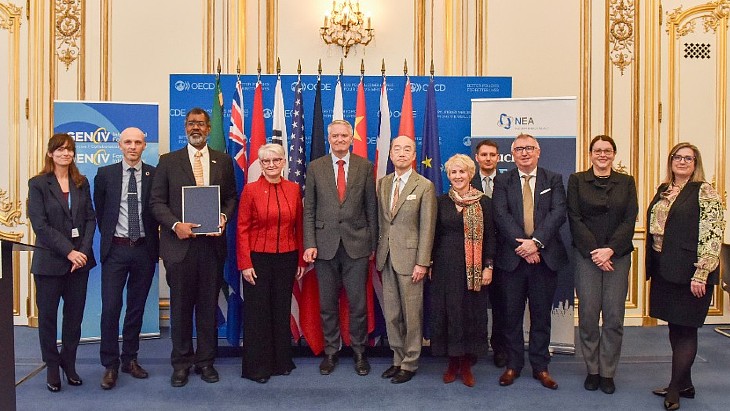

Magwood, third from left, Stéphane Sarrade, GIF chairman, third from right, at the signing ceremony (Image: GIF)

And what are the main priorities?
 

I think the biggest priority will be to move more information to the private sector. We want to see the private sector succeed in the deployment of these technologies, and figuring out how the work of the GIF can facilitate that is really an active conversation right now, that is going to be a big focus for us going forward. It is also really essential that we also keep in mind that we need to have a new generation of engineers and scientists to design, build and deploy these technologies and that, for a lot of countries, is actually a bigger challenge than the technologies. And so that's something that we all have to work on to make sure that we've got these young people excited about these technologies so that they are going to be there for us when the time comes to build and operate these new technologies.

And the main challenges?
 

The challenge, like the opportunity, is that working with the public and private sectors can be complicated with IP issues and we have to find ways of negotiating, to get people working together. But we're seeing a lot of organisations that are planning deployment - it's not research for research's sake. These are companies that hope to make money by putting these technologies on the market, and when you talk to many of them, they're really optimistic that by the end of this decade, by 2030, there will be a significant number of Gen IV technologies that will be actually on the market and available.

What about regulation?
 

That's going to be one of the big conversations we'll be having over the next few years, watching how the regulatory community deals with these new technologies. As I talk to lead regulators around the world, I think they all understand exactly that they cannot look at Gen IV technologies through a Gen II lens. They have to recognise that these are different technologies, that they require a different approach and the frameworks have to adapt to them. There are certainly some countries where there's a lot of confidence that they have the frameworks in place to deal with these new technologies and there's others that are less clear. So we'll have to see how this evolves over time. But my view is that you will see some lead countries deploy these technologies successfully and show how they can be regulated effectively and then others will learn from those examples. That's often how these things work. So keep your eye on some of these leading projects in different countries and as those are successful it opens the door for not just people in OECD countries, but for people in the global South as well.

And finally, what do you think of the general outlook for nuclear energy?
 

It's brighter than it's probably been in history. Honestly, I used to compare what we're doing now to the Atoms for Peace days in the late 1950s and early 1960s when the original generation nuclear plants were deployed. But what's happening now is actually even bigger than that, because in those days there really were only a small select group of very wealthy countries that were looking at nuclear technology. But now we can see it happening all over the world, in South America, Africa, the Middle East and Southeast Asia. And SMR and Gen IV technologies are likely to make nuclear more accessible to more people, to more countries, to more economies and that is the game-changer, particularly because of the very, very high safety parameters of Gen IV technologies so you can now consider putting nuclear reactors in places that simply wouldn't have been possible with conventional technologies. So it really opens a vast new landscape for deployment, but also all these new applications - talking about the hyperscalers, about the chemical industry, and hydrogen production - so not just electricity, but many, many applications. There are so many opportunities out there and we now have to see industry make these technologies cost-effective, deployable and do it in reasonable time-frame, and if they can do that, I think there's a vast market around the world.

World Nuclear News


Canada, Poland sign nuclear energy cooperation agreement


Wednesday, 29 January 2025

Canadian Prime Minister Justin Trudeau has concluded a trip to Warsaw, Poland, with the signing of an agreement on cooperation in the peaceful use of nuclear energy.

Canada, Poland sign nuclear energy cooperation agreement
Prime Minister Justin Trudeau (left) and Prime Minister Donald Tusk (right) after signing the agreement (Image: Government of Poland)

Signed also by Polish Prime Minister Donald Tusk, the agreement calls for cooperation in, among other things, the provision of nuclear technologies for peaceful purposes related to research, nuclear safety or the use of nuclear materials and the implementation of research and development projects. It also provides for technical training and the exchange of specialists and experts.

"By working together to advance nuclear technology, Canada and Poland are pushing innovation forward and accelerating energy security," Trudeau said. "Once in force, the newly signed Canada-Poland Nuclear Cooperation Agreement will promote Canadian innovators, create good-paying jobs, and combine Polish and Canadian expertise in the sector. It's a testament to Canada's commitment to building a more secure future, alongside our closest allies."

He noted that the agreement complements other initiatives to strengthen Canada and Poland's bilateral relationship, including the General Security of Information Agreement (GSOIA), which was signed earlier this month. Once implemented, the GSOIA will enhance information sharing between Canada and Poland and create business opportunities for companies in industries such as defence, security, aerospace, marine, and nuclear.

"Once in force, the agreement will deepen ties between Canadian and Polish energy sectors, enabling Canadian companies to apply their nuclear expertise to support Poland's energy transition and enhance energy security for Poland and the region," he said. "It will create good well-paying jobs and opportunities for people on both sides of the Atlantic, while reinforcing Canada and Poland's shared commitment to nuclear co-operation, non-proliferation, safety, and security."

In November 2022, the then Polish government selected the Westinghouse AP1000 reactor technology for construction at the Lubiatowo-Kopalino site in the Choczewo municipality in Pomerania in northern Poland. An agreement setting a plan for the delivery of the plant was signed in May 2023 by Westinghouse, Bechtel and Polskie Elektrownie Jądrowe (PEJ) - a special-purpose vehicle 100% owned by Poland's State Treasury. The Ministry of Climate and Environment in July issued a decision-in-principle for PEJ to construct the plant. The aim is for Poland's first AP1000 reactor to enter commercial operation in 2033.

Canada's Cameco, one of world's largest providers of nuclear fuel, acquired Westinghouse in 2023 in a strategic partnership with Brookfield Asset Management and its affiliate Brookfield Renewable Partners and institutional partners.

"The main supplier of technology for our first nuclear power plant, which we are just starting to build, is Westinghouse," Tusk noted. "It is owned by Canadian companies, which further strengthens our cooperation. This agreement is strategic for us."

In December, PEJ announced it had received a letter of intent from Export Development Canada, for up to CAD2.02 billion (USD1.45 billion) to potentially support Poland's first nuclear power plant project. The letter of intent with Export Development Canada - a Canadian Crown corporation - is in support of the sale of goods and services by Canadian suppliers.

Major contracts awarded for OPG SMR and life extension projects


Tuesday, 28 January 2025


BWX Technologies Inc has been awarded contracts to manufacture the reactor pressure vessel for the first BWRX-300 small modular reactor to be constructed at Ontario Power Generation’s Darlington New Nuclear Project site and 48 steam generators for the Pickering life extension programme.

Major contracts awarded for OPG SMR and life extension projects
Minister Stephen Lecce (centre) visited BWXT's Cambridge facility for the announcement (Image: Stephen Lecce/X)

The separate contracts are worth more than CAD1 billion (USD696 million) in total.

The reactor pressure vessel - or RPV - is the largest component in the BWRX-300, containing the reactor core, coolant and support structures. BWXT was the first company to join the qualified BWRX-300 supplier group launched by GE Hitachi Nuclear Energy in April 2024. The company was awarded a contract for RPV-related engineering analysis, design support and manufacturing and procurement preparations in 2023.

"The contract to fabricate the reactor pressure vessel for the first BWRX-300 is another key milestone in the deployment of this technology,” said Lisa McBride, GE Hitachi's Canada Country Leader.

The BWRX-300 is a 300 MWe water-cooled, natural circulation small modular reactor (SMR) with passive safety systems that leverages the design and licensing basis of GEH's ESBWR boiling water reactor design. Early site preparation work at the Darlington New Nuclear site has been completed and construction of the first of four planned units is expected to start later this year, pending regulatory approval, with a view to commercial operation by the end of 2029.

GE Hitachi Nuclear Energy is the nuclear business of GE Vernova.

Steam generator contract
 

BWXT has also been contracted to manufacture 48 steam generators at its Cambridge facility in the province for the project to refurbish four Candu units at Ontario Power Generation's Pickering nuclear site. BWXT will be carrying out the work for the Aecon-AtkinsRéalis joint venture CanAtom.

The contract is worth CAD960 million over seven years, and will create more than 250 highly skilled trades jobs, in addition to engineers and other staff, according to the Government of Ontario.

The government announced on 22 January that it had given Ontario Power Generation (OPG) the go-ahead to move onto the project definition phase for the Pickering life extension programme, authorising it to sign a CAD2.1 billion contract with CanAtom for early engineering and procurement to prepare for the execution of the Retube Feeder and Boiler Replacement Program. The life extension programme will enable Pickering units 5-8 - sometimes referred to as Pickering B - to operate for an additional 30 years, and is expected to be completed by the mid-2030s.

"By refurbishing existing assets at Pickering Nuclear, and building SMRs at the Darlington New Nuclear Project, OPG is helping Ontario meet rapidly growing demand for low-carbon, reliable baseload nuclear energy," said OPG President CEO Nicolle Butcher.

Preparatory work is taking place for a CAD80 million expansion of BWXT's manufacturing facility in Cambridge, Ontario - the largest commercial nuclear equipment manufacturing facility in North America - to support small modular reactors, traditional large-scale nuclear and advanced reactors, in Canada and around the world. The expansion is expected to be completed by 2026, and Stephen Lecce, Ontario Minister of Energy and Electrification, said the province is leveraging its nuclear advantage. "Ontario needs more nuclear energy to meet growing electricity demand, and it’s our province’s highly skilled workers that will make it all possible," he said.

World Nuclear News


Oil Executives Fume as Trump Shakes Up Climate Rules Again

By Irina Slav - Jan 26, 2025


President Trump's reversal of Biden's climate policies has angered Big Oil executives, who invested heavily in low-carbon technologies under the previous administration.

The withdrawal from the Paris Agreement and the removal of subsidies threaten to make Big Oil's transition investments stranded assets.

Despite the positive impact on their core business, oil executives are wary of Trump's unpredictable energy policies and the potential long-term consequences for the industry.


President Donald Trump has been busy reversing the Biden administration’s so-called climate policies from the moment he was sworn in. He declared a national energy emergency, revoked the Biden ban on new LNG export capacity, and suspended some $300 billion in funding for transition projects in the country. With that, he has made one unlikely group angry: Big Oil executives.

The 47th president’s political agenda is nothing if not oil and gas friendly. In fact, oil and gas are among Trump’s top priorities, and he has wasted no time in making life easier for the industry players after four years of extra regulatory and political pressure under Biden. Yet oil executives' apparent frustration with Trump’s reversal of Biden policies is unlikely and perhaps surprising on the surface.

Below this surface sits all the money that Big Oil invested in its own transition, under pressure, indeed, but quite a lot of money. The projects this money has been invested in may well become stranded assets now, in an ironic twist of environmentalists’ warnings that oil and gas fields are about to become stranded assets in a transitional world.

Reuters reported this week that some in the oil industry were unhappy about Trump’s withdrawal of the United States from the Paris Agreement. This is the second time Trump has done it and, again according to Reuters, it would jeopardize global efforts to reverse global climatic trends. Not only that, but the withdrawal would reduce the availability of cash for transition investment and confuse investors as the paths of the U.S. and Europe diverge.

According to the report, some executives in the energy industry believe that they could have a greater say over the energy transition if the United States is in the Paris Agreement. Yet industry players have more immediate priorities, and these have nothing to do with any climate pacts.

“While we prefer that the U.S. government remain engaged in the UN climate process, the private sector is committed to developing the solutions necessary to meet the energy needs of a growing global economy while addressing the climate challenge,” Marty Durbin, president of the Global Energy Institute at the U.S. Chamber of Commerce told Reuters.

There is a rather practical reason energy executives would prefer the U.S. government to remain engaged in the UN climate process: those transition investments. Every large oil company has been forced to devise a transition strategy in the recent past, and every large oil company has done so. They have been pushed to invest in low-carbon alternatives to their core products and they have invested, often heavily—and they have received subsidies to pursue these alternatives further.

Occidental Petroleum’s direct air capture plans are a case in point. The oil major back in 2023 bought a company developing technology that can suck carbon dioxide straight from the air. Oxy spent $1.1 billion on that purchase, eyeing a market that BloombergNEF said could grow into a segment worth $150 billion annually. And the Biden administration was shouldering part of the costs with subsidies. Now, these are gone, threatening the very survival of direct air capture—and more conventional carbon capture investments. No wonder Occidental’s chief executive approached Trump directly during a campaign event to argue the case for leaving IRA funding for carbon capture untouched. Oxy is far from the only one spending big on the transition and carbon capture. Exxon has also spent heftily on developing a carbon capture business.


“It's critical that any conversation about addressing climate change must be global in nature, and also recognize that America is the world leader in both energy production and emissions reductions,” the president of the American Exploration and Production Council, Anne Bradbury, told Reuters.

Indeed, after so much money spent on transitioning, even partially, it must be frustrating for oil executives to be thrown back into an industry-friendly environment, positive as it is for their business. This is, in fact, the uncertainty that analysts—and industry executives—have been talking about for years. All industries like certainty, even if this is the kind of certainty that would affect their industry negatively, like Biden’s climate policies. They were harmful to oil and gas, but they were certain, so companies could take steps to mitigate the impact.

Now, with Trump, it’s back to normal, but companies could never know what would happen in four years, so they will be wary of reversing their current priorities too suddenly. The good news is that most of them are already walking back their transition targets after those targets proved quite unrealistic. Even European Big Oil is going back on transition promises after discovering these promises could not be fulfilled—not at a profit, at least.

So, what many hoped would happen during Trump’s presidency may indeed happen: Big Oil protecting its transition investments and pressuring Trump into not completely doing away with Biden’s climate laws, at least until there’s hard proof carbon capture does not make money, but loses money.

By Irina Slav for Oilprice.com
Europe’s Strictest ESG Funds Hit by Record OutflowsBy 

Tsvetana Paraskova - Jan 29, 2025

Poor returns prompted investors to withdraw record amount of money from the EU’s funds with the strictest ESG standards, a report by market research firm Morningstar has shown.

The EU’s Sustainable Finance Disclosure Regulation (SFDR), adopted in 2021, regulates and classifies funds according to their sustainability. The so-called Article 8 funds are registered as “promoting” ESG goals, while the “greenest” funds, the Article 9 products, are those funds that have sustainable investment as their objective.

In the final quarter of 2024, Article 9 funds saw withdrawals of $7.6 billion (7.3 billion euros)—a record high for any quarter and more than double the outflows in the third quarter, according to Morningstar’s research cited by Bloomberg.

These types of ESG funds saw in the fourth quarter the fifth consecutive quarter of net outflows, the data showed.

The outflows were attributed to the lower returns compared to conventional investment strategies.

“In 2024’s bull market, investors simply preferred conventional equity strategies,” Hortense Bioy, head of sustainable investing research at Morningstar Sustainalytics, told Bloomberg.

Globally, sustainable open-end and exchange-traded funds (ETFs) saw their highest quarterly inflows in the fourth quarter of 2024, Morningstar said in a report. The inflows into these funds reached $16 billion in the last quarter of 2024, up from $9.2 billion in the third quarter. However, annual inflows halved, contrasting with a booming market, Morningstar noted.

In the United States, sustainable open-end funds and ETFs suffered their second year of outflows in more than a decade, reaching $19.6 billion in 2024 following redemptions of $13.3 billion in 2023, according to Morningstar data.

By contrast, conventional fund peers enjoyed significant inflows of about $740 billion, supported by expectations of interest rate cuts and an AI-related stock rally.

U.S. sustainable funds were hit by poor returns and the growing backlash and political scrutiny against ESG investing, Morningstar said.

By Tsvetana Paraskova for Oilprice.com


ESG Funds Hit by Worst-Ever Redemptions as Backlash Deepens

By Frances Schwartzkopff, 
Bloomberg News
January 29, 2025

Wind turbines. (Eric Thayer/Bloomberg)

(Bloomberg) -- ESG fund managers are facing one of the toughest moments in the strategy’s history, as investment clients pull record amounts of money.

Funds complying with the European Union’s strictest ESG standards suffered record outflows last quarter, according to fresh data from Morningstar Inc. That follows an analysis by the market researcher showing ESG fund managers in the US just had their worst year ever. At the same time, a record number of funds has now scrapped ESG and related terms from their names, Morningstar reported.

“The story for equity funds in ESG hasn’t been great,” Hortense Bioy, head of sustainable investing research at Morningstar Sustainalytics, said in a phone interview on Wednesday. A lot of ESG funds offering “clean energy, clean-tech and climate solutions haven’t done well in the context of high interest rates.” Even after the decline in funds dedicated to sustainable strategies, ESG still sits on $3.2 trillion of total fund assets, globally, Morningstar estimates.

Record redemptions are the latest piece of bad news for proponents of ESG (environmental, social and governance), as investors turn away from a strategy that’s been plagued by lackluster returns, regulatory fatigue and political backlash. The development is being used as an opportunity by some companies and lawmakers in Europe to call time on ESG rulemaking, especially in light of US President Donald Trump’s embrace of deregulation in the world’s largest economy.

In the US, ESG fund managers suffered almost $20 billion of withdrawals last year, a Morningstar report published earlier this month showed.


Europe, which accounts for more than 80% of the world’s ESG fund assets, has already acknowledged it needs to recalibrate a whole range of ESG regulations as the complexities of introducing such an ambitious framework within a relatively short period of time become clear.

Rules for ESG fund disclosures in Europe are currently being overhauled, after investors and even national regulators criticized the existing framework, known as the Sustainable Finance Disclosure Regulation. Meanwhile, Germany and France are pressing the European Commission to scale back planned ESG reporting requirements for companies across all industries.

In an interview this week, the EU’s new commissioner for financial services, Maria Luis Albuquerque, said the bloc remains committed to its landmark Green Deal. However, details of the regulatory and legislative rollout probably need to be tweaked, she said.

“We may need to adjust the pace and especially eliminate some overlaps and inconsistencies, which happened because we were putting forward a lot of legislation in a short period of time,” she said. “We understand the concerns, we understand the burden or — as I’ve heard it — the fatigue, and we need to address that.”

Albuquerque cautioned against anticipating deregulation from the EU. Instead, “it’s adjusting the pace” while “maintaining the anchor,” she said. “Because I do believe, and I think that most people also believe that sustainability is a medium to long-term competitiveness advantage.”

Investors who focused on the greenest of assets in recent years have yet to see those bets pay off. Since the beginning of 2022, as pandemic-era emergency measures including interest rates at crisis lows started to fade, the S&P Global Clean Energy Index has lost roughly half its value. In the same period, the S&P 500 Index rose almost 30%.

Jenn-Hui Tan, chief sustainability officer at Fidelity International, says despite the headwinds, a lot of asset managers are still working hard to implement the existing EU’s existing ESG regulations.

“What we and everyone else is doing is getting on with the business of complying with these regulations, making sure that our businesses are future-fit, and if there are changes, then we have to be able to adapt to these changes,” he said. “And we, like many others, are preparing for a range of different outcomes on how those changes might land or might not land.”

Tan also said it’s important to keep in mind how monumental the current regulatory shift is.

“I don’t think we should underestimate how quickly this space has evolved, how much we’ve achieved in the last three, four years,” he said.

Morningstar’s latest analysis shows that redemptions from European funds registered as Article 9 — the name given to the EU’s strictest ESG category — reached €7.3 billion ($7.6 billion) in the final three months of 2024. That’s more than double the level of outflows seen in the third quarter and marks the fifth straight quarter of withdrawals.


Equity funds in Europe registered as Article 9 were the hardest hit, with withdrawals of €6.4 billion, Morningstar said. A separate category known as Article 8, which has been criticized for being too broad an ESG designation to be meaningful, saw inflows of €52 billion mostly due to rising demand for fixed-income funds, Morningstar said. Funds registered as Article 6, a non-ESG category, saw €85.4 billion of inflows. Net new investments into both Article 8 and Article 6 funds have risen in recent quarters.

And even though record numbers of funds just dropped ESG terms from their names, it’s likely that trend will pick up in coming months, as asset managers try to adapt to stricter rules due to be enforced by the European Securities and Markets Authority in May.

“Overall, we anticipate that between 30% and 50% of in-scope funds will change names, representing between 1,200 and 2,200 funds,” Morningstar said.

Investors also need to brace for a world in which SFDR fund disclosure categories may be replaced — or supplemented — by new labels intended to give retail clients a better sense of what they’re buying. Investors should be able to choose between strategies that broadly target sustainability, the net zero transition or an ESG category defined by its exclusion of a number of harmful activities, the Platform on Sustainable Finance, which advises the EU’s executive arm, said in December.

Morningstar’s analysis shows that Article 9 funds hit by the biggest client redemptions last quarter were the BlackRock Sustainable Energy Fund, which lost €576 million of outflows as its value dropped 9% in 2024. The Nordea 1 - Global Climate and Environment Fund saw €520 million of withdrawals, despite gaining 14% last year. And the Pictet - Global Environmental Opportunities fund, which gained 10% in 2024, saw €498 million of outflows, the data show.

Last year “was a period of shifting narratives, with the US election, a surging dollar, stubborn inflation, and a more cautious interest-rate-cutting stance,” Morningstar said in its report.

--With assistance from John Ainger, Max Ramsay and Saijel Kishan.

(Adds chart after fifth paragraph.)

©2025 Bloomberg L.P.
Development Banks Have $56-Billion Plan to Boost Africa’s Access to Electricity


By Charles Kennedy - Jan 29, 2025


International lenders and partners this week committed another $8 billion in financing to a $48-billion project by the World Bank and African Development Bank to connect 300 million Africans to electricity by 2030.

African Development Bank Group and the World Bank Group plan to allocate $48 billion in financing for Mission 300, which may evolve to fit implementation needs, African Development Bank said at the end of a summit on the so-called Mission 300, an initiative to connect 300 million people to electricity in Sub-Saharan Africa by 2030.

In Africa, nearly 600 million people live without electricity, which represents 83% of the global energy deficit, the World Bank says.


Together with multi-national partners and lenders, the World Bank and the African Development Bank seek to raise money to expand access to electricity. Many African nations lack the funds to do this themselves.

This week’s summit in Dar es Salaam, Tanzania, included pledges from Agence Francaise de Development (AFD), the French development agency, for $1 billion.

Asian Infrastructure Investment Bank (AIIB) committed $1 billion to $1.5 billion to support Mission 300. Islamic Development Bank (IsDB) Group pledged $2.65 billion in support of Mission 300 and energy access in Africa from 2025-2030.

The OPEC Fund for International Development also announced an initial commitment of $1 billion in support of Mission 300, with additional financing to follow.

“Access to electricity is a fundamental human right. Without it, countries and people cannot thrive,” said Ajay Banga, President of the World Bank Group.

“To succeed, we must embrace a simple truth: no one can do it alone. Governments, businesses, philanthropies, and development banks each have a role—and only through collaboration can we achieve our goal,” Banga added.

President of the African Development Bank Group, Akinwumi Adesina, commented, “We can do megawatts of talk all we want, but it’s going to be the megawatts of power that we deliver that make this an action-driven summit.”

By Charles Kennedy for Oilprice.com
Red Sea Risks Remain High Despite Gaza Truce and Houthi Ceasefire

By ZeroHedge - Jan 29, 2025

Yemen's Houthi rebels have agreed to stop attacking international vessels in the Red Sea as long as Israel upholds the Gaza ceasefire, but attacks on Israeli ships will continue.

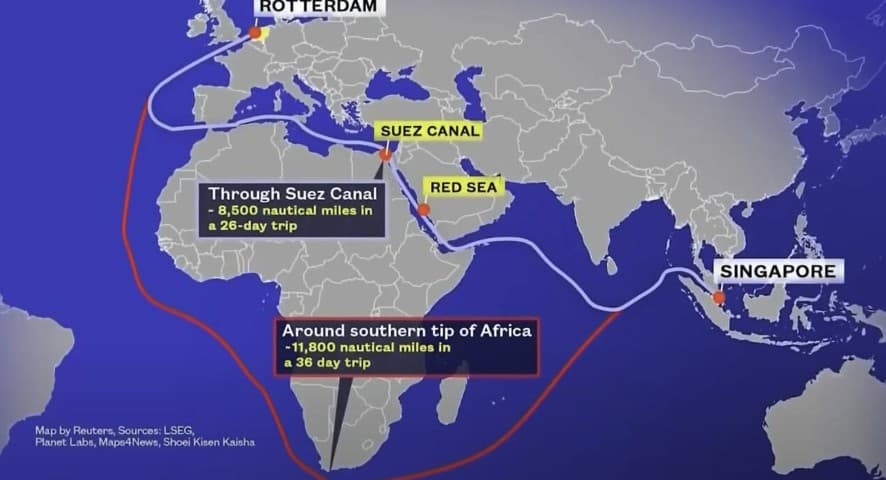
Despite the Houthi ceasefire, major international shipping companies are hesitant to resume using the Suez Canal due to ongoing security concerns and the high cost of transit.

The ongoing conflict in the Red Sea has cost Egypt billions of dollars in lost revenue from Suez Canal traffic, as many ships have been forced to take the longer and more expensive route around the Cape of Good Hope.


American and British vessels are cautiously returning to the Red Sea as the Gaza truce and prisoner exchange deal continues to hold. Starting last week Yemen's Houthi movement made clear that it would honor the ceasefire, and refrain from attacking international vessels in the Red Sea so long as Israel bides by the ceasefire.

However, a key exception is that Houthis will only continue attacking Israeli vessels. This intent to scale back pro-Palestine maritime operations, which has seen drones and missiles lobbed against foreign ships for many months, is translating to less incidents over this past week.

The Yemeni Houthi army's Joint Maritime Information Center (JMIC) announced Tuesday, "JMIC assesses that as the peace agreement progresses and vessels and infrastructure remain untargeted, improved stability is expected; however, the risk in the Red Sea and Gulf of Aden remain elevated."

According to Lebanon-based The Cradle, "Since 19 January, six US and UK vessels have transited the Red Sea safely. Despite this, major international shipping firms such as Danish company Maersk, Swiss company MSC, and Japanese company Mitsui OSK Lines Ltd have said that they will not immediately resume journeys despite the Yemeni assurances."

For the past year, international shipping companies been forced to take the much longer and costlier route around the Africa continent to avoid the Red Sea.

The Houthis have attacked more than 100 international commercial vessels, and have even targeted US and British military warships, including aircraft carriers. The Houthis have also shot down multiple American MQ-9 Reaper drones.

As we reported last week, ocean lines have said they are watching developments in the Red Sea but have offered no timeline to resume regular schedules there. Among major lines, only CMA CGM has maintained a schedule on the Suez Canal route.


Map via Reuters

"The situation in the Suez Canal remains fluid and the security situation is unclear," said MSC in a statement to FreightWaves. "In order to guarantee the safety of our seafarers and to ensure consistency and predictability of service for our customers, MSC will continue to transit via the Cape of Good Hope [around Africa] until further notice."

The cost of transit through the Suez Canal has greatly ratcheted, and the avoidance of the strategic waterway to and from the Mediterranean has also cost Egypt tens of billions of dollars.

By Zerohedge.com
The DoE’s LNG Export Study Is In And The Results Are Shocking!


By Irina Slav - Jan 29, 2025


When President Joe Biden instituted a so-called pause on new LNG export terminal permits, he also commissioned an assessment of the impact that LNG exports have on global emissions. The study is now in, courtesy of the Department of Energy—and it has found no problem with higher U.S. exports of liquefied gas.

The pause on new terminal permits was based on a single study authored by a self-described biogeochemist and environmental scientist who claimed in a study that LNG is more harmful to the Earth’s atmosphere than coal. Now, the Department of Energy has concluded, perhaps somewhat surprisingly, that a boost in U.S. exports of liquefied natural gas would have a negligible effect on global emissions of greenhouse gases, where negligible means a maximum increase in emissions of 0.05%.

The results of the study may not matter so much in light of President Trump’s cancellation of the “pause,” but they do add to a growing body of work dedicated to LNG and its effects on things like energy security and emission trends—the latter of the utmost importance for climate activist groups that are probably preparing their lawsuits against the Trump administration for its energy policies.

Per the Department of Energy, “The ultimate global GHG consequences of U.S. LNG exports depend on market effects such as changes in energy demand and the sources used to meet that demand for electricity and other uses of natural gas.” The assumption before the study was that the more U.S. LNG flows into global markets, the higher the emissions would climb. However, the assumption appears to be wrong, according to the DoE study. This is because most of the gas that the U.S. is expected to export in the future would not be used to replace lower-carbon generation but simply new gas-fired generation responding to greater energy demand.

The overall conclusion, therefore, seems to be that while the production and transportation of liquefied natural gas does generate emissions of methane and carbon dioxide, there are offsetting effects that bring down the net effect of these emissions to a negligible fraction of a percentage—even if U.S. LNG exports really boom, expanding fivefold between now and 2050. That should be good news for producers, but there is even better news for energy consumers. The Department of Energy also concluded in its assessment that even a major increase in LNG exports would not move domestic gas prices too much.

That might be arguable in the context of AI development and the surge in electricity demand that is being forecast because of that industry’s growth. However, the DoE estimates that Henry Hub prices could rise by 31% as a result of higher LNG exports between now and 2050. This means the 2050 price could reach $4.62 per million British thermal units, compared with $3.53 per mmBtu in 2024. For context, the study notes that the Henry Hub average for 2022 was over $6 per mmBtu, dropping to $2.53 per mmBtu in 2023.

So, the study commissioned by the Biden administration appears to have found that even a massive increase in U.S. export capacity for liquefied natural gas would not result in any catastrophic consequences either for the planet or for American households. Ultimately, it would come down to demand—and prices.

Last year, U.S. exports of liquefied natural gas added 4.5% on the year to a total 8.5 million tonnes. The biggest portion of those went to Asia, with Europe the second-largest importer of U.S. LNG due to slower demand. This is changing this year. The EU is buying up all LNG it can get its hands on as gas storage nears depletion—and as Trump calls on the EU to buy more American gas or face the music, in this case, paying 25% tariffs.

Supply is seen tightening in the short term, which would push prices higher and eventually sap demand growth until new capacity comes online. On the other hand, Big Tech, which is widely seen as a source for significant demand growth at home, is currently in trouble after a Chinese startup released a much cheaper and less energy-intensive AI model. That significant demand growth, in other words, may never materialize, and that would help keep domestic prices down.

Ultimately, it all comes down to costs and benefits. The benefits of liquefied gas include its delivery flexibility, which is much greater than pipeline gas, and the fact that burning gas for power generation is indisputably less emission-intensive than burning coal for the same purpose. The costs include the literal cost of transporting a cargo of liquefied—an expensive process—gas half a planet away and those methane emissions Horwath took aim at. According to the Department of Energy study, it seems the benefits currently outweigh the costs, and substantially.

By Irina Slav for Oilprice.com


Montero Agrees to Distribution of US$27 Million Settlement from Tanzania

Toronto, Ontario – January 28, 2025 – Montero Mining and Exploration Ltd. (TSX-V: MON) (“Montero” or the “Company”) announces that it has finalised the distribution of the US$27,000,000 settlement with its litigation funders, Omni Bridgeway (Canada). The settlement amount was agreed with the United Republic of Tanzania (“Tanzania”) in the dispute over the expropriation of Montero’s Wigu Hill rare earth element project (“Wigu Hill”).


The settlement amount of US$27,000,000 is payable over three instalments, and is to be distributed as follows:


  • First payment: US$12,000,000 received on November 20, 2024, and distributed between Montero and Omni Bridgeway (Canada), the Company’s litigation funder.
  • Second payment: US$8,000,000 due by January 31, 2025, to be distributed to Montero and to pay all legal fees.
  • Third payment: US$7,000,000 due by February 28, 2025, to be distributed entirely to Montero.


After paying funders and legal costs, the net amount due to Montero will be approximately C$20,577,545 (US$14,458,138).


Dr Tony Harwood, President and CEO of Montero commented: “I am pleased Montero successfully achieved an amicable distribution of proceeds of over C$20,000,000. We wish Tanzania success in attracting new mining investments and look forward to receiving the final two payments due within the next 5 weeks. Further notice of payments received will be forthcoming.


ICSID Arbitration

Montero and Tanzania jointly requested the arbitral tribunal to suspend the ICSID arbitration proceedings after receiving the first payment. Upon receipt of the final payment as scheduled, the parties will formally request the tribunal to discontinue the ICSID arbitration in its entirety.


Distribution of Funds

Montero is considering a return of capital distribution to shareholders. The exact amount is yet to be determined and will be subject to accounting review and board approval. In addition, Montero will retain funds to cover legal, taxation, and administrative expenses, including potential costs for arbitral proceedings, or enforcement actions in the event of delays or non-payment of the second or third instalments.  The latter will now be the sole responsibility of Montero. The net amount of the award after deducting payments to the funder and covering legal expenses, cannot be determined with certainty, and no guarantees can be provided. Further announcements will be made in due course.


Disclaimer

The conclusion of the ICSID arbitration and payment of the remaining instalments is conditional on Tanzania’s compliance with the settlement agreement. The agreement does not provide for any security for the benefit of Montero in case Tanzania would not pay any instalment, in which case Montero can either resume the ICSID arbitration or seek enforcement of the settlement agreement.


About Montero

Montero has agreed to a US$27,000,000 settlement amount to end its dispute with the United Republic of Tanzania for the expropriation of the Wigu Hill rare earth element project. The Company is also advancing the Avispa copper-molybdenum project in Chile and is seeking a joint venture partner. Montero’s board of directors and management have an impressive track record of successfully discovering and advancing precious metal and copper projects. Montero trades on the TSX Venture Exchange under the symbol MON and has 50,122,975 shares outstanding.


Share This

UK National Wealth Fund drives growth with a £28.6m investment into Cornish Metals Inc, facilitating the domestic supply of tin

ALL CAPITALI$M IS STATE CAPITALI$M


28 January 2025

The National Wealth Fund has today announced a £28.6m direct equity investment into Cornish Metals Inc, to help finance the re-opening of Cornwall’s South Crofty tin mine, creating more than 300 direct local jobs.

The NWF’s commitment is designed to mobilise private capital into the project. Its investment is part of a £56m funding round to further de-risk the South Crofty tin mine by commencing early project works, placing orders on long-lead items and completing key work programmes including the shaft refurbishment and mine dewatering. South Crofty is a fully permitted underground tin mine with more than 400 years of recorded production prior to its closure in 1998, and hosts one of the highest grade tin resources in the world.


The financing supports the continued growth and sustainability of Cornwall’s mining sector, building on the NWF’s investment into nearby Cornish Lithium in August 2023, with both lithium and tin considered by the UK government as critical minerals, and essential for the net zero transition. Solar panels, wind turbines, electric vehicles (EVs), semi-conductors and energy storage all require a supply of tin, with demand for these components set to outstrip supply in the coming years, driven in part by increased use across the renewables sector.

Aligning with its objective to drive growth, the NWF’s investment also supports the local enterprise plan to leverage access to critical minerals as a priority. By creating a critical minerals cluster in Cornwall, there will be an increase in skilled, year-round job opportunities in what is one of the more-deprived areas of the UK.

Chancellor of the Exchequer Rachel Reeves said:


Growth is this Government’s number one mission, and we’re going further and faster to kick start our economy so that we can put more money in people’s pockets.

“This is just the kind of investment that will help us do that, not only supporting the growth of the Cornish mining sector, but creating high-quality jobs and opportunity for the region and beyond.

John Flint, CEO, National Wealth Fund, said:


Critical minerals are not only an important driver of the UK’s transition to net zero, but also of the UK’s growth mission, providing opportunities to anchor important supply chains in the UK.

“This is our second investment in critical minerals in Cornwall, and shows how we can mobilise private investment into local economies, creating skilled and long-term employment.

Don Turvey, CEO of Cornish Metals, commented:


We are very pleased to have NWF become a major shareholder in Cornish Metals and to lead this fundraise alongside Vision Blue, demonstrating support for the Company and our plans to bring tin mining back to Cornwall.

“The Cornish Metals team has achieved many important milestones over the last couple of years as we continue to advance South Crofty towards a restart of production. This financing will enable the Company to maintain this strong momentum and further unlock the project’s potential by delivering crucial milestones expected in the coming year including the completion of mine dewatering and shaft refurbishment, the start of early project works and placing orders of long lead items, and concluding the project finance process.

The investment is subject to the requisite shareholder approvals in March 2025.

Viridian Metals becomes top claim holder in Newfoundland and Labrador


Trevor Abes , The Market Online

  • Viridian Metals (TSXV:VRDN) has expanded its land position in Labrador’s Seal Basin from 10 to 2,600 square kilometres, including over 70 documented and largely unexplored copper occurrences
  • The expansion, through staking, makes Viridian the largest claim holder in Newfoundland and Labrador
  • Viridian is focused on discovering new critical metals deposits capable of preparing supply chains for the energy transition
  • Viridian Metals stock has added 47.06 per cent since inception in November 2024

Viridian Metals (TSXV:VRDN) has expanded its land position in Labrador’s Seal Basin from 10 to 2,600 square kilometres, including over 70 documented and largely unexplored copper occurrences.

The expansion, through staking, makes Viridian the largest claim holder in Newfoundland and Labrador, one of Canada’s highest-potential exploration jurisdictions.

The basin’s copper occurrences are documented in the Geological Survey of Newfoundland and Labrador’s Mineral Occurrence Data System, detailing mapping programs in the 1960s, 1970s and 2010s.

With a road and power infrastructure nearby, Viridian is positioned to develop the Seal Basin’s data-driven targets and capitalize on growing copper demand as renewable energy slowly inches its way into daily life.

Leadership insights

“This large project area is a testament to the exceptional geological potential we see in Labrador,” Tyrell Sutherland, Viridian Metals’ chief executive officer, said in a statement. “The area we’ve secured offers a wealth of exploration opportunities. We are excited to accelerate our work in such a highly prospective region and believe it has the capacity to deliver significant value as we seek to discover the extent of its mineral wealth.”

About Viridian Metals

Viridian is focused on discovering new critical metals deposits capable of preparing supply chains for the energy transition. The company’s project portfolio includes:

  • The 183-square-kilometre Kraken project, which is hosted by the same intrusions that host Voisey’s Bay (>65 million tons grading 2.4 per cent nickel, 1.3 per cent copper and 0.1 per cent cobalt, including production and reserves).
  • The 14-square-kilometre Sedna project in the Seal Basin, where native copper nuggets up to 300 pounds have been collected, with Viridian generating a highlight channel sample of 3.7 metres at 5.3 per cent copper and 5.7 grams per ton of silver.

Viridian Metals stock (TSXV:VRDN) opened with a gain of 13.64 per cent trading at C$0.50 per share. The stock has added 47.06 per cent since inception in November 2024.

Join the discussion: Find out what everybody’s saying about this junior copper stock on the Viridian Metals Inc. Bullboard and check out Stockhouse’s stock forums and message boards.

The material provided in this article is for information only and should not be treated as investment advice. For full disclaimer information, please click here.

(Top image: Viridian Metals)