US orders personnel out of 'dangerous' Middle East as Iran tensions escalate
President Donald Trump said on Wednesday the US was relocating personnel from the potentially "dangerous" Middle East as nuclear talks with Iran stalled, raising conflict fears. He vowed to prevent an Iranian nuclear weapon amid speculation of Israeli strikes as Tehran threatened to target US bases if conflict breaks out.
Issued on: 12/06/2025 -
By: FRANCE 24
Video by: Fraser JACKSON
President Donald Trump said US personnel were being moved from the potentially "dangerous" Middle East on Wednesday as nuclear talks with Iran faltered and fears grew of a regional conflict.
Trump also reiterated that he would not allow Iran to have a nuclear weapon, amid mounting speculation that Israel could strike Tehran's facilities.
Iran threatened Wednesday to target US military bases in the region if conflict breaks out.
A US official had earlier said that staff levels at the embassy in Iraq were being reduced over security concerns, while there were reports that personnel were also being moved from Kuwait and Bahrain.
"Well they are being moved out because it could be a dangerous place," Trump told reporters in Washington when asked about the reports of personnel being moved.
"We've given notice to move out and we'll see what happens."
Trump then added: "They can't have a nuclear weapon, very simple. We're not going to allow that."
Tehran and Washington have held five rounds of talks since April to thrash out a new nuclear deal to replace the 2015 accord that Trump abandoned during his first term in 2018.
President Donald Trump said on Wednesday the US was relocating personnel from the potentially "dangerous" Middle East as nuclear talks with Iran stalled, raising conflict fears. He vowed to prevent an Iranian nuclear weapon amid speculation of Israeli strikes as Tehran threatened to target US bases if conflict breaks out.
Issued on: 12/06/2025 -
By: FRANCE 24
Video by: Fraser JACKSON
01:38
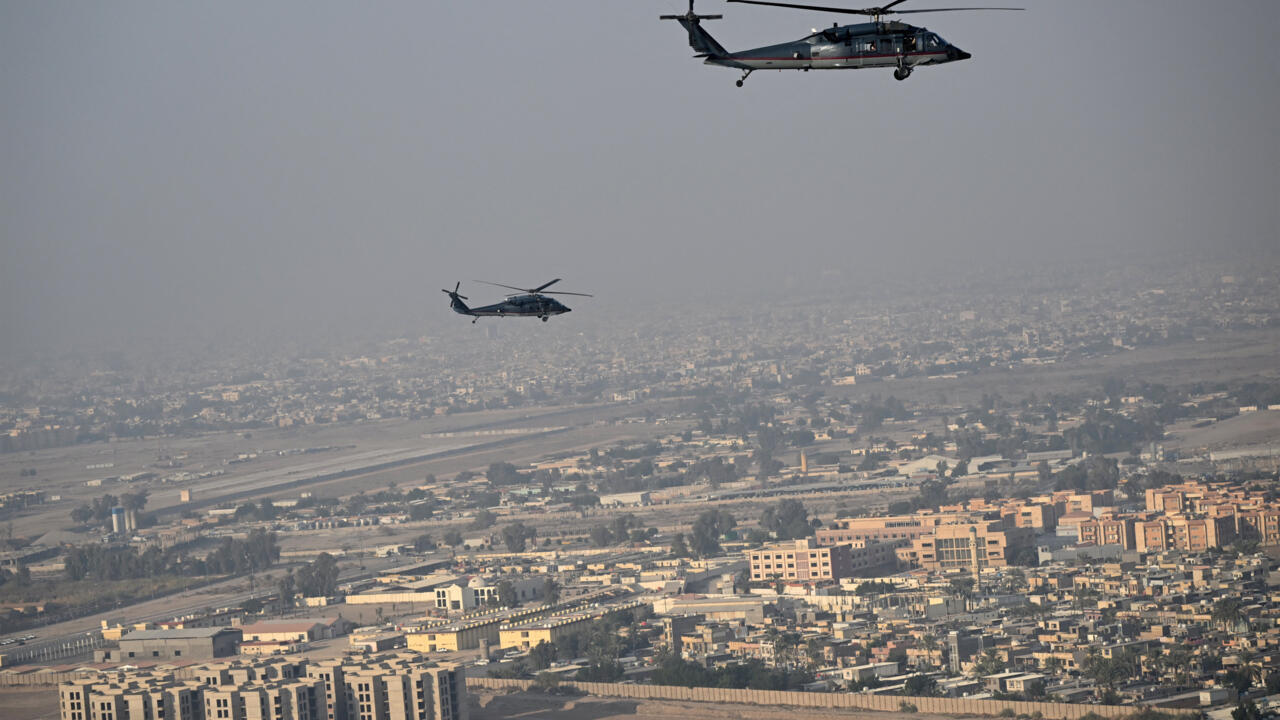
US Black Hawk helicopters escort Secretary of State Antony Blinken as they fly over Baghdad towards the US embassy headquarters on December 13, 2024. © Andrew Caballero-Reynolds, AFP
President Donald Trump said US personnel were being moved from the potentially "dangerous" Middle East on Wednesday as nuclear talks with Iran faltered and fears grew of a regional conflict.
Trump also reiterated that he would not allow Iran to have a nuclear weapon, amid mounting speculation that Israel could strike Tehran's facilities.
Iran threatened Wednesday to target US military bases in the region if conflict breaks out.
A US official had earlier said that staff levels at the embassy in Iraq were being reduced over security concerns, while there were reports that personnel were also being moved from Kuwait and Bahrain.
"Well they are being moved out because it could be a dangerous place," Trump told reporters in Washington when asked about the reports of personnel being moved.
"We've given notice to move out and we'll see what happens."
Trump then added: "They can't have a nuclear weapon, very simple. We're not going to allow that."
Tehran and Washington have held five rounds of talks since April to thrash out a new nuclear deal to replace the 2015 accord that Trump abandoned during his first term in 2018.
US Special Envoy Steve Witkoff plans to meet Iranian Foreign Minister Abbas Araghchi in Oman on Sunday and discuss Iran's response to a recent American proposal for a nuclear deal, a US official said late on Wednesday.
Trump told a podcast on Monday he was less confident that Iran will agree to stop uranium enrichment in a nuclear deal with Washington.
Since returning to office in January, Trump has revived his "maximum pressure" campaign on Tehran, backing nuclear diplomacy but warning of military action if it fails.
The US president says he has pressed Israeli Prime Minister Benjamin Netanyahu to hold off striking Iran's nuclear facilities to give the talks a chance, but has increasingly signaled that he is losing patience.
Iran however warned it would respond to any attack.
"All its bases are within our reach, we have access to them, and without hesitation we will target all of them in the host countries," Iran's Defence Minister Aziz Nasirzadeh said in response to US threats of military action if the talks fail.
02:10
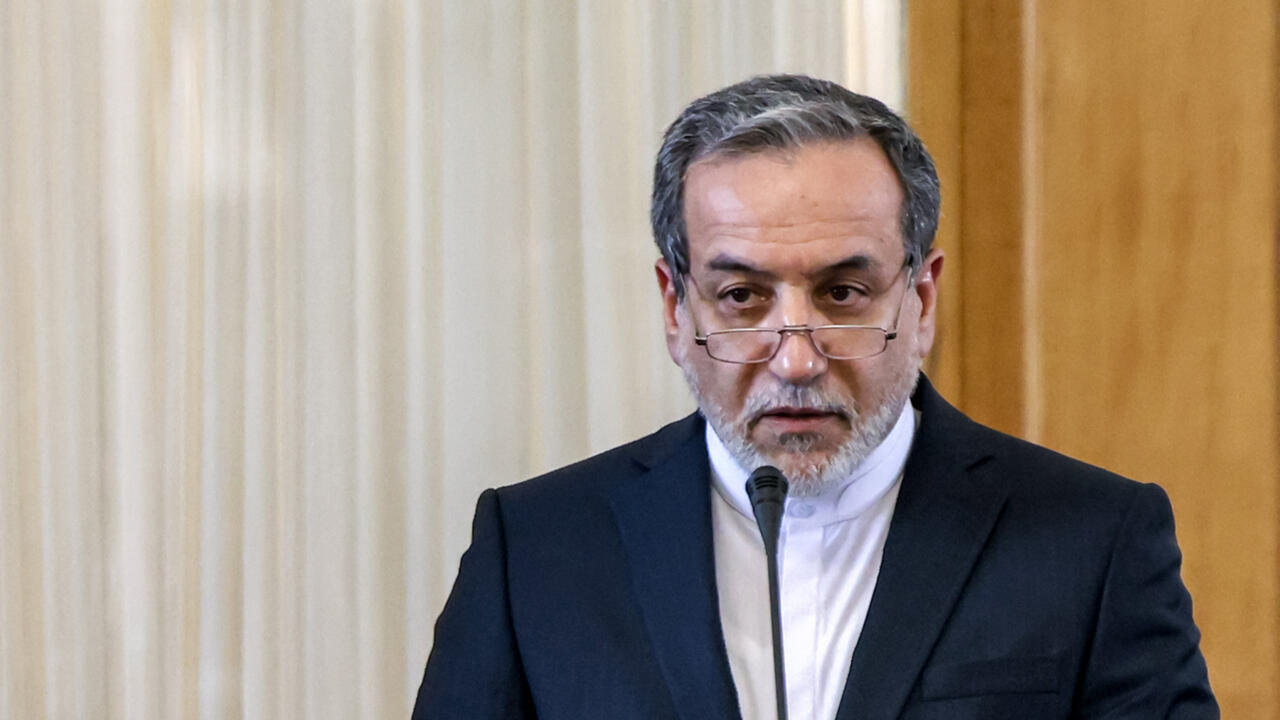
Iran’s top diplomat Abbas Araghchi in Tehran on February, 25, 2025. © Atta Kenare, AFP/File picture
'Suffer more losses'
"God willing, things won't reach that point, and the talks will succeed," the minister said, adding that the US side "will suffer more losses" if it came to conflict.
The United States has multiple bases in the Middle East, with the largest located in Qatar.
In January 2020, Iran fired missiles at bases in Iraq housing American troops in retaliation for the US strike that killed top Iranian general Qassem Soleimani days before at the Baghdad airport.
Dozens of US soldiers suffered traumatic brain injuries.
Amid the escalating tensions, the UK Maritime Trade Operations, run by the British navy, also advised ships to transit the Gulf with caution.
Read moreIran’s economic struggles: Can nuclear talks with US spark a turnaround?
Iran and the United States have recently been locked in a diplomatic standoff over Iran's uranium enrichment, with Tehran defending it as a "non-negotiable" right and Washington calling it a "red line".
Iran currently enriches uranium to 60 percent, far above the 3.67-percent limit set in the 2015 deal and close though still short of the 90 percent needed for a nuclear warhead.
Western countries have long accused Iran of seeking to acquire atomic weapons, while Tehran insists its nuclear program is for peaceful purposes.
Last week, Iran's supreme leader Ayatollah Ali Khamenei said enrichment is "key" to Iran's nuclear program and that Washington "cannot have a say" on the issue.
During an interview with the New York Post's podcast "Pod Force One," which was recorded on Monday, Trump said he was losing hope a deal could be reached.
"I don't know. I did think so, and I'm getting more and more – less confident about it. They seem to be delaying and I think that's a shame. I am less confident now than I would have been a couple of months ago," he said.
Iran has said it will present a counter-proposal to the latest draft from Washington, which it had criticised for failing to offer relief from sanctions – a key demand for Tehran, which has been reeling under their weight for years.
(FRANCE 24 with AFP)
Exclusive: Houthis Warn US and Israel of 'War' If Iran Attacked
Published Jun 11, 2025
By Tom O'Connor
Senior Writer, Foreign Policy & Deputy Editor, National Security and Foreign Policy
 Newsweek Is A Trust Project Member
A source within the Ansar Allah movement, also known as the Houthis, has shared with Newsweek a warning to Israel and the United States amid reports of a potential Israeli attack being planned against Iran.
Reports Wednesday of U.S. nonessential personnel and family members being evacuated from regional countries, including Iraq, Bahrain and Kuwait, were followed by a Washington Post article citing unnamed officials indicating that the moves were being undertaken in anticipation of an imminent Israeli strike against Iran.
Israel's Channel 14 news outlet also reported that the country was preparing to soon launch a major operation against Iran.
The soaring tensions follow an Israeli naval strike conducted Tuesday against Ansar Allah, a member of the Iran-led Axis of Resistance coalition that has been engaged in missile and drone attacks against Israel since the outbreak of the war between Israel and the Palestinian Hamas movement in October 2023.
Reacting to the reports, an Ansar Allah source told Newsweek that the group had adopted a heightened state of readiness as it was already "essentially in a state of war with the Zionist enemy entity due to its aggression and siege on Gaza, followed by its aggression against Yemen."
"In this regard, we are in a state of constant readiness and are working to escalate our operations against the usurping entity, against the backdrop of the escalating massacres in Gaza and the worsening humanitarian situation there," the Ansar Allah source said.
The Ansar Allah source also issued a warning to the U.S. should it pursue actions targeting the group or its Iranian ally.
"We are also at the highest level of preparedness for any possible American escalation against us," the Ansar Allah source said. "Any escalation against the Islamic Republic of Iran is also dangerous and will drag the entire region into the abyss of war."
"America has no right to attack the countries of our community and our region in service of the Zionist enemy entity, which is considered the primary security threat to the region," the source added. "It is certainly not in the interest of the American people to become involved in a new war in service of the Zionist entity."
Reached for comment, a U.S. Central Command (CENTCOM) spokesperson referred Newsweek to the Pentagon press office, which did not immediately respond.
Newsweek has also reached out to the Iranian Mission to the United Nations and the Israel Defense Forces (IDF) for comment.
Read more Iran
Iran Threatens to Attack U.S. Forces if Israel Strikes Nuclear Sites
Iran Threatens Israel's Nuclear Sites as Trump Blocks Strike Plan
Published Jun 11, 2025
By Tom O'Connor
Senior Writer, Foreign Policy & Deputy Editor, National Security and Foreign Policy
Newsweek Is A Trust Project MemberA source within the Ansar Allah movement, also known as the Houthis, has shared with Newsweek a warning to Israel and the United States amid reports of a potential Israeli attack being planned against Iran.
Reports Wednesday of U.S. nonessential personnel and family members being evacuated from regional countries, including Iraq, Bahrain and Kuwait, were followed by a Washington Post article citing unnamed officials indicating that the moves were being undertaken in anticipation of an imminent Israeli strike against Iran.
Israel's Channel 14 news outlet also reported that the country was preparing to soon launch a major operation against Iran.
The soaring tensions follow an Israeli naval strike conducted Tuesday against Ansar Allah, a member of the Iran-led Axis of Resistance coalition that has been engaged in missile and drone attacks against Israel since the outbreak of the war between Israel and the Palestinian Hamas movement in October 2023.
Reacting to the reports, an Ansar Allah source told Newsweek that the group had adopted a heightened state of readiness as it was already "essentially in a state of war with the Zionist enemy entity due to its aggression and siege on Gaza, followed by its aggression against Yemen."
"In this regard, we are in a state of constant readiness and are working to escalate our operations against the usurping entity, against the backdrop of the escalating massacres in Gaza and the worsening humanitarian situation there," the Ansar Allah source said.
The Ansar Allah source also issued a warning to the U.S. should it pursue actions targeting the group or its Iranian ally.
"We are also at the highest level of preparedness for any possible American escalation against us," the Ansar Allah source said. "Any escalation against the Islamic Republic of Iran is also dangerous and will drag the entire region into the abyss of war."
"America has no right to attack the countries of our community and our region in service of the Zionist enemy entity, which is considered the primary security threat to the region," the source added. "It is certainly not in the interest of the American people to become involved in a new war in service of the Zionist entity."
Reached for comment, a U.S. Central Command (CENTCOM) spokesperson referred Newsweek to the Pentagon press office, which did not immediately respond.
Newsweek has also reached out to the Iranian Mission to the United Nations and the Israel Defense Forces (IDF) for comment.
Read more Iran
Iran Threatens to Attack U.S. Forces if Israel Strikes Nuclear Sites
Iran Threatens Israel's Nuclear Sites as Trump Blocks Strike Plan
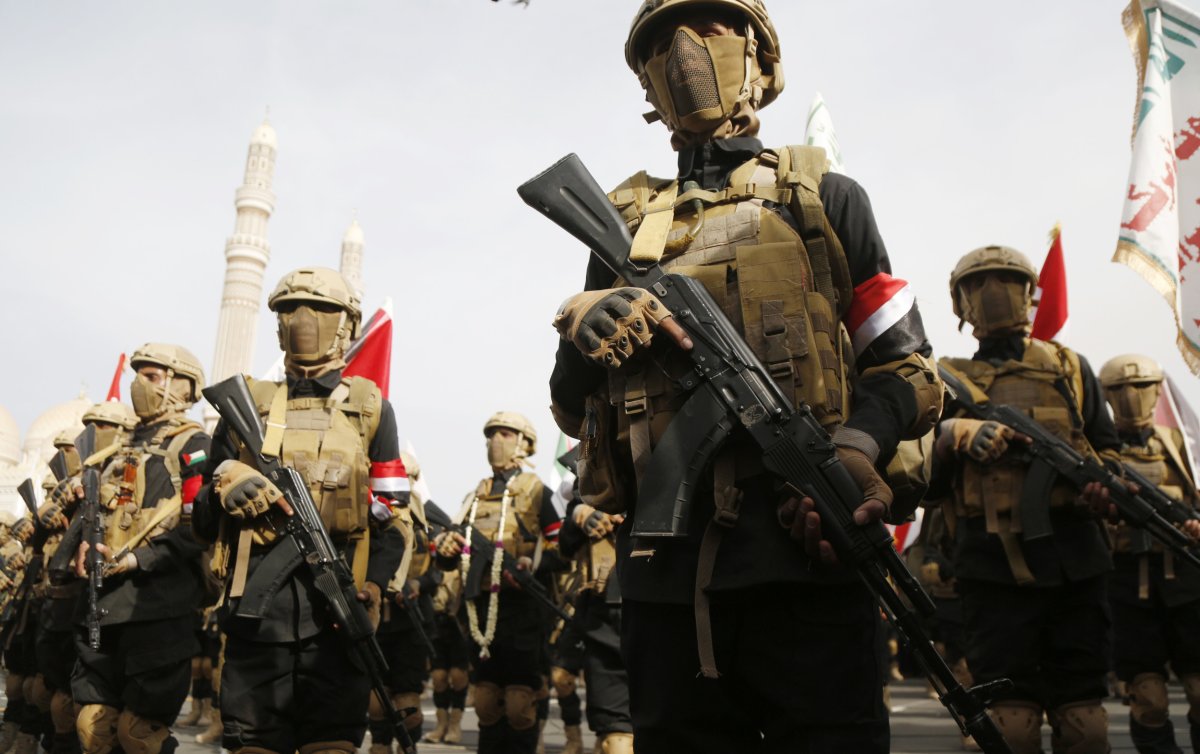
Ansar Allah fighters take part in a mass protest held against the Israeli continued bombardment and blockade of the Gaza Strip on May 23 in Sana'a, Yemen. Mohammed Hamoud/Getty Images
Between Diplomacy and War
The developments come amid new uncertainties surrounding ongoing nuclear negotiations between Washington and Tehran, which were set to enter their sixth round in Oman on Sunday.
Iranian officials were expected to counter an existing U.S. offer at the meeting, with Iranian Foreign Ministry spokesperson Esmaeil Baghaei calling the current terms "unacceptable" on Monday.
That same day, President Donald Trump indicated that Iran's response thus far had been "not acceptable," with the alternative being "very, very dire." He also told the "Pod Force One" podcast on Monday that he was becoming "less confident" in the likelihood of reaching a successful deal.
Yet sources cited by Axios and CNN indicated that Trump had once again discouraged Israeli Prime Minister Benjamin Netanyahu from taking military action against Iran when they spoke on Monday. Trump has indicated on at least two previous occasions that he had called on the Israeli premier not to conduct attacks on Iran while negotiations were ongoing.
On Tuesday, Iranian Foreign Minister Abbas Araghchi struck a more positive note regarding nuclear talks, saying that Trump's repeated vow to prevent Iran from obtaining a nuclear weapon "is actually in line with our own doctrine and could become the main foundation for a deal."
"As we resume talks on Sunday, it is clear that an agreement that can ensure the continued peaceful nature of Iran's nuclear program is within reach—and could be achieved rapidly," Araghchi, who is leading the Iranian delegation at the talks, said in a statement published to X, formerly Twitter.
"That mutually beneficial outcome relies on the continuation of Iran's enrichment program, under the full supervision of the IAEA [International Atomic Energy Agency], and the effective termination of sanctions," he added.
The statement came as the Iranian Intelligence Ministry threatened to release a trove of documents purported to be tied to Israel's own nuclear weapons, an arsenal that Israeli officials have for decades neither confirmed nor denied possessing. Iran's Supreme National Security Council stated that the sites detailed in the documents would be targeted in the event that Iran's nuclear infrastructure was subject to attack.
On Wednesday, Iranian Defense Minister Aziz Nasirzadeh warned U.S. military positions would also be hit in the event of a preemptive strike.
"Some officials on the other side threaten conflict if negotiations don't come to fruition," Nasirzadeh said, as cited by Reuters. "If a conflict is imposed on us ... all U.S. bases are within our reach, and we will boldly target them in host countries."
Hours later, CBS News reported that U.S. officials had been informed Israel was fully prepared to launch a strike against Iran and that retaliation was expected to potentially target the U.S. presence in Iraq, prompting the partial evacuation of the embassy in Baghdad.
"On June 11, the U.S. Department of State ordered the departure of non-emergency U.S. government personnel from Iraq," the U.S. Embassy in Iraq said in a statement Wednesday.
The U.S. Footprint in the Middle East
The U.S. is estimated to host around 2,500 troops in Iraq tasked with advising and training Iraqi forces in the fight against the Islamic State militant group (ISIS). While ISIS is a common foe of both Washington and Tehran, the U.S. presence in the country has been viewed as a threat by Iran.
Iran previously targeted U.S. troops in January 2020 following the assassination of top Iranian military figure Major General Qassem Soleimani. His killing was ordered by Trump in response to clashes between U.S. forces and Iraqi militias aligned with Tehran's Axis of Resistance.
Trump's predecessor, President Joe Biden, announced last September a two-phase plan to begin pulling U.S. military personnel from Iraq though the current administration has yet to confirm its commitment to the initiative.
Militias aligned to the Islamic Resistance in Iraq have repeatedly threatened to renew strikes against U.S. personnel if Washington and Baghdad failed to produce a concrete timeline to ensure the departure of U.S. forces.
The U.S. also hosts a number of key bases and facilities elsewhere in the region, particularly in Bahrain, Kuwait, Qatar, Saudi Arabia and the United Arab Emirates. As Biden signaled a gradual drawdown of U.S. troops in Iraq, he also increased the number of personnel in the broader CENTCOM area of operations from 34,000 to around 43,000, the Associated Press reported at the time.
The Houthi Threat
U.S. forces in the region have conducted direct strikes against Ansar Allah in response to its attacks on Israel as well as an unprecedented campaign that U.S. officials say targeted both civilian vessels and U.S. military vessels on hundreds of occasions between October 2023 and last month, when Trump announced a surprise deal with the group.
The U.S. leader said that Ansar Allah had agreed to suspend its maritime campaign in exchange for a halt to U.S. operations targeting the group. The deal notably did not include a pause to Ansar Allah's missile and drone strikes against Israel, which resumed in March after the breakdown of a ceasefire reached between Israel and Hamas in January.
Ansar Allah has pressed on with these long-range attacks against Israel, most recently launching a ballistic missile Wednesday just hours after the Israeli Navy targeted Yemen's Al-Hodeidah port in response to earlier strikes from the group.
The group has emerged as the most active member of the Axis of Resistance since the Lebanese Hezbollah movement signed a ceasefire with Israel last November, the collapse of Syrian President Bashar al-Assad's government to an Islamist-led rebel coalition less than two weeks later and a lull in attacks by the Islamic Resistance in Iraq following the initial Gaza truce reached in January.
Led by Abdul-Malek al-Houthi, Ansar Allah seized the Yemeni capital from the nation's a decade ago and today controls around a third of the country's territory and up to 80 percent of its population. Hostilities between the group and Yemen's Saudi-backed internationally recognized government have largely ceased since a truce mediated by the United Nations in April 2022.
To this day, the group denies receiving direct support from Iran.
Between Diplomacy and War
The developments come amid new uncertainties surrounding ongoing nuclear negotiations between Washington and Tehran, which were set to enter their sixth round in Oman on Sunday.
Iranian officials were expected to counter an existing U.S. offer at the meeting, with Iranian Foreign Ministry spokesperson Esmaeil Baghaei calling the current terms "unacceptable" on Monday.
That same day, President Donald Trump indicated that Iran's response thus far had been "not acceptable," with the alternative being "very, very dire." He also told the "Pod Force One" podcast on Monday that he was becoming "less confident" in the likelihood of reaching a successful deal.
Yet sources cited by Axios and CNN indicated that Trump had once again discouraged Israeli Prime Minister Benjamin Netanyahu from taking military action against Iran when they spoke on Monday. Trump has indicated on at least two previous occasions that he had called on the Israeli premier not to conduct attacks on Iran while negotiations were ongoing.
On Tuesday, Iranian Foreign Minister Abbas Araghchi struck a more positive note regarding nuclear talks, saying that Trump's repeated vow to prevent Iran from obtaining a nuclear weapon "is actually in line with our own doctrine and could become the main foundation for a deal."
"As we resume talks on Sunday, it is clear that an agreement that can ensure the continued peaceful nature of Iran's nuclear program is within reach—and could be achieved rapidly," Araghchi, who is leading the Iranian delegation at the talks, said in a statement published to X, formerly Twitter.
"That mutually beneficial outcome relies on the continuation of Iran's enrichment program, under the full supervision of the IAEA [International Atomic Energy Agency], and the effective termination of sanctions," he added.
The statement came as the Iranian Intelligence Ministry threatened to release a trove of documents purported to be tied to Israel's own nuclear weapons, an arsenal that Israeli officials have for decades neither confirmed nor denied possessing. Iran's Supreme National Security Council stated that the sites detailed in the documents would be targeted in the event that Iran's nuclear infrastructure was subject to attack.
On Wednesday, Iranian Defense Minister Aziz Nasirzadeh warned U.S. military positions would also be hit in the event of a preemptive strike.
"Some officials on the other side threaten conflict if negotiations don't come to fruition," Nasirzadeh said, as cited by Reuters. "If a conflict is imposed on us ... all U.S. bases are within our reach, and we will boldly target them in host countries."
Hours later, CBS News reported that U.S. officials had been informed Israel was fully prepared to launch a strike against Iran and that retaliation was expected to potentially target the U.S. presence in Iraq, prompting the partial evacuation of the embassy in Baghdad.
"On June 11, the U.S. Department of State ordered the departure of non-emergency U.S. government personnel from Iraq," the U.S. Embassy in Iraq said in a statement Wednesday.
The U.S. Footprint in the Middle East
The U.S. is estimated to host around 2,500 troops in Iraq tasked with advising and training Iraqi forces in the fight against the Islamic State militant group (ISIS). While ISIS is a common foe of both Washington and Tehran, the U.S. presence in the country has been viewed as a threat by Iran.
Iran previously targeted U.S. troops in January 2020 following the assassination of top Iranian military figure Major General Qassem Soleimani. His killing was ordered by Trump in response to clashes between U.S. forces and Iraqi militias aligned with Tehran's Axis of Resistance.
Trump's predecessor, President Joe Biden, announced last September a two-phase plan to begin pulling U.S. military personnel from Iraq though the current administration has yet to confirm its commitment to the initiative.
Militias aligned to the Islamic Resistance in Iraq have repeatedly threatened to renew strikes against U.S. personnel if Washington and Baghdad failed to produce a concrete timeline to ensure the departure of U.S. forces.
The U.S. also hosts a number of key bases and facilities elsewhere in the region, particularly in Bahrain, Kuwait, Qatar, Saudi Arabia and the United Arab Emirates. As Biden signaled a gradual drawdown of U.S. troops in Iraq, he also increased the number of personnel in the broader CENTCOM area of operations from 34,000 to around 43,000, the Associated Press reported at the time.
The Houthi Threat
U.S. forces in the region have conducted direct strikes against Ansar Allah in response to its attacks on Israel as well as an unprecedented campaign that U.S. officials say targeted both civilian vessels and U.S. military vessels on hundreds of occasions between October 2023 and last month, when Trump announced a surprise deal with the group.
The U.S. leader said that Ansar Allah had agreed to suspend its maritime campaign in exchange for a halt to U.S. operations targeting the group. The deal notably did not include a pause to Ansar Allah's missile and drone strikes against Israel, which resumed in March after the breakdown of a ceasefire reached between Israel and Hamas in January.
Ansar Allah has pressed on with these long-range attacks against Israel, most recently launching a ballistic missile Wednesday just hours after the Israeli Navy targeted Yemen's Al-Hodeidah port in response to earlier strikes from the group.
The group has emerged as the most active member of the Axis of Resistance since the Lebanese Hezbollah movement signed a ceasefire with Israel last November, the collapse of Syrian President Bashar al-Assad's government to an Islamist-led rebel coalition less than two weeks later and a lull in attacks by the Islamic Resistance in Iraq following the initial Gaza truce reached in January.
Led by Abdul-Malek al-Houthi, Ansar Allah seized the Yemeni capital from the nation's a decade ago and today controls around a third of the country's territory and up to 80 percent of its population. Hostilities between the group and Yemen's Saudi-backed internationally recognized government have largely ceased since a truce mediated by the United Nations in April 2022.
To this day, the group denies receiving direct support from Iran.
'It’s more serious than any other time in the past': Israel poised to strike Iran, officials say
US officials warn nuclear talks may collapse; Trump envoy Witkoff says president called him 5 times; embassies in Mideast, Europe, Africa activate emergency teams; Trump says US military 'will summon inexhaustible courage'
US officials warn nuclear talks may collapse; Trump envoy Witkoff says president called him 5 times; embassies in Mideast, Europe, Africa activate emergency teams; Trump says US military 'will summon inexhaustible courage'
Yesterday | YNET
The United States is on heightened alert amid growing fears of a potential Israeli military strike on Iran, the Washington Post reported late Wednesday, as nuclear negotiations between Washington and Tehran appear to be unraveling.
The report follows a series of security moves, including U.S. orders for non-essential staff to leave its embassies in Iraq, Bahrain and Kuwait, and emergency preparations at embassies across the Middle East, Eastern Europe and North Africa.
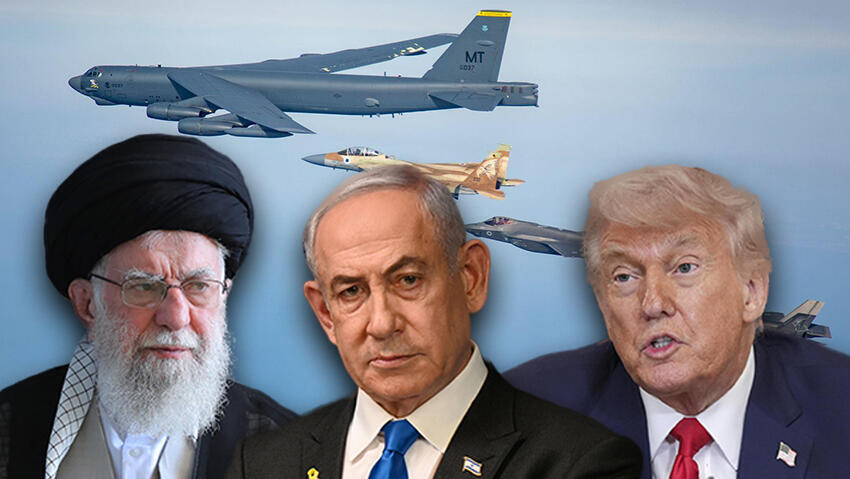
Ali Khamenei, Benjamin Netanyahu, Donald Trump
(Photo: REUTERS/Evelyn Hockstein, Iranian Leader's Press Office - Handout/Getty Images, GPO, IDF)
The Post said the U.S. State Department instructed all embassies within potential Iranian missile range to activate emergency response teams and assess how best to protect personnel amid escalating regional threats. President Donald Trump, asked why some U.S. military personnel in the region were ordered to prepare for evacuation, responded cryptically: “We’ll see what happens.”
The paper further reported that the next round of nuclear talks, scheduled for this Sunday in Muscat, Oman, may be at risk of cancellation. However, a U.S. administration official told Reuters that President Trump’s envoy to the Middle East, Steve Witkoff, is still expected to meet with Iranian Foreign Minister Abbas Araghchi on Sunday. Witkoff attended an event in New York on Wednesday night but was later summoned to the White House by Trump, telling associates that the president personally called him no fewer than five times.
Trump, who in recent days has expressed growing skepticism about the prospects for a new agreement with Iran, reiterated his support for the U.S. military in a post on Truth Social. “I am more confident than ever that in the days ahead and every generation to come, the U.S. Army will heap glory upon glory," he wrote. "You will summon inexhaustible courage. You will protect every inch of U.S. soil—and you will defend America to the ends of the earth!
The New York Times attributed the rising tensions to a breakdown in nuclear negotiations, particularly over uranium enrichment. The U.S. insists Iran must end all enrichment capabilities, while Tehran has repeatedly stated it will not surrender the right to enrich uranium on its own soil.
“We are watching and worried,” one senior diplomat in the region told the Post. “We think it’s more serious than any other time in the past.”
Iran, for its part, continued to call for a negotiated solution, with its mission to the United Nations reiterating that “diplomacy—not militarism—is the only path forward.”
Speaking at a gala for United Hatzalah in New York, Witkoff confirmed he had spoken the night before with Prime Minister Benjamin Netanyahu. Witkoff said the U.S. must never allow Iran to enrich uranium or develop nuclear capabilities. “A nuclear Iran represents an existential threat to Israel, as does an Iran with a large amount of missiles. That is as big an existential threat as the nuclear threat. And this is an existential threat to the United States and the free world and the entire GCC (Gulf Cooperation Council). We must stand resolute and united against this danger and ensure that Iran never attains the means to achieve its deadly ambitions, no matter what the cost,” he warned.

Steve Witkoff, Abbas Araghchi
(Photo: REUTERS/Evelyn Hockstein/Pool, Amer HILABI AFP, CameraObscura82/Shutterstock, Smolkov Vladislav/Shutterstock)
He also praised Trump, calling him “the only U.S. president who could also serve as Israel’s prime minister—no disrespect to Prime Minister Netanyahu.”
Adding to concerns, Reuters revealed late Wednesday that CENTCOM Commander Gen. Michael Kurilla had postponed his scheduled testimony before Congress due to the unfolding situation in the Middle East. In the wake of these developments, global oil prices jumped by roughly 5%.
The precautionary U.S. moves followed renewed threats from Tehran. Iranian Defense Minister Gen. Aziz Nasirzadeh warned that if diplomacy fails and conflict is "forced" upon Iran, the country would strike U.S. bases in the region. “The losses of the enemy would outweigh ours,” he said. “In the event of confrontation, America must leave the region, as all its bases are within our reach—we will not hesitate to target them.”
Amid the rising rhetoric, Iran’s mission to the United Nations released a statement
In a separate report by Al Arabiya English, sources said U.S. intelligence assessments indicate that Iranian-backed militias operating in Iraq and other regional hotspots are preparing to target American interests across the Middle East.
Earlier in the evening, Iranian President Masoud Pezeshkian accused foreign enemies of trying to provoke internal conflict to justify an attack. “We are in contact with the U.S. and Europe, but we will not surrender to dictates,” he said. “No one has the right to deny our scientific research in nuclear technology. We do not seek nuclear arms, but we won’t strip our capabilities so Israel can bomb us freely.”
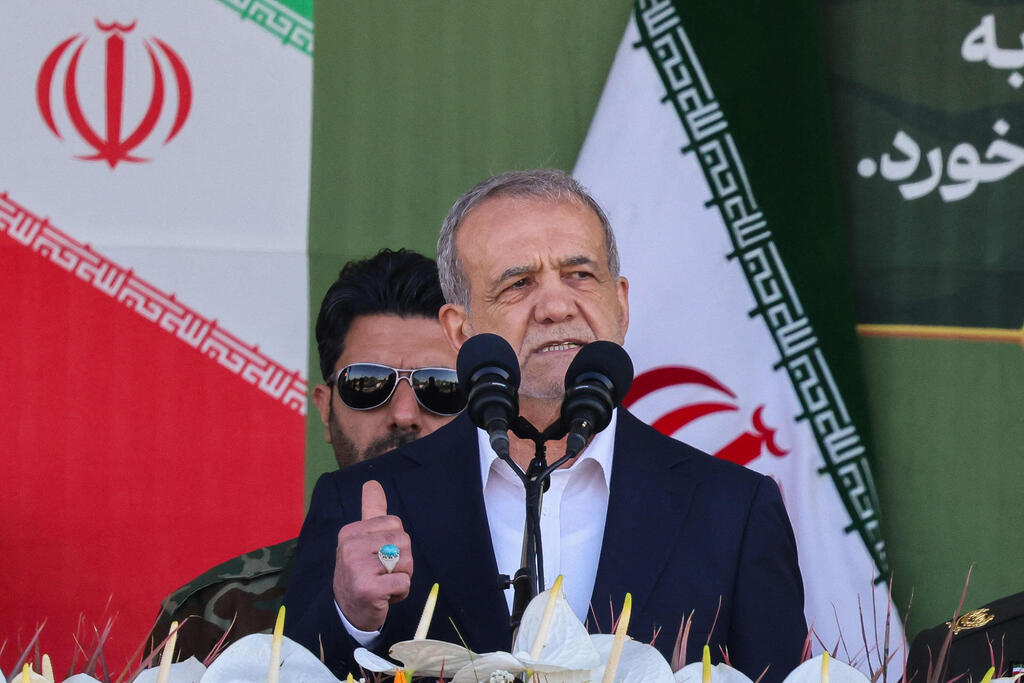
Iranian President Masoud Pezeshkian
(Photo: Atta KENARE / AFP)
As nuclear negotiations between Washington and Tehran teeter on the brink of collapse, American officials have issued fresh warnings that failure could trigger a military response. Since April, five rounds of negotiations have taken place as talks appear to have stalled over a fundamental impasse: uranium enrichment. The U.S. insists any future deal must eliminate Iran’s capacity to enrich uranium—a process that, even at low levels, could eventually provide a pathway to a bomb. Iran, meanwhile, has repeatedly stated that enrichment on its own soil is a non-negotiable red line.
Defense Secretary Hegseth told Senate lawmakers on Wednesday that “there have been plenty of indications” Iran has been “moving their way toward something that would look a lot like a nuclear weapon.”
Meanwhile, President Trump expressed growing doubt about the prospects of reaching a deal to dismantle Iran’s nuclear program. “I don’t know,” Trump told the New York Post podcast when asked whether he still believed an agreement was possible. “I did think so, and I'm getting more and more less confident about it."
Trump voiced hope that Iran would shift course and choose diplomacy over confrontation. “They're not going to have a nuclear weapon. But it would be nicer to do it without warfare, without people dying, it's so much nicer to do it,” he said. “But I don't think I see the same level of enthusiasm for them to make a deal. I think they’re making a mistake, but we’ll see. I guess time will tell.”
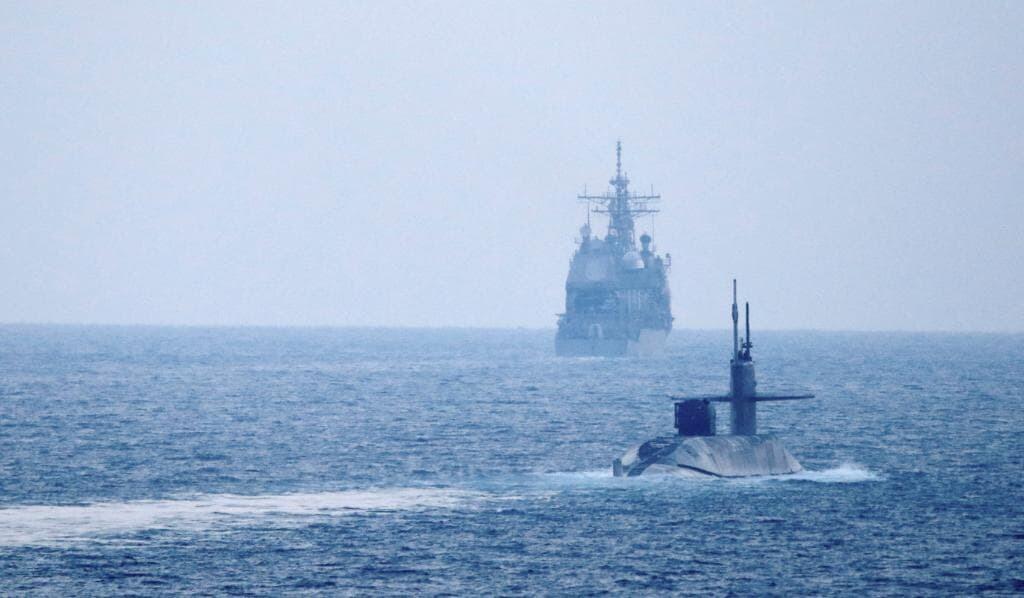
US vessels in the Strait of Hormuz
The comments mark a stark shift in tone from the White House, which had previously projected optimism about the negotiations. As recently as this week, Trump said he was “disappointed” by Iran’s increasingly aggressive stance and accused Tehran of backtracking on earlier positions.
His pessimism comes amid mounting pressure from Israel to abandon talks altogether. Prime Minister Benjamin Netanyahu reportedly urged Trump during a phone call on Monday to recognize that Iran was “stringing him along.” Still, sources say Trump is holding back from approving an Israeli military strike on Iran’s nuclear facilities. During their conversation, he is said to have told Netanyahu explicitly that he is not giving Israel a “green light” for such an operation.

The United States is on heightened alert amid growing fears of a potential Israeli military strike on Iran, the Washington Post reported late Wednesday, as nuclear negotiations between Washington and Tehran appear to be unraveling.
The report follows a series of security moves, including U.S. orders for non-essential staff to leave its embassies in Iraq, Bahrain and Kuwait, and emergency preparations at embassies across the Middle East, Eastern Europe and North Africa.
Ali Khamenei, Benjamin Netanyahu, Donald Trump
(Photo: REUTERS/Evelyn Hockstein, Iranian Leader's Press Office - Handout/Getty Images, GPO, IDF)
The Post said the U.S. State Department instructed all embassies within potential Iranian missile range to activate emergency response teams and assess how best to protect personnel amid escalating regional threats. President Donald Trump, asked why some U.S. military personnel in the region were ordered to prepare for evacuation, responded cryptically: “We’ll see what happens.”
The paper further reported that the next round of nuclear talks, scheduled for this Sunday in Muscat, Oman, may be at risk of cancellation. However, a U.S. administration official told Reuters that President Trump’s envoy to the Middle East, Steve Witkoff, is still expected to meet with Iranian Foreign Minister Abbas Araghchi on Sunday. Witkoff attended an event in New York on Wednesday night but was later summoned to the White House by Trump, telling associates that the president personally called him no fewer than five times.
Trump, who in recent days has expressed growing skepticism about the prospects for a new agreement with Iran, reiterated his support for the U.S. military in a post on Truth Social. “I am more confident than ever that in the days ahead and every generation to come, the U.S. Army will heap glory upon glory," he wrote. "You will summon inexhaustible courage. You will protect every inch of U.S. soil—and you will defend America to the ends of the earth!
The New York Times attributed the rising tensions to a breakdown in nuclear negotiations, particularly over uranium enrichment. The U.S. insists Iran must end all enrichment capabilities, while Tehran has repeatedly stated it will not surrender the right to enrich uranium on its own soil.
Late Wednesday, CBS News added to the sense of urgency, reporting that U.S. officials had been briefed that Israel has completed preparations to launch an attack on Iran. The report also said Washington fears that such a move could prompt retaliatory strikes by Iran on American targets in neighboring Iraq—one reason behind the current drawdown of U.S. presence in the region.
“We are watching and worried,” one senior diplomat in the region told the Post. “We think it’s more serious than any other time in the past.”
Iran, for its part, continued to call for a negotiated solution, with its mission to the United Nations reiterating that “diplomacy—not militarism—is the only path forward.”
Speaking at a gala for United Hatzalah in New York, Witkoff confirmed he had spoken the night before with Prime Minister Benjamin Netanyahu. Witkoff said the U.S. must never allow Iran to enrich uranium or develop nuclear capabilities. “A nuclear Iran represents an existential threat to Israel, as does an Iran with a large amount of missiles. That is as big an existential threat as the nuclear threat. And this is an existential threat to the United States and the free world and the entire GCC (Gulf Cooperation Council). We must stand resolute and united against this danger and ensure that Iran never attains the means to achieve its deadly ambitions, no matter what the cost,” he warned.
Steve Witkoff, Abbas Araghchi
(Photo: REUTERS/Evelyn Hockstein/Pool, Amer HILABI AFP, CameraObscura82/Shutterstock, Smolkov Vladislav/Shutterstock)
He also praised Trump, calling him “the only U.S. president who could also serve as Israel’s prime minister—no disrespect to Prime Minister Netanyahu.”
Adding to concerns, Reuters revealed late Wednesday that CENTCOM Commander Gen. Michael Kurilla had postponed his scheduled testimony before Congress due to the unfolding situation in the Middle East. In the wake of these developments, global oil prices jumped by roughly 5%.
The precautionary U.S. moves followed renewed threats from Tehran. Iranian Defense Minister Gen. Aziz Nasirzadeh warned that if diplomacy fails and conflict is "forced" upon Iran, the country would strike U.S. bases in the region. “The losses of the enemy would outweigh ours,” he said. “In the event of confrontation, America must leave the region, as all its bases are within our reach—we will not hesitate to target them.”
Nasirzadeh also claimed Iran had recently tested a missile with a two-ton warhead.
A U.S. official said the State Department would instruct Baghdad embassy staff to leave via commercial flights but noted the U.S. military is ready to assist if needed. An Iraqi Foreign Ministry source confirmed a "partial evacuation" of the U.S. embassy in Baghdad due to "regional security concerns."
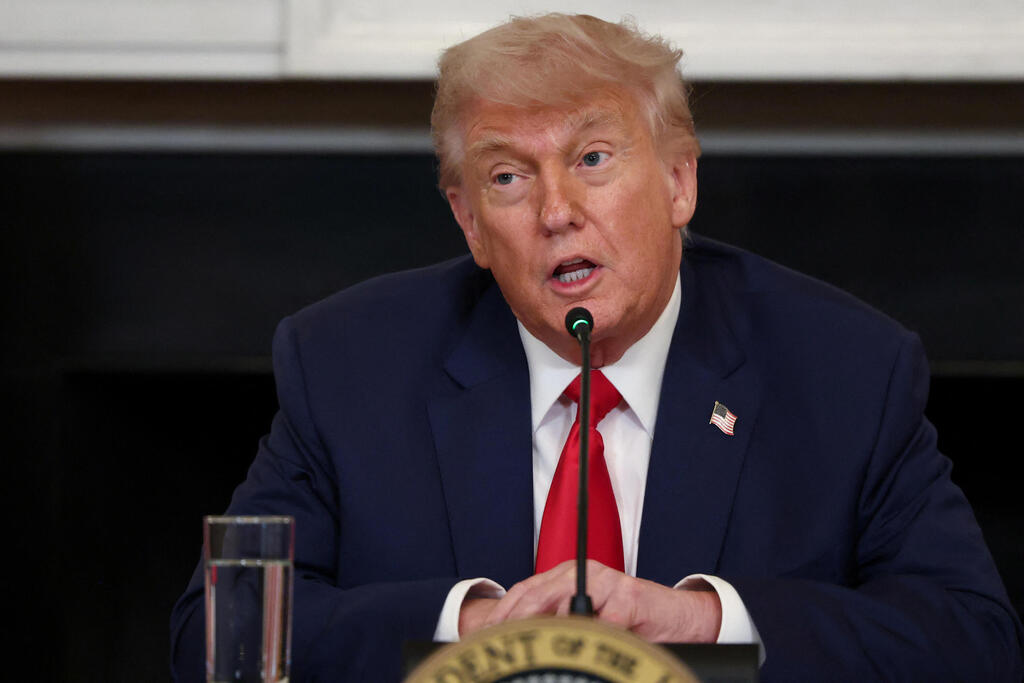
US President Donald Trump
(Photo: REUTERS/Evelyn Hockstein, AP Photo/Evan Vucci)
A U.S. official said the State Department would instruct Baghdad embassy staff to leave via commercial flights but noted the U.S. military is ready to assist if needed. An Iraqi Foreign Ministry source confirmed a "partial evacuation" of the U.S. embassy in Baghdad due to "regional security concerns."
US President Donald Trump
(Photo: REUTERS/Evelyn Hockstein, AP Photo/Evan Vucci)
Amid the rising rhetoric, Iran’s mission to the United Nations released a statement
warning that threats of “overwhelming force” would not change the reality. “Iran is not seeking a nuclear weapon, and U.S. militarism only fuels instability,” the statement read, accusing CENTCOM of enabling Israeli actions and undermining diplomatic efforts.
Meanwhile, The New York Times reported overnight that senior Iranian military and government officials have already convened to discuss their potential response to an Israeli strike. According to a high-ranking Iranian government source, Tehran has devised a retaliatory plan that would involve an “immediate counterstrike on Israel with hundreds of ballistic missiles.”
Meanwhile, The New York Times reported overnight that senior Iranian military and government officials have already convened to discuss their potential response to an Israeli strike. According to a high-ranking Iranian government source, Tehran has devised a retaliatory plan that would involve an “immediate counterstrike on Israel with hundreds of ballistic missiles.”
In a separate report by Al Arabiya English, sources said U.S. intelligence assessments indicate that Iranian-backed militias operating in Iraq and other regional hotspots are preparing to target American interests across the Middle East.
Earlier in the evening, Iranian President Masoud Pezeshkian accused foreign enemies of trying to provoke internal conflict to justify an attack. “We are in contact with the U.S. and Europe, but we will not surrender to dictates,” he said. “No one has the right to deny our scientific research in nuclear technology. We do not seek nuclear arms, but we won’t strip our capabilities so Israel can bomb us freely.”
Iranian President Masoud Pezeshkian
(Photo: Atta KENARE / AFP)
As nuclear negotiations between Washington and Tehran teeter on the brink of collapse, American officials have issued fresh warnings that failure could trigger a military response. Since April, five rounds of negotiations have taken place as talks appear to have stalled over a fundamental impasse: uranium enrichment. The U.S. insists any future deal must eliminate Iran’s capacity to enrich uranium—a process that, even at low levels, could eventually provide a pathway to a bomb. Iran, meanwhile, has repeatedly stated that enrichment on its own soil is a non-negotiable red line.
Defense Secretary Hegseth told Senate lawmakers on Wednesday that “there have been plenty of indications” Iran has been “moving their way toward something that would look a lot like a nuclear weapon.”
Meanwhile, President Trump expressed growing doubt about the prospects of reaching a deal to dismantle Iran’s nuclear program. “I don’t know,” Trump told the New York Post podcast when asked whether he still believed an agreement was possible. “I did think so, and I'm getting more and more less confident about it."
Trump voiced hope that Iran would shift course and choose diplomacy over confrontation. “They're not going to have a nuclear weapon. But it would be nicer to do it without warfare, without people dying, it's so much nicer to do it,” he said. “But I don't think I see the same level of enthusiasm for them to make a deal. I think they’re making a mistake, but we’ll see. I guess time will tell.”
US vessels in the Strait of Hormuz
The comments mark a stark shift in tone from the White House, which had previously projected optimism about the negotiations. As recently as this week, Trump said he was “disappointed” by Iran’s increasingly aggressive stance and accused Tehran of backtracking on earlier positions.
His pessimism comes amid mounting pressure from Israel to abandon talks altogether. Prime Minister Benjamin Netanyahu reportedly urged Trump during a phone call on Monday to recognize that Iran was “stringing him along.” Still, sources say Trump is holding back from approving an Israeli military strike on Iran’s nuclear facilities. During their conversation, he is said to have told Netanyahu explicitly that he is not giving Israel a “green light” for such an operation.