Monday, October 06, 2025


Several still missing as Indonesian school collapse death toll rises to 37

37 students, mostly boys between the ages of 12 and 19, have died and dozens more still missing after a prayer hall at an Islamic boarding school that collapsed in Sidoarjo on the eastern side of Indonesia’s Java island almost a week ago. 

The tragedy has triggered widespread anger over illegal construction in Indonesia.


Issued on: 05/10/2025 - 
By: FRANCE 24

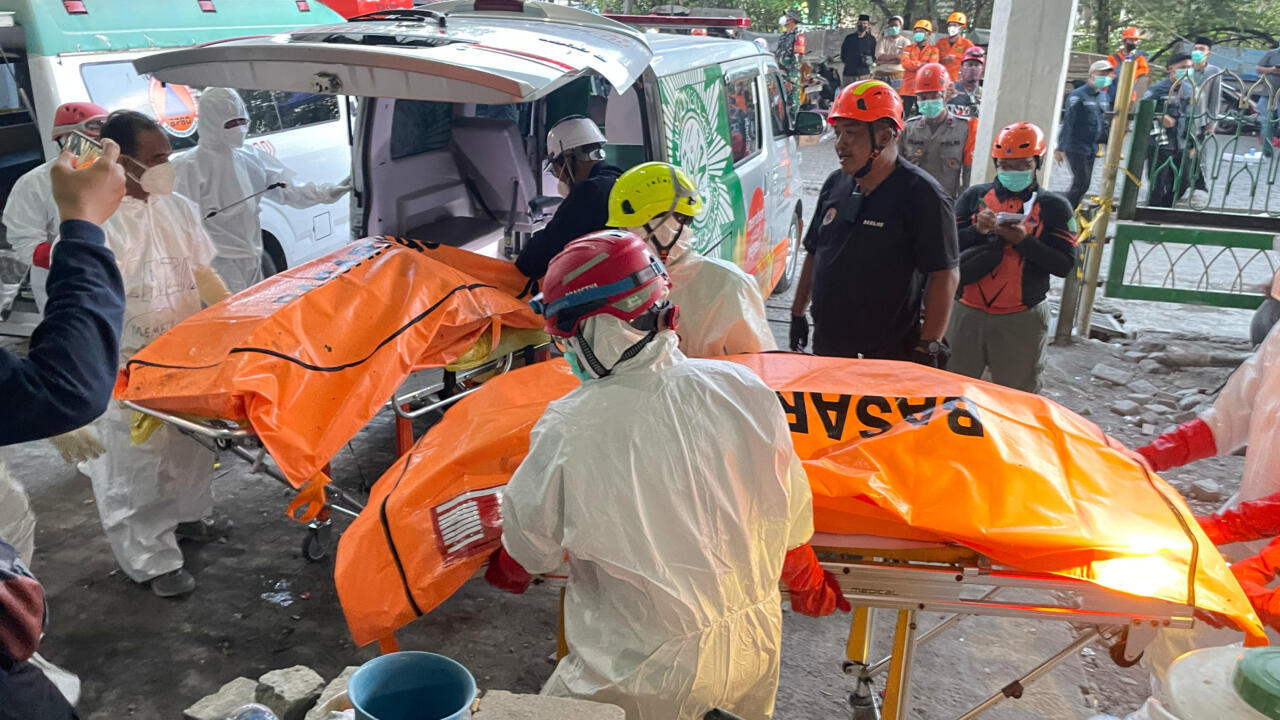
Rescuers put bodies of victims from a collapsed building at an Islamic boarding school into an ambulance in Sidoarjo, East Java, Indonesia, Friday, October 3, 2025. © Trisnadi, AP


Indonesian rescuers are searching on Sunday for missing students after a prayer hall at an Islamic boarding school collapsed almost a week ago. They have recovered 23 bodies over the weekend search, bringing the death toll to 37.

Using jackhammers, circular saws and sometimes their bare hands, rescue teams diligently removed rubble in an attempt to find the 26 missing students.

The structure fell on top of hundreds of students, mostly boys between the ages of 12 and 19, on September 30 at the century-old Al Khoziny school in Sidoarjo on the eastern side of Indonesia’s Java island. Only one student escaped unscathed, authorities said, while 95 were treated for various injuries and released. Eight others suffered serious wounds and remained hospitalized Sunday.

Police said two levels were added to the two-story building without a permit, leading to structural failure. This has triggered widespread anger over illegal construction in Indonesia.

“The construction couldn’t support the load while the concrete was pouring (to build) the third floor because it didn't meet standards and the whole 800 square meters (8,600 square feet) construction collapsed,” said Mudji Irmawan, a construction expert from Tenth November Institute of Technology.

Irmawan also said students shouldn't have been allowed inside a building under construction.

Sidoarjo district chief, Subandi, confirmed what the police had announced: The school’s management had not applied for the required permit before starting construction.

“Many buildings, including traditional boarding school extensions, in non-urban areas were built without a permit," Subandi, who goes by a single name, told The Associated Press on Sunday.

Indonesia's 2002 Building Construction code states that permits have to be issued by the relevant authorities prior to any construction, or else face fines and imprisonment. If a violation causes death, this can lead to up to 15 years in prison and a fine of up to 8 billion rupiah (nearly $500,000).

The school's caretaker is Abdus Salam Mujib, a respected Islamic cleric in East Java. He offered a public apology in a rare appearance a day after the incident.

“This is indeed God’s will, so we must all be patient, and may God replace it with goodness, with something much better. We must be confident that God will reward those affected by this incident with great rewards,” he said.

Criminal investigations involving Muslim clerics remain sensitive in the world’s most populous Muslim-majority nation.

There has been no comment from school officials since the collapse.

“We will investigate this case thoroughly,” East Java Police Chief Nanang Avianto said Sunday. “Our investigation also requires guidance from a team of construction experts to determine whether negligence by the school led to the deaths.”

(FRANCE 24 with AP)
ICE; TRUMPS GESTAPO

Trump authorizes troops to Chicago as judge temporarily halts Portland deployment


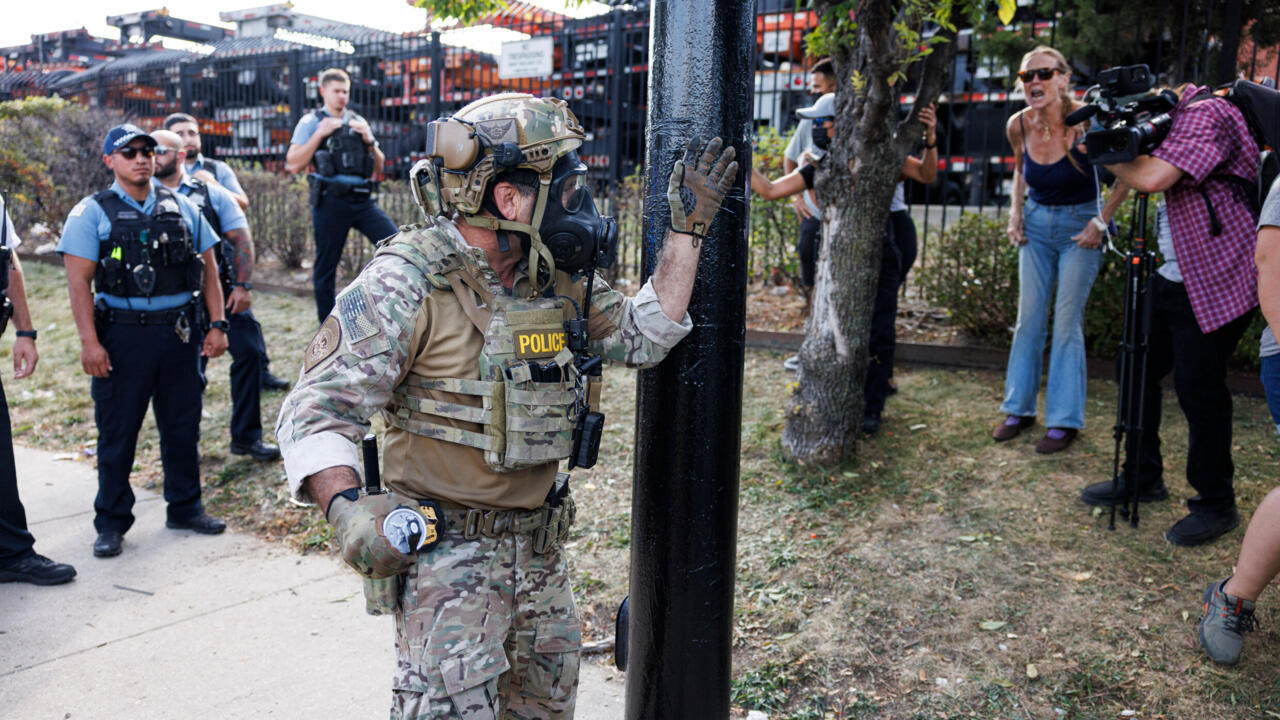
US President Donald Trump authorized deployment of 300 national guardsmen to Chicago after a federal agent shot an allegedly armed motorist there on Saturday, while a judge blocked the attempt to send the military into Portland, another Democratic-run city. Chicago and Portland are the latest flashpoints in the Trump administration's rollout of raids, following the deployment of troops to Los Angeles and Washington.


Issued on: 05/10/2025 
By: FRANCE 24
A DHS officer prepares to throw a gas canister in the Brighton Park neighborhood of Chicago, on Saturday, Oct. 4, 2025. © Anthony Vazquez, AP

US President Donald Trump authorized deployment of troops to Chicago after a federal agent shot an allegedly armed motorist there on Saturday, while a judge blocked the Republican leader's attempt to send the military into Portland, another Democratic-run city.

The escalating crisis across the country pits Trump's increasingly militarized anti-crime and migration crackdown against opposition Democrats who accuse him of an authoritarian power grab.

"President Trump has authorized 300 national guardsmen to protect federal officers and assets" in Chicago, White House spokeswoman Abigail Jackson said in a statement, after weeks of the Republican threats to send troops to the Midwestern city over the wishes of local leaders.

"President Trump will not turn a blind eye to the lawlessness plaguing American cities."

Illinois Senator Dick Durbin called the move a "shameful chapter in our nation's history," adding that the "President is not intent on fighting crime. He is intent on spreading fear."

Read more‘I couldn’t breathe’: ICE agents fire tear gas at peaceful protesters in Chicago suburb

Chicago and Portland are the latest flashpoints in the Trump administration's rollout of raids, following the deployment of troops to Los Angeles and Washington.

The raids have seen groups of masked, armed men in unmarked cars and armored vehicles target residential neighborhoods and businesses, sparking protests.

Trump has repeatedly called Portland "war-ravaged" and riddled with violent crime, but in Saturday's court order, US District Judge Karin Immergut wrote "the President's determination was simply untethered to the facts."

Although the city has seen scattered attacks on federal officers and property, the Trump administration failed to demonstrate "that those episodes of violence were part of an organized attempt to overthrow the government as a whole," Immergut wrote in granting a temporary restraining order.

Protests in Portland did not pose a "danger of rebellion" and "regular law enforcement forces" could handle such incidents, Immergut said.

Watch more Trump's Martial Plan? US military encouraged to embrace 'warrior ethos'

Oregon Senator Ron Wyden applauded the order, saying the "victory supports what Oregonians already know: we don't need or want Donald Trump to provoke violence by deploying federal troops in our state."

White House Deputy Chief of Staff Stephen Miller wrote on social media that the judge's order was "legal insurrection" and accused local leaders in Oregon of conducting an "organized terrorist attack on the federal government."
'Operation Midway Blitz'

Earlier Saturday, a federal officer in Chicago shot a motorist after law enforcement agents were "boxed in by 10 cars," the Department of Homeland Security (DHS) said.

"Agents were unable to move their vehicles and exited the car. One of the drivers who rammed the law enforcement vehicle was armed with a semi-automatic weapon," DHS assistant secretary Tricia McLaughlin said in a statement.

"Law enforcement was forced to deploy their weapons and fire defensive shots at an armed US citizen," she said.

AFP could not independently verify the DHS version of the event.

The agency said the motorist "drove herself to the hospital to get care for wounds," but Chicago Fire Department spokesman Larry Merritt told the Sun-Times newspaper that she was found in fair condition and taken to a local hospital.

McLaughlin also accused Chicago police of "leaving the shooting scene" with officers refusing "to assist us in securing the area."

Read more Trump addresses US military leaders, says country faces 'war from within'

Chicago police told local broadcaster Fox 32 that officers responded to the scene but the department "is not involved in the incident or its investigation. Federal authorities are investigating this shooting."

Following the shooting, protesters who had gathered chanting "ICE go home!" were met with tear gas and pepper balls, temporarily dispersing before returning, the Sun-Times reported.

Protesters left after federal agents vacated the scene.

Trump's "Operation Midway Blitz" was launched in Chicago last month, and Saturday's shooting is not the first time federal agents have opened fire.

Department of Homeland Security officials said ICE officers shot and killed 38-year-old immigrant Silverio Villegas Gozalez during a traffic stop on September 12, accusing him of allegedly trying to flee the scene and dragging an ICE officer with the vehicle.

(FRANCE 24 with AFP)


Egypt opens Amenhotep III's tomb to public, after over 20 years of renovation


Issued on: 05/10/2025 - FRANCE24

Egypt on Saturday (October 4) opened a tomb of a pharaoh for visitors after more than two decades of renovation in the southern city of Luxor, as it prepares for the official opening of the Grand Egyptian Museum in Cairo.

French prosecutors launch war-crimes probe into photojournalist’s death in Ukraine


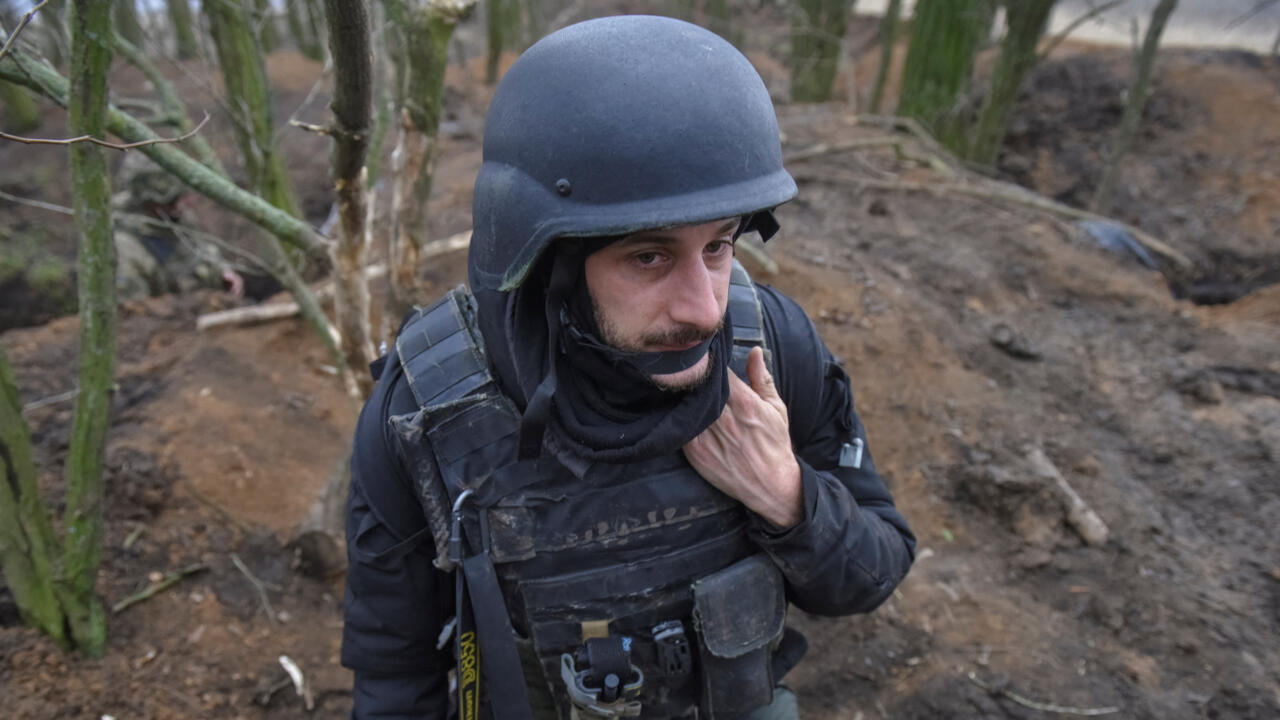
French prosecutors have launched a war-crimes probe into the death of French photojournalist Antoni Lallican, who was killed in a drone strike earlier this week in Ukraine’s eastern Donbas region. Lallican was embedded with Ukrainian forces at the time of the attack, which President Emmanuel Macron has blamed on Russia.


Issued on: 05/10/2025
By: FRANCE 24

French photojournalist Antoni Lallican photographed in the Donetsk region, in Ukraine, amid Russia's attack on Ukraine, on February 26, 2023. © Reuters/ File picture

French prosecutors said Sunday they had opened a “war crimes” investigation after a drone killed a French photojournalist on assignment in war-torn eastern Ukraine.

Antoni Lallican, 37, was embedded with Ukraine’s Fourth Armoured Brigade near the front line in the Donbas region of eastern Ukraine when he was killed on Friday, Ukrainian authorities said.


Ukrainian journalist Georgiy Ivanchenko was wounded in the same attack, which Ukraine’s military and French President Emmanuel Macron blamed on Russia.

The investigation has been entrusted to the Central Office for the Fight against Crimes against Humanity and Hate Crimes, France’s anti-terror unit PNAT said.

A “war crimes” charge falls under PNAT’s remit and consists of “deliberate attacks on the life and physical or mental integrity of a person protected by international humanitarian law”.

Lallican, an award-winning photojournalist whose work had appeared in leading French and international media, is the first journalist to be killed by a drone in Russia’s war against Ukraine, according to the European and International Federations of Journalists.

At least 17 journalists have been killed in Ukraine since Russia launched its full-scale invasion in February 2022, the groups said, while UNESCO, had as of late June this year, put the number at 22.

They include AFP video journalist Arman Soldin, who was killed by rocket fire in 2023.

(FRANCE 24 with AFP)


Ukraine says Russia intensifying railway strikes to isolate frontline communities


Issued on: 05/10/2025 - FRANCE24

The head of Ukraine's railways said Saturday (October 4) that Russia was intensifying a campaign of air strikes on the network in an attempt to isolate frontline communities ahead of winter. Russia launched drones at two passenger trains in Ukraine's northeastern Sumy region, killing one person and wounding dozens, according to Ukrainian officials.

Video by:  Eliza HERBERT


Landslides and floods kill 64 in Nepal, India

Kathmandu (AFP) – Landslides and floods triggered by heavy downpours in Nepal and neighbouring India have killed more than 60 people, officials said Sunday, as rescue workers raced to reach cut-off communities in remote mountainous terrain.

Issued on: 05/10/2025 -  FRANCE24

Nepal has deployed helicopters and security personnel to assist rescue efforts 
© - / Nepalese Army/AFP

Torrential downpours have lashed Nepal since Friday, leaving rivers in spate and many areas in the Himalayan nation inundated.

At least 44 people have died in rain-triggered disasters and five are missing, Shanti Mahat, spokeswoman for Nepal's National Disaster Risk Reduction and Management Authority, told AFP.

At least 37 were killed by landslides in the worst-affected eastern district of Illam.

"Heavy rains overnight caused the landslides," said local district official Sunita Nepal.

"Rescue workers have reached the affected areas. It was difficult because many roads were blocked."

Rivers in the capital Kathmandu have also swelled, inundating settlements along their banks.

Security personnel were deployed to assist rescue efforts with helicopters and motorboats.

"There is some damage, but thanks to the authorities' prior flood alert, we were able to move some belongings to a safe place," said vegetable seller Rajan Khadga, 38.

Landslides have blocked several highways and disrupted flights, leaving hundreds of travellers -- many returning after celebrating the Hindu festival of Dashain -- stranded.

At least five people are still missing, according to federal disaster officials.

Prime Minister Sushila Karki said government agencies were "fully prepared for rescue and relief".

"Your safety is our utmost concern. Do not hesitate to seek necessary assistance," she said in an address, adding that the government has declared Sunday and Monday public holidays and urged people not to travel unless necessary.
'Red alert'

Across the border in India, at least 20 people were killed in the tea-growing hill district of Darjeeling in West Bengal state after heavy overnight rain unleashed flash floods and landslides that destroyed homes and infrastructure.

"In the wake of last night's heavy cyclone in the Darjeeling hills, over 20 people have lost their lives," said Harsh Vardhan Shringla, a lawmaker in India's upper house.

Footage on Indian television news showed rescue workers using cables to access cut-off regions as raging waters smashed into bridges and caved in roads.

Prime Minister Narendra Modi said he was "pained by the loss of lives".

"The situation in Darjeeling and surrounding areas is being closely monitored in the wake of heavy rains and landslides," he said in a statement on social media.

India's weather department on Sunday issued a red alert for "extremely heavy rainfall" in sub-Himalayan areas, including Darjeeling, until Monday.

Relentless downpours also swelled rivers in neighbouring Bhutan, prompting the Indian army to join rescue efforts.

Military helicopters were deployed to evacuate several civilians stranded in the border town of Phuentsholing, the army said in a statement.

Monsoon rains, usually from June to September, bring widespread death and destruction every year across South Asia, but the number of fatal floods and landslides has increased in recent years.

Experts say climate change has worsened their schedule, frequency and intensity.

The Kathmandu-based International Centre for Integrated Mountain Development warned in June that communities faced heightened disaster risks this monsoon season.

"Rising temperatures and more extreme rain raise the risk of water-induced disasters such as floods, landslides, and debris flows," it said.

© 2025 AFP

 PHILIPPINES

It’s Not ‘Climate Change’ After All, It’s Corruption – OpEd

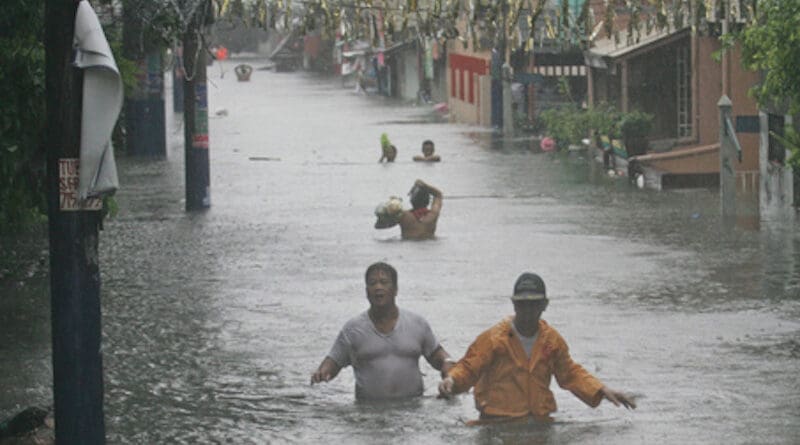
File photo of flooding in the Philippines. Photo Credit: Marconarajos, Wikipedia Common


By 

When the country was hit by southwest monsoon during July 2025 and subsequently intensified by tropical typhoons Wipha (named locally as Crising), Francisco (Dante), and Co-may (Emong), leading to massive flooding, loss of lives, and destruction of infrastructures, peoples’ livelihood, and properties in the Philippines, President Marcos Jr. declared this environmental phenomenon as the “new normal.” He stated that people should adapt themselves to more frequent and intense storms due to climate change. This involves accelerating disaster mitigation efforts, improving response and recovery by pre-positioning aid, mapping community vulnerabilities to specific hazards, and implementing long-term solutions like flood control. 


While it is true that climate change, particularly global warming and rising temperatures, means typhoons are becoming more powerful, increasing the risk of both inland flooding and dangerous storm surges along the coasts, the Philippines is exceptionally vulnerable and highly prone to flash floods and prolonged heavy downpours. Considering that the country is located along the typhoon belt in the Pacific, it is visited by an average of 20 typhoons every year, with around 5 are expected to be destructive and powerful. However, the weather is not the sole reason. Notably, disasters caused by flooding are often fundamentally linked to governance failures. 

Scale of corruption

In the same month of July, Marcos Jr. acknowledged in his fourth State of the Nation Address (SONA) that wanton corruption in the government’s flood control infrastructure projects and flawed management of its program rather than climate change was primarily responsible for the devastating flooding that severely impacted millions of people across multiple regions. In spite of government’s spending almost PHP 2 trillion on disaster risk reduction from 2015 to 2022, yet people and communities remain defenseless from floods. 

The scale of corruption is huge. Diverting public funds into the pockets of government officials, legislators and top bureaucrats, as well as business individuals, primarily contractors. Billions of pesos earmarked for protection are systematically siphoned away from public infrastructures to private hands, making the nation’s physical vulnerability a direct consequence of its political and ethical corruption.

Initial investigations by the Philippine Senate (PS) Committee on Accountability of Public Officers and Investigations (popularly known as the Blue Ribbon Committee) tasked to investigate alleged wrongdoings of the government, its officials, and its attached agencies, to draft a new legislation or amend an existing law, disclosed that as much as P 1.089 trillion (almost USD 20 billion) of the government’s climate-tagged expenditures could have potentially been lost to corruption since 2023, including P 560 billion (almost USD 10 billion) in early September 2025 alone

Moreover, testimonies of “resource persons” in the Senate suggest that kickbacksof 20-25% were common, leaving only 30-40% of the project’s budget for actual construction. In addition, allegations were made that “ghost” (non-existent) projects were fully paid by the government implementing agency (Department of Public Works and Highways [DPWH]) to private business contractors, and substandard construction was done using cheaper materials to cover up for kickbacks remitted either to contractors or DPWH officials; national government budgets are manipulated and re-aligned to benefit public officials’ infrastructure projects, bids and rewards are rigged, and contractors’ license are rented out to DPWH’s corrupt officials. Systemic corruption is in operation for several decades as a network of conspiring lawmakers, top bureaucrats (some at the level of cabinet secretaries), officials of constitutional bodies, and construction business enterprises with impunity — not simply an alliance of unholy trinity but alliance of unholy quartet!


Entrusted by the people to safeguard their taxes, the so-called public servants have plundered public funds. People and communities were left on their own to address government’s negligence and man-made failures that turned heavy rains into catastrophic disasters. Beneath the surface of the climate narrative lies a deep-rooted system of corruption that directly cripples the nation’s ability to manage floods. This corruption does not just steal money; it steals security, resilience, and peoples’ future, creating a vicious cycle that worsens the nation’s vulnerability. The ultimate failure is one of accountability. If those who hold the gavel are themselves the culprits, where can citizens turn for justice? 

The theft of climate funds represents a profound betrayal. Every peso lost to corruption is a peso not spent on building resilient communities. The ostentatious displays of wealth by the families of contractors — the so-called “nepo babies” (which highlights a systemic issue where privilege, rather than merit, determines success) — flaunting dozens of luxury cars and designer shopping sprees, have ignited public fury. This stark contrast, against the backdrop of teachers and school children needing to paddle boats, cross hanging bridges, through floodwaters to reach schools or hospitals, has fueled mass protests and a deep-seated anger that is reshaping the political landscape.

Competing political consequences 

The scandal has triggered prominent political consequences, including a change in leadership in both the Senate and the House of Representatives (HoR). but lasting justice requires more than political theatrics; it demands a fundamental restructuring of institutions to ensure transparency and punish corruption. Although the outrage led to mass public protests in Manila and in major regional centers of the country on 21, 2025 (53rd commemoration of the declaration of martial law in the Philippines by the late President Ferdinand Marcos Sr.), protesters were still divided between partisan interests- – supporting Marcos Jr. on one hand, and current Vice-President Sarah Duterte (daughter of former President Rodrigo Duterte, now detained at The Hague’s International Criminal Court).

The continuing partition of anti-corruption campaigns between opposing political forces has divided the people to the advantage of corrupt government officials who persist in exploiting the disunity of the polity to conceal the ultimate culprit in peoples’ disastrous predicament. The rivalry has led to the anti-corruption drive being used as a strategic weapon, with accountability applied selectively based on political alignment. Evidently, the political struggle between the Marcos and Duterte camps has channelled this anger toward specific factions. Given the limitation of space, this issue is subject to another review.

In conclusion, while the climate crisis provides the storm clouds, it is the corruption on the ground that ensures the floodwaters rise unimpeded. Redirecting public focus toward the systemic graft that plunders disaster funds is not just a matter of fiscal responsibility—it is a fundamental requirement for national survival.

  • 1.  Illicit payment made to someone in return for facilitating a transaction or appointment.



Rizal G. Buendia

Rizal G. Buendia, PhD, is an independent consultant and researcher in Southeast Asian Politics based in Wales and England, UK. Currently Philippine country expert of the Global V-Dem Institute, University of Gothenburg, Sweden; Non-Resident Fellow of Stratbase ADR Institute for Strategic and International Studies (ADRi); Honorary Fellow of the Bangsamoro Parliament’s Policy Research and Legal Services of the Bangsamoro Autonomous Region of Muslim Mindanao (BARMM); Former Teaching Fellow in Security and Southeast Asian Politics and Governance at the Department of Political Science and International Relations and the Department of Development, School of Oriental and African Studies (SOAS), University of London, and former Chair and Associate Professor, Political Science Department, De La Salle University-Manila, Philippines.
Ninth night of GenZ 212 anti-corruption youth protests sweeps Morocco

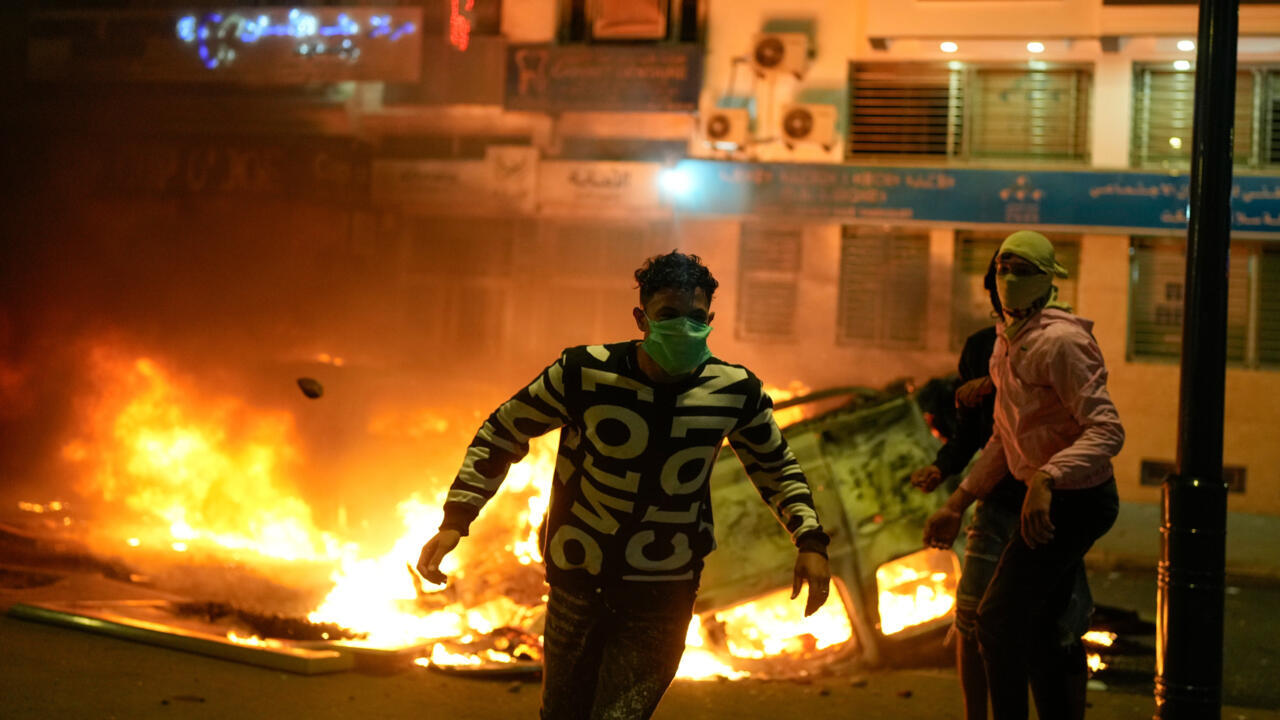
Young Moroccans took to the streets on Sunday for the ninth straight night of demonstrations calling for an end to corruption and a change of government. The rallies, organised online by the anonymous GenZ 212 collective, have spread across cities nationwide since September 27, shaking one of North Africa’s most stable countries.


Issued on: 05/10/2025 
By: FRANCE 24

A person runs past a torched police vehicle as youth led protests calling for healthcare and education reforms turned violent, in Sale, Morocco, Wednesday, Oct. 1, 2025. © Mosa'ab Elshamy, AP


Young Moroccans took to the streets on Sunday in cities across the kingdom for the ninth consecutive night of protests calling for an end to corruption and a change of government.

Organised online by the GenZ 212 collective, whose founders have remained anonymous, the rallies have swept the usually stable North African country since September 27.

Protesters have demanded reforms to social services, especially health and education, and voiced anger over social inequality.

In Casablanca, crowds gathered in the working-class El Fida district, demanding the resignation of Prime Minister Aziz Akhannouch, according to live broadcasts from Moroccan media.

Similar slogans were chanted in the northern city of Tetouan, where hundreds of protesters gathered, the broadcasts showed.

In the capital, Rabat, around a hundred demonstrators rallied in front of the country’s parliament, shouting “The government is corrupt.”

“Reforms to the health and education sectors are essential. We’re aware that will take time, but we have to start somewhere,” said Imran, 20, speaking to AFP on the fringes of the protest.

GenZ 212, which has more than 180,000 members on Discord, insists on the non-violent nature of its protests, which have been largely peaceful so far.

There were, however, reports of violence in several smaller towns following Wednesday’s demonstrations.

Three people were killed by gendarmes that night in what authorities described as “legitimate defence” after the group allegedly tried to storm a station in the village of Lqliaa, near Agadir.

The rallies follow on from isolated protests that broke out in mid-September in several cities after reports that eight pregnant women had died at Agadir’s public hospital after being admitted for caesarean sections.

Demonstrators have seized on the deaths as evidence of the public health sector’s failings, fuelling wider discontent over social inequality.

(FRANCE 24 with AFP)


Morocco’s World Cup Gamble – OpEd


October 6, 2025 
 FEE
By Jake Scott

“Stadiums are here, but where are the hospitals?” The chant spread across TikTok and WhatsApp, and by the end of September, the Kingdom of Morocco saw its largest youth-led demonstrations in years.

Protesters in Rabat, Casablanca, and Marrakech clashed with police as resentment over billions in public funds for the 2025 Africa Cup of Nations and the 2030 World Cup (cohosted with Spain and Portugal) finally exploded. Young demonstrators accuse the government of channeling money into stadiums while hospitals and classrooms remain underfunded. A maternal death in Agadir, blamed on systemic healthcare failings, turned that anger into mobilization. Police arrested dozens, though most were later released.

Officials defend the projects as driving economic growth, citing job creation and infrastructure development. But the logic is revealing: authoritarian-leaning governments consistently prioritize prestige over welfare, with stadiums, airports, and mega-events that can be broadcast to the world. Meanwhile, the everyday needs of citizens (hospitals, schools, affordable housing) lack spectacle and thus political payoff.

Morocco’s young are now contesting this imbalance directly, and their protests capture a broader truth about autocratic governance: public money is often appropriated for the visible, not the vital.

The pattern is global. Russia’s Sochi Olympics became a monument to waste even as regional healthcare collapsed. Brazil’s World Cup left behind little but white-elephant stadiums while teachers were on strike for better pay. Qatar built glistening arenas at immense human cost—even leading to accusations of slavery—but the spectacle mattered more than dignity. Morocco’s gamble is similar: betting that the glow of the World Cup will outweigh the frustration of a generation.

Yet Morocco’s history suggests caution. The February 20 Movement in 2011, part of the Arab Spring, demanded reform and dignity. The monarchy conceded just enough—constitutional revisions, early elections—to ease pressure while preserving its authority and maintaining the constitutional status-quo.

Later, the Hirak al-Rif protests in 2016–2018, sparked by the death of a fishmonger in Al Hoceima, were met with mass arrests and long sentences condemned by Amnesty International. A 2022 Human Rights Watch report described a “playbook” of repression, such as smears, unfair trials, and pressure on families, that still defines Morocco’s response to dissent.

What is different today is the movement’s form. Organized under banners like “Gen Z 212”—the name taken from Morocco’s dialing code +212, and self-described as “a new wave of activism in Morocco, driven by young people demanding change”—and “Morocco Youth Voices,” it is decentralized, digital, and leaderless. Arrests, usually a tool of restraining leaders and silencing voices, cannot decapitate it; mainstream parties, seen as “inside the system,” are unable to co-opt the movement, and cannot neutralize it or wield it for their own gain.

This resembles the dynamic that fueled the Arab Spring, especially in Tunisia. There, the self-immolation of Mohamed Bouazizi in 2010 spread through Facebook and Twitter, galvanizing leaderless networks into a coalition that spurred a revolution. Autocratic regimes, used to dismantling hierarchies, found it far harder to contain decentralized swarms of outrage. Tunisia’s democratic experiment has since faltered, and similar explosions of outrage that spread across the Middle East and North Africa (MENA), like that in Egypt, have ended in failure. Even so, the lesson endures: social-media-powered protests can destabilize even entrenched regimes.

Morocco’s monarchy knows this history. It must decide whether to risk heavy-handed repression, calibrated concessions, or a mix of both. Prosecutors could escalate charges under laws against “unlawful assembly” or “insulting officials,” chilling further mobilization.

The protests could dissipate if the organizers—what few there are—cannot sustain momentum beyond the weekends. Or the palace could blunt discontent by announcing visible social spending alongside stadium projects, reframing the narrative from prestige to balance.

But at heart, this is more than a tactical question. It is about the structural logic of authoritarian governance. Autocracies favor spectacle because it legitimizes them internationally and symbolically at home. To demand that public money be spent on schools and hospitals instead is to challenge that very logic. That is why Morocco’s youth, even without calling for regime change, are posing a radical challenge.

The palace can hope the protests fizzle, as they have before. But a generation raised in the shadow of 2011, digitally networked and globally aware, may not be so easily pacified. If Morocco continues to build stadiums while neglecting hospitals, it risks discovering that its World Cup legacy is not glory, but discontent.

And the lesson from Tunisia is simple: decentralized, leaderless protests can outlast repression, and once unleashed, they are far harder to control than rulers imagine.


About the author: Dr Jake Scott is a political theorist specialising in populism and its relationship to political constitutionality. He has taught at multiple British universities and produced research reports for several think tanks.

Source: This article was published by FEE

The Foundation for Economic Education's (FEE) mission is to inspire, educate, and connect future leaders with the economic, ethical, and legal principles of a free society. These principles include: individual liberty, free-market economics, entrepreneurship, private property, high moral character, and limited government. FEE is a tax-exempt, 501(c)3 educational foundation


How the ‘One Piece’ manga has become a global symbol of Gen Z revolt


Kids born between 1997 and 2012 all over the world grew up following the adventures of Luffy the pirate from the manga "One Piece". Today, members of Generation Z – or Gen Z – are adopting symbols from this manga for their protest movements. Young people from Nepal, Morocco, and Madagascar told our team how this series, about a young pirate fighting powerful elites, embodies their struggles.


Issued on: 06/10/2025 
By: The FRANCE 24 Observers/Nora LITOUSSI

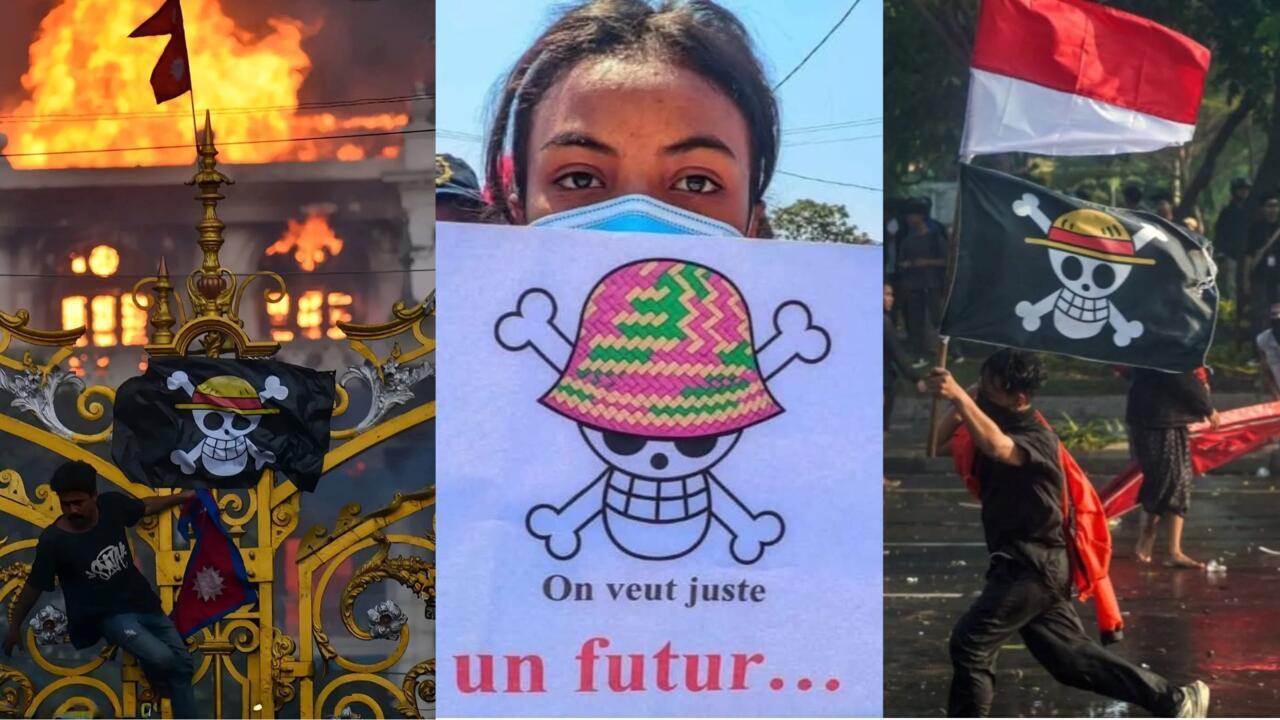
At left: A protester in Nepal hung this One Piece flag from a gate. Centre: A protester holds up a sign featuring Luffy’s flag, though, in this case, the skull is wearing a traditional Malgache hat. At right, a protester in Indonesia brandishes both the Indonesian flag and the One Piece flag. © X

Each generation has its symbol of revolt and revolution. In the 2010s, Millennials brandished the mask from "V for Vendetta" during the Arab Spring protests and Occupy Wall Street. Today, Generation Z seems to have discovered its own protest symbol: a skull and crossbones flag where the skull is sporting a straw hat. The image, originally from the popular "One Piece" Japanese manga, has become a symbol of their hunger for justice and change.

For the past few months, this flag has been popping up on banners and flags during protests all across the globe and lighting up social media. The demands vary between countries, but Gen Z youth in Indonesia, Nepal, the Philippines, Madagascar, Morocco and many other countries are rising up… and are adopting this manga flag as a symbol of their efforts.

This particular Jolly Roger flag belongs to Luffy, the hero of the cult manga "One Piece". It isn’t a coincidence or a wink to pop culture that so many youth protesters around the world have adopted this flag as their symbol: it is representative of the ideology championed by a large segment of this generation.

Protesters in Asia – in Indonesia, the Philippines, and Nepal – first started carrying the flag, but it quickly spread across the globe. In Madagascar, people made it their profile picture to show their support for local protesters. Some protesters in France carried posters or banners featuring Luffy’s flag during protests held on September 10. Later, it was also picked up by some members of Morocco’s GenZ 212, an internet-born movement calling for social justice, better healthcare and education systems, and a fight against corruption.

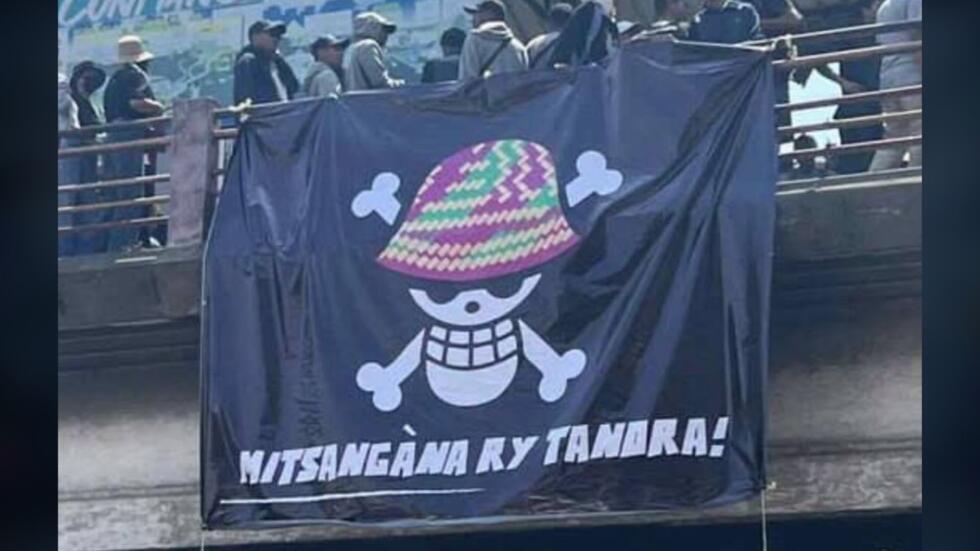
This version of Luffy’s flag from the manga One Piece was displayed during a protest in Madagascar in September 2025. The slogan reads “Stand up, youth!” in Malagasy. © X / npa_revo

‘There are lots of critiques in 'One Piece' of the elite, of governments, of lies’

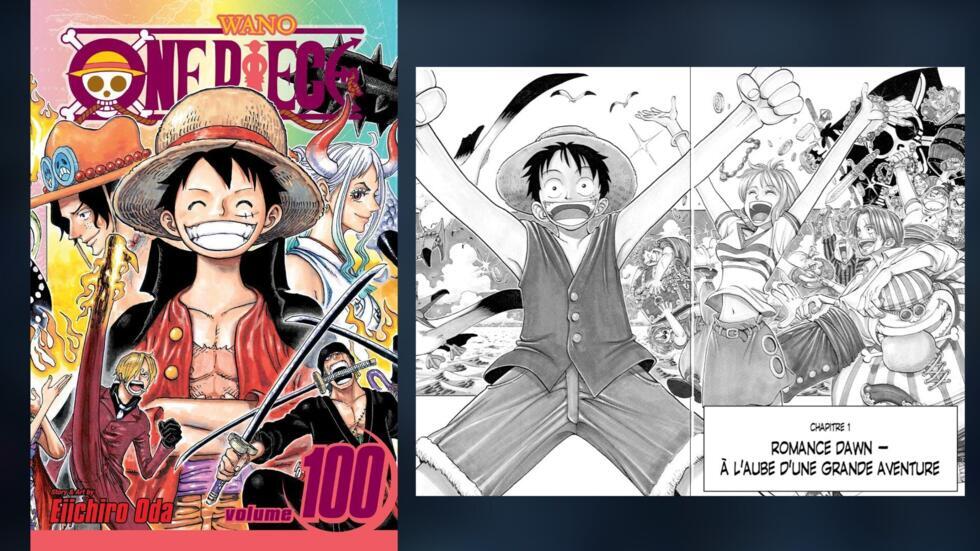
"One Piece", created in 1997 by Eiichirō Oda, tells the story of Monkey D. Luffy, a young pirate seeking the legendary "One Piece" treasure, which will make him king of the pirates.
At left is the cover of Volume 100 of One Piece. At right is a screengrab of the second page of an issue that came out on September 26, 2021. © Amazon / Manga plus by SHUEISHA

"One Piece" became the most widely sold manga in history. There are more than 500 million copies in circulation across the globe. It was translated into 40 languages.

Younès (not his real name) is from Casablanca. This 26-year-old is part of the GenZ 212 movement in Morocco.

"Most people from my generation grew up with this manga because it has been coming out once a week for the past 28 years. I’ve been following Luffy’s adventures for the past 14 years, and there are millions of others like me out there. We’ve created an emotional attachment to the characters, it is like they are members of our family."

Faly (not his real name) is a Malagasy medical student. He took part in the protests in Madagascar in late September. He says that he fell in love with the story that "One Piece" tells about rising up against the established order.

"In the anime, the heroes are often teenagers who fight against an extremely corrupt ruling class – repressive governments rife with nepotism. That’s what inspired us, whether we are in Indonesia, Nepal or Madagascar. We created this Gen Z movement, not a political party. There isn’t a leader, just young people who are fed up. That’s what makes heroes: they make their anger known, and we’re making ours known too.”

The ability to read "One Piece" as a political document develops with age, Younés says:

"When we were little, we didn’t always see the political nature of the work. But as we grew, the level at which we were reading it changed. The author does flashbacks and you start to understand what happened differently. We started picking up parallels with our current world. There are lots of critiques of the elites, of governments, of lies. There is this idea that history is written by the victor. So if the same people always win, the ‘bad guys’ are always the same.

What’s exceptional about this work is that we are following the story of a pirate, who is normally an antagonist. Except, as you read, you discover that the real bullies are the navy and the government, who are supposed to be the nice guys, to help people. But in reality, they are corrupt and serve only their own interests. The real good guys are the pirates who fight against the government’s corrupt elites for the good of the people."
‘'One Piece' perfectly depicts the reality that we are living right now’

For the young protesters, "One Piece" isn’t just a fictional story, says Faly:

"The anime perfectly depicts the reality that we are living right now: the poverty, the gap between the rich and the poor. We used this symbol to demonstrate that to the world, because it is easy to recognise. 'One Piece' is well known all around the world. It is a symbol of rebellion. In ‘One Piece’, they are pirates, outlaws. We aren’t outlaws, but this shows that we won’t be fooled by the government and that we are ready to fight."

Younès shares this sentiment:

“Universal themes are embodied in 'One Piece', so it is a common language for this generation. Police, militaries and governments say that they are protecting the people but, ultimately, they are the ones doing harm. They use the media to make people believe that the pirates are the bad guys, they lie to create propaganda."

The Moroccan student adds that Luffy, whose flag has been taken up by protestors, really embodies the figure of a defender of the oppressed.


"He takes the risk to defend people who aren’t aware that they are going to be hurt. He takes the risk of fighting against bad guys. Just like the protesters who take to the streets to defend the rights of others, to fight for others even if they don’t know who you are."
‘There's a growing disconnect between what the governments are promising and what the citizens are actually experiencing’

Romi Ghimire is a lecturer and a human rights advocate in Nepal. She sees many common themes amongst the global protest movements.

"The recent protests in Nepal and those we've seen in countries like Indonesia, Madagascar, and Morocco, I think they reflect a powerful global trend. People, especially the youth, they are standing up against systemic failure and demanding dignity, accountability, and basic rights. In Indonesia, people protested elite privileges and the failure of public health programmes. In Madagascar, people protested the lack of basic necessities like water and electricity. Young people in Morocco are asking why the government can build stadiums for the World Cup but not provide jobs and education and basic services for their people. In every case, there's a growing disconnect between what the governments are promising and what the citizens are actually experiencing."

Despite these common themes, some of the protesters highlighted local specificities as well. In Nepal, the focus has been on the so-called nepo kids, for example, while in Indonesia, people were protesting privileges afforded to politicians. In Madagascar, people have been protesting about access to basic services. In Morocco, there was a number of issues that converged: ranging from the second anniversary of the 2023 earthquake (more than 2,000 deaths), the deaths of eight women during childbirth in a ten-day period at Hassan II hospital in Agadir and the inauguration in early September of the Moulay Abdellah stadium in Rabat. Protesters are angry at the government for pouring money into sports while schools and hospitals remain in terrible conditions.
Above: This screenshot shows emojis used on the Discord group GenZ 212. Below: a graphic that circulated on the same Discord group. We outlined the One Piece symbols in red. © Discord

A
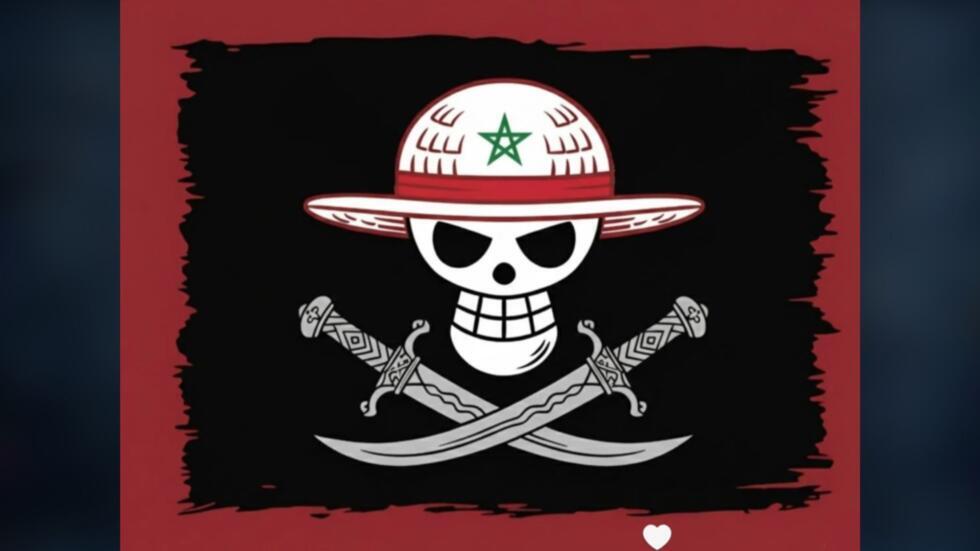
 Moroccan social media user added the green star from their country’s flag to create this version of Luffy’s flag. © Reddit


This article has been translated from the original in French.

French Prime Minister Sébastien Lecornu resigns just weeks after appointment

Following his resignation on Monday, Lecornu became the shortest-serving prime minister of France since 1958.

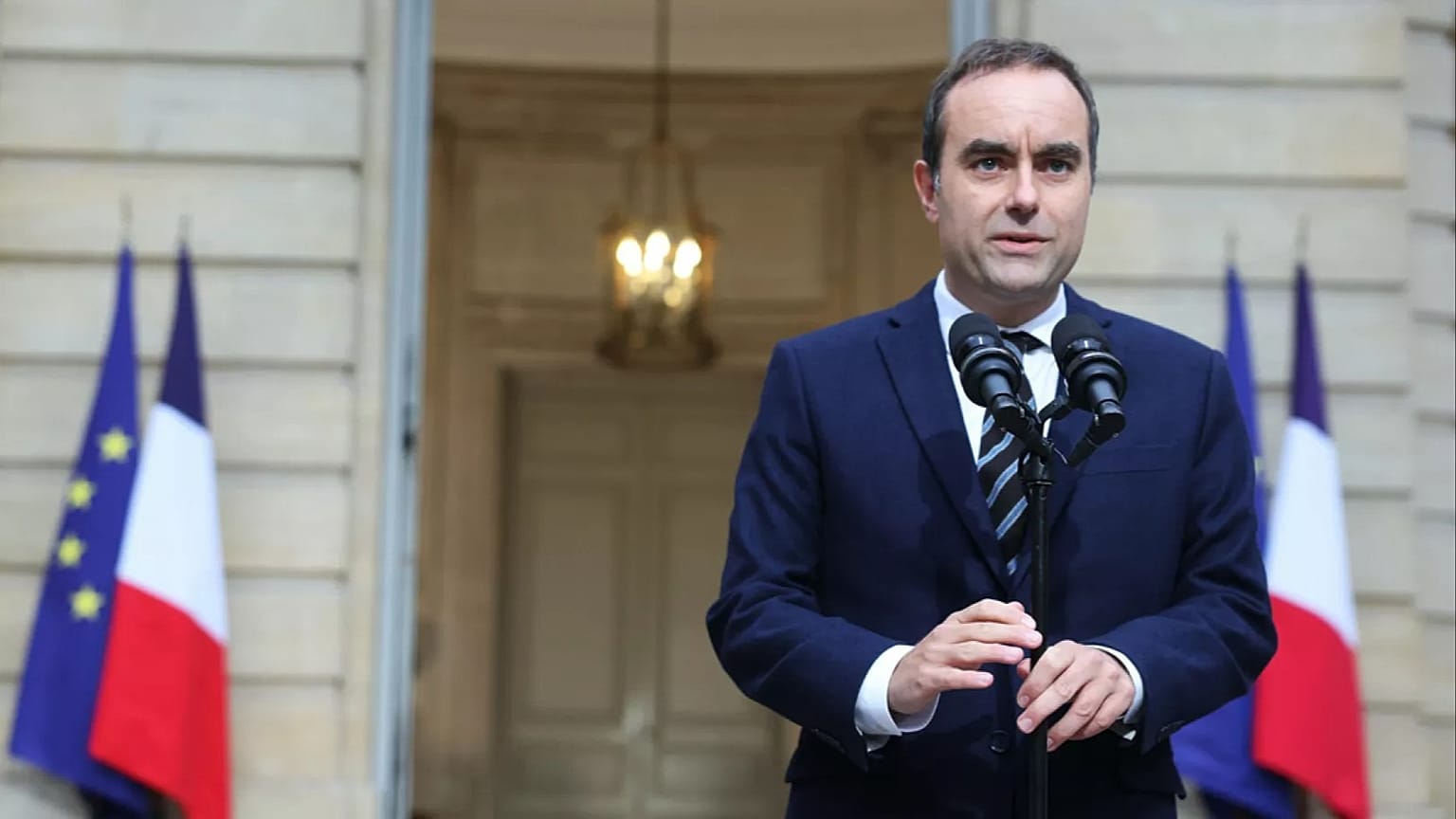
French Prime Minister Sebastien Lecornu delivers a statement at the Hotel Matignon in Paris, Friday Oct. 3, 2025
Copyright Alain Jocard/AP

By Sophia Khatsenkova
Published on 

French Prime Minister Sébastien Lecornu resigned on Monday, just weeks after his appointment, signalling a renewed crisis in French politics.

French President Emmanuel Macron accepted his resignation on Monday morning, hours after Lecornu unveiled the first names of his government.

Lecornu, appointed on 9 September as the third prime minister since the snap parliamentary elections in June and July 2024, faced fierce criticism from his own camp and the opposition after unveiling his cabinet.

Following his resignation, he has become the shortest-serving head of government since 1958.

Lecornu was due to address the National Assembly on Tuesday to set out his government’s roadmap.

Instead, he delivered a morning address, explaining the reasons behind his resignation.

"The conditions were no longer in place for me to carry out my duties as Prime Minister," said Lecornu, insisting he had been “ready for compromise,” but lamented that the parties “have made believe not to see the progress.”

"One must always put one's country before one's party," Lecornu said, denouncing the "partisan appetites" that led to his resignation.

His departure has plunged France into a new political crisis, adding further pressure on Macron, who has now presided over three failed minority governments.

Lecornu had been tasked with the politically daunting job of steering a slimmed-down budget through parliament to curb France’s ballooning deficit.

France’s deficit stood at 5.8% of GDP in 2024, with debt at 113% — both far above EU rules that cap deficits at 3%.

After announcing the first prominent names in his cabinet, Lecornu immediately came under fire.

Critics denounced both its political direction and its lack of renewal: 12 of the 18 ministers had already served under predecessor François Bayrou before his ousting on 8 September.

Conservative Interior Minister Bruno Retailleau, himself just reconfirmed in office, said on Sunday that the government’s composition “did not reflect the promised break.”

Far-right National Rally (RN) leader Jordan Bardella, speaking alongside figurehead Marine Le Pen at party headquarters, called for snap parliamentary elections.

"There can be no stability without a return to the polls and without the dissolution of parliament,” Bardella said, adding he “hoped” such a move would come quickly.

Even within the presidential camp, discontentwas growing. Gabriel Attal, former prime minister and leader of the Renaissance party, lamented that his proposed method of agreeing first on a budget compromise before naming a government had not been followed.

In a message to his parliamentary group, he denounced the “appalling spectacle” offered by “the entire political class” in the wake of Lecornu’s short-lived government.


French bond yields spike, stocks fall as another government collapses

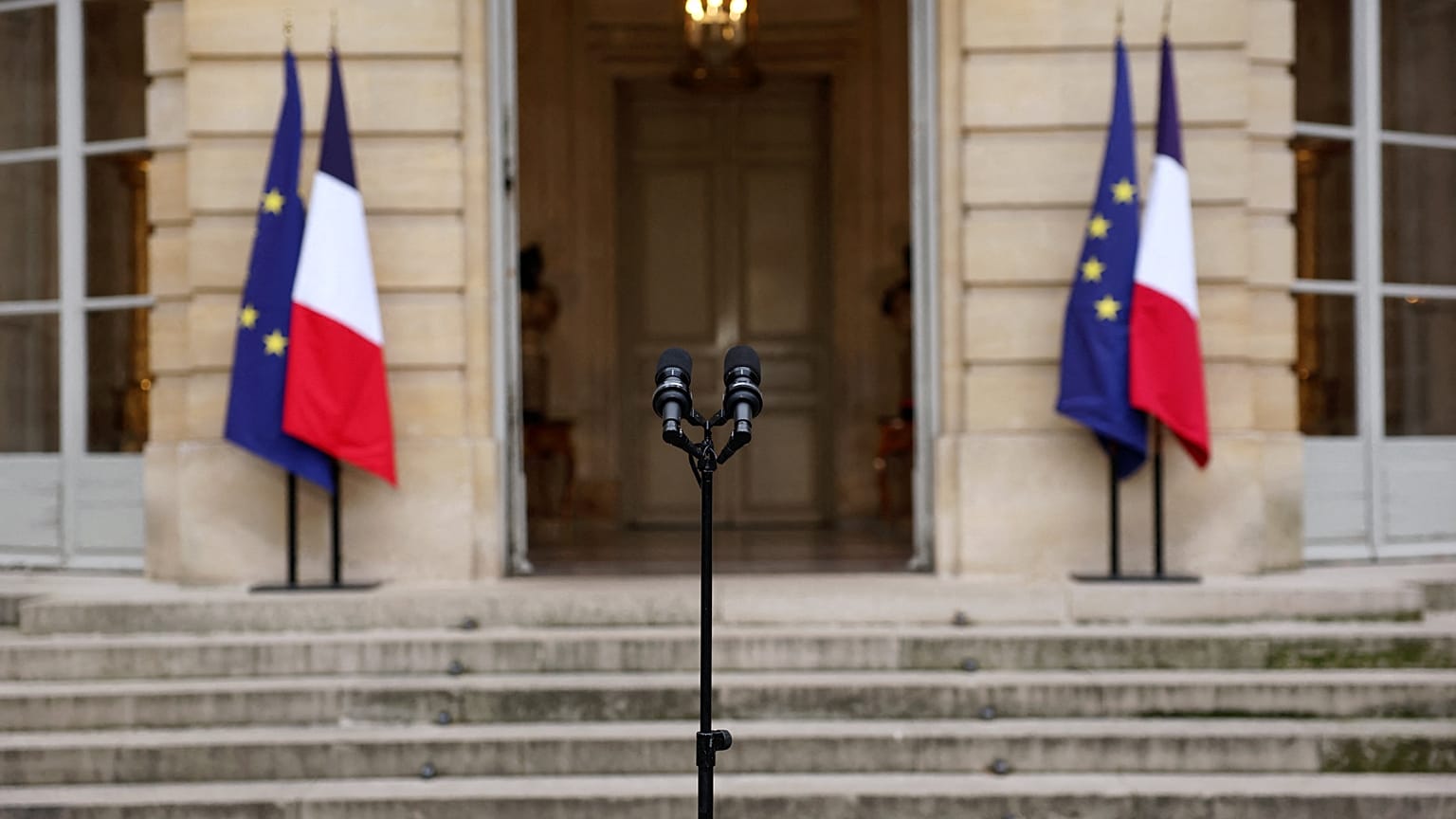
A microphone is set up in the courtyard for the statement by French outgoing Prime Minister Sebastien Lecornu at the Hotel Matignon in Paris. 6 Oct. 2025.
Copyright Stephane Mahe/AP/Pool

By Eleanor Butler
Published on 


Prime Minister Sébastien Lecornu resigned less than a day after his cabinet was appointed, sending markets into disarray.

France’s route out of political turmoil once again reached an impasse on Monday as Prime Minister Sébastien Lecornu resigned less than a day after his cabinet was unveiled.

The news jolted already-wary investors, pushing French stocks down and bond yields up. 

As of around 10.30 CEST, the CAC40 Index was down around 2% at 7,916.36. The yield on 10-year French bonds rose seven basis points to 3.58%, widening the gap with the yield on 10-year German bonds to a nine-month high.

The euro, meanwhile, fell against most major currencies excluding the Japanese yen, notably falling 0.55% against the dollar.

Shares in French lenders Société Générale, BNP Paribas, and Crédit Agricole fell 6.21%, 5.28%, and 4.85% respectively

Lecornu’s resignation further darkens France’s economic outlook as it seeks a way out of a budget crisis that has brought down successive governments. 

The country has seen five prime ministers in less than two years as centre, left, and far-right parties fail to agree on a solution to tackle France’s debt.

The national debt now sits at more than €3 trillion, around 114% of Gross Domestic Product (GDP).

“Lecornu's surprise resignation significantly increases the pressure on Emmanuel Macron to dissolve the National Assembly and call snap legislative elections. We believe this is now the most likely scenario,” said Leo Barincou, senior economist at Oxford Economics.

He added: “Bond spreads have ticked up, but the broader economic impact is likely to remain limited: political instability has become an entrenched feature of France's landscape, and neither businesses nor markets are likely to substantially change their views after the fall of yet another minority government. Fiscal consolidation will not occur, but it was never likely to in the first place.”

This is a developing story and our journalists are working on further updates.