Thursday, November 06, 2025


Study shows limits of and proposes alternatives for the functional restoration of the Atlantic Forest


The research used network theory to analyze the ecological connectivity of 28 areas in the northwest of the state of São Paulo, Brazil.


Fundação de Amparo à Pesquisa do Estado de São Paulo

Study shows limits of and proposes alternatives for the functional restoration of the Atlantic Forest 

image: View of the study region, showing that replanting has not fully integrated the replanted areas into the mosaic of native fragments view more 

Credit: Débora Cristina Rother


Planting trees is not enough. Although forest restoration efforts in the Atlantic Forest are advancing on a large scale, they are still unable to fully integrate replanted areas into the mosaic of native fragments. This is the conclusion of a study conducted in Brazil and published in the Journal of Applied Ecology.

The first authors of the article were Débora Cristina Rother, a professor at the Federal University of São Carlos (UFSCar) in the state of São Paulo, and Carine Emer, a researcher associated with the Rio de Janeiro Botanical Garden Research Institute and the Juruá Institute in the state of Amazonas. They developed a novel approach based on network theory to analyze the ecological connectivity of 28 areas in the Batatais region in northwestern São Paulo.

According to the researchers, active restoration, or planting seedlings in completely deforested areas, results in plant communities that are separate from the remaining forest fragments. "The restored areas aren't fully integrated into the landscape," Rother summarizes. "What we found was a subset of generalist species connecting the system, mainly small-seeded trees dispersed by birds."

Network theory is a mathematical and computational approach used to understand complex systems formed by many interconnected elements. Rather than analyzing each component in isolation, it represents them as "nodes" and their interactions as "lines," which makes it possible to identify emerging patterns as a whole. This same logic explains the functioning of social networks, biological neural networks (i.e., neural circuits in the nervous system), and artificial neural networks (i.e., computational models inspired by how the brain functions). It can also be applied to ecology in the form of "ecological networks," which analyze the interactions between plants, animals, and environments. This perspective shows not only which species are present in a system but also how they relate to each other and which species are crucial to the system's stability and resilience.

The study used network theory to synthesize a complex database obtained through years of fieldwork. "This is rare data, resulting from a major collective research effort," Emer points out. "Network theory helped us see the whole picture. Instead of focusing on isolated fragments, we looked for interactions between them and restored areas in the landscape."

Structural metrics such as connectance, modularity, and nesting were analyzed. Connectance measures how many connections exist in a network compared to the total possible connections. The higher the connectance, the more species or elements are connected to each other. Modularity indicates the formation of subgroups within the network in which certain elements interact more with each other than with the rest of the system. Nesting occurs when less diverse areas contain subsets of the interactions present in more diverse areas, revealing a hierarchy of inclusion.

"Our networks showed low connectivity values, indicating that few species are widely distributed. Modularity, on the other hand, was intermediate but significant, reflecting the separation between restored areas and native fragments. And nesting, which would indicate whether restored areas could be considered subsets of forests, was very low. This reinforces the idea that restored areas don't yet mirror natural diversity," says Emer.

The study revealed consistent patterns when investigating which species act as “central nodes” in the networks. "We found that key species have two characteristics in common: small seeds and dispersal by animals," Rother explains. "These are plants such as embaúba (Cecropia pachystachya), sangra-d’água (Croton urucurana), tapirira (Tapirira guianensis), and guareia (Guarea guidonia)."

These pioneer trees are essential for initiating natural succession. "They're the first to establish themselves and create conditions for other species to emerge later," says the researcher. "Birds such as thrushes, tanagers, and toucans, as well as small mammals, act as the main dispersers in this process."

Despite advances, restoration faces structural barriers. "We have a huge bottleneck in the production of seedlings from the enormous tropical diversity," says Rother. Important species, such as guareia, are difficult to propagate. "Often, nursery workers try various methods but are unable to germinate the seed."

In addition to technical limitations, there are market barriers. "Nurseries produce what's in demand, and today, restoration is primarily seen as tree planting or carbon capture," Emer notes. "But restoration isn't just about planting trees or storing carbon. We need to restore the ecological processes that ensure the forest functions as a whole, such as the interactions between flora and fauna. If we want to restore diversity, we need subsidies to produce less common species on a large scale and make them available on the market."

Considering these factors, a central point of the study was to demonstrate that planting trees alone is insufficient. While important, it does not solve the problem on its own. "A forest is composed of complex ecological processes," Emer points out. "We also need to look at ecological interactions: birds and mammals dispersing seeds, pollinators ensuring reproduction, succession cycles establishing themselves."

In this sense, techniques such as installing artificial perches to attract birds can help, albeit slowly. Another strategy under discussion is refaunation, or the reintroduction of large dispersers that have disappeared, such as tapirs and agoutis. Rother argues, "If species with large seeds no longer have dispersers, the solution may be to reintroduce them," recalling successful experiences in the Tijuca Forest and the Guapiaçu Ecological Reserve, both of which are located in the state of Rio de Janeiro.

The results have direct implications for public policies and the goals of the United Nations (UN) Decade of Restoration. "The diversity of species used in restoration needs to increase," Emer emphasizes. "We can't limit ourselves to a small set because this compromises the integration of the areas into the landscape as a whole."

Rother believes the strategy should combine pioneer species, which ensure initial succession, with rare species that have large seeds and are unlikely to arrive on their own. "Restoration needs to consider the functional characteristics of plants, not just increase the list of species," she says.

Despite current limitations, the researchers remain optimistic. "The fragments and restored areas form a meta-network," says Emer. "Although it's modular today, this meta-network can become more connected if we increase diversity and encourage interactions."

This study was supported by FAPESP through projects 13/50718-512/24118-8, and 15/15172-7, all of which are part of the Foundation's Research Program on Biodiversity Characterization, Conservation, Restoration, and Sustainable Use (BIOTA-FAPESP).

About São Paulo Research Foundation (FAPESP)
The São Paulo Research Foundation (FAPESP) is a public institution with the mission of supporting scientific research in all fields of knowledge by awarding scholarships, fellowships and grants to investigators linked with higher education and research institutions in the State of São Paulo, Brazil. FAPESP is aware that the very best research can only be done by working with the best researchers internationally. Therefore, it has established partnerships with funding agencies, higher education, private companies, and research organizations in other countries known for the quality of their research and has been encouraging scientists funded by its grants to further develop their international collaboration. You can learn more about FAPESP at www.fapesp.br/en and visit FAPESP news agency at www.agencia.fapesp.br/en to keep updated with the latest scientific breakthroughs FAPESP helps achieve through its many programs, awards and research centers. You may also subscribe to FAPESP news agency at http://agencia.fapesp.br/subscribe.

Landscapes that remember: clues show Indigenous Peoples have thrived in the southwestern Amazon for more than 1,000 years


Guest editorial by Prof Carla Jaimes Betancourt, author of a new Frontiers in Environmental Archaeology article


Frontiers

Jasschaja site excarvation 

image: 

Excavation at the Jasschaja site. Photo: C. Jaimes.

view more 

Credit: C. Jaimes


by Prof Carla Jaimes Betancourt

In September 2021, a multidisciplinary expedition explored one of the least-known regions of the Bolivian Amazon: the Great Tectonic Lakes of Exaltación in the department of Beni. Organized by the Grupo de Trabajo para los Llanos de Moxos (GTLM), the mission brought together researchers from the Wildlife Conservation Society, the National Museum of Natural History, the Institute of Ecology, the Biodiversity and Environment Research Center , the Aquatic Resources Research Center, and the Department of Anthropology of the Americas at the University of Bonn.

Landscapes as Living Archives

In southwestern Amazonia, the great tectonic Lakes Rogaguado and Ginebra in Bolivia reveal a profoundly human landscape, a living archive of adaptation and creativity. Beneath the grasslands and shallow waters lie monumental earthworks, raised fields, and complex canal systems that attest to millennia of human–environment interaction.

The lakes lie within the Municipal Protected Area of Grandes Lagos Tectónicos de Exaltación and form part of the Río Yata Ramsar wetland complex, recognized by UNESCO for its ecological and cultural significance. Situated in the Llanos de Moxos, a vast mosaic of savannas, gallery forests, and floodplains, the largest wetland in the Amazon basin, this landscape has long inspired fascination, even evoked in ethnohistorical account of the fabled ‘Land of Paititi.’ Yet its deeply human history is only now coming into focus.

Through survey, excavation, and LiDAR mapping, we documented several archaeological sites — Paquío, Coquinal, Isla del Tesoro, and Jasschaja — each representing a different chapter in the long history of settlement in this region.

Radiocarbon dates show successive occupations from about 600 to 1400 CE, and research revealed how communities repeatedly reshaped these wetlands. At Paquío, an early phase around 600 CE was followed by a more intensive occupation between 1000 and 1200 CE, marked by shell middens, dense ceramic deposits, and an elaborate network of canals and raised fields associated with maize-based agriculture. In contrast, Jasschaja, dated to 1300 to1400 CE, shows broader landscape transformations and greater plant diversity, pointing to intensified forest and crop management.

The landscape, like many across the Llanos de Moxos, is marked by geometrically shaped relief that resolves, upon examination, into circular and quadrangular ditches, drainage canals, raised fields, and clusters of mounds form an intricate system of water control and cultivation. These earthworks were carefully engineered to manage floods, channel water, and create habitable and cultivable spaces within a seasonally inundated environment. Their variety, from geometric enclosures to elongated cultivation platforms, suggests not a single plan but centuries of local experimentation and adaptation to changing ecological and social conditions. Together, they reflect the cultural diversity and long-term resilience of the peoples who shaped them.

Excavations at Paquío and Jasschaja also revealed a remarkably diverse pre-Hispanic diet, showing how ancient societies utilized the resources of a dynamic wetland. Fish such as wolf fish, peacock bass, and South American lungfish dominated the assemblages, complemented by reptiles like caimans and turtles, and mammals such as capybaras, pacas, and armadillos. Botanical evidence indicates the use of maize, legumes, and several palm species — moriche palm, corozo palm, cumare palm, totai palm, palmita, and peach palm. Together, these findings depict a mixed economy of fishing, hunting, gathering, and cultivation.

Biocultural Heritage and Collaboration in the Field

The Cayubaba and Movima communities continue to inhabit these landscapes, where exceptional biodiversity is interwoven with deep cultural history. Their long-standing presence and knowledge sustain a unique form of biocultural heritage, where ecological and cultural diversity have coevolved through centuries of interaction.

During the post-Covid-19 field seasons, collaboration was grounded in dialogue and respect. Representatives of the Cayubaba Indigenous Council, encompassing 21 Cayubaba and Movima communities, helped identify research areas, guided access to culturally significant sites, and requested that certain places remain untouched. Although contact was necessarily limited for health reasons, this coordination ensured that the research aligned with community priorities and contributed to a broader understanding of the region’s living heritage.

Through the GTLM, scientists and Indigenous representatives are creating a platform that connects archaeological and ecological research with conservation. The project highlights that the Llanos de Moxos is not only a biodiversity hotspot but also a landscape profoundly shaped by human history, while supporting ongoing efforts to strengthen the management of the Yata River Ramsar site and the protected areas with which it overlaps.

Why the Past Matters for the Future

At a time when deforestation, industrial agriculture, and climate change threaten the Amazon’s integrity, the landscapes of Rogaguado and Ginebra offer more than archaeological insight: they offer lessons in sustainability. Archaeological evidence reveals long-term traditions of diversified livelihoods integrating farming, fishing, and forest management in flexible and adaptive ways. Rather than seeking to dominate nature; ancient Amazonians worked with its rhythms, transforming seasonal floods into opportunities. Although the construction and use of raised fields eventually ceased—likely as a consequence of demographic collapse and social disruptions following European colonization—this does not diminish the sustainability of their practices. For centuries, these societies maintained productive systems through their understanding of the dynamic wetlands. Their legacy challenges modern assumptions about ‘development’ and reminds us that resilience often arises from diversity: from species, knowledge, and ways of life.

Safeguarding this biocultural heritage has become a global responsibility. As the wetlands of the Llanos de Moxos continue to store carbon, regulate water, and sustain biodiversity, their conservation must also honor the people who have long cared for them. In this sense, archaeology becomes more than the study of the past: it is a bridge linking the knowledge embedded in ancient landscapes with today’s urgent conversations on sustainability and justice.

The Llanos de Moxos remind us that the Amazon has always been a biocultural landscape, dynamic, inhabited, and full of memory. Its monumental earthworks, forest islands, and living traditions reveal that the key to our shared future may lie in listening to these landscapes that remember.


New climate dataset warns both rich and poorest nations will see sharp drop in crop yields


University of Illinois College of Agricultural, Consumer and Environmental Sciences
Maps showing changes to crop production 

image: 

A recent Nature study shows a subset of crops likely to be affected by climate change, accounting for realistic adaptation. The data from that paper are now publicly available.

view more 

Credit: Climate Impact Lab


A new dataset released via the Human Climate Horizons (HCH) data platform by the United Nations Development Programme (UNDP) Human Development Report Office, in collaboration with the Climate Impact Lab, warns that climate change is set to dramatically undermine agricultural productivity, with some of the greatest risks concentrated in countries least able to adapt.

The dataset, sourced from a Nature study released in June by the Climate Impact Lab and collaborating institutions [press release], finds every additional degree Celsius of global warming on average will drag down the world’s ability to produce food by 120 calories per person per day, or 4.4 percent of current daily consumption.

“If the climate warms by 3 degrees, that’s basically like everyone on the planet giving up breakfast,” said Solomon Hsiang, professor of environmental social sciences at the Stanford Doerr School of Sustainability and one of the senior authors of the Climate Impact Lab study.

That’s a high cost for a world where more than 800 million people at times go a day or more without food because of inadequate access.

“Climate change is not just an environmental challenge—it is a profound development crisis,” said Pedro Conceição, Director of UNDP’s Human Development Report Office. “High agricultural yields are important not just for food security, they also sustain livelihoods and open pathways for economic diversification and prosperity. Threats to agricultural yields are threats to human development today and in the future.”

Ahead of COP30 in Brazil, the data also shows that reducing emissions matters. If emissions were to rapidly plummet to net zero, global crop yields would decline by 11 percent. But, if emissions were to continue to rise unchecked, global yields would decline by 24 percent. This holds true across wealthy and poor countries alike.

Robust data and global coverage

The new projections link climate variables to agricultural yields for six staple crops—corn, rice, wheat, soy, cassava, and sorghum—spanning the globe. The source projections examined how farmers are likely to adapt under two different climate scenarios: one where emissions are moderate and one where they remain high. The HCH analysis focuses on human development implications and examines three time periods: the near term (2020-2039), mid-century (2040-2059), and the end of the century (2080-2099), providing data for more than 19,000 subnational regions in over 100 countries. Together, these data provide a high-resolution, evidence-based view of how rising temperatures and emissions trajectories could reshape global food systems and human development outcomes.

Globally, outside of rice yields, the odds that yields will decline by century’s end range from roughly 70 percent to 90 percent for each of the other staple crops. And taking actions to adapt—like switching crop varieties, shifting planting and harvesting dates, or altering fertilizer use—doesn’t eliminate the threat. The data shows these adjustments offset about one-third of climate-related losses in 2100 if emissions continue to rise, but the rest remain.

Countries hit the hardest

The data show that the world’s poorest countries face some of the steepest losses in agricultural productivity, with median national crop yields projected to decline by around 25-30 percent by the end of the century if emissions remain high. Sub-Saharan Africa and parts of Asia are especially vulnerable, due to the high loss of cassava crops that are vital to the world’s poor.

Meanwhile, “breadbasket” economies like the United States and other major wheat and soy producers are not insulated. Under severe warming, they show the largest yield losses, with declines in these regions reaching 40 percent, with potential ripple effects on food prices, trade, and global stability.

“Places in the Midwest that are really well suited for present day corn and soybean production just get hammered under a high warming future,” said lead study author Andrew Hultgren, an assistant professor of agricultural and consumer economics in the College of Agricultural, Consumer and Environmental Sciences at the University of Illinois Urbana-Champaign. “You do start to wonder if the Corn Belt is going to be the Corn Belt in the future.”

New innovations to target resources

The Climate Impact Lab, based at the Energy Policy Institute at the University of Chicago (EPIC), is working to help governments make informed decisions about where to direct adaptation investments, recognizing that many farmers still lack access to even basic agricultural resources, such as accurate weather data.

Another University of Chicago initiative is stepping up on this front. The Human-Centered Weather Forecasts (HCF) Initiative leverages the power of artificial intelligence to evaluate and build weather forecasts that can target what citizens on the ground need to know. This summer, they worked with the Indian government to bring 38 million farmers advanced notice of the rainy season. As climate change makes weather more unpredictable, such tailored forecasting provides farmers with an essential tool for adaptation.

“Once the rain starts, it can be too late to make big important decisions, like changing a crop, planting more land, or forgoing the farming season and getting a job in the city instead. By providing an accurate forecast around a month in advance, farmers were able to align their decisions with the coming weather and make better choices,” says Harris Public Policy Assistant Professor Amir Jina, a co-director of the HCF and researcher at the Climate Impact Lab who helped produce this data. “We’re working with governments to provide citizens with actionable climate information and ensuring they have the tools to adapt and thrive in an increasingly uncertain environment.”

Gold mining in Peru: The not-so-glittery side of your smartphone

FOCUS © FRANCE 24


Issued on: 06/11/2025 - 
06:05 min
From the show


The COP30 climate summit will open on November 10 in Belem, a city in Brazil's Amazon, as the rainforest continues to be threatened by deforestation. One reason is the mining of gold – essential for smartphones and computers. Peru is South America's leading producer of the precious metal. With prices reaching record highs, artisanal mines are operating at full capacity, polluting the rainforest in the process. In response, some are now trying to reduce the environmental impact of their activities and offering "clean" gold. FRANCE 24's Agathe Fourcade and Martin Chabal report, with Wassim Cornet.


Disinformation rife ahead of climate summit in Brazil

DW


As a majority of global citizens call for bold climate change policies, a new push for information integrity aims to neutralize the climate denial that has thwarted ambitious action.


Recent research shows more than 80% of people support stronger climate action
Image: Christian Charisius/dpa/picture alliance


This year's pivotal UN climate summit in Brazil faces a tidal wave of fake news and disinformation that aims to deflate any unified front on a rapid energy transition away from fossil fuels.

Between July and September there has been a 267% surge, or more than 14,000 examples, of COP-related disinformation, according to a report published today. The research was produced by the Coalition Against Climate Disinformation (CAAD), a global climate watchdog, and the Observatory for Information Integrity (OII), a research organization focusing on the environment and democracy.

One widely shared clip created by AI and circulating on social media showed Belem, the Amazonian city hosting COP this year, under water. Though OII said the reporter, people, floods and city presented in the video do not exist.

The report found that despite recent research showing more than 80% of people support stronger climate action, increasing online falsehoods supercharged by AI are fueling hostility towards science.

"Big Carbon's spending and Big Tech's algorithms are preventing us from seeing and hearing one another online. Instead, we're exposed to one lie after another," said CAAD.

COP30 comes at a time when US president Donald Trump, the leader of the world's largest historical carbon polluter, has launched an unprecedented assault on climate and renewable energy programs.

Since coming to office in January, Trump has used social media to amplify lies about wind energy, for example, claiming that turbines cause cancer and kill whales. He has issued executive orders committed to "unleashing" fossil fuel energy that he calls "affordable and reliable," while falsely claiming that "ideologically-motivated” renewable energy results in job losses and higher energy costs that "devastate" consumers.

Such disinformation ignores the reality that emissions from burning coal, gas and oil are changing the Earth's climate and leading to increased drought, flooding, storms, and deadly heat.

It also directly contradicts the fact that rapidly growing solar and wind energy capacity has provided the world's cheapest electricity for some time. For every dollar of investment, clean energy also provides three times as many jobs as the fossil fuel industry.


Trump echoes classic climate deception


"The Trump administration is employing a well-worn disinformation playbook, resurfacing outright denial tactics that were the fossil fuel industry's favored approach in the 1980s and 1990s," said Kathy Mulvey, accountability campaign director of the Climate & Energy Program at the Union of Concerned Scientists, a US-based science advocacy nonprofit.

Appropriating tobacco industry deception tactics regarding the health impacts of smoking, oil, gas and coal companies are "manufacturing uncertainty about climate science and blocking climate, clean energy, and clean transportation policies," she added.

UN climate summits have been a major focus of fossil fuel companies looking to delay the energy transition. Last year, one analysis said more than 1,770 fossil fuel lobbyists were granted access to COP29 in Baku, Azerbaijan — outnumbering all but three country delegations.

In 2023, researchers revealed that fossil energy companies paid Meta — which owns social media platforms Facebook, Instagram and WhatsApp — up to $5 million (€4.3 million) for climate disinformation ads in the lead-up to COP28 in the United Arab Emirates.

Four of the world's largest oil and gas majors — Shell, ExxonMobil, BP and TotalEnergies — accounted for 98% of that advertising spending.


Tackling disinformation through transparency

Amid fears that the world has missed the Paris Agreement target of limiting planetary warming to 1.5 degrees above pre-industrial levels, a coordinated pushback against attempts to sow doubt and delay climate action is emerging.

The Brazil-led Global Initiative for Information Integrity on Climate Change will, for the first time at any UN climate summit, be part of the official COP30 agenda. The scheme aims to fund research, investigative journalism and climate communications campaigns that counter contrarianism and amplify climate science – and solutions.

"We must fight the coordinated disinformation campaigns impeding global progress on climate change, ranging from outright denial to greenwashing to harassment of climate scientists," said UN Secretary-General Antonio Guterres in November 2024 when the initiative was launched at the G20 summit.

"When governments continue to expand fossil fuel production, even while publicly committing to net-zero goals, it is essential that civil society around the world join forces to ensure the availability of accurate, consistent, reliable, and transparent information to publics and policymakers," said Ece Elbeyi, consulting scientist at the Scientific Panel on Information Integrity about Climate Science, a Swiss-based global science organization.

By bringing together researchers and media professionals, the COP30 information integrity initiative exemplifies "the sort of civic engagement that is needed" to combat disinformation, she told DW.

Meanwhile, the global climate watchdog CAAD is asking media and Big Tech to screen "harmful false content" about the climate for their audiences, and to be transparent about the source of any disinformation to ensure "transparency and accountability," noted Philip Newell, CAAD's communications co-chair.

But climate lies, most lately emanating from the Trump administration about the cost and job creation potential of renewable energy, are being replicated in the media globally.

"The return of Trump to power in January triggered a spike in unchallenged climate disinformation in French media," noted Eva Morel, secretary general of climate NGO QuotaClimat. A report on climate disinformation that was co-authored by QuotaClimat showed that instances of climate deception in French media tripled in the first eight months of 2025.

Can delegates at COP30 expose fossil fuel-funded disinformation and push for bold climate action?Image: Marcelo Camargo/Agencia Brazil/dpa/picture alliance


An 'unprecedented opportunity' to counter fossil fuel deceit

Transparent and rigorous climate science communication matters at a time when nations are set to produce over double the fossil fuels in 2030 that would be consistent with limiting warming to 1.5C. As reported in the latest Production Gap Report that monitors the "misalignment" between planned national fossil fuel production and actual global production levels.

If COP30 hopes to help bridge this misalignment, it needs to take an "unprecedented opportunity" to facilitate "coordinated global action to tackle disinformation," said Mulvey.

"Exposure of the fossil fuel industry's deceit and underhanded tactics is one of the best strategies we have," she said of using information integrity to embolden the push for a rapid energy transition.

Eliesio Marubo, activist and legal counsel for Union of Indigenous Peoples of Brazil's Javari Valley, said that climate disinformation needs to be called out for what it is at COP30: "I don't like the term 'fake news,'" he said, adding that the term "ends up legitimizing something that isn't news at all. I prefer to call it what it really is: a lie."

Edited by: Tamsin Walker


Stuart Braun Berlin-based journalist with a focus on climate and culture.


Narrative that too much "is being made of climate change is increasingly gaining ground"

ENVIRONMENT
Issued on: 06/11/2025 - 
© France 24
06:29

The COP30 global climate summit is opening on November 10, but the world's top polluters will not be attending - including the US, with Trump calling climate change a "socialist hoax". But while he would have been laughed at a few years ago, the narrative that too much is being made of climate change "is increasingly gaining ground", says FRANCE 24's Angela Diffley.

Video by:  Angela DIFFLEY


UN says 2025 to be among top three warmest years on record

Geneva (AFP) – An alarming streak of exceptional temperatures has put 2025 on course to be among the hottest years ever recorded, the United Nations said Thursday, insisting though that the trend could still be reversed.

Issued on: 06/11/2025 - FRANCE24

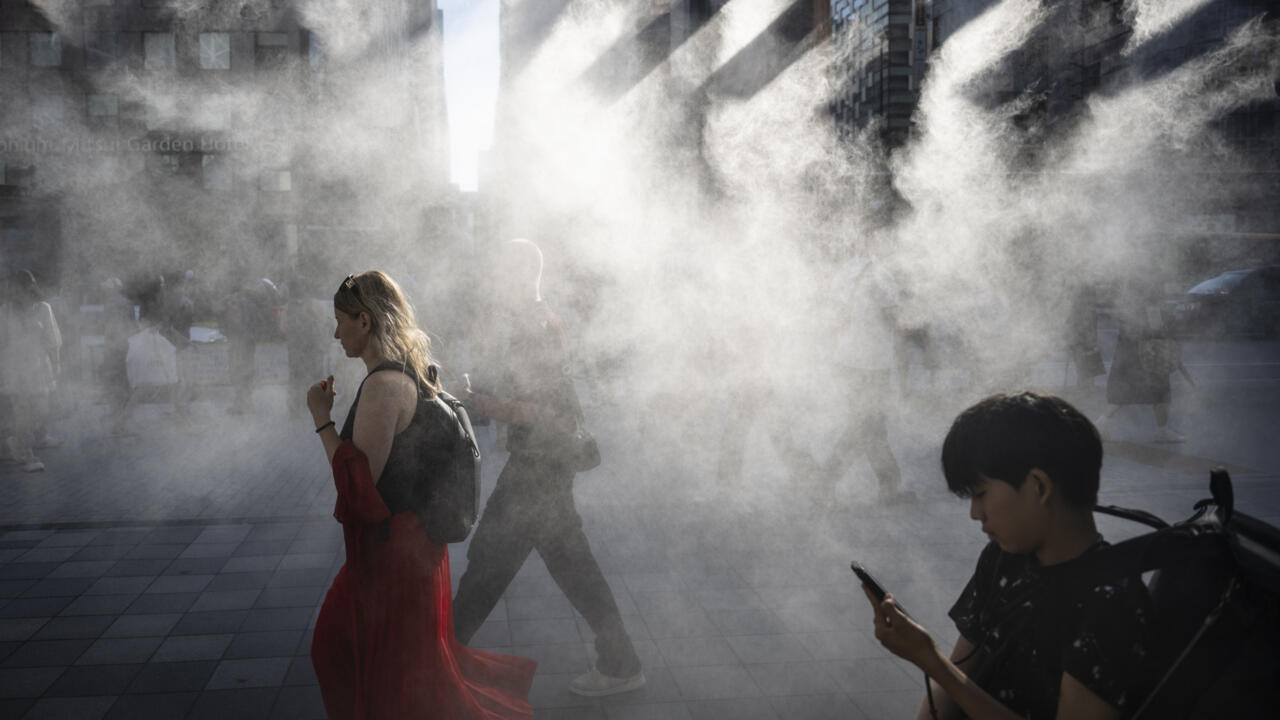
People walk under a misting system on a hot day in Tokyo earlier this year, which is on track to become one of the hottest in recorded history, according to the UN 
© Yuichi YAMAZAKI / AFP

While this year will not surpass 2024 as the hottest recorded, it will rank second or third, capping more than a decade of unprecedented heat, the UN's weather and climate agency said, capping more .

Meanwhile concentrations of greenhouse gases grew to new record highs, locking in more heat for the future, the World Meteorological Organization warned in a report released as dozens of world leaders met in the Brazilian Amazon ahead of next week's COP30 UN climate summit.

Together, the developments "mean that it will be virtually impossible to limit global warming to 1.5C in the next few years without temporarily overshooting the Paris Agreement target," WMO chief Celeste Saulo told leaders in Belem in northern Brazil.

The 2015 Paris climate accords aimed to limit global warming to well below two degrees Celsius above pre-industrial levels -- and to 1.5C if possible.

Saulo insisted in a statement that while the situation was dire, "the science is equally clear that it's still entirely possible and essential to bring temperatures back down to 1.5C by the end of the century".
Surface heat

UN chief Antonio Guterres called the miss temperature target a "moral failure".

Speaking at a Geneva press conference, WMO's climate science chief Chris Hewitt stressed that "we don't yet know how long we would be above 1.5 degrees".

"That very much depends on decisions that are made now... So that's one of the big challenges of COP30."

But the world remains far off track.

Already, the years between 2015 and 2025 will individually have been the warmest since observations began 176 years ago, WMO said.

And 2023, 2024 and 2025 figure at the very top of that ranking.

The WMO report said that the mean near-surface temperature -- about two metres (six feet) above the ground -- during the first eight months of this year stood at 1.42C above the pre-industrial average.

At the same time, concentrations of heat-trapping greenhouse gases in the atmosphere and ocean heat content continued to rise, up from 2024's already record levels, it found.

In its annual report on Tuesday, the UN Environment Programme also confirmed that emissions of greenhouse gases increased by 2.3 percent last year, growth driven by India followed by China, Russia and Indonesia.
'Urgent action'

The WMO said the impact of temperature rises can be seen in the Arctic sea ice extent, which after the winter freeze this year was the lowest ever recorded.

The Antarctic sea ice extent meanwhile tracked well below average throughout the year, it said.

The UN agency also highlighted numerous weather and climate-related extreme events during the first eight months of 2025, from devastating flooding to brutal heat and wildfires, with "cascading impacts on lives, livelihoods and food systems".

In this context, the WMO hailed "significant advances" in early warning systems, which it stressed were "more crucial than ever".

Since 2015, it said, the number of countries reporting such systems had more than doubled, from 56 to 119.

It hailed in particular progress among the world's least developed countries and small island developing states, which showed a five-percent hike in access in the past year alone.

However, it lamented that 40 percent of the world's countries still no such early warning systems.

"Urgent action is needed to close these remaining gaps," it said.

© 2025 AFP