Monday, November 24, 2025

UK


The Wrong Prescription – Why Labour Must Rethink Its Approach To Asylum


NOVEMBER 21, 2025


By Rathi Guhadasan

The Socialist Health Association condemns the asylum reforms announced this week by Home Secretary Shabana Mahmood, which represent a deeply concerning erosion of fundamental health and human rights protections for some of the most vulnerable people in our society.

A Betrayal of Health Equity Principles

The proposal to make refugee status temporary, subject to regular review every 30 months, and to extend the pathway to settlement from five to twenty years creates a system of prolonged insecurity that is fundamentally incompatible with public health principles. People living in limbo for two decades will face chronic stress, mental health deterioration, and barriers to accessing preventative healthcare. Refugees and asylum seekers have complex health needs, influenced by experiences in their home country, during their journey or after arrival in the UK. Nevertheless, there is no evidence that they use NHS services disproportionately – in fact, migrants to the UK use fewer resources than their native counterparts.

By removing the statutory duty to provide housing and financial support to asylum seekers, the government is creating conditions that will drive vulnerable people into destitution, homelessness, and exploitative situations. These are precisely the circumstances in which infectious diseases spread, mental health crises deepen, and people present to emergency services in extremis—at far greater cost to the NHS than preventative support would require.

Ignoring the NHS’s Reliance on Refugee and Migrant Workers

The Home Secretary’s rhetoric frames refugees as a burden while conveniently ignoring the fact   that many refugees and asylum seekers have been, are, or will become essential NHS workers. Our health service has long depended on the skills, dedication, and compassion of doctors, nurses, care workers, and other health professionals who came to the UK seeking safety.

From doctors fleeing persecution to care workers rebuilding their lives, refugee communities have filled critical workforce gaps and provided culturally sensitive care to diverse patient populations. To treat people seeking asylum as unwelcome whilst simultaneously relying on migrant workers to sustain our health system is hypocritical and short-sighted.

Rights-Based Concerns

These proposals violate the fundamental right to health, which is enshrined in the Universal Declaration of Human Rights, the WHO Constitution and the International Covenant on Economic, Social and Cultural Rights, all of which include the UK as a signatory. Moreover, the NHS constitution states that the NHS “is available to all irrespective of gender, race, disability, age, sexual orientation, religion, belief, gender reassignment, pregnancy and maternity or marital or civil partnership status. The service is designed to improve, prevent, diagnose and treat both physical and mental health problems with equal regard. It has a duty to each and every individual that it serves and must respect their human rights. At the same time, it has a wider social duty to promote equality through the services it provides and to pay particular attention to groups or sections of society where improvements in health and life expectancy are not keeping pace with the rest of the population.”

Potential impacts of the proposed asylum reforms include:

  • Discrimination in access to care: Removing guaranteed support will create a two-tier system where asylum seekers’ ability to maintain their health depends on their circumstances, not their needs.
  • Family separation: Removing automatic rights to family reunion tears apart support networks essential for mental and physical wellbeing, particularly for children and survivors of trauma.
  • Unaccompanied asylum-seeking minors misclassified as adults: As withcurrent so-called “scientific methods” of age assessment, concerns have been raised about proposals to use AI-based Facial Age Estimation. This technology, which cannot take into account ethnic differences and  visible aging from trauma, grief, sun exposure or malnutrition, could lead to vulnerable teenagers under 18 years being denied protection, placed in dangerous situations at risk of abuse and even deported.
  • Return to unsafe conditions: Forcing people to return to countries deemed “safe” ignores ongoing health infrastructure collapse, persecution of minorities, and the specific vulnerabilities of individuals—especially those with chronic conditions or disabilities.
  • Barriers to integration: The 20-year pathway to settlement prevents refugees from fully participating in society, accessing training, and contributing their skills—including in healthcare professions where we desperately need them.

A Race to the Bottom

The government’s boast that it is modelling these policies on Denmark—one of Europe’s strictest systems which it has previously called racist and in breach of human rights law—reveals a troubling willingness to abandon compassion in favour of deterrence. This is not evidence-based policymaking; it is an attempt to outflank the far-right by adopting their framing that refugees are a problem to be managed rather than people with rights to be protected.

As health professionals and public health advocates, we know that punitive asylum policies do not deter desperate people fleeing war, persecution, and torture. They simply ensure that people arrive here more traumatised, more vulnerable, and in greater need of healthcare intervention.

We call on the Labour government to:

  1. abandon these regressive reforms and return to a rights-based approach to asylum,
  2. recognise refugees’ contributions to British society, including to our NHS,
  3. invest in properly resourced, humane asylum processing that prioritises health and dignity,
  4. consult with health organisations, refugee communities, and frontline workers before implementing any changes to asylum policy, and
  5. acknowledge that protecting refugee health rights is not only a moral imperative but a public health necessity

This is not about politics; it is about humanity, evidence, and the kind of society we want to build. A healthy society is one that protects the vulnerable, not one that competes to treat them more harshly.

The SHA stands in solidarity with refugees, asylum seekers, and all those working to defend their rights.

Dr Rathi Guhadasan is Chair of the Socialist Health Association.

Image: Banner on the Make Them Pay demonstration in London on September 20th, c/o Labour Hub

BFAWU stands with migrant members amidst government attacks

“We stand for the principle that everyone who works here, who contributes here, deserves to be treated with respect and given secure rights.”

By Sarah Woolley, General Secretary, BFAWU

The BFAWU Executive Council is alarmed by the Home Secretary’s announcement yesterday, and by the direction it signals for the UK’s asylum system. The government’s statement that refugee status will become temporary, that the pathway to settlement will be significantly lengthened, and that support for people seeking safety may be withdrawn raises profound concerns about fairness, human rights, and the functioning of our economy.

In her statement, Shabana Mahmood said the current system is “out of control” and that the UK must move to a “core protection” regime where leave to remain is reduced (from five years to around 30 months) and where permanent settlement will only be available after a much longer period (potentially up to 20 years). She also proposed removing the automatic duty to provide accommodation and financial support for some asylum seekers, particularly those who can work but choose not to, or who break rules.

We welcome the government’s stated aim of reducing exploitation and safeguarding decent work, but we strongly reject the notion that migrating workers, including those who arrived as asylum seekers, are a “problem” to be solved by shrinking their rights and pushing them into precarity.

We make the following points:

  • The food industry, like many other sectors, relies heavily on migrant labour, including people who first came as asylum seekers. Without them, production, processing, distribution and retail would face serious disruption.
  • Many of our members are migrant workers. They perform essential roles, pay taxes, and contribute to our communities. To treat them as disposable, or condition their status on arbitrary deadlines and support-withdrawal, is both morally wrong and economically unsound.
  • The Home Secretary’s statement that refugee status will be temporary, subject to review, and that home countries will be deemed “safe” for return after short periods without guaranteeing genuine safety or protection is deeply troubling from a human-rights standpoint.
  • We deplore the language of “illegal migration” used to sweepingly characterise people seeking safety. As the BFAWU has consistently said: there is no such thing as an “illegal person”, only a status which the state determines.
  • The risk is that these reforms will create a two-tier workforce: people with insecure status who are vulnerable to exploitation, fear of deportation, and denial of rights. This undermines the fight for decent work, proper pay and safe conditions that unions champion.
  • From a union and broader labour movement perspective, the focus must be on rights, dignity and stability, not on temporary, conditional entitlements that can be removed on a whim.

We call on the government to:

  1. Recognise the real contribution of migrant workers, a number of whom arrived as asylum seekers, to the UK economy and to sectors such as food production and allied industries.
  2. Refrain from reducing protections or creating instability in workers’ rights in the name of migration control.
  3. Guarantee that those granted asylum or protection are treated with dignity, given secure status and rights comparable to other workers, not condemned to limbo or fear.
  4. Prioritise enforcement against labour exploitation rather than penalising people exercising the human right to seek safety.
  5. Adopt immigration and asylum policies rooted in solidarity, human rights and economic realism, not in rhetoric that undermines workers, divides communities and endangers the dignity of working people.

The BFAWU stands with our migrant members; we stand for the principle that everyone who works here, who contributes here, deserves to be treated with respect and given secure rights. We reject any policy that says “you are welcome” but only temporarily, under threat, or only if you can meet ever-shifting conditions.


UK Education staff wellbeing drops to lowest level since 2019 – NEU

“This is a system in crisis. Seventy-eight per cent of education staff are stressed, and more than one in three have experienced a mental health issue in the past academic year.
Daniel Kebede, National Education Union

By the National Education Union (NEU)

The teacher wellbeing index 2025 shows that education staff wellbeing has dropped to its lowest level since 2019

Commenting on the annual report, which shows that staff wellbeing across the education sector has dropped to its lowest since 2019, Daniel Kebede, general secretary of the National Education Union, said: 

“Teachers and school leaders are overworked, under-supported, and increasingly exposed to stress, anxiety, and burnout. No wonder there is a significant retention issue in the education workforce. 

“This is a system in crisis. Seventy-eight per cent of education staff are stressed, and more than one in three have experienced a mental health issue in the past academic year. Eighty-four per cent of senior leaders reported high stress, and 77 per cent of staff experienced symptoms of poor mental health caused by their work.  

“Teacher wellbeing must be a workforce priority. Union representatives should be involved in monitoring workload and wellbeing, and schools need adequate funding and staffing. It’s time to redefine teacher support, ensure proper funding, and protect teachers from stress and burnout.”


 UK

Poverty rises whilst companies post record profits – Brian Leishman MP

“Even when it is inconvenient, even when it comes at a personal cost, we must stand up for real Labour values.”

By Brian Leishman MP

Disagreements are inevitable in any movement worth its name. 
  
The Labour Party has always been a broad church and that is exactly where its strength lies. 
  
Our diversity of thought, range of experiences and willingness to argue passionately for what we believe in are the lifeblood of a truly democratic party. 
  
The reality of politics is that we will never agree on every single policy or every vote. 
  
Unity is not necessarily about uniformity – ours lies in our shared values of fairness, equality and the demand for social justice. 
  
These are values larger than any one faction or any single personality – and larger than temporary disputes that often seem to dominate the headlines. 
  
They are the very values which built the NHS, which fought for and delivered workers’ rights and which continue to inspire people across the UK to believe in a better future.  
 
I make no apology for opposing austerity and welfare cuts which punish the disabled or those who need our help the most. 
  
I make no apology for standing up for workers at the Grangemouth refinery or for speaking out against injustice at home and abroad. 
  
Even when it is inconvenient, even when it comes at a personal cost, we must stand up for real Labour values. That is what it means to be part of a movement rooted in principle rather than calculation. 
  
With the whip restored in the Parliamentary Labour Party, I will continue to fight for those values. 
  
Nothing has changed my purpose in politics – I am not here to climb the ladders of public life or to gain favour with the powerful. 
  
I came into politics to fight for the working-class, ordinary people who have been badly let down by Tory austerity and SNP mediocrity over the past decades. 
  
Communities have too often been ignored, and governments have forgotten that compassion must be the light that guides everything they do. 
  
We face stark challenges today. Poverty continues to rise while the largest companies are posting record profits to the satisfaction of greedy shareholders. 
  
No longer is food security a fringe issue – it is a daily reality for many families who cannot afford to put a proper meal on the table. 
  
Energy bills and housing costs are spiralling while wages stagnate. 
  
These are all political failures, which must be fixed through political courage. 
  
Change will not come easily, it requires us to reject failed dogmas, to invest in people and to realise that the capitalist markets will not deliver justice. 
  
It will require us to remember that politics is not a game of numbers that must be balanced every budget, but a matter of human lives. 
  
My commitment is to maintain that courage in Westminster, fighting for change rooted in compassion. 
  
I will continue to stand with workers, families and communities who deserve better than managed decline. 
  
I will continue to be a force that reminds colleagues that Labour’s purpose is not to simply win power, but to use that power to transform lives and deliver change in society. 


‘Taxing private jets can help the rest of us soar’


: Private executive airplane with limousine Rolls Royce Phantom luxury car shown together at international Heathrow Airport. VIP service at the airport. Business-class transfer
©Shutterstock

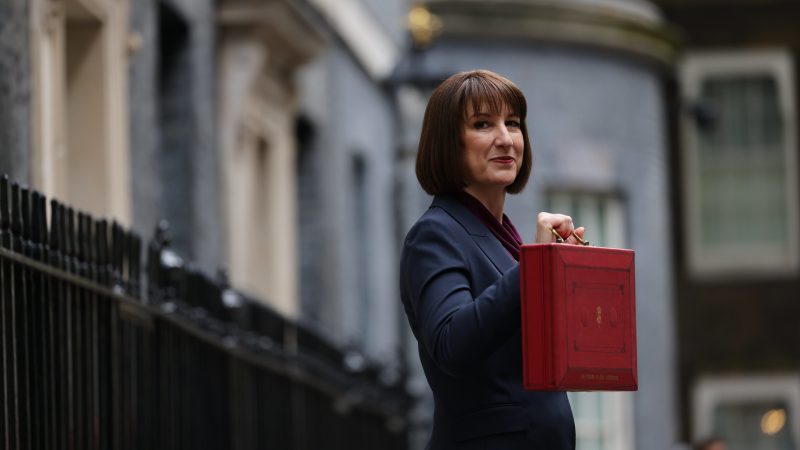
Amid all the speculation about the contents of the red box on 26 November, it’s worth restating: Rachel Reeves inherited financial chaos from the Conservatives. Building an economy that creates growth, safeguards and improves essential services, and builds on the successes we’ve managed so far in waiting lists, free school meals, and the delivery of GB Energy is a big task. Doing so in the face of volatile global headwinds is a challenge.

Part of that challenge lies in finding new revenue sources and ensuring that those with the broadest shoulders carry the greatest burden. One idea that’s gathering steam at home and internationally is taxing emissions from private jet flights.

The UK is currently the private jet capital of Europe, accounting for 15% of European private jet emissions. Despite this outsized environmental impact, the majority of private jet flights pay no VAT or fuel duty, and many even pay the same low rate of Air Passenger Duty (APD) as passengers on commercial flights or none at all. 

This is a bizarre anomaly, meaning that, in effect, a working parent driving to the supermarket for the weekly shop pays more in tax and duty than a billionaire flying to the Caribbean. 

Levies on private jets would be genuinely progressive in their impact.

Our commitment to increasing the higher rate of Air Passenger Duty (APD) on private jet flights was a welcome first step. But Rachel should go further. Even after the proposed increase, the higher rate of APD on the longest private jet flights will only be £1,141 by April 2026. For a billionaire, this is a negligible sum, often less than 2% of the total cost of the flight vs on average 43% of the total cost of an economy ticket on a passenger plane – there is clearly room to increase this much further to raise significantly more revenue and ensure greater fairness between private and passenger flight taxation.

We should also ensure that all private jets are paying the highest rate of APD, closing a loophole that currently sees half of flights paying a lower, standard APD rate, and over a fifth paying no APD at all.

Analysis from Green Alliance shows that taxing private jet kerosene fuel at a modest £1 per litre could raise up to £200 million per year. This single measure could, for example, more than cover the cost of extending the successful £3 bus fare cap, making travel easier and greener for working people across Britain. 

Private jet demand is increasingly price inelastic, particularly for leisure travel. A significant tax uplift is highly unlikely to impact the decisions of the super-rich. This means it poses minimal risk to the government’s growth agenda, while providing a crucial source of additional revenue to help achieve our mission of national renewal.

It would also give us the opportunity to show global climate leadership by joining, or aligning with, the Global Solidarity Levies Task Force’s (GSLTF) Premium Aviation Coalition. This is a growing group of countries, including our neighbours France and Spain, which have formed to raise revenues from premium travel to be spent on sustainable, efficient economic growth. 

Earlier this month, Keir Starmer attended COP30, the global climate conference, in Brazil – a clear indication of how seriously Britain, and the Labour Party, takes climate action. While levies were not specifically on the agenda at COP this year, working with other nations to identify effective funding for climate action is going to be critical in the years ahead – and aviation should be a part of those discussions. 

Right now, private jets release huge amounts of emissions into our atmosphere, while their super-rich passengers shoulder almost no financial responsibility for the impacts of their behaviour. 

Higher levies on private jets aren’t about making it harder for everyday people to fly for work or holidays. It’s about the tiny minority who can afford luxury at the expense of the planet carrying their fair share of the burden, and helping raise the revenue the country badly needs.


UK Budget 2025: What do MPs, trade unions and think tanks want from Reeves?


Photo: HM Treasury/Flickr

Chancellor Rachel Reeves is set to deliver her second Budget next week, with the mood music surrounding the announcement setting the stage for further tax rises.

However, talk of a potential reversal of Labour’s manifesto commitment not to raise income tax, National Insurance on VAT on working people has been dismissed – leaving political pundits and MPs guessing how the Chancellor will fill the latest black hole in the nation’s finances.

With growth sluggish and the government shaken by anonymous briefings, the Budget could be a do-or-die moment for the Prime Minister and his administration.

LabourList spoke to MPs, think tanks and some of the nation’s trade unions to ask what they want to see from Reeves’ big announcement next Wednesday.

‘Progressive and pro-growth’

Chris Curtis, co-chair of the Labour Growth Group, acknowledged that the Budget will be “difficult” and will include tax rises of some variety. However, he urged the Chancellor to steer away from measures that could have a knock-on effect to economic growth or risk further difficult choices later down the road.

He told LabourList: “I think in a difficult budget which is ultimately going to lead to tax rises, we avoid policies that are going to hit economic growth, as that will only lead to more tough decisions in the future.”

The newly reinvigorated Tribune Group (representing the party’s so-called ‘soft left’) passed a motion which said that “the forthcoming Budget is an opportunity for the Government to demonstrate Labour’s values of fairness and opportunity, to lower the cost of living, to increase the stability of our public finances by increasing the fiscal headroom, and to set out measures that will tackle child poverty.”

Among the measures they want to see in the budget are taxing sectors such as banking and online gambling that have made excess profits from economic turmoil and weak regulation under the Tories; Abolition of the two-child limit; and a consideration of a ‘Protected Minimum Floor’ below which a person’s Universal Credit cannot fall.

On the left of the party, Poole MP Neil Duncan-Jordan said that next week’s Budget needs to be a “Budget for living standards” and proposed a selection of measures, including scrapping the two child benefit cap and equalising the rate of capital gains tax with income tax.

“The Budget needs to introduce a fair taxation system, so that those with the broadest shoulders carry the heaviest burden – and there are some practical steps that we could take to bring that about.

“Capital gains tax should be set at the same rate as income tax, so that unearned wealth is taxed the same way as earned income. The 45% top rate of tax should go back to 50%. That would affect just around about a million of the wealthiest people in the country.

“We should end paying interest on bank loans, we should have a windfall tax on the utilities, banks and other large companies, who’ve done extremely well – and we should have a wealth tax on those with assets over £10 million.”

Noah Law, MP for St Austell and Newquay, said that the Budget had to be “progressive… beyond a shadow of a doubt”, alongside measures that would boost growth in the economy.

Law welcomed the decision to reverse plans to break the party’s manifesto on tax and said that the Chancellor had a range of alternative options to raise funds to plug the black hole in the country’s finances.

However, he urged the government to steer away from a wealth tax – warning such a measure may not raise as much as some have claimed.

Budget ‘make-or-break for Labour’

The new soft-left grouping Mainstream described next week’s Budget as “make-or-break for Labour and for the country” and said the Chancellor must deliver urgent action to improve living standards and “lay the foundations for a new economic settlement… where people and planet come before profit”.

Luke Hurst, Mainstream’s national coordinator, said: “This Budget must prove Labour is on your side. That means urgent funds for families fighting to make ends meet, and scrapping the cruel two-child benefit cap now. It means making the super-wealthy pay their fair share. It means taking back our water and energy from greedy profiteers.

“We must recognise that prosperity won’t be generated from Whitehall and that power must cascade deeply and widely across the country. We need political reform and meaningful decentralisation to grow the economy.”

Left-wing group Momentum warned that hiking taxes on working people would “not only be morally wrong, but politically disastrous”.

The organisation’s co-chair Sasha Das Gupta said: “We welcome reports that the Chancellor has decided not to raise income tax, but her pro-austerity fiscal framework forces the Government into a corner. 

“Instead, the Chancellor must use the upcoming Budget to announce an end to these arbitrary fiscal rules and focus on rebuilding Britain by taxing the rich, scrapping the two child cap, investing heavily in our public services and genuinely reversing austerity.”

‘Raise revenue without breaking manifesto or killing growth’

The Fabian Society has called on the Chancellor to freeze tax thresholds in order to raise tax revenue, warning of the need to raise tax revenue without breaking Labour’s manifesto commitments on tax.

Joe Dromey said: “The Chancellor will need to raise revenue in the budget in order to protect public services. But we need to do so without breaking the manifesto or killing off growth.

“We should extend the freeze on income tax thresholds for two years. Fabian Society analysis found this would raise over £11bn, with half of the funding coming from the richest fifth of households.”

Dromey also said Reeves should introduce a real living wage for care workers and said: “Care workers deliver some of the most important work in society. But they are chronically underpaid and undervalued, with almost half earning below the real Living Wage.

“Labour had committed to introducing a Fair Pay Agreement for social care, and allocated £500m to improve pay and conditions. The Chancellor should boost the funding available for this to £800m. This would be enough to ensure all care workers are paid at least the real Living Wage, and that they have access to occupational sick pay.

“This could be paid for by raising the insurance premium tax on private health insurance from 12% to 20%, bringing it into line with VAT.”

He called for the Chancellor to restore the health in pregnancy grant, which he said would be “a relatively low-cost, proven mechanism to transform lives”.

Dromey also expressed support for a rumoured nightly tourist tax, which would give mayors the power to levy visitors a charge when staying at hotels and Airbnb-style accommodation.

“Other countries often allow local authorities to charge visitors staying overnight a small amount to help fund the amenities they benefit from. The Chancellor should allow mayors and councils to implement a visitor levy on overnight stays in their areas. It would cost visitors very little, but would add up and make a real difference.”

‘Chancellor must boost living standards and bring down bills’

Trade unions have unanimously called for greater levies on the rich, alongside a focus on addressing the cost of living for working people.

TUC general secretary Paul Nowak said that living standards and decent jobs should be at the core of Reeves’ Budget.

“Households up and down the country are still feeling the pinch, with real pay sluggish. After years of falling living standards, there is still much ground to make up.

“There are no easy fixes to longstanding challenges in the jobs market, with the fall in jobs, higher youth unemployment and persistently high use of zero hours contracts remaining significant concerns.

“The government is on the right track with serious public investment, stronger workers’ rights and improving the support people need to get into work.

“The Chancellor must build on this at the Budget by boosting living standards and bringing down household bills, sustaining investment in our infrastructure and continuing to repair our public services.

“The new jobs guarantee, which is a major step forward for boosting young people’s job prospects, must be ambitious in scale and scope – with early access for those who need it most.”

Unite, which has flirted with the prospect of disaffiliating from Labour, has said that next week’s Budget is a “critical point” for the union’s continued support for the party.

At Labour’s party conference in September, general secretary Sharon Graham said that affiliation was getting “harder and harder to justify” and urged Rachel Reeves to junk the fiscal rules.

She told Sky News: “Those fiscal rules need to be changed. Other countries are doing it. We should stop dancing around our handbag and do that. If the Budget is essentially nothing, it’s insipid, I think we’ve got a real problem on our hands – because without the money to make the change, then nothing is going to change.”

‘Historic opportunity to start to rebalance the country’

Britain’s largest trade union Unison has said the Budget is an “historic opportunity to start to rebalance the country” and called for “brave, progressive choices” to fix public services and tackle poverty.

General secretary Christina McAnea said: “We know the Labour government inherited a mess from the Conservatives, but the economy is still not working for many people who are struggling to afford the basics. This Budget is an opportunity to tax, not work.”

Some of the measures she is calling for is bringing capital gains tax in line with income tax, which she claims would raise up to £14 billion per year, as well as scrapping the two child benefit cap.

“People elected a Labour government because they wanted change and while there are things to celebrate – like the Employment Rights Bill that will transform the working lives of millions – there is a long, long way to go before people can start to feel better.

“This Budget is an historic opportunity to start to rebalance the country. To shift the dial on inequality and call time on child poverty. I hope the Chancellor is bold, grasps the nettle and makes history for the right reasons next week.”

TSSA general secretary Maryam Eslamdoust said that the Budget must be “true to Labour values” and support those struggling to make ends meet.

“If taxes are to rise to build the country and get the country moving, that is no bad thing – but it is those with the deepest pockets who should pay more.”

Eslamdoust said she wanted Reeves to raise income tax on high earners, alongside a wealth tax on the richest – describing it as “the only way forward”. However, increases in income tax have been ruled out by the Chancellor.

‘Pivotal moment’

The think tank ecosystem has also described this year’s Budget as a “pivotal moment” for the government amid difficult economic headwinds.

The Resolution Foundation, the organisation pensions secretary Torsten Bell chaired before his election to Parliament, has urged the Chancellor to make “sensible tax reforms” to raise the £26bn rumoured to be needed.

Research director James Smith said: “Budget-watchers are braced for a major downgrade to Britain’s productivity outlook. But ironically, a major upgrade to the outlook for pay could mean that the Chancellor’s fiscal black hole is less daunting than feared.

“However, reassuring the markets about the state of the public finances, paying for policy U-turns and providing fresh cost of living won’t come cheap. Tax rises of £26bn are likely to be needed.

“The Chancellor should look to make sensible tax reforms to car taxes, dividends and capital gains.”

However, Smith said that Reeves should switch two pence of employee National Insurance onto income tax to raise cash while protecting workers’ wages – a measure all but ruled out by the Chancellor.

Centre-left think tank Compass said that any break of manifesto commitments would be seen as a “sign of desperation”.

Director of the campaign group Neal Lawson said: “  Increasing taxes to enable social investment is a good thing if planned effectively, but breaking manifesto commitments like this is a sign of desperation that could backfire economically and politically.

“This is the inevitable outcome of a hyperfactional obsession that rejects progressive economic arguments in the name of party control: the country is now paying the price.”

Progressive think tank Common Wealth also stressed the need to address the cost of living in the Budget, but also called for the transfer of utilities back into public hands.

Deputy director Sarah Nankivell said: “This should be a budget to take on the cost of living crisis which is the greatest challenge people across the country are facing right now.

“Privatising our essential services has been a disaster. Since the 1990s, almost £200bn has been transferred from the public to shareholders through our transport fares and water and energy bills.

“Investing in buying back our utilities and public transport, at fair value, is critical if we are to get a handle on the cost of essentials. Without this, the government will struggle to achieve any durable increase in living standards.”

 40 MPs call on Rachel Reeves to tax wealth more – Green New Deal Rising

“We are calling on you to make this year’s Autumn Budget a turning point by focusing on taxing wealth more and work less.”
Letter to the Chancellor signed by 40 MPs

By Green New Deal Rising

This morning, 40 MPs from 8 different parties signed an open letter demanding that Rachel Reeves taxes wealth more in the Budget. 

The MP supporters include 21 Labour backbenchers, 4 Greens, SNP, Independents, Lib Dem and SDLP MPs. Thanks our consistent pressure, and the work of our friends at Taxpayers Against Poverty, we’ve got MP backers from Aberdeenshire to Brighton!

The MPs are urging the Chancellor to make this year’s budget a “turning point” for the country by focusing on taxing wealth more and work less.  

They say Britain’s tax system continues to overburden those who work hardest while protecting those whose wealth grows passively, writing: “This imbalance is not only unfair – it is economically damaging.” 

Read the full letter text and list of MP signatories below ðŸ‘‡


Dear Chancellor,

Last year, a cross-party group of MPs urged the Chancellor to make the tax system fairer by asking those with the greatest wealth to contribute more. A year on, the case for doing so has only strengthened.

Britain’s tax system continues to overburden those who work hardest while protecting those whose wealth grows passively. Ordinary families face rising costs of living, crumbling public services, and deepening insecurity, while extreme wealth at the top continues to expand. This imbalance is not only unfair – it is economically damaging.

We are calling on you to make this year’s Autumn Budget a turning point by focusing on taxing wealth more and work less. A fairer approach to wealth taxation would:

  • Reduce poverty and inequality by ensuring those with the broadest shoulders contribute their fair share.
  • Ease the pressure on working families, allowing more people to thrive rather than merely survive.
  • Provide sustainable funding for public services like education, health, housing, and social care – the foundations of a fair and productive society.

This is not about punishing success or creating division. It is about fairness, balance, and responsibility. Britain cannot thrive when wealth accumulates at the top while millions struggle to make ends meet.

We urge you to act with courage and clarity: reform the tax system so that it rewards effort, not advantage, and builds a future that works for everyone.

Yours sincerely,

Diane Abbott — Hackney North & Stoke Newington — Labour
Shockat Adam — Leicester South — Independent
Olivia Blake — Sheffield Hallam — Labour
Apsana Begum — Poplar and Limehouse — Labour
Richard Burgon — Leeds East — Labour
Dawn Butler — Brent East — Labour
Ian Byrne — Liverpool West Derby — Labour
Dr Ellie Chowns — North Herefordshire — Green Party
Carla Denyer — Bristol Central — Green Party
Bobby Dean — Carshalton & Wallington — Lib Dem
Jeremy Corbyn — Islington North — Independent
Alex Easton — North Down — Independent
Colum Eastwood — Foyle — SDLP
Sorcha Eastwood — Lagan Valley — Alliance Party
Neil Duncan-Jordan — Poole — Labour
Claire Hanna — Belfast South and Mid Down — SDLP
Adnan Hussain — Blackburn — Independent
Imran Hussain — Bradford East — Labour
Kim Johnson — Liverpool Riverside — Labour
Ayoub Khan — Birmingham Perry Barr — Independent
Ben Lake — Ceredigion Preseli — Plaid Cymru
Ian Lavery — Blyth and Ashington — Labour
Graham Leadbitter — Moray West, Nairn & Strathspey — SNP
Brian Leishman — Alloa and Grangemouth — Independent
Emma Lewell — South Shields — Labour
Clive Lewis — Norwich South — Labour
Rebecca Long Bailey — Salford — Labour
Rachael Maskell — York Central — Labour
Andy McDonald — Middlesbrough and Thornaby East — Labour
John McDonnell — Hayes and Harlington — Labour
Iqbal Mohamed — Dewsbury and Batley — Independent
Kate Osborne — Jarrow and Gateshead East — Labour
Adrian Ramsay — Waveney Valley — Green Party
Bell Ribeiro-Addy — Clapham & Brixton Hill — Labour
Seamus Logan — Aberdeenshire North and Moray East — SNP
Jon Trickett — Normanton and Hemsworth — Labour
Nadia Whittome — Nottingham East — Labour
Steve Witherden — Montgomeryshire and Glyndŵr — Labour
Siân Berry — Brighton Pavilion — Green Party
Zarah Sultana — Coventry South — Independent