Thursday, January 08, 2026


South Korean Shipbuilders Achieve Market Share Gains for 2025
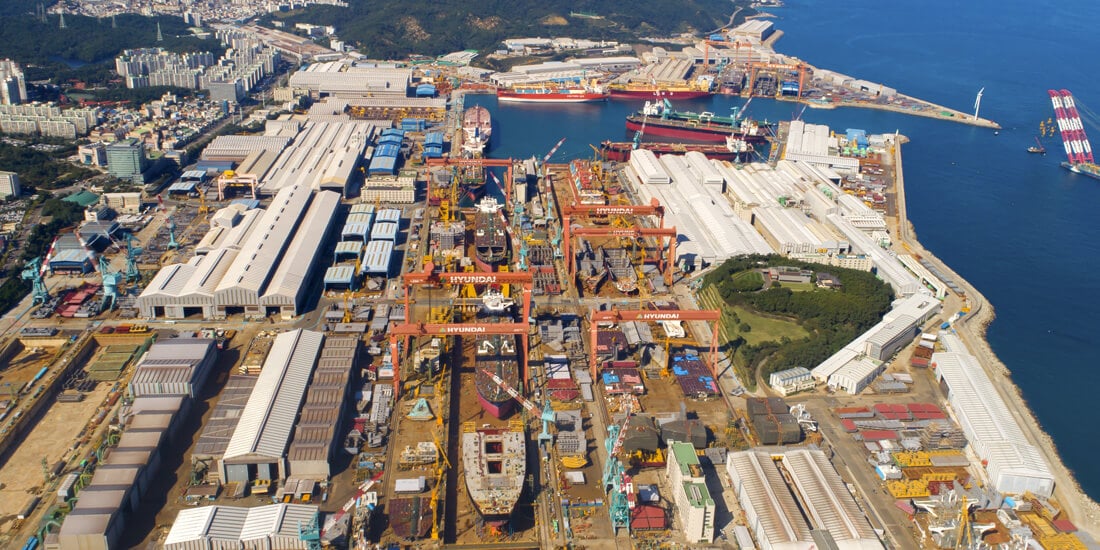
Hyundai shipbuilding
HD Hyundai reports it met its 2025 targets and looks to consolidate growth in the year ahead (HD Hyundai Heavy Industries file photo)

Published Jan 5, 2026 4:42 PM by The Maritime Executive


Despite an overall challenging year in the shipbuilding sector, reports indicate that the South Korean shipbuilding industry is expected to show gains in its total orders booked in 2025 after years of market decline. The major builders were also on pace to modestly exceed their annual forecasts.

After 11 months, the South Korean shipbuilders had a 22 percent market share for the year, according to data from Clarkson Research. While the global industry was down 37 percent cumulatively after 11 months, the Koreans remained on track for yearly gains. Even with a potentially slow December, the expectation was that the industry would remain above 20 percent of the global order book for the year, which would be an increase from the 17 percent market share for Korean shipbuilders in 2024. 

Clarkson calculates that at the end of 11 months, cumulative global orders were at approximately 45 million CGT (Compensated Gross Tons). The Chinese yards were down 47 percent year-over-year to just over 26.6 million CGT, while the South Koreans were at just over 10 million CGT.

The United States’ threat to impose fees on Chinese-built ships and the uncertainties over tariffs overhung the shipbuilding market for most of 2025. Some segments, such as containerships, continued strong, but even there, orders rebounded in South Korea, while other segments, including car carriers, experienced strong declines in new orders. The LNG carrier market remains strong, and the first orders were being placed for very large ammonia carriers.

HD Hyundai achieved its 2025 sales target with last-minute orders completed, including with the Philippine Department of National Defense. HD Hyundai KSOE signed a deal at the end of last week to build two 3,200-ton displacement frigates for the Philippines valued at approximately $578 million and due for delivery in the second half of 2029.

With the late December orders, HD Hyundai KSOE secured a total of 133 ship orders in 2025. The value was at $18.16 billion, surpassing a target of $18.05 billion for the year. While the company exceeded its target for the fifth consecutive year, it is by the smallest percent after years where it reached 130 to 155 percent of its targets. Containerships led the orders as well as oil tankers, segments that previously lagged due to the low-cost competition from China. HD Hyundai maintained its strong position with LNG, LPG, LNG bunker vessels, ethane carriers, and chemical tankers, as well as its orders for large ammonia carriers.

HD Hyundai looks to consolidate its position and improve operations in 2026 after completing the merger of its HD Hyundai Heavy Industries and HD Hyundai Mipo yards into a single business unit. The company announced a target of $23/31 billion in orders for 2026. That would be up 29 percent over 2025.

Its third shipbuilding unit, HD Hyundai Samho, remains independent and is reported to have its second-largest order book since 2022. Samho booked last-minute orders for three LNG carriers valued at $769.5 million, reported on December 30. 

Samho’s 2025 orders are estimated at a total of $7.9 billion, far exceeding its target of $4.57 billion. It also exceeded its 2024 orders, which were just under $4.6 billion. Media reports said it would be the builder’s largest order performance since 2022, when it secured nearly $8.7 billion in orders.

Among the other large South Korean shipbuilders, reports indicate that Hanwha Ocean also continued its strong rebound after the financial troubles of the acquired Daewoo Shipbuilding and Marine Engineering (DSME). Hanwha Ocean’s orders exceeded $9.8 billion, led by very large crude carriers and LNG carriers.  The company was reporting strong growth over 2024, when the shipbuilder booked $8.98 billion.


The third large builder, Samsung Heavy Industries, however, is believed to have lagged behind its yearly forecast. The last reports indicated it had booked $9.8 billion in orders in 2025, which is about three-quarters of its projection for the year. It also received orders for large crude carriers, containerships, LNG carriers, and shuttle tankers.

Even with the United States agreeing to defer its shipbuilding fees on the Chinese, expectations are high among the South Korean shipbuilders. They have entered the U.S. MRO market (maintenance and repair for USN support ships) and still expect strong opportunities from the Make American Shipbuilding Great Again (MAGSA) efforts. They remain optimistic that they will be able to enter the U.S. naval shipbuilding segment to support the Trump administration’s plans to rapidly expand the U.S. Navy and support ship fleet.


U.S. Navy Expands Maintenance and Repair Work with South Korea’s Shipyards
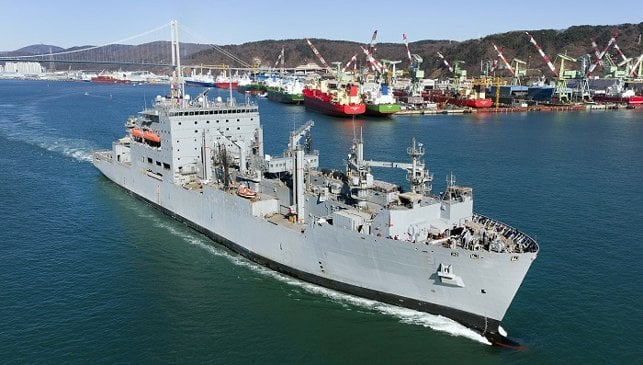
USNS ship repaired in South Korea
USNS Alan Shepard was redelivered and now HD Hyundai will begin a second MRO contract (HD Hyundai)

Published Jan 7, 2026 5:28 PM by The Maritime Executive


The U.S. Navy is continuing to expand its maintenance, repair, and overhaul assignments with South Korea’s shipyards as part of a strategy to maintain ships when possible closer to their areas of deployment. Korea broke into the MRO segment in 2024 and has now completed a series of contracts while expecting more work from the United States.

South Korea’s largest shipbuilding group, HD Hyundai Heavy Industries, is marking two milestones in the MRO business for the United States. The yard was the first to be certified to bid on the contracts, but had delayed seeking the work due to yard capacity issues. It won its first assignment in August 2025 and now reports that it has received another contract.

The repair work is expected to be a lucrative addition to the yards and one of the elements in the programs to support the United States and Korea’s Make American Shipbuilding Great Again initiative. Earlier reports estimated the value of the U.S. MRO business at more than $14.5 billion. The yards also emphasize that they will be able to leverage the expertise and track record with U.S. projects to attract other international assignments.

HD Hyundai reports it recently won an MRO contract for the USNS Cesar Chavez, a 41,000-ton Lewis and Clark-class dry cargo ship used for at-sea replenishment of U.S. warships. It is currently assigned to the U.S. 7th Fleet.

Cesar Chavez is scheduled to arrive at the shipyard in Ulsan, South Korea, in the coming days. Work is scheduled to begin on January 19, and it is anticipated that the ship will be redelivered in March. The shipyard reports it will perform maintenance on approximately 100 items, including the hull, structure, propulsion, electrical, and auxiliary systems.

The arrival of the ship comes shortly after the redelivery and departure of her sister ship, USNS Alan Shepard, which had been at the HD Hyundai shipyard since late September. The yard reports the initial contract was for approximately 60 maintenance tasks. However, during the course of the work, over 100 additional items were identified, extending the maintenance period and significantly increasing the contract amount. Work was completed at the end of the year, and the vessel departed Uslan on January 6.

HD Hyundai reports it plans to further strengthen its MRO business, including with the integration of HD Hyundai Mipo after the merger of the two divisions. It looks to increase its competitiveness and expand the repair business.

Hanwha Ocean was the first to receive assignments, and it has completed several MRO contracts. Recently, it was reported that HJ Shipbuilding & Construction has also completed its final review and inspection by the U.S. Navy. The company reports it expects to sign its Master Ship repair Agreement with the U.S. within the month. It had reportedly already won an assignment for the vessel USNS Amelia Earhart, but the ship remains in Japan and is possibly being sent to support operations off Venezuela.

Reports in the Korean media said that both HJ Shipbuilding’s Yeongdo shipyard and SK Oceanplant have recently completed their inspections by the U.S. Navy. The mid-sized yards look to also begin bidding on the MRO contracts from the U.S. Navy.
 

Op-Ed: Bangladesh's Phased HKC Rollout Makes Sense - If Enforced

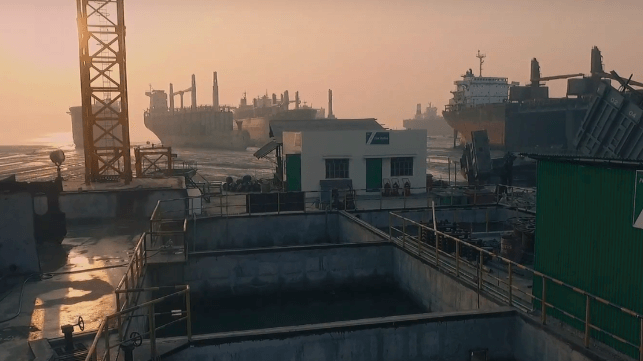
 Hong Kong International Convention for the Safe and Environmentally Sound Recycling of Ships (HKC)

PHP
File image courtesy PHP

Published Jan 7, 2026 5:59 PM by Prof. Dr. Ishtiaque Ahmed


When the Hong Kong International Convention for the Safe and Environmentally Sound Recycling of Ships (HKC) entered into force on June 26, 2025, it changed the legal landscape of global ship recycling overnight. What had long been discussed as a future compliance goal suddenly became binding international law. Bangladesh, the world’s largest ship-recycling state by volume, immediately found itself under intense scrutiny. Critics were quick to argue that allowing ship-recycling yards to comply with the Convention “phase by phase” after the deadline risked violating one of the Convention’s most important rules: the obligation of no favorable treatment enshrined in article 3.4.

At first glance, the criticism seemed powerful. The Convention is clear that non-compliant facilities must not gain a commercial advantage over compliant ones. Allowing yards that are not yet fully compliant to continue operating after entry into force appears, on the surface, to give them exactly that advantage. For observers unfamiliar with the details of Bangladesh’s regulatory response, the conclusion seemed obvious: phased implementation equals unlawful favorable treatment.

That conclusion, however, does not survive close legal examination once Bangladesh’s newly drafted ship-recycling rules 2025 are properly understood. The real legal question has never been whether Bangladesh needs time to transition. International environmental law has long accepted that developing states may implement complex treaties progressively, provided they act in good faith and move steadily toward compliance. The more difficult question has been whether such flexibility can coexist with the HKC’s no-favorable-treatment obligation, which is designed to prevent cost-based competition through lower standards.

Bangladesh’s newly drafted Ship Recycling Rules 2025 (proposed) respond directly to that concern. They do not treat phased compliance as a blanket exemption. Instead, they convert transition into a tightly controlled legal status, surrounded by conditions, restrictions, and enforcement mechanisms that are meant to neutralize competitive advantage. Under the new draft rules, a non-compliant facility is not given a free pass named as Document of Authorization to Conduce Ship Recycling (DASR) to continue business as usual. It is allowed to operate only under the existing domestic legal framework, and only subject to “reasonable restrictions” imposed by the competent authority; Bangladesh Ship Recycling Board (BSRB). These restrictions are not symbolic. They are central to the design of the transition regime.

First, the transition period itself is strictly time-limited. A non-compliant facility may be allowed to operate for a maximum of two years on a phase-by-phase basis. There is no open-ended tolerance. The clock starts running immediately, and the destination is clear: full compliance with the HKC or exit from the market.

Second, permission is never granted in one block. Authorization is issued for a maximum of six months at a time. Each extension depends on continued regulatory oversight, demonstrated progress, and adherence to an agreed compliance roadmap. This converts the transition into a rolling compliance test rather than a blanket license to operate.

Third, and most importantly from the perspective of international law, non-compliant facilities must demonstrate alternative measures that are equivalent to the Convention’s requirements. This is a critical legal safeguard. The Convention itself allows for equivalence in implementation, provided the underlying level of environmental protection and worker safety is maintained. By requiring equivalence, Bangladesh removes the central feature of favorable treatment: lower compliance costs achieved by lower standards.

Fourth, the transition regime is backed by strict monitoring by the competent authority. Oversight is not discretionary in practice, even if the authority retains some discretion in how it evaluates progress. Facilities must submit plans, meet milestones, and accept inspections. If progress stalls or commitments are not met, authorization can be withdrawn.

Finally, the legal consequence of failure is explicit and severe. If a facility does not achieve full HKC compliance within the permitted transition period, its right to continue ship recycling is terminated. There is no entitlement to indefinite operation. In legal terms, uninterrupted ship recycling becomes a conditional privilege, not a vested right.

Taken together, these features fundamentally change the legal character of phased implementation. This is not favorable treatment. It is regulated exposure to compliance risk. The non-compliant facility operates under tighter scrutiny, shorter permissions, and the constant threat of closure or uninterrupted operation. A fully compliant yard, by contrast, enjoys regulatory stability, market credibility, and uninterrupted access to international obsolete tonnage. The competitive advantage, if any, flows toward compliance, not away from it. This distinction matters. The no-favorable-treatment obligation does not prohibit all forms of transition. It prohibits competitive distortion. Bangladesh’s recent draft rules are carefully designed to remove that distortion by ensuring that transitional facilities do not enjoy regulatory certainty, lower oversight, or reduced safety obligations compared to compliant ones.

Seen in this light, the allegation that Bangladesh is violating, or is on the verge of violating, the HKC is overstated. The country has not ignored the no-favorable-treatment rule; it has operationalized it through conditional authorization, equivalence requirements, and enforceable deadlines. This is precisely what good-faith implementation looks like in a complex industrial sector.

That said, the legal story does not end with drafting. International law judges a nation state not only by the quality of its rules, but by how it applies them. The strength of Bangladesh’s position depends entirely therefore on enforcement. If permissions are renewed mechanically, if oversight becomes symbolic, or if deadlines are quietly extended, the good-faith argument will weaken rapidly. At that point, critics would be justified in questioning whether transition has slipped into disguised exemption.

For this reason, the most important step now is immediate and visible enforcement. The government must operationalize the new rules without delay. Monitoring must be real, termination powers must be credible, and equivalence assessments must be rigorous. Any hesitation risks creating the perception that the rules exist mainly to deflect criticism rather than to discipline the market.

Bangladesh has done something few major ship-recycling states have managed: it has translated an abstract international obligation into a workable domestic compliance pathway that respects both development realities and treaty discipline. That achievement deserves recognition, not reflexive condemnation. But it also carries responsibility. Delay or selective enforcement would raise serious good-faith concerns and reopen the legal debate Bangladesh has worked hard to settle.

The HKC was never meant to demand instant perfection. It was meant to end a system where lower standards were rewarded. Bangladesh’s newly drafted rules show that transition and discipline can coexist. The task now is simple, though not easy: enforce them.

Dr. Ishtiaque Ahmed is a Professor and Chair of the Department of Law at North South University, Bangladesh. A former Merchant Marine Engineering Officer, he holds a J.S.D. (Doctor of the Science of Law) from the University of Maine School of Law, USA, where he specialized in International Ship recycling laws and policy. He contributed to the drafting of Bangladesh’s Ship Recycling Rule 2025 (proposed) and revising Bangladesh Ship Recycling Act 2018 as the sole Legal Consultant. Dr. Ahmed is also a qualified Barrister of England, an active member of Chartered Institute of Arbitrators (MCIArb) in London and an Advocate of the Supreme Court of Bangladesh. His expertise lies at the intersection of maritime law, environmental regulation, and sustainable ship recycling practices. He can be reached at ishtiaque.ahmed@northsouth.edu.

The opinions expressed herein are the author's and not necessarily those of The Maritime Executive.

83% of Americans Want Trump Admin to End Secrecy Behind Lethal, Extrajudicial Boat Strikes

Nearly seven in 10 feel the Trump administration has not provided evidence to justify its killing of at least 114 people in the Caribbean and other international waters.


US Secretary of Defense Pete Hegseth arrives for a meeting with House leadership on the military strikes against drug boats in the Caribbean, on Capitol Hill in Washington, DC, December 16, 2025.
(Photo by Saul Loeb/AFP via Getty Images)

Stephen Prager
Jan 07, 2026
COMMON DREAMS

The vast majority of US voters want the Trump administration to be more transparent about its campaign of extrajudicial killings in the Caribbean and other international waters, according to a new poll out Monday.

While it has faded from the headlines over the past week due to President Donald Trump’s illegal overthrow of Venezuelan President Nicolas Maduro and atdtempt to commandeer the nation’s oil, his bombings of alleged drug-smuggling vessels in the Caribbean and elsewhere have continued into the new year.

As of January 2, the US military had disclosed 35 separate attacks to the public, with a death toll of at least 114 people in total since September. But the administration has provided scant evidence to justify the attacks.

According to an ACLU/YouGov poll released on Monday, which was conducted in late December, 83% of voters believed the administration must release its legal justifications and full, unedited videos of the lethal strikes. This includes 97% of Democrats, but also 82% of independents and 70% of Republicans.

Several media outlets reported in November that the Department of Justice’s Office of Legal Counsel (OLC) authored a still-classified legal opinion justifying the strikes and exempting those involved in directing them from future prosecution. The ACLU and other rights groups filed a Freedom of Information Act (FOIA) request last month for the document.

The poll shows that a majority of voters—87% of Democrats, 53% of independents, and 15% of Republicans—disapproved of the strikes, while nearly seven in 10 felt that the administration has not yet shown evidence to the public justifying the bombings.

Members of both parties in Congress have called for the administration to release video of the strikes, with particular scrutiny on the September 2 “double-tap” strike in which the military bombed two shipwrecked survivors of an earlier attack.

Last month, Hegseth declined a request from Congress to release unedited video footage of the incident to the public. He had previously changed his recounting of the event multiple times, initially boasting of the attack before shunting the blame onto an underling—Adm. Frank M. “Mitch” Bradley—when the second strike was made public and met with outcry.

Trump, meanwhile, has misled the public about what drugs were supposedly on the boats. He has publicly stated that the ships were carrying fentanyl, a drug that has caused hundreds of thousands of overdose deaths in the US, dubbing it a “weapon of mass destruction.”

Lawmakers have said they were briefed that the ships were actually carrying cocaine, which is much less deadly, though evidence of this has also not been shown to the public.

One bombed-out ship that washed up on the shores of Colombia in late December with two mangled corpses aboard was found to have only been carrying marijuana, which is legal in more than half of all US states. Other investigations have found that some of those killed in the strikes were fishermen or others not connected to the drug trade.

While the September 2 strikes—which were reportedly given the go-ahead by Defense Secretary Pete Hegseth—have become the subject of a congressional inquiry, the ACLU says the entire bombing campaign is illegal.

“The US military may not, under any circumstances, execute civilians who are merely suspected of smuggling drugs,” the group said last month. “Rather, the US government must first pursue non-lethal measures like arrest and demonstrate that lethal force is an absolute last resort to protect against a concrete, specific, and imminent threat of death or serious physical injury.”

Two-thirds of respondents to the poll said that rather than carry out extrajudicial executions, they would prefer that the Coast Guard conduct its usual operations, seizing those it suspects of transporting drugs and putting them on trial.

Meanwhile, 58% said they’d support Congress holding a public hearing with officials in charge of the strikes, such as Hegseth, while just 19% said they’d oppose it.

Just over half described killing people suspected of carrying drugs as “murder,” with that belief growing even stronger with respect to the double-tap strike.

“Our polling makes clear that an overwhelming number of Americans on both sides of the aisle want Congress to step up and hold the Trump administration publicly accountable for its illegal strikes on civilian boats in the Caribbean,” said Christopher Anders, director of ACLU’s democracy and technology division.

“This means open hearings with the officials responsible for these murders, as well as releasing both the legal justification and unedited videos of the strikes,” he continued. “Given the life-or-death stakes of the president’s use of force, it’s imperative that this transparency and accountability comes immediately.”
‘Outright Piracy’: Russia Decries US Seizure of Oil Tanker as Violation of International Law

“No state has the right to use force against vessels duly registered under the jurisdiction of other states,” said the Russian Transport Ministry


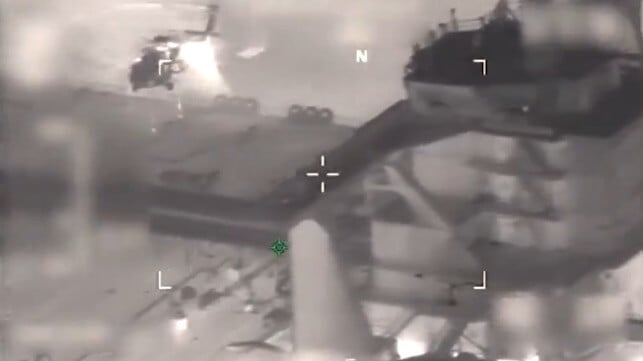
Footage published by the US Southern Command shows American forces boarding an oil tanker on January 7, 2026.
(Photo: US Southern Command)

Jake Johnson
Jan 07, 2026
COMMON DREAMS

Russian officials on Wednesday condemned the US military’s seizure of a Venezuela-linked, Russia-flagged oil tanker in the North Atlantic as a brazen violation of international law.

One Russian lawmaker, Andrei Klishas, said in response to the US military’s takeover of the oil tanker Marinera that the Trump administration “has engaged in outright piracy on the high seas.” Klishas noted that the operation followed “a ‘law enforcement operation’ that killed several dozen people in Venezuela.”.


Russia’s Ministry of Transport said in a statement Wednesday afternoon that it lost contact with the oil vessel, which the US Coast Guard had been pursuing for weeks. Russia sent a submarine to escort the ship, which was reportedly en route to Venezuela to pick up oil.

“In accordance with the provisions of the 1982 UN Convention on the Law of the Sea, the high seas are governed by the principle of freedom of navigation, and no state has the right to use force against vessels duly registered under the jurisdiction of other states,” said the Russian Transport Ministry. (The US has not ratified the 1982 treaty.)

Citing unnamed US officials, Reuters reported that “Russian military vessels, including a submarine, were in the general vicinity” of the Marinera when US forces boarded and took it over on Wednesday. The Marinera was reportedly not carrying any cargo when US forces seized it.

“There were no indications of any confrontation between US and Russian military forces,” the outlet added.

The Marinera was one of two tankers seized by US forces in international waters on Wednesday as the Trump administration looks to exert total control over Venezuela’s oil industry. The other vessel, the M/T Sophia, was reportedly carrying around 2 million barrels of Venezuelan crude.

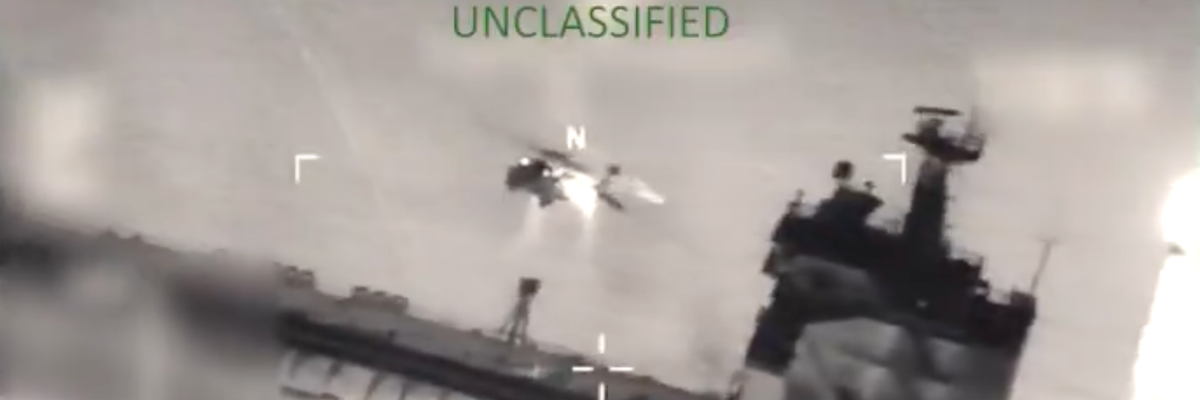
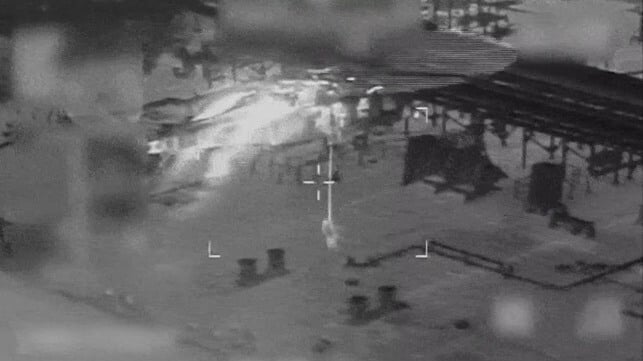
Unclassified footage posted to social media by the US Southern Command—and overlaid with dramatic music—shows American forces descending from a helicopter and boarding the M/T Sophia:


“This is America first at sea,” US Department of Homeland Security Secretary Kristi Noem declared.

UK armed forces helped US mission to seize Russian tanker, MoD says


British armed forces provided support to the United States in its operation to seize a Russian-flagged oil tanker in the North Atlantic on Wednesday, the Ministry of Defence (MoD) has confirmed.


Issued on: 08/01/2026 - RFI

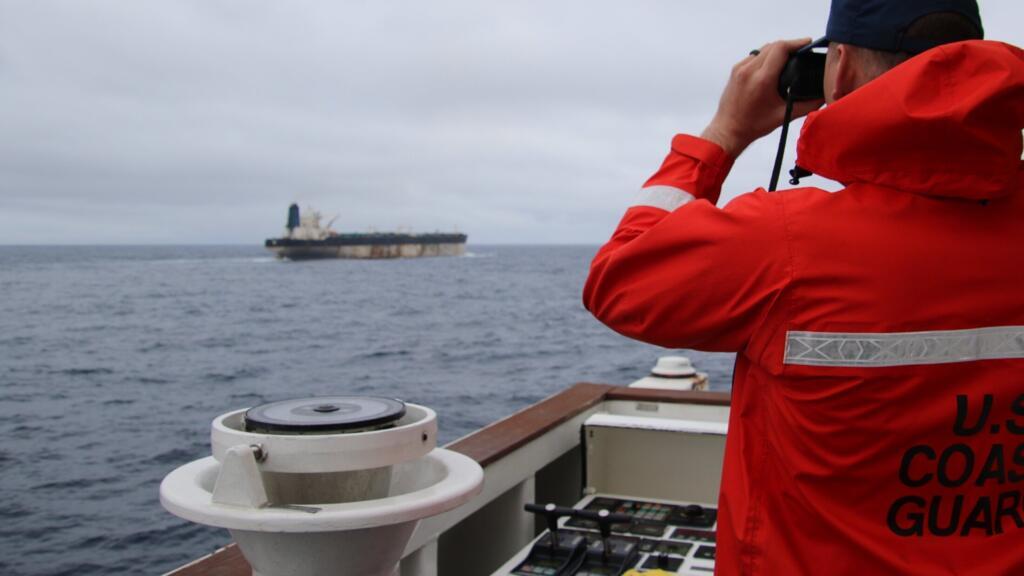
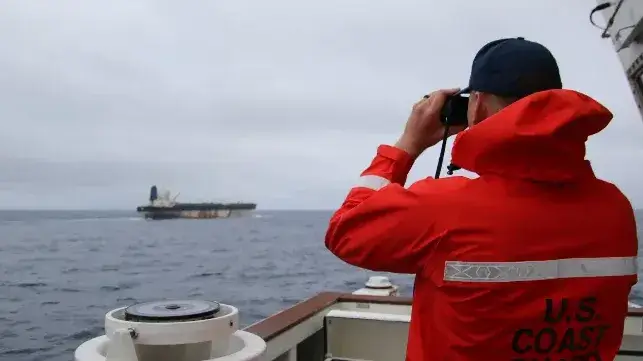
A US Coast Guard surveys the Russian-flagged "Marinera" crude oil tanker before seizing it in the Atlantic on 7 January 2026. © US European Command / social media via Reuters

The US Coast Guard stopped the tanker – which was being shadowed by a Russian submarine – on Wednesday, after pursuing it for more than two weeks across the Atlantic as part of Washington's efforts to block Venezuelan oil exports.

Britain said its armed forces gave "pre-planned operational support, including basing" following a US request for assistance.

It said a military vessel provided support for the US forces pursuing the tanker, and the Royal Air Force provided surveillance support from the air.

In a post on X, the US military's European Command thanked the MoD for its "unwavering support" during the operation.

Crackdown on 'sanctions busting'


The Marinera, a Venezuelan-linked tanker formerly known as the Bella-1, was not carrying any oil.

But the ship is alleged to be part of the shadow or "ghost" fleets used by Russia, Iran and Venezuela to avoid western sanctions.

UK Defence Secretary John Healey said the operation targeted a vessel "with a nefarious history" linked to Russian and Iranian sanctions evasion networks.

“This action formed part of global efforts to crack down on sanctions busting,” he said in a statement.

The Russian-flagged Marinera oil tanker was seized by US Coast Guards in the Atlantic on 7 January 2026, with the support of British armed forces. @ AFP - HAKON RIMMEREID

He said British support was provided "in full compliance with international law", adding that the UK "will not stand by as malign activity increases on the high seas".

He added that the United States was the UK's closest defence and security partner: "The depth of our defence relationship with the US is an essential part of our security, and today's seamlessly executed operation shows just how well this works in practice."

The Marinera has been under sanctions from the US treasury since June 2024.

The US accuses it of carrying illicit cargo for the Iranian-backed Lebanese militant group Hezbollah.

(with newswires)


What Does UNCLOS Say About the U.S. Boarding of Bella 1?

Bella 1 boarding
Courtesy U.S. Department of Homeland Security

Published Jan 7, 2026 8:32 PM by The Conversation


[By Andrew Serdy]

Relations between the US and Russia have hit a fresh bump after the US coastguard boarded a vessel sailing in the Icelandic waters, claiming it was in breach of sanctions on Venezuela. The incident immediately sparked claim and counter-claim from the US and Russia.

The US claimed it was acting correctly to execute a warrant issued by a US federal court. Russian officials, meanwhile, were reported by the country’s Tass news agency as saying this was in clear breach of the law of the sea, saying “no state has the right to use force against ships properly registered in the jurisdictions of other states”. The statement asserted that the Bella 1 – which was recently renamed as the Marinera – had received a temporary permit to sail under the Russian flag on December 24.

Unlike the dramatic abduction of Venezuela’s president, Nicolás Maduro, from his Caracas palace on January 3, which the United States does not even appear to be trying to defend in international law terms, the interdiction of the Marinera/Bella 1 appears to raise a new point of the law of the sea which may offer at least some prospect for Washington to show itself to be on the right side of the law.

Before the change of flag, the US seemed to be selecting with some care the ships carrying Venezuelan oil that it was targeting. These were either stateless or suspected of flying a false flag, which provides no protection under Article 92 of the United Nations Convention on the Law of the Sea (UNCLOS), which is also the customary international law rule for non-parties such as the US.

Stateless ships are vulnerable

Being stateless, or acting in a way that gives warships on the high seas a valid basis for treating it as though it were stateless, is a position that any ship would be recommended to avoid if at all possible. A ship that is stateless has by definition no flag state to assert the protective exclusive jurisdiction over it on the high seas.

UNCLOS also provides that a ship which sails under the flags of two or more States, and swaps them depending on the circumstances, "may not claim any of the nationalities in question with respect to any other State." This means it can be regarded legally as stateless.

Thus, until the change of flag reported on December 31, not just the US but any State was entitled to treat the Marinera/Bella 1 as stateless. This made it vulnerable to interception on the high seas and the exercise of domestic law enforcement jurisdiction over it by the State of the interdicting warship or coastguard vessel.

So the legal position remains unclear. It may be a question of whether the US was already pursuing the Marinera/Bella 1 when it changed its flag. If so, the US may be entitled to disregard the re-registration.

UNCLOS allows for what it refers to as “hot pursuit”. It says that: “The right of hot pursuit ceases as soon as the ship pursued enters the territorial sea of its own State or of a third [another] State.” Since no other circumstance in which the right ceases is mentioned, including the ship ceasing to be stateless, this leaves it open to the US to argue that it was already pursuing the Marinera/Bella 1 and was thus not required to call off its pursuit.

But this argument has limited usefulness, as there’s doubt as to whether this was actually a hot pursuit at all. The term is used for pursuits that begin in one of the maritime zones of the State conducting it – not on the high seas.

Claim and counter-claim

So far, the Russian Ministry of Transport has claimed that the US action is contrary to the Article 92 rule. Russia insists that the change of registry occurred as long ago as December 24. To counter this, the US could say that it wasn’t until the Russian flag was painted on the ship’s hull, which was reported on December 31, that the Article 92 rule could be invoked against the US.

Article 92 also lays down that: “A ship may not change its flag during a voyage or while in a port of call, save in the case of a real transfer of ownership or change of registry.” This is often misunderstood and assumed to mean that a change of flag in mid-voyage – such as appears to have occurred in this case – is not permitted at all. But a closer reading reveals that this is not the case. What it prevents is a change of flag without a corresponding change of registration.

But that is not the position here. Assuming there was a real registration to Russia, that is what counts. Painting on a flag because you don’t have a physical one is simply evidence of that.

Reflagging while under pursuit is a new point in the international law of the sea to the extent that no previous incident of it is known. In the absence of a clear answer on this, the way this incident plays out is itself going to set the precedent for the future on this issue. We’ll need to hear the competing legal narratives of the US and Russia to see which of them is the more convincing.

Andrew Serdy is Professor of the Public International Law of the Sea at University of Southampton.

This article appears courtesy of The Conversation and may be found in its original form here

The Conversation

The opinions expressed herein are the author's and not necessarily those of The Maritime Executive.


U.S. Coast Guard Seizes Fugitive Tanker After Transatlantic Chase

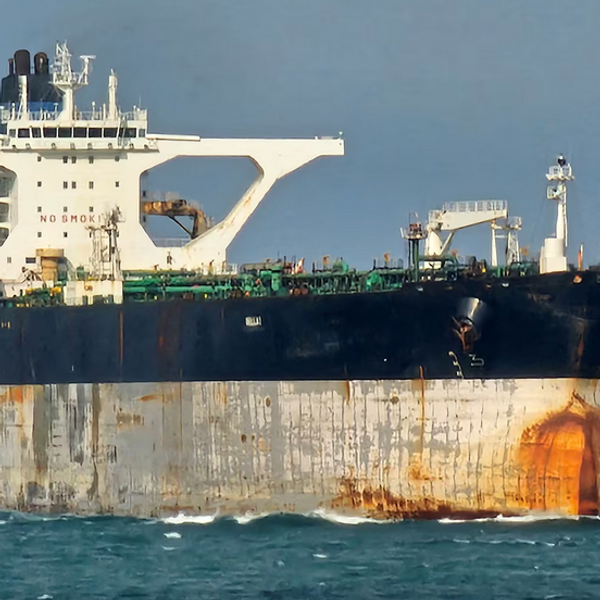
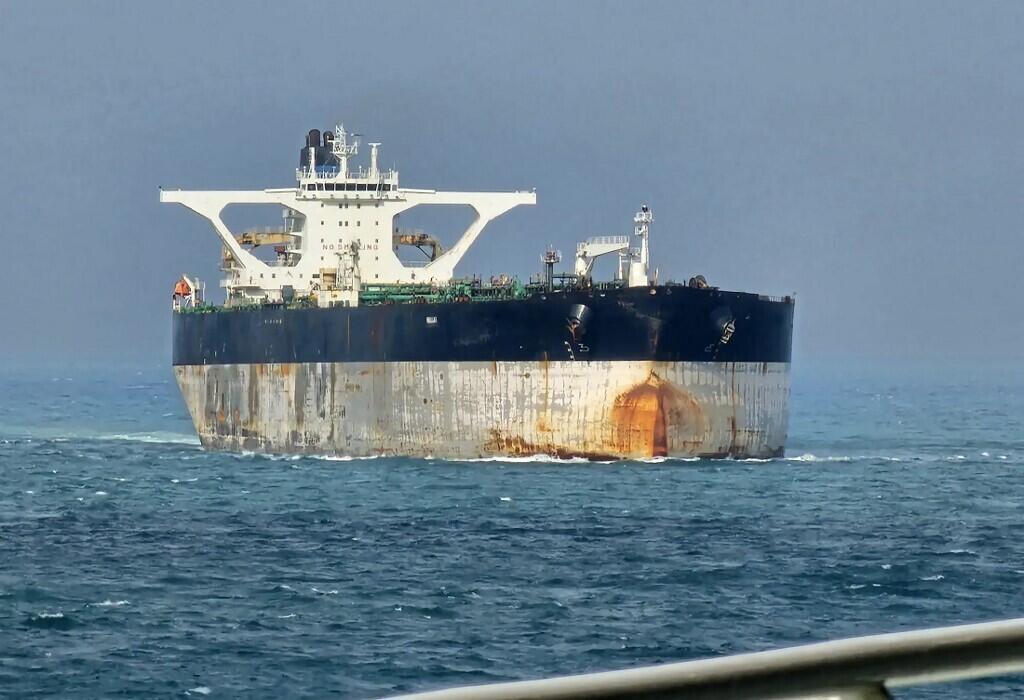
Bella 1
Courtesy U.S. European Command

Published Jan 7, 2026 12:04 PM by The Maritime Executive


After a protracted low-speed chase across the North Atlantic, the U.S. Coast Guard has seized the sanctioned shadow fleet tanker Bella 1 in international waters near the Faroe Islands. It was the second tanker seizure of the day for U.S. forces, and the fourth since the pressure campaign on Venezuelan oil exports began. 

In late December, American forces began chasing Bella 1 (Marinera, IMO 9230880), a sanctioned VLCC with a past in the Iranian oil trade. The vessel was in ballast and approaching Venezuela on a voyage from Iran. As U.S. forces closed in to carry out an interdiction, Bella 1 refused to permit boarding and reversed course. She headed out into the North Atlantic, making for the gap between the UK and Iceland. Mid-voyage, the anonymous shipowner of Bella 1 attempted to transfer the ship to the Russian register and renamed her the Marinera. Nonetheless, U.S. authorities regard the ship as stateless and subject to sanctions. 

According to Russian state media, the U.S. Coast Guard conducted a previous boarding attempt during the "pursuit," but was unsuccessful because of the often-rough winter weather of the North Atlantic.

The cutter USCGC Munro was on scene, and other military assets assisted the operation, according to the Wall Street Journal and ABC. Russian state-owned station RT released a photo appearing to show a black MH-6 "Little Bird" helicopter - a favorite tool of U.S. special operations forces - just off the Bella 1's bridge wing. 

Air assets suitable for supporting the interception at sea have been noted arriving at US airbases in the UK in recent days, including at two AC-130J gunship aircraft. At the beginning of the week, a US Osprey tiltrotor aircraft was seen conducting a training exercise, dropping divers into the sea off the coast of Felixstowe. Felixstowe is close to the base at RAF Mildenhall, where the Osprey-equipped 7th Special Operations Squadron is based. Additionally, three of the small Pilatus surveillance turboprops operated by USAF Special Operations Command conducted a flight over the area on the same day. 

USAF C-17 aircraft may have also delivered heavily-armed U.S. Army MH-60M Black Hawk helicopters to RAF Fairford in the west of England, based on flight records showing the cargo planes' point of departure.

On Wednesday afternoon, UK Defense Minister John Healey confirmed that there was British involvement in the seizure. The fleet auxiliary RFA Tideforce provided support for the operation, along with RAF Rivet Joint and Poseidon surveillance aircraft.

Russian connection

While the U.S. government view is that the vessel remained stateless at the time of the boarding, Moscow asserts that the vessel was properly transferred onto the Russian flag registry days beforehand, and that the seizure was a violation of international law. Russia's embassy in Washington had previously asked the Trump administration to call off the chase, according to the New York Times.

"In accordance with the 1982 UN Convention ‍on the Law of the Sea, freedom of navigation applies in the high seas, and no state has the right ‌to use force against vessels duly registered in the jurisdictions of ‌other states," the Russian Transport Ministry said in a statement.

US officials told Reuters that Russian ships and a submarine were in the “general vicinity” when the seizure took place, but these assets did not apparently intervene. 

The Russian government has confirmed that there were Russian citizens aboard the vessel, and called for their "humane and proper treatment" and prompt repatriation. The ministry did not make a public demand for the vessel's release and return. 

Charges against crew possible

In a briefing Wednesday, White House Press Secretary Karoline Leavitt said that the tanker has been seized, and the crew will face criminal charges for their involvement in the chase. 

"The crew is now subject to prosecution for any applicable ‍violation of federal law, and they will be brought to the United States for such prosecution, if necessary," Leavitt said. "The vessel ‍had a judicial seizure order."

Attorney General Pam Bondi added that the same standard would be applied to other mariners in similar pursuit situations.

"As a consequence of failing to obey the Coast Guard’s orders, members of this vessel are under full investigation and criminal charges will be pursued against all culpable actors," Bondi said in a statement. "The Department of Justice is monitoring several other vessels for similar enforcement action - anyone on any vessel who fails to obey instructions of the Coast Guard or other federal officials will be investigated and prosecuted to the fullest extent of the law."

Bella 1's AIS signal has gone dark, making her movements more difficult to track. Previous tanker seizures during the pressure campaign have ended in diversion to U.S. waters under U.S. Coast Guard escort - in this case, a long transatlantic voyage.


U.S. Captures Fourth Venezuela-Linked Tanker in the Atlantic

U.S. boarding team fast-ropes onto the deck of the tanker Sophia, January 7 (US Southern Command)

Published Jan 7, 2026 12:53 PM by The Maritime Executive


On Wednesday, in addition to the boarding and seizure of the fugitive tanker Bella 1, U.S. forces captured the stateless, sanctioned tanker Sophia (aka Varada Blessing, IMO 9289477) in the Atlantic. 

The Sophia was in laden condition with about 1.8 million barrels of heavy Venezuelan crude aboard, according to TankerTrackers.com. The consultancy said that she is one of 15 tankers that got under way and attempted to penetrate the U.S. "blockade" of Venezuelan oil exports in recent days, following the U.S. raid that captured Venezuelan dictator Nicolas Maduro and transferred power to Maduro's vice president.

The U.S. State Department and the Pentagon have pledged to keep pressure on the Venezuelan government through the use of tanker seizures as needed, and U.S. Southern Command said in a statement that it is committed to "crush illicit activity in the Western Hemisphere."

"The United States continues to enforce the blockade against all dark fleet vessels illegally transporting Venezuelan oil to finance illicit activity, stealing from the Venezuelan people. Only legitimate and lawful energy commerce - as determined by the U.S. - will be permitted," said Secretary of War Pete Hegseth. "The blockade of sanctioned and illicit Venezuelan oil remains in full effect - anywhere in the world."

Overall, the White House plans to obtain 30-50 million barrels of Venezuelan oil, to be sold at its market price for American  disposition. "That money will be controlled by me, as President of the United States of America," President Donald Trump said in a statement Wednesday. At current discounted pricing for extra-heavy Merey crude, the transfer would be valued at approximately $2 billion, and would offset the cost of the record-size U.S. military deployment to the Caribbean. 

Seizing currently-underway Venezuelan tanker cargoes would go a considerable distance towards the White House's 50-million-barrel target. The U.S. has already captured approximately five million barrels of oil on laden tankers, all currently on the water and en route to the U.S. Gulf Coast. 

The seizures also send a message to Iran, which is heavily targeted by U.S. oil sanctions. All four tankers seized so far have previously done business with Iranian oil exporters, and all have been listed by the U.S. Treasury for that connection. Shadow-fleet shipowners often deal in multiple "sensitive" crude markets, and opting to transact with Iran's military-controlled export network now carries the risk of physical interdiction - even after the vessel moves on to other markets.

TankerTrackers.com warned that the same risks apply for crewmembers aboard shadow fleet tankers, and it reposted its complete list of suspect vessels.

Bulgaria Seeks Reimbursement from Owners of Salvaged Shadow Fleet Tanker

salvage of tanker
Bulgaria has been reimbursed for the costs of salvage the shadow fleet tanker (Ministry of Transport)

Published Jan 7, 2026 3:03 PM by The Maritime Executive


Bulgaria’s Maritime Administration presented a bill to the representatives of the Chinese-owned shadow fleet tanker that it was forced to salvage last month after it washed up on the shores of Bulgaria. The vessel had been attacked by Ukrainian forces while it was in the Black Sea heading to Russia to load crude oil.

The Ministry of Transport and Communications announced on Wednesday, January 7, that it had presented a bill for €270,371 ($315,802) using a private bailiff to deliver the notarized summons. It said the Maritime Administration had incurred the expenses, which included securing three tugs and a specialized generator that was used to power the ship’s hydraulic system to raise the anchor. The summons demanded payment by January 12.

Before day’s end, the Ministry reported it had received the funds from the shipowner’s agent in Bulgaria. It said payment in full was received and would be refunded to the state treasury.

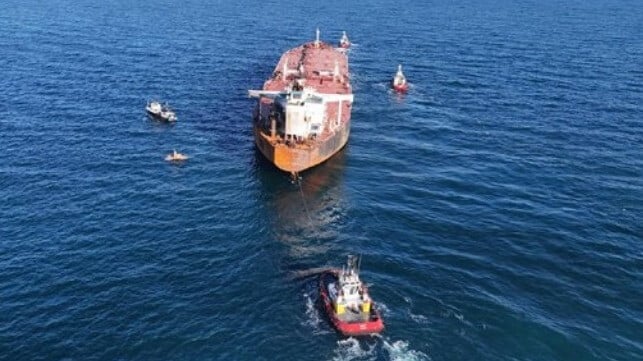
The tanker Kairos had washed up near the Bulgarian seaport of Ahtopol on the afternoon of December 5, with the Bulgarian authorities accusing a salvage tug of releasing the hulk after having brought it from Turkish waters. Ukraine attacked the vessel near the coast of Turkey on November 28 using its Sea Baby drones, setting the empty tanker on fire. Turkish authorities aided in the evacuation of the crew and the firefight.

Bulgaria has continued to demand an explanation over the circumstances of the tow and where the tanker was headed before it drifted toward the port. An emergency operation airlifted some of the crewmembers off the ship and provided supplies as well as an electrical generator. Bulgaria had said it would seek a full reimbursement for its costs, including the tow on December 15 to place the hulk in a more secure location in the Gulf of Burgas.

Because the ship is under EU sanctions, Bulgaria reports that it cannot provide repair services to the vessel. It was permitted to provide emergency services and a port of refuge under the sanctions, but no further assistance is permitted. The Ministry reports that it expects the shipowner will take the necessary actions to prepare and remove the tanker from Bulgarian territorial waters.


How do shadow fleets work? US seizes two sentenced oil tankers


Issued on: 08/01/2026 - FRANCE24


The phrase “shadow fleet” refers to ageing oil tankers that operate under false flags to bypass Western sanctions on Russian, Iranian, and Venezuelan crude, a practice Russia has reportedly invested billions of euros in since 2022 to maintain its oil exports. But how these shadow, or so-called “ghost,” fleets function in practice is less widely understood, August Hakansson investigates.


Vietnamese caught in Japan’s illegal worker crackdown


By AFP
January 6, 2026


Japan is grappling with an ageing population, one of the world's lowest birth rates and labour shortages across industries - Copyright Getty Images North America/AFP DAVID MCNEW


Tomohiro OSAKI

For a decade, Vietnamese worker Minh did tough jobs like sandblasting ships and welding steel, helping address rapidly ageing Japan’s dire labour needs.

But now, having overstayed his visa, he is in the crosshairs of Prime Minister Sanae Takaichi’s promised crackdown on illegal workers.

Minh, a pseudonym used to protect his identity, came to Japan in 2015 under its Technical Intern Training Program (TITP), which is billed as a way for foreign workers to learn skills to take back to developing countries.

But critics say it also helps Japan get cheap workers who are vulnerable to debt and exploitation, with some of them deserting their jobs and falling into crime.

“A lot of Japanese people look only at the surface — that foreigners committed crimes,” Minh, a former TITP intern living near Tokyo, told AFP.

“They don’t think about the root cause of it: how and why these foreigners got to that point.”

Of the roughly 450,000 technical interns in Japan as of June, just under half were from Vietnam and worked across agriculture, construction and food processing.

Many arrive heavily indebted with recruitment and brokerage fees — including Minh, who intended to work to pay off the $7,500 he owed and send money to his family.

But with opportunities scarce back home at the end of his three years, finding a welding job as an undocumented labourer proved much simpler.

“Without foreign workers like us, there is no way Japan’s economy can function,” the 30-year-old said.


– ‘Extremely dirty’ –


Immigration levels in Japan remain low compared with other rich economies.

But with an ageing population, one of the world’s lowest birth rates and labour shortages across industries, the number of foreign workers has hit record levels.

That, along with dwindling salaries in real terms and higher living costs, has seen resentment towards foreign workers swell.

“Anger at (Japanese people’s) own financial struggles is taken out on foreigners,” Jiho Yoshimizu, head of a Tokyo-based non-profit supporting Vietnamese nationals, told AFP.

Since taking office, Takaichi has vowed action, promising a policy package later this month that will reportedly include stricter visa management.

The proportion of crimes committed by non-Japanese is low; 5.5 percent of the roughly 190,000 people arrested in 2024 for penal code offences were foreigners, according to police.

Separate police data shows that among foreigners arrested in 2024 — excluding those with permanent residency and others — Vietnamese topped the list at over 30 percent, including for theft.

The figures are partly explained by surging numbers of Vietnamese — up ninefold from a decade ago — who now make up a quarter of Japan’s 2.3-million-strong foreign workforce and are the biggest contingent.

Overstaying his visa aside, Minh says he has never been involved in crime.

He considers his internship a success, despite his “extremely dirty” task of sandblasting rust off ships, a job he says few Japanese on site were saddled with.

Yoshimizu said that “some technical interns are stuck in conditions that they just have to flee”.

Though most employers are conscientious, common complaints include low wages, sub-par housing and sexual harassment, she added.

Under the rules of the scheme, interns are usually forced to stay with their employers, even if they are unhappy.

Japan’s immigration agency says around 6,500 trainees disappeared from their workplaces last year.


– Prejudice –


Absconders may turn to Facebook communities dubbed “Bodoi” — a vernacular term for “soldiers” — to look for black market jobs, or sometimes they are illegally hired through brokers by labour-hungry businesses, Yoshimizu said.

“Those who find these unofficial gigs can get by, but those who don’t can be driven into committing crimes like selling drugs,” she added.

The government plans to transition TITP into a new system in 2027, with more flexibility for job transfers but imposing stricter requirements on Japanese language skills.

Still, it remains unclear whether the programme will continue to attract high-quality candidates.

The yen’s weakness has devalued remittances sent home and there is increasing competition from labour markets such as South Korea, denting Japan’s reputation among Vietnamese, immigration expert Jotaro Kato told AFP.

Japan’s programme is increasingly reliant on Vietnamese applicants “with less motivation and educational qualifications than before”, the Meiji Gakuin University associate professor said.

Vietnamese nun Thich Tam Tri — whose temple north of Tokyo offers shelter to her compatriots in trouble — said some interns make poor choices, falling into debt through gambling or ill-advised ventures into Bitcoin.

But “technical interns contribute greatly to Japanese society”, she said.

It “pains me to see how one bad headline can easily prejudice Japanese people against them”.

In July, a Vietnamese trainee was arrested for robbing and murdering a Japanese woman in her 40s.

“That’s why we have to do as many good deeds as possible to normalise this image of us, and regain the trust of Japanese people.”