Friday, January 09, 2026

Analysis: From Venezuela to Greenland, the EU scrambles to find a voice and a plan
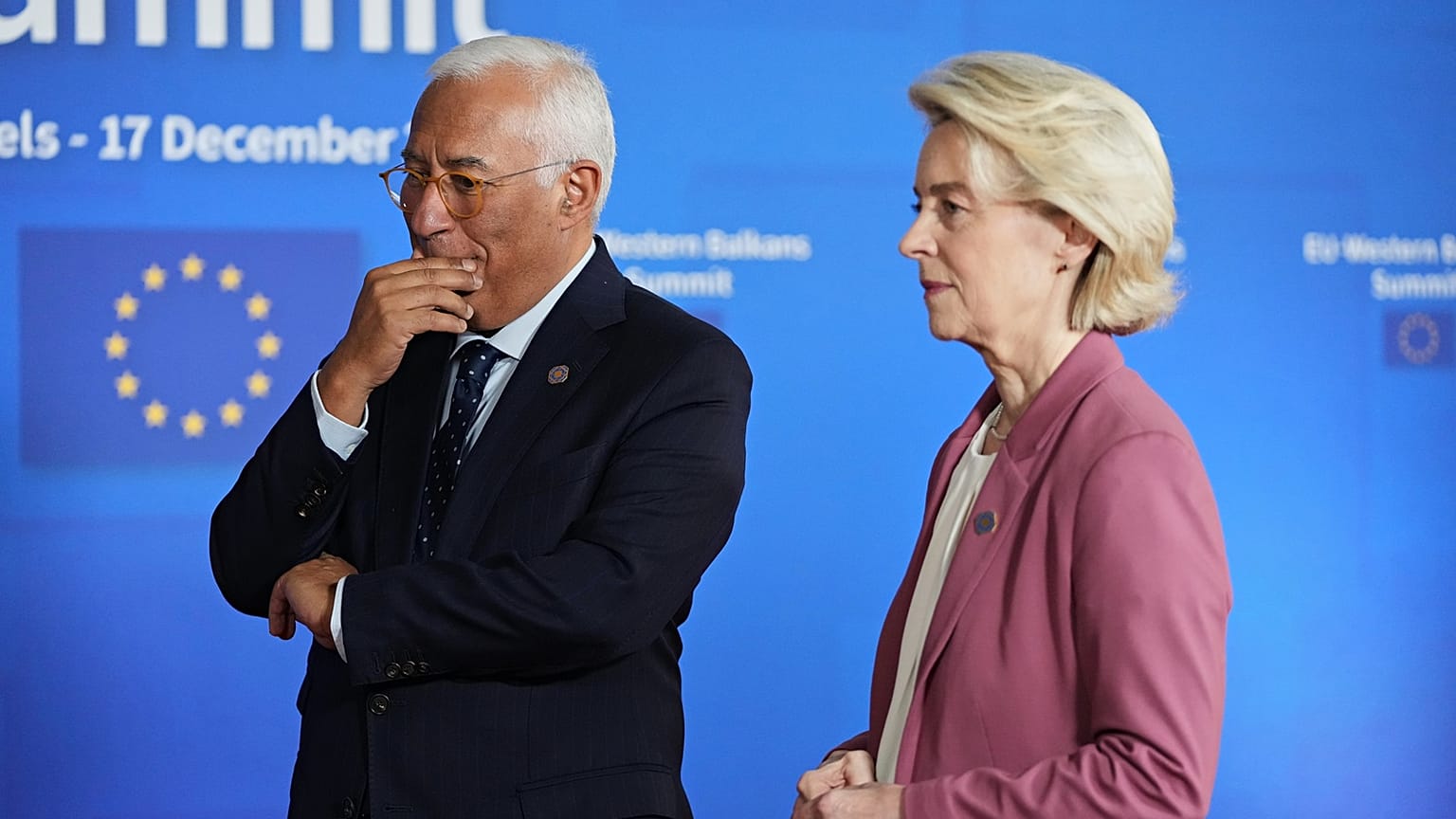
EU leaders have scrambled in their reply to Trump's new agenda.
Copyright Virginia Mayo/Copyright 2025 The AP. All rights reserved.


By Jorge Liboreiro
Published on 

Donald Trump's pursuit of an American sphere of influence has left Europeans scrambling to deal with a fast-moving geopolitical shift.

As Donald Trump marches ahead with his no-holds-barred agenda to expand America's sphere of influence, the European Union is scrambling to find its footing, bogged down by internal divisions and a fear of antagonising the US president.

The US operation to remove Nicolás Maduro as Venezuela's president and Trump's renewed threats to seize Greenland from Denmark have forced the bloc to confront uncomfortable questions about its decades-long alliance with the world's largest economy – and the dependencies that relationship has entrenched.

At the same time, the EU, a self-proclaimed advocate of the multilateral system, is dealing with growing doubts about its commitment to upholding international law and standing up to those who violate it.

So far, the silence speaks louder than the answers to the questions.

A joint statement signed by 26 member states – Hungary opted out – after Maduro's ouster contained neither an explicit nor an implicit condemnation of the military intervention, which scholars and experts have deemed to be a direct violation of the principles of sovereignty and territorial integrity enshrined in the United Nations Charter.

In fact, the joint statement mentioned the US by name only once, in a section underlining the need to "support and facilitate dialogue with all parties involved, leading to a negotiated, democratic, inclusive and peaceful solution to the crisis".

German Chancellor Friedrich Merz said the legal assessment was "complex" and required "careful consideration", while Italian Prime Minister Giorgia Meloni called the military intervention a "legitimate" response of "defensive nature".

Spanish Prime Minister Pedro Sánchez is the only EU leader who has unambiguously described Maduro's removal as unlawful.

"We're not going to shut up in front of violations of international law, which are sadly becoming ever more frequent. Spain won't be an accomplice to this trampling," Sánchez said this week in Paris. "An illegitimacy cannot be responded to with an illegality."
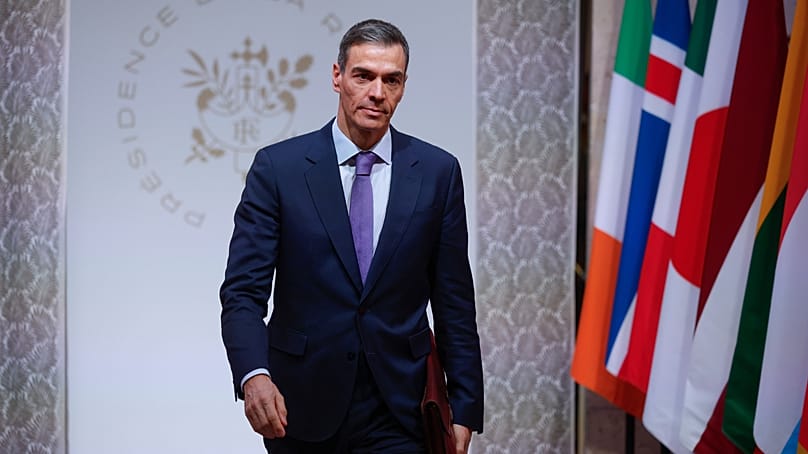
Pedro Sánchez has criticised Maduro's removal. Associated Press.

Privately, officials and diplomats told Euronews that picking up a fight with Trump over Maduro, a hostile dictator, would have been counterproductive and irresponsible in the midst of the work to advance security guarantees for Ukraine.

They also pointed to a lack of knowledge about Venezuela – and Latin America as a whole – as a factor that has muddled the collective response.

The EU has also refrained from outright condemning the killing of civilians during the US raid on Caracas or Trump's stated desire to appropriate Venezuela's vast oil reserves for the commercial benefit of his own country.

"It's obviously for the Venezuelan people to run the country as it is for any people across the world," said Paula Pinho, the chief spokesperson of the European Commission. "Wherever and whatever country we're talking about."

As of now, the EU has not spelt out a concrete plan to define its role in, or even a vision for, a post-Maduro Venezuela under Trump's direct influence.

At first, the Commission threw its weight fully behind the opposition movement headed by Edmundo González and María Corina Machado to lead a transition of power – but when it became clear that Trump preferred to work with Maduro's deputy Delcy Rodríguez, now sworn in as president, the Commission changed tack, saying it would maintain "targeted engagement" with Maduro's successor.

Greenland fears

On Greenland, the European public message has been decisively stronger than on Venezuela, though still providing little of substance.

The semi-autonomous, mineral-rich territory belongs to the Kingdom of Denmark. The threat of US annexation is therefore a threat to European sovereignty, and to the security architecture that allies have upheld since the end of World War II.

"Greenland belongs to its people. It is for Denmark and Greenland, and them only, to decide on matters concerning Denmark and Greenland," the leaders of France, Germany, Italy, Poland, Spain, the UK and Denmark said in a joint statement this week.

European Council President António Costa, European Commission President Ursula von der Leyen and High Representative Kaja Kallas have also voiced their support for that position.

"The messages we hear regarding Greenland are extremely concerning, and we have had discussions also among the Europeans. If this is a real threat, and if it is, then what would be our response?" Kallas said on Thursday, speaking from Egypt.

"The international law is very clear, and we have to stick to it. It is clear that it is the only thing that protects smaller countries, and that is why it is in the interest of all of us.

Greenland is a mineral-rich, semi-autonomous territory. Copyright 2024 The Associated Press. All rights reserved

Yet none of these high-profile declarations contained any language about potential retaliatory measures, military or economic, that the EU might be willing to apply to protect the sovereignty and territorial integrity of one of its member states.

The Commission is yet to clarify whether Greenland, which is not part of the EU, would be entitled to benefit from the bloc's mutual assistance clause in the event of a US attack.

French Foreign Minister Jean-Noël Barrot made headlines when he said his country, the bloc's only nuclear power, had begun working on a plan to defend the island.

"Whatever form intimidation takes, we want to take action with our European partners," Barrot said in a radio interview.

He provided no details of a plan, and the French foreign ministry did not immediately reply to a request for comment seeking clarification. His comments contrasted with the position of Danish officials, who are focused on pursuing a diplomatic solution with the White House and have refrained from any bellicose rhetoric.

Caught between a cacophony of views and the prospect of Trump's scorched-earth reprisals, Brussels is sticking to the tried-and-tested script it knows best.

"The US remains a strategic partner of our union," a Commission spokesperson said when asked about whether Trump's behaviour merited a review of EU-US relations.

"As with all other partners, we work in the areas where there are common interests, and we will continue to do so."

DONROE DOCTRINE

Trump says US to 'start now hitting land' in Mexico targeting drug cartels

FAKE WAR ON DRUGS
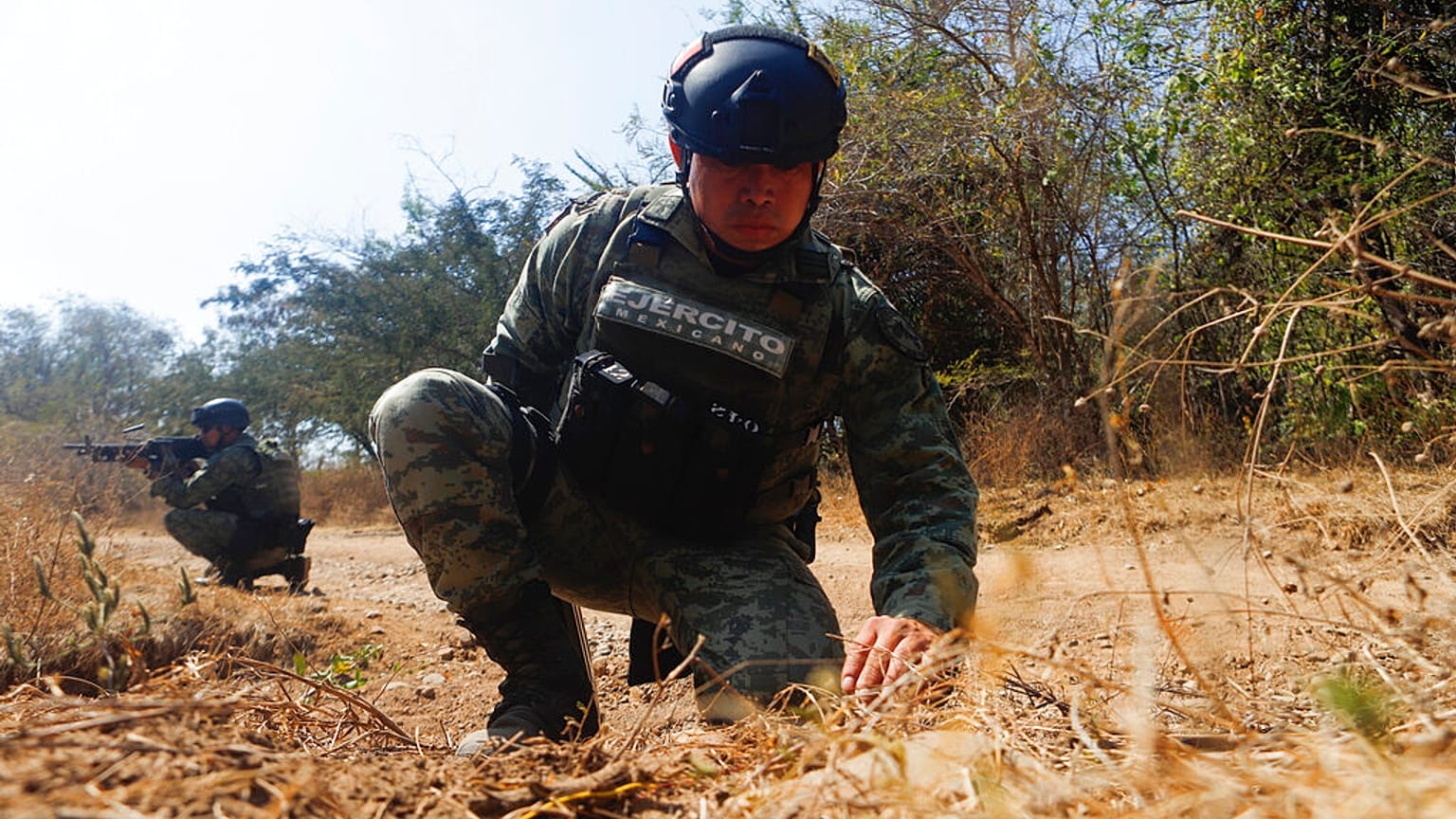
FILE: Mexican Army soldiers demonstrate a search for anti-personnel mines during a media presentation near Naranjo de Chila in the municipality of Aguililla, 18 February 2022
Copyright AP Photo


By Euronews
Published on 

President Donald Trump said US forces will "start now hitting land" in Mexico targeting drug cartels, following months of naval strikes against narcoboats. Mexican President Claudia Sheinbaum has expressed opposition to this move.

US President Donald Trump announced Thursday that American forces would begin ground operations in Mexico targeting drug cartels, following months of naval strikes in the eastern Pacific and Caribbean.

"We are going to start now hitting land with regard to the cartels. The cartels are running Mexico," Trump said in an interview with broadcaster Sean Hannity on Fox News.

Trump provided no additional information on the timing or scope of the planned land attacks.

Any military strikes on Mexican territory without Mexico City's consent would violate international law and mark an unprecedented attack on a US ally and major trading partner.

The statement follows Saturday's Delta Forces-led capture of Venezuela's Nicolás Maduro at a Caracas compound where he was sheltering, the culmination of an extended US military and economic campaign against his government. Maduro now faces drug trafficking charges in New York.

US strikes on narcoboats have resulted in the deaths of more than 100 people since September, according to US officials. Trump has also recently revealed that US forces struck a docking facility for such boats in Venezuela.

The naval campaign has targeted vessels suspected of smuggling cocaine and fentanyl in international waters and near Venezuela's coast. Trump has described the operations as enforcing a blockade on drug trafficking.

What would be the target of anti-cartel operations?

Ground strikes on cartels in Mexico would represent a substantial expansion of US military involvement in the region.

Mexico's two most powerful criminal organisations, the Sinaloa Cartel and Jalisco New Generation Cartel, control vast territories and have been locked in violent competition that killed more than 30,000 people last year.

Trump designated six Mexican cartels as foreign terrorist organisations in February 2025, a move Mexico condemned as threatening its sovereignty and potentially justifying military intervention.

Mexican President Claudia Sheinbaum has proposed constitutional reforms to strengthen protections against unauthorised foreign operations and has consistently rejected any US military presence on Mexican soil.

Sheinbaum said Monday that the Americas "do not belong" to any single nation, responding to Trump's assertion of Washington's "dominance" over the hemisphere after Maduro's capture.

Trump said Sunday he has pressed Sheinbaum to allow deployment of US troops against Mexican cartels, an offer he said she previously rejected.

Overdoses from fentanyl and other synthetic opioids have caused more than 100,000 deaths in the US per year since 2021. Mexican cartels produce most of the fentanyl entering the US using chemical precursors sourced primarily from China.

Trump designated the drug as a weapon of mass destruction in December 2025.

It remains unclear whether Trump would seek Congressional authorisation for strikes in Mexico. The US constitution grants Congress authority to declare war, although presidents have historically launched military operations without formal declarations.


Russia uses advanced hypersonic Oreshnik ballistic missile to strike Ukraine


By Sasha Vakulina
Published on 

Russia has hit Ukraine’s Lviv region with its intermediate-range ballistic missile Oreshnik. A separate missile and drone attack on Kyiv killed four people and injured 19, including paramedics who were hit in a double-tap strike as they assisted the injured.

In one of its largest barrages involving dozens of drones and missiles, Russia attacked Ukraine overnight on Friday with its advanced hypersonic Oreshnik intermediate-range ballistic (IRBM) missile.

Moscow used Oreshnik to target critical infrastructure in Lviv in western Ukraine, Mayor Andriy Sadovyi said.

Oreshnik, which in Russian means “hazelnut tree”, is one of Russia’s newest weapons, and one whose potential Moscow has been keen to promote.

Its missiles can be equipped with nuclear payloads and are designed to hit targets over much greater ranges.

According to the Western Command of Ukraine's Air Force, the Oreshnik that targeted the western Ukrainian city travelled at a speed of 13,000 kilometres per hour.

The first confirmed use of this missile was registered when Russia used it to strike Dnipro in November 2024.

Russia has previously confirmed that it used Oreshnik missiles to attack Ukraine.

The Kremlin stated that the IRBM attack was “a response“ to Ukraine’s purported attempt to hit Russian President Vladimir Putin’s residence last month – a claim that both Ukraine and the US denied.

The CIA has assessed that Ukraine did not target Putin’s residence, according to US officials. US President Donald Trump also added to assertions that the attack did not take place.

Double-tap attack on Kyiv

Also overnight into Friday, four people were killed and 19 were injured in the capital Kyiv during a massive missile and drone attack by Russia.

A paramedic was among those killed as a result of a double-tap strike, Kyiv Mayor Vitali Klitschko said.

"One paramedic died, and four were injured while assisting people in the Darnytskyi district," he said.

Several neighbourhoods in Ukraine’s capital were affected, while residential buildings sustained damage from the attack, Kyiv City Military Administration head Tymur Tkachenko said.

In Desnyanskyi district, a drone crashed onto the roof of a multi-story building. The first two floors of a residential building in the same district were also damaged in the attack.

In Dnipro district, drone parts damaged a multi-story building and a fire broke out.

Running water and electricity were disrupted in parts of the capital as a result of the attack, Klitschko added.

Moscow launched a total of 36 missiles and 242 drones of various types, including 8 Iskander ballistic missiles and 10 Kalibr cruise missiles.

Ukraine's air force had earlier warned of a ballistic missile threat and reported that drones were heading towards the capital.

Ukrainian President Volodymyr Zelenskyy had also alerted the nation regarding Russian attempts at a large-scale offensive on Thursday evening.

He said that Russia aimed to take advantage of the frigid weather in the capital which has led to roads being icy and slippery, and called on people to seek protection in bomb shelters during raid alerts.

Russia’s peace signals

Moscow launched its attack amid the US-led efforts to put an end to Moscow’s all-out war against Ukraine.

Zelenskyy said that although Russia’s primary target was Ukraine’s civil infrastructure and energy facilities, the Qatari embassy building was also damaged by a Russian drone last night.

“Qatar is a country that is doing so much to mediate with Russia to free prisoners of war and civilians held in Russian prisons," the Ukrainian president said.

Ukraine’s foreign minister also showed photos from inside the embassy of Qatar in Kyiv after Russian attack.

Zelenskyy further called for “a clear response from the world," first and foremost from the US.

“Russia must receive signals that it is its duty to focus on diplomacy and feel the consequences every time it focuses on killings and destruction of infrastructure,” he stated.

He also said that the latest Russian strike serves as a “loud reminder” to all Kyiv’s partners that “support for Ukraine's air defence is a constant priority”.

“We cannot afford to lose a single day in supply, production or negotiations.”

Earlier, Ukraine’s foreign minister Andrii Sybiha said Ukraine is initiating urgent meetings of the UN Security Council, the Ukraine-NATO Council, as well as responses within the EU, the Council of Europe, and the OSCE.

“Such a strike close to EU and NATO border is a grave threat to the security on the European continent and a test for the transatlantic community.”

On Thursday, Moscow rejected the “Coalition of the Willing” Paris meeting conclusions regarding security guarantees for Ukraine and threatened the European countries that are willing to deploy their forces in Ukraine after the ceasefire and a peace agreement.

Russia’s foreign ministry called the European peacekeeping forces a “legitimate target” for Russia.

Moscow also said the talks' conclusions and statements were far from anything Russia could possibly accept.

EU condemns Russia's Oreshnik attack

Brussels has since condemned the Russian attack and Moscow’s use of the Oreshnik missile.

The EU foreign policy chief Kaja Kallas said the strike shows that “Putin doesn't want peace”.

"Russia’s reply to diplomacy is more missiles and destruction. This deadly pattern of recurring major Russian strikes will repeat itself until we help Ukraine break it," Kallas said on X

Russia’s use of the Oreshnik missile was a “clear escalation against Ukraine and meant as a warning to Europe and to the US," she concluded.


'Unhappy' Putin sends message to West


with Ukraine strike on EU border


Paris (France) (AFP) – Russia's Oreshnik missile attack in Ukraine near the EU border aims to intimidate Kyiv's Western allies and signals Vladimir Putin's displeasure at recent foreign policy setbacks including in Venezuela, analysts said Friday.

Issued on: 09/01/2026 - RFI

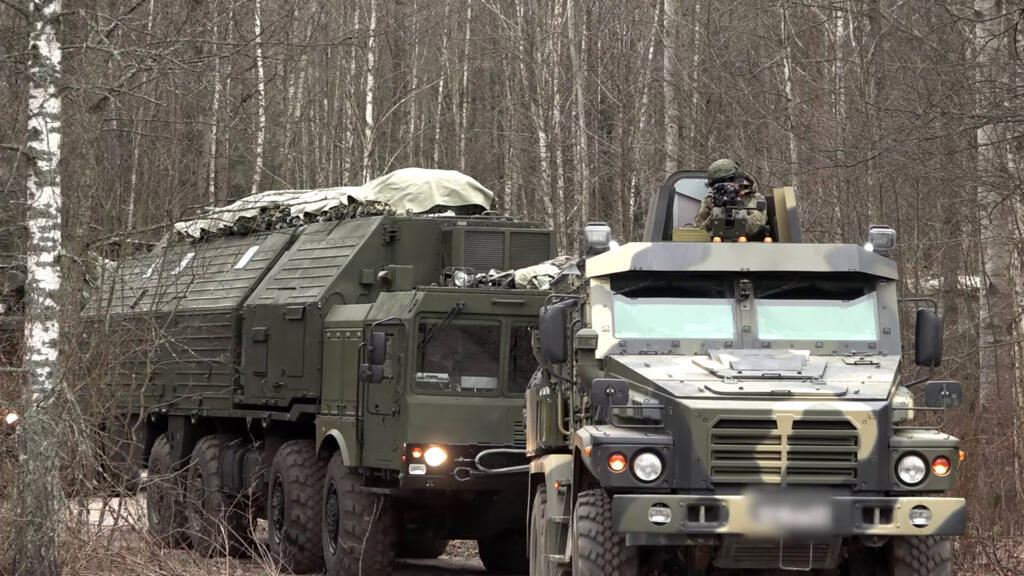
Belarusian President Alexander Lukashenko said a Russian nuclear-capable missile known as the 'Oreshnik' had been deployed in Belarus © Handout / Russian Defence Ministry/AFP
Days after European and US negotiators unveiled a post-war peacekeeping plan for Ukraine, Russia overnight Thursday to Friday targeted an infrastructure facility in the country's western region of Lviv with the Oreshnik nuclear-capable intermediate-range ballistic missile (IRBM).

It is thought to be only the second known combat use of the weapon.

While Moscow said the strike came in response to an alleged drone attack on a Putin residence in December, nearly four years after Russia's invasion of Ukraine, analysts said the move was designed to send a clear message to Western leaders and frighten ordinary Europeans.

"Vladimir Putin is using this to communicate with the West, because he could undoubtedly achieve the same operational effects without this missile," Cyrille Bret, a Russia expert at the Paris-based Montaigne Institute, told AFP.

"As Europeans are developing their air defence capabilities, this is a way of reminding them of their vulnerability," he added.

The Kremlin has touted the Oreshnik as a "state-of-the art" weapon, which travels at hypersonic speeds, can hit targets across Europe and cannot be intercepted.

In a call on Friday, the leaders of Britain, France and Germany said Russia's use of the missile was "escalatory and unacceptable", according to a UK government spokeswoman.

UK Prime Minister Keir Starmer said Russia was using "fabricated allegations to justify the attack", according to the spokeswoman. Ukraine has denied targeting Putin's residence.

Lviv mayor Andriy Sadovy said on Facebook the strike was "a new level of threat -- not only for Ukraine, but also for the security of Europe".

The missile, named after the Russian word for hazel tree, was first fired on the central Ukrainian city of Dnipro in 2024.

- 'Psychological weapon' -

The choice of a new target located around 70 kilometres (40 miles) from the border with the European Union was significant, observers said.


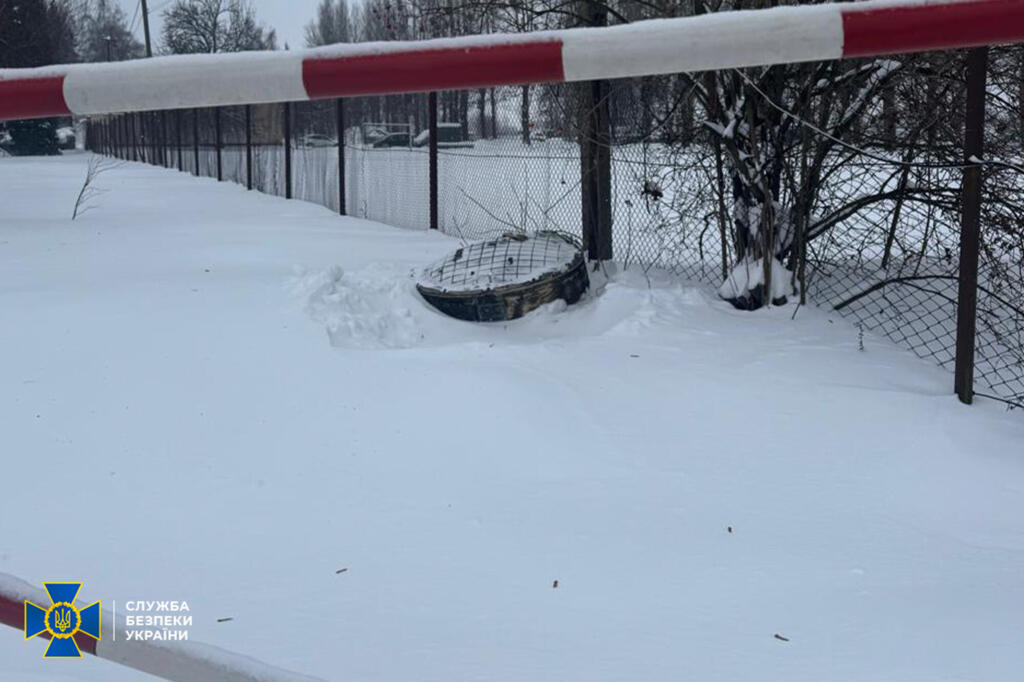
A fragment of a Russian Oreshnik ballistic missile can ben seen at an undisclosed location in Ukraine © Handout / UKRAINIAN SECURITY SERVICE/AFP

"It is much closer to the EU's borders," Etienne Marcuz, an associate fellow at the Foundation for Strategic Research, a French think tank, said on X.

"This should probably be seen as a message to European countries," he said, adding the result of the strike was "probably more psychological than operational".

Some observers saw the strike as Putin's attempt to reassert his authority following setbacks including Washington's capture of Venezuelan leader Nicolas Maduro, the seizure of a Russian-flagged vessel in the North Atlantic and fresh demonstrations in Iran challenging Moscow-allied authorities.

"It is a psychological weapon -- an instrument of Putin's cognitive war against Ukraine and the West -- rather than a weapon of mass physical destruction," wrote Mick Ryan, a retired major general from the Australian army and Ukraine war analyst.

He said the use of the Oreshnik was a "sign of a fearful, worried leader and not one that is confident and anticipating victory".

The move could not hide the fact that Russia had little power "to shape events or respond to military contingencies involving its allies and friends beyond its borders," he added.

Timothy Ash, an emerging market economist focused on Russia, struck a similar note, pointing to relatively limited damage on the ground after the missile strike.

"The Oreshnik is highly effective but also very high cost, and from a cost benefit analysis it makes zero sense for these to be deployed in Ukraine," he wrote.

"The deployment of the Oreshnik therefore seemed more a PR exercise, perhaps aimed at the Trump administration signalling that Russia is unhappy more broadly about the state of play in the world," he added.

While Russia calls the Oreshnik a hypersonic missile, Western defence analysts say it is not a revolutionary weapon.

"It is most likely NOT a hypersonic missile," said Marcuz, adding Europe has a means of intercepting IRBMs.

"The Oreshnik's multiple warheads could pose a problem, depending on when they are released," he added.

In December, Putin's ally, Belarusian President Alexander Lukashenko, said the weapon had been deployed in his country, which borders NATO's eastern flank.

© 2026 AFP


Ukraine’s demographic collapse deepens as war wipes out generations

Ukraine’s demographic collapse deepens as war wipes out generations
The number of men Ukraine has lost in its four-year war with Russia is a state secret. But the losses are written large across its demographic data. Ukraine has lost an entire generation of young men and if the war goes on for another two years, it will lose a second one. / bne IntelliNews
By Ben Aris in Berlin January 9, 2026

Ukraine has lost an entire generation in the four-year war with Russia and, if the conflict continues for another two years, it will lose another one.

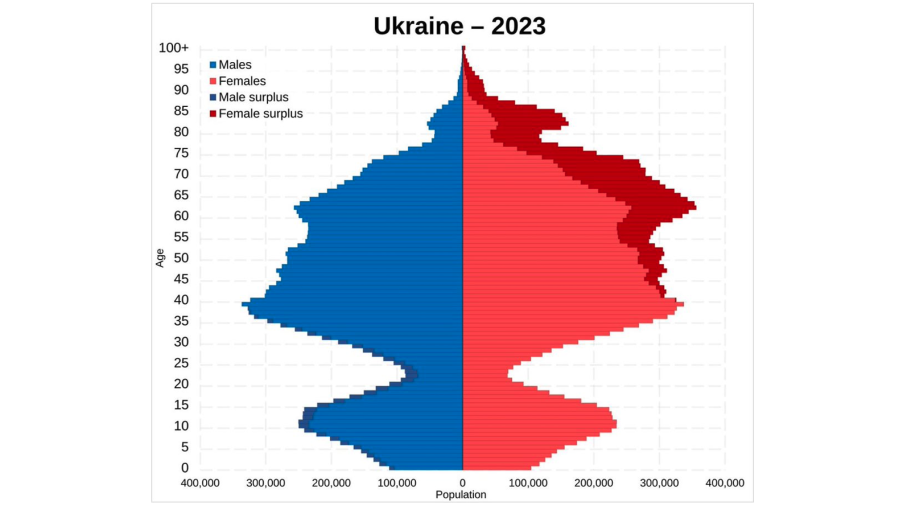
The latest demographic data and international estimates highlight a huge hole that has appeared in Ukraine’s demographic pyramid at 25 years of age. The number of deaths in the war remains a closely guarded state secret, but the horrific losses Ukraine has suffered shows up clearly in the demographic data. Ukraine is in the midst of a long-term population collapse unprecedented in Europe outside wartime.

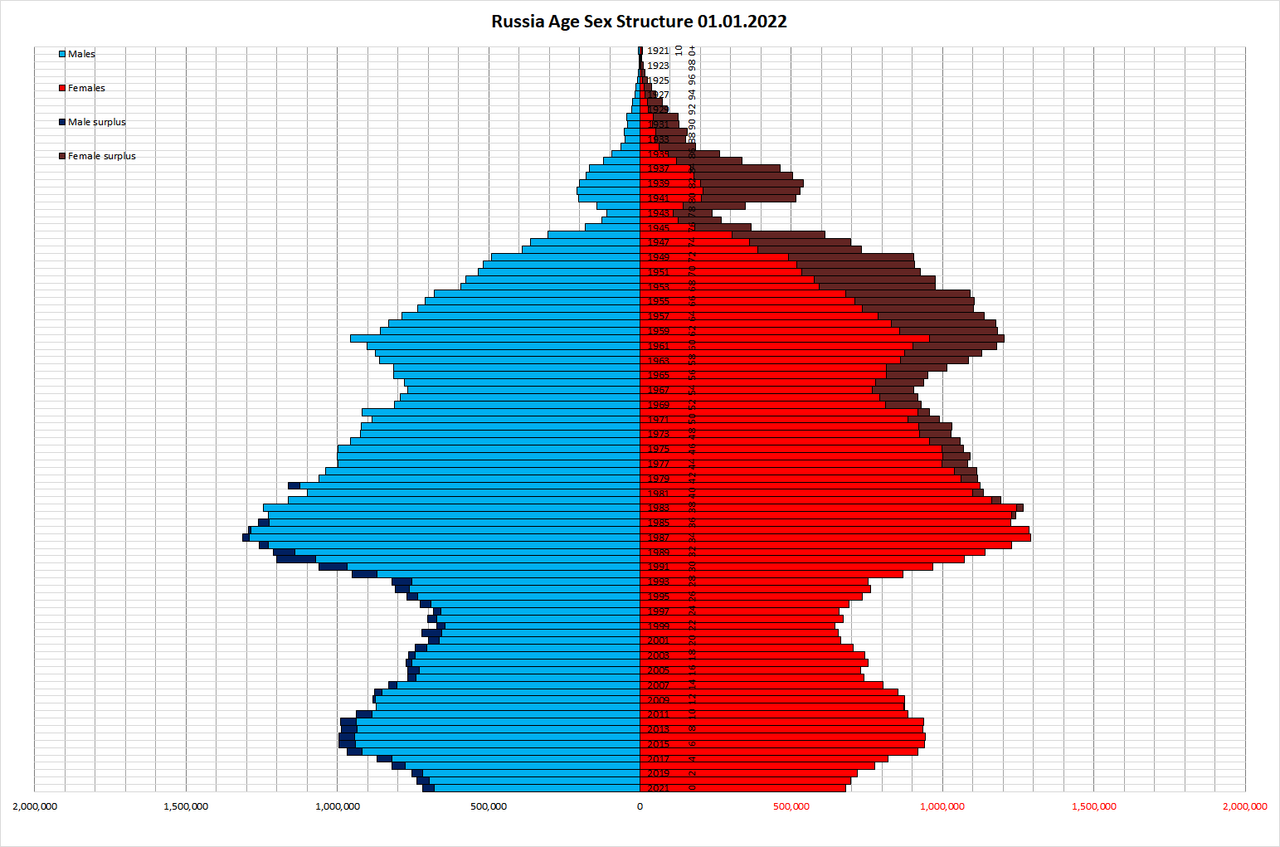
The results are worse than the same demographic dent that appeared in Russia’s demographic pyramid from the chaos of the 1990s following the collapse of the Soviet Union when male life expectancy fell to a mere 56-years-old – but Ukraine’s war induced losses are far worse. A healthy population pyramid should be a triangle.

Russia has also suffered a demogtraphic decline and heavy losses in the younger cohorts, but the dents in its population syramid are not as bad as those Ukraine has suggered. 

While Russia is reported losing 1,000 or more men in Donbas a day, whereas Ukraine is maybe losing a fifth of this number, according to scattered and unconfirmed reports, the relative sizes of the two countries’ populations mean that Ukraine is suffering worse than Russia, despite the lower casualty count.

Russia has 1.4mn men under arms, but this only accounts for 1% of its total population. Ukraine has around 850,000 service men, but this accounts for 3.3% of its population. That means Ukraine has to kill three times more Russians to just keep even in the manpower struggle. And Ukraine is already bumping up against the ceiling of its pool of military-aged men despite full mandatory conscription. Russia’s pool of potential servicemen remains much deeper, and it is able to still rely exclusively well-paid volunteers to cover its battlefield losses with an estimated 30,000 fresh recruits a month.

The scale of the crisis is starkly illustrated by Ukraine’s 2023 population pyramid, which shows deep hollows among children, working-age adults and men in their twenties to forties, reflecting a combination of war deaths, mass displacement, plummeting birth rates and persistently high mortality.

As 80% of the estimated 8-11mn refugees that have fled the country since the war began are believed to be women and children. The longer the war goes on, the less likely this group is to return. Women outnumber men sharply in older age groups in the pyramid, while younger cohorts are visibly thinner than those of previous generations.

As bne IntelliNews reported, Ukraine's demographic trajectory now hinges on how many of the millions who fled the country return after the war. Surveys suggest at least a third may not come back, citing security concerns, destroyed housing and better economic prospects elsewhere.

The longer-term outlook is even more severe. United Nations projections cited by IntelliNews show Ukraine’s population could shrink to about 15mn by 2100, down from more than 40mn before Russia’s full-scale invasion in 2022. Even before the war, Ukraine was among the fastest-shrinking countries in the world, as part of a wider demographic crisis that will take Emerging Europe population levels back to the early 20th century. Nowhere in Europe currently has fertility rates over the 2.1 necessary to keep a population’s size stable.

Birth rates have collapsed to historic lows. As bne IntelliNews reported on October 22 that Ukraine’s fertility rate has fallen to its lowest level in 300 years, with wartime uncertainty, economic hardship and family separation discouraging childbearing. At the same time, mortality remains exceptionally high – three-times higher than the birthrate. According to data, Ukraine has both the highest mortality rate and the lowest birth rate globally.

The war has made pre-existing demographic problems far worse that date back decades, including poor public health, widespread emigration and low life expectancy for men. The loss of working-age adults is expected to weigh heavily on Ukraine’s post-war recovery, constraining economic growth, public finances and the ability to sustain pensions and healthcare.

This month the war in Ukraine will have gone on longer than the Soviet Union’s participation in WWII – known in Russia as the Great Patriotic war – that emptied entire cities of men. The textiles centre of Ivanov, a few hundred kilometres south of Moscow, was known as the “city of the widows” in the post-war Soviet Union as so many of its menfolk died fighting the Nazis. Many cities in Ukraine are very likely already in a similar position.

There is a chance that the war will be ended in the coming months. Zelenskiy said this week that he hopes the war will end this summer. However, if the talks fail, the EU has proposed a €90bn loan for Ukraine on December 19 that will prolong the war for another two years. As Ukraine is already suffering from an acute shortage of men, money and materiel, the only way that Bankova can replenish its dwindling fighting force will be by lowering the conscription age from the current 26-years-old to 18-years-old and sacrifice another generation to the killing fields of Donbas.

Even if fighting ends soon, demographers warn that Ukraine faces a narrow window to stabilise its population post-war through refugee returns, reconstruction and support for families. Without that, the country’s demographic curve suggests a future defined by rapid ageing, labour shortages, swelling pension and disability costs, falling tax income revenues and a sharply diminished society.


South Korea’s President Lee announces sudden visit to Japan

South Korea’s President Lee announces sudden visit to Japan
/ bno IntelliNews
By bno - Tokyo Office January 9, 2026

President Lee’s sudden announcement of a visit to Japan from January 13 signals a renewed effort by Seoul and Tokyo to stabilise a relationship that has oscillated between pragmatic cooperation and deep mistrust. While officially framed as a routine diplomatic engagement, the timing – on the back of a recent visit to China by Lee - suggests a broader regional recalibration as both governments, and China, as Asia confronts mounting regional pressures.

At the top of the agenda is likely to be security. North Korea’s advancing missile capabilities and its growing alignment with Russia have sharpened concerns in both capitals after recent test-firing episodes by the North. Seoul and Tokyo may seek to deepen intelligence sharing, expand trilateral coordination with the United States and clarify their respective roles in missile defence. Any discussion of joint exercises or contingency planning would underscore a shared recognition that bilateral frictions can no longer override hard security realities.

Economic resilience is also expected to feature prominently. Japan and South Korea remain deeply intertwined in high-tech supply chains, particularly in semiconductors, batteries and advanced materials. Officials could thus explore mechanisms to insulate these sectors from geopolitical shocks depending on the length of the visit and include tighter export coordination and early-warning systems for supply disruptions. There may also be quiet efforts to prevent a repeat of past trade disputes that spilled into diplomatic crises.

History, however, will hover over the talks whether addressed directly or not. President Lee may look to build on recent attempts to manage disputes over wartime labour and historical memory without allowing them to dominate the relationship. Tokyo, for its part, is likely to test whether Seoul is prepared to institutionalise dialogue rather than rely on ad hoc political compromises.

Another crucial issue both sides may work on is China’s economic slowdown and its growing assertiveness, weighing how to balance economic dependence with strategic caution. However, with Lee’s visit to Japan coming just days after a visit to Beijing - currently at odds with Tokyo over Taiwan and potential Japanese retaliation should China move against the island - if the visit delivers even modest progress, it could mark another step towards a more functional, if still fragile, Japan–South Korea partnership shaped less by the past and more by an increasingly uncertain regional future.

Brightwood-led investor group backs Croatia’s Museum of Illusions for global growth

Brightwood-led investor group backs Croatia’s Museum of Illusions for global growth
Founded in Zagreb in 2015, Museum of Illusions has expanded to nearly 70 locations across 27 countries. / bne IntelliNews
By bne IntelliNews January 8, 2026

Museum of Illusions Group, a fast-growing chain of interactive museums founded in Croatia, has been acquired by an investor group led by US investment firm Brightwood Capital Advisors from Zagreb-based Invera Capital Partners, the company said in a press release on January 8. Constitution Capital Partners joined as lead co-investor in the deal, for which financial terms were not disclosed.

Founded in Zagreb in 2015, Museum of Illusions has expanded to nearly 70 locations across 27 countries, positioning itself as one of the largest privately held museum chains in the world. The museum has a huge range of optical illusions, including holograms, a room of mirrors, an ames room where the trapezoidal distort the concept of size, and various mind games and puzzles. 

Brightwood said the acquisition would underpin a new phase of global growth, including new sites in North America and Europe and increased investment in infrastructure and marketing.

“We are excited to enter this next chapter with Brightwood as our new investor,” Kim Schaefer, chief executive of Museum of Illusions, said in a statement. “Our mission has always been to inspire wonder and joy through immersive, educational experiences. Brightwood's capital and expertise will help us scale our unique concept and strong brand to bring this experience to more guests around the world.”

Beth Steinberg of Brightwood said the company saw strong growth potential. “Museum of Illusions has built a truly differentiated global brand with broad consumer appeal. We believe the company is exceptionally well positioned to continue expanding in the US and internationally, and we look forward to supporting management as they invest in infrastructure, innovation, and long-term value creation,” she said.

New locations planned for 2026 include Sacramento, London, Birmingham, Miami and San Francisco. Five US sites – Boston, Chicago, Pittsburgh, Philadelphia and Scottsdale – will also shift from franchise to corporate ownership as part of the transaction.

“Being part of the Museum of Illusions story has been incredibly rewarding,” said Rob Cooper, chief executive of franchisee LOL Entertainment. “We're proud of the teams we've built and are confident these locations will continue to thrive under corporate ownership.”

The group said its global headquarters would remain in Zagreb, with its US operations continuing in Scottsdale, Arizona. The existing management team, led by Schaefer, will stay in place.

Under the new ownership structure, Brightwood and Constitution Capital Partners will become the main shareholders, while Invera Equity Partners and LOL Entertainment will retain minority stakes.

While the Museum of Illusions stands out for its wide-reaching international network, it is not the only quirky Croatian museum chain to go international. In 2022, Croatia’s Museum of Hangovers opened its first international franchise in Shanghai, as the initial step in its international expansion. The Museum of Broken Relationships has a presence in Los Angles as well as taking its collection of mementos from failed relationships on tour internationally.