Friday, January 09, 2026

French studies link common food preservatives with higher cancer, diabetes risk

Common food preservatives such as nitrites and sorbates may be linked to a slightly higher risk of certain cancers or type 2 diabetes, according to two new studies coming out of an ongoing large-scale research project on the French diet.


Issued on: 09/01/2026 - RFI

Nitrites used to preserve charcuterie and ham may be linked to a higher risk of certain cancers or diabetes. © Fred Dufour/AFP

The studies, which are based on the health data of more than 100,000 French adults, highlight risks related to specific additives, including nitrites, which are often used to cure ham, bacon and sausages.

The first study, published Wednesday in the journal BMJ, found "multiple associations between preservatives that are widely used in industrial foods and beverages on the European market... and higher incidences of overall, breast and prostate cancers".

Notably, it found a link between high consumption of sodium nitrate and a 32 percent increased risk of prostate cancer. Potassium nitrate was associated with a higher risk of breast cancer (22 percent) and cancer overall (13 percent).

Sorbates – commonly used to preserve wine, baked goods and cheeses – were linked to a 26 percent higher risk for breast cancer and a 14 percent increase in all types of cancers.

Ham and charcuterie linked to cancer, French food watchdog warns

Public health issue

A second study, published in Nature Communications, found that higher consumption of common food preservatives was linked to a higher risk of developing type 2 diabetes.

Potassium sorbate, in particular, is associated with roughly double the risk of the disease.

"These findings may have important public health implications given the ubiquitous use of preservatives in a wide range of foods and drinks," the study authors wrote, recommending that consumers "favour fresh and minimally processed foods and limit superfluous additives whenever possible".

The French government has encouraged ham and deli meat producers to reduce their use of nitrites, without calling for an outright ban, and is considering how to regulate so-called ultra-processed foods.

But researchers not involved in the studies cautioned it is too early for consumers to change their eating habits.

The studies are based on data from a broader ongoing research project in which more than 170,000 French people fill out regular questionnaires about their diet. Such observational studies cannot prove cause and effect.

"Consuming products with preservatives does not mean you will immediately develop cancer," epidemiologist Mathilde Touvier, who supervised both studies, told the AFP news agency.

"But we need to limit how much we are exposed to these products."

(with AFP)

Higher consumption of food preservatives is associated with an increased risk of type 2 diabetes


INSERM (Institut national de la santé et de la recherche médicale)


Higher consumption of food preservatives, widely used in industrially processed foods and beverages to extend their shelf life, has been linked to an increased risk of type 2 diabetes. These findings are the result of work carried out by researchers from Inserm, INRAE, Sorbonne Paris Nord University, Paris Cité University and Cnam, within the Nutritional Epidemiology Research Team (CRESS-EREN). They are based on health and dietary data from more than 100,000 adults participating in the NutriNet-Santé cohort study, and published in the journal Nature Communications.

Preservatives belong to the family of food additives and are widely used by the food industry worldwide. Of the three and a half million foods and beverages listed in the Open Food Facts World database in 2024, more than 700,000 contain at least one of these substances.

Additives with preservative properties have been grouped into two categories in the work carried out by Inserm researchers: non-antioxidants (which inhibit microbial growth or slow down the chemical changes that lead to food spoilage) and antioxidants (which delay or prevent food spoilage by eliminating or limiting oxygen levels in packaging). On packaging, they generally correspond to European codes between E200 and E299 (for preservatives in the strict sense) and between E300 and E399 (for antioxidant additives).

Experimental studies have suggested that certain preservatives may damage cells and DNA and have adverse effects on metabolism, but the links between these additives and type 2 diabetes remain to be established.

A research team led by Mathilde Touvier, Inserm Research Director, set out to examine the links between exposure to these preservatives and type 2 diabetes. The team drew on data provided by more than 100,000 French adults participating in the NutriNet-Santé study.

Between 2009 and 2023, the volunteers reported their medical history, socio-demographic data, physical activity habits, and information about their lifestyle and health status. They also regularly provided detailed information on their food consumption by sending scientists complete records covering several 24-hour periods, including the names and brands of the industrial products they consumed. This information, cross-referenced with several databases (Open Food Facts, Oqali, EFSA) and combined with measurements of additives in food and beverages, made it possible to assess the participants' exposure to additives, particularly preservatives, over the course of the study.

Beyond the total amounts of preservatives (58 detected in total in the participants' food records; 33 preservatives in the strict sense and 27 antioxidant additives), 17 substances were analysed individually in relation to the pathology studied. The 17 preservatives are those consumed by at least 10% of the cohort participants.

The analyses took into account the socio-demographic profiles of the participants, their tobacco and alcohol consumption, the nutritional quality of their diet (calories, sugar, salt, saturated fats, fibre, etc.) and many other factors that could have biased the associations studied.

Between 2009 and 2023, 1,131 cases of type 2 diabetes were identified among the 108,723 participants in this study.

Higher consumption of preservative additives overall, non-antioxidant preservatives and antioxidant additives was associated with an increased incidence of type 2 diabetes, by 47%, 49% and 40% respectively, compared to the lowest levels of consumption.

Of the 17 preservatives studied individually, higher consumption of 12 of them was associated with an increased risk of type 2 diabetes: widely used non-antioxidant food preservatives (potassium sorbate (E202), potassium metabisulphite (E224), sodium nitrite (E250), acetic acid (E260), sodium acetates (E262) and calcium propionate (E282)) and antioxidant additives (sodium ascorbate (E301), alpha-tocopherol (E307), sodium erythorbate (E316), citric acid (E330), phosphoric acid (E338) and rosemary extracts (E392)).

‘This is the first study in the world on the links between preservative additives and the incidence of type 2 diabetes. Although the results need to be confirmed, they are consistent with experimental data suggesting the harmful effects of several of these compounds,’ explains Mathilde Touvier, Inserm research director and coordinator of this work.

‘More broadly, these new data add to others in favour of a reassessment of the regulations governing the general use of food additives by the food industry in order to improve consumer protection,’ adds Anaïs Hasenböhler, a doctoral student at EREN who conducted these studies.

‘This work once again justifies the recommendations made by the National Nutrition and Health Programme to consumers to favour fresh, minimally processed foods and to limit unnecessary additives as much as possible,’ concludes Mathilde Touvier.

This work was funded by the European Research Council (ERC ADDITIVES), the National Cancer Institute, and the French Ministry of Health.

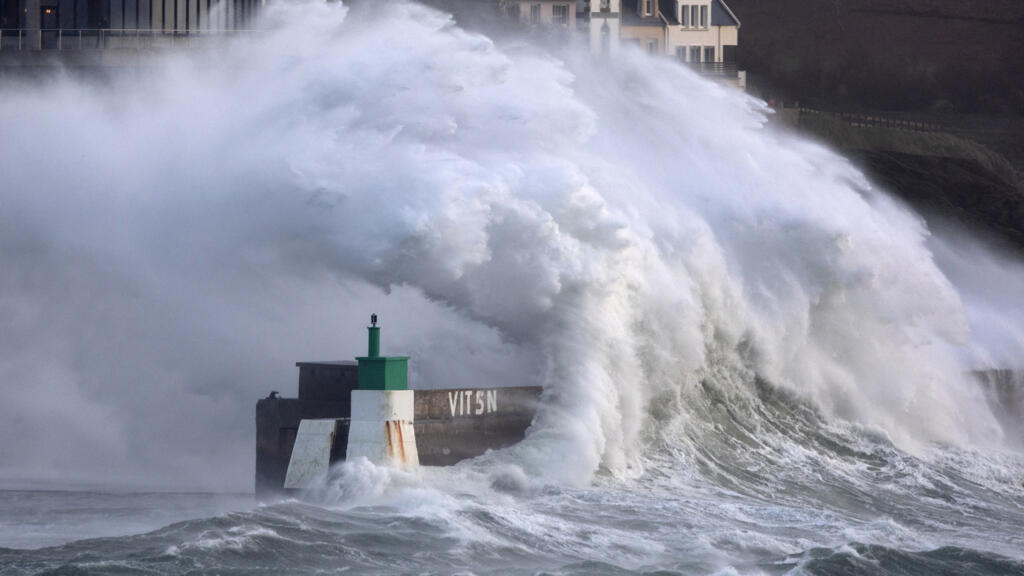
Violent Storm Goretti brings wind, snow and disruption to Europe

Storm Goretti has hit France and parts of northern Europe with violent winds and sharply colder temperatures, causing power cuts and major travel disruption.

Issued on: 09/01/2026 - RFI

A huge wave crashes on the jetty of the harbor of Le Conquet, western France on 8 January 2026 as storm Goretti hit France's northern coast. AFP - FRED TANNEAU

Some 380,000 households were left without electricity on Friday, grid operator Enedis said, as the storm swept across the north of the country.

Most outages were reported in Normandy, especially in the northern part of the region, where conditions were at their worst.

Authorities reported extraordinary wind speeds overnight in the north-western Manche department, with gusts reaching 216 km/h and 213 km/h – among the strongest recorded during the storm.

Across several regions, strong squalls brought down trees, including at least one that fell onto residential buildings in Seine-Maritime. No injuries had been reported so far.

Schools remained closed across northern France as weather alerts covered around 30 regions nationwide.

The Manche department urged residents to stay indoors, warned against unnecessary travel and advised households to prepare emergency lighting and drinking water.

Meteorological map of Storm Goretti from Météo-France for 8 January 2026. The Manche department is marked in red (highest alert level), and 27 departments in the north-west of the country are marked in orange. Residents are advised to exercise extreme caution. © Météo-France

UK braces for wind and snow

Across the Channel, the United Kingdom also faces severe conditions. Britain’s Met Office issued a rare red wind warning for the Isles of Scilly and Cornwall in the south-west, urging people to stay inside.

Wind gusts of up to 160 km/h were forecast in parts of the country, while “very large waves” were expected to create dangerous coastal conditions.

An amber snow warning was also in place for Wales and central England, with forecasters predicting snowfall of up to 30 centimetres in some areas.

The disruption quickly reached transport networks, as National Rail warned that train services would be affected over the next two days and called on passengers to avoid travel unless absolutely necessary.

Extreme weather across Europe

Elsewhere in Europe, Storm Goretti formed part of a wider spell of harsh winter weather affecting several countries.

At least eight deaths across the continent have been linked to recent conditions. In Albania, police in the port city of Durres recovered a man’s body from floodwaters after days of heavy snow and torrential rain in parts of the Balkans.

In Germany, heavy snow and strong winds were forecast to disrupt daily life, particularly in the north. The German Weather Service warned that up to 15 centimetres of snow could fall in northern regions, while icy conditions posed risks further south.

Temperatures were expected to plunge sharply over the weekend, potentially dropping as low as minus 20 degrees Celsius in some areas.

Several cities announced school closures, including Hamburg and Bremen, where public transport had already suffered delays and cancellations on Thursday.

Germany’s national rail operator Deutsche Bahn warned of significant delays in the coming days.

More than 14,000 staff have been mobilised to clear snow from tracks and platforms.

A reminder of a warming climate

German forecasters expect the storm to ease by Saturday, with snowfall tapering off by Monday. While the conditions feel particularly harsh, meteorologists caution against seeing them as a contradiction to long-term warming trends.

“This kind of storm is an exception compared with the milder winters of recent years, which are a consequence of climate change,” said German Weather Service meteorologist Andreas Walter.

Cold, snowy months remain possible even as average temperatures rise, he noted – but such events are likely to become rarer in the future.

(with newswires)
Indore

India’s ‘Cleanest City’ Fails The Test Of Life – OpEd
By Tang Lu

Polluted water killed 11 and made 2000 ill in Indore , a city in Madhya Pradesh that was declared “India’s Cleanest City” seven times

During my years in India, I personally witnessed the nationwide rollout of Prime Minister Modi’s “Swachh Bharat Mission” (Clean India Campaign). I traveled across multiple cities to observe the transformation firsthand.

In my view, the most significant achievement of this campaign has been a psychological one: it successfully elevated the collective consciousness regarding public hygiene and sanitation among Indians.

However, a shift in awareness does not automatically translate into a shift in infrastructure. India’s path to true cleanliness remains fraught with deep-seated structural challenges. The recent public health catastrophe in Indore—the very city hailed as the “Seven-Star” model of Indian urbanity—serves as a grim reminder. When the nation’s cleanest city stumbles so fatally over its own drinking water supply, it exposes a critical disconnect: the campaign has mastered the optics of hygiene, but it is yet to conquer the engineering of survival.

This article explores that disconnect, starting with the life of a man whose identity was defined by a broom, and ending with a city whose glory was undone by its own pipes.

The Artist and the Broom

Years ago, in a Mumbai school dedicated to the children of manual scavengers, I met Ramesh Haralkar. A social activist born into the Dalit community, Haralkar once dreamed of being a painter. Instead, to retain his government accommodation, he was forced to inherit his father’s municipal broom—a prerequisite established by Mumbai’s municipal corporation for sanitation worker housing.

Haralkar vowed his children would never walk this path; today, his sons have become journalists and visual storytellers. When I asked his views on the Swachh Bharat Mission, he harboured a profound skepticism that stays with me to this day:

“Indians often litter or defecate in the open because they know that people of my caste will always be there to clean up after them. As long as this structure exists, no amount of sweeping can truly clean this country.”

Fatal Flaws Beneath the “Seven-Star” Glory


Indore was supposed to be the exception. In the Swachh Bharat Mission, this Madhya Pradesh city won India’s cleanest city title for seven consecutive years, earned a seven-star “garbage-free” certification, and generated 90 million rupees annually through carbon credits. In 2021, Indore even became the first city in India to receive “Water Plus” certification for its outstanding performance in wastewater management.

But a tragedy in late 2025 shattered this myth. Starting in late December, residents of the Bhagirathpura area began experiencing diarrhea and complained of foul-smelling tap water, but officials turned a deaf ear. By early January 2026, at least 11 people had died (including a six-month-old infant), and over 2,000 fell ill.

The culprit: a police outpost toilet built directly above the main water supply pipeline—without a septic tank. Sewage had been seeping into cracked, 120-year-old pipes. When questioned, the Minister for Urban Development in Madhya Pradesh dismissed the issue as ‘utterly meaningless’—a contemptuous attitude that laid bare a shocking evasion of responsibility.

The Trap of Performative Politics: Gleaming Streets and Rotting Pipes

Indian policy commentator Ajay Prakash hit the nail on the head: “Clean streets are easy to photograph, but clean water pipes are not. That’s the disturbing truth behind the ‘Clean India’ campaign.”

From 2014 to 2024, the Indian government invested over 1.8 trillion rupees in the mission. However, the bulk of this went to toilet construction subsidies, rewards, and ranking competitions, while investment in invisible infrastructure like underground sewage networks remained minimal.

“Because pipes are underground and don’t photograph well,” Prakash noted sarcastically. “Awards are given based on what the camera can capture. Indore is clean on the surface but rotting from within.”

An editorial in The Economic Timessaid – “Cities love to flaunt rankings and report cards. But if what flows into homes is disease, not life, none of it matters.”

Indore’s water supply network is 120 years old, with many pipes in use for over 50 years, and drainage ditches laid directly above them. As early as 2019, India’s Comptroller and Auditor General flagged serious risks in Indore’s water management. Yet these warnings were ignored because they don’t appear in “cleanest city ranking” criteria.

Performance Over Human Accountability

Strategic advisor Srinath Sridharan coined a sharp acronym for this model: POHA—“Performance Over Human Accountability.”

POHA stands for Performance Over Human Accountability. It’s a critique of a governance model where visible metrics (like city rankings and toilet counts) are prioritized over the essential but invisible systems that sustain life (like sewage integrity and water safety). It explains why a ‘7-star’ city can win awards while ignoring 8 months of complaints about contaminated water.

Officials are rewarded for rankings and events—painted walls win applause, while sewage pipes do not. This creates an environment where immediate visible results are reinforced, while systems requiring sustained investment, like drinking water safety, are undervalued until they fail through disease and death.

The Double Deception of Inequality and Data

This tragedy hit Bhagirathpura, one of Indore’s poorest areas. Business Standard noted: “This reveals the vast inequality in access to municipal services between rich and poor.” The wealthy afford private purification; the poor suffer the consequences of municipal inertia.

The crisis also exposed data fabrication. The 2019 declaration of India being “Open Defecation Free” (ODF) lacked independent verification and was bound by a political deadline. Millions of toilets were built without water sources or sewers—what Prakash calls a “concrete joke.”

A National Wake-Up Call

Indore is not isolated. Outbreaks in Bhopal, Chennai, and a January 2026 typhoid outbreak in Gandhinagar (over 100 cases) show that sewage contamination of drinking water is a national crisis. India ranks 120th out of 122 countries in water quality, with nearly 70% of water contaminated.

The Times of India remarked sarcastically: “In India, if something seems too good to be true, unfortunately, it often is.”

From Optics to Systems: Redefining Cleanliness

When I recall Ramesh Haralkar’s words now, they take on new meaning. India’s cleanliness problem stems from a governance philosophy: prioritizing visible, short-term achievements while ignoring the invisible infrastructure that affects people’s lives.

The Indore tragedy sounds an alarm: a city that creates miracles in waste segregation yet cannot provide safe water is living a self-deceiving illusion. As Ajay Prakash summarized:

“Cleanliness is not a broom, not a ranking, not a speech. It’s about pipes, water supply, sewage treatment, and honesty. Until India understands this, the ‘Clean India’ campaign will forever remain the cleanest lie we ever applauded.”

True sanitation requires engineering integrity and institutional accountability—placing the daily protection of life at the core of governance. If India’s urban governance cannot shift from “performative politics” to “systemic construction,” tragedies like Indore will recur. Seven-star honors may embellish political achievements, but only clean water flowing into every household can truly define a city’s civilization.

Tang Lu
Ms. Tang Lu has served in India, Sri Lanka and Maldives as a journalist for many years.
Efforts By India And Bangladesh To Patch Up Differences Suffers Setback – Analysis

January 7, 2026 
By P. K. Balachandran

India and Bangladesh were at odds for more than a year since the overthrow of the pro-India government led by Sheikh Hasina in August 2024. However, in December 2025, the two countries seemed to be on the way to patching up. New Delhi offered a hand of friendship to the Bangladesh Nationalist Party (BNP), an emerging force in Bangladesh, using the passing away of its respected leader, Khaleda Zia, as an occasion to do so.

But the patch-up bid was short lived.

Come January 2026, the two countries have fallen out again because of events in each other’s domestic sphere. Both New Delhi and Dhaka have had to respond to pressures from domestic groups to take tough lines on certain issues. Though the two governments have not gone after each other in the same way as their populations did, there is tension in the air and further moves to strengthen ties have been put on hold.

Murder of Hindus

The serial murder of Hindus in Muslim-majority Bangladesh and harassment of Muslims and vile propaganda about illegal Bangladeshi migration to India are burning issues in the two countries.

According to The Statesman of Kolkata, since December 2025, at least four Hindus were killed in Bangladesh. Rana Pratap, who was the acting editor of a local newspaper, was killed in Kopalia Bazar in Manirampur in Jashore district. A group of men lured him out of an ice factory that he ran in addition to his work as a journalist and shot him in the head at close range.

On December 31, a Hindu businessman, Khokon Das, was set on fire by a mob. A medical shop owner in Shariatpur district was attacked by a mob with sharp weapons while returning home. A day earlier, a Hindu worker, Bajendra Biswas, was shot dead by his colleague in Bhaluka upazila of Mymensingh district.

Amrit Mondal, a known Hindu criminal, was lynched by a mob over allegations of extortion. A particularly gory incident involved Dipu Chandra Das, a garment factory worker in Mymensingh, who was lynched by a mob over allegations of blasphemy. His body was hung upside down and set on fire. Miscreants hacked to death a grocery shop owner at Charsindur Bazar in Palash upazila of Narsingdi. Local traders and the community protested against the murder.

India strongly condemned the attacks. The Ministry of External Affairs (MEA) spokesperson Randhir Jaiswal said – “The unremitting hostility against minorities in Bangladesh is a matter of great concern.” According to the MEA, there had been around 2,900 incidents of violence against minorities during the tenure of Bangladesh’s Interim Government led by Dr.Muhammad Yunus.

The MEA said India has consistently raised concerns over attacks on minorities and rejected what it called a “false narrative” being pushed by Bangladesh on such incidents. The Bangladesh government had said that there was no place for communal hatred or mob violence in what it termed the “New Bangladesh,” and promised strict action against those responsible.

Osama Hadi’s Killing

These incidents had taken place against the backdrop of widespread unrest in Bangladesh following the death of the Islamist political activist Sharif Osman Hadi at the hands of an assassin linked to the banned Awami League’s youth wing, Jubo league.

The killing of Hindus in Bangladesh led to anti-Bangladesh demonstrations in West Bengal and other pats of North India.


Illegal Infiltration

There were calls to identify and expel “Bangladeshi infiltrators” in West Bengal, Assam and other parts of North India. According to Bangladesh newspapers, the Indian border police have pushed into Bangladesh 1670 alleged infiltrators, many of whom were not even Bangladeshi nationals, but Bengali-speaking Indian Muslims.

The West Bengal government led by the Trinamool Congress alleged that the Odisha police had detained Bengali-speaking workers wrongly classifying then as Bangladeshi infiltrators simply because they spoke Bengali.

Meanwhile the Assam Chief Minister Hemanta Biswa Sarma, of the Bharatiya Janata Party (BJP) vowed to drive all Bangladeshi infiltrators out of the State. India’s Home Minister Amit Shah has pledged that if the BJP is elected again in Assam, it will clear the state of Bangladeshi infiltrators entirely.

Indian politicians and media have been putting the figure of illegal entrants from Bangladesh in millions though very few Bangladeshi infiltrators have been identified in government surveys conducted for citizenship enumeration and electoral roll purposes..

The description of Bangladesh as basket case from which people are fleeing to a prosperous India is deeply hurting to Bangladeshis, who were progressing economically under Prime Minister Sheikh Hasnia.

A statement issued by the Association for Protection of Democratic Rights (APDR), a human rights organisation of West Bengal, on December 1, 2025 said- “The Indian government or the BJP has no moral right to say anything about the oppression of minorities in Bangladesh. Minority Muslims, Christians, and Buddhists are being persecuted continuously in India. Dalits and tribal people are also suffering. Just a few days ago, the Uttar Pradesh police shot dead six people of the minority community in Uttar Pradesh’s Sambhal. Many Muslim political leaders and social activists including Abu Bakr, Umar Khalid, Gulfisha Fatima, Sharjeel Imam have been put in jail. By taking away OBC reservation, bringing waqf bill, making uniform civil rules, and digging up temples under mosques, many rights of minorities have been or are being taken away. Thousands of minority families have been displaced by bulldozers in Uttar Pradesh and Assam.”

Removal of Bangladesh Cricketer

Attacks on minority Hindus in Bangladesh had sparked calls for the rejection of Bangladeshi pacer Muztafizur Rahman by the Sharukh Khan owned Knight Riders cricket team participating in the IPL tournament. The Board of Control for Cricket in India (BCCI) announced its decision to ask KKR let go of Mustafizur Rahman.

Congress leader Shashi Tharoor asked the board not to mix cricket with politics. The Janata Dal (United) leader K.C.Tyagi pointed out that Bangladesh had appointed a Hindu Litton Das as its cricket team’s skipper.

Bangladesh in its reaction banned broadcasts of IPL matches. Bangladesh also asked the ICC to change the T20 World Cup venue from India to a neutral place to ensure the security of its team. The ICCC is believed to have rejected the request. The Bangladesh Cricket Board then formally informed the International Cricket Council of its decision not to send the national team.

P. K. Balachandran is a senior Indian journalist working in Sri Lanka for local and international media and has been writing on South Asian issues for the past 21 years.
Legitimacy By Force: Myanmar’s Junta And The 2025 Elections – Analysis

By Mhue Aung

The Myanmar Junta is planning a sham election not as a democratic transition but as a political strategy to consolidate military power, which can lead to more instability without genuine political dialogue.


Key Takeaways

The junta’s upcoming elections are not a genuine democratic transition but a carefully staged performance to project an image of normalisation and legitimacy.

With restrictive laws, the junta dissolved key political parties, and the exclusion of vast conflict-affected regions. Rather than reducing tensions, the result is likely to intensify Myanmar’s ongoing civil war and deepen the humanitarian crisis.

A sustainable path toward peace requires the inclusion of the NUG and other opposition actors through meaningful political dialogue.


Introduction

Since the 2021 military coup, Myanmar’s military junta has faced international condemnation and domestic resistance. After four years of civil wars and economic crisis, the junta plans to hold a multistage election as proof of its commitment to democracy. Junta leader Senior General Min Aung Hlaing announced that it will hold general elections in late 2025 and early 2026. He presents these polls as fulfilling the “ASEAN five-point roadmap” to restore order and civilian rule. The junta also lifted the state of emergency and changed its name from the “State Administration Council” to “State Security and Peace Commission” and appointed itself as “Acting President”, aiming to shed its pariah status.

The elections come amid the civil war, years of airstrikes, mass arrests, repression of opposition parties and war crimes, where thousands have been killed as a pro-democracy rebellion takes on a heavily armed military. Yet the junta insists these elections progress toward “free and fair elections”. The movement is designed to manufacture legitimacy for the junta. The upcoming polls are only to whitewash the junta’s crimes against humanity. The junta’s sham election will only intensify the already dire human rights and humanitarian crisis, cementing the junta’s backing of China’s influence risk entrenching military dominance.

The Junta’s Democratic Narrative

The junta repeatedly claims that the 2025 elections reflect its commitment to democratic norms under the 2008 Constitution. It maintains that the coup was justified due to so-called “election fraud” in the 2020 polls, a claim discredited by international experts, independent observers, and domestic political actors.

The Junta regime highlights technical preparations, such as a partial census in 2024 and voter list updates, to present an image of professionalism and inclusiveness for polls. To reinforce this narrative, the junta appointed a new Union Election Commission (UEC) led by loyalist Than Soe.

Internationally, Junta leader Min Aung Hlaing’s high-profile trips to China, India, Russia, and Belarus aim to earn diplomatic endorsement. Junta statements at regional forums emphasise “progress,” portraying Myanmar as slowly returning to normalcy. Domestically, small-scale amnesties and repeated claims of holding elections only in “secure areas” attempt to depict the military as a stabilising institution willing to return power.

The 2008 Constitution reserves 25% of parliamentary seats for the military. This enables the military to hold veto power over any constitutional amendment. This entire so-called election process is crafted to guarantee military victory regardless of the vote.

Reality of Repression and Control

Despite democratic claims, the junta has intensified opposition suppression before the so-called election. The junta increases its attacks on civilians to expand its territorial and administrative control in advance of its sham election. The junta has committed numerous abuses, including crimes against humanity against protesters and activists, and war crimes in ethnic minority areas. Since the coup, the junta has launched more than 2,700 airstrikes, dramatically increasing year after year.

On 29 July 2025, the junta enacted the “Law on the Prevention of Obstruction, Disruption, and Sabotage of Multiparty Democratic General Election” and criminalised the criticism, protests or disruption of any part of the electoral process. The law states “three to five years in prison for election sabotage; five to 10 years for damaging ballot boxes, polling stations, or voting machines (or life imprisonment if committed as a group): and 10-20 years for causing serious injury to voters, polling staff, candidates, or election officials”, restricting freedom of expression and speech. The authorities have arrested 94 people under the new law since August, including at least 4 children and several prominent personalities from the film industry, to intensify fear among the civilians.

On the other hand, the junta raised requirements for parties to participate in elections to oppress the opposition parties according to the “Political Parties Registration Law”. The junta also made various amendments; the 1st amendmenton 30 January 2024, the 2nd amendment in July 2025 and the 3rd amendment on 21 September 2025 to win seats for the military-backed or allied in the upcoming polls. The new amendments restrict the minimum number of party members, the minimum number of nationwide offices, large financial deposits and prohibit anyone convicted of a crime from joining a party. Moreover, the political parties have to re-register within 60 days or be dissolved.

As a result, the law dissolved 40 political parties which failed to imply including the famous National League for Democracy (NLD), amid their landslide win in the 2020 general election. Moreover, the UEC also disbanded four re-registered political parties: National Democratic Force Party (NDF) for not having enough members, Mon Women’s Party (MWP), Union Farmer-Labour Party and the Democratic Party of National Politics (DNP) for not having the required number of offices. All these efforts show the regime do not want to bring democracy but to act against the potential contenders and enforce their own rules.

To enhance the election process, the military administration granted amnesty to more than 3,000 people for opposing their regime and dropped charges against more than 5,500 others on November 27, 2025. According to the Assistant Association for Political Prisoners (Burma) – AAPP, over 22,000 political prisoners still languish in jails, including the infamous political leader Aung San Suu Kyi. More than 6,100 women and 629 children have been arrested since the 2021 coup, showcasing that the junta’s amnesty is an effort to cover their sham election.

Despite the military efforts, many experts, international governments and the United Nations state that the upcoming polls could never be free and fair. UN rights office spokesman Jeremy Laurence said, “This military-controlled ballot will be conducted in an atmosphere rife with threats and violence”. Usage of electronic voting machines, electronic surveillance technology utilising AI-biometric tracking, raises fraud concerns as civil society, media, and observers are barred.

The National Unity Government (NUG) and ethnic armed groups reject the upcoming elections and call for decisive ASEAN actions, labelling the polls illegitimate. Asian Network for Free Elections (ANFREL) documents failures against international standards for the upcoming polls, from voter suppression to a level playing field. ANFREL also warn that the election can only bring the country to fall deeper into conflict.

Why the Elections Cannot Solve the Crisis

The upcoming polls fail to address Myanmar’s fundamental political crisis. They ignore the core issues that have fueled conflict for decades: military domination, lack of federalism, and the public’s overwhelming rejection of the coup. The United States Institute of Peace states that over 92% of the population supports the NUG. The junta, on the other hand, rejects NUG, CRPH and defence forces, labelling them as terrorist groups. This designation blocks any form of political communication or negotiation between the parties and further entrenches the conflict.

Moreover, the elections will be held only in areas under military control, excluding large parts of the country administered by resistance forces or ethnic organisations. The result of the upcoming polls is predictable, as the military-backed or allied parties will hold the power, and this cannot solve the prolonged civil war and humanitarian crisis. This can only formalise the Myanmar military regime and deepen domestic conflict and instability.

Apart from that, views from international communities remain divided. The United States, Canada, the United Kingdom, Australia and the European Union have imposed sanctions on Myanmar in response to the coup and have not recognised the Junta’s sham election plan. Even ASEAN faces a diplomatic dilemma over the upcoming sham election. The ASEAN stated that they will not send any monitors to the upcoming elections, and the junta regime should prioritise peace over elections, accept the upcoming polls, and it is undeniable that the military’s only hope is that the elections will end widespread opposition to their grip on power.
Conclusion

The 2025 elections are a political performance designed to legitimise Myanmar’s military rule and not restore democracy. Through the coordinated propaganda, restrictive laws, and selective amnesties, the junta is showcasing the appearance of democratic progress amid the systematic repression of its opposition parties.

The upcoming polls cannot resolve Myanmar’s political crisis as they exclude genuine political actors and aim to entrench military dominance. The current political situation cannot be solved by offering legitimacy to the brutal regime. Only real political reforms and settlements can bring peace and stability. The further political settlements and democratic transition processes must include NUG and opposition actors and end military violence for a sustainable nation-building process. It is undeniable that the current sham election is designed to legitimise power for the junta’s generals.


About the author: Mhue Aung is a final-year CDM student with over two years of experience in humanitarian work. He is currently a migrant worker in Thailand.

Source: This article was published by The Sabai Times

Shwetaungthagathu Reform Initiative Centre

The Shwetaungthagathu Reform Initiative Centre (SRIc) is a hybrid think tank (non-partisan) and consultancy firm that advances sustainable governance, policy innovation, and sustainability literacy in Myanmar. Through its Sustainability Lab, SRIc conducts in-depth public policy research and analysis to promote sustainable development and guide Myanmar toward a more resilient, equitable, and environmentally conscious future. SRIc provides strategic policy advocacy, CSR consultation, and the development of sustainability roadmaps grounded in Environmental, Social, and Governance (ESG) principles. These services support public institutions and private sector actors in aligning their operations with the Sustainable Development Goals. By integrating rigorous research with actionable consultancy, SRIc supports responsible business practices, fosters innovative CSR strategies, and designs impactful sustainability pathways. SRIc contributes to local transformation & global sustainability efforts through this dual approach.
Floating Liquefied Natural Gas And Africa’s Gas Future: A Flexible Solution For Accelerated LNG Development
The Tango Floating Liquefied Natural Gas (FLNG) facility. Photo Credit: Eni

January 7, 2026 
By Eurasia Review

Floating liquefied natural gas (FLNG) is rapidly emerging as a cornerstone of Africa’s gas development strategy, as the continent prepares for a sharp rise in demand and seeks faster, more resilient pathways to market.

According to the African Energy Chamber’s (AEC) State of African Energy 2026 Outlook, Africa’s natural gas demand is projected to increase by 60% by 2050, underscoring the urgency of bringing new supply online efficiently and at scale. At the same time, Africa already hosts the highest concentration of FLNG infrastructure globally, positioning the continent as a natural testbed for floating solutions that monetize offshore resources while mitigating above-ground risks.

Accelerated FLNG Deployment

Early FLNG successes are already reshaping development models across the continent. Cameroon’s Hilli Episeyo FLNG project stands as Africa’s first operational FLNG facility and a global reference point. Brought online in record time, the project demonstrated how FLNG can rapidly unlock gas exports from relatively modest reserves. Since then, Africa’s FLNG market has expanded, with several projects now under development or in operation.

On the maritime border of Senegal and Mauritania, the Gimi FLNG vessel – situated at the bp-led Greater Tortue Ahmeyim LNG development and operated by Golar LNG – reached its commercial operations date in 2025. As the first FLNG unit deployed in the MSGBC region, the vessel will monetize up to 15 trillion cubic feet of gas through a 20-year Lease and Operate Agreement.

In Gabon, Perenco is developing the Cap Lopez FLNG project with a capacity of 700,000 tons per year, starting in 2026, with the unit being built by Dixstone. Offshore Nigeria, UTM Offshore is developing an FLNG facility at the deepwater Yoho field, a $5 billion project progressing toward FID. As Africa positions itself for the next phase of gas-led growth, FLNG stands out as a practical, future-focused solution – one that aligns technical innovation with the continent’s urgent development needs and long-term energy ambitions.

Implications for the Sector

One of FLNG’s most compelling advantages is scalability. Unlike onshore LNG developments, which require extensive land acquisition, supporting infrastructure and long construction timelines, FLNG facilities can be deployed in phases and scaled according to reservoir performance and market demand. This modular approach reduces upfront capital requirements and allows producers to accelerate first gas while preserving optionality for expansion. The Congo LNG project illustrates this approach: following phase one operations in 2023, operator Eni moved quickly toward phase two, bringing production online in 2025 – just 35 months after construction began and six months ahead of schedule. With first exports set for 2026, the project demonstrates how FLNG can be developed at speed and scale.

FLNG also helps mitigate above-ground risks – an issue shaping gas development strategies across Africa. Mozambique offers a clear example. Despite hosting some of the world’s largest gas discoveries, security challenges in Cabo Delgado caused delays and force majeure declarations on major onshore LNG projects. Offshore FLNG developments, however, have proven more resilient. Eni brought the Coral Sul FLNG project online in 2022, with the Coral Norte FLNG project reaching a $7.2 billion FID in 2025. While projects such as Mozambique LNG and Rovuma LNG faced delays, Coral utilized FLNG to reduce exposure to onshore security threats and logistical bottlenecks, enabling continued operations even in complex environments.

Making Energy Poverty History Through Gas

Beyond speed and resilience, FLNG could become a catalyst for Africa’s broader economic development. By reducing capital intensity and shortening development timelines, FLNG improves project bankability and attracts a wider pool of investors. It also supports gas-to-power strategies, petrochemical development and regional energy security by enabling monetization of gas that might otherwise remain stranded for years.

However, FLNG is not a one-size-fits-all solution. Successful deployment requires robust regulatory frameworks, clear fiscal terms and strong collaboration between governments, operators and financiers. When aligned with national gas master plans and long-term industrial strategies, FLNG can serve as a powerful bridge between exploration success and sustainable economic impact.

These discussions will be central at African Energy Week (AEW) 2026, where governments and industry leaders will explore how floating solutions can unlock Africa’s vast gas potential while managing risk and accelerating timelines. AEW continues to provide a critical platform for sharing lessons learned, advancing project dialogue and mobilizing capital into innovative LNG developments.

“FLNG is changing the game for African gas producers. It allows countries to monetize resources faster, reduce exposure to security and infrastructure risks, and generate revenues that can be reinvested into broader development. When deployed strategically, FLNG can help Africa turn gas discoveries into energy security, industrial growth and real economic transformation,” states NJ Ayuk, Executive Chairman, AEC.

A Review Of U.S. Strategic Bombers – Analysis

A B-21 Raider, the nation's sixth-generation stalth bomber, joins flight testing at Edwards Air Force Base, Calif., Sept. 11, 2025. The program is a cornerstone of the Department of the Air Force's nuclear modernization strategy, designed to deliver both conventional and nuclear payloads. Photo Credit: DoW

January 7, 2026 


Source: the Congressional Research Service (CRS)
By Jennifer DiMascio and Anya L. Fink

The U.S. Air Force deploys three strategic (or heavy) bombers—the B-52, B-1B, and B-2—to carry bombs or air-to-surface missiles for conventional and nuclear missions. Bombers carry heavy ordnance loads across long distances, for long periods of time, to strike adversary targets of tactical and strategic importance.

The Air Force is also developing a new B-21 strategic bomber as the next-generation stealth aircraft to conduct nuclear missions and as a component of a conventional family of systems including electronic attack, communications, and other systems. Congress authorizes and appropriates funds for, and conducts oversight of, Department of Defense (DOD) and Air Force development, acquisition, maintenance, and manning of the U.S. bomber fleet, as well as the nuclear weapons carried by these aircraft.
Conventional and Nuclear Missions

The role of bombers has evolved over time. During World War II, the United States developed new bomber types and produced tens of thousands of bombers. A combined conventional bomber offensive with the United Kingdom from 1942 to 1945 aimed to destroy the German military industrial and economic system. In August 1945, on the orders of U.S. President Harry Truman, U.S. B-29 heavy bombers delivered the “only nuclear weapons ever used in combat” on targets in Japan. During the Cold War, reports about Soviet bomber prowess spurred the United States to increase defense spending and build up its bomber fleet.

Today, bombers are an essential component of one of the U.S. Air Force’s core conventional functions: air superiority, or the degree of control of an airspace that allows for operations without interference from adversarial air and missile threats. Bombers aid the air superiority mission by providing the ability to carry out long-range precision strike.

The 2022 U.S. Nuclear Posture Review (NPR), a periodic executive branch review of U.S. nuclear policies, reaffirmed bombers as an integral part of the U.S. nuclear “triad” that also includes long-range land-based intercontinental ballistic missiles (ICBMs) and long-range submarine-launched ballistic missiles. The 2018 NPR stated that “heavy bombers are the most flexible and visible leg of the triad.” The 2010 NPR stated that “heavy bombers can be visibly forward deployed, thereby signaling U.S. resolve and commitment in crisis.”

The United States has periodically stationed bombers in allied countries, conducted continuous patrols, or maintained bombers on alert status. In 2018, Air Force Global Strike Command began Bomber Task Force deployments, which involve bomber flights to allied nations around the world to take part in patrols and exercises to “assure allies and deter adversaries.” Since 2020, the command has refined the use of Agile Combat Employment of bombers to expand the number of bases from which bombers can operate, to include demonstrating the ability to land at civilian airfields.

The U.S. Strategic Bomber Fleet

B-52 Stratofortress

The B-52, which entered service in 1955, is a long-range heavy bomber that can fly 8,800 miles without refueling. Known as the Stratofortress, the B-52 can conduct conventional and nuclear bombing missions (or, it is dual-capable), offensive counter-air operations, and maritime surveillance and mine-laying operations. The B-52 can carry 70,000 lb. of ordnance. Boeing built 744 B-52s, delivering the last H-model B-52 in 1962, and the Air Force plans to extend the life of the remaining 74 aircraft into the 2040s. The aircraft are based at Barksdale AFB in Louisiana and Minot AFB in North Dakota.

According to DOD, 46 B-52 aircraft are capable of carrying nuclear weapons. These nuclear-capable B-52s are equipped to carry air-launched cruise missiles (ALCMs) armed with the W80-1 warhead. The Air Force has stated that it is planning to replace the aging ALCMs with a new advanced Long-Range Standoff (LRSO) cruise missile. The Air Force noted its plans to buy 1,087 missiles. The Department of Energy’s National Nuclear Security Administration (NNSA) is extending the life of the W80 warhead to provide a warhead for the LRSO. Section 1626 of the FY2025 National Defense Authorization Act (NDAA) (P.L. 118-159) permitted the Air Force to reconvert for nuclear missions B-52 bombers that were modified to carry out conventional-only missions in accordance with the U.S.-Russian 2010 New START Treatyand mandated an Air Force report on the cost of a one-third increase in the LRSO planned purchase.

The Air Force is in the midst of two B-52 upgrade projects. The B-52 Commercial Engine Replacement Program (CERP) seeks to create a new version of the aircraft—the B-52J—with eight Rolls Royce F-130 engines. The service anticipates modernizing 51 B-52s by FY2032 and the remaining 23 aircraft in FY2033. The B-52 Radar Modernization Program (RMP) is an upgrade to track moving surface and air targets to include hypersonic weapons. In 2025, the RMP incurred a significant Nunn-McCurdy cost breach. The first B-52 with the RMP flew to Edwards AFB for testing in December 2025.


B-1B Lancer

The B-1B was designed to be a dual-capable bomber and the successor to the B-52. DOD declared that the B-1B had reached initial operational capability (IOC) in 1986. During the 1990s, under the U.S.-Russian Strategic Arms Reduction Treaty (START I), the United States converted the B-1B to conventional missions. The B-1B can carry a 75,000 lb. payload—the largest conventional weapons load in the U.S. Air Force’s inventory, which includes general purpose and precision-guided munitions. The 7th Bomb Wing based at Dyess AFB, Texas; and the 28th Bomb Wing from Ellsworth AFB, South Dakota, operate the B-1B. As of April 2024, the Air Force reportedly had 45 B-1Bs, down from an original fleet of 100. Congress has written provisions to limit retirement of the B-1, which is sustained by Boeing. Section 146 of the FY2026 NDAA (P.L. 119-60) extends to 2030 a prior prohibition on reductions to the B-1B fleet. The B-1B conducts a variety of bomber task force and training missions.

B-2 Spirit


The B-2 is a dual-capable multi-role heavy bomber, powered by four engines. It is considered a stealthy, or low-observable, aircraft in that its design and materials limit its ability to be detected by enemy radar. For example, the B-2’s flying wing design, or triangular shape, composite materials, and coating reduce its radar cross section so it can penetrate air defenses. It can carry a payload of 40,000 lb. The B-2 made its first flight in 1989 and began initial operations in 1997. The Air Force has 20 B-2 bombers based at Whiteman AFB in Missouri.

According to DOD, all B-2s are nuclear-capable. The B-2 can carry B61 and B83 nuclear gravity bombs, but it is not equipped to carry cruise missiles. In 2025, NNSA said that it completed B61-12 life-extension. NNSA is developing a new B61-13 bomb, which, according to DOD, would give the President “additional options against certain harder and large-area military targets” as it “works to retire” the B83. The B-2 is also certified to carry conventional munitions including the GBU-57 Massive Ordnance Penetrator, designed to defeat hard and deeply buried targets.

The Air Force continues to modernize the B-2. In 2024, Northrop Grumman won a contract of up to $7 billion through 2029 to maintain and improve B-2 stealth and communications capabilities, engines, and displays.

B-21 Raider

The B-21 is a dual-capable penetrating-strike stealth bomber, currently in development. The B-21 is similar to the B-2, but slightly smaller, with a distinctive beak domed center. The Air Force has designed the B-21 with an open systems architecture to allow for faster new software integration. The Air Force says the B-21 will be able to “employ a broad mix of stand-off and direct-attack munitions.” The B-21 is expected to carry the LRSO and gravity bombs. Air Force officials have reportedly said the B-21 could fly without a human crew but that the current focus is on crewed operations. The Air Force has indicated it plans to buy at least 100 B-21 aircraft that would begin entering the force in the mid-2020s.

The Air Force has projected that B-21 would cost $550 million apiece in 2010 dollars, based on the purchase of 100 aircraft. The B-21 has flown more than 200 sorties on a “flying test bed,” and in September 2025, the Air Force received a second flight-test aircraft. Prime contractor Northrop Grumman in late 2024 received a second low-rate initial production award. In FY2026, the Air Force requested $5.8 billion in discretionary funding and assumed $4.5 billion in mandatory funding available through FY2029 from the FY2025 reconciliation act (P.L. 119-21). Section 150 of the FY2026 NDAA (P.L. 119-60), directs annual assessments of the B-21’s cost, schedule, and performance. Section 1634 directs deadlines for the Air Force to certify and employ the LRSO on the B-21.

Potential Issues for Congress

Sizing the bomber fleet and the Air Force budget. The 2023 Final Report of the Congressional Commission on the Strategic Posture of the United States (Strategic Posture Commission, or SPC) recommended purchasing additional B-21 aircraft and supporting tanker aircraft. In March 2025, Commander of the U.S. Strategic Command (STRATCOM) testified to Congress of the potential need for 145 B-21s. Some experts say the Air Force needs at least 200 stealth bombers. Some cite the high operational tempo of Bomber Task Forces, especially for the aging bomber fleet, as a reason for future increased bomber acquisition. Others also note that Operation Midnight Hammer, the June 2025 U.S. strike on Iranian nuclear facilities, relied on a significant portion of the U.S. B-2 stealth bomber force. Section 151 of the FY2026 NDAA (P.L. 119-60) requires the Air Force to submit to Congress a bomber aircraft force structure and transition roadmap. Members may draw on the results of this report to decide whether or not to authorize and appropriate funding for B-21s and, if so, how many, and whether to sustain and or upgrade the rest of the bomber fleet.

Re-alerting bombers. Unlike during the Cold War, U.S. bombers do not carry nuclear weapons day-to-day. Some Air Force officials have said that re-alerting bombers could increase demands on manpower and infrastructure. Section 1651 of the FY2022 NDAA (P.L. 117-81) requested the Air Force study the costs and impacts of re-alerting “in the absence” of ICBMs. The SPC report recommended that the Air Force plan and prepare for some “future” U.S. bombers to “be on continuous alert status.” Members may consider whether the study mandated in the FY2022 NDAA provides sufficient information on the costs and impacts of alerting.

Base hardening. Some outside analysts and Air Force officials reportedly have raised the possibility of base hardening to improve protection against potential uncrewed aerial systems or missile strikes with improved logistics and reinforced shelters. Some Members of Congress have argued for such hardening and “passive defenses,” in the Indo-Pacific. Members may consider whether or not to provide funding to bolster the infrastructure at its main operating bases and whether to also do so at smaller airfields to support the dispersion of forces.

About the authors:
Jennifer DiMascio, Analyst in U.S. Defense Policy
Anya L. Fink, Analyst in U.S. Defense Policy

Source: This article was published by the Congressional Research Service (CRS)

The Congressional Research Service (CRS) works exclusively for the United States Congress, providing policy and legal analysis to committees and Members of both the House and Senate, regardless of party affiliation. As a legislative branch agency within the Library of Congress, CRS has been a valued and respected resource on Capitol Hill for nearly a century.
Living In A House Of Dynamite: The Dilemmas Of Nuclear Decision-Making – Analysis


January 8, 2026 
 IPCS
By Dr. Manpreet Sethi

Kathryn Bigelow, an Academy Award-winning filmmaker, describes the contemporary nuclear scenario as ‘a house of dynamite’. The nine nuclear-armed states are inmates in a house (Earth), with each accumulating more dynamite (nuclear warheads) and building capabilities that could blow up the tinderbox. Bigelow’s film, A House of Dynamite, raises several uncomfortable nuclear issues that states face but prefer to push into the background in their search for more or stronger deterrence. It stirred a conversation in the US but didn’t catch much attention in India. Available on Netflix, the film merits a watch for many reasons—with several that are relevant from an Indian perspective.

A House of Dynamite starts with the detection of a missile launch from somewhere in the Pacific. Initially believed to be a test, attitudes change as defence alert levels advance once the missile is ascertained to be heading for Chicago. The confusion, chaos, pressure, and helplessness that follow in the next 18 minutes is captured from three perspectives: the White House Situation Room, US Strategic Command, and the US President. The film wisely stays away from identifying a country as the origin of the missile launch, keeping the focus on nuclear decision-making dilemmas. Given that Washington currently has multiple nuclear-armed security challengers, the fog of information is well brought out. The attacker could be Russia, China, North Korea, or even Pakistan, or a rogue captain on a submarine, or an unintentional/accidental launch. The questions the film seeks to raise aren’t about the attacker but the decisions the US has to make.

One of the major issues that the movie throws up for discussion is the value of ballistic missile defence (BMD). The decision is to shoot the missile down with ground-based interceptors (GBI). Two attempts fail. The first GBI fails to detach and falls back to earth; the second reaches the missile but doesn’t hit the target.

The depiction of BMD failure was quick to elicit a response from the US Department of War, which dismissed it as unrealistic. There is however no denying the fact that ‘hitting a bullet with a bullet’ isn’t an easy proposition, and real-life situations could be quite different from sanitised test scenarios. The US has spent as much as USD 250 billion between 1985-2023 to build systems that protect the mainland and regional allies from missile threats from North Korea and Iran. These systems don’t protect from similar threats from China or Russia who have far more sophisticated missiles.

We shouldn’t assume that the US could have neutralised the missile simply by throwing more interceptors at it. This was the simplest possible scenario, with one solitary incoming missile. In real-life, missiles could be equipped with many countermeasures. Multiple missiles or the use of multiple independently targetable warheads on one missile could cause BMD saturation. Decoys accompanying the warhead or warheads disguised in different configurations of size, reflectivity, and dynamic motion could cause confusion. Radars or sensors could be jammed or attacked, or hypersonic missiles or fractional orbital bombardment system (FOBS) could further degrade it.

BMD therefore can’t automatically help execute a ‘safe’ nuclear war. The ambitious, multi-layered Golden Dome promised by President Trump at an anticipated cost of a trillion plus dollarsenvisions interceptors in space, which would likely exacerbate the arms race with China and Russia. The latter are already taking steps to offset BMD by expanding or diversifying their nuclear arsenals. China is increasing nuclear warheads and delivery platforms and has tested FOBS. Russia is engaged in building what President Putin calls “invincible weapons.” The nuclear-armed, nuclear-powered cruise missile, Burevestnik, and the underwater nuclear drone, Poseidon, were among those tested in 2025.

There is a lesson here for India. After Operation Sindoor, Prime Minister Modi announced the Sudarshan Chakra, a multi-layered defence system that would integrate advanced surveillance, cyber protection, and physical safeguards against enemy strikes. While assurances to protect the public from missiles may seem politically correct, in reality, technologically and materially, it is an extremely demanding effort. India’s missile threat environment is complex. China and Pakistan have robust missile arsenals, having spent the last decade enhancing their missile capabilities in terms of numbers, range, accuracy, reliability, and penetrability. Both have also deployed a growing number of dual-use cruise missiles.

In such a challenging missile threat environment, an Indian BMD will have to be of high sophistication to offer even a modicum of effectiveness. This would require spending liberally on the development of a widespread network of early warning systems, deploying the requisite numbers of interceptors, dedicated cruise missile defences, as well as dogged R&D to move towards boost phase interception given the need to intercept as far away from one’s own territory as possible. Meanwhile, adversaries can be expected to build countermeasures, putting the two sides in an offence-defence spiral.

Even so, no BMD can guarantee 100 per cent success. India can’t afford astrodome protection over its entire landmass. The effort should therefore be to protect the assets most needed for buttressing credible nuclear deterrence. Such a BMD could be for limited, area-specific deployment to provide insurance against pre-meditated, mistaken, or unauthorised launches. Taking a leaf from the film, India must think deeply about its missile defence requirements.

A second issue that the film surfaces are nuclear decision-making dilemmas. As the president is loaded with information—which is nevertheless incomplete despite the US early warning network—he is faced with the critical choice of whether to ‘surrender’ by not responding immediately, or commit ‘suicide’ by approving a retaliation and then bracing for nuclear retaliation. His military commanders recommend a quick, near immediate response. With the US’ launch on warning (LOW) posture, STRATCOM warns that “if we don’t take steps to neutralise our enemies now, we will lose our window to do so. We can strike pre-emptively or risk 100 ICBMs launching our way, at which time this war will have already been lost.” The military advice is to strike at the adversary’s command centres, silos, and bombers while they’re still on the ground, eliminating their ability to take further action.

Despite the military logic, in the absence of any clarity about the attacker and intention, but the certainty of nuclear retaliation that would follow irrespective of whom the US targets, the president’s dilemma is existential. He wonders whether the attack on Chicago could be a one-off—or even an accidental launch—and if his response might lead to the loss of not just one but several American cities. He mulls whether the possibility of a “harsh public backlash” to a non-response “would still not be better than a possible counteract that could put even more US residents at risk.” So, even with a first use nuclear doctrine, the president appears inclined to wait it out—following a de facto no first use (NFU).

India has already eased this burden for the Indian prime minister through its NFU that signals response only after a nuclear attack. For those who view NFU as a passive strategy, it is worth considering whether a country with a declared first use doctrine might also find it prudent to lean towards NFU in case of uncertainty and ambiguity. The strength of the NFU is in the availability of a robust and secure second-strike capability.

Meanwhile, in contrast to LOW, an NFU also reduces the pressure of time on decision-making. In the film, the president feels overwhelmed. Indeed, one is left wondering whether nuclear command and control needs to be structured for speed in decision-making. This question will become even more critical with the integration of AI into military applications. On the one hand, this is being touted as an advantage since speedier assimilation is expected to give decision-makers more time to take a call. On the other, it would increase pressure on decision-making in order to pre-empt the adversary’s move. In having to take as momentous a decision as nuclear use, time can be more debilitating than empowering. Surprise, fear, limited information, and a self-imposed lack of time can cause tremendous strain on leadership.

A third dimension that stands out in the film is the need for channels of communication during crises. In the film, Washington is able to reach out only to Moscow thanks to the hotlines and a nuclear risk reduction centre that followed the Cuban Missile Crisis. In moments of crisis, these mechanisms help dissipate tension. The US has no such channels with China or North Korea, making it difficult to find the right avenue for communication or clarification.

In the India-China and India-Pakistan cases, military hotlines exist. They haven’t however been optimally used in all circumstances. Countries must invest in crisis communication that is technically robust, always available, and politically reliable, given that the missile flight time is far shorter in this regional context and accidents could always happen.

Finally, the film also refers, though tangentially, to the consequences of a nuclear attack. It acknowledges that the missile would result in as many as 10 million casualties in Chicago. One of the officers advises her family to “drive upwind away from any big city.” A nuclear detonation would degrade the internet, power, global financial systems, and transportation. In fact, no disaster planning can hope to cope with the consequences. And, depending on the level of the ensuing nuclear exchange, the long-term environmental, health, and food security impacts would be life-threatening.

While the film ends without showing the detonation and its aftermath, it leaves behind a deep sense of dread about what could have been. It leaves the watcher with questions that continue to preoccupy the mind much after it ends. A House of Dynamite and other films of the kind remind states of the dangers they live with in the presence of nuclear weapons. One person or a handful of people would have only a few minutes to make a decision as momentous as nuclear use. Its consequences, however, will be borne by millions for decades and over generations. To avert such a possibility, uncomfortable questions will have to be posed to and answered by our political leaders and publics. 


 About the author: Dr Manpreet Sethi is Distinguished Fellow with the Centre for Aerospace Power ans Strategic Studies (CAPSS) in New Delhi and Senior Research Advisor with the Asia Pacific Leadership Network (APLN).


Source: This article was published by IPCS
IPCS

IPCS (Institute for Peace and Conflict Studies) conducts independent research on conventional and non-conventional security issues in the region and shares its findings with policy makers and the public. It provides a forum for discussion with the strategic community on strategic issues and strives to explore alternatives. Moreover, it works towards building capacity among young scholars for greater refinement of their analyses of South Asian security.