Tuesday, January 20, 2026


Immigrant Rights Advocates Say Trump’s First Year Was “Much Worse” Than Expected

“Trump wants us to hang our heads and give up, but that’s not happening,” says organizer Rossy Alfaro.
January 17, 2026

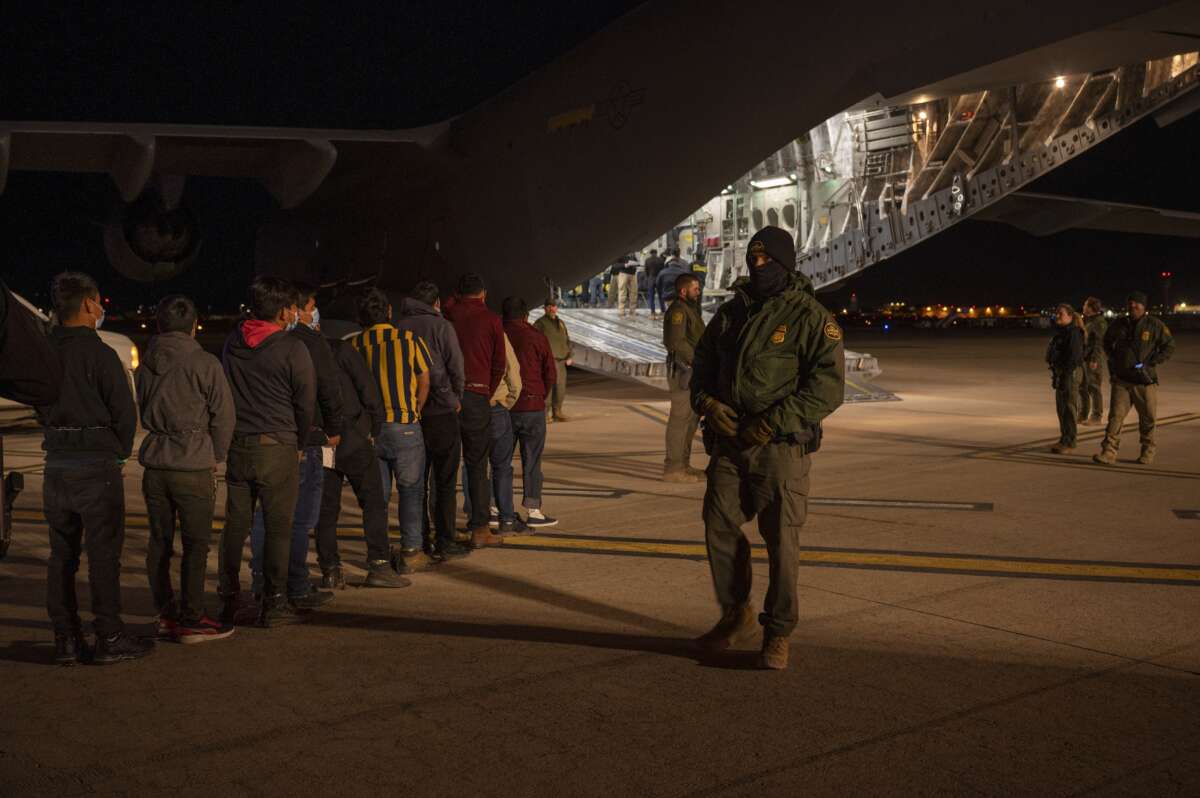
U.S. Customs and Border Protection Agents watch immigrants board a deportation flight at the Tucson International Airport, in Tucson, Arizona, on January 23, 2025.
Department of Defense photo by Senior Airman Devlin Bishop

Donald Trump rode to reelection with racist attacks on immigrants and refugees and promising mass deportations. The first year of his second term was filled with heartbreak, trauma, and fear as his administration escalated its assault on immigrant communities: separating families, occupying cities, targeting workers, and expanding deportations. Immigration and Customs Enforcement (ICE) is using its bloated budget to recruit among Trump’s far right base. This comes amid ICE’s horrific killing of Renée Nicole Good in Minneapolis, staunchly defended by the Trump administration.

At the same time, we’ve seen inspiring community resistance to ICE and Trump across the U.S. Rapid response networks have grown. Teacher unions are defending immigrant students and families. There is growing mass resistance to ICE from Los Angeles to Chicago to Minneapolis.

A year ago, Truthout spoke to several community and farmworker organizations about how they were preparing for the second Trump administration. We reached out to some of those participants again to reflect on the past year in a new roundtable interview. They discuss the anguish of the past year and the challenges immigrant communities have faced, as well as how organizers are proactively responding and what’s keeping people motivated and inspired.

Rossy Alfaro is a former dairy worker in Vermont and organizer with Migrant Justice, which organizes dairy farmworkers in Vermont and oversees the worker-driven Milk with Dignity campaign. María Carrasco is a longtime volunteer with Derechos Humanos, a grassroots organization supporting migrant rights in Tucson, Arizona, and she is closely involved with the group’s rapid response work. Jeannie Economos is the longtime pesticide safety and environmental health project coordinator for the Farmworker Association of Florida, which has organized farmworkers for over four decades.

Note: These interviews took place in December 2025 and were conducted separately and edited into a roundtable format afterward. Alfaro’s interview was done with interpretation provided by Migrant Justice.

Related Story
When ICE Comes Calling, Rapid Community Responses Can Make a Difference
Is your community ready to fight deportations? Here’s how people in New York, New Jersey and Arizona are organizing. By Derek Seidman , Truthout February 3, 2025

Derek Seidman: A year ago, we discussed how you were approaching the new Trump administration. How has the past year been for your community and organizing efforts?

Jeannie Economos: It’s much worse than we expected. The tactics they’re using are very disturbing. Children are being ripped apart from their parents. It’s causing chaos and heartbreak and mental health issues. The community is traumatized. ICE is waiting for people at courthouses and even schools and is intimidating people by wearing masks and dragging people out of their cars. It’s terrible. This is unprecedented.


“The tactics they’re using are very disturbing. Children are being ripped apart from their parents.”

María Carrasco: We’ve seen so many things already. Bounty hunters are out there doing a lot of damage. Many racist people got jobs with ICE and they don’t respect human rights. Sometimes they’re really violent when they arrest people. Every day it’s becoming more dangerous, and this is barely the beginning, because ICE is receiving more money.

They’ve detained a lot of workers we know. Their families come to our meetings. It’s heartbreaking how the kids whose parents are in detention are suffering. We’re traumatizing them. I’m so worried about that.

So many people are missing in the system. We can’t find them. I try to calm down the families. They call me and they’re desperate. There are a lot of Venezuelans being taken. They’re being picked up and deported even though they’re refugees and have all their paperwork.

Rossy Alfaro: It’s had a huge impact on our community. The attacks have been so extreme. Even though we knew what was coming, you can’t really be prepared for it being so intense. So there’s a certain amount of panic in the farmworker community. People are feeling terrorized.


“So many people are missing in the system. We can’t find them.”

At the same time, people are really resolute, especially within our farmworker community here in Vermont. We fought hard for the protections that we’ve won, and we’re going to fight to retain them.

Can you discuss more what the administration’s escalating attacks on immigrants has meant for farmworker communities?

Economos: Things were difficult over a year ago with all the anti-immigrant sentiment and rhetoric, but that looks good compared to what we are seeing now, especially some of the tactics they’re using against the immigrant population. Before, farmworkers were afraid to file complaints for workplace violations, but now they’re afraid to go to work at all. Of course, some people still go to work, but they’re taking a risk. Some farmers have planted fewer crops because they are worried they won’t find enough workers to harvest. It’s causing chaos in agriculture.


“Before, farmworkers were afraid to file complaints for workplace violations, but now they’re afraid to go to work at all.”

Many employers in Florida are implementing E-Verify, a system which tracks immigration status, which means a lot of people won’t get jobs. So they end up in the underground economy working for unscrupulous employers who exploit them and commit wage theft because they’re undocumented and they know they’re very vulnerable.

In November, ICE stopped a bus of farmworkers near Immokalee. They were mostly women and asylum seekers going to work, just trying to take care of their families. They dragged them from the bus. Who will take care of their kids? Along with the fear, how do you go about your daily life with so much uncertainty? It’s terrifying. Some farmworkers are leaving the country.

Alfaro: In April 2025, Border Patrol detained eight farmworkers at a farm where workers had really begun to organize and stand up for their rights. This had a big impact. People felt fear and no longer wanted to speak out and organize. Some stopped going out to get groceries. People are just now feeling enough courage to start organizing again.

Migrant Justice spoke with the detained workers and their families and we launched a public campaign. We had marches and rallies, and thousands of people signed our petition calling for their release. This had a huge impact. The workers being held behind bars knew that they weren’t alone and they knew that the community was behind them.

How has your organization responded over the past year to the Trump administration’s intensified attacks?

Alfaro: We’ve really focused on educating people about their rights and how to prepare for potential encounters with federal agents and minimize risk in those situations. We’ve been building a system of support through our rapid response network so people can respond when there’s a detention happening. We have people trained on how to intervene to defend a person’s rights when they see an arrest — though it’s difficult to respond in time in rural areas.

We have people trained to go observe anytime there’s a rumor about ICE or Border Patrol in an area. That lets us differentiate fact from fiction and helps with that sense of panic that the community feels. This rapid response network has been important for our community, because we haven’t felt so alone. There are people here in Vermont who have our backs.

Economos: We have five offices in Florida. We’ve been doing Know Your Rights trainings with workers across the state. We’ve been handing out red cards in the fields. Some employers have actually asked us to do Know Your Rights trainings for their workers, which is unusual. Some local businesses have put up signs saying they’re a safe place for immigrants.

We’ve been working in coalition with other organizations locally, statewide, and nationally. We have a rapid response group. We’re keeping track of detentions and deportations. We hope to publish a report on this soon.

We were lucky to escape any hurricanes this [past] year. We’ve been really worried about what to tell people if there’s an evacuation order or they need to find shelter. We’ve been contacting local governments about their policies around sheltering undocumented workers. We’re trying to protect people. How can people go to shelters if there is no guarantee that ICE won’t target them there? There’s so much fear and uncertainty.

Carrasco: There are so many groups organizing in Tucson. It’s getting bigger and bigger. People are really pissed off. The more they try to oppress us, the more people are coming out.

We tell people to take out their phone and start recording if someone’s being detained. It’s our right. We keep eight feet away from them. As soon as someone starts recording, ICE wants to go hide. They’ll be less violent toward people. They don’t want to be recorded, because they know sooner or later, we’re going to take them to court. We’ve been cataloging their cars and license plates.

We’re just so mad. These ICE agents don’t even show their faces. They kick us and do whatever they want. They’re the criminals. We have the right to protest.

A lady from Chicago is sending me whistles and offered to train us on how to respond to tear gas. But big cities like that are different from Tucson. They’re crunched up, so when ICE shows up, people pour out together. It’s difficult in Tucson because our city is so spread out, and we’re so close to the border, so it’s more militarized.

Can you talk about your hotline in Tucson?

Carrasco: Some days the phone is ringing off the hook. Just now, while we’re talking, I received three calls. We get a lot of calls in the morning because ICE is getting people on their way to work. This is every day. They’re not criminals. They’re workers.


“They’re dehumanizing people and stealing their wages.”

We’re trying to help people get lawyers. We try to help as many people as we can. Every day is a different story. One worker called us last month. A guy hired him and exploited him and then brought him to ICE. Those are the kinds of abuses we’re seeing. They’re dehumanizing people and stealing their wages.

After the Taco Giro raids here, I got 48 calls. People wanted to join our meetings and our rapid response network. Even though we’re in a really bad situation, people who never helped before are coming out to defend the community. There’s hope out there.

We need people to have our number and call us if you see anything. Call me every time. We have more than 200 people who are ready to come out.

Rossy, you were personally impacted this past year. Can you talk about that?

Alfaro: This is really difficult for me to talk about. My family members, Nacho and Heidi, were detained by Border Patrol and then held in ICE detention for a month. They were detained completely in violation of their rights, and it was done very violently. Their window was shattered, and they were pulled out of the car.

They both knew their rights. They refused to provide any information about themselves to those immigration agents. The agents took them in without any cause. But that also gave them the ability to challenge their detention on legal grounds and helped get them released, because they could show there was an unlawful arrest.

My son and I suffered terribly from all the stress and sadness of having our family separated. They were held for several weeks. But they trusted their community to fight for them. They have very high profiles as community leaders and as fighters for human rights. That faith that the community would fight for their release sustained them during those months in detention, until they ultimately came home.

Have you seen any victories this past year that you want to lift up?

Alfaro: One victory we’re most proud of is the passage of the Housing Access for Immigrant Families Act, which makes it easier for immigrant families to find housing in the state. We campaigned for this and won it last year. For farmworkers especially, having access to housing that’s not associated with your job really opens up opportunities.

Also, the Education Equity law we won that went into effect this year allows undocumented students to attend university and pay the same rate and receive the same financial aid as their classmates who were born here. My daughter is one of the students benefiting from that. She’s able to go to college because of this law that we fought for and that she helped get passed.

Amid the challenges and heartbreak of this past year, what is keeping you motivated or even hopeful?

Economos: All I can say is I’m more committed than ever. There’s no way that we can turn our backs now. It’s personal, too. A community member who’s on our leadership committee — her nephew was sent to Alligator Alcatraz. When you know people, you feel their pain and it makes you more committed than ever before.

Seeing what other people are doing — young people, students standing in front of ICE or blocking a road, pastors going to immigration court to try and protect people; seeing the risks people are taking, just an outpouring of resistance around the country to what’s happening — that’s inspiring.


“People who’ve never protested are coming out to defend our community.”

Carrasco: People are waking up. People who’ve never protested are coming out to defend our community. A really old lady called me the other day. She was so mad. She wanted to join us. Even white people want to join us — people who are less afraid and who’ve never been active in the community, but who are waking up to what’s happening.

I’m hopeful. People are always calling me to help. Our communities are coming together and they’re defending each other every day. We’ll keep working and defending our communities regardless of what they do to us.

Alfaro: Trump wants us to hang our heads and give up, but that’s not happening. These experiences fill us with anger and rage, and the only way to release that anger is by organizing with a community to fight for your rights. The terrible experiences that we’ve had are the fuel we’re now using to fight even harder for the rights of our community.

 Trump boosts post casting NATO as a 'threat' in social media spree


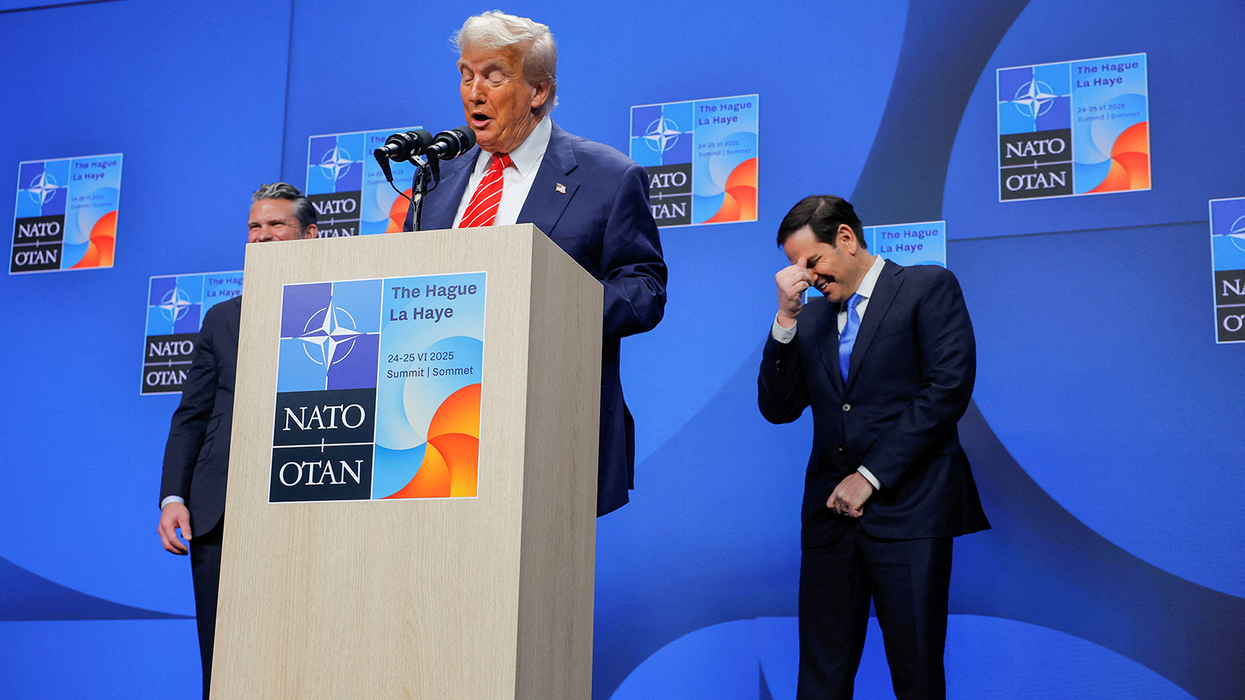
U.S. President Donald Trump speaks at a press conference, as Secretary of Defense Pete Hegseth and Secretary of State Marco Rubio react to a Sky News reporter's question about NATO Secretary General Mark Rutte calling President Trump 'daddy', at the NATO summit in The Hague, Netherlands, June 25, 2025. REUTERS/Brian Snyder
January 20, 2026 
ALTERNET

While facing opposition from European leaders at the World Economic Forum in Davos, President Donald Trump took time out late Tuesday morning to go on a social media spree, including promoting a post that labeled NATO and the United Nations as threats while declaring that the “enemy is within.”

Trump’s controversial Board of Peace is “falling apart,” according to Bloomberg News UK Political Editor Alex Wickham, who reported that “The UK is not joining the board as things stand,” and that its spokesperson said the UK’s commitment to the UN is “unwavering.

French President Emmanuel Macron has also announced that he would not join the Board of Peace, which requires at least a $1 billion donation for a country to have permanent membership — which can be rescinded by Donald Trump, who is the organization’s chairman.

“So at what point are we going to realize the enemy is within,” the post Trump promoted began. “China and Russia are the boogeymen when the real threat is the U.N., NATO and this ‘religion.’ I put ‘religion’ in quotes because it’s not a religion, it’s a cult!”

Former Obama and Biden official Jesse Lee responded, writing: “So is Trump threatening to invade Greenland to counter Russia and China as he has ludicrously claimed, or is this just the beginning of his war against Europe as it seems on its face?”

Trump, or someone with access to his Truth Social account, posted dozens of posts in approximately 90 minutes.

His last post so far, at 11:47 AM ET, read: “No single person, or President, has done more for NATO than President Donald J. Trump. If I didn’t come along, there would be no NATO right now!!! It would have been in the ash heap of History. Sad, but TRUE!!! President DJT”

'Code red': Newsom tells Europe they’ve been played by Trump


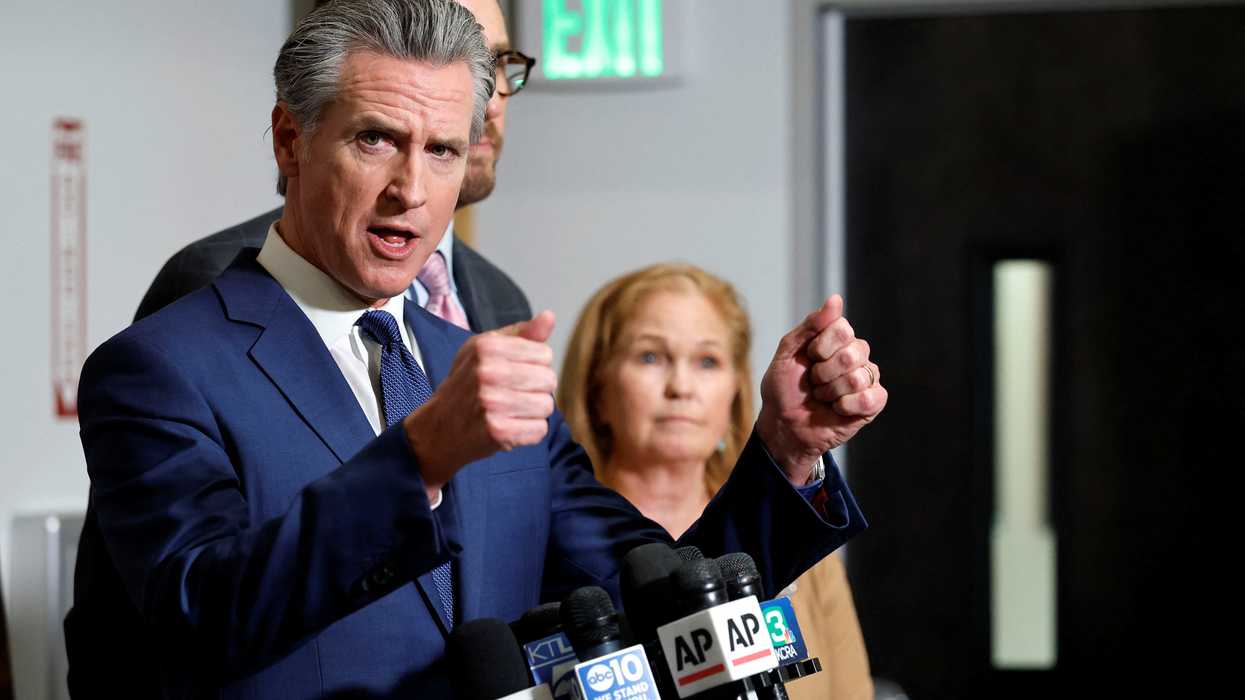
California Governor Gavin Newsom speaks after he and other lawmakers signed the "Election Rigging Response Act" in Sacramento, California, U.S. August 21, 2025. REUTERS/Fred Greaves

January 20, 2026
ALTERNET

California Democratic Governor Gavin Newsom issued what he described as a “code red” warning over President Donald Trump, citing what he characterized as a “wrecking ball” approach to the global order.

At the World Economic Forum in Davos, Governor Newsom told reporters that Europeans have been “played,” and that Trump has been “playing folks for fools.”

Calling the entire situation “embarrassing,” Newsom rejected the idea that what is happening between Trump and world leaders is diplomacy.

“This is diplomacy with Donald Trump? He’s a T-rex,” Newsom said, describing the president as a vicious dinosaur. “You mate with him, or he devours you. One of the other.”

Newsom warned that Europe is still playing by the old set of rules, while arguing that in actuality, “It’s the law of the jungle, it’s the rule of Don. And I hope it’s dawning on the world what we’re up against. I mean, this is serious. This guy is — he’s not mad. He is very intentional. But he’s unmoored. And he’s unhinged.”

Asked what Trump’s goal is, Newsom replied, “The goal is whatever he wants it to be. The goal is the world in his image. He’s a narcissist.”

Newsom then chastised European leaders, asking why they don’t do “what they’re saying in private?”

“Why don’t they just simply do what they know is right? Everybody’s talking behind his back. They laughing, and meanwhile they’re sucking up to him. It’s embarrassing.”

“This is not diplomacy,” the governor charged. “This is stupidity.”


Danish fund exits US Treasuries amid Trump’s Greenland threats


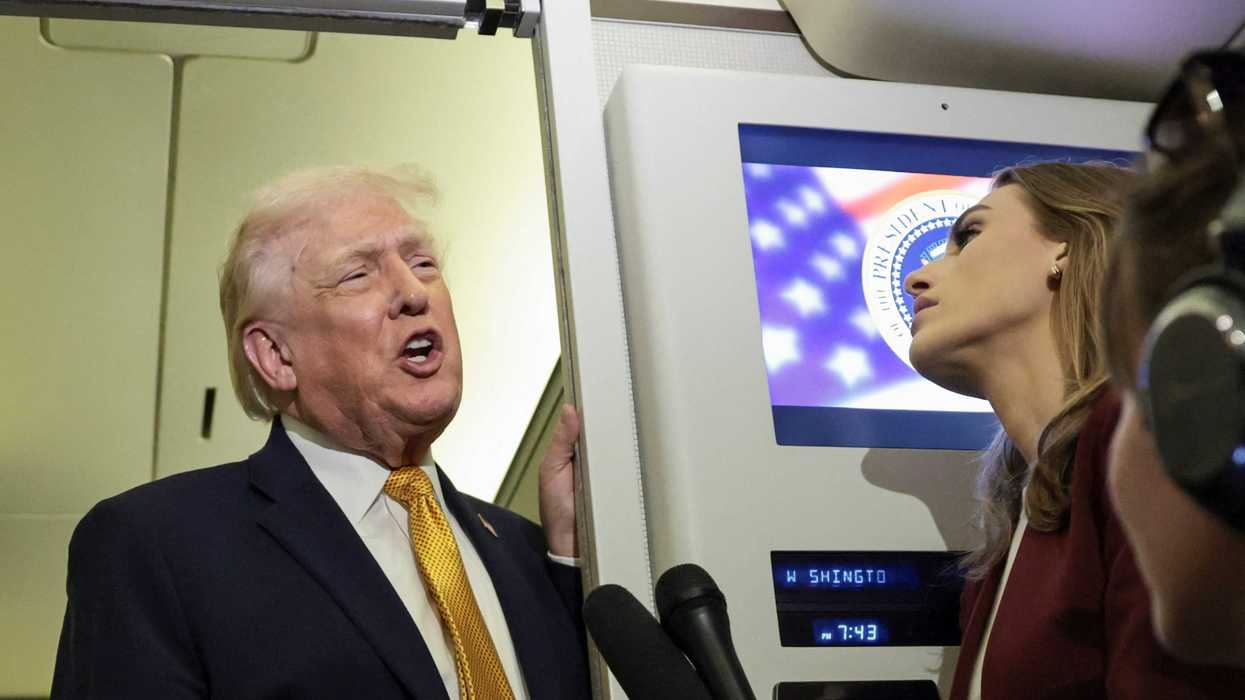
U.S. President Donald Trump speaks to reporters aboard Air Force One en route from Florida to Joint Base Andrews, Maryland, U.S., January 4, 2026. REUTERS/Jonathan Ernst
January 20, 2026 
ALTERNET

As Donald Trump's threats about annexing Greenland continue to escalate, a Danish pension on Tuesday announced its exit from the US, saying that the president's policies have made investments in the country "not sustainable" in the long term.

Bloomberg spoke with AkademerPension about the decision to abandon US Treasuries for a report published Tuesday. The fund, worth around $25 billion USD, manages savings for teachers and academics in Denmark. By the end of 2025, the fund had roughly $100 million invested in US Treasuries, which it will withdraw by the end of the month in favor of similar alternatives.

“The US is basically not a good credit and long-term the US government finances are not sustainable,” Anders Schelde, chief investment officer at AkademikerPension, told the outlet.

Schelde claimed that "risk and liquidity management" were the only factors motivating the fund to remain invested in US assets, but given the mounting issues in the country, "we decided that we can find alternative to that." He added that Trump's continued rhetoric surrounding Greenland did factor into the decision to a degree, but the concerns about "concerns about fiscal discipline and a weaker dollar" under Trump's leadership were the primary motivator.

Greenland is an autonomous territory of Denmark situated mostly in the Arctic Circle. Trump has insisted since his first term that the US must gain control of Greenland, which Danish leaders have consistently dismissed, calling the idea a threat to their nation's sovereignty.

Trump's reasoning for wanting control of the island has been vague and inconsistent. At one point, access to Greenland's supplies of key minerals and oil was cited, though critics have pointed out that the cost and effort required to extract these would be more trouble than they are worth. More recently, Trump has claimed that the US "must" control Greenland for "national security" reasons, though he has not been specific about why, and critics have also pointed out that the US already operates military bases on the island and has access to the waters around it for defense purposes.

Susan B. Glasser is a New Yorker staff writer who has conducted extensive interviews with Trump for one of her books, recently claimed that Trump's obsession with controlling Greenland might stem from how large the territory appears on maps. Due to a phenomenon linked to the Mercator projection, land masses far from the Equator, like Greenland, can tend to appear larger than they actually are on certain maps.

“I said, ‘Why don’t we have that?’" Trump explained, according to Glasser. "You take a look at a map. So I’m in real estate. I look at a corner, I say, ‘I gotta get that store for the building that I’m building,’ et cetera. You know, it’s not that different. I love maps. And I always said, ‘Look at the size of this, it’s massive, and that should be part of the United States.’ It’s not different from a real-estate deal. It’s just a little bit larger, to put it mildly.”

Stunning chart shows Trump’s 'saber-rattling' already 'cost US one Greenland': economist


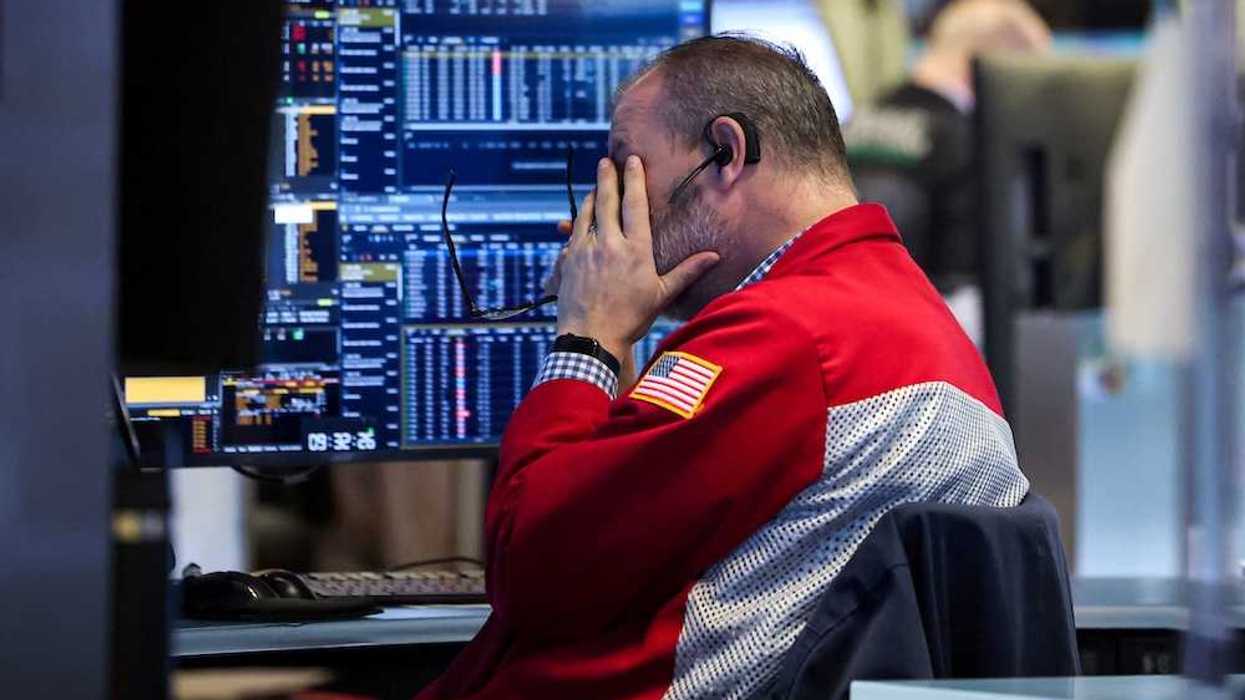
A trader works on the floor at the New York Stock Exchange (NYSE) in New York City, U.S., January 13, 2026. REUTERS/Brendan McDermid

Sarah K. Burris
January 20, 2026
ALTERNET

President Donald Trump's push to take over Greenland has cost the United States $750 billion so far.

In a social media post, economics and public policy professor at the University of Michigan Justin Wolfers captured the one chart that shows how disastrous Trump's "saber-rattling" has been for the United States, beyond its impact on the country's allies.

Wolfers showed a screen capture of the S&P, which opened down -1.3 percent.

"That's $750 billion of wealth destroyed -- roughly equal to estimates of the value of Greenland," said Wolfers. "And so in dollar terms his shenanigans have already cost the US one Greenland, and we've got nothing to show for it."

U.S. markets were closed on Monday due to the holiday celebrating Dr. Marin Luther King Jr.

The U.S. wasn't the only one to suffer. If the dollar continues to weaken against other global currencies, inflation will increase, one investment firm explained.

The Guardian reported, "In Europe, France’s Cac 40 share index dropped 1.1 percent, Germany’s Dax fell 1.5 percent and Italy’s FTSE MIB was off 1.5 percent."

Perhaps worse, the American dollar has fallen by 1 percent.

Things got worse overnight as Trump threatened to impose a 200 percent tariff on French wine and champagne after France’s Emmanuel Macron indicated he wasn't willing to join Trump's so-called "board of peace" on Gaza.

In the U.S. the Dow Jones Industrial Average crashed 750 points after it opened. The biggest losers were the AI company Nvidia and Tesla.

The Nasdaq composite was down 1.8 percent at the open.

Trump has vowed there's "no going back" after his demands to Denmark for Greenland.


Trump admin orders federal employees to investigate USDA researchers


Lisa SongSharon Lerner

Pro Publica
January 19, 2026 
ALTERNET

The Trump administration is directing employees at the U.S. Department of Agriculture to investigate foreign scientists who collaborate with the agency on research papers for evidence of “subversive or criminal activity.”

The new directive, part of a broader effort to increase scrutiny of research done with foreign partners, asks workers in the agency’s research arm to use Google to check the backgrounds of all foreign nationals collaborating with its scientists. The names of flagged scientists are being sent to national security experts at the agency, according to records reviewed by ProPublica

At a meeting last month, USDA supervisors pushed back against the instructions, with one calling it “dystopic” and others expressing shock and confusion, according to an audio recording reviewed by ProPublica.

The USDA frequently collaborates with scientists based at universities in the U.S. and abroad. Some agency workers told ProPublica they were uncomfortable with the new requirement because they felt it could put those scientists in the crosshairs of the administration. Students and postdocs are particularly vulnerable as many are in the U.S. on temporary visas and green cards, the employees said.

Jennifer Jones, director for the Center for Science and Democracy at the Union of Concerned Scientists, called the directive a “throwback to McCarthyism” that could encourage scientists to avoid working with the “best and brightest” researchers from around the world.

“Asking scientists to spy on and report on their fellow co-authors” is a “classic hallmark of authoritarianism,” Jones said. The Union of Concerned Scientists is an organization that advocates for scientific integrity.

Jones, who hadn’t heard of the instructions until contacted by ProPublica, said she had never witnessed policies so extreme during prior administrations or in her former career as an academic scientist.

The new policy applies to pending scientific publications co-authored by employees in the USDA’s Agricultural Research Service, which conducts research on crop yields, invasive species, plant genetics and other agricultural issues.

The USDA instructed employees to stop agency researchers from collaborating on or publishing papers with scientists from “countries of concern,” including China, Cuba, Iran, North Korea, Russia and Venezuela.

But the agency is also vetting scientists from nations not considered “countries of concern” before deciding whether USDA researchers can publish papers with them. Employees are including the names of foreign co-authors from nations such as Canada and Germany on lists shared with the department’s Office of Homeland Security, according to records reviewed by ProPublica. That office leads the USDA’s security initiatives and includes a division that works with federal intelligence agencies. The records don’t say what the office plans to do with the lists of names.

Asked about the changes, the USDA sent a statement noting that in his first term, President Donald Trump signed a memorandum designed to strengthen protections of U.S.-funded research across the federal government against foreign government interference. “USDA under the Biden Administration spent four years failing to implement this directive,” the statement said. The agency said Agriculture Secretary Brooke Rollins last year rolled out “long-needed changes within USDA’s research enterprise, including a prohibition on authoring a publication with a foreign national from a country of concern.”

International research has been essential to the Agricultural Research Service’s work, according to a page of the USDA website last updated in 2024: “From learning how to mitigate diseases before they reach the United States, to testing models and crops in diverse growing conditions, to accessing resources not available in the United States, cooperation with international partners provides solutions to current and future agricultural challenges.”

Still, the U.S. government has long been worried about agricultural researchers acting as spies, sometimes with good reason. In 2016, the Chinese scientist Mo Hailong was sentenced to three years in prison for conspiring to steal patented corn seeds. And in 2022, Xiang Haitao, admitted to stealing a trade secret from Monsanto.

National security questions have also been raised about recent increases in foreign ownership of agricultural land. In 2022, Congress allocated money for a center to educate U.S. researchers about how to safeguard their data in international collaborations.

Since Trump took office last year, foreign researchers have faced increased obstacles. In March, a French researcher traveling to a conference was denied entry to the U.S. after a search of his phone at the airport turned up messages critical of Trump. The National Institutes of Health blocked researchers from China, Russia and other “countries of concern” from accessing various biomedical databases last spring. And in August, the Department of Homeland Security proposed shortening the length of time foreign students could remain in the country.

But the latest USDA instructions represent a significant escalation, casting suspicion on all researchers from outside the U.S. and asking agency staff to vet the foreign nationals they collaborate with. It’s unclear if employees at other federal agencies have been given similar directions.

The new USDA policy was announced internally in November and followed a July memo from Rollins that highlighted the national security risks of working with scientists who are not U.S. citizens.

“Foreign competitors benefit from USDA-funded projects, receiving loans that support overseas businesses, and grants that enable foreign competitors to undermine U.S. economic and strategic interests,” Rollins wrote in the memo. “Preventing this is the responsibility of every USDA employee.” The memo called for the department to “place America First” by taking a number of steps, including scrutinizing and making lists of the agency’s arrangements to work with foreign researchers and prohibiting USDA employees from participating in foreign programs to recruit scientists, “malign or otherwise.”

Rollins, a lawyer who studied agricultural development, co-founded the pro-Trump America First Policy Institute before being tapped to head the agency.

There have long been restrictions on collaborating with researchers from certain countries, such as Iran and China. But these new instructions create blanket bans on working with scientists from “countries of concern.”

In a late November email to staff members of the Agricultural Research Service at one area office, a research leader instructed managers to immediately stop all research with scientists who come from — or collaborate with institutions in — “countries of concern.”

The email also instructed employees to reject papers with foreign authors if they deal with “sensitive subjects” such as “diversity” or “climate change.” National security concerns were listed as another cause for rejection, with USDA research service employees instructed to ask if a foreigner could use the research against American farmers.

In the audio recording of the December meeting, some employees expressed alarm about the instructions to investigate their fellow scientists. The “part of figuring out if they are foreign … by Googling is very dystopic,” said one person at the meeting, which involved leadership from the Agricultural Research Service.

Faced with questions about how to ascertain the citizenship of a co-author, another person at the meeting said researchers should do their best with a Google search, then put the name on the list “and let Homeland Security do their behind the scenes search.”

Rollins’ July memo specifies that, within 60 days of receiving a list of “current arrangements” that involve foreign people or entities, the USDA’s Office of Homeland Security along with its offices of Chief Scientist and General Counsel should decide which arrangements to terminate. The USDA laid off 70 employees from “countries of concern” last summer as a result of the policy change laid out in the memo, NPR reported.

The USDA and Department of Homeland Security declined to answer questions about what happens to the foreign researchers flagged by the staff beyond potentially having their research papers rejected.

The documents also suggested new guidance would be issued on Jan. 1, but the USDA employees ProPublica interviewed said that the vetting work was continuing and that they had not received any written updates. The staff spoke on the condition of anonymity because they weren’t authorized to talk publicly.

Scientists are often evaluated based on their output of new scientific research. Delaying or denying publication of pending papers could derail a researcher’s career. Over the past 40 years, the number of international collaborations among scientists has increased across the board, according to Caroline Wagner, an emeritus professor of public policy at the Ohio State University. “The more elite the researcher, the more likely they’re working at the international level,” said Wagner, who has spent more than 25 years researching international collaboration in science and technology.

The changes in how the USDA is approaching collaboration with foreign researchers, she said, “will certainly reduce the novelty, the innovative nature of science and decrease these flows of knowledge that have been extremely productive for science over the last years.”
Trump proves again that America is being run by a halfwit


January 20, 2026
ALTERNET

Donald Trump is taking his demented dreams to a new level in his quest to take over Greenland. The man who whined over not getting a Nobel Prize and then followed Hitler propagandist Joseph Goebbels lead in accepting a prize awarded to someone else, has now decided he wants Greenland.

Trump is now proposing to whack us with a $75 billion tax increase to put pressure on Denmark and the rest of the EU to give him Greenland. If you missed Trump’s plans to hit us with this tax hike it’s because of the consistently awful reporting we get from major media outlets.

They reported on the tariffs Trump is imposing on the European countries most visible in resisting U.S. pressure to take Greenland. The problem with the reporting is that it implies the European countries pay the tariffs. They don’t, we do.

This is not a debatable point; the data are very clear. Well over 90 percent of the cost of a Trump tariff is borne by consumers or importers in the United States, not by the exporting countries. When Trump starts yelling “tariff, tariff, tariff,” he is yelling “tax, tax, tax,” and we’re the ones paying it. And $75 billion is not trivial. It’s one percent of the budget, more than twice the cost of the enhanced premiums for Obamacare policies that Trump says we can’t afford.

Let’s be clear, Trump wants Greenland because it is big. And he almost certainly thinks Greenland is far bigger than it actually is because he doesn’t understand that the Mercator projection maps, which are standard ones we all use, hugely exaggerate the size of areas near the poles.

No one likes the idea that the United States is being run by a moron.

We all know Trump says that he needs Greenland for national security. This argument is not worth a second’s consideration. Greenland and Denmark are both members of NATO. If he felt there was some need for putting additional military assets in or around Denmark, all he has to do is ask.

In fact, there were many more United States military installations in Denmark during the Cold War. We removed them after the collapse of the Soviet Union.

Trump’s team themselves made it clear that Greenland is not a national security issue. The country is not even mentioned once in Trump’s National Security Strategy plan that was crafted just two months ago.

Trump effectively admitted this in an interview with the New York Times earlier this month. He acknowledged that he could address any security issues through negotiation with Greenland, Denmark, and the rest of NATO, but said Trump said that he would feel better “psychologically” taking over Greenland.

He compared it to the difference between owning and renting. Insofar as Trump feels a psychological need to own territory that is something that is best addressed through therapy, not military action against allies.

The other argument is that Greenland is rich in rare earth minerals, which Trump’s rich buddies are anxious to exploit. This is popular among people who want to highlight both Trump’s venality and also find rationality in what seems to be an otherwise crazy quest.

While no one should ever underestimate Trump’s corruption, the story doesn’t make any sense. First, it’s not clear that there is big money to be made on Greenland’s rare earth minerals. It is a remote area with little infrastructure. It will be extremely expensive to reach these minerals and would almost certainly take many years. Given developments in technology, it’s not even clear these minerals will still be of much value at the point anyone is able to bring them to the market.

But what’s even more damning for this line of argument is that they could start mining in Greenland tomorrow, if they think it would be profitable. Greenland is very open to foreign investment. If they think there is big money to be made by mining Greenland’s minerals, they would be doing it already.

Trump’s rich friends are undoubtedly pushing for him to take Greenland, he’ll probably give them better deals than Greenland would. Most importantly he will likely get rid of environmental regulations that Greenland’s government would demand.

But the cost of environmental regulations is not likely to be the sort of thing that would warrant a military invasion. Also, it probably is not a good sell to the people of Greenland that Trump wants to take away their ability to protect their environment.

At the end of the day, we really can’t escape the basic story, Trump wants Greenland because it is big. No one likes the idea that the United States is being run by a moron. And it’s painful for those of us left of center to acknowledge that this is who we losing to, not some evil genius. However, that happens to be the reality, and we need to recognize it.

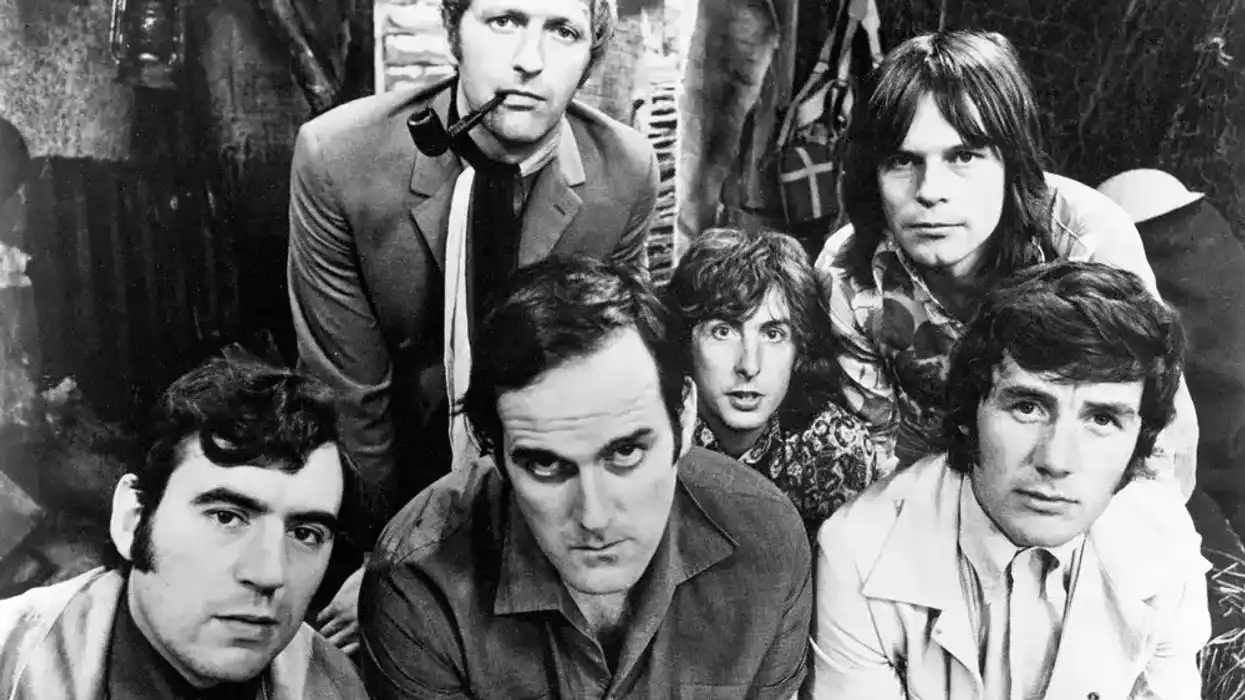
Trump's latest straight out of a Monty Python skit


(BBC)

January 20, 2026

It could be a Monty Python skit from 40 years ago: A demented U.S. president demands that Norway award him the Nobel Peace Prize (which he initially spells “Noble,” and which isn’t Norway’s to give anyway), after converting the name of the Department of Defense to the Department of War, sending troops into American cities, threatening Canada, and abducting the president of a Latin American country by force.

When he doesn’t get the peace prize, he says he’s no longer interested in peace and decides to take over Greenland. When Greenland refuses him, and Denmark and the rest of Europe make a fuss, he goes into a rage, raises tariffs on Europe (which cost Americans dearly), and threatens war on NATO. The president of Russia is delighted.

Can’t you see it? Eric Idle plays the American president — full of himself and utterly off his rocker. John Cleese is the vicious and hapless Latin American president who’s abducted. Terry Gilliam is the baffled, incredulous head of Greenland. Terry Jones plays the righteous leader of Denmark, Graham Chapman a perplexed NATO dignitary, and Michael Palin the wacky but triumphant president of Russia.

The Monty Python team was so funny because they came up with completely absurd situations, handled them with deadpan seriousness, and stretched them to the limits.

But this particular absurd situation isn’t funny. It’s actually happening. And Trump is truly, tragically, frighteningly out of his mind.

Robert Reich is a professor of public policy at Berkeley and former secretary of labor. His writings can be found at https://robertreich.substack.com/

Trump Has Dragged the Nation to a Point So Low It’s Hard to Fathom


How did we get to this point? The answer is clear.


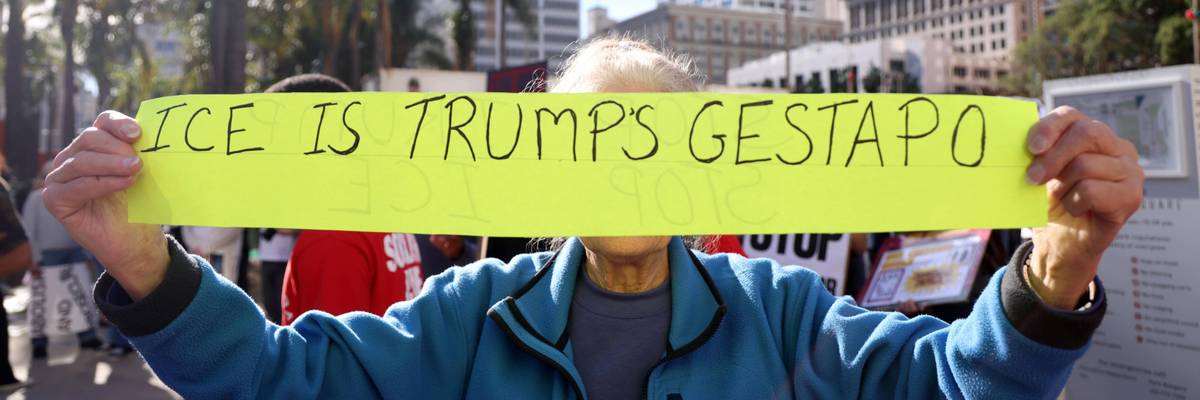
Hundreds participate in a protest rally in Pershing Square on Saturday against the Trump administration’s incursion into Venezuela and recent ICE shootings in Minneapolis and Portland in downtown Los Angeles on January 10, 2026.
(Photo: Genaro Molina/Los Angeles Times via Getty Images)

James Zogby
Jan 19, 2026
Common Dreams


How did we get to the point where the president can say and do things that put our culture and democracy at risk, and it’s just shrugged off as if it were normal?

In social media posts and unscripted press comments he uses language that would have been unimaginable coming from a president in any other period of American history. In just the past few months, Mr. Trump: was photographed making an obscene gesture and mouthing a vulgarity at a demonstrator; demeaned a popular TV personality who had just been murdered; called a Somali American member of Congress garbage, adding that all Somalis were garbage; called the Governor of Minnesota “retarded,” an especially hurtful slur as that governor has a son with a disability; and insulted women reporters who asked him challenging questions, calling them “ugly,” “obnoxious,” and “stupid.”

Parents wouldn’t tolerate this from their children and yet here we have a president of the United States demeaning his office by speaking in such a deplorable manner.

It’s not just the president’s speech that has been so “unpresidential.” Mr. Trump’s need to gratify his ego has led him to make exaggerated false claims about his grievances and his successes. He claims that he has been attacked by media, Congress, and law enforcement agencies like no other president in history. At the same time, he boasts that he has improved the economy and made our cities safer than they have ever been. None of this is true.

In an effort to impose his will and worldview, he has surrounded himself with White House staff and Cabinet that not only heap praise upon him and carry out his every whim, but also support his efforts to silence and intimidate those whom he has denounced as critics.

Herein lies a fundamental difference between President Trump’s first and second terms. In the former, some senior members of his staff and Cabinet served as a check on his behavior. Many were fired and replaced. He began his second term with a detailed plan to transform government, and with a more compliant senior leadership (e.g., the Department of Justice and FBI are willing to order investigations of his critics).

This combination of unchecked power, the president’s need to have his every ambition fulfilled, and his disrespect for law and precedent has led to actions that are illegal. In the first few months, his administration put in place a program to remove over 300,000 government employees. He shuttered USAID, the Voice of America, and the US Institute for Peace—all illegal actions as these were congressionally created and funded entities. He later reopened the Institute for Peace as the Trump Institute for Peace; renamed the nation’s premier center for the arts The Donald J Trump, The John F Kennedy Center for the Performing Arts without any authorization; and had the White House’s East Wing torn down to be replaced by another vanity project—a massive ballroom—which no doubt will also bear his name in the near future.


58% of Americans—Across Political Spectrum—Say 2025 Was a ‘Failure’ Under Trump

Conceivably the most dangerous of President Trump’s moves have been the dramatic expansion of ICE—the immigration enforcement entity—and its unleashing in US cities, posing a direct threat to American democracy.

In recent weeks Mr. Trump sent a massive contingent of ICE agents to Minneapolis, Minnesota ostensibly to root out illegal immigrants, while attempting to embarrass that state’s Democratic governor and to target one of Mr. Trump’s new favorites, Minnesota’s large Somali community. As expected, ICE’s arrests have been indiscriminate, detaining many legal residents and citizens, and their behavior unacceptably brutal. As seen in other cities, ICE behaviors have provoked widespread protests. In one horrifying incident, a member of an observer team monitoring ICE behavior was shot and killed through an open car window by an ICE agent.

The shooting was filmed from multiple angles, establishing that the victim posed no threat to the ICE agent. That didn’t stop the president and other administration officials from propagating a lie about what had transpired. They called the murdered woman a domestic terrorist, saying she’d threatened the life of the ICE shooter. Unwrapping this murder is instructive on many levels.

First, with the enormous budget appropriated for ICE expansion, that entity now has over 10,000 armed agents. The rapidity of its growth has led to inadequate vetting and training. More dangerous still is how ICE has recruited agents: at gun shows and right-wing events, and targeted advertisements on right-wing radio shows. The White House appears to be forming an ideologically cohesive national police force that is anti-immigrant and violence-prone and has been told by the administration that they can act with impunity.

This incident also points out the extent to which the White House is capable of fabricating a storyline that will be echoed by other leaders and their supportive media outlets. The impact is clear. A recent poll showed that, by a wide margin, most Americans believe that the woman’s killing was wrong, but more than three-quarters of Republicans believe the president’s narrative that the murdered woman was a threat to the ICE agent and her killing was justified.

So, how did we get to this point? The answer is clear. A president who says whatever he needs to say to justify his position, officials around him and a supportive media who vociferously agree with him and threaten those who disagree, and a cult-like movement of partisans who will believe what they are told even when the facts speak to a different reality.


Our work is licensed under Creative Commons (CC BY-NC-ND 3.0). Feel free to republish and share widely.


James Zogby

Dr. James J. Zogby is the author of Arab Voices (2010) and the founder and president of the Arab American Institute (AAI), a Washington, D.C.-based organization which serves as the political and policy research arm of the Arab American community. Since 1985, Dr. Zogby and AAI have led Arab American efforts to secure political empowerment in the U.S. Through voter registration, education and mobilization, AAI has moved Arab Americans into the political mainstream. Dr. Zogby has also been personally active in U.S. politics for many years; in 1984 and 1988 he served as Deputy Campaign manager and Senior Advisor to the Jesse Jackson Presidential campaign. In 1988, he led the first ever debate on Palestinian statehood at that year's Democratic convention in Atlanta, GA. In 2000, 2008, and 2016 he served as an advisor to the Gore, Obama, and Sanders presidential campaigns.
Full Bio >
Christian nationalists could resort to 'violence' if GOP loses midterms: Southern Baptist


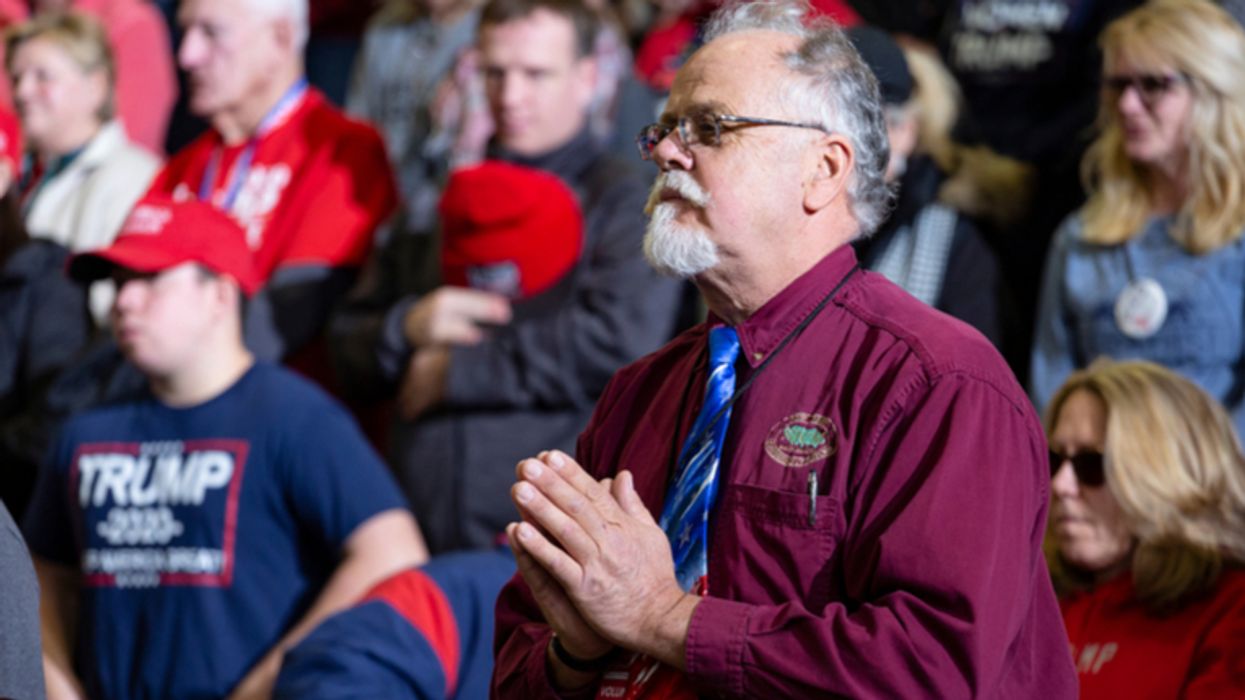
Wildwood, New Jersey - January 28, 2020: Man holds hands together in prayer during opening ceremonies at President Donald Trump's "Keep America Great" rally held at the Wildwoods Convention Center. Shutterstock/ Benjamin Clapp

January 19, 2026 
ALTERNET

One religious scholar is warning that the 2026 midterm elections could prompt a violent response from far-right evangelical Christians.

During a Monday interview with Zeteo host John Harwood, Public Religion Research Institute founder and president Robert P. Jones – who holds an M. Div from the Southwestern Baptist Theological Seminary and a Ph.D. from Emory University — spoke about how President Donald Trump's MAGA movement has captured a vast bulk of Christian evangelicals. Harwood asked Jones whether MAGA Christians were excusing Trump's "brutality and cruel behavior" due to innate racism, or if they were simply people fearing becoming a demographic minority and overwhelmed by the "loss of life they were accustomed to."

"Do you feel sorry for the people who are embracing what the Trump administration is doing because they're scared or what?" Harwood asked.

"Well, I should just say I am those people. These are my people. Like I said, I grew up in the deep, deep South," Jones said. "... This is deep for me, and personal. It's a big mix of emotions ... I feel some anger about it, for sure. But I also feel some compassion, mostly because I feel like what has happened is they have let their own fears take control of their lives, and they let it snuff out the primary vision of Christianity, which is supposed to be about love."

"There's even now, in some white evangelical circles, a straightforward and serious theological attack on the virtue of empathy," he continued. "Like that's where we are, right? They're deconstructing empathy because Elon Musk has cast empathy as the great weakness of the Western world ... I think those people are sincerely lost. They're lost religiously, they're lost politically, and I'm hoping we can call enough of them back to the fold in order to save the country."

Harwood then asked questions from viewers, including one who wanted Jones' perspective on whether the United States was on the brink of civil war given the Trump administration's actions in Minneapolis, Minnesota. The viewer pointed to Minneapolis Mayor Jacob Frey and residents of Minneapolis asking local police to confront U.S. Immigration and Customs Enforcement (ICE) agents, calling it "extremely dangerous."

Jones responded by pointing to parallels from the 19th century, in which Christian denominations frequently split into North and South factions due to fundamental disagreements over the issue of chattel slavery. He added that the Episcopal Church felt compelled to dismantle its refugee resettlement program entirely due to its disagreement with the Trump administration prioritizing white Afrikaners from South Africa over Brown and Black refugees from other countries.

"So we're already seeing some moves, and even breaks within the Christian world," Jones said. "I think we may be heading for some very difficult days."

"You mean actual violence or do you mean very, very intense political disagreement? Harwood asked.

"I'm deeply, deeply worried about the midterm elections being a flashpoint for violence in this country," Jones responded.

Watch the segment below:


Christian nationalists believe Trump on a 'mission from God' to occupy cities: author

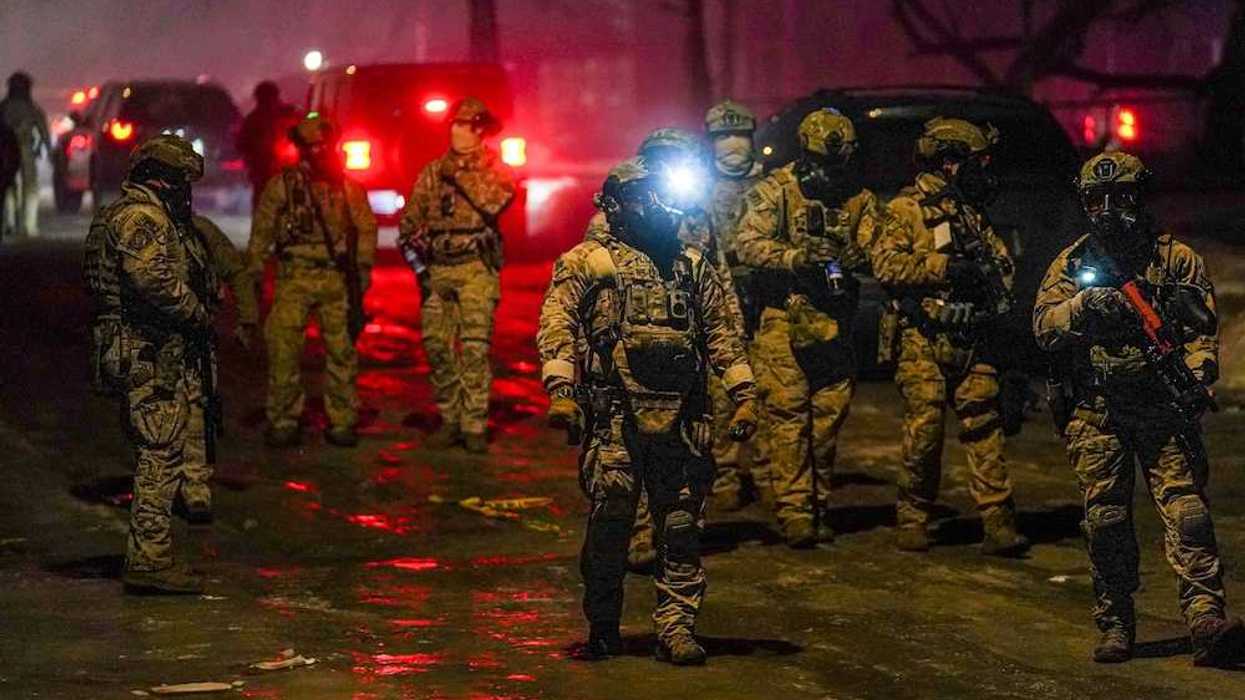
Members of law enforcement gather, as tensions rise after federal law enforcement agents were involved in a shooting incident in north Minneapolis, Minnesota, U.S., January 15, 2026. REUTERS/Ryan Murphy

January 15, 2026
ALTERNET

President Donald Trump is threatening to invoke the Insurrection Act in response to escalating tensions between protesters and U.S. Immigration and Customs Enforcement (ICE) agents in Minneapolis, Minnesota. The threat comes a little over a week after the fatal shooting of an unarmed 37-year-old U.S. citizen Renee Nicole Good by ICE agent Jonathan Ross.

Meanwhile, in Philadelphia, progressive District Attorney Larry Krasner and Sheriff Rochelle Bilal are threatening criminal charges against ICE agents if they violate the city's laws.

Minneapolis

In a Thursday conversation for The New Republic's podcast, "The Daily Blast," host Greg Sargent (a former Washington Post columnist) and author Sarah Posner examined the connection between ICE raids and far-right evangelical Christian nationalism.

House Speaker Mike Johnson (R-La.) is an aggressive defender of President Donald Trump's mass deportations and ICE raids, and according to Sargent and Posner, extreme Christian fundamentalism is a key part of that mindset.

Posner told Sargent: "For Johnson, he represents only Republicans. In his mind, he doesn’t represent all American people. He thinks that he is on a mission from God to carry out a biblical or a Christian kind of government. And in his mind, that kind of government does not represent the ideals of, you know, helping your neighbor, welcoming the stranger — things that many people would think are biblical values. But for him, the biblical values are a strong, powerful, militarized government that lays down the law and protects America from what he sees as America's enemies: The left."

Johnson and other white Christian nationalists, according to Sargent and Posner, view ICE violence in Minneapolis in decidedly religious terms.

Posner continued: "They would like Americans to believe that the violence that we're seeing on the streets of Minneapolis and elsewhere is caused by protesters, is caused by neighbors with whistles — not caused by the ICE agents themselves or the Customs and Border Protection agents. And so, to him, he would like America to believe that, yes, there are riots in the street. He used that word: riots. And to him, by definition, those are not caused by ICE, because ICE is carrying out a mission from God to defend America from an invasion of illegal immigrants — from the left who would harbor those illegal immigrants. That's the kind of narrative that he's trying to draw here."

She added, "So he would never even conceive of reining in ICE, of putting restrictions on what they can do with their weapons or in terms of detaining people. To him, they are carrying out a government and a God-given mission to protect America. "

Listen to the full New Republic podcast at this link or read the transcript here.


U.S. Treasury chief draws ridicule for wanting to protect Americans with '5, 10, 12 homes'


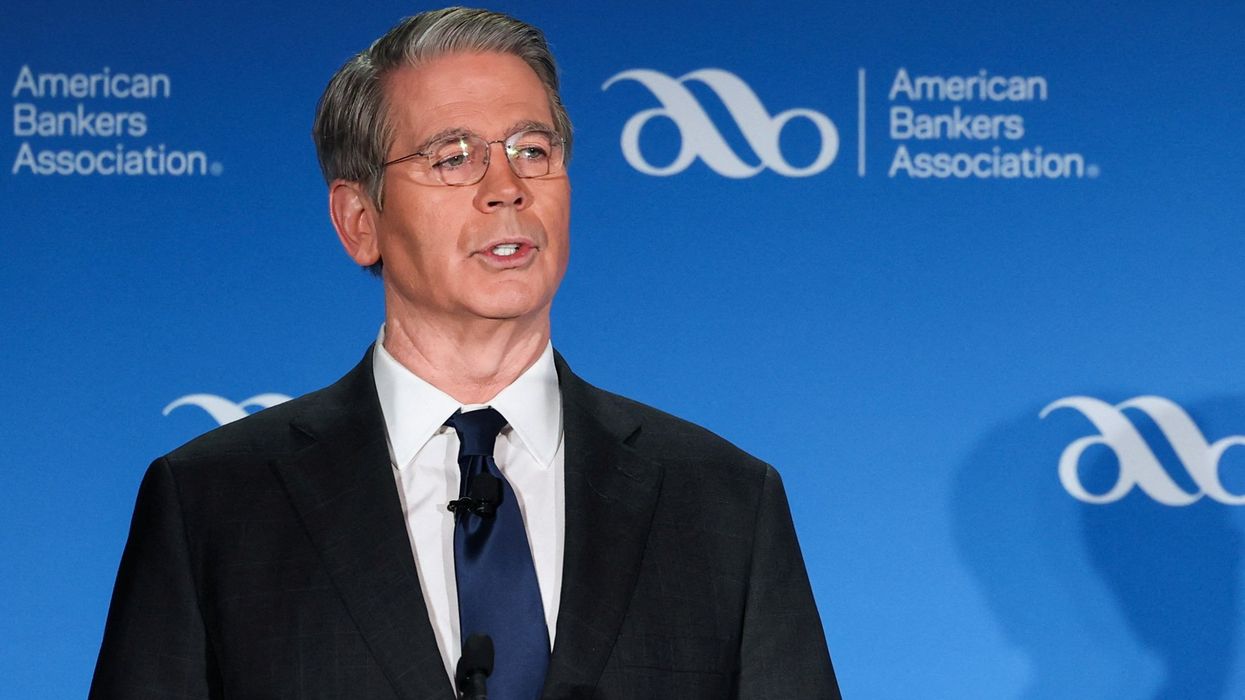
U.S. Treasury Secretary Scott Bessent delivers remarks to the American Bankers Association summit in Washington, D.C., U.S., April 9, 2025
. REUTERS/Kevin Mohatt

January 20, 2026
ALTERNET

Secretary of the Treasury Scott Bessent was met with mockery after explaining he wants to protect “mom and pop” owners who have up to a dozen homes they’ve bought as retirement investments.

Bessent and President Donald Trump have declared they want to ban large institutional investors from purchasing single-family homes as housing becomes more scarce and less affordable.

“We are going to give guidance at some point to see what is a mom and pop, that someone — maybe your parents — for their retirement, [bought] about 5, 10, 12 homes,” Bessent told Fox Business’ Maria Bartiromo at the World Economic Forum in Davos.

“So we don’t want to push the mom and pops out,” he continued. “We just want to push everyone else out.”

Bessent, a former hedge fund manager, has an estimated net worth of $521 million, according to The Street.

Critics were quick to ridicule Bessent as out of touch.

“Good news for the forgotten man,” declared The Bulwark’s Tim Miller. “The mom and pop real estate investor who has purchased 12 homes can breathe easy, the Treasury Secretary is looking out for you.”

“These people are completely out of touch with how life is for you,” observed The Lincoln Project.

Governor Gavin Newsom’s Press Office commented, “Scott, people are trying to buy 1 house — to live in. Could the Trump Admin be any more out of touch?”


Nobel laureate economist torches Trump’s 'enablers' for making 'catastrophe' worse


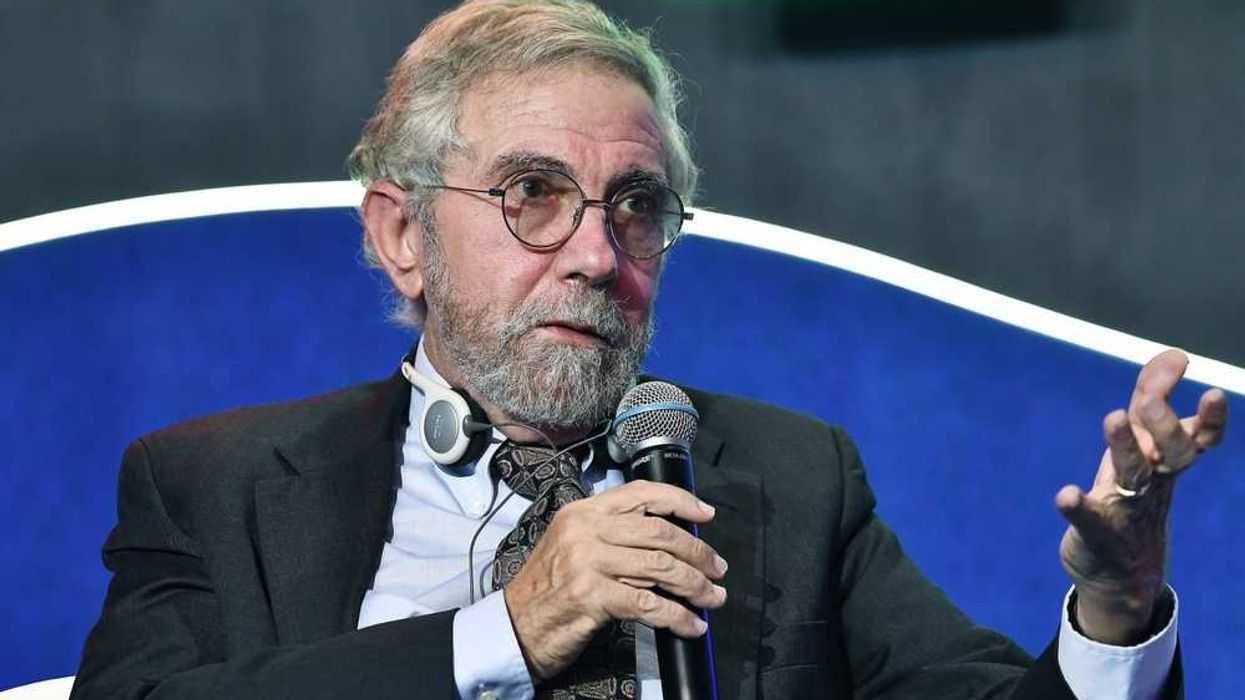
Economist Paul Krugman at FIDES 2023 in Rio de Janeiro, Brazi
l on September 25, 2023 (A.PAES/Shutterstock.com)

January 20, 2026
ALTERNET

During Donald Trump's first presidency — which started on January 20, 2017 and ended when Democrat Joe Biden was sworn in as president four years later — he clashed with a long list of traditional non-MAGA conservatives he appointed, including a secretary of state (Rex Tillerson), a White House chief of staff (retired U.S. Marine Corps Gen. John F. Kelly), a national security adviser (John Bolton), and two U.S. attorneys general (Bill Barr and Jeff Sessions). But since returning to the White House a year ago, Trump has made a point of surrounding himself with MAGA loyalists who, unlike Tillerson or Bolton, won't push back against his policies.

In a scathing column posted on his Substack page on January 20, 2026 — the one-year anniversary of his second presidency — liberal economist Paul Krugman laments that Trump is now "surrounded by…. sycophants who tell him whatever he wants to hear and indulge his every whim, no matter how destructive." And those "sycophants," according to Krugman, are encouraging a variety of terrible ideas — from encouraging a military invasion of Greenland to condoning the fatal shooting of unarmed motorist Renee Nicole Good in Minneapolis.

Trump is angrily railing against European leaders who oppose his push to make Greenland part of the United States. And a rambling letter to Norwegian Prime Minister Jonas Gahr Store, Krugman argues, shows that Trump "is suffering a real detachment from reality."

"What is incontrovertible is that he's deeply unwell and rapidly getting sicker," Krugman warns. "In fact, Trump is so deeply unwell that it's time to stop blaming him for all the terrible things he's doing. He is what he is. Responsibility for the catastrophe overtaking America now rests with his enablers — people who have to know that he's a sick man but continue to support his depredations. Some of these enablers are monsters themselves. For example, Stephen Miller, Trump's immigration czar and the architect of his violent ethnic cleansing policies, is clearly a fanatic who is using Trump to achieve his own fascist goals."

The former New York Times columnist continues, "However, many of Trump's enablers aren't fanatics, just amoral opportunists. Scott Bessent, the treasury secretary, clearly understands how destructive Trump's actions are, evidenced by the fact that he has at times tried to tone them down. But for some inexplicable reason, Bessent has decided to sell his soul to Trump."

Others in the Trump Administration, Krugman laments, "are such utter narcissists that they're willing to destroy this country in return for the limelight and perks."

"In that camp, we can find (Defense Secretary) Pete Hegseth with his Pentagon makeup studio, who is purging the finest officers in the military; (Homeland Security Secretary) Kristi Noem with her Barbie-in-a-10-gallon-hat act, who positively gushes while calling a murdered mother a terrorist; and (FBI Director) Kash Patel, who thinks it's fine to fly on an FBI jet to watch his girlfriend sing while overseeing the debasement and corruption of the FBI," Krugman argues. "And what can we say about the cowardly Republicans in Congress, who are still sustaining Trump even though many of them — perhaps most of them — are privately appalled by his behavior? It would take just eight of these people — four Republican senators and four Republican House members — to switch sides and caucus with the Democrats to end GOP control of Congress and eliminate much of Trump's power."

Krugman adds, "But taking such a step would mean risking Trump's wrath by standing up and acting like patriots, rather than knuckling down and averting their eyes as Trump descends into madness. How did a great, sophisticated nation, one of the world's longest-standing republics, end up so fragile that it can be undone by one man's dementia?"

Paul Krugman's full Substack column is available at this link.


Powell Gives Extraordinary Show of Support to Fed Governor Targeted by Trump

The president is trying to fire Fed Gov. Lisa Cook for alleged mortgage fraud. Critics say he’s targeting another one of his political foes.


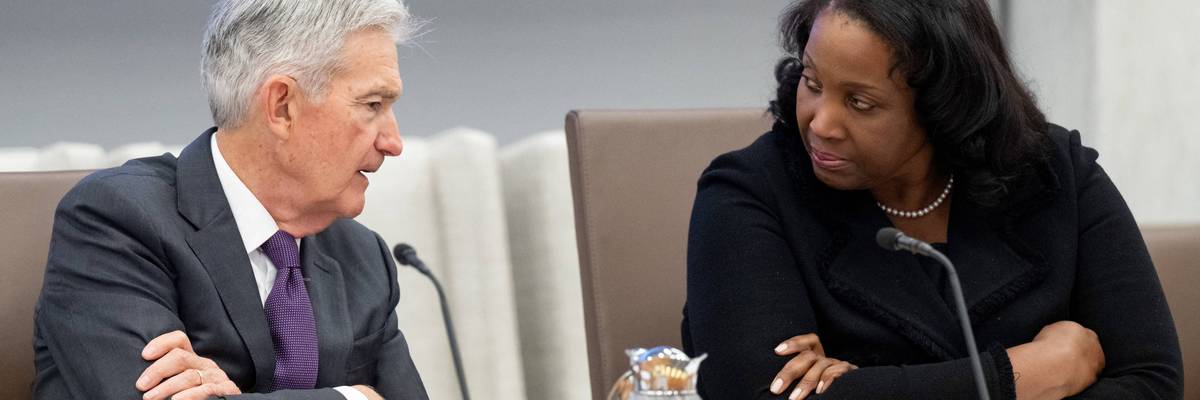
US Federal Reserve Chair Jerome Powell speaks with Fed Gov. Lisa Cook at the Federal Reserve Board building in Washington, DC, on June 25, 2025.
(Photo by Saul Loeb/AFP via Getty Images)

Brett Wilkins
Jan 19, 2026
COMMON DREAMS

Federal Reserve Chair Jerome Powell reportedly plans to attend Wednesday’s US Supreme Court oral arguments in the case involving President Donald Trump’s attempt to fire Fed Gov. Lisa Cook.

A “person familiar with the matter” told the Associated Press on condition of anonymity that Powell would attend the high court session in the face of Trump’s unprecedented effort to oust one of the seven members of the Fed’s governing board.

Last August, Trump announced his termination of Cook—an appointee of former President Joe Biden—for alleged fraud, accusing her of signing two primary residence mortgages within weeks of each other. An investigation published last month by ProPublica revealed that Trump did the same thing that he’s accusing Cook of doing.

Cook denies any wrongdoing, has not been charged with any crime, and has filed a lawsuit challenging Trump’s attempt to fire her. In October, the Supreme Court declined to immediately remove Cook and agreed to hear oral arguments in the case.

In what many critics allege is an attempt by Trump to strong-arm the Fed into further interest rate cuts, the US Department of Justice (DOJ) earlier this month served the central bank with grand jury subpoenas related to Powell’s congressional testimony on renovations to Fed headquarters in Washington, DC.

Powell—who was nominated by Trump in 2017 and whose four-year term as Fed chair ends May 15—responded by alleging that “the threat of criminal charges is a consequence of the Federal Reserve setting interest rates based on our best assessment of what will serve the public, rather than following the preferences of the president.”

“This is about whether the Fed will be able to continue to set interest rates based on evidence and economic conditions—or whether instead monetary policy will be directed by political pressure or intimidation,” he added.


In addition to Cook, Trump has targeted a number of Democrats with what critics say are dubious mortgage fraud claims.

Last November, a federal judge dismissed a DOJ criminal case against New York Attorney General Letitia James, who was charged with bank fraud and false statements regarding a property in Virginia. Critics called the charges against James—who successfully prosecuted Trump for financial crimes—baseless and politically motivated. A federal grand jury subsequently rejected another administration attempt to indict James.

The president has accused other political foes, including US Sen. Adam Schiff and Rep. Eric Swalwell—both California Democrats who played key roles in both of the president’s House impeachments—of similar fraud. Swalwell is currently under formal criminal investigation. Both lawmakers deny the allegations.