Wednesday, February 04, 2026


You Don’t Miss What Doesn’t Exist


“Anthropause” is an amazing word and the latest book about it is an eye-opener. Stan Cox’s Anthropause: The Beauty of Degrowth (2026, Seven Stories Press), does what far too few degrowth books do – it first focuses readers’ attention to the positive experiences we could enjoy in a society less dedicated to producing unnecessary stuff. It then details the destructiveness of overproduction.

As the inside jacket describes,

In the spring of 2020, people worldwide found themselves confined to their homes due to pandemic lockdown orders. Global carbon emissions suddenly plunged 8.8%, bodies of water became noticeably clearer, and animal life returned to the spaces that humans deserted. Scientists deemed this phenomenon as “anthropause,” as nature flourished in response to the decrease in human activity. For a moment, the world witnessed the beauty of degrowth.

Of course, this was not without immense human suffering, exacerbated by vaccination denial and insufficient treatment. It was nothing like John Bellamy Foster’s “planned degrowth,” which is based on designing how to minimize harmful effects of reducing unnecessary and harmful production.

Origins and Futures

Cox familiarizes readers with classic concepts of degrowth, including Herman Daly’s steady state economy, André Gorz’ décroissance (reducing material production), and George Kallis’ analysis of “throughput.” His ideas go far as he stands on the shoulders of recent works such as Jason Hickel’s Less Is More (2020) and Kōhei Seitō’s Slow Down (English edition, 2024).

Anthropause demystifies the term “degrowth” by explaining it in ways the average reader can understand. Cox makes it clear that the difficulty is not really understanding what degrowth would be, but rather the controversy it would arouse and the enormous political barriers that such an unprecedented alteration in human behavior would face.

The book covers two changes that could well become classic examples of positive outcomes of degrowth that people would experience in their daily lives. The first is auditory. Imagine a world without noisy electrical gadgets like leaf blowers and lawn movers. It would be a world where people could actually hear sounds that were prevalent only a few decades ago: insects, bird songs and children playing. Another Covid19 event happened when people in San Francisco could hear more vocalizations of the white-crowned sparrow as traffic noise dropped.

The other everyday (or everynight) experience that could be reborn is actually seeing the stars that ancient cultures found essential to civilization throughout their existence. Eliminating the blinding light of businesses and drastically reducing street and car lights will re-grow the human skill of navigating in darkness.

The need to do both of these is more than aesthetic pleasure. Deafening noise and noxious lights unnecessarily use energy, the major source of environmental crises, whether fossil fuels or “alternative.” Excess noise damages health in a variety of ways. Over-lighting contributes to the perilous insect die-off and disrupts many animal behaviors. It is most serious for bats who have an unpaid job of improving human health by devouring mosquitoes.

Land and Farms

One of the strongest parts of Anthropause grows out of the author’s 25 years at the Land Institute in Salina, Kansas. He explains that by changing farming and reducing land usage we could have food that tastes better, is more nutritious, and contains fewer toxic chemicals. We would be healthier, have fewer diseases and enjoy more natural spaces in which to spend time.

Native Americans would have large amounts of land returned, allowing them to nurture and care for it as their ancestors did for millennia. As consumption of meat decreases there will be fewer meatpacking workers averaging two work-related amputations per week.

Cox traces the current terrible state of US food production to annual crop mono-cultures, soil tillage and factory “farming” (CAFOs, concentrated animal-feeding operations). Strongly connected is the fact that 90% of US farmland is devoted to four crops: corn, soybean, cotton and wheat. Of these, only wheat is used mainly for human food.

Changes called for would include an end to CAFOs, encouraging small farms with multiple crops, and a huge decrease in land used to grow animal feed. Degradation of farmland has been a long time coming and degrowing it to a more rational status will not occur overnight and will not happen without massive opposition from Big Ag.

But there would be a drawback from degrown farming – most would not have fresh strawberries and tomatoes in winter. Degrowth would require overcoming the belief that those in the rich world should have instant gratification of every whim, regardless of consequences.

Yes, the Military Must Be Degrown

Another area where Anthropause shines is the way it takes on militarism. It is disappointing that only a few degrowth articles devote a full analysis to the plague of militarism, if they address it at all. [For a noteworthy exception see Burton and Lin (2023).] Perhaps the most significant benefit from degrowing the nuclear behemoth is that people would have less reason to worry about the extinction of humanity and millions of other species. The threat includes greenhouse gas release by military production and employment.

An immediate quality of life improvement would be reduction of deaths by bombs, starvation and disease. Even more lives are shortened by toxins that war production spreads across the globe.

Degrowth of militarism would benefit those living near US bases and the 800 US bases across the globe. They would worry less about being “kicked off their land,” being poisoned by ubiquitous toxins, and enduring high crime rates, especially for rape.

As with land usage and most other aspects of degrowing, there would be bumps on the road. The first would be finding jobs for the 3 million people who work directly in military employment, plus those working in support industries. Also, “zombie pollution” will long remain in areas where military bases are shut down.

Concerns

Despite its great contributions, I do have a few concerns with the book. First, I was surprised when reading a couple of approving references to “renewable energy.” No energy is renewable. By now it is almost trite to repeat “Even though the sun may shine, the rivers may flow, and the wind may blow, the minerals to transform what they collect into usable energy is finite and exhaustible.” Wars for alternative energy can be as deadly as those for fossil fuels.

A book only mentioned in the index is Ernest Callenbach’s Ecotopia (1975). It is a 1960-70s era fantasy of what an ecological society might look like, including new social norms, interpersonal relationships, politics, military and spies inside of it. Ecotopia weaves complex themes together in ways that authors since have not accomplished.

Third, the book’s brief review of air conditioning should inspire readers to see Cox’s more extensive analysis in Losing Our Cool (2010) Missing in Anthropause were suggestions for reducing air conditioning. Since a major complaint about it is over-air conditioned buildings, legal routes for degrowth jump out at us: Pass laws limiting temperature lows in schools, public buildings and businesses.

Last, Anthropause has a very good discussion of the very bad realities of private cars. Yet, it seemed that the goal to “reduce” aimed too short. Why not aim to make them as extinct as CAFOs? The book makes a good case that we could live better without cars. There would not have been 7,388 pedestrians killed by cars in 2021. The ongoing switch to SUVs only increases dangers. In addition to CO2 emissions, particulate matter which spews to roadsides is even worse with heavier E-cars. The need for multiple parking spaces per car results in more and more impervious surfaces, which increases flooding.

However, abolishing private cars does not mean getting rid of all cars. I fondly remember reserving a car when I worked at St. Louis State Hospital for 25 years. I just called the car pool guy and found a time one would be available. I did not have to worry about maintenance or license plates because the hospital department took care of it. A degrown world would be able to manage individual transportation needs with walkable communities that relied on some combination of walking, cycling, horseback riding, carriages, motorcycles, and golf carts (for those with disabilities).

New Thoughts

The contributions of Anthropause are mind-bending. It should be on the bookshelf of all of the growing number of degrowth enthusiasts. To repeat, its most significant feature is its focus on how people could enjoy degrowth. Like other recent authors, Cox points out that capitalism requires growth, making it incompatible with human and environmental needs. Similarly, he notes that degrowth inspires people to struggle against racism and colonialism. Capitalist growth is based on creating a poor world for the rich world to exploit and that poor world is populated mainly by people of color, especially those in Africa, Asia and Latin America.

Cox explains that some define “degrowth as decline.” Environmentalists with this approach emphasize the need to remove negative things, processes and attitudes that permeate US life. Though he covers this thoroughly, he actually prefers the definition of “growth at emancipation.” This perspective aims to liberate humanity from social ills that result in sickness, detachment from nature, and loss of habitat by “living within ecological limits.” People can actually be happier hearing natural sounds, seeing stars at night, eating food that tastes like food, enjoying natural spaces and being freed from military agony.

This points in a direction that could make degrowth at least somewhat attractive to the general public. Since dislike of advertisement seems to be close to universal, that might be a good plank for degrowth platforms. Cox’s book on Losing our Cool observes that people dislike over-air-conditioned buildings. There could be wide support for regulations putting limits on how much temperatures can be lowered in schools, public buildings and businesses. This could well accustom people to reducing air conditioning at home and perhaps inspire them to enjoy the outdoors in summer.

Let’s take this a step further. People will give up what they have not experienced much faster than they will abandon what they have become attached to. There was widespread dislike of automobiles until people were forced to buy them by destruction of street cars. In early 2026, there is large-scale rejection of data centers, a big source of CO2 emissions and land destruction.

This manifests Kōhei Saitō’s phrase “Slow down.” A next step for degrowth could be halting the constant introduction of new gadgets that rarely improve anyone’s life. After all, Ya don’t crave what ain’t nowhere.

Don Fitz (fitzdon@aol.com) writes for and is on the Editorial Board of Green Social Thought where this article first appeared. He has been the St. Louis Green Party candidate for County Assessor and candidate of the Missouri Green Party for State Auditor and Governor. He is author of Cuban Health Care: The Ongoing Revolution (2020). Read other articles by Don.


NYS: Why Are Authoritarian Entities Needed to Create Charter Schools if They Are So Popular?


The charter school industry has been operating in overdrive for several decades, trying desperately to convince everyone that charter schools are amazing, unassailable, and always in high demand.

But if charter schools are marvelous and popular why have charter school promoters spent years using top-down heavy-handed entities comprised of unelected pro-privatization individuals to impose charter schools on communities across the country?

Many, if not most, charter school laws state that the residents of a community must be consulted and their input must be considered in a meaningful way when unelected private citizens or external organizations strive to open a charter school in their community.

Yet time and again this simple democratic principle is violated by many entities that authorize charter schools. New York State is a textbook example of this anti-democratic set-up.

A January 27, 2026 press release from New York State United Teachers (NYSUT) titled “NYSUT files lawsuit challenging SUNY charter approvals,” states: “Today, New York State United Teachers, alongside education and community partners, filed a lawsuit in Albany County Supreme Court to hold the State University of New York Charter School Institute accountable for its decision to authorize new charter schools in Brentwood and Central Islip, despite rejection by the State Education Department and clear opposition from local communities.” This is not the first time the Institute has ignored the will of the community.

The State University of New York Charter School Institute was established in 1999 and is one of four entities authorized to approve new charter schools in the State of New York. Institute members are appointed by the SUNY Board of Trustees, they are not elected officials.

The press release explains that, “The lawsuit challenges SUNY, its board of trustees and its Charter Schools Institute for approving charter school applications that do not appear to meet fundamental requirements under New York law, including demonstrated community support and evidence of likely educational benefit. In both Brentwood and Central Islip, parents, educators, and local leaders raised serious concerns about the impact of additional charter schools on already-strained public school districts. SED [State Education Department] considered those concerns and rejected the applications. SUNY did not.” Privately-operated charter schools are notorious for corruption, poor academic performance, and for siphoning huge sums of public money from continually-underfunded public schools.

NYSUT President Melinda Person stated that, “This entity [Charter School Institute] has repeatedly ignored state law by dismissing community voices and overriding education experts in order to rubber-stamp charter applications. That is an abuse of its authority as a charter authorizer and a threat to public schools and the communities they serve. Public education works best when decisions are made with communities — not imposed on them — and that principle is worth defending.”

Why should anyone support a school that is not based on democratic decision-making processes? Why would a charter school authorizer defy state laws and act in an unlawful manner, especially when it is part of the state apparatus? Why act in an authoritarian manner if charter schools are supposedly very popular?

The NYSUT press release concludes that the Charter School Institute’s top-down actions are part of a larger pattern of “approving schools with little evidence of community need or support, and at times those with clear opposition. It also highlights the dysfunction created by New York’s dual charter authorizing system — which allows rejected [charter school] applicants to shop their applications to SUNY Charter Schools Institute for likely approval without addressing concerns raised by state education department experts.”

The goal of NYSUT’s lawsuit is “to restore accountability, enforce the law as written, and protect the rights of local communities to have a meaningful voice in decisions that shape the future of their public schools.”

Clearly, in New York State and elsewhere there is a battle between the forces of authoritarianism and the forces of democracy. Private interests are working hard to avoid any democratic mechanisms and processes. They want to freely impose their will on the majority. This dynamic operate in many institutions. Would such a battle exist if the legitimacy and utility of charter schools was not in question? People today need democratic renewal so that their needs and rights, not the dictate of private interests, are put in first place.

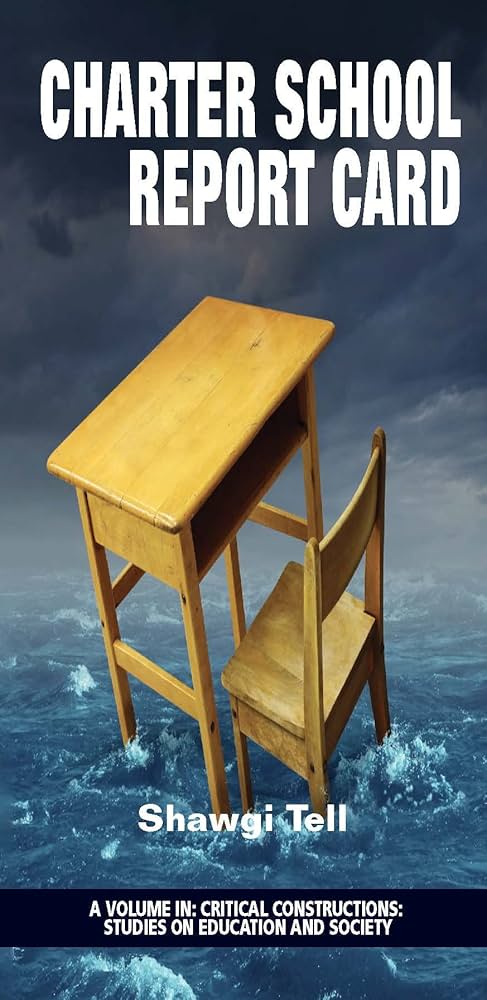
Shawgi Tell (PhD) is author of the book Charter School Report Card. He can be reached at stell5@naz.eduRead other articles by Shawgi.


The Netherlands, Bonaire, and Climate Change Obligations


Poor Adaptations


It was another bead in the string of jurisprudence and case law in climate litigation. Previous sparkling examples include Urgenda Foundation (2019), KlimaSeniorinnen (2024) and the significant Advisory Opinion of the International Court of Justice delivered in July 2025. The District Court of The Hague, in its January 28 judgment regarding the effects of climate change to the Caribbean island of Bonaire, ordered the Dutch State to not only comply with international emission reduction obligations but adopt and implement a plan to achieve such goals by 2030, in so doing taking into account the fate of Bonaire and its residents.

Bonaire is part of the Netherlands and one of three special municipalities in the Caribbean Netherlands. In 2024, Greenpeace, in a collective action with eight residents of Bonaire (the eight were subsequently denied standing), began legal proceedings against the Dutch State under the WAMCA (Wet afwikkeling massaschade collectieve actie) collective action regime, or the Settling of Large-scale Losses or Damage (Class Actions) Act.

The two fundamental questions at stake here was whether the State had taken sufficient timely and appropriate measures to protect the residents of Bonaire from the effects of climate change (the adaptation question); and whether the State’s climate policy was in conformity with equitable contributions to mitigation under the United Nations Climate Convention and the ensuing Paris Agreement to limit global warming to less than 1.5°C relative to pre-industrial levels by the end of the century.

The central contention of Greenpeace was that the protective treatment offered Bonair, be it terms of climate adaptation or mitigation, was insufficient and in breach of obligations under the European Convention for the Protection of Human Rights and Fundamental Freedoms (ECHR) and the International Covenant on Civil and Political Right (ICCPR). Furthermore, that insufficiency meant that the degree of protection offered the residents of Bonaire relative to those of the European Netherlands was inadequate, refusing to account for the rights of those in Bonaire to experience and practise their own culture.

The Dutch State argued in its submissions that the residents of Bonaire had received adequate measures in terms of protection. These were not fewer “but rather different measures that are specifically tailored to the situation in the Caribbean, which differs from that in the European Netherlands.” A running argument long used by State authorities in other climate change cases was cited: that it was up to legislators and governments, not courts and judges, to frame policies in terms of climate change mitigation. Besides, the Netherlands was “already doing more than many other countries and cannot be held solely responsible for the global problem of climate change.”

The Court found that the Dutch State had failed in its positive obligations under Article 8 of the ECHR, which protects rights to privacy and family life, as “the mitigation and adaptation measures as a whole taken by the competent authorities in relation to the inhabitants of Bonaire do not meet the obligations the State has assumed in a UN context.”

Those mitigation and adaptation measures had also been taken “much later and less systematically than for the inhabitants of the European Netherlands”, despite foreknowledge since the early 1990s that Bonaire would be more vulnerable to the effects of climate change earlier than the European Netherlands. (The Court took cognisance of Assessment Reports from the Intergovernmental Panel on Climate Change (IPCC) addressing the specific vulnerabilities of small islands to climate change.)

In taking into account the relevant assessment framework, the judgment drew on the 2024 KlimaSeniorinnen ruling of the European Court of Human Rights, which showed the increasing willingness of judges to assess the means by which regulations and measures are implemented in addressing climate change. State discretion is not absolute, fettered by the need to take adequate mitigation measures, the adoption of timely and clear adaptation measures and the need for procedural safeguards.

The measures in question would need to, for instance, stipulate a specific target date for achieving carbon neutrality, including intermediate emissions reduction targets and pathways to meet emission reduction goals in a timely fashion. In KlimaSeniorinnen, Switzerland’s policies were rebuked on several grounds. “Critical lacunae” existed in implementing a regulatory framework, including, among other things, a failure to pass legislation indicating a clear pathway for emission reductions in the long term.

Overall, the Dutch State, on the issue of mitigation, had failed to demonstrate that its measures would be able to deliver the required emission reductions in a timely way. By way of example, there were no legislated targets across the economy beyond 2030, or “no concrete instruments aimed at achieving the reduction targets agreed within the UN context”. By the admission of the Dutch authorities, there was a “less than 5% chance” that it would achieve its 2030 targets. Failure to tighten the policy would also see 2050 targets unmet.

On adaptation, the State had also been remiss in providing “sufficient personnel, resources and specialist knowledge to counter those serious negative consequences.” By treating those in Bonaire differently to inhabitants in the European Netherlands in taking adaptation measures, despite the island’s greater susceptibility to harm and limited local means, the State was not only in breach of Article 8 but Article 14 of the ECHR and Article 1 of Protocol 12 (general prohibition of discrimination).

As regards the procedural element, which covers such matters as developing and implementing educational and public awareness programmes, providing the public access to information on climate change and its effects, enabling public participation in addressing such changes and developing adequate responses, and the training of scientific, technical and managerial personnel, the State also fell short. Nearly all efforts mentioned by the Dutch State took place after 2022. From 2023, “documents show that the State is catching up, with many necessary overdue measures still being taken and room being made for participation by and knowledge of residents and local organisations.” Citizens will, however, be hampered by the absence of “binding national standards and concrete policy instruments” that would improve their participation.

The judgment is also interesting for showing sceptics of international law’s standing and members of the might-is-right school that jurisprudence from such bodies as the ICJ has persuasive force in domestic courts. Reliance was placed by the Dutch Court on the 2025 ICJ Advisory Opinion, which proposed that “obligations of conduct and obligations of result” could see a State breach a relevant obligation. In terms of obligation, a State would act wrongfully in failing “to use all means at its disposal to bring about an objective”. In terms of an obligation of result, “policies so adopted and the measures so taken must be such as they are able to achieve the required goal.”

The Netherlands will be required, within eighteen months, to incorporate absolute emission reduction targets across the economy via legislation, “including intermediate targets and pathways for the reduction of carbon emissions for the entire period up to 2050”.

The implications of this decision are bound to leave their mark in ongoing and future climate litigation, revealing the increasingly influential, even intrusive role of the courts in assessing a State’s mitigation and, it now transpires, adaptation measures. The latitude governments have traditionally had in shaping these responses is shrinking before the judicial stare, and those States with overseas territories will be nervous about the prospect of a harrying lawsuit.

Binoy Kampmark was a Commonwealth Scholar at Selwyn College, Cambridge. He lectures at RMIT University, Melbourne. Email: bkampmark@gmail.comRead other articles by Binoy.

Fastened to a Dying Animal: The Narcissistic Wound of Hobbled Imperium


A fading empire, like a wounded narcissist facing decline, is a dangerous animal.

“…fastened to a dying animal
It knows not what it is; and gather me
Into the artifice of eternity.”

The things of the world that a narcissist cannot exploit, dominate, and control a narcissist will attempt to destroy. Facing collapse from inner hollowness – a narcissist is devoid of a sustaining core — he has merely a brittle facade insofar as facing the world — thus the narcissist grows increasingly desperate for praise (very bad people are denying me my Nobel Peace Prize) and he is prone to lash out in spasms of malignant rage (even to the point of bodies on city streets and reckless acts of military aggression abroad).

That is no country for old men. The young
In one another’s arms, birds in the trees,
—Those dying generations—at their song,
The salmon-falls, the mackerel-crowded seas,
Fish, flesh, or fowl, commend all summer long
Whatever is begotten, born, and dies.
Caught in that sensual music all neglect
Monuments of unageing intellect.
– “Sailing to Byzantium,” William Butler Yeats

Trump is an emblem — not the cause: The US has been in a state of wounded narcissism since at least the Vietnam war era. Those damn hippie commie pinkos (like the transgender weirdos of the present, invading hordes of criminal border crossers, and limp-of-wrist, protein-starved soy boys) so demoralized US soldiers in Vietnam that they could not maintain a proper kill count as they faced brigades of spitting peaceniks at home.

The Vietnam era soldier, with the M-16, was deprived of a homecoming parade

MAGA is a narcissistic wound in collective form. Fastened to a dying animal – a deranged, manic mindscape of nebulous grievance and displaced rage – will become ever more deranged and dangerous. Trump exiting the scene will not alter the trajectory of imperial deterioration.

We are confronted with a wounded beast in the form of a hydra. Yes, it will be a relief to rid from our sight the head with the risible hair weave and the malignant mouth. But to kill a hydra one must strike at the heart of the beast i.e., the capitalist dictatorship of money i.e., a heart that beats within the shared body of the Democratic Party heads of the beast.

Thus we have witnessed the reason Democrats have revealed themselves to be feckless against the rise of MAGA hyper-authoritarian excesses. A party unwilling to call out Israel’s perpetual criminality will prove useless against state sanctioned murder at home.

So we are on our own in this struggle. We must collectively strike at the heart of the beasts. Refuse to feed the beast by general, widespread strikes – not day tripper marches.

How do we strike at the heart of the hydra?

Side with, and attempt to protect the powerless, from Gaza to the urban streets of the US, the latter of which Trump, in his narcissistic pique, has flooded with ICE brownshirts. I realize, people are dying in the attempt. In their name, and in the names of all those who have been and will be harmed by ICE thuggery, we are called on to resist.

There cannot be an accurate augury of what the future holds…other than this: If we are not united in struggle the wounded beast will continue its rampage and destroy all in its path before it destroys itself.

From: AI Overview: “Imperium” (Latin for power/command) refers to the raw, often brutal authority, especially in Rome, while “Empire” (from imperium) describes the large, multi-territory state itself[…]”

In Minnesota, the MAGA Reich is attempting imperium, throwing its body armor, armed incel, cosplaying weight around. While imperium’s killer clown cavalcade is evoking mass distress, even perpetrating murder, they are failing in their attempt at full-spectrum dominance, even failing to evoke mass fear that will create submission in the populace. Thus Trump is reverting to form; he is turning taco (i.e., Trump. Always. Chickens. Out.

Now, with the US empire banging the war drum in the direction of Iran, we are bearing witness to an attempt at gunship-style imperial domination: Emperor/Commander Taco’s (grandiose) trope to force regime change in Iran.

His attempt at imposing imperium in Minnesota has been a shit-circus of narcissistic personality-style, self-undermining folly. Trump, I suspect, pumped up into a grandiose swoon of self-regard by Benjamin Netanyahu, is sailing directly towards the shoals of imperial overreach.

Imperium only lasts in the short term. Empires, sometimes, slowly fade; sometimes, they collapse, all at once, into their corrupt core, due to the historical phenomenon known as imperial overreach. Withal, it is uncanny, Trump’s ever increasing mental and physical deterioration is an analog of the decline of US empire itself.

To save his sagging, pasty hind, Trump’s only path away from self-immolation is his streak of cowardice. To that end, then he and the US empire will shamble on to collapse at a later date.

In twisted backwards and turned inside out fascist fashion, the Trump Reich claims immigrants invaded Minnesota — not the true invaders: ICE Brownshirts. They lie: peaceful resistance is terrorism while, in reality, their intent is to terrorize the populace into submission.

They claim their jackboot on your neck is the sweet caress of liberty.

The Trump Reich insists bullying is bravery and standing up to armed gangs of bullies is hatred. They claim they are preservers of life as they shoot mothers in the face and medical workers in the back of the head.

It turns out the murders of Alex Pretti are Hispanic men, Border Patrol Agents from South Texas. True to form for the assbackwardism of the authoritarian right, now, they are practicing DEI fascism.

It all feels unreal because those entrusted with official power have crossed so far beyond the threshold of the normal mendacity of officialdom that returning to the daily homeostasis required for maintaining a society can no longer be achieved by normal means. To wit, the system must be challenged, by, at the very minimum, large scale general strikes. The machinery of death must be brought to a halt.

Things will have to become even more unreal before some semblance of societal sanity can be restored. Or else, state sanctioned murder will be the new normal.

Don’t you feel a soul-caressing sense of safety from the very sight of these cosplaying (Bovino, Noem et al. creepopathic twits?

Yet I am going to take the risk of living my existence among the ranks of undocumented farm workers, landscape crews, restaurant employees, slaughterhouse workers, roofers, construction workers and all the others who labor at underpaying, no benefits, no future jobs, the powerless of the earth, those who the capitalist overclass exploits on a daily basis – then accept and be crushed under the tyranny of the MAGA Reich’s psychotic conception of law and order.

We all require safety from their (fascist, self-serving) conception of safety. In fact, we – and the world in general – would be in a far safer position if this klavern of killer clowns were tried, convicted, and sentenced to lengthy prison sentences.

There are Democratic partisans bragging that Obama, in a graceful manner, without masked thugs and spilled blood, deported 3.3 “illegal” immigrants.

Somehow, these liberacrat authoritarians, who believe theirs’ is a more elegant version of jackboot licking, are willfully deaf and blind to the dismal fact: Obama, AKA President Drone von Citigroup, opened the demagogic door to the MAGA Reich by embracing (then placing in action) the Third Reich adjacent lie that some human beings are illegal.

When the so-called opposition party claims that fascism’s rough edges can be smoothed out…it is an object/abject lesson in how we arrived at this present dire junction of history.

ICE must be abolished. Any Democrat that stands in the path of the solution should be considered a MAGA enabling tool.

De facto bipartisanship on xenophobic immigration and deportation policies dovetails with acceptance and enabling of Israel’s perpetual crimes against humanity:

The foundation of Israel as a ethno-supremacist state set the stage for its genocidal war against the people of Gaza. A nation, established in ethnic cleansing, is off to an odious start. A nation that national identity mythos tell the tale of ever-vulnerable victims/always-pure in their actions heroes who must do what a hero must against the perpetual threat of inherently evil, less-than-human adversaries…in essence, of all those who live near Israel…must be made to live on their knees in permanent supplication because of the sins of Europe.

A nation of war criminals will be resultant from whenever Israel is called, for example, to account for its crimes against humanity by Jews like myself, for our the assertion we are called Kapos — and same applies when the same kinds of present day “righteous gentiles” who would have attempted to save Jews during The Shoah yet who are slandered as antisemites when they evince empathy for Palestinians and demand Israeli war criminals be held accountable for their crimes against Palestinians.

A nation whose citizenry and its Zionist true believers (including the ad hominem inanity spewing trolls who will swarm this post) refuse to reflect on the reasons the world regards Israel as a rogue state and instead ups the volume of their hasbara campaigns of state-sponsored lies — this is a culture capable of genocide and will, in what could be preventable tragedy, follow the dismal and deranged trajectory of genocide-prone — and, ultimately, doomed — nations.

When Zionist hasbara fails. Censorship, on a massive scale begins:

In response to Zionist perpetrated social media purges, extant and looming, I have opened an Upscroll account. My understanding is, the platform will not engage in Zionist-based interference regarding content.

The following was my first Upstrolled posting at Upstrolled:

We Jews need to proclaim the following, loud and often: Zionist billionaires — who lie they speak in behalf of all Jews by way of the conflation that their support for Israel provides protection for all Jews — when, in fact, their hostile takeovers of corporate media plays into odious anti-semitic fictions e.g., Jews control the West’s economies and affairs of state, including the incitement of wars, thus the opportunity for war profiteering by secret cabals.

My narrow, less-than financially flush Jewish tuchus asserts in response: First, the following is addressed to those anti-semites soreheads, at ready to wax jackbooted triumphant with “we tried to warn you” declarations:

There is no secret plot. The media takeovers are transpiring right in plain sight, Moreover, speaking of insufferable, bigoted tools, waxing jackboot triumphant, Netanyahu has been bragging about the fact and has been promising more media domination, by means of High Dollar Zionist interests, will be forthcoming.

Understatement alert: This is bad for Jews such as myself and bad for all the people of the world. Not in the Dark Age cliched sense of Old World anti-semitism. No, Friday evening TikTok will not stream with Shabbat rituals featuring gentile blood sprinkled on Challah — but social media freedom of expression will be subject to massive measures of censorship, as is already the case with TikTok , now inflicted with rigged algorithms and shadow banning, in regard to criticism of Israel.

Understatement alert #2: I am feeling powerless before the trajectory of events. Zionists do not speak in my name and in the name of other anti-Zionist Jews but our voices are drowned out by tsunamis of billionaire dollars. Nonetheless, we must raise our voices, often, wherever we can and to whomever will listen. We must debunk hasbara. We are advised to side with the powerless of the earth. The governmental and corporate forces that enabled the Gaza genocide — understatement alert #3 — the capitalist overclass do not exactly have your best interest in mind.

Regarding which: declaration of the obvious #1: Those without privilege and power: we are all Palestinians in their cupidity and power besotted minds.

“Flower Family” (Blumen familie) Paul Klee

Phil Rockstroh is a poet, lyricist, and essayist. His poems, short fiction, poetry and essays have been published in numerous print publications and anthologies; his political essays have been widely posted on the progressive/left side of the internet.  Read other articles by Phil, or visit Phil's website.

Are Judges at the European Court of Human Rights Worse than Terrorists?


Imagine a train hurtling out of control, its passengers’ lives in peril. One traveler reaches for the emergency brake, only for others to disable it, dooming the locomotive to crash into a crowded town and claim hundreds of lives. What charges would follow? Under European criminal law, culpability hinges on intent, context, and motive—ranging from terrorism (requiring a deliberate aim to disrupt society, sow fear, or coerce authorities) to intentional homicide or gross negligence. Absent a political agenda, it might qualify as sabotage or murder. Yet, consider a parallel: what accountability befits a judge who disables the rule of law’s safeguards, such as the European Convention on Human Rights’ (ECHR) provisions for effective remedies and proportionality?

The ECHR as a Safeguard Against Systemic Abuse

The ECHR, particularly through Articles 8 (right to private life) and 13 (right to an effective remedy), empowers courts to scrutinize legislation when political processes falter. It serves as democracy’s emergency brake, protecting citizens from entrenched injustices. Drug policy exemplifies this runaway dynamic: the pursuit of a “drug-free society” has, over six decades, subjected tens of millions to punitive measures without diminishing illicit markets. Empirical evidence consistently demonstrates that criminalization exacerbates violence, insecurity, and public health crises, while over a century of expert reports has questioned its rationale. Nonetheless, institutional interests—power, funding, and prestige—prevail over health and rights, perpetuating prohibition amid outdated fears and moral panics.

This reality grows starker as nations like Canada and Germany regulate cannabis to prioritize public health. When less coercive alternatives are ignored, oversight of law enforcement’s adherence to humane directives becomes impossible. Public hysteria endangers lives and liberties, and judges bear a solemn duty to intervene. Entrusted with leadership and substantial remuneration, they must uphold principles. Indeed, a judge who undermines the ECHR’s remedial framework in drug policy cases may pose a graver threat than a mere saboteur, eroding the foundations of justice itself.

The Imperative of Accountability in the Rule of Law

For over sixty years, Europe’s drug-free ideal has fractured societies. Each year, more than a million individuals navigate the justice system due to drug offenses, amid thousands of preventable overdose deaths—estimated at over 7,000 annually in the EU alone, per recent data—that reform could mitigate. Families shatter, children lose parents, all in service of a paradigm from which increasing numbers of countries diverge. Approximately 19 percent of Europe’s prison population serves time for offenses now regulated elsewhere, underscoring a two-century legal tradition reliant on judicial review.

From this vantage, jurists wield potential for harm surpassing that of extremists: unchecked, they can dismantle the rule of law. It is this concern that prompted appeals to the International Criminal Court (ICC) to hold ECtHR judges accountable for neglecting to assess cannabis prohibition’s legitimacy. Since 2010, Norwegian advocates have petitioned the ECtHR to evaluate prohibition’s necessity in contemporary society, yet for fifteen years, the Court has consistently declined substantive review in such matters, shielding policy from constitutional scrutiny. This pattern jeopardizes Western legal heritage, as judges prioritize entrenched norms over legal certainty, inadvertently bolstering an authoritarian framework.

Confronting Institutional Blindness

Despite admonitions from legal scholars, criminologists, sociologists, and historians, the scapegoating persists, yielding catastrophic outcomes. Six decades of unbridled authority have wrought devastation, sustained by judicial reluctance to challenge entrenched prejudices. It is with good reason that Joseph Conrad observed the policeman and the terrorist emerging from the same ethos, both rationalizing violence for an illusory ideal. Fyodor Dostoevsky expanded on these parallels in Crime and Punishment and Demons, portraying enforcers and radicals entangled in ethical quagmires. Similarly, George Orwell’s 1984 and Franz Kafka’s The Trial illuminate how ideology and bureaucracy erode justice, rendering officials complicit in oppression.

These literary insights remind us that society’s greatest peril arises when powerholders become oppressors. The ECHR arose from this postwar epiphany, yet ECtHR jurists, backed by the Council of Europe’s leadership, have neutralized its protections, allowing an illiberal project to persist. In this light, distinguishing jurists from ideologues proves challenging—save for the former’s amplified capacity for systemic damage. While extremists instill terror, judges can forge police states, which is why the ICC has become involved.

The similarities between drug prohibition, witch hunts, Nazi purges, and apartheid regimes are too obvious to ignore: double standards, public apathy, and exaggerated enemy images transform jurists into instruments of repression. Their ideological fervor brings immense suffering, while the integrity of laws continues to suffer, and history will appraise whether recovery is possible after this prolonged erosion. The rule of law demands accountability, and as the Council of Europe shields drug laws from scrutiny, the ICC must intervene to protect Europe’s rule of law from internal erosion. Absent such action, judicial lapses imperil the entire edifice—and the brake must be engaged.

Roar Mikalsen is a Norwegian human rights activist and leader of the Alliance for Rights-Oriented Drug Policies (AROD). Read other articles by Roar.