Monday, February 09, 2026


New industrial robots installed per year – OWID

New industrial robots installed per year – OWID
China is leading in yet another tech revolution: the number of humanoid robots it is installing on factory floors is soaring. / bne IntelliNews
By bne IntelliNews February 9, 2026

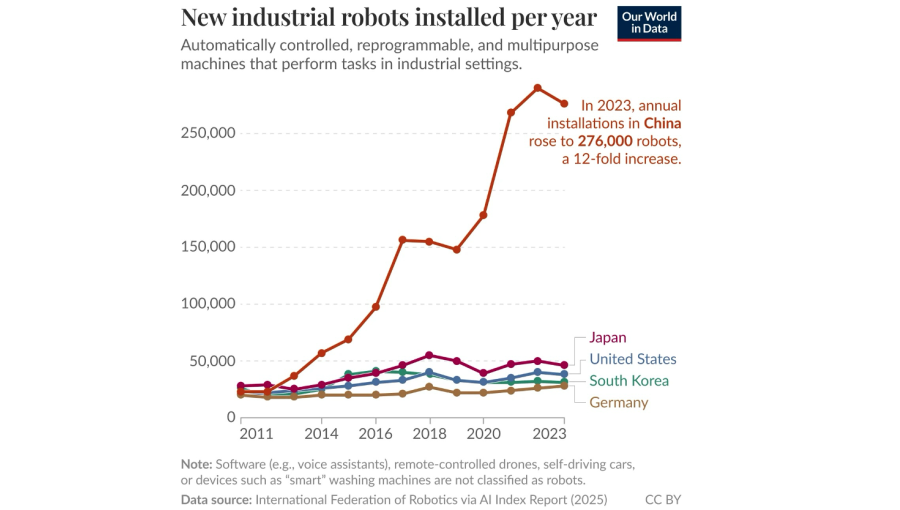
Industrial robots are rapidly becoming a common part of manufacturing in some countries. The chart here shows how many new ones are installed each year in the industrialized countries for which we have available data from the International Federation of Robotics (IFR), Our World in Data  (OWID) reports.

In this dataset, industrial robots are defined as automatically controlled, reprogrammable, and multipurpose machines used in industrial settings. The data covers only physical industrial robots, not software or consumer technologies.

The chart shows that in 2011, China, the United States, Japan, Germany, and South Korea were all installing similar numbers of these robots. However, in the decade that followed, the paths of these countries diverged. By 2023, annual installations in China had risen to 276,000 robots, a twelvefold increase.

Over the same period, installations in the United States, Japan, Germany, and South Korea also increased, but much more slowly: none of them even doubled. The United States, which saw the second-largest rise, went from 21,000 new installations in 2011 to 38,000 in 2023.

These figures refer to new robots installed each year; that is, annual additions to the existing stock of robots. The IFR also publishes data on the total number of robots in operation, and by this measure, China also had the largest installed base, at around 1.76mn robots in 2023.

Relative to its large manufacturing sector, China’s stock of robots today does not stand out – but the data here shows that this is changing quickly.

Explore the interactive version of this chart.


Half the world’s energy will come from renewables, nuclear by 2030 - IEA

Half the world’s energy will come from renewables, nuclear by 2030 - IEA
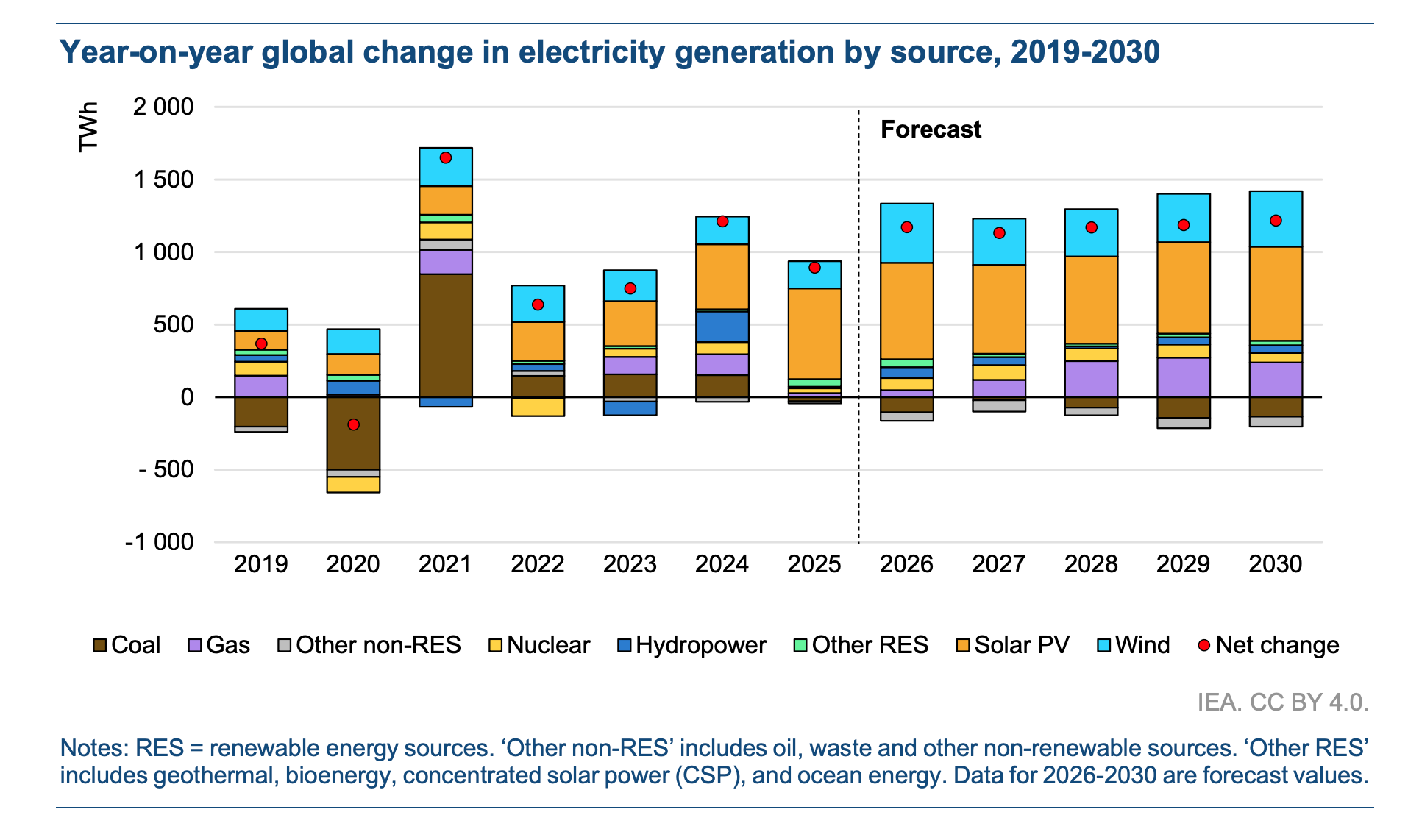
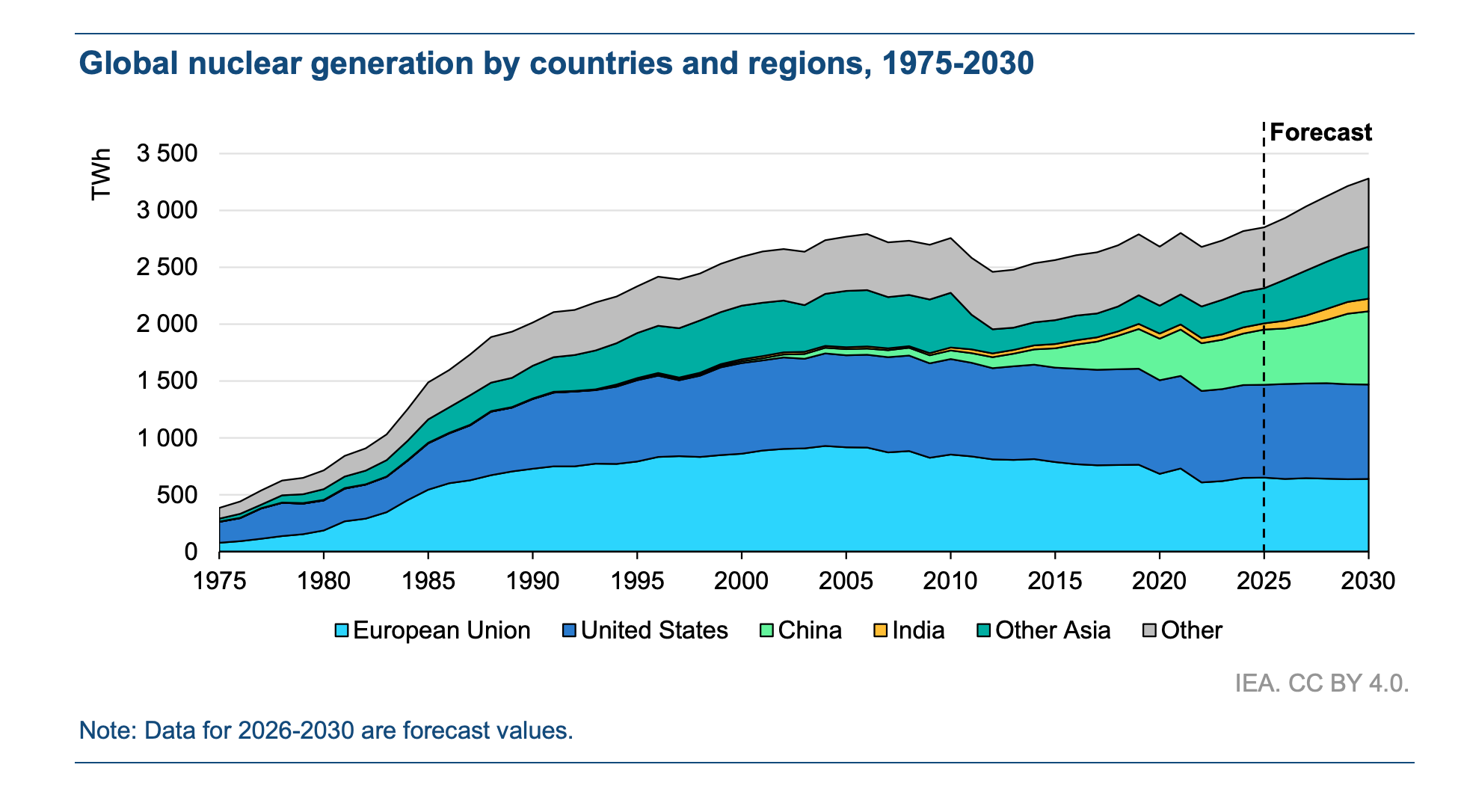
Half the world's power will be generated by renewables and nuclear by 2030, according to the IEA, but the distribution of generating capacity is uneven and the Global South will struggle to keep up with growing demand. / bne IntelliNews
By Ben Aris in Berlin February 8, 2026

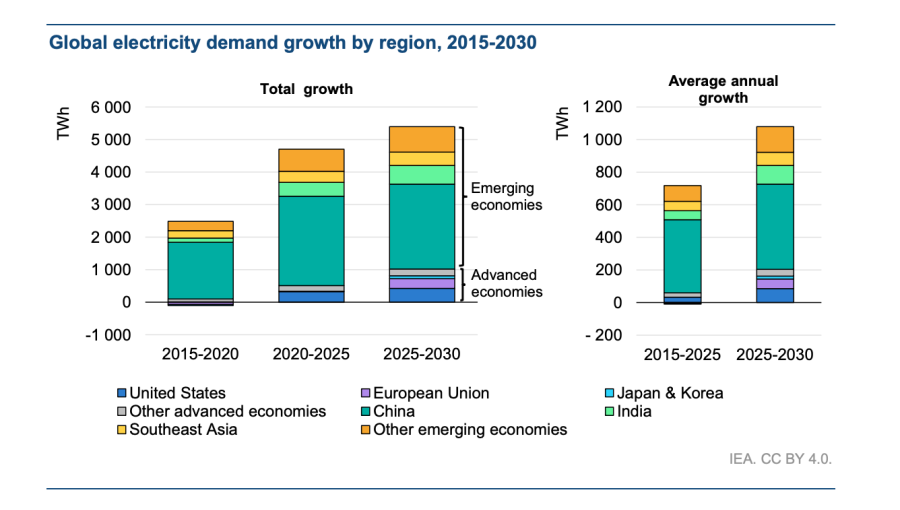
The International Energy Agency warned that while global electricity demand is set to surge over the next three years, the benefits of clean energy investment and rising renewable output remain unevenly distributed, threatening to deepen the divide between advanced and developing economies.

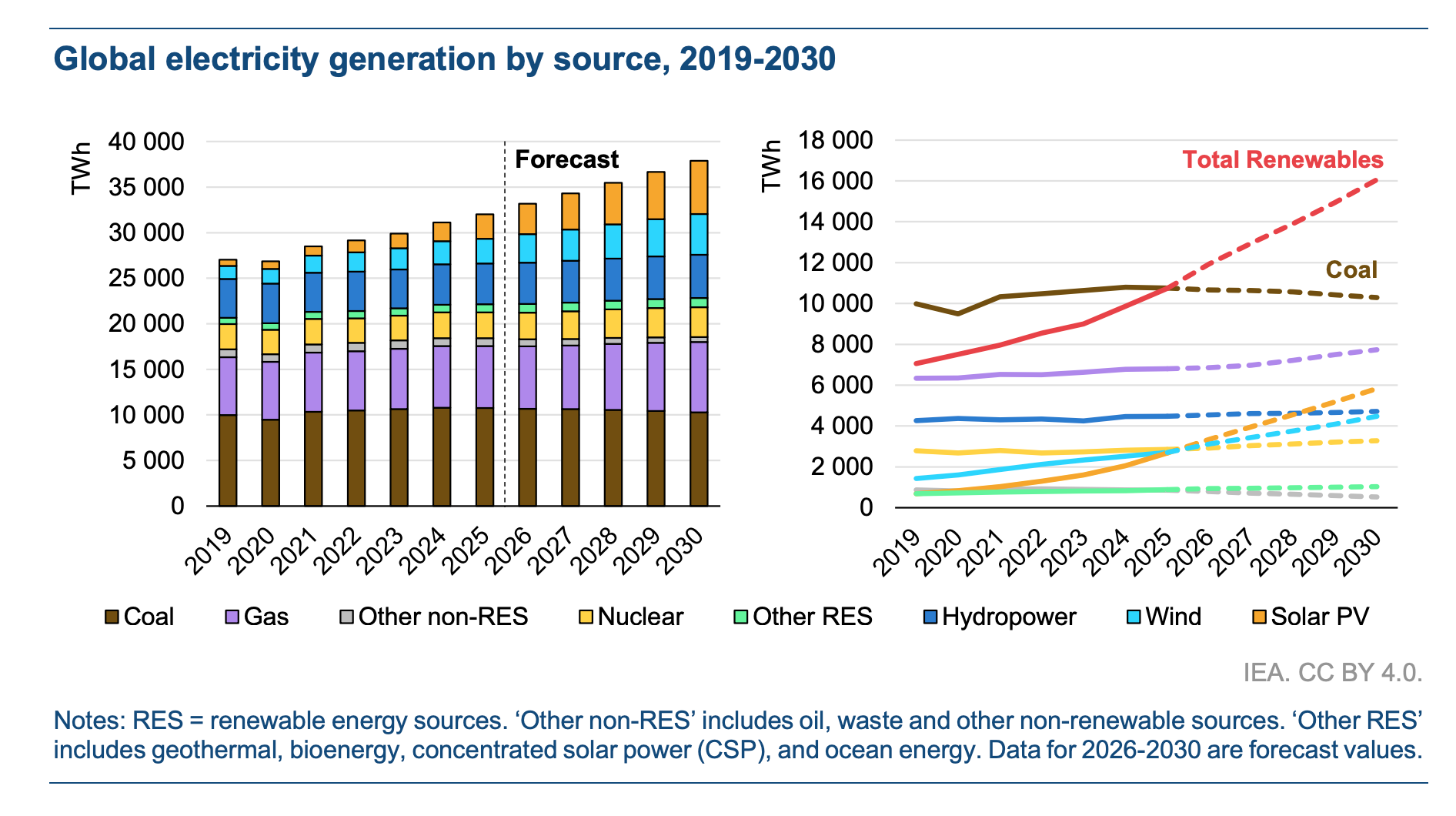
The “Age of Electricity” is here and half the world’s power will be generated by renewables and nuclear power plants (NPPs) by 2030, the IES says in its latest “Electricity 2026” report.

The IEA projected that global electricity demand will grow by nearly 3.4% annually through 2026, with demand from emerging and developing economies—particularly in Asia—driving most of the increase. However, the agency cautioned that infrastructure constraints, financing gaps, and persistent energy poverty risk leaving large parts of the Global South behind.

“We are seeing two very different realities emerging in electricity markets,” the IEA said. “In advanced economies, growth in demand is modest, while renewables are increasingly supplying that growth. But in many developing economies, electricity demand is rising rapidly and grid investment is struggling to keep up.”

By 2025, the report forecasts that more than one-third of global electricity generation will come from renewables, with solar PV and wind accounting for the bulk of new capacity additions. The share of low-emissions generation—including renewables and nuclear—is expected to rise from 39% in 2023 to 50% by 2026, largely displacing coal-fired generation in major economies such as China and the US.

“Electricity is becoming cleaner, thanks to the spectacular growth of renewables,” the agency stated. “But the pace of change remains too slow in regions most in need of affordable and reliable power.”

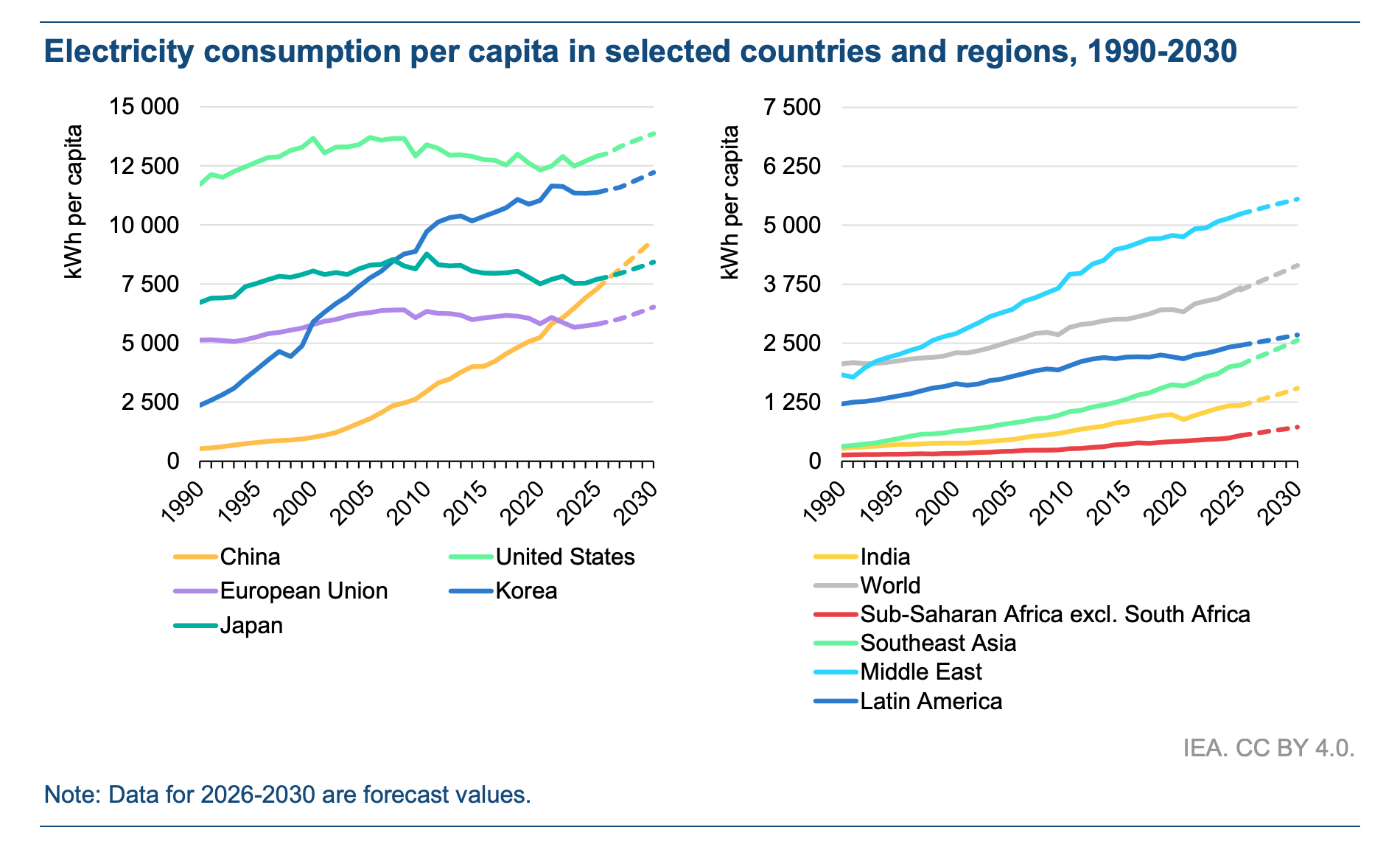
China alone is expected to account for over one-third of global electricity demand growth through 2026, followed by India and Southeast Asia. However, the IEA highlighted that Africa, home to nearly 600mn people without access to electricity, continues to face chronic underinvestment in power infrastructure.

“Sub-Saharan Africa is the only region where electricity demand is expected to remain below pre-pandemic levels in 2026,” the IEA warned. “This underlines the urgent need for greater international support.”

The agency also noted that extreme weather events—linked to climate change—have added volatility to power markets. “Heatwaves, droughts, and cold snaps are creating new operational challenges for grids, especially where backup generation is limited,” the report said.

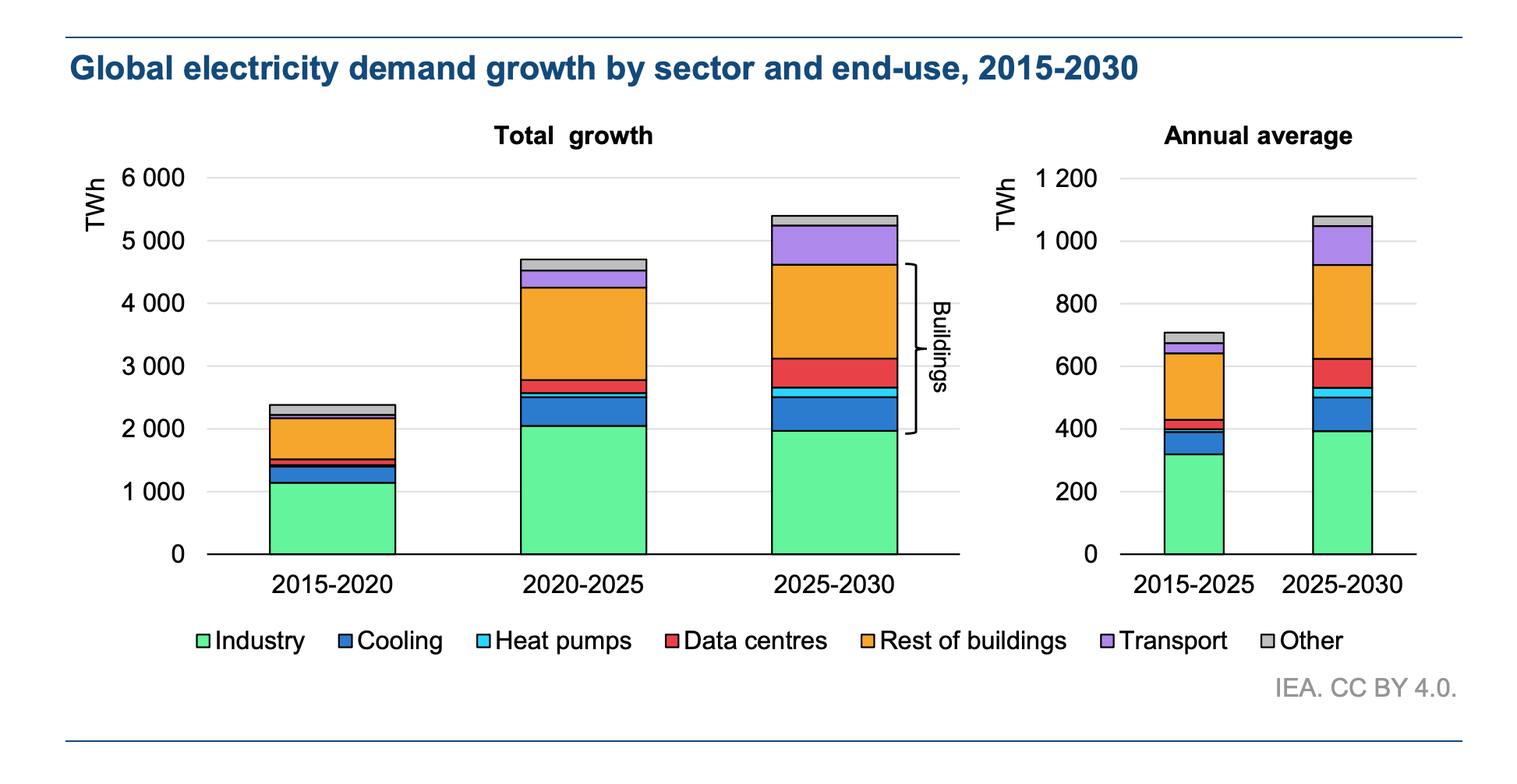
In advanced economies, electrification of transport, heating and industry is expected to continue driving demand, though energy efficiency gains and economic uncertainty may limit overall growth. Europe, in particular, is expected to see relatively flat electricity demand due to high prices and slower industrial activity.

To meet rising global demand and decarbonisation targets, the IEA estimates that annual investment in electricity networks must increase by more than 50% by 2030, reaching nearly $600bn globally per year.

“Without faster grid expansion and stronger investment in emerging markets, the global energy transition risks becoming a tale of two worlds,” the agency concluded.


History, law, and politics collide at the Malaysia–Indonesia border

History, law, and politics collide at the Malaysia–Indonesia border
/ Bintang Azhar - Unsplash
By bno - Surabaya Office February 9, 2026

Malaysia and Indonesia are currently embroiled in an amicable dispute over land boundaries in the Sumatra and Kalimantan islands of Indonesia, where the two countries have long shared a land border as neighbours. The land boundary between what is now Indonesia and Malaysia itself can be traced back to colonial arrangements made by the Dutch and British, via a treaty penned in 1915, The Independent SG reports. The treaty mentioned parts of Borneo, with Sebatik Island divided between the two countries. However, the fact that the legal foundations of the land remain rooted in agreements drawn during colonial rule, it leaves certain issues poorly defined given that both nations have now gained independence.

Despite clear legal references, there was no conclusive decision applicable to every segment of the border on the ground. Ever since 1977, both countries have embarked on joint technical committees that worked through what are officially called “Outstanding Boundary Problems” (OBPs). The unresolved areas are mostly located near rivers, where natural shifts happen, causing a complication in demarcation because of incomplete mapping.

As of now, there are still nine of such zones that remain unsettled, four along the Sarawak–West Kalimantan border and five between Sabah and North Kalimantan. Malaysian Prime Minister Anwar just last week stressed that these locations cannot be claimed by either side until negotiations conclude. In stating this, the prime minister further emphasises that border determination is still ongoing and incremental rather than finalised.

The persistent flashpoint that is Ambalat

Beyond land negotiations, maritime tensions between the two have been continuous, centred on the Ambalat Block that spans the Sulawesi Sea, Tempo.co reports. The dispute can also be traced back to other unclear colonial maritime boundaries, which later diverged interpretations of international law. Indonesia grounds its claim in UNCLOS principles, asserting rights as an archipelagic state. Malaysia, on the other hand, holds onto a unilateral maritime map issued in 1979 and its proximity to Sipadan and Ligitan.

Throughout the 1980s and 1990s, both countries increased patrols and went through multiple diplomatic protests as resource exploration in the area intensified. Tensions reached a high point back in 2009, when Malaysia signalled plans to explore for oil and gas in the area, which prompted Indonesia to bolster its naval presence. Despite repeated talks, Ambalat remains unresolved, though both sides have consistently rejected military escalation.

In 2025, the talks over Ambalat once again resurfaced thanks to the clashes along the Thailand and Cambodia border. As such, there was a concern that Malaysia and Indonesia might follow the same approach, though PM Anwar publicly stated that this is not the case. Anwar confirmed that he had raised the issue directly with Indonesian President Prabowo Subianto, confirming that discussions would continue under international law, including UNCLOS.

The Nunukan villages

Early in 2026, public attention reverted back to the three villages in Indonesia’s Nunukan regency: Kabungalor, Lipaga and Tetagas, Antara News reports. Indonesian officials had stated that these villages were now recorded as falling within Malaysian territory following agreements reached at a bilateral meeting in February 2025. They added that Indonesia would, in turn, receive 5,207 hectares of land for border infrastructure and a planned free-trade zone.

These remarks triggered widespread concern on Indonesian social media, with claims circulating that the territory had been abruptly “lost.” Indonesian authorities moved quickly to calm public anxiety, stressing that the boundary process had unfolded over many years and that no sudden changes had taken place.

But Anwar, responding to the uproar, addressed Malaysia’s Parliament in a special briefing to reject allegations that Kuala Lumpur had agreed to hand over land to Indonesia, The Independent SG reports. He described reports suggesting a 5,200-hectare transfer as false and misleading.

According to Anwar, border disputes should not be settled through compensation or land swaps. Instead, every metre is negotiated strictly within existing legal frameworks. He urged lawmakers not to politicise the issue, warning that distorted narratives risk undermining long-standing bilateral relations and public trust.

Indonesia opts for a review

On the Indonesian side, State Secretary Prasetyo Hadi said the government would conduct direct field inspections in the Nunukan area to gain a clearer understanding of conditions on the ground. He emphasised that any steps to be taken would involve coordination across ministries and agencies, with no rushed decisions.

Local border officials echoed this stance, denying claims that villages had been “lost” due to border changes. They clarified that recent parliamentary meetings focused on accelerating development and improving welfare in border communities, not redrawing lines. The message was consistent: the process is ongoing, methodical, and far from complete.

With all these issues unfolding, the Malaysia–Indonesia border dispute persists not because of sudden political manoeuvres, but because it sits at the intersection of colonial legacies, international law, resource competition, and domestic politics. Each flare-up reveals how easily technical negotiations can be overwhelmed by public narratives, especially in the age of social media.

While both governments continue to anchor their positions in law and diplomacy, the real challenge lies in managing perception. Public opinion can easily become a digital kangaroo court that can sway and narrate the next moves albeit prematurely. Without clearer public communication, unresolved borders risk becoming political symbols rather than legal questions, prolonging disputes that neither side truly wants to escalate.
 

Cuban government takes emergency measures in face of “Genocidal Blockade”

Cuban government takes emergency measures in face of “Genocidal Blockade”
Cuba's economy is close to collapse thanks to a US blockage forcing the government to introduce a raft of emergency measures. / Ben Aris for bne IntelliNews
By Ben Aris in Berlin February 8, 2026

The Cuban government has introduced a raft of emergency measures to cope with what it calls the US’ “Genocidal Blockade” that has cut the island off from essentials and is pushing its economy towards collapse.

The office of the Cuban presidency announced a string of specific measures to keep basic services functioning and supply the people with food and fuel.

The emergency measures include rationing fuel, prioritising public services, and overhauling  energy and transport systems as it grapples with severe shortages and growing economic strain.

In a statement published on February 2 by the Office of the Presidency, authorities said the measures were taken “in response to the nation’s current situation, amid the intensification of the “Genocidal Blockade,” using the government’s term for the US sanctions regime. Officials warned that the escalating crisis had made urgent action necessary to safeguard food supply, water access, healthcare, and education.

The new policies will prioritise fuel for essential services, including hospitals, food production, water infrastructure and “hard-currency-generating” activities. Tourism, a big source of foreign excahnge earnings, has already collapsed as tensions rise.

Public fuel sales will be limited, and administrative work will be concentrated into a four-day week. Domestic oil production will continue, while the government expands incentives for renewable energy and speeds up the installation of solar panels for both public and residential use.

In the transport sector, Cuba will cut the frequency of national train services to once every eight days and reduce intercity bus operations. Maritime travel on the Nueva Gerona–Batabanó route will be limited to twice weekly. Despite the cuts, “guaranteed Medibus services (for patients) and transportation for students and teaching staff” will be maintained, the government said. A dedicated transport service for health personnel will be introduced in Havana, alongside a push for electric mobility, including the deployment of solar-powered charging stations and electric vehicles.

Cuban schools and universities will shift toward flexible, hybrid or remote learning models. “Essential content” programmes, introduced during the COVID-19 pandemic, will be reactivated, while universities will postpone the “University 2026” conference and organise student relocations back to their provinces of origin.

In the labour sector, telework and remote work will be encouraged. If temporary work interruption becomes necessary, employees will receive one month of basic salary. Workers may also be reassigned to “key economic activities or areas of social interest,” the statement noted.

Food production will be intensified at the local level, focusing on territories with the highest output potential. The state will promote partnerships across public and private producers to stabilise distribution and pricing. Fuel will be allocated to maintain water pumping, and resources will be directed toward chemical production for water treatment.

The Ministry of Tourism will consolidate facilities to lower energy use during the high season. Special education services will continue without changes due to their “high sensitivity”.

Cuba has blamed the US embargo, in place since 1962, for a growing humanitarian crisis on the island, which has been compounded by reduced remittances, limited access to credit markets, and plummeting foreign currency earnings. The Biden administration has so far maintained key aspects of the sanctions, despite calls from regional leaders and rights groups to ease restrictions.

“We are in a very complex situation, but we will not allow our people to be left without basic services,” the government said.

Cuban government’s emergancy measures:

Energy sector

  • Prioritise fuel for essential services: health, water, food production, defence, and hard-currency-generating sectors
  • Limit public fuel sales until conditions improve
  • Concentrate core administrative activities from Monday to Thursday
  • Expand solar photovoltaic installations in homes and public centres
  • Accelerate delivery of solar panels to health and education workers
  • Install 5,000 solar modules in isolated homes, plan 5,000 more for social centres
  • Increase incentives for renewable energy in homes and enterprises
  • Continue development of domestic oil production

Transport sector

  • Guarantee fuel for ports, airports, and transport of food, fuel, and medical supplies
  • Reduce Nueva Gerona–Batabanó ferry to twice a week (Tuesdays and Saturdays)
  • Limit national passenger trains to once every 8 days (starting February 8)
  • Reduce national bus departures; suspend waiting list service
  • Offer refunds for cancelled rail and maritime tickets within 30 days
  • Maintain Medibus and student/staff transport
  • Reorganise local public transport based on fuel availability
  • Launch a new transport service for health workers in Havana
  • Expand electric mobility: install solar charging stations and distribute electric vehicles

Education sector (general)

  • Keep daycare centres open (may reduce hours)
  • Maintain in-person primary education with flexible hours
  • Use blended or condensed schedules for secondary and pre-university levels
  • Prioritise transition grades (e.g. 7th, 9th, 12th)
  • Temporarily redistribute IPVCE students to urban schools
  • Implement local school-based training for final-year technical/pedagogical students
  • Resume “essential content” model from COVID-19 period
  • Accelerate solar panel delivery to teachers

Higher education

  • Transition to blended learning by degree programme
  • Repatriate students to their home provinces
  • Support studies through local institutions and workplaces
  • Relocate professors to strengthen municipal campuses
  • Use telework as main method despite ICT limitations
  • Prioritise strategic R&D remotely
  • Ensure completion of final exams and thesis defences
  • Reorganise university admissions
  • Postpone “University 2026” event

Labour and social security

  • No new labour rules; apply existing contingency measures
  • Promote telework and flexible schedules
  • Reassign workers to essential or socially important areas
  • Allow temporary work suspension with one-month guaranteed basic salary

Food and water

  • Boost territorial food production in high-potential areas
  • Strengthen collaboration between state and private producers
  • Use renewable energy in food production
  • Allocate fuel to ensure water pumping
  • Focus industry output on chemicals for water treatment

Other sectors

  • Tourism: reduce energy use and consolidate operations during high season
  • Culture and sports: adjust activity schedules
  • Science and environment: maintain resources for early warning systems
  • Special education: maintain operations with tailored service guarantees


How to “green” operating rooms: new guideline advises reduce, reuse, recycle, and rethink


Canadian Medical Association Journal


Reduce, reuse, recycle, and rethink can be applied in Canadian operating rooms (ORs) to increase environmental sustainability, advises a new guideline published in CMAJ (Canadian Medical Association Journal​https://www.cmaj.ca/lookup/doi/10.1503/cmaj.251192.

As the Canadian health care system produces almost 5% of the country’s greenhouse gas emissions and 200 000 tonnes of other pollutants, many generated in ORs, it makes sense to focus on reducing these harms.

An evidence-based guideline that updates guidance from 2020 outlines 21 recommendations that include reducing energy use by turning off lights and heating in ORs when not in use, using reusable surgical devices and gowns, developing recycling programs, and rethinking disposal of unused supplies and older devices.

“Adopting these recommendations will generally confer both environmental and financial benefits, and will often also benefit the people providing and receiving care,” writes Dr. Sarah Ward, an orthopedic surgeon at St. Michael’s Hospital at Unity Health Toronto and assistant professor, University of Toronto, Toronto, Ontario, with coauthors.

A multidisciplinary team of clinicians, administrators, environmental specialists, and patient partners developed the guideline, with funding from the Department of Surgery and Collaborative Centre for Climate, Health & Sustainable Care, University of Toronto.

Find the full recommendations and an infographic in the guideline.  

“Successful implementation will require tailored strategies, and not all recommendations will be feasible for every hospital. Barriers to implementation of these recommendations exist, including limited resources (financial, time, and personnel), staff buy-in, site-specific restrictions (e.g., access to reusable sharps containers, portable nitrous oxide canisters) and administrative restrictions (e.g., OR occupancy sensors, current purchase agreements, space restrictions),” write the authors.

The guideline team hopes that hospitals and surgical departments will act on the recommendations.

“Given the large environmental impact of ORs and the danger to human health represented by climate change and other global ecological challenges, we urge those involved in providing surgical care to review this guideline carefully and adopt as many recommendations as are feasible within their own organizations,” they conclude.