Wednesday, February 11, 2026

Germany logs rising rate of crimes against journalists

DW
FEB 11, 2026


A total of 818 crimes against journalists or media were reported to Germany's investigative federal police force between April 2024 and November 2025. Just over 10% of them were violent in nature.

A response to an inquiry from the opposition Left Party shows a steep increase in politically motivated crimes against the media in Germany over the last couple of years.

Figures released by the Interior Ministry showed that a total of 818 crimes targeting "media" were registered with the BKA, Germany's federal investigative police force, between April 1, 2024 and November 30, 2025.

That averages out at roughly 41 cases per month over a 20-month period, and compares to 290 crimes, for an average of roughly 24 per month, in the calendar year 2023. The increase equates to roughly 71%.

The Left Party's spokesman on media politics in the Bundestag parliament, David Schliesing, said the figures had reached a "shockingly high level."

"The federal and state governments must urgently take action and do considerably more to protect journalistic work," he said.

How did the statistics break down?

Authorities attributed roughly 30% of the cases, 244, to the right wing of the political spectrum and 78 cases, just under 10%, to the left.

A "foreign ideology" was deemed the motivating political factor in 153 cases, and a "religious ideology" was singled out for 31 cases.

The plurality of the politically motivated cases, 312, were not assigned to any of these four pigeon holes by investigators.

More than 10% of the crimes, 89 in total, were violent in nature. This included 73 cases of assault or causing injury, 13 so-called "resistance crimes" (for instance when violently resisting arrest or detention), two cases of arson and one robbery.

A total of 211 took place in the context of public demonstrations, including the vast majority, 73, of the violent crimes, the Interior Ministry figures said.

Other common offenses included 101 cases of coercion or threats, 53 cases of incitement to racial violence, 47 propaganda offenses as well as 43 cases of damage of property.

Why journalism is under attack  11:42

Where did the crimes take place?

Berlin — home to many media outlets' headquarters, as well as being a notoriously politicized city and a magnet to demonstrators from across much of the country — dominated the figures.

Almost half the crimes, 406 in total, took place in the capital and city state, as did 51 of the violent crimes.

Perhaps surprisingly, second in line was the largest eastern state of Saxony, despite it being only Germany's seventh most populous state, with 82 cases.

Bavaria was next in line with 64, while the most populous state of North Rhine-Westphalia, which is also home to Germany's unofficial media capital of old Cologne, logged 55.

Edited by: Wesley Dockery
Lufthansa pilots, crew to strike on Thursday

DW
FEBRUARY 11, 2026

Lufthansa passengers should expect disruption and possible cancellations. A pilots' trade union has called a 24-hour strike amid a dispute over pension payments.

Employees of German flagship carrier Lufthansa have been called to go on a 24-hour strike on Thursday, the VC (Vereinigung Cockpit) union representing pilots and the UFO union of flight attendants both announced.

What do we know so far?

VC president Andreas Pinheiro announced the work stoppage, saying that staff "would have very much liked to avoid an escalation."

The VC union's members voted in favor of striking in a ballot at the end of last ‍September, hoping to pressure Lufthansa into granting more ​generous ​pension benefits.

"We deliberately gave Lufthansa several months to come up with a solution," Pinheiro added.

Meanwhile the flight attendant's UFO union also called on its members at Lufthansa's CityLine to strike on Thursday over the planned shutdown of ​its flight operations and "the employer’s continued refusal to negotiate a collective social plan."

Lufthansa announced one year ago that it would close Lufthansa CityLine, with operations and staff relocated to a new subsidiary.

Passengers who are flying with Lufthansa on Thursday could face disruption and cancellations all over the country. The strike is expected to impact all German airports, including major international hubs Frankfurt and Munich.

Cargo flights would also be impacted.

Lufthansa says cost-cutting is necessary

In the latest earnings report, Lufthansa saw a loss of a fifth of its earnings in 2024, as profitability has fallen behind leading European airline rivals.

Lufthansa has said it needs to cut costs to manage its debt load.

Last year, the airline said it would cut 4,000 jobs, or nearly 4% of its workforce. It has also been hit by walkouts, aircraft delivery delays and rising costs.

Edited by: Wesley Dockery

Betting on catastrophe: the dizzying rise of prediction markets

Bets on the fall of Venezuela's Nicolas Maduro have shed light on the spectacular rise of prediction markets: portals where people place bets on everything from sporting events, to Trump’s next strikes, to the resurrection of Jesus. Some are profiting from the predictions, while others are concerned about real world human and geopolitical impacts of prediction markets.


Issued on: 08/02/2026 - 
FRANCE24
By: Diya GUPTA

LONG READ

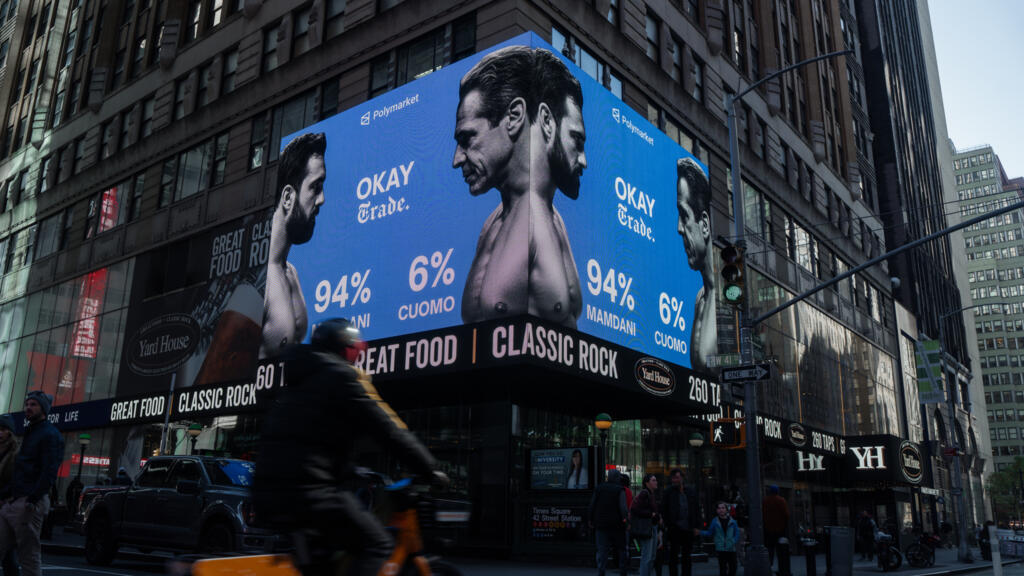
Advertisements by the American company Polymarket predict a victory for Zohran Mamdani in the New York City mayoral election on Tuesday, Nov. 4, 2025, in New York. © Olga Fedorova, AP


Only a handful of people in the world knew what was going to happen in the early hours of January 3, before ‘Operation Absolute Resolve’ was launched. The extraordinary two-hour-and-twenty-minute military intervention by air, land and sea culminated in the capture of Venezuelan President Nicolas Maduro and his wife. It was a top-secret operation, which stunned the world.

But a hint of what was to occur emerged in the online, crypto-based prediction market portal Polymarket, where anonymous users bet on real world events. User 0x31a56e wagered $32,537 that Maduro would be out of power by the end of January when the odds of that happening on the afternoon of January 2 were placed at just 6.5%. By midnight, those odds jumped to 11% and surged just before the operation was executed. The suspiciously timed bet paid off – anonymous user 0x31a56e made a neat profit upwards of $436,000 in just one night. The account has since vanished.

This odd incident pushed the online prediction market – which was growing but still fairly niche – into the mainstream spotlight. These are platforms where people can bet on the outcome of an enormous variety of future events – from the common (who will win the Super Bowl) to the bizarre (will Jesus be resurrected in 2026). These companies insist that they are not gambling portals, but legitimate financial markets, a chimera of a stock exchange and a crypto platform (though some watchdogs disagree).

Two players, Kalshi and Polymarket, have dominated the space in recent years. Of a total volume of $44 billion in prediction markets in 2025, Kalshi and Polymarket were responsible for a combined total of $38 billion: one of the fastest growing financial markets is one that most people ignore, or don’t know about.

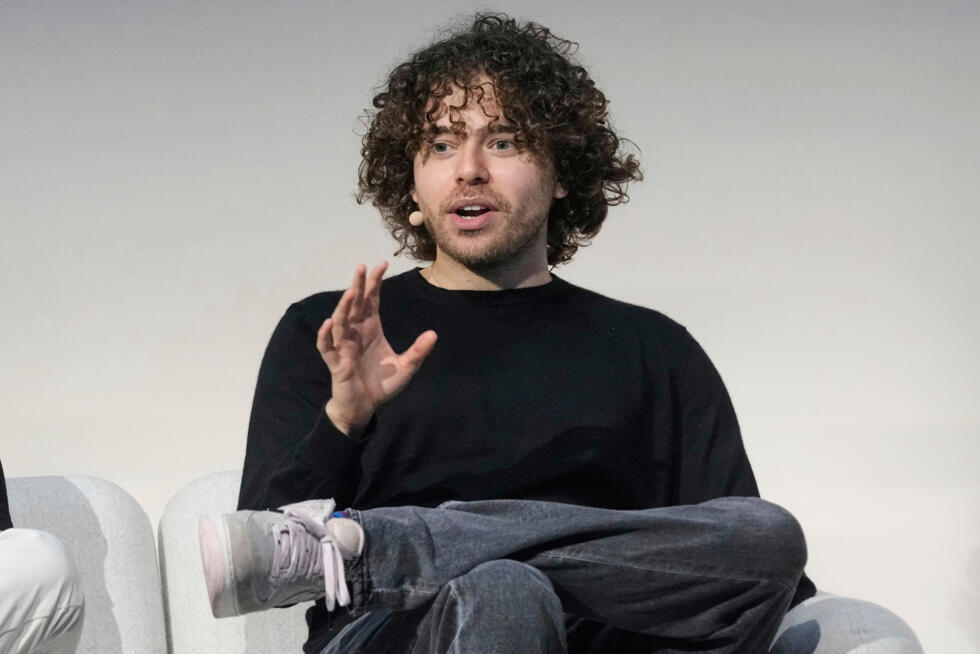
Shayne Coplan, founder and CEO of betting platform Polymarket, participates in the State of Crypto Summit, in New York, Thursday, June 12, 2025. © Richard Drew, AP


Trades on these websites are not to be confused with polls, insists Polymarket’s precocious founder Shayne Coplan, in an interview with 60 Minutes. Coplan, who founded the company in 2020 when he was just 21 years old, said that Polymarket tries to predict actual outcomes – "You make money if you're right. You lose money if you're wrong. And as a result it creates this information that's useful for people."

Some people have profited from making informed wagers – including a prolific, successful Polymarket trader who goes by the name Domer and features in the same 60 Minutes report. The former professional poker player moved to Polymarket because it was ‘more exciting’. He won over $100,000 predicting an American Pope, and even more after he picked JD Vance to be Donald Trump's presidential running mate. Domer went against the odds because he believed US President Donald Trump likes one syllable names because “he (Trump) is very into marketing”.

Even established media outlets like CNN and CNBC have struck deals to incorporate Kalshi prediction markets into coverage.

But prediction markets do not come without an enormous share of criticism. Polymarket, specifically, has been at the root of controversy because it relies on cryptocurrency and blockchain to run.

Users like 0x31a56e, who predicted Maduro’s capture, can trade anonymously, without being traced. While it is possible that they just got very lucky, analysts say it’s far more likely that someone with inside information realised they could make a quick buck. On crypto-native platforms, there’s no real way of knowing.

It’s because of this reason that in most of Europe, where a patchwork of rules must be adhered to, Polymarket is not legal or easily accessible. Some countries treat prediction markets as gambling, and the ones that do not still require licensing. Regulators are wary, with good reason.

Prediction markets were also heavily regulated under the Biden administration, but under President Trump, these sites have profited from deregulation and a huge boom in power.

But critics are concerned about the platforms commodifying real world events and encouraging people to bet on political, military and diplomatic events that have real-world consequences.
The risks of manipulation and insider trading

Maduro is only one example of a litany of shady trades made on prediction markets. Hours before the announcement of Nobel Peace Prize winner María Corina Machado, one user bet thousands in her favour: the likelihood of her winning leapt from 3.75 percent to nearly 73 percent within two hours – prompting authorities in Norway to open an investigation.

Similarly, in early January, White House Press Secretary Karoline Leavitt ended her briefing after 64 minutes and 30 seconds. Her abrupt exit left traders wondering whether Leavitt had deliberately stopped before the 65-minute mark to turn a profit. Polymarket had predicted at 98 percent odds that the briefing would run past 65 minutes.

Alex Goldenberg, an intelligence analyst and fellow at the Miller Center on Policing and Community Resilience at Rutgers University, says the signs are clear: “Across these cases, a consistent pattern emerges: new accounts with no trading history taking high-conviction, low-probability positions hours before those events occur. These aren't gradual market movements reflecting evolving public information. They bear the textbook signatures of insider trading in traditional financial markets.”

The point of these markets is to reward people with superior information i.e., those who collect the right data and analyse accurately could stand to make money. There’s nothing inherently wrong with that, he says, but there’s a fine line between analysis and inside information. “Scale that logic to domains governed by secrecy: military operations, covert action, diplomatic negotiations. In those domains, ‘superior information’ means access to classified or non-public knowledge. The platform architecture doesn't distinguish between a well-informed analyst and someone with a security clearance who just walked out of a briefing.”

Prediction markets’ blurry lines can also create serious problems for national security.

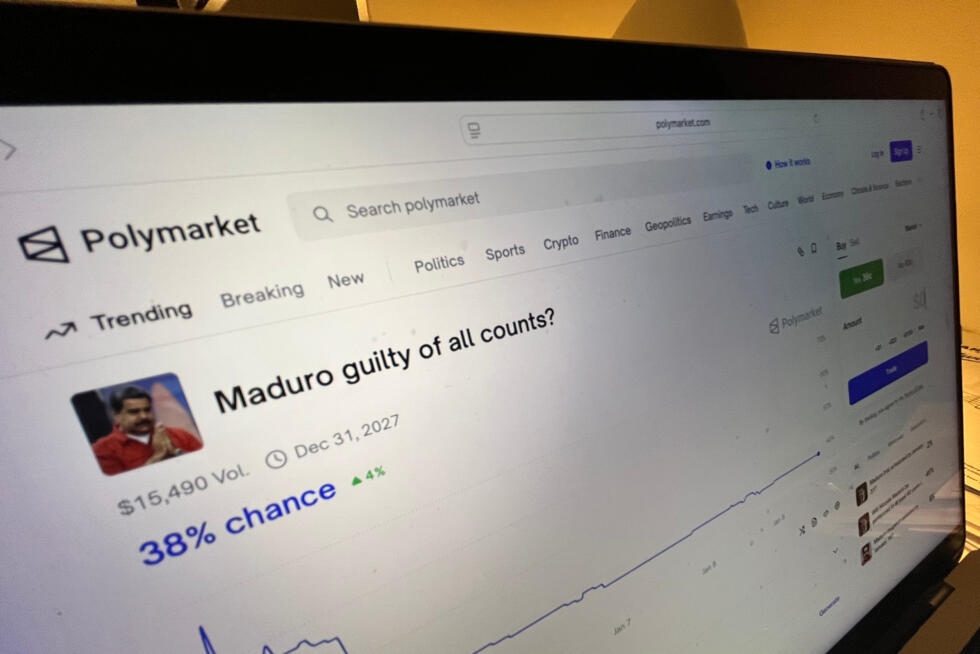
Polymarket prediction market website is displayed on a computer screen Friday, Jan. 9, 2026, in Philadelphia. © Wally Santana, AP


One account, originally named RicoSauve666 and later Rundeep, bet on several operations connected to Israeli military action with extremely consistent outcomes. Israel Defense Forces and the Israel Security Agency (Shin Bet ) ultimately opened an investigation into the user.

“The high-conviction, low-probability trades we saw before the Venezuela operation and Israeli strikes bear the hallmarks of someone with access monetizing what they know,” says Goldenberg. “That's privatizing state secrets. Diplomats, military personnel, intelligence analysts, contractors, and anyone in the national security apparatus now has a potential avenue to monetize non-public, sensitive information for personal profit.”
How prediction influences perception and policy

Dangerous biases can occur when an outcome is presumed – Goldenberg presents a hypothesis: “Suppose the US is about to carry out an operation against Iran and multiple high-conviction, low-probability bets suddenly appear on a prediction market that it's going to happen tomorrow,” he posits. “You've potentially given an adversary advance notice of an operation through publicly visible market activity.

"An adversary placing large bets on specific military outcomes can create a situation where we ask ourselves, does someone know something? That alone sows confusion and distorts decision-making."

The predictions on these platforms are visible to anyone. Diplomatic, geopolitical and military decisions could potentially be made on assumed outcomes – which could be particularly dangerous if these markets can be manipulated.

“When a prediction market shows odds on a US strike suddenly jumping, that movement could become news. Media reports it, policymakers see it. The market doesn't just predict. It shapes perception.”

This is a far greater risk on crypto native platforms like Polymarket, where trades take place anonymously, often in offshore jurisdictions. They are extremely difficult to trace back to an individual. “Who investigates? Which jurisdiction applies?” asks Goldenberg. “Today, the honest answer is that in many cases, they wouldn't be caught. Several countries, including France, have already concluded these platforms can't be adequately regulated and banned them outright.”

There’s also the important question of who runs the market themselves: the US president's son Donald Trump Jr. is an adviser to both Kalshi and Polymarket. His venture capital firm 1789 invested an undisclosed “double-digit millions of dollars” into Polymarket in 2025. Polymarket’s founder sees this as a positive – saying in an interview, “This admin is very pro-innovation, and pro-crypto, and pro-Polymarket, which is amazing… I'm a young entrepreneur. If I have people who believe in what I do, who understand how politics works and can help me… there's nothing wrong about that.”

Furthermore, Trump Media and Technology Group, the owner of the president’s social-media platform, Truth Social, has announced its own platform, Truth Predict.

There are real, human consequences of turning the world into one big casino where serious events with real repercussions are being reduced to a set of numbers. “When you're looking at a screen that says 'Will Country X invade Country Y by March 31? Yes/No', you're interacting with an abstraction. But the underlying event involves air strikes, casualties, displaced populations. The platform strips away human reality and replaces it with a contract and a price,” says Goldenberg.

“It fundamentally changes civic discourse. Instead of asking ‘should we strike’, which is a moral and strategic question, we're asking ‘what are the odds we strike’. We've taken events with real human consequences and made them feel like any other financial instrument. That normalization is worth paying attention to."


Solutions to climate change challenges: 'We have all the tools', just not the will

ANTARCTICA

Issued on: 11/02/2026 - FRANCE24

Eve Irvine is very pleased to welcome Glaciologist Dr. Heïdi Sevestre and Explorer Matthieu Tordeur. They made the treacherous journey across Antarctica using wind power only: “it’s nature who decides in Antarctica.” They recorded “thousands of kilometres worth of data” that can help answer two urgent questions: whether warming is changing snowfall in ways that might partially offset coastal ice loss, and what the deep internal layers of Antarctic ice reveal about Earth’s past warm periods, including those “more than 130,000 years ago.”

Video by: Eve IRVINE

Canada's tighter immigration policy divides the country

Issued on: 11/02/2026 

05:40 min


Canada is undergoing a historic demographic shift: according to Statistics Canada, the country is experiencing its sharpest population decline since World War II. Behind this phenomenon is an unprecedented tightening of migration policy, after years of openness under former prime minister Justin Trudeau. As a result, the number of foreign students and temporary workers has plummeted in order to "reduce pressure on housing, public services and infrastructure", according to authorities.

The policy is sparking debate across the country, with thousands of skilled workers who have been ordered to pack their bags saying they feel "betrayed" and taking the state to court. They are backed by many local elected officials.

Trade unions and business organisations across Canada also denounce the plan, calling it "economic suicide".

Our correspondents Joanne Profeta and François Rihouay report, with Fraser Jackson.
BY:

François RIHOUAY

Joanne PROFETA

Fraser JACKSON


WE BUILT IT, WE PAID FOR IT

Canada's Carney says Ontario-Michigan bridge tensions will be 'resolved' after Trump call


Canadian Prime Minister Mark Carney said Tuesday that he had a call with US President Donald Trump and said tensions would be "resolved" after Trump threatened to block a $4.7 billion bridge project between Canada and the United States.

Issued on: 10/02/2026 - 
By: FRANCE 24
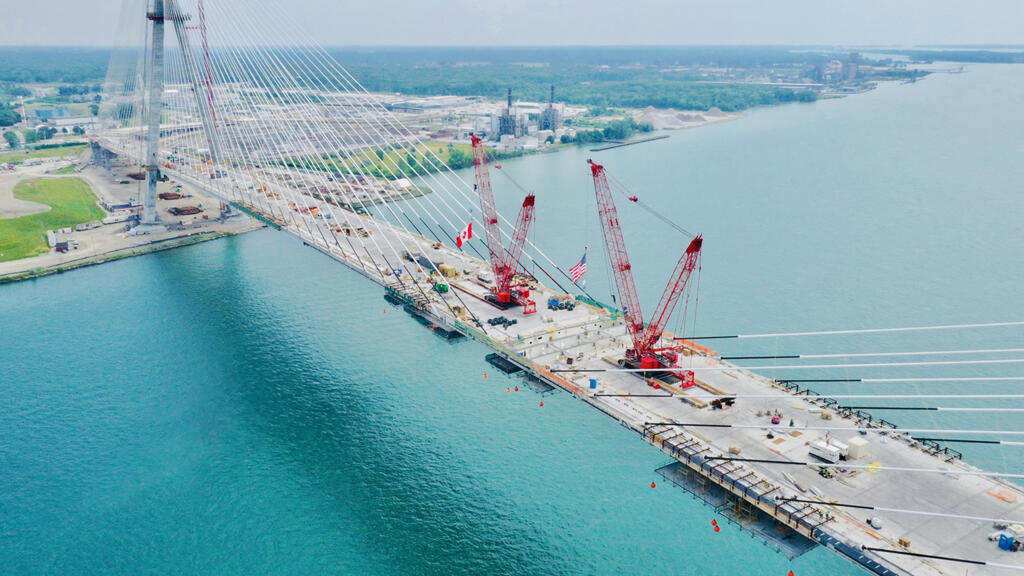
Spanning the Detroit River, the Gordie Howe International Bridge will be the longest cable-stayed bridge in North America. © Business Wire via AP

Canadian Prime Minister Mark Carney said he spoke to US President Donald Trump Tuesday about a new bridge connecting Canada and the US, assuring that the president's complaints about the project will be "resolved".

Trump said the United States should own "at least half" of the still under-construction Gordie Howe International Bridge that links the Canadian province of Ontario with the US state of Michigan.

Work on the $4.7-billion bridge – named after the late Canadian-born National Hockey League great and Detroit Red Wings star Gordie Howe – started in 2018. It is due to open this year.

According to a fact-sheet issued by the Windsor-Detroit Bridge Authority, the bridge was financed entirely by Canada and will be jointly owned by the governments of Canada and the state of Michigan.

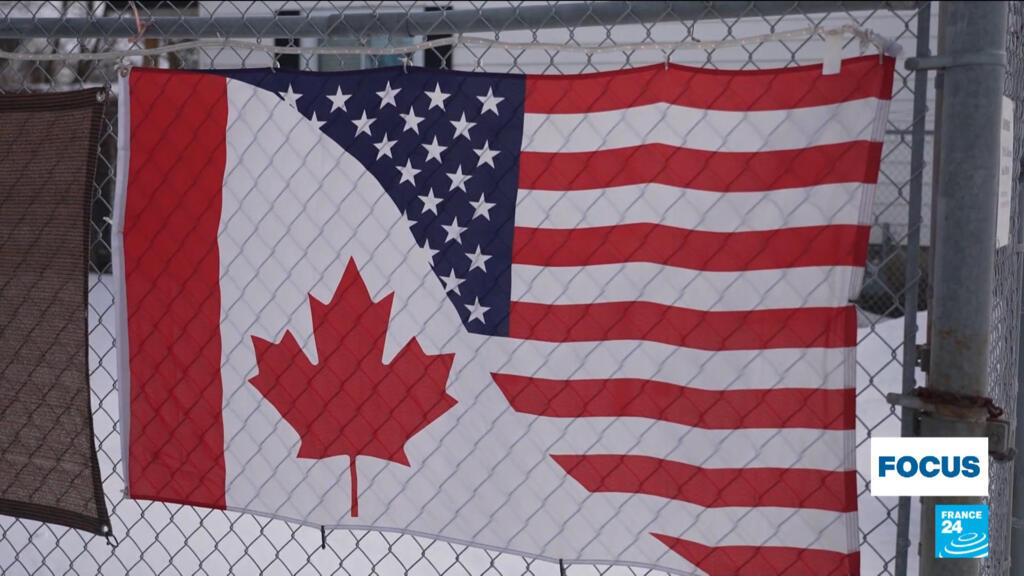
US-Canada relations cool at the border over Trump's tariffs and threats

FOCUS © FRANCE 24
05:19


"I spoke to the president this morning. Regarding the bridge, the situation is going to be resolved," Carney told reporters in Ottawa without giving details.

"I explained that Canada, of course, paid for the construction of the bridge; that the ownership is shared between the state of Michigan and the government of Canada," Carney said.

Trump, who has repeatedly suggested that Canada become the 51st US state, threatened to block the opening of the bridge in a social media post late Monday.

"I will not allow this bridge to open until the United States is fully compensated for everything we have given them, and also, importantly, Canada treats the United States with the Fairness and Respect that we deserve," Trump posted on Truth Social.

"We will start negotiations, IMMEDIATELY."

Among other complaints, Trump alleged Canada used "virtually" no US products to build it.

Carney said he told Trump "there's Canadian steel, Canadian workers, but also US steel, US workers that were involved" in construction.

Carney did not comment on Trump's allegation that as a consequence of Canada pursuing a trade deal with China, Beijing would "terminate" ice hockey.

Washington threatened to slap 100 percent tariffs on Canada after Carney visited Beijing last month and sealed a preliminary trade deal with China.

(FRANCE 24 with AFP)


What's behind Trump's threats on the US-Canada Gordie Howe International bridge?


Issued on: 11/02/2026 - FRANCE24

Play (06:28 min)


US President Donald Trump is threatening to block the opening of a new cross-border bridge between the US and Canada over concerns Washington has been treated unfairly over the course of the project. In this edition, we see whether Trump's claims about the bridge are fair and whether other motives could explain his threats. Also, Argentinians want an update on the method used to calculate inflation, which hasn't changed since 2004.


 Mass shooting in British Columbia leaves 10 dead and dozens wounded


A school shooting in Tumbler Ridge, British Columbia, has left at least eight people dead, including the suspected shooter, and more than 25 more wounded, Canadian authorities said Tuesday. Two additional deaths were reported at a nearby home believed to be linked to the attack.


 11/02/2026
By: FRANCE 24
Video by: Oliver FARRY


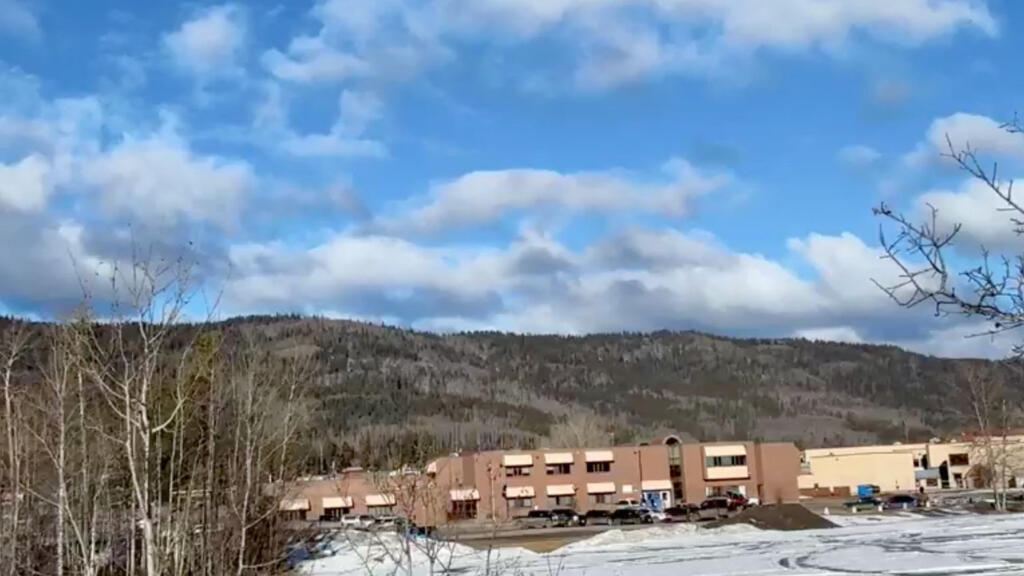
Vehicles are parked outside the Tumbler Ridge Secondary School, the site of a deadly mass shooting in Tumbler Ridge, British Columbia, Canada, February 10, 2026, in this screengrab obtained from a social media video. © Trent Ernst via Reuters
01:33


A shooting at a school in British Columbia left at least eight people dead, including a woman whom police believe to be the shooter, with two more people found dead at a home believed to be connected to the incident, Canadian authorities said Tuesday.

The Royal Canadian Mounted Police said more than 25 people were injured, including two with life‑threatening injuries, after the shooting at Tumbler Ridge Secondary School.

RCMP Superintendent Ken Floyd told reporters that investigators had identified the shooter but would not release a name, and that the suspect's motive remained unclear.

“We are not in a place to understand why or what may have motivated this tragedy,” Floyd said.

He added that police are still investigating how the victims are connected to the shooter.

School shootings are rare in Canada.

The town of Tumbler Ridge, which has a population of about 2,400 people, is more than 1,000 kilometres north of Vancouver, near the border with Alberta.

“As part of the initial response to the active shooting, police entered the school to locate the threat. During the search, officers located multiple victims. An individual believed to be the shooter was also found deceased with what appears to be a self‑inflicted injury,” the RCMP said in a statement.

“Six additional individuals, not including the suspect, have been located deceased inside the school. Two victims have been airlifted to hospital with serious or life‑threatening injuries. A third victim died while being transported to hospital.”

The Peace River South School District said earlier Tuesday that there was a “lockdown and secure and hold” at both the secondary school and Tumbler Ridge Elementary School.

Canada's Prime Minister Mark Carney said he was "devastated" by the "horrific" shooting. "My prayers and deepest condolences are with the families and friends who have lost loved ones to these horrific acts of violence," Carney said in a social media post.

Larry Neufeld, the member of the legislature for Peace River South, told reporters at the legislature that an “excess” of resources, including RCMP and ambulance support, had been sent to the community.

He said he did not want to release any more information over concerns that it might jeopardise the safety of the ongoing operation.

The provincial government website lists Tumbler Ridge Secondary School as having 175 students from Grades 7 to 12.

Tuesday's shootings were Canada's deadliest rampage since 2020, when a gunman in Nova Scotia killed 13 people and set fires that left another nine dead.

(FRANCE 24 with AP)


Attacker kills at least nine and injures dozens in British Columbia school shooting

School shootings are rare in Canada.

By Euronews
Published on 

At least nine people were killed after a school shooting in Tumbler Ridge, British Columbia, with the suspected gunman also dead and several injured.

A suspected shooter has killed at least nine in a school shooting in British Columbia on Tuesday, one of Canada's deadliest such attacks in decades.

Six people were found dead inside Tumbler Ridge Secondary School and another victim died while being transported to hospital, the Royal Canadian Mounted Police (RCPM) said.

The suspected shooter was also found dead at the school with what appeared to be a self-inflicted injury.

"As part of the initial response to the active shooting, police entered the school to locate the threat. During the search, officers located multiple victims. An individual believed to be the shooter was also found deceased with what appears to be a self‑inflicted injury,” RCMP said in a statement.

Two more people were found dead at a residence in Tumbler Ridge believed to be connected to the incident, police said.

“Six additional individuals, not including the suspect, have been located deceased inside the school. Two victims have been airlifted to hospital with serious or life‑threatening injuries. A third victim died while being transported to hospital,” RCMP said.

About 25 others were treated for non-life-threatening injuries at a local medical centre, police said.

RCMP Superintendent Ken Floyd said that investigators knew the identity of the shooter but would not release a name, however the reason of the shooting remains unclear.

“We are not in a place to understand why or what may have motivated this tragedy,” Floyd said.

Floyd added that police are still investigating how the victims are connected to the shooter.

Canadian Prime Minister Mark Carney expressed his condolences to the victims’ families and stated that the government “are in close contact with their counterparts to ensure the community is fully supported as best we can.”

“I am devastated by today’s horrific shootings in Tumbler Ridge, BC My prayers and deepest condolences are with the families and friends who have lost loved ones to these horrific acts of violence. ” he wrote in a post on X.

“Our ability to come together in crisis is the best of our country — our empathy, our unity, and our compassion for each other.” he added.

Schools placed on lockdown

Both the secondary school and the Tumbler Ridge Elementary school were placed on “lockdown and secure and hold,” the Peace River South District said earlier on Tuesday.

According to Larry Neufeld, the member of the legislature for Peace River South, an "excess" of resources including RCMP and ambulance support were deployed into the community, without releasing more information over concerns of jeopardising the safety of the ongoing operation.

School shootings are rare in Canada.

The small town of Tumble Ridge is located more than 1,000 kilometres north of Vancouver, close to Alberta.

According to the provincial government website, Tumbler Ridge Secondary School lists 175 students in grades 7 to 12.


LA REVUE GAUCHE - Left Comment: Search results for EMOTIONAL PLAGUE

Thailand: Gunman opens fire at school
DW
FEBRUARY 11, 2026

Three people have reportedly been injured in a shooting incident at a Thai school.

A gunman opened fire at a school in Songkhla Province in southern Thailand on Wednesday, with a police official saying three people were injured.

Another official told Reuters news agency that the gunman had been detained and that the hostages he had been holding had all been released.

The provincial administration had said earlier on social media that an 18-year-old man had entered the Patongprathankiriwat School in the town of Hat Yai and had taken several students and teachers hostage.

What have Thai officials said about the shooting incident?

"The perpetrator has been captured," Deputy Superintendent Wichian Soboon told Reuters.

He added that two people — a student and ‌a teacher — were wounded in the incident, with other reports saying the suspect had also been injured after being shot by police.

In a conflicting casualty count, the Songkhla provincial government said in a statement that there had been no victims, though "about two to three gunshots were heard" after the gunman entered the school

Gun violence and ownership are not uncommon in Thailand.

In 2022, a ⁠former police ​officer killed 36 people, including 22 children, in a gun-and-knife attack at a nursery in the country's east.

More to follow.
Why public transport fails to protect women


Issued on: 06/02/2026 - FRANCE24

PLAYING TIME 12:57 min


From Tokyo to Toronto, Delhi to Paris, millions of women plan their journeys: choosing where to sit, when to travel, and how to stay alert. More than 70 percent of women worldwide have encountered sexual harassment in public spaces, including on transit. Here in France, the number of victims of sexual violence on public transport, recorded by law enforcement, has increased by 86 percent in almost a decade. Some 91 percent of victims are women.


To unpack why women's safety in public transport is a global problem, and what real solutions could look like, Jennifer Ben Brahim speaks with urbanist, speaker and writer Leslie Kern. She has written extensively about gender, gentrification and feminism, such as in her book "Feminist City: Claiming Space in a Man-Made World". We talk about how despite research showing that women are more likely to rely on public transport than men, it is not at all adapted to their needs.

Also, how a recent attempted rape of a woman on a Paris commuter train made headlines and led to a petition calling for women-only carriages. They already exist in countries like Japan, Mexico and India, where women have to grapple with harassment, dilapidated infrastructure and a lack of accountability.


Gisele Pelicot publishes memoir of rape trial that shook France

Gisele Pelicot on Tuesday published a memoir reflecting on the landmark rape trial in France that made her a global symbol in the fight against violence against women, after she chose to confront her attackers in open court.


Issued on: 10/02/2026 -
By: FRANCE 24


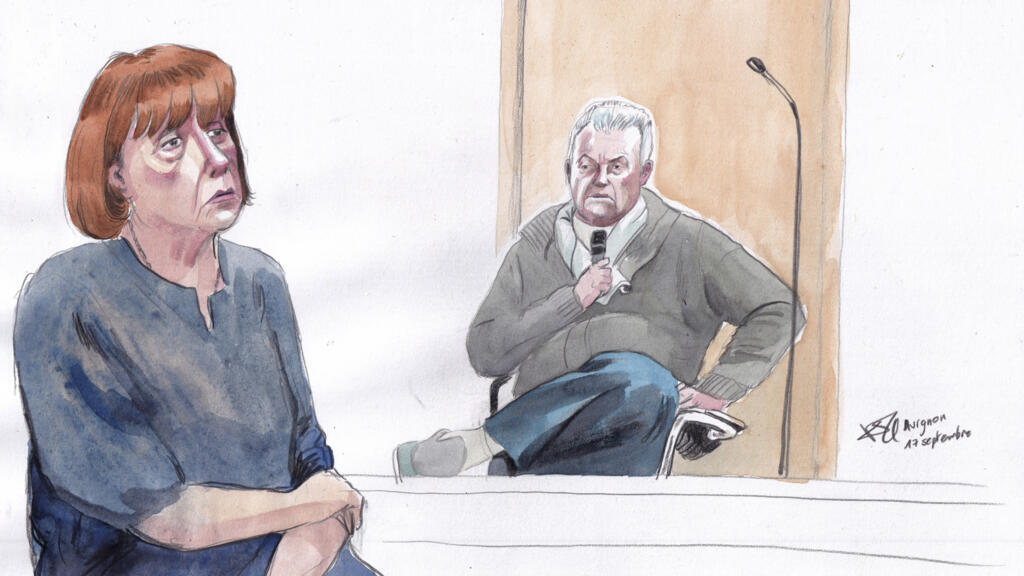
This courtroom sketch by Valentin Pasquier shows Gisele Pelicot, left, and her ex-husband Dominique Pelicot, right, during his trial at the courthouse in Avignon, southern France, on September 17, 2024 © Valentin Pasquier, AP

Gisele Pelicot, the survivor of mass rapes organised by her husband at their home in southern France, has published her memoirs about the trial that turned her into an internationally celebrated figure in the movement to end violence against women.

Le Monde published some extracts of the original French on Tuesday.

Pelicot was drugged with tranquillisers for a decade by her ex-husband, Dominique Pelicot, then raped by him and dozens of men he recruited online.

In the 2024 trial in Avignon that garnered global attention, she declined the option to hold it behind closed doors, saying she wanted the world to know what she had been subjected to.

“When I think back to the moment I made my decision, I realise that if I had been 20 years younger, I might not have dared to refuse a closed session,” she wrote in her first-person account, titled "A Hymn to Life: Shame Has to Change Sides" in English and "Et la joie de vivre" in the original French.

The book, written with journalist and novelist Judith Perrignon, will be published by Flammarion on February 17, in a worldwide release in 22 languages.


A PROPOS © FRANCE 24
12:49


“I would have been afraid of the stares, those damned stares that a woman of my generation has always had to deal with,” she explained in an excerpt published by the newspaper.

“Perhaps shame fades all the more easily when you’re 70, and no one pays attention to you any more. I don’t know. I wasn’t afraid of my wrinkles, or my body,” she confided.

In the nearly four-month trial, 51 men, including her husband, were convicted.

Her courageous decision to lift the closed-door proceedings and her dignity during the hearing contributed to making Gisele Pelicot a leading figure in the fight against violence against women.

The book chronicles her “vague feelings” before the trial: “The closer it got, the more I imagined myself becoming a hostage to their stares, their lies, their cowardice, and their contempt,” she wrote. “Wasn’t I protecting them by closing the door?”

Her book also recounts her disbelief when police first showed her photos of the rapes taken by her husband.

“I didn’t recognise the men. Or this woman. Her cheek was so flabby. Her mouth so limp. She was like a rag doll.”

(FRANCE 24 with AFP)