Wednesday, February 11, 2026


Eight Decades Later, It Remains One World or None

by  and  | Feb 11, 2026 

Consider me an A-bomb baby. I was just a year old when, in the war my father had been part of, my country dropped atomic bombs on Hiroshima and Nagasaki, devastating those two cities and killing more than 200,000 people, including an estimated 38,000 children. Like so many kids of my generation, I would grow up ducking and covering under my desk at school during what were essentially end-of-the-world nuclear drills. When I walked the streets of New York City, I often passed yellow signs indicating fallout shelters (that you could rush into if a nuclear war were to begin). And while a freshman in college in October 1962, in the midst of the Cuban Missile Crisis, when President John Kennedy announced that Soviet missile sites were just then being prepared on the island of Cuba with “a nuclear strike capability against the Western Hemisphere,” I briefly feared that a nuclear war between the U.S. and the Soviet Union might leave the east coast of my country (where I was) with its own mushroom clouds.

And yet, how strange. It wasn’t a subject that came up in my home. It wasn’t something my friends and I really talked about. When I went to war movies with my dad, the world never blew up — you had to go to sci-fi films to see that — though in my dreams it sometimes did. Hiroshima and Nagasaki were seldom the subject of programs on TV.  I remember only one direct experience of seeing the devastation of Hiroshima. Right next to my apartment building in New York was the Plaza Theater, which regularly showed “art” films, including in 1959 or 1960, French film director Alain Resnais’s Hiroshima Mon Amour (Hiroshima My Love). Fortunately, the manager of that theater took a liking to me and let me into any films I wanted to see. And in that film, as a teenager, I actually did see footage of devastated Hiroshima.

I suspect the strange presence (and absence) of the atomic destruction of those two Japanese cities must have been why, soon after I got to Pantheon Books as an editor in 1976, when a friend sent me the translated British version of a Japanese book, Unforgettable Fire: Pictures Drawn by Atomic Bomb Survivors, I instantly decided that I simply had to publish it in this country. Those pictures drawn by survivors stunned me, as did the little texts that went with them. (“The condition in which I found my 40-year-old wife on the morning of August 11, 1945. She was badly burned and had developed running sores…. She looked just like a ghost because her eyelids were badly burned and swollen… The skin of her whole burned body on which maggots were breeding had the appearance of the crust of a crab.”)

And here we are 80 years after Hiroshima and Nagasaki and another atomic weapon has never been used, but, as TomDispatch regular Eric Ross reminds us today, in a world with nine nuclear powers and undoubtedly more to come, we may indeed be living on borrowed time on Planet Earth. ~ Tom Engelhardt


The End of New START and the Enduring Nuclear Nightmare

by Eric Ross

On February 5th, with the expiration of the New Strategic Arms Reduction Treaty, or New START, the only bilateral arms control treaty left between the United States and Russia, we are guaranteed to find ourselves ever closer to the edge of a perilous precipice. The renewed arms race that seems likely to take place could plunge the world, once and for all, into the nuclear abyss. This crisis is neither sudden nor surprising, but the predictable culmination of a truth that has haunted us for nearly 80 years: humanity has long been living on borrowed time.

In such a context, you might think that our collective survival instinct has proven remarkably poor, which is, at least to a certain extent, understandable. After all, if we had allowed ourselves to feel the full weight of the nuclear threat we’ve faced all these years, we might indeed have collapsed under it. Instead, we continue to drift forward with a sense of muted dread, unwilling (or simply unable) to respond to the nuclear nightmare. In a world already armed with thousands of omnicidal weapons, such fatalism — part suicidal nihilism and part homicidal complacency — becomes a form of violence in its own right.

Given such indifference, we risk not only our own lives but also the lives of all those who would come after us. As Jonathan Schell observed decades ago, both genocide and nuclear war are distinct from other forms of mass atrocity in that they serve as “crimes against the future.” And as Robert Jay Lifton once warned, what makes nuclear war so singularly horrifying is that it would constitute “genocide in its terminal form,” a destruction so absolute as to render the earth unlivable and irrevocably reverse the very process of creation.

Yet for many, the absence of such a nuclear holocaust, 80 years after the U.S. dropped atomic bombs on the Japanese cities of Hiroshima and Nagasaki, is taken as proof that such a catastrophe is, in fact, unthinkable and will never happen. These days, to invoke the specter of annihilation is to be dismissed as alarmist, while to argue for the abolition of such weaponry is considered naïve. As it happens, though, the opposite is true. It’s the height of naïveté to believe that a global system built on the supposed security of nuclear weapons can endure indefinitely.

That much should be obvious by now. In truth, we’ve clung to the faith that rational heads will prevail for far too long. Such thinking has sustained a minimalist global nonproliferation regime aimed at preventing the further spread of nuclear weapons to so-called terrorist states like IraqLibya, and North Korea (which now indeed has a nuclear arsenal). Yet, today, it should be all too clear that the states with nuclear weapons are, and have long been, the true rogue states.

A nuclear-armed Israel has, after all, been committing genocide in Gaza and has bombed many of its neighbors. Russia continues to devastate Ukraine, which relinquished its nuclear arsenal in 1994, and its leader, Vladimir Putin, has threatened to use nuclear weapons there. And a Washington led by a brazen authoritarian deranged by power, who has declared that he doesn’t “need international law,” has stripped away the fragile façade of a rules-based global order.

Donald Trump, Vladimir Putin, and the leaders of the seven other nuclear-armed states possess the unilateral capacity to destroy the world, a power no country should be allowed to wield. Yet even now, there is still time to avert catastrophe. But to chart a reasonable path forward, it’s necessary to look back eight decades and ask why the world failed to ban the bomb at a moment when the dangerous future we now inhabit was already clearly foreseeable.

Every City is Hiroshima

With Hiroshima and Nagasaki still smoldering ruins, people everywhere confronted a rupture so profound that it seemed to inaugurate a new historical era, one that might well be the last. As news of the atomic bombings spread, a grim consensus took shape that technological “progress” had outpaced political and moral restraint. Journalist Norman Cousins captured the zeitgeist when he wrote that “modern man is obsolete, a self-made anachronism becoming more incongruous by the minute.” Human beings had clearly fashioned themselves into vengeful gods and the specter of Armageddon was no longer a matter of theology but a creation of modern civilization.

In the United States, of course, a majority of Americans greeted the initial reports of the atomic bombings of those two Japanese cities in a celebratory fashion, convinced that such unprecedented weapons would bring a swift, victorious end to a brutal war. For many, that relief was inseparable from a lingering desire for retribution. In announcing the first atomic attack, President Harry Truman himself declared that the Japanese “have been repaid many fold” for their strike on Pearl Harbor, which inaugurated the official American entry into World War II. Yet triumph quickly gave way to a more somber reckoning.

As the scale of devastation came into fuller view, the psychological fallout radiated far beyond Japan. The New York Herald Tribune captured a growing unease when it editorialized that “one forgets the effect on Japan or on the course of the war as one senses the foundations of one’s own universe trembling a little… it is as if we had put our hands upon the levers of a power too strange, too terrible, too unpredictable in all its possible consequences for any rejoicing over the immediate consequences of its employment.”

Some critics of the bombings would soon begin to frame their concerns in explicitly moral terms, posing the question: Who had we become? Historian Lewis Mumford, for example, argued that the attacks represented the culmination of a society unmoored from any ethical foundations and nothing short of “the visible insanity of a civilization that has ceased to worship life and obey the laws of life.” Religious leaders voiced similar concern. The Christian Century magazine typically condemned the bombings as “a crime against God and humanity which strikes at the very basis of moral existence.”

As the apocalyptic imagination took hold, others turned to a more self-interested but no less urgent question: what will happen to us? Newspapers across the country began running stories on what a Hiroshima-sized bomb would do to their downtowns. Yet Philip Morrison, one of the few scientists to witness both the initial Trinity Test of the atomic bomb and Hiroshima after the bombing, warned that even such terrifying projections underestimated the danger.

Deaths in the hundreds of thousands were, he insisted, far too optimistic. “The bombs will never again, as in Japan, come in ones or twos. They will come in hundreds, even in thousands.” And given the effect of radiation, those who made “remarkable escapes,” the “lucky” ones, would die all the same. Imagining a prospective strike on New York City, he wrote of the survivors who “died in the hospitals of Philadelphia, Pittsburgh, Rochester, and Saint Louis in the three weeks following the bombing. They died of unstoppable internal hemorrhages… of slow oozing of the blood into the flesh.” Ultimately, he concluded, “If the bomb gets out of hand, if we do not learn to live together… there is only one sure future. The cities of men on earth will perish.”

One World or None

Morrison wrote that account as part of a broader effort, led by former Manhattan Project scientists who had helped create the bomb, to alert the public to the newfound danger they themselves had helped unleash. That campaign culminated in the January 1946 book One World or None (and a short film). The scientists had largely come to believe that, if the public had their consciousness raised about the implications of the bomb, a task for which they felt uniquely responsible and equipped, then public opinion might shift in ways that could make policies capable of averting catastrophe politically possible.

Scientists like Niels Bohr began calling on their colleagues to face “the great task lying ahead,” while urging them to be “prepared to assist in any way… in bringing about an outcome of the present crisis of humanity worthy of the ideals for which science through the ages has stood.” Accepting such newfound social responsibility felt unavoidable, even if so many of those scientists wished to simply return to their prewar pursuits in the insulated university laboratories they once inhabited.

As physicist Joseph Rotblat observed, among the many forms of collateral damage inflicted by the bomb was the destruction of “the ivory towers in which scientists had been sheltering.” In the wake of Hiroshima and Nagasaki, that rupture propelled them into public life on an unprecedented scale. The once-firm boundary between science and politics began to blur as formerly quiet and aloof researchers spoke to the press, delivered public lectures, published widely circulated articles, and lobbied members of Congress in an effort to secure some control over atomic energy.

Among them was J. Robert Oppenheimer, director of the Los Alamos Laboratory where the bomb was created, who warned that, “if atomic bombs are to be added as new weapons to the arsenals of a warring world… then the time will come when mankind will curse the names of Los Alamos and Hiroshima,” a statement that left some officials perplexed. Former Vice President Henry Wallace, who had known Oppenheimer as both the director of Los Alamos and someone who had directly sanctioned the bombings, recalled that “he seemed to feel that the destruction of the entire human race was imminent,” adding, “the guilt consciousness of the atomic bomb scientists is one of the most astounding things I have ever seen.”

Yet the scientists pressed ahead in their frantic effort to avert future catastrophe by preventing a nuclear arms race. They insisted that there was no doubt the Soviet Union and other powers would acquire the weapon, that any hope of a prolonged atomic monopoly was delusional, and that espionage was incidental to such a reality, since the fundamental scientific principles needed to build an atomic bomb had been established by 1940. And with Hiroshima and Nagasaki, the secret that a functioning bomb was possible was obviously out.

They argued that there would be no effective defense against a devastating atomic attack and that the U.S., as a highly urbanized society, was uniquely vulnerable to such “city killer” weapons. With vast, exposed coastlines, they warned that such a bomb, not yet capable of being delivered by a missile, could simply be smuggled into one of the nation’s ports and lie dormant there for years. For the scientists, the implications were unmistakable. The age of national sovereignty had ended. The world had become too dangerous for national chauvinism, which, if humanity were to survive, had to give way to a new architecture of international cooperation.

Teaching Us to Love the Bomb

Such activism had its intended effects. Many Americans became more fearful and wanted arms control. By late 1945, a majority of the public consistently supported some form of international control over such weaponry and the abolition of the manufacturing of them. And for a brief moment, such a possibility seemed within reach. The first resolution passed by the new United Nations in January 1946 called for exactly that. The publication of John Hersey’s Hiroshima first as a full issue of the New Yorker and then as a book, with its intense portrayal of life and death in that Japanese city, further shifted public sentiment toward abolition.

Yet as such hopes crystallized at the United Nations, the two global superpowers, the United States and the Soviet Union, were already preparing for a future nuclear war. Washington continued to expand its stockpile of atomic weaponry, while Moscow accelerated its work creating such weaponry, detonating its initial atomic test four years after the world first met that terrifying new weapon. That Soviet test, followed by the Korean War, helped extinguish the early promise of an international response to such weaponry, a collapse aided by deliberate efforts in Washington to ensure that the United States grew its atomic arsenal.

In that effort, former Secretary of War Henry Stimson was coaxed out of retirement by President Truman’s advisers who urged him to write one final, “definitive” account defending the bombings to neutralize growing opposition. As Harvard president and government-aligned scientist James Conant explained to Stimson, officials in Washington feared that they were losing the ideological battle. They were particularly concerned that mounting anti-nuclear sentiment would prove persuasive “among the type of person that goes into teaching,” shaping a generation less inclined to regard their decision as morally legitimate.

Stimson’s article, published in Harper’s Magazine in February 1947, helped cement the official narrative: that the bomb was a last resort rooted in military necessity that saved half a million American lives and required neither regret nor moral examination. In that way, the opportunity to ban the bomb before the arms race took off was squandered not because the public failed to recognize the threat, but because the government refused to heed the will of its people. Instead, it sought to secure power through nuclear weapons, driven by a paranoid fear of Moscow that became a self-fulfilling prophecy. What followed were decades of preemptive escalation, the continued spread of such weaponry globally, and, at its height, a global arsenal of more than 60,000 nuclear warheads by 1985.

Forty years later, in a world where nine countries — the U.S., Russia, China, France, Great Britain, India, Pakistan, Israel, and North Korea — already have nuclear weapons (more than 12,000 of them), there can be little doubt that, as things are now going, there will be both more countries and more weapons to come.

Such a global arms race must, however, be ended before it ends the human race. The question is no longer what is politically possible, but what is virtually guaranteed if we refuse to pursue the “impossible.” Nuclear weapons are human creations and what is made by us can be dismantled by us. Whether that happens in time is, of course, the question that now should confront everyone, everywhere, and one that history, if there is anyone around to write or to read it, will not excuse us for failing to answer.

Copyright 2026 Eric Ross

Eric Ross is an organizer, educator, and PhD candidate in the history department at the University of Massachusetts Amherst.

Follow TomDispatch on Twitter and join us on Facebook. Check out the newest Dispatch Books, John Feffer’s new dystopian novel, Songlands (the final one in his Splinterlands series), Beverly Gologorsky’s novel Every Body Has a Story, and Tom Engelhardt’s A Nation Unmade by War, as well as Alfred McCoy’s In the Shadows of the American Century: The Rise and Decline of U.S. Global Power, John Dower’s The Violent American Century: War and Terror Since World War IIand Ann Jones’s They Were Soldiers: How the Wounded Return from America’s Wars: The Untold Story.

KIPP Charter School Closures

More Than 120 Workers Lose Their Jobs


Two Atlanta, Georgia charter schools that are part of the notorious KIPP Charter Schools Network (KIPP Soul Primary School and KIPP Soul Academy) will be closing at the end of the 2025-2026 school year. At least 122 staff will lose their jobs and hundreds of stunned parents and students will be forced to fend for themselves as they scramble frantically to find another school.

As is usually the case with charter school failures, “Parents say they were caught off guard by the timing” of the closures. Mary Harris, a parent, said, “It is a struggle to see where my child is going to go.” A student, Milani Bell, said, “They [KIPP] need to support and not close down our school because it’s affecting our education and our lifestyles.” Unfortunately, more deregulated charter schools are now closing with greater speed, frequency, and consequences. Instability and anarchy appear to be increasing with each passing year.

KIPP school officials nonchalantly repeated standard hackneyed statements such as “closing the schools was a difficult decision” and “we will help everyone through the transition phase.” This is little consolation for the hundreds affected by such poorly-managed charter schools.

In related news, two months ago KIPP announced that it will be closing seven charter schools in its Texas network of privately-operated schools, leaving thousands of teachers, students, parents, education support staff, and principals out in the cold.

Schools should not be opening and closing, let alone with great regularity. Such a thing is scandalous and violent to say the least. “Free market” education is socially irresponsible and destructive. Treating education as a commodity in a dog-eat-dog world where everyone fends-for-themselves is anachronistic and completely avoidable. Schools are not businesses, they are a social responsibility. The aims and values of a modern public education system are incompatible with the aims and values of business. It is no accident that the words public and private are antonyms. A survival-of-the-fittest ethos for schools, families, and individuals does nothing but consolidate inequality and reinforce a system of winners and losers. Far from uplifting everyone, “school choice” schemes leave many children and families behind every single week. Who thinks this is the best humanity can do two centuries after the industrial revolution? Is this the finest the accumulated knowledge of humanity can give rise to?

Founded in 1994 by business-centric forces, the Knowledge is Power Program (KIPP) Charter Schools Network enrolls more than 200,000 students and consists of 279 charter schools across the country. The network has long been known for its punitive boot camp “no excuses” approach to education.

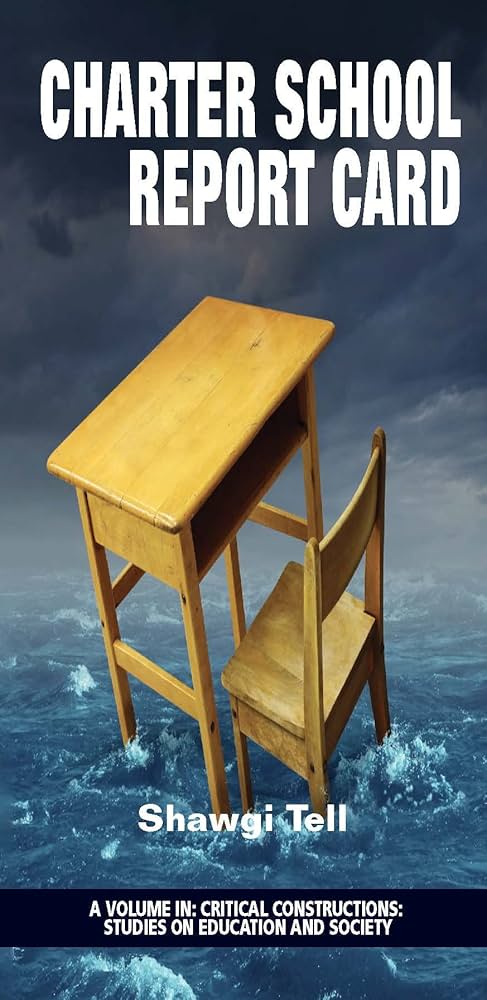
Shawgi Tell (PhD) is author of the book Charter School Report Card. He can be reached at stell5@naz.eduRead other articles by Shawgi.

How America Turns War into a National Sacrament


The Economy of Blood


A carpenter does not craft chairs only to hide them under a bed. A tailor does not sew garments just to store them away. So, then—does America manufacture military weapons and war machines only to keep them in the White House’s military depo ? No. They must be sold. And how? Through war. The more human blood spills like the Hudson River, the more the so‑called American Dream is realized. War fuels profit, and profit fuels power.

This is not metaphor. It is the economic theology of the United States.

For decades, America has perfected a system in which the suffering of distant peoples becomes the raw material of domestic prosperity. The defense industry is not an accessory to the economy—it is its beating heart. Every missile launched, every drone deployed, every bomb dropped is a deposit slip in the vaults of Lockheed Martin, Raytheon, Boeing, and Northrop Grumman. War is not an unfortunate byproduct of American policy. It is the business model.

And like all business models, it requires demand.

So the nation manufactures it—through fear, through propaganda, through the steady drumbeat of “threats” that must be neutralized. The enemy changes, but the logic remains: someone, somewhere, must bleed so that the American economy can breathe.

But beneath this machinery lies a deeper tragedy: the quiet erosion of the human spirit. A nation cannot worship war without wounding its own soul. The bombs America drops abroad eventually detonate at home—in its schools, its streets, its hospitals, its psyche. A society that normalizes violence abroad inevitably normalizes despair within.

The inner spirit of mankind was not built for this. We were not fashioned to cheer for destruction or to measure national greatness by the tonnage of weapons exported. Something ancient in us recoils at the sight of children running from rubble, mothers burying sons, fathers carrying the remains of their families in plastic bags. Something sacred in us knows that no flag, no anthem, no doctrine of “national interest” can justify the industrialization of death.

And yet, America continues to sanctify war as if it were a sacrament.

Politicians speak of “surgical strikes” and “precision operations,” as though killing could be made clean. News anchors describe invasions as “campaigns,” as though war were a marketing strategy. Corporations call weapons “products,” as though they were selling kitchen appliances. The language is sanitized so the conscience can be numbed.

But the world is not numb. The world is watching.

From Gaza to Sudan, from Yemen to the Congo, from Iraq to Afghanistan, the victims of American militarism are not abstractions. They are human beings whose lives were deemed expendable in the pursuit of profit. Their suffering is not collateral—it is currency.

And here is the truth America refuses to confront: A nation that builds its wealth on war cannot claim to lead the world in peace. A nation that exports weapons cannot preach democracy. A nation that profits from death cannot pretend to defend life.

The inner spirit of mankind is rising against this hypocrisy. People across the globe are awakening to the reality that the war economy is not inevitable—it is engineered. And what is engineered can be dismantled.

America stands at a crossroads where its soul must choose between empire and humanity. The war economy has devoured generations, hollowed out the nation’s moral core, and turned distant suffering into domestic profit. But the inner spirit of mankind is older than empires and stronger than fear. It remembers the sanctity of life before it was priced, the dignity of nations before they were bombed, the sacredness of children before they became statistics. That spirit is rising now—in the streets, in the global South, in the conscience of ordinary people who refuse to be complicit in the machinery of death. And until America confronts the truth that no nation can kill its way to security or bomb its way to peace, the world will continue to demand a reckoning. The age of manufactured enemies is ending. The age of human solidarity is calling. The only question left is whether America will hear it.

Sammy Attoh is a Human Rights Coordinator, poet, and public writer. A member of The Riverside Church in New York City and The New York State Chaplains Group, he advocates for spiritual renewal and systemic justice. Originally from Ghana, his work draws on ancestral wisdom to explore the sacred ties between people, planet, and posterity, grounding his public voice in a deep commitment to human dignity and global solidarity. Read other articles by Sammy.

A Postcard from Brighter Times


On February 11,1990, Nelson Mandela was released from Victor Verster prison in South Africa after having been incarcerated for twenty-seven years.

On that same day I was trying, not very successfully, to recover from a slew of personal hardships. My partner had died, too young, not long before. After nursing him over four painful years, I fell into incapacity myself, utterly drained and dispirited. My relatively privileged North American life had not well prepared me—by my mid-twenties– for oncology wards and hospice care. The aftermath of his illness left me seeing life through an achingly grey lens, and I had few hopes of any kind.

The news of Mandela’s release from prison was a welcome shaft of sunlight breaking through the grey gloom that encircled my life. I felt it–for a moment–the goodness and potential in a world that I was frankly near-ready to quit, my own tiny and self-imposed jail cell of despond pierced by the potential, by the inherent optimism that this unexpected and righteous turn of events augured.

So when I learned that Mandela and Winnie, the latter as yet untainted by the scandals that would eventually envelop her, were making Boston a stop on their tour of the US that June, I knew I had to be there.

The event was held on the Esplanade at the Hatch Shell amphitheater where Arthur Fiedler conducted the Boston Pops every Independence Day, fireworks over the Charles punctuating the 1812 Overture. On June 23,1990, the day of Mandela’s visit, the celebration was far more visceral and urgent than any Fourth of July concert. The oneness and solidarity which ran through the crowd was such that the signers of the Declaration of Independence would surely have been over the moon had their own work inspired it. This was an unfettered festival of love and joy and hope for a better world, and it went on for what seemed like forever.

There were upwards of a quarter of million people there, every imaginable sort, waving streamers of yellow, green and black beside the

On that same day I was trying, not very successfully, to recover from a slew of personal hardships. My partner had died, too young, not long before. After nursing him over four painful years, I fell into incapacity myself, utterly drained and dispirited. My relatively privileged North American life had not well prepared me—by my mid-twenties– for oncology wards and hospice care. The aftermath of his illness left me seeing life through an achingly grey lens, and I had few hopes of any kind.

The news of Mandela’s release from prison was a welcome shaft of sunlight breaking through the grey gloom that encircled my life. I felt it–for a moment–the goodness and potential in a world that I was frankly near-ready to quit, my own tiny and self-imposed jail cell river, dancing and embracing and cheering and believing together in a future built on love and a shared vision for freedom and justice and equality. It was as if we sensed that against the odds, we had triumphed over the darker side of human nature, that goodness and light were at last going to prevail.

There was music all afternoon. Ladysmith Black Mombazo, Johnny Cleg and Savuka, Paul Simon, Bobby McFerrin, Tracy Chapman, Livingston Taylor, David Bromberg and Michelle Shocked all took turns together and alone on the stage. Hugh Masekela showed up last, to perform his infectious Bring Him Back Home (Nelson Mandela) in an endless and ecstatic loop as the sun began to set.

Mainstream political luminaries–either genuinely eager to join in the celebration or there simply to pick up some star-dust on the soles of their shoes–began to gather on the stage. Jesse Jackson, Mike Dukakis, Ted Kennedy, Boston mayor Ray Flynn milled about, smiling irrepressibly. Masekela’s trumpet kept us all dancing, and at last Nelson and Winnie arrived.

The emotion when Mandela, grinning ebulliently, began to move to the music, his fist raised, shot across the Esplanade and beyond, as if all 250,000 of us were one. It felt like an orgasm of the heart. A spiritual epiphany. A communal peak experience. Like all truly inspirational leaders, he allowed us to project onto himself our own radiance, holding it and then returning it back to us, amplified and sacralized.

No one at the Hatch Shell that day was unaware of the twenty-seven years of suffering and injustice on Robben Island that had preceded, and in fact birthed, this moment. And few of us, I suspect, despite the shimmering diversity of the crowd, forgot that our own city was currently rife with inequality, that there were among us quite a few who were hungry and without shelter. My sorrows were still real and very much with me. Yet, for that one day, in that small spot on this often perplexing planet, things made sense. It surely seemed to me that we were united and joyful, our hearts transcendent with an innocent, unabashed belief in grace and pure goodness.

Mandela’s Boston Speech July 23,1990:

(go to 34:50: for the dancing!)

Elizabeth West has a lifelong interest in revolution, and in exploring the interstices where love, truth, imagination and courage meet, sometimes igniting wild transformation. Write her at: elizabethwest@sonic.netRead other articles by Elizabeth, or visit Elizabeth's website.

Revisiting India and Pakistan Perpetuated 

Animosities


Leaders to See the Mirror

History exists on facts of life and shallowness of a nation’s history are the inept and egoistic leaders. In wars, logic fails to define foes and friends. India and Pakistan have an enriched history to blame games for their failure to preserve freedom, security and the ideological foundation of their existence.

Insecurity and injustice stem from corruption and failed political leadership. India opted for institutional development to avoid military interventions, Pakistanis got derailed for change and national development by continuous military coups and foreign alliance to maintain its survival. British colonialism lasting a few centuries divided and ruled the subcontinent and history keeps on repeating itself for continued insecurity, internal political intrigues and foolish sectarian actions to discard reason for unreasoning. The British left the sub-continent in a hurry fearing Nazi Germany onslaught during the WW2 causing ethnic divides and killings in the name of freedom and social-political identities. While India claims secularism constitutional intent but flourishes a Hindu dominated democracy as its nationalistic basis, Pakistan lost its ideological point of reference having seven military coups and conspiratorial regime changes never ushering a fair system of political governance to ensure its integrity and survival. Some 15 years earlier when this author wrote “Pakistan at Crossroads”, it sounded alarmist to thinking people: how wrong people, with wrong thinking were doing the wrong things across Pakistan. Sadistic leaders are a problem. Perpetuated animosity serves domestic political agendas and ballot boxes.

To learn from history, newly independent Indian and Pakistani states and leaders needed objectively grounded reasons to reconstruct the societies for political change, freedom and friendship. Its dynamics should have envisaged proactive vision and creative leadership pursuing emancipation of peace and harmony over animosity. The State of Jammu and Kashmir is at the heart of all political and strategic problems which characterize the nature of relationships between the two nuclear rivals. Under PM Narendra Modi, India is tainted by Hindu nationalism and its ideological and normative connotations and supremacy of thoughts. But its unilateral claim on the people of Kashmir negates the British constitutional act of freedom for both states and does not have the characteristics of truth, wisdom and honesty to assert moral and intellectual justification. See “India and Pakistan: The Historic Divide Imposed by the British Empire. The Forbidden Truth of People and Cultures.”

Pakistan Needs Political Change and Institutionalized Political Governance

Ignorant, irresponsible and egoistic politicians blame others for their own fault lines and never dare to see the mirror. Societies and nations overtaken by greed and insane leaders would find excuses to claim fair is foul and foul is fair. Pakistan lost several decades of precious time and opportunities for nation-building, unity in soc-economic-political diversity and a peaceful system of transfer of power to elected people. Critical problems of national harmony, peace and unity surge in Baluchistan and Pakthoonwa Provinces. Bombing and killing of innocent people would not bring political change but intelligent leaders of vision and integrity could restore Islamic values of unity and societal harmonization.

The contemporary trajectory of politics spells out inherent mismanagement, abuse of power and amassed internal insecurity. The emerging trends of conflict with Afghanistan and attacks by ISIL and Pakistani Taliban in Baluchistan and Islamabad signal critical issues more than simple sectarian divides. Sharif brothers and a few Generals are part of the problem, not the solution. The prolonged problems deserve comprehensive thoughts of security apparatus and national unity. Truth telling is maligned and persecuted by the ruling elite. Sharifs, Bhuttos and Zaradari or few Generals do not represent the nation. It is an irresistible necessity of time and truth that those in power must be warned to listen to voices of reason and political necessity for change and truth for restraint and civilized behavior.

The February 2024 elections were rigged and demonstrated a fraudulent scheme of internal intrigues to stop peaceful change and transfer of power to Imran Khan, the leader of Teherk-e-Insaf Party. Generals do not build the nation but are a source of conflicts and sectarian divides. The Generals do not develop the economy or moral and intellectual fabrics of a nation but people of knowledge, intellectuals, visionary, thinkers or poets or philosophers do. Generals do not prepare present and future generations of educated people for national responsibility and share no sense of law and social justice to enhance nation-building.

Rationally looking, India and Pakistan failed miserably to understand the meaning and truth of national freedom from British colonialism. Please see: “British Colonialism and How India and Pakistan Lost National Freedom.”

Foes and Friends Co-exist in Global Politics

Nation-building for peace and good neighborly relationships is a critical issue for the present and future generations within the sub-continent. Strangely enough, new, educated and proactive generations are denied time and opportunities in Neo-colonial dominated cultures of political power and elite class domination. Post colonialism, India built some of its public institutions to enhance democracy, free elections and transfer of power but Pakistan fell victim to conspiracies, dismemberment and military coups and lost the strategic path of institutional development and nation-building. The current egoistic politicians who were not elected for the governance must face the mirror to immediately free Imran Khan (Pakistan Teherk-E-Insaf), leader from captivity and unfair treatment. Individualistically motivated animosities implied to charge Imran Khan with 150 or more bogus cases. Domestic harmony in Pakistan wants coherent rethinking to free Khan and his party members. 

Time and opportunities call for new ideas and new efforts on both sides to talk about peaceful means to settle the Kashmir dispute. Effective leaders are always people-oriented, open to listening and learning and know their strengths and weaknesses. The leaders of India and Pakistan must do soul searching and think critically – how to make a navigational change to ensure a sustainable political change in relationships, national freedom and a progressive future. Both nations have friendly ties with the USA, China, Russia and West European nations and leaders of these countries must take initiatives to make India and Pakistan understand the strategy of peace-making and good neighborly relationships as a preventive measure to stop a dreadful futuristic war. Any substantial rethinking for political change would require habitual practice of honesty, rational candor, frankness and sincerity of purpose to avoid dreadful tragedies. Recall that truth, glory and honor live in righteousness not in wickedness.

Mahboob A. Khawaja, PhD, specializes in international affairs-global security, peace and conflict resolution and has spent several academic years across the Russian-Ukrainian and Central Asian regions knowing the people, diverse cultures of thinking and political governance and a keen interest in Islamic-Western comparative cultures and civilizations, and author of several publications including: Global Humanity and Remaking of Peace, Security and Conflict Resolution for the 21st Century and Beyond, Barnes and Noble Press, USA, 2025  and We, The People in Search of Global Peace, Security and Conflict  Resolution. KDP-Amazon.com, 05/2025. Read other articles by Mahboob.