Sunday, April 05, 2026

Gulf Energy Strikes Risk Catastrophic Environmental Disaster – Analysis


An Iranian missile hit Haifa oil refineries in Haifa Bay, 19 March 2026. 
Photo Credit: Hanay, Wikipedia Commons

April 5, 2026 
 Arab News
By Gabriele Malvisi

When Iraqi forces withdrew from Kuwait in 1991, they left more than 700 oil wells burning in their wake. The fires took eight months to extinguish, spewing smoke plumes that stretched some 800 miles and spilling 11 million barrels of crude into the Gulf.

It was one of the largest man-made environmental disasters on record. More than three decades on, the current US-Israeli war with Iran, which has seen oil infrastructure bombed across the region, has ignited fears of a comparable catastrophe.

“The 1991 Gulf War oil fires, while concentrated in Kuwait, were on a far greater scale than what we are seeing presently,” said Doug Weir, director of the Conflict and Environment Observatory, a UK-based nonprofit.

“However, such comparisons will seem academic to those communities living in proximity to the targeted sites and who may face acute and chronic exposure to pollutants as a result.”

Attacks on energy infrastructure have escalated dramatically since the conflict began, disrupting global supply chains. Strikes on Saudi, Kuwaiti and Qatari liquefied natural gas facilities, combined with a near-total blockade of the Strait of Hormuz, have caused widespread outages.

Brent crude — which peaked at $119.50 on March 8 — climbed back to $116 on Monday, reflecting markets that remain deeply volatile.

Several energy companies have declared force majeure, prompting the Philippines to declare a national energy emergency and countries including Slovenia and Sri Lanka to introduce fuel rationing.

However, on April 2, the Philippines said Iran has granted its ships toll-free, safe, unhindered and expeditious passage through the Strait of Hormuz.

US President Donald Trump has threatened to “obliterate” Iran’s Kharg Island oil hub if an ongoing diplomatic process — mediated by Pakistan — fails to produce a deal. The threat came a day after he told London’s Financial Times that he was considering “taking the oil” in Iran.

Despite a declared pause in strikes on civilian infrastructure, Iran’s Ministry of Energy reported that attacks had cut power across Tehran and surrounding provinces. And on April 4, the US claimed responsibility for bombing Iran’s newly built B1 suspension bridge between Tehran and Karaj.

On Monday, fires broke out at an Israeli oil refinery in Haifa after a fuel tanker was struck by debris from an intercepted missile.

The economic consequences are already spreading far beyond the region. According to Oxford Economics, the conflict will upend energy markets for the rest of the year.

Higher prices and uncertainty will squeeze household spending, falling hardest on countries most dependent on Gulf oil and gas.

The fear is that, as a direct consequence of price hikes, the most vulnerable populations will be forced to consume less — and in some severe cases skip meals — underlining that the impact of disruption is not equally felt.

But the economic toll is only part of the story. Analysts warn that acute and long-term environmental risks resulting from the bombing remain largely underreported.

“It is pivotal to keep tracking and monitoring these strikes to make a proper risk assessment for nearby communities,” Wim Zwijnenburg, project leader on humanitarian disarmament at Dutch civil society organization PAX, told Arab News.

“In our current mapping, we are assessing over 2,500 damaged locations, some of them involved in missile production or other industrial processes that use large volumes of hazardous substances.

“Attacks on those locations can result in acute exposure to toxic materials, or long-term damage from pollutants getting into the soil and water sources.”


PAX has documented at least 18 attacks on commercial vessels over the course of four weeks of conflict, resulting in at least four oil spills, and the bombing of several naval vessels near Bandar Abbas on Iran’s Hormuz Strait, close to internationally recognized protected areas.

Many of Iran’s military bases are located within protected nature areas, Zwijnenburg noted, making them both ecologically sensitive and militarily vulnerable.

During the 12-day US-Israeli war with Iran in June last year, vast areas of vegetation in five protected sites caught fire following strikes on Iranian missile bases.

Oil pollution entering Gulf waters adds another dimension. Pollutants do not just damage the ecosystem; they enter the food chain through bioaccumulation and biomagnification, with cumulative health effects for the millions of people who rely on Gulf seafood.

The risk was thrown into sharp relief on Monday, when Iran reportedly struck a fully loaded Kuwaiti crude oil tanker in Dubai waters, sparking a fire. Authorities later confirmed the incident was contained with no spill or injuries.

“So far, the spills we are witnessing have been fairly small, and the oil dilutes or evaporates fairly quickly,” said Zwijnenburg, adding that dozens of spills and the dumping of wastewater from tankers and cargo vessels in the Arabian Gulf during peacetime pose “a larger problem” and contribute to “sustained pollution.

“But with these attacks, it only takes one large, fully laden crude oil tanker to be hit and create an ecological disaster, and those chances are rising each day.”

Earlier in March, researchers from Queen Mary University of London, Lancaster University and the Climate and Community Institute estimated that the first 14 days of the Iran war generated more than 5 million tonnes of carbon dioxide equivalent — greater than Iceland’s total annual carbon output.

The largest sources were the destruction of infrastructure and the burning of oil.

Among the conflict’s most haunting images is the black rain that fell near Tehran in mid-March — an oily, acidic downpour formed when soot, ash and toxic chemicals from burning fuel depots merged with atmospheric moisture and fell back to earth.

Although the phenomenon has been documented in other conflict zones — most notably following the Kuwait oil fires of 1991 — its appearance over a capital city of 10 million people marks a grim episode.

Iran’s Deputy Health Minister Ali Jafarian warned that soil and water supplies around the capital were already showing signs of contamination.

Authorities urged residents to stay indoors as the rain — likely laced with benzene, acetone, toluene and methylene chloride, all known carcinogens — coated streets and buildings across the city.

“In the short term, civilians face acute respiratory illness and worsening of pre-existing health issues due to heavy smoke and airborne pollutants,” said Mohammed Mahmoud, head of Middle East climate and water policy with the UN University Institute of Water, Environment and Health and founder of the Climate and Water Initiative.


“Over time, continued exposure to these contaminants can translate into higher risks of chronic respiratory disease, cardiovascular illness, and cancer that often emerge many years after initial exposure.”

These risks are “especially severe” for children and pregnant women, he said, with early-life toxic exposure carrying risks of long-term developmental impairment.

The region’s desalination plants, which provide the vast majority of drinking water in Kuwait, Oman and Saudi Arabia, represent a further vulnerability. Iran said a US airstrike damaged one of its plants. Bahrain accused Iran of damaging one of its own.

Massive oil spills in the Gulf could force desalination plants, which convert seawater into freshwater, to suspend work to avoid contamination or damage to machinery.

“Damage to desalination infrastructure is an immediate and critical threat,” said Mahmoud, who warned that in a region “heavily dependent” on desalinated water, any disruption can lead to limited access to safe drinking water, affecting all local populations.

While international humanitarian law prohibits methods of warfare expected to cause “widespread, long-term and severe damage” to the natural environment, enforcement is poor.

Iran’s foreign minister has accused Israel of committing ecocide, but as Weir noted, “at present, there is no international crime of ecocide, and none of the conflict parties have it on their domestic statute books. Accountability remains a political rather than a legal question.”

After the war ends, environmental damage — and its human toll — risks becoming a low priority.

“Too little attention is being focused on what needs to come next in terms of environmental assessment, assistance and remediation,” said Weir.

“We have seen little to suggest that Iran will have the resources, support or governance structures necessary to support an effective environmental response.”

 Even Top US Jets Face Risks: F-15 Incident Highlights Complex Airspace Over Iran – Analysis


April 5, 2026 
RFE RL
By Alex Raufoglu


A reported incident involving a US F-15 over Iran is drawing renewed scrutiny to the risks American aircraft face when operating in heavily defended airspace, underscoring a broader reality: Even one of the world’s most successful fighter jets is not immune in contested environments.

For decades, the F-15 has been a symbol of US air superiority. Across multiple conflicts, it has recorded more than 100 air-to-air kills — and, notably, has never been lost in air-to-air combat.

That record still stands. But recent events, alongside historical losses to ground-based defenses, are adding new context to the aircraft’s long combat history.

Earlier in March, three US F-15E Strike Eagles were reportedly shot down in a friendly fire incident involving a Kuwaiti F/A-18 Hornet during the opening stages of the ongoing Operation Epic Fury conflict with Iran.

The episode, still under investigation, did not result in fatalities, with all crews safely ejecting. Even so, it marks one of the more unusual friendly fire incidents involving the US Air Force in recent years and is expected to be closely studied.

Beyond such incidents, a small number of F-15s have been lost in combat zones — primarily to ground-based air defenses rather than enemy aircraft.

During operations over Iraq in the 1990s and early 2000s, several F-15s were downed by surface-to-air missiles and antiaircraft systems, highlighting a persistent vulnerability that remains relevant today.


Investments In ‘Advanced Technologies’


“The US has invested in advanced technologies — stealth, electronic attack, and space communications/PNT — that help provide an advantage over other air forces,” retired US Air Force Brigadier General Houston R. Cantwell, a senior resident fellow for airpower studies at the Mitchell Institute for Aerospace Studies, told RFE/RL on April 4.

“This, combined with careful planning and precise intelligence on the adversary, has minimized losses to fighter aircraft,” he said.

That investment has significantly reduced risk over time. The last confirmed US warplane shot down in combat was an A-10 during the 2003 Iraq War.

Since then, advances in stealth technology — reducing radio-frequency signatures and complicating radar detection — have further improved survivability.

Yet, Cantwell cautioned, those advantages have limits — especially over a country like Iran.

“Countries like Iran have a very advanced integrated air defense system (IADS),” he said. “This system has been degraded over the past month, but that does not mean it has been 100 percent destroyed.”

Iran retains a mix of radar-and infrared-guided missiles, along with antiaircraft artillery. Its size alone complicates efforts to neutralize threats.

“Iran is a huge country. The US cannot hope to completely eliminate any air threat just based on its size,” Cantwell said. “So long as combat missions are flown over Iran, there will be some threat to the aircraft.”

Even advanced fighters like the F-15 rely on defensive countermeasures such as chaff and flares — tools that improve survivability but offer no guarantees. “Even these systems are not 100 percent effective,” he said.

Adapting To Evolving Threats

The risks highlighted by the F-15 incident reflect a broader shift in how US adversaries prepare for conflict.

“I will say that the US [and Israeli] preference for stand-off warfare — fighting from the sky and avoiding the deployment of land forces — has likely increased our potential adversaries’ preparation for conflict with the US,” retired US Army Lieutenant Colonel Amos Fox, a fellow at Arizona State University’s Future Security Initiative, told RFE/RL.

“They understand how the US wants to fight — airpower and long-range strike — and thus they’ve invested in ways to offset that preference,” he said.

Fox pointed to growing cooperation among US rivals and the spread of military technology.

“As we’ve seen in both Ukraine and now in Iran, our adversaries also see us as an adversary and will work together to see us fail,” he said.

“The diffusion of targeting information, weapons systems, and defensive systems shouldn’t come as a surprise to anyone — and we’ve likely only seen the tip of the iceberg.”

Lessons From Past Conflicts

Historically, US air campaigns have faced higher losses under different conditions. During the 1991 Gulf War, coalition forces lost dozens of aircraft.

“The coalition lost nearly 100 aircraft in Desert Storm, but that campaign had very different objectives and timelines compared to Epic Fury,” Cantwell said.

Since then, US strategy has focused heavily on neutralizing enemy air defenses early in a conflict.

“IADS continue to evolve — making them the priority target at the beginning of any air campaign,” Cantwell said. “The US and Israel have focused on these systems to permit use of the air by numerous other assets.”

Still, suppressing such systems remains a complex and ongoing effort. “Keeping these assets degraded or destroyed is difficult,” he added.

Technology And The Future Fight


To reduce risk to pilots, the US has increasingly turned to unmanned systems such as the MQ-9 Reaper and RQ-170 Sentinel.

“The evolution of unmanned assets like the MQ-9 and RQ-170 permits penetration of these threats without risk to aircrew,” Cantwell said. “MQ-9s have been very effective searching for mobile targets and destroying them without risking aircrew deep in Iran.”

Next-generation concepts, including collaborative combat aircraft (CCA), aim to push this approach further by pairing unmanned systems with crewed jets.


“These aircraft will team with manned aircraft and permit the penetration of dense threat environments, while providing additional weapons at the disposal of a ‘quarterbacking’ fighter or bomber jet,” Cantwell said. “These CCAs might be essential to penetrate IADS in the early days of any campaign.”

A Record — With Caveats

For pilots forced down behind enemy lines, the risks remain immediate and severe.

“Evasion and health are primary,” Cantwell said. “You need to blend in while ensuring you’re taking care of your health — food, water, and shelter. Evade until you can find an appropriate pick-up location.”

Rescue missions have grown more complex as air defenses improve.

“These missions require advanced packages of aircraft and space capabilities,” he said. “The helicopter carries the pararescue team, but they require tanker support, air cover from fighters and attack aircraft, and timely intelligence from ISR assets like the MQ-9.”

The F-15’s unmatched air-to-air record remains intact. But its history — and recent incidents — underscore a more nuanced reality: Dominance in the air does not eliminate danger from the ground, human error, or evolving adversary tactics.

As Cantwell put it, as long as aircraft operate over heavily defended territory, “there will be some threat to the aircraft.”Alex Raufoglu is RFE/RL’s senior correspondent in Washington, D.C.

China's invisible hand in Iran’s F-35 success

China's invisible hand in Iran’s F-35 success
/ Airman 1st Class Alexander Cook - PD
By Mark Buckton in Taipei April 5, 2026

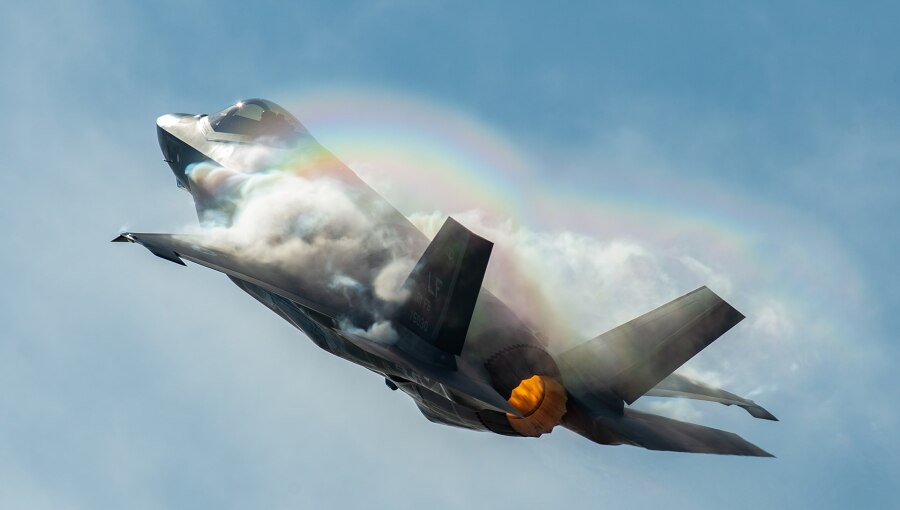
Just days before Iran claimed to have hit one of the US Air Force's most formidable jets - an F-35 stealth fighter - a Chinese social media account published a detailed guide on how such an attack could be carried out.

The video, posted in mid-March by an account called Laohu Talks World – laohu being Chinese for tiger with the first character ‘lao’ (老) also the first character used in the Chinese word for teacher – laoshi (老师), showed how Tehran could use run of the mill Iranian air defence systems to track and target America’s most advanced fighter jet.

The video in question quickly went viral, in the process attracting tens of millions of views. Then just days later, on March 19, Iran said its air defences, long-deemed backward by Western standards given its mix of older Soviet-era and domestically developed systems – had engaged an F-35A during an early morning mission over central Iran. In doing so, Iranian officials claimed to have forced the aircraft to make an emergency landing. The timing of the Iranian success against an F-35 prompted an immediate response from Chinese netizens with some describing it as strikingly prescient.

Since the start of Operation Epic Fury, a growing number of Chinese online accounts with science, technology, engineering, and mathematical backgrounds have been posting wide-ranging military analysis on how Iran can and should counter US air capabilities. These posts, which include in-depth technical explanations and tactical advice, are shared without subscription fees or obvious official support. However, given China’s use of its so-called civilian fishing fleets in the East China Sea to stretch Taiwanese and Japanese defence capabilities over the past five years, that such a form of decentralised knowledge-sharing during wartime should have no official backing is suspect at best.

The F-35 tutorial’s central argument, that forces in Iran could use low-cost systems against a fifth-generation stealth fighter, has at least a degree of technical credibility, however.

The F-35 Lightning II was designed to evade radar using its shape coupled to specialised production materials and hidden weapons bays. But stealth capabilities alone do not make the aircraft invisible, and its limitations are well known and recorded. Electro-optical and infrared sensors, which operate passively, do not trigger radar warning systems, and while the F-35 carries its own infrared sensor capabilities, it may not react fast enough to counter close-range threats. In the days after the March 19 incident it was noted that what happened was likely a passive EO/IR intercept. This in turn suggests the aircraft and pilot likely received no radar warning before the aircraft was damaged.

Analysts have since suggested that using a sudden radar burst against fifth-generation fighters to allow immediate tracking and firing of air defences, particularly once the aircraft has passed overhead, is easier than as it approaches; the long-standing reality being that attacking aircraft from behind is more successful than from any other angle. Whether or not the Chinese PLA Air Force is somehow involved, though, remains questionable. Officially China has kept its distance from the conflict, though reports point to Beijing having at least sold offensive drones and components to Iran in the months before the strikes began.

As such, what makes these civilian tutorials different is their public, unpaid, and supposedly unofficial nature and it remains unclear whether or not Beijing views this grassroots support as a problem, or is in some way behind it.

Saturday, April 04, 2026


French-based boats depart Marseille to join Gaza aid flotilla

Around 20 boats are making their way toward Italy, which aims to break Israel's blockade on Gaza and deliver humanitarian aid

Esra Taskin |04.04.2026 - TRT/AA


MARSEILLE

Around 20 boats from France set sail from the southern city of Marseille on Saturday to join the "2026 Spring Mission" of the Global Sumud Flotilla to break Israel's Gaza blockade and deliver humanitarian aid.

Preparations are ongoing for the mission, which aims to break Israel's blockade on Gaza and deliver humanitarian aid by departing from various Mediterranean ports.

After weeks of preparation, the participating boats from France left Marseille and are heading to Italy.

Their sails featured traditional Palestinian tatreez embroidery motifs, as well as images of Handala, a symbol of Palestinian resistance.

Residents of Marseille waved Palestinian flags and bid farewell to the flotilla with applause and slogans expressing solidarity with the Palestinian people and Gaza.

Representatives of the civil society organizations behind the initiative held a press conference at L’Estaque Port.

A member of the Thousand Madleens to Gaza movement, Nozha Trabelsi, stated that the situation in Gaza continued to worsen and has effects beyond the territory itself.

She said the concept of a ceasefire is misleading, recalling that 10 people were killed during the 2010 Mavi Marmara incident and that conditions for Palestinians have continued to deteriorate.

Another member of the same movement, Esther Le Cordier, explained that each boat represented different themes, such as prisoners, children, and medical personnel, all of whom she said are being targeted in Gaza.

She emphasized that the flotilla alone cannot bring change and called on citizens’ groups, associations, trade unions, and local communities to organize mass actions on land in support of Palestine.

Linda Sehili from the Solidaires union noted that they are mobilizing to end economic cooperation with what she described as Israel's far-right government.

Pierre Stambul, a spokesperson for the Union of Jewish French for Peace (UJFP), said Israel should be viewed as a colonial state and referred to the displacement of Palestinians in 1948 as a historical reality that cannot be ignored.

Claude Leostic from the France Palestine Solidarity Association expressed shame over what he considered the complicity of political leaders and called for it to end.

He demanded sanctions against Israel and warned that famine in Gaza is again becoming a serious risk due to ongoing closures.

The first Global Sumud sea mission began in mid-2025, and in October, Israeli naval forces attacked and seized more than 40 boats that were part of the humanitarian aid flotilla.

Tel Aviv detained more than 450 activists who were on board. Many told their hair-raising stories of abuse at the hands of their Israeli captors.

Israel has maintained a blockade on Gaza, home to nearly 2.4 million, for nearly 18 years and tightened the siege in March when it closed border crossings and blocked food and medicine deliveries, pushing the enclave into famine.
Ex-Israeli premier says Jews committing ‘crimes against humanity’ in West Bank

Ehud Olmert warns Israeli actions could lead officials to International Criminal Court amid ongoing violence in occupied territory

Khaled Yousef |04.04.2026 - TRT/AA


JERUSALEM

Former Israeli Prime Minister Ehud Olmert said Saturday that Jews are committing killings, "ethnic cleansing," and "crimes against humanity" in the West Bank.

In an interview with Channel 12, Olmert said such actions “would bring Israel to The Hague,” referring to the International Criminal Court (ICC) based in the Dutch city.

Addressing Israeli Chief of Staff Eyal Zamir and Police Commissioner Danny Levy, he warned: “Save the country from this catastrophe. You will end up in The Hague.”

His remarks come as Israeli aggressions continue in the West Bank, including killings, demolitions, displacement, and settlement expansion since Oct. 2023, alongside the genocide in Gaza.

The violence in the West Bank has killed 1,340 Palestinians, injured about 11,750 others, and led to the arrest of nearly 22,000, amid international warnings over a possible Israeli annexation of the territory.

On Nov. 21, 2024, the Pre-Trial Chamber I of the ICC issued arrest warrants for Israeli Prime Minister Benjamin Netanyahu and former Defense Minister Yoav Gallant on charges of war crimes and crimes against humanity related to the Gaza war.

A ceasefire that took effect on Oct. 10, 2025, aimed to end a two-year war that killed more than 72,000 Palestinians, wounded over 171,000, and caused widespread destruction to about 90% of civilian infrastructure, with reconstruction costs estimated by the UN at around $70 billion.

In Dec. 2025, the ICC Appeals Chamber rejected Israel’s appeal against the arrest warrants for Netanyahu and Gallant.

According to the court, judges dismissed Israel's challenge to halt the investigation into its actions during the Gaza war by a majority vote.

*Writing by Mohammad Sio in Istanbul


Kronos Microreactor Just Cleared Its Biggest Regulatory Hurdle Yet

  • Nano Nuclear has submitted a Construction Permit Application to the NRC for its Kronos HTGR microreactor at the University of Illinois, triggering a roughly 12-month formal review before construction can be authorized.

  • Kronos is designed to deliver 15 MW of carbon-free baseload power using meltdown-resistant TRISO fuel, targeting AI data centers, military bases, and remote communities.

  • The filing builds on site characterization work that began last fall and positions Nano Nuclear for potential first test operations at Illinois by the late 2020s, with broader deployments being explored in Texas, South Korea, and at U.S. federal sites.

Nano Nuclear submitted a Construction Permit Application (CPA) to the U.S. Nuclear Regulatory Commission (NRC) for their Kronos microreactor project at the University of Illinois. The filing marks the latest step in a project we’ve tracked since site characterization began last fall.

Kronos is a high-temperature gas-cooled reactor (HTGR) engineered for commercial deployment. It delivers 15 megawatts of carbon-free baseload power using meltdown-resistant TRISO fuel and helium coolant. The design emphasizes walk-away safety, autonomous operation during grid outages, and scalability through multiple units. Intended uses include powering artificial intelligence data centers, industrial electrification, military bases, and remote communities.

Nano Nuclear acquired the technology in 2024 from Ultra Safe Nuclear Corp. and positioned it as one of the first commercially ready microreactor platforms.

The University of Illinois partnership targets the first full-scale Kronos research reactor deployment. We detailed the October 2025 launch of geotechnical drilling and site characterization work, followed by a ceremonial groundbreaking. Those steps built on state support from Illinois Governor J.B. Pritzker and positioned the campus project as the lead effort in Nano’s broader commercialization roadmap. The company has since expanded discussions for additional deployments in TexasSouth Korea, and at U.S. federal sites.

Under the NRC process, staff will first review the application package for completeness and docketing. Once accepted, the agency will conduct a formal technical and environmental evaluation. Nano estimates this formal review phase will take approximately 12 months, after which the NRC could authorize construction. The timeline aligns with recent agency efforts to streamline advanced reactor licensing while maintaining rigorous safety standards.

Company executives described the submission as validation of years of engineering and pre-application engagement. Chief Technical Officer Florent Heidet called it “a defining moment” that separates ready projects from those still in early development.

The milestone keeps Nano on track for initial test operations at Illinois by the late 2020s and supports its goal of factory-built, fleet-scale microreactor production.

By Zerohedge


World Nuclear News


OPG applies for operating licence for BWRX-300 SMR


Canada's Ontario Power Generation has submitted its application for a licence to operate the first BWRX-300 small modular reactor at the Darlington New Nuclear Project.
 
An illustration of how the first BWRX-300 could look (Image: OPG)

The application by Ontario Power Generation (OPG) is for a 20-year licence to operate what looks set to be the first small modular reactor (SMR) in a G7 country, as well as an associated low- and intermediate-level waste storage structure.

The Canadian Nuclear Safety Commission (CNSC), confirming the receipt of the application, said: "The application for a licence to operate is subject to a decision by the Commission following a public hearing, to be announced at a later date."

A licence to operate will be needed to complete commissioning and safely operate the reactor once construction is completed, OPG said.

OPG already holds a construction licence for the site, which has three regulatory hold points (RHP). The first of these was the installation of the reactor building foundation, a hold point which was lifted on Monday.

Ramzi Jammal, CNSC Executive Vice-President and Chief Regulatory Operations Officer, said in a letter to OPG: "The Canadian Nuclear Safety Commission staff assessment of OPG’s submission, as well as all supporting documentation, concludes that OPG has met all the pre-requisites established by the Commission to remove RHP-1."

The removal of this hold point means OPG "can place the foundation for the reactor building and commence civil construction of the reactor building structure, internal civil structures, and internal reactor building systems and components".

The next hold point will be the installation of the reactor pressure vessel.

Background

GE Vernova Hitachi Nuclear Energy's BWRX-300 is a 300 MWe water-cooled, natural circulation SMR with passive safety systems that leverages the design and licensing basis of GE Vernova Hitachi Nuclear Energy's US Nuclear Regulatory Commission-certified ESBWR boiling water reactor design and its existing, licensed GNF2 fuel design. 

The Darlington New Nuclear Project will be the first new nuclear build in Ontario in more than three decades. OPG received a Licence to Construct the first of four planned BWRX-300s at Darlington from the CNSC in April 2025. The following month the Province of Ontario approved the CAD20.9 billion (USD15 billion) budget and the start of construction for the first of the proposed four SMRs at the site.

Ontario's Ministry of Energy and Mines said its approval of OPG's plan would create up to 18,000 Canadian jobs and inject CAD500 million annually into the Ontario economy, with the construction, operation and maintenance of the four units set to add CAD38.5 billion to the country's GDP over 65 years. It said the provincial government and OPG have worked together to ensure that 80% of project spending goes to companies in Ontario.

Site preparation works began in the autumn of 2022, and several long-lead items, including the reactor pressure vessel, have already been procured. The plan is to connect the first unit to the grid by the end of 2030.

NOT APRIL FOOLS


Constellation seeks regulator's help for 2027 plant restart


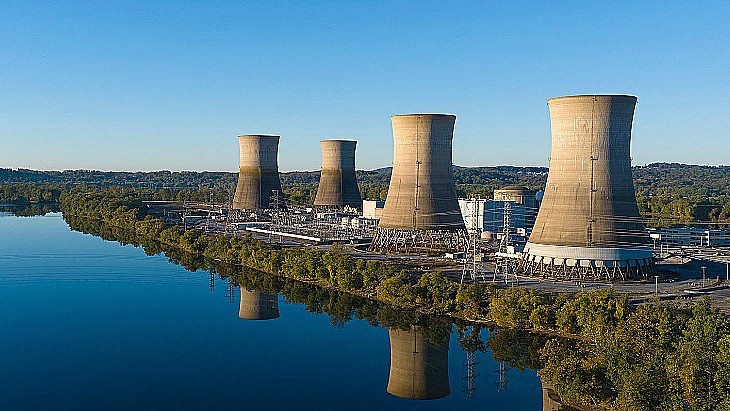
Constellation Energy still expects to restart the Crane Clean Energy Center - formerly known as Three Mile Island unit 1 - in 2027 despite possible grid connection delays.

Crane Clean Energy Center (Image: Constellation)

CEO Joseph Dominguez told investors that the company was intending to file a request to the Federal Electricity Regulatory Commission (FERC) to transfer capacity rights from its Eddystone plant to enable the restart.

Constellation announced in 2024 that it would restart the pressurised water reactor, which closed down in 1999, after signing a 20-year power purchase agreement with Microsoft. Last year, the company filed an interconnection request with regional transmission operator PJM to allow Crane to add its 835 megawatts of emissions-free power to the grid.

Initially aiming for a 2028 restart, the company had brought its target date forward to 2027 following PJM's approval of its early interconnection request. However, at last week's CERA Week conference in Houston, Constellation's chief external affairs and growth officer David Dardis told Reuters that PJM had said it would take until 2031 to complete some of the transmission upgrades needed for the plant to connect to the grid.

Speaking in Constellation's 2026 Business and Earnings Outlook call, Dominguez said the company still expected to be able to start the unit in 2027.

"We talked this week about PJM studies that indicate interconnection could be delayed into the 2030s," Dominguez said. "I want to assure you we are working on that with PJM and we continue to expect to start this unit in 2027. Today, we will be filing a FERC request to be able to transfer capacity injection rights from our Eddystone unit to Crane to facilitate restart in '27, according to our plan."

Eddystone is a six-unit, dual-fuelled plant in Pennsylvania, with two 380 MW capacity subcritical steam boiler-turbine generator units that can run on either natural gas or oil, depending on market conditions, and two pairs of oil-fuelled peaking units that run during periods of high demand with a total capacity of 60 MW. The 380 MW units - Eddystone 3 and 4 - had been scheduled for closure last year, but have been kept online beyond their planned retirement date to ensure grid reliability under a series of emergency orders issued by US Energy Secretary Chris Wright. The most recent order was issued in February and remains in force until 24 May.

The Crane Clean Energy Center restart project is receiving federal support through the US Department of Energy's loan programme.


New England governors unite for nuclear


The governors of all six New England states have issued a joint statement outlining their regional commitment to exploring advanced nuclear energy technologies while continuing to support the safe, affordable, and reliable operation of the region's existing nuclear facilities.
 
The Millstone nuclear power plant in Connecticut (Image: Dominion)

The governors signing the joint statement include Governor Ned Lamont of Connecticut, Governor Janet Mills of Maine, Governor Maura Healey of Massachusetts, Governor Kelly Ayotte of New Hampshire, Governor Dan McKee of Rhode Island, and Governor Phil Scott of Vermont.

"Adequate electricity supply is critical to growing our economies, preserving public health and safety, powering our homes and businesses, and stabilising consumer prices as demand for electricity rises across the region," the statement says. "New England has a long tradition of collaborating on regional energy matters. As governors, we are committed to safeguarding our collective energy future through advancement of a diverse energy strategy that includes nuclear power, a pillar of New England's electric system."

The statement outlines two key next steps. First, the governors are directing their respective state energy offices to explore opportunities to ensure the continued safe, affordable, and reliable operation of the region's existing nuclear generation facilities in coordination with regional transmission organisation ISO New England, the facilities' owners, federal agencies, and other state and regional stakeholders.

Second, the governors are directing state energy agencies to take steps to explore deployment of advanced nuclear generation in states and communities that express a willingness to host such resources. This includes exploring innovative financing structures, federal funding and financial support opportunities, public-private partnerships, and regulatory designs for advanced nuclear energy that will protect consumers, help meet the region's energy needs, and enable New England to capture job growth and economic development opportunities from the deployment of new nuclear technologies with advanced safety systems.

"These initiatives will complement our states' other efforts to secure a safe, affordable and reliable electricity grid for the 21st century," the statement says. "By ensuring both the continued operation of our existing nuclear fleet and setting our region on a path to explore next generation resources, including advanced nuclear energy technologies, the New England states will continue our leadership in grid modernisation and energy innovation as we jointly work to meet the region’s current and future energy needs."

UK plant transfers to government ownership


Ownership of the Hunterston B nuclear power station in North Ayrshire, Scotland, has transferred from EDF Energy to the Nuclear Decommissioning Authority for the site's decommissioning.
 
(Image: EDF Energy)

The site will now be managed by the Nuclear Decommissioning Authority's (NDA's) subsidiary Nuclear Restoration Services (NRS), which is also decommissioning the neighbouring Hunterston A site. It becomes the first Advanced Gas-cooled Reactor (AGR) plant to successfully transfer into UK government ownership.

The UK's Office for Nuclear Regulation formally approved the relicensing of the Hunterston B plant from EDF Energy to NRS on 18 March, marking the beginning of the site's decommissioning phase. The licence, which took effect at the point of site transfer, is a legal document that will see responsibility for the site move from EDF to NRS. It sets out the conditions under which the site can operate and is crucial for future decommissioning work to proceed.

"Hunterston B has been an integral part of the EDF family," said EDF Energy's Decommissioning Director Paul Morton. "It is a fantastic site and while we will miss the station and its people, we know they are entering an exciting new chapter in their story, and we are looking forward to seeing them successfully delivering decommissioning.​ I am delighted we have been able to work with NRS and the NDA to deliver this transfer on schedule.

"This has been a first-of-a-kind project, with people at its heart. We have worked hard with staff and unions to support everyone on site over the past four years and almost every person has been able to secure the outcome they wanted, with most continuing to work at Hunterston B or staying with EDF."

The Hunterston B plant comprises two 490 MWe AGRs - Reactors 3 and 4. Reactor 3 came online for the first time in February 1976, was initially expected to run for 25 years but had its generating lifespan increased to more than 45 years. It was taken offline in November 2021. The plant's other unit, Reactor 4, started up in March 1977 and was shut down in January 2022. In April last year, Hunterston B became the first of the UK's seven AGR power plants to be declared free of all used nuclear fuel ahead of decommissioning.

Decommissioning of the site will involve dismantling nuclear facilities and removing any associated radioactive waste for safe storage or disposal which includes removing all plant, equipment, services and buildings outside of the reactor building. After the decommissioning process is complete, the site will enter a period of care and maintenance. Decommissioning is being carried out using funds from the Nuclear Liabilities Fund (NLF), a ring-fenced GBP20.7 billion (USD27.3 billion) fund set up in 1996 specifically to pay for the decommissioning of the current nuclear fleet.

"The NLF funding model provides certainty that funds are now available to support safe and secure site remediation," said NLF Chief Executive Melissa Hope.  "We look forward to working with the station, NRS, the NDA and HM Government going forward to ensure that NLF funds are used to support planning for and innovation in the decommissioning programme, with the aim of this important national task being delivered efficiently and cost-effectively."

Decommissioning of AGRs
 
EDF had originally been responsible for total lifetime decommissioning of the seven AGR plants, which comprise Torness and Hunterston B in Scotland, Dungeness B in Kent, Hartlepool in Teesside, Heysham 1 and 2 in Lancashire and Hinkley Point B in Somerset. All these plants are scheduled to reach the end of their operational lives this decade.

However, in June 2021, the UK government and EDF agreed improved arrangements to safely and efficiently decommission the AGRs. Under the agreement, EDF will aim to shorten the time it takes to safely remove the fuel from the plants as they come offline, before working closely with the NDA to transfer ownership of the stations to the NDA.

Ownership of Hinkley Point B in Somerset is due to transfer to the NDA later in 2026.

Four AGR plants are still in operation. Hartlepool and Heysham 1 are currently expected to operate until March 2028. Heysham 2 and Torness are currently due to generate until March 2030.

Polish companies team up for regional SMR deployment


Poland's Synthos Green Energy, construction engineering firm Polimex Mostostal and engineering consultant ATEC Group have signed a memorandum of understanding to cooperate on the development and deployment of BWRX-300 small modular reactors in Central and Eastern Europe.
 
(Image: SGE)

The memorandum of understanding (MoU) aims to facilitate collaboration between the companies and establish working groups to jointly explore potential projects in Central and Eastern Europe. These activities will include identifying areas of synergy and assessing the companies' competencies and organisational capabilities in the context of delivering nuclear projects.

"The signing of the MoU underlines the continued commitment of Polimex Mostostal, SGE, and ATEC to the development of nuclear energy and the strengthening of the supply chain for SMR projects in Poland and across the region," Synthos Green Energy (SGE) said.

The BWRX-300 is a 300 MWe water-cooled, natural circulation SMR with passive safety systems that leverages the design and licensing basis of GE Vernova Hitachi Nuclear Energy's (GVH's) US Nuclear Regulatory Commission-certified ESBWR boiling water reactor design and its existing, licensed GNF2 fuel design. GVH's first BWRX-300 is under construction at Ontario Power Generation's Darlington site in Canada, with completion expected by the end of the decade.

SGE - part of the Synthos Group - is a co-investor in the standard design for the BWRX-300 and is in the process of establishing SMR partnerships and projects in a number of Central and Eastern European countries, including the Czech Republic, Hungary, Bulgaria and Romania.

"We are developing a coherent SMR deployment model in Central and Eastern Europe that combines access to proven BWRX-300 technology with strong local construction and industrial capabilities," said Rafał Kasprów, CEO of SGE. "Our agreement with Polimex Mostostal and ATEC strengthens our ability to scale projects across the region and build an efficient supplier ecosystem. Our goal is to deliver repeatable, financeable nuclear projects that will support the energy transition and enhance energy security across the region."

"Signing the MoU with SGE and ATEC is an important step in building partnerships for the delivery of SMR projects in Central and Eastern Europe," added Jakub Stypuła, President of the Management Board, Polimex Mostostal. "The agreement provides a framework for defining potential areas of cooperation and identifying where we can leverage our experience in delivering large-scale industrial and energy projects. At the same time, it enables the complementary use of each party's strengths in the development of SMR projects. We see significant potential in this technology and want to actively participate in building the supply chain for this type of investment."

Polimex Mostostal said the cooperation "is consistent with the long-term development strategies of all parties, aimed at the development of nuclear energy in the Central and Eastern European region and the effective use of existing competences in the implementation of SMR projects".

Maciej Stańczuk, member of the management board of ATEC Group, said: "ATEC is consistently expanding its engineering capabilities in the nuclear energy sector. We are very pleased to be working with Polimex Mostostal, the largest and most important EPC contractor for energy projects in Poland, and we see strong potential in deploying the proven BWRX-300 technology in our country for two reasons. First, Poland needs nuclear energy to stabilise its power system, which must also rely on stable sources of energy and on reliable, low-emission technologies capable of keeping the grid operating under adverse conditions. Nuclear energy is today the only scalable option that can simultaneously provide resilience, decarbonisation and strategic autonomy. If we want to carry out an energy transition that is not only green, but also credible and capable of delivering acceptable energy prices, nuclear energy must return from the margins to the centre. Second, the SMR project represents a unique opportunity to create a truly local supply chain, of which, together with Polimex Mostostal, we want to be an important part. This is an exceptional opportunity for our companies, and one we cannot afford to miss."

Belarus set for role in Smolensk nuclear construction


A working meeting requested by Smolensk Governor Vasily Anokhin has been held "to discuss the coordination of joint efforts and the participation of Belarusian partners in the Smolensk NPP-2 construction project".
 
(Image: Rosatom)

The meeting was attended by Smolensk nuclear power plant (Smolensk NPP) managers, regional government representatives, general contractor Titan-2 and Belarusian firms with experience of working on nuclear power facilities. The Smolensk region shares a border with Belarus.

Ivan Sidorov, Director of Smolensk NPP, said: "We have experience working with the Belarusian side, and we are well acquainted with the products used in the construction of the Belarusian NPP. As close neighbours, we are interested in further cooperation and are pleased that you are providing your capabilities to implement the Smolensk NPP-2 project."

Zhanna Sharando,  Deputy Chair of the Vitebsk Regional Executive Committee's Economics Committee, said: "I hope that following this important meeting, companies will find their niche and opportunities to participate in the large-scale project to build new units at Smolensk NPP-2."

According to Russian state nuclear corporation Rosatom's report on the event: "Representatives of Belarusian enterprises - suppliers of cable products, water purification equipment, polymer structures, cement materials - reported on the results of their activities at the construction site of the Belarusian NPP, at NPPs in Turkey, Egypt, Hungary, and also proposed areas of cooperation with the Smolensk NPP."

Under Russia's proposed new nuclear programme, two VVER-1200 units are planned for the new phase of the Smolensk plant, to be commissioned in 2033 and 2035. They are scheduled to operate for 60 years, with potential life extensions up to 120 years.

Smolensk nuclear power plant is around 350 km west of Moscow. It currently has three RBMK-1000 power units, which were connected to the grid, respectively, in 1982, 1985 and 1990. Each has an electrical capacity of 1,000 MW. They have each had their operating licences extended to 45 years.

The Belarus nuclear power plant has two VVER-1200 reactors and is located in Ostrovets in the Grodno region in the northwest of the country. A general contract for the construction was signed with Russia's Rosatom in 2011, with first concrete on the first unit in November 2013. Construction of unit 2 began in May 2014. The first power unit was connected to the grid in November 2020, with the second unit put into commercial operation in November 2023. More than a quarter of Belarus's electricity is now generated by nuclear.

In November Belarus announced its intention to build a third unit at its first nuclear power plant - as well as starting surveys for a second plant which it believes may be needed to meet future energy demands.

Reactor vessel installed at Lianjiang unit 2


The reactor pressure vessel has been installed at unit 2 of the Lianjiang nuclear power plant in China's Guangdong province. It is one of two CAP1000 reactors planned for the first phase of the plant.
 
(Image: SPIC)

State Power Investment Corp (SPIC) said the reactor pressure vessel of unit 2 was successfully hoisted into place on Wednesday, "marking the start of the equipment installation phase for both units of the first phase of the project".

The vessel - with a net weight of about 270 tonnes - will house the nuclear reactor and is the core of a nuclear power plant.


(Image: SPIC)

The construction of the first two 1250 MWe CAP1000 reactors - the Chinese version of the Westinghouse AP1000 - at the Lianjiang site was approved by China's State Council in September 2022. Excavation works for the units began in the same month, with the pouring of first concrete for the foundation of unit 1 starting in September 2023 and that of unit 2 in April last year. Unit 1 - whose reactor pressure vessel was installed in February last year - is expected to be completed and put into operation in 2028.

Once all six CAP1000 units planned at the site are completed, the annual power generation will be about 70.2 TWh, which will reduce standard coal consumption by more than 20 million tonnes, and reduce carbon dioxide emissions by more than 52 million tonnes, sulphur dioxide by about 171,000 tonnes and nitrogen oxides by about 149,000 tonnes.

SPIC says the Lianjiang plant - the first coastal nuclear power project developed and constructed by SPIC in Guangdong - will be the first nuclear power project in China to adopt seawater secondary circulation cooling technology as well as the first to use a super-large cooling tower.


China Sets 2029 Deadline to Shut Down Outdated Petrochemical Plants

China plans to phase out some of its outdated petrochemical plants by 2029 and upgrade others, under new directives issued by the authorities on Friday.

The Chinese authorities will review which facilities will be upgraded and which will be closed, using lists of outdated petrochemical plants compiled by local governments in recent months, according to documents by the central government cited by Reuters.

China and its refiners and petrochemical producers have been struggling with low margins amid overcapacity and falling demand for road transportation fuels. The Chinese authorities last year stepped up efforts to curb overcapacity that has led to refining losses and thin petrochemical margins amid a glut of producing units that has overwhelmed the entire Asian market.

China is already the world's biggest producer of ethylene and polyethylene, after building seven petrochemical complexes over the past ten years. Previously, the United States was the biggest producer of the petrochemical commodities.

Yet, refining and chemicals firms have not been spared from the so-called “involution” in China, which refers to excessive and self-defeating competition among Chinese companies for limited resources and opportunities.

At the end of last year, the buildout in new petrochemical capacity in China fueled fears that the country could tip the global market into oversupply, hurting smaller petrochemical producers.

China is relatively resilient amid the current global oil and products crunch, which is reducing naphtha supplies in Asia and hurting the petrochemical industries in South Korea and Japan.

China is somewhat different from the rest of the Asian market, as it benefits from large volumes of coal?to?chemicals capacity and extensive world?scale refinery?chemicals complexes, analysts at ICIS said last week.

By Tsvetana Paraskova for Oilprice.com