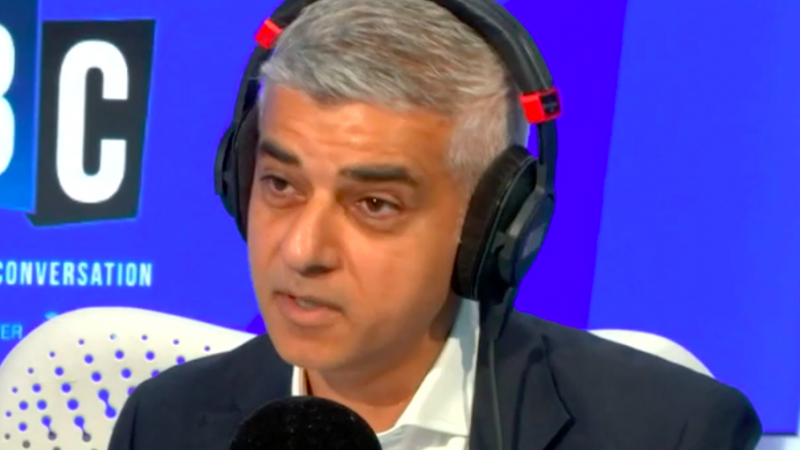
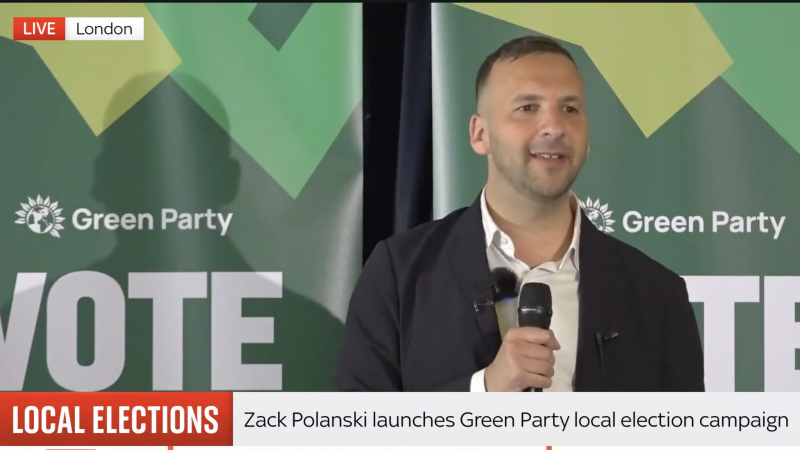
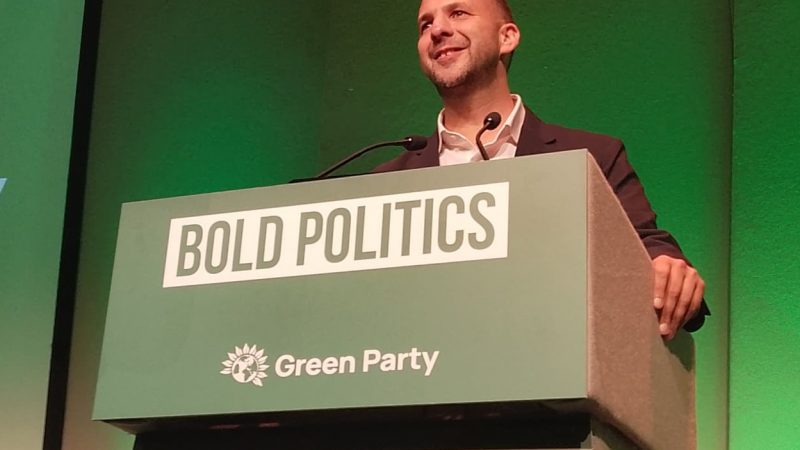
"Yet again we witness the political gymnastics of this outdated and out of touch Conservative Party descend into a collective swoon over the terrifying prospect of a council functioning better whilst saving the tax-payer money."
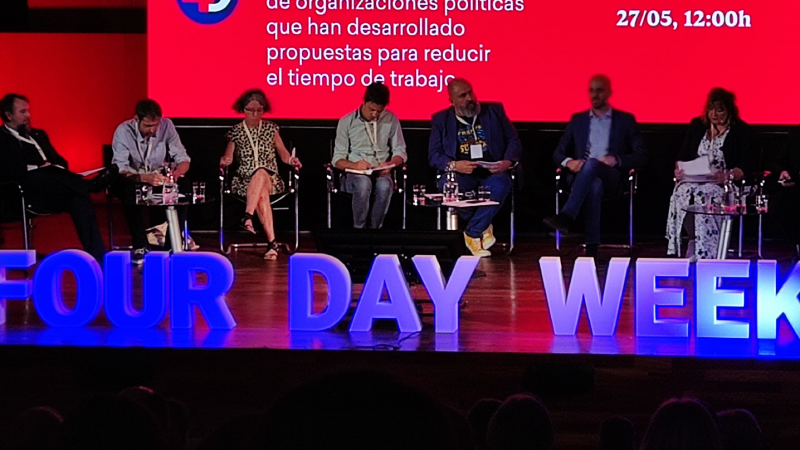
The Tories have announced a significant policy proposal on local government today (8 April). They’re proposing to ban councils from introducing a four day working week for staff with no loss of pay.
In a press release, the Conservative Party said: “The four-day working week, as introduced by Liberal Democrat-run South Cambridgeshire district council, has left residents with more council tax for less public service. Bin collectors and social housing officials receive 100 per cent of their pay for around 80 per cent of their originally contracted hours.”
The party went on to say: “Last year the Telegraph revealed 25 councils were in discussions with leftwing group Four Day Week Foundation to explore implementing the programme to work less. The Conservative Party’s proposed Ban Four Day Week and the Protection of Public Services Bill would set work conditions for public sector workers and prevent four day weeks for full time pay.”
The proposed policy has been met by ridicule by people with experience of implementing a four day week.
Bridget Smith, the Lib Dem leader of South Cambridgeshire District Council brand the Tories ‘outdated and out of touch’ for the stance. South Cambridgeshire was the first council in the country to adopt a four day working week.
Smith said: “Yet again we witness the political gymnastics of this outdated and out of touch Conservative Party descend into a collective swoon over the terrifying prospect of a council functioning better whilst saving the tax-payer money.
“The sheer audacity of Michael Gove and his successors demanding innovation while simultaneously stamping their feet at the sight of a recruitment crisis being solved by something as radical as common sense.
“To call for a ban on a proven success is to effectively declare that the Tory party prefers its local government to be traditional, expensive, and perpetually understaffed, rather than modern and -heaven forbid – effective.”
Likewise, Joe Ryle of the Four Day Week Foundation called the Tories ‘stuck in the past’. He said: “In the same week that OpenAI has called for organisations to adopt a four-day, 32 hour working week, this announcement from Kemi Badenoch shows the Conservatives are still stuck in the past.
“Across virtually every sector and region, employers are showing that a four-day week or three day weekend improves wellbeing, boosts productivity and helps to attract and retain staff.
“The 9-5, five-day working week is 100 years old and no longer fits the way we live and work today. We are long overdue an update.”
According to a report from the Four Day Week Foundation, a major four day working week pilot in 2024 saw 71% of organisations participating move to a four day week for the long term, and the remaining 29% of move to a nine day fortnight.
The report also found that a third of participants in the pilot reported a decrease in work related stress, 45% of participants said they felt more satisfied with live, and 41% said they had seen an improvement in their mental health. The participating organisations reported they had observed several benefits of employee wellbeing while maintaining service levels.

Chris Jarvis is head of strategy and development at Left Foot Forward
Image credit: Francesc Fort – Creative Commons
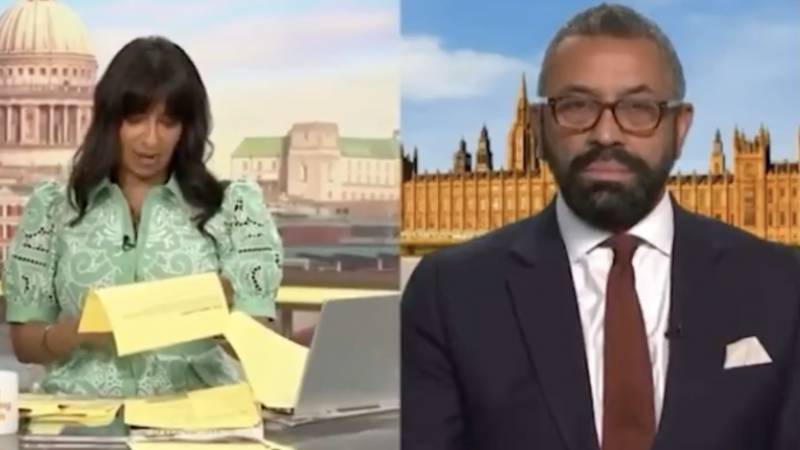
It comes after the Tories put forward a policy proposal yesterday to ban councils from introducing a four-day working week for staff with no loss of pay. The Tories say that a four-day working week does not provide value for money.
Cleverly appeared on Good Morning Britain to defend his party’s stance on the four-day working week yet all didn’t quite go to plan for him.
He was told: “61 UK-based businesses with roughly nearly 3,000 employees adopted a 4-day schedule for six months. They reported that revenue at the participating firms jumped by 35%. There was an uptick in hiring, a decrease in employee absences and turnover.
“71% of those workers at the companies reported a decrease in burnout, 39% feeling less stress than before the trial, 40% experiencing less difficulty sleeping, therefore happy workers, less turnover, more profit.
“What’s your problem?”
Cleverly looked lost for words.
Basit Mahmood is editor of Left Foot Forward
 |
| 1933 |
Left Foot Forward News
The TUC and Hope Not Hate’s poll has found that the Employment Rights’ Act is ‘hugely popular’, including in Reform MPs’ constituencies
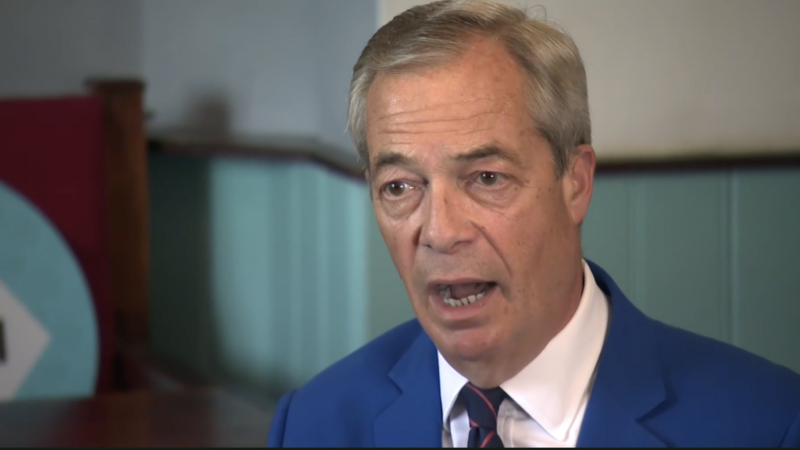
Reform UK vowed last month that if they win power, they would scrap Labour’s Employment Rights’ Act and replace it with a ‘Great Repeal Bill’.
However, a huge MRP Hope Not Hate and TUC poll of more than 45,000 people shows that there is overwhelming support for the workers’ rights legislation that Reform wants to repeal.
The Employment Rights’ Act, which came into law in December, bans exploitative zero hours contracts, and fire and rehire, makes statutory sick pay a right from day one and strengthens parental leave.
The mega-poll shows overwhelming support for key elements of the Act, including banning zero hours contracts (78%), day one sick pay (76%), and ending fire and rehire (83%).
In Nigel Farage’s own constituency of Clacton, similar numbers of people support the employment legislation.
Over three quarters (77%) of Farage’s constituents support banning zero hours contracts.
Meanwhile, 81% back ending fire and rehire, 66% want sick pay from day one and 86% want the minimum wage to be higher.
In Richard Tice’s constituency, in Boston and Skegness, 80% back a zero hours contracts ban, 86% oppose fire and rehire, 76% want day one sick pay, and 83% want the minimum wage raised.
There were similarly high levels of support for the measures in other Reform constituencies, including in Runcorn and Helsby, which is represented by Sarah Pochin, Lee Anderson’s seat in Ashfield and Jenrick’s seat in Newark.
Responding to the poll findings, TUC General Secretary Paul Nowak said: “Nigel Farage wants to strip working people of essentials like day-one sick pay and a fairer minimum wage. At the same time he’d give bad bosses free rein to exploit staff by keeping practices like zero-hours contracts and fire-and-rehire firmly in place.
“This anti-worker agenda is massively out of step with the British public, who believe everyone deserves basic security and dignity at work.
“Farage likes to claim he’s taking on the elites. But the reality is he wants to hand more power to vested interests and his wealthy corporate backers.
Hope Not Hate CEO Nick Lowles said: “Reform’s plans to repeal key workers’ rights are a world away from where the British public are at.
“From Green to Reform supporters – these are rights that have huge support up and down the country.
“Reform voters aren’t a homogenous bloc – but what many have in common is their support for stronger rights at work – from banning zero hours contracts to day one sick pay.
“The government should be talking up the threat Nigel Farage poses to popular and vital workplace protections.”
Olivia Barber is a reporter at Left Foot Forward

Forward to an Employment Rights #2 Bill
By Carolyn Jones and Adrian Weir
A recent rally organised by the Campaign for Trade Union Freedom, in partnership with Strike Map, heard from union leaders, labour law experts and politicians arguing for a second Employment Rights Bill during this Parliament.
While welcoming the passage of the Employment Rights Act towards the end of 2025 and the many benefits it will bring individual workers, speakers made the case that the Act is overwhelmingly focused on just that, rights for individual workers, with little legal reset for trade union rights that have been so severely curtailed since the 1980s.
Although promoted as the biggest uplift in workers’ rights in a generation, the Act is in reality a long way short of what was promised in Labour’s Green Paper A New Deal for Working People, carried by Labour’s Conference in 2021. The Green Paper had been filleted to make the Act more acceptable to business interests, perhaps a victory for the McSweeney team that was all-pervasive in setting policy under the nominal Starmer leadership.
The Green Paper acquired additional phrasing when Making Work Pay was added to the title. Eventually however, the Government’s website quietly dumped A New Deal for Working People, listing only Make Work Pay as the title. And, as a concession to corporate interests, many of the terms of the Act were made subject to consultation, also known as opportunities for business to further intervene, to water down the provisions.
What’s in and what’s out?
Looking at some of these measures in turn, much is made of giving trade unions a right of access to an employers’ premises to organise and recruit workers to the union and for other matters. In practice, unions have been given the right to negotiate an access agreement with an employer and if no deal is reached, the employer may have to pay a financial penalty to the state but not to the benefit of the union. No enforcement order is available to compel access.
As labour law expert Prof Keith Ewing pointed out at the rally: “You have a right but no remedy – a right of access provided the employer agrees, which is the position already.”
Further, the Act is said to target some of the newer forms of labour abuse, such as zero hours contracts and redefining workers as self-employed contactors, as per Uber ‘taxis’ and Deliveroo meal and grocery deliveries, otherwise known as the uberisation of work.
However, we have to question how serious the Government is about taking on the tech bros, which also includes Amazon fulfilment centres, who are the leaders in this form of abuse. At the rally, James Farrar, speaking on behalf of the App Drivers’ & Couriers’ Union, said: “How is it that Elon Musk can call for violence on the streets of Britain from a big screen on a Saturday [at the far right rally in September 2025] and on the Monday Tesla is running autonomous road taxi trials in Swindon in [Transport Secretary] Heidi Alexanders’ own constituency?”
The promise of introducing a single status of “worker” is entirely absent from the Act. A single status is essential to ensure that all of those who go out to work, other than those genuinely running a business, should have equality under the law; all rights should accrue to all workers, traditionally employed or so-called self-employed contactor alike.
According to the Government’s Make Work Pay website, there is no open consultation on single status. As this is not in the 2025 Act it would seem that it will need primary legalisation to take this forward. Does this open the door for a second Bill?
Litigation not negotiation
Because the Act focuses on individual rights, we are in a situation described by trade union barrister, Lord John Hendy KC, as one of “litigation not negotiation.” To enforce their new rights, individual workers, represented by a union or not, have to take their grievance to the Employment Tribunal rather than seek resolution in the workplace.
Coming from Doughty Street Chambers, well known for securing access to justice for those facing state injustice, it could be expected that Keir Starmer would know that expecting workers to take their grievance to the Employment Tribunal would be a fool’s errand. The whole justice system is creaking to the point of breaking, hence David Lammy’s grossly misplaced prescription of ending the majority of jury trials.
The strain also extends to the Employment Tribunal. The average wait for an Employment Tribunal hearing currently is around 335 days from the claim being lodged, longer for complex cases. Research carried out in 2013 has shown that 51% of successful applicants were never paid their compensation by employers. Further research in 2025 showed that 75% of (successful) applicants using the Government’s Employment Tribunal Penalty and Naming Scheme have not received their awards.
For example, it is inconceivable that workers denied a guaranteed hours contract under the new legislation would have the desire or inclination to wait a year or more for the ET to rule on the case. As Hendy noted at the rally, colleagues in his chambers are reporting cases being listed for 2029.
If the Government had been serious about Make Work Pay it would have done more to restore sector-wide collective bargaining. There is a great body of research that shows that when collective bargaining coverage falls, inequality rises and that these two facts are not just correlated but the latter is causally linked to the former.
A New Deal for Working People set out: “Labour believes strong collective bargaining rights and institutions at all levels are key to tackling the problems of insecurity, inequality, discrimination, enforcement, low pay and other issues identified in this Green Paper… Labour will empower workers to act collectively via the roll out of Fair Pay Agreements… [which] will be negotiated through sectoral collective bargaining.”
Unfortunately, the only sign of Fair Pay Agreements in the Act is the bastardised version for School Support Staff and Adult Social Care workers. There is no provision to roll out sectoral collective bargaining across the whole economy and where the Government has moved on these two examples they are outside the internationally accepted legal definition of collective bargaining because of the Government’s power to dictate what they discuss, who sits on the panels and, ultimately to overrule them.
The Government could easily have moved on genuine sectoral collective bargaining with its own employees, the Civil Service. As a result of countless ill-thought-out plans to reduce the size of the state there are myriad bargaining arrangements across the sector. PCS leader, Fran Heathcote noted at the rally that the Government could have led by example by introducing a single bargaining forum covering the entire Civil Service where currently there are 200 sets of negotiations.
The right to strike
The corollary to proper collective bargaining is a right to strike. When the Act became law last year, the Strikes (Minimum Service Levels) Act 2023 was repealed and most of the Trade Union Act 2016 was repealed in February this year. However, the fundamental restrictions on the right to strike are contained in the laws passed during the Thatcher and Major years of the 1980s and 1990s.
There has been no repeal of these and most of their provisions, particularly the ban on solidarity action and the requirement to give notice to an employer of intention to ballot for industrial action that have been ruled as unacceptable by those international organisations that have as part of their remit the setting of labour standards, the International Labour Organisation and the European Social Charter (unconnected with the EU).
Labour gives every appearance of breaking trust with working class voters, a second Employment Rights Bill would give it the chance to rebuild that trust. We need and demand a labour rights framework that’s worth defending and that workers will value as having something in it for them.
Strong unions mean a more equal society.Teachers’ union leader Matt Wrack warned the rally against the rising right-wing threat using increasing inequality as its standard: “Around the world the weakening of organised labour has led to a significant growth in inequality. It’s led to the growth of some appallingly powerful oligarchs and you can see their political influence in the United States and over here.”
John McDonnell MP argued in favour of a new Bill: “This Government needs to indicate to working people that it’s on their side. What better way to indicate that than to deliver employment rights that defend people’s wages, jobs and basic security.”
The rally ended with a closing statement presented by Alex Gordon, outlining the need for an Employment Rights #2 Bill and identifying five basic rights that such a Bill should cover. The statement, put together by CTUF and Strike Map, called on trade unions and their members to support the CTUF campaign for a new Bill.
You can support the campaign by downloading our Action Pack, signing the statement, using our campaign materials in your workplace and community and passing our model motion at your union branch, trade union council and union conference.
Carolyn Jones and Adrian Weir are Joint Assistant Secretaries of the Campaign for Trade Union Freedom. Follow the Campaign on Twitter/X @ctufevents and on Blue Sky @unionfreedom.bsky.social
Image: https://americancommunitymedia.org/immigration/undocumented-victims-of-labor-abuse-find-relief-in-new-federal-program/ Licence: Attribution-ShareAlike 3.0 Unported CC BY-SA 3.0 Deed