Friday, April 10, 2026

Stand With Science — Invest in Health, Not War

APRIL 7, 2026

By Rathi Guhadasan, Socialist Health Association

Today is World Health Day. The World Health Organisation (WHO) has launched its 2026 theme: “Together for Health. Stand with Science” — a call to choose evidence over disinformation and back the science that keeps us alive.

It’s a message we support. Which is why we need to be honest about the ways our leaders in the UK are letting it down.

Politics is driving childhood illness

Vaccines are one of humanity’s greatest achievements. They are why most of us have never seen a child paralysed by polio or lost a friend to measles. That protection is now being chipped away — not because the science has changed, but because some politicians are undermining it.

Several Reform UK council leaders have publicly questioned vaccines, helping fuel a rise in hesitancy. The results are real and tragic. A child died of measles in Liverpool, and Dr Simon Opher MP, an experienced GP, reported seeing his first measles case. Vaccination rates have dropped below the 95% needed to stop the disease spreading.

The UK has lost its WHO measles-elimination status for the second time this century, with a number of measles-related deaths in recent years. These were preventable. Think of the Health Visitors and GPs we’ve lost – each one of them invaluable in helping families understand the value of vaccines. Every politician who has stoked doubt — through conspiracy, coded language, defunding public health or simply staying silent — bears responsibility.

Standing with science means calling this out clearly. It means funding NHS outreach in under-vaccinated communities. And it means leaders in every party saying plainly: vaccine hesitancy kills.

The NHS is being hollowed out

You can’t stand with science if you’re dismantling the system that delivers it. Free healthcare for all — regardless of income, postcode, or background — is both a socialist principle and a scientific one. The evidence is overwhelming: universal health systems produce better outcomes for everyone.

Yet NHS waiting lists remain at crisis levels. Ambulance waits and corridor care have become routine. NHS dentistry has disappeared in many working-class areas. And the government’s response has been to funnel public money into private providerswidening health inequalities in the process. Not to mention an austerity-driven decline in the population’s health in the UK – the world’s sixth largest economy.

Adding another barrier to our ability to access healthcare is the UK’s recent drugs deal with the US, doubling our drug costs. Diverting £3 billion for increased drug costs could cost 15,000 lives a year. Similar bilateral deals around the world pose even higher risks for the poorest – leading Kenya’s high court to suspend their agreement with the Trump administration. By pushing back on our deal with the US, the UK could show real leadership here, not just for itself but the rest of the world.

Globally, around 4.6 billion people still lack access to essential health services, and out-of-pocket health costs push 1.6 billion people into poverty every year. The treatments exist. The will to share them universally does not. The same forces cutting NHS services here are blocking universal healthcare abroad. Meanwhile, our foreign, economic and trade policies are making the poorest people poorer.

War destroys health — and our government is complicit

Nothing destroys health faster than conflict. The WHO has documented almost 1,000 attacks on healthcare in Gaza alone since October 2023 in a genocide armed and facilitated by Conservative and Labour governments, who refused to call out these clear violations of international humanitarian law. In Sudan, attacks on health facilities have been devastating. Britain has supplied arms and failed to act on atrocity prevention, turning a blind eye as the world’s largest humanitarian crisis unfolds.

The indirect health effects of conflict compound the direct ones. In conflict zones, maternal and neonatal death rates can more than doubleResearch across 28 years of conflicts found that for every person killed directly in war, eleven more die from its indirect effects — from disease, hunger, and collapsed health systems.

Then there is Palantir — the US tech firm that boasted about helping to “scare our enemies and, on occasion, kill them” and was awarded a £330 million contract for the NHS Federated Data Platform (FDP). It also won a £240 million MoD deal without competitive tender — reportedly helped by Peter Mandelson. When MPs asked whether these contracts could make Britain complicit in war crimes, Palantir’s UK boss refused to answer.

The BMA has passed a motion against the FDP rollout and told doctors to limit their engagement with the platform. Over 50,000 patients have written to their local trusts to reject it. Patient data should save lives, not help end them.

Beyond Palantir is our growing dependence on “Big Tech” through the NHS Ten Year Plan. These tech giants profit from public money and patient data, while their immense environmental harms fall disproportionately on the world’s poorest communities.

Climate change is a health emergency

The 2025 Lancet Countdown report found that 12 of 20 key health indicators tied to climate change have hit record highs. Heat deaths among over-65s are up 70% in two decades. In 2023, an extra 124 million people faced food insecurity due to droughts and heatwaves. The WHO projects a minimum of 250,000 additional deaths per year by the 2030s from malaria, flooding and heat alone.

These aren’t future predictions — they are happening now. Vector-borne diseases are spreading into new regions. Floods are destroying clinics in low-income countries. People forced from their homes by climate breakdown are among the least able to access care.

The deepest injustice: the countries least responsible for climate change suffer its worst health impacts — while wealthy polluters like the UK cut climate finance and water down global commitments. Standing with science means accepting that fossil fuels kill people — and acting like it.

Labour’s aid cuts will cost millions of lives

In February 2025, Labour cut UK overseas aid to 0.3% of national income by 2027/28 — its lowest level in two decades — to fund a defence spending increase. A Labour government chose to protect military budgets on the backs of the world’s poorest people.

UK health aid fell by 45% in a single year, from £1.77 billion to £975 million, and will halve again to £527 million in 2025/26. The Fleming Fund — which helped 25 African and Asian countries fight antibiotic resistance — has been closed. The UK’s pledge to Gavi, The Vaccine Alliance, was cut by £400 million. In today’s interconnected world, such global health decisions should concern us all.

Africa will receive 40% less bilateral aid in 2026/27 than the year before. Estimates suggest these cuts, combined with reductions from other governments, could cause 22 million avoidable deaths by 2030 — including 5.4 million children under five. That is not a statistic. It is a political choice.

This is what “Standing with Science” actually means

World Health Day reminds us that health is a human right, not a commodity. Protecting it takes money, political will, and the courage to follow the evidence wherever it leads — even when it means confronting powerful interests.

Global health needs global solidarity. It needs a habitable planet. It needs patient data that serve care, not conflict or profit. And it needs a publicly funded NHS, not a privatised one, and the resolve to make universal health care a global reality.

Rathi Guhadasan is the Chair of the Socialist Health Association. To find out more about its work or get involved, email admin@sochealth.co.uk.

Image: https://www.hambletontoday.co.uk/north-yorkshire-gp-practices-start-administering-covid-19-vaccine/ Creator: Copyright: 2018 © Qapta.es. Licence: Attribution-NonCommercial-ShareAlike 4.0 International CC BY-NC-SA 4.0Deed


“It’s just as vital to have a vibrant network of grassroots activists”


APRIL 8, 2026

Mercedes Villalba MSP reflects on standing down from the Scottish Parliament.

I stood for election in 2021 because I wanted to see a socialist on the ballot for Labour. I stayed the term once elected because I wanted trade unionists and the Labour Left to have a strong voice in Parliament. Prior to the election I had never set foot in Parliament, did not know what the work of a Member involved beyond speaking in the chamber and did not comprehend quite how lawless political parties could be.

There is little to compel a party to follow its own rules and even less to hold it to account when it breaks them. Such breaches are anyway ‘spun’ to be presented as in some way necessary or reasonable, and when enough voices agree (or enough stay silent), the line is set and becomes the new reality.

Needless to say, such an environment is not conducive to effective teamwork. Yet, despite the doublespeak, the gaslighting and the force-fed banality, many principled and tenacious people remain committed to the idea that the Parliamentary Labour Party should act as the political wing of the trade union movement. How and why?

Because everything that happens in the Labour Party between those with power and those without is, in comparison to the ruthless global economy, safe, cosy and fairly polite. And because to have any hope of remaking that unjust global system which perpetuates so much inequality, having a Party to act as our political wing in the arena of parliamentary politics is a necessary tool in our struggle.

That means not just joining such a Party, or even simply engaging with its structures, but organising to run it in a way that works in the interest of our class as opposed to that of capitalists. This is why I believe socialists stay and continue to work within the Party. It’s why I do and will.

But clearly, when we are few, this is more difficult than when we are many. And so, at a time when Party membership appears to be declining and trade union membership is facing long-term decline, attempting to organise for socialism from within Parliament feels like attempting to steer a critically damaged ship while bailing out the water flooding in. Until our ideas have captured the imagination of the nation, we will not change the Party, the Government or the country.

It’s true that we came close to this in 2017 under principled, honest and down-to-earth leaders. We saw a huge influx in members in some parts of the UK and an effective debunking of ‘austerity’ in public spending, but it wasn’t enough.

So while I still believe it’s vital to have strong message carriers to amplify our message on the national stage, it’s just as vital to have a vibrant network of grassroots activists and diligent policy advocates. But crucially, we must coordinate each of these parts of our movement.

And I don’t know if what I do next will help, but I know that sitting in Holyrood voting on non-binding self-congratulatory government motions and responding to thousands of

identical emails from third sector single issue campaigns advances our class not one inch and seems to me to be exactly the kind of busy work that Mr. Moneybags would like to see workers’ representatives tied up in.

I’m proud of my record in Parliament. Of championing Scotland’s tenants’ call for a rent freeze, of campaigning to wrest the capitalists’ grip on our common land to bring it back to the people, and of working with trade unions for a jobs-first energy transition. But in standing down from Parliament, I am not leaving the campaigning arena. I leave strong socialists in Holyrood but feel my place is, for the time being, in communities, on the streets, in the grassroots. In short, I’m joining you all in placing my faith in our comrades who are staying aboard to chart the ship while I disembark to focus on repairing the hull.

I’ve been asked “Where do you go from here?” so let me assure Labour Hub readers that it is not my intention to re-invent the wheel. The left is fortunate to have a number of socialist membership bodies, associations, policy hubs, and publications. We are not short of ideas and we do not need another data capture initiative. But, frankly, we have not been as organised as those in the pay of the capitalists. Granted, we do not have their capital, naturally, but we have the potential to outnumber and surpass them.

The far right are growing, increasing their support from disenfranchised workers, members of our class, by capitalising on inequality, on the hollowing out of our public services and the neglect of the health and wellbeing of our people. We ignore this threat at our peril. We must refocus our efforts to unite and fight and win.

This must start by bringing together the disparate parts of our movement uniting in common cause so that through coordination we can reach every community in Scotland, linking our campaigns and strengthening our collective.

That is the call and I hope you will join me in answering it.

Mercedes Villalba was elected as a Member of the Scottish Parliament on the North East Scotland list in May 2021.

Image: Mercedes Villalba at a demonstration for a ceasefire in Gaza outside Scottish Parliament Building, 21st November 2023. https://commons.wikimedia.org/wiki/File:Ceasefire_demonstration_outside_Scottish_Parliament_Building,_21_November_2023_-_Mercedes_Villalba_2.jpg. Author: Pretzelles,  licensed under the Creative Commons Attribution-Share Alike 4.0 International license.


The war on Iran and the role of the peace movement

APRIL 9, 2026

A CND Information Paper by Carol Turner analyses the recently announced ceasefire in the context of the Trump administration’s wider policy on Iran.

The acceptance by the United States and Iran of a Pakistan-brokered ceasefire for two weeks, to allow for negotiations, comes as welcome relief after President Trump’s most recent and most disgraceful threat of destroying an entire civilisation. Its implication of nuclear war against Iran sent a shiver round the world.

The breakdown of this temporary ceasefire is, however, a real possibility. Prime Minister Netanyahu has said the ceasefire does not cover Lebanon and Israeli Defence Forces continue to bomb large parts of the country. Escalation of the war remains a clear and present danger.

The peace movement remains on high alert, and we are right to be so. We continue to demand an end to the use of UK bases for US attacks on Iran.

US objectives are clear

Throughout the six week bombardment of Iran, the US military strategy is uncertain. There is no confusion about the aims of Trump’s Iran policy, however. His overall objectives are clear and consistent.

Within days of taking office in January 2025, Trump signed Presidential Memorandum PS/NS2. This is a formal instruction to all the agencies of the US state to initiate a “maximum pressure” campaign against Iran, with the aims of:

• preventing Iran ever developing nuclear weapons;

• ending its ballistic missiles programme; and

• breaking its support for regional proxies.

US-Iran relations shifted sharply during Trump’s first administration between 2017-2021. He withdrew the US from the Iran nuclear deal negotiated by the Obama White House, effectively bringing the Joint Comprehensive Plan of Action (JCPoA) to an end. Diplomatic engagement and negotiations which resulted in one of the most successful arms reduction agreements of the 21st century were replaced by a hostile and confrontational approach.

Withdrawal from the JCPoA was accompanied with over 1,500 sanctions targeting Iran’s financial, oil, and shipping sectors, with secondary sanctions on foreign firms doing business with Iran. These have severely damaged Iran’s economy. They were behind the street protests at the start of this year, combined with the added strains of the US-Israel 12 day war in June 2025.

In his second term in office, Trump has doubled down on this approach, encouraged by Prime Minister Netanyahu who openly calls for regime change.

…the military means are not

Present confusion lies not in what Trump wants, but in the manner in which he seeks to achieve it. Six weeks in, we can see how unprepared he was for Iran’s response to US-Israeli bombardment. Evidence of the military campaign so far suggests Trump did not anticipate Iran’s military capacity to retaliate. Not does he appear to have foreseen the huge impact of Iran’s asymmetrical response – their ability to punch beyond their weight by pursuing economic rather than military targets.

Iran continues to target military and economic facilities in Israel and across the Middle East, while focusing on the Strait of Hormuz. Oil prices have rocketed, as economists warn that the continuing blockade of the Strait could lead to a global economic recession. The impact is already being felt in North America and Europe, including at the petrol pumps and the cost of heating oil in Britain – and another cost of living hike is on the cards.

Meanwhile Trump’s military adventure in Iran is contributing to the drop in his domestic ratings, at their lowest since his election victory in 2024. This is a serious problem for the Republicans as the mid-term elections approach, but perhaps most important of all, there are signs that a serious split between Republicans and Democrats is posed in the longer term – something which hasn’t threatened the continuity of US foreign policy in the Middle East for the last half century.

Nuclear hypocrisy

As readers know, CND remains unshakeable in our opposition to the possession of nuclear weapons – by any and every country. This includes the UK’s Trident nuclear weapons system and the expansion of Britain’s nuclear capability which has taken place under Conservative and Labour governments alike.

A Conservative government agreed that US nuclear weapons could return to Britain, in the form of nuclear gravity bombs which were installed at RAF Lakenheath last year. The Labour government has agreed to purchase 12 US nuclear fighter jets which will be stationed at RAF Marham. They are able to deliver the US nukes sited at Lakenheath as part of Nato’s nuclear mission in Europe.

There has been no transparency about these decisions, and negligible discussion in the mainstream media. They have taken place without a vote or even a debate in Parliament. No government has acknowledged that US nukes have returned to Britain, despite parliamentary questions from Labour, Green, and SNP MPs. Successive defence ministers have side-stepped their questions with obfuscating replies that it is not British government practise to comment on the affairs of other countries.

Britain’s possession of nuclear weapons and nuclear expansion makes the UK a target in any war, and endangers everyone in Britain. This is why we must campaign against British bases being used by the US in their war on Iran.

The US-Israeli war is steeped in nuclear hypocrisy. There is no suggestion, including by any US agency, that Iran has developed nuclear weapons. The International Atomic Energy Agency (IAEA) has repeatedly confirmed that Iran does not have nuclear weapons and is not on the verge of developing them. Two nuclear weapon states, the US and Israel, are waging war to prevent Iran ever being able to develop nuclear weapons in the future.

The USA has the biggest and most powerful military in the world, including the most modern and deadly nuclear arsenal, and boasts the best-equipped ballistic missile defences.

If Trump is so keen to end Iran’s nuclear programme:

• why did he withdraw the United States from the JCPoA; and

• why has he abandoned the nuclear talks he said were making progress – only days before the bombardment began?

Israel is the only nuclear weapons state in the Middle East. It has possessed nuclear weapons since the late 1960s. Some Knesset politicians even suggested they could be used in Gaza after October 2023.

Israel:

• has never acknowledged it has a nuclear arsenal;

• is not a signatory to the nuclear Non-Proliferation Treaty, in contrast to Iran’s long time support; and

• does not permit IAEA inspections.

No War on Iran, No British Bases for US attacks

The only progress ever made in dissuading Iran from developing nuclear capability was achieved through negotiations. The essence of diplomacy is talking to people with whom you don’t agree.

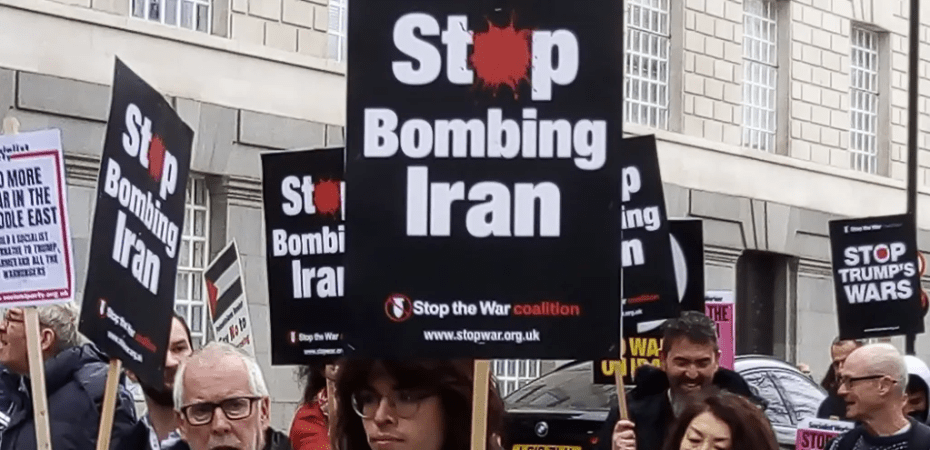
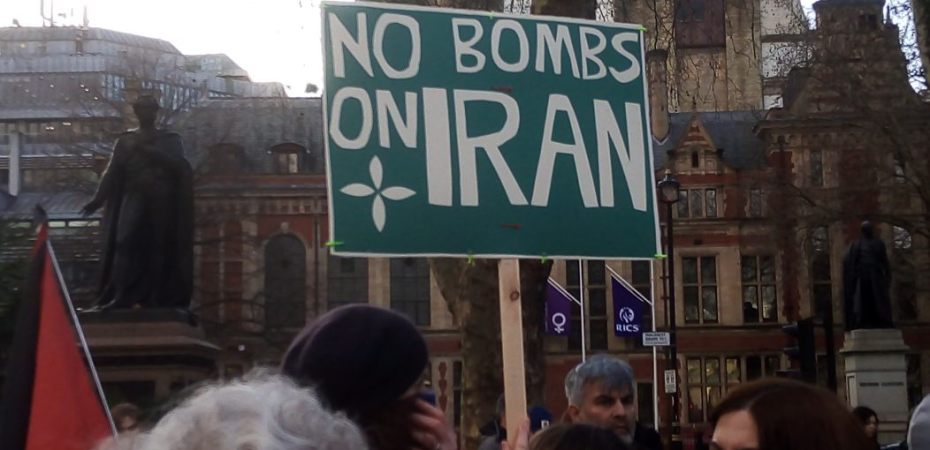
CND was out on the streets within hours of the war on Iran beginning. A No War on Iran coalition has taken shape, led by CND and Stop the War, and supported by the Palestine coalition which has organised opposition to Israel’s genocide in Gaza, and other groups such as CASMII, the Campaign Against Sanctions and Military Intervention in Iran. We have worked with NukeWatch and Drone Wars UK to track and publicise the use of British bases by US fighter jets to launch their deadly attacks on Iran. There are regular protests at RAF Fairford, from where US planes frequently launch bombing raids on Iran.

Anti-war sentiment in Britain is growing and strengthening, despite a state crackdown on the right to protest. Days after the Iran war began, the General Council of the Trades Union Congress (TUC) issued a statement reaffirming its commitment to peace, diplomacy and respect for state sovereignty. The TUC opposed the use of force without clear UN authorisation and called for an immediate halt to hostilities and the urgent resumption of talks. It also called on the UK government to resist efforts to drag Britain further into the conflict.

An open letter signed by trade union general secretaries and senior officials and individual unions have issued strong statements. There has been opposition from parliamentarians too, expressed in an Early Day Motion from Brian Leishman, a Scottish Labour MP, and signed by Labour, Green, Independent, and Liberal Democrat colleagues.

The war on Iran has already spread across the Middle East, and has the potential to expand further, bringing the threat of nuclear conflict even closer. CND will continue to campaign for an end to the US-Israel war on Iran, and an end to the US use of British bases. We insist that the only path to peace and nuclear security lies in the pursuit of diplomacy and negotiations.

Read the CND statement on the Iran ceasefire.

Carol Turner is CND Vice-Chair.

Image: c/o Labour Hub.


As the US and Israel pound Iran, a call to end the war

APRIL 4, 2026

The US and Israel have destroyed or damaged more than 115,000 civilian structures, according to Iran’s Red Crescent Society.  Some 763 schools and 316 health facilities have been hit, along with water plants and roads. This week a pharmaceutical company and an orphanage were bombed. Power plants and economic infrastructure have also been targeted. World Heritage sites have been attacked.

Earlier this week, the New York Times and BBC verified in separate reports that a previously untested US-made ballistic missile was probably used in the February 28th strike on a sports hall in Lamerd, Iran, where at least 21 people were killed, including young girls training there.

Two days ago, President Donald Trump celebrated a ‘double tap’ strike on a road bridge near Tehran to Karaj, sharing video of the attack that killed eight people and wounded 95. The second strike occurred as rescue workers responded to the initial attack. The strikes killed civilians who had gathered beneath the bridge and along the riverbank to celebrate Nature Day in Iran.

Trump’s cheering of attacks on civilian targets has drawn widespread condemnation. Owen Jones said: “Donald Trump is openly flaunting his war crimes. Journalists who won’t call them that are complicit.” Zeteo editor-in-chief Mehdi Hasan said: “This is what terrorism looks like, state terrorism.”

Over 90,000 residential units have been damaged in airstrikes. More than 3 million Iranians have been displaced by the war. Nearly 2,000 people have been killed and ten times that number wounded since the start of the bombardments. US-made mines have also been air-dropped in civilian areas.

Below we publish a statement supported by trade union leaders in Iraq, leading Iranian and Kurdish political activists, John McDonnell MP and many others.

End the war immediately and unconditionally

Over one month has passed since the US-Israel attack on Iran. Thousands of dead, millions of displaced, and destruction of sections of the social infrastructure are the outcomes of the attacks and the ongoing war to date.

Continuous threats of escalation of the attacks and bombing of economic infrastructure and nuclear facilities, as well as the persistent danger of complete destruction of the most vital arteries of social and economic life, have significantly increased the risk of immediate death of tens of thousands and the gradual death of millions of human beings in Iran and the region.

This war, contrary to the claims of its perpetrators and supporters, is not in aid of the people in Iran. These attacks and pledges of further assaults are neither intended to pave the way for the freedom of the Iranian people nor to defend their struggle in getting rid of the Islamic Republic! This is a war against the people and against their more than forty years of effort to achieve freedom, welfare, and security.

The victory of either side in this war will not be a victory for the people of Iran, who had, prior to this war, begun working towards building a humane and free future. The people of Iran and their struggle for freedom are the first victims and losers of this war.

The destructive effects of this war on the lives of the people and the requirements of their freedom-seeking movement are today more undeniable than ever before.

To defend the lives and security of the people in Iran, to protect the achievements of their struggles, and to support the efforts of generations striving for freedom and a humane life, this war must end immediately and unconditionally.

We consider this demand to be the minimum demand that can be achieved through the collective power of people in Iran and around the globe; a demand that not only minimises the damage but also paves the way for the Iranian people to advance toward their aspirations for freedom.

We call on all labour unions, human rights organisations and institutions and the global civilized population to put pressure on the parties in this war to end the war immediately and unconditionally.

Supported by:

  • Abdul Karim Abdul Sada (Abu Watan) – President of the General Federation of  Workers’ Unions in Iraq/President of the General Union of Oil and Gas Workers
  • Arrash Kamagar – Political Activist
  • Assad Golchini – Communist Activist
  • Assad Rostami – Secretary of the Executive Committee of the Communist Party of Iran
  • Ardeshir Mehrdad – Political Activist
  • Aman Kafa – Spokesperson of Iran Freedom and Revolution Watch
  • Anwar Hassain Bazgar – Poet, Author and Journalist
  • Azar Modaresi – Secretary of Central Committee of Hekmatist Party (Official Line)
  • Bahar Monzir – Secretary of the People’s Organisation for Progress
  • Dashty Jamal-  Secretary of the International Federation of Iraqi Refugees
  • Diana Nammi – Founder of Iranian and Kurdish Women’s Rights Organisation-UK
  • Ebrahim Alizadeh – First Secretary of Komala – Kurdistan Organisation of Communist party of Iran
  • Ebrahim Awkh – Political Activist
  • Fereydoon Nazerie – Member of the Central Committee of the Communist Party of Iran
  • Fuad Qzahi – Author
  • Hassan Hesam – Member of the leadership of the Rahe Kargar
  • Hassan Jumaa Awad Al-Asadi – President of the General Federation of Oil, Gas and Petrochemical Unions in Iraq
  • Hosain Dolatabadi- Political Activist
  •  John McDonnell – Member of Parliament of the UK
  • John Moloney – Assistant General Secretary of Public and Commercial Services Union, UK
  • Khaled Hajmodamadi – Secretary of Leadership Committee of Hekmatist Party (Official Line)
  • Mohamad Aloush – Secretary General of the Palestinian Workers’ Struggle Federation
  • Nadia Mahmoud – Aman Women Alliance
  • Nassrin Parwaz – Author
  • Osman Haj Maref – Secretary of Central Committee of Worker’s Communist Party of Kurdistan
  • Parvaneh Bokah – Member of local parliament- Hanover Germany
  • Roger Silverman – Editor of the Journal On the Brink and a founding member of Workers International Network
  • Reza Moqadam – Member of the Leadership of the Socialist Workers’ Alliance
  • Rebwar Ahmad – Central Committee of Worker-Communist Party of Kurdistan
  • Rebwar Aref – Central Committee of Worker-Communist Party of Kurdistan
  • Samir Adel – Secretary of Central Committee of Worker-Communist Party of Iraq
  • Soraya Shahabi – Founder of Iran Freedom and Revolution Watch

Image c/o Labour Hub.


UK Palestine Solidarity Campaign and Stop the War leaders’ convictions for breaching protest restrictions branded ‘shocking’

1 April, 2026
Left Foot Forward News

Jeremy Corbyn has said that 'today’s verdict is a dark day for civil liberties in this country'


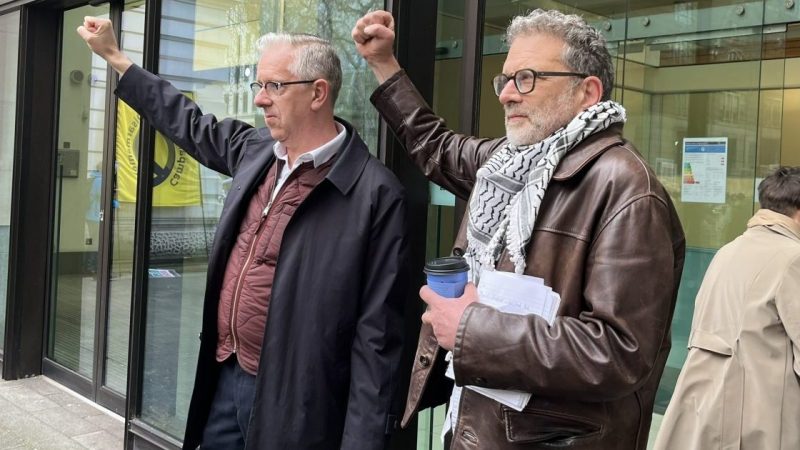
The convictions of Palestine Solidarity Campaign director Ben Jamal and Stop the War vice-chair Chris Nineham have been called “shocking and a huge setback for civil liberties”.

Today, District Judge Daniel Sternberg found both Jamal and Nineham guilty of breaching police restrictions during a pro-Palestine protest on 18 January 2025.

The Metropolitan Police imposed restrictions to block the march from gathering near a central London synagogue, citing concerns about the safety of the Jewish community.

The judge ruled that Jamal and Nineham had “knowingly” breached those rules by marching to the nearby BBC headquarters in Portland Place.

At the protest on 18 January, Jamal made a speech explaining that a delegation of leaders of the coalition, plus MPs and trade union leaders, would walk peacefully towards the BBC’s headquarters.

Jamal told the crowd that the delegation would lay flowers to mark the Corporation’s failures to report the truth of genocide in Gaza.

As a result, Jamal was convicted of two counts of inciting other protesters to breach the police conditions.

Jamal received an 18-month conditional discharge while Nineham received a 12-month conditional discharge. They were also ordered to pay £7,500 in prosecution costs.

In a speech outside Westminster Magistrates’ Court, Jamal said that both he and Nineham and the movement “will not be silenced”.

Jamal said: “We know that decisions like today are designed to repress support for the Palestinian struggle for liberation and our campaign to end all UK complicity in Israel’s ongoing genocide and it will not succeed.”

In a post on X, former Labour leader Jeremy Corbyn said he was “appalled” by the verdict.

Corbyn said: “In January 2025, we held an entirely peaceful demonstration in support of Palestinian people.

“At all times, they — and we — followed all police instructions. We ended the demonstration by laying down flowers at their feet to mourn the deaths of Palestinian children.”

He added: “Today’s verdict is a dark day for civil liberties in this country — and is a disgraceful assault on the right to protest.

“This case is part of a wider attempt to intimidate the Palestinian solidarity movement into silence. They will never succeed.”

Olivia Barber is a reporter at Left Foot Forward
Support for ReformUK falls to its lowest level in over a year

7 April, 2026 
Left Foot Forward


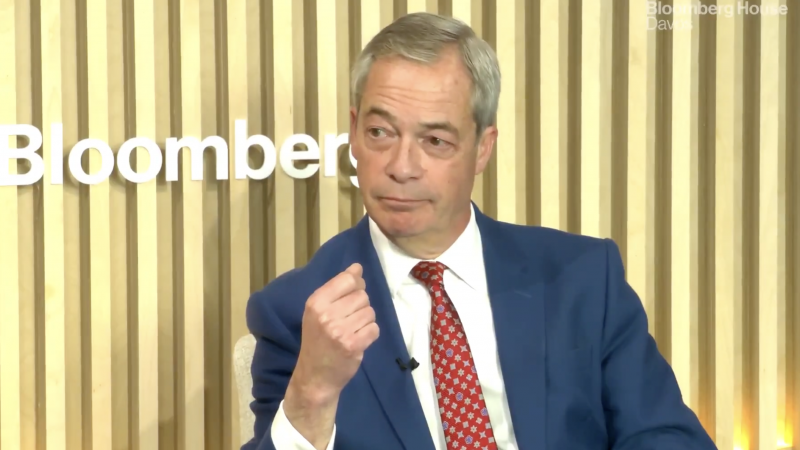
Not going to plan for Nigel Farage...


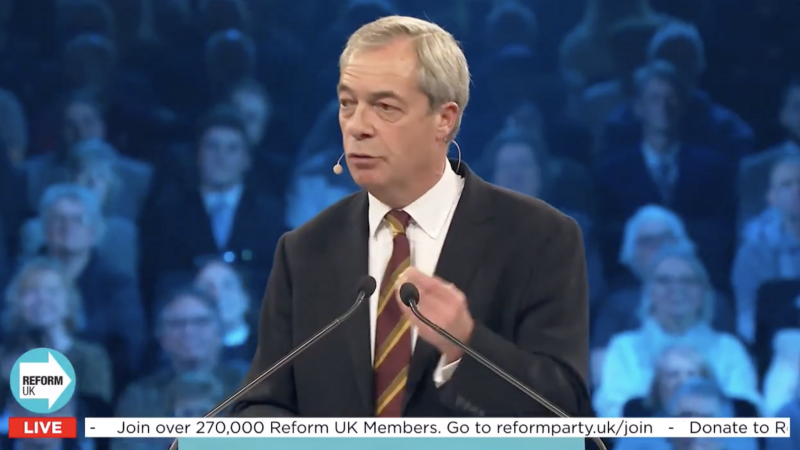
It’s far from plain sailing for Nigel Farage, after a poll conducted on behalf of the Sunday Times showed that support for his party has plunged to its lowest level in over a year.

Ahead of the Scottish elections in five weeks time, a Norstat survey for the paper showed a substantial decline in backing for Nigel Farage’s party, compared with February, after it was hit by a number of scandals in Scotland, including the suspension of some of its candidates for past social media posts expressing bigoted and hateful views.

It’s a picture that’s been replicated across the country, with Reform also falling in the polls in England and Wales after being hit with a number of scandals.

According to polling expert Sir John Curtice, the drop in Reform’s support could benefit unionist parties, with voters peeling away from Reform to support Labour and the Tories as part of a tactical voting campaign to hurt the SNP.

The Sunday Times reports: “Backing for Reform has fallen back to 15 per cent in constituencies and on the regional list, both down four points compared with the last Norstat poll seven weeks ago.”

Basit Mahmood is editor of Left Foot Forward


From lockdown to legitimacy: how pandemic fringe politics pushed populism into the mainstream

28 March, 2026
Left Foot Forward


The longer-term political consequences of the pandemic’s spread of fringe beliefs are visible in the evolution of Reform UK. Its anti-lockdown positioning provided Nigel Farage with a means to reconnect with disaffected voters and reassert his political relevance, much as he had done, with notable success, during the Brexit campaign.


It is easy to forget how surreal the early months of 2020 felt. Six years ago, the UK entered an unprecedented period of nationwide lockdowns in response to Covid-19. Yet alongside this public health emergency, a quieter but consequential political shift was underway, one that would help reshape the trajectory of right-wing populism in Britain.

Today, Reform UK presents itself as a credible contender for power. Yet its origins are rooted in that same moment of crisis, when Nigel Farage and Richard Tice moved to reposition the Brexit Party as the political voice of anti-lockdown resistance.

Reframing public health as political choice

This was a deliberate repositioning. In early 2021, as restrictions remained in place, the party formally applied to become Reform UK, shifting its focus from leaving the EU to opposing lockdowns and supporting businesses. In a joint Telegraph article, Farage and Tice argued it was “time to redirect our energies,” insisting Britain should “learn to live with the virus, not hide in fear of it.” What they offered was not simply a critique of policy, but a reframing of public health, as a matter of individual choice rather than collective necessity.

That reframing stands in contradiction with subsequent evidence. Research by Imperial College London estimated that the first national lockdown saved more than 470,000 lives. A 2025 public inquiry later concluded that introducing restrictions just one week earlier could have prevented an additional 23,000 deaths in England during the first wave.

From fringe to mainstream

The pandemic didn’t create anti-science or conspiratorial politics, but it accelerated and amplified them. Lockdowns, vaccination campaigns and border controls were recast by fringe networks as instruments of authoritarian control, feeding into a broader narrative that portrayed globalisation as inherently oppressive.

And these ideas didn’t remain on the margins. Misinformation circulated widely on fringe digital platforms, but through amplification by activists, commentators and media platforms, it began to permeate mainstream conservative discourse. The boundary between fringe and acceptable opinion became increasingly porous.

In the United States, anti-lockdown protests framed public health measures as infringements on personal liberty, with sometimes armed demonstrators invoking constitutional rights. Influential political and media figures and outlets played a key role in legitimising these claims, presenting restrictions as “authoritarian” rather than evidence-based interventions.

Republican politicians and individuals affiliated with President Donald Trump’s re-election campaign helped organise or promote anti-lockdown protests across key electoral battleground states. Swing states, such as North Carolina, Pennsylvania and Wisconsin, saw Republican lawmakers, party leaders and Trump allies encourage their social media followers to join the protests, often organised by conservative activists and pro-gun rights groups

.

A parallel narrative unfolded in the UK. By the summer of 2020, London had already seen multiple protests against the government’s response to the pandemic. Prominent right-wing media personalities participated, including Julia Hartley-Brewer, TalkRadio presenter and newspaper columnist, who used her platforms to spread anti-lockdown and Covid-sceptic views.

GB News became a particularly prominent outlet for anti-Covid and anti-vaccine narratives. Presenter Neil Oliver linked coronavirus vaccines to so-called “turbo cancer.” This was despite the fact that the Canadian doctor who popularised the term had been investigated by the College of Physicians and Surgeons of British Columbia for alleged misconduct related to spreading misinformation about Covid measures and vaccines. Nonetheless, Ofcom ruled that Oliver’s comments did not breach its broadcasting code. The principle of ‘freedom of expression’ appeared to outweigh Ofcom’s responsibility to guard against harmful or misleading content.

As recently as September, Oliver continued to air anti-Covid commentary on GB News, accusing YouTube of censoring debate by removing videos and issuing strikes against channels “without explanation.”

Fellow GB News presenter and former Brexit Party MEP, Martin Daubney, was another especially outspoken opponent of lockdown measures. Reporting from the ground during the anti-lockdown demonstrations, he interviewed figures such as Laurence Fox, the far-right political campaigner who ran in the London mayoral election on an anti-lockdown platform but, fortunately, secured less than 2% of the vote.

On 26 June 2021, thousands gathered in central London for a ‘Freedom March’ opposing Covid restrictions, despite the fact that most measures were scheduled to be lifted within a fortnight. The crowd brought together a mix of groups, including anti-vaccination activists, adherents of conspiracy movements such as QAnon, supporters of Donald Trump, and individuals who denied the severity or even the existence of the virus.

Richard Tice, then leader of the newly rebranded Reform UK, went so far as to hire a helicopter to film the lockdown protest for a YouTube stream titled Freedom March Live, aiming to secure coverage that, in his words, “could not be ignored” by mainstream media.

Academic insight

Doctoral research provides a useful lens through which to interpret these developments. A thesis from Linköping University finds that individuals on the political right are more susceptible to engaging with and disseminating conspiracy theories. One explanation is that right-wing information environments tend to contain a higher volume of conspiratorial content, increasing exposure and normalisation.

A second explanation is more psychological, suggesting that individuals with more right-wing dispositions are often more attuned to perceived threats, which may make narratives about hidden, malevolent ‘threats’ more intuitively compelling. In this context, conspiracy theories often align with existing right-wing concerns, tending to emphasise themes such as nationalism, nativism, white replacement claims and the preservation of cultural identity

Other theories point to the role of anti-democratic attitudes, where distrust in institutions and expertise creates fertile ground for conspiratorial interpretations of complex events.

From protest to party

The longer-term political consequences of the pandemic’s spread of fringe beliefs are visible in the evolution of Reform UK. Its anti-lockdown positioning provided Nigel Farage with a means to reconnect with disaffected voters and reassert his political relevance, much as he had done, with notable success, during the Brexit campaign.

By reframing lockdowns as a matter of personal choice rather than collective necessity, Farage and his allies tapped into a broader current of discontent. This was not limited to opposition to specific public health measures; it drew on a deeper distrust of political authority and scepticism toward expert-led governance.

Academic analysis supports this interpretation. Research from the University of Birmingham suggests that anti-lockdown politics acted as a vehicle for reviving Farage’s brand of right-wing populism, enabling him to rebuild momentum and reconnect with a receptive base.

More broadly, the pandemic appears to have normalised a style of politics in which conspiratorial thinking and anti-science rhetoric can move more easily from the fringes into formal party structures.

This is clearly visible in Reform UK’s candidate base.

During the 2024 general election, the party fielded multiple candidates who had promoted conspiracy theories online, including claims that the climate crisis was fabricated, support for ‘15-minute city’ conspiracies, and anti-vaccine misinformation. At least 30 candidates publicly questioned or rejected mainstream climate science, often framing it as part of a wider plot by global elites.

Other candidates were suspended or deselected over offensive or extremist content, including anti-refugee activism and inflammatory social media posts. Even Farage himself acknowledged during the campaign that “too many candidates… said stupid things,” linking this directly to a drop in the party’s polling.

Subsequent investigations suggest these were not isolated incidents. In late 2025, HOPE not hate revealed candidates and prospective representatives endorsed claims that Covid-19 was a “hoax,” engaged with far-right influencers, or promoted antisemitic and conspiratorial material

.

More recent scrutiny has reinforced concerns about vetting and internal culture. Reform candidates have been suspended over financial misconduct, while others have been linked to Islamophobic remarks, racist content, or conspiracy-laden online networks. In Scotland, investigate journalists the Ferrett has identified clusters of candidates connected to online groups sharing extreme rhetoric about migrants, Muslims and global “elite” plots.

These patterns point to something more structural than a series of individual missteps. They suggest that the narratives popularised during the pandemic, namely distrust of institutions, hostility to science and expertise, and a tendency to reinterpret complex crises through conspiratorial frames, have become embedded within parts of the party’s political ecosystem.

Six years on, the effects are difficult to ignore. What began as a public health emergency has left a lasting imprint on political culture. The pandemic blurred the line between fringe and mainstream, turning scientific questions into ideological battlegrounds and enabling populist movements not just to endure, but to adapt, institutionalise, and in many cases, thrive.

The prospect of Reform UK carrying these narratives from the political margins into the heart of government should not be dismissed lightly. Were a movement shaped, in part, by conspiratorial thinking and hostility to evidence-based policymaking to reach 10 Downing Street, the implications would extend far beyond party politics, raising profound questions about governance, public trust and the role of expertise in democratic decision-making.


Gabrielle Pickard-Whitehead is author of Right-Wing Watch
UK

New petition calls for referendum on public ownership of water

8 April, 2026
Left Foot Forward

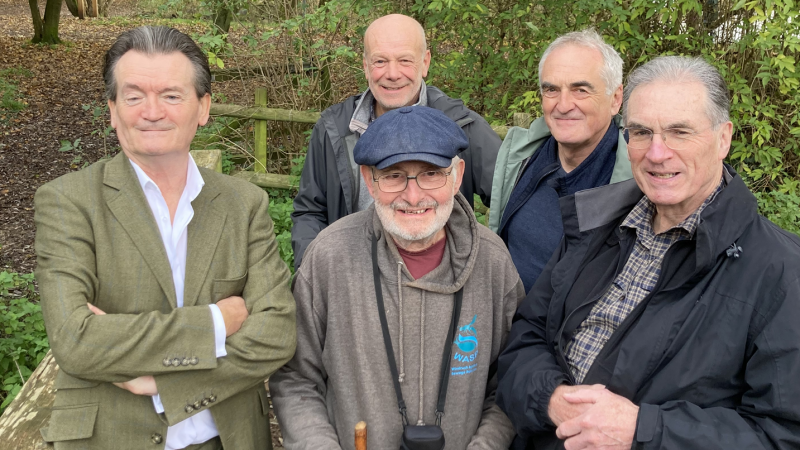
Feargal Sharkey is backing the petition


Campaigners have launched a petition calling for the government to hold a referendum to take the water industry into public ownership.

Ash Smith and Professor Peter Hammond of the campaign group Windrush Against Sewage Pollution have launched the petition. .

The petition reads: “Water is a basic human necessity; we believe our privatised system has failed, so the public should decide who owns and controls it”, before going on to say: “We believe that proposed government reforms to regulation show that water company owners are being favoured over the public, and this is not right in a democracy. A referendum would give the public back its voice about its water.”

England’s privatised water industry has faced increasing criticism in recent years over rising bills, creaking infrastructure and extensive sewage dumping in waterways.

Speaking on the launch of the petition, Smith said: “I think people are sick of being told they can’t have healthy rivers and seas, just because powerful financiers want to keep making money from our water bills. Our government is listening to them but not to us, so this is how we stop being victims and start fighting back.”

The petition has been backed by water campaigner and former Undertones frontman Feargal Sharkey. He said: “It’s unforgivable how the government is ignoring the evidence and the public, and saying water must stay privatised despite its catastrophic, expensive failure.

“Privatisation has already diverted over £85 billion of billpayers’ money to shareholders who added nothing but greed and financial engineering to what should be a water industry, not a cash machine. It’s time the public had a say in this, not just the bond markets and financiers currently pulling the government’s strings for their own ends, and that is why I am 100% behind this petition.”

Campaigners have argued that the government’s forthcoming Water Bill was shaped by a review process that spent more time consulting financiers and the water industry than the public. The bill has been heavily criticised for not including public ownership as an option for the future of the sector.

Anti privatisation campaign group We Own It has called for the government to ‘listen to the overwhelming majority’ of the public who want water in public ownership. The group’s lead campaigner Sophie Conquest told Left Foot Forward: “82% of us want to see water in public ownership. That’s because water privatisation has been a scam. Since water was sold off in 1989, shareholders have taken over £85 billion out of the pockets of billpayers”

“And what have we got in return? Sewage-filled rivers; eye-watering bills and a broken service. There is a clear choice to be made between financial interests of faraway shareholders, and the interests of the public and our environment. This government absolutely must listen to the overwhelming majority of us who want public ownership of water.”

At the time of writing, the petition has reached more than 7,000 signatures and is growing rapidly. As it is hosted on the official parliamentary petitions website, if it reaches 10,000 signatures it will receive a formal response from the government. If it reaches 100,000 it will be considered for a debate in parliament.


Chris Jarvis is head of strategy and development at Left Foot Forward
Reform UK donor runs company linked to sanctioned Iranian conglomerate

Today
Left Foot Forward News


John Simpson donated £200,000 to Reform last year


A Reform donor has been revealed to have links to a Dubai-based company that previously had business ties to a now sanctioned Iranian conglomerate.

According to a Financial Times report, John Richard Simpson is the registered manager and shareholder of Dubai-based Orico General Trading LLC.

Until 2016, Orico had links to Iranian company Omran Razavi International Co, which has close ties to the Islamic Republic’s government.

French legal documents released last month described Orico as a subsidiary of Omran Razavi International Co.

The Iranian company is majority-owned by Astan Quds Razavi religious foundation, a leading financial conglomerate with close ties to the Islamic Republic.

Between 2012 and 2013, Orico entered into agreements with Omran Razavi, including a €145 million deal connected to Iran’s state telecommunications company.

In 2021, the US Treasury Department placed AQR under sanctions, citing its control of “large swaths of the Iranian economy” and its links to then supreme leader Ayatollah Ali Khamenei and senior government officials.

​​Orico denies being a subsidiary of any Iranian regime entity and says it is privately owned.

A source close to the company claims its links to AQR ended in 2016, when assets were allegedly seized amid a power shift involving Iran’s ruling elite.

Simpson is also publicly listed as the person with significant control of Interior Architecture Landscape Limited (IAL Ltd), which donated £200,000 to Reform last year.

IAL’s clients include Iranian billionaire Sasan Ghandehari and his family, who sponsored Farage’s pass to the World Economic Forum in Davos in January.


Crypto billionaire says he donated £4 million to Reform UK

Yesterday
Left Foot Forward

Ben Delo has said he will move back to the UK from Hong Kong to donate millions more to Reform


Ben Delo, a billionaire convicted in the US of failing to implement anti-money laundering controls in his cryptocurrency business, has said he has donated £4 million to Reform.


Delo, who currently lives in Hong Kong, said he made the donation to Nigel Farage’s party before the government placed a £100,000 cap on donations to political parties by Brits living abroad last month.


Writing in the Telegraph, he has said he is moving back to the UK so he can donate millions more to Reform and “build a war chest” for the party without being subject to the cap on expat donations.

Alongside another billionaire Reform donor Christopher Harborne, Delo also made his fortune from cryptocurrency.

Farage has advocated for deregulating cryptocurrency to make the UK a global leader in cryptocurrency.

Last May, he announced at a Bitcoin conference in Las Vegas that Reform would become the first political party to accept donations in cryptocurrency.

Delo, co-founder of trillion-dollar cryptocurrency exchange BitMEX, was convicted in the US in 2022. He pleaded guilty to violating the Bank Secrecy Act by failing to implement adequate anti-money-laundering controls at the firm.

In his Telegraph article, he wrote: “I helped build one of the world’s first major crypto trading platforms, fell foul of US regulators, accepted a plea bargain and a civil fine for a regulatory failing that isn’t even a crime in the UK, but then ended up being pardoned by Donald Trump, the US president, anyway.”

Last month, a Guardian investigation found that Delo had given support to Restore Britain founder Rupert Lowe, allowing him to use the Sanctuary, his base in Westminster Abbey.

Delo has also connected with more mainstream figures including the Conservative leader, Kemi Badenoch, and the former cabinet minister Michael Gove.

Image credit: Anne Schwarz – Creative Commons

Olivia Barber is a reporter at Left Foot Forward

Outrage as Reform UK’s new housing chief says Grenfell was tragic but ‘everyone dies’

2 April, 2026


Nigel Farage has been told to sack Reform’s Simon Dudley

Nigel Farage has been told to sack Reform’s new housing spokesperson Simon Dudley over his “disgusting” comments about the tragic Grenfell tower fire.

Dudley said that the Grenfell fire, which killed 72 people in 2017, was tragic but that “sadly, you know, everyone dies in the end”, before adding “It’s just how you go, right?”.

He added: “Extracting Grenfell from the statistics, actually people dying in house fires is rare… many, many more people die on the roads driving cars, but we’re not making cars illegal, so why are we stopping houses being built?”.

In the interview with Inside Housing, he also said that building safety regulations introduced after the Grenfell Tower fire were an example of “regulation which is not working”.

He also remarked that the “pendulum has just swung too far the wrong way” when it comes to building regulations, which he argued is stopping housing being built.

The regulations introduced safety measures including a ban on combustible cladding for buildings over 18 metres tall and a requirement for high-rise housing blocks to have a second staircase, to increase the number of fire escape routes.

Farage appointed Dudley, a former chair of Homes England as Reform’s housing spokesperson on 6 March.

Green Party MP Siân Berry said Farage must sack Dudley “for this disgusting outburst”.

Berry said: “Reform has sunk to a new low and shown a real disrespect to the victims of Grenfell.

“Anyone who has any awareness of what Grenfell residents went through, in fact anyone with any empathy or humanity, will find these comments truly abhorrent.

“That Reform would want to scrap key safety regulations brought in after the horrific Grenfell fires tells you everything you need to know about the party.”

Housing secretary Steve Reed also called for Dudley to be fired.

Reed said: “If Nigel Farage has an ounce of decency, he will sack his housing chief immediately.

“These disgraceful comments about those who died in the Grenfell Tower fire are beyond the pale and it is completely untenable for Simon Dudley to continue in his position.”

Olivia Barber is a reporter at Left Foot Forward


UK  Housing activist exposes truth about ‘landlords leaving the market’ over Renters’ Right Act


2 April, 2026 
Left Foot Forward

Landlord groups have claimed that many are leaving the market because of over-regulation.


A housing activist has poured scorn on claims that there is a mass exodus among landlords from the market following the Renters’ Right Act which provides more security for renters.

The Renters’ Right Act will come into force from May 1st and will ban no-fault evictions, while also banning bidding wars and limiting rent increases to once per year to the market rate. The Labour government says that the act will give renters much more security and stability so they can stay in their homes for longer, build lives in their communities, and avoid the risk of homelessness.

Landlord groups have claimed that many are leaving the market because of over-regulation.

However, housing campaigner Martin Mawdsley, ACORN Liverpool branch secretary, has said that such arguments are flawed and not borne out by the evidence.

ACORN is a community union which has been organising against rogue landlords, homes in awful conditions and runaway rents.

Appearing on LFF live yesterday, he was asked about the argument that landlords are selling up to leave the market.

He said: “There absolutely have been landlords leaving the market at a slightly higher rate than previously, but there hasn’t been this sort of mass exodus that had been threatened and a lot of the landlords that are leaving are just retiring.

“They are landlords who brought through right-to-buy 30 or so years ago, they’re now retiring, they don’t want to bother managing properties and are cashing in but the fact is that if you’re the sort of landlord who doesn’t want to be a landlord anymore because you can’t just kick someone out on a whim or you can’t be bothered going through the proper processes and want to rely on section 21 instead, then fine leave.

“Someone else will take over the property who will manage it properly or buy it to live in themselves. There hasn’t been a mass exodus, there aren’t hundreds of thousands of tenants about to be made homeless because no one wants to be a landlord anymore and no one can afford to buy, that isn’t happening at all.”

Basit Mahmood is editor of Left Foot Forward


Housing campaigner perfectly sums up why the UK needs rent controls alongside the Renters’ Rights Act


Olivia Barber 
2 April, 2026 


ACORN activist Martin Mawdsley says that rents must be linked to incomes to make them "fair and affordable"

Martin Mawdsley, ACORN Liverpool branch secretary, has perfectly summed up the urgent need for rent controls in the UK, arguing that the Renters’ Rights Act does not address affordability.

Speaking at an LFF Live event last night, he said that “the big elephant in the room” with the Renters’ Rights Act is that “it doesn’t really address affordability at all”.

This is despite ACORN’s best efforts to get affordability included as a consideration in the Act.

From 1 May, renters will be able to challenge unfair rent increases through the tribunal system, however, Mawdsley said that this is likely to mean tribunals are “swamped” and that ACORN “would much rather a formal system of some sort of rent controls”.

Mawdsley said that ACORN is in the process of finalising its policy on rent controls, but that its members want income-linked rent caps to ensure rent is “fair and affordable”.

Critics of rent controls argue that the measure pushes landlords out of the market, inadvertently driving up rents.

Mawdsley argued this is not the case. He said that Britain before deregulation of the rental market under Margaret Thatcher had a system of successful rent controls.

Mawdsley said: “It actually coincided with the biggest period of housebuilding the country has ever seen, so the argument that rent controls deflate housing supply and stop building is wrong.”

He added: “If you limit the amount of profit that landlords and developers can make, the only way they can make money is by building more.”

Catch up on the full episode of last night’s LFF Live here.


Olivia Barber is a reporter at Left Foot Forward