Friday, April 10, 2026

New Jersey city spurns data center as defiance spreads


ByAFP
PublishedApril 10, 2026


Amzak Capital Management had planned to build its data center complex on the site of a former automotive plant - Copyright AFP Thomas URBAIN


Thomas URBAIN

Residents of a New Jersey city mobilized within days to kill a planned data center — and now activists nationwide want to know how they did it.

Grassroots resistance to these computing fortresses is spreading across the United States, even as Big Tech pours hundreds of billions of dollars a year into AI infrastructure, pushing new projects into communities from coast to coast.

Forty miles (65 kilometers) from the New York skyline, rubble still litters a vacant lot in New Brunswick — bordered by a railway line on one side and homes on the other.

This former automotive plant was where Amzak Capital Management had planned to build its complex. For now, it remains empty — a trophy, activists say, for a community that fought back.

Residents learned of the project just nine days before a scheduled city council vote in mid-February.

They moved fast. A video went viral; flyers spread across the city, notably on the nearby campus of Rutgers University. More than 300 people showed up to proceedings held in a room with a seating capacity of barely 80.

Before the matter was even opened for public comment, the city council announced the data center component was being stripped from the redevelopment plan, recalled Ben Dziobek, founder of environmental advocacy group Climate Revolution Action Network.

“We’ve got tons of people reaching out to us from around the country asking us how we did it,” said Charlie Kratovil, a Democratic mayoral candidate and member of environmental group Food & Water Action.

“It is definitely tapping into something that is bigger than any one of us.”

New Brunswick Mayor James Cahill told AFP that while data centers have become critical to modern economies, “communities across the country are grappling with how to integrate them locally.”

Key considerations, he said, include energy consumption, environmental impact, real estate footprint and benefit to local residents.

Those concerns resonated deeply in New Brunswick.

A 23-year-old resident who asked to be identified by the initials CJ noted that the data center would have been built in the middle of a working-class neighborhood, far from the businesses, hospitals, and university buildings of the more affluent city center.

For Brandon Guillebeaux, a longtime resident of this heavily Hispanic community, the trade-offs simply didn’t add up.

“If it had brought thousands of jobs, it would have been worth it,” he said. “But this was only going to be a few.” Once operational, data centers typically employ very few workers on site.

– A precedent? –

A boom in generative AI has sent data center demand skyrocketing, with dozens of projects springing up across the United States.

The buildout comes at a cost: power-hungry facilities are straining local grids and driving up electricity bills, contributing to a nearly 17 percent jump in the average New Jersey household’s energy costs last year.

Public sentiment is hardening. A recent Quinnipiac University poll found 65 percent of Americans oppose having a data center built in their community.

In early March, seven major AI sector players pledged to offset their electricity consumption by investing in new power generation — though critics say voluntary commitments fall short of what is needed.

Other communities have pushed back, too. Last year, cities including Chandler, Arizona, and College Station, Texas, rejected proposed data centers — though neither case drew the national attention that New Brunswick has.

“I really hope this sets a precedent,” said CJ. “To show people that if they take action and publicly voice their opposition, they actually stand a chance” of winning.

That momentum is now reaching state capitals. In the coming weeks, Maine could become the first state to enact a moratorium on construction of these massive facilities — which house millions of processors that form the backbone of the internet and AI.

In New Jersey — the most densely populated state in the country — numerous bills to regulate data centers are under consideration. Kratovil, the New Brunswick mayor, alongside prominent left-wing politicians including Bernie Sanders and Alexandria Ocasio-Cortez, is pushing for a more comprehensive statewide moratorium.

“We want feasibility studies and a pause, so we know the actual local impacts — not just rushing ahead at full speed,” said Dziobek.

How to Stop a Data Center


April 10, 2026

Image by Logan Voss.

“Why do you think you can stop a $1.2billion University of Michigan and Los Alamos project?” was the first Instagram message we received at the launch of the Stop the Data Center campaign in Ypsilanti, Michigan. For us, the question was not “why?” but “how?”

Our campaign is built against an exceptional and horrifying facility right in our backyards. We have had some huge wins in recent months through the connections within our community and through connections with other site fights and AI resistance efforts nationally and internationally. Site fights cannot win solely by the power of the local people: huge inspiring underground networks back these fights, write policies and moratoriums, resource actions, share lessons, and make their stories loud. We hope you tell our story after reading this piece and our energy aggregates. If you are reading and want to help stop a nuclear weapons research facility data center in a beautiful small town in Michigan: here is your call to action and your invitation to link in!

The Origin of the Campaign

In December 2024, the University of Michigan (U-M) and Los Alamos National Laboratory announced that they would build “the world’s fastest supercomputer” — “the biggest, baddest” for “national security.” This collaboration with the makers of the atomic bomb would destroy a beloved local green waterfront park in the process. Not only is the park where our kids learned to ride their bikes, where we throw birthdays and host gatherings, not only is it where we fish and kayak on the ancient river with our neighbors; but long before we lived here, the park has been home to herons, cormorants, and bald eagles. People of every political background gather here and live in its watershed. And, in a bipartisan chorus, a kind of comradery so hard to come by in 2026, all of our canvassed neighbors – from Trump 2028 flag-wavers to queer commune dwellers – agree that no one wants to sacrifice our life and this watershed for this facility.

Through public presentations, conversations and publications we ascertained that the facility is aimed at nuclear weapons testing and simulation, military drone surveillance and geospatial targeting. We do not want a data center. We do not want nuclear war. We do not support a nuclear warfare AI data center. We do not want to be in the eye of war. We do not want this war machine at this park, in Ypsilanti, or anywhere. And we will not stop until it is stopped.

Stop the Data Center Campaign wins have come slowly, but have since picked up momentum. Since October 2025, the University was pushed to waste time looking at other sites; nearby Ypsilanti City unanimously signed a resolution for Peace joining the Mayors for Peace against supporting nuclear weapons with our tax dollars or community resources; the timeline on the project was pushed back a year; the township unanimously signed a bill to pull the $100m taxpayer “strategic fund” awarded to the center; the project was pushed a second year; and our city has begun receiving international attention for the atrocity of this war facility. The township board passed a resolution against the data center, specifically decrying nuclear war. Breaking ground on this data center was punted into the Trump presidency, and while its proposal lacks unified vision and will be outlandishly expansive, we recognize that we are living in a time where tech’s “move fast and break things” has combined forces with the destructive power of fascism. What should be confined to sci-fi horror is a very real threat.

Successfully delaying the project has been hard fought, especially with adversaries we know are not playing fair. For example, Los Alamos held a “town hall” on U-M campus in Ann Arbor with only limited paid parking, not walkable or with straightforward public transit from Ypsilanti. It was not publicized in West Willow, the predominantly black and brown neighborhood where the facility is proposed to be built. Six activists showed up in protest and were immediately arrested – no warnings or requests to leave before being taken directly to jail. In fact, most were in the process of leaving and were chased to then be arrested. They were then charged with two felony counts of trespassing (at… a community meeting) and larceny (for… eating the food at the event). Months later, the charges were dropped directly by the County Prosecutor Eli Savit saying these unusual arrests violate our first amendment rights.

The hundreds of activists in our bottom-up campaign are linked by the shared desire to Stop the Data Center. There are not central operatives or even shared intermediate goals: instead, we support a diversity of tactics where every community member chooses their path based on their own skills and their own first order concerns. The concerns span across the political spectrum: environmental, political, infrastructural, existential, financial, about clean water or about cost of living, about property value or corporate lies, about university overreach or tax exemption, against AI, against military investment or against nuclear weapons.

What began as a wheatpaste and sticker campaign snowballed into a dedicated group of hundreds of people engaging in daily action. Our group chats are all always spitting fire and in action. Our campaign strengthens our local community and builds strong connections to other site fights nationally and AI resistance networks internationally. We are fighting this fight locally with the support of hundreds of activists from all over the world committed to stopping this data center.

Launching a Campaign

We’ve centered building relationships and growing an intergenerational, multiracial coalition because we understand that the data center is a threat to us all. Touted as the “New Manhattan Project,” the technology this data center will enable is decidedly death-dealing, and has the propensity to fuel destruction at a global scale. Stopping this nightmare from taking root requires a campaign that allows for a diversity of tactics, invites folks from all walks of life to participate, and builds on the wide range of skills and resources that exist when we come together.  While the University of Michigan and Los Alamos laboratory are fantasizing about nuclear weapons, AI driven military technologies, and the blood-money warfare economies inevitably accumulate, we are committed to protecting our neighbors, community, and our planetary home.

As soon as the data center was announced, the Stop the Data Center collective formed a dedicated months-long canvassing wheatpasting and campaign to get the word out, linking to an instagram, substack, and whatsapp group. Canvassing was wildly successful; canvassers were regularly welcomed in to chat, given hugs, offered snacks, and people pulled out their phones and followed on social media immediately. Canvassing built support for our campaign against the data center, and set the groundwork for widespread wheatpasting.

Wheatpasting happened all over town! The data center is slotted for Ypsilanti, a small town just outside of Ann Arbor where U-M main campus sits. Wheatpasters hit both Ypsi and Ann Arbor, focusing mostly on downtown areas, Eastern Michigan University (in Ypsi) and U-M. Folks printed flyers, used thermal printers and USPS labels to make stickers and printed big murals that were wheatpasted in different areas. Lots of different punks were wheatpasting, with different folks leading it. To facilitate this, people put together easy grab and go kits and passed them out.

This got the news out so effectively. People asking about it had hundreds of upvotes on reddit r/ypsi and r/annarbor.  It only took a few months for the instagram to hit 1,000 followers. The first assembly meeting had 83 attendees!

Growing a Campaign

We know this is a long fight, and that it is one fight in a patchwork quilt of many. Our campaign is about growing community as much as growing a movement: we prioritize caring for each other along the way and opening the doors as wide as possible to bring all sorts of people into the mix. This looks like: food team bringing mostly vegan allergen-aware food to all the events, childcare at our big meetings, relationship-building being a priority, including a working group dedicated to welcoming and orienting people to the campaign, another working group aimed at making friends/bringing current friends into the fold, a celebration of art and music against the data center. We are always trying to reach out to more people, through canvassing (both door knocking in the neighborhood and bringing flyers and chatting with folks at local events), social media, yard signs, and wheatpasting the town. Of course, we could do more to welcome and care for each other, and if you have energy or ideas, you’re invited to join or start a working group!

We embrace the beautiful synergy of many people trying lots of different tactics to stop the data center. We don’t think any one person or group acting alone can stop the data center; instead we are all made stronger with each other, and invite everyone to try out what they think works and engage according to their skills. We talk strategy together and think deeply about how to effect change in the world. For example, lobbying the government has created slow downs for the rest of folks to use to build power and organize. Legal tactics that center government engagement can be low barrier welcoming pathways for folks who aren’t yet sure they want to participate in other tactics, like home demonstrations. The affinity groups doing home demonstrations add teeth and pressure for decision makers to work with the legislative groups, and create interest and drama for the media and social media teams. It’s all an experiment, and studying what happens when different people do different things is useful to everyone.

We use spokescouncil and assembly meetings to learn from each other, strengthen our strategy, and grow our campaign. Spokescouncil meetings are small monthly meetings where a single spoke from each working group attends to touch base, give updates, and coordinate. It is a place where different working groups can make asks and offers. For example, the food team can say, “If you’re hosting an event and want us to make food, please let us know, we are usually available. Also, especially working groups in the welcoming network, please send the good cooks our way, we could use a few more people on the roster; right now it’s a few people doing most of the cooking.” There is no central governing body: the working groups have full sovereignty over their organization and actions. If folks are excited about an idea, they can ask for help from others in the campaign, and we honor everyone’s autonomy and critical thinking skills in deciding on their priorities to stop the data center.

Monthly assemblies bring everyone together to coordinate tactics and envision our next steps. There are usually 50-100 attendees, and the assemblies are structured to be welcoming to new folks while also offering time to chat, mingle, and relationship build among more experienced folks. We start all together with a brief orientation and history of the campaign. We go over our two working agreements (1. Don’t publicly condemn each other 2. Don’t snitch). There are often between 15 and 25 working groups active at any time, and after they pitch their work to the crowd, we divide up into working groups where new people get oriented and plans are made for the coming month. There is always food and childcare. Childcare working group makes special effort for kids to be involved in fighting the data center, often through art projects!

Home demonstrations have successfully pressured the township board to put the data center on the agenda for us. All summer we went to township board meetings with between 80 and 150 people speaking out against the data center. No members of the public spoke in favor of the data center. Still, the township board refused to put the data center on the agenda. Then one Saturday afternoon, about 40 people wearing wacky ties went to the homes of several loudly pro-data center township board members and chanted, “We tried emails, we tried meetings, now we are at your doorstep, yelling screaming” and “This is a meeting/ We are the council. Put us on the agenda/ The data center is cancelled!”.  Demonstrators generally stayed on the sidewalk and disruptions lasted no more than ten minutes.

The next township board meeting, we were on the agenda and they passed several substantive resolutions against the data center. In responseChris Kolb, the University of Michigan’s Vice President for Government Relations who is spearheading pro-data center propaganda, mocked township board members’ concerns about the home demos. Yet, after he and a dozen other university officials were visited during the regional gathering against the Los Alamos data center, he immediately hired private security to sit outside his house 24/7 (which has not prevented several more visits). The home demos have continued, with dozens of U of M and Los Alamos officials receiving visits.

We have a strong lineage of anti-nuclear war and peace activists in whose footsteps we follow. Postcards for Peace is one intergenerational working group carrying this tradition forward, sending postcards to the homes and offices of officials supporting the data center, pleading with them to consider our collective future. First, nearby Ypsilanti city has signed onto Mayors for Peace and sent a letter to all concerned parties asking them not to build this data center. This inspired Ypsilanti Township Board to pass a resolution against the data center on the basis of being against nuclear weapons.

Challenges Ahead

The stakes are high; Los Alamos is calling their investment in AI (of which this data center is the crown jewel), “the New Manhattan Project.” Surpassing the devastation wrought by the atomic bomb created by the first Manhattan Project, a Manhattan 2.0 has the capacity to change and literally destroy our whole world. The first atomic bomb was created without consideration of the implications for decades to come, ranging from school children hiding under their desk fearing total annihilation to the ongoing devastation wrought by the atomic bombs dropped on Hiroshima and Nagasaki. The people building this data center are focused on building the “fastest, baddest” computing system, and they do so without any concern around how this will affect the air we breath, the cancer rates of Ypsilanti citizens, the way more bigger nuclear weapons and plutonium pits will poison the only planet we have, and redefining our political and social relations based on the violence and destruction we will be capable of. Our world depends on our fight winning, but we are up against many powerful institutions.

The University of Michigan is a particularly powerful enemy. They have a state constitutional amendment saying that they do not have to follow local government’s laws and ordinances, so the township board cannot enforce their permitting procedure with the University. They don’t pay taxes on the land they own, and will not be required to even contribute to the municipality for fire protection and the other services the township offers. They have a non-disclosure agreement (NDA) with Los Alamos, protected by military security clearance, preventing them from having to share even the most basic details of the project (e.g., what cooling method will they use, what companies will they contract to build it?) Many other corporate data centers would have been defeated by the efforts that this campaign has taken so far.

Building Networks of Community Resistance

The specific data center we are fighting is a nuclear weapons AI data center, so we know it is designed for destruction. However, many data centers will be used to fuel US militarism and advance the warfare state without any explicit reference to nuclear weapons. The ten biggest data centers in the world are owned by the Department of Energy, the government body responsible for managing nuclear power. Under Trump appointee Chris Wright’s leadership, is primarily focused on nuclear weapons. Individual boycotts against ChatGPT will never be enough to stop the proliferation of AT data centers, which enjoy massive tax breaks and strong government funding. It will take tireless and collective mass organizing to stop them.

Data Centers are overtaking the country, being forced on many different communities, 15-20 are being proposed in Michigan in 2026. Our story of a community coming together and fighting back is one we want to share with folks and hope to be a model that can inspire other communities. As more local governments have stopped data centers, corporations and government entities have gotten more forceful. Because of the extraordinary powers of the University of Michigan to ignore local zoning, we have been forced to be more creative in our resistance. We hope that the spokescouncil model and tactics like home demos are useful to others fighting hard to stop data centers.

Building networks of collaborative campaigns and political and environmental education are key to stopping the onslaught of data centers and war machine facilities. There are more of us who will suffer from data centers than profit from it. We’re going to need each other to win this fight.

Stop the Data Center is a many-voiced movement based in Ypsilanti, Michigan. This article was written by the campaign’s writing working group, which does not speak for everyone, but does try to capture a variety of perspectives. We are an intergenerational crew of community members who wants to stop the proposed University of Michigan/Los Alamos National Laboratory data center from being built in our backyard or anywhere!


From National Heritage to Public Memory


Ahead of the publication of the paperback edition of his new book and an upcoming speaking tour, Professor Dan Hicks explains why we need an understanding of corporate-militarist colonialism to make sense of the world today.

Like many who were students in the 1990s, I was taught to think about the legacies of empire through the lens of ‘post-colonialism’. Across studies of literature, politics and history, back then questions of empire were framed as something that had been brought to an end through the processes of post-war decolonisation, and so could be interpreted, analysed or discussed now those events were over. For those of us who had protested against the First Gulf War of 1991, and who would later return to the streets to join the millions who marched against the Second Gulf War from 2003, that framing always felt problematic. Today, as the prospect of a Third Gulf War looms, it’s simply impossible to square with the facts.

Just open a newspaper and there is Putin’s “special military operation” in Ukraine, Israel’s genocide in Gaza, and a new phase of bombing Lebanon. Or doom-scroll your social media and there is Trump threatening new American attacks on Venezuela and Iran alongside ideas of invading Cuba, even annexing Greenland or Canada, and pronouncing “we will pursue our Manifest Destiny into the stars.” Imperialism is back, the pundits tell us. More probably, colonialism never went away.

So if the idea of postcolonialism has become as antiquated and irrelevant as the idea of postmodernism, what new framing do we need in its place?

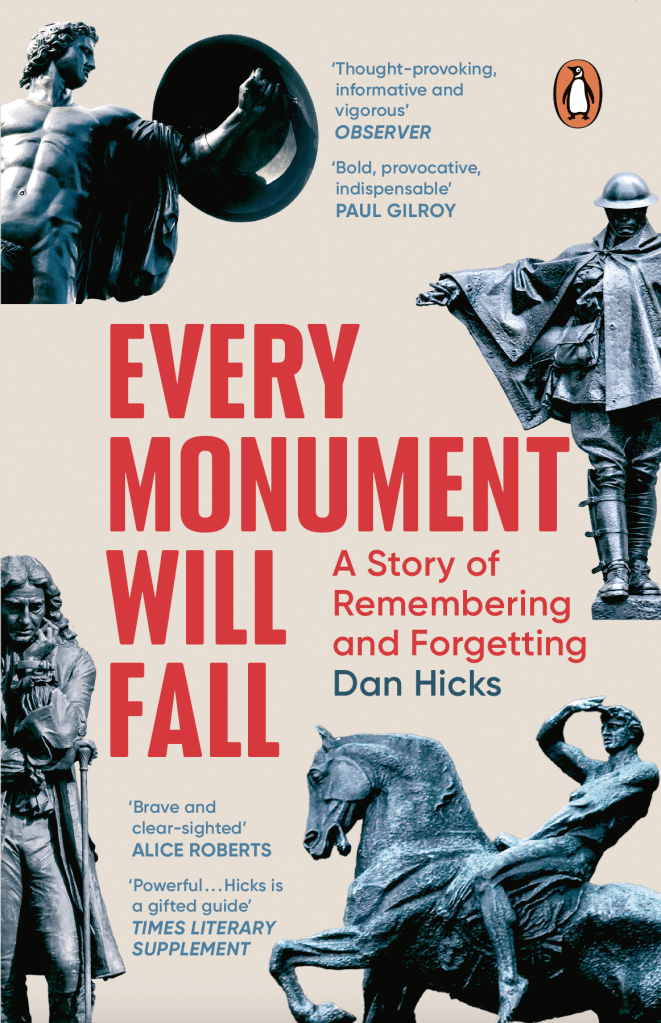
My book Every Monument Will Fall: A story of remembering and forgetting, which is published in paperback on May Day 2026,offers one possible answer. As a curator whose research operates between the ‘four As’ (art, archaeology, anthropology and architecture), and as the world’s first Professor of Contemporary Archaeology (a field that some will insist is an contradiction in terms), I am interested in the traces of the recent past and the near-present. From my perspective the answer to the question about how to think about colonialism beyond ‘postcolonialism’ is twofold. First we must examine what exactly it is that survives into the present. And second, we need to understand how it has been made to endure.

You might imagine that the cultural and artistic dimensions of ongoing colonialism are a distraction from what we think of as the ‘real work’ of anti-imperialism, anti-war activism and anti-racism. But for over a century, three parallel grassroots movements, largely led by Indigenous, South Asian, African, African-American and Caribbean scholars and activists, have shown how crucial the dimension of culture has been (and continues to be) for how ideologies of White supremacism and structures of colonialism have survived.

First is fallism. The fallism movement has worked towards the removal of statues of colonisers and enslavers – a history that reaches back at least to the Neill Statue Satyagraha protest in Chennai (the 100-year anniversary will fall next year in 2027). It has included significant movements in Algeria, has seen the removal of statues of Cecil Rhodes in Zambia in 1964, in Zimbabwe in 1980, and in Cape Town in 2015. It has been a central element of the civil rights movement in the United States since the 1970s.

In my own workplace, Oxford University, the statue of Rhodes, this institution’s shameful celebration of the foundations of apartheid, still stands — for now, at least. But as Nick Mirzoeff pointed out in his 2023 book White Sight, the statues were never ‘just statues’ – they were crucial elements of the infrastructure of cultural Whiteness.

Second is restitution. As I showed in my previous book The Brutish Museumsthe movement for the restitution of looted artefacts, artworks, and ancestral human remains to formerly colonised nations and descendant communities has a long history, which has seen many returns since the first items looted from the Kingdom of Benin in what is today Nigeria returned in 1937. Some still claim returning stolen goods is an attack on museums; but with every return the reality becomes clearer: on a case-by-case basis restitution is how we remake our galleries and collections to bring them into step with the facts, and with our times.

Third is the broader movement for the decolonisation of knowledge – the undoing of the creation of academic disciplines and structures of knowledge — disciplines and structures in which the founding of those four fields (the ‘four As’) was a cornerstone. Today when you hear JD Vance or Elon Musk telling people that Europe is at risk of “civilisational erasure”, or when Donald Trump talks of “shithole countries” and how his bombs will bring Iran “back to the Stone Ages, where they belong”, it is these old structures of thought that provide the framework for the divisive language of civilisation and barbarism, culture and savagery. Who is the barbarian and the savage here, people increasingly ask.

In these ways — whether with monuments in the streets, or with stolen objects in a museum vitrine, or with the very ideas and framings used in academic seminars or in the books in the university library and on the reading lists — these three movements have shone a light on the unfinished history of how art, culture and even knowledge itself have been weaponised.

In Every Monument Will Fall I make the case that in a broader historical perspective, these three grassroots movement represented resistance against a single enduring historical phenomenon to which we need to pay attention today.  In an older Marxist language they might have called this the ‘naturalisation’ of inequality, or simply ideology. In the book, I offer a name for this movement of politics, art, aesthetics and culture that co-opted our public spaces, museums and universities from the 1870s to the 1920s – ‘militarist realism’.

The militarism is clear – culture was put to work as part of the rationalisation and justification for colonial violence. As for the realism in play, it is a precursor to the realism described by the late great Mark Fisher in his 2009 book Capitalist Realism – that powerful sense experienced under late capitalism that the world could never be otherwise.

And here it becomes clear what the fallism, restitution and decolonisation movements teach us about the condition that militarist realism in monuments, museums and universities still serves to naturalise: the condition of corporate-militarist colonialism, as it emerged in the final third of the 19th century, and as it persists today in the first third of the 21th century.

For these reasons, I worry about how the American left have responded to the rise of Trump and Musk. On the one hand, it has been claimed that this is a return to feudalism, and the slogan has become: No Kings. On the other, we hear that this is fascism, and we hear that Trump is a kind of neo-Nazi. A third historical and political framing is possible, and it’s one that emerges if you pay attention to the lessons of movements for fallism, restitution, and decolonisation. On a Cecil Rhodes or Teddy Roosevelt model, in a new iteration of that  ‘rough rider’ mentality with its chilling mantra “carry a big stick”, what we’re seeing is neither simply feudalism nor fascism but an enduring corporate-militarist colonialism.

The right’s war on culture has a long history — one which always involved placing stolen objects in museums, supremacist ideas in academic disciplines, and statues of enslavers and colonisers in the streets. As the Trump administration attacks national museums and public universities, and re-erects fallen Confederate statues, this is just the latest front in an longstanding transatlantic war for cultural supremacism. Those on the left can no longer afford to disengage, abandoning culture, ‘heritage’ and the arts as battleground of the original culture warriors.

So what new framing do we need to replace the idea of post-colonialism? The answer in my view is that we need to understand the enduring remains of the past not as national heritage but as public memory.

The fate of the statue of Cecil Rhodes at Oriel College, Oxford is an urgent case in point. Following a series of public protests, and the democratic decision by the governing body of Oriel College, Oxford to relocate the statue of Rhodes made in 2020 and reaffirmed in 2021, the monument is still there. Why? Nobody knows. The last Conservative administration sought to turn the phrase ‘retain and explain’ into a political slogan and a universal mantra, and a kind of chilling effect began to spread. But an alternative view to a world preserved in amber is possible: one that begins with the idea of the legacies of the past not as heritage, but as public memory. So let us demand the democratic right for nations, cities, institutions and communities to reshape their memory culture – to choose who is remembered, and how.

Drawing together debates about statues in the streets and ancestral human remains in institutional collections, Every Monument Will Fall: A story of remembering and forgettingmakes the case for reimaging national heritage as public memory as a first step in reimagining our national past in and for the present — caring about communities more than collections, and thus caring about people more than we do for things.

Dan Hicks is Professor of Contemporary Archaeology at the University of Oxford, Curator at the Pitt Rivers Museum, and a Fellow of St Cross College, Oxford.

Bluesky: https://bsky.app/profile/profdanhicks.bsky.social

Instagram: https://www.instagram.com/profdanhicks

LinkedIn: https://www.linkedin.com/in/dan-hicks-8527b867/

Every Monument Will Fall is published in paperback by Penguin on 1st May 2026, and is also available as an audiobook.

Dan’s upcoming paperback book tour includes the following UK dates:

THUR 30 APRIL

BIRMINGHAM UNIVERSITY/THE HEATH BOOKSHOP

(WITH CORINNE FOWLER & LEIRE OLABARRIA)

TUES 5 MAY

OXFORD DAUNT BOOKS SUMMERTOWN

(WITH PAULA AKPAN)

WEDS 6 MAY

MANCHESTER MUSEUM

(WITH SADIA HABIB)

THURS 7 MAY

LONDON WATERSTONES TRAFALGAR SQUARE

(WITH SARAH STEIN LUBRANO)

TUES 19 MAY

BRISTOL EAST BRISTOL BOOKS

(WITH MAI MUSIÉ)

SUN 14 JUNE

CLEVEDON CURZON CINEMA AND ARTS

(WITH THANGAM DEBBONAIRE)

Full details and tickets: www.danhicks.uk/talks


UK

The 1926 General Strike

Jeff Slee explores an historic confrontation ahead of next month’s hundredth anniversary.

This May is the centenary of the General Strike, the biggest event in the history of the British working class. It lasted nine days, and up to 3 million workers covering all the main sections of British industry took part. There had been a general strike before, in 1842, but the working class was much smaller then.

The strike was in defence of the miners, against the demands of the mine owners for wage cuts, longer hours, and the ending of national agreements. Many of the workers involved feared that they too would be faced with similar demands from their bosses.

Britain in the 1920s

A hundred years ago, Britain was a manufacturing country. Coal was the main source of energy for homes, industry and generating electricity. Transport of people and goods – including coal – over longer distances was by rail. In towns and cities, people took buses or trams. Only the rich had cars. Millions of workers worked in the mines, transport, the docks, steel making, shipbuilding, and other engineering industries. Coal, the biggest of these industries, employed over a million miners – about one in ten of Britain’s male workforce.  All these industries were in private ownership, except for London’s docks which were run by the public sector Port of London Authority, and buses and trams which were run by local councils.

In the first quarter of the 20th century, trade unions had grown in size, organisation and militancy. Between 1900 and 1926, trade union membership rose from 2 million to 5 ½ million – at its peak in 1920 there were over 8 million trade unionists. Strikes caused the loss of many millions of working days each year. The miners’ union, the Miners’ Federation of Great Britain (MFGB) – which later became the NUM – had a membership of over ¾ million and the most industrial power of any British union.

The prelude to the General Strike

In 1925 the UK coal industry was in a downturn. The coal owners demanded that miners take wage cuts and work longer hours, and that agreements should be made at district level instead of national level. The MFGB refused, and appealed to the TUC General Council for support. The Railway and Transport unions agreed to support them, and the General Council – together with the railway and transport unions – ordered a stoppage of all movement and import and export of coal from July 31st. This was to be followed by a sympathetic strike – a generalised strike – if the coal owners imposed a lockout on the miners.

Tory Prime Minister Stanley Baldwin and his Government, working closely with the coal owners, wanted a general reduction in wages – not just in coal but for all workers. They also wanted to break the power of the TUC General Council – the TUC had created the General Council in 1921 to be their leadership, and the Government and bosses feared that it would lead co-ordinated and generalised strikes.

Faced with the threat of a widespread strike, the government and the coal owners backed down. The Government provided a nine-month subsidy to coal owners to maintain wages, which was to expire on April 30th 1926. And they set up a Royal Commission on the reorganisation of the coal industry.

The Government, knowing that they had only postponed a confrontation between themselves and coal owners – their class – and the miners and trade union movement  – the working class – used those nine months to plan and organise to win that confrontation. They built up coal stocks, including using coal imports. The Government set up an emergency civil administration system to keep transport and food and coal distribution running. This was based on ten regions each to be run by a Civil Commissioner assisted by civil servants. And they set up a strike-breaking organisation, the Organisation for the Maintenance Of Supplies (OMS).

In contrast, the TUC did not plan or organise for when the nine-months pause would end. There was no clear agreement between the General Council and the MFGB on what the aims of a strike would be, or how a decision would be taken on the terms of any proposed settlement.While the MFGB was clear on their demand of “Not a penny off the pay, not a minute on the day”, the TUC General Council never formally adopted this as their aim. They reserved the right to make a deal that would mean worse pay and conditions for the miners.

The General Strike

In April 1926 the Government’s coal subsidy ended, and the coal owners again demanded wage cuts, longer hours and the ending of national agreements. They threatened to lock out the miners if the MFGB did not agreed to these demands. On Saturday May 1st, a special TUC conference voted overwhelmingly for a general strike. The Government had prepared for a war on the working class, and when TUC representatives met them that weekend to try and reach a deal, the Prime Minister showed little interest.

So the coal owners locked out the miners, and at midnight on Monday May 3rd, the General Strike began. The General Council called out all transport workers, printers, iron and steel workers, metal and chemical workers, building workers, electrical and gas workers. From Tuesday May 4th there were no trains, buses or trams, no power, no newspapers, no building work done. From May 11th the General Council also called out shipyard workers and engineers.

The strike was enthusiastically supported and almost completely solid. For example, 99% of London Underground employees were out; the various rail companies reported that only a few percent of goods trains were running. Mass picketing was effective across the country. The Government were unable to break the strike, despite bringing in the army and navy, strengthening the police, and using young upper-class volunteers to try to keep transport running.

The TUC had not planned how the strike was to be run in cities and towns, but everywhere local trade union organisations rose to the occasion and started running the strike in their localities. In some places, this was done by Trades Councils, which were then much more numerous, strong and well-supported than now, building on a long history of local co-operation and organisation by trade unionists. In other places, this role was taken on by union Councils of Action or Joint Strike Committees which were rapidly set up and got themselves organised.

Running the strike in their localities included taking responsibility for organising mass pickets, producing local strike newspapers, and issuing permits for what transport they decided could still run.  Employers had to go to these committees to ask for permission if they wanted to move goods such as coal or foodstuffs. In a very real way this strike led to alternative working-class organs of state power at local level. The Government’s Civil Commissioners were unable to organise local services: power was with the strikers’ organisations.

For example, “in Newcastle the Government’s Commissioner” [ one of those the Government had created before the strike to run local services during the strike] “was forced to go to the Joint Strike Committee with a suggestion  for dual control of food services in view of the breakdown of the efforts of the OMS.” (Allen Hutt, The Post-War History of the British Working Class, Left Book Club 1937).

End of the Strike

By Wednesday May 12th the strike was stronger than ever, with no signs of any significant return to work and the shipyard workers and engineers having enthusiastically joined the strike the day before. But the backbone of the TUC General Council members was weaker than ever. They were frightened of the power of the strike and just wanted to find any way out. That day, the General Council met with Prime Minster Stanley Baldwin and called off the General Strike, without any concessions from the Government.

Millions of workers – dismayed by the decision of the General Council – stayed on strike on ThursdayMay 13th. The General Council resorted to issuing a statement making the completely false claims that “The General Strike… has made possible the resumption of negotiations in the coal industry, and the continuance, during negotiations, of the financial assistance given by the Government” to get union members back to work.

Some employers took the opportunity to announce wage cuts, longer hours, and victimisations of union militants, but many workers, notably on the railways, refused to return to work until the owners had withdrawn threats to their conditions and contracts.

The miners stayed out, and did not return to work until November 1926 – defeated in the  end, having to accept wage cuts and longer hours.

The General Strike and the miners’ strike following it caused 162 million working days ‘lost’ (the word used in Government statistics) to strike action in 1926. This represented more days than in all the 50 years from 1975 to now added together.

The Tory Government used their victory over the General Strike to press forward with attacks on the working class. They cut unemployment benefit and extended the clause which was used to deny unemployment benefit altogether to those workers who were deemed as “not genuinely seeking work”. The Trades Disputes and Trade Unions Act 1927 made much trade union activity illegal, including banning general strikes, all sympathetic strikes and strikes which could be considered as likely to coerce the Government directly or indirectly. Mass picketing was banned, as was the closed shop in public services.

Within the trades unions and the Labour Party, the defeat of the strike, and the demoralisation, wage cuts, unemployment and loss of union membership that followed, reinforced the dominance of those leaders who had sold out the General Strike and their approach of seeking a subservient position in a partnership with employers and the ruling class.

The Labour Party and the General Strike

The Labour Party and the trade unions were more closely linked at all levels than they are now. National Union of Railwaymen General Secretary JH Thomas (more on him later) was a member of the TUC General Council, one of those who led their efforts to avert the General Strike and then to call it off once it was under way. He was at the same time the Labour MP for Derby; he had been a minister in the short-lived 1924 Labour Government and was to become a minister in the 1929 Labour Government – one of those who betrayed the Party by forming the National Government with Liberals and Tories in 1931. Speaking for the Opposition in the House of Commons on May 3rd in the debate on the strike, he showed how far the General Council was prepared to let down the miners to avoid a strike, when he said:

“For ten days, we said to the Government: You force the coal owners to give us some terms, never mind what they are, however bad they are. Let us have something to go upon” and “in a challenge to the Constitution, God help us unless the Government won.” (Ralph Miliband, Parliamentary Socialism, p 134).

Labour leader Ramsey MacDonald said hours before the strike started: “I don’t like General Strikes”, and spent the strike talking to the Government to try and get anything that could be used to call off the strike.

Some of those in high positions of the Party took a better position. The then Labour Party women’s publication The Labour Woman in its editorial of June 1926 said:“The most important thing is that the people themselves now know and feel their own power. Genuine class-consciousness was born in the ten days of the strike… The General Strike has made a united working class.” 

And in the months that followed the defeat of the General Strike, while much of the Labour and trade union leadership left the still-striking miners to starve to defeat, Dr Marion Phillips – the Chief Woman Officer of the Labour Party – led a committee which raised £313,000 (equivalent to about £17 million now) to relieve  the suffering of mining families.

Many rank and file Labour Party members were also active trade unionists, and played their part in local organisation of the strike. Labour Party members with their local Party banners took part in union demonstrations at the start of the strike. The Independent Labour Party – a large leftish group then affiliated to the Labour Party but opposed to its leadership – “provided couriers, canteens, and entertainment, throwing their entire organisation into solidarity to support the strikers and their families” and ”ILP halls across the country became staging grounds for organising distribution” of strike bulletins (Simon Hannah, A Party with Socialists In It, p30). Aneurin Bevan, then a young miner and already a leading Labour figure in South Wales, ran the Council of Action in his home town of Tredegar.

Why the General Strike Failed

The General Strike did not fail because of any weakening of support from the working class, but because the trade union leadership did not want it. They did not want to challenge the ruling class: they just wanted to be accepted by it as junior partners. This leadership included men like Transport Workers’ leader Ernest Bevin, later to be Foreign Secretary in the Attlee Government, and NUR leader JH Thomas, who said in a speech during the strike that” I have never favoured the principle of a General Strike” and denounced “those who, on whatever side they may be, are talking of a fight to a finish.”

The militant miners’ leader A J Cook wrote later that “the only desire of some leaders was to call off the General Strike at any cost, without any guarantees for the workers, miners or others.”

The TUC General Council included many men (at that time all the union leaders were men) from very poor backgrounds who had started out as workplace militants. Some had led strikes in the past: in 1919, JH Thomas as NUR General Secretary had led a national railway strike that succeeded in defeating bosses’ demands for wage cuts, and Ben Tillett was one of the leaders of the famous 1889 London Dock Strike.

But what those leaders did not have was the understanding that the interests of the working class as a whole are opposed to the interests of the bosses’ class. They accepted the world view of the British ruling class – many boasted about how patriotic they were – and just wanted fairer pay and conditions for workers within the system, provided the system could afford it. They could and did lead strikes and argued for their own sections of workers, but did not want confrontations where the working class as a whole was up against the ruling class.

Jeff Slee is a retired rail worker and former RMT National Executive Committee member.

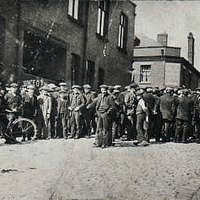
Image: Tyldesley miners outside the Miners Hall during the 1926 General Strikehttps://picryl.com/media/tyldesley-miners-outside-the-miners-hall-during-the-1926-general-strike-0b56de Licence: Public Domain Mark 1.0 Universal PDM 1.0 Deed

Why We Stand With UK Resident Doctors

This dispute is about patient safety, not just pay, argues Dr Rathi Guhadasan, writing on behalf of the Socialist Health Association.

The headlines tell one version of this story: disruption, cancelled appointments, patients stuck in the middle. It’s understandable that the government’s position resonates with many people.But headlines don’t tell the whole story.

If we’re serious about what’s good for patients in the long run, we can’t stay silent. We support the BMA’s resident doctors in their dispute with the government — and here’s why.

Fifteen Years of a Shrinking Pay Packet

This dispute didn’t start in 2025. The roots go back to 2008, when pay policy began quietly — but steadily — chipping away at what resident doctors actually earn in real terms.

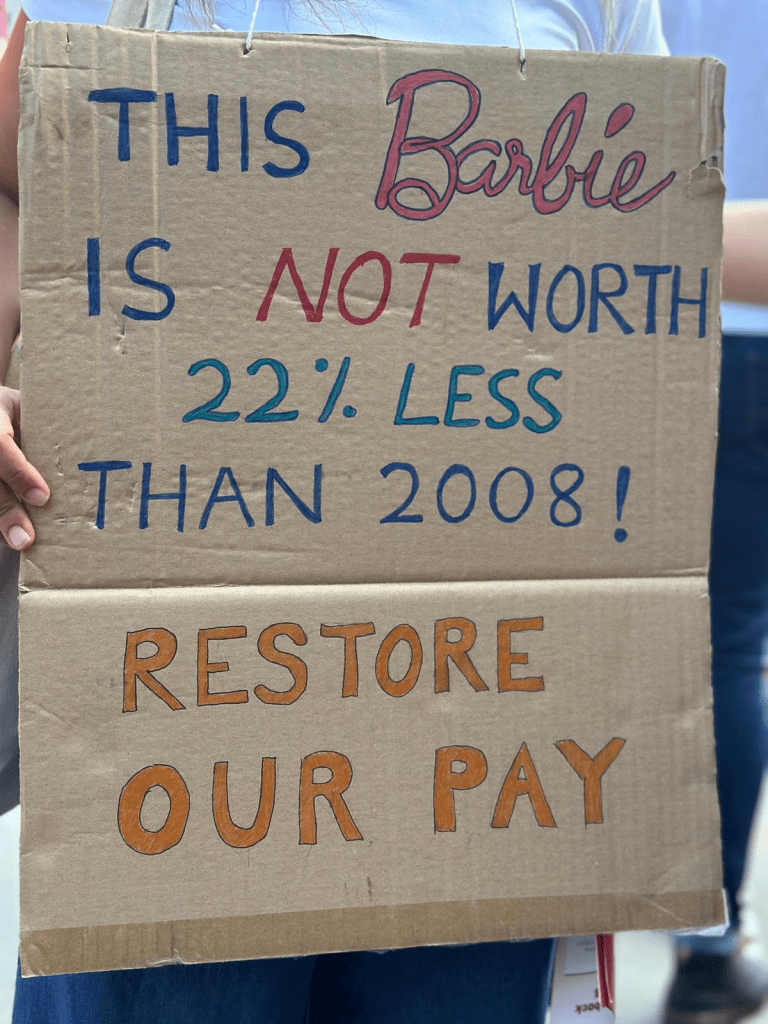
Measured against the Retail Price Index — which includes housing costs and student loan interest, two of the biggest financial pressures on junior doctors — pay has fallen by roughly 22% in real value since 2008/09. Even Full Fact, the independent fact-checking organisation that questioned the BMA’s preferred measure, still agrees that pay has fallen in real terms. Whichever way you count it, doctors’ spending power has been steadily eroded over more than a decade.

The low point came in 2022/23, when the BMA estimated the real-terms loss had reached around 29%. Strike action in 2023 forced movement. The deal struck with the newly elected Labour government in September 2024 included a combined pay uplift of 22.3% across 2023/24 and 2024/25 — though it’s worth noting that part of this had already been awarded under the previous Conservative government.

Despite those rises, resident doctors’ pay in England remained around 20.8% below where it was in 2008. The 2024 deal was progress — but it wasn’t the finish line.

Then came Labour’s offer for 2025/26: a 5.4% rise recommended by the independent pay review body. The BMA argues this still represents a real-terms pay cut when set against actual inflation. Their position is that a 26% uplift on 2024/25 basic rates is needed to fully restore pay.

This pay gap wasn’t created by doctors. It was created by successive governments — Conservative and Labour — repeatedly choosing to let doctors’ pay fall behind the cost of living. Asking doctors to simply accept that as permanent isn’t fairness. It’s making them foot the bill for political decisions they had no part in.

The Career Bottleneck: Too Many Doctors, Too Few Opportunities

Pay is only part of what’s at stake here. There’s a second issue — one with even deeper implications for the care patients receive.

After their initial training, junior doctors must compete for specialty training posts — the pathway to becoming a consultant, a GP, or a surgeon. In 2019, there were roughly 1.4 applicants for every available training post. By 2025, that ratio had surged to more than 5 to 1. In some specialties, the figures are startling. Over 10,000 doctors applied for psychiatry training posts in 2025 — fewer than 500 places were available, amidst a national crisis in mental health care. Five doctors applied for every GP training post, at a time when millions of patients across England are struggling to get a GP appointment at all.

How did this happen? The previous Conservative government expanded medical school places without creating a matching expansion in specialty training posts. At the same time, overseas recruitment was increased — without addressing the underlying shortage of training posts. The predictable result: thousands of doctors unable to move forward in their careers, or unable to find posts at all.

This isn’t just a career problem for individual doctors. It has direct consequences for patients. The Lancet has warned that the consultant bottleneck alone could leave up to 11,000 posts unfilled by 2048. The NHS is training doctors it cannot then absorb into the senior roles they were trained for — while using less-qualified staff to plug the gaps those doctors could fill, if only the training posts existed.

The government’s response was to pass the Medical Training (Prioritisation) Act in early 2026, giving UK medics priority in competing for these posts. But overseas-trained doctors have been a vital lifeline for the NHS, filling critical gaps that the domestic system failed to plug. The answer is not fewer doctors but a dramatic expansion of the training posts needed to develop the service we need, one that is fully resourced and fit for the 21st century.

And legislation about who gets to compete for too few positions doesn’t solve the problem – for doctors or patients. As one surgeon put it in parliamentary debate: “If we increase the number of trainees, we will also need to increase the number of consultants and GPs. If we do not do that, we will simply push the bottleneck down the road.”

The Substitution Problem: Who Is Actually Treating You?

Here’s the part of this crisis that gets the least attention — but as patients, should scare us most of all.

Across the NHS, physician associates (PAs) and anaesthesia associates (AAs) are increasingly being used to fill roles that have traditionally been carried out by doctors.

PAs typically hold a two-year postgraduate qualification. They cannot prescribe medication independently and they cannot make admission or discharge decisions on their own. They are not doctors. Yet in too many NHS trusts, they have been placed in clinical roles that require a doctor’s training, a doctor’s legal accountability, and a doctor’s level of skill — at a lower cost to the employer. The previous government planned for 10,000 PAs in the NHS by 2036/37 and Labour so far has stuck to this plan.

This isn’t a fringe concern. A BMA survey of more than 18,000 doctors found that 87% believed the way PAs currently work poses a risk to patient safety. The case of Emily Chesterton — a 30-year-old woman who died after being misdiagnosed by a PA she believed to be her GP — brought these concerns into sharp public focus.

In response, the Royal College of General Practitioners withdrew its support for PAs in primary care in September 2024. The government commissioned an independent review (the Leng Review), which reported in July 2025, and the GMC began formally regulating PAs and AAs from December 2024. The Socialist Health Association argued two years ago for an immediate recruitment freeze and eventual phase-out of existing roles.

But none of that changes the basic financial logic driving the problem: PAs cost less. In an NHS under constant financial pressure, the incentive to fill a rota gap with a PA rather than a fully trained doctor doesn’t go away just because a policy document says it should. It won’t change until the underlying structural conditions change.

This Is a Patient Safety Issue, Not Just a Pay Row

All of this connects. A doctor who is financially worse off year on year, who can’t see a clear path to the specialty they trained for, who watches less-qualified staff fill roles that should support their own development, and who routinely works hours that exceed safe limits — that doctor is not at their best. And that matters for the patients they treat.

Burnout, moral injury and emigration are not abstract risks. The NHS is already losing trained doctors to Australia, Canada and New Zealand in significant numbers — partly because those systems offer better pay, clearer career prospects, and a greater sense of professional respect.

When we allow the conditions driving that exodus to persist — when we systematically underpay, under-employ, and structurally sideline the doctors we’ve spent public money training — we’re not saving money. We’re deferring the cost onto future patients, future NHS budgets, and future governments left with a consultant workforce too small to meet the needs of an ageing population.

Where Things Stand

The BMA’s resident doctors committee rejected the government’s most recent offer at the end of March 2026. The government says it was a generous deal — pay rises over three years, up to 4,500 additional specialty training posts, and reimbursement of Royal College exam fees. The BMA says the pay trajectory still embeds a real-terms cut, and that 4,500 posts over three years falls far short of addressing a deficit measured in tens of thousands.

A settlement that doesn’t genuinely reverse fifteen years of real-terms pay erosion — and that doesn’t commit meaningfully to expanding specialty training at a scale that matches the problem — isn’t a solution. It’s another chapter in managed decline, dressed up as responsible government.

An Honest Reckoning

Strike action causes real disruption. Patients have appointments cancelled. Procedures are delayed. Those are genuine harms, and they fall on people who are already unwell.

But let’s apply the same honesty to what happens if this dispute isn’t resolved. What is the cost of letting a generation of medical graduates be lost to other countries or to career stagnation? What is the cost of systematically replacing clinical expertise with associate roles that don’t carry equivalent training or legal responsibility? What is the cost of a consultant workforce that, by the 2040s, is too thin to serve an ageing population?

The disruption of a strike is visible and immediate. The harm of getting this wrong is invisible and slow — until it isn’t. When the Prime Minister and the Health Secretary threaten to withdraw training places, it is the patients of the future who are most at risk.

Our Position

We want this dispute resolved — with an agreement that honestly reflects what has happened to medical pay and medical careers over the past fifteen years. That agreement must include a credible commitment to expanding specialty training at a scale that actually matches the pipeline of doctors the NHS has already trained.

Until that agreement exists, we stand with the doctors who are asking for it.

Dr Rathi Guhadasan is Chair of the Socialist Health Association.

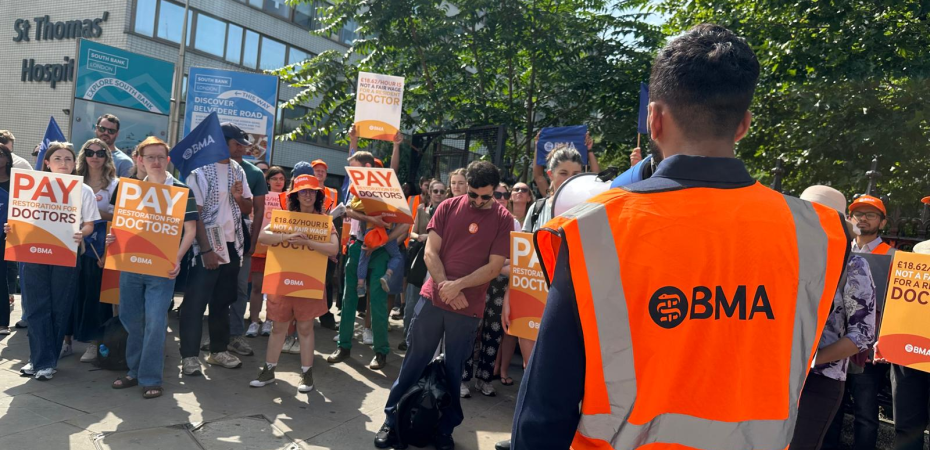
Images c/o the author.


What can we learn from the UK left of fifty years ago?


 April 5, 2026

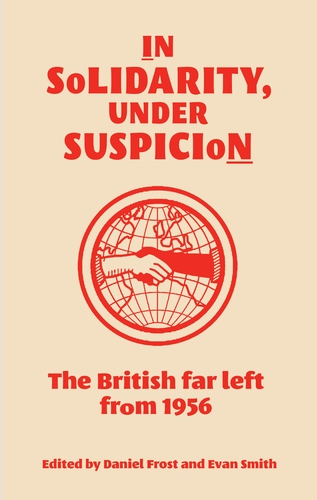
Mike Phipps reviews In Solidarity, Under Suspicion: The British Far Left from 1956, edited by Daniel Frost and Evan Smith, published by Manchester University Press.

This book covers a huge range of material. There is a wealth of detail about state surveillance of left groups, much of it unearthed in the Undercover Policing Inquiry. The Anti-Nazi League and School Kids Against the Nazis were targeted, in contrast with the far right, a genuinely serious threat to public order, who were not infiltrated at all.

It was impossible for the state to infiltrate Britain’s Black Power movement, as the Metropolitan Police had not recruited a single non-white officer before 1967. The Government took the threat of the movement very seriously, so it opted for legal harassment regarding the content of the movement’s leaflets and its sparsely-attended public speeches. Disrupt, but avoid creating martyrs, seems to have been the basis of operations.

Nobody who has been active on the left for any length of time will be surprised by these revelations, although it is useful to have the activities of undercover policing catalogued so systematically. Many might question the institutional biases that led to the infiltration and disruption of so many nonviolent left wing causes, sometimes involving great human distress, while genuine terrorism was often ignored – and wonder at the role of our political masters, including Labour governments, that determined the priorities on which public money was to be squandered.

More positively, the book looks in detail at many movements and campaigns that have been neglected in recent years. One example is the Institute for Workers’ Control, and the differences it had with other organisations over orientation and structure, in the context of the late1960s wave of radicalisation, particularly among students, and the growing Vietnam Solidarity Campaign and important currents within it, like the International Marxist Group.

The most interesting chapters are those that go beyond mere description and attempt to analyse the material at issue. To what extent was the cultish behaviour of the Workers Revolutionary Party rooted in its application of Leninist vanguardism, which took an unrelenting masculinist form, which helped its leader perpetrate violence, including  predatory sexual abuse, against the group’s members over a long period? Was it simply a desire to be contrarian, or something more fundamental to their original politics, that impelled leading figures of the Revolutionary Communist Party and its journal Living Marxism, with their early commitment to anti-racism and Irish solidarity, to evolve into opponents of all things ‘woke’, eventually celebrating the continuity of institutions like the monarchy and British traditions like fox-hunting?

The chapters on international solidarity organisations are especially interesting. The democratically elected government of Salvador Allende in Chile caught the imagination of many on the British left. Its overthrow by the US-backed Pinochet coup sent shock waves through the movement. Left Labour MP Eric Heffer “wept unashamedly” at the death of the President, “for an attempt to achieve socialism through the Parliamentary process had been murdered too.”

The fact that the then Tory government promptly recognised the new regime gave further impetus to the rapid development of the Chile Solidarity Campaign, which exposed the crimes of the regime, supported the UK resettlement of Chilean political refugees and encouraged and celebrated trade union-led boycotts of goods from or for Chile. It also had some success in getting the incoming Labour government to limit its ties to the military regime, in particular stopping new arms sales. The campaign was a rare example of something both explicitly political and a broad church of diverse perspectives.

Solidarity initiatives with those suffering under the British military occupation of the north of Ireland did not enjoy such unity. Conditions were much more repressive, with wide layers of the Irish community in mainland Britian facing state harassment: over 6,000 people were detained under anti-terrorism legislation between 1974 and 1985, only 164 of whom were ever charged with any offence. The chapter here focuses on the conflicting perspectives of the Connolly Association, the Irish in Britain Representation Group and the Anti-Internment League. Disappointingly, there is very little on the Troops Out Movement, which played a significant role in mobilising support, particularly during the hunger strikes by Republican prisoners during the first Thatcher government.

There’s a great deal here of interest – about claimants’ unions, trades councils, the early Women’s Liberation Movement and the Anti-Nazi League. Today’s activists shouldn’t dismiss these contributions as historical, academic exercises. On the contrary, there is a lot here that could teach us how to help build contemporary social movements. Many of the currents who made a mess of united front activity fifty years ago are still leading campaigns today – and if they are unable to learn from their mistakes, others should at least try.

Mike Phipps’ book Don’t Stop Thinking About Tomorrow: The Labour Party after Jeremy Corbyn (OR Books, 2022) can be ordered here.