Monday, May 04, 2026

EXPLAINER

A look at the US military presence in Europe as Trump seeks to withdraw troops from Germany

US President Donald Trump's abrupt decision to withdraw thousands of troops from Germany has refocused attention on the US military presence in Europe, which not only acts as a deterrent to Russia but also allows Washington to project US power across the globe. Here's a look at the current American military deployment in Europe and the possible implications of Trump's move.


Issued on: 04/05/2026 
By: FRANCE 24

Planes are seen at the US military airbase in Ramstein near Landstuhl, Germany, on July 20, 2020. © Kai Pfaffenbach, Reuters file photo

US President Donald Trump’s vow to shrink America's military deployment in Germany has put a new spotlight on the US role in Europe.

There are usually 80,000 to 100,000 troops on the continent, with more than 36,000 in Germany. The Pentagon announced Friday that it would remove 5,000 troops from Germany, and Trump said the next day that he would go “a lot further” than that.

The US military presence is a legacy of World War II, when Americans helped stabilize and rebuild Europe, and the Cold War, when the troops served as a bulwark against Soviet expansion. More recently, the deployment has played a key role supporting operations in the Arctic, Africa and the Middle East including the current conflict with Iran.

But Trump has broken with years of bipartisan consensus, criticizing European allies in NATO and following through on threats to reduce the US commitment to the continent's security. The recent announcement comes after escalating tensions with German Chancellor Friedrich Merz, who last week said the US was being “humiliated” by Iran and accusing Washington of lacking a clear strategy.

Here's a look at America's current deployment in Europe and how it could change.

The US European Command, created in 1947 and known as EUCOM, is one of 11 combat commands within the Defense Department, and covers some 50 countries and territories.

In addition to more than 36,000 troops in Germany, Italy hosts more than 12,000 and there's another 10,000 in the United Kingdom, according to Pentagon numbers from December.

The Pentagon has offered few details about which troops or operations would be affected in the drawdown announced Friday.

© France 24
01:48


The US increased its European deployment after Russia launched its full-scale war on Ukraine four years ago. NATO allies like Germany have expected for over a year that these troops would be the first to leave.

Aside from its role as a deterrent to Russia, the US military presence in Europe helps Washington project power across the globe.

US Gen. Alexus Grynkewich, who is the commander in Europe of both US and NATO forces, reinforced the benefits of a strong footprint on the continent to the Senate Armed Services Committee in March.

“It is having capabilities in Europe, munitions in Europe that allow us to help US Africa Command to target terrorists in Africa, or to help US Central Command as they execute Operation Epic Fury,” he told lawmakers, referring to the Iran war. “The distances are shorter, it’s less expensive and it’s much easier to project power.”

Germany hosts the headquarters of the US European and Africa commands, Ramstein Air Base and a medical center in Landstuhl, where casualties from the wars in Afghanistan and Iraq were treated. US nuclear weapons are also stationed in the country.


The US has approximately 100 nuclear bombs deployed to bases in Europe that would be delivered by aircraft, according to a March estimate from the Federation of American Scientists. The group's report said the bombs are at bases in Belgium, Germany, Italy, the Netherlands and Turkey, while it’s possible they’re also at a base in the United Kingdom.

Even before Trump's comment Saturday to reporters, Republican leaders of both armed services committees in Congress expressed concern about the Pentagon plan, warning a premature drawdown in Europe would send “the wrong signal to Vladimir Putin” as the Russian president continues his war in Ukraine.

Sen. Roger Wicker of Mississippi and Rep. Mike Rogers of Alabama said troops should be shifted to bases in Eastern Europe rather than withdrawn.

The lawmakers also said allies have made “substantial investments to host US troops.”

Wicker and Rogers said the Pentagon, following its announcement Friday, has also decided to cancel the planned deployment to Germany of one of the US Army’s long-range fires battalions, which operate ground-launched missile systems.

As part of its National Defense Strategy announced in January – a sweeping document laying out a vision on everything from deterring China to defending against cyberattacks to disrupting Iran's nuclear ambitions – the administration said Europe must do more for its own defense.

While "we are and will remain engaged in Europe, we must – and will – prioritize defending the US Homeland and deterring China,” it said.

Among other things, the document noted that Europe's economic power, while shrinking in relative terms globally, remains significant, and said that Germany's economy alone “dwarfs that of Russia."


US troop withdrawal from Germany would be 'foolish', expert says
© France 24
09:55


“Fortunately, our NATO allies are substantially more powerful than Russia – it is not even close,” it said, noting a recent commitment among NATO allies to raise national defense spending to 5% of GDP in total, a push led by Trump.

Germany has moved to modernize its long-neglected military, or Bundeswehr, since Russia's invasion of Ukraine in 2022. That year, it set up a 100 billion euro ($117 billion) special fund to boost Bundeswehr, much of which has been committed to procuring new equipment.

Late last year, Merz's government announced plans to raise the number of military personnel to 260,000, up from about 180,000. In 2001, when Germany still had conscription, the headcount was 300,000 – more than a third of them conscripts.

Berlin says it will also need around 200,000 reservists, more than double the current figure.

Defense Minister Boris Pistorius, in comments to German news agency dpa after the Pentagon's drawdown plan was announced Friday, acknowledged that Europe must take more responsibility for its own security – and said the Bundeswehr is growing, military equipment is being procured more quickly, and infrastructure is being developed.

(FRANCE 24 with AP)


'No strategy' behind Trump's withdrawal of NATO troops from Germany, sources say

RUTTE TRUMP
Copyright Copyright 2025 The Associated Press. All rights reserved

By Shona Murray
Published on 

Trump did not warn allies prior to his abrupt announcement of the withdrawal of 5,000 active-duty troops from Germany. The sudden move came amid an ongoing feud with German Chancellor Friedrich Merz, sparked by his criticism of the US' war in Iran, and Washington's strategy.

Senior NATO officials were not warned about US President Donald Trump’s decision to withdraw 5,000 troops from Germany within the next 6-12 months prior to the Pentagon's announcement on Friday.

Questions about logistics such as from where and how the troops will be withdrawn have risen. It's also unclear how the decision will impact the defence alliance's overall force posture, several sources with knowledge of the situation have told Euronews.

Trump on Saturday added that troop presence in Germany will be reduced "a lot further" than the initally announced 5,000, but the Republican president did not detail how much further or when those reductions are to be expected.

According to sources, the announcement which took senior NATO command by surprise is short on detail. Washington has not detailed whether the troops who'll be departing Germany are from a rotation that won't be replenished, an air squadron or if the troops are part of the core unit.

"We don't know what are these forces is it the core of a brigade? an air squadron?" former US ambassador to NATO, Ivo Daalder told Euronews.

"There is no detail because Trump just made this number up,” another US source told Euronews.

Military planners are minimising the bearing at least 5,000 fewer US military personnel will have on Europe's security posture, given the changing nature of warfare which relies less on soldiers and more on technology and advanced weaponry.

Moreover, several European allies, especially Germany, have substantially bolstered their own defences over the last year. NATO countries have been bracing for a potential US troop presence review, which they knew could happen at any moment.

Nonetheless, they had expected to be consulted ahead of any such decision directly impacting European security and NATO territory.

The view from NATO capitals is that an orderly, collaborative disengagement of US forces would take place, where allies fully abreast of the situation would avoid serious disruption to NATO's deterrence capabilities.

NATO officials are drawing conclusions about the timing of the announcement after Trump took umbrage at comments made by German Chancellor Frederic Merz who said days earlier that Iran was “humiliating” the United States, and that Washington had went into war with an ill-conceived strategy.

“The figure of 5,000 is a top-line number that Trump took out of the sky because he wanted to do something demonstrative as part of his confrontation with Merz,” a US source told Euronews.

Trump posted an initial statement on Wednesday night after Merz's remarks saying the Pentagon was “studying” how to reduce US presence in Germany, and later adding that “the Chancellor of Germany should spend more time on ending the war with Russia/Ukraine ... and fixing his broken Country.”

Hours later, Chief Pentagon Spokesperson Sean Parnell told Fox News that the Secretary of War has “ordered the withdrawal of approximately 5,000 troops from Germany.”

The White House has also been furious at European allies for rejecting Trump's calls to join in the war in Iran. Trump has taken aim and some of them, as well as the NATO alliance itself, describing it as a “paper tiger.”

“Let’s just say it was a very short space of time between Trump’s first post saying he was “studying” how to draw down troops after the feud with Merz, and then the sudden announcement,” another NATO source told Euronews.

Meanwhile, Allison Hart, a spokesperson for NATO Secretary General Mark Rutte, issued a statement saying “we are working with the US to understand the details. This adjustment underscores the need for Europe to invest more in defence and take on a greater share of the responsibility for our shared security.”

US troops have been heavily embedded in Germany ever since the Cold War, and today have a deployment exceeding 36,000 active-duty personnel. Their presence is regarded as more than a legacy of the Cold War, but an important projection of US power globally.

This is a matter which Daalder says the Trump administration missed. The former ambassador says Trump is missing the bigger picture in his pursuit to penalise European allies for not joining in the war in Iran.

"He thinks he can punish allies by removing troops, but he is hurting America’s interests," Daaldo said.

"He is just demonstrating that he doesn’t understand how America’s interests are served."

“He believes we have troops in Europe for the sole purpose of doing others a favour," he added, speaking to Euronews on the phone from the US. “The bottom line is that Europe is no longer first, second, third or even fourth down the list of priorities for the US."


Made in China, engineered in Germany: Inside Xiaomi's EV push ahead of planned 2027 Europe entry

Xiaomi CEO Lei Jun at Auto China 2026
Copyright Copyright: Euronews

By Meruyert Zhakiyanova
Published on 

Xiaomi is expanding its electric vehicle line-up as it prepares to enter Europe in 2027. The company has opened an R&D centre in Munich and is adapting its vehicles to European regulations and customer preferences.

At the Auto China 2026 motor show in Beijing, Xiaomi’s booth was among the most crowded, with visitors packing the space to catch a glimpse of the company’s founder and chief executive, Lei Jun, a figure whose status in China is close to celebrity.

Earlier in April, Xiaomi had already drawn widespread attention with a high-profile endurance test led by Lei Jun, who personally drove a Xiaomi SU7 Pro from Beijing to Shanghai - a journey of around 1,300 kilometres - with just a single charging stop.

The trip was livestreamed on social media, attracting a large online audience and turning the drive into a public demonstration of the vehicle’s real-world range and performance.

At Auto China, Lei Jun unveiled the Vision Gran Turismo concept for the first time domestically, following its global premiere at the Mobile World Congress 2026. He also shared updates on the performance of the new-generation SU7 and outlined plans for the upcoming YU7 GT.

From production to ecosystem

Xiaomi’s momentum in the electric vehicle sector has been rapid. The company entered the market only in 2024 with the launch of the SU7. Since then, it has expanded its lineup, including the YU7, which recorded 200,000 pre-orders within minutes of its release.

Xiaomi SU7 Ultra at Auto China 2026
Xiaomi SU7 Ultra at Auto China 2026 Copyright: Euronews

The company is now preparing to launch the YU7 GT, its first model developed in collaboration with European engineers. The vehicle is expected to debut in China in late May, combining performance, comfort and driving dynamics.

Performance has become a key part of Xiaomi’s positioning. The SU7 Ultra, for example, accelerates from 0 to 100 km/h in under two seconds and reaches a top speed of 350 km/h, placing it firmly in the high-performance EV category.

Inside Xiaomi’s EV factory in Beijing, production moves at a pace that mirrors these ambitions: a new vehicle rolls off the assembly line roughly every 76 seconds.

The site integrates manufacturing, research, testing and customer experience under one roof, reflecting Xiaomi’s push for vertical integration.

With more than 700 robots involved in key processes and automation rates exceeding 90% in some workshops, the factory relies heavily on AI-driven inspection systems designed to detect defects with near-perfect accuracy. A dedicated on-site testing track ensures that every vehicle is verified under real driving conditions before delivery.

Xiaomi EV Factory
Xiaomi EV Factory Copyright: Xiaomi

Beyond performance, Xiaomi is also betting on integration. Its broader “Human x Car x Home” strategy aims to connect vehicles with personal devices and smart home systems through its HyperOS operating system. In practice, this allows drivers to manage daily routines — from making reservations to controlling home environments — while the system adapts to user behaviour, adjusting lighting or music based on stress levels or preferences.

This ecosystem approach reflects a wider trend among Chinese automakers, which are increasingly combining hardware with software and AI-driven features.

“Xiaomi is a classic example of where the product is going to go next. Smart home, smart devices are a large part of our home life.

The car becomes another product within our home life, our work life, our leisure life. That’s the model that is going to develop, and I think everybody needs to follow,” said James Pearson, founder and CEO of Lionheart, an automotive branding and advertising agency.

Expansion into global markets

With its domestic lineup expanding rapidly, Xiaomi is now turning its attention to international markets.

The company has announced plans to begin its global expansion in 2027, with Germany expected to be its first overseas market. In preparation, Xiaomi opened an EV R&D and Design Center in Munich in 2025, one of Europe’s leading hubs for automotive engineering.

Led by former BMW executive Rudolf Dittrich, the centre focuses on adapting Xiaomi’s vehicles to European standards — from regulations and infrastructure to customer preferences.

“Xiaomi is approaching that very methodologically, looking at data. We’re trying to get customer insights as much as we can,” Dittrich said at Auto China 2026.

Early signals suggest growing interest. During test drives conducted last year, the vehicles attracted attention even at charging stations, with passers-by stopping to take a closer look.

Xiaomi’s entry into Europe comes as growth in the electric vehicle market begins to moderate. According to data from the European Automobile Manufacturers’ Association (ACEA), battery-electric vehicles accounted for 17.4% of new car registrations in 2025, up from 13.6% a year earlier, while hybrid models — at 34.5% — remain the preferred choice among European consumers.

At the same time, competition is intensifying, with established players like Volkswagen and Tesla facing increasing pressure from Chinese manufacturers, including BYD and XPeng.

The European Union has also moved to impose additional tariffs on Chinese-made electric vehicles after an anti-subsidy investigation, adding another layer of challenge for new entrants.

In 2025, the Xiaomi SU7 Series ranked No. 1 in sales among sedans in its price segment. Models are priced from around €27,000 for the standard version to approximately €38,000 for the SU7 Max.

The result underscores the company’s growing momentum as it targets total EV deliveries of 550,000 vehicles across its lineup this year, up from more than 400,000 previously.

Looking ahead, Xiaomi has signalled plans to broaden its vehicle lineup further, although specific details have yet to be announced.

“Our strategic goal is to become a top-five global automaker,” Dittrich said. “And I think it is clear that with the current product portfolio, it is not possible.”

Trump says he will raise tariffs on EU autos to 25% for 'not complying' with trade deal

US ​President Donald Trump on Friday said he will increase tariffs ​on ‌vehicles from the European Union to ‌25% next week, accusing the bloc of ⁠not complying with its 2025 trade deal.


Issued on: 01/05/2026 - 
By: FRANCE 24

President Donald Trump speaks to reporters in the Oval Office of the White House on April 30, 2026. © Alex Brandon, AP

President Donald Trump said Friday that he will increase the tariffs charged on cars and trucks from the European Union next week to 25%, a move that could jolt the world economy at a fragile moment.

Trump said in the post that the EU “is not complying with our fully agreed to Trade Deal", though he did not flesh out his objections in the post.

A trade deal, which was struck last summer, had capped the US tariff on EU autos and parts at 15 percent, which is lower than the 25-percent duty that Trump imposed on many other trading partners.

But in a post on his Truth Social platform, Trump on Friday said, "Based on the fact the European Union is not complying with our fully agreed to Trade Deal, next week I will be increasing Tariffs charged to the European Union for Cars and Trucks coming into the United States," adding, "the Tariff will be increased to 25%".
ADVERTISING


President Donald Trump on May 1, 2026 said he will hike US tariffs on cars and trucks from the European Union. © Screengrab Truth Social


Trump did not give a further reason for the planned hike, but the announcement came a day after his renewed criticism of German Chancellor Friedrich Merz.

Trump told Merz to focus on ending the Ukraine war instead of "interfering" on Iran.

Germany would likely be hit hard by a sharp tariff on cars and parts, as it is responsible for a significant amount of EU auto exports.
Trade deal reached last year

Trump and European Commission President Ursula von der Leyen had agreed to the trade deal last July. It set a 15% tariff on most goods.

Both the US and the EU had previously confirmed their commitment to preserving the trade framework, known as the Turnberry Agreement, which was named after Trump’s golf course in Scotland.

But the status of the 2025 deal was first cast into doubt after the Supreme Court this year ruled that the Republican president lacked the legal authority to declare an economic emergency and charge tariffs on EU goods.

The initial agreement had been a tariff ceiling of 15% on goods from the EU, but the Supreme Court ruling reduced that to 10% as the Trump administration launched a new set of import taxes based on other laws.

The tariffs hit at a moment when the Iran war has crushed the world economy with expectations of slower growth and higher inflation, as oil and natural gas prices have risen due to the effective closure of the critical Strait of Hormuz after strikes by the US and Israel began at the end of February.

At the same time, Trump faces political pressure in the U.S. going into November's midterm elections because of rising levels of inflation. Trump, a Republican, returned to the White House last year on the explicit promise that he could quickly tame prices that jumped in the aftermath of the government's response to the coronavirus pandemic, but higher energy costs pushed annual inflation in March to 3.3%, which was higher than what he had inherited.

Just 30% of US adults approved of Trump's handling of the economy, according to the latest poll by The Associated Press-NORC Center for Public Affairs Research.

Neither EU nor Trump administration officials responded to questions about the tariff increase and whether or how the agreement had been violated. But Trump has had a testy relationship with Europe, having threatened earlier this year to take control of Greenland and later blasting NATO allies for not providing more support to the US for the Iran war.
'Handshakes and winks and hopes that Trump doesn’t get mad'

To raise tariff rates, Scott Lincicome of the libertarian Cato Institute’s Center for Trade Policy Studies said, the president would likely use Section 232 of the Trade Expansion Act of 1962, which allows for duties on national security grounds.

Trump imposed 25% Section 232 tariffs on foreign autos in March 2025, but those tariffs were then lowered as part of the trade framework with the EU.

Lincicome also said Trump’s threats are “just another example of why these trade deals are vapourware. They all rely on handshakes and winks and hopes that Trump doesn’t get mad about something.’’

He said that as best he could tell the Europeans “were basically complying with the framework". The European Parliament has been moving slowly on the agreement but was expected to finish work on the deal next month.

The EU had said it expected the bilateral deal would save European automakers about 500 million to 600 million euros ($585 million to $700 million) a month.

The value of EU-US trade in goods and services amounted to 1.7 trillion euros ($2 trillion) in 2024, or an average of 4.6 billion euros a day, according to EU statistics agency Eurostat.

“A deal is a deal,” the European Commission said in February after the Supreme Court ruling. “As the United States’ largest trading partner, the EU expects the US to honour its commitments set out in the Joint Statement — just as the EU stands by its commitments. EU products must continue to benefit from the most competitive treatment, with no increases in tariffs beyond the clear and all-inclusive ceiling previously agreed.”

(FRANCE 24 with AFP and AP)

Donald Trump's EU car tariffs ‘targeting Germany,’ says key German MEP

Euronews

By Peggy Corlin
Published on 

German MEP Bernd Lange said US President Donald Trump’s threat to impose 25% tariffs on EU cars appears to target Germany, following Chancellor Friedrich Merz’s criticism of the US stance on Iran. However, the move would likely breach the EU–US trade agreement reached last summer.

Trump’s decision to slap 25% tariffs on EU cars is politically motivated and aimed squarely at German automakers, German MEP Bernd Lange (S&D), chair of the European Parliament’s trade committee, told Europe Today on Monday.

Apple podcast Spotify podcast Castbox podcast

“There are no legal or no economic reasons for those tariffs. This is really politically against Germany,” Lange said. “He is targeting specifically German car manufacturers.”

Lange’s remarks come days after Trump announced the tariffs, following criticism of the US war in Iran by German Chancellor Friedrich Merz.

The US president has accused several European countries of refusing to contribute to Washington’s military operations against Iran. He also announced Friday that he would withdraw 5,000 US troops stationed in Germany.

If enacted this week, the measures would breach the 15% ceiling agreed under a trade deal struck in July 2025 between Trump and European Commission President Ursula von der Leyen in Turnberry, Scotland.

Lange expressed doubts about the Turnberry agreement, which was reached after weeks of trade tensions between Europe and the US following Trump’s return to power and the launch of a nationalist trade agenda.

“I'm not sure that we can really go on,” Lange said of the deal.

Divisions over Parliament’s safeguards

The Turnberry agreement was later put on hold several times by MEPs, notably after Trump threatened tariffs on EU countries that refused to let him acquire Greenland.

“The mood in the European Union has changed, specifically after Greenland,” Lange said, adding that all retaliatory options were now on the table following Trump’s latest threats.

“We have the toolbox and of course all the tools are in,” he said, referring to the EU’s anti-coercion instruments designed to respond to economic pressure from third countries. “We will look also to other elements like countermeasures, like counter-tariffs or export restrictions.”

The agreement is now under discussion among EU governments and lawmakers, with a view to cutting EU tariffs on US industrial goods to zero as outlined in the deal.

MEPs have nevertheless built safeguards into the joint statement, including a “sunrise” clause that makes new EU tariff cuts conditional on the U.S. meeting its obligations, and a “sunset” clause that would terminate the agreement in March 2028.

However, EU member states remain split over these provisions, with France backing the European Parliament’s tougher line, while Germany has resisted it.

“Germany, unfortunately, was more in the camp of the second,” Lange said. “Now, I guess also here is a change.”

German minister calls on US to back down on threatened car tariffs

04.05.2026, DPA

Photo: Michael Kappeler/dpa

By Doris Pundy and Ansgar Haase, dpa

German Finance Minister Lars Klingbeil called on Washington to stick to an agreement reached between the European Union and the United States that curbs tariffs on European products, after US President Donald Trump had threatened to impose higher duties.

"Europe stands by its commitments, and I now expect the same from the American side," Klingbeil told journalists in Brussels on Monday.

Trump announced on Friday that he intends to raise tariffs on cars and trucks imported from the EU to the US to 25%, arguing that the EU is not adhering to a trade agreement that limits US tariffs on most EU products to 15%. He did not elaborate on what the reported violations are.

The EU has rejected this accusation and threatened the US with retaliatory measures should it implement the announced tariff increases on EU goods.

"Our path is clear, we do not want an escalation. We want to find a common path with the Americans," said Klingbeil, adding that Europe "is prepared."

Klingbeil mentioned the dispute around the Arctic island of Greenland in January, when the EU was preparing to impose duties on imports worth €93 billion ($109 billion) after Trump had threatened Denmark and allied countries with punitive tariffs.

EU trade commissioner to meet US counterpart on Tuesday

EU Trade Commissioner Maroš Šefčovič plans to meet US President Donald Trump’s trade representative, Jamieson Greer, on Tuesday, the European Commission confirmed.

The meeting is scheduled to take place on the sidelines of a gathering of trade ministers from the Group of Seven (G7) leading Western industrialized nations, said a spokesman on Monday in Brussels.

"I will not speculate on the result of these discussions at this stage," he said.

The commission spokesman said that if Washington was to take measures inconsistent with the agreement reached in July, the EU would keep all options open to protect its interests.

According to earlier statements, these could include additional EU tariffs on imports from the US or the use of other measures such as the exclusion of US companies from public procurement contracts or imposing additional duties on tech companies such as Apple, Microsoft, Google and Meta.

"It's not the first time we have seen threats," he said, adding that the EU intends to remain calm and focus on implementing the agreement reached last July.

German trade group open to EU retaliation over new US car tariffs


04.05.2026, DPA


Photo: Rolf Vennenbernd/dpa


A German foreign trade group on Monday signalled support for retaliatory EU measures if new US tariffs announced by President Donald Trump on cars imported from the bloc take effect.

"Possible countermeasures" could be discussed as soon as it is "clear" why exactly Trump is planning to impose new tariffs, to what extent and on what legal basis, BGA President Dirk Jandura told the Handelsblatt business newspaper.

While stressing that dialogue and negotiations were the means of choice, Jandura also said that it was key for Europe to "defend its interests clearly and consistently."

Trump said on Friday he will raise tariffs on cars and trucks imported from the European Union to 25% starting this week, accusing the bloc of failing to comply with a trade agreement struck last year.

The latest move marks a sharp escalation after months of relative calm in the tariff dispute. In August, Trump and European Commission President Ursula von der Leyen agreed on a framework capping tariffs on most EU imports, including cars and car parts, at 15%.

In return, the EU pledged to scrap tariffs on US industrial goods and improve market access for agricultural products such as pork and dairy.

However, implementation has slowed amid renewed tariff threats by Trump and legal uncertainty following a US Supreme Court ruling in February that found many of his existing tariffs unlawful.

The European Parliament said in March that further implementation would be subject to strict conditions, with member states also required to approve the necessary regulations.

The president did not elaborate on how he believes the EU had failed to adhere to the terms of its deal.


Germany sees US as vulnerable to squeeze on potash supplies


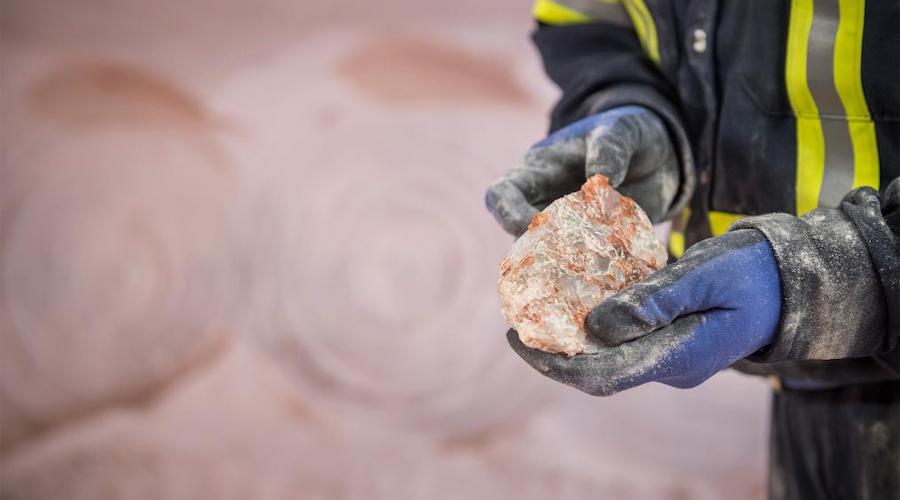
(Image courtesy of Nutrien.)

German authorities seeking to map out US supply-chain vulnerabilities as a way to win leverage with President Donald Trump’s administration have identified a key pressure point: potash.

The US imports more than 90% of the key ingredient for agricultural fertilizer, leaving the world’s No. 1 economy highly reliant on global producers — above all Canada. Potash, a potassium-rich fertilizer made from underground deposits, would be among options for US allies should Trump further ratchet up trade and security threats, according to people familiar with the considerations.

The US president’s threats to seize Greenland, a Danish territory, stunned European leaders and prompted an effort to examine how they could identify points in global supply chains where they could apply pressure, Bloomberg reported in March. Sensitive areas include action against US technology companies with ties to the White House, scrutiny over artificial-intelligence investments and drug prices, the report showed.

In the agriculture sector, potash has emerged as a clear vulnerability. Canada is by far the largest exporter to the US and the country’s Nutrien Ltd. is the world’s largest producer. Another big player is K+S Group, a Kassel, Germany-based company that produces from the Bethune potash mine in the western province of Saskatchewan.

German officials monitoring US dependencies are looking at how companies such as K+S could be moved to scale back shipments to the US in a trade conflict, the people said on condition of anonymity as deliberations took behind closed doors.

German Finance Minister Lars Klingbeil will travel to Canada later this week. No decision has been made on any restrictions involving potash and Berlin’s preferred avenue is to improve transatlantic relations than enter a tit-for-tat trade conflict that would hurt companies on both sides of the Atlantic, the people said.

Spokespeople for the German and Canadian governments declined to comment. K+S didn’t immediately respond to a request for comment.

It’s unclear how any move on potash exports would develop in Canada, which is focused on discussions with the US on sectoral tariffs for steel, aluminum, cars and lumber ahead of a review of the US-Mexico-Canada Agreement, scheduled for July 1.

Any restrictions would also become a political issue in Canada, where the industry is concentrated in western provinces dominated by conservative leaders. Saskatchewan Premier Scott Moe in late 2024 rejected a proposal to impose potential export taxes on potash, uranium and oil.

Prime Minister Mark Carney last week told The Canadian Press that his government would not use energy or critical minerals as leverage in US trade talks.

For Germany, relations with the US deteriorated over the last week after Chancellor Friedrich Merz sharply criticized the US-led war on Iran, prompting a blunt response from Trump and an announcement the Pentagon would withdraw more than 5,000 American troops from the country.

The US in the meantime is seeking to diversify its potash imports. In March, the Trump administration lifted sanctions on a key potash producer in Belarus, Russia’s closest ally, after President Alexander Lukashenko agreed to release 250 political prisoners in Washington’s latest deal with the Russian ally.

Belarus was a major global potash player, supplying about a fifth of the world’s demand for the soil nutrient before Western sanctions curbed the flows in retaliation to political repression and involvement in Russia’s war against Ukraine.

While Russia is also an important potash producers, Canada remains the world’s largest exporter by a significant margin, shipping over 22 million tons annually and accounting for almost two-fifths of global exports as of early 2026.

The US decision applied to the state-owned potash fertilizer maker Belaruskali and potash trader Belarusian Potash Co., according to state-owned news agency Belta, which cited Trump’s special envoy to Belarus, John Coale.

Lukashenko has also offered to sell a potash mine to the US for $3 billion, Belta reported last month. The US is considering the offer, but so far hasn’t offered a fair price, Lukashenko was quoted as saying.

(By Michael Nienaber)

EU rejects US plan to end metals tariff spat and mulls response

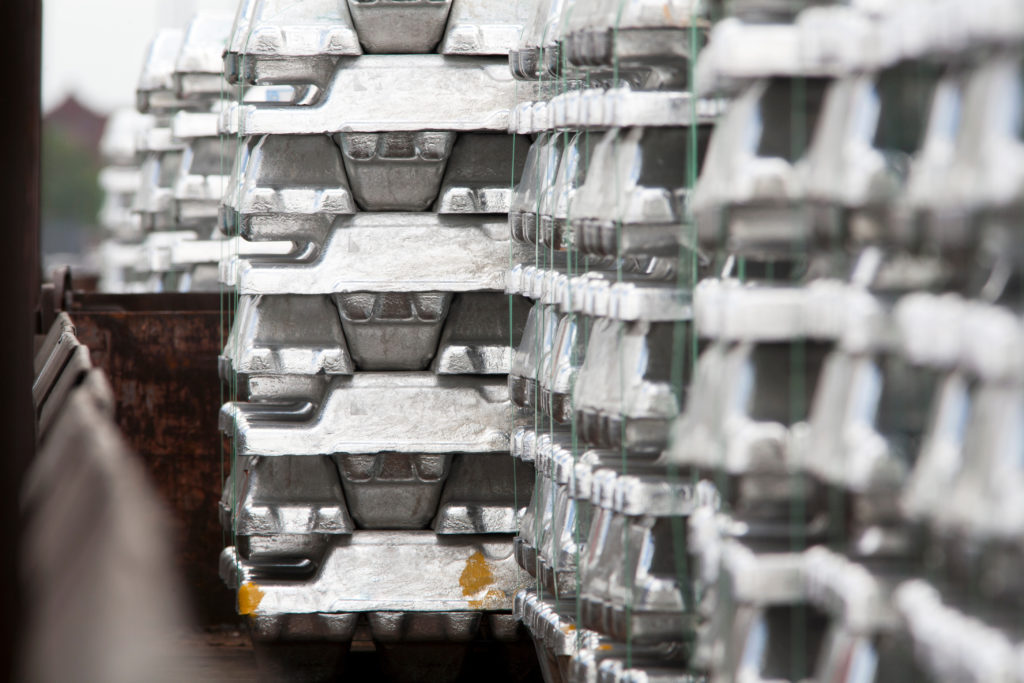
Aluminum ingots. Stock image.

The European Union’s biggest economies are unhappy with a US proposal to resolve a metals tariff dispute, injecting fresh uncertainty into final negotiations to implement a stalled trade deal.

Germany and France are among the countries that vented frustration in a meeting of EU envoys, according to people familiar with the matter. The European Commission, the EU’s executive arm, also said it is considering possible responses, the people added, speaking anonymously to describe closed-door discussions.

The reaction came after the US recently changed its tariff rate on hundreds of products that include steel and aluminum. The shift was meant to help address Europe’s long-standing concern over the levies. But it has not been well received on the continent, the people said, with France and Germany noting that the tweak actually makes the tariff situation worse for roughly half of the affected products.

The spat has added to tensions over the much-delayed US-EU trade deal. The two sides initially reached an agreement last July, but EU lawmakers have yet to ratify the pact as they seek further amendments.

A commission spokesperson declined to comment. Spokespeople for France and Germany in Brussels did not immediately respond to requests for comment.

Under the initial transatlantic trade agreement, the EU agreed to erase tariffs on US industrial goods in exchange for a 15% tariff ceiling on most EU products. The bloc accepted the lopsided deal in the hopes of keeping President Donald Trump engaged in Ukraine and to avoid a full rupture in trade relations.

But the pact has faced a rocky path since then.

In August, the US widened a 50% tariff on steel and aluminum to hundreds of new products that included these metals. The move led to allegations that Washington was already violating its recent commitments. Companies also faced a difficult task calculating the tariffs, which were based on the percentage of these metals in their products.

EU lawmakers then twice paused the deal’s ratification, once after Trump threatened to take Greenland, a Danish territory, and again after the Supreme Court invalidated the US global tariff regime.

More recently, however, both sides have expressed a desire to finally adopt the trade deal. As part of this push, the US agreed to change how it calculated the broadened metals tariff, insisting this would assuage frustration over the matter.

In addition to simplifying how the tariff was calculated, the US said it would exempt some items with only small amounts of steel and aluminum. Meanwhile, other products would get a 25% tariff.

Yet after EU officials and business groups crunched the numbers, they said the tweaks would only improve the situation for about half of the products. VDMA, a German industrial association, warned that the average tariff rate for affected companies had risen from 21 to 26%.

EU trade chief Maros Sefcovic raised the issue during a visit to Washington last week but failed to achieve any breakthrough, the commission told EU envoys on Wednesday, the people said.

For now, the US and EU have agreed to continue technical discussions on the matter, the people said. The commission told EU envoys that fully implementing more of the bloc’s commitments from the trade deal could help obtain concessions on the metals tariffs.

If the situation remains unresolved, the EU executive told envoys it would consider taking further measures, without providing details, the people said.

“While the latest US decision has improved the situation for several sectors, some issues remain,” Sefcovic told reporters during his visit to Washington. “I appreciate the administration’s genuine engagement in resolving them.”

The metals tariffs standoff comes as EU lawmakers negotiate with member states over their desired amendments to the US-EU trade deal, including an expiration date and more safeguards for European industries. The commission has warned that some of these clauses risk derailing the accord, Bloomberg previously reported.

(By Jorge Valero)

Child labour, exploitation and deforestation: Is this the true taste of chocolate?

Copyright Euronews
By Hannah Brown
Published on 

“Let's compete at shelf but let's collaborate in the supply chain,” the CEO of Tony’s Chocolonely told Euronews.

“Do I want to double the size of the company? Of course I do,” the CEO of Tony’s Chocolonely, Douglas Lamont, told Euronews.

But unlike many business leaders, Douglas is not driven just by a desire to increase profits and growth. He wants to change the entire chocolate industry…and he has got a tough challenge ahead.

“More volume equals more beans, equals more impact on the ground for farmers [...] That's doubling the number of beans we're sourcing in an ethical way, paying a living income price to West African farmers.”

In this episode of The Big Question, Douglas sat down with Hannah Brown to discuss the real cost of chocolate and the challenges of fighting exploitation.

Exploitation in the chocolate industry

In case you are not already familiar with Tony’s Chocolonely, it is a chocolate manufacturer founded in 2005 by Dutch documentary producer Teun van de Keuken. Teun was horrified to learn about the scale of exploitation in the chocolate industry’s supply chain, and after his documentary exposing it failed to enact any change, he decided to try to make things better from inside the industry.

Fast-forward 21 years, and the company has already come a long way.

The vast majority of the chocolate we eat in Europe comes from cocoa beans grown in Côte D’Ivoire and Ghana. Across the industry, it is estimated that around 40% of households engaged in cocoa growing face instances of child labour.

Tony’s says it has reduced this figure within its own supply chain to around 4%

The key has been establishing a living wage for farmers, which they pay regardless of the current market price of cocoa.

“We give them long-term contracts, asymmetric contracts, so we will always buy from them at the living income price. They don't have to sell to us, if they get a higher price from somewhere else. It puts the power in their hands,” Douglas told The Big Question.

“Right now we're paying a 45% premium to the farmgate price in West Africa, so that combination of things means the farmer has a little bit more money in his pocket, can invest in his farm and can afford to send his children to school.”

Douglas stressed that traceability in the industry is an important first step to building relationships with cocoa farmers and that EU deforestation regulation will be fundamental in mandating this more widely.

“What it does in cocoa is put traceability into the mix so that every single company then needs to know which farms their cocoa comes from,” he added.

“Once you know your farmer, you then have a much more direct relationship and it's about the economic argument of then paying them a living income…in the past, the big companies said it was too hard for them to understand where it came from.”

What does chocolate really cost?

As one of the fastest-growing chocolate brands in the world, Tony’s Chocolonely is doing something right. Or maybe two things.

“We're not naive and know that if you've only got the ethics and it's really high-priced and it's a poor product, people won't buy it and won't repeat buy it.”

“I think we're showing that that is possible, and I think you just need a damn tasty product too, because that is the combination effect,” Douglas said.

In 2025, the brand grew in value by 20%, taking the business to over €240 million in turnover. By volume, their sales increased by 4% and the US overtook the Netherlands as their number one market.

While Tony’s Chocolonely is often perceived as a fairly expensive bar of chocolate, Douglas insisted that the company does not see itself as a super-premium brand.

“Our bar is really big and chunky compared to most bars on the shelf,” he explained.

“On a per kilogram basis, our chocolate is typically at a 20-25% premium to other bars on the shelf, which I think is a price worth paying.”

Will climate change wipe out chocolate?

Extreme weather in recent years has had a significant effect on cocoa harvests, sending the price of beans skyrocketing.

A rise in bean prices contributed to consumer chocolate prices increasing by around 17.9% across the EU in 2025, higher than any other food or even non-alcoholic drink. In 2026, this trend has partially reversed, with bean prices falling due to lower demand and improved harvests.

“We're not celebrating those low prices in the market. What we want is a consistent, strong living income price for the farmer [...] That's how we create a more stable industry. That's how we get children out of child labour. That's how we change the industry,” Douglas continued.

And while climate change is likely to continue to affect the price of cocoa in the future, Douglas said he is confident that chocolate is not going anywhere

“I think, like all commodities, if you invest in productivity, if you invest in the farmer and enable them to earn a living income so that it's an attractive industry for people on the ground in West Africa to go into, you'll have a more stable and consistent crop and yield.”

“And yes, you will then have climate variability year to year, but the change in yield will be much less if you have a much more invested industry.”

“But there's also then a moral benefit that we reduce child labour, we drive some of the systemic issues like deforestation out of the industry as well. So that's what we see as the path forward.”

“I think there's just a really clear economic and moral case for that change,” Douglas concluded.

The Big Questionis a series from Euronews Business where we sit down with industry leaders and experts to discuss some of the most important topics on today’s agenda.

Watch the video above to see the full discussion with Tony’s Chocolonely.