Monday, May 04, 2026

Ukraine battlefield: Advanced Ukrainian drones raise concerns among Russian forces
Issued on: 02/05/2026 - 
13:38 min From the show

From Ukraine’s evolving battlefield, where drone warfare is redefining front lines and so-called “killing zones,” to reports of “Martian drones” and their impact on both Russian and Ukrainian forces, we also look at the expanding use of unmanned systems in rescue operations, including the evacuation of a 77-year-old woman in Odesa region. FRANCE 24’s Gavin Lee is joined by Olena Krizhanivska, a Ukrainian defence analyst specialising in drones and unmanned systems and founder of Ukraine’s Arms Monitor.


Produced by Gavin Lee, Andrew Hilliar, Maya Yataghene and Guillaume Gougeon


OUR GUESTS


Olena KRYZHANIVSKA 
Ukrainian Defence Analyst, specialising in drones and unmanned systems and military technology


BY:  Gavin LEE

Andrew HILLIAR

Maya YATAGHENE

Guillaume GOUGEON
VIDEO BY:

Andrew HILLIAR

Gavin LEE

Guillaume GOUGEON


 Ukrainian drones strike Russia's Primorsk oil port


Ukrainian drones struck Russia's Primorsk port and a number of vessels in the Baltic Sea on Sunday as part of a wave of attacks targeting Russian energy infrastructure. Ukraine's President Volodymyr Zelensky said the strikes aimed to limit "Russia's war potential". The Kremlin warned that attacks on its oil infrastructure would send global oil prices rising further.


Issued on:  04/05/2026 - 
By: FRANCE 24


A handout satellite image taken on March 23, 2026 shows smoke rising from the Russian oil terminal at Primorsk. © Planet Labs PBC, via AFP


Ukraine launched a wave of drone attacks on targets across Russia on Sunday, hitting the Baltic Sea port of Primorsk and setting it on fire, and striking a number of vessels, as it steps up ​attacks on ‌energy infrastructure and other targets.

Ukraine's President Volodymyr Zelensky commented on the latest wave of strikes, ⁠which also hit one oil tanker in the port, a Karakurt-class missile ship and a patrol boat, saying significant damage had been caused to the infrastructure of ‌the oil terminal port.

In a post on Telegram, Zelensky said Ukraine had struck the Karakurt-class missile ship, ⁠a patrol boat, and an oil tanker in the Baltic Sea, adding that "each such result further limits Russia’s war potential".

Ukraine hits oil facilities in Russia

© France 24
02:00


Alexander Drozdenko, governor of the northwest region which hosts the port, said more than 60 ​drones were downed overnight.

He said the fire at Primorsk, a major oil exporting outlet, ‌was quickly extinguished and there had been no oil spill following the attack.
Ukraine continues to develop long-range capabilities

Primorsk, one of Russia's largest export gateways, has capacity to handle 1 million barrels per day of oil supply. It has been hit multiple times in ‌recent months as as US-brokered talks to end the Ukraine war have stalled.

Zelensky earlier on Sunday said Ukrainian forces also struck two shadow fleet tankers in waters ​at the entrance to the Russian Black Sea port of Novorossiysk.

"These tankers had been actively used to transport oil – not anymore," Zelensky said on Telegram. "Ukraine's long-range capabilities will continue to be developed comprehensively – at sea, in the air, and ​on land."
Russia unfazed by the attacks

Kremlin spokesman Dmitry Peskov said that global oil prices may rise further if ​Ukraine continues to hit Russia's oil infrastructure, Russian TV reported.

“If additional volumes of our ​oil are dropped from the market, prices will rise further from current levels, which are already above $120 a barrel," Peskov said. "That would mean that even with lower export volumes, ​our companies would earn more money and the state would receive more revenue.”


Other Russian regions also reported drone attacks on Saturday and Sunday.

Moscow regional governor Andrei Vorobyov said on Saturday evening that a 77 year-old man had died in a village following a drone strike. And Sergei Sobyanin, mayor of the city of Moscow, said four drones were downed on their ⁠way to the Russian capital.

Vasily Anokhin, governor of the western Smolensk region, said three people, including a child, were injured on Sunday after a drone ⁠attacked an apartment ​block there.

Russian troops were meanwhile inching towards the city of Kostiantynivka in Ukraine's eastern Donetsk region, Ukraine's top army official said on Saturday.

(FRANCE 24 with Reuters)


Ukraine Hits Two Tankers at Novorossiysk and Three Vessels at Primorsk
SBU
Courtesy SBU

Published May 3, 2026 1:38 PM by The Maritime Executive\


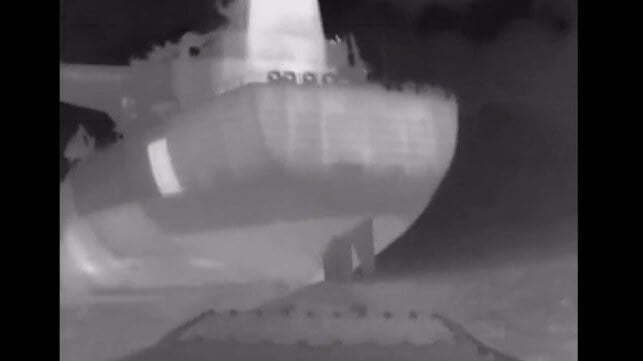
Ukraine's security forces have struck and damaged two shadow fleet tankers at the Black Sea port of Novorossiysk, Russia, and three additional vessels at the Baltic port of Primorsk. The two ports are home to some of the most important oil export terminals in Russia, and Ukraine's ability to reach and hit them indicates faltering Russian defenses - particularly in the Black Sea's northeastern corner, previously a secure redoubt. The weekend attacks also demonstrate Ukraine's ability to mount major long-distance strike operations in two directions simultaneously. 

"Our soldiers continue to apply sanctions against the Russian shadow oil fleet - they hit two such vessels in the waters of the entrance to the port of Novorossiysk. These tankers were actively used to transport oil. Now they will not be," said Ukrainian President Volodymyr Zelensky in a statement Sunday. "Thank you to the Chief of the General Staff Andriy Gnatov for leading the operation, to the counterintelligence officers of the Security Service of Ukraine and to our Ukrainian Navy for the consistently useful results."

Video of the strike shows the drones using a preferred attack method: targeting a tanker in ballast, when the rudder and lower engine room are exposed and vulnerable. The strike disables propulsion and steerage, with minimal risk of a spill.  

Our warriors continue to apply sanctions against Russia’s shadow oil fleet – two such vessels were struck in the waters at the entrance to the port of Novorossiysk. These tankers had been actively used to transport oil – not anymore. I am grateful to Chief of the General Staff… pic.twitter.com/8aCse8h95j

— Volodymyr Zelenskyy / ????????? ?????????? (@ZelenskyyUa) May 3, 2026

In a separate statement, Zelensky said that the Security Service of Ukraine (SBU), the Unmanned Systems Forces (USF), and other divisions had carried out a successful strike at Primorsk. The port is the biggest export hub in Russia's Baltic region, and is critical to Moscow's energy revenue. The strike hit a Karakurt-class guided missile corvette, a patrol boat, and another shadow fleet tanker. 

Ukraine has also repeatedly hit the oil terminal and refinery at the port of Tuapse, another major hub on the Black Sea. Russian air defenses failed to stop four successive waves of drone attacks in a single week, and the damage to Tuapse's energy infrastructure is extensive. 

Based on the results from April, our long-range sanctions have reached a new level across three components: reducing Russia’s oil revenues, as well as the range and intensity of sanctions. It is important that not only is the target itself reached, as defined by the operational… pic.twitter.com/ZICHOxsABU

— Volodymyr Zelenskyy / ????????? ?????????? (@ZelenskyyUa) May 1, 2026

Russia kills 8 in Ukraine as Zelensky says Moscow fears drones

04.05.2026, DPA

Photo: Dmitry Yagodkin/TASS via ZUMA Press/dpa

By Katharina Schröder, dpa

At least 8 people were killed in the latest Russian attacks in Ukraine, regional officials said on Monday.

Six people were killed in a missile strike on the city of Merefa in Ukraine's eastern Kharkiv region and another 24 were injured, the region's military governor, Oleh Syniehubov, wrote on Telegram.

The victims were said to be men and women aged between 41 and 74.

Several residential houses, high-rise buildings and shops were damaged. The settlement of Bezliudivka was also attacked with a drone, he said.

Two men were killed in various attacks in Ukraine's southern Kherson region, according to the regional prosecutor's office.

A 72-year-old was killed by artillery fire in the village of Shyroka Balka and a 71-year-old in shelling in the village of Komyshany, it said.

Ukrainian drone hits Moscow high rise

The Russian attacks followed a Ukrainian strike early on Monday against a residential building near central Moscow. The damaged building, described by the Kyiv Independent as a luxury high-rise, is located in a western district of the capital that also hosts several embassies.

Moscow Mayor Sergei Sobyanin said on Telegram, according to the state news agency TASS, that there were no injuries. 

Zelensky: Moscow fears Ukrainian drones

Russia has been waging a full-scale war against Ukraine for more than four years, but on Monday Ukrainian President Volodymyr Zelensky said he sees signs of Russian weakness.

Russia has decided not to display military equipment at its annual parade commemorating the Soviet victory in World War II on May 9 over fears of Ukrainian drone attacks, Zelensky told a meeting of the European Political Community (EPC) in the Armenian capital of Yerevan.

"This summer will be a moment when [Russian President Vladimir] Putin decides what to do next: expand the war or move to diplomacy. And we must push him toward diplomacy," Zelensky said.

"Russia has announced a May 9 parade in Moscow without military equipment," Zelensky said, alluding to the Russian Defence Ministry's decision.

"If that happens, it will be the first time in many, many years. They cannot afford military equipment – and they fear drones may buzz over Red Square. This is telling. It shows they are not strong now," Zelensky said while urging Ukraine's partners to keep up the sanctions. 

Sweden stops yet another suspected Russian shadow ship

Zelensky thanked allies for monitoring and pressuring Russia's secret "shadow fleet."

On Sunday, the Swedish coastguard stopped yet another ship suspected of belonging to the shadow fleet, which refers to vessels trying to conceal their identity in order to avert western sanctions.

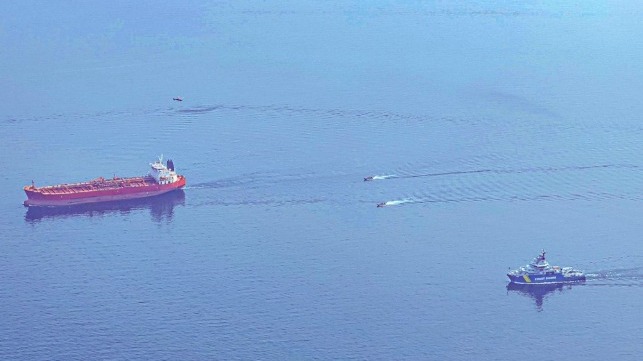
The coastguard stopped a tanker, which was travelling under a Syrian flag, near Trelleborg in southern Sweden. The ship, named "Jin Hui," is on the EU, Ukrainian and British sanctions lists and is suspected of sailing under a false flag, Swedish Civil Defence Minister Carl-Oskar Bohlin wrote on X.

Investigators will also question the ship's Chinese captain on suspicion that the tanker was not seaworthy.

 

Sweden Boards and Detains Falsely-Flagged Tanker off Trelleborg

Courtesy Swedish Coast Guard

Published May 3, 2026 3:10 PM by The Maritime Executive


Sweden's coast guard has boarded and detained a Russia-facing shadow fleet tanker in the Baltic, the latest in a growing campaign of Nordic/European interventions to impede a vast fleet of tankers that evade Western sanctions and operate outside of international regulatory structures. 

The vessel in question is a sanctioned tanker with IMO number 9430272, currently operating under the name Jin Hui (ex names Yi Bao, Celcius Roskilde). While she claims Syrian registration, her Equasis record indicates that this is false, as is increasingly common in the shadow fleet. 

She was reported sold to undisclosed interests in December 2025. The former owner shared a Hong Kong letterbox address with a sanctioned petchem trading company linked to Iran (among many other firms). 

As of Sunday, Jin Rui was anchored in the Baltic off Trelleborg, Sweden. 

"The vessel is suspected of being part of the Russian shadow fleet and for sailing under false flag. There are also concerns regarding insufficient seaworthiness and insurance," said Swedish Prime Minister Ulf Kristersson in a statement. "The vessel is included on the sanctions lists of the EU, the UK and Ukraine. We protect our waters."

Jin Hui has a recent history of PSC issues. At her last inspection, conducted last month in Turkey, port state control boarded Jin Hui and identified eight deficiencies, including issues with her oil record book, fire alarms, fire doors, auxiliary engine and her voyage planning. 

AIS data shows that Jin Hui has recently visited a wide diversity of jurisdictions, from South America to Russia to the Mediterranean and India, including extensive trading between and among regional ports. The pattern indicates a high likelihood of commercial voyages serving charterers outside Russia, despite sanctions. 


Sanctions on Shamkhani Network Deal a Major Blow to the Dark Fleet

cash
Pixabay / public domain

Published May 3, 2026 5:40 PM by The Maritime Executive


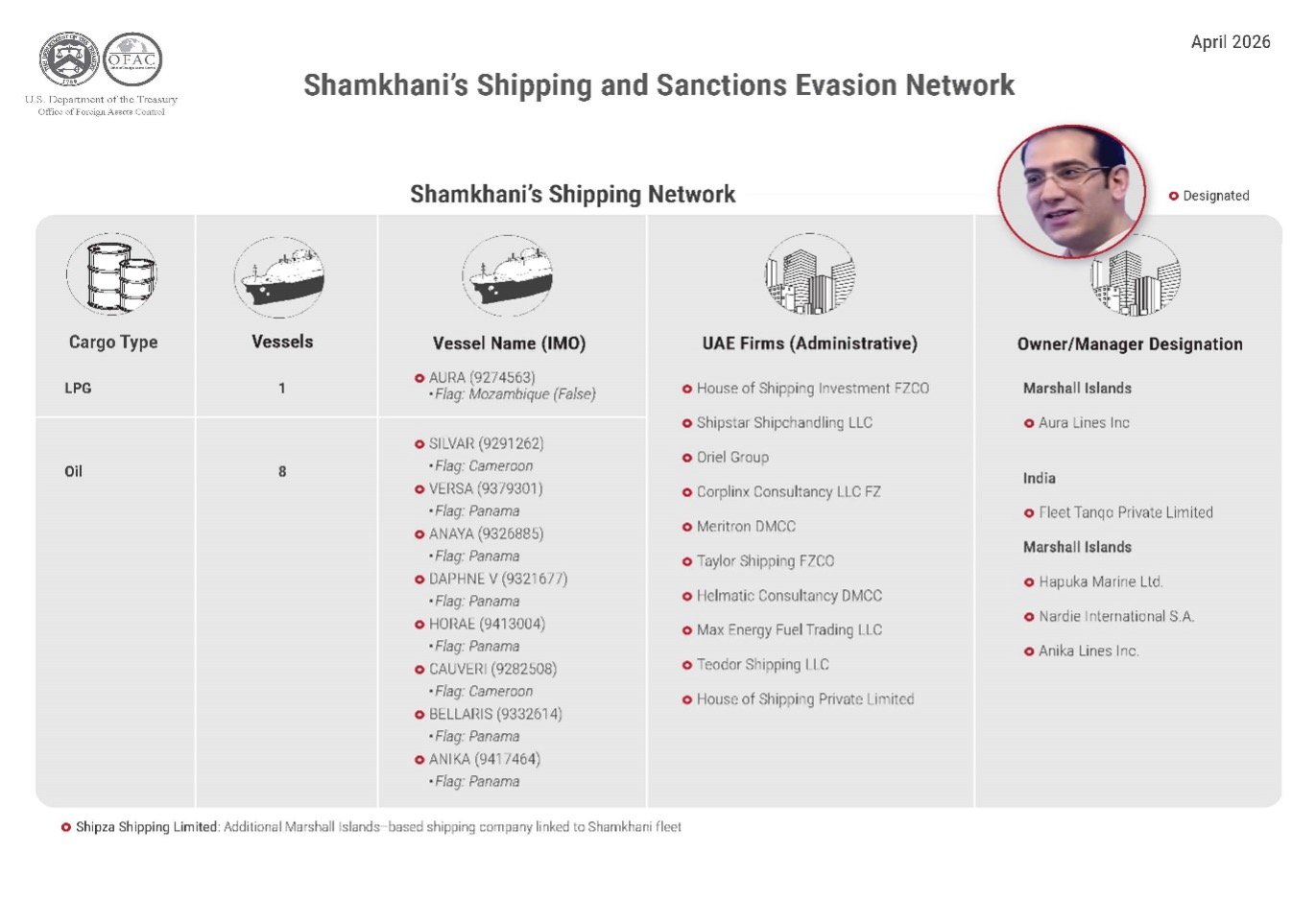
On April 15, the US Treasury announce a wide-ranging series of sanctions on the business empire of Mohammad Hossein Shamkhani, son of the recently-deceased one-time National Security Advisor and close confidant of the late Iranian Supreme Leader Ali Khamenei.

The US Treasury sanctioned eight crude and one LNG tanker, and ten ship management and trading companies associated with Shamkhani operating in the United Arab Emirates. The US Treasury described the Shamkhani network as a "multi-billion dollar Iranian and Russian petroleum sales empire that enriches a family connected to the highest echelons of the Iranian regime and served both Iranian and Russian interests."

The action against the Hossein Shamkhani network follows similar action taken against Babak Morteza Zanjani by the US Treasury on January 30. Babak Zanjani was arrested for corruption in 2013, when he estimated his own net worth as $13.5 billion, but rarely checked into the jail. Nevertheless he was sentenced to death in 2021, accused of spreading corruption on earth, but more particularly for purloining $2.7 billion owed to the Ministry of Petroleum for oil exports conducted through his business empire. By order of the Supreme Leader, his sentence was commuted in 2024, and he went back to work.

Zanjani's Sorinet Group is based in the UAE, and trades in cosmetics, finance and banking, hospitality, commercial aviation, infrastructure, building material, information technology and international real estate development, a business empire through which dark fleet oil revenues have been laundered. Zanjani has been heavily linked to the ship-to-ship oil transfer activity off Malaysia's east coast, and while enriching himself, has been a key conduit for collecting Iranian government oil revenues.

For ordinary Iranians, the extraordinary wealth of both Hossein Shamkhani and Babak Zanjani, derived from corrupt dealings and close family connections to the ruling elite - mirroring similar kleptocratic arrangements in Russia - undermines the religious credentials of Velayat-e Fakih rule, which was supposed to be purer than the pre-revolutionary era under the Shah. Their enduring activities are a major source of discontent and disillusionment within Iran. One estimate of the handling cut the Shamkhani and Zanjani operations were taking amounted to about 40% of the revenues owed to the Ministry of Petroleum.

A recent Reuters investigation has identified the cryptocurrency firm Nobitex as having a critical role in helping the IRGC move funds and circumvent sanctions: this firm too, taking commissions for moving government funds, has also made billions for its founders, Ali and Mohammed Kharrazi, whose family is intermarried with those of the late Ayatollah Khomenei, his successor the late Ali Khamenei, and now Mojtaba Khamenei.

The Shamkhani and Zanjani operations were able to endure for so long because their huge financial resources enabled them to pay off and ingratiate themselves with anyone who might threaten them, wherever they operated. Large numbers of employees, sub-contractors, real estate agents, drug dealers, gold traders and bankers, and probably many others, have benefited from their business activities, either directly or indirectly. These operations contributed to the Grey Listing of the UAE by the Financial Action Task Force in 2022, but this pressure was lifted when the Grey Listing was mysteriously lifted in 2024 after FATF noted there had been "significant improvements" to money laundering controls. These improvements did not however close down the Shamkhani and Zanjani operations.

But now, as the war continues, the UAE has acted decisively, the crackdown affecting both the networks supporting Iranian and Russian dark fleet operations, but also a number of trans-national criminal and drug-dealing operations. Having initially resisted external pressure to act in the name of sovereign autonomy, the UAE is now keen to be seen as an active member supporting US efforts.

A clampdown on Iranian front operations in the UAE will have wider impact across the Gulf region. Ship owners and managers in neighboring countries could comply with Central Bank controls by not making payments or having financial relationships with Iranian entities – because they could make and receive payments through "clean" Iranian front entities registered in the UAE instead. These avoidance schemes facilitating money laundering are also now under pressure, all building up the stress which both the Iranian and Russian regimes are facing.


Shipping giant MSC opens new trade route to bypass Hormuz disruption

Ships move in the Port of Antwerp - file photo from 2025
Copyright AP Photo


By Laila Humairah
Published on 

As tensions choke the Strait of Hormuz, Mediterranean Shipping Company races to keep global trade moving with new route.

Global container shipping giant, Mediterranean Shipping Company (MSC), has announced a new Europe-Red Sea-Middle East express service, linking key European ports with Saudi Arabia and other regional hubs.

The announcement comes as companies across global supply chains respond to surging demand and mounting disruption across Middle Eastern trade routes as a result of the US-Iran conflict.

MSC said its new service will offer faster, more efficient, multimodal alternatives in an increasingly volatile maritime landscape.

Ships sailing from the Baltic sea and across Europe will be directly connected to Jordan’s Aqaba, Saudi Arabia's King Abdullah Port and Jeddah via the Suez Canal.

“All European origins, from NWC-Scan Baltic to West Med Adriatic and East Med Black Sea will be served through MSC’s capillary network of service,” the company said in a statement.

From King Abdullah Port, onward links to other hubs in the Gulf, particularly the United Arab Emirates, will be available through land transport.

The first vessel on this service is scheduled to depart from Antwerp on 10 May.

MSC’s decision to introduce this new route bypasses the need to sail through the Strait of Hormuz, which has been effectively restricted due to Iranian measures and heightened military tensions involving the United States.

Situated between the Persian Gulf and the Gulf of Oman, this critical maritime corridor has become a major sticking point in negotiations between Tehran and Washington as they seek a resolution to the conflict.


Trump Announces Plan to "Guide" Ships Out of Strait of Hormuz

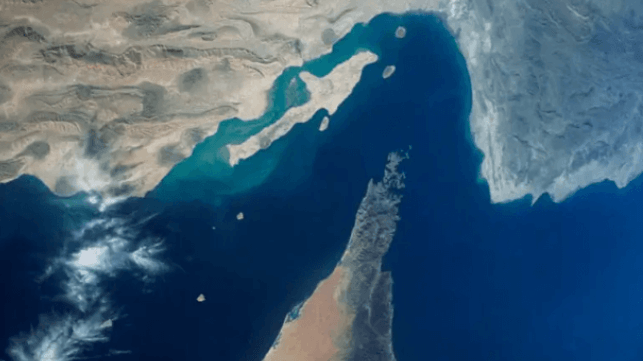
Calm from above: the Strait of Hormuz from the International Space Station (NASA)

Published May 3, 2026 9:17 PM by The Maritime Executive


On Sunday, President Donald Trump announced a new effort to help guide foreign-flag ships out of the Arabian Gulf, where hundreds of vessels are trapped by the ongoing Iranian blockade. The new American effort, "Project Freedom," will provide a degree of assistance to other nations' merchant ships; it does not reportedly include convoy escorts, but it will provide masters with information on safe routes and the locations of naval mines.

"We have told these countries that we will guide their ships safely out of these restricted waterways," Trump wrote in a statement. "We will use best efforts to get their ships and crews safely out of the strait. . . . If, in any way, this humanitarian process is interfered with, that interference will, unfortunately, have to be dealt with forcefully."

The operation is set to begin Monday morning. In an update to shipping, Central Command's Joint Maritime Information Center said that the U.S. has set up an "enhanced security area" for vessel transits to the south of the Traffic Separation Scheme, within the Omani sector of the strait.

Iran swiftly rejected the plan. In a statement, Ebrahim Azizi, head of Iran’s parliament national security committee, confirmed that the strait remains closed. "Any American interference in the new maritime regime of the Strait of Hormuz will be considered a violation of the ceasefire," said Azizi. "The Strait of Hormuz and the Persian Gulf would not be managed by Trump's delusional posts!"

The Wall Street Journal reports that the newly-announced "Project Freedom" will not send U.S. Navy sailors into harm's way: It is an operational framework for guiding and insuring shipping, without (as of yet) any plans to provide warship escorts in the near term.  

Control of the Strait of Hormuz is the biggest leverage that Tehran has over the U.S. in ongoing negotiations, and the Islamic Revolutionary Guard Corps (IRGC) claims to be getting revenue from a newly-created "tollbooth" permission system for safe passage. If successful, and if continued at scale, a tolling system would provide Iran with a much-needed new source of income - one it has emphasized that it is keen to keep. Iran is not expected to cede control of the waterway without significant incentives, either in the form of a negotiated agreement or an expanded military operation. 

For shipowners, it is not clear what immediate protection might be available under "Project Freedom" in the event of an Iranian attack. U.S. Central Command said in a statement that the effort would be resourced with "guided-missile destroyers, over 100 land and sea-based aircraft, multi-domain unmanned platforms, and 15,000 service members."  

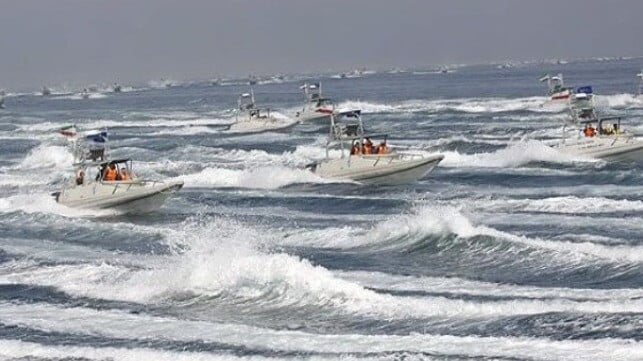
Iranian opposition may already be taking shape in the form of renewed attacks. At about 1940 hours UTC, after the announcement of Project Freedom, a tanker reported that it had been hit by unknown projectiles at a position on the south side of the waterway - the general area of the declared security zone. Earlier Sunday, a bulker on the Iranian side of the waterway reversed course after coming under attack by small craft, a hallmark of IRGC operations. 


Bulker Attacked by Small Craft in the Strait of Hormuz

Mehr News
File image courtesy Mehr / IRGC

Published May 3, 2026 7:08 PM by The Maritime Executive


Both Iran and the U.S. Navy are taking steps to enforce their respective blockades in the Strait of Hormuz. On Sunday, a foreign-flagged bulker reported that it was attacked while headed northbound into the strait, just off the coast of Sirik, Iran. Consultancy Vanguard Tech reports that multiple small craft approached the ship at about 1130 hours UTC; all crew were reported safe, and no environmental impact was reported. 

The vessel has been identified as the Minoan Falcon, a Greek-owned bulker of about 90,000 dwt. AIS data shows that at the time of the interdiction, the ship entered just inside of Iran's 12-mile territorial sea boundary, indicating either a diversion or an intent to use the tightly-controlled route on Iran's side of the waterway. AIS data shows that the ship reversed course; however, she appears to have disabled its transponder as of 1600 hours local time. Her last reported destination was Bandar Imam Khomeini, Iran, a port opposite Umm Qasr at the far northern end of the Arabian Gulf. 

Relatedly, ships at anchor at Ras al Khaimah (off the northeastern shores of the UAE) have reported a new Channel 16 navigational advisory from the Islamic Revolutionary Guard Corps. Radio call harassment from the IRGC is commonplace in the waterway, but this specific item is new: the IRGC has reportedly ordered all of the vessels at anchor at Ras al Khaimah and Mina Saqr to relocate to Dubai immediately, or face consequences that would be "their responsibility" if they do not comply. 

The U.S. continues its own enforcement effort to corral Iranian tanker traffic inside the Gulf. As of Sunday, U.S. Central Command reports that it has turned around 49 vessels bound to or from Iran, and says that it remains committed to "total enforcement." 

The majority of the intercepted vessels have not been outbound, laden tankers. TankerTrackers.com has identified 25 tankers that departed Iran in laden condition during the month of April, including the two-week period before the blockade began. Seven were redirected back to Iran, two were seized in the Indian Ocean, and most of the rest have arrived at their commercial destinations. 


Product Tanker Hijacked off Yemen, Then Diverted to Somalia

Op Atalanta frigate keeping an eye on a vessel seized by pirates off Puntland (Op Atalanta)

Published May 3, 2026 10:32 PM by The Maritime Executive


In the continuing recent upsurge in Somali-associated piracy, the Togo-flagged oil products tanker Eureka (IMO 1022823) has been boarded off Yemen’s Shabwa governorate and redirected towards the Somali coastline. The track of the vessel suggests that the Eureka is being directed towards Qandala, in the semi-autonomous region of Puntland in northeast Somalia, where without a harbor it is likely to be moored offshore.

It is not clear who has seized the vessel, which is managed by Emirati interests. Qandala lies 50 miles east of Bosaso, where the UAE armed forces maintain an outpost and DP World has a facility. It is possible that the ship has been seized on the initiative of a party with a commercial dispute with the owners.

The 88-meter coastal vessel had set off from Sharjah on February 17, and had made it through the Strait of Hormuz before the outbreak of war. It loaded its cargo in Fujairah, then made passage to the small oil terminal at Qana, in Yemen’s Shabwa governorate, an area controlled by the Internationally Recognized Government. The Eureka left Qana on April 30, heading east and lingering off the Shabwa coastline for several days before being seized by pirates on May 2.

The Dubai-based UKMTO has reported that there were two separate incidents in the same area on May 1 and 2, which the masters of the ships concerned reported as possible piracy attempts. In the first, the master of a bulk carrier said his ship was approached by a skiff, with a fishing vessel acting in concert standing off. In the second incident, the master of another bulk carrier saw seven armed men approach in a skiff. Both bulk carriers were in the Maritime Security Transit Corridor (MSTC) at the time. The UKMTO has warned of heightened pirate activity in the Gulf of Aden area and seas off Puntland.

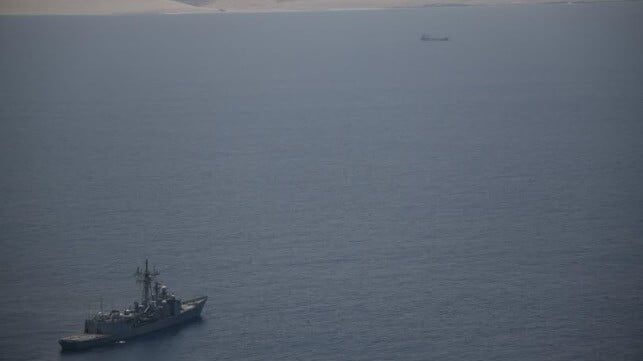
On April 26, the Palau-flagged oil products tanker Honour 25 and the St Kitts & Nevis-flagged cargo vessel Sward (MMSI: 511100524) were boarded and redirected towards Mareero and Gracad, respectively on the north and east coast of Puntland. The European Union Operation Atalanta counter-piracy naval force appears to have eyes on one of the hijacked vessels with a frigate close by.

Somali pirates may be attempting to take advantage of the diversion of US Navy ships away from the area. It is also possible that the withdrawal of UAE forces from some positions along the Gulf of Aden coastline has reduced oversight of the area. Additional traffic is also now passing along the MSTC, with cargo for Saudi Arabia all flowing along the corridor rather than being split with Saudi ports in the Gulf.


Bulker Evades Suspicious Approach South of Yemen

bulker at sea
A bulker reported being approached by a skiff south of Yemen but was able to evade a likely boarding (file photo)

Published May 1, 2026 1:16 PM by The Maritime Executive


A safety warning went out to shipping on May 1 after an unidentified skiff approached a bulker sailing south of Yemen.  The authorities believe there was a clear intent to board the vessel, but it was able to evade the incident by taking defensive measures and displaying its armed guards.

The incident took place approximately 92 nautical miles south of Al Mukalla, Yemen, in the Gulf of Aden. The nationality of the attackers was not determined, but it is near the Houthis ' strongholds, and there have been reports of increased activity by pirates coming from Somalia.

The unnamed bulker reported that a skiff with a black hull and carrying seven people aggressively approached. It said the individuals appeared to be heavily armed and intent on boarding the bulker. The skiff came within 10 meters (33 feet) of the vessel.

The bulker reported that it increased speed and took other evasive maneuvers. UK Maritime Trade Operations (UKMTO) is crediting the defensive maneuvers and the readiness of the crew and armed security guards for preventing the boarding.

The skiff aborted its approach and withdrew. It is unclear from the report if there was another vessel in the area working as a mothership.

EUNAVFOR Operation Atalanta has issued multiple warnings over the past two weeks based on an increase in activity from Somalia. Several vessels have reported being approached, and in at least one case, the pirates and the security guards aboard a vessel departing Somalia traded fire. Two ships, a small tanker and a cargo ship, were seized and taken toward the Somali coast. Atalanta is working with the local authorities and monitoring the vessels, which continue to be controlled by the pirates.
 

Photos: Hijacked Car Carrier Galaxy Leader Has Partially Sunk

Galaxy Leader
Courtesy Basha / Yemeni social media

Published Apr 30, 2026 11:55 PM by The Maritime Executive

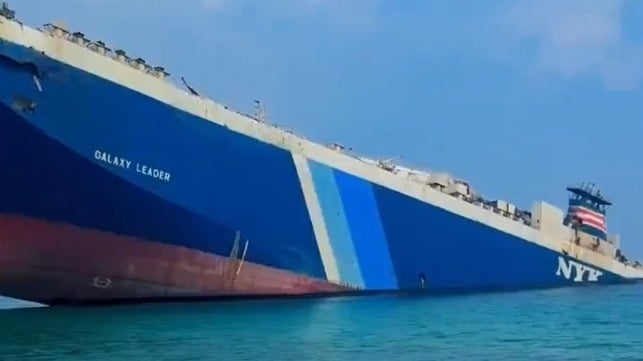
When Houthi rebels captured the car carrier Galaxy Leader in 2023, the vessel and crew were taken to a sheltered bay in Yemen, where they were detained and forced to await the end of hostilities in the Red Sea. The crew were finally released in January 2025, but the ship was not - and by its appearance in newly-released photos, it might never leave. 
 
Galaxy Leader was hijacked by armed militants aboard a Houthi-operated helicopter on November 19, 2023. The orchestrated, carefully-filmed boarding was successful, and the terrorist group took control of the ship. The car carrier was diverted to Hodeidah, then relocated to Al Salif, both controlled by Houthi separatists. On arrival off Al Salif, Galaxy Leader became a popular tourist attraction, and at times a festival-like atmosphere persisted on board, with visitors freely coming and going via small launches. 

The Galaxy Leader was operated by Isle of Man-based Ray Car Carriers, a firm with ownership ties to an Israeli shipping industry titan. At the time, Houthi leaders claimed that they were focusing their attacks on Israel-linked tonnage in protest of the military operation in Gaza.  

The crew of Galaxy Leader were finally released in 2025, but the ship stayed on, and the Israeli government claimed that Houthi forces began using it as an observation post to track shipping in the Red Sea. The Israeli Air Force classified it as "terrorist infrastructure belonging to the Houthi terrorist regime" and bombarded it on July 6, 2025. Houthi sources also claimed two American air strikes on the vessel several months earlier, though these remain unconfirmed. 

New imagery from As Salif suggests that Galaxy Leader would be difficult to remove. Damage from the airstrikes is evident at the forecastle, and the ship has partially sunk at the stern, leaving the bow high and dry. Wreck removal by refloating the ship or demolishing her in place would require resources not currently available in war-torn Yemen. 

Two foreign activists seized from Gaza aid flotilla appear before Israeli court

Spanish national Saif Abu Keshek and Brazilian Thiago Avila were brought before an Israeli court Sunday after Israeli troops seized them from a flotilla attempting to bring humanitarian aid to the besieged Gaza Strip. Avila told his lawyers that he had been beaten so badly in Israeli custody that he passed out twice.


Issued on: 03/05/2026 -
By: FRANCE 24

People gather in front of the European Commission office in Barcelona in support of activists Saif Abu Keshek and Thiago Avila, members of the Global Summud Flotilla seized by Israel, in Barcelona, Spain, May 2, 2026. © Bruna Casas, Reuters

An Israeli court Sunday extended by two days the detention of two foreign activists from a Gaza-bound flotilla who were brought to Israel for interrogation, a rights group representing them said.

The flotilla of more than 50 vessels had set sail from France, Spain and Italy with the aim of breaking an Israeli blockade of Gaza and bringing humanitarian supplies to the devastated Palestinian territory.

They were intercepted by Israeli forces in international waters off Greece early on Thursday, with Israel saying it had removed some 175 activists – two of whom were taken to Israel for questioning.

Spanish national Saif Abu Keshek and Brazilian Thiago Avila appeared before a court in the southern city of Ashkelon on Sunday.

AFP footage showed the two being escorted into the courtroom, with Avila's hands cuffed behind his back and Abu Keshek's feet shackled.

"The court extended their detention by two days," Miriam Azem, international advocacy coordinator at the rights group Adalah, told AFP.

Adalah said the state attorney had presented a list of suspected offences committed by the pair, including "assisting the enemy during wartime" and "membership in and providing services to a terrorist organisation".

But Adalah's lawyers challenged the state's jurisdiction, arguing against the "unlawful abduction" of the two activists in international waters.

Its lawyers told the court Avila and Abu Keshek had testified to "severe physical abuse amounting to torture, including being beaten and held in isolation and blindfolded for days at sea".

Screenshot of a post by the Adalah Center for Human Rights on X on May 2, 2026. © Screenshot, X


No formal charges were filed against the two, it said.

"We argued that ... they were part of a humanitarian mission that aimed to provide humanitarian aid to the civilians in Gaza, and not to any other organisation, whether terrorist or not," lawyer Hadeel Abu Salih told journalists after the hearing.

"We deny all the accusations that were presented ... and demand these two men be released immediately," she said.

Spain's government called for Abu Keshek's "immediate release", the foreign ministry said in a statement to AFP, indicating the Spanish consul had accompanied Abu Keshek to the hearing.

Adalah's lawyers had met the two men at Ashkelon's Shikma Prison on Saturday.

They said Avila recounted being "subjected to extreme brutality" by Israeli forces when the vessels were seized, saying he was "dragged face-down across the floor and beaten so severely that he passed out twice".

Abu Keshek was also "hand-tied and blindfolded ... and forced to lie face-down on the floor from the moment of his seizure" until reaching Israel, it said.


Rebuilding Gaza Strip: Labour Day is the last thing on Palestinians' minds
© France 24
01:48

Israel's foreign ministry said the pair were affiliated with the Popular Conference for Palestinians Abroad (PCPA) – a group accused by Washington of "clandestinely acting on behalf of" Palestinian militant group Hamas.

It said Abu Keshek was a leading PCPA member, and that Avila was also linked to the group and "suspected of illegal activity".

The Global Sumud Flotilla's first Mediterranean voyage to Gaza last year drew worldwide attention, before being intercepted by Israeli forces off the coasts of Egypt and Gaza.

Avila was one of the organisers of that flotilla, which was also intercepted by Israeli forces, with crew members – including Swedish activist Greta Thunberg – arrested and expelled.

Israel controls all entry points into Gaza, which has been under an Israeli blockade since 2007.

Throughout the Gaza war, there have been shortages of critical supplies in the Palestinian territory, with Israel at times cutting off aid entirely.

(FRANCE 24 with AFP)


Israeli Forces Intercept Boats from Activist Flotilla Seeking to Reach Gaza

people on boat with lifejackets and hands up
Scene from video aboard the boats stopped by Israelo forces (Global Sumud Flotilla)

Published Apr 30, 2026 6:31 PM by The Maritime Executive


For the second time, Israeli forces have acted to stop a flotilla of small boats loaded with activists that were attempting to reach Gaza and creating an international spectacle. Last October, Israeli forces intercepted the boats close to the Israeli shore, but this time Israeli forces sought to stop the flotilla while it was in international waters near Greece.

The group, calling itself the Global Sumud Flotilla, had initially set out from Barcelona on April 12. Last week, they had attempted to circle an MSC containership in the central Mediterranean that they accused of transporting materials to Israel. 

The group gathered in Italy and set off on Sunday, reporting that it consisted of 56 small boats. They were calling themselves the “largest coordinated civilian maritime mobilization,” saying their goal was to challenge the Israeli blockade of Gaza and advance the opening of a permanent humanitarian corridor. They reported that Greenpeace’s Arctic Sunrise vessel and the rescue ship Open Arms had accompanied them as they set off from Italy. They said the boats were registered in Poland, Italy, Spain, Slovenia, and France.

Late on Wednesday, April 29, they reported Israeli forces intercepted the boats in the vicinity of Crete. A Greek government spokesperson confirmed that 55 vessels were 50 nautical miles off the Peloponnese and were being watched by Israeli warships and the Hellenic Coast Guard.

An Israeli naval officer can be heard in one of the group’s videos urging them to change course and not to proceed. They were told to direct their aid through established and recognized channels. They were also told they could sail to Ashdod, Israel, to offload supplies, which would be transferred to humanitarian groups and delivered to Gaza. 


The group contends the Israelis launched drones and employed communications jamming technology before boarding their boats. The group’s online tracker claims 22 boats were intercepted west of Crete and that 45 boats are still sailing south of Crete. Other reports are saying 36 boats were still heading toward Gaza.

The group issued a statement calling the intervention “piracy.” They claimed some of their boats were disabled and demanded that Greece, Malta, Italy, and Cyprus launch a SAR operation. They were also calling on commercial and private boats in the area to divert and provide aid.

The “Board of Peace,” organized by world leaders including Donald Trump, issued a statement saying, “The ‘flotilla’ heading to Gaza is the performative love-boat activism of people who know nothing of and care even less for the condition of Gazans.” They also called for directing aid through established humanitarian channels while reporting their success in stopping Hamas from stealing aid supplies. 

Israel’s UN envoy, Danny Dannon, said Israel was stopping the flotilla before it reached “our area.” He called the activists in the group “delusional attention-seeking agitators.”

Israel’s Foreign Minister, Gideon Saar, said they were coordinating with the Greek government and would transfer those intercepted to Greece. The group was claiming that as many as 175 to 180 people had been taken into custody.

The first attempt at the flotilla stopped when there was an explosion on a boat off Malta in May 2025. The group asserted that they had been attacked by Israeli drones. About 40 boats and as many as 450 people approached Israel in October and were stopped by Israeli forces. The group claimed they were treated harshly, while Israel said they were given food and water and quickly placed on airplanes to be deported back to Europe.