Monday, May 04, 2026


Groundbreaking Starts Sparrows Point Container Terminal for Baltimore

Baltimore new container terminal groundbreaking
Groundbreaking ceremony kicked off the construction of Baltimore's new container terminal at Sparrows Point (Governor Wes Moore)

Published May 1, 2026 8:39 PM by The Maritime Executive


Tradepoint Atlantic and MSC’s Terminal Investment Limited (TiL) broke ground on May 1 on the Sparrows Point Container Terminal. A key part of the redevelopment of the former Bethlehem Steel site in the Baltimore (Maryland) area, the companies are saying it represents one of the largest private container terminal investments ever made in the U.S.

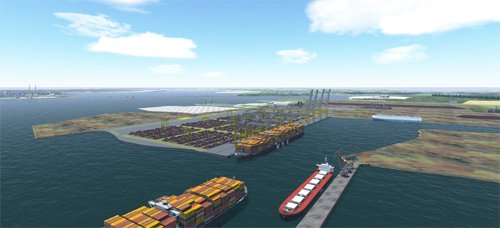
The new terminal, developed in partnership with TiL, a global leader in container terminal investments owned by MSC and BlackRock, will dramatically expand Baltimore's capacity to handle container cargo and serve the midwestern United States. It is a 168-acre site that will include a container terminal with two berths and an on-dock rail facility able to handle double-stacking rail cars. The terminal's on-dock rail facility will provide direct intermodal connectivity.

Together, TiL and Tradepoint Atlantic have committed approximately $1.2 billion of private finance to deliver a terminal with an annual throughput capacity of more than one million containers, able to handle two ultra-large container vessels simultaneously and equipped with seven ship-to-shore cranes. 

MSC said that with the completion of the terminal, it will be able to move more gateway volume to the Midwest. It predicts that this will dramatically increase the competitiveness for importers and exporters.


Rendering of the new terminal due to begin service in 2028 (Tradepoint Atlantic)


"This groundbreaking marks one of the most significant moments in the history of this site and for the Port of Baltimore," said Kerry Doyle, Managing Director of Tradepoint Atlantic. "The Sparrows Point Container Terminal will position the port as a true global gateway and economic engine, making Maryland strategically significant and globally competitive for decades to come." 

Sparrows Point was once the world’s largest iron and steel-making facility, operating alongside the shipyard that built ships for many years before converting to a repair yard facility. Operations ended at the site in 2014, and two years later, plans were announced for the redevelopment of the site into a multi-use industrial park. TiL joined the plans, announcing in 2023 that it would partner with Tradepoint Atlantic for the development of the new container terminal.

Officials ranging from Governor Wes Moore to other elected officials and industry leaders all highlighted the recovery of the Port of Baltimore and called this a key next phase in its development. The Port of Baltimore achieved a record-breaking year in 2025, handling more than 1.1 million TEU at its Seagirt Marine Terminal.

The Army Corps of Engineers approved the final permits for the new container terminal in December 2025. Tradepoint expects to complete the first berth by the third quarter of 2028 and finish the second berth in early 2029.


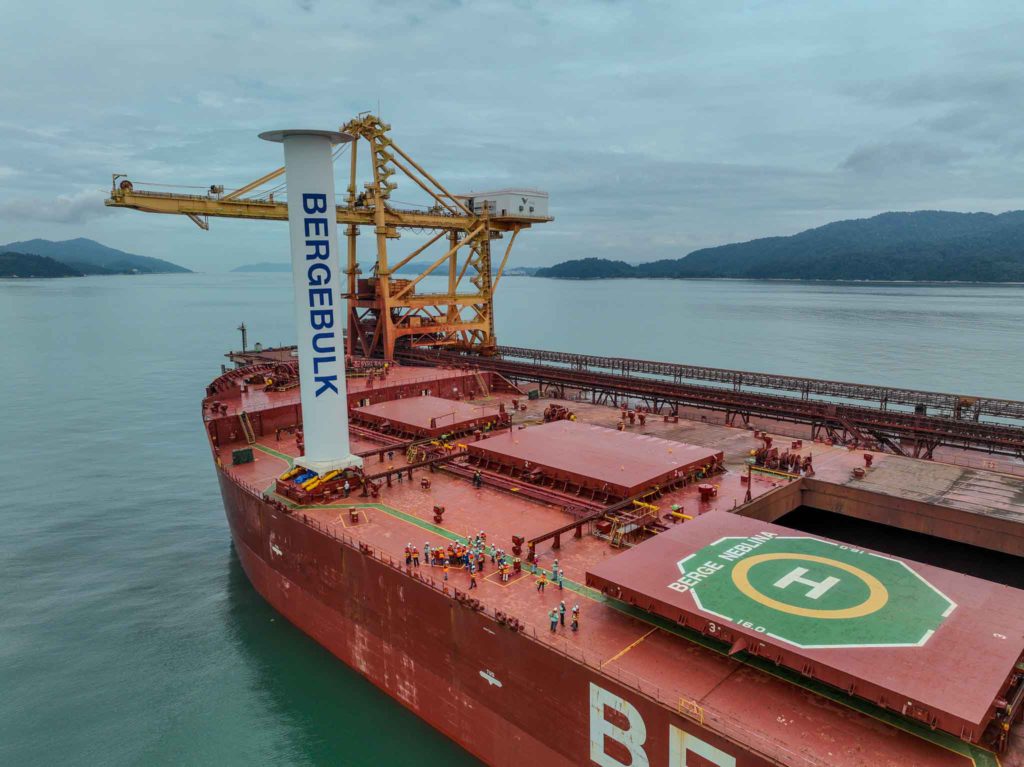
Vale to more than double sail-equipped iron ore carrier fleet


One of the rotor sails on Berge Neblina. Credit: Vale

Vale plans to more than double its fleet of sail-equipped iron ore carriers, with the cost-saving technology to expand to at least 20 vessels within the next three years, easing the Brazilian miner’s exposure to marine fuel price volatility.

The spinning cylindrical sails about as high as a 10-storey building harness wind power during transoceanic voyages saving up to 10% in fuel consumption depending on the vessel, Vale’s general manager for shipping, Rafael Fischer, said on Tuesday.

Freight costs are significant for the mining sector and have climbed during the Iran war.

“Energy efficiency means we rely less and less on fuel, which reduces the impact of any variation in bunker fuel prices,” Fischer told Reuters aboard one of the sail-equipped vessels, docked at the Tubarao port in Espirito Santo state.

Vale currently has eight sail-equipped vessels, the result of a decade-long strategy focused on lowering emissions and improving efficiency that has shielded the company somewhat as the Middle East conflict drives up oil product prices.

Saving on fuel is a major concern at Vale, as it mainly ships iron ore to China, where it faces competition from suppliers in Australia.

“We have a geographic disadvantage compared with our competitors, so we are using innovation as a lever to mitigate that effect,” Fischer said.

Ethanol-powered ships

Beyond adding sails, Vale is also making its vessels fuel-flexible, said Fischer.

Earlier this month, it announced a 25-year charter agreement with China’s Shandong Shipping Corporation for the construction of two of the world’s first ethanol-fueled transoceanic vessels equipped with sails.

The ships will also be able to run on methanol or conventional bunker fuel, with future conversion options for liquefied natural gas and ammonia.

“In the future, we will have the option of at least five fuels, which gives us the flexibility to adapt to different situations and market conditions,” said Fischer.

(By Marta Nogueira and Fabio Teixeira; Editing by Joe Bavier)


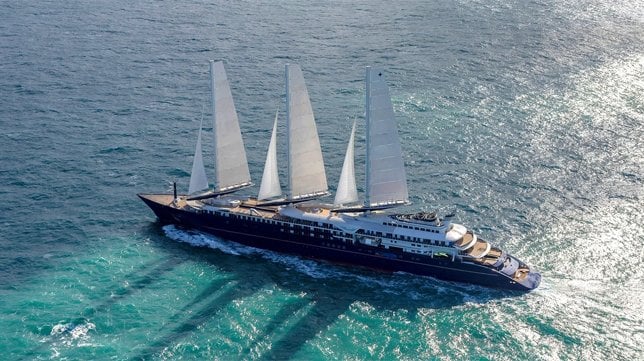
World’s Largest Sail Cruise Ship Celebrates Naming and Delivery

sail yacht cruise ship
Orient Express Corinthian has been delivered becoming the largest sailing cruise ship and setting a new speed record (OE Yachts)

Published May 1, 2026 9:48 PM by The Maritime Executive


Orient Express Corinthian, the world’s largest sailing ship, was christened on April 29, in Saint-Nazaire, France, and delivered to her owners, Orient Express Sailing Yachts, as part of the expansion of the fabled brand. With a displacement of approximately 15,000 metric tons, the ship is unique and has already set a speed record for wind propulsion for ships of its size.

Built at Chantiers de l’Atlantique, the companies highlight that it is the product of a decade of research and design. The shipyard developed the SolidSail technology that powers the ship, and that it sees as a technical response to the challenges of decarbonizing maritime transport.

The sailing yacht is equipped with three rigs, each spanning 1,500 square meters and towering over 100 meters high. They are fully automated and capable of providing 100 percent wind-powered propulsion, weather permitting. Capable of rotating 360 degrees, they allow for optimal sail positioning regardless of the ship’s heading or wind direction. Tilting up to 70 degrees permits the carbon masts to pass beneath bridges and other air draft restrictions.

During the vessel’s sea trials conducted in February 2026, it reached a speed of 12 knots in 20-knot winds, powered solely by the force of the wind. The shipyard highlights this as a first for a ship of its size. It is 15,000 tons displacement, 26,300 gross tons, and measures 220 meters (722 feet).


In addition to wind propulsion, the ship has a hybrid propulsion system powered by Liquefied Natural Gas (LNG). The design also incorporates numerous energy-efficiency devices, and it uses an AI-assisted detection system that continuously monitors for the presence of marine mammals and objects at sea, thereby mitigating the risk of collision. Dynamic positioning technology permits the ship to maintain position while preserving the seabed by eliminating the need for anchoring.

Sébastien Bazin, Chairman and CEO of Accor, said during the ceremonies that extending the Orient Express to the sea is a natural fit with the imagery of the legendary brand. Orient Express has been part of the Accor Group since 2022, and in 2024, Accor and LVMH entered into a strategic partnership aimed at accelerating the development of the brand. The company is also launching hotels and planning a new version of the legendary Orient Express train.

Orient Express Corinthian is scheduled to depart Saint-Nazaire on May 2, bound for the French Riviera and her entry into commercial service. She will spend her first season cruising in the Mediterranean before repositioning to the Caribbean for the winter.

The ship features 54 passenger suites ranging in size between 45 and 230 square meters, located on four decks. She accommodates 110 passengers and approximately the same number of crew. On board, passengers will find five restaurants and private dining rooms, as well as a 115-seat theater, a recording studio, and a spa. Amenities include a swimming pool and a marina.

Her sister ship, Orient Express Olympian, was floated out at the shipyard on April 17. She is beginning outfitting and is scheduled for delivery in 2027. 

The ships are part of a new wave of luxury hotel brands entering cruising as extensions of their offerings. Ritz-Carlton and Four Seasons have also launched cruise ships. Aman is also building a luxury yacht cruise ship in Italy, due to enter service in 2027.


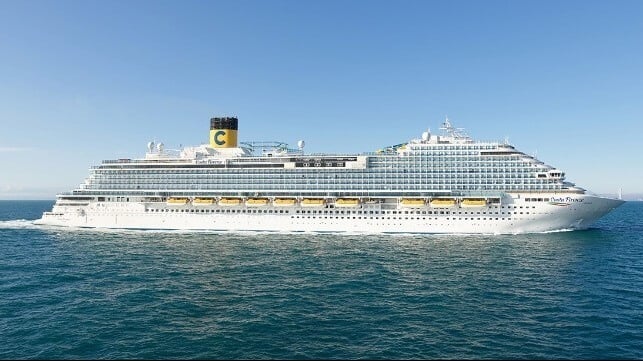
Cruise Ship Passenger Dies in Fall Near Catalina Island

Carnival Firenze, seen here as the Costa Firenze (Carnival press handout)

Published Apr 28, 2026 11:34 PM by The Maritime Executive


On Monday, a passenger fell to her death from her balcony aboard the cruise ship Carnival Firenze. The circumstances of the fall are under investigation, and the FBI has joined the inquiry. 

The Carnival Firenze got under way Sunday from Los Angeles for a coastal cruise to Mexico. On Monday, while the vessel was transiting off Catalina Island, the victim fell from her balcony onto a deck below. 

In a statement, Carnival said that it would be supporting the victim's family, and a spokesperson extended thoughts and prayers to those affected by the event. Carnival said that the appropriate authorities were informed of the incident and that an investigation was getting under way. The cruise line described the law enforcement boarding and inspection as "customary." 

According to the LA County Sheriff's Department, the FBI is leading the investigation. The agency has special jurisdiction over events that occur on cruise ships homeported in the United States.

After the law enforcement boarding, Carnival Firenze resumed her commercial voyage to Ensenada, Mexico. She should return to LA on schedule on Wednesday. 

Falls / man overboard incidents occur about 20-25 times per year on cruise ships around the globe. Industry observers say that human factors are frequently at play. The Carnival Firenze incident remains under investigation, and no conclusions about root cause have been reached. 


Liberian Registry Unveils Next-Generation Seafarer Platform

The Liberian Registry

Published May 3, 2026 4:23 PM by The Maritime Executive


[By: Liberian Registry]

The Liberian Registry, the world's largest ship registry, today announced the official launch of electronic seafarer documents, marking a significant milestone in the Registry's digital transformation and setting a new standard for seafarer services across the global maritime industry.

Seafarers aboard Liberian-flagged vessels who apply for new documentation will now receive electronic versions of their official documents, including their Seaman’s Book, licenses, special qualifications, and recorded sea service, accessible directly from their mobile devices through SEA360, the Registry’s new dedicated mobile application. Seafarers with existing documentation may also request access to their electronic records through the Registry. SEA360 is now available for download on the Apple App Store and Google Play.

Electronic documents issued through SEA360 serve as digital equivalents to hard copy documents and include QR codes for immediate verification within the Registry's systems. Seafarers can present their credentials directly to Port State Control officials and Designated Persons Ashore (DPAs), wherever they are in the world.

Alongside the launch of SEA360, the Registry has migrated the Seafarer Electronic Application (SEA) System into the Seafarer Portal. The fully integrated platform connects SEA System, Medical Certification, and Training Center programs all in one. This transition introduces Crew360, a compliance engine that applies enhanced vetting and verification checks to every seafarer application before credentials are issued, strengthening the integrity of Liberian-issued documentation while maintaining efficient processing for authorized users.

All seafarer documents issued from the Seafarer Portal will include a QR code on physical documents, including Certificates of Receipt of Application (CRAs), in addition to electronic certificates. Electronic documents complement, rather than replace, hard copy documents, ensuring continuity between physical and digital records while raising the standard of oversight and document integrity across the fleet.

The Liberian Registry's digital ecosystem is a suite of secure, scalable, and client-focused services built to respond to the evolving regulatory environment and operational needs of the global maritime industry, and our newly launched Seafarer Portal and SEA360 app underscores this initiative.

The products and services herein described in this press release are not endorsed by The Maritime Executive.


Everllence Main Engines Bound for BC Ferries Newbuilds

Everllence
(L-R): Lex Nijsen, VP, Head of Marine Europe & Americas, Everllence; Dr. Uwe Lauber, CEO, Everllence; Ed Hooper, Head of Fleet Renewal, BC Ferries; Marita Krems, Senior VP, Head of Four-Stroke Marine & License, Everllence; Thomas Huchatz, Global Manager

Published May 3, 2026 3:36 PM by The Maritime Executive


[By: Everllence]

British Columbia Ferry Services Inc. (BC Ferries) has selected four shipsets of 2 × 6L32/44CR + 2 × 8L32/44CR main engines in connection with the construction of four double-ended newbuild ferries for its fleet. China Merchants Industry Weihai Shipyard Co., Ltd. will build the vessels with the first of the new vessels expected to enter service in 2029, and with all four operational by 2031.

The four ferries comprise a New Major Vessel (NMV) class designed to replace aging vessels on the company’s busiest routes. Representing BC Ferries’ largest-ever capital investment, the NMVs are being built with future sustainability in mind, and designed to support fully electric operations when the necessary infrastructure becomes available.

Ed Hooper, Head of Fleet Renewal at BC Ferries, said “Our work with Everllence Canada is an important milestone on our fleet-renewal journey, as well as our move toward greater efficiency and lower emissions. The 32/44CR engines provide proven performance and operational flexibility, and the long-term local service support from PrimeServ Canada helps ensure reliability and in-province technical capacity as we introduce these new vessels.”

Vamsi Pentyala – General Manager, BC office, Everllence Canada – said: "Everllence Canada is pleased to partner with BC Ferries on these NMV-class vessels that will be supported by our well-established, local, in-service support organisation – PrimeServ Canada. This partnership allows us to strengthen our commitment to continued investment and growth in British Columbia, support the local economy, develop the skills of our people in BC and across Canada, and develop new suitable local partners to ensure the reliable service of these ferries. BC Ferries is essential to communities across British Columbia, and we will maintain a relentless commitment to these vessels.”

Thomas Huchatz – Global Manager Ferries, Everllence – said: “BC Ferries plays a vital role in keeping communities and businesses across British Columbia connected. Supplying the main engines for these new vessels is both an honour and a responsibility we take very seriously. Our 32/44CR engines bring proven reliability together with future-ready technology that will benefit these vessels for decades. Designed and manufactured in Europe and supported by our strong Canadian organisation, they bring a guarantee of dependable lifecycle support, rapid local response, as well as access to our global expertise.”

The products and services herein described in this press release are not endorsed by The Maritime Executive.


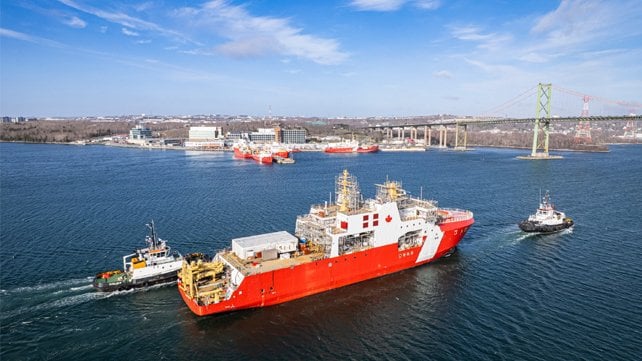
First of Canadian Coast Guard’s New Arctic-Offshore Patrol Ships Launched

Canadian Coast Guard vessel launched
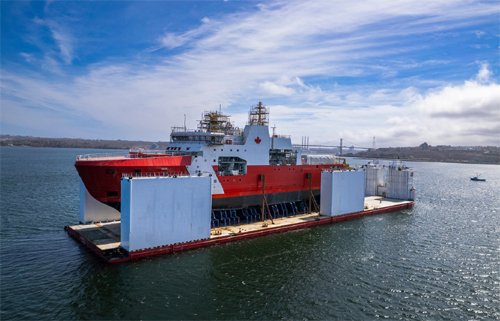
CCGS Donjek afloat for the first time (Irving Shipbuilding)

Published Apr 29, 2026 8:07 PM by The Maritime Executive


Canada marked the next milestone in its efforts to renew the fleets of the Canadian Navy and Coast Guard with the floatout of the first of its new Arctic and Offshore Patrol Ships. The future CCGS Donjek was successfully transferred from the building hall on a barge and floated out in Halifax.

The construction is part of Canada’s National Shipbuilding Strategy, a long-term plan for what they are proudly saying are “Built by Canadians, for Canada” vessels. Irving Shipbuilding has completed the delivery of six Harry DeWolff Class patrol ships, which were also the basis for CCGS Donjek and her sister ship CCGS Sermilik. The wider program also includes two Polar Icebreakers, up to six Program Icebreakers, and up to sixteen Multi-Purpose Icebreakers. Next up, points out Irving Shipbuilding, is the River-class Destroyer. The first vessel, the future HMCS Fraser, started full-rate production in April 2025. The keel laying is scheduled for June.

The CCGS Donjek and CCGS Sermilik are designed as multi-mission vessels that can support remote and coastal communities. The ships will each be 103 meters (338 feet) long and approximately 6,677 metric tons displacement. They can accommodate a crew of 31 and will have a total of 57 berths.

Built to expand the Canadian Coast Guard’s patrol and icebreaking capacity, the CCGS Donjek will support a wide range of missions, including offshore fisheries patrols, conservation and protection, and search and rescue operations along Canada’s east coast. The vessel will also support operations across the Canadian Arctic.

The ships feature a 20-tonne crane and an A-frame to support scientific missions. They also have a helicopter pad and hangar. They feature a medical facility, modular accommodations, and spaces to enable humanitarian assistance and community resupply. Furthermore, they will also support aids to navigation and emergency response operations.


The future patrol boat was placed on a barge for its launch (Irving Shipbuilding)


Canadian government officials highlighted that the ship is part of a C$63 billion (US$46 billion) investment in the 2025-2026 budget for defense and security. The orders for these two patrol ships were announced in 2019 as part of Canada’s ongoing investment.

Irving Shipyard highlights that the launch operation required approximately 49 million liters of water to submerge the barge and set the ship afloat. It was moved from the Halifax Shipyard to the barge on April 27 and launched in the Bedford Basin late on April 28. 

The future CCGS Donjek is now pier side at Halifax Shipyard, where work continues in preparation for sea trials. She is expected to be delivered in late 2026, and CCGS Sermilik will follow in 2027.

Contract Awarded for the Removal of the MSC Baltic III Wreck

wreck of containership grounded in Newfoundland Canada
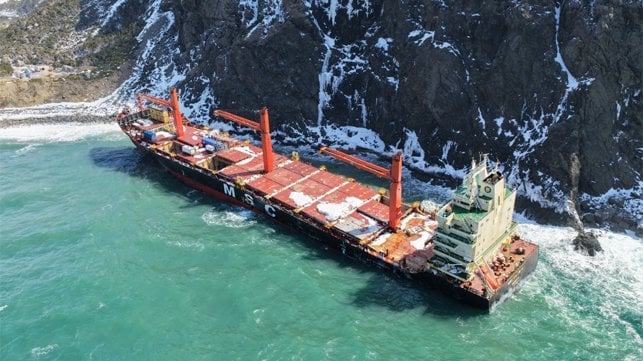
Removal contract has been awarded for the wreck of the MSC Baltic III (Canadian Coast Guard - April 2026)

Published Apr 30, 2026 5:13 PM by The Maritime Executive


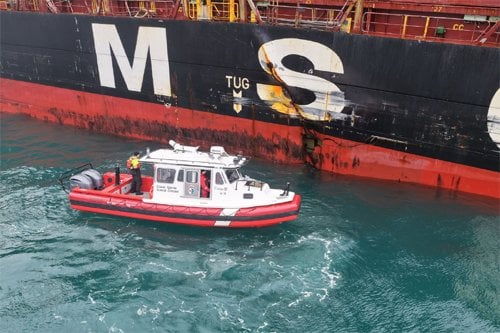
Fourteen months after the containership MSC Baltic III blacked out and washed ashore in a remote part of Newfoundland, Canada, MSC Mediterranean Shipping Company has awarded a contract for the removal of the wreck. It will be the second phase of the effort after a program in 2025 that focused on the potential pollutants aboard the containership.

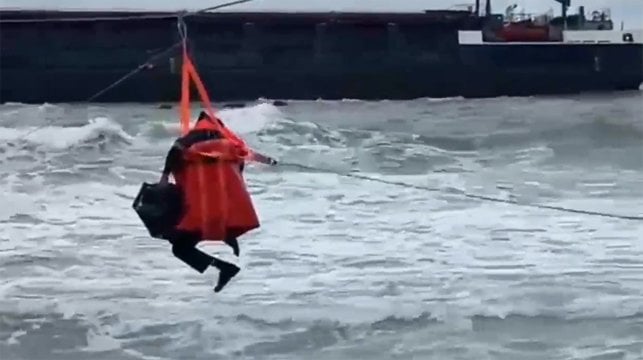
The MSC Baltic III (33,767 dwt) was lost on February 15, 2025, while outbound from Canada. The ship was caught in a fierce winter storm that was driving it toward shore, and the Canadians organized a dramatic helicopter rescue of the 20 crewmembers. The ship grounded in Cedar Cove, near Lark Harbour, Newfoundland. It is approximately 50 miles from Corner Brook and was initially only accessible by boat.

MSC has awarded the removal contract to Resolve Marine Group, based in Florida. The company is highly experienced in major salvage efforts.

No details have yet been released on the plan for the operation or its timetable. The Canadian Coast Guard, which has been overseeing the operations, has scheduled a technical briefing for next week with Resolve Marine to review the plans.

In the past, the Coast Guard supervisor, Bruce English, said the ship was significantly damaged, making it difficult to attempt to remove it in one piece from the shoreline. Winter storms in 2025 and again in 2026 have battered the ship. English recently told CBC that the waves have caused the stern quarter to lift up and drop, causing buckling in the center of the vessel. The stern is now sitting on the ocean floor, and there are visible holes in the hull and cracks in the deck plating.


Photo from January 2026 showed the emerging damage, which has expanded over the course of the winter (Canadian Coast Guard)


Reports are that two massive boulders penetrated the hull. Both the engine room and at least one of the cargo holds were penetrated and have flooded. The ship is 208 meters (680 feet) in length.

In 2025, T&T Salvage was retained by MSC to remove oil from the ship’s tanks and to salvage the containers. Approximately 1,700 metric tons of fuel were removed before operations stopped for the winter, although some residual amounts are still aboard in the tanks and engine room. The ship had 472 containers aboard, many of which were empties. The Coast Guard reports 407 were removed, but the remaining 63 in the cargo holds are badly damaged and waterlogged. Some contained rotting foodstuffs or other material.

Last year’s effort also created an access road to get teams to the area where the ship is grounded. A cableway was also strung from the shore, providing an access route. To prepare the wreck for the winter, they had also added ballast in hopes of securing the ship from some of the harsh weather.

The vessel is close to a First Peoples’ area, and concerns remain about potential pollution and damage to the fishing areas. Canadian officials report they continue to liaise with all the parties, and more details regarding the removal plans are expected from next week’s briefing.

Turks Use Breeches Buoy to Rescue Crew from Grounded Cargo Ship

crew rescue
Turkish rescue teams pulled eight crewmembers to safety using a breeches buoy system (KEGM)

Published May 1, 2026 12:21 PM by The Maritime Executive


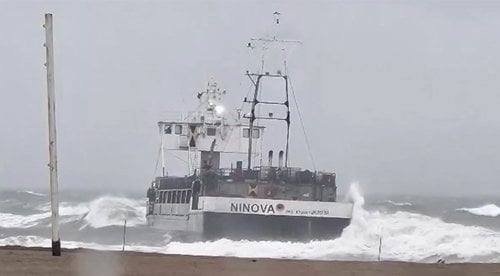
Turkish authorities staged a dramatic rescue, winching eight crewmembers from a decrepit cargo ship that washed ashore in the Black Sea during a strong storm. The crew was brought to shore without incident and was receiving medical checks after the rescue.

The incident began early on the morning of May 1 after the cargo ship Ninova (2,500 dwt) began dragging anchor and then ran aground on the northern coast of Turkey near Sakarya. The Directorate General of Coastal Safety (KEGM), the Coast Guard, local police, and fire departments all responded to the reports of the shipping being driven ashore at 0900 on May 1.

KEGM reports that the heavy surf, winds, and intermittent heavy rains made it impossible to approach the grounded ship from the water. Strong winds also made it impossible for a helicopter to hoist the crew from the deck.


Cargo ship was driven ashore in a heavy storm in the Black Sea (KEGM)


The decision was made to bring out the beeches buoy and run a line from shore. The teams fired the guideline onto the ship, and its crew pulled the heavy line and secured it. One by one, the eight crewmembers were pulled from the ship to shore using the rope system.

The cargo ship has a long history of problems, and its ownership and operation are unclear. Built in 1989, it has been sailing as the Ninova since 2021, but databases report it was sold in 2023, with its current ownership and managers listed as unknown. The ship is 83 meters (272 feet) in length and currently registered in Cameroon. 


Under the authority of the Paris MOU, Italy imposed a ban on the ship in 2024, citing repeated safety issues and detentions. It was also cited by the Russian authorities for 18 deficiencies in June 2025, for 30 deficiencies by Turkish inspectors in August 2025, and for 17 deficiencies by Russian inspectors in October 2025.

The ship had left Novorossiysk, Russia, several weeks ago and was anchored north of Turkey. According to the reports, it lost control as the storm grew and was drifting before it was driven ashore. It is now sitting with a list on the shoreline, with some reports saying it has taken on water.


What Happens if Beijing Expands its Indo-Pacific Push?

PLA Navy
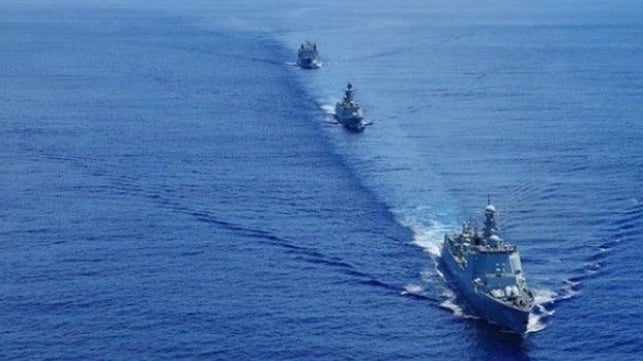
PLA Navy file image

Published May 3, 2026 6:14 PM by The Strategist


[By Joe Keary, Raji Rajagopalan and Linus Cohen]

Rather than gradually expanding its defense and security engagement across the Indo-Pacific, Beijing may choose to accelerate its trajectory, pushing boundaries to advance its interests and take advantage of a distracted United States. The result would be a rapid buildup of Chinese presence and a sharper, faster-moving cycle of pressure that tests regional cohesion and alliance resolve.

Earlier articles this week explored the likely effect of China’s defense and security engagement beyond the first island chain until 2031 and 2036. We’ve also looked at where friction and miscalculation could emerge. This final article examines a different future, one in which China picks up the pace in securing physical access and increasing its presence while actively testing the thresholds of regional states and alliances.

In the Southwest Pacific, a more assertive Beijing would pursue port access and logistics agreements more aggressively, including dual-use arrangements and hubs capable of sustaining persistent operations. A buildup of China Coast Guard and maritime militia activity would intensify pressure in fisheries and maritime zones, expanding Beijing’s access while testing sovereignty boundaries.

This would place Pacific island countries under significant strain. Their ability to balance economic engagement with sovereignty would be tested, and diverging responses would be likely. Some states, such as Solomon Islands, might deepen partnerships with Beijing, while others might seek to leverage heightened competition to extract greater benefits from external partners, risking regional fragmentation.

At the same time, many island countries would work to avoid such fractures. This might involve tighter management of external partners by the islands or a turn inward to preserve cohesion. Consolidating security cooperation through the Pacific Islands Forum, and consolidating engagement with traditional partners Australia and New Zealand, would help to reinforce regional norms and resist coercion. However, this could also constrain engagement with partners such as the US and Japan, reflecting difficult trade-offs to maintain unity.

In Australia’s maritime approaches, higher-tempo Chinese operations would bring capable naval flotillas, survey vessels and intelligence ships closer to critical infrastructure and shipping routes. These activities would probe Australian and allied response times while signalling China’s capacity to operate persistently in areas of strategic importance to Canberra.

Intensified live-fire exercises, seabed survey activity and grey-zone operations would place additional strain on Australian Defence Force readiness. To maintain credible deterrence, Australia would need to respond by strengthening its surveillance of the sea, its broader intelligence and surveillance capabilities and its northward deployment of forces. Greater emphasis on partnerships with middle powers and regional states would also be critical, particularly if US regional engagement fluctuated.

As activity increased on both sides, so would friction. China’s more assertive posture would test Australia’s domestic resilience, political resolve and alliance settings, while Canberra’s response, through expanded presence and exercises, would contribute to a more complex and crowded operating environment. Strategic messaging and domestic cohesion would be essential to managing escalation risks.

In the Indian Ocean, accelerated Chinese naval activity would focus on key sea lanes and chokepoints. Expansion of China’s base in Djibouti, alongside greater access to ports in Sri Lanka and Pakistan, would support a more persistent presence. This would increase operational proximity with India, Australia and other regional actors, likely driving deeper cooperation through intelligence sharing, joint exercises and undersea surveillance.

Encounters between submarines, surface vessels and surveillance aircraft in this environment carry inherent risks. Misinterpretation, close manoeuvring or signalling of resolve could escalate quickly, particularly around busy chokepoints. Efforts to maintain freedom of movement might generate a reinforcing cycle of action and response across vital maritime corridors.

Beyond expanding its presence, China would also seek to test allied responses. By varying the tempo and intensity of its activity, Beijing could assess thresholds, probe alliance cohesion and identify gaps in regional resilience. These actions might fall short of provoking conflict but would increase operational risk and the likelihood of miscalculation.

China’s most recent five-year plan reinforces this trajectory. Despite fiscal pressures, defense and security objectives remain a priority, suggesting that a larger and more persistent Chinese presence is likely.

For Australia and its partners, the security environment will continue to grow in complexity. If China continues to accelerate investment in its defense forces, deterrence will remain necessary but insufficient on its own. Partnership building, domestic resilience and sustained regional engagement will be critical to shaping outcomes. Persistent presence, intelligence sharing, joint exercises and operational interoperability will need to grow to manage risk and maintain influence in an increasingly contested environment.

If China continues to accelerate, regional states are more likely to hedge rather than fully align with either side, balancing economic opportunity against sovereignty and security concerns. This will complicate collective responses and reinforce the importance of flexible, inclusive regional approaches.

The challenge for Australia and its partners is not to prevent Chinese presence, but to shape the strategic environment in which that presence operates, managing risk, reinforcing partnerships and reducing the likelihood that intensifying competition tips into crisis

Joe Keary is a senior analyst, Raji Rajagopalan is a resident senior fellow and Linus Cohen is a researcher at ASPI.

This article appears courtesy of The Strategist and may be found in its original form here

The opinions expressed herein are the author's and not necessarily those of The Maritime Executive.

ASEAN, China Unlikely To Finalize South China Sea Code Of Conduct At Upcoming Summit – Analysis

May 4, 2026 
 RFA
By Taejun Kang


Southeast Asian leaders are unlikely to resolve long-standing disputes in the South China Sea at next month’s ASEAN Summit, but they could make “incremental progress” towards a Code of Conduct, or COC, aimed at managing tensions there, analysts told Radio Free Asia.

The annual summit brings together leaders of the Association of Southeast Asian Nations, or ASEAN, to discuss regional security and economic issues. China is participating as a dialogue partner this year, and the forum presents an opportunity to address the South China Sea, a persistent flashpoint where China’s sweeping claims overlap with the exclusive economic zones of several Southeast Asian states.

Regional officials have said they are aiming to complete negotiations on the COC by 2026, but key issues, including its geographic scope, legal status and enforcement mechanisms, remain unresolved after more than two decades of talks.
Resolution unlikely

It is improbable that a code resolving all disputes in the South China Sea could be hammered out at the ASEAN leaders’ summit this year, Joseph Kristanto, a research analyst at Singapore’s S. Rajaratnam School of International Studies, told RFA. The key issue at the summit will be if meaningful progress on mitigating tensions can be achieved.


“While the COC may help prevent misunderstandings in daily interactions, I’d say it’s unlikely to stop grey-zone activities or coercive behavior by claimant states, most notably China, altogether,” he said. “Therefore, the COC is best seen as a mechanism for managing friction, rather than transforming the underlying dynamics of the dispute.”

Agreements to reduce friction have been tried before. ASEAN and China signed a non-binding Declaration on the Conduct of Parties in 2002 and began formal negotiations on a binding code in 2013. Progress since then has been described by some officials as slow.

COC negotiators face a fundamental trade-off between a politically feasible but limited “thin” code based on general principles, and a more robust framework with clearer rules and enforcement mechanisms that would be harder to achieve, Kristanto said.

“The slow pace of the COC process demonstrates the complexity of these issues and exposes the limits of ASEAN’s consensus approach,” he said.

Other analysts say that China’s track record of frequent provocations in the region makes them skeptical that any agreement would make a meaningful difference in practice.

“My pessimism on the COC really comes down to two things: China’s track record of undermining or ignoring its existing agreements, and the question of who would actually do the binding in a ‘legally binding’ COC,” Ray Powell, executive director of Stanford University’s SeaLight maritime transparency project, told RFA.

Powell noted that the 2002 declaration already committed parties to self-restraint and peaceful dispute resolution, yet tensions have persisted.

“That experience shows the problem is not the absence of written rules but a lack of any authority China is willing to accept above its own political will,” he said, adding that a meaningful code would require an enforcement or arbitration mechanism that Beijing has historically rejected.

A weaker version, he warned, could risk undermining existing legal protections for Southeast Asian states under international law.
Legal questions

Others argue that even a limited agreement could still play a role in stabilizing day-to-day interactions, provided it is grounded in established international legal frameworks.

“A substantive and comprehensive COC on the South China Sea would not just be about something that could ease the tensions between the Philippines and China,” Josue Raphael J. Cortez of the De La Salle-College of Saint Benilde in the Philippines, told RFA.

“Instead, it would be an inclusive document, grounded in UNCLOS and public international law that should pave the way for all state claimants to coexist responsibly and peacefully,” he said, referring to the United Nations Convention on the Law of the Sea.


Cortez said a meaningful code should go beyond traditional issues such as fisheries and navigation to include broader resource-sharing arrangements, including oil, gas and critical minerals, reflecting the region’s evolving economic stakes.

Though a legally binding framework could help reduce tensions, he cautioned that it would need to be backed by continued dialogue and mechanisms to ensure compliance.

“Forging such an agreement can never be enough,” he said. “Instead, continuous dialogue … must still be continued so as to ascertain compliance and whether future revisions can be undertaken for the framework’s viability.”

The 48th ASEAN Summit is slated to start May 5-9 in Cebu, Philippines


Exercise Balikatan Concludes Amidst South China Sea Tensions

JMSDF
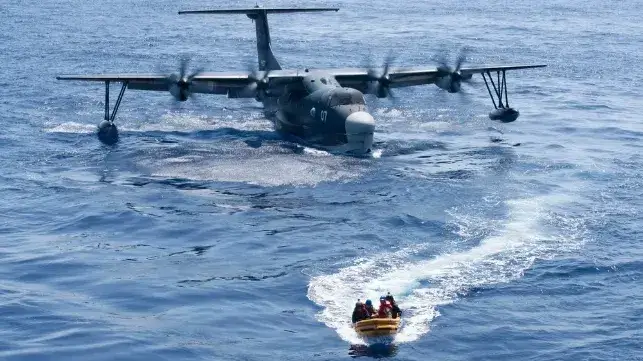
Crewmembers from a Japanese long-range seaplane launch and operate their aircraft's rescue boat (USMC)

Published May 3, 2026 1:56 PM by The Maritime Executiv


This year’s Exercise Balikatan, which concluded last week, was the biggest ever such annual exercise mounted jointly by the Philippines and the United States. 17,000 troops took part, along with naval vessels and participation from Australia, Canada, France, New Zealand and the United Kingdom.

Save for individual hold-outs hiding out in the jungle who missed the surrender in 1945, this was the first time that Japan had deployed troops to the Philippines since the Second World War, and follows a defense reciprocal access agreement signed by the two countries last year. Japan deployed the Hyuga Class helicopter destroyer JS Ise (DDH-182), the Osumi Class Amphibious Landing Ship JS Shimokita (LST-4002), and the Murasame Class destroyer JS Ikazuchi (DD-107). More than 1,000 troops from the Japan Ground Self-Defense Force’s Amphibious Rapid Deployment Brigade conducted a beach landing alongside Filipino marines on the north coast of Luzon, opposite Taiwan across from the Balintang Channel.

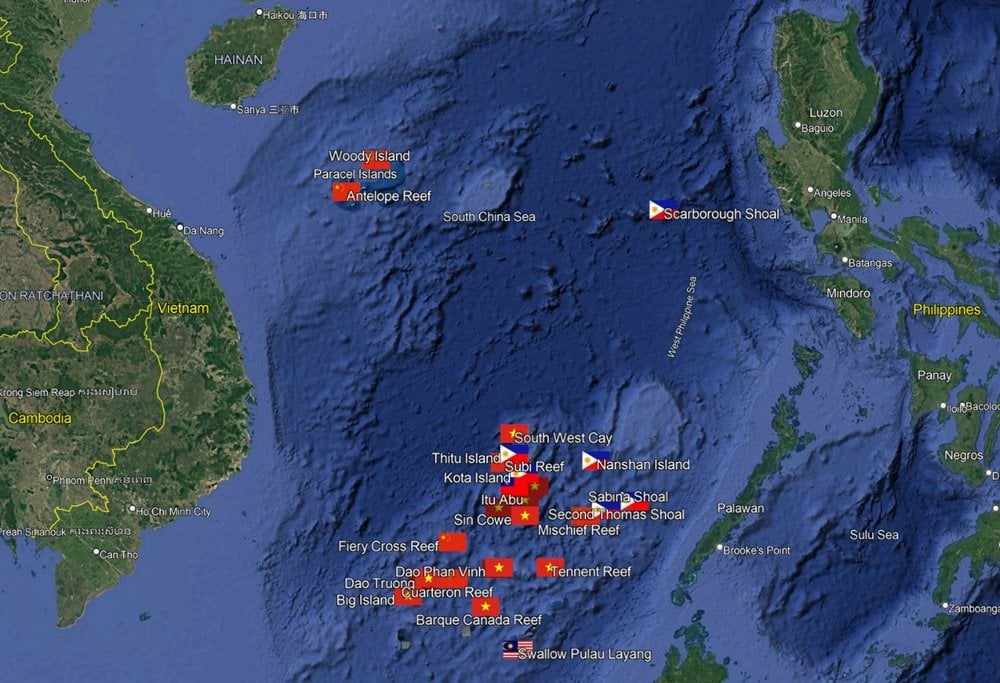
Occupied islands and competing claims in the South China Sea (Google Earth/Copernicus/CJRC)

Much of the exercise activity took place on or off the coast of Palawan, which is the nearest Filipino mainland to the concentrated cluster of islands in the South China Sea, where China disputes possession of islands with the Philippines, Vietnam, Taiwan and Malaysia. After claiming construction work on small islands and low-lying rocks was for civilian purposes, China in effect took possession of a number of disputed islands, consolidating its position by building airfields and defensive fortifications. After something of a lull in this activity in recent years, tension flared last year between China and the Philippines over fishing rights in the Scarborough Shoal, which the Philippines defended vigorously and successfully.

The tension has continued with an upsurge of Chinese island-building activities in the South China Sea, with an estimated 15km2 of land reclaimed recently on the atolls of Antelope Reef, which is contested by the Philippines but in particular by Vietnam. This upsurge has been interpreted as a move to take advantage of the US Navy’s switch of assets recently to the Middle East. Two weeks ago, Taiwanese minister Kuan Bi-ling made a rare and hence politically-significant trip to the Taiwanese garrison on Itu Abu, to witness a military exercise to recapture a ship seized at sea.

Aside from the first time Japanese troops had been deployed and worked alongside allies, Japanese and Filipino air defense units worked closely with US Army and Marine air defense units, practicing techniques to counter drones and to provide littoral air defense support to ships at sea.

The exercise also saw the deployment of a Japanese ShinMaywa US-2 amphibious aircraft (top), which rehearsed air-sea rescue medical procedures alongside the Whidbey Island Class dock landing ship USS Ashland (LSD-48). American forces have no comparable counterpart to the US-2, and it has been proposed as a potential off-the-shelf asset for long range ocean rescues and medevacs - missions which are currently fulfilled by U.S. Air Force parachutists


U.S. Navy Destroyer Suffers Serious Fire in the Indo-Pacific
USS HigginsUSS Higgins (U.S. Navy file image)
Published Apr 30, 2026 5:38 PM by The Maritime Executive


U.S. officials have confirmed that a fire seriously damaged a guided missile destroyer operating in the Indo-Pacific Command area of operations.

Multiple officials told CBS that a significant fire had occurred aboard the Arleigh Burke-class destroyer USS Higgins. One official confirmed that the blaze took out propulsion and electrical power - a significant development if accurate, as the Burke-class has two fully redundant, compartmentalized engine rooms.

The USS Higgins' exact location and the circumstances of the fire have not been disclosed. No injuries have been reported. The ship is based in Yokosuka, attached to 7th Fleet, and has sailed several sensitive missions in the Indo-Pacific, including two transits of the Taiwan Strait in the last two years. Higgins' last AIS signal transmission was detected in Singapore in February. 

It is the third fire event affecting U.S. Navy warships this year, following the major laundry room fire aboard USS Gerald R. Ford (two injured) and the small fire aboard USS Dwight D. Eisenhower last month (eight injured). 

USS Higgins is a Flight II Arleigh Burke-class commissioned in 1999. She is named for a Marine Corps officer who was killed by terrorists in Lebanon during the peacekeeping deployment there in 1988. Higgins was on hand for the Hainan Island emergency landing in 2001 - a famous diplomatic incident in which a U.S. Navy surveillance aircraft was hit by a Chinese fighter and forced to land in China - and helped bombard Syria in 2018 in retaliation for the al-Assad regime's use of chemical weapons. She has been forward-deployed in Yokosuka since 2021.