Saturday, March 21, 2026


Filing Confirms MSC is Buying into Sinokor and Behind Tanker Buying Spree
VLCC tanker
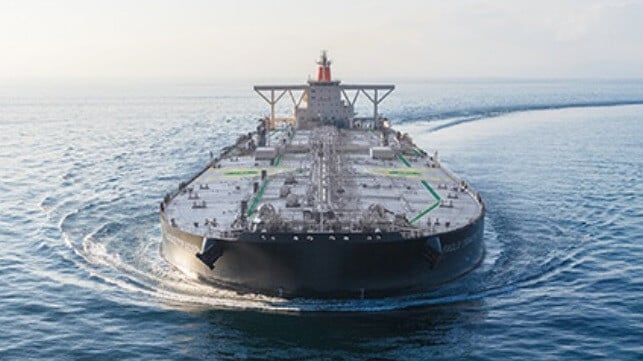
MSC is buying into Sinokor which has been buying up VLCCs (file photo)

Published Mar 19, 2026 5:23 PM by The Maritime Executive


Public filings in Cyprus and Greece are ending months of speculation, providing the first confirmation that the Aponte family and MSC Mediterranean Shipping are in fact linked to a sudden and dramatic wave of tanker acquisitions that began in late 2025. South Korea’s Sinokor Maritime was the name associated with the buying spree of very large crude carriers, while speculation linked the money and the ultimate buyer as MSC.

It has now been revealed that MSC, through its SAS Shipping Agencies Services division, has acquired a 50 percent ownership stake in Sinokor Maritime. It will share ownership of the company with Ga-Hyun Chung, the founder of Sinokor and previously the company’s sole owner.  The company, on its website, says it launched the first Korea-China container liner service in 1989 as Sinokor Merchant Marine Co., and over the years, it has expanded mostly in containerships and dry bulk.

The companies, according to an in-depth article in Forbes, started a relationship when MSC was moving aggressively to buy secondhand tonnage in the container segment. They believe Sinokor sold MSC at least 11 vessels as part of a buying spree in which $40 billion was spent between January 2022 and March 2025 on containerships, according to Forbes. Today, MSC is reported to own or have on charter a total of nearly 1,000 containerships with a total capacity of over 7.2 million TEU.

Sinokor, which is equally as private as MSC, was linked to a rapid series of VLCC tanker acquisitions, with Forbes writing that market sources told it that it appeared it was buying as many large oil tankers as “it could get its hands on.” There were deals with Dynacom Tankers and Frontline, as well as smaller companies. Forbes cites data from Veson Nautical, which says by March, $3.3 billion had changed hands for at least 60 tankers.

In its exposé, Forbes dug into the corporate records in Panama and Equasis. It identified 31 tankers linked to Sinoor but not owned by the company. It found 11 of them registered to a company headed by Mario Aponte and with the address of MSC Shipmangement in Cyprus. There was a total of 18 similar companies, but it was unclear if the other seven had or were buying tankers as well. It notes that another 20 tankers are registered in Liberia, where the records are not public.

Forbes’ sources put the total number of tankers acquired at 76, while other analyses believe it is higher, reaching possibly 100 or more VLCCs. Bloomberg estimates the partnership will eventually control about 150 supertankers, giving it a 40 percent market share. Others put it closer to 25 percent.

It appears to be a well-timed play into the tanker sector as valuations soared in 2026. The war with Iran, however, raises uncertainties for the longer-term outlook for the market.

It is not the first time MSC has used SAS to make its move into other segments. In 2024, SAS purchased Gram Car Carriers to get the group into that market segment. MSC has also expanded its investment into ferries and cruise ships, as well as launching airfreight and buying into railroads and onshore logistics. It took a half interest in the operator of the Port of Hamburg and is said to still be pursuing the acquisition of CK Hutchison’s international port terminal portfolio.

In typical Aponte, MSC fashion, there has been no acknowledgement of the investment in Sinokor or the tankers. The company does not comment on its strategic intent or the opportunities for integration in its operations.


Op-Ed: Ships Should Meet the Polar Code Before Entering Canadian Arctic

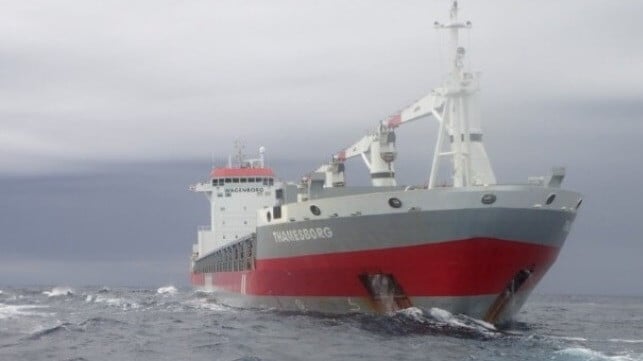
Thamesborg
Even experienced and well-equipped operators can encounter challenges in the Canadian Arctic, as seen in the Thamesborg grounding last year, above (CCG press handout)

Published Mar 18, 2026 9:08 PM by Pierre LeBlanc


The United Nations International Maritime Organization (IMO) adopted the Polar Code in November 2014 to reduce loss of life at sea caused by inadequate preparedness for operations in polar regions, which are more isolated and challenging than lower-latitude waters. The Code entered into force on January 1, 2017 and initially applied to seagoing vessels of 500 gross tonnage (GT) and above, as well as certain vessel classes such as cruise ships. On January 1, 2026, the IMO expanded the categories of ships that must comply with the Code to include fishing vessels of 24 meters and above, pleasure yachts of 300 GT and above, and cargo vessels between 300 and 500 GT operating in polar waters.

The Polar Code sets standards for ship design and construction, crew qualifications, onboard safety equipment, operations, training, and environmental protection in polar waters. Although the initial version did not resolve all challenges of polar navigation, it represented a major step forward. It specifically calls for a high standard of design and performance for survival equipment, recognizing the unpredictable weather, isolation, and lack of infrastructure in both the Canadian Arctic and Antarctic, where search and rescue (SAR) assets may be several hours, if not days, away.

In 2023, the International Organization for Standardization (ISO) published ISO 24452:2023, “Ships and marine technology — Personal and group survival kit for use in polar water,” which specifies minimum design and performance requirements for personal and group survival kits used under SOLAS and the Polar Code. The Code defines “maximum expected time of rescue” as the time used for designing equipment and systems that provide survival support, and states that this period shall never be less than five days. In 2025, the United States Coast Guard confirmed the requirement that survival equipment for polar operations must support at least five days of survival.

Maritime traffic is increasing in the Canadian Arctic. Shrinking polar ice, attributed to global warming, is a major driver of rising marine activity, but other factors are also making the Northwest Passage more attractive: water restrictions affecting the Panama Canal, ongoing security issues in the Red Sea, tensions with Russia and its Northern Sea Route, and persistent ocean piracy in other key choke points. Combined with growing mining activity, these trends are leading to more traffic in Canada’s Arctic waters, thereby increasing the risk to a fragile environment with a short vertical food chain on which many Inuit rely for subsistence, as well as elevating the potential for loss of life in a region with extreme weather and minimal infrastructure.

The greatest concern is not the traditional annual community resupply shipping companies, which are experienced operators that typically meet Polar Code requirements, but rather those with limited arctic experience, including adventurers and superyachts. Too many of these vessels arrive poorly prepared for a hostile operating environment. Increasing numbers of cruise ships are entering the waters of the Arctic Archipelago to experience the fabled Northwest Passage, and cruise ships running aground in Canada is not longer a theoretical scenario, as several groundings have already occurred in Nunavut.

The cruise ship Hanseatic ran aground in 1996 because the bridge team deviated from the prepared navigation plan and relied on a navigation buoy left from the previous season that had shifted. The MV Clipper Adventurer grounded near Kugluktuk in 2010 with its forward-looking sonar inoperable. The Akademik Ioffe, a retrofitted icebreaker operated as a cruise vessel, ran aground in 2018 about 78 nautical miles north-northwest of Kugaaruk, after the officer of the watch was multitasking, the helmsman was fully occupied steering, and no other crew were assigned to monitor the echo sounders and maintain lookout, with the echo sounder alarms turned off. Even among seasoned arctic operators, several fuel tankers have grounded in the Canadian Arctic, including the Mokami in August 2010, the MV Nanny in February 2012 and again in 2014, and the Kivalliq W in October 2022.

These events illustrate failures in navigation practice, equipment readiness, and bridge resource management that the Polar Code is intended to address; had those ships fully met the standards and practices now required by the Code, these accidents might have been avoided.

?Serious maritime incidents—loss of propulsion, allisions, steering failures, groundings, and fires—occur worldwide on a daily basis, and a loss of steering or power in confined or coastal waters can rapidly lead to disaster. The destruction of the Francis Scott Key Bridge in Baltimore by the container ship MV Dali demonstrated how quickly events can escalate when a large ship loses controllability near critical infrastructure.

Another instructive example occurred off the coast of Norway when the cruise ship Viking Sky lost power in a storm. On March 18, 2019, Viking Sky issued a mayday call after experiencing engine problems in heavy seas off Norway’s western coast, with 1,370 passengers and crew onboard. In very rough conditions, the vessel began drifting toward the coast, and the sea state was too severe to safely launch lifeboats. A large-scale helicopter evacuation was initiated, and in very challenging conditions, about 400 passengers were airlifted to safety before the crew managed to restart one engine and steer the ship away from danger. Dozens of people were injured, and several required hospitalization. Had the vessel grounded, waves could have repeatedly smashed the hull against the shore, potentially forcing passengers and crew to abandon ship into frigid waters without adequate protection. The Norwegian Safety Investigation Authority later criticized Viking Sky, noting that the vessel came within roughly one ship’s length of grounding.

In the Canadian Arctic, SAR resources are often many hours or even days away. When the Clipper Adventurer grounded near Kugluktuk, it took 42 hours for a Canadian Coast Guard vessel to arrive on scene. Vessels responding to distress in the Arctic must typically proceed slowly because of ice-infested waters, harsh weather, and the fact that much of the Arctic Archipelago is only partially charted to modern standards.

Canadian Forces SAR aircraft are based in southern Canada, including Canadian Forces Bases Winnipeg, Trenton, and Halifax. Aircraft on SAR standby can usually take off within two hours, and flight times to the Northwest Passage range up to 8-10 hours (for the FLIR-equipped CC-295 Kingfisher). Survivors may still be in frigid water or on exposed ice for 10 hours or more before they are located. Without an appropriate level of thermal protection and survival equipment designed for at least five days, an operation that begins as search and rescue is likely to become search and recovery.

The Polar Code requires vessels operating in polar waters to obtain a Polar Ship Certificate confirming that the ship, its crew and their qualifications, and its life-saving appliances meet the Code’s requirements. Polar certificates are issued by recognized organizations—classification societies such as the American Bureau of Shipping, Bureau Veritas, and Lloyd’s Register—acting on behalf of flag administrations. These societies have a duty to exercise due diligence before issuing certificates. For vessels intending to enter the Northern Canada Vessel Traffic Services Zone (NORDREG), these certificates must be submitted to Canadian authorities months in advance.

Transport Canada has indicated that it will increase inspections of vessels operating in the Canadian Arctic, consistent with recommendations from the Transportation Safety Board of Canada that call for more detailed inspections of passenger vessels entering Arctic waters. This enhanced oversight will encourage shipowners to ensure proper vessel design, that critical safety equipment such as forward-looking sonar is installed and operational, that crews are appropriately trained and certified, and that survival equipment can keep people alive for at least the minimum five-day rescue window.

Improved compliance with the Polar Code will reduce the likelihood of serious accidents and major environmental spills in a fragile arctic ecosystem with a short vertical food chain. The Code has now been in force for more than eight years. With its scope expanded to new categories of vessels that may be less familiar with polar hazards, it is time to strengthen awareness and increased enforcement in the Canadian Arctic.

Colonel (Retired) Pierre Leblanc is an experienced Arctic practitioner.

The opinions expressed herein are the author's and not necessarily those of The Maritime Executive.


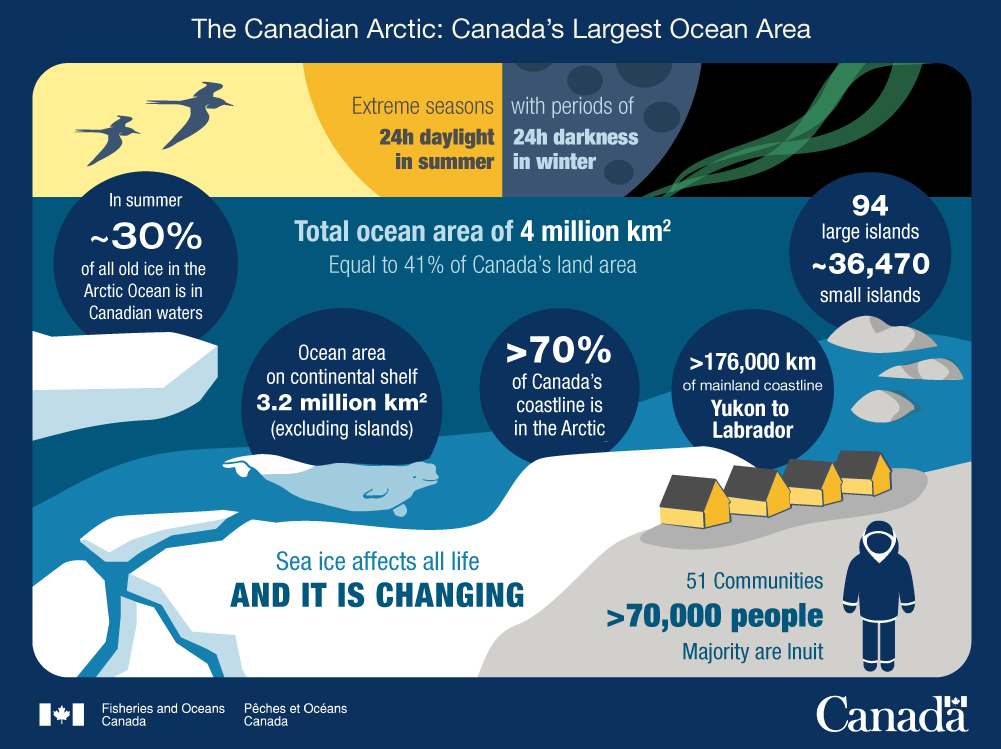
Infographic 1 — The Canadian Arctic: Canada's largest ocean area

1. The Canadian Arctic: Canada's Largest Ocean Area
Long description

An infographic shows a simplified Canadian Arctic coastal scene with various facts written in blue bubbles and throughout. A human figure stands by a small community on the shoreline where a beluga swims by the coastal ice. Several islands are depicted in the water along with pieces of ice. The sky at top is split between day and night. The left sky has a sun and is yellow with birds flying, the right sky is black with northern lights and a moon.

  • extreme seasons with periods of 24h daylight in summer 24h darkness in winter
  • total ocean area of 4 million km2
  • equal to 41% of Canada's land area
  • in summer ~30% of all old ice in the Arctic Ocean is in Canadian waters
  • ocean area on continental shelf 3.2million km2 (excluding islands)
  • >70% of Canada's coastline is in the Arctic
  • >176,000 km of mainland coastline Yukon to Labrador
  • 94 large islands ~36,470 small islands
  • 51 communities >70,000 people
  • majority are Inuit
  • sea ice affects all life and it is changing

Related links

Date modified: 


Hormuz Stop Could Have Knock-on Effect on South Korean Shipbuilding

South Korean shipbuilder
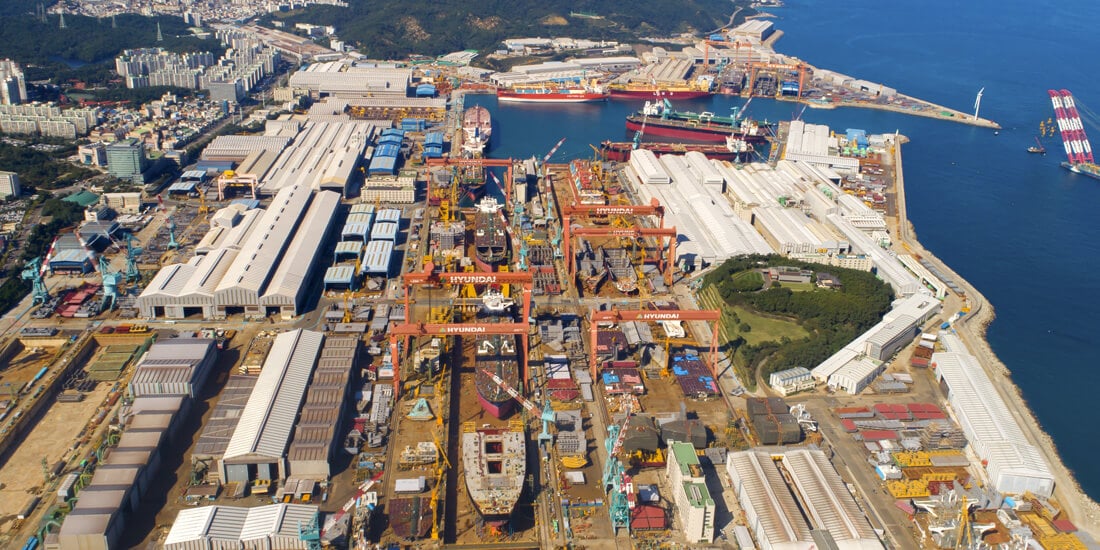
South Korean shipbuilders need ethylene, which is produced from imported naphtha, for steel cutting

Published Mar 18, 2026 5:22 PM by The Maritime Executive


South Korea is reporting that one of the knock-on effects of the stoppage of energy exports from the Middle East is threatening parts of its shipbuilding industry. The government has been working to clarify the extent of the problem while also supporting efforts to find alternative sources of naphtha, a refined crude oil product.

The imported naphtha is cracked at South Korea’s petrochemical plants to produce ethylene. While only accounting for a small portion of the market, Business Korea reports ethylene is critical to the shipbuilders, which use it to cut steel plates. Industry sources told the news outlet that without the chemical, it will be impossible for the shipbuilders to continue cutting steel.

The concerns began to intensify when South Korea’s largest petrochemical company, Yeochun NCC, declared “Force Majeure.” It said the problem was the supply of raw materials, and since then, at least three other leading producers, Lotte Chemical, LG Chem, and Hanwha Solutions, have also warned of potential supply problems.

South Korea’s Ministry of Trade, Industry and Energy held an emergency meeting on March 13 and launched an investigation to assess the short-term ethylene requirements and the amounts still on hand. The Ministry also organized a meeting between the shipbuilders and the chemical companies to plan shorter-term supply volumes.

The Ministry reported today, March 18, that its concerns have weakened but that it was continuing to work to ensure there would not be disruptions in the supply of the critical chemicals. A refined product, naphtha is also used in the production of propylene and high-grade gasoline, as well as an industrial solvent, dry cleaning agent, and cleaning solvent.

South Korea reports it is supporting the chemical companies’ efforts to secure alternative sources. It is contacting its overseas diplomatic missions and trade centers to secure alternate import supplies of naphtha.

The Deputy Prime Minister and Minister of Economy and Finance, Koo Yoon-chul, released a statement saying the government was also temporarily designating naphtha an “economic security item.” He also said they would be proactive in securing alternative import sources. Further, the government is placing export restrictions.

The potential disruption would come at a time when the shipbuilding industry is operating at a high capacity and working to stay ahead of competition from China. The yards have fully booked their building slots for years to come, and any delay in steel supplies could have a cascading effect on deliveries.

WAIT, WHAT?!!

Scotland’s CMAL Selects Chinese Yard to Build Freight Flex Ferries

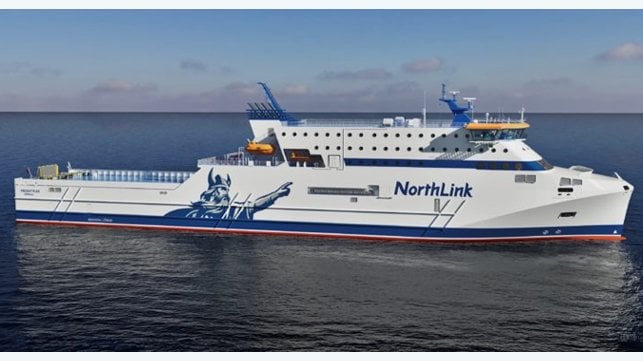
Scottish ferry design
CMAL has named a lead bidder to build its next generation freight flex vessels (CMAL)

Published Mar 18, 2026 8:42 PM by The Maritime Executive


The Scottish government-owned ferry company Caledonian Maritime Assets Limited (CMAL) reported it has concluded a project that began in September 2024 by selecting China’s Guangzhou Shipyard International as the lead bidder for two new ferries. The project is seen as a key part of the efforts to modernize and expand ferry operations in the northern part of Scotland, with the new vessels scheduled to run between Orkney and Shetland.

“GSI’s bid demonstrated a commitment to innovation and efficiency, and we are confident they will deliver a reliable, robust pair of vessels to support the Northern Isles Ferry Service for years to come,” said Kevin Hobbs, Chief Executive of CMA.

CMAL went public with the project in September 2024, reporting that the Scottish Government was supportive of the Northern Isles Freight Vessel Replacement Project. It said the goal was to increase capacity and improve reliability on the route served by vessels built in 1997 and 1999. CMAL said it had been actively looking to purchase second-hand tonnage for the Aberdeen to Kirkwall/Lerwick route, with three vessels taken forward to the purchase stage, but it had been unable to conclude purchases. While it was still exploring second-hand tonnage, it launched the newbuild project.

The tender was launched in September 2025, calling for two 140-meter (459-foot) long freight flex ferries. The company highlighted that it was an innovative design that would provide extra freight capacity and quicker crossing, while also being flexible to allow space for up to 200 passengers during peak travel periods.

Two yards in Turkey were among those invited to submit proposals, along with a partnership between Stena UK and a Chinese yard, and Guangzhou Shipyard. There was some concern that a UK yard had not even been invited to tender, but CMAL said that none of the UK yards had expressed interest or had the capabilities to build the ships.

Bids were assessed by an independent panel using a scale of 70 percent for technical capabilities and 30 percent for financial criteria. CMAL experts also participated in the process, and they said in the end, Guangzhou emerged as the clear winner.

The contract is valued at approximately £200 million ($265 million). No timeline was announced for the project, but previously CMAL had said it did not anticipate the ships would enter service before 2028 at the earliest.

“These replacement freight vessels will bring additional freight capacity, higher operating speeds, and the ability to carry up to 200 passengers on each vessel during peak times – helping address demand for car deck and cabin capacity on these routes,” said Scottish Cabinet Secretary for Transport, Fiona Hyslop. “This will enhance the efficiency and reliability of ferry services to better support the priorities of Northern Isles communities and businesses for years to come.”

CMAL is in a required 10-day standstill period after announcing the selection of the lead bidder. It then plans to complete the contract. The vessels, when they enter service, will be owned by CMAL and operated under contract by NorthLink Serco Ferries. CMAL currently has a fleet of 37 ferries, five of which are leased to Serco NorthLink Ferries for the Orkney and Shetland routes.


Fincantieri Floats for Viking "First Hydrogen-Powered Cruise Ship"

cruise ship launch
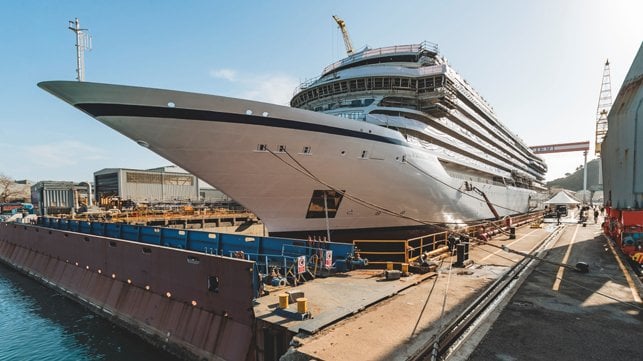
Viking Libra continues the cruise ship design but adds the first large liquefied hydrogen and fuel cell propulsion

Published Mar 19, 2026 7:52 PM by The Maritime Executive


Fincantieri marked another milestone in cruise ship development as it floated out the Viking Libra (54,300 gross tons), which is being billed as the “world’s first hydrogen-powered cruise ship.” It advanced the ambitions for zero-emission shipping and the long-held vision of Viking CEO Torstein Hagen to produce a hydrogen-powered ship.

According to the companies, the project has been developed with strong attention to environmental aspects to ensure the ship will be capable of navigating and operating with zero emissions, allowing it to access even the most environmentally sensitive areas. The Viking Libra will have a propulsion system based partially on liquefied hydrogen and fuel cells. 

The project was announced in April 2025 as the next step in the work between Fincantieri and Viking on advancing future technologies. It is being fitted with fuel cells producing up to six megawatts of power, equivalent to roughly 8,000 horsepower of generator capacity. The PEM fuel cell technology and related equipment are supplied by the Fincantieri subsidiary Isotta Fraschini. To solve the supply chain problems of hydrogen bunkering, it uses a containerized fuel storage system to load and store the fuel.

Viking believes the project will illustrate a path forward for the industry to address environmental concerns. They noted last year the high price for H2-powered operations, while saying they believed it would come down over time. The Viking Libra, which is scheduled for delivery at the end of 2026, is scheduled to be followed by the Viking Astrea, which will also be outfitted with the hydrogen system.

The companies report they have consistently worked together to design, deliver, and operate environmentally friendly cruise vessels. In November 2022, they delivered the ninth cruise ship, Viking Neptune, which was equipped with a small hydrogen fuel system for onboard power. They said the system would be used as a test to determine how hydrogen fuel could be developed at a larger scale in future newbuilds.

Fincantieri said the system on the Viking Neptune was an experimental hydrogen fuel cell module that would provide a nominal power of 100 kW. The cells are low-temperature PEM-type fueled with hydrogen gas and room air. They set as a goal the next step of achieving a hydrogen generation system with a total power of approximately six to seven MW, which will be achieved with the Viking Libra.

Viking recently expanded its orders with Fincantieri, which has already delivered 11 ocean cruise ships that Viking has in operation, as well as two expedition cruise ships. The company ordered two more expedition cruise ships and placed an option for two additional ocean cruise ships. Fincantieri is currently building three ocean cruise ships for Viking, including Viking Libra, as part of 10 committed orders for cruise ships and an additional four options before the latest agreement.

ESG

Matson Contributed $8.6 Million to Community Programs in 2025

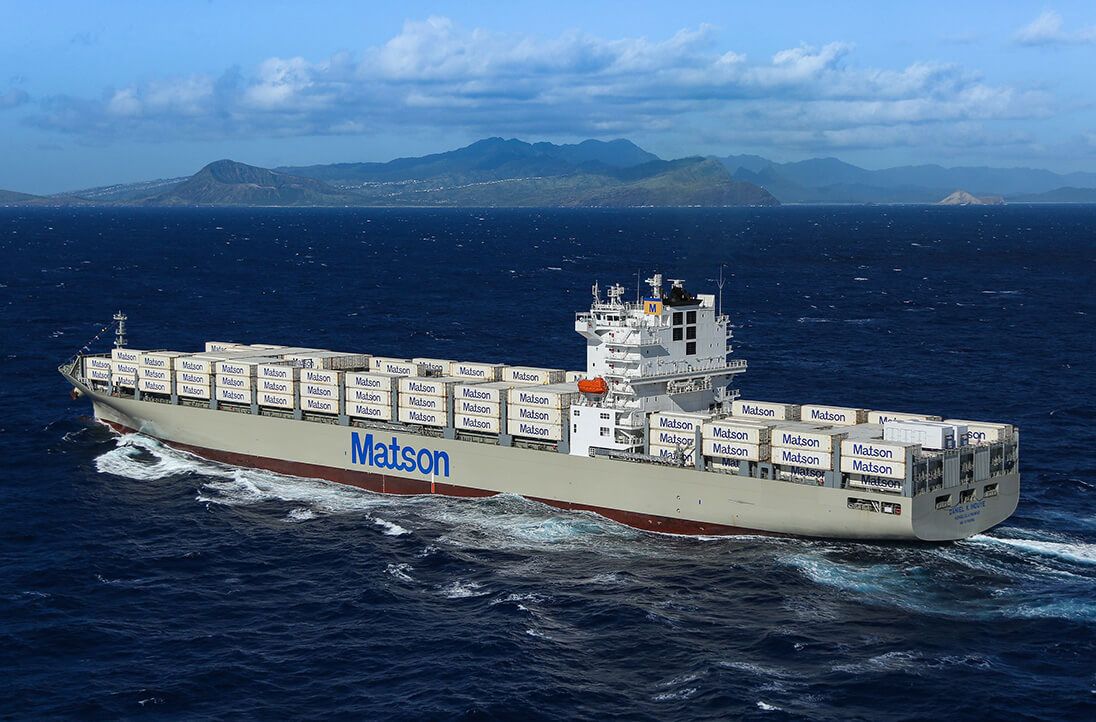
Matson containership at sea

Published Mar 20, 2026 10:17 PM by The Maritime Executive


[By Matson]

  • $3.1 million to Food Security programs
  • $ 1.8 million to Health & Human Services
  • $871K to Environmental programs

Matson contributed a total of $8.6 million in cash and in-kind support in 2025 to 709 charitable organizations and non-profit programs across the communities it serves. 

Cash contributions, including funds directed by employees through the company's Matching Gift program, added up to $3.7 million in 2025, while the value of donated services and equipment totaled $4.9 million.

The biggest categories of giving for the year were Food Security programs, with $3.1 million in cash and in-kind support; Health & Human Services with $1.8 million in cash and in-kind support; and Environmental programs with $871,000 in cash and in-kind support.

As part of its pandemic response plan in 2020, Matson made a multi-year commitment of $5 million in cash and in-kind services to support food bank networks in Hawaii, Alaska and Guam. In 2023, the company committed to providing another $5 million in cash and in-kind services to continue supporting community food bank networks through 2026.

In 2025, Matson contributed $5.8 million in cash, services and equipment support to organizations in Hawaii, Guam/Micronesia and the South Pacific, with the largest category of giving in Food, Agriculture & Nutrition program support at $2.6 million. The company donated $1.9 million in cash and services to organizations in Alaska, and more than $897,000 in cash donations to community organizations on the continental U.S.

Substantial contributions from donated or discounted shipping supported food banks and food security programs in Hawaii and Alaska as well as environmental and recycling programs in Alaska.

In Hawaii, Matson added 100 containers to its existing pledge of 400 containers of in?kind shipping services annually through 2026 to help Hawaii Foodbank meet rising demand, equating to 3.5 million additional meals for Hawaii families. Matson also donated $25,000 in cash to The Food Basket, Hawaii Island's Foodbank, and $25,000 in cash to Hawaii Foodbank Kauai.

Larger contributions of in-kind services or cash in Hawaii include:

  • Hawaii Foodbank - $1.9M
  • Maui Foodbank - $ 555,000
  • Maui Wildfire Recovery - $ 526,000
  • Hawaii Pacific Health - $116,000
  • Big Brothers Big Sisters Hawaii - $100,000
  • PBS Hawaii - $100,000
  • Children's Discovery Center - $100,000

Larger contributions of in-kind services or cash in Alaska include:

  • Alaskans for Litter Prevention and Recycling - $658,700
  • Food Bank of Alaska - $254,000
  • University of Alaska Foundation - $66,000
  • Seward Association for the Advancement of Marine Science - $65,000

Larger contributions of primarily in-kind services in Guam and Micronesia include:

  • University of Guam Endowment Foundation - $70,000
  • Ayuda Foundation - $67,000
  • Canvasback Missions - $25,000
  • Pacific Mini Games - $21,000
  • 500 Sails - $17,000

Contributions supporting social service programs include:

  • $100,000 in targeted annual grants supporting 10 social service focused nonprofit programs in Matson communities
  • $87,000 in higher education scholarships aimed at supporting student leaders pursuing fields of study in maritime and supply chain logistics

Led by employee committees in Hawaii, Alaska and Guam, Matson focuses its community support on local programs providing vital health care and human services; youth development / recreation; disaster preparedness and recovery; education; cultural and environmental preservation; the arts; agriculture and nutrition; and maritime safety.

Additional information on Matson's community support activities is available in the company's Sustainability Reports posted online at: https://www.matson.com/sustainability/sustainability-reports.html
 

The products and services herein described in this press release are not endorsed by The Maritime Executive.


Chubb Details Structure of the Gulf Maritime Insurance Facility with DFC

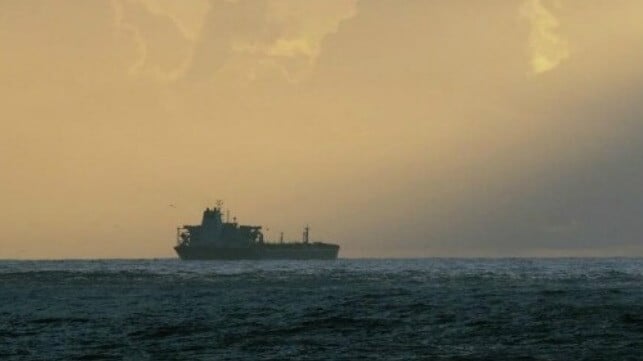
tanker in sunset

Published Mar 20, 2026 10:12 PM by The Maritime Executive


[By Chubb]

 
Chubb (NYSE: CB), the world's largest publicly traded property and casualty insurer, today outlined the structure and scope of the maritime insurance facility created in partnership with the U.S. Government through the U.S. International Development Finance Corporation (DFC), which on March 11 announced Chubb as lead underwriter for its $20 billion Maritime Reinsurance plan.


Details of the facility include:

•    Commercial shipping plays a vital role in the global economy. To help restore market confidence and facilitate the world's critically important energy and commercial trade, the United States Government, through DFC, is partnering with Chubb to create a maritime insurance facility.
•    Chubb, acting as lead underwriter, will manage the facility, determine pricing and terms, assume risk, and issue policies for eligible vessels and cargo. Chubb will also manage all claims.
•    DFC will help coordinate the consortium of American reinsurers and set certain criteria for ships accessing the program.
•    The initiative is a public-private partnership between DFC, Chubb and other name-brand American insurance companies who will act as reinsurers. Participating insurers bring deep underwriting experience in marine and marine war coverage. 
•    The facility will provide war marine risk insurance for hull & liability as well as cargo. Coverage will be offered for war hull risk insurance, for war P&I insurance and war cargo insurance. 
•    The offering will apply to vessels that meet eligibility criteria provided by the U.S. Government.
•    This insurance will be available to ships transiting the Strait of Hormuz and only under certain conditions. 
•    The additional American insurance companies will be disclosed in the coming days.
 

The products and services herein described in this press release are not endorsed by The Maritime Executive


Report: Trump Administration Offers $1B to Cancel Two Offshore Wind Leases

CUTTING NOSE TO SPITE FACE

offshore wind farm
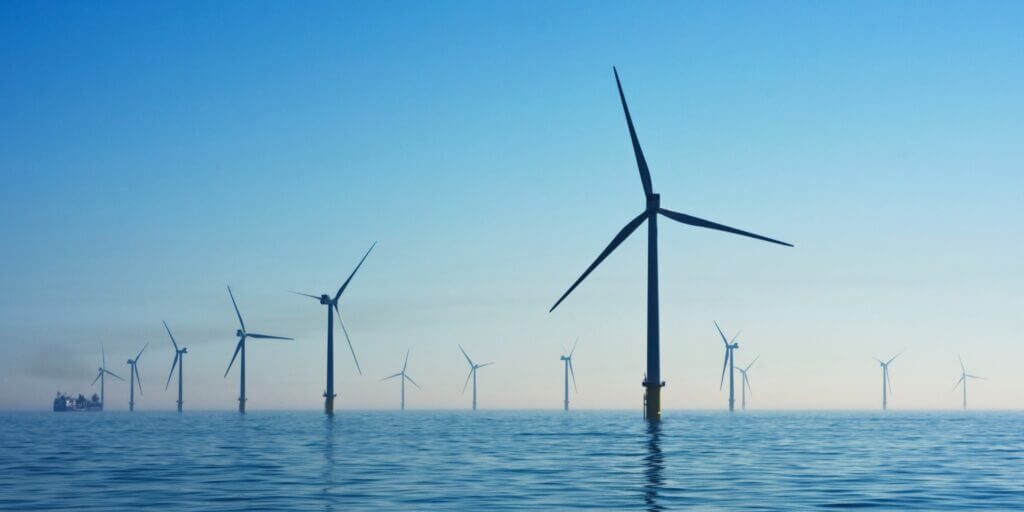
TotalEnergies has offshore wind power leases in the NY Bight and off North Carolina which would be canceled (Attentive Energy concept rendering)

Published Mar 17, 2026 1:35 PM by The Maritime Executive


In its latest move to derail the offshore wind energy industry, the Trump administration is reportedly proposing to buy back offshore wind power leases in exchange for investments in natural gas. In an exclusive report from The New York Times, they write that the Department of the Interior is offering to reimburse TotalEnergies nearly $1 billion if the company relinquishes leases in the New York Bight and off the coast of North Carolina.

The newspaper reports it saw copies of the draft settlement agreements, which are currently under negotiation, while noting it is unclear if TotalEnergies will accept the deal. The U.S. Government would pay TotalEnergies more than $928 million, which is being called a “reimbursement” for relinquishing the leases it has held since 2022. The company would, in exchange, agree to “accelerate investments” for gas plants and gas production sites in Texas, reports The New York Times.

The two projects involved are both earlier-stage wind farms that have not yet received their government approvals and have not completed power agreements. TotalEnergies could reject the settlement, but for the projects to proceed, it would still need the Trump administration to approve the environmental and construction plans, which is unlikely. The Trump administration could also attempt to cancel the leases, which it has threatened on other projects. Either scenario would likely result in costly legal battles.

TotalEnergies won a lease in the hotly contested 2022 auction for properties in the New York Bight, an auction that set a financial record. TotalEnergies paid $795 million for a large area approximately 36 miles from New Jersey and 47 miles from New York. Called Attentive Energy, and in partnership with Rise Light & Power and Corio Generation, it has proposed two projects, one for each state. New York selected the project in its third round, which was later canceled. Attentive Energy submitted its Construction Operation Plan to the Bureau of Ocean Energy Management in September 2024, but the Trump administration has paused the reviews.

The second project is known as Carolina Long Bay, and the lease was awarded in May 2022 for a cost of $160 million. The lease area is approximately 22 miles from the North Carolina coast near Bald Head Island. The company has said the area could provide more than 1 GW of electric power.

The Department of the Interior reportedly would pay $795 million for Attentive Energy’s lease and more than $133 million for Carolina Long Bay. It would cancel both leases.

TotalEnergies had indicated in November 2024 that it was putting the projects “on pause” after the Trump election. It said it would be pursuing projects elsewhere and could reconsider the U.S. projects after the Trump administration.

The Department of Justice has been working to challenge other leases awarded by the Biden administration, including for a project in Maryland and others in the Northeast. It has repeatedly claimed the Biden administration rushed the reviews and did not consider all the factors. When Trump returned to the White House, he immediately signed an Executive Order pausing the leasing process and putting it under review. A court last year overturned the Executive Order, saying it violated U.S. administrative law. 

Courts also awarded preliminary restraining orders against five stop-work orders against the projects currently under construction. Able to resume work by late January, two of the projects, Revolution Wind and Vineyard Wind 1, reached milestones last week. Revolution Wind delivered its first power to the New England power grid, and Vineyard Wind completed its installation and is completing its commissioning. The three other projects are also reporting progress with their installations while still awaiting their court battles with the Trump administration, which alleges new research showed a danger from the blades and towers causing radar interference. The Department of Justice has vowed to appeal the cases where it was overturned, while it continues to battle various cases to stop additional offshore wind energy leases.


CSM Energy Marks Milestone for Next-Gen Onshore and Offshore Wind Vessel

CSM Energy
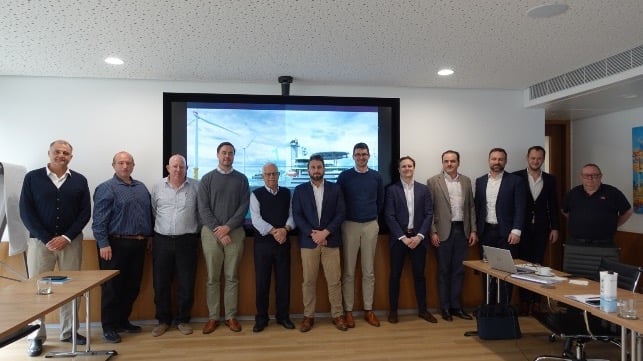
Picture taken from the CSM Energy workshop.

Published Mar 20, 2026 1:53 PM by The Maritime Executive


[By: CSM Energy]

CSM Energy has marked a significant milestone in the development of the next generation of onshore and offshore wind service vessels, following a strategic project workshop and the successful steel cutting of the C-CSOV (Commissioning Service Operation Vessel) JOULE.

CSM Energy, part of Columbia Group, recently hosted the workshop in Limassol, Cyprus, which brought together key project partners including Deutsche OffshoreSchoeller Holdings, CSM Energy (CSME), CSM Cyprus (CSM CY), and Columbia Signature.

The workshop provided an important platform for collaboration and technical alignment as partners reviewed critical aspects of the next-generation vessel, designed to set new standards for the offshore wind sector. Discussions focused on the vessel’s design and specifications, chartering requirements, preparations for the new build phase, and planning for the eventual delivery of the vessel.

The sessions reinforced the strong cooperation between the participating organisations and ensured that all stakeholders remain aligned as the project progresses.

Following the workshop, the project reached a significant construction milestone with partners taking part in a steel-cutting ceremony for the C-CSOV DO JOULE vessel, taking place at CSSC Huangpu Wenchong Shipyard in China.

The ceremony marked the official start of construction for the vessel and was attended by representatives from the shipyard, SDARI, SALT Ship Design, the classification society, Deutsche Offshore, MOL, and members of the project supervision team. This milestone represents a key step forward in the development of the C-CSOV DO JOULE and reflects the continued commitment of all partners to delivering a high-quality vessel that meets the project’s technical and operational requirements.

Managing Director of CSM Energy, Kryiacos Tsangaris said: “The successful completion of our workshop demonstrates the strong collaboration between all project partners as we move forward with the development of the C-CSOV DO JOULE.

“The steel cutting milestone marks the official start of construction and represents an important step towards delivering a high-quality, next-generation vessel that will support the growing onshore and offshore energy sector. We are proud to work alongside our partners and the shipyard team to bring this project to fruition.”

The C-CSOV DO JOULE vessel will be used to support commissioning of new offshore wind farms, transport and accommodate offshore technicians, provide maintenance and service operations, and enable the safe transfer of personnel and equipment to turbines and offshore platforms. It is due for delivery in 2027.

The products and services herein described in this press release are not endorsed by The Maritime Executive.


Hornblower Announces Steelpointe Shipyard Expansion and New Vessel Services

Hornblower Marine

Published Mar 20, 2026 10:02 PM by The Maritime Executive


Bridgeport Facility Significantly Expands Hornblower Footprint to 17 Acres Offering Vessel Construction, Propulsion, Management, Consulting, and Yachting Services


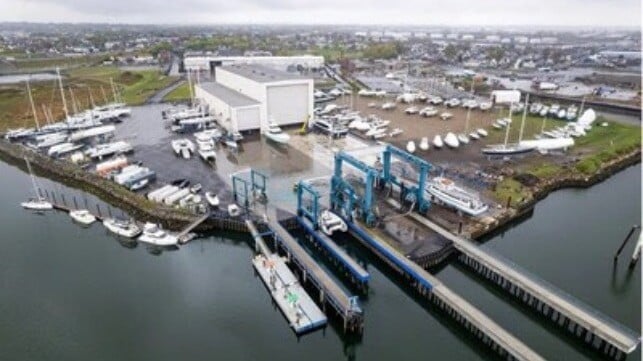
Hornblower Group today announced the expansion of its industry-leading facilities and extensive offerings on the historic Bridgeport waterfront, building on the firm's continued maritime success and commitment to the region while growing from 1 acre to 17 acres with equipment and crew offering services across vessel classes and specializations, now including yachts and recreational craft.

Bridgeport Facility Significantly Expands Hornblower Footprint to 17 Acres Offering Vessel Construction, Propulsion, Management, Consulting, and Yachting Services

The expanded location at 731 Seaview Avenue in Bridgeport, CT will now be titled Steelpointe Shipyard by Hornblower, reflecting the new scale and capabilities of the full-service shipyard and Hornblower's long-term commitment to building on Bridgeport's central location, experienced workforce, and maritime legacy to serve the growing maritime industry across the East Coast.

"Hornblower is excited to extensively expand our Bridgeport, CT footprint and community impact by pairing our 100-year history in the maritime industry with the unique features and benefits of such an historic port," said Shull Autin, Chief Maritime Officer, Hornblower Group. "With this tremendous expansion in available facility space and equipment capabilities, Steelpointe Shipyard by Hornblower will serve as the East Coast's new hub for maritime expertise and service across commercial, government, and private vessel operators."

With its expansion, Steelpointe Shipyard by Hornblower now includes 45,000 square feet of indoor space, three large-scale Marine Travel Lifts capable of hauling vessels up to 700 tons, a 220' Service Dock, and an array of skilled tradespeople across welding and metal fabrication, joinery and outfitting, piping, mechanics, electrical, and painting.

This unique array of equipment, expert staff across specializations, and deep-water access to Long Island Sound makes Steelpointe Shipyard by Hornblower the industry's premier facility capable of leveraging integrated, onsite vessel design and engineering teams to execute complex projects on time and on budget. Across the site, Hornblower Marine will continue to provide simultaneous vessel servicing, pre-scheduled overhauls and maintenance, emergency repairs, and complex projects for Hornblower's clientele of high-profile public and private third-party clients, as well as yacht owners, captains, and operators.

"As our crew has grown since the local launch of Hornblower Marine in 2021, Bridgeport and the surrounding communities have been a pivotal component in our shared successes developing the industry's premier facilities and capabilities for innovative maritime projects from across the country," said Junior Volpe, Senior Vice President of Vessel Construction & Repair, Hornblower Marine. "Today's announcement builds on this strong foundation to establish the next phase of maritime innovation and careers in Bridgeport while offering premier, industry-leading services to vessel owners of all backgrounds and sizes."

"This expansion represents a big step forward in Hornblower's ability to deliver a truly integrated maritime service offering at one of the east coast's premier deep-water ports, centrally located in some of the country's largest maritime markets," said Timothy O'Brien, SVP of Ferries & Concessions Operations, Hornblower Group. "We are proud to work with property owners RCI and the Christoph family to maximize the use of this premier facility."

Within Steelpointe Shipyard, Hornblower Marine offers these extensive services across six specialized divisions to provide each client with project- and vessel-specific solutions. These divisions include Hornblower Marine Construction, Propulsion, Management, Consulting, Services, and Yachts.

Hornblower Marine Construction builds on the organization's robust history of designing, building, retrofitting, and maintaining vessels across sizes, types, and use cases to support the needs of each partner.

Hornblower Marine Propulsion offers trained in-house diagnostics and propulsion specialists providing repair and repower solutions, system integration, and engine sales, commissioning, and services support. Hornblower Marine Propulsion is the official Northeast Distributor for Baudouin Marine Engines.

Hornblower Marine Management offers third-party support and owners' representation for newbuild programs and services for fleet expansions, technical specification development, shipyard selection, and construction oversight.  

Hornblower Marine Consulting offers strategic advisory services to vessel owners and operators to support vessel operational and route planning, technical feasibility analysis, financial navigation, and approaches to fleet expansion.

Hornblower Marine Services provides operational and technical support across the full lifecycle of vessel ownership, including inspections, maintenance program development, and regulatory compliance to support long-term vessel performance. 

Hornblower Marine Yachts is a newly announced division that will build on Steelpointe Shipyards' expanded space and scope of services to provide yachting and recreational partners and clients top-tier yacht maintenance programs, refit services, seasonal haul-outs, and indoor/outdoor storage previously only available to larger commercial operators. The integration of service and maintenance specializing in these vessels makes Hornblower Marine Yachts especially suited to serve the yachting and recreational craft communities.

"The leadership, expertise, and capabilities of the nation's largest shipyards shouldn't be inaccessible to yacht and recreational vessel owners," said Volpe. "Thanks to this expansion, Hornblower Marine will be able to offer its top-level service to this new class of partners and clientele while providing the customer service that would be expected of smaller, boutique service facilities. We look forward to bringing these services to the yachting market."
 

The products and services herein described in this press release are not endorsed by The Maritime Executive.