Saturday, December 12, 2020

CLINTON'S HUMANITARIAN WAR
End of an era? 
Hague trials rock Kosovo's rebel-led politics

Issued on: 12/12/2020 - 
Former President Hashim Thaci (C) and other rebel chiefs were once feted for liberating Kosovo from Serbia in a 1990s war STRINGER AFP

Pristina (AFP)

After more than a decade at the helm, Kosovo's former guerillas may have finally met their match -- not at home but in The Hague, where they are on trial for war crimes.

It has been a long and hard fall from grace for former president Hashim Thaci and other ex-rebels who were once feted as heroes for liberating Kosovo from Serbia in a late 1990s war, with the help of NATO.

Yet if they were once associated with the joy of that victory, in recent years they have become the face of a political elite accused of corruption and clientelism that has clouded Kosovo's first decade of independence.

"They became so strong and accumulated so much wealth that it was impossible to overthrow them," said Ismet Sojeva, 66, a retired English teacher.

"Only The Hague could help bring them from the sky back down to earth".

Thaci, 52, and four others were summoned last month to the EU-backed court in the Netherlands on charges of murder, torture, persecution and other war crimes allegedly committed during the 1998-99 conflict with Serbia.

For many Kosovars, it's a complicated moment.

Most strongly defend the uprising that paved Kosovo's path to independence in 2008.

Yet the guerilla leaders themselves have long ago lost their shine among a public frustrated with enduring poverty and dysfunction.

"There is nothing they have not done to us people," said the owner of a tea shop in Pristina who declined to give his name.

"They almost destroyed the state."

- An opportunity -

With trials that could last up to eight years, political science professor Belul Beqaj believes the absence of Thaci and his cadres could open a new chapter for Kosovo politics.

Thaci's PDK party came to power in 2007 and stayed there until losing an election late last year.

"It is the beginning of the end of the era of the powerful military-political group that brought Kosovo to this state," Beqaj said.

There is a rare opportunity for a "new generation of politicians" to fill the void, adds Arben Hajrullahu, a professor of political sciences at the University of Pristina.

Yet the ex-rebels won't "leave soon and easily," he noted, with some key figures still in politics and many others holding sway in powerful state institutions.

The fragmented opposition would need to unite around a common cause, said the professor, a goal that has so far proved difficult in Kosovo's tumultuous political scene.

- War heroes -

Known as the Kosovo Liberation Army (KLA), the ethnic Albanian rebels are deeply embedded in the national narrative, with scores of streets and monuments bearing their names and stories.

They first emerged as a separatist movement in the 1990s in response to growing oppression of the ethnic Albanian population in Kosovo, then a Serbian province.

Thaci, a founding member, served as the group's political head, using a satellite phone to communicate with peace-brokering diplomats and foreign reporters.

Other prominent leaders on trial include the KLA's former spy chief Kadri Veseli, spokesman Jakup Krasniqi and chief of operations Rexhep Selimi.

After the KLA's clashes with Serbian troops intensified in 1998, the rag-tag army swelled from a few hundred members to thousands of recruits.

Victory arrived with NATO's intervention the following year, after 13,000 lives had been lost, mostly Kosovo Albanians.

The KLA was officially disbanded but its members continued to hold sway, consolidating their power through a series of attacks on political rivals.

- 'Corrupt payouts' -

Many top commanders like Thaci swapped their fatigues for politics and have circled the halls of power ever since.

Their levers of control were unveiled in 2011, when wiretapped phone conversations between then-PM Thaci and his associates showed a system of settling political appointments based on cronyism.

Thaci's clan is also accused of using their clout to scupper local investigations of KLA war crimes -- as well as attempts to obstruct the work of the tribunal in The Hague, which was set up in 2015.

"The suspects wield enormous influence over former KLA members and Kosovo in general," Hague prosecutors said in their request for arrest warrants this year.

Officials loyal to Thaci have "presided over corrupt government pay-outs" and job offers to silence potential witnesses, they alleged.

The trials may signal the end of crucial support from the West, which has long propped up Thaci and his allies.

The US has been a particularly robust ally, embracing Thaci at every turn, including when then-Vice President Joe Biden welcomed him to the White House as the "George Washington of Kosovo".

Critics say the West has backed the former rebels to prioritise stability in the region -- at the cost of rotting democratic institutions and a loss of public faith in politics.

Thaci and his men "looked only after settling and feeding themselves," said 22-year-old economy student Albulen Obrazhda, summing up the widespread disillusionment among youth, many of whom are eager to go abroad for better opportunities.

"They left us at the bottom."

© 2020 AFP

SEE https://plawiuk.blogspot.com/search?q=KOSOVO

Seeing the Forest for the Trees
Thesis on The Kosovo Crisis and the Crisis of Global Capitalism

(originally written May 1999, Bill Clinton set the stage for George W. to invade Afghanistan and Iraq for humanitarian purposes.)
http://plawiuk.blogspot.com/2005/01/war-whats-it-good-for-profit.html

Why are Indian farmers protesting, and what can Modi do?

Issued on: 12/12/2020 -
The farmers protest is potentially the trickiest challenge yet to Indian Prime Minister Narendra Modi's authority Sajjad HUSSAIN AFP/File


New Delhi (AFP)

As an army of resolute Indian farmers keeps up its blockade of New Delhi, Prime Minister Narendra Modi faces potentially the trickiest challenge yet to his authority and reform agenda.

With the protests entering their third week, AFP looks at the background to new farm laws, why they are sparking such opposition and Modi's limited options.

- What is the state of Indian agriculture? -


India's farming sector is vast and troubled.

It provides a livelihood to nearly 70 percent of the country's 1.3 billion people and accounts for around 15 percent of the $2.7-trillion economy.

The "Green Revolution" of the 1970s turned India from a country facing regular food shortages into one with a surplus -- and a major exporter.

But for the past few decades, farm incomes have remained largely stagnant and the sector is in sore need of investment and modernisation.

More than 85 percent of farmers have less than two hectares (five acres) of land. Fewer than one in a hundred farmers own over 10 hectares, according to a 2015-16 agriculture ministry survey.

India hands out an estimated $32 billion in subsidies to farmers annually, according to the finance ministry.

- How are farmers coping? -

Water shortages, floods and increasingly erratic weather caused by climate change, as well as debt, have taken a heavy toll on farmers.

According to a Punjab government report in 2017, the northern state will use up all its groundwater resources by 2039.

More than 300,000 farmers have killed themselves since the 1990s. Nearly 10,300 did so in 2019, according to the latest official figures.

Farmers and their workers are also abandoning agriculture in droves -- 2,000 of them every day according to the last census in 2011.

- What did Modi promise? -

Indian governments have long made big promises to farmers -- a crucial vote bank -- and Modi is no exception, vowing to double their incomes by 2022.

In September, parliament passed three laws that enabled farmers to sell to any buyer they chose, rather than to commission agents at state-controlled markets.

These markets were set up in the 1950s to stop the exploitation of farmers and pay a minimum support price (MSP) for certain produce.

The system has led to farmers sometimes growing crops unsuited to the local climate, such as thirsty rice in Punjab, and can be fertile ground for corruption.

But many farmers see the MSP as a vital safety net, and fear being unable to compete with large farms and being paid low prices by big corporations.

"The laws will harm the farmers and in turn destroy our livelihood," said Sukhwinder Singh, a farm worker who cycled 400 kilometres (250 miles) to the protests.

"Land, cattle and farmers will be enslaved by rich people. This government wants to finish us," he said.

- What can Modi do? -

Modi has drawn fire before -- a disastrous withdrawal of large banknotes in 2016, for example -- but his popularity has held up, winning a landslide re-election in 2019.

From late 2019, there were months of protests against a citizenship law imposed by Modi's Hindu-nationalist BJP government that was seen as discriminatory to Muslims.

But the BJP, with its clout in traditional and social media, was able to depict the demonstrators as "anti-nationals" before Covid-19 eventually snuffed out the protests.

Modi, 70, has tried to brush off the current agitation as being stoked by an opportunistic opposition "misleading" the farmers.

Some in his party have upped the ante by branding the protesters -- many of whom are Sikhs -- as "hooligans, Sikh separatists and anti-nationals".

But with the farmers, it is different.

They enjoy widespread support among Indians and ignoring them clashes with Modi's self-styled image as a champion of the poor.

In rural areas, where 70 percent of Indians live, there is already a growing perception that Modi is cosy with big business and billionaire industrialists such as Mukesh Ambani, Asia's richest person.

"There are many things which are outdated in the agriculture sector. But reforms cannot be pushed like this," Arati Jerath, a political analyst, told AFP.

"This is so far the biggest challenge to the government... It will have to find a way to walk back and save face at the same time."

© 2020 AFP 


Reporters

Beirut port blast: Lebanon's army to the rescue

By: Zeina ANTONIOS|Charbel ABBOUD|Linda TAMIM|Ghassan SEBAALY

17 min

August 4, 2020 is a date that will be remembered forever in Lebanon. Twin blasts struck the port of Beirut as some 2,700 tonnes of ammonium nitrate went up in smoke. More than 200 people were killed, thousands were injured and entire neighbourhoods were disfigured. As locals sprang into action, the Lebanese army was on the frontline to prevent looting and secure the scene. Our Beirut correspondent Zeina Antonios followed some of these soldiers as they faced what may turn out to be the biggest challenge of their careers.

SEE https://plawiuk.blogspot.com/search?q=LEBANON+PORT+BLAST


France debates human rights at home while still selling weapons to oppressive regimes

Issued on: 11/12/2020 
Technicians work on French made Rafale jet fighter at the workshops of Dassault-Aviation in Merignac near Bordeaux on October 8, 2019. © Georges Gobet, AFP

As the French President Emmanuel Macron faces accusations that he is moving to curtail the civic rights in his country and reduce transparency, the recent state visit of Egyptian President Abdel Fattah al-Sisi underscored France’s longstanding willingness to turn a blind eye to systemic oppression in the countries it sells weapons to.

When Sisi came to France for a state visit this week, less than a month after prominent human rights workers in Egypt were arrested and slapped with terrorism-related charges following a meeting with French and other European diplomats, Human Rights Watch called for arms sales to Egypt to stop and activists were looking to French President Emmanuel Macron to make a strong statement.

They had, perhaps, reason to be hopeful. After the November arrests, the French Foreign Ministry issued a statement expressing its “deep concern” about developments in the Arab nation. “France maintains a frank, exacting dialogue with Egypt on human rights issues, including individual cases,” the statement said.

In the end, not only were activists disappointed by Macron’s reception of Sisi, they were outraged by it. Far from taking a firm line on abuses and demanding that Egypt do better if it hoped to continue receiving military aid, Macron went out of his way to disassociate the purchase of arms with the respect of human rights.

“I will not condition matters of defence and economic cooperation on these disagreements [over human rights],” Macron said in a press conference. "It is more effective to have a policy of demanding dialogue than a boycott that would only reduce the effectiveness of one of our partners in the fight against terrorism."

“The whole way he framed the human rights debate in the press conference was horrific,” said Timothy Kaldas, Nonresident fellow at the Tahrir Institute for Middle East Policy. “Arresting human rights workers and oppressing Egyptians is not fighting terrorism. Quite the contrary.”

A double standard

Macron’s stance was particularly salient given that his own government has been under fire over a proposed security law that critics charge would limit civic liberties in France. At the same time that he has defended France’s commitment to freedom of speech in the wake of the killing of a teacher who showed his class caricatures of the prophet Mohammed. Macron called the teacher, Samuel Paty, a “quiet hero” dedicated to preserving French values.

Macron’s position with Sisi this week was notably softer than the one he took in January 2019, when he told his Egyptian counterpart that security could not be considered separately from human rights, noting that oppression jeopardises stability rather than enhance it.

“It’s a double standard,” said Rim-Sarah Alouane, a Researcher in Public Law, University Toulouse Capitole. “We are in the middle of this hypocrisy about how we are supposed to be the country of the enlightenment, of human rights – we are supposed to have basically created human rights – and yet we have no problem making deals with the devil and closing our eyes to what should be the most important thing: the protection of the human.”

Kaldas agreed: “[Macron] will be adamant about how much France cherishes its values in one context and then be completely unwilling to prioritise those values in his relations with authoritarians.”

Marcon has shown himself similarly willing to ignore abuses in other parts of the region as well. When several European countries, including Germany, called for the suspension of arms sales to Saudi Arabia after the murder of journalist Jamal Khashoggi, Macron dismissed those concerns as “demagoguery”, saying the weapons had nothing to do with the murder. “I understand the connection with what’s happening in Yemen, but there is no link with Mister Khashoggi,” he said.

Saudi Arabia leads a coalition that has been engaged in a war in Yemen that has had devastating effects on the humanitarian situation there. “The only reason [Macron] cites Yemen is to dismiss the other argument, but then he continues to provide the arms that fuel the war in Yemen,” Kaldas said.

Key to sovereignty

France has a vested interest in batting away the issue of rights abuses. Arms sales are big business for the country, which is third in global military exports, coming behind the United States and Russia. The defence sector in France employs 200,000 people, roughly 13 percent of the total industrial workforce, according to a report by the country's parliament.

France is one of the few countries in the world capable of independently producing advanced military systems, and arms sales are key to the survival of the defence sector.

“It’s important for France to maintain its own arms industry,” both to be a significant player on the world stage and to be self-sufficient, said Pieter D. Wezeman, Senior Researcher in the Arms and Military Expenditure Programme at the Stockholm International Peace Research Institute. “To be able to do that, you need to have export clients, because otherwise you won’t be able to afford it.”

As Minister of the Armed Forces Florence Parly put it in 2018: “Arms exports are the business model of our sovereignty.”

And the industry is growing. Arms sales can vary widely from year to year, so researchers look at extended periods of time. Comparing the years 2015-2019 with 2010-2014, French arms exports grew 72 percent, representing 7.9 percent of the global arms market. Over the past decade, the Middle East has accounted for roughly 48 percent of French exports, said Guy Anderson, Associate Director of the Industry and Markets division at Jane's, publisher of Jane's Defence Weekly.

“France has been very prolific in providing weapons to a wide range of people,” Wezeman said.

France has been known to ignore arms embargos as well. In his autobiography “No Room for Small Dreams,” the late Israeli politician Shimon Perez said that France secretly sold weapons to Israel back in the 1950s, when few nations would. And it was the French who gave Israel its nuclear capacities, Perez wrote.

The illicit arms sales have continued. The French found ways to supply weapons to the apartheid regime in South Africa despite restrictions on such exports and press reports said that military material found in Libya in 2019 indicated that France had violated the arms embargo there.

“France is one of the least scrupulous arms sellers on earth,” said Kaldas. “Even the US is a little more restrictive about their arms sales.”


The human cost of Armenia's defeat in Nagorno-Karabakh
Issued on: 11/12/2020 
By: Romeo LANGLOIS, Wassim Cornet,Mohamed FARHAT
Last month, a Russian-brokered ceasefire brought an end to six weeks of fighting between Armenian and Azerbaijani forces over the disputed region of Nagorno-Karabakh. The conflict left thousands dead and forced tens of thousands more to flee their homes. In the aftermath of the war, some in Armenia are still searching for family members who are yet to be accounted for. FRANCE 24's Roméo Langlois and Mohamed Farhat report
Programme prepared by Patrick Lovett and Wassim Cornet
  

Friday, December 11, 2020

AstraZeneca to use Russian COVID-19 vaccine component in clinical trials


Vials of Russia's "Sputnik V" COVID-19 vaccine are seen at the Nikolai Gamaleya National Center of Epidemiology and Microbiology in Moscow, Russia, on August 6. File Photo by RDIF/EPA-EFE

Dec. 11 (UPI) -- Drugmaker AstraZeneca will use a component of Russia's "Sputnik V" COVID-19 vaccine in clinical trials for its vaccine, officials said Friday.

The Russian Direct Investment Fund and the Gamaleya Institute, makers of the Sputnik V vaccine, said AstraZeneca has accepted their offer of a human adenoviral vector -- a common cold virus -- for use in trials for its experimental AZD1222 vaccine.

AstraZeneca, which is developing AZD1222 in partnership with Oxford University, will begin using Sputnik V's human adenoviral vector type Ad26 in clinical trials by the end of the year, according to RFID CEO Kirill Dmitriev.

"The decision by AstraZeneca to carry out clinical trials using one of two vectors of Sputnik V in order to increase its own vaccine's efficacy is an important step towards uniting efforts in the fight against the pandemic," he said in a statement.

"We are determined to develop this partnership in the future and to start joint production after the new vaccine demonstrates its efficacy in the course of clinical trials. We hope that other vaccine producers will follow our example."

AstraZeneca confirmed the collaboration.

"Being able to combine different COVID-19 vaccines may be helpful to improved protection and/or to improve vaccine accessibility," company officials told CNBC.

RELATED
Hackers target regulatory records for Pfizer's COVID-19 vaccine in Europe


"This is why it is important to explore different vaccine combinations to help make immunization programs more flexible, by allowing physicians greater choice at the time of administering vaccines."

RFID -- Russia's sovereign wealth fund -- has claimed the Sputnik V vaccine is more than 90% effective in preventing COVID-19, according to preliminary clinical results.

It is unique for vaccines under development to use two different adenoviral vectors in the first and second doses to avoid immunity to the first vector.

RELATED
Canada joins Britain in approving Pfizer's COVID-19 vaccine

The AstraZeneca-Oxford vaccine, meanwhile, prevents infection in 62% of people who receive two full doses, and in 90% of those given a half dose followed by a full dose, according to interim data published last week.

Friday's announcement follows a recommendation Thursday by the U.S. Food and Drug Administration's vaccines committee to give emergency use authorization in the United States for a vaccine developed jointly by Pfizer and BioNTech.

The move, a key milestone in distributing a vaccine in the United States, is expected to be upheld by the FDA on Friday or Saturday. That would be the final approval for Americans to begin receiving the vaccine, which has proven about 95% effective.

The Pfizer-BioNTech vaccine has already received approval in Britain and Canada. Inoculations began in Britain early this week.

Trump finalizes rules restricting asylum protections


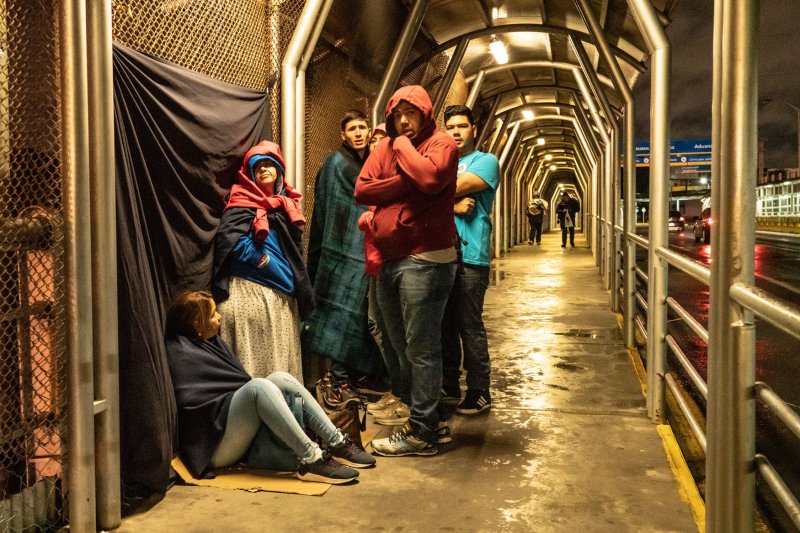
A group asylum seekers from Venezuela sit in the cold and wait to cross the US border from Reynosa, Mexico, on January 26, 2019.
Photo by Ken Cedeno/UPI | License Photo


Dec. 10 (UPI) -- The Trump administration on Thursday finalized sweeping amendments to immigration rules that critics fear will "devastate" the country's asylum system.

The 419-page document set to be published on Friday by the Departments of Homeland Security and Justice greatly tightens standards by which immigration judges are allowed to grant asylum.

Immigration advocacy group American Immigration Council said Thursday the regulation "guts the U.S. asylum system by making it nearly impossible for most applicants to successfully claim humanitarian protection in the United States."

Among the slew of changes include ordering judges to deny asylum to those who have spent at least 14 days in any country that permits refugee applications, traveled through more than one country prior to arriving in the United States, been in the United States for more than a year before filing an application and failing to pay taxes on time.

The amended rule also orders judges to consider unlawful entrance into the United States as a "significant adverse factor" for anyone above the age of 18.

Concerning those seeking asylum by claiming their lives are under threat, the rule amends the definition of "persecution" to mean "severe harm of an immediate and menacing nature made by an identified entity or person."

The document also states it is raising the standard of proof for those seeking humanitarian assistance claiming "credible fear of persecution" and "credible fear of torture."
RELATED Groups call for end of 'politically motivated' executions in D.C. protest


"For generations, the United States has been a beacon of hope for those in need of protection. This new rule breaks that tradition," Beth Werlin, executive director of the American Immigration Council, said in a statement. "By choosing to move forward with this regulation, the administration is making clear that deterrence through cruelty is the point until the bitter end."

Jennifer Minear, the president of American Immigration Lawyers Association, chastised the administration for failing to address border security and asylum processing humanely.

"This rule eviscerates a needed lifeline to those fleeing danger and reiterates a common false narrative promoted by the Trump administration: that border security can only be attained through the gutting of the asylum," she said.

The amended rule was first published for comment in June and is set to go into effect Jan. 11, days before the Biden administration is to take over leadership of the country.

Immigration has been a constant issue for President Donald Trump who campaigned in 2016 on cracking down on undocumented immigrants entering the United States.

In February of last year, Trump declared a National Emergency in order to shift billions of dollars to build physical barriers along the souther border.

The Justice Department argued in a statement Thursday that the changes "streamline and enhance procedures" that will enable to federal government "to more effectively separate baseless claims from meritorious ones."

"This will better ensure groundless claims do not delay or divert resources from deserving claims, and in particular, will better ensure the security of our nation's borders by facilitating the efficient review of claims in a manner consistent with the law and the integrity of our immigration system," it said.


Chinese citizen journalist under 'constant torment' after Wuhan, lawyer says
By
Elizabeth Shim
(0)


Citizen journalists arrested in Wuhan, China, during the early stages of the pandemic have gone missing or remain in detention. File Photo by Stephen Shaver/UPI | License Photo

Dec. 11 (UPI) -- A Chinese citizen journalist who took to the streets of Wuhan in February is being tortured while on hunger strike, according to her lawyer.

Zhang Zhan, 37, a former lawyer being detained near Shanghai, has had feeding tubes forcibly inserted and her arms restrained, The Guardian and CBS News reported.

"In addition to headache, dizziness and stomach pain, there was also pain in her mouth and throat. She said this may be inflammation due to the insertion of a gastric tube," said Zhang Keke, Zhang's lawyer, according to The Guardian.

Zhang Keke also said in his blog post his client complained of "constant torment" when he visited her Tuesday.

"She was wearing thick pajamas with a girdle around the waist, her left hand pinned in front and right hand pinned behind," he said.

Zhang Zhan was arrested in May and charged with "picking quarrels and stirring up trouble" after sharing videos of Wuhan during the first coronavirus outbreak. In November, she was formally indicted of charges spreading false information and could face five years in prison.

The first known outbreak of the novel coronavirus occurred in Wuhan in a seafood market in late December, but China's central government denied human-to-human transmissions for four weeks. During that time, Wuhan residents traveled domestically and abroad.

Zhang began to report from Wuhan after the lockdown, criticizing the government. A lawyer who spoke to CBS News on Friday said Zhang's decision to go to a police station to look for Fang Bin, a Wuhan resident who went missing while reporting, may have played a role in her arrest.

Fang remains missing after filming inundated hospitals. Fang's footage also captured police knocking on his door shortly before his disappearance.

Other Chinese citizens who were arrested for reporting from Wuhan include Chen Qiushi, a former attorney, and Li Zehua.
EU agrees to cut emissions by more than 50% by end of 2020s

The EU said the all-night negotiating session helped put the bloc on track to become fully carbon neutral within 30 years. File Photo by Kevin Dietsch/UPI | License Photo

Dec. 11 (UPI) -- The European Union agreed Friday to a plan to reduce carbon emissions from the 27-nation alliance by more than half by the end of the decade, officials said.

The deal is part of the bloc's efforts to become fully carbon neutral by 2050.

Under the agreement, EU nations will cut greenhouse gas emissions by at least 55%, compared to 1990 levels, by 2030. The agreement followed discussions that lasted from Thursday night into Friday morning.

Poland, Hungary and the Czech Republic, which still rely heavily on cheaper coal-powered plants, had argued against the measure.

Poland, the last holdout, signed on after receiving support for its power transition. Warsaw complained about the alliance's carbon-trading system and Polish Prime Minister Mateusz Marawiecki said his job would be in danger if he didn't secure some level of economic incentive for transitioning away from coal.

"Great way to celebrate the first anniversary of our [European Union] Green Deal," European Commission President Ursula von der Leyen tweeted. "It puts us on a clear path toward climate neutrality in 2050."

"This was a marathon European Council with a great result for Europe," European Council President Charles Michel tweeted.

"We now have the means to power forward our climate and digital strategies for the 21st century. Unity doesn't just happen. It has to be worked for."
CRUEL & INHUMANE
For 2nd straight day, U.S. gov't to execute federal prisoner
RIGHT TO LIFE? 
THEY ARE NOT FETUSES

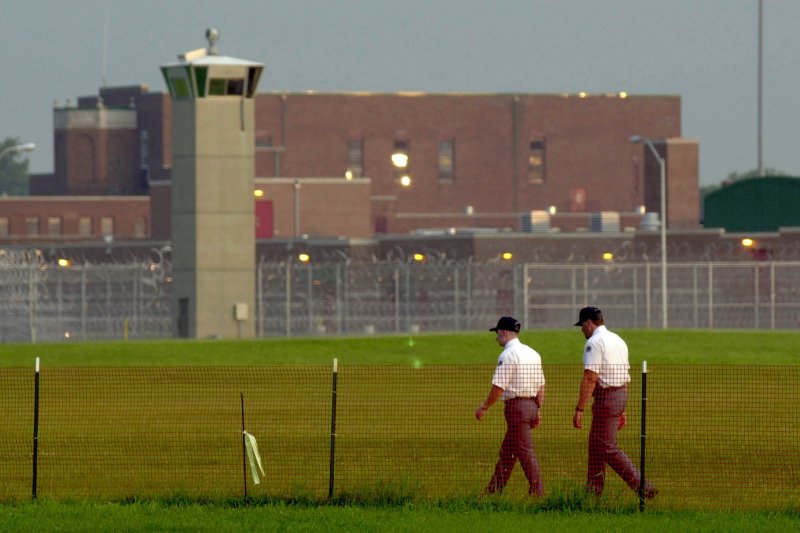
An exterior view of the federal penitentiary in Terre Haute, Ind., where Alfred Bourgeois is scheduled to be executed on Friday. The lethal injection would be the 10th federal execution this year after a 17-year moratorium ended in July by the Trump administration. File Photo by Mark Cowan/UPI | License Photo

Dec. 11 (UPI) -- The U.S. government on Friday plans to execute a man convicted of killing his 2-year-old daughter nearly two decades ago.

Alfred Bourgeois, 55, is set to receive a lethal injection at the U.S. Penitentiary in Terre Haute, Ind. The Supreme Court on Friday evening denied his request for a stay.

His attorneys said Bourgeois' execution would be unconstitutional because he is intellectually disabled and can't understand his punishment. They submitted evidence of IQ test scores of 70 and 75, as well as assessments by experts.

The Eighth Amendment bans executing people with such impairments as cruel and usual punishment.

Bourgeois was among the first inmates slated for death last year when Attorney General William Barr announced the resumption of federal executions after a 17-year hiatus. A federal judge stayed his execution in March, saying his lawyer made a strong case for his intellectual disability.

Bourgeois was convicted in 2004 of capital murder for the 2002 death of his daughter in Corpus Christi, Texas. Prosecutors said the girl died when Bourgeois became angry with her for turning over her potty training chair in the cab of his 18-wheeler and slammed her head into the vehicle's window.

Investigators said he regularly physically and sexually abused the toddler before her death. Bourgeois said he was innocent of the child's death and blamed her mother.

If executed, Bourgeois would become the 10th federal death row inmate to be put to death since July.

The last time a single presidential administration held that many executions was under President Dwight Eisenhower in the 1950s. The 34th president executed 10 people -- including the Rosenbergs, who were convicted of espionage -- over a seven-year period.


The U.S. Justice Department executed Brandon Bernard on Thursday and plans to hold three more executions before President-elect Joe Biden is inaugurated on Jan. 20. Orlando Hall was executed Nov. 19, more than a week after Biden was projected to win the presidency.

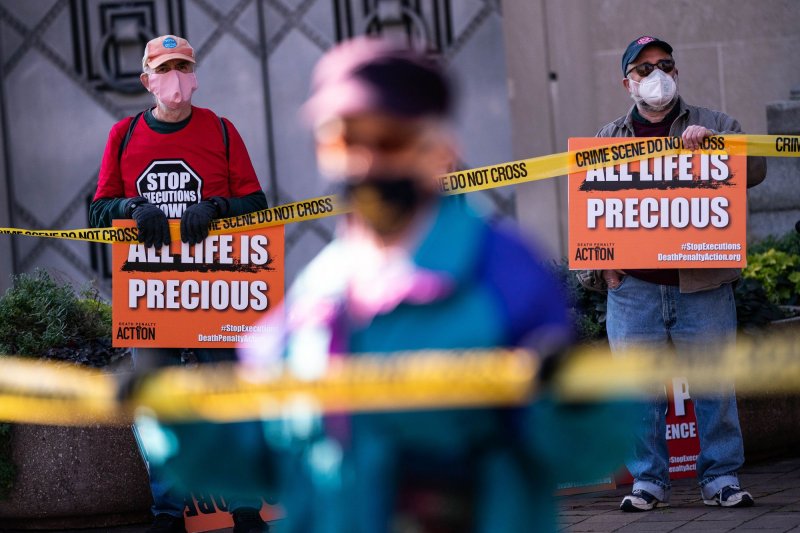
A group of anti-death penalty advocates protested the resumption of federal executions Thursday in a series of demonstrations in Washington, D.C., and Terre Haute. Death Penalty Action spokeswoman Allison Cohen told UPI that activists were especially concerned that executions were taking place after Trump lost his re-election bid.

Hall's execution last month was the first to happen during the transition of a presidency since 1889 under the administration of President Grover Cleveland.

"It's crazy that we are executing our federal death row prisoners during the lame-duck session," Cohen said, calling the effort "politically motivated."

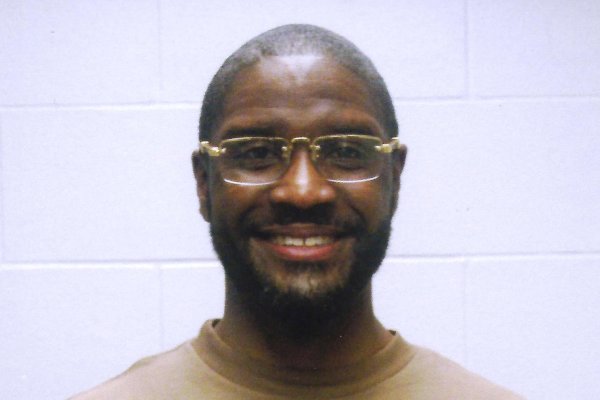
U.S. government executes Brandon Bernard 
for Texas slayings

Demonstrators with the group Death Penalty Action participate in a protest Thursday against the death penalty at the U.S. Department of Justice in Washington, D.C., where the group is calling on ending the death penalty and asking President Trump to stop the five death penalty executions scheduled before he leaves office. Photo by Kevin Dietsch/UPI | License Photo

Dec. 10 (UPI) -- The U.S. government on Thursday executed a man convicted of killing a Texas couple two decades ago -- the second such execution of the lame-duck presidency of Donald Trump.

Brandon Bernard, 40, was given the lethal injection just before 9 p.m. at the U.S. Penitentiary in Terre Haute, Ind., for the 1999 deaths of Todd and Stacie Bagley, married youth ministers. His was the 9th execution carried out by the federal government and 16th overall in the United States this year.

Robert Owen, Bernard's attorney, said his client's loved ones were "full of righteous anger and deep sadness."

"Many things went wrong to put Brandon on death row, including egregious government misconduct in concealing evidence and misleading the jury, which the courts refused to remedy," he said. "Before Brandon's execution, five of the jurors who sentenced him to death said they no longer stood by that verdict. They joined the lead appellate prosecutor on Brandon's case in urging President Trump to commute his death sentence to life without parole."

"Brandon's execution is a stain on America's criminal justice system."

The execution came shortly after the Supreme Court denied Bernard's application for a stay of execution. His attorneys sought to appeal his case based on allegations that prosecutors withheld evidence they said may have spared their client the death penalty.

The defense team asked the Supreme Court for a 14-day delay so new attorneys added to the team Thursday -- Alan Dershowitz and former U.S. Solicitor General Ken Starr -- could have time to review the case.

Defense attorneys said they discovered evidence showing their client had a lesser role in the crime and the gang that perpetrated the killings. They argue that knowledge "almost certainly" would have persuaded at least one juror to vote for life in prison over the death penalty.

Bernard's lawyers accuse the government of withholding the evidence, which they say was found while reviewing court documents for the resentencing of one of Bernard's co-defendants, showing the information was in the government's possession.

Bernard and accomplice Christopher Vialva were sentenced to death in 2000 for the murders.

Prosecutors argued at trial that the Bagleys gave Vialva and two other accomplices in the case a ride before the men held them at gunpoint and locked them in the trunk of their vehicle. They also stole the couple's money and a wedding ring.

Bernard's attorneys said he was not with those three accomplices when they kidnapped the Bagleys, but was called to join later in his own vehicle. The four then drove the Bagleys and the two vehicles to Fort Hood Army base, where prosecutors said Vialva shot the couple in the head and set the car on fire.

Todd Bagley died instantly but Stacie Bagley, unconscious from a gunshot wound, died of smoke inhalation, federal prosecutors said.

Defense lawyers said Bernard believed he was called to help dispose of the Bagleys' vehicle and let them go free. Police arrested the four men after their vehicle slid off the road into a ditch near the Bagleys' burning vehicle.

Brandon Bernard was executed for the slayings of Todd Bagley and Stacie Bagley. File Photo courtesy of the attorneys for Brandon Bernard

Because the murders took place on a military reservation, they were considered federal offenses.

Vialva was executed for his role in September.

Earlier this month, dozens of people -- including jurors from Bernard's trial -- signed a clemency petition asking Trump to commute his death sentence. The petition asked Trump to consider that Bernard was just 18 at the time of the crime, had a clean prison record, showed remorse and conducted outreach work while incarcerated. They ask for his death sentence to be commuted to life in prison.

U.S. Attorney General William Barr resumed federal executions in July after a 17-year hiatus. Daniel Lewis LeeWesley Purkey and Dustin Honken were executed in July; Lezmond Mitchell and Keith Dwayne Nelson in August; William LeCroy and Vialva in September; and Orlando Hall in November.

Hall's execution was the first to be carried out during a lame-duck presidency since President Grover Cleveland's administration in 1880, according to the Death Penalty Information Center. Some critics, including Democrats in Congress, have called for the Trump administration to halt the executions scheduled for the remainder of his term and leave them for President-elect Joe Biden's administration to handle.

"These executions are a further illustration of how deviant and dangerously out of touch this government's conduct has been during the entire course of this execution spree," DPIC Executive Director Robert Dunham told UPI in November.

"No lame-duck president has attempted to carry out an execution in more than a century. And to cavalierly do so, as infections from a virus that has killed a quarter-million Americans are exploding across the country, exhibits a pathological lack of concern for public health and safety."


UPI Reader Poll: Death penalty

Do you support the use of the death penalty in the United States?

Supporters 'occupy' Oregon neighborhood to save family from eviction

Dec. 11 (UPI) -- Activists in Oregon continued Friday to occupy a blocks-long stretch of a Portland neighborhood and surround a foreclosed home there in an effort to keep a needy family from being evicted.

The "Red House" had belonged to the Kinney family for more than 60 years until they fell on hard times and the home went into foreclosure. It was bought for $265,000 two years ago.

Since then, the Kinneys have fought to stay in the home and resisted efforts by the new homeowners to evict. The situation intensified Tuesday when sheriff's deputies attempted to forcibly remove the family, but were resisted by supporters of the family who'd shown up to help.

Supporters and other activists have since moved in and barricaded themselves along a three-block stretch in the neighborhood. They have fortified the area with boards, fences, metal and other items around the house and in the street.

Friday is the fourth straight day of the occupation.

"As winter arrives and temperatures dip below freezing, the community remains resolute in their support, initiating weatherizing projects for those who continue to live and sleep outside the Red House in anticipation of a second eviction, which could happen anytime in the next four months," reads a statement on a GoFundMe page established to help the Kinneys.

"History shows the next eviction may be more devastating than the first."

The home's owners have said they're willing to sell the home back to the family, at cost. The GoFundMe campaign had raised nearly $262,000 by Friday.

William Kinney, the son of the couple evicted from the home, said his family wants a peaceful resolution and he's been negotiating with Portland Mayor Ted Wheeler and police to ensure the family's safety.

Wheeler said he also hopes for a resolution to end the blockade and protests. His city was ground zero for a number of anti-racism and police-reform protests earlier this year and over the summer after the police killing of George Floyd.


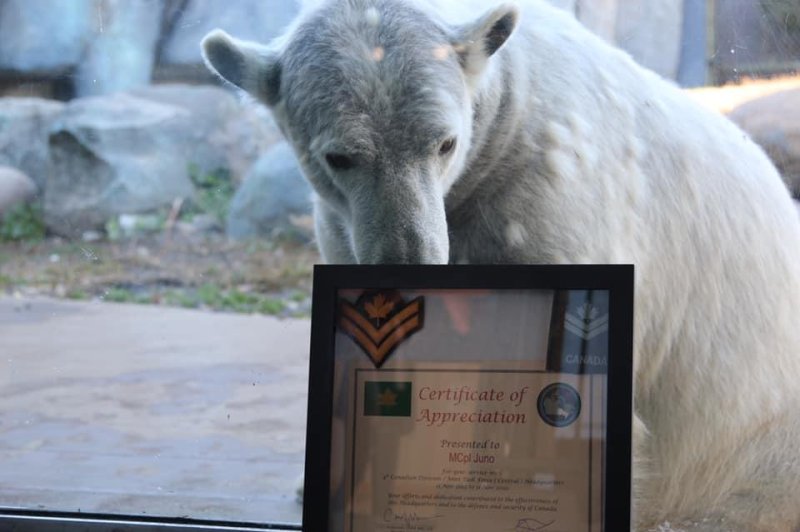
JUNO NOT WINNIE
Canadian Army promotes polar bear to honorary master corporal


Juno, a polar bear at the Toronto Zoo, was promoted to the rank of honorary master corporal by the Canadian Army in honor of the animal's birthday, which falls on the country's Remembrance Day. Photo courtesy of the Toronto Zoo

Nov. 25 (UPI) -- The Canadian Army celebrated the fifth birthday of a beloved polar bear at the Toronto Zoo by giving the animal a promotion to honorary master corporal.

The zoo announced Brig. Gen. Conrad Mialkowski, commander of 4th Canadian Division and Joint Task Force Central, visited the zoo to bestow Juno the polar bear with the rank of honorary master corporal.

Juno was born on Remembrance Day, the Canadian holiday for honoring armed forces members who died in the line of duty, and was named in honor of the Canadian landings on Juno Beach in World War II.

The bear was previously dubbed an honorary private by the army, before later being promoted to honorary corporal.

"We are truly honored that the Canadian Army has promoted Juno to master corporal as she continues to be an outstanding ambassador for her counterparts in wild," Toronto Zoo CEO Dolf DeJong said in a news release. "Juno and the other polar bears that call the Toronto Zoo home, play an integral role in educating our guests about the direct impact of climate change and the loss of sea ice that directly impacts polar bears in the wild."
USA
Louisville Zoo records 1st coronavirus cases in snow leopards


The Louisville Zoo's three snow leopards have tested positive for the virus that causes COVID-19 in humans. File Photo by Brian Kersey/UPI | License Photo

Dec. 11 (UPI) -- The Louisville Zoo in Kentucky announced Friday that three snow leopards tested positive for the novel coronavirus -- the first known cases in the species since the start of the pandemic.

John Walczak, the zoo's director, said all three of the facility's snow leopards began showing symptoms of the virus over the past two weeks, including occasional dry cough and wheezing.

They sent samples for diagnostic testing, all of which returned positive for SARS-CoV-2, the virus that causes COVID-19 in humans.

Walczak said the symptoms in all three cats -- NeeCee, Kimti and Meru -- are minor and they're all expected to recover.

The zoo took the snow leopards off exhibit and handlers are taking safety precautions, though the risk of animal-to-human transmission is considered low.

"We will be closely monitoring the snow leopards for ongoing symptoms and resampling them to identify when they have cleared the infection," senior staff veterinarian Dr. Zoli Gyimesi said.

The zoo said it believes NeeCee initially caught the infection from a member of staff who had an asymptomatic case of COVID-19.

In October, scientists warned that the risk of human-to-wildlife transmission of the virus is significant.

If COVID-19 managed to infect and spread among wild animals, it could pose a threat to endangered species. As well, wild animal populations could serve as a reservoir for further virus evolution and a source of future human outbreaks.

So far, scientists have documented human-to-animal coronavirus spread on a mink farm and at the zoo, where several tigers and lions were infected.

At home, humans have transmitted the virus to domestic cats and dogs. Some semi-feral cats in Wuhan and the Netherlands have also tested positive for antibodies triggered by a coronavirus infection.

AMERIKA HAS A GUN PROBLEM
U.S. sees 329 gun injuries every day, study says
NOT ANNUALLY, NOT MONTHLY, NOT WEEKLY,
BUT DAILY!


Researchers say an average of 329 people in the United States are injured by guns every day, based on an analysis of statistics from 2009-2017. Photo by paulbr75/Pixabay

Firearm injury is a major health crisis in the United States and new research sheds more light on how many of those who are injured survive and the circumstances of their shootings.

For the study, researchers from the University of Pennsylvania and Columbia University analyzed nationwide data from death certificates and emergency room visits.

Between 2009 and 2017, the United States recorded an average of nearly 85,700 ER visits a year for nonfatal firearm injuries and an annual average of more 34,500 deaths.

Overall, that added up to an annual average of just over 120,200 firearm injuries -- or 329 per day.

RELATED Trauma cases fall, gunshot wounds rise during pandemic in Philadelphia

The researchers divided injuries and deaths into five categories: unintentional, self-harm, assault, legal intervention, or of undetermined intent.

Intent had a dramatic impact on the likelihood of survival, researchers found.

Roughly 9 out of 10 self-harm injuries ended in death -- more than 21,100 per year. About 25% of those injured in assaults or in legal intervention, such as police-involved shootings, died. About 1% of those injured in accidents died, the study revealed.

RELATED 4 in 10 gun owners leave one unlocked at home

Overall, assaults accounted for about 39% of all firearm injuries. Unintentional injuries accounted for 37%.

Study author Dr. Kit Delgado, an assistant professor of emergency medicine and epidemiology at the University of Pennsylvania, said the findings fill some "major" gaps knowledge about U.S. firearm injury.

"By combining fatal and nonfatal injury data, we can identify major differences in injury rates by mechanism and age group and geography," he said in a UPenn news release.

RELATED Gun violence linked to higher rates of chronic pain, PTSD than car accidents

"For example, assaults among 15- to 34-year-olds account for the highest injury rates in urban areas, whereas unintentional injuries in this age group account for the highest rate of injury in rural areas," Delgado said.

Better understanding of the nuances can lead to better strategies for gun violence prevention and treatment, the researchers said.

Strategies such as child access prevention laws and gun lock distribution have the potential to prevent many of these injuries, they pointed out, but their true impact will remain unknown if only deaths are counted.

"Research has shown that suicide is the most common form of firearm deaths, and suicide prevention is of preeminent importance. But looking at these numbers of nonfatal injuries can raise concern in other areas needing their own forms of prevention," said lead author Dr. Elinore Kaufman.

"After two decades of progress, rates of firearm injuries are now increasing, and effective prevention strategies are urgently needed," said Kaufman, an assistant professor of surgery at the University of Pennsylvania.

Researchers said further study is planned, including a look at implementing programs to nudge parents to store firearms safely and a comparison of prevention strategies in U.S. counties where firearm death rates have risen.

The findings were published this week in JAMA Internal Medicine.More information

The National Safety Council offers additional information on gun injuries.

Copyright 2020 HealthDay. All rights reserved.
Trump Recognized Morocco’s Illegal Occupation to Boost the Israeli Occupation
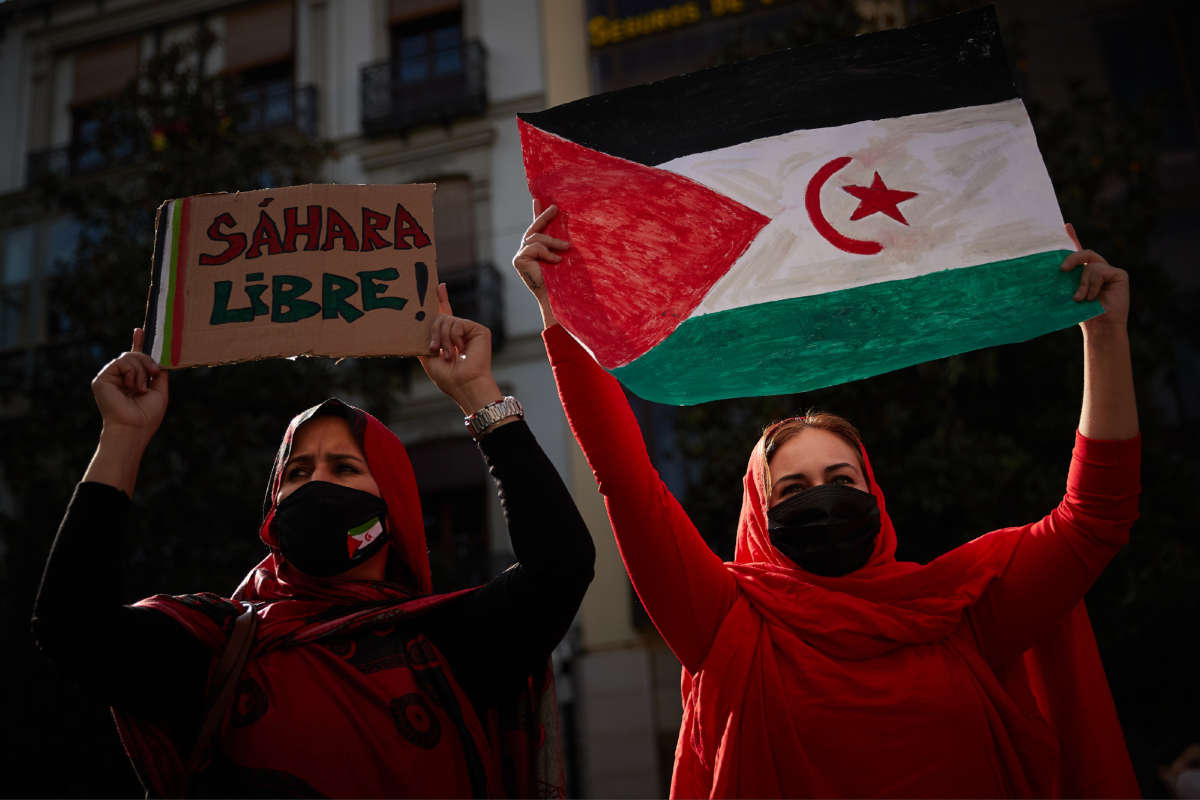
Women wearing face masks carry a Saharan flag and a placard that says Free Sahara during a demonstration to demand the end of Morocco's occupation in Western Sahara on November 21, 2020, in Granada.FERMIN RODRIGUEZ / NURPHOTO VIA GETTY IMAGES

PUBLISHED December 11, 2020

On December 10, the United States became the only major country to formally recognize Morocco’s illegal annexation of Western Sahara, the former Spanish colony forcibly seized by Moroccan forces in 1975. Trump’s proclamation is directly counter to a series of UN Security Council resolutions and a landmark World Court ruling calling for self-determination.

Trump’s decision was a quid pro quo: a reward for Morocco’s formal recognition of Israel, a country which is also an occupying power. Trump had previously broken precedent by recognizing Israel’s illegal annexation of Syria’s Golan Heights and greater Jerusalem. The U.S. recognition of the annexation of an entire country, which has been recognized as an independent state by no less than 80 countries, is a particularly dangerous precedent. As with his earlier recognition of Israel’s conquests, Trump is effectively renouncing longstanding international legal principles in favor of the right of conquest.


And, since Western Sahara is a full member state of the African Union, Trump is essentially endorsing the conquest of one recognized African state by another. It was the prohibition of such territorial conquests enshrined in the UN Charter which the United States insisted had to be upheld by launching the Gulf War in 1991, reversing Iraq’s conquest of Kuwait. Now, the United States is essentially saying that an Arab country invading and annexing its small southern neighbor is OK after all.

Trump cites Morocco’s “autonomy plan” for the territory as “serious, credible, and realistic” and “the ONLY basis for a just and lasting solution” even though it falls far short of the international legal definition of “autonomy” and in effect would simply continue the occupation. Human Rights Watch, Amnesty International and other human right groups have documented the Moroccan occupation forces’ widespread suppression of peaceful advocates of independence, raising serious questions about what “autonomy” under the kingdom would actually look like.

Western Sahara is a sparsely populated territory about the size of Colorado, located on the Atlantic coast in northwestern Africa just south of Morocco. Traditionally inhabited by nomadic Arab tribes, collectively known as Sahrawis, and famous for their long history of resistance to outside domination, their dialect, dress and customs are distinct from most Moroccans. Spain occupied the territory beginning in the late 1800s and maintained its rule until the mid-1970s, well over a decade after most African countries had achieved their freedom from European colonialism.

In 1973, the nationalist Polisario Front launched an armed independence struggle against Spain and Madrid eventually promised the people of what was then still known as the Spanish Sahara a referendum on the fate of the territory by the end of 1975. Irredentist claims by Morocco and Mauritania were brought before the International Court of Justice, which ruled in October of 1975 that — despite pledges of fealty to the Moroccan sultan back in the 19th century by some tribal leaders bordering the territory and close ethnic ties between some Sahrawi and Mauritanian tribes — the right of self-determination was paramount. A special Visiting Mission from the United Nations engaged in an investigation on the situation in the territory that same year and reported that the vast majority of Sahrawis supported independence under the leadership of the Polisario, not integration with Morocco or Mauritania.Within hours of Trump’s December 10 announcement, word came of a U.S. decision to sell at least four sophisticated large aerial drones to Morocco.


During this same period, Morocco was threatening war with Spain over the territory. Though the Spaniards had a much stronger military, they were at that time dealing with the terminal illness of their longtime dictator Generalissimo Francisco Franco as well as increasing pressure from the United States, which wanted to back its Moroccan ally King Hassan II and did not want to see the leftist Polisario come to power. As a result, despite its earlier pledge to hold a referendum with the assumption that power would soon thereafter be handed over to the Polisario, Spain instead agreed in November 1975 to grant administrative control of the territory to Morocco (and, for a time, Mauritania) pending an act of self-determination. It never happened, however.

As Moroccan forces moved into Western Sahara, close to half the population fled the country into neighboring Algeria, which was supportive of the independence struggle against its historic rival. Morocco rejected a series of unanimous UN Security Council resolutions calling for the withdrawal of foreign forces and recognition of the Sahrawis’ right of self-determination. The United States and France, meanwhile, despite voting in favor of these resolutions, blocked the United Nations from enforcing them.

The Moroccan government, through generous housing subsidies, tax breaks, and other benefits, successfully encouraged tens of thousands of Moroccan settlers to move into the parts of Western Sahara under the kingdom’s control. These Moroccan settlers now outnumber the remaining Sahrawis indigenous to the territory by a ratio of more than 3:1. The Moroccan government also invested heavily in infrastructure development along with internal security to suppress pro-independence activists.Trump’s insistence that the Golan Heights, greater Jerusalem, and Western Sahara are no longer negotiable codifies what the occupying powers had been saying for decades.

While rarely able to penetrate into Moroccan-controlled territory, the Polisario continued regular assaults against Moroccan occupation forces stationed along the wall until 1991, when the United Nations ordered a ceasefire to be monitored by a UN peacekeeping force known as MINURSO. The agreement included provisions for a return of Sahrawi refugees to Western Sahara followed by a UN-supervised referendum on the fate of the territory, with the Sahrawis native to Western Sahara being given the choice of voting in favor of either independence or integration with Morocco. Neither the repatriation nor the referendum took place, however, due to the Moroccan insistence that Moroccan settlers and other Moroccan citizens whom it claimed had tribal links to the Western Sahara also be allowed to vote.

A compromise referendum plan put forward by the United Nations in 2003 under the secretary general’s special envoy James Baker was accepted by the Polisario but rejected by Morocco, which has instead put forward its controversial plan for limited autonomy for the region. Though the Bush and Obama administrations expressed a willingness to seriously consider Morocco’s proposal, they did not see it as the only option nor did they formally withdraw their support for a referendum.

After waiting 29 years for a referendum that never came and following a series of Moroccan ceasefire violations and other provocations, the Polisario resumed its armed struggle just last month.

Disturbingly, within hours of Trump’s December 10 announcement, word came of a U.S. decision to sell at least four sophisticated large aerial drones to Morocco. U.S. laws prohibit such weapons sales to invading armies. However, with the U.S. recognizing Moroccan sovereignty over Western Sahara, including the Polisario-controlled segments of the territory, the occupation has become, in the eyes of Washington, a civil war between a recognized government and a secessionist movement, which could also pave the way for further U.S. intervention.

In both the Israeli and Moroccan occupations, there has been bipartisan support for the occupiers — perhaps an unsurprising reality given the U.S.’s own status as a colonial entity. But previous administrations recognized the dangerous legal precedent of formal recognition. Trump, in both Palestine and Western Sahara, has essentially made official what was essentially U.S. policy anyway. For decades, both Republican and Democratic administrations have insisted that neither Morocco nor Israel was obligated to withdraw their occupying forces, instead allowing the occupying powers to engage in an endless “peace process” with those under occupation who have no leverage to change the equation. In this way, the U.S. has allowed both occupiers to continue colonizing their occupied territories and consolidating their control.

As a result, Trump’s insistence that the Golan Heights, greater Jerusalem and Western Sahara are no longer negotiable simply codifies what the occupying powers had been saying for decades, while receiving no pressure from the United States to do otherwise.Americans must once again pressure our government to cease supporting brutal occupations.

Once he becomes president, Biden could reverse Trump’s recognition of the Moroccan annexation. However, since this would probably mean that Morocco would then renounce its recognition of Israel, Biden will likely find himself under considerable pressure not to do so.

Trump’s dangerous act of recognition highlights the fact that there are two major occupations in the Arab world. The Sahrawis, like the Palestinians, deserve their freedom. Given the critical role the United States is playing in making these occupations possible, Americans have a special obligation to force a change of policy. Such activism in the 1990s played a key role in ending U.S. support for Indonesia’s occupation of East Timor. Americans must once again pressure our government to cease supporting brutal occupations.