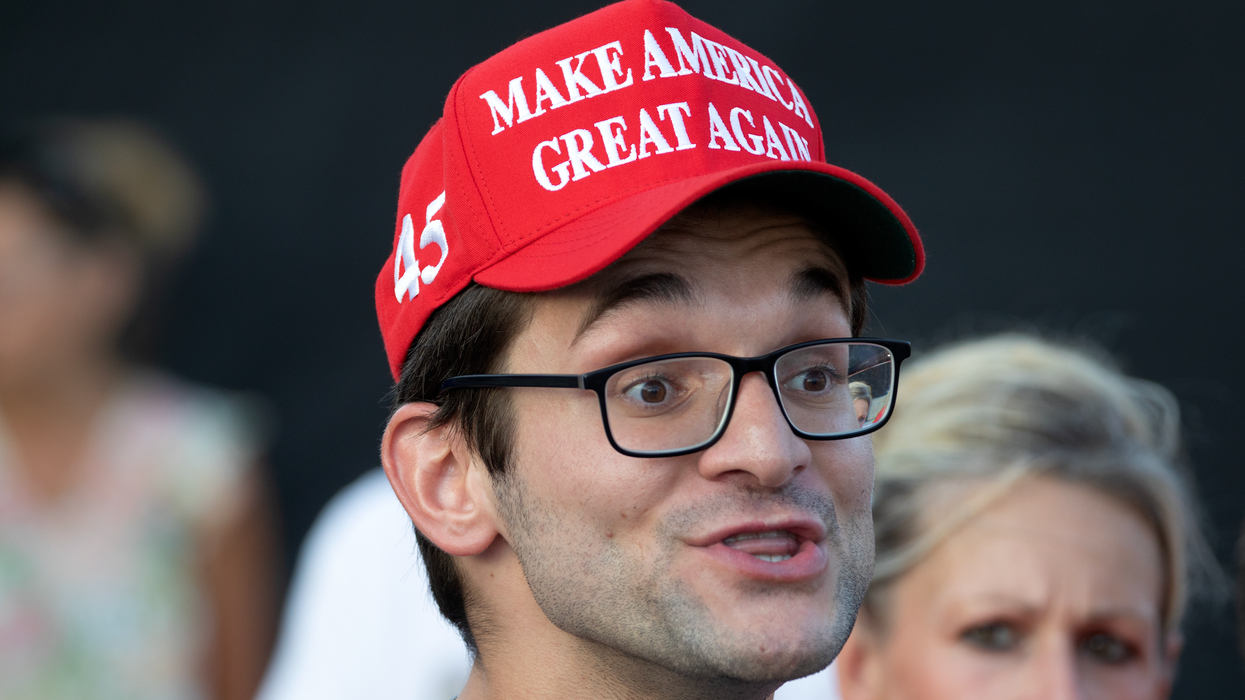
A supporter of President Donald Trump in Milwaukee, Wisconsin on August 23, 2023 (Image: Shutterstock)
February 18, 2026
ALTERNET
PsyPost reports a new study is revealing that average-intelligence men have a more conservative mentality, while gifted men and women tend to be more varied.
The study, “Exploring exceptional minds: Political orientations of gifted adults,” authored by Maximilian Krolo, Jörn R. Sparfeldt, and Detlef H. Rost, sought to discover if distinct political patterns emerge when comparing gifted adults to a control group of average intelligence.
The exhaustive multi-decade study began by administering more than 7,000 third-grade students standardized intelligence tests to measure reasoning abilities and the speed at which students processed information. Administrators then identified a group of gifted students with an IQ of 130 or higher and a control group of non-gifted students.
Six years later, when the students were in the ninth grade, the team tested them again to confirm their IQ and rule out a fluke test or lucky streak. Then, roughly 35 years after they were first identified, researchers sent them surveys to assess their political orientations.
“Specifically, non-gifted men scored higher on conservatism than gifted men,” reports PsyPost. “The non-gifted men were more likely to endorse values related to tradition and strict social order. Gifted men were less likely to hold these traditional conservative views.”
Researchers noted the difference among the women in the study was not so obvious, however, with gifted and non-gifted women both showing similar levels of comparatively lower conservatism. The divergence, reports researchers, was unique to the male participants.
“The team interpreted the findings through the lens of cognitive flexibility,” reports PsyPost. “They suggest that non-gifted men might rely more on traditional perspectives when processing complex social issues. This reliance could lead to higher conservatism scores.”
On the other hand, researchers believe gifted men may possess greater cognitive flexibility, which allows them to more easily process diverse perspectives. Consequently, they may be less inclined to adhere to rigid traditional norms.
Gifted adults appear to be as politically diverse and moderate as the rest of the population, but researchers say the “one notable exception” regarding non-gifted men’s preference for conservatism warrants further investigation.
The study relied on self-reported beliefs retrieved through surveys, however. And while honest reporting is assumed, researchers say it is possible that respondents sometimes describe themselves “differently than their actions might suggest.”
PsyPost reports a new study is revealing that average-intelligence men have a more conservative mentality, while gifted men and women tend to be more varied.
The study, “Exploring exceptional minds: Political orientations of gifted adults,” authored by Maximilian Krolo, Jörn R. Sparfeldt, and Detlef H. Rost, sought to discover if distinct political patterns emerge when comparing gifted adults to a control group of average intelligence.
The exhaustive multi-decade study began by administering more than 7,000 third-grade students standardized intelligence tests to measure reasoning abilities and the speed at which students processed information. Administrators then identified a group of gifted students with an IQ of 130 or higher and a control group of non-gifted students.
Six years later, when the students were in the ninth grade, the team tested them again to confirm their IQ and rule out a fluke test or lucky streak. Then, roughly 35 years after they were first identified, researchers sent them surveys to assess their political orientations.
“Specifically, non-gifted men scored higher on conservatism than gifted men,” reports PsyPost. “The non-gifted men were more likely to endorse values related to tradition and strict social order. Gifted men were less likely to hold these traditional conservative views.”
Researchers noted the difference among the women in the study was not so obvious, however, with gifted and non-gifted women both showing similar levels of comparatively lower conservatism. The divergence, reports researchers, was unique to the male participants.
“The team interpreted the findings through the lens of cognitive flexibility,” reports PsyPost. “They suggest that non-gifted men might rely more on traditional perspectives when processing complex social issues. This reliance could lead to higher conservatism scores.”
On the other hand, researchers believe gifted men may possess greater cognitive flexibility, which allows them to more easily process diverse perspectives. Consequently, they may be less inclined to adhere to rigid traditional norms.
Gifted adults appear to be as politically diverse and moderate as the rest of the population, but researchers say the “one notable exception” regarding non-gifted men’s preference for conservatism warrants further investigation.
The study relied on self-reported beliefs retrieved through surveys, however. And while honest reporting is assumed, researchers say it is possible that respondents sometimes describe themselves “differently than their actions might suggest.”
Trump supporters' extreme views driven by personal insecurity: research
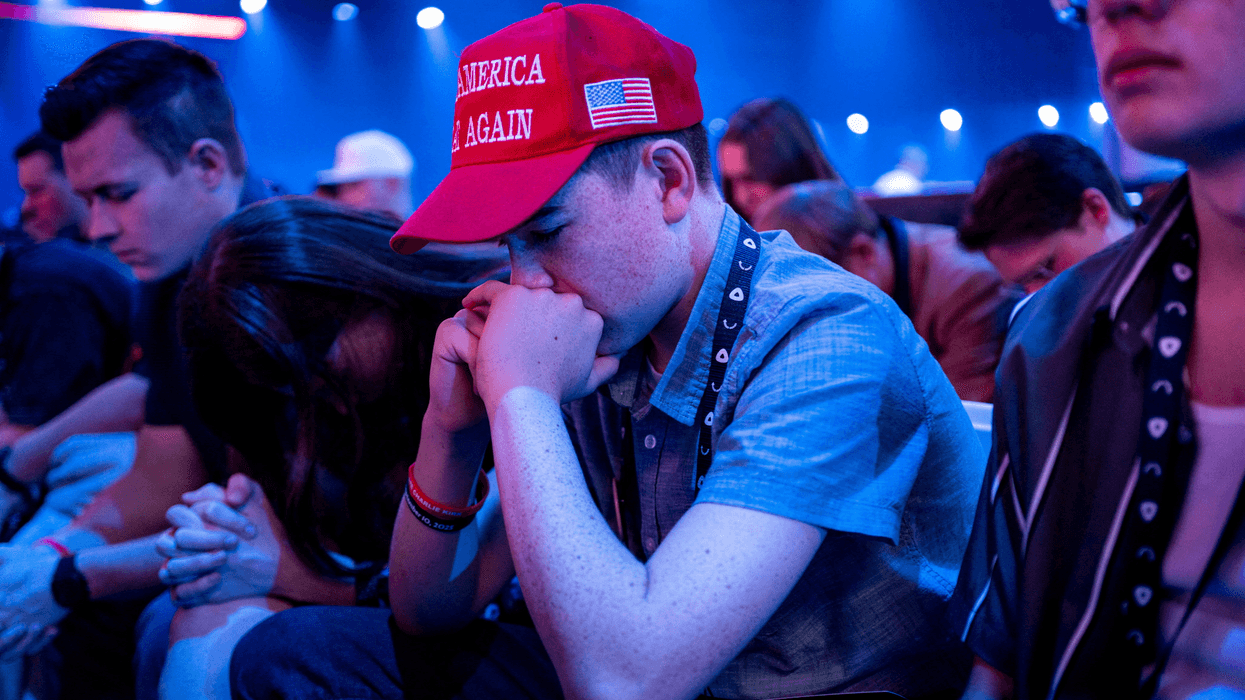
Attendees pray during AmericaFest, the first Turning Point USA summit since the death of Charlie Kirk, in Phoenix, Arizona, U.S. December 20, 2025. REUTERS/Cheney Orr
PsyPost reports that a new study published in the journal Advances in Psychology suggests that White people who personally perceive themselves as ranking at the bottom of the racial economic hierarchy or “tied” with Black Americans were the most likely to support President Donald Trump.
Previous research identified a phenomenon known as “last place aversion,” where people fear being at the very bottom of a social hierarchy — and Trump voters apparently feel the sting of smallness more acutely than others, whether or not they are actually at the bottom rung of the ladder
Surprisingly, researchers found that these attitudes were not driven by actual poverty.
Attendees pray during AmericaFest, the first Turning Point USA summit since the death of Charlie Kirk, in Phoenix, Arizona, U.S. December 20, 2025. REUTERS/Cheney Orr
February 17, 2026
ALTERNET
PsyPost reports that a new study published in the journal Advances in Psychology suggests that White people who personally perceive themselves as ranking at the bottom of the racial economic hierarchy or “tied” with Black Americans were the most likely to support President Donald Trump.
Previous research identified a phenomenon known as “last place aversion,” where people fear being at the very bottom of a social hierarchy — and Trump voters apparently feel the sting of smallness more acutely than others, whether or not they are actually at the bottom rung of the ladder
Surprisingly, researchers found that these attitudes were not driven by actual poverty.
The researchers controlled for objective indicators of socioeconomic status, such as income and education levels. They found that belonging to the “last place” profile predicted Trump support and anti-DEI attitudes regardless of how much money or education the participant actually had.
“We … [expected] a subset of non-Hispanic, white Americans who feel ‘last place.’ That said, we expected this profile to be more likely among working class individuals,” Cooley told PsyPost. “However, perceiving oneself to be ‘last place’ was not associated with the lowest objective income nor the lowest objective education among the White Americans in our samples.”
The United States currently exhibits a significant racial wealth gap with economic statistics consistently showing that the average white family holds considerably more wealth than the average Black or Hispanic family. But despite this reality, surveys indicate that many white Americans feel they are “personally falling behind” in terms of status without realistically weighing the resources at their disposal.
“This line of research was motivated by recent political trends among some white Americans, including support for DEI bans, alignment with alt-right ideology, and endorsement of political violence in pursuit of political goals (e.g., January 6th),” said study authors Erin Cooley and Jazmin Brown-Iannuzzi, associate professors of psychology at Colgate University and the University of Virginia, respectively. “Many of these attitudes are not only extreme but also anti-democratic, raising questions about how such views can coexist with identities centered on being ‘most American’ (e.g., white nationalist belief systems).”
The tool researchers used to assess personal status was a box measure called the “Perceived Self-Group Hierarchy.” Participants viewed a diagram representing a status ladder based on money, education, and job prestige, and they were asked to place markers representing themselves, white people, Black people, Asian people, and Hispanic people onto this ladder.
Researchers found a consistent link between this “last place” profile and specific political views.
“White Americans who fit this profile reported the highest levels of support for Donald Trump throughout the campaign season. They also expressed the strongest intention to vote for him. When surveyed the day after the election, this group was the most likely to report having cast their ballot for Trump,” PsyPost reports.
This same group of insecure white people also showed “the strongest opposition to DEI programs, favoring policies that would ban such initiatives in universities.” Additionally, they showed higher alignment with alt-right ideologies, agreeing more frequently with statements such as “White people are generally under attack in the U.S.” and “The government threatens my personal rights.”
“We … [expected] a subset of non-Hispanic, white Americans who feel ‘last place.’ That said, we expected this profile to be more likely among working class individuals,” Cooley told PsyPost. “However, perceiving oneself to be ‘last place’ was not associated with the lowest objective income nor the lowest objective education among the White Americans in our samples.”
The United States currently exhibits a significant racial wealth gap with economic statistics consistently showing that the average white family holds considerably more wealth than the average Black or Hispanic family. But despite this reality, surveys indicate that many white Americans feel they are “personally falling behind” in terms of status without realistically weighing the resources at their disposal.
“This line of research was motivated by recent political trends among some white Americans, including support for DEI bans, alignment with alt-right ideology, and endorsement of political violence in pursuit of political goals (e.g., January 6th),” said study authors Erin Cooley and Jazmin Brown-Iannuzzi, associate professors of psychology at Colgate University and the University of Virginia, respectively. “Many of these attitudes are not only extreme but also anti-democratic, raising questions about how such views can coexist with identities centered on being ‘most American’ (e.g., white nationalist belief systems).”
The tool researchers used to assess personal status was a box measure called the “Perceived Self-Group Hierarchy.” Participants viewed a diagram representing a status ladder based on money, education, and job prestige, and they were asked to place markers representing themselves, white people, Black people, Asian people, and Hispanic people onto this ladder.
Researchers found a consistent link between this “last place” profile and specific political views.
“White Americans who fit this profile reported the highest levels of support for Donald Trump throughout the campaign season. They also expressed the strongest intention to vote for him. When surveyed the day after the election, this group was the most likely to report having cast their ballot for Trump,” PsyPost reports.
This same group of insecure white people also showed “the strongest opposition to DEI programs, favoring policies that would ban such initiatives in universities.” Additionally, they showed higher alignment with alt-right ideologies, agreeing more frequently with statements such as “White people are generally under attack in the U.S.” and “The government threatens my personal rights.”

No comments:
Post a Comment